Armour, 100% and Bloodletter’s Lena Molnar: ‘I’ve always been a somewhat confrontational person’

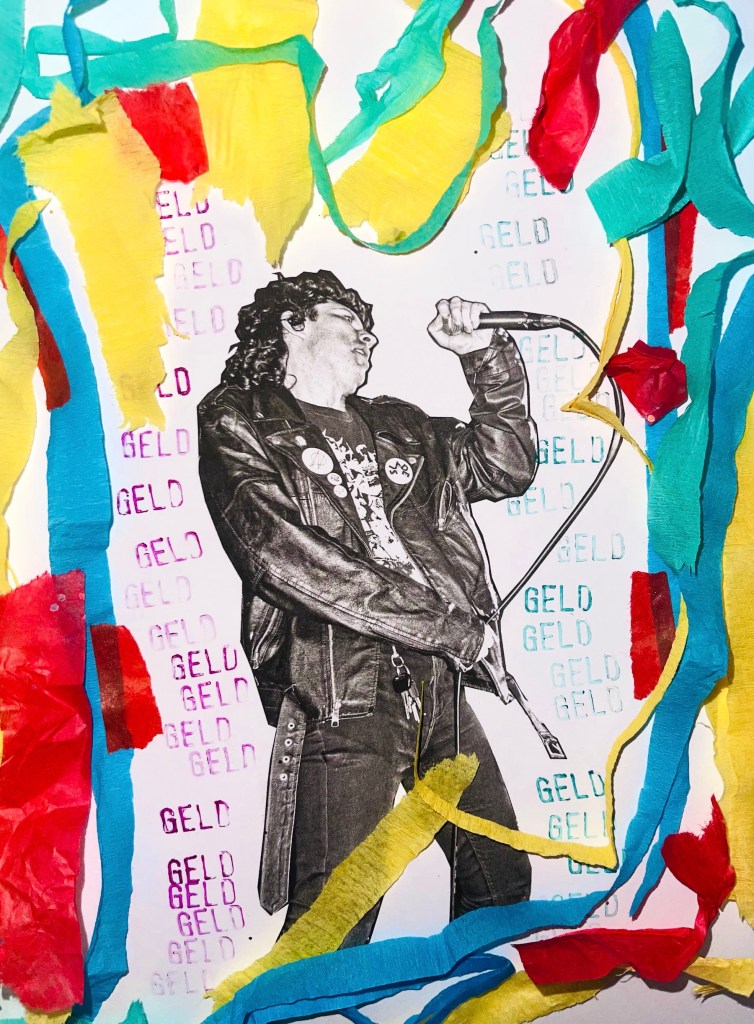
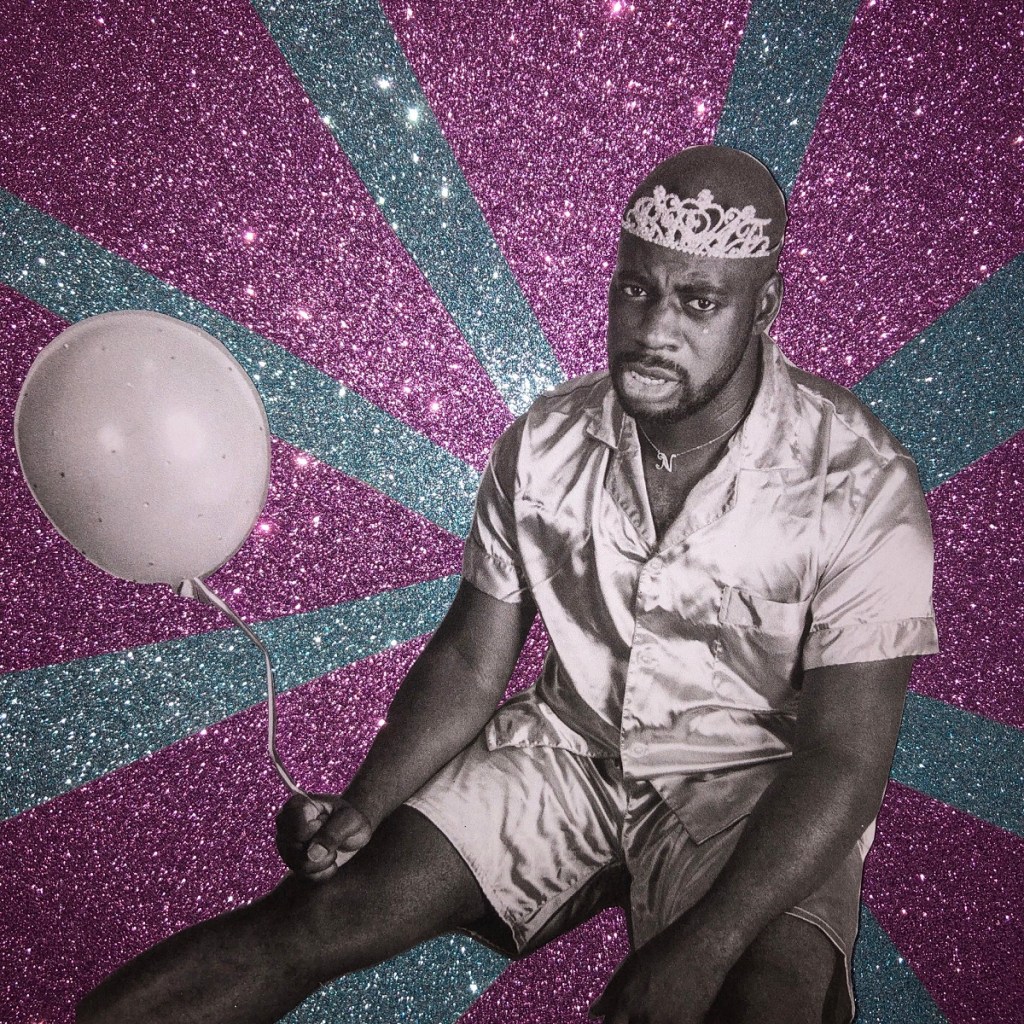
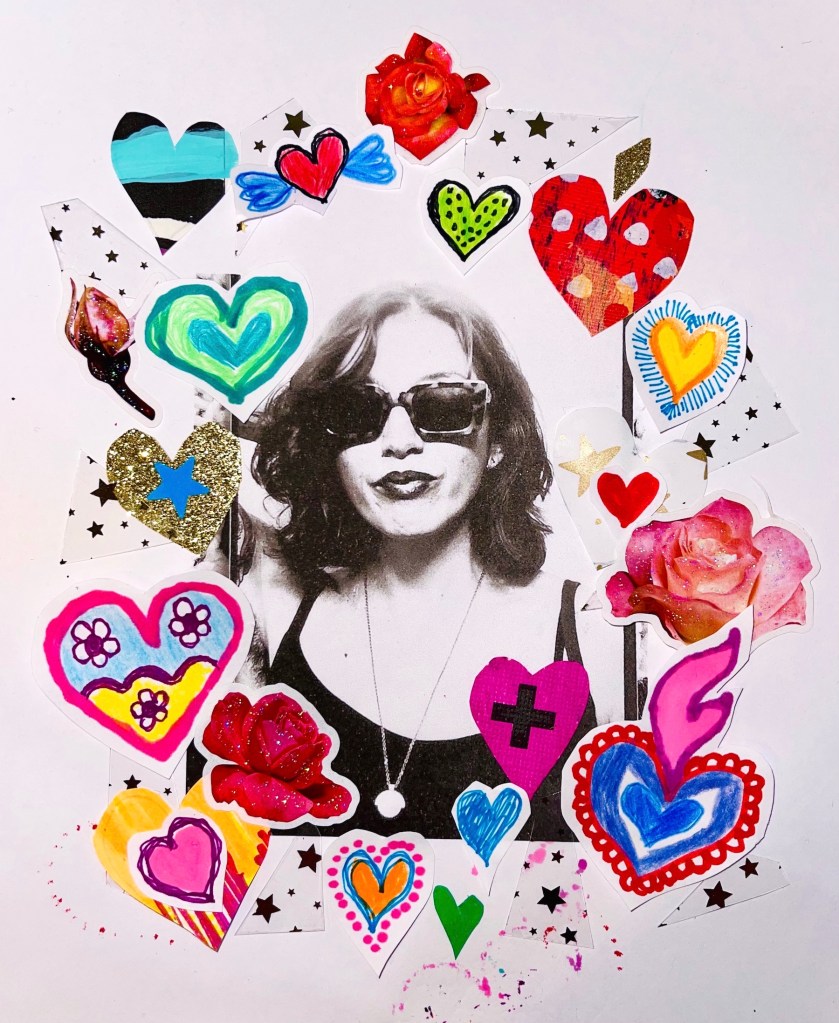
Handmade collage by B

Lena is a force of nature—an advocate, researcher, and community builder whose work spans music, activism, and disability justice. From creating zines to process grief to putting on shows that strived to reshape Meanjin/Brisbane’s punk scene by prioritising non-male artists, to her current efforts in preventing violence against women with disabilities, she is driven by a deep commitment to change.

She’s not afraid to talk about hard things like death, power, and systemic inequality. Lena challenges the status quo through grassroots organising, academic research, and award-winning advocacy, carving out space for those too often overlooked.

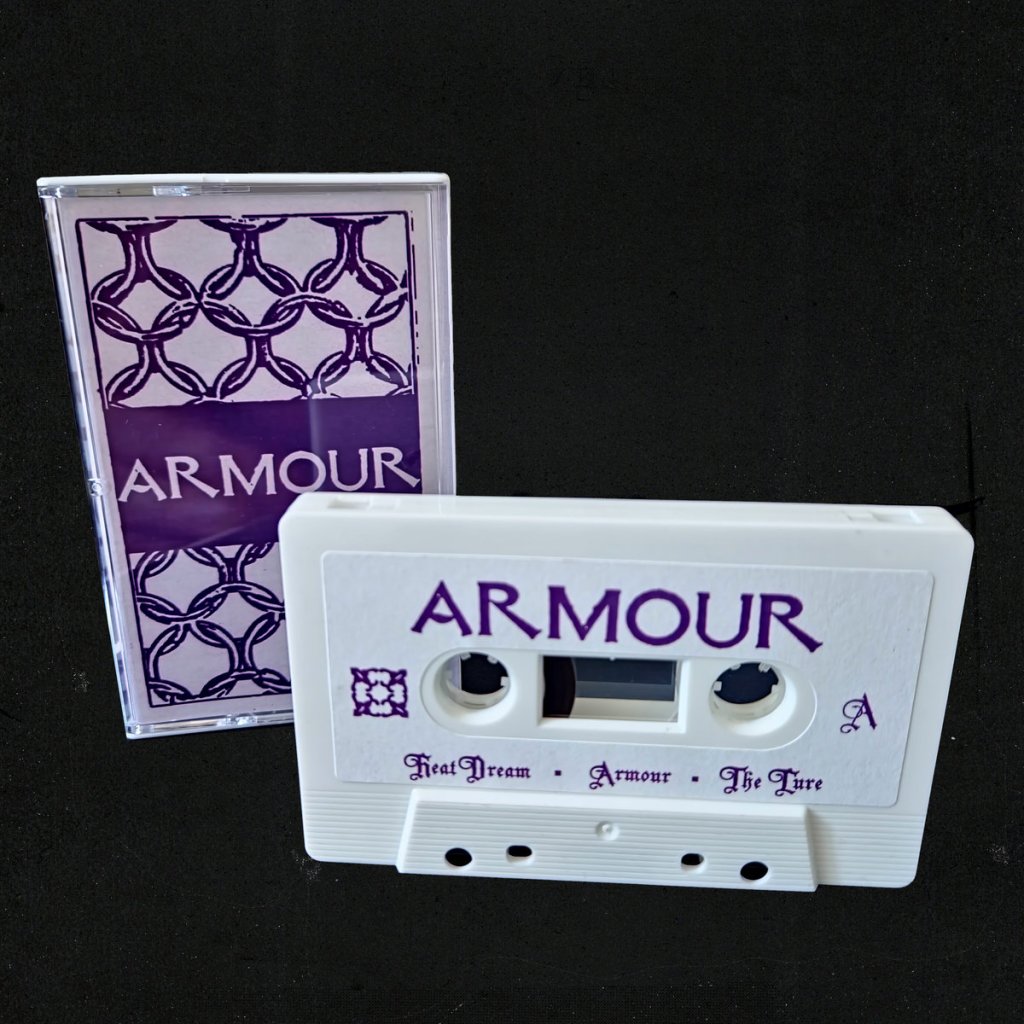
In this conversation, she reflects on loss, activism, and the ongoing evolution of both herself and her communities. Gimmie also dives into her musical journey, creative philosophy, progressive punk ethics, and the themes behind her projects—including her latest Naarm/Melbourne-based goth-rock post-punk band, Armour, as well as 100%, Bloodletter, and more.

 LENA: You’re a really good writer! 

GIMMIE: Thank you! I’ve been doing this for a long time—30 years, in fact. For a really long time, I didn’t believe I was even a writer. I doubted myself because I used to cop so much flack from people telling me I couldn’t write—mostly from guys in the scene. I was actually told that I should go back and pass high school English, along with so many other snarky comments that constantly put me down.

I used to get upset about it, but then one day, something changed for me. I realised: hey, I’m doing what I love, I’m having a lot of fun, I’m making these meaningful connections and doing work that means something to me. I feel like I have purpose.

LENA: There’s a couple of things I want to speak to there. I think you’ll just end up doing the thing that you want to do, regardless of what people tell you or say is the right way of doing something. If you feel good doing it, you’ll just keep on doing it or find a way to do it, because you feel bad when you’re not doing it.

You’ll feel like you’ll be doing it in some way—either professionally, in your own way, or by finding an outlet to do it, like a zine, writing a book, or whatever. Or you’ll just be having those conversations anyway. I’m speaking about you, but that’s the same for doing some sort of art, having a creative practice, or finding whatever your thing is.

If you’re a creative person or have some outlet, there’s always going to be people—especially when you’ve got some sort of marginalised experience—who tell you, ‘nah, the way that you’re doing it is not the way; it’s not my way.’

But if you do it from your heart, it doesn’t matter what the “right way” is. People are going to connect with it. If they connect with it, then it’s going to foster your own community and your own platform. That’s how you know it’s the right way, regardless of what the outlet ends up being.

Whether it’s through a zine, a book, a magazine, a piece of journalism, or even just using the radio or whatever, you’re obviously really good at drawing out conversation and stories from people. You have your own storytelling practice, and that’s really important. Like, fuck the correct writing conventions. People engage with how you tell stories, Bianca. It’s so cool.

Thank you. I just really care about the people I interview. I would never speak to someone whose work I didn’t find interesting or whose work I didn’t enjoy. My time is really limited because I do so many different things, so I have to just focus on what I really love.

I’ve been wanting to chat with you for ages—even as far back as when we saw you at Nag Nag Nag. I especially love your band Bloodletter and your earlier band, Tangle. It’s been really cool to see your evolution as a creative and how one thing informs the next. It’s the coolest thing to watch people grow.

LENA: Thank you. It’s really special that you mentioned Tangle, not my first band, but one of the first bands that played a lot and I got to do a bunch of things with. It’s nice that you can see the connection between what I was doing then and what I’m doing now. One of the privileges of staying in the creative arts community, like punk or any underground scene is seeing the beautiful ways that people change and grow, but become more and more themselves. That’s just an honour to grow up together in the different ways that we do. 

In my experience of community, I’ve seen that sometimes people don’t want things to change—particularly in the punk and hardcore scenes. There’s that other side of things where, when people try to grow and evolve, others want to pull them back, saying, ‘Hey, no, but this is cool. Let’s just stay here.’

LENA: I’ve definitely felt that in many different ways, like with regards to style and genre. Especially in hardcore, there are very fixed ways of thinking. I have a respect for that in some regards, but also, I am not held down to any preconceptions that there’s a certain way to be—for me, at least.

It’s actually quite unhealthy for me to think that I have to be a certain way to be authentic or to be, like, quote-unquote, punk or whatever. That’s sort of the antithesis of how I relate to creative practice and the subculture that I’ve grown to love and be a part of. I wouldn’t want to hold anyone else back that way, but I understand why people sort of feel that way.

I feel it’s really important to hold things down in a particular way. But yeah, it’s a devil’s bargain of, yeah, these are the things that keep us safe and the logics of genre or punk, per se, or hardcore, while also it should be about letting people in and letting people be free to be their freaky selves as well.

I read an interview with you where you talked about growing up with punk and DIY. You mentioned that, in your youth, you noticed conflicts and approaches in hardcore and heavier music that were a little at odds with things in your life.

LENA: I have an interpretation of a punk ethic that is very progressive, very open, and about changing and supporting people to change while being accountable as well. There’s an openness to conflict in that sense, where conflict brings about disruption and change.

But there have been things that have happened in my life where people are very resistant to that kind of accountability—especially because of their own behaviour. These situations have been quite damaging within communities, and it’s severed ties due to the inability to communicate or because of what’s led up to some really poor choices. Yeah, violence and abuse within interpersonal relationships and smaller scenes in communities.

To me, that’s at odds with my personal ethics, which I drew from the people I had the privilege of hanging out with early on when I was coming into punk. That’s really informed my entire life. But I understand not everyone sees punk—or lives in the world—providing that kind of ethos.

And yet, not everyone has the same viewpoint as me, and that’s totally fine. I live in a community where folks don’t all have to agree. But, if you don’t agree with people, what do you do about that? 

It seems like it’s getting harder to have these conversations, even just in everyday life, because everyone is so this way or that way. I’ve always thought that opening up a dialogue with someone is how you can actually start to affect change.

LENA: Totally. If you can’t talk about it, then you probably can’t do anything about it. A lot of people are afraid of being wrong because they think that means they have to change, or that they have to do something that means their way of thinking hasn’t been right. It’s too difficult for them. And that’s not just a punk thing. Every community suffers with that. It’s very nuanced. There are some really beautiful people in our community who are quite open to having these kinds of conversations. I’ve been inspired by them throughout my life. I call a lot of those people my very good friends.

Was punk scene the first community that you came to? 

LENA: I grew up in a household where I had family around a lot of the time. There were a lot of folks who had migrated from the war, in a community with a lot of people who were struggling in different ways. I always lived around a lot of different kinds of people, and my community was always like family—extended family, neighbours.

There were a lot of interesting conversations about ageing and mental health that were normalised very early in my life because of my family’s mixed cultural background. We talked about trauma and death quite a lot, very early.

Those kinds of conversations meant that community was much more of a flexible idea to me: Who’s around you? What are you doing together? But also, what do you need from each other at that time?

I’ve got a really open idea about what community is, but I’ve never been the fixed-group, nuclear-family kind of girl. It’s always been more inclusive. I think that way of growing up has really imprinted on me, it’s a really special way to grow up.

You mentioned growing up where conversations about death were normalised. I know about a decade ago, you did a zine called Good Grief, and it explored grief and loss. I’m interested to talk about this; in the past few years I lost both of my parents. It’s been something that is on my mind a lot.

LENA: I’m sorry that you lost both your parents. 

I’m sorry you’ve lost your dad too. My parents no longer being here is something that still feels really strange for me. I’m not sure if it will ever not feel that way.

LENA: That was basically the reason why my friend Erica [Newby] and I put that zine together. We both lost a parent within a couple of months of each other, and we found that no one except for each other got it. My friends were really beautiful at the time; they tried, but mostly, it was like, ‘If there’s anything I can do,’ or ‘I have no words.’ It was very much like, ‘You tell me,’ like, you do the work. Then I started getting a lot of ‘You’re so strong.’ I’ve been getting that my whole life—‘Look at you go, you’re so strong,’ and ‘You fucking kill it.’ And I’m just crumbling inside.
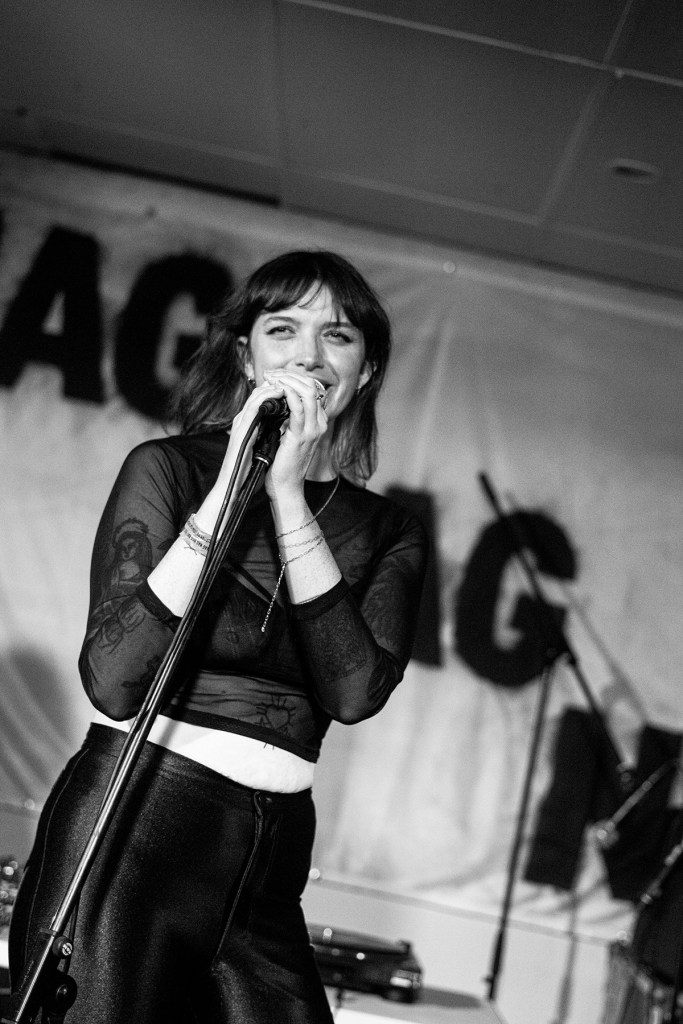
Photo: Jhonny Russell

Same! I also get, ‘You’re always so positive!’ It’s like, yeah, but you don’t see me on my bad days when I’m in a ball, crying and feeling so low.

LENA: I feel like I recognise that about you in the few moments that we have seen each other.

I’ve experienced very deep sadness, depression and crippling anxiety in my life, and in those lowest, low times, I felt no one was there for me, I didn’t have any support despite knowing A LOT of people; obviously that’s changed having Jhonny in my life. But because of those experiences, though, I always try to be there for others and try to remain on the positive side of things. But it’s not always realistic.

LENA: Yeah. And it does damage trying to be like that a lot. I had a feeling that we were gonna talk about death and grief. It’s washed all over me—I’m a death girlie. [laughs]. I’ve always been a spooky little bitch!

[Laughter]

LENA: I guess I had lost people prior to my dad dying; I was 22. But no one so close to me like my dad was. My dad was my best friend. My friend Erica lost her mother to cancer, so it was two very different kinds of grief. My dad passed away very suddenly. I was on the phone to him one day, and two days later, he was dead. Heartbreaking.

Whereas Erica was anticipating the loss of her mother, and that’s also very tragic, as anyone who loses a parent or a loved one over a long illness knows. Both are bad. Especially at that age when you’re still coming to terms with yourself, and everyone around you is still quite young too. In Anglo-Queensland, where we were, people offered lots of prayers but weren’t really sure what to do. So we came up with the idea of doing the zine. We reached out to folks that we knew, and beyond, to submit whatever creative stuff they had about their experience of loss—about what it felt like. We wanted to share that with others so they could gain some insight into what grieving can be like, and to normalise those conversations a little bit at that stage in our lives.

I still have a copy of one of the masters of that zine I made, and I look at it every now and then. I’ve lost people since. We’ve already talked about change, and now we’re talking about death. The only constants in life are change and death. I’m continuously reminding myself of that. I talk about it with my staff. You just have to roll with that—change and death. Those are the constants in life. You can’t be afraid of it. The better you get at anticipating it, but not living in fear of it—living in spite of it and building your life around the choices you make despite these things being inevitabilities—you’ll make better choices.

But you’ve got to be able to support people in their fear of those things as well. Especially folks who aren’t brought up in a way or are unable to come to terms with talking about it. It is scary, and people run away from it. In the disability community, there’s a very close relationship between how people perceive disability and death. We’re living reminders of mortality, and that you don’t have all the strength you think you do. Something could happen to you, and the world isn’t built for that.

You recently won the National Disability Award for Excellence in Innovation.

LENA: My organisation did. I delivered a program through my organisation called Changing the Landscape, which provides resources on preventing violence against women with disabilities. The program targeted a national audience of practitioners in the disability service sector, as well as gender-based violence workers. These resources include videos, posters, and materials based on a 100-page document detailing the rates of violence and what can be done to stop it. They’re beautiful resources that I’m very proud of, especially considering I did a lot of that work just after a significant surgery. While I’m the program manager for that suite of resources, it took a lot of work on my part, but I’m just happy to have been part of such a dedicated team.

What motivated you to start working in that kind of space? 

LENA: Gendered-violence or disability?

Both.

LENA: I have experiences of both. I had trained as a sociologist and did my honours thesis in urban sociology about gentrification—specifically, how people perceive their role in changing public space in a highly gentrified area known as West End. I was really interested in some things that didn’t end up getting discussed in the findings or didn’t emerge from the data. And that’s because I didn’t draw out a particular feminist analysis on the project, which was limited by the nature of an honours project.

So, I then just got into the swing of being a research assistant. But all the while, I was doing activist work on the side.

Before that, I had been doing activist work around gender-based violence, fundraising and learning how to mediate through grassroots organisations. I had been involved in this kind of work for a while. 

After the publication of Good Grief, people started asking Erica and me if we were going to table the zine somewhere or if we were planning to do a distro. At the time, we had no intention of doing anything like that. We just wanted to create the zine and put it out there. But after people kept reaching out, asking us to do more, we realised there was a need in the zine space. We thought about what we would want to do, and we decided to start collecting and distributing zines written by women and queer people to sell at a market in West End.

We started doing that, and then I began incorporating records that were not just from cis men—bringing in women and non-binary people into the lineups. Eventually, Erica didn’t have the energy to keep going, so I continued on my own. Because of my priorities in the music scene, it ended up being a little more music-focused than zines, but I always maintained a bit of both.

This background relates to your question because, in doing all of this, I began booking shows here and there. The key was that there would never be an all-male band on the lineup. As a result, the shows I booked in Brisbane at the time had very creative lineups—something different from what was happening in the punk scene. At that time, it was mostly bands with the same members, and while they were really talented, the shows felt repetitive. Sometimes that’s cool, but when it’s the only type of show you can attend, it becomes limiting. I wanted to create something different.

Every other show I did would be a fundraiser for an organisation like Sisters Inside. I also started selling secondhand T-shirt runs to raise money for Sisters Inside. It became a part of what I was doing—some form of fundraising or activism, mediation, and being that girlie who always had something to say about what was going on and why certain things were such a problem. I became a little bit problematic but just stopped caring.

Going back to my time as a research assistant, after finishing my degree, I had no intention of working in the gender-based violence space. However, when a scholarship came up at RMIT University, it seemed to align perfectly with my skill set. They were looking for someone with experience in visual methods and a background in gender-based violence activism to research how young people engage with social media to prevent gender-based violence. I saw it as an opportunity to do something new, to align something I was already doing with my skillset, and to see what would happen. I had never really thought about doing a PhD, but it seemed like a good opportunity, especially since I was starting to feel burnt out being that girlie in Brisbane.

I had a lot of friends in Melbourne who knew what I was about and wouldn’t make me feel like I was alone. So it just felt like a good time to take the opportunity and run with it. 

When I got to the end of my PhD, I was looking for work outside of academia because I don’t see the point in doing research if you can’t share the knowledge and apply it somewhere. I still feel like that. One of the roles that was coming up was at this organisation that I work for now, which is called Women with Disabilities Victoria.
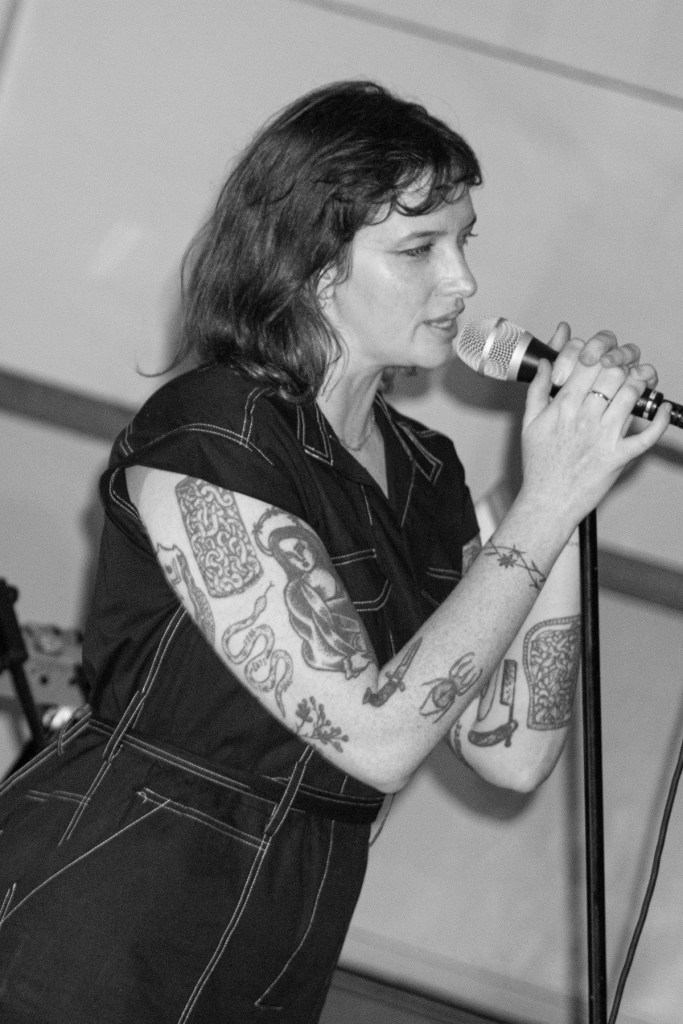
Photo: Jhonny Russell

To bring the conversation back to music, do you feel that each bands you’ve been a part of has represented different parts of your personal and musical development? 

LENA: I wouldn’t say different parts because I don’t like to separate the self. Maybe at one point, I would have, but I’ve gone through a bunch of stuff in the last couple of years, and I’ve done a lot of deep reflection on everything—the shit, all the little things I’ve done. Definitely, in my younger years, other people would have asked, ‘How do you make sense of all this? You do this, and you do that, and you do this—how is it all the same?’ But in my mind, when I look at all that stuff, I see it as the same girl. I see the common thread. It all makes sense to me, and I can see where it can go.

Creatively, I’ve done a lot of stuff that might not connect together on paper, but it all informs one another. It’s always been about asking, ‘What else can I do? How else can I express myself? That sounds fun, or I haven’t done that before’. That was the thinking at the time—‘I haven’t done that before. That sounds fun. That’s a nice group of people, or an interesting group of people to work with. I would really like to try that. Let’s give it a go.’ And when it stops feeling like that, you let go of it.

There have been a couple of times when I’ve been super passionate about something, and you can probably tell when you’re listening to it. It’s like, ‘Oh, all those steps, all those little pieces I’ve put together, they’ve come into play.’ But it also goes back to an old band I did. It’s like, ‘Oh, she’s still doing that. She’s still thinking about that thing, and it still matters.’ That’s how I know it’s always been about finding the best way to express myself. It doesn’t matter the genre or the medium.

I had some downtime a couple of months ago, and I was drawing a lot. To me, my drawings are the same—they’re about the same things that I write my lyrics about.

You mentioned threads; what are they?

LENA:That’s something that I’m less open about. I’d like to hear what you think. 

Thinking of your new band, Armour, even just in the name, there’s a really strong imagery to begin with. Armour feels like it’s both defensive and empowering. People go into battle wearing armour, so I was wondering if you’re exploring internal struggles or if it’s something larger and more outward?

LENA: Always, for sure. That’s always been a part of the ideas I’ve written about, throughout my practice as a creative person — as a poet, as a lyricist, as a writer. It’s stuff that I explore in my academic space as well.

I’m fascinated by struggle and change, and what people do to avoid it, or what people do when they are confronted. And that’s not necessarily a negative type of struggle or defence. It’s not something I’m always consciously aware of; it’s just something that I’m drawn to.

…I know that I’ve healed from some stuff I’ve gone through in my life because, working in the prevention of gender-based violence, for example, I see the long game. I can talk about violence all day, for example, because I know what the point is. And I see how to make change.

That’s why I’ve always been a somewhat confrontational person. But I know how to use those skills to get people, hopefully, going. I’ve got a good sense of humour to get people to think about things in a different way and bring them along for the ride, where it doesn’t have to be like this.

Part of why I really love your band 100% is because there is a lightness. I’ve read you say that the vibe of 100% is kind of like your aunt or Dolly Doctor. Any time I’m seen 100% live, it’s so joyful.

LENA: We have a cute little world that we created in that band. Like, it is what you imagine girlhood to be. And also, what maybe I do have nostalgia for. I did have moments of that typified girlhood with my friends when I was a teenager. But there’s the the dreaminess of that band— that was still, make-shift and put together through our own DIY lens, or in a futurist way of, like, what would the ideal be like? And what would we tell ourselves?

A lot of the lyrics were , okay, what would I want to hear if I was in this situation? And drawing from a few different situations that I did know about. Or if I was watching a movie, I’d think, what project would write the sweetest songs and charm each other through that? It was about supporting different aspects of songwriting between the three of us. None of us had ever done something like that before. It was really magical.

Yeah, well, it’s that— even though I really like the cover you put out that had the cake on it. That spoke to me in so many ways. One of my best friends made that cake too.

You mentioned a dreaminess, I feel Armour has a dreaminess, but a different kind of dreaminess. 

LENA: Armour is the step between 100% and Bloodletter with a touch of Tangle. But in terms of tone, it’s definitely, at times soft sweetness. But also, I’m sweet, but, if you fuck up me or my family, I will fucking kill you vibes! [laughs]. That’s what being community minded is about, right?

[Laughter]. One of the songs I really love on the EP is ‘Heat Dream’. It has this surreal vibe. 

LENA: What makes you say that? 

Well, for one thing, the imagery, the fantasy and the dreaming in its lyrics.

LENA: There is a literalness of, like, I don’t do well in the heat [laughs]. It’s verbatim describing my experience of not doing well on a hot night. Knowing that others feel the same as well and taking it to the extreme. Growing up in the tropics, like in Brisbane, but also, like, there’s definitely being— like, is this fantasy? Am I awake right now? What was going on? What the fuck was that dream?

Your song ‘Sides of a Coin’ has a bit of a different tone to the others. 

LENA: People are really engaging with that song. It’s really nice. I wrote the lyrics to that one really quickly. Those ones that just poured out. We weren’t sure whether or not we liked it as a band. So I tried to do something else with it. But I just kept going back to, this is how it has to be. 

Lyrically it mentions about breaking the chains and setting yourself free, and there’s a sense of freedom from constraint. Maybe a feeling of liberation? You mention seeing the coin from the other side; what’s the significance of that?

LENA: I’m going to speak abstractly, because people will have their own interpretations. When I wrote that, I was thinking about the nature of truth. 

I really like to write songs that engage with other songs, that sort of build a world. But that song, in itself, is a conversation. You see the coin from the other side—truth is subjective. There’s evidence, obviously. But if a rock fell between you and me, and someone who couldn’t see the rock asked us to describe it, how would we do so?

From your side, you might see the rock has some moss on it, some speckles, maybe a big crack from when it hit the ground. Thankfully, neither of us were hurt. From where I’m sitting, I can see that there’s light behind you, so you can notice details that I can’t. On my side, it’s the same rock, but all I see is grime. This rock is dirty. I mostly see the shadow of this rock right now.

We’re having a conversation about what we see, and to describe the rock, the arbitrator asks, ‘Are you sure you’re looking at the same rock?’

Yes, it’s the rock on this street, blah, blah, blah. So, what is the evidence? Are we going to fight about whose rock is the correct one? Do we get an opportunity to look at the other side of the rock? Or can we agree that on your side, it’s a nice green, sparkly rock with a crack, and on mine, it’s a funky, dark, grimy rock with webs?

It’s the same rock. And it’s a beautiful rock. And we’ve both survived.

Wouldn’t it be nice if everyone could be open to each other’s side of the rock? 

LENA: Yeah, well, you don’t always get to that part of the conversation [laughs]. Sometimes you’re just like, can I just move the rock? 

Do you see a narrative arc for the EP? 

LENA: We just thought they sounded good in that order. Most of the songs were written at the same time. From my side, as the lyricist, they probably represent different aspects of things I was processing and responding to. I also added other bits in terms of lyrical content and other elements. 
Was there a particular thing that comes to mind when you think about that period and what you were kind of writing to? 

LENA: Something I really like about Armour is that it feels authentic as a band. I think there’s a lot in my part of it, which is about bringing people together—for healing, but also for a fight.

I was interested in the EP closer, ‘Last Train,’ because a last train could be a powerful metaphor for endings, choices, or opportunities. I also got a sense of exploring how distance or endings can bring clarity—or even healing.

LENA: That’s a really apt interpretation, without getting into the direct inspiration for that song itself. Each song has its initial influence, but if a song is conceptually strong enough, it will have a meaning that resonates with anyone’s experiences. And that was definitely something I was going for with ‘Last Train’: how do we move past an ending? What choices can we make? It’s about ownership of choice as well.

There’s a line in it that talks about breaking apart and yet making amends. Sometimes, those things can be in contradiction with each other.

LENA: A long time ago, in my early 20s, I came across the notion of creation and destruction, either in a zine or on someone’s bum patch or something like that. I spoke to it at the beginning of our chat—how, as a particular kind of troublemaker, I see change as good. But confrontation, too, can be a way to make change. It’s not the only way, of course, but I’m not afraid of conflict because it means things are moving. It can mean things are moving, as long as you know what to do with it. I try not to be too stuck in place.

That doesn’t mean I’m not stubborn. Things can hurt when you’re forced to do things outside of your control, but learning to let go is a big part of life. When you know things are ending, there’s a beauty in being open to what happens next.

I’m a big fan of saying no, so that you can rest and open yourself up for what the next yes is. I really respect when other people do that, even if it means they’ve said no to me [laughs].

I say no to a lot of things now. As Gimmie grows and so does my book and editing work, I get asked to do a lot of events, projects and stuff. I used to always say yes to everything because I felt I had to. But I’m a lot better at saying no now. I listened to this interview with a writer [Shonda Rhimes] and it really stuck with me. She talked about saying no to things without saying sorry or giving a million excuses for why you can’t do something. I used to feel bad for saying no, or people would get upset with me for not doing what they wanted or not meeting their expectations. I felt I had to apologise or explain myself. I felt bad for saying no. The writer shared that she simply replies: ‘No, I’m unavailable for that.’ And the first time I did that myself, I felt so good. That should be good enough.

LENA: It’s really respectable to know exactly where your limits are and hold up your boundaries, especially at the stage of life I’m at now. It’s a valuable thing to model for others. It’s scary how many people-pleasers I see, or how much people-pleasing behaviour I observe, where folks take on so much because they think, ‘Yeah, that’d be fun. That’d be cool. I gotta do it. Nobody else is gonna do it, or nobody else is going to do it the way I think it should be done.’

There’s a huge risk, not only in overloading yourself but also in not allowing someone else the opportunity to do it. Even if they do it a way you wouldn’t necessarily agree with, or do it differently from how you would, there’s a control aspect for some people. It’s also just a fear — the fear that if people recognise you now, they might forget that you exist later.

But there’s a beauty in being comfortable enough to say, ‘My time will come again.’

I love that! I think coming from the punk and hardcore community, something I’ve struggled with is allowing yourself to have success and actually celebrating that. I’ve always thought the mentality was weird — that when something becomes more popular, people stop liking it, even though the people creating it are still doing what they did with the same heart.

LENA: It’s not just the punk thing, but also the punk and tall poppy syndrome thing that comes with being in Australia. Like, ‘Oh, if it’s popular, it must be shit.’ 

But I’m talking about when it’s the same — or it’s probably even better than when they started. 

LENA: Yeah, like ‘sellouts,’ all that shit. I understand sort of where that skepticism comes from. I goes back to what we were talking about with gatekeeping and of the purpose in small communities — why you would gatekeep, so that you keep your community safe. You want it to be special. You also don’t want yucky people or horrible people to come in and exploit what you worked so hard for or what was so important to you and gave your life meaning, to become like an open house necessarily. So, there’s a meaningfulness and care that goes into people saying, ‘No, no, no, no, no. It’s not for everyone. You go away.’

Lately, I’ve seen a lot of gross elements coming back into shows, stuff that was happening in the ‘90s and early ‘00s, there seems to be more violence and shit behaviour from crowds. Did you see what happened at Good Things festival on the weekend? In Brisbane there was lots of young girls reporting sexual assaults with older guys grabbing at them and not allowing them to exit the pit to safety. Also, people were crowd killing and going around punching people in the pit. Predictably, Good Things festival were deleting comments about it on their social media.

LENA: Something that I was thinking about when I was talking about, the ideal part of gatekeeping is that it keeps you safe, but the thing is, in my experience, a lot of the folks who end up doing that can also be the ‘yucky’ people — or they end up being the yucky people who have the loudest voices, saying, ‘This is what punk is.’ Like, ‘If you don’t like it, go back to the back of the room, don’t come into the mosh pit,’ and all this shit. And it does, regardless of how into being part of the mosh pit you are, or your perception of what’s a good time in a shabby mosh pit, and where the boundaries are, it does impact your engagement. Like, how ready am I to participate? Or when am I going to fuck off? Because, like, ‘Oh, that person’s there. This is no longer a fun time.’ Where, like, yeah, I can withstand a little bit of pushback. But like violence is different to what we recognise as like a mosh pit. For some people who come, there are some people who come to punk spaces or hardcore spaces because they’re attracted to being enabled to be violent. 

They then — and this goes back to some folks having adopted a totally different ethos than what I found in my punk upbringing — and that’s on them, and that’s on me. But, you know, part of it is not being able to have conversations about, like, ‘Is that a way to treat another human being who’s also trying to have a good time? Can you recognise when you’ve crossed the line?’ And then bringing in other factors, like sexual assault and ableist behaviour. I’ve been at shows where folks using mobility aids are completely dehumanised, completely objectified, or treated as though they’re not even there. Or their wheelchair is just a piece of furniture that people can dump their bags on. That hurts my feelings — as an audience member, as a performer, as a member of the disability community — to see that folks in the audience, my peers, my community members, are not being recognised as human beings who are afforded the same right to enjoyment. For whatever reason, they’re either not actually being seen in the space, or where they are, the things that enable their participation are being used as, like, dumping grounds, just regular furniture for other folks. And it’s going to impact their freedom. It’s not good enough. It’s not right. But, folks just don’t think about everyone.

Exactly. That’s my point. I don’t think it’s asking too much of people to be thoughtful and mindful of other people in the same space. I’m tired of being told by bros that I’m too sensitive and punk rock is about violence and I should get out of the way so they can have fun.

LENA: You’re not too sensitive. You see everything and, yeah, I do too. Stuff that other people just don’t see. It would just take the smallest change, hey?

Yes! What are some things that never fail to make you smile? I saw you had a little gathering yesterday of friends.

LENA: Every end of year, my friends do a barbecue before everyone goes away for the holidays. My friends are really good at getting together and eating food. My friends are big eaters. We’re really good at doing nice things together.

I’m very motivated to find a thing that folks will like to do, like a movie or a thing that’s happening out in the regional areas, getting folks in a car together. Or going on a trip.

I love my friends. I’ve got the most beautiful people in my life. I’ve had some really tough things happen in the last couple of years. And it previously has been really hard for me, and it’s still really hard for me to ask for help, but they’ve shown the fuck up for me. That speaks to stuff that I’ve done for them and for community as well.

I can smile so hard, I cry when I think about the beauty of my friends, that I have the privilege of keeping in my life.

I love bringing people together. That’s a big reason why I like like to do music with other people. It brings people together in a beautiful way to think about what we have in common.

I saw in your Insta bio, that you said you’re: living deliciously. What’s that mean to you?

LENA: I really try to hold on to the good moments and make space, ‘cause my work is really hard. It’s really stressful. I’ve had a lot going on. I really try to make sure that I have delicious moments in my life and indulgent times, or even just me time. I strategically place me-time in my life, but also I have so much time for my friends. They’re beautiful, beautiful, beautiful.

I try to hold that up, and I don’t think it’s just only trying to look on the sunny side of life. It’s making sure everything is in balance. ‘Cause I can easily tell when the scales have shifted to the side of no, no, no, no, no. It’s about going the other way.

Before we wrap up, I’d like to talk about Bloodletter a little more. 

LENA: Bloodletter was a band that I felt like, well, finally, I’m doing something that is the stuff that teenage me would be so proud of. I’m very proud of the recordings that we did. Fantastic group of people who liked music with some really heartbreaking songwriting. Some songs, every time we’d play them, I’d say, ‘Can we not play this song? It hurts my feelings.’

But I learned something every time I was a front person in a band. I learned how to work through that kind of thing—how much of myself to put into something—because I think it’s impossible for me not to put myself into it. But also, I learned how to work through it so it doesn’t feel like I’m bearing my soul every single time.

Jasmine [Dunn], who was in Bloodletter, played second guitar. She also plays in Armour. Moose is the main songwriter in Armour, and he had been sitting on five out of six of the songs on this current cassette for a few years. He’d demoed them and just been sitting on them. He’s a songwriting wunderkind, and we’ve been friends since maybe I was 20 or so. It’s a really lovely, long-standing friendship—he’s like a brother.

I was trying to figure out a solo project. I was teaching myself Ableton, which is still very hard. So, like, maybe in 20 years, there’ll be a solo project! [laughs]. But anyway, I sent him something I was tooling around with, and Moose said, ‘Lena, you need to be singing in a band. I’ve got some stuff I’ve been sitting on. Would you like to listen to it?’

I was like, ‘I’ve been waiting for you to tell me you had something. I’ve been waiting for a time where we were both available. Let’s do it.’ So he sent me five of the six songs that are on this tape in demo form, and I pretty much had two and a half of those songs written within a week. I broke away, and I was like, ‘I know exactly what to do. I’ve got stuff.’ It all just came out of me. I thought, ‘Perfect. This is gonna work out great.’

I knew exactly who to get as a second guitarist. When we got to that point, we filled out the band, and I thought, ‘Jasmine is someone I’ve always enjoyed working with in this kind of band.’ We had such a good time in Bloodletter together, and she lives in Melbourne now too. She’s so talented, as is everyone in Armour, so lovely to be in a room with.

That’s where that sound sort of comes in. Jasmine knows the tone, and she knows what I like. It’s very cheeky. Everyone in the band is very cheeky. They’ve got a good sense of humour, very chill, which makes it easy to be in that group.

With Bloodletter, you could lean into the horror, lean into the spooky stuff, while still talking about my lived experience. I really needed to do that band at that time. It was a good move away from having been in some ratty little punk and hardcore bands, which were great at the time, but Bloodletter was so different. Especially coming from Brisbane at that point in time, we were like, ‘Yeah, this is something else.’

Do you think that’s the band where you really started to find your voice?

LENA: I think so. I’ve always sung, but I definitely found my power in my voice at that time. I felt like I gained the most confidence through singing then. I was like, ‘No, I know this is what I have to do.’

And that connects to what we were talking about at the beginning. You go through all kinds of phases or times in your creative practice where people tell you the right way to do things, or what things need to sound like, or whatever. But if you trust yourself, you know.

This is the thing I always end up doing. This is the thing I’ve always done. I’ve got different ways of doing it. I’ve got my own way of doing it. But no one’s going to tell me how to use my voice.

Bloodletter in particular—and now in Armour as well—I don’t sound like anyone else. I trust the way that I sing. It’s not always in key, but it always sounds like me.

Follow: @armourmusicgroup + Armour bandcamp + 100% bandcamp + Bloodletter bandcamp.
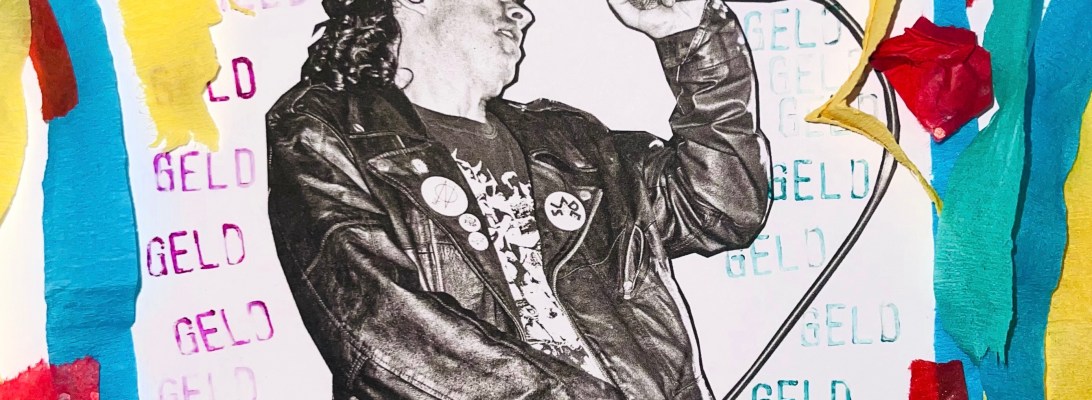
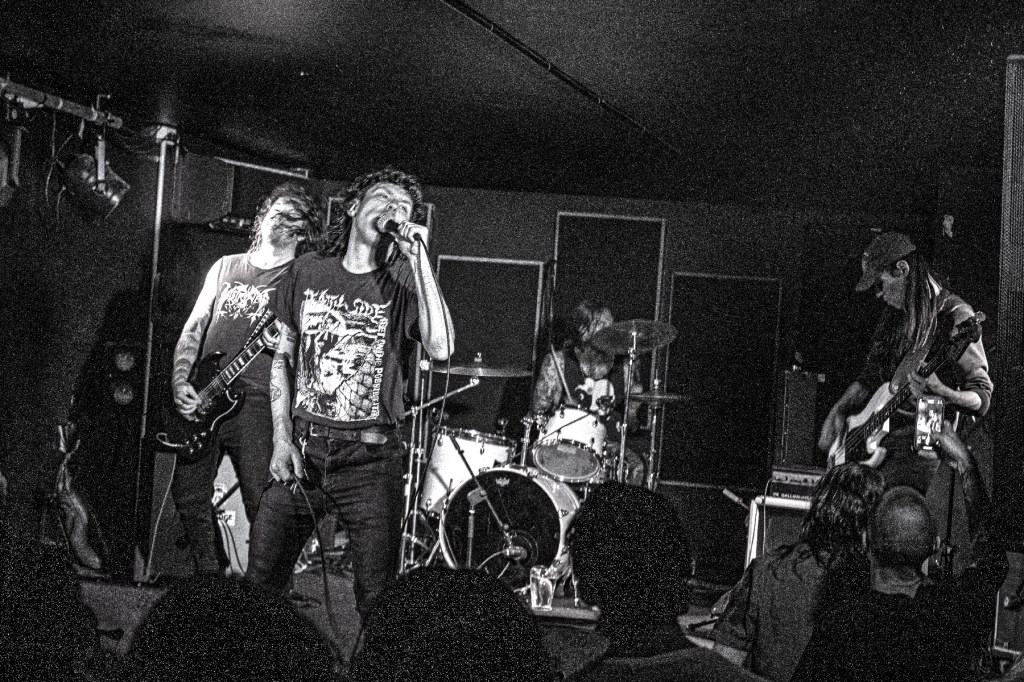
Al Smith from Geld: ‘It’s quite confronting to feel so much emotion surging through you.’

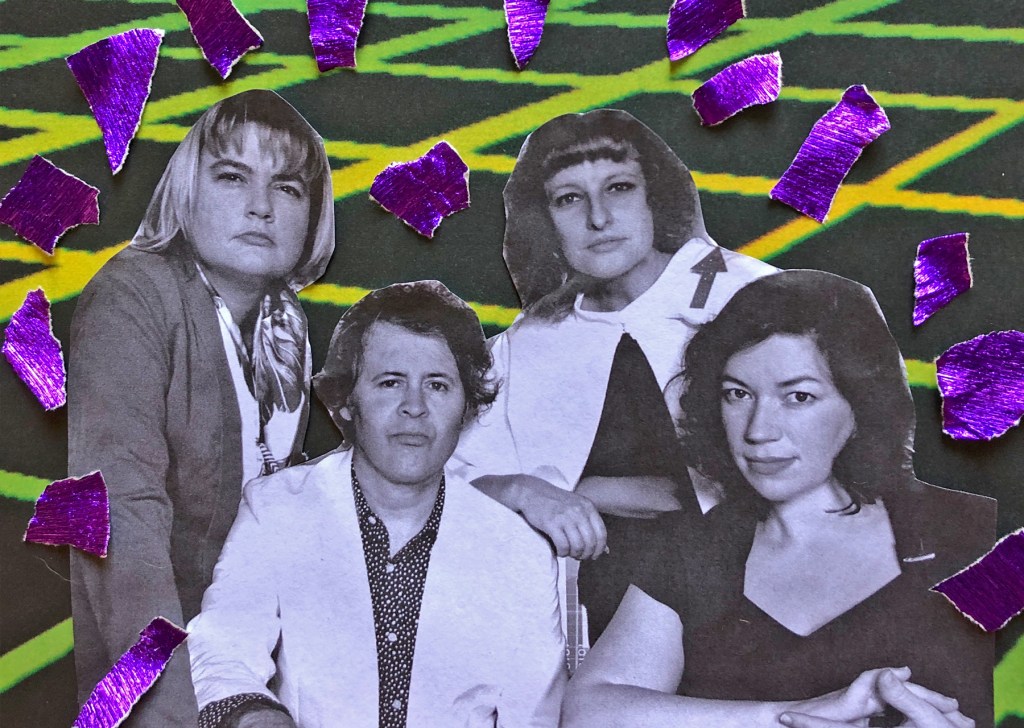
Original photo: Jhonny Russell / handmade collage by B

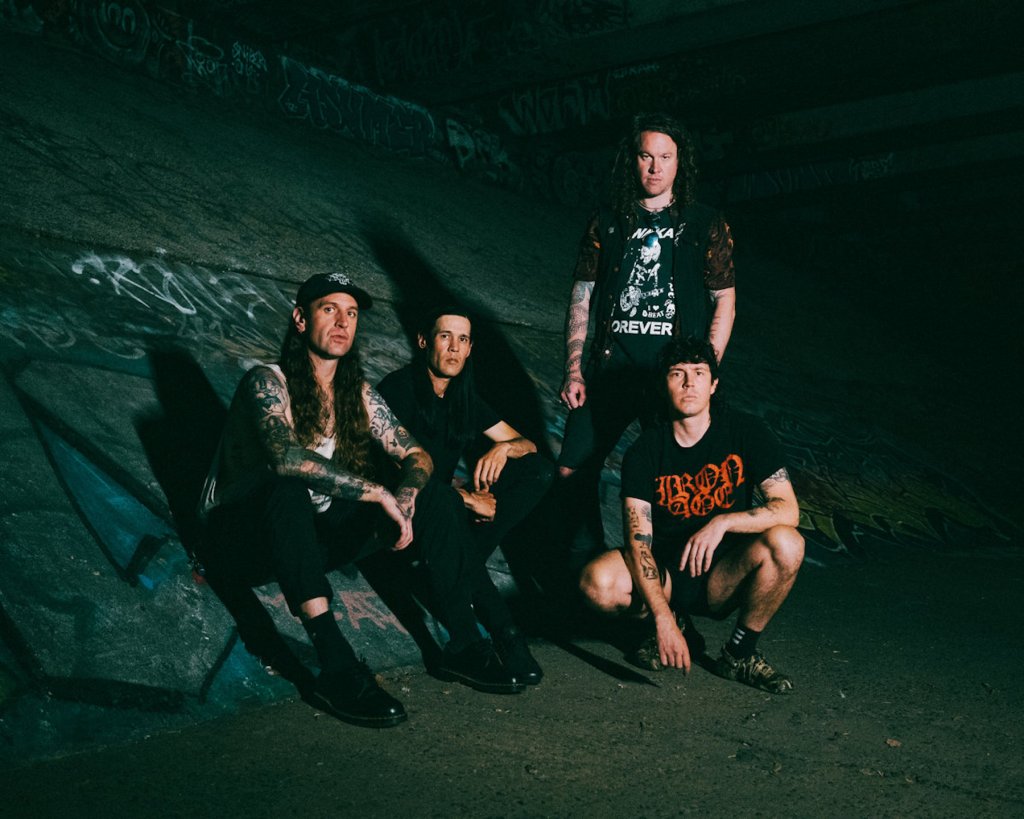
On album Currency // Castration Naarm/Melbourne hardcore band, Geld, have found a perfect balance of ferocity and ecstasy. Capturing the raw intensity of anxiety and the transformative power of release, they’ve dialled it up, coalescing all they’ve done before into making a brilliant record, their best yet. The album never drags, and it’s not the heavy moments that hit hardest, it’s the points of difference that have helped Geld carve out their own identity and enables them to stand apart from the heavy pack.

Geld’s guttural vocalist, Al Smith, sat down with Gimmie for an hours-long chat. He discussed the band, their album, hardcore, and the isolation the band has felt. Al also tells of wild shows, having a boner for community, and of a tour where he could have died. Additionally, we discuss Turnstile, soapboxes, and mental health. He also speaks about a Naarm/Melbourne band deserving of wider recognition, and his involvement in other bands with new releases in the works: The Neuros and The Vacant Lot.

In a couple of years, I’ll have been chatting with punk and hardcore bands for 30 years. I’ve been doing it since I was teen.

AL SMITH: Wow. There’s so much stuff in the scene aside from being in bands, those auxiliary roles of photographers and writers that are important. It seems like there’s no one actually doing any writing much at the moment. What you’re doing is pure music journalism.

Thank you. I just write about something I love and share that with people. 

AS: When I was young, I came from the suburbs and didn’t know anyone in music. The way that I would consume music and find out about stuff was through community radio. I had my Maximum Rocknroll subscription and I’d go down to Missing Link and get all the fucking zines and pore through it all. That’s not really a thing that happens anymore.

We started Gimme online during the pandemic and started doing the print issue too. In the first year I interviewed over 150 bands. We mail the print zine out ourselves, and it was really cool to see where it goes, a lot of regional places, which is awesome! We’d get nice messages from people that got it, saying that it really helped them feel connected to music and the scene, especially during lockdowns.

AS: That’s incredible. When we got interviewed to do our bio. Everyone at Relapse was like, ‘Look, if there’s going to be one thing, aside from the record itself, that you actually think about and want to get right, it’s the bio.’ Because every single publication is just going to rinse and repeat that.

I was vanity searching, seeing what people have been saying about the record. If someone does 200 words aside from them just posting the bio, that’s a lot of effort, it seems. It’s wild that that’s the landscape of music journalism.

On a grassroots level, it seems like people are just kicking these bios down the road. I was reading Gimmie, and it’s obvious you guys really care about music. It’s a dying art form to do actual hard music writing. What you’re doing is cool. We were really happy that you asked us to have a chat. 

I’ve been wanting to talk to you for ages! I only knew you through your live shows and music, and you seemed pretty scary, so I was reluctant to ask. Talking to you now, obviously you’re not scary.

AS: [Laughs]. It’s all pretend!

Just before we started chatting, I was really nervous, despite doing this for so long I still get nervous before talking to anyone. To be honest, I feel kind of awkward anyway in social situations. 

AS: I’m the same. With a one-on-one, I’m like aces. But if you get a group of four people, I’m shocking. But also, I could imagine it being a little confronting because you don’t know what this person’s gonna be like as conversationalist. Maybe you’ll be like, so how was making the record? And they’re like, ‘Oh, yeah, it’s fine.’ That’s it [laughs].

There’s lots of things I want to talk to you about, because I LOVE Geld, and other bands you’ve been part of as well. Why is music important to you? 

AS: I was a bit of a loner when I was younger, and getting into music in early high school was a thing that I actually cared about. The only reason I wanted to start playing in bands is, I wanted to contribute to the cause. All these people that I love from afar are doing all these fantastic things. And it feels disingenuous to get so much out of something without throwing your hat in the ring. Like you with writing, or again, photographers, or people that love to book shows and stuff. It’s contributing to something. A huge part of it was, on a personal level, my own sense of agency.

Playing in Geld has been something where it’s like, we’ve all been in heaps of bands and we’re all a little bit older and we just wanted to do a band that was the synthesis of everything we like about being in a band. That includes friendship, the social dynamic to how its collected in an artistic standpoint. It’s weird to think about it because I’ve been playing music for, shit, maybe almost going on 20 years now! It’s now just, like, fucking wallpaper—one big thing. 

When the pandemic happened and we didn’t have shows, that routine that we’re all so used to wasn’t there. For a while, it was refreshing because it can be exhausting going to shows and doing the whole thing.

When that period of lockdown was over and we could somewhat safely start going to shows again, I had this real come-to-Jesus moment where I was like, holy shit! I totally took for granted how much this enriches me as a person and how it’s like, magic. My mental health started to get so much better. I started going to shows and started playing shows again.

There’s that old adage: someone’s like, ‘Oh, I’ve got to go play this show,’ or ‘I’m going to The Tote again,’ or something like that. When it all came back, there was this refreshed air of positivity. I think a lot of people had the same experience as me. It was like, oh, this is actually a really important community that does offer lots to people.

It’s sort of always been the only thing that’s really made sense to me. It’s like an extra limb. It’s just sort of there.

I totally get you because I feel the same. We wouldn’t have stuck with this so long if it wasn’t important to us. Music gives us so much. You find friends through music. It’s gives you community. It helps you discover and express yourself. I found my husband through music. All the things that I do, it’s pretty much because of music. It can give a sense of purpose. 

When I first got into the punk and hardcore in my teens, I became really obsessed with it. For a while, it became so much part of my identity. As I experienced more and grew as a person, I learned that there’s a much bigger world out there.

AS: Yeah. I’m always a little tentative to drink the Kool Aid too hard. Because the last thing you want to be is a really fucking boring person that is just like, ‘My personality is hardcore,’ that sounds kind of gross.

Totally! 

AS: You can draw a direct line from punk and hardcore—by extension, music in general—to basically everything in my life. Like you, I met my partner through music. My entire friendship circle is sort of geared around this thing, and, again, something like the pandemic made you take a step back and realise, oh, okay, it is a pretty seismic change to take away something that you’re constantly doing; you just take it for granted.

At one point in my life, I enlisted into this thing because I cared about it from a personal level. It started to permeate into other parts of my life, like my social circle. I’m super lucky that I was around a scene that was a real diverse scene. A lot of people aren’t as lucky as us to be in a community that has different folks from different genders and backgrounds. I’m so lucky that I had heaps of women in my life—strong women—that were able to help shape a lot of my core values, that have sort of unconsciously come into me. I’m pretty happy with where I stand with my values right now.

Honestly, if you do the Sliding Doors-thing, and I went off and did something else, maybe I wasn’t going to have those values, and maybe I wouldn’t have this kind of mindset that I hold pretty dear. Along with having mates to get pissed with and being able to see sick bands, there’s also a certain moral compass that gets defined within people in a small community that is so diverse.

What are the things you value? 

AS: I’ve got a real massive boner for community. Ultimately, at the end of the day, those are the things that are important: having a connection to people and being able to create and do things in this very holistic context. We all take it for granted from time to time, but it’s something that’s so enriching for so many reasons. I guess I’m the biggest lefto soy boy cuck there is! [laughs].

To be honest with you, it’s somewhat uncomfortable to talk about your values because I don’t want to be like, ‘Of course, I’m like a far-left leaning person that is very heavily centred around community.’

I know what you mean. I asked about your values because you mentioned you’re happy with them and I was curious to know more. I got many of my values sparked from being part of our community, even just through listening to punk bands, reading liner notes, and interviews with bands, I learned so much. For example, it made me take an interest in politics and influenced my dietary and lifestyle choices.

AS: Those kind of things can spawn from a superficial standpoint, like, ‘That cool person is doing that thing.’ But then after a while, you can look back at it and think about it, and it’s like, ‘Oh, no, this is actually something that’s pretty cool.’

I’m endlessly grateful that I fell arse-backwards into a community that was able to help me shape my ideas in a pro-human context. Because if I was to be ingrained in a corporate community or something like that, I don’t know if I would still have these same values. That’s kind of scary.

People scare me most days. 

AS: Oh, that’s because everyone’s awful by and large. 

[Laughter]

Don’t even get me started. That’s part of why I do stuff like interviewing people one-on-one or doing behind-the-scenes stuff. I don’t want to be out the front or the face of anything. I’m not interested in attention. I just want to put good work out into the world to counter all the negative I see and experience.

AS: Yeah, I know what you mean. Having a one-on-one conversation, there’s a lot more meat on that bone.We’ve done a bunch of interviews with us as a band, and you kind of fall back into canned answers. Questions are the same, and so you’re just saying the same thing, and it feels like you’re just reeling off a script a little bit. Not that it’s not true, but there’s only so much you can talk about when someone’s like, ‘So you’re a psychedelic hardcore band…’ That was coined one day, and we feel really uncomfortable about it.

I get that; I find labels pretty flaky in general. Geld have a new album called Currency // Castration. One of the first things I noticed, is the title is two meanings for geld. 

AS: Correct. We wanted that title because it’s quite good from a visual standpoint; it looks pretty stark. Playing in Germany, basically the healthiest scene in Europe (it might have changed since we were last there, but it was so when we played seven or eight shows there), without fail, there would be some lovely but also equal parts punishing German person come up to me and be like, ‘Did you know that Geld means money in German?’ We were like, yes, we have access to the internet. That’s actually why we named it that. I would be like, ‘Do you know it actually means castration in English?’ And they would be like, ‘Oh, I don’t know.’ That’s been a running gag in Geld for a minute now.

To be a bit more serious about it, this record was also the most collaborative record that we have done thus far in terms of how many members are actually contributing songs. We also did think it was a pretty concise synthesis of what we thought the band was like, a good representation. For an all-encompassing record, it suits to have an all-encompassing name. 

I don’t know if we’ll make another record that we feel is so encapsulating of what we want Geld to be, or what we think Geld is supposed to be at this particular time.

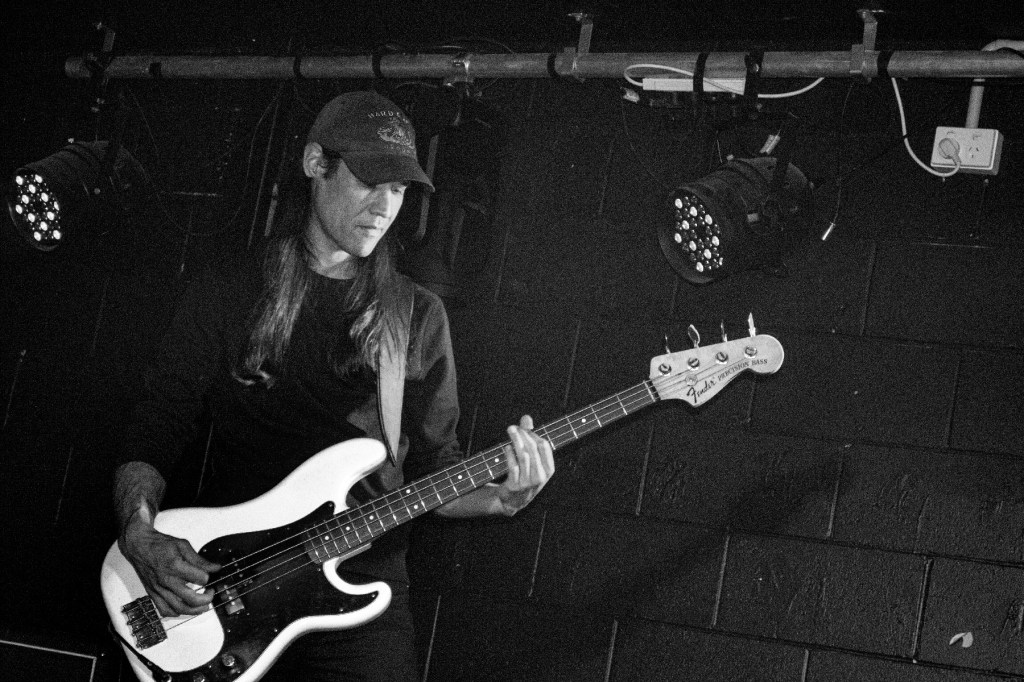
Photo: Jhonny Russell

Album opener ‘Currency’ and closer ‘Castration’ are instrumentals. ‘Across A Broad Plain’ in the middle is too. 

AS: A lot of the time when we’re writing these records, what we’ll usually do is write anywhere between 15 and 20 songs. There will be no preconceived notions of what the record is supposed to be or what it’s going to sound like, or there’s no kind of conceptual identity to it. We’ll just keep writing and writing and writing and writing and writing and then after, if we feel like we’ve got enough of a base to work with, we’ll start trying to put things together and see, okay, do we have a record in this? That’s when the songs go onto the canvas and we just look at it and we’re like, okay, does it need anything more

Most of the time, we are like, okay, it probably needs some kind of interlude. It needs some sort of intro, it needs other things. So I guess for a lack of a better word, the ‘Currency’ and ‘Castration’ situation are an aesthetic thing, placeholder titles for interludes that we think are important to make the record feel complete and concise.

I noticed that song ‘Hanging From A Rope’ has the lyric: Across a broad plain in the new age. That song appears before ‘Across A Broad Plain’; are they connected in any way?

AS: Not necessarily. I just thought that it was a good line. ‘Hanging From A Rope’ is definitely the most effort I’ve ever put into lyrics of any song at all—I tried a little harder. Not that I don’t try with lyrics otherwise. If you’re singing about what you know… [pauses]. I’ve always felt really uncomfortable… [pauses again] what’s the best way to put this? I don’t want to dump on anyone. But I feel comfortable standing up on a stage and screaming about something that I can then look back at and be like, ‘Yeah, this is something I believe in and this is something that I can speak truth to power to.’ 

As a cis white middle-class man [laughs], there is a lot of shit going on in the world that is really fucked up, but I am also someone that is directly benefiting from it because of who I am and my background. So, it feels disingenuous to talk about like… what are the things that actually are going on with me. Most of it is inward and it’s my own mental health. My anxiety and things that are going on inward feel much more comfortable to me. Getting up on a stage and screaming about it, rather than talking about current events. I also feel uncomfortable with people time stamping songs.

‘Hanging From A Rope’ was from a lyrical standpoint is all pretty introspective, like most of the record. That’s always been a running theme in Geld. It’s not like we are nihilistic or apathetic to the things going on around us. But, if everything has been focused inwards, all of the anger comes from our limitations and the things that we struggle with personally, rather than us projecting out what is wrong with the world. Because as a bunch of dudes, I don’t feel comfortable with that. I feel much more comfortable talking about everything that’s wrong with me rather than everything that’s wrong with the world. I understand how some people would see that as difficult.

Everyone has problems. Everyone’s problems matter to them, and sometimes someone is going through something that doesn’t seem big to you but it’s massive to them.

AS: For sure. You never want to get into a fucking dick measuring contest with someone else’s problems because there’s no baseline, there’s no manual for grief and pain. If someone feels something, they feel it, period. That’s it. 

It’s cathartic for me in my own mental health, writing about that stuff. 

By you being open and sharing those kinds of things, it can help others that resonate with it. How many times have you listened to lyrics and thought, ‘Oh my god, this person gets me!’?

AS: Totally. Also from another angle, Geld has never set out to be a band that sounded different. We’ve all done genre bands before. We’ve all been in D-Beat bands and did a whole bunch of different kinds of music. Those bands are great, some of my favourite bands in the world are like hard, dyed in wool genre bands. But we wanted to do something where there is literally nothing that is not on the table. The only prerequisite is—to do something good. We all have this trust in each other to be objective about what is good, and what is bad, and have a really good bullshit filter. You can do whatever you want in the band.

In the beginning at least, that ended up isolating us a little bit because we were too much of a hardcore band for the punks and too much of a punk band for the hardcore bands. We felt pretty alienated. Maybe unconsciously, that permeated into the way that I’d write lyrics, because I would feel that. If the band is focused inwards, it makes sense for the lyrical content to toe the line with that.

There’s themes of alienation, isolation and anxiety on the record. A lot of songs are about your own mortality and time ticking away. 

AS: Yeah. Bemoaning the concept of time being created. It’s a day of me just being stressed as fuck and thinking, ‘Who the fuck started this?’ Someone did it. I want to find that motherfucker and I want to beat them up because they’re the worst. Someone just went, ‘Aaannd, go!’ and that’s how our lives work now. 

Yeah. Then you’ve got calendars and everything else that measures our existence, and keeps us on a schedule. 

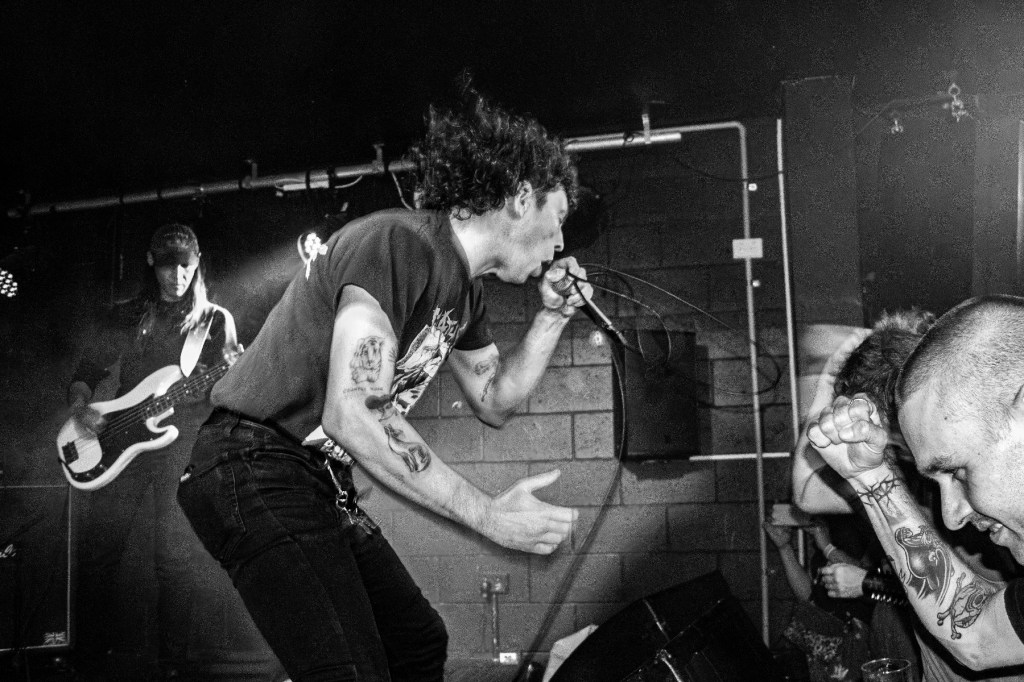
AS: [Laughs] Another thing, from an aesthetic point of view, when I deal with anxiety in an episodic standpoint, re: panic attacks, obviously they’re bad experiences, but the other side of the coin is that that’s one of the times in my life where I feel the most powerful. Because just in terms of pure energy that is being put out, it’s quite confronting to feel so much emotion surging through you. In the most uncomfortable way, it’s also cathartic. 

I’ve always related the idea of all the hardcore bands and punk bands I like, when you can see sound, the aesthetic correlation; punk and hardcore sounds anxious. Everything is a tight spring that’s about to break. I’ve always loved it so much, it’s like techno. It’s about attack and release. That’s why people can mosh to it and people can dance at club nights. I see a like direct correlation between anxiety, pent up and then releasing.  

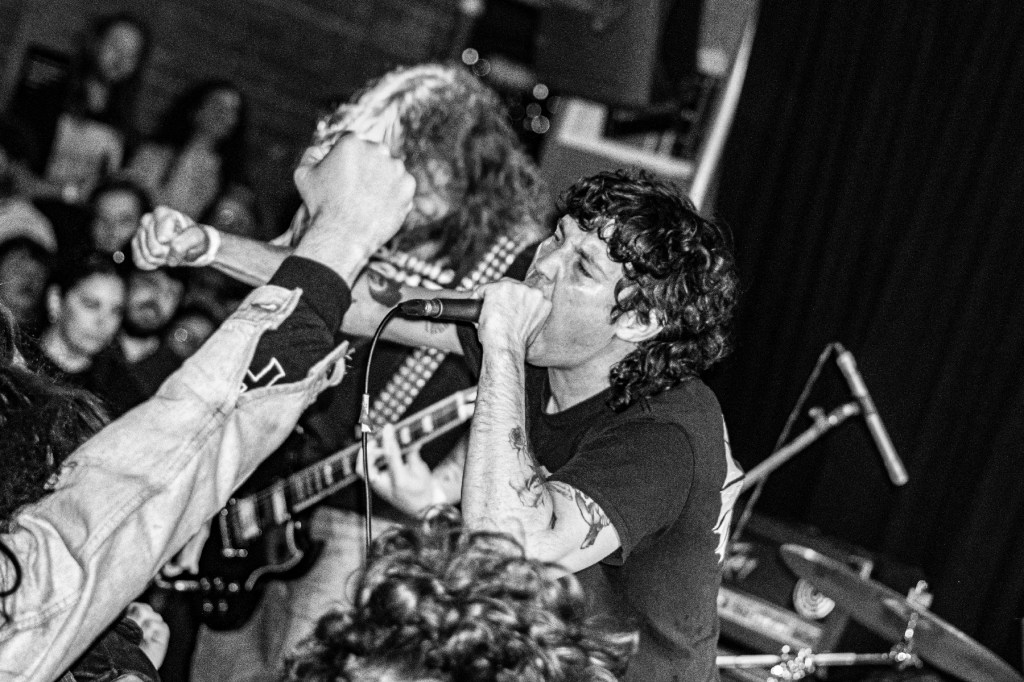
Photo: Jhonny Russell

Yeah. I know that feeling.

AS: Isn’t that the best feeling in the world? Where you are seeing a band that is killing it and then all of a sudden, out of nowhere, you realise that your whole body is tensed. It’s just like, ‘Oh, I haven’t breathed in a while.’ [Laughs].

Totally! That was me at your show on the Gold Coast when you played Vinnie’s Dive.

AS: That was such a weird show [laughs].

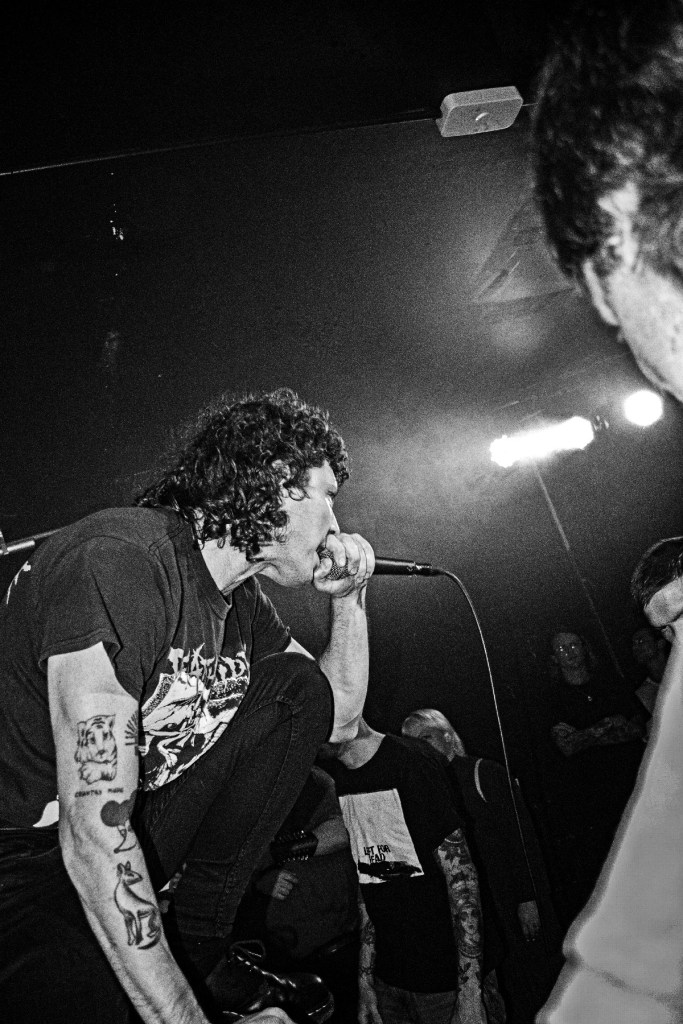
It was the wildest show I’ve ever seen there. One of my all-time favourite live moments ever, is when you were talking to the crowd and told them, ‘Do better!’ Just after that, I saw a table thrown right into the middle of the pit. After your set, I saw at least five people bleeding. 

AS: Sorry. Now we play on a lot of different lineups, a lot of them being HxC lineups, and they don’t really know what to do with fast music because we’re not a two-step band.

For the longest time, again, being a generally uncomfortable person, I wouldn’t say anything to the crowd. Because it’s staunch and it’s stoic and it has this nihilistic standpoint… I’m like, I’m not even going to speak to you. I’m just going to yell and yada, yada, yada.

And then after a while, Cormy [Geld’s guitarist] said to me, ‘Hey, you should actually say stuff and engage because it’s a good thing—you should do it.’ I was like, ‘That’s so stupid, I hate that!’ Eventually, it started to happen, and I started to actually engage and verbalise.

I always thought that the things some people said on stage was sort of time-wasting, placeholder things like, ‘Oh, yeah, thanks for coming out,’ stuff like that. When you see those hardcore bands, the singer going off on some fucking diatribe, I’m just like, ‘That’s so uncomfortable. I feel so weird about that.’

But it’s true, though, people actually engage with the words that you’re saying. People aren’t necessarily present of their own place at a venue and someone’s like, ‘Can you actually do something?’ They’re like, ‘Oh, okay, what? Sure!’ Again, it’s all pretend.

I was standing at the front at your show, and when that table got thrown, I was like, ‘Nah, I’m out.’ I’m going to go stand at the back now because I didn’t want to get hurt.

AS: I seem to remember me standing on that table and immediately regretting it because it was not stable. 

So we were talking about you telling the audience to do better…

AS: Oh, yeah. Geld, we’re really big pro wrestling fans. It’s not a character, but… it would be disingenuous, especially for hardcore front people, to be like, ‘Oh, yeah, that is totally how I am all of the time.’ Like, no, it’s not. Even if it is honest with yourself, it’s like this cartoony amplified version.

For me, it’s quite liberating to admit that it’s just a fucking… I’m just being antagonistic because… I don’t care if people move. It’s not going to keep me up at night [laughs]. But it’s fun playing to it. I get a giddy little thrill of just poking the bear and seeing if it’ll incite some kind of reaction. And it did at that show—win!

After seeing that show, we thought the Jerkfest set you were going to play, would be similar so we sat up on a table to avoid the craziness. But it didn’t end up being as wild.

AS: I’ve gotten to this unhealthy way of gauging the quality of shows by how much chaos happens. That is a bad road to go down. Especially because there’s a lot of variables that go into people going crazy and you would just be like, ‘Oh, not many people moved, so I guess we suck!’ Being a hardcore band that doesn’t make people move, you think it’s a bad show. But that’s not necessarily it at all. 

Do you have a show that you’ve played that was really memorable?

AS: Yeah, when we played in Boston in 2018, it was off the back of us doing Perfect Texture, the first record. People had moved at our shows before and we had some pretty crazy stuff happen, but it was the first insane show and probably because someone happened to film it. It’s on YouTube. I remember watching that back and it was like, oh, yeah, all of these wasted years seems like… it was really validating. 

it was during the summer in Boston and it was just like it would have been at, conservatively, north of 35, pushing 40 degrees on stage. Soon after that show, I ended up getting pneumonia. We still had four or five dates on the tour. I’m about to say something that’s going to be a real big flex, but if I hadn’t known it was pneumonia, 100% would have cancelled shows. But I just thought I had the flu or a bug. 

Every single night was hell. I was in the van shivering, freezing and sweating and just before we’re about to play, someone from the band would knock on the van window and I’d be, all right, let’s go do it! Peel myself out of the van and go and do it. I immediately get back into the van after, and be freezing. It was terrible. 

The last show was in New York and I had a couple of days with my partner. Luckily, I got travel health insurance and I went to the doctor. I was honest and told him what was actually going on. He was like, ‘You fucking idiot! You very easily could have died! Pneumonia is straight up, like water in the lungs. You had water in your lungs and you were screaming!’ [Laughs]. In a toxic masc[ulinity], part of my brain, I like, ‘Oh cool.’ But then I felt so embarrassed, like, all humans are supposed to not kill themselves. I felt like I did really badly at that. It was embarrassing. 

That’s so full on! Is there anything you do to look after your voice? Have you taught yourself ways to scream where it doesn’t harm you? 

AS:  Yeah, I think the latter. I try not to be an idiot about it because I have lost my voice on tour at times. Speaking of embarrassing moments, that is terrible. 

Do you feel like you let people down when that happens? 

AS: 100%. We played a show in Leipzig, and I had lost my voice. There was 250+ people at the show, and I was standing up in front of people being, ‘Sorry!’ It’s like, oh, god, no. I try and not overdo it. There’s ways to fake it without actually yelling. I’ve found a spot, because I haven’t lost my voice in a really long time.

You mentioned that playing the show in Boston, you felt really validated; did you feel validated signing to Relapse?

AS: Super. It’s so very validating! The nerdy suburban kid in me just feeling like I was listening to all of those Relapse bands when I was a teenager. All of us feel really over the moon with it.  

Because of the pandemic, by virtue of time, we ended up, this is the longest we’ve ever worked on a record. We  were working on the record for two years. It’s super validating, and it feels super rewarding to know that, the scope that Relapse has in terms of distribution and, how much effort goes into what they do; they’ve all been so fantastic. It feels good that something you’ve worked on for so long is getting the platform that is rewarding after that whole process. 

You guys have been doing it for sometime! In the next couple of weeks, it’s the anniversary of your first demo.

AS: Obviously you know more than I do [laughs]. It’s been a while. 

Your first demo came out in 2016.

AS: Oh, my god. Fuck. Yeah. So we’ll be skirting around 10 years soon. 

The discography that we’ve had, we are hyper-aware that it’s atypical for hardcore bands to exist for this long, and getting to a third record is not the most common thing for hardcore bands. We’ve spoken about it a bunch of times; we definitely do attribute that to the initial mission statement of Geld being a band that we all want to be in and that we all are concerned about each other. We’re concerned about how we all feel about it. We’re concerned about being able to be as artistically and socially free as possible.

It’s meant that whenever we finish a record, we don’t have time off. We’ll finish the record, and then it’s rehearsal the next week, and we’ll just start writing the next record. The initial mission statement of ‘nothing is off the table’ means that it’s always enriching to write stuff. It’s not like, ‘Well, I guess we’ll just cut out this riff again.’ It’s, ‘No, let’s mess around and see what happens.’ That’s exciting.

We rehearse at Cormy’s house and have a bungalow that has been really poorly soundproofed. Cormy just had his third kid. There is another side, quite a familial side to it, because we usually roll up to practice, we spend time with Cormy’s wife and the kids. We hang out for a while, play with them. And then eventually we’ll just go and rehearse. We’ll rehearse for like a tight 2 hours and then bail. So we’re not at a rehearsal room on a Tuesday night being either hungover or just mentally bereft from the week ahead, being in a rehearsal room for like 6 hours. That’s so draining and unsustainable. We’ve put a lot of work into the personal sustainability of the band. That attributes to being a band for almost 10 years.

In that 10 years, we haven’t had a break. There’s been forced breaks of someone might go on holiday or something like that, but usually it’s, Thursday, every week we go to practise and do the thing. No one’s really over it. We’re just going to keep the thing rolling. 

Photo: Jhonny Russell

You have something to look forward to every week? 

AS: Yeah. I get to hang out with everyone. I get to see Cormy’s family. Cormy and I are the only people that drink at practise. That’s one of my socialising nights. I’m sort of belabouring the point right now, but we’ve designed the band around us being happy and being enriched, so we want to actually do it. We want to make it the best thing it possibly can be. We are in love with this routine and this process that we’re in. 

Nice! One of the songs on the album is called ‘Success’; what does that looks like to you?

AS:  To be able to do this, you could argue that signing to Relapse is one of those things that would suggest that we have grander ideas of what we want to accomplish. But I think it’s more so that we just want to be a success making records that we’re proud of; that’s the most important thing. And going on tour and all of the other stuff that we got going on, that’s all just icing on the cake.

Success is feeling like we have done our best. When we eventually stop Geld, we’ll be able to look back on it and be like, ‘Yeah.’ We’ve been really lucky to get opportunities like Relapse. Being able to look back on that stuff and be like, these are opportunities that we seized rather than chased.

Someone made a gag the other day, ‘If we wanted to be successful, why the fuck would we start a hardcore band?’ [laughs]. A successful hardcore band is the biggest oxymoron of all time. There’s the gag of being ‘hardcore famous,’ where it’s, ‘Oh, you sold a thousand records.’ We’d start a fucking hyper-pop band if we wanted to actually be successful.

You’ve got bands like Turnstile, who I love. They’re a hardcore band. 

AS: Yeah. Turnstile is incredible! But they’re also incredible because they obviously did whatever the fuck they wanted  to. They’re a really good example of a band that emotionally puts work into connecting with people. It makes old-head hardcore dudes really mad. 

I love that. I love how Turnstile pushed hardcore to make something new. Glow On was one of my favourite albums the year it came out. To me it’s got all the cool bits I love from hardcore, but without all the gross bits of hardcore like toxic masculinity.

AS: Of course. Hardcore is inherently gross. [Laughs].

It seems disingenuous for someone to dump on Turnstile when it seems so (I’m starting to reuse words here but whatever) disingenuous, that hardcore as a style of music is this synthesis of emotion, and Turnstile have been so fantastic at that—they’ve opted for a different emotion. That emotion is still super synthesised and really full on. 

Cormy went to see Turnstile when they played here, and he was like, ‘Oh, my god!’ and was in awe of the reaction that they incite. It’s still aggressive. You still see motherfuckers headwalking and aggressive stage diving, but there is an air of positivity to it. You’d be the biggest idiot in the world if you didn’t see that, and be like, ‘Yeah, okay, that’s pretty cool!’

The guy who mastered your record, Arthur Rizk, played guitar on a Turnstile record. 

AS: See, this is some fucking Nardwuar bullshit, you know that! [laughs]. Did Arthur actually play on a Turnstile record? 

Yeah, he played additional guitar on the Time and Space record. 

AS: Really? I don’t believe you. 

The info is out there, have a look. It’s there.

AS: I believe you. 

I love the positivity that Turnstile have. Even though hardcore is an aggressive kind of music, I’ve gotten positive things from it. It’s been a positive force in my life. 

AS: Exactly. That’s like, again, going back to that’s the way that I felt connected to people. And obviously Geld isn’t a positive band, but I would like to think that there is some level of positivity in the amount of emotion that anyone puts into anything. 

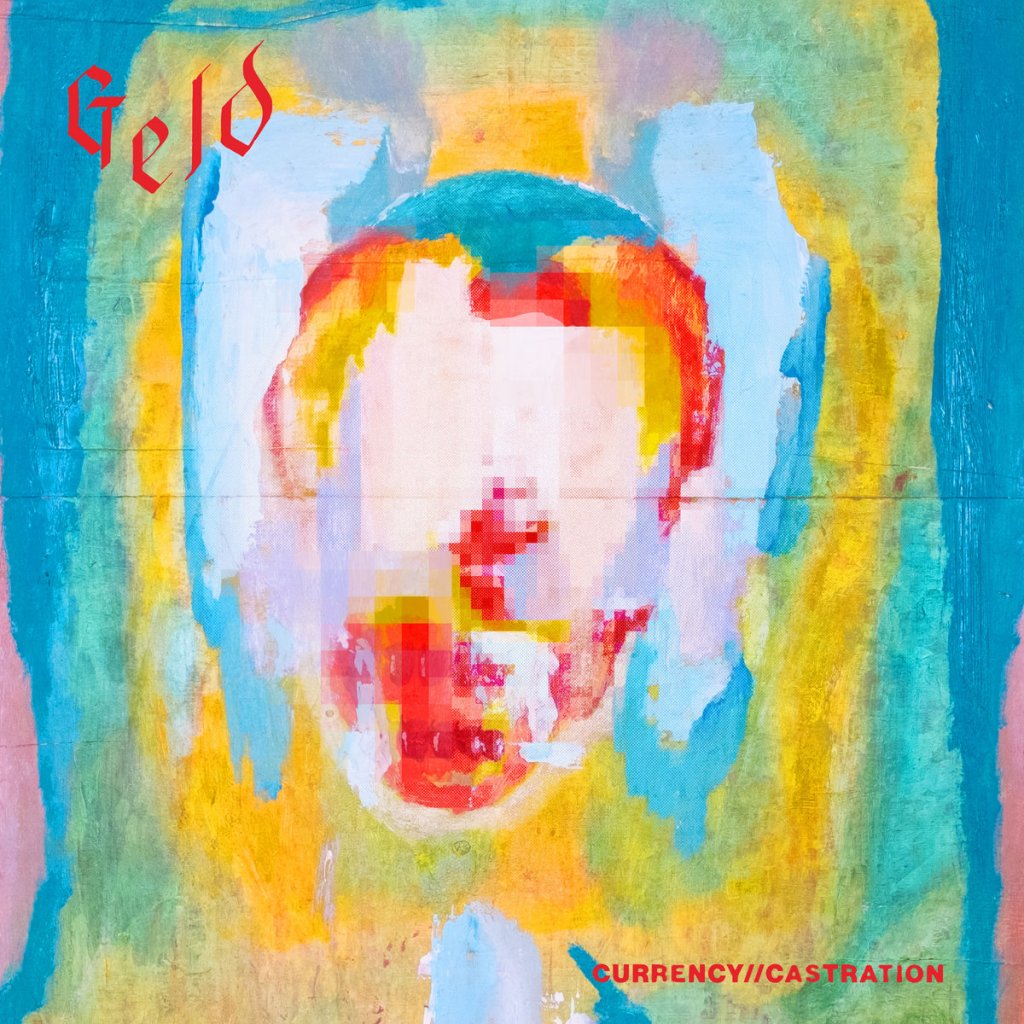
The artwork for your album has a pretty positive and happy feel to it. Like, the colour choice. 

AS: `I think we were talking about earlier, about us not wanting to subvert hardcore, but just do whatever our take on it is. If that happens to be something that is currently going on or what is a standard thing, we’d be like, ‘Okay, that’s fine,’ but at the same time, we never want to be that. One of my big pet peeves is people doing a style of music and trying to intellectualise it because it’s just, you know, ‘I’m playing hardcore, but I’m actually a smart person too.’ So I’m gonna do this in an interesting way, and it just ends up being super contrived and, like, really unnecessary.

The only time I think that we have wanted to subvert stuff is through, the artwork on records. 

Album cover painting by Thomas Rowley

Yeah, I’ve noticed that with all the Geld artwork. I really enjoy what you’re doing with it.

AS: The main thing is that for Perfect Texture (and for all three records, actually), Thom the drummer for Geld, he painted the new record cover and he painted the Perfect Texture artwork. In fact, the Perfect Texture artwork is right there [motions to the wall].

You have it! That’s awesome you have the original.

AS: It’s not the original. You know Tom Lyngcoln? 

Yeah, I know Tom. 

AS: That bastard owns it [laughs]. Thom painted that, and then shortly after Tom Lyngcoln bought it, and we were like, ‘Oh, shit!’ We really wanted to use that for the record cover! So we had to go to Tom’s house in St. Kilda, and take a photo of it.

I love the music Tom makes.

AS: Yeah. We’ve just got so many good bands right now. Swab is one of my favourite bands in Melbourne. They deserve to be gigantic!

We love them too! Christina [Pap] is in my punk book I’ve been working on for a couple of decades that will be out soon. It’s been important for me to include voices that don’t normally get a chance to be heard in punk rock and the history of punk projects. Women, people of colour, queer and non-binary people. Lots of people could learn a lot from the punk community

AS: 100%. There is a weird kind of utopian level of idealism that permeates through punk and that doesn’t always shake out. Obviously, no community is perfect and has issues within it, especially when it comes to diversity and especially when it comes to hardcore. But there have been some pretty incredible stories from ultra-diverse people. It’s not all just white dudes having a yell, shirtless.

[Talk continues about the punk book]

AS: I’m pretty overwhelmed by this conversation. The attitude that you bring to all this is so infectious. There is definitely a purity to the way that you’re speaking about your book and the things that you want to talk about within punk and hardcore. It’s pretty inspiring, to be honest. 

That’s the plan!  

AS: Do you actually have any downtime ever? 

Not really. But everything I do is fun. So usually it doesn’t feel like I’m working. My day job is working as a book editor with fellow Indigenous writers to tell our stories in our own ways. I just like making art and talking to people too. I like sharing things that I find exciting, like we do with Gimmie.

AS: Are you like me? Where unfortunately for my friends and my partner, I’m a bit of a Punisher when it comes to things I’m excited about? I have that feeling when I might be overseas or somewhere, and see something that moves me in a way, and I wish that I could transport a specific person that I’m thinking about to be there right next to me. So you can hold them and have them experience the thing that you’re experiencing. 

Totally! That gave me goosebumps. 

AS: Then it can transcend into something that’s a little bit more like punishing, where it’s like, ‘Have you heard this band?! You’re showing a band to someone and you’re listening to a song and you’re like, ‘This bit, ready?’ And then, ‘Isn’t this the greatest thing ever?’

Yeah, and then you rewind it, so they can hear it again!

AS: Oh, my god, yes! It’s like I have all of this stuff inside me right now, and it’s too much for me to bear on my own and I just want to give some of it to you [laughs].

All that stuff that you and Jhonny are doing, it’s obviously coming from a place of an emotional connection. That you guys are creating with the things that you consume and love and are wanting to actually permeate that emotion out into the world. That’s really cool!

Awww, thank you! That means a lot that you can see that. Well, I’m so excited about your new record. And it’s so cool that you’ve found a home on Relapse Records. I love when cool stuff happens for other people, especially when they work hard like you guys have. Like you were saying, the record is an amalgamation of all the things that you believe in that you have been working towards.

AS: Yeah. Bands always want to try and create the perfect package that will give someone all of the information that they possibly need to understand what you’re trying to do. I reckon we have done this on this record. But having said that, by the time the next record comes along, that could be completely different. We always threaten each other that the next record is going to be the ‘make it’ record, where I’m going to start singing-singing [laughs]. 

Yes! I’d buy that. 

AS: It’s kind of like, okay, we’ve done the record that we wanted. Now, let’s just be really silly about it. I don’t think we’ll ever do it, but you never know. 

It’s a really good feeling when you record, and it comes out exactly how you want it to be. Seldom does it ever happen. There’s a lot of accepting that maybe you didn’t get the best takes on something or maybe you didn’t spend enough time on mixing—you have to be happy with whatever it is. This album is the closest we’ve been to whatever the hell was in our heads.

Photo: Jhonny Russell

That’s cool! Is there anything at the moment that you’ve been super into or excited about? 

AS: I have started boxing and I am training for a fight now. The biggest thing that’s not music in my life right now, aside from my partner and all my loved ones, is, I am all the way into boxing.

My grandfather boxed, in an amateur sense. When I was young, he sat me down in front of the Lennox Lewis/Mike Tyson fight ,and I have followed boxing and MMA ever since. I’ve actually been training with one of my mates, Kristy Harris, she was a bronze medalist at the Commonwealth Games.

She’s great! She plays in a band called Eyeroll too.

AS: Yeah. That’s who’s been training me. I got to know her because she bought some Geld stuff and we got talking. She’s close buds with Emily from Straitjacket [Nation], who also boxes.

Boxing, like learning the steps, is like learning a guitar riff. It’s body mechanics. Learning those body mechanics was my way of being like, ‘Okay, I’m into this, so I don’t have to worry about the fitness thing because I want to do it. Totally. 

When you started playing music, you started playing guitar?

AS: I’ve been a guitar player mostly. I write a lot of the Geld songs. Well, everyone everyone writes a lot of the Geld songs now. The demo was mostly me. As the records have kept going its changed; I only have three songs on the new record.

What was your first band?

AS: Going back to high school, I was in a metal band called Trench Warfare. I played in a garage punk band called, Bad Aches. Then I played in a band called Gentlemen with Tom.

Recently, I’ve been playing bass in The Vacant Lot; it’s been great—obviously I’m a real massive nerd about Australian first wave punk. I can’t wait to record with them because it’ll be like the smallest part of me being involved in history of Australian punk. Obviously, Australia as a fucking massive colony fucking sucks. And having any kind of nation pride or civic pride is pretty fucking hard to do at times. But the one thing that I was speaking to Pip, my partner the other day, the one thing I actually am quite patriotic about is the particular brand of punk that Australia has created. It actually sounds like Australian, and it does sound like there is something unique to it. And that’s something that I’ve thought about quite a lot. There’s not much to be proud about about our country.

You did the band Rabid Dogs too?

AS: Yeah, I did that with Kate and Kirk. Yeah, I did rabid dogs with Kate [Curtis] and Kirk [Scotcher]. That was awesome. I was living with Lee [Parker] at the time, and we were listening to The Damned a lot, and we wanted to do a band like that. I don’t think it ended up sounding like The Damned. Then Kate moved to New York, and shortly after that, Kirk and I started The Neuros. 

That’s my favourite band you’ve done. The 7 inch is amazing! 

AS: We basically have an LP together now. 

I can’t wait! That news makes me super excited! Anything else you wanted to talk about? 

AS: Sometimes the most liberating thing is to say to someone, ‘Hey, I actually really care about this,’ and being excited about that, and excited about what you are, and what something actually means to you. There’s no shame in being excited about something. I’m excited about lots of things all day long. Who doesn’t want to wake up and be excited about something? Again, like when I was talking about getting out of the pandemic and people being excited to go to shows again, that people had previously taken for granted. Not realising what a fucking gift it is to be able to pay $15 and have an evening’s worth of entertainment that is literally world-class. It’s bananas!

I didn’t say it outright earlier, but a big thing for me about lyrical content and presence of being a singer in Geld, is understanding, like not wanting to make everything inward focusing when it comes to content. Because I am essentially, as an existential form, checking my privilege or trying to check my privilege. Because it’s difficult to complain from such a comfy seat that I have. I deal with my own problems, but at the same time, from a societal systemic angle, I got it pretty good. I’m privileged enough to not have to deal with experiences like that. And that’s terrible. 

Again, I never want Geld to come off like I am…[pauses and thinks] I don’t have a plight. There’s no plight in me. I’m lucky, and I don’t want to take that for granted when I’m expressing myself because there are people that I know, that deal with things from a societal standpoint that are much more serious. I never want to minimise that by being too loud about issues that I don’t really feel like I have the right to stand up on a soapbox and talk about. Does that make any sense?

It does. 

AS: People that know me or people that know Geld understand our politics, and I don’t want to use our platform for that. I have thought about doing a call to Country (Acknowledgement of Country) at the start of our sets and decided I don’t want to do it, because when I see a lot of white people doing it, speaking as a white person, I don’t want to claim any cachet from anyone else, from First Nations pain. Does that make sense? 

Photo: Jhonny Russell

Yeah, and I respect that. 

AS: Doing an Acknowledgement of Country in the community that we exist within, it’s not exactly an outrageous thing to do. But it’s just being conscious of the space I’m taking up and thinking about, why am I actually doing it to a whole bunch of people that already want a treaty? What is the subtext of me doing it?Am I doing it because I feel like I should? Or, am I doing it because I think that people will think higher of me for doing it? I know where my politics lie and it feels disingenuous, to me, personally.

I find it interesting that people talk about caring about mob and our struggles, and acknowledge they’re on our Country, but then how many of those people actually engage with us and actively support what we do or make. How many Indigenous people does the average person in hardcore know?

Yeah. For me, hardly any. I have a couple of friends that are mob, but what does that really mean? Nothing. Obviously I’m an ally, and I’m someone that cares about this stuff from a personal standpoint. But I never want my band to be a soapbox, or I never want my presence as a singer to be a soapbox for issues that ultimately have to do with me in terms of my responsibility, but also have absolutely nothing to do with me. Sometimes I can feel like it’s people taking up space. 

Speaking honestly about myself, if I’m making an Acknowledgement of Country, I don’t feel like I am doing enough in my personal life to warrant that, because a lot of the time when someone does that, what are you doing aside from that?

That’s what I always think—what are you doing outside of mouthing some words. I appreciate words but I appreciate action in the day to day more.

AS: People can always do more than what they’re doing. If other white folks want to do, do it. I don’t think it’s problematic or anything. I think it’s cool, but for me personally, I just feel a little uncomfortable about it. I apologise if this is too intense of conversation for a Sunday [laughs].

No, not at all.  I love these kinds of conversations, they’re important to have and I don’t see enough of them happening in the punk and hardcore.

AS: Totally. I really enjoyed chatting with you, seriously, though, it’s been actually really cool conversation. 

Follow @geldhc and check out geld.com.au 

Chicago Musician NNAMDÏ: “Everyone should use their skills in order to help people”

Original photo by Jess Myers. Handmade collage by B.

Chicago musician NNAMDÏ dropped two powerful releases in the last few months. The latest being EP Black Plight – which raised over $10,000 for not-for-profit organizations eatchicago.org and assatasdaughters.org. And the other being LP, BRAT (released in April), an exploration of needs and wants as a human being and of reaffirming life purpose that brings you joy while helping others. Both are timely releases, both just might have you taking a look at your own place in the world and remind you to ask; how I can help those in a place with less privilege? Good art engages and entertains; great art changes you—NNAMDÏ’s genre-bending, breaking and blurring songs – fusing math-rock, hip hop, pop, R&B and more – definitely did this for us.

How are you?

NNAMDÏ: I’m doing OK, Bianca. I just got home, I was at this food drive and we were giving out meals and food to people.

That’s wonderful, I love how there has been so many positive things happening in the community of late, it’s been a rough, crazy time.

NNAMDÏ: It is a crazy time. It’s really been putting into perspective the things that are important. During all this community building, donating groceries is important, especially now, so many people are suffering and can’t go to work or haven’t gone to work for a long time, it’s intense. It got me thinking, there’s always people going through it, this community building energy needs to continue even after all of this. I’m really trying to check myself so I keep the momentum going after things start to look up in the future.

You’ve mentioned that lately you’ve been learning a lot and seeing a lot of community building and positivity amidst all the turmoil that’s been happening right now; what are some of the things that you’ve been learning?

NNAMDÏ: I feel like I’ve always been for the reform of law enforcement… when you grow up in it, I think a lot of people have ingrained in their brain that it just is the way it is, which is not a great way to live. I’m learning from people that have always been pro community based programs and teaching. Especially in Chicago, there’s a lot of conflicting views where the money goes towards police departments, almost half of the city’s budget is spent towards police. There was couple of years ago where they were planning on building a $90 million cop academy and everyone that I met were against it. There’s been a lot of people in Chicago that are police and law enforcement abolitionist so I’m just learning from that; it’s always been a part of my mindset but I was never actively involved. I’m trying to learn from people that have been doing it for a long time.

Last week you released the ‘Black Plight’ EP with sales raising $10,297.78 with proceeds split between eatChicago and Assata’s Daughters and 2K of the total going directly to people in the community that are in immediate need of food and housing assistance; why was it important for you to make this EP now?

NNAMDÏ: There’s a lot of anxiety going on in my mind and it was forming into physical stomach aches, everything has been piling on for a lot of people this year and like most people, I just didn’t know how to handle it. I feel like it just needed to be done, I forced myself to finish it the week that all the shit went down. I’d gone to one protest but I get a lot of anxiety in those situations. I felt this was my best opportunity to use the skills that I have to help anyone. It felt really important so I pushed myself, I went pretty deep down the rabbit hole trying to finish this; it was going to be five songs but I realised that wasn’t going to happen. I did what I could and made sure it got my point across. I think everyone should use their skills in order to help people, music is one skill that I have.

I can relate with getting anxiety when going to protests. I used to go to them all the time but it started to get so overwhelming for me to the point of panic attacks.

NNAMDÏ: It’s wild to me that so many people can just chill in that situation, there’s so many different sounds, especially in something like this protesting violence; there’s horns and people on megaphones and people honking and chanting. It’s very intense. At any moment I’d look around and be like; is this person yelling a chant or are they yelling at some other person? Or is this person honking because they’re in agreement with what’s going on or are they honking ‘cause they’re mad at something? Also, just being engulfed in a huge crowd of people is never something I’ve really been into.

Same! Was there any significance in having the first song ‘My Life’ on the EP kick off with a drumroll?

NNAMDÏ: No. Musically it just happened how it happened honestly. It all just came together. I didn’t really put that much thought into how the music was being placed or where things were going, I just did exactly what felt right to me and felt like it needed to sound like. It’s very much a projection of emotions felt at that point in time.

Last week was also your 30th birthday, Happy Birthday! What did turning 30 mean to you? Did you get reflective?

NNAMDÏ: Aww thank you! I feel like I was too distracted with everything going on in the world to care. A lot of people think of 30 as this crazy benchmark but it never really felt that way to me. It never really felt old to me. People are like, oh thirty is over the hill; but it’s never really felt that way to me at all. It’s such a crazy thing for people to think. I feel like the situation that a lot of people are in made me realise that I have it really good, I live in a comfortable house and can afford groceries. There was no room for any sort of conflict or crisis because I feel I’ve lived a very privileged life compared to a lot of people that are doing a lot worse off than I am right now. It feels the same being 30 [laughs].

I had a “milestone” birthday last year and I didn’t feel any different either, I’ve been doing all I do, things like doing interviews and making zines for over 25 years since I was fifteen and now I just feel like I do everything better than I ever have and I have a better perspective on the world and things; you can totally rule things at any age.

NNAMDÏ: Yeah, you’re kind of settled into most of the things that you’re into, there’s always room for surprises and improvement but, I feel like most people should be comfortable with themselves by this point, hopefully. Luckily I think I’ve reached that point a few years back.

Speaking of surprises, that’s something I love about your music – I love listening on headphones so I can hear everything that’s going on – there’s always so many surprises in your songs and I never know where it’s gonna go! It’s exciting.

NNAMDÏ: Thank you.

What is the importance of music and art in your life?

NNAMDÏ: It’s the most important thing, it’s pretty much all that I think about [laughs]. It’s so interesting just getting into people’s brain and witnessing the world through other people’s eyes and you can present things in whatever way you want—it’s a maximum expansion of people’s imagination and emotions. It teaches people in a way that is very different from what we learn in school and through teachers. It teaches people a different emotional connection and appreciation for humanity. It’s engulfed in everything that I think about [laughs]. It’s pretty much everything to me.

Totally! I know the feeling. Did you have a moment when you realised music is what you were meant to be doing with your life?

NNAMDÏ: Yeah, I still think I’m having that moment [laughs]. I feel anything involving entertainment, I wanted to be a comedian or actor when I was little – I still do – music has been the medium that has allowed me to express myself in the broadest form. I get real silly with it a lot, I can get real serious with it, I can also make happy fun songs. It’s allowed me to most comfortably express myself and a range that I wasn’t able to do through any other medium. It’s definitely something that I’m going to do until I can’t do it anymore.

Yay! That makes me so happy. You’ve mentioned that putting out your latest album BRAT was very therapeutic for you; how so?

NNAMDÏ: A lot of it has to do with the way I was thinking as I was going through the recording process and learning what’s really important to me. If I had to stop everything, if I couldn’t do music anymore; what’s important to me? Interestingly enough, I feel a lot of musicians are feeling that because of the [Corona]virus and not being able to tour, they have to really focus on; what will I do if I’m not working? What is the thing that actually brings me joy outside of what I have to do all of the time? It’s a lot about that. Also, realising that making art is not a selfish pursuit, even though it can feel like it when you have bigger problems in the world, it doesn’t feel like as an immediate solution. I feel like I’m constantly reminded of how important it is. It always shows itself in a different way like—no, this is important! Even after I put on the EP I’m like, OK, art is important! I don’t really need a reminder anymore but I feel any empathic artist goes through that, where they’re like; am I doing enough? Is this just gassing myself up? Does this mean anything to anyone else or am I just doing it because I want to do it? Both are important, you should do things that you want to do and do things for other people. That was a lot of what I was thinking while making this album and it helped me realise what else is important in my life. Things like making time for people that make time for me was a big thing on that record and doing whatever was in my ability to reach people.

BRAT has such a cool flow to it; how did you go about arranging the run order? Did it take you a while?

NNAMDÏ: It didn’t really take a while. The order just falls into place once there’s chunks of songs written. It wasn’t really a task it was more fun, like a Sudoku puzzle [laughs]. I feel like that’s such an important part of records, the flow of it, you can have all great songs and you can put it in a different order to have a different effect. It’s very important.

I love how with your album if you listen closely you realise that each songs is connected to the next whether in theme or sounds etc. It takes you through all these emotions and unfolds, it’s kind of like a movie in a way.

NNAMDÏ: Yeah, thank you.

In regards to BRAT I’ve read that you were stubborn in some of your decisions regarding it; what were they?

NNAMDÏ: I think I’m just stubborn in general when I’m working on my own music, that’s part of the reason I make solo music. I was in a bunch of bands for so long, and I always need an outlet to be solely in control of everything. This was the first record that I mixed with someone else, I mixed it with my bandmate – I play in this band Monobody – he has a studio, it’s where we recorded everything. I think there was a couple of moments where he wanted me to re-record a couple of things and sometimes I was like, no, we’re just going to keep it like that. Other times I was like, he’s absolutely right! I could do this better. I wasn’t stubborn the whole time [laughs] but I think it’s important to be stubborn with your art sometimes. I feel like a lot of people start a project with a specific intention in mind and then the more people they add to the mix the less their original intention shines through. I never want that to happen!

I wanted to ask you about the song ‘Really Don’t’, at the time of writing that you’ve said that you weren’t feeling that great; what was getting you down?

NNAMDÏ: [Laughs] Everything about life. Shit is hard and sad and things are fucked up a whole lot. Sometimes things feel out of your control. It was one of those times that I was in a dark place and I was letting my thoughts get the best of me.

Following that track there’s the song ‘It’s OK’ and its theme is that, it’s OK not to feel OK. That’s something I feel is important to talk about, ‘cause often people feel that they have to be happy all the time. When you are feeling down; what are the things that help you?

NNAMDÏ: Music a lot! Lately though it’s been less music and more funny shows, I watch a lot of Netflix shows, that’s been what cheers me up lately. I’m really into comedy. The beautiful thihng about comedy is that a lot of it comes from pain [laughs]. I feel that’s a good way to escape if you’re feeling down, because you can see the humour in your situation even if it’s not a humorous situation.

Where did the name of your album BRAT come from?

NNAMDÏ: It came from my brain! [laughs]. It wasn’t the original name, it wasn’t the first name that I thought of. As the songs progressed I realised that more and more songs were talking about my wants and my needs as a human… that’s where the humour comes in, I was like, all these songs are about me, me, me! I’m gonna call it BRAT [laughs].

What was the idea behind the cover image?

NNAMDÏ: That was another thing that came pretty quickly, it was the first image that came into my head when I thought of the name BRAT, me wearing a tiara on a blue background. That stuck with me through the recording of the whole album. Sometimes I’ll have an idea and it will evolve over time, it’ll be like, maybe the first idea wasn’t great but I think it’s really cool when an idea stays with you the whole time, then it’s like this is what it definitely needs to be!

One of my favourite tracks on the album is ‘Semantics’. I love how that song really builds. There’s a line in the song: fuck the world in every language…

NNAMDÏ: Yeah [laughs]. That song is like a giant puzzle. I tried to make a bunch of lines that could be perceived in different ways like, I remember I did the full line where it could mean something completely different, every syllable. It will be interesting to explain one day, maybe someone will go and digest it and be nerdy and figure out some of those lines.

You’ve set me a challenge now!

NNAMDÏ: [Laughs] Oh yeah!

Do you have a favourite track right now?

NNAMDÏ: Honestly, I like them all. I feel like they all stand on their own. The only song that isn’t meant to be a song by itself is ‘Really Don’t’. ‘Really Don’t’ without ‘It’s OK’ is complete insanity. It’s so depressing beyond the point of redemption which is not something I want to put out in the world but, the two of them together is a good combination.

Do you write songs or do something creative every day?

NNAMDÏ: Yeah, more or less. I would say I do two days of being creative and then one lazy day [laughs].

Do you find when you’re trying to have a lazy day that your brain is still thinking of creative things?

NNAMDÏ: Oh, yeah. My thoughts don’t stop. I’m still always taking notes and will write little things down, so it never really stops. I guess sometimes it’s just me trying to actively do a song.

I wanted to end by asking you a question that you asked people online not too long ago; comment one thing you’re grateful for?

NNAMDÏ: I’m really grateful for health, being healthy is a big blessings. I’m grateful for people. I feel like there’s so many beautiful people that have beautiful minds. I feel like we can do anything if we really try and that’s pretty amazing!

Please check out: NNAMDÏ bandcamp to get Black Plight EP and BRAT LP via Sooper Records. NNAMDÏ on Facebook. NNAMDÏ on Instagram.

Brisbane’s The Stress Of Leisure: “Seeing music that moves you is an incredible experience… there’s something that happens inside your head, it really shifts your way of seeing or experiencing the world.”

The Stress Of Leisure are one of Brisbane’s hidden gems of post-punk, indie, new wave excellence. Their shows are one big party, fun and engaging – frontman Ian Powne’s stage banter always witty – as are the group’s lyrics. They’ve shared the stage with Kid Congo, Dave Graney, Regurgitator, Shonen Knife, Custard and more. TSOL’s Ian and Pascalle (Burton) dropped by the Gimmie office to chat about their love of music, where the band’s been and where it’s headed next, the importance of community and artistic longevity! TSOL may very well be your new favourite band as they are ours.

Why is music important to you?

IAN: Music is important to me because I value culture in general, I’m interested in the expression of community or society. I think music is the one form I can grasp of that expression, of a place, of a time. For me, that’s from a punter’s perspective of a love of music, I get into the time and place of it and how it interacts with the environment that I’m in. On a musician level I really love the immersive experience that it gives, the physicality of the performance, of listening to the drumming or the guitars or the keyboards or whatever the thrust of the music is, I imagine myself in it—I don’t get that feeling from a lot of other art forms that’s probably why music feels, I’m moving when I say this because, it feels… I’m interacting with it on a physical level. Apart from all of that community, I get a physical response.

PASCALLE: I think I have to agree with that in terms of, when the band is playing together, something is coming together from all of us and you feel it, here [motions to heart] and here [motions to head]. It is amazing. Seeing music that moves you is an incredible experience as well because it’s not only as a live… or in a time and space that you are in and you’re being moved by it, but there’s something that happens inside your head, it really shifts your way of seeing or experiencing the world. It’s a very broad approach to why I like music, I also do the poetry stuff and often in that poetry journey when I’m making a piece, sometimes that lends itself to making soundtracks and stuff like that as well. I often think it’s a very isolating experience for me, but when we play it, it’s really a bringing together of all of us, and the audience, and all the other layers of it.

IAN: There’s great value of music in society, depending on how people value themselves, it’s always an important element that’s there. I’m involved in radio as well as being in a band, I just love… for me, because of the radio perspective but also being part of a band community it just comes back to that word of community, it’s communal, that’s what I love about it. It’s not just us it’s a whole community of people experiencing the same thing, getting a thrill from the same thing. That’s why it’s important to me because I find likeminded people that have that same communal experience as I do, that’s why I keep going back to music because it means so much more than all the other art forms.

I know that when you first started doing Stress Of Leisure stuff, around 2003, you would do it by yourself in the afternoons after work…

IAN: Yeah, I did it by myself. I actually performed at poetry gigs, it wasn’t really conventional. All the gigs I did were part of a book launch, or poetry gigs, to a lot of writers essentially [laughs]. It was just me on an acoustic guitar. There was no congruence to what the project was, how it was recorded to how it was being delivered. It was just me going, this is The Stress Of Leisure, I want to be a band but I don’t know. I didn’t have a lot of confidence in the whole thing. I was just fumbling in the dark. What I know now is, I was probably aiming for that community.

PASCALLE: The collaboration.

IAN: Yes, the collaboration and being part of a gang. I had no gang it was just me.

PASCALLE: Your song writing was prolific before you even started doing gigs.

IAN: Lots of people in music produce music over a long period of time trying to discover who they are through music. They have this vision that they can never quite capture, that’s what keeps them going. They’re like, this next album is going to be great, and you do that album and it’s not quite right and they keep going…

PASCALLE: They’ve got more to do.

IAN: Yes. At that beginning stage, I’m at the beginning spot and not really having the full realisation. Starting from there I think songs had to start to live on a solo performance aspect rather than a band. A lot of them are me, me, me, Ian, Ian, Ian! That’s really what broke me in terms of wanting to get to the band level, I wanted to escape that reality [laughs]. Dave Graney maintains that if you play with an acoustic guitar you have to tell the truth, maybe that was the issue I had… if you play electric guitar you don’t have to tell the truth [laughs]. Maybe I just wanted to get from the acoustic guitar to the electric.

You mentioned that in the beginning you weren’t confident, seeing your shows now, you seem so confident, times have changed.

IAN: Yes, well that’s part of the great journey.

PASCALLE: I remember seeing you in those early days and you were terrified.

IAN: Yes. The first time I ever played in a band Pascalle was part of it, that was 2009, when we finally became a full band. That first gig was one of those Sunday afternoon Powerhouse gigs. Jo Bell who was Brispop set it up, it was in conjunction with this movie that got made, Crooked Business. One of the songs off the first album was called “Rooster” and “The Rooster” was on the Crooked Business soundtrack, Chris Nyst wrote this character that was called The Rooster. That show was our first gig and it was terrifying.

PASCALLE: There was a statement in the contract for the show that said something about delivering quality, rehearsed music, or something like that. It was really funny. I remember Ian saying something about that and thinking, oh, well we’ve gotta be pretty good then [laughs].

IAN: That really added to the terror I think. That was my first ever band performance and it was more of a relief when I finished it rather than enjoying it. The more you play, obviously the more confidence you get. The confidence thing has taken a while, also doing a radio show has helped, being jokey and thinking of stuff to say, banter.

PASCALLE: I love watching Ian perform. I have seen him from being a terrified performer to just owning what he does. It didn’t take forever but having the band to back you gives you a lot more confidence and you can have a lot more fun now.

IAN: The present makeup of the band – Jessica Moore on drums, Jane Elliot on bass, Pascalle Burton on keyboards and myself – that’s been since 2015, the longest version of The Stress Of Leisure; that in itself gives a lot of comfort. You know that we’ve played the songs and we know what we’re doing, the more you play with people the more confidence you have in stretching it out a bit and having fun. It’s not a worry to play the wrong notes, everybody is on the same page.

One of the things I love the most about when I see you play is that you look like you’re having so much fun!

IAN: Thank you, we do. There was something before that made me think of this anecdote, we play a couple of shows for Deaf QLD, we played to people that were deaf. They designed it so it had to be a place with floorboards so you could feel the vibration and interact with it, but also they had balloons for the vibration. They had a signer, we had a signer that does it for the Premier, she signed for us in those couple of gigs we did. We got asked back the second time because Karen Lantry was the CEO, she’s deaf herself and she said she liked us because we felt good! That was one of the best compliments we’ve ever had—we feel good!

PASCALLE: You don’t have to be able to hear our music to get some sense of what it’s about. As you get further into the relationship to the band you know each other better, what direction you want to go in. When we come up with new songs, if Ian’s not happy with it, he’ll put it to the side. Every song we play is fun for us, that’s an important part of it.

I read somewhere that you feel with this line-up of the band it feels more collaborative; you’re used to writing the songs yourself Ian, right?

IAN: It feels like the start of the band was 2012, in 2011 we released a song called “Sex Time” that was the first song where each element of the band is doing something to contribute to the whole. What I mean is, the guitar is doing this, the bass is doing this, the drums are doing this pattern and the keyboard is doing something… it’s not all the same note. It’s not all coming in and the drums are fitting in with it, I’s not C, G, C, F, G… everything is playing something different. If you took one of the elements out, it doesn’t work, you have to have all of those four elements; that was the genesis to where we are now. It’s like early DEVO where their sound sounds a lot bigger because all the elements fit together, once you take one of those elements out there’s something missing…

PASCALLE: There’s a gap.

IAN: Yes, from there, that was what started the spirit of collaboration. The Cassowary album had a few collaborative songs, from then on I wanted the band to be more collaborative. The last album, half the songs are written by the band and the other half by me. I think the best music is created when people work together and contribute different ideas, it’s not about one person, it’s about interaction. It makes for a more interesting dynamic.

I love working with other people, because often someone will have a totally different idea that you might not have ever thought of.

IAN: Yes. I think you tend to devalue your own stuff. Some of your own stuff might go, oh it’s like this, then someone else will go, “That’s great, we should do something with that.” You can come up with an accidental pop song or something accidental that you never would of thought because you had that collaborative model.

How important are lyrics to you? Often your songs seem really fun and humorous but when you look deeper there’s a lot more going on.

IAN: Getting back to the philosophy of lyrics, the intent behind it is the important thing I think. People enter music for a whole lot of reasons, whether they want to be famous, whether they want to make a lot of money, whether they want to have sex with a lot of people, or they just want to sound like their favourite band, there’s another element which comes into it which is a certain ideology, you have a certain ideology you’re pushing… I think that’s where I think I’m focused with a lyric. I have a little bit of history in that my first degree was in Marketing, I’m fascinated by advertising. My fascination is that I see it as a monster, I see it as what’s behind the whole ills of our society at the moment. You see this constant sort of hyper-consumerist cycle which we’re all part of and enjoy to a certain extent. I think that’s the kind of conflict that I find in the world, being made to feel that we’re not quite enough. That’s what advertising does—you could be a whole lot better than you are. That’s the driving ideology of our music and a lot of what capitalist society is pushing. The whole album Achievement was so tongue-in-cheek about that. Aim high, get high. No Idea is the new idea. “Girl On A Lilo” is an acronym for GOAL [laughs].

PASCALLE: The reason I was very happy to be a part of the band was the lyrics, I think they’re fantastic. One of the things I appreciate about Ian is that he will get all those ideologies but put them in a certain kind of a snapshot of a narrative, he’s a storyteller. He doesn’t just spell it out for people, we have to get the ideologies from the story. I think it’s always fun.

IAN: Yeah, it’s not straight forward it’s metaphoric. A whole lot of stuff is going on. That’s why I got away from that stuff of me on guitar, me, me, me, I, I, I! A little bit of earnest and feelings and stuff. No more feelings in terms of me, it’s feelings about the community. There’s a little bit of me but it’s going more towards an ideological approach, we’re writing from the perspective that we’re told we’re not good enough. That’s’ where “the stress of leisure” is! [laughs].

PASCALLE: When we rehearse – there’s not too many people that can probably improvise over music but Ian does – he generates words easily off the top of his head. A lot of times we’ll be working on a song, and I’m glad we record a lot of the rehearsals because there will be a line that comes out that will be really good.

IAN: Some lyrics are easy but a lot are hard. I put them off for a long time and just revel in the thought of what it is. I’ll be like, ‘This is a great song but it doesn’t have any words yet’ [laughs], one day it will have words. That’ll be the boring part because I’ll have to sit down and really work at it. I really love the thought of the song before it gets to the lyrics, the lyrics are usually the last part of the song. A lot of the time we have unfinished songs, often they won’t be finished and we’ll play them live and I’ll just be improvising words. I’m just saying stuff but not saying anything. I’m just finishing off words. You think I’m saying a sentence but I’m not. [Laughs].

PASCALLE: There was one song that we were playing on the Regurgitator tour that was unwritten at that point and Greg Jard who does the sound – he was really great in giving us life experience of being on the road – in a soundcheck we decided we wanted to do this unwritten song and Ian who going “blah, blah blah” whatever over the music and Greg was like, “I can’t hear what you’re saying, you’ve gotta pronounce your words.” Ian was like, “It hasn’t been written yet!” [laughs].

You mentioned before that you studied marketing, I know at the start of The Stress Of Leisure you didn’t do much promotion; was that intentional?

IAN: It was just confidence really, and not having a band and not being confident, as a solo thing it didn’t really fit. I had friends that helped me out, who were really great in encouraging me but it wasn’t an easy fit because they didn’t live close to me. I didn’t have any idea of how it would happen until I started getting gigs.

PASCALLE: I sometimes say to Ian, you have a Marketing degree surely you would know what would make us better known!

IAN: When it comes to the business side of things…

PASCALLE: He hates it!

IAN: Yeah, I really hate it but it’s so important as an independent musician that you have to be across it. I find that when I’m working with other people and helping them…

PASCALLE: He’s a champion!

IAN: I know what to do and can hook them up with the right people; the networking brain comes on. Whereas the networking brain for myself is, ‘we’re just chumps don’t worry about us!’ I’d probably talk us down or not even talk about us. I’m just happy to meet people on whatever terms that may be.

PASCALLE: I think Ian has an idea that he would like everything to happen organically. This has happened. Our experience so far has been organic. You meet people, like we met Ben Ely (Regurgitator) and you just become friends with each other. It’s a nice feeling because it feels authentic. Whereas the rest of the machine of promotion doesn’t seem like it’s authentic, you have to work it and schmooze and all of that. I don’t think anyone in our band wants to do that! [laughs].

IAN: When people start talking industry stuff with us… when people suggest, “oh, you should tour with that band” and we’re like, we don’t have anything in common with that band, that would be horrible! We’ve only toured with bands we like, Custard, Regurgitator, Dave Graney and we’ve played with The Gin Club. That keeps it positive! It’s kept it on a level. If you start getting into the industry side of things… there’s always been a mercenary aspect to it, but when it becomes too focused on what someone in the industry thinks, it’s horrible—nobody really knows! [Laughs].

PASCALLE: It’s a challenge because there’s that part of putting yourself forward and saying we have a good band and want to play… and if we don’t, it’s almost apologising for what we do—I don’t like that either. I like the idea of standing by what we do. There’s a fine line of selling out and kissing arse…

IAN: The facts are you have to sell what you do, there’s no way around it. You have to get out there, say you’re great and that you can play.

I was really stoked for you guys when you got to play with Kid Congo!

PASCALLE: Oh my god! That was the best! It was so fun!

IAN: That was a nice feeling because they had been told about us. Before we played with them in Brisbane they told us that they were told to check us out! That was the best thrill. Meeting Kid was amazing! He told us that someone in the band, The Scientists, told him to check us out. I was like, really?! Dave Graney and Clare Moore are big supporters of us too, I’m sure they probably mention us too. They played with the Pink Tiles girls, we know them too… there’s always lovely connections. In the real world you have people talking about you, that’s what good managers do, they set it up for the band to succeed; we don’t have anybody like that though. We don’t have the hype machine.

PASCALLE: It was such an amazing show! They were such lovely people, great people. I love that when it comes along, that people you admire are also really nice.

I know that feeling, Kid was really lovely to me too. We met him after his show and he remembered the interview he did with me. People do a lot of interviews so the fact that he remembered it was nice. That was such a heavy week, my father passed away, seeing Kid Congo play on the beach in my town really helped. I guess rock n roll really does have power.

PASCALLE: Yes!

It was a really special show for me, it reminded me that there still are good things in the world. At the time I was really struggling, but seeing Kid up there in his sequinned cape play music really helped and brought me back to life.

IAN: That’s one of the great things about playing in bands, you get to meet other people and you get to see their world. You can touch it, it’s as easy as that. People have worked hard to get where they are.

I love such a variety of music. I love moving between the different worlds and maybe seeing something I love in one world and taking it to a new world and giving it a new interpretation and life.

PASCALLE: With my keyboard lines, not that you would say they sound like it, but I will see a band and go, I love what they did with that sound and I’ll see what would happen if I brought it to a synthesizer. We have a new song called “Beat The Tension” it doesn’t sound like it but it’s completely inspired by Xylouris White, Jim White and George Xylouris new band. We saw them play Woodford [Folk Festival] and they were just so inspirational. There was a song they were playing and I remember thinking that I really want to bring that into the synthesizer. I often do that, the last line I came up with that Ian liked was…

IAN: Was that from a Crete Lute? [laughs].

PASCALLE: “Beat The Tension” was basically something that George was playing.

IAN: I’ll have to listen to that line again and think of Crete [laughs]. This is what’s good about collaboration.

PASCALLE: Jane Elliot is a classically trained musician. I often play really discordant lines and you just see her face go, argh, do you have too? [laughs]. She’ll come around to it eventually. She’s like, “You can’t play a B flat with that!”

I love when people make things that sound different and that breaks rules. I find often people are like, I love this band and I love this other band because they sound just like the other band I like; people are often limited in the things they like.

IAN: It’s like the sound de jour is everywhere and you want to escape the sound de jour ‘cause you now things are already turning.

Things always work in cycles and often if something’s been popular for a while, the next thing that’s popular is the opposite. How do you guys inspire each other?

IAN: I’m restless creativity, so scientifically I tell everyone we’re coming up with new songs, bring ideas. Once you get everyone together you can try your idea and your idea together and see if they work, or go with one idea. The first couple of ideas we come up with after having a bit of a break, are really electric! There’s something about it, they really work. There’s a science. Everyone gets energized by it, that’s what keeps us bubbling along. If you’re playing the same set all the time it can get a little tough. Coming up with new stuff is important, it’s like regrowth.

PASCALLE: There was a time when you’d make mixtapes for us. You’d be like, “I think the album is going to take these kinds of sounds in.” We’d listen to that and come up with ideas. That was really good.

IAN: We’ve all got different ideas. We work with titles. “Achievement” was the overall title and we worked towards that. If I can just coast on the top of all the other ideas [laughs] that’s a perfect scenario, I can come in and my guitar can just fit amongst everything that’s already laid out.

PASCALLE: That’s what I’m thinking too! [laughs]. I’m just like, ‘You just all do your thing, I’ll work myself into the space’. We’re all probably thinking the same thing! We live together, Ian is always playing constantly, he has guitars in several rooms. He’ll just pick one up and start riffing on something.

IAN: I’m mainly just playing scales and stuff

PASCALLE: That’s not true [laughs]. You play all the time and I find that inspiring. I think, ‘wow! He’s so dedicated’ [laughs].

IAN: I like to work out corny songs like “Under The Bridge” (Red Hot Chilli Peppers) or “Money For Nothing” (Dire Straits) [laughs]. I look up guitar tablature online. You get ideas form everywhere. You go into somebody’s song book and you cop a few of their moves and you see if some of those moves work in another context. It’s important to keep ideas coming, that’s what gives the band sense of purpose. That’s what can be troublesome for some people in the industry, they get in this cycle of, they’ve got this album and they’re still on the same album… you need the regrowth, you need to burn that and grow something new! You might get a lot of satisfaction out of the live moment, but you keep needing to move forward creatively. We’re in a position where we can, and we do.

I know that TSOL is working on new stuff; how far are you into that?

IAN: We’ve tried four songs out live, we’re happy with how they worked and how they felt. We’re kind of road testing things a bit more than we have. We’ve probably got another four on top of that…

PASCALLE: That made the cut, we have more songs on top of that.

IAN: We’re pretty harsh judges…

PASCALLE: He’s the harshest! [laughs].

IAN: Out of twenty ideas, maybe six work. If you’re going to be playing them a lot you want to make sure they tick all the boxes going forward. Will they fit the album? How fun will they be to play? If you play it live and someone goes, “I really like that new song of yours,” you remember that and go tick.

TSOL used to wear matching outfits but you’ve moved away from that and want no rules; what was the thought behind wearing matching outfits? Is it ‘case you’re a gang?

IAN: Yeah! [laughs].

PASCALLE: I think when we didn’t have a unified uniform our clothes were really shooting off in different tangents, we wanted to be a gang. We had a winter and an autumn palette. We played at Girls Rock Camp and we were wearing our autumn look and after our set they threw it to the audience to ask questions… one of the questions was; would you ever think of wearing a uniform?

IAN: This ten-year-old girl smashed us [laughs]. It takes a 10-year-old girl to go, “Hang on, your idea is not defined enough” [laughs]. That’s the focus group we needed to have.

PASCALLE: Jane actually answered the question and said, “We’re actually wearing it right now.” Then from that point we thought, if we really want to get across the message that we’re a gang we probably have to start wearing the exact same thing, so that’s where that came from.

IAN: A lot of bands that stick in your psyche have a look. We choose a very simple look.

You guys had the shirt that said “Product”.

PASCALLE: We liked the idea of that one, we just used t-shirt transfers. We also wore shirts from Seth Bogart’s label Wacky Wacko.

“100% Fruit”?

PASCALLE: Yeah. We also wore a condom shirt, it’s just a shirt that has a whole heap of condoms on it. A lot of people didn’t realise they were condoms, they’d come up to us and go, “Oh, you look so great!” [laughs].

IAN: We played with Regurgitator throughout August last year and that gave us time to reflect…

PASCALLE: Are we ready to go beyond that uniform?

IAN: Yes. We’d been doing this for a while. Pascalle and I were having a chat whether we liked the uniforms or not and what the idea might be going forward. I don’t know where the tipping point was. We just wear what we want just as long as we’ve got a style that meshes.

PASCALLE: The point of agreement was, the idea of wearing lots of clashing patterns instead of block colours; it sets up a challenge for everyone to find something that’s bold.

IAN: We just didn’t want to be, wear whatever you want… come out in a Freddo t-shirt…

PASCALLE: And jeans…

IAN: Yeah, black jeans or something.

PASCALLE: We want to elevate it a little bit. Not too comfortable.

IAN: The band uniform was to distinguish us in the crowd. I’m noticing a lot more bands, a lot more younger bands, doing the uniform. I like it. Now we’re moving beyond though.

Do you have any themes you’ve been writing to for the new material you’re working on?

IAN: We had a title, but I can’t really giving it out and jinx us. There’s no overriding theme other than we’re continuing on from Eruption Bounce. Eruption Bounce was the first album where we were all together, recorded, toured it, I want the same thing to happen with this one. It’s like Part two of this line-up. This album and the last should sit beside each other as companion pieces. The songs are different obviously, the song structures with the last album were kind of tight whereas this one is a bit more elastic. The influences are a little bit more, Eruption Bounce was more American post-punk, this new one is a bit more English post-punk.

PASCALLE: A little more like The Fall.

IAN: Yeah, there’s more ranting in there. It’s more collaborative than ever, so it’s probably going a lot more weirder and some of it’s going more poppy.

PASCALLE: It’s fun, I like what we’re doing. Now is a really fun time in the making of it.

IAN: We sit down to write songs together…

PASCALLE: Then there’s fighting [laughs]…

IAN: Couples must fight, that’s how it works [laughs]. When I write with Pascalle it usually hardens my reserve as to where the song will go, it’s very helpful, even though it must be very frustrating for Pascalle a times.

PASCALLE: Again, it’s another way to work out of you knowing the songs more, what works, what’s easier.

IAN: Yes, Pascalle is a springboard into being productive, essentially. There won’t be anything out this year [2019] but hopefully next year.

PASCALLE: We have some unreleased songs we might put out in the meantime.

IAN: There’s about seven songs we might do a digital release for. We have to get them mixed.

What are you both listening to at the moment? What’s exciting to you?

IAN: Because I do a radio show I’m always listening to stuff [Brighten The Corners on 4ZZZ FM]. I’m not talking whole bands or anything, I’m hearing ideas; I’ll be listening to bands and hearing ideas that I like. There’s a whole lot of stuff.

PASCALLE: We’ve been to a lot of the same gigs; Nun is amazing. We saw a band supporting Angel Olsen in Seattle called, Hand Habits, that were great. I’m stuck on that Destroyer album, Ken, it’s a beautiful album. There’s a few song that if I’m feeling down I’ll go to straight away like a Bonnie Prince Billy song.

IAN: I’m really impressed with Tropical Fuck Storm. It’s a great capture of their band’s name what they do. The lyrical depth and breadth of what Gareth Liddiard does is probably…. I have a different style but I can see a similarity with how he approaches… I’m not as dystopian as that. There’s a lot of inspiration in the way that he attacks it. Nun for the energy, Jenny [Branagan]’s performance, and just the clever way that music interacts. I’m always inspired by seeing older musicians play! Seeing someone like Neneh Cherry play, they don’t get worse, they get better! People that keep playing, I get inspired by that… they describe it as heritage acts…

What?!

IAN: Yeah, they call someone like Ed Kuepper a heritage act.

PASCALLE: That’s what Australia is like, it dismisses older acts.

IAN: I’m inspired by the facet of how people just stick with it, work with it and get better. You see Kim Salmon, Dave Graney and Ed Kuepper, any of the older artists…

PASCALLE: Even though they’re not that old, bands like Regurgitator and Custard, still producing really great music.

IAN: I think that’s the big thing that Australia misses, it’s so catered to the youth market, which fits in with that hyper-consumerist model, churn out the new act… but there’s really a depth to our scene. Because there’s not a big demographic of support, due to the bean counters, there’s that lost scene. That’s what I see as a big opportunity for Australia to embrace more of their older musicians rather than just the young ones, which is what a lot of industry effort goes into. I get inspired by longevity essentially, in whatever form. Bands that stick together and keep playing is inspiring.

You can find THE STRESS OF LEISURE here. IG: @thestressofleisure. FB: The Stress of Leisure.