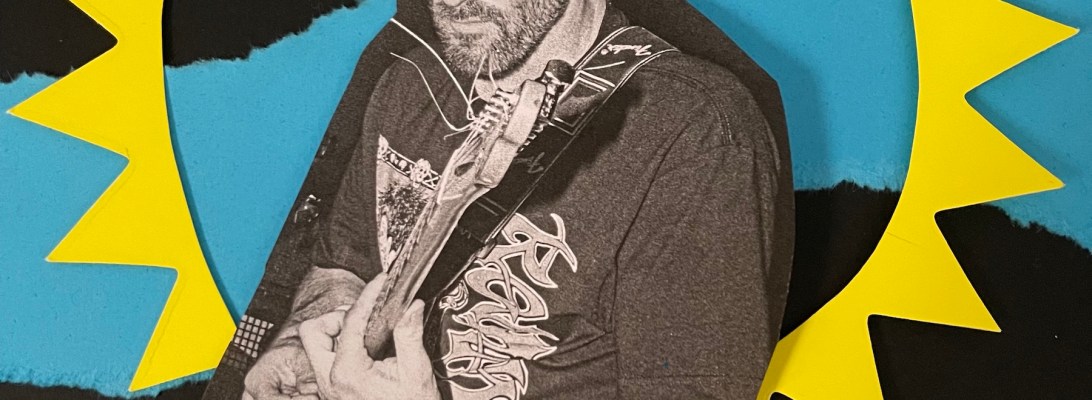
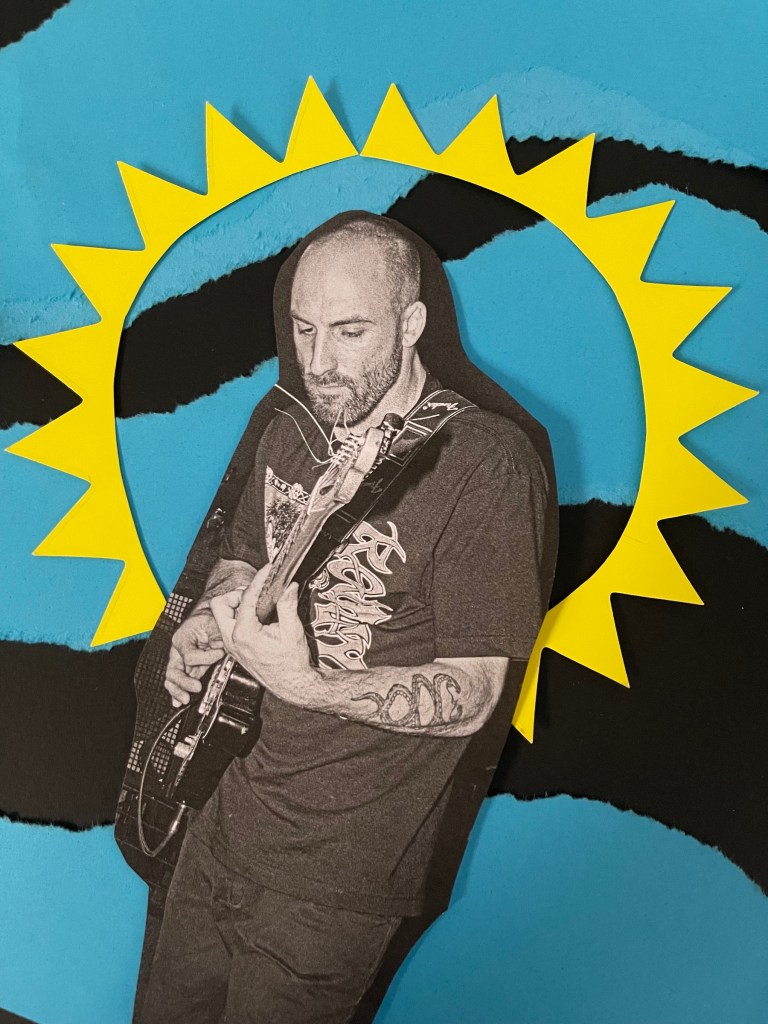
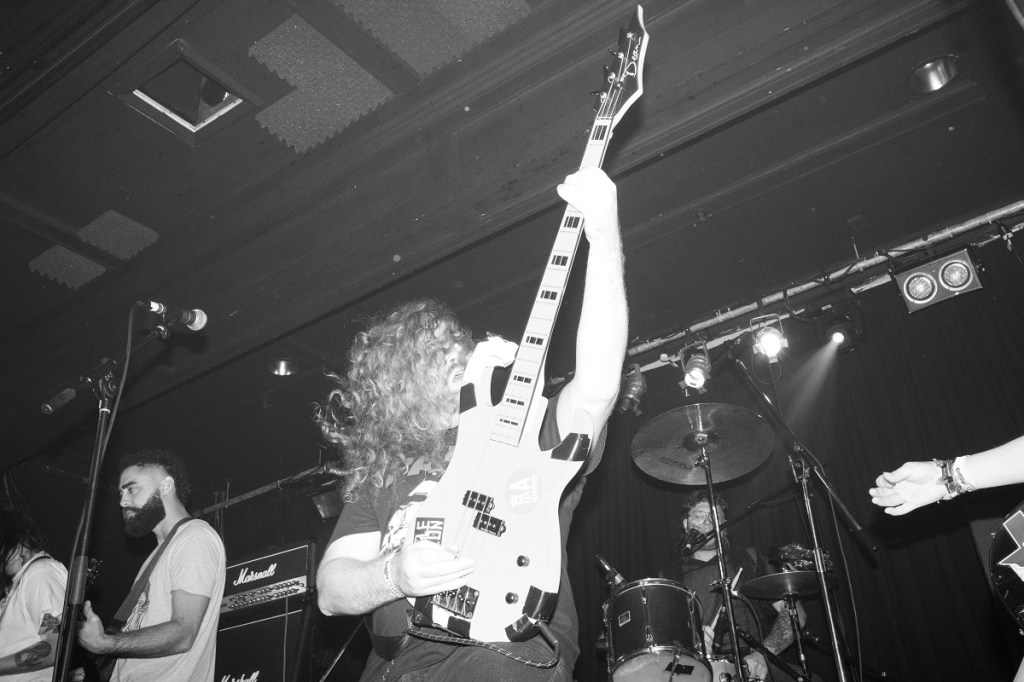
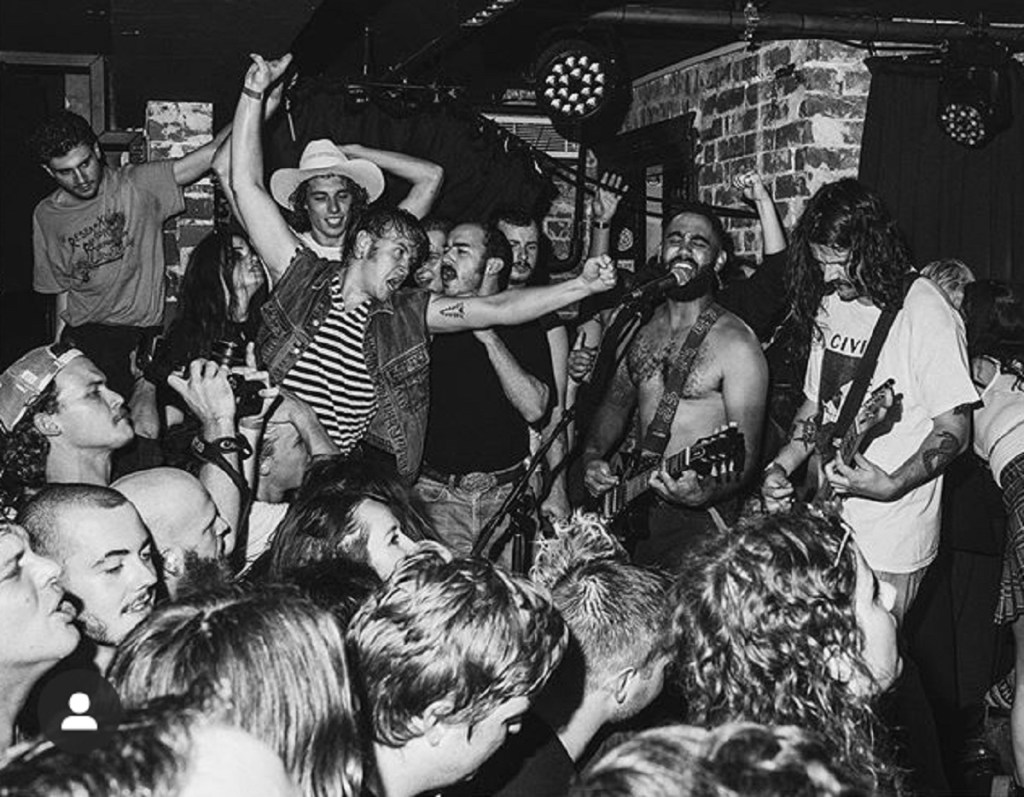
Meet Arron Mawson, a powerhouse behind some of Australia’s most dynamic bands – Stiff Richards, Doe St, Split System, and Polute. But his journey transcends the realm of music; it’s a story of authenticity, passion, and a pursuit of doing things for the right reasons.
For Mawson, making music is a visceral calling he shares with his friends. It’s about connecting through art, driven by an unwavering compulsion that pushes him to create from the heart.
Disenchanted with the traditional music industry, Arron took matters into his own hands, birthing Legless Records – a testament to DIY spirit.
In the whirlwind of the modern underground music community, where countless people, music, events, and distractions clamour for attention, Arron Mawson stands out as a beacon of authenticity and passion. It’s not just the fast-paced punk rock ‘n’ roll anthems or the inspiring DIY achievements that set him apart; it’s the very essence of his character.
Gimmie recently had the privilege of sitting down with Mawson before Split System embarked on their first European tour. In this candid conversation, we explore his bands, creative process, the art of songwriting, his inspirations, and the upcoming label releases. But beyond the music, we venture into the depths of his experiences – trekking in Nepal, confronting mortality, challenging the “too cool” attitudes, and embracing the art of “getting on with it.” Prepare to be inspired and enlightened by someone who embodies dedication, goodness, and the true spirit of the underground.
How’s life been lately?
ARRON MAWSON: Good. Moving house before we go to Europe, me and my partner moved into her mum’s place. That’s been nice. It’s been a really busy year, to be honest. It was sort of like a treadmill, I guess. It felt like it was nonstop, and then it’s finally settled down now right before going away.
I feel like after COVID, there was that massive rush. Everybody was saying “yes” to everything. And it kind of got to mid this year, like maybe a month ago, and I was like, ‘Oh, jeez, I really need to slow down.’ It’s been the craziest twelve months.
There’s so many good things that have been happening for you.
AM: Yeah, I’m kind of ready to go camping or something, though.
I feel like that as well. I work two jobs, freelance, and do all the Gimme stuff on top of that. It’s all fun stuff, but I just don’t have enough hours in the day to do all the things I want to do or that people want me to do. I always feel like I’m letting someone down.
AM: Yeah, exactly. You feel bad because you want to help your friends and you want to help everyone, but just you don’t have that capacity because it takes a lot. It’s been so nice seeing everybody back out after the couple of years that we had. There’s been so many good releases, so much positive energy. I feel like people are a lot more patient now and appreciative. It’s been a really fun year, but I think I can sort of feel it petering out, where it’s like everyone’s sort of chilling out now a little bit.
Definitely. I’ve noticed that as well. Everyone was so excited to get back into it and then we threw ourselves in so much that, like you were saying, you burn out and just want to go camping. I noticed on your Instagram there’s lots of music stuff, but then there’s also lots of nature stuff.
AM: Yeah, well, I guess that’s sort of my other hobby. I love hiking and I love being in nature. I live in Rye, which is about an hour and a half southeast of Melbourne on the coast. So I’ve always been drawn to the country and the coast. When I’m not doing music stuff or working, I’m usually doing something in nature.
I noticed that you trekked in Nepal!
AM:Yeah, I did that a couple of times.
What drew you to going to Nepal?
AM: Don’t really know. I’ve always had a fascination with mountains. When I was younger, I really loved snowboarding. It was less of the sport that actually drew me in. It was more the being in the mountains thing.
Why the mountains?
AM:I don’t know. A form of solitude. It’s cool. Doing a trek in Nepal, I wanted to be on my feet for over a month, and just be me and backpack. That was a place that I could do it.
I don’t know anyone who’s gone off trekking in Nepal for a month; what was the experience like?
AM: It was cool. When I started, I came straight off, I can’t remember what gig it was, but I think we had played a festival in Melbourne on the Saturday night and I left on the Monday, and I was trekking on the Tuesday. You basically basically start at sea level. The first few days it’s really hot and quite dusty and dirty. I was like, ‘Oh, jeez, what have I got myself into?’ But after five or six days I really got into it; I trekked for about five weeks. After a week, it was incredible realising your body’s made for that stuff. You get over the tired part of it and this primal thing kicks in and by the second week, you’re just like a walking beast [laughs]. It’s like, I can walk forever. It’s a pretty cool experience getting in touch with that side of your body a little bit more and switching off, not being on your phone and just being you and your feet.
I assume you’d have a lot of time to think while you trek?
AM: Yeah, it was really funny. I actually wrote more songs. I was humming songs, with the rhythm of my breath. I had walking poles and I ended up getting into a rhythm and writing songs in my head to the beat of my breath.
Wow. I love that.
AM: I’d hum these weird songs into my phone in my voice recorder on my phone. I got back and I had a ton of songs to go through. You get into that different creative headspace, but I didn’t really have an instrument or anything with me, so it was bizarre for me.
I find I get my best ideas when I go for a walk or I’m driving in the car or I’m just doing something else not creative. It’s like you kind of go on automatic pilot. It frees up your brain space to be able to let those good ideas come in.
AM: We’ve got so much noise around us. Walking undistracted with our own thoughts, a lot of people aren’t used to doing that, they don’t get the chance to do it. I think it’s a really important thing for us to do. You can go on hikes and just be alone with your thoughts, which can be quite intimidating sometimes, and then quite liberating as well. Because you’re just out there. You’ve got nothing to hide behind.
Totally. I found that you can never just run away from problems in your life, you can never outrun yourself. Wherever you go, you’ve still got you to deal with. Your problems go with you, until you sort them out.
AM: Totally.
Previously, someone asked you about your philosophy behind all the stuff you do and you said that you just get on with it.
AM: Yeah. I’ve got a pretty full on personality. I’ve met some challenges in my life. Doing this music stuff, especially at the start of COVID, that it really kicked into gear with my label, Legless Records. I used to have a lot of anger and frustration with the world. Sometimes approaching challenges and things with that, you don’t get anywhere. Sometimes you just got to pick yourself up and move forward. I guess the get-on-with-it-thing is, I don’t know how to put that to words, but you’re finding something positive to do. Sometimes getting bunkered down with negativity and anger can stop you from actually achieving things, results.
Yeah, totally. I think that you kind of realise that more as you get older. When I was younger, I was that punk rock kid with the spiky hair and the mohawk, and I was so angry at the world. But a friend told me that you can’t really fight fire with fire. Getting angry at someone when they’re angry is not going to achieve much.
AM: I guess that’s the thing. We have a right to have anger, but it’s your choice how you channel that. I used to get frustrated with the music industry, people around me, there’s so many things. I made that decision to make the positive change that I’m looking for rather than complaining about other people not doing it.
Absolutely. I’ve been doing my own thing for a long time, so I very much get that. That’s kind of why we started Gimmie, There were so many bands that we love all over Australia and no one was covering them.
AM: It’s nice when people do things for the right reasons. It’s out of passion. It’s not for profit or self-glorification or anything like that. It’s just because you’re genuinely interested in it. And I think it shows. Things immediately get grabbed by people because they actually respond well to that—the honesty, the passion.
People hit us up, wanting to give us hundreds of dollars to be on/in Gimmie and we’re just like, no, that’s not us. What were the particular aspects of the music industry that were annoying you?
AM: Well, I guess it can be an element of your own perception of what people are like and the reality. But it felt like a lot of the music scene was really too cool, hard to break, it was hard to get through to radio or record stores would be kind of dismissive. After that experience, I wanted to create an umbrella, sort of make this bubble, that me and my friends can sit under and use each other’s momentum to help each other skip that exclusivity. It does feel like that when you’re at the bottom and it feels like no one cares. And then if we work together, with the momentum of each band, we can give a bit of a spotlight to the next band that comes up. With a lot of people being too cool, I guess, I just wanted to drop that and just let people be a bit daggy and just play music for the sake of playing music. I don’t really know how to put words to it, to be honest. It just felt like unless you knew the right person… if you want to try to get on a festival and you want to try to get on a gig, it’s like, who are you? I was like, well, I’ll just do it myself. Does that make sense?
Yeah, totally. I’ve had that feeling before, that’s why you make your own things!
AM: Yeah. I feel better for it. I don’t really want to throw anyone under the bus, of course. It was actually good that happened, because it stimulated me to do something that I’m now really proud of. With that kind of pushback, it inspired me to do something. Now I’ve got all these incredible people around me. I wouldn’t take it back.
Totally! You’ve been releasing so much amazing stuff on Legless.
AM: Thank you.
I’m really excited that I finally get to talk to you about it all at length. Our favourite people are people that work hard and they just make stuff because they love making it. You’ve told me previously that your dad played in bands and you’ve been surrounded by music your whole life. What kind of bands did he play in?
AM: Dad grew up in Cornwall, in England. He was playing rockabilly, rock and roll bands for most of my life. He was a frontman-guitarist and he sort of switched between a few different bands. And then I lost him, when I was about 21. I had music around me most of my life but I think after losing him, I definitely got more drive having a loss like that at that age. It kicked me into gear. I’d always played music, but where I grew up in Frankston, there was not really many people that I aligned with. It’s a lot of fights, a lot of shit music, shitty clubs and as soon as I got my license, I moved to the beach. Half my mates either moved to the city or to the beach.
That’s where I started jamming with people more, sort of between that 18 to 21-year-old time in my life. Music has always been there, but it wasn’t until then, I sort of started surrounding myself with a few mates, who introduced me to Eddy Current Suppression Ring and stuff like that. For most of my life it was just rockabilly and rock and roll. I listen to Brian Setzer, stuff like that.
A lot of my buddies went to all ages hardcore gigs, but back then, I looked at it as very blokey and people punching each other in the head. I didn’t really find anywhere that I enjoyed until older age, and liking Eddy Current. That put me on to other things like Thee Oh Sees. I was like, what is this world? I haven’t ever experienced it.
I’m so sorry that you lost your dad so young. I’ve lost both my parents as well, so I very much understand what it’s like. Especially when you lose your parent/s when you’re younger. Friends don’t necessarily get it because they still have their parents. It’s just such a massive thing.
AM: Yeah. It’s a bizarre thing, death. I feel like our modern society is really not prepared for it. The loss wasn’t actually the hardest thing. It’s like that’s the only guaranteed thing in this life, is that we’re all going to die. It’s just the inability to process it. We don’t have the sort of community… the word that I’m looking for, like, rituals and stuff to process death properly; I feel like it’s something that we’re missing these days. That was probably the hardest thing, but it’s something that I’m really okay with because I started realising how much people are unprepared for death. It’s really weird. Yeah. Sorry, I’m thinking and talking at the same time.
No, that’s fine. I totally get you. Thank you for sharing that with me. Changing the subject then, I know you play guitar and bass. Which one was first?
AM: Probably guitar. I never really ever played bass. Bass just came with guitar. Guitars were always in the house. I think dad taught me, ‘Johnny B. Goode’ and ‘Smoke on the Water’ when I was real young, and then it was just like through listening to songs. I never really had lessons. Me and my sister would usually just be sitting around, and occasionally jam with dad.
Your sister plays in a band?
AM: She plays in The Miffs. They’re killing it at the moment. They’ve been playing around Melbourne and Australia. I’m really stoked for them!
That must be cool to see your sister ruling it. Is it your little sister or big sister?
AM: Little sister, three years younger. It’s great. The fact that we grew up with dad playing music and now we’re both playing in bands and stuff, it’s really nice. After dad passed away, it was probably about six, seven years there where we were kind of pretty separated, and it’s really heartwarming to be close again.
Lovely. You mentioned, Eddy Current Suppression Ring was such a big band for you..
AM: Where I was getting a bit stuck before, is rock and roll and that environment, it’s very blokey and it just felt really “too cool”. Eddy Current had this daggy, raw energy where everybody felt honest. I wasn’t this big, masculine guy. Eddy Current was such an unorthodox approach to music that I hadn’t heard before. I know there’s so much of that in history, but it was the first thing that I put on and it just blew me away. It was just like, what is going on here? The awesomeness of what Mikey does! This is the first thing that really grabbed me and started an introducing me to bands like UV Race and the Thee Oh Sees, and the plethora of other bands that came from there.
How great are all those bands you just mentioned? I love them all too, especially UV Race. I super love Mikey’s band Total Control too.
AM: Yeah. Eddy Current especially for me. I grew up in Frankston and they’re all Frankston boys as well. So it was like, ‘Oh, there’s someone from here that is actually doing something interesting!’ Growing up it was a lot of fighting and just people that weren’t aligned with anything. I wanted to build bike jumps and cubbies, just hang out, go skateboarding and stuff. But everyone else just wanted to fight. It was just odd.
Yeah. I’ve talked to Jim from Civic about growing up in Frankston a bit.
AM: It’s like this love/hate thing. Split System are playing at Singing Bird tomorrow night. Got our going away fundraiser thing. What Stu’s done there, all ages gigs, he’s got the studios and jam rooms, kind of made this institution for Frankston. It’s nice seeing the next generation of kids, actually having something to do. I don’t hear much of all ages gigs at all anymore. It’s all licensed venues that are based around selling booze. That’s how they profit. What’s for the kids?
Totally. Growing up in the 90s in Brisbane, I used to go to all ages shows most weekends. In my Senior year of high school I went to over 100 shows. It made such a difference in my life. I do all the things I do today because I went to those shows early on, and there was a lot of younger bands, even my age (15-16) at the time, that played, and I was like, wow, I could do that!
AM: Yeah. I was talking to the C.O.F.F.I.N fellas because they played in Frankston just before tour before they went off to the UK. That’s where they started, they all met when they were like 14. One of my favourite live bands now, wouldn’t have existed without that environment for them.
What was your first band that you had?
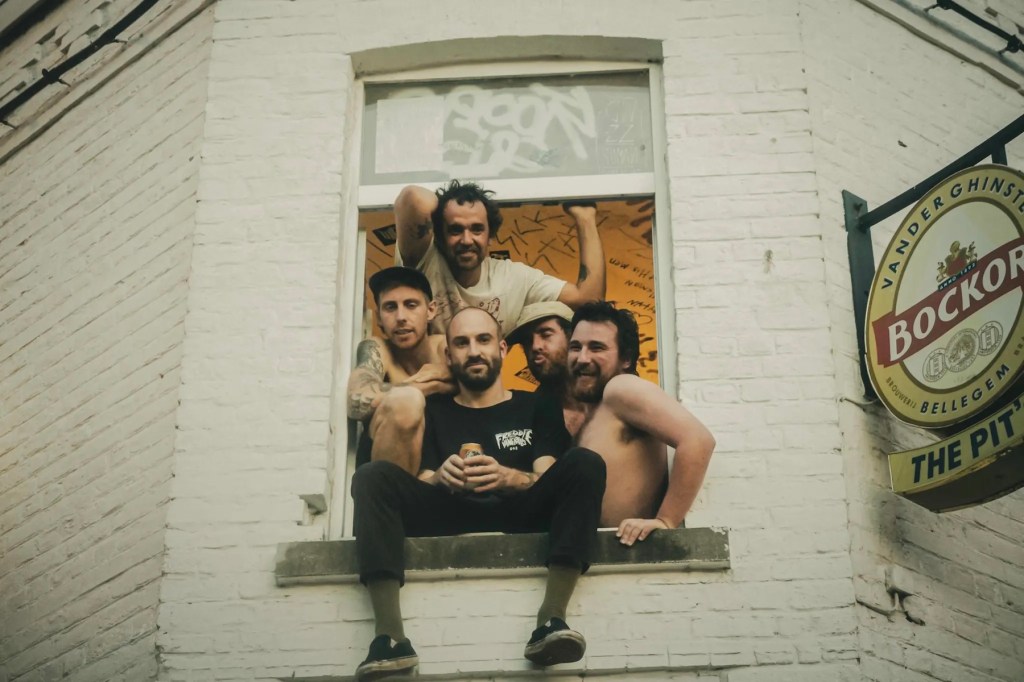
AM: Stiff Richards was the first band that actually did anything. I had like a couple of jam bands with mates. I had a band called Green Waste, which was my buddy, he had a property maintenance company and we all worked mowing lawns for him. Then we’d rock up at his joint, he had a jam room at the bottom of his house. There was a big pile of green waste out the front, every night when we finished. We did a couple of gigs, and that actually kind of led into us making Stiff Richards. Me and Tim, the other guitarist, were in Green Waste. That was pretty funny. That was probably ten random mates that switched in and out on different instruments. Probably seven guitarists trying to bash the drums [laughs].
The next band for you was Split System?
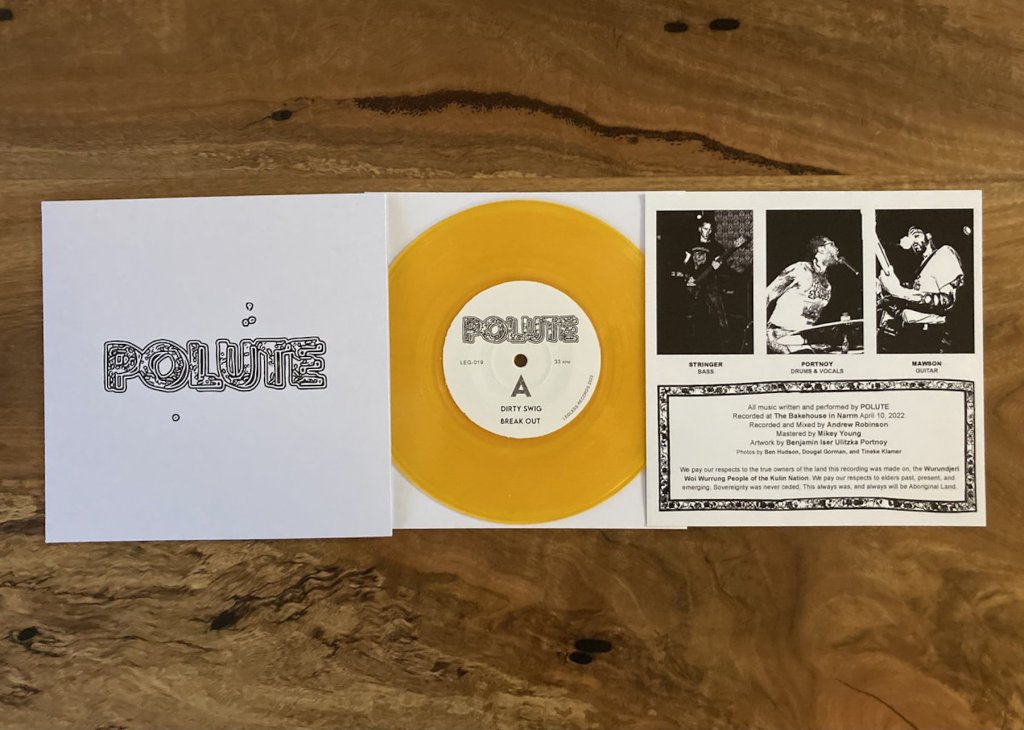
AM: Probably Doe St. Doe St and Split System were roughly a similar time. Polute, a little fun recording project with me, Benny and Stringer, came after that.
Is there much difference for you between the different bands? Do you get different things from being in each of them?
AM: Well, Stiffs, they’ll always be my brothers. We’ve had this journey from playing in sheds to being able to go over to Europe, and just everything that we’ve experienced musically together, is like such a family. I’ll hold that close to my heart forever. It’s a really special friendship. Wolfie, our singer, his sister has kids with Gazzo, the guitarist.
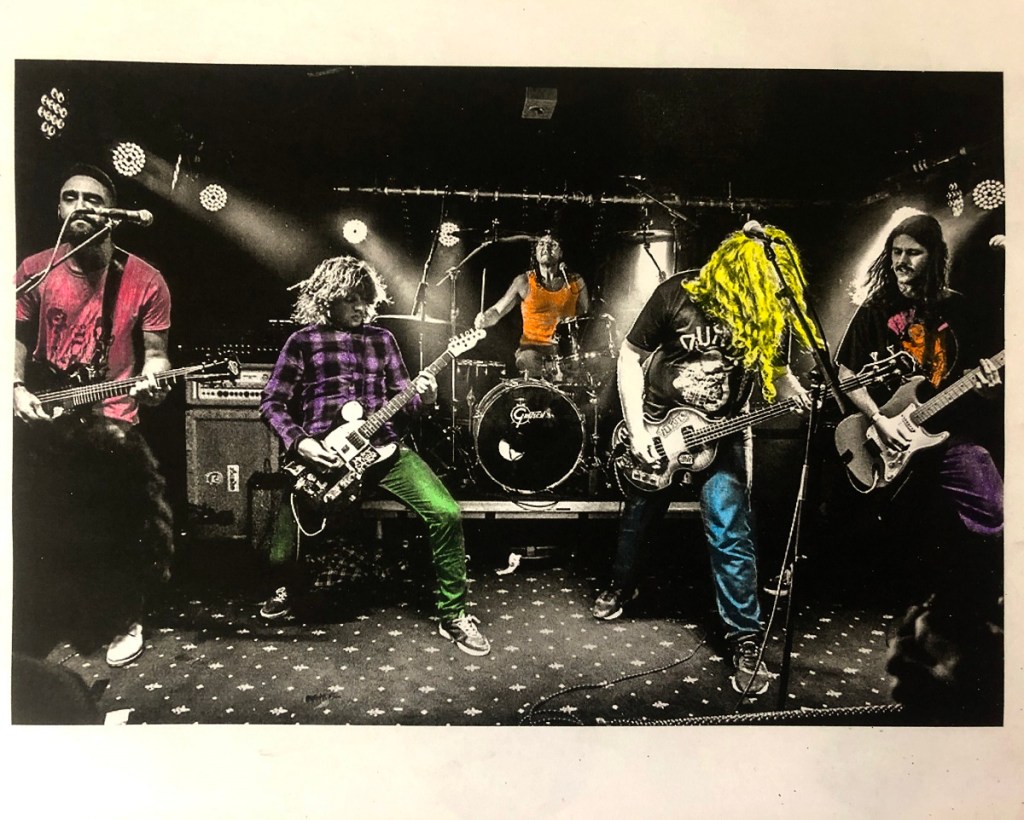
Split System, definitely feels like there’s a member from a bunch of different bands, and that seems to be really productive. They’ve become best friends as well. It feels really good writing-wise. That’s one of my main focuses at the moment, just because it feels really creatively stimulating and everyone’s getting along really well and having a great time.
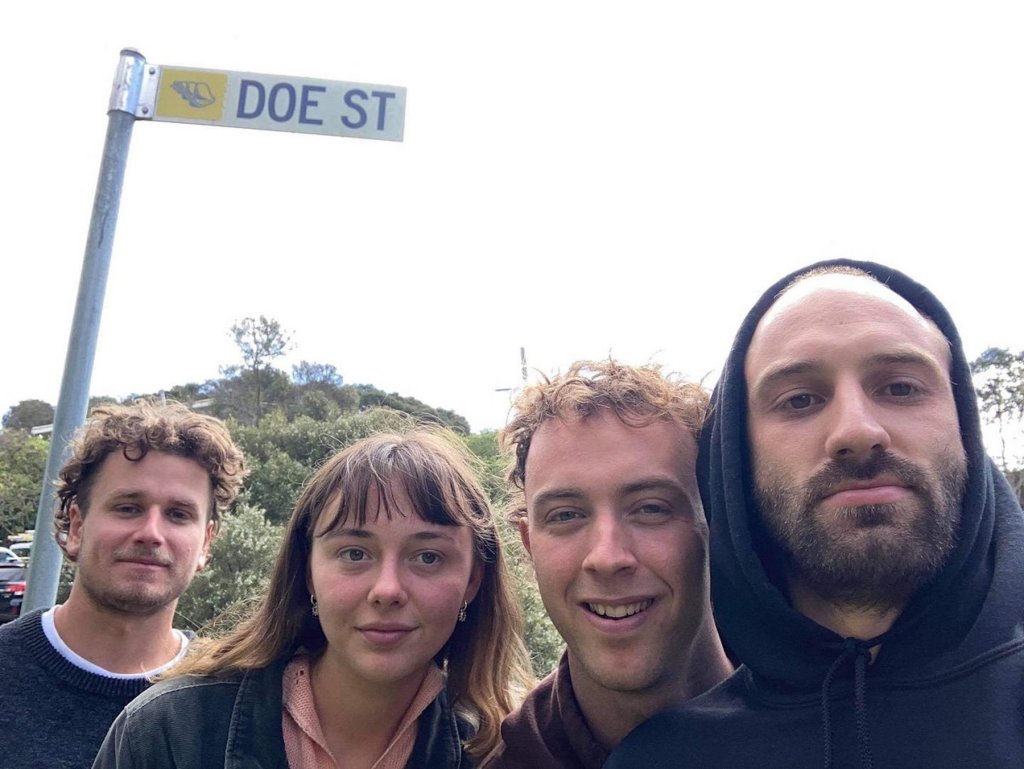
Doe St, are all friends from the Peninsula that just sort of organically came together. My old house was on Doe St. Everyone was living on the same street or in the same neighbourhood. We wrote all the songs and recorded it there, just friends hanging out.
It’s funny, I’m literally thinking out loud right now. There’s not much thought been put into any of them. It’s just things have aligned at the right time and feels good.
Sometimes it’s that simple. Sometimes when you’ve got too much intention with something, you set yourself up to be disappointed.
AM: Totally.
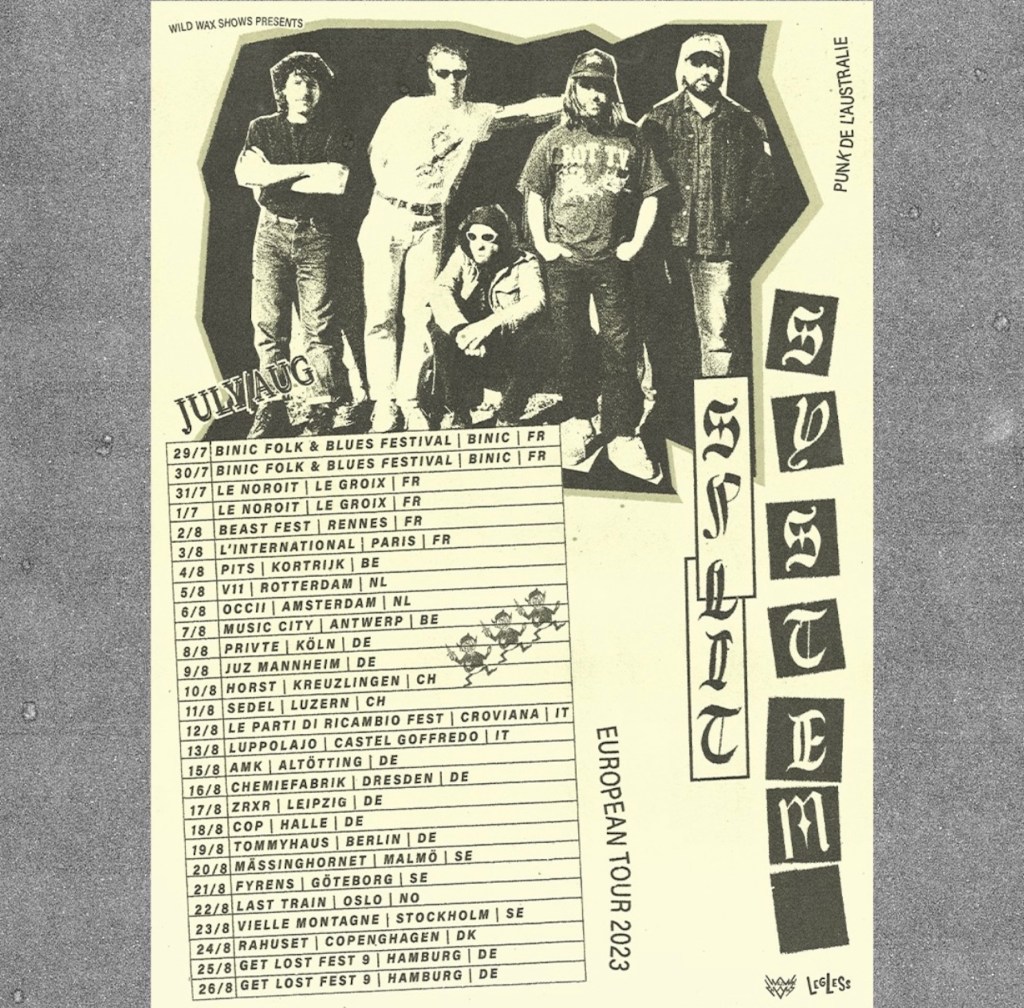
So, Split System is going to Europe?
AM: Yes. Going over for Shock Fest. We’ve got one show at the start of July and then I got a holiday with my partner for a few weeks, and then Split System start with Binick Folk And Blues Festival, which is the 29th of July, I think. Then we’ve got a bit over four weeks. I don’t think we have a day off either. I think we’ve got one night off in a month!
Wow. Do you like touring?
AM: Well, I’ve only done it once with Stiff Richards. And that was last year. It was one of the best experiences I’ve ever had. I’m definitely keen to go back.
What were some of the best things from that tour that you enjoyed?
AM: Honestly, the people, the hospitality in Europe. We had no expectations. We thought we’d be playing for ten people some nights and we ended up selling out almost every show; I don’t mean that in a bragging way. It was just mind blowing that people actually came out, in another country. We haven’t even toured in Australia. We’ve been out of Melbourne once, we went to Sydney, played with Celibate Rifles once and Meanies once. To go over there and have such a good response and such friendly people, it was unreal.
Yeah. Many bands I know that have toured Europe say the same thing and talk about how they have cool squats and places to stay in.
AM: Yeah. You rock up, they’ll have bread and cheese and stuff for you. There’ll always be someone to meet you. A lot of people touring are cramming as much in as possible because it’s quite expensive to be there. You’ll get in, then you set up, and they’ll cook you dinner and sit you down with the other bands and the staff. Sharing a meal with a bunch of people is the best way to break the ice. By the time the gig starts, you’re friends with 30 people. It’s really beautiful.
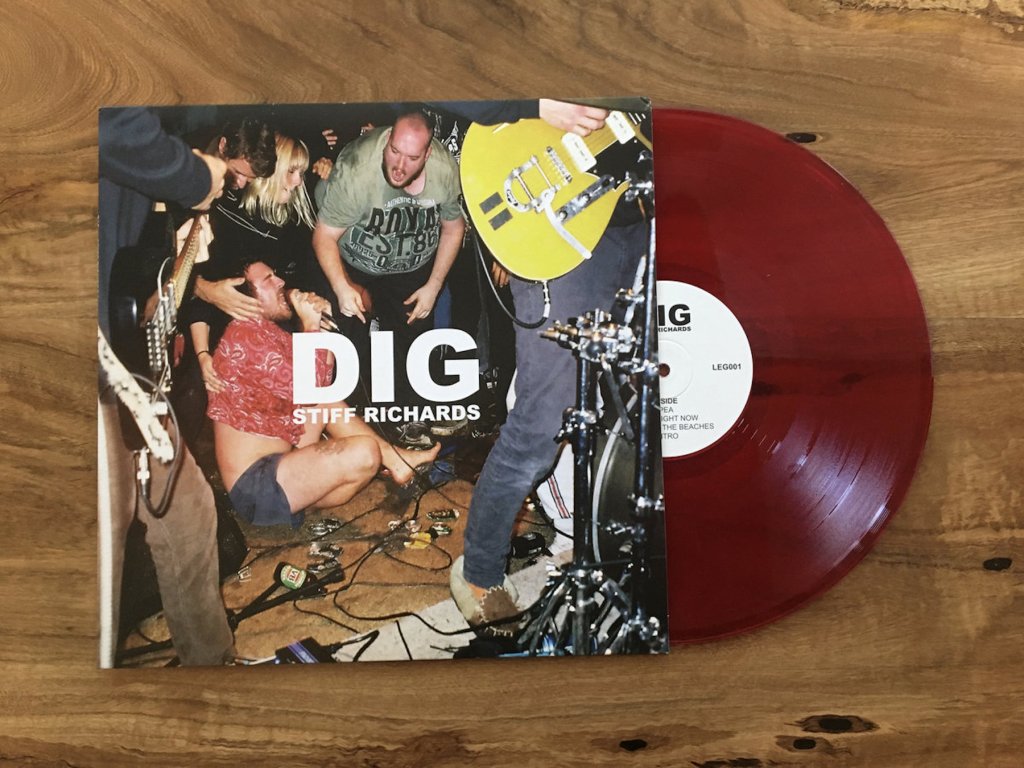
Nice! So, you started Legless to put out Stiff Richards’ Records?
AM: Yeah, basically. I guess that comes back to some of those frustrations. It was hard figuring out how to navigate the music industry. I was like, I reckon I could just do this myself. Well, with the help of my friends as well, I feel like we can do this together. Then as mates were asking me how we approached it, I was like, ‘Do you want me to just help you out with it?’
Is there anything that you wish someone would have told you when you started the label?
AM: Well, kind of as I said, those challenges, even though they can be frustrations in the start, they end up being the things that make you stronger. Keep pushing through. Do things for the right reasons. Don’t expect to make money. Do things that make you feel happy and then you’re never going to get bummed out. Do things how you want to. There can be a lot of pressure to get bookers and management and stuff like that. That can work for some people, but if you’re willing to work hard, you can make it work really well for yourself. Positive encouragement for bands and people that want to do stuff. It’s like back yourself and have a crack.
Definitely felt defeated sometimes, it’s hard navigating that world sometimes when you’re outside. If you don’t have any super cool friends or people in the know, you’re just in this big open world. People need to stick on their path and stay true to their art.
Totally! You’re speaking our language. Putting out records with your bands, do you feel like there’s any mistakes that you’ve made along the way that you’ve learned a lot from?
AM: Not really. All mistakes can become lessons if you are aware of them and you utilise them. I can definitely be quite opinionated and get grumpy about things. And that’s where as I get further into things, I know that I shouldn’t have given those things as much fuel as I did, but I wouldn’t have learnt that without going through it. I don’t really regret it. You know what I mean?
Yeah. This is like anything in life, you get frustrated and then you learn to deal with something and you channel it into something else.
AM: Totally. Yeah. I don’t really regret anything. I’m pretty happy.
You seem it! Did any of the songs that you mentioned that you’d wrote when trekking in Nepal end up on any albums that you’ve put out?
AM: They definitely would have. I can’t remember. I’ve got the most obscene voice memos folder saved on my computer and it’s like pretty funny. Sometimes when I’m drunk with mates, you go back through all your voice recordings and find early takes of songs that you’ve done. That’s like, basically how most of our bands do stuff, record things on the iPhone and then you get a better take of it and it just disappears into the ether. I reckon there’d be some funny recordings of me in Nepal somewhere, like humming a couple of Stiff Richard songs.
Do you have a song that you’ve been a part of that you’re really proud of?
AM: It’s weird, I don’t really approach music with heaps of intention. A lot of the time it’s me, grabbing a guitar and mashing chords until stuff starts feeling good. Sometimes it’ll be utter crap for three minutes and then something will feel right. I feel the beauty of a song is when everybody else contributes to it and then it becomes what it does. So I’m equally as proud of everything. Fluff it out with the rest of the team!
What else is in the works for Legless at the moment?
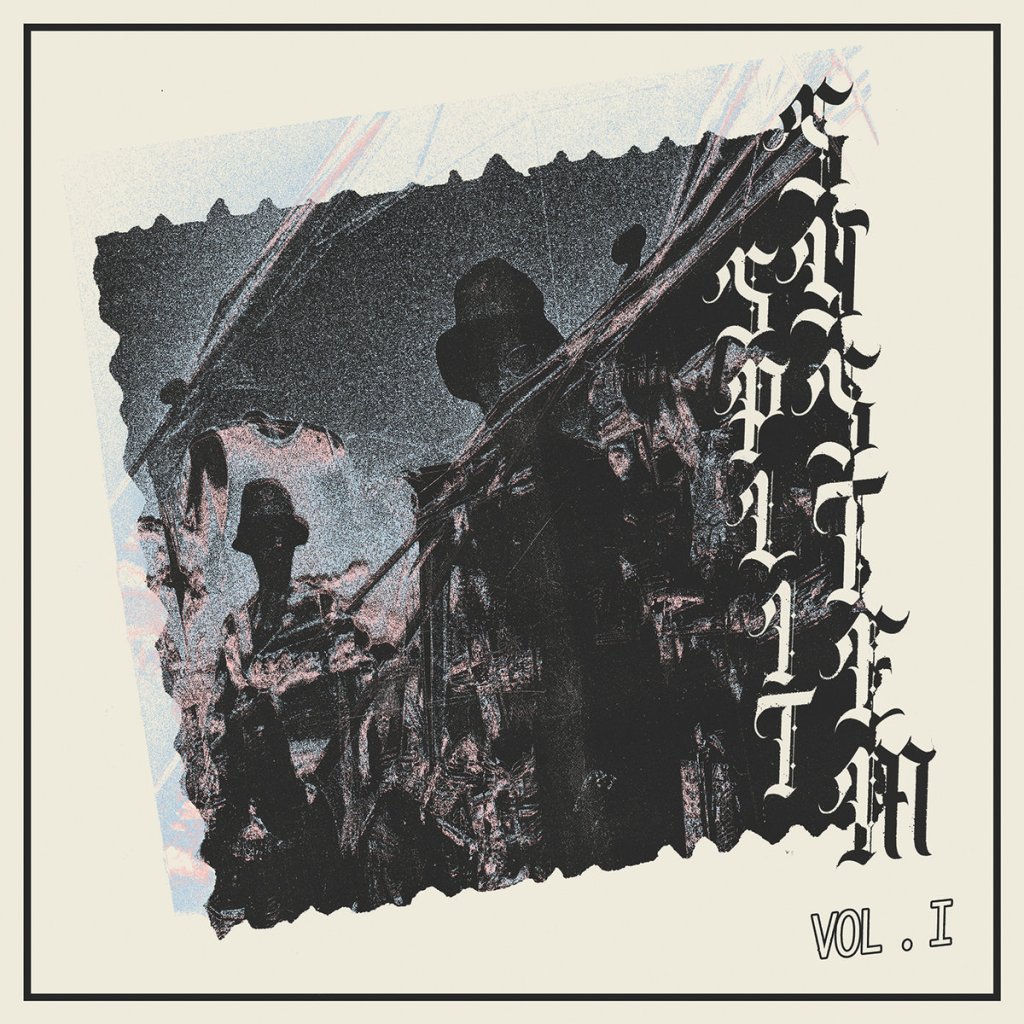
AM: We just finished recording the second Split System album. Can’t wait. I’m pretty stoked on that. That was a really fun process. The first seven inch and album were written, I think we’d only really played with each other properly like five times up until that first Vol. 1.
Wow. It’s a great record.
AM: To have like a year under the belt and a lot of it was done over the phone, sending snippets. We had a couple of jams and recorded Vol. 1 and then with this one, playing with each other for a year and actually having a few jams leading up to it, it was fun.
We’ve got the Stepmother album coming out later in the year as well. There’s a few other things in the pipe works, but I’m still not sure, I don’t want to jump the gun on a few things. Stepmother and Split System you can expect later in the year, most likely.
Cool! Looking forward to them. What can you tell me about Stepmother?
AM: It’s like a completely bonkers horror movie rock and roll album. It’s pretty crazy. Graham’s done an exceptional job. It’s going to be a split release with Tee Pee Records in the US. That’ll be out later in the year.
Who’s one of the most raddest people that you’ve met through what you do?
AM: Honestly, it’s really funny. I feel like the thing I feel most privileged about is that my favourite bands are the people that I’m actually putting out at the moment. So, between C.O.F.F.I.N, Smooch, you can go through the catalog; they’ve all become really good friends. So equally, everybody. The Rack Off Records girls from Blonde Revolver and all that crew. It’s a really good little community at the moment and everyone’s having a good time.
Before doing any of this, Mikey Young was definitely one of those people I looked up to and he definitely influenced me. When we were in the early days of Stiff Richards, he was a really good mentor without intentionally doing it, just being a good person and making me realise that all the people you’re going to meet in the music industry aren’t just wankers. I’d go around and mix at his house. He’d just be in his boxer shorts and have coffee with you, super casual. I was thinking, ‘Oh, this dude is my hero. And he’s just the most normal guy ever!’ He’d load me up with five records and send me off on my way.
With Gimmie, when we started, we knew no-one. We’ve met so many lovely people in the Australian underground music community. There’s moments when it feels like everyone is really supportive of each other.
AM: Yeah, I think that age of bolstering yourself up, and those “glory” years of, like, oh, look at me, it’s gone. There’s actually strength in supporting each other, and the competitiveness is starting to die out a little bit, and everyone’s kind of bringing each other along with them. So it’s nice.
Yeah. That’s why I really love Nag Nag Nag fest that Greg and Steph from Display Homes put on every year. It just has such a great environment and vibe. Everyone’s just really nice. It was such a nice day this year. Every single band was great. We were there from the very beginning till the end and watched every band, everyone totally ruled!
AM: Oh, totally. And everyone had a happy day. You get a lot of drunk people in a room, and it’s like there’s always one idiot that ruins it for it. But it didn’t seem to be any negative energy there for the whole day, so it was good. It just seemed like a happy family.
Before, you mentioned sometimes you feel defeated by things. How do you flip that for yourself?
AM: I don’t know. I’ve had a lot of things happen in my life that I won’t bore you with, but I just found with a lot of those challenges, even with losing my dad and stuff like that, through processing my own anger, I realised that you don’t get results from letting that negativity have a flame. Move on to something positive and time will heal everything. Life will throw you punches, but it’s a complicated world and it’s never going to be perfect. And if you feel like a victim all the time or let things get you down, you’re never going to get back up. You’ve really got to just keep trucking and do the things that you know is right and elevate yourself instead of complaining about what else is going on. You know what I mean?
Yeah, absolutely. Surrounding yourself with positive things and positive people, really makes a difference too.
AM: Yeah. Everyone has a right to be down and stuff, but unfortunately I feel like unless you can get back into some kind of momentum, it’s easy to get stuck. So I keep busy and do the things that make me feel good. And it’s worked. Like doing the Legless-thing. I run a property maintenance business as well. I do window cleaning. I’ve been really busy, but when I slow down, I realise that I like being occupied. And if I’m not doing stuff, then I’d rather be in nature. I like exerting energy by walking or doing something else. When I get stagnant, I want to go do something.
We go to the beach if we’re having a rough day. Going for a swim or a walk can change your day.
AM: Yeah. The ocean heals a lot of stuff hiking. I do diving, and I go free diving with my partner a bit. I’ve always been drawn to the mountains too.
As we mentioned you’re about to go on tour, what’s the rest of the year hold for you?
AM: That’s going to absorb a bit of time [laughs]. As I said at the beginning of our chat, I’ve just moved house. I’m not back until mid-September, so by the time I get back, and get back into work, I’ve got the Legless releases teed up and then Christmas gets really busy for work for me. Usually once Christmas is over, we get back in a creative mode again once all the craziness of the holidays is over. Then probably start recording stuff again. I’m hoping that Stiff Richards might have some new music sometime next year, we have the intention of trying to record over January, we’ll see.
Will the Split System record come out before the end of the year?
AM: That’s the aim at the moment we’re talking with discussing label options. I’ll definitely be putting it out, but we’re just contemplating a few things at the moment. Before Christmas, otherwise early next year. Probably do a big run of shows for that. See a bit more of Australia.
It was so cool to see Split System at Nag Nag Nag this year! We loved your set!
AM: It was a pretty loose set. We got a bit excited early and were super drunk by the time we played, but it was such a good energy there. We were a little bit worried after, like, oh, jeez, that was pretty rough. Everyone was having such a good time, it didn’t matter.
Check out all the awesome things Mawson does and is a part of:
Legless Records: leglessrecords.bandcamp.com
Stiff Richards: facebook.com/stiffrichardsband/ & instagram.com/stiffrichardsband/
Split System: splitsystem.bandcamp.com & instagram.com/splitsystem666/
Doe St: doest.bandcamp.com/ & instagram.com/doestband/
Polute: polute.bandcamp.com/
 Gimmie Gimmie Gimmie Zine