

No intro. Read the conversation, listen to the record, then go see the band live.
DX (vocals): We’re excited about this. Not that we’ve dealt with non-professionals, but having both been interviewed by you before, we knew it was going to be good. Sometimes you have trepidation, or just anxiety, coming into these things and you’re like [sighs], “Okay, I’m gonna have to fill some space.” But you’re a professional. You know what you’re doing. [Laughs].
Yep. No matter how many interviews I’ve done, I still get nervous, though. I usually pee about a million times before I do an interview because of it. I remember talking to Rikk Agnew about it when I interviewed him, and he was like, “That’s just because you care.” If you care, nerves aren’t a bad thing.
You’d think after all this time (thirty years of doing it) those nervous feelings might go away. But for me, they don’t. These days, I only speak to people whose stuff I genuinely enjoy. I’ve done interviews for all kinds of publications; sometimes interviewing people I didn’t really care about just because I was assigned it. And it just sucks. It sucks for everybody.
BUZ (guitar): It’s the same with playing shows. I still feel this crippling anxiety before a show every time we fucking play. It never goes away. Especially if we’re headlining—before we play, I’m not watching anything. I’m just circling around, doing a circuit of the whole venue. Going out the back, smoking, finishing a drink, going back in, getting another drink, running into someone. I just keep moving around until we play. Then we play, and after that I’m chilling.
Do you find that when once you get on stage, those nerves go once you start playing?
BUZ: Not until maybe the first quarter of the set’s done. Then I kind of go into fight-or-flight mode and I’m just in it. I forget everything else that’s going on and I’m just there, doing what I have to do. Then I feel good.
What about you Dan?
DX: I get a certain level of nerves and anxiety, but it’s generally curbed by the time I get on stage. The step that’s hardest for me is getting into the venue, putting my gear down, those cursory interactions with people I might not have seen for a while, and trying to stay focused on, okay, I’m here to do something. I’ve got to be socially proficient and not rude to people.
Honestly, the moment we start playing, I normally lock in and it’s fine. There are definitely exceptions, though.
We played a show in Melbourne with Institute the other day, and there were nerves coming into it that didn’t dissipate once we started playing. In fact, they just got worse and worse as we played. There was just something wrong.
We did a post-mortem afterwards and dissected the corpse. It was one of those things where, because we’re still a young band, even though we’ve all played in bands forever, we haven’t played together long enough to immediately know what’s wrong, or who’s responsible, or even just recognise when someone’s feeling bad.
With Straightjacket Nation, having played together forever, there’s a look I can give someone to reassure them. Or if something sounds bad, you can just walk over and fuck with someone’s gear. But if you don’t know the vibe well enough yet and you start messing with someone’s stuff, you can actually contribute more to their anxiety, and then it spirals.
What I learned from that show was that the anxiety I felt was actually being experienced across the whole band, but I didn’t recognise it because, like I said, we haven’t been playing together long enough yet. That’s something that only comes with time—knowing when someone’s in a bad place and being able to go, “Alright, let’s figure this out before we go any further.”
Because barreling through a set, as we learned the other day, isn’t always the best way to do it.
One of the things I’ve noticed, reading what people have said about the debut, Station Model Violence, album and your performances, is that people often describe your vocal style as really vulnerable. Is that’s something you feel?
DX: Yeah, I’ve always felt extremely vulnerable playing music. It was always something that felt like a gamble for me, a step way outside my comfort zone. And while I’ve developed a stronger sense of confidence with being in the public eye, it’s still always terrified me.
Ultimately, I don’t want that vulnerability to go away. So you try different things, you push yourself in different areas. One thing I really wanted to do with this record was try and sing a bit more. Not more expressively exactly… I’m trying to find the right way to put it [pauses and thinks]… It’s not that I’m singing with more feeling but I am trying things that are slightly outside my comfort zone.
And honestly, that’s a good feeling to be in when you’re making anything. Vulnerability is something I kind of chase, I guess. You want to feel invulnerable when you actually get on stage, because that vulnerability is often what lets anxiety or panic take hold. But in the act of crafting something, feeling vulnerable is important.
You mentioned trying to become more comfortable being in the public eye. For both you and Buz, especially from my perspective interviewing people who are inspired by you guys, there’s just so much genuine love out there for what you both do.
Does that ever gets difficult? Do you ever feel the weight of expectations, or feel pressure from your projects becoming more popular and visible? Does any of that ever mess with you?
BUZ: Yeah, especially with this record, I was terrified while we were making it. In the early stages, before we fixed everything, it was like, “Fucking hell, what have we done?” We’d already built up all this hype just by being in bands people already liked and that were somewhat popular within the underground scene. That was really difficult.
Doing this band is one of the hardest things I’ve ever done creatively because of those expectations. Honestly, I don’t think I even enjoyed the record until after it came out. I had a lot of doubts.
But once it was out and it got the response it did, I finally felt comfortable listening back to it and actually enjoying it without too much self-judgment.
Before you started Station Model Violence, I know that you were big fans of each other’s work; what were the things you appreciated about it?
DX: I really loved what Buz was doing. I started making music and playing in bands when I was about fourteen, and it was always terrible. Any recordings I have of stuff I made when I was younger (really up until around Buz’s age now) I find almost unlistenable. Embarrassing. Mortifying.
What I loved about what Buz was doing from the start was that he was immediately such a proficient songwriter. Working with the material he was working with, it was instantly apparent that he was extremely talented.
There was also this naivety to it that I really liked. Not so much now, he’s a man now, but when he was younger, there was this purity to it. To form a band called Rock Music Fan Club and play that kind of music without holding back… I really admired that.
There’s a certain kind of pathetic cynicism that’s really common, especially in music scenes. And I don’t oppose cynicism at all, I think there are different sides to it. There’s one kind where people are just exhausted by the world. They don’t like anything that’s alive anymore. That attitude is everywhere.
What struck me about Buz was that he didn’t have that. He wasn’t trying to tick boxes or appeal to older people or scene expectations. It felt like he was making music entirely for his generation and his crew. There was no distance or irony protecting it.
I remember seeing this young guy doing something genuinely good and doing it with total conviction. I immediately thought, this is someone who’s going to make an impact, because it had that purity. That’s why I became a fan of Buz.
What about you Buz?
BUZ: [Hesitates] Sorry, I got a little bit lost in that.
DX to BUZ: I’ve never actually said that to you before.
[Laughter]
BUZ: Yeah. For me, one thing I’ve always struggled with—and I’ve talked to you about this before, Bianca—is writing lyrics. Lyricism has always been something I deeply appreciate across various projects, especially Straightjacket Nation and Total Control. Dan’s lyricism in particular has been a huge source of inspiration to me, along with Al’s work, Mikey’s work, and everyone else involved in those bands.
A big thing for me was just wondering: how do you manage to write such fantastic lyrics? Because I’m not very good at it, and it takes me a long time to figure things out.
Working with Dan was amazing because it was honestly really impressive to watch. I’d show him a demo, go out for a cigarette, come back, and he’d already written a whole page of lyrics for it. Something that might’ve taken me months of slowly returning to and adding a single line here or there. I’ve always appreciated Dan’s lyricism really deeply.
Same!
DX: Aww… thanks for that guys.
I live on the Gold Coast and used to work in Brisbane, so I spent a lot of time driving and listening to music. Sometimes that commute would take an hour—sometimes three if traffic was really bad.
I remember this one particular morning when I was driving to work as the sun was coming up. I used to leave at around 5 am for my job, and I was listening to ‘Flesh War’ by Total Control. I literally had that breaking-of-the-day moment, when I was driving across the Riverside Expressway into Brisbane with all the buildings coming into view. It was like the words of the song were what was happening right then. Listening to it, I was watching the city wake up. It was a really beautiful moment.
I love how music can soundtrack all these little special little (and big) times in your life. Sometimes I’ll be listening to my friends’ music and its like a piece of them can be there with you when they can’t.
DX: Yeah. That’s really special. There’s a night I’ll tell you both about because it ties into what you’re saying—and it had a massive effect on me.
I was in Copenhagen staying with my friend Elias from Iceage. We went to a bar, ate some mushrooms, and honestly weren’t coping very well, so we went back to his house to hang out. We were drinking and talking and it got to maybe six in the morning.
We put on Scott 3 by Scott Walker, which starts with ‘It’s Raining Today’. The song came on and then it literally started raining outside. We were like, “Oh, this is sick.”
After that, every song seemed to somehow reflect what was happening around us. We were sitting by this window, smoking cigarettes and watching the sun come up over the city. There’s a song (I can’t remember the title) that compares a woman to an old house, and across from us there was this old house that suddenly became the centre of our attention because of the song.
Then Copenhagen came on, with the line: “Copenhagen, you’re the end / Gone and made me a child again.” And as that was playing, all these kids started walking outside on their way to school.
Obviously, it was a very drug-fuelled moment, but as an experience of music, it was one of the most beautiful things I’ve ever experienced. We invested a lot into it because we genuinely believed Scott Walker was some kind of prophet who was going to deliver us the day.
Tthat’s the power of a great lyric at the right moment. It really can’t be underestimated.
Totally. Speaking of mushrooms, I read that the first release you put out, the demo of ‘Learn to Hate’, was recorded after eating mushrooms on a “fabulous winter night”. Could you talk a little bit about that experience and how it informed the song?
DX to BUZ: You had a weird concoction.
BUZ: It was vermouth and lemonade.
DX: And you made a tea.
BUZ: I made a horrific, horrific tasting tea. I chopped up some mushrooms and added them in and put like…
DX: It was lemon juice.
BUZ: Yeah, and black tea. Honey. I thought, the honey, would make it more palatable, but it didn’t. It was one of the most disgusting concoctions I’ve ever ingested.
DX: [Laughs].
BUZ: But it worked.
DX: Yeah, well, it’s definitely one of those things where most of the time when you take mushrooms, you’d like to do something like we did making a track, but you usually don’t. It’s actually miraculous that we made what we made, because a lot of those lyrics were written on the spot that night. The melodies, the backup vocal melodies, everything you hear was figured out right then.
BUZ: The instrumental was already there.
DX: We had the track underneath it. I came in with a basic idea of what I wanted to sing and maybe a couple of lyrics. I’ve always worked like this (to the frustration of my bandmates) if we’re recording and I don’t have the lyrics yet, I kind of need to sit there listening to the track and write on the spot. The spontaneity of it that fuels my imagination.
I don’t remember very much about that night. But I do remember recording bits, bringing Buz in, and feeling really vulnerable about it. Like, “Come listen to this.” And he’d be like, ‘That’s cool!” And slowly getting it down.
The point the track really started working was when we began doing the backup vocals. I was like, “Oh, this is sick.” Once we started layering those in, it really came together. But aside from that, I don’t have a whole lot else to report from that night, Bianca, sorry [laughs].
BUZ: I’m trying to remember what we were listening to. We listened to something that really hit me in a way I was familiar with before.
We had a break and went out for a smoke, and we were listening to— maybe a Black Sabbath track or something. It was something like that that hit me in a way it never had before.
DX: I don’t know, I think the song was being Byrds-y. But I don’t think we were listening to The Byrds. I don’t even think it was Sabbath, maybe? But whatever we were listening to was cool. I’m always down to listen to Sabbath.
Same! Did you watch the Back to the Beginning final Ozzy concert? Yungblud killed it when he covered ‘Changes’. That’s not something I ever expected to say. I always see things about him around but had no idea what he sounded like.
DX: Me neither. I turned it off. He’s like pop-punk emo, right?
BUZ: Yeah but its also not, it’s some new thing. [Sarcastically] He’s a real trailblazer that guy! He’s a big pop star.
DX: I was definitely overcome by his physique and his physiognomy. He’s a very strange-looking…
BUZ: Very interesting-looking character.
DX: Very Lord of the Rings.
BUZ: A bit of… what’s the guy from The Rolling Stones? Not Keith Richards—the other cunt. Not Brian Jones.
DX: Bill Wyman?
BUZ: No, no, no. The main cunt.
DX: Mick Jagger.
BUZ: Yeah, Mick Jagger.
[Laughter]
DX: There’s an amazing video of Little Richard doing his Rock and Roll Hall of Fame show, and he spots Keith Richards in the audience and starts yelling [puts of a Little Richard voice], “Mick Jagger! Mick Jagger!” And then he says this incredible line: “I feel so unnecessary.” [Laughs]. It’s one of my favourite quotes of all-time.
[Laughter]
I love Little Richard! I love watching interviews with him. He’s such a character. Have you seen the video where Flavor Flav meets Miley Cyrus and he legit thinks it’s Gwen Stefani? She’s excited to meet him and gives him a big hug. Then he’s like, ‘Wow! Gwwweeeennn Stefaaaani!” It’s hilarious.
BUZ & DX: [Laughter]
BUZ: Have you seen Flavor of Love?
Sure have. I watched it the first time around back in 2006.
DX: No, I never saw it.
BUZ: Flavor of Love is the Flavor Flav reality dating show. It’s fantastic! He was real cracked out at the time and you can see it.
DX: I rode in an elevator with Flavor Flav once. Do you have time for the story?
I always have time for stories!
DX: So I was at South by Southwest. I used Distort as leverage to get over there. I managed to get cheap flights and was staying in this hotel. I get into an elevator and it’s Flavor Flav with these two enormous security guards. They were huge!
I recognised him immediately, but I tried to keep it cool. We’re heading down to the lobby and the elevator stops a couple floors lower. These snowboarder, espresso-bro dudes get in. I think they were in a band, but honestly there were bands everywhere, so who knows?
We’re all kind of awkwardly standing there while the elevator keeps going down, and then we get to the lobby. The doors open and one of the snowboarder guys goes, “Ah, Flavor Flav! So lovely to meet you!”
And Flavor Flav just goes, “I just want to say peace to you all.”
Then one of the security guards does this sweeping motion and gently moves the dudes out of the way so Flavor Flav can walk through. It was very cool.
Ha! A few of my friends’ bands have played with Public Enemy and they all say they’re really nice dudes. Whenever I think of Flavor Flav, I always think about this Public Enemy biography I read. There’s a part in it about how Flav and Chuck D, in the early days of the group, used to drive a U-Haul trucks around delivering furniture. They’d have all these interesting conversations and talk about music while driving around town. There’s something about that image that I’ve always thought was really cool.
DX: I didn’t know that, but I always have respect for people who drive furniture vans. One of my old jobs was doing deliveries for a long time. It was my favourite job—and honestly still is. If I had the body for it, I’d still do it. And also if I didn’t need to potentially earn enough money to have a family or whatever. But as a job for a young man, it’s like the greatest job there is.
BUZ: Can we get back into landscaping?
DX: Landscaping and furniture removals, I feel like they’re the jobs for a young man. Physically brutal, but so satisfactory at the end of the day.
BUZ: Good hours.
DX: Yeah, good hours.
I imagine you’d be good at packing the van because of all the Tetris-packing of band gear into vans and cars over the year.
DX: [Laughs} Yes! That’s right. The technique is very important.
How did you guys become friends?
BUZ: Both of us don’t really remember.
DX: There were a couple of nights I remember that felt significant. One night where we were at a show and Buz was going to another show afterwards, he was like, “Oh, I’m going home first, then I’ll head over there,” and we ended up getting a ride together.
We talked a bunch. It was still pretty early on. There’s actually a photo of us hanging out in the kitchen that night at a party.
BUZ: We’d met before then, but I think that was the night we actually became friends. That was when it became evident to me that he had some level of respect for me.
DX: Buz doesn’t hang out with people that doesn’t respect him.
Good!
BUZ: [Laughs].
DX: That’s the night I remember as kind of cementing an intimacy between us. We were hanging out at this party – the party itself wasn’t bad or anything – but Buz and I were just standing in the kitchen talking while everything else happened around us.
BUZ: I was really going through it at the time. I was having a rough time. It was during a breakup.
DX: That’s right. I was the older statesman with some experience of the world and offered him some experience from the trenches. We had a chat, then went into this other spot, went back to his house and hung out. That was probably the first night we were really alone together, just us hanging.
BUZ: Was it a Den show?
DX: Yeah. Den were playing another show. We saw Fully Feudal, hung out in the kitchen, then went to go see Den. Oh, you were playing with Tee Vee Repairmann?
BUZ: Yeah, Tee Vee Repairmann and something else?
DX: New Age Group.
BUZ: Dan could tell I was in somewhat of a state, so he was like, “You’re hanging out with us tonight.”
DX: Yeah, like, I’ll look after my brother. I’m gonna make sure he’s okay. And I’ll say this—it’s always gratifying when the younger person doesn’t remember what happened and I still do [laughs]. Like, alright, I still got it, I’m not completely useless to society.
Aww, dude. I feel ya, it can definitely seem to feel that way sometime as we get older.
BUZ: That was kind of a turning point in our relationship. We’d met before, and I’d always been a fan of what Dan had done. Always a big Total Control fan.
That was a great night for me. If anyone could’ve comforted me in the headspace I was in at that moment, I think Dan was one of the few people who could’ve managed it.
DX: Oh, that’s nice.
BUZ: It all worked out.
DX: He’s never said that before to me.
That often happens when I chat with people, especially when bandmates are doing an interview together. Or I’ve had messages from people that read an interview with their bandmate and say, “I had no idea about any of this.” Like, “I know this person well, I see them all the time, and I didn’t realise they felt that way. I’ve even had estranged bandmates reach out to each other and then repair shit because of what they read in a chat I did.
DX: That’s really cool. I’d like to say two things there. One, I think that you are very good at allowing us to get into that space where we are being frivolous about our memories and stuff.
But also, the second thing is that it’s very rare when you’re friends with someone that you actually track back. There’s not many friendships I have where I’d get with someone and be like, “So, when did we actually become friends? How did this happen?”
I normally do not interrogate these things. But obviously it’s important, because the whole reason we’re playing music together is that we’re friends. It’s not like Buz selected me to play music with purely because of my adroit lyric skills. We had a companionship and an intimacy.
BUZ: If you sucked and were a massive piece of shit, maybe I wouldn’t have made music with you—but I still would’ve been a fan [laughs].
From each of your experience, is it important to be friends with the people that you create with?
DX: Yes.
BUZ: Yeah, I would say so, but I also like the idea of making music with someone that you hate [laughs].
DX: [Laughs] I think so too. I idealise and romanticise the idea of making music with one another. It would never work otherwise, at least it hasn’t for me.
I have been in bands with people I didn’t get along with. Obviously, I’m not naming names, I don’t like talking out of school, but I have tolerated the presence of people I didn’t like in service of making music.
But the general theme is, and this might sound a bit odd, it’s not that all my closest friendships have to be entirely functional, but I am closest with people where we’re working together towards something. I do have friendships outside of that but creating music together requires a kind of mutual trust and support.
It comes down to the fact that you’ve got to be there at this time every fucking week. Then after that, we have to be at this other spot at the right time. To cultivate that in the right way—especially because we’re not a band that’s flush with money, where money is something you can give to make that easier. It really comes down to mutual love for each other that makes it easier. Do you know what I mean?
Yeah, totally.
DX: If we were extremely wealthy and had heaps of money, we could probably play music with people we didn’t like and just be like, “Be here at this time. We’ll play music. I don’t need to talk to you.” But we need to be able to trust each other. We need that loyalty, and that requires the vulnerability you mentioned before.
We definitely need to be friends. Especially with this band—this is a friendship band.
BUZ: If two of the six people weren’t friends, it would completely fall apart. Friendship is holding this band together.
DX: I guess, to get a bit distant about it, you can forge loyalty through different things, a common goal or whatever. You can have loyalty without love being part of it. But with us, we genuinely love each other. We support each other and look out for each other.
I love that. In the like early stages of Station Model Violence, didn’t you guys hang out in some park and just sit in the sun and drink vodka and smoke cigarettes?
DX: That’s true. Well, that was just us two…
BUZ: …drinking and smoking.
DX: The park and the vodka thing maybe only happened a couple of times, but it was enough of a moment, that wasn’t really connected to the band. It was just the intimacy of the two of us hanging out. That was enough to allow the band to happen.
I know Buz sent through some initial demos to you, that you said you found “challenging and intimidating”. How so?
DX: I’ve generally made music from being in a room with people. It starts there, and then you can kind of go away and provide demos or whatever. And that’s kind of what happened with TC.
Me and Mikey started making that together in a room, and we developed enough intimacy and trust there that eventually tracks would come.
Buz’s demos were so complete and so immediately viable to anyone in that position to seize upon. And what he was sending me was so different from track to track. Each one felt like its own thing. Maybe he can speak to why he didn’t use them for R.M.F.C., but each one felt like a different world and I felt this responsibility to tie them together.
That was the intimidating thing. I’ve thought about this a lot, so give me a second [pauses and thinks]… It’s easy to say we’re a post-punk band, for instance, but in the tracks Buz sent me I could hear psychedelic rock, country—actually very little straightforward post-punk. One track was this really motoric synth-punk thing, another felt completely different again. And what intimidated me was realising I had to figure out how to tie all these demos together into something cohesive.
BUZ: Because each song was from a different world.
DX: If he’d only sent me one song, and I only had to deal with that, it probably wouldn’t have felt so intimidating.
BUZ: That was something I felt I could rely on you for because, like I said earlier, your lyricism is something I’ve always appreciated, and so is your ability to insert yourself into the music, into something sonically, that ends up working as well as it usually does.
A lot of those ideas were probably going to become R.M.F.C. songs, or end up in something else. But I just couldn’t personally find a lyrical approach or vocal delivery that felt like it worked, or that could really do justice to what I’d come up with at the time.
So a lot of it was shit that I had saved. Honestly, I’d saved it thinking, “Maybe one day I’ll be friends with Dan, and maybe one day he’ll want to do something together.” And it worked out. It really did. It all felt like fate.
I feel like a lot of things in my life just come together for me and I don’t really have to force them—it just works out. This was one of those things. It was something I’d hoped would happen before we’d even met personally, and it brings me a lot of joy to have met him and had the opportunity to work on something together.
I know that for you Buz, songwriting’s primarily been a real solo kind of thing. How’s it feel to be collab-ing with other people with this band?
BUZ: It’s very exciting. We’ve maybe written one or two ideas as a unit, as a band, and it’s the first time I’ve ever worked with somebody else creatively where I felt like it aligned with what I perceived the finished product to be worthwhile.
This is the first and only time I’ve ever worked with somebody creatively where I’ve had complete trust that the finished product would be something I’d be really proud of, and something I could adjust to working within.
It’s not that I ever thought I could do better than somebody else in my life. I’ve just never met anybody, or been part of a unit, where I felt like we were completely on the same page creatively.
My creative process has always been very slow, and that’s just what I’ve gotten used to. I’ll have an idea and sit with it for years. Most of Club Hits was written two or three years before the record ever came out, or before it was even properly recorded.
It’s always been a really slow process for me, so it was difficult to imagine something that could come together in a more immediate setting.
So it’s very exciting to have a group of people I can trust—where I can throw out an idea that I would usually spend three years refining, and have it refined into something better than I could’ve done by myself.
Because you work more slowly with songs, by the time you fully realise them, do you ever find you’ve kind of changed from the person you were who first had the idea?
BUZ: Yes, and that’s a good thing!
A lot of the first two releases I ever did for R.M.F.C.—those live tapes—were very spontaneous and aligned directly with the influences I was drawing from at the time, when I was sixteen, seventeen, eighteen, around that period of my life.
And honestly, nowadays I kind of wish I’d waited. I mean, maybe I wouldn’t be in the position I’m in now if I had. People still enjoy that stuff I did back then. But I find a lot of it incredibly embarrassing.
Dude, I don’t think we have to be embarrassed about our old stuff. We all have to start somewhere, right? But I totally get it, I think we all have moments where we find our early stuff embarrassing. If I look back at my first zines, I hate them so much. I cringe and hope people have thrown them away. But I’m trying to be gentler with myself. When I started I was a teen in high school, like you when you first started doing R.M.F.C., and I had no idea what I was doing.
BUZ: There are still people out there who really love those songs from when I was a lot younger. People still message me or email me about them, sometimes more than they do about things I’ve made more recently, and show a lot of appreciation for them—which is cool.
I remember when we first started hearing about you as a “child prodigy”!
BUZ: [Laughs]. Yeah. Because it was such a piss-take of a band when I first started—as you can probably tell from the name. It’s called R.M.F.C. It was a complete piss-take at first, and I think that maybe came from this feeling of, okay, maybe this isn’t very good. So if I make it a joke, it won’t be taken so seriously. And then someone got a tattoo of it, another person got a tattoo of it, and from that point on I kind of had to stick with it [laughs].
Dan, you were mentioning that, you felt a responsibility to tie everything together with SMV songs; how do you feel you did that?
DX: So Buz gave me five demos. I think they were all quite disparate, and a couple of them didn’t make the record. One of them was a krautrock song. One of them, from my interpretation, was like a country song. One was this really motorik synth-punk thing. Another felt like this sixties, The Kinks-style romantic song.
Going through them, each one had its own wealth of sound, but I couldn’t figure out a way to tie them together at first. And I think that might’ve been part of the reason Buz sent them to me, because there was no clear thread.
I took it very seriously. I was like, if I’m going to do this, I want there to be something that can actually connect all of this. I don’t even know if there was a concrete idea at that point that we’d become a band together. There was maybe a hope of it, but really I was just trying to make it work.
What intimidated me was how seriously I took it. I really wanted it to work because I just wanted to make music with Buz. It was genuinely really exciting to me.
So it became as much about giving each song its due as it was about trying to figure out a way for all of them to exist together.
Do you think it became coherent through themes or through your vocal style or something else?
DX: I guess the vocal style, maybe the themes—but honestly, I don’t know. It was mainly just a certain level of intensity that each song needed in order for it to feel like a serious thing and not some throwaway moment. It was really about approaching each song with a level of reverence for the effort and love that Buz had put into crafting these things, and having respect for that.
The idea of mould possession actually stemmed from… [pauses to think]…
BUZ: It stemmed from that same weekend we talked about earlier. Like, black mould.
DX: Black mould, like a sentient being that possesses you and directs you to create conditions for further mould, basically. That was part of the theme of the early stuff, but it wasn’t the dominant thing. But ultimately, I just wanted to take it very seriously and give it its due.
In the song ‘Learn To Hate’; in what context do you mean hate?
DX: For me, hatred is… well, Straightjacket Nation, for instance, is hardcore. And hardcore is a genre of music that’s almost entirely defined by hatred.
Then I heard Buz’s songs, and they felt like the complete opposite of that. They were bright, buoyant, lovely.
I’ve always been creatively driven by feelings of hatred, and I wanted to give hatred its due as a kind of fuel for the creative process. I wanted to acknowledge that there are extremely petty hatreds, useless soul-sucking hatreds that leave you empty and alone. But there’s also this consistent thread of hatred throughout art and literature that’s been treated as something deeply human.
For instance, Achilles (one of the earliest heroic figures) is motivated by this very petty hatred. Satan in Paradise Lost is entirely defined by his unquenchable hatred.
There’s a side of being a person where hatred is an important part of the experience, and I wanted to express that through a song that didn’t feel hateful at all. The music itself felt really nice and lovely to sit in.
I liked the idea of something like The Byrds talking about hatred, or the The Beach Boys singing about something dark like that.
That’s something I really love about Station Model Violence. Musically, it’s really bright and melodic, and I really like the contrast between that and some of the darker or deeper lyrical themes. It creates a really nice contrast and tension.
DX: I think so. I wouldn’t be able to do the brighter stuff without that. And it’s not because I have some addiction to darkness or obsession with negativity or whatever.
Even with Straightjacket Nation, the experience of doing that band is actually oriented around a lot of humour internally. Lyrically, that doesn’t really shine through, but there is a lightness to the band that allows it to exist.
It’s an extreme example, but I never want to be entirely consumed by that stuff. I could never do the completely misanthropic, self-hating black metal thing where you sit alone in your bedroom crying about being alive. To me, that’s lame.
What’s interesting creatively is the tension between those things. Having this beautiful melody or buoyant riff that Buz has written, while I’m trying to extol the idea that hatred can be productive—that contradiction is worth mining to me.
I can’t really do that with Straightjacket Nation. That band is much more directly about hatred and darker emotions. But honestly, that limitation is also part of what makes it good.
Hardcore is so limited. It can’t really go much further than a certain point. And when hardcore tries to move beyond that, I usually don’t like it. It just doesn’t resonate with me.
Thankfully, I have other things in my life besides that. And Station Model Violence is a space where I can explore the contradictions between a beautiful melody and something much darker.
I was listening to a radio interview you both did, and Buz, you were talking about how the guitars were kind of melody-first rather than chord-first. I thought that was really interesting.
DX: Yeah, I’ve been thinking about that as well [laughs].
BUZ: A lot of the songs on this record work like that. Speaking of ‘Learn to Hate’ for example—the chorus melody is built around that idea.
I’m constantly trying to find ways to play chords or melodies in ways they wouldn’t usually be played. Because if I did everything the conventional way, it would sound boring. It would sound like something that’s already been done a million times.
So the chorus of ‘Learn to Hate’—the do-do-do-do part—that actually started as single-note melodies, like something you’d play on a piano or guitar one note at a time. But then I tried to figure out a way to play that melody as chords, or at least get as close to that as possible. There are still a couple of single-note bits in there, but mostly it became this chordal melody.
To me, making a unique-sounding song isn’t really about inventing chords or harmonies that have never existed before, because everything’s already been done. That frontier has already been explored…
DX: Exploited!
[Laughter]
BUZ: So instead, you try to find ways of playing an A chord that nobody else has played before. Or you try to find ways of playing a series of notes as chords in a way that feels unfamiliar—or at least that you hope feels unfamiliar.
I started figuring out the root notes of each part and worked out how to move around the fretboard in a way that could turn the melody into these strange chord shapes. Maybe the chords don’t even properly exist, but there are at least three strings involved for each note, which gives it this sound that feels more unique or less exploited.
I’ve done that a lot across this record. Lots of open strings, lots of little extra notes that create dissonance or tension; little things that help it stand apart from something that’s already been done before. Little cheat codes. I’m always trying to find little cheat codes
I really love the song ‘Heat’ on the album. It’s eight minutes long and because of that, kind of really stands out on the album. What was it, that made that song demand so much space?
BUZ: Because there was nothing else to do for that song. There was no B part that could be written. I couldn’t put another riff or progression into that instrumental.
That was maybe the first thing I ever did for this band. But the progression itself is so long, and it works well enough as something that can just repeat, that there was no way I could come up with anything to add to it that would naturally extend the length. So leaning into that repetition is why it ended up being eight minutes long.
Also, you wanted to beat the length of [the Total Control song] ‘Black Spring’.
DX: [Smiles and laughs]. I don’t remember this.
BUZ: It’s true. The original demo only went for like five minutes—five minutes twenty-eight or something.
DX: I’d say that I’m not going to speak against what he’s saying. It just needed to be that long.
BUZ: It also didn’t [laughs].
DX: We had a lot to work with, and we edited it to that length by complete accident. I was probably just happy to note it ended up longer than ‘Black Spring,’ but we didn’t time it deliberately when we recorded it.
BUZ: We just kept going…
DX: For as long as it made sense.
BUZ: We went for as long as we could without t being ridiculous [laughs].
DX: Yeah, we cut it off right at the edge of being ridiculous.
BUZ: It’s teetering on the edge.
DX: We released the edited version of it first, like the five-minute teaser version. And I’m glad we did, because when people hear the full version on the album, they understand why it works at that length. I love that song. I think it’s really good. I don’t think the five-minute version is definitive at all. The album version is the song.
BUZ: Perhaps it’s also laziness too. If I come up with something good, I don’t want to ruin it with a bad B part. If I come up with a riff, that’s the A part. Usually you’d write a B part to follow it, but one of the hardest things for me in songwriting, aside from lyrics, is that the B part can’t be worse than the A part. It has to be as good or better. I tried.
DX: There’s technically one B part in the whole song, and that’s the very end.
BUZ: Yeah, but it’s not even really a B part. It’s just extending the single note from the A part.
DX: It’s an A2 part.
You guys are hilarious! I love getting an insight into your dynamic, and obviously that love and respect between you two, that has helped shape this project into something special.
Your album is so solid the whole way through and on each listen a new song becomes my favourite. I’m usually a “skipper” if you ask Jhonny I skip songs A LOT. I can tell within a few moments if I’m feeling something I’m listening to. The final track on your album ‘Falling Down’ is the current fav. That was the first song you wrote together?
BUZ: Yeah, that was the only song we did as an entirely collaborative effort that was written, at least somewhat, in the rehearsal room.
It started with a bass line that Alan came up with. He either sent it to the band chat or directly to me, and then I came up with a riff to go with it. That became the big A part—the moment where we were like, “Okay, something good is going to come from this.”
Then we came up with the other two parts…
DX: It actually came together pretty quickly. It kind of gave me faith in our ability to write songs together because, before that, the only other song we’d kind of written on the spot was adapting ‘Cliffs’ into a song, which was a demo that Mikey had recorded around piano. But ‘Falling Down’ was us actually being a band, being like, “This is a riff—let’s put it together and make it happen.
BUZ: It was probably only two rehearsal sessions that got it to the point it’s at now. We thought we’d finished the song by the time we recorded it.
DX: We were wrong.
BUZ: But afterwards we realised we actually had to change part of it after the recording.
DX: Mikey fixed it.
BUZ: There’s a little bit of studio magic going on there. I hate to admit it, but we weren’t that awesome.
Mikey worked on mixing the songs, over a little while?
DX: It was probably, like, maybe six months.
Yeah, so we played a bunch of shows, then went down to Melbourne and recorded with Mikey. We left him with it, went back to Sydney, then went into the rehearsal room with Micky again and recorded a whole bunch of additional vocal tracks, guitar parts, whatever. Then we sent everything back to Mikey and were like, “Good luck!”
Mikey ended up doing something like eight or nine mixes. Then Buz and I went down to Melbourne to sort out the rest of it, which turned into two full days in the studio just …
BUZ: Cutting fat!
DX: Cutting a lot of fat. It eventually came together. When Buz was talking before about being worried about it, that concern was actually real, because I knew it was a good record. But we’d given Mikey these really dense, almost My Bloody Valentine-style layers of guitar and vocal tracks, and when we first got it back it was so muddy. And I was like, we’re not a muddy band. It just didn’t sound right. It didn’t work.
So it required travel, and a couple of really intense studio sessions. We did, like, two eight-hour days in the studio mixing it.
BUZ: Three. Two eight hour days and then a four hour day.
DX: It was brutal.
BUZ: And then there was still more work to be done after that.
DX: Whenever we talk about the record, we always give Mikey credit for the work he did, because the mix is amazing. It genuinely sounds incredible, and he had to balance a lot. There’s so much going on in those recordings. We really packed it out.
Was there any creative differences you two had when you were working on the songs that actually improved the song?
DX: I generally defer to Buz’s sort of megalomaniac confidence. But what I love about him is that he knows when he knows something, and I trust that.
BUZ: This is a misconception.
DX: [Laughs].
BUZ: It’s a misconception people have when they first meet me, or first become friends with me.
DX: Bro, I’ve made music with you long enough now, to know when you know something, when you feel it, do not stand in your way.
BUZ: Yes. Well, yeah—I’m not actually a confident person at all. I’m a very anxious person.
DX: It’s not like Buz is just confident about everything or walking around like, “This is my way.” But when Buz has a hill to die on, you have to let him die on it.
BUZ: Yeah. That’s true.
DX: Because usually he’s right! [laughs].
BUZ: There were times during the overdubs where I’d take a night off and let the boys go to it. Then I’d come back the next day—or the next week—and think, “What the fuck? What have you done? What is that? Get rid of that.”
DX: [Laughs].
BUZ: And yeah, usually that instinct was right. I make the right decision.
DX: I really value the strong-willed individual who’s willing to determine something. I’m always willing to fight for it and punch on if at the time, I feel I’m that person.
There’s this misconception that being in a band is a democracy where everyone votes and then you go with whatever wins. I’m sure some bands operate like that, but we definitely don’t.
BUZ: I honestly don’t think that approach produces the best result and it can be the best it can be.
DX: What actually happens is that one person becomes completely psychopathic…
BUZ: [Laughs].
DX: …about an idea and says, “No, this has to be this way.” Everyone else might say it sucks, but if that person has enough conviction and strength of will, they either convince everyone else or somebody rises to challenge them properly.
That’s how this band works. If you’re passionate enough, you argue your case and try to sway things in your favour. But we’ve never voted on anything. It’s always been about force of personality.
Micky’s has a strong personality. He’s recorded all his own music, completely in his own way. Absolute genius. Strong personality. Same with Buz. Absolute genius. So you end up having to punch on with these people who really know what they’re doing as far as sound goes.
I’ve been in bands forever, but I’ve never really recorded stuff like that. My idea of songwriting is much more intuitive. I don’t really have the language for it a lot of the time, but I still got my way when I needed to. And then I deferred to genius…
BUZ: You made some important calls.
DX: Thanks, man.
BUZ: Micky made some important calls too. Nobody dictated everything. But there were definitely moments where people said things that needed to be said.
DX: We’ve had conflict. And a band, at its best, is the conflict between a bunch of people, and then something good emerges out of that.
You can admire the strength of a single person’s vision—a composer who knows exactly what they want and refuses to compromise. Everyone tells them, “You can’t do that,” and they say, “No, I’m doing it anyway.”
But this is a band. The ideas and compositions are split between a whole group of people who don’t necessarily agree on anything. So it takes time. It takes kindness. But it also takes moments of brutality where someone says, “I don’t care about your feelings. This is what I want, and I’m not letting go of it.” It’s mostly been more on the feelings-and-kindness side of things, but there have definitely been moments where the brutality had to happen.
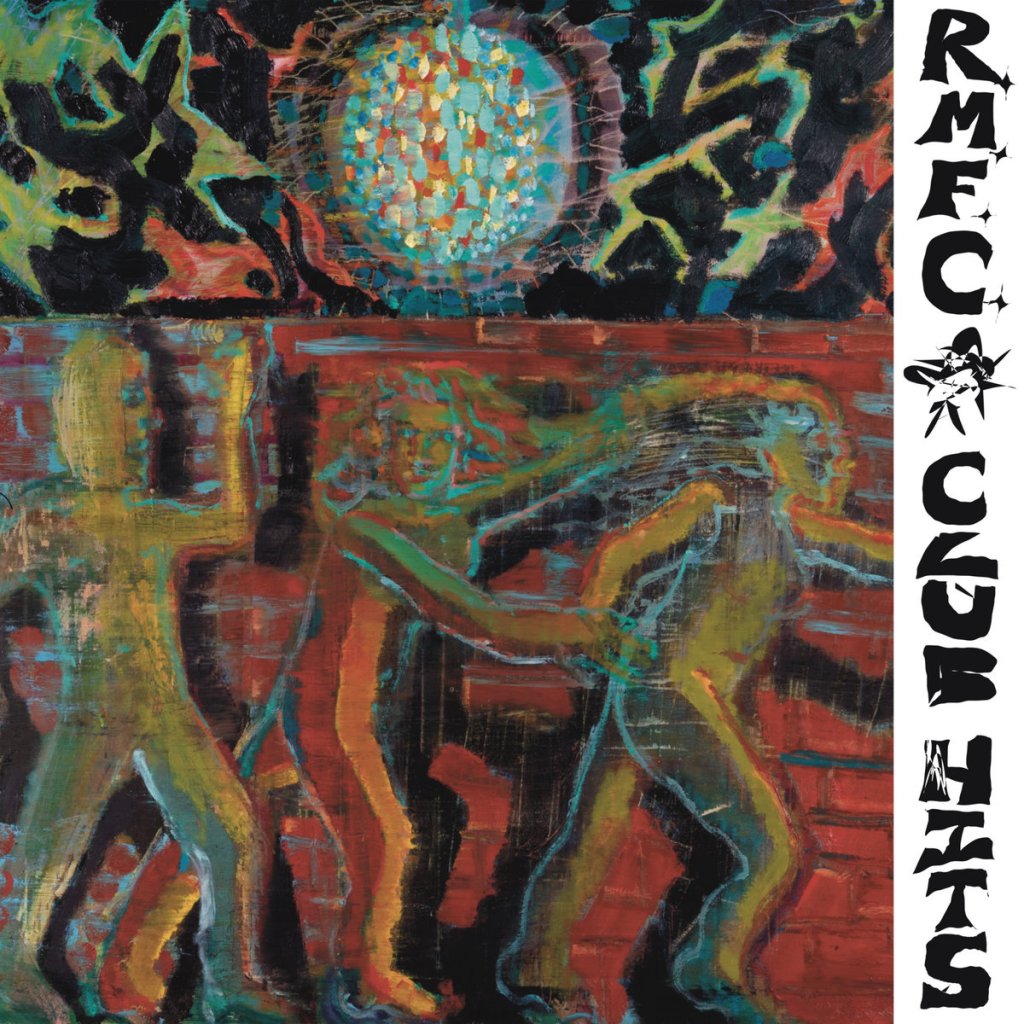
Last question, tell me about the album art; the shattered-look motif gave me a little vibe of Black Flag’s Damaged cover.
DX: Oh yeah, true.
BUZ: Ian Teeple.
DX: Let’s talk about Ian for a second.
BUZ: You can always trust Ian Teeple to do something good visually. He’s been really important to what’s going on. There was a lot of back and forth during the process. Ian would send me ideas, then I’d take them back to the band and everyone would be like, “No, I don’t like that, but I like this,” or whatever. Then I’d send that feedback back to him, and he’d come back with something else.
In the end, what we landed on for the album cover—and this is a Gimme exclusive—those two figures on the front cover, on the right-hand side at the top and bottom, are actually shirtless selfies of Ian Teeple. He sent them to us hoping we’d notice and reject them [laughs] because he wanted to use them for something else himself. But instead we ended up putting them on the cover.
DX: [Laughs].
BUZ: So there are literally two shirtless pictures of Ian Teeple on the front cover of the Station Model Violence album. And if you look closely with that in mind, you’ll definitely be able to tell.
DX: What I really like about it—and you’ll notice this more when you get the physical record, because it’s not as apparent digitally—is that it genuinely looks like Ian physically made the collage on the record by hand.
I was actually really doubtful about the album cover at first. I had my own vision for it, but Buz really pushed for this direction, and I’m genuinely grateful for that because I don’t actually think I have a very good aesthetic sense when it comes to artwork.
Honestly, I’m usually pretty wrong about album covers. I thought the Total Control Henchman album cover was dreadful and argued against it. And most things I’ve designed myself are pretty… whatever [laughs].
But Buz was really confident about this cover, and when I finally saw it properly, I was like, “This is really sick.” I just wanted something where you could see the record from a distance and immediately know it was ours. Something really distinctive.
Okay, I’ll let you guys go get to dinner. Thank you for your time. And thank you for making an incredible album! Its’ one of the best things I’ve heard all year so far.
BUZ: Thanks so much for doing this. We really appreciate it. It’s so nice to talk to you.
It’s nice to be able to get you both together for a chat. We’ve spoken before separately. So, all together has been lovely.
DX: Yeah. And I never even told Buz this, but the chat we had during lockdown for your book [Conversations with Punx]—at probably the most vulnerable point of it all—has really stayed with me. Talking to you then was genuinely really soothing and calming. It felt really special. So yeah, I’m really glad you like the record, and I’m glad we got to talk again under more joyous circumstances!
Station Model Violence’s album is out on ANTI FADE RECORDS. Follow @stationmodelviolence & @antifaderecords.






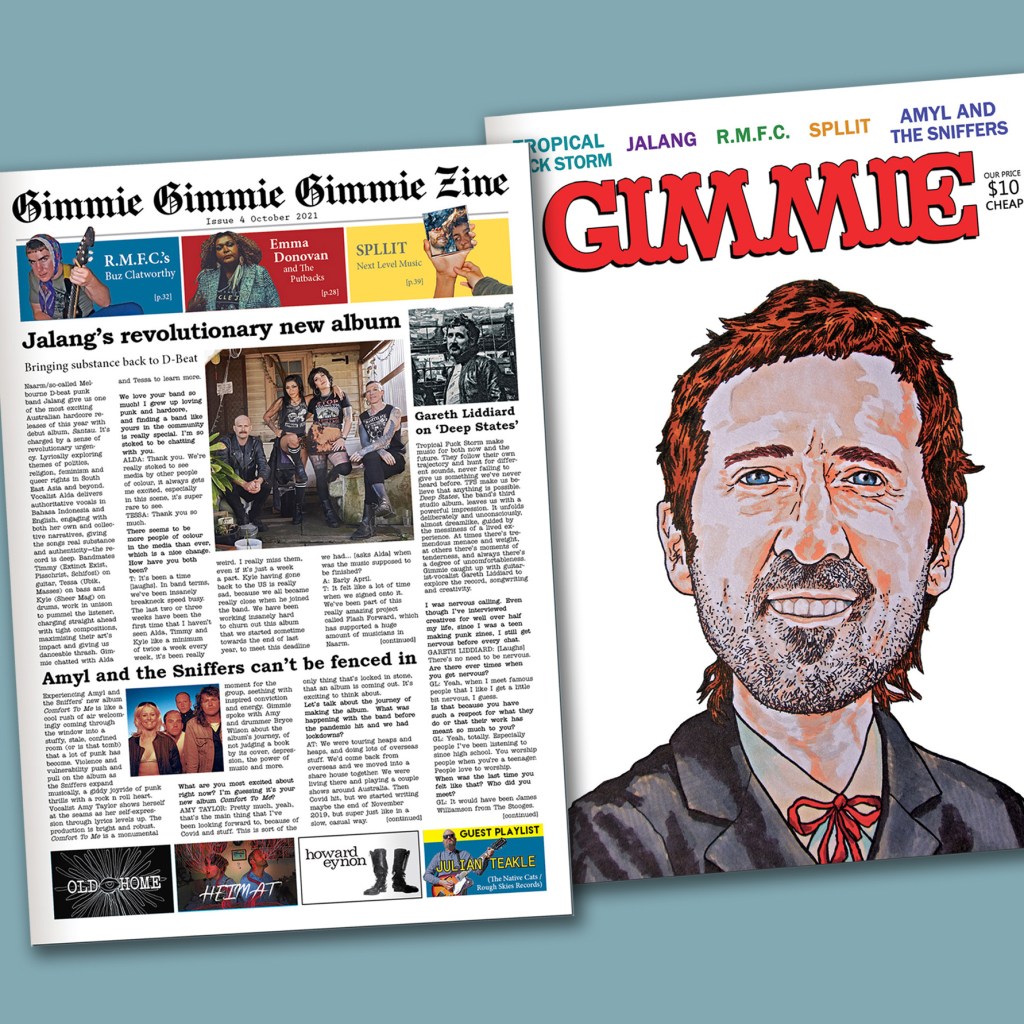

 Gimmie Gimmie Gimmie Zine