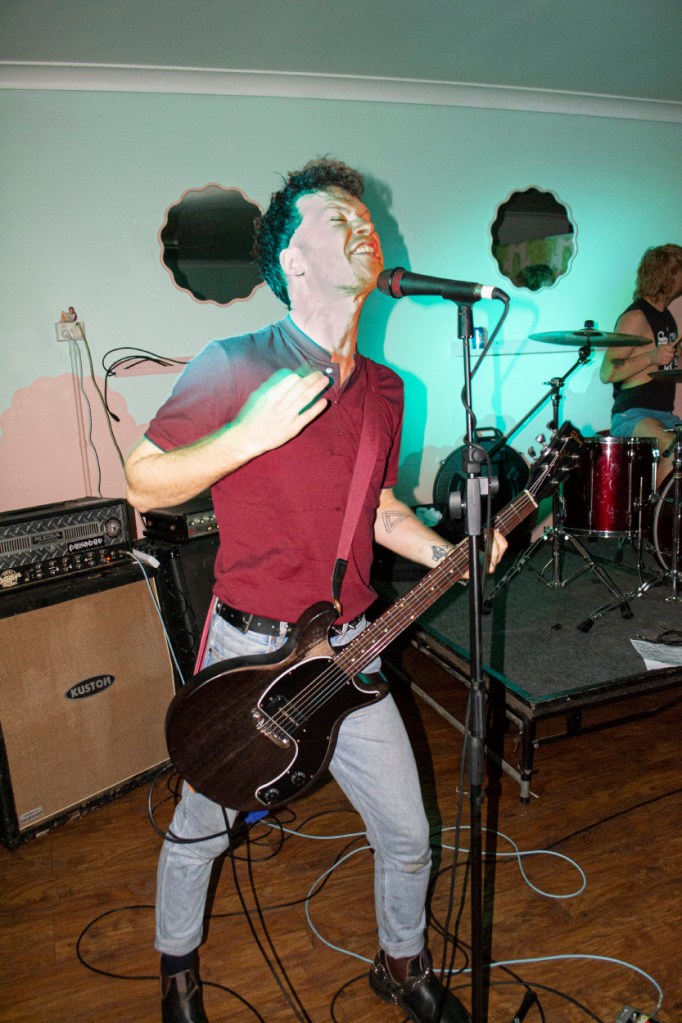
OSBO: ‘There hadn’t been anything to inspire hope or a positive outlook. When stuff like that happens, really good hardcore music gets made.

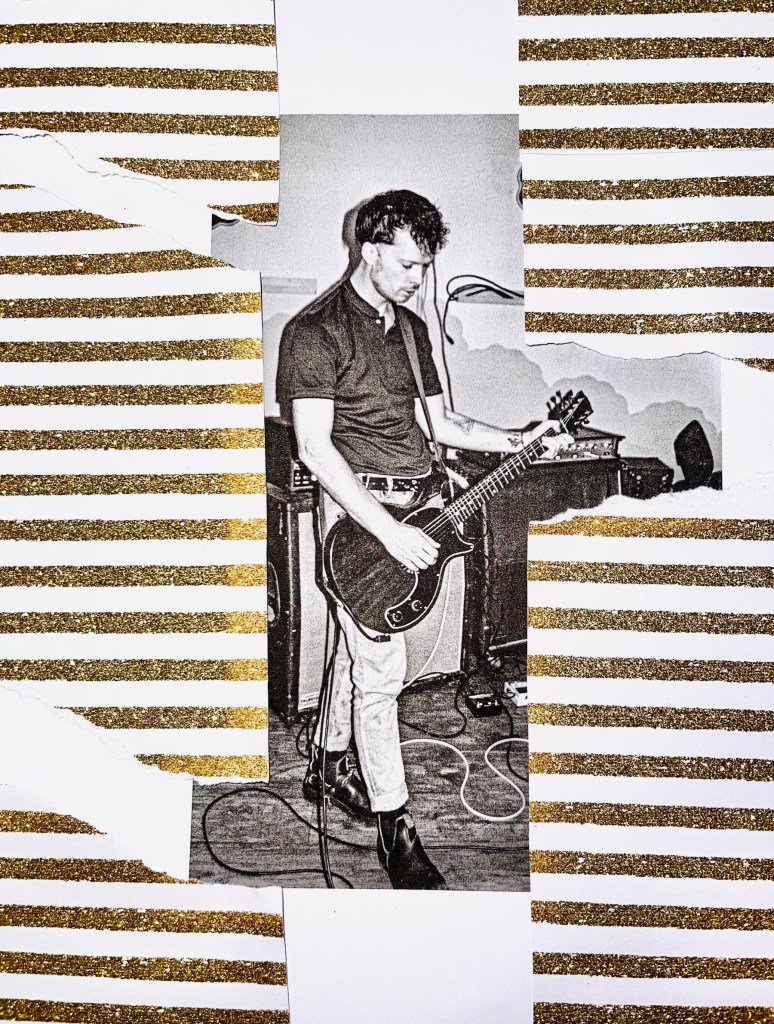
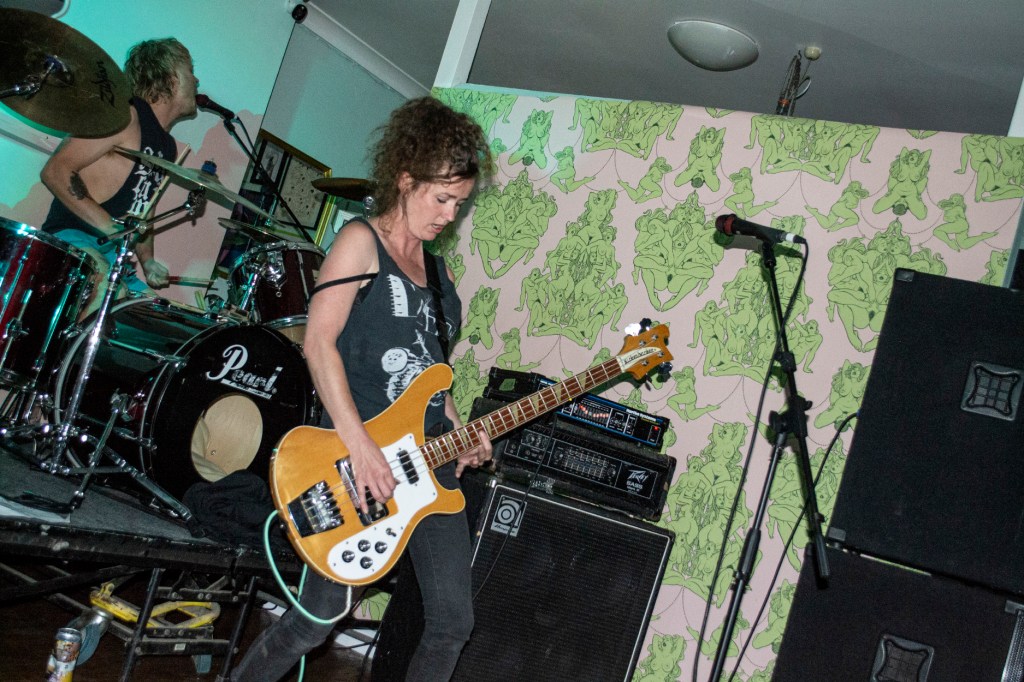
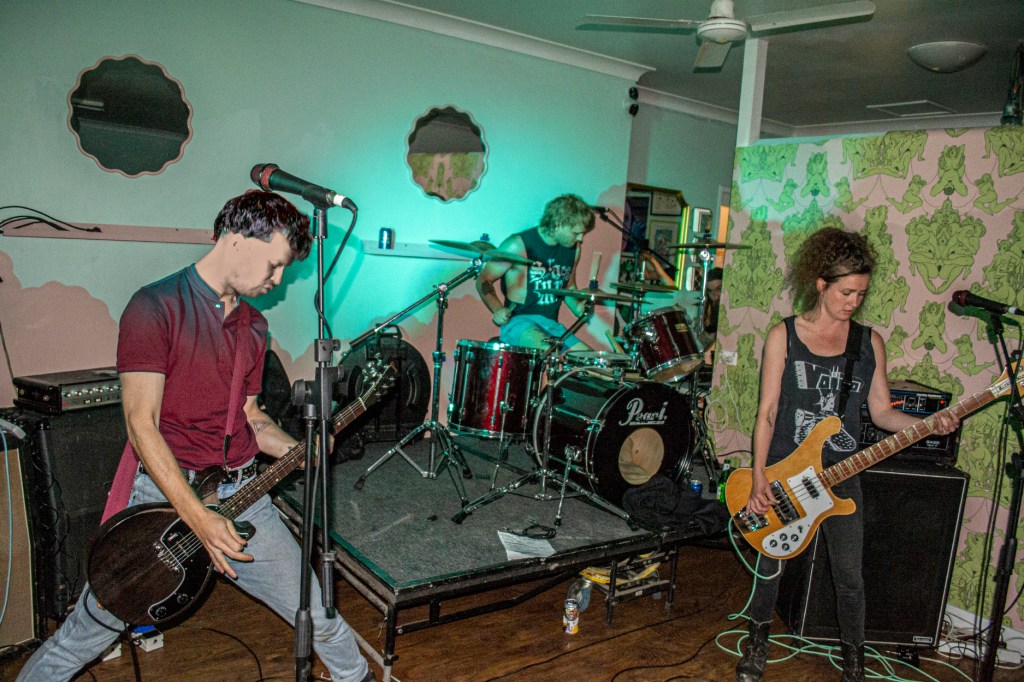
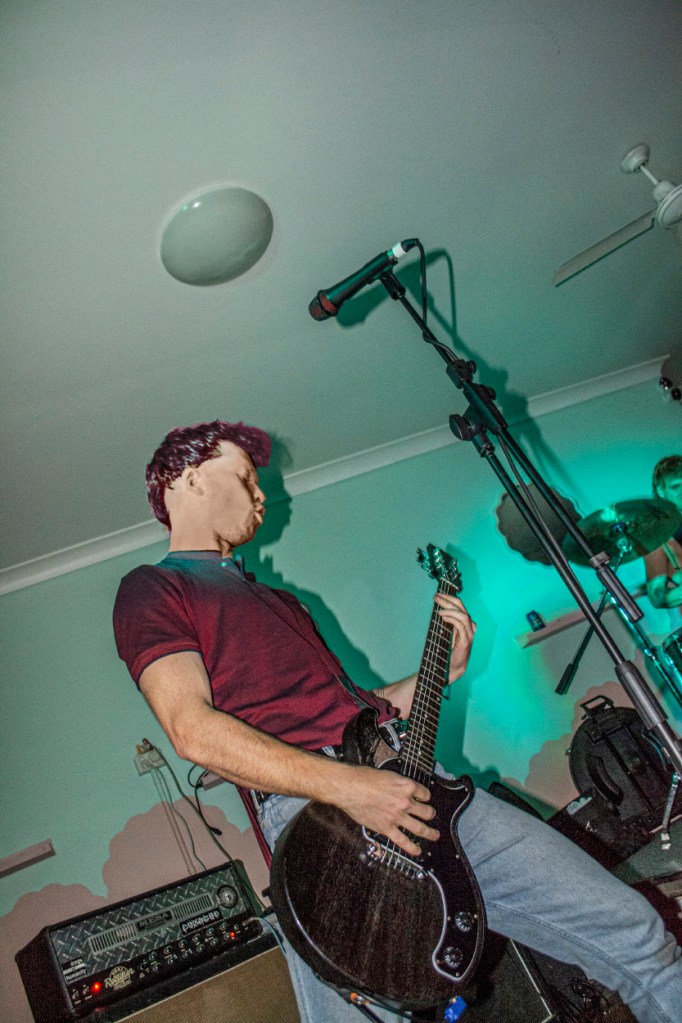
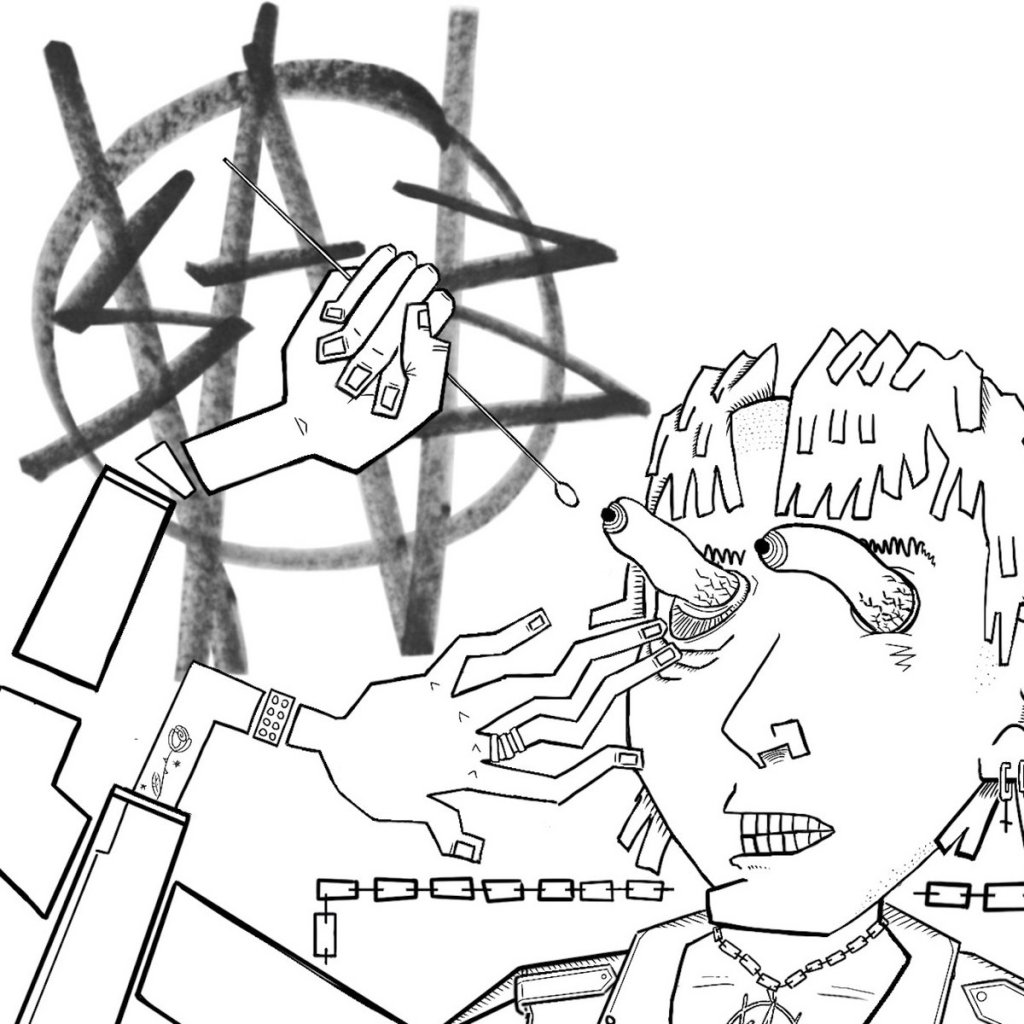
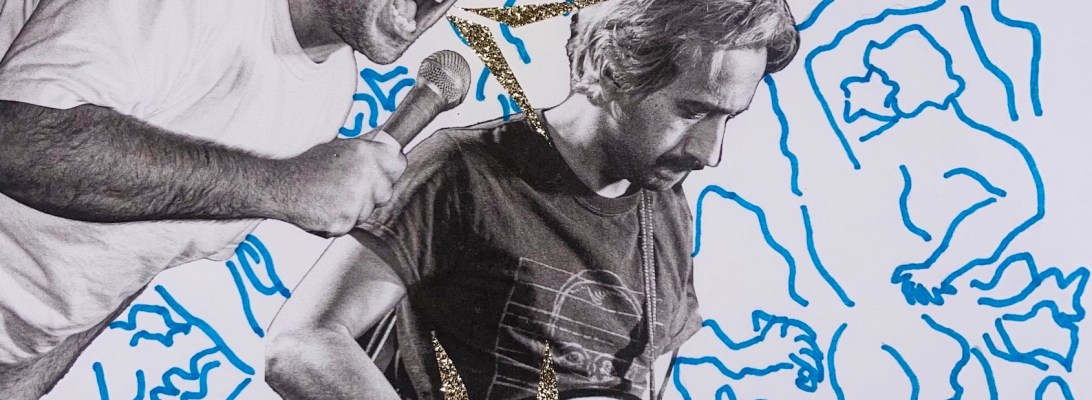
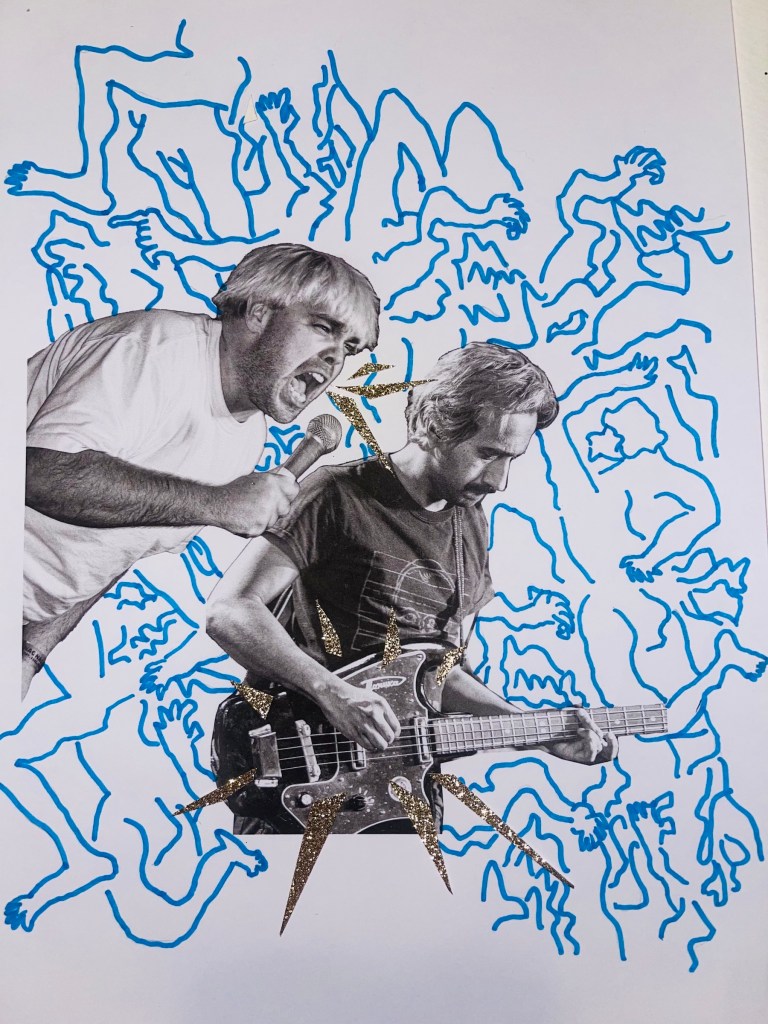
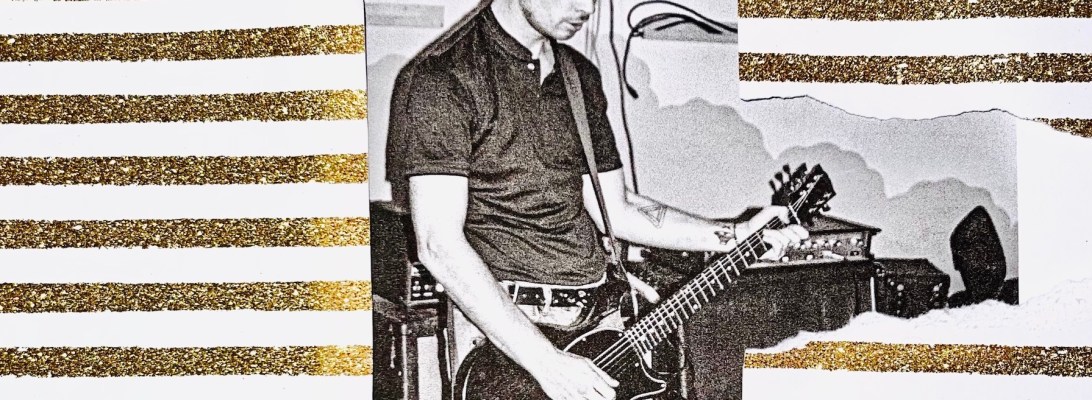
Original photos: Jhonny Russell / Handmade collage by B – inspired by Sukit

OSBO stands as a distinctive force in Sydney’s 2024 underground music community. Their new EP (out on Blow Blood Records) offers a raw, visceral experience that exemplifies modern hardcore punk. Its production strikes a fine balance—fiercely energetic and gritty, yet clear enough to highlight the potency of the songs. It’s a taut 10-minute wire, poised on the edge of snapping. With its powerful bass lines, frenetic guitar riffs, and intense vocals, OSBO brings their own unique edge. With plenty of fast, adrenaline-pumping tracks that capture the essence of hardcore’s loud and relentless drive, you’ll find a soundtrack for both your frustration with the world and moments of healing release. One of the best Australian hardcore punk EPs of the year!

Gimmie was excited to speak with OSBO’s vocalist, Tim, and bassist, Ravi.

RAVI: Tim said he’s running late. He said start without him. 

OK, cool. No problems. It’s so great to finally be speaking with you. I can’t find any other OSBO interviews anywhere. 

RAVI: We’re pretty low-key [laughs].

We love you guys so much. The first time we got to see you play live was at Nag Nag Nag, and you guys blew us away! You play the kind of punk we love!

RAVI: Thank you. Greg and Steph, who put on Nag… are the best and it’s always a lot of fun. We’ve played that a few times now. 

Greg and Steph are totally the best! Two of the nicest people in the community. So, what’s life been like for you lately?

RAVI: To be honest, it’s just been work. I hate saying this, but it’s true—work occupies a huge amount of time. Music-wise, OSBO previously had a free practice space, and the downside of a free practice space was that we were quite lazy. Sometimes we wouldn’t even get together for a few months, or we wouldn’t see each other at all. Now we’re paying for practice, and because we’re paying, we don’t want to skip it, so we actually get together every week now [laughs]. In the last three months, we’ve been more productive than we were in the past year and a half, which is good!

That’s great to hear. We kind of just figured OSBO was a pretty casual band.

RAVI: [Laughs] Yeah, well, we’re all well and truly in our 30s, and work a lot. Everyone’s quite understanding of each other when we can’t play or can’t practice. It’s all very low pressure. 

What do you do for a job? 

RAVI: I’m an Assistant Principal at a high school for students with mental health concerns. 

Wow, that must be such rewarding, and challenging, work. 

RAVI: Yeah. I have been doing it for a while. It’s quite a small school, only 56 students. But it is rewarding, you get to see kids grow and progress over a period of time, it can also be quite intense; there can be a lot of self-harm or suicidal ideation. We’ve unfortunately lost a couple of students, which is always hard. Overall, though, the school is hugely positive. Some of the kids are just going through a rough teenage patch, but then they wind up doing really well.

What made you pick that kind of work? 

RAVI: I stumbled into it, actually. I was teaching at a regular high school, and got fed up by it and quit. At the time, I was working at Repressed Records in Sydney.This guy was working at another record store in town, and I got chatting with him and it turns out, he worked at a mental health high school, and he hooked me up with work. I like it being small, we don’t churn through kids. I sometimes hear about kids that have finished school a few years ago, and they’re either finishing degrees or working, and doing well. So it’s nice to hear that. 

That’s so awesome! I saw on your Instagram that you have a therapy dog!

RAVI: I do—Scout. 

[Ravi talks to Scout, ‘Come here. Come here Scout. Say hello!’]

Oh my goodness! She is sooooo beautiful! 

RAVI: Scout comes to school with me. I got her from Guide Dogs Australia. She’s pretty awesome. I live in an apartment, so I never really wanted to have a dog because I would feel bad leaving them at home all day. It’s great being able to take her to work every day. I’m pretty appreciative of that. 

Dogs are the best! I mostly work from home and our pup Gia is always by my side keeping my company.

RAVI: Definitely. They’re good company. 
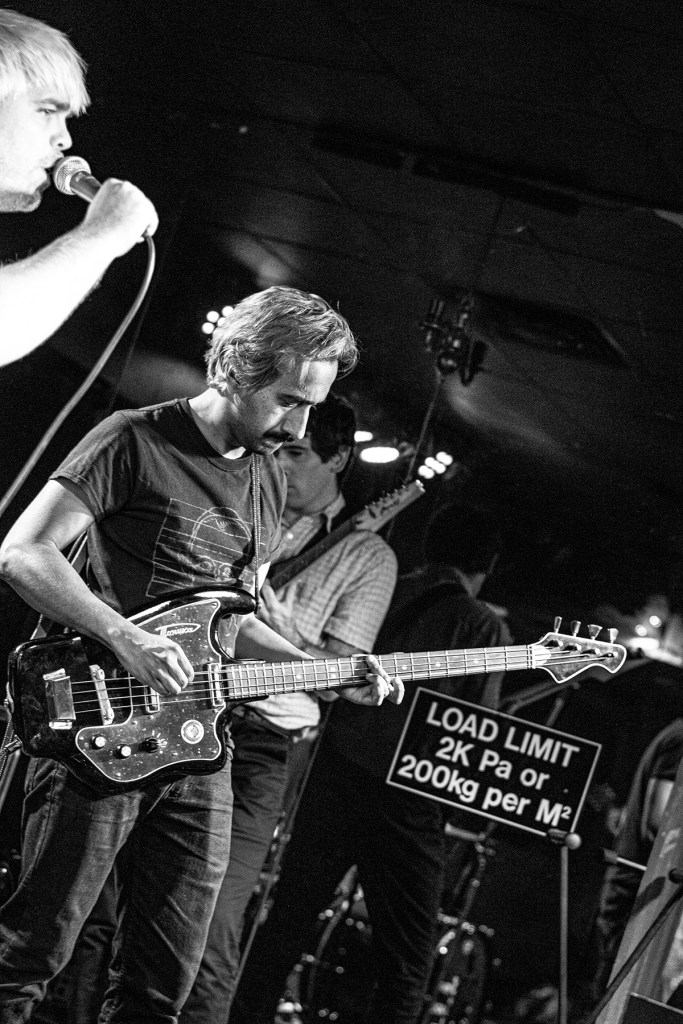
Photo: Jhonny Russell

Have you always lived in Sydney? 

RAVI: I grew up in Western Sydney, and then lived overseas for a few years but not long. I’ve lived in Sydney pretty much my entire life. I feel like this is it—an ‘I’ll be here’ sort of deal. I like it. There’s a lot of things not to like about Sydney, but then there’s enough good things to keep me here as well. My sister’s recently moved back to Sydney with my niece and nephew and I spend a lot of time with them, which is really nice. 

When I visit, Sydney it always seems so fast paced to me. It’s definitely got a different vibe from what I’m used to, having lived in Queensland most of my life. It’s pretty laid-back up here, especially on the Gold Coast where we are—no one seems to be in a real hurry.

RAVI: There’s parts of Sydney that are really hostile. The rent being so expensive makes it hostile; everyone has to work. It’s not an easy place to just live, which sucks. You hear stories from people about back in the ‘90s where you could just get the dole, play in a band, and hang out. It’s not like that anymore, everyone has to work quite hard to just survive. We have a good group of friends that are close, I’ve known a lot of them for a long time. Like, Greg and Steph I’ve known them for a dozen years. It’s nice to have a community.


One thing that I really love about going to shows in Sydney is that it’s much more multicultural. As a Brown person, it’s really nice to to not be the only BIPOC person in the room. 

RAVI: That was a shift a few years ago. Growing up, going to punk and hardcore gigs, it was pretty white. Being Indian, I noticed that where I grew up in Western Sydney was also quite white. It was definitely noticeable, but over the last dozen years or so, it’s definitely shifted, and it is really cool and nice to see. So, I get that.

My experience growing up in the punk and hardcore scene was similar to you, everything was very white. Being a Brown female at shows too, I really felt like an outsider in a subculture of mostly white male outsiders.

RAVI: Yeah. And that aspect was alienating. 

Yes!

RAVI: Having the whole traditional Indian parents, they were never like, ‘Go out and learn an instrument,’ or anything like that. So the whole idea of it all was just foreign to me. There was no access point So even though I was going to punk gigs and stuff from a very young age, it always felt like something other people do. It never really felt accessible in that sense. 

How did you get into music? 

RAVI: It was through a guy who sat next to me in roll call back in high school. He was into a lot of the skate punk stuff, like Epitaph and Fat Wreck Chords. The one local band that everyone seemed to be into was Toe To Toe because they’d play everywhere. If you talk to people my age, I’m in my late 30s, Toe to Toe was often the first band a lot of us saw, ‘cause they’d play the suburbs. Toe To Toe was a gateway band. From there, I’d go to the city and various youth centres to see shows quite regularly. 

Penrith was actually where I grew up, so for a while in the early 2000s, it was a hot spot. There was a lot of gigs out there. American Nightmare came and played. In the summer a lot of touring bands (Epitaph stuff) would play.

Yeah. I remember all of that. I’d go see anything. I was just so keen to see bands, and those were the ones I had access to too. I may not even like everything but it was a chance to get out there and be a part of something exciting. 

RAVI: I lapped it all up too, I couldn’t differentiate between good or bad stuff for the first couple of years, it was just all excellent [laughs]. After catching a lot of pop-punk stuff, I then that moved into a lot of hardcore stuff. After the mid-2000s, I got into to a bit more garage rock. I guess, I burnt out on hardcore punk. But then came Eddy Current Suppression Ring and I was like, oh god, this is really fresh! This is really cool! And, that kick things off again.

It seems we had a pretty similar music trajectory. I got burnt out on hardcore too, not the music but more the scene…

RAVI: It was too bro-heavy, yeah?

Exactly!  

RAVI: I got that sense. But then, in Sydney, there was a secondary punk scene, where there were punk and hardcore bands that would play with Eddy Current or Circle Pit or whoever, so there was that clash of things. I started working at a record store when I was probably 15, and then started working at Repressed when I was 17. Chris, who owned the shop, was always turning me on to stuff, and not just punk-related stuff. He’d be like, ‘Oh, you should listen to Guided by Voices or Modern Lovers.’

That’s awesome. I used to have the dudes that worked at Rocking Horse Records in Meanjin/Brisbane turning me on to different stuff. It’s funny you mentioned Toe To Toe before, Scott Mac, was the second person I ever interviewed!

RAVI: Cool. I often think of them. I had this conversation with Mikey from Robber, and we were all like, ‘Toe To Toe were like the Australian Black Flag of the 90s,’ in a way—just in the sense that they went everywhere. Like, you’d see flyers of them playing places like Townsville or wherever. Even talking to my friend Nick, who owns Repressed now, he said that he saw them in Cairns when he was a kid. I think that was hugely important, they played in places that other bands didn’t. 
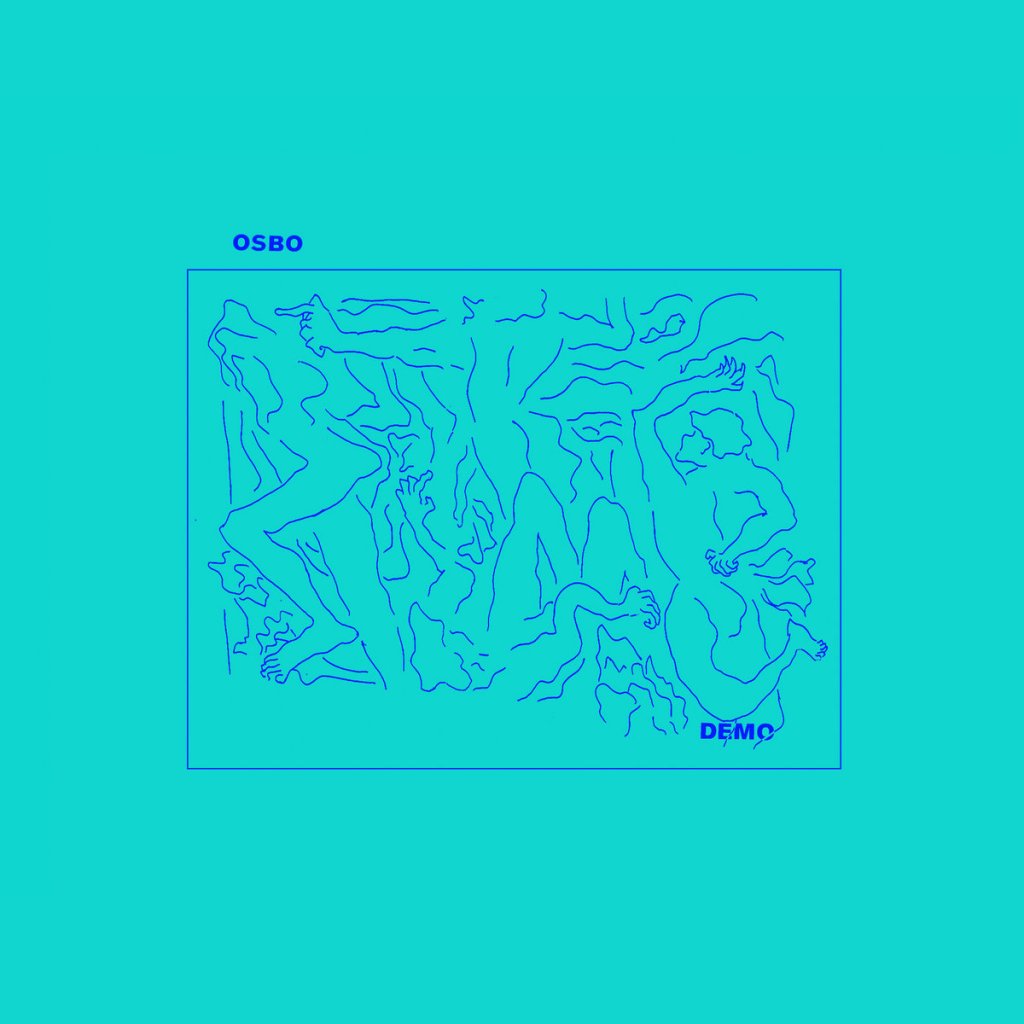
Art by Sukit

Yeah. I know you collect records. What are some albums that have been really big for you? 

RAVI: Formatively, The ReplacementsLet It Be hit a spot so much so that, not that I listen to it frequently now, but I’d still call it one of my favourite albums. It was huge for me; I listened to it constantly. The first wave, as a kid, would have been bands like Good Riddance or Sick Of It All. Even now, I’m constantly buying records—lots of Australian stuff. Particularly right after Eddy Current, it felt like there were so many good Australian bands happening, so I’d be catching all of that stuff.

Totally, Eddy Current is such an important band! What’s one of the last records you bought? 

RAVI: I bought The Dicks [Kill From The Heart] reissue on Superior Viaduct. I was happy to get it. I also grabbed a couple of things from Sealed Records. I don’t know if you’re familiar with Sealed Records? But Paco who does La Vida Records, he runs a label called Sealed and they do a lot of archival stuff. I got a release by this band Twelve Cubic Feet, never heard of them but I trust the stuff that he’s putting out. It’s good!

What inspired you to start making music yourself? 

RAVI: Social stuff, I very much like spending time with my friends. It’s an extension of that. Pretty similar to playing in a team sport or any sort of group activity. Spending time with the same people regularly. I never felt like it was something I could do. But some friends of mine actually said, ‘No, let’s let’s do this,’ and following through, them pushing me to do it. 

Was OSBO your first band? I know you play in The Baby as well.

RAVI: Yeah. The Baby. And then, OSBO has a similar sort of cast of characters. So yeah, Lucy from OSBO played in The Baby as well. She’d never played in a band either and just started playing in Photogenic. Max the drummer had never played drums before. Ben the keyboard player had never played keyboards. So, The Baby was everyone just giving it a go.

I love that! I find bands like that seem to create really interesting music to me. I feel like there’s more experimentation, and the naivety, give you a better chance at developing something more unique. We love The Baby when we saw you play Nag. 

RAVI: Thank you. It’s very unorthodox. I remember our first practice, Max had to look at YouTube, how to set up a drum kit, he had no idea. Our band is just built around friendship.

Did you ever think you’d be a singer? 

RAVI: No, no, no. Other people suggested it. I’m glad they did. It was a similar thing with Tim from OSBO. He’s been a good friend, and he’d come around, and we’d play chess and hang out. Then he mentioned he was starting OSBO, and was like, ‘You want to play?’ I was like, ‘Yep.’ And OSBO started. It took a while to get off the ground because everyone has other things going on.

Had you played bass before then? 

RAVI: No, I hadn’t. Joe, our guitarist just taught me from scratch. There were times when I thought, I’m never going to get it! I should quit. But they were like, ‘No, no, you got to do it. We want you in this band.’  They really pushed me, which was awesome!

It’s so good to have that encouragement, support and camaraderie, hearing about that makes me love you guys even more.

RAVI: Yeah, exactly, and I’m really glad they did that. As I said, it’s primarily built around the social aspect, so everything else is secondary. We found our friends in Sydney were always so supportive, but not even just in Sydney, all our friends everywhere are really supportive. From the get-go, people were coming to shows. 

Where’d the band name come from?

RAVI: That was Tim. He had that band name for a while, and he had planned on starting a band called that, and various members had come and gone and it just never sort of happened. So it’s very much, in that sense, Tim’s band, I guess you could say. 

What’s something you could tell me about each member of the band? 

RAVI: Jacob, our drummer, he’s going to be having a new baby very soon. So that’s, parenthood and hardcore coming together—he’s very excited. 

Joe, our guitarist, was working an insane job where he was working 18 hours, and he’d even sleep over at work. But he quit and now is feeling a bit more of that life balance. He’s doing really good.

Lucy, our guitarist, she’s awesome. She’s a primary school Librarian and very good with young kids. 

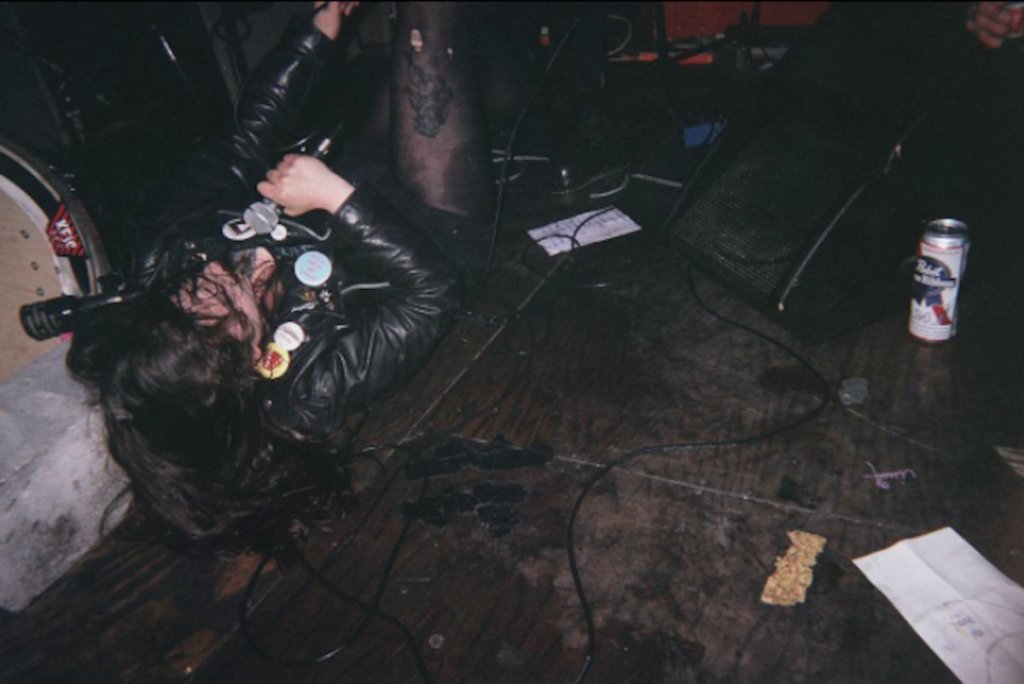
Tim, our vocalist, is probably the focus point of the band. He has a good presence. He’s like an MMA guy, so he’s quite fit and energetic on stage. He’s been doing that for a few years. I think it was something that was really good for him. 
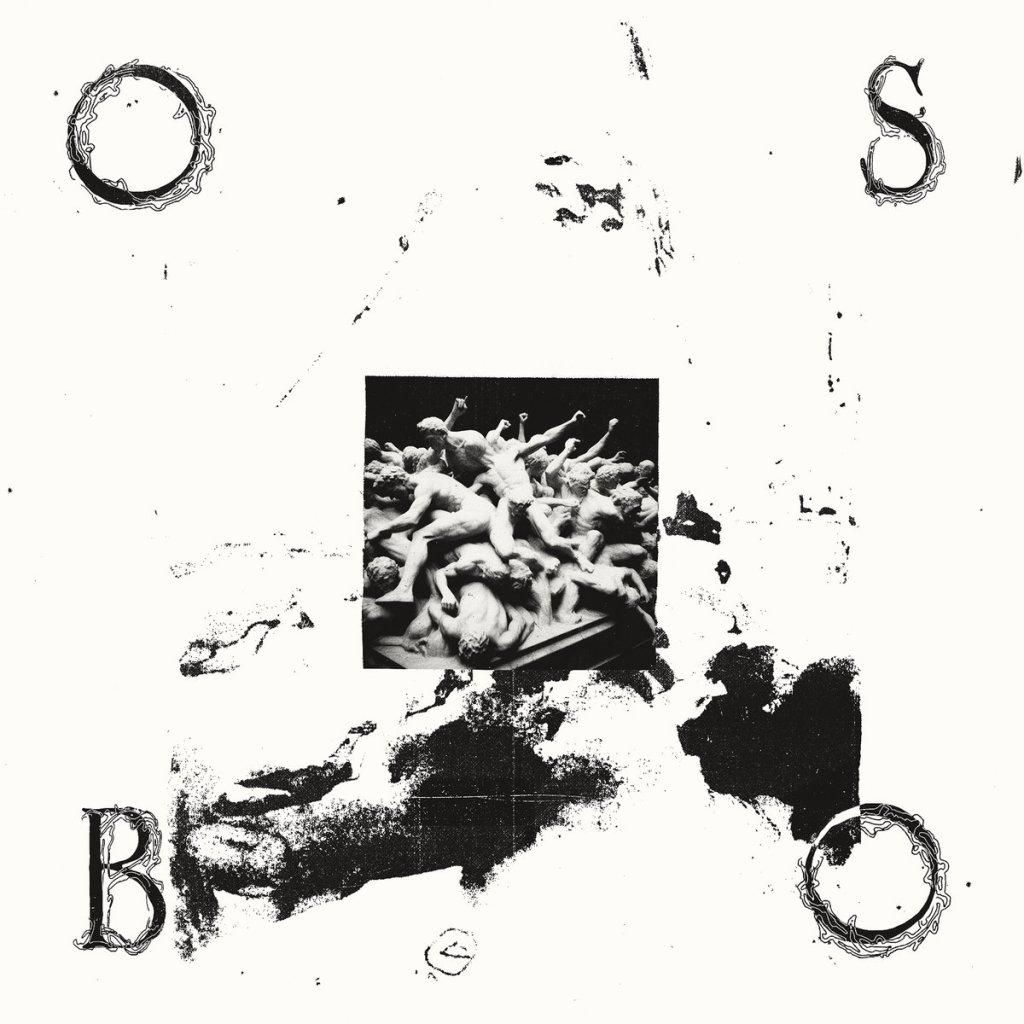
Art by Sukit

OSBO put out their EP on April 1. It’s really amazing! The art work is similar to the photo on the demo, the pile of bodies.

RAVI: Joe, our guitarist, does all of our artwork. He’s a graphic designer by trade. You’ll spot his artwork on Sydney bands’ records. It’s nice having someone you trust to do the art. I’ve never asked him where the image comes from, but to me, it almost looks like there’s a horse’s head in there, and it reminds me of The Godfather—the horse’s head in the bed. It’s sort of abstract. Maybe I’m just imagining that [laughs].

I’m gonna have to take another look at it now! How long did the EP take to record? 

RAVI: We did it over two days, at a random house. The contact came from our drummer at the time, Coil. It was this house in the suburbs that was clearly a rich person’s house in the ‘70s, but was now overgrown. The pool had been filled in and there were trees growing out of everywhere. We recorded in this old pool house. It was run down as all hell. 

[Tim joins the chat]

TIM: Sorry, I’m late. I was riding my bike in the Blue Mountains with a bunch of friends.

That would have been really lovely. It’s really pretty up there. I think I saw you post online earlier that you did something 40+ kilometres!

TIM: Yeah, I didn’t even record all of it, so it was more than that.

That’s a lot! Wow. Is that something you do often? 

TIM: I’d like to do it more often. Occasionally we go out and do long rides or overnight rides. 

You also do Jiu-jitsu? 

TIM: Yeah, that’s one of my other things that I do. 

RAVI: I mentioned that earlier too. 

TIM: It’s fun—it gets you out of your head. 

It’s so important to have stuff like that. Do you have any fond memories from recording the EP? 

RAVI: The guy who recorded it Ben [Cunningham] had nice gear, a nice drum kit, so that was nice. Next time we might record with friends in Melbourne. 

TIM: I was stoked that we got to do it in Macquarie Fields, and it being so close to where I grew up. Also, having that connection into somebody like Ben who’s younger, and who is doing something new, rather than it all just being like, if we’d gone and recorded with David Ackerman, it would have felt a bit different, you know, like recording in Marrickville or whatever.

The whole experience to me was so different to the other recording experiences I’ve had. It felt more like of the band as well, and it was cool to like have Coil there as his last thing to do with us as well. 

Other times I’ve recorded were either even more DIY or like more professional. And this was sort of somewhere in this weird kind of space in the middle, whilst being in the back of somebody’s house in the suburbs, 40 minutes from the city. It’s kind of this strange space that felt very DIY, but also very earnestly trying to do a great job of that. 

RAVI: Ben did a great job. If anyone is keen to record—hit Ben up!

It’s a pretty intense collection of songs; was there anything you did to get that vibe? 

TIM: [Laughs]. It’s kind of weird. It was a very chill day. We were sitting around. There was little bit of back and forth with the tracking. I did every song but one, in one take. 

RAVI: We were a bit concerned that Tim was going to blow out his voice, because he gives it 100%. 

TIM: [Laughs].

RAVI: We were hoping that didn’t happen.

TIM: Because I wanted to do it in one take, I went particularly hard at each song. We did just spend a lot of time just like chillin’ though.

RAVI: It was pretty low-key. There was a lot of sitting around in the overgrown backyard, with a tree growing through a bench, and a bicycle stuck up in another tree. There was this other shed that we went into and it was full of old movie posters…

TIM: And, dentist stuff.

RAVI: Yeah, and stuff from junior football teams from the 1970s. It was a weird vibe.
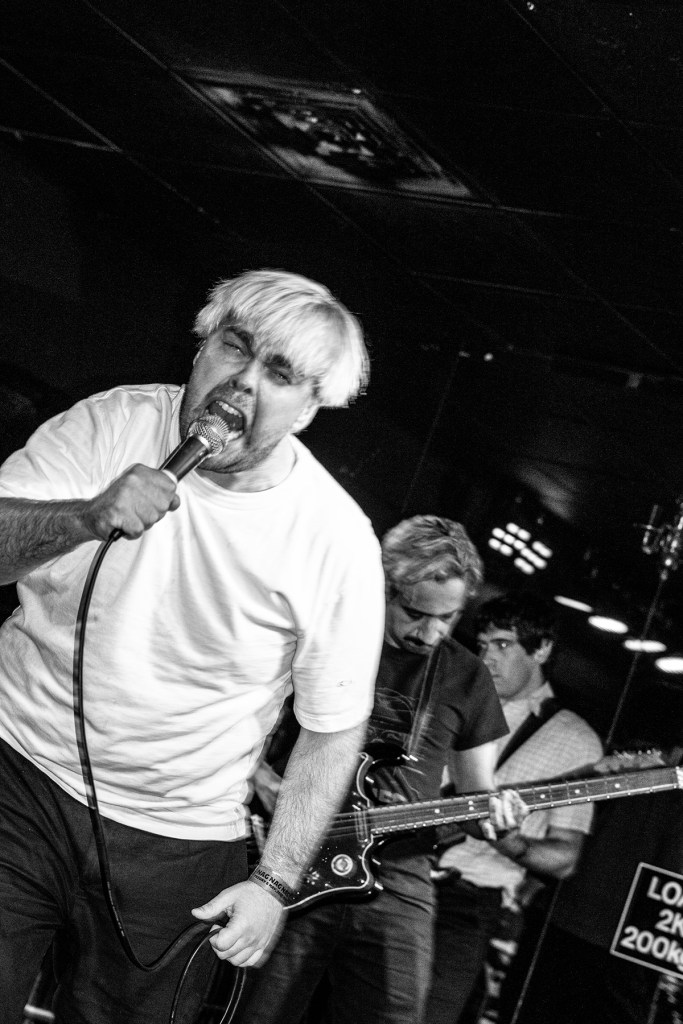
Photo: Jhonny Russell

We’re glad you were able to capture the ferocity of your live show on record. Often I find, a lot of bands miss that mark.

TIM: The imperative of the band is that we’re all pretty much on the exact same page about what we’re trying to do with the band and what our references are. Because of that, we go into that kind of situation knowing that’s what we want to capture about the band.

RAVI: We were conscious that we didn’t want it to sound too glossy.

TIM: I think it would be hard for me to sing these songs and not like blast on them. It needs to be full on, otherwise it’s not the thing that we’re trying to do. 

A lot of the songs on the EP are from the demo…

TIM: Having practiced them a lot more, makes a big difference [laughs].

RAVI: The demo was done with a Zoom mic at practice sort of deal. We recorded it and sent it out. 

TIM: Yeah, we probably should have done a better job with that.

RAVI: [Laughs]. But I feel like it captured what a demo was meant to be.

TIM: We re-recorded because the demo was so scratchy. We’re now in a spot where we’re practicing a lot more, writing a lot more. We’re working more consistently. COVID lockdowns, that kind of happened right in the middle of when we were starting to do stuff. Now we’re aware that we need to be tighter to be that sound as well. We need to be able to know the songs inside out before we can go into a recording situation and produce that kind of intensity. 

RAVI: Hopefully we’ll be able to record again before the end of the year or if not early next year. 

Yes! That’s great news. Do you have many new songs?

RAVI: A couple of new songs but then a bunch of part songs.

TIM: Since the EP, we probably got like another three or four. 

With the songs that were on the original demo that you’ve re-recorded, were they written back around like 2020? Was there anything that was happening in your lives that was influencing those songs? 

TIM: It wasn’t a particularly nice time [laughs]. I remember talking to Joe even before we started the band; I just felt like, politically, people were just very angry. There was a lot of stuff that had completely failed, and there hadn’t been anything to inspire hope or a positive outlook. When stuff like that happens, really good hardcore music gets made—which makes it sound a little cynical.

RAVI: It was a weird time, definitely.

TIM: Not for me personally, but I think it was an angry environment, and I just wanted something to put that in, and so I put it into this. 

What about the newest song, ‘Say It To My Face’? 

TIM: Same deal. A lot of the songs are about work, which is a very stressful and unpleasant environment. I have a professional job. I work in an office. There’s a lot of politics and that kind of thing. So a lot of the songs are just about me wishing I didn’t have to deal with those people.

I feel that, in my work experience, I know I’m not really built for an office.

RAVI: The song ‘Time’ probably captures that. Like, people who abuse your time in the work setting, they’re almost like vultures. 

TIM: Yeah. A lot of the songs are about feeling like you have to deal with things against your will. Like, I don’t want to go into those scenarios. I don’t choose those scenarios; I would prefer to not have to ever do any of that stuff. And then people make it worse, like ‘Say It To My Face’ is basically about people talking about you or your work, but not having the guts to tell you, and how frustrating that is to deal with—which is a general situation at work. But there were also some specifics I was dealing with at the time that I was extremely, really, really not enjoying.

I’m so sorry to hear that. That sucks. 

TIM: I wrote a nice song about it. 

What are the things that you do to counterbalance this shitty things, like, stuff that makes you happy? 

TIM: Write nasty songs about it. 

[All laugh]

TIM: Like we were talking about, I have Jiu-jitsu and cycling, and they’re really good outlets for dealing with mental health issues or dealing with just not being able to get out of your head. 

RAVI: I spend time with my niece and nephew—that forces me to be present and put everything else to the side because. Like, you can’t be zoned out thinking about work or anything like that. 
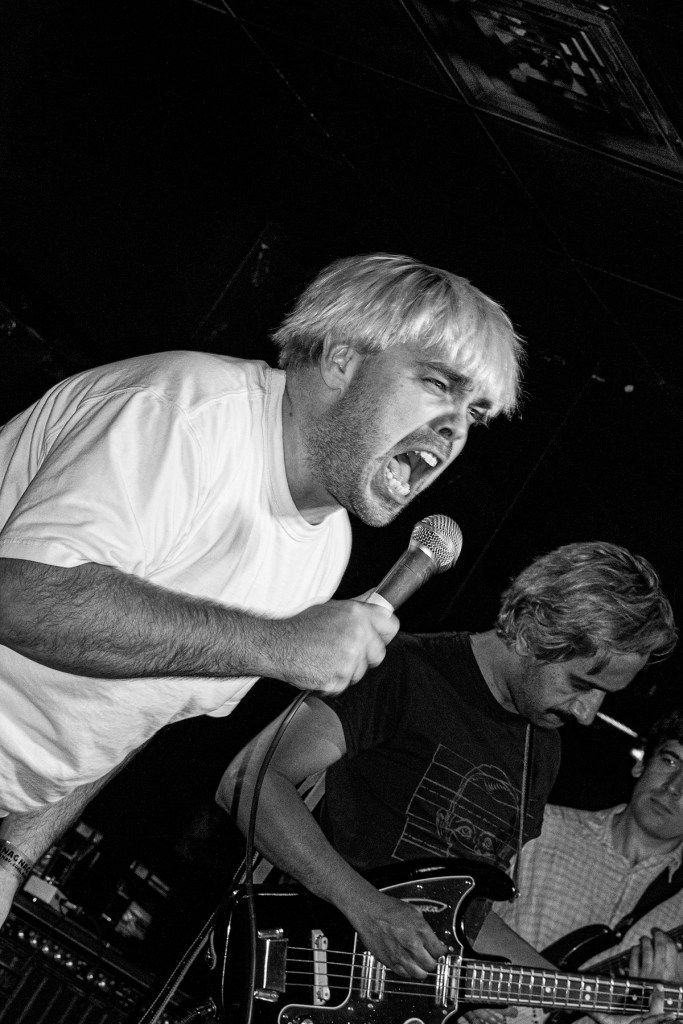
Photo: Jhonny Russell

What else do you do outside of music? 

RAVI: I go to see a lot of gigs; a lot of our friends play in bands. Some friends of ours have recently set up a bit of a record store in Sydney, so I’ve been helping them out with getting stock. Shout out to Prop Records in Ashfield. Aside from that, I babysit my niece and nephew at least once a week. Today, I went to visit my mum—just the usual family stuff.

TIM: Really just Jiu-jitsu and cycling, and work a lot. I’ve got a pretty big yard, so I have to garden a bit. That’s about it. I try and keep it simple. Sometimes I can let hobbies spiral [laughs].

RAVI: For a while, Tim and I were playing online chess against each other constantly, all day.

[Both laugh]

TIM: I like letting new hobbies in because I love to dig through information. I have to edit down and be tight. I also played Dungeons & Dragons, with some friends. 

Find OSBO’s EP HERE on Blow Blood Records. Find the demo at OSBO’s bandcamp.
Punter’s Nathan Burns: ‘We have to fight for change.’

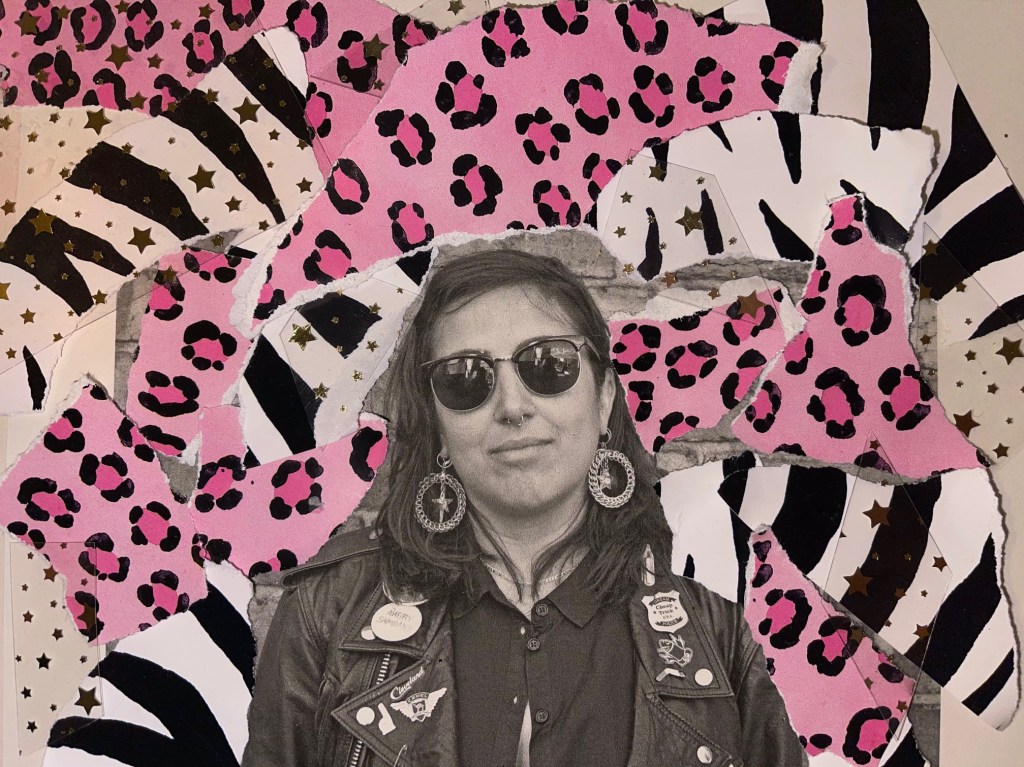
Original photo: Jhonny Russell / handmade collage by B.

Naarm/Melbourne-based anarchist punk band Punter exploded onto the scene in early 2020 with a scorching demo, released on cassette by hometown label Blow Blood Records. Fronted by vocalist-guitarist Nathan Burns, Punter’s music challenges societal norms, with thought-provoking lyrics. Their 2023 self-titled debut full-length quickly became a staple on the Gimmie turntable, offering an eclectic mix of songs that delve into anxiety, fear, death, grief, boredom, and class politics. We caught up with Nathan just before he left Australia to tour Europe with Punter and travel indefinitely. He’s since explored Greece, the underground catacombs of France, and Spain, with his latest stop being the UK.

NATHAN BURNS: It’s been nonstop since Punter got back from tour with Rat Cage because we’re going on tour in Europe in three days. The space in between two tours is about a month and a half. Two weeks of that are taken up by me, realigning myself and working out who I am again, and adjusting to the fact that I have a lot of shit to do, but it can all happen on my own schedule. 

Prior to that, I’ve been working a lot, for about six months, and doing band stuff all day, every day after work. I’ve been floating in a kind of timeless continuum in a way, but it’s full of deadlines in another way. I’m wrapping up my life here as well—moving out of my house and getting rid of my shit. I sold my car. I’m going travelling indefinitely after the tour. So it’s a lot at once, changing stuff.

I read a list recently about stressful events humans go through and death of a loved one, losing a job, and moving house or country, were all up near the top of it. So much is happening for you right now.

No one in my family or immediate friendship group has died recently, but you’re on the periphery and it’s always going to be constant once you get to my age, 30. It’s funny, these nexuses where everything happens at once. All that energy.

It’s exciting you’ll be travelling indefinitely. Not a lot of people get to do that. Do you know where you might end up or are you just going to wing it? 


I’ll be lurking about in Europe. There’s options for me to get a visa until I’m 36, in France and Denmark. They’ve raised the age in those countries for Australians. In Switzerland, you can maybe get a permit to stay as an Australian now. It’s easier than before. I quite like Spain and connected with a few people there. I haven’t sorted out visas or anything yet. It’s all been too manic with the tour stuff, band shit and recording.

Have you been to Europe before? 

Yeah, my old band, Scab Eater toured there and I lived there, the cycle is repeating now. I lived in the UK after the Scab Eater tour in 2016 for about a year and hung about there and did little trips to the mainland, to the continent and back. The band had fallen apart over there and I came back here and started Punter. I’m ready to not be in Melbourne anymore.

Why did Scab Eater fall apart? 

We did two months of touring; it was stressful for certain members, to be honest with you. I felt like I was living the dream, but there was definitely struggling to cope with two months and 50 shows. We tried to tee up some other gigs in the summer, a year later from there, but by that point, a lot of people’s plans had changed, and we bailed on those gigs, which was pretty embarrassing, as far as I’m concerned. It had gotten pretty dysfunctional as a group. It can be really stressful when people are out on the road; you’re in such close quarters, and you’re basically living with each other the whole time. It can be really stressful for them. We pushed it further and further and further until we found out where our limit was.

Did that experience affect how you do things now with Punter?

Kind of. The personalities are slightly different with us. It’s a bit different playing in a three-piece. Jake, who played drums in Scab Eater, is also the drummer of Punter. In that way, we have that dynamic still as old friends. Then there’s just one other person, Bella, the bass player.

Scab Eater was a big rowdy boys club, and we’d fight like brothers, argue and be really stupid little boys together. You bounce off each other. With Punter, things are more chill; there’s less huge personality stuff and egos bashing their heads against each other. There’s probably more drinking and a bit less adventure as a group.

And I’m certain that although we are about to go on tour for a month in Europe, I don’t think two months on the road would ever be on the cards for this band like it was for Scab Eater. Everyone were travellers in that band, either on the dole or people were on their big holiday to Australia from the States. There was a lot of transients with that band. The other members of Punter are pretty settled in Melbourne for the time being.

Photo: Jhonny Russell

What do you enjoy about travel? The adventure? 

Absolutely. That’s what I’m in it for. I always want to improve myself through it somehow. It’s very easy to walk around sticking your beak into other societies and going, ‘Oh, that’s pretty, isn’t it? Oh, you’re pretty poor, aren’t you?’ Or how does that feel? And then you kind of get disillusioned. But the aim of long-term travel is to seek experiences that improve you as a person or connect you with other people you can learn from or offer what you have—skills, wisdom, or experience in an area—to whoever you meet along the way.

I enjoy that about travel too. You can actually see how other people live their lives firsthand. Lots of places in the world are very different to Australia. 

Yeah. There’s a fair bit of phobia that sort of infected Melbourne society, particularly in the last few years. In the punk scene, I’ve noticed a distinct lack of traveling punks or whoever coming through and being put up by people here.

When I was a teenager, let’s say like 14 years ago, I was hanging out at a big punk house, and there’d be six Europeans that had come through for the first half of summer and then another six had come through the other half, and they’d all crash on the floor or the couch. Everyone was constantly meeting people from different parts of the world. That exchange felt really vital to me because it showed us, our little squat in the suburbs, that if we ever went overseas, there was this whole network of people that we could connect with, and that gave us mobility for travel in the other side of the world.

Hearing people’s stories was inspiring. Learning about the ways in which we differ because of where we come from was also really important. I don’t see as much of it anymore. It’s very easy to feel daunted by the experience because it’s almost like that culture is really not in my sphere anymore and certainly not really in the punk culture that I’m a part of here right now.

Is there anything that you like like about European culture that’s different from here? 

It’s hard to say without coming off slightly insensitive because there are so many little cultures. Broadly, I guess what interests me with Europe is a twofold thing that’s sociopolitical. In that, it’s not colonised land in the way that we think of it being colonised land here in Australia. It’s also a place that has experienced vast amounts of political turmoil and change in the time in which Australia has been a British colony.

So, the average person there, between them and their parents, in certain countries, may have experienced really radical political change from regime to regime, to democracy, to fascism, or whatever you’ve got, within 60 years or something. They really have an ingrained understanding that politics matters. It affects your life, and it affects everyone, and that there are certain things worth fighting for.

I don’t think it’s as easy for Australians as a whole to feel passionate about political change because we’ve pretty much never seen one since the British came. There’s definitely things that we benefit from as workers or whatever, like the union movement from the 50s through the 80s, that now has resulted in quite high wages for certain parts of working-class society. There’s this narrative there. There’s the Eureka stockade. There’s all this stuff, but the system has remained the same, and its goals have remained the same. The exploitation of the country and the society that has resulted from that have remained the same. It’s very hard for us to imagine something being different, and there’s a lack of imagination there.

To go on a little bit, the struggle against capitalism or the state or whoever it is at the time that the people have essentially mobilised against in a popular movement, like right now, it’s in France. It’s [Emmanuel] Macron because he’s raised the retirement age. Those struggles are uncomplicated by this extra element we have here, where the European descent people or other migrant families that have come since, we have to fight for our rights as working-class citizens, or let’s say, working to middle-class citizens, anyone who’s not part of the elite. We have to fight for change.

But we also have to keep in mind that it’s not our country and that there’s this underneath that struggle, that shit’s the tip of the iceberg. That decolonisation is this huge other part of it that we have to learn to unpick as people who aren’t First Nations people. We have to work all that out and work out how that relates to our goals. A lot of our goals, let’s just say, like white activists or whoever, might have more of a relationship to things that we actually don’t like about colonisation than we admit.

And that’s saying we want the political change that we see in Europe. We want the radical political, we want their type of socialism or anarchism or socialist democracy. But to want that stuff here could be, at points, in direct opposition to what decolonisation actually means for First Nations people in Australia. In Europe, it’s likely that the movement is always going to be a bit more straightforward, and we’ve got a lot more to try and work through and learn here.

As a First Nations person, I know that many of us have immense intergenerational trauma that filters through everything, in ways that you wouldn’t even think it does.

My grandfather lived in a time where after 4 PM and on Sundays, Aboriginal people were forced to vacate the town centre beyond the boundary posts; this wasn’t even that long ago really. The society that he lived in made it seem shameful to be Aboriginal. A lot has changed but it’s such a complex and hard thing trying to navigate and process—to just exist. Being a First Nations person, just existing can be a political act. Everything you do is so often looked at and scrutinised.

It must be hard knowing that that’s the stage where it’s at, because that’s a long road from simply just existing.

It can be. Every time I walk out the door, I have so much to think about and protect myself from. 

What was your first introduction to punk? 

Superficially, my first introduction to punk would have been borrowing a Good Charlotte CD from the library when I was about 11. The lady at the library was like, ‘Oh, that’s that punk rock band, isn’t it?’ I was like, ‘I guess, maybe it is.’

Then I wound up in Borders Books one time. They had CDs and CD players on the wall that you could sample your CD with the little scanner and play what was on there. I found all these CDs, like the Punk-o-Rama compilations and Rock Against Bush CDs. I was pretty into all that pop-punk and ’90s skate-punk stuff. Through those compilations, I was exposed to a great variety of things that were happening in the mainstream. There was stuff on there, like Madball, which for 15 years, ever since, I’ve been like, ‘This just keeps getting better the more I listen to it.’

I liked all that kind of stuff until I was about 16 and wound up going to shows, finding out about gigs through meeting people around the neighbourhood. I grew up in Brunswick, which through the 2000s was the place where you went and lived if you were a punk on the dole because it was cheap. You could afford to live there. Back then, it was a rundown, working-class neighbourhood, and there were heaps of abandoned buildings everywhere, so everyone was squatting. There were lots of parties happening all the time in them.

I went to school across the road from a block of squatted warehouses; they were all artist warehouses that weren’t all even necessarily punk. There were unicycle-riding, circus-hippie types and all that kind of stuff. You’d run into people, and that sort of autonomous, anarcho-punk culture was right there. Anything else like hardcore or metal was all happening between Brunswick and the city too. I was very lucky geographically. It was a really exciting time.

At some point, I realised when I was 18, ‘Oh, shit, I think this is actually better than most places. We’re kicking ass over here in Melbourne.’ It’s not the same anymore; it’s more expensive to live there.

How did you learn to play guitar? 

I had the benefit of guitar lessons through school when I was about eight. Like your foot on the stand and reading the music off the page. That kept going until I was like 12 and I was starting to try and learn a bit of flamenco. About then was when the punk started happening and my folks got me like an electric guitar. I started to learn how to play power chords.

I had a band, some friends at school that we knocked about with when I was about 14. Classical guitar lessons was really important to the way I play now. I learned to be nimble and expressive through that. 

Photo: Jhonny Russell

I can see that, you have a unique style of playing. 

I don’t really know scales and keys very well, standard nuts and bolts. In the last four years I started playing leads. I stopped really being concerned with music theory. As a player, I was in a state of arrested development that I’m only really just emerging from now. It’s this kind of awkward, clunky stage where I think a lot of original sounding things happen by accident.

Are there any songwriters that are inspirational to you?

As a child, I was totally into The Living End. The sort of songwriting conventions that Chris Cheney has, crept into my songwriting decisions. There’s a lot of changes from minor bar chords to major ones.

Also, AC/DC and The Clash. When I was about 18, I was obsessed with Tom Waits. Hard to say how much of that ended up in my music, but I spent, endless hours with Tom Waits records.

King Crimson was another. They have an attitude towards creating music in a progressive and original way. Although to compare oneself to the King Crimson is pretty presumptuous. More recently, I became obsessed with The Jam and Paul Weller, his lyrics were observational and depicted scenes as he saw them in a way that said so much about who he was as a person without having to delve into his own personal feelings in an explicit way.

I was attracted to that in Sleaford Mods as well. It’s so accessible and witty. I remember when I was with them a lot around 2015 or 2016, those guys have this way of making everything sound like actual conversation. I’ve strived to replicate that a little bit because I’m good in conversations and not as good as a poet. I try and make the lyrics of a song more like having a conversation with me. I get across what I’m trying to express uninhibited.

Do you think your involvement with punk, helped shape a lot of your political views or how you see the world? 

It’s a chicken and egg situation. Yes, it did. Unequivocally, it did. But I was raised in a pretty political family, a decently educated, lefty, middle-class family in Brunswick, so that shit was all around, it was constant. John Howard here’s this guy, he’s on the newspaper, he runs the country, he’s a prick. Every day swearing at the newspaper, this guy’s a prick and he’s in charge. So when you get raised in that kind of environment, I was raised into anti-authoritarianism. 

My grandmother on my dad’s side was a Labor politician under government. They were, as a Canberra family, academics and so forth. My dad went on to work as a solicitor in Native Title. So that was obviously something he’d come home and talk about all the time. For what it’s worth, he got terribly jaded by it, which I’ve heard happens to almost every Native Title lawyer. For those that might be reading this, that are new to the concept of Native Title, it’s the attempt by the Victorian or State Government or whoever to resolve disputes between different mobs who claim traditional ownership of the land. The state attempts to mediate between the different groups that lay claim. It’s vastly complicated, obviously, by The Stolen Generations and genocide and who can actually trace their lineage back during all the chaos of what had happened in that time. 

And then on top of that, you’re trying to apply the white man’s legal system to this other culture that has their own way of doing things. And since you’ve come in and fucked it up and now you’re going to use your legal system to try and stop them from tearing each other apart over the land that you’re, oh so graciously, giving them back. My dad did that for a bit because he wanted to feel like he was doing a good thing while putting food on the table. He would have tried his darnedest. It sounds really, really hard to me. 

The politics in punk appealed to me as a kid because there was already conversations happening in my house all the time. On the other hand, my dad worked for the institutions of government, so I could be a bit like miffed about that if I wanted to on the odd day.

The more I listened to punk music, the more political bands always stuck out to me. Growing up around the sort of autonomous DIY and anarcho-punk stuff informed me on so many things that my parents wouldn’t have really held as their own political beliefs as well.

I noticed in the liner notes for your self-titled album, you mentioned that Punter are Anarchists. What does that mean or what does that look like for you?

Anarchism – there are different sorts of strains of it and different beliefs that people choose to express through that word. But the most pragmatic way to look at it for me is to try and establish a society which is not based upon structural violence or institutions whose sole purpose is to punish or inflict violence on other people.

So the idea is that everything that we’ve created as a society, let’s say, Western society, over the thousands of years, is built to rest on these pillars of enforcement, where the principles of the society must be enforced. That the only way to make things fair and just is to punish the few people that disobey. Institutions that have violence at their core are unnecessary.

From there, you could hope to build a somewhat utopian civilisation whereby people didn’t need to be punished and where bad things probably still happen, but maybe in much less frequent amounts.

In your liner notes you were also talking about, the trauma and the collective trauma, we experienced through the pandemic and lockdowns. Melbourne had the longest, most harshest lockdown out of every everywhere in the world—you mentioned you felt like it changed people’s brains. What were the changes you saw in yourself? 

I feel regularly more afraid—not just of the future and what’s going to happen broadly in a political sense or anything like that, but just afraid of taking risks on a day-to-day level. I feel more withdrawn into myself. I feel like the instances where I speak my mind in a confrontational way, maybe where I tell someone what I really think, even though it’s going to be hard to say, have diminished greatly. It’s hard for me to imagine change in my life or the lives of the people around me. You know that thing they say about depression – it’s impossible to envisage happiness or the change that’s going to, step by step, bring you out of that. It seems all-encompassing.

I feel like everyone went through that a little bit. There’s like a fog beyond the city limits here. And because Melbourne’s been such a self-absorbed cultural town anyway for so long, we’ve been up our own ass for ages. Then we got forced into the isolationism of Melbourne and I suppose a lot of people probably just went, well, yeah, that’s alright. What do we need the rest of the country for? Bogans. Whatever.

Photo: Jhonny Russell

Do you kind of get tired and overwhelmed by all the shit that’s happening in the world?

Currently that’s the case. 

How do you deal with this feelings? 

Just try and launch myself into it. That’s what I’m hoping to do when I hit the road after the band does our tour. 

Because you’re taking risks? It’s a risk not knowing what will happen or where you’ll go. You’re running headfirst into all these things that you’re afraid of or scared of, and going to do it. That’s a big leap. 

I hope so. Look, let’s be honest, there’s definitely been riskier things than an Australian citizen travelling in Europe and having a little holiday that he saved his money up for. But I’m hoping to engage in some risk taking behaviour whilst I’m over there. Hopefully it will make me a more fortified character when I do, because I know I need to break myself out of the rut that I feel I’m in and that I feel like a lot of people that we know down here are in. 

European societies, whilst being superficially similar to the Australian society here, it’s different, it’s older, there’s far more people, there’s more poor people. The systems in place for people’s health care are different. A lot of people died during the pandemic and it just gave me a bit of a different perspective on that.

My mother was in a coma in the Royal Melbourne Hospital during the first outbreak of the pandemic. We weren’t allowed to go there for months at a time. She was coming out of it and she’d had a stroke.

I’m so sorry you had to go through that. It must have been brutal nor being able to see her because of COVID. That’s full on. 

It was crazy. Obviously when someone in your family is sick or in a health crisis or in the fucking ICU, that’s this whole thing, it takes over your world. Then suddenly the pandemic happened out of nowhere on top of it. It was something that we obviously didn’t really see coming. 

Before, you were talking about a fog and depression and not being able to see happiness sometimes; I was wondering, where do you find moments of happiness?

Being able to lose yourself a little bit can be the closest you get. Happiness is probably a bit of a misrepresented overused word. The place that people commonly find happiness is in the arms of their lover. That to me is closest to the definition of happiness. But there’s all these other forms of release that we have and music is a really obvious one that allows us to transcend the happy/sad dichotomy because there’s so much melancholy in happiness, don’t you reckon? Sometimes sad songs make you real happy. When they’re singing about heartbreak or death or grief, all these things like that. Whenever I feel quite happy, there’s always got to be a little bit of a blue note to it, otherwise it wouldn’t be legit.

Jamming is a big one for me. I don’t mean jams in rehearsing the songs from start to finish. Jamming when you’re actually improvising or writing a new song with everyone in the room contributing parts and it’s coming together and everything outside of that room does legitimately go away because you’re building in there.

I tried to take up surfing in the pandemic. I fell off a lot. I was raised boogie boarding, so maybe I had some kind of base layer of knowledge for what waves to take and things like that. Unfortunately, I busted my shoulder, six months into the whole thing. I couldn’t really touch it for another nine months. But floating around on the surfboard just made me feel grouse. It was nice being on the water. That made me really happy.

It makes me happy too. I find Punter songs to be mostly observational. Is there a particular song on your album that’s more personal? 

They’re about broader things that we all experience. Look, when you say ‘personal,’ like something that I feel like I’ve really gone through just me… no, not really. I was trying to reach out into the pool of emotions out there amongst me and my peers and just the people of Melbourne. At that time, when we were stuck in Melbourne (where a lot of the lyrics came from), the closest it would get would be on our song ‘Curfew Eternal,’ is about grieving during a time of upheaval or change.

That’s when my mother was in a coma following a stroke or recovering from the stroke. It’s a bit of a blur. There were moments in which we didn’t know if she was going to survive or if she would want to survive, if that was available to her.

That song, whilst being set against the backdrop of the pandemic and lockdown, was really about these golden clichés – like embracing life and seizing the day – and trying to say that we’re heading into an era of increasing social instability. The powers that be are going to try and do whatever they can to make you feel like you cannot take risks. The greatest risk that you can take is to express solidarity with the other people in your community, and that as soon as you do that, you are giving up your only opportunities to make money and achieve security for yourself.

The song is desperately trying to push back against that concept and say that the only hope that we have is to constantly throw our lives into turmoil together to try and make it through and to push back against all authoritarianism. The really severe brand of authoritarianism that I feel is looming in the not too distant technocracy that’s coming quite soon.

I’ve always, like my parents were, been very anti-authoritarian too. Most people teach their kids that if something goes wrong, police are there to help you, well, my parents were always like, ‘Don’t trust cops.’

My parents eventually developed that position after I got arrested enough and they had to deal with them. But before that, it was very much like, oh, you know, the cops are all right, the Salvos are all right. They’re trying to do what they can. 

Photo: Jhonny Russell

What did you get arrested for? 

Kid things; graffiti or drinking. There was a couple of instances where I was involved in direct action stuff that wound up in criminal damage cases and stuff. I was in court. But generally just getting picked up by the cops and my parents would get called up.

Around 2015, wasn’t Scab Eater in the news in connection to an ANZAC War Memorial being graffiti? How was that time for you?

I’ll start by saying my parents were not particularly phased after everything they’d already gone through up until that point. That time, I’ll be quite honest here and say that it was terribly exciting for me, having grown up as a punk rocker as a little boy, as a teenager, and getting into the really up-against-the-system kind of political punk stuff. Suddenly I was public enemy number one. I felt great…

It was a good opportunity for the scene to have an argument with itself because there were so many people who were way more offended than they should have been. Also, a lot of really reasonable people that got to pick it apart for what it was.

It was a thing that happened in response to the 100 Years Centenary of ANZAC, which at that time was everywhere. They spent more money somehow on the 100 Years Anniversary in terms of billboards and bus stop advertisements, like ramming this glorious soldier shit down your throat. At some point, there was going to be this sentiment expressed in one way or another. These ANZAC memorials get defaced every year; this just had the band name on it.

Regardless of your opinion on the Australian Government or the Allies, or what’s become of the world since World War II, or whether or not we should have been involved going into World War I and II, it was deeply unpopular with working-class people. It was divisive. It wasn’t this one-sided thing where the working class all went off to war and then people like me, 100 years later, shat on them for it.

ANZAC was invented to stir up patriotism and militaristic patriotism at that. There was a lot of debate about how much money should actually be spent on it—millions and millions every year. It’s this huge amount of money for people to glorify stuff that we shouldn’t have been doing. There’s a way to still grieve the exploited people that wound up being tricked into going to war and killing each other. Everyone should just listen to Discharge on that day [laughs].

How was your show last night? 

It was killer. It was a mixed bill. Over 100 people through the door on on a mixed bill always feels like a success.

We love mixed bills! 

They’re always so under-attended. This is the only reason that all bills are not mixed because people know that they’ll get a crowd with five things that are the same thing. It’s a commercial decision every time you see it. And that’s the kind of artistic landscape, the heavy-handed over regulation of live music creates, less mixed bills in the city of Melbourne. What the fuck is that? 

Punter’s self-titled album is out via Drunken Sailor Records (EU) and Active Dero in (AUS/NZ) – GET it here. Punter have no socials. 

Modern Australian Underground’s Christina Pap: “It’s nice to remember and appreciate nice little things because so much of our lives is spent clinging on to these bad things that have shaped us”

Photo courtesy of Christina Pap. Handmade collage art by B.

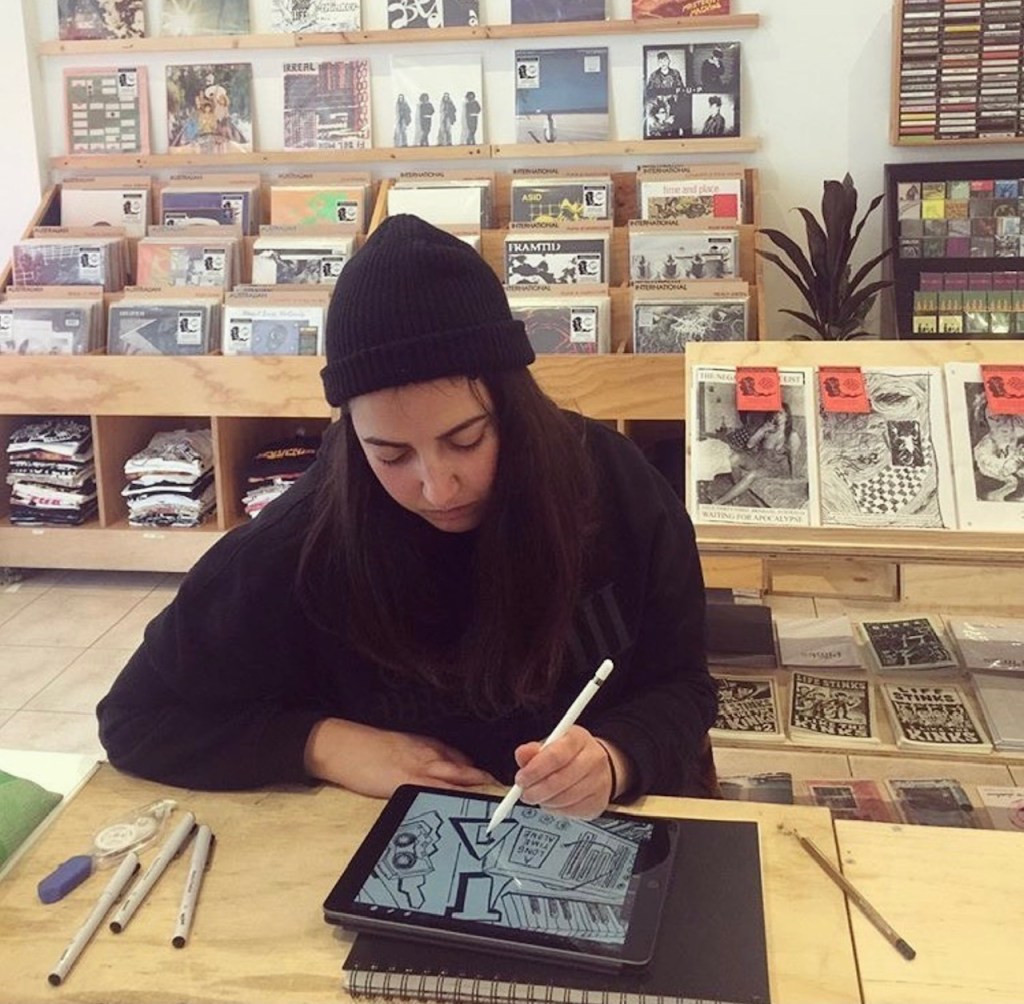
Christina Pap does A LOT! She’s currently the vocalist for Melbourne/Naarm punk band Swab (previously having fronted Vanilla Poppers), hosts the Modern Australian Underground podcast and co-hosts 3RRR’s Teenage Hate radio show, is an artist, creates punk zine Stitches In My Head, runs label Blow Blood Records (recently compiling and releasing 2 great volumes of quarantine recordings by a vast array of the AUS punk scene), and works at our favourite Melbourne record shop Lulu’s. Christina is an underground Australian music community treasure that works, and continues to work, hard to do all she does, it definitely hasn’t come without challenges and some very hard moments along the way. Gimmie sat down to chat with her frankly and candidly about her journey. 

 Hi Christina! How are you?

CHRISTINA PAP: I’m doing alright.

That doesn’t sound very convincing!

CP: [Laughs] Yeah. It’s been a bit of a stressful week but I’m trying to be ok, you know how it is.

I do. Aww, I hope your week gets better. You grew up in Melbourne, right?

CP: Yeah, I did. I was born in Brunswick and I grew up in Coburg. I feel like I’m one of the few people out of all of my friends who actually grew up in Melbourne, a lot of my friends moved here from other places.

And, you come from a big Greek family?

CP: [Laughs] Yeah, yeah, I do. Greek-Italian.

How were things growing up for you? Often Greek and Italian families can be pretty conservative and you’re into more alternative things and ways of living.

CP: Yeah, totally. I feel like it’s something recently that I’ve only started to be ok with, because most of my life I’ve been really fighting the fact that coming out of a Greek-Italian family I was a woman and didn’t really matter. Going into the punk scene I thought I had a little reprieve from that but then it was just the same situation, ya know. I broke away from my family, all my cousins were getting married and had kids and that wasn’t something that I really wanted. I didn’t really know any other way though because I grew up in a big Greek-Italian family and that’s the expectation.

How did you discover music?

CP: I’d always listen to the radio shit but I didn’t really know about punk, this was when I was ten. When I was fourteen, I decided that I wanted to do something that raised money for charity but I didn’t really know how to do that. Someone pointed me in the direction of council in Victoria, they have these FReeZA events; groups for young people between fifteen and twenty-five and they organise shows. I went and talked to the council and they let me join their young person committee and I put on a show and raised money for charity. I stuck around afterwards and kids there were into emo and ska and shit, street punk. It snowballed. I’d find out about street punk shows that were all ages. In my teens it was mostly emo and street punk [laughs], when I turned eighteen, I found punk music that wasn’t that.

So, you started going to local shows; would you go by yourself or with friends?

CP: I kind of met people there. I was the only punk in my high school though. I would go to school with a mohawk and people would think I was so weird. I slowly made friends; I know it sounds stupid but I felt like I didn’t fit in because I was culturally different from everyone. A lot of that, from what I’ve started to understand about myself, is that it was probably just in my head [laughs]. It took me a long, long time to make friends and feel like I fit in, and I’ve only really felt that in the last couple of years, I guess.

I can relate, especially being a person of colour and going to punk shows and being the only POC in the room at shows. Like you, at school I was the only punk girl as well. I’d always get, “Oh, you’re that weird, dark, punk girl.”

CP: Yeah, totally!

And you’d start going to shows and no one else looks like you. When I started going to punk shows there wasn’t that many girls at shows either, being a woman of colour here in Australia at shows you’re a minority within the minority of the punk world.  

CP: That’s true. The thing I’ve also had to learn over the years – and it’s been a good thing for me to learn – is that being Italian-Greek isn’t necessarily being a person of colour. Because I was brought up so different there were these things that made it different for me, but just for me to be brought up culturally different, I can’t claim I’m a person of colour. I don’t want you to feel like I claim that in any way.

I didn’t think that at all. Can you remember when you first came across zines?

CP: I used to read Maximum Rock N Roll when I was young, that was the first big punk zine. There were other ones like Distort around. I never really thought about doing one until my first boyfriend, who ended up being the singer for The Zingers – we started dating when I was nineteen – decided that he wanted to do a punk zine. I remember thinking if he was going to do one, he’s in the same boat as me – he didn’t play an instrument and wasn’t involved in the scene at all – but he was a guy and all of our friends were guys and I felt like he had an extra leg up because he was a guy. He did one or two issues and then I ended up doing it for six or seven years after I started it. When I started it, it was called When We’re Young We’re Invincible. It was pretty terrible [laughs], but I think I got better as time went on.

My first zines were terrible too! You have to start somewhere though. No one really shows you how to make a zine and it’s all learning, experimenting, trial and error. You just get that overwhelming feeling of wanting to contribute beyond just going to shows. When you know better you do better. I’ve read a lot of your interviews on your blog and in your zines and you can really see the progression of them, leading up to the great chats you do on your new podcast, Modern Australian Underground.

CP: Thank you.

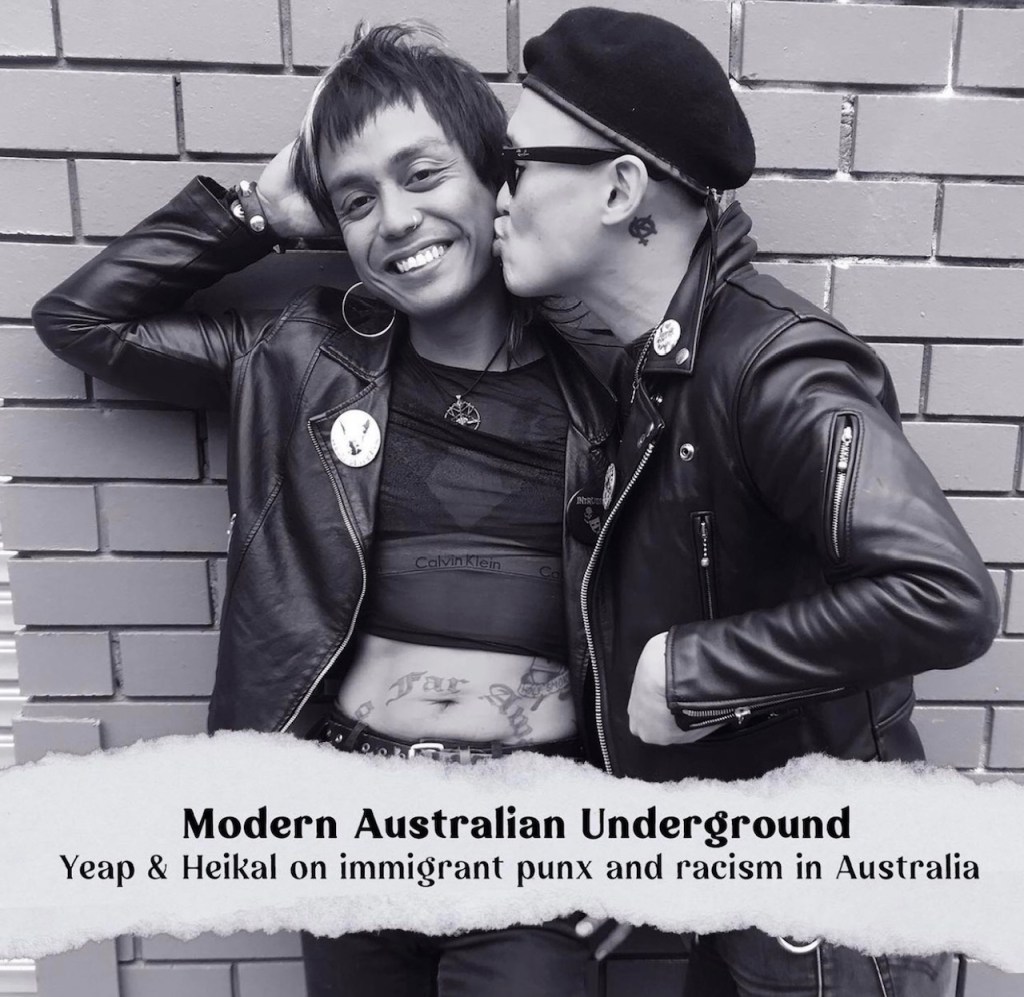
I rarely find interviews that I think are exceptional but the one you did with Yeap & Heikal on immigrant punx and racism in Australia was really amazing.

CP: I really appreciate that because I definitely am trying and I want to make them interesting, there’s always this part of me though, with whatever I do, is this nerve-wracking thing to put something into the public eye because I always just think it’s shit and not good enough. I put something out and I can’t appreciate the effort that I put into it because I’m too busy worrying about someone telling me how terrible it is! The one with Yeap and Heikal was a really nice conversation, I’m really happy it happened.

I thought it was important to tell you I found it rad because I think often people don’t tell people enough when they make or do something that rules! People are quick to point out when you fuck up or they like to tear others down or be apathetic and I think sometimes in the punk community it’s seen as cool not to give a shit or to try—I think that’s bullshit. Trying and doing your best is the coolest to me, like the Minor Threat song: Well at least I’m fucking trying / What the fuck have you done?

CP: Yeah, for sure. I really appreciate the positive feedback I’ve gotten for the podcast but I’ve also lived in a time when… like punk six years ago in Australia was a lot different, people were a lot more critical and ready to cut you down over absolutely nothing. It’s nice to have a lot of people in the community to be down and support each other, they’ll be really positive and give each other advice. Whereas not that long ago I felt like it was really different.

What do you think has changed?

CP: I don’t know because I gave up on Melbourne and left the country for two and a half years. I grew up in Melbourne so it’s not like I grew up in Adelaide and moved to Melbourne and it wasn’t my home city, I’ve always been in punk in Melbourne. I left for a lot of reasons, part of it was I went through some really shitty emotional and physical abuse shit with a guy that I was dating that was in the scene. I remember being at a show and he was coming after me, yelling at me and saying he wanted to punch me and shit. I remember going up to one of his friends and just begging for help at a show and everyone turned their back on me. I was literally at a show, I never ask for anything, I never ask for help and I always contribute and here I was asking for help and I feel like everyone turned their back on me. Talking to Yeap, I could see that around the same time he had his own similar experience of the scene. I had been overseas and I had friends that were really supportive and I thought; why would I contribute to a scene here when I’m literally at my worst point and really need help and they don’t want to help me and deal with it? Why do I want to contribute to a scene when a white guy is being racist to someone of colour? Or there’s a guy threatening to punch his girlfriend at a show? I was like, bye everyone, have a good time! It’s funny because everyone thinks Cleveland [Ohio] is a fucked-up place, but Cleveland was the place I went because I felt like I had more family there then what I was feeling in Melbourne at the time.

I’m sorry that happened to you. I’ve had similar things happen to me in the scene. I’ve dated guys and when the relationship ended – because I experienced emotional, mental and in some cases physical abuse – I felt everyone turned their back on me too. Rumours start and you get made out to be the bad one even though it was the other person abusing you and all your “friends” desert you in favour of scene dude and you’re left feeling isolated, alone, confused, disillusioned and really let down.

CP: Totally!

You think these people are your friends and family and that you’re a community.

CP: Yeah, and especially it always happens to the chick when they’re breaking up with a guy and looking after themselves cos this guy is dragging you down and being really shit to you. When you do something for yourself everyone’s like, “Oh, she is shit, she gave up!” I was literally fighting so hard and I felt like I finally decided to look out for myself for one second and everybody hates me for it.

It’s a really lonely place to be in, especially after you give so much to the community with all that you do and you find there’s no support and you feel ostracized. You feel like your community failed you. I stopped going to shows for a while and making zines, two things I love doing so much. I fell into a deep depression and had crippling anxiety. Eventually I found a way that I felt comfortable coming back, but mostly it’s just doing the work I love – zines, interviewing and going to shows – but being more guarded in my social world. I found a way to contribute and not have to deal with the rest of the shit.

CP: Yeah. It sucks that you went through that as well. It’s hard when you hit the point of; why am I still here doing this stuff? It’s supposed to be a place where everyone supports each other but you just have the worst experiences. It’s cool you found a way to come back, I really love your art and interviews, they’re really cool. You’re doing great!

Thank you! I’m thankful we’re both still here, both still contributing and doing even cooler things than we ever have before. I was talking to one of my friends recently and he was saying how you come to the punk scene because you want a refuge within the world at large and you think you’ve found a place to belong that’s different, that it’s a little utopia in a way, but the reality I experienced was that it’s not really, it’s just a microcosm of the macrocosm. I’ve met a lot of great, great people in punk but there’s also a lot of shit terrible people.

CP: Yeah, definitely. That’s why nothing is black and white. There’s a lot of good things in PC culture, but there’s also a lot of dangerous things in PC culture, things are complicated. You have this definition of punk being family, being everything is ok but, if you look at the normal family, there’s always crazy shit going on anyway [laughs]. The best thing is growing up and you get better perspective on life and break out of these ideals that we’re conditioned with and you realise the world doesn’t work that way and you wonder what went wrong.

I notice that your zine is really music-centric and you don’t write personal stuff in there much; was it a conscious decision? Why did you decide to do that?

CP: I feel selfish talking about myself really. For me, I feel like it’s selfish putting myself on a platform and thinking people want to hear about me and what I have going on. If I talk about music, I can talk about a thing that doesn’t have to involve me but I can write about it and create something from me.

I can understand and respect that, it’s funny though, because my two favourite things that you’ve written are very personal pieces that I found on your blog.

CP: Which ones?

One was where you writing about the end of your band Vanilla Poppers’ tour in 2016. I really liked the piece because I felt it gave a real insight into you. I mean, I see and listen to your bands, enjoy the label and zines that you do and know you in a way as much as you can from that, but to see behind that I thought was really cool. There was a passage you wrote about being between cities in the middle of nowhere and you pulled the van over and all piled out of it and were standing on the side of the road and looked up at the stars, and how it reminded you of being in your grandparents’ backyard as a kid. I got teary reading that, it was really beautiful.

CP: Awww. Yeah.

I haven’t gotten to see you play live yet but I’ve seen videos of you perform and your sets seem so intense and then to read about that moment on tour, you see a totally different side.

CP: Yeah, for sure. That tour was really special to me, I wrote about it because I never wanted to forget it. I feel like I’ll never do something like that again, even if I did, it wouldn’t be that same experience. It really meant a lot to me, all the little things. It’s nice to remember and appreciate nice little things because so much of our lives is spent clinging on to these bad things that have shaped us, these bad experiences and trauma. When I was looking at those stars, I remembered being home when I hadn’t been home in two years, that moment meant so much. I’m glad you liked it.

You could feel it and it was genuine and honest, I think that’s why I connected with it so strongly. The other thing I read that really struck me was you taking about getting the nickname “Stress Head”.

CP: [Laughs].

And there was a moment you were sitting in the back of the tour van while it was driving along the highway and you cracked and were rocking back and forth crying. When I read that I just wanted to give you a hug.

CP: Awww, thanks. That shit is real, it’s not something that I often talk about, my whole life dealing with mental shit. That’s like when you first called and asked how my day was and I said “alright” when I’ve really been having a shit day. It’s hard to write about that stuff because it is really emotional, emotions are hard to deal with and you spend so much time trying to push them aside to try and get by in every day life. It felt good to write that piece and be able to just get it out. There’s a lot of times, even writing vocals for Swab, I have such a hard time because I don’t know how to open up and it hurts too much to open up.

I think that’s why we make music and songs and art sometimes because we want to communicate and say things but sometimes it’s hard to talk about it and it’s easier to just put it into a song or what we’re making.

CP: Definitely. The thing about joining Vanilla Poppers, I went to North America for two and a half years, I had a great time, but the whole time I was going through really bad mental health. Vanilla Poppers was a way for me to have an alter ego where I could write and sing about these things… usually when I lose my mind, I feel powerless and I don’t know what to do and I feel weak, but doing Vanilla Poppers I could lose my mind and be strong about it and yell about it and tell people “fuck you!” It was nice to have an outlet where I felt I had some kind of power.

Doing a band is the most nerve-racking fucking thing in the whole world. Whenever I have a show coming up, I’m always like; why am I doing this again? It’s so stressful to stand in front of people and perform and know people are looking at you. All I can think about is that I don’t feel good enough to be on stage because I’m not a hot chick.

Firstly, you are hot! Secondly, hot is subjective and the way you look shouldn’t influence people to love what you create. I’ve known guys I’ve mentioned different women performers to and the first thing say they is, “She’s hot.” It’s like, why does what a female performer look like matter?

CP: I know. It’s all conditioning. I think for me it also comes from me being a wog chick and not a hot white chick or some shit! I’m white but not an Australian white chick. That’s all my own conditioning and it’s something that I try to work through.

There’s been times when I’ve felt the same way though too.

CP: Really? Are you in a band?

I’m working on a band with my husband now, Know Future. I’ve been in a few bands in the past but nothing too serious. I used to find it hard to find people to play with, I’ve had similar experiences to you where because I’m female people are reluctant to start a band with you, you’re not taken seriously.

CP: Totally!

Part of why I made a zine was it forced me to talk to people and be more social, I’ve always been more of a quiet, loner type person.

CP: Yeah, it’s an excuse to talk to people. If I’m at a show when I was younger, I felt like I didn’t really have a reason to go up and talk to anybody, no one is going to want to talk to me, but if I have the excuse of doing a zine and interviewing them, then I have an excuse to talk to people. How long have you been married for?

We’ve been together for twelve years this year, married since 2013.

CP: That’s cool. I’m married as well. He’s great but I haven’t actually seen him in over a year because he lives in Cleveland. It was going to be a situation where I worked on a visa and went over there and he would come here and visit, but because of Covid I don’t know when I’m going to be able to see him again! We speak everyday though.

That sounds so brutal! Having to be apart.

CP: Yeah, I was really upset about it for months at the start of Covid, it was hard to deal with. We have a good relationship. I’ve just come to accept that we’re both living our lives separately and, in the future, we’ll be able to come together. I’m glad that you’re married and happy.

It’s the best when you find the coolest person that you just want to be around all the time. When we met, I was ready to move to America, I was ready to go, I’d had enough of the scene here; I can relate to you in so many ways. I went to a show my bandmate was playing with his other band and my husband-to-be’s band was supporting. I had a really challenging day looking after my mother with advanced Alzheimer’s and seeing Jhonny’s band play brought me so much joy and a respite from some hard stuff that was happening in my life. After the show he talked to me and I told him all about my shitty day and he sat and listened. I had to go home early and a few days later he contacted me to see how I was going and we started trading mixtapes and art through the mail. I realised I simply couldn’t go to America anymore because I had found this amazing person to love and that loved me equally.

CP: Oh my god! Amazing. That’s a love story!

Moving back to music; is there any particular performers that inspire you?

CP: I’ll listen to a record and feel like it’s awesome, then if I see a band live and I feel like they’re going through the motions and there’s nothing actually behind it… when I do my band, I just try to do the best that I can. I hate watching a band where the singer will just stand there or lean on the side of the stage and sing, like; what is this?! I’m here to watch a shredding band and you’re being so blasé. Really play a show or don’t do it! A show that I really like is when you can tell that they’re really fighting for themselves or what they’re talking about. It doesn’t even have to be a punk show, you just have to feel that it’s genuine, I find that inspiring. I remember seeing this hardcore band in Toronto and they were crazy, so great and at the end of the set they hugged each other!

Amazing!

CP: It’s the little things: being genuine and fighting for something. It’s not like they’re out at a protest fighting for rights but it’s their own personal struggle and you sense that, that’s what inspires me at a show. I love watching a band and you feel like they have something to lose and they’re fighting for it.

You moved back to Australia in 2017?

CP: In October, 2017.

How have things changed for you? You mentioned that when you left you didn’t feel accepted or supported here.

CP: While I was gone, I could see that things had started to change. More chicks in bands. Different styles of music had come into punk. When I left, I felt like there was just this guy hardcore scene. From overseas I could see different bands popping up and different people have a voice. The fact that I went away and did a band and came back, people were more interested in what I was doing. At first, I felt it sucked because I’d been around all this time already doing stuff and people didn’t care and now because I left the country and started a band – which I couldn’t do here, I literally had to move to Cleveland – worked hard and did all these tours, now I’ve been acknowledged. There are chicks in the scene and even though they’re not in bands they still go to shows, buy merch and support bands, without them you don’t have a crowd; why are they less important?

I grew up a bit as well. It’s hard because I feel like a lot of my memory from my past is very… I don’t know what happened because it’s been scarred by depression. People will tell me stories about myself and I don’t remember. A lot of my past has been coloured by my own depression and anxiety and traumatic experiences that I didn’t know how to work through as a younger person. When I think back sometimes, I don’t know if I was feeling that bad or if I was feeling and that was the world that I was projecting. Everyone makes mistakes. I think with the punk community most people have addiction or mental problems or they’re battling something and people there can have a little more patience because there is understanding. There are a lot of good people in the scene now. There’re still problems but you deal with them as it comes and hopefully you grow and know better and can deal with them better than you could in the past.

As I’ve mentioned before I’ve had severe depression and had mental health challenges too; what are some things that you do that helps you with your mental health?

CP: I avoided going on meds for a long time but I hit a point about two years ago where I could not cope anymore. I went on anti-depressants and started seeing a therapist, I’ve been doing that for two years. It has changed my life and I do feel a lot better. My level of anxiety is nothing where it used to be. I can talk to people; even just taking a phone call is something I hate; I hate talking on the phone. Your number came up and I was like, just answer it, it’s fine! Before the meds it was definitely a terrible time and I thought I could get through it myself but there was a point where if I don’t deal with this now, I’m going to ruin my relationship and fucking kill myself in some way. My therapist is awesome though. I drink every day, which is a terrible thing. I try to eat as well as I can and go for walks. Through therapy, I try to see my triggers and if I see myself having a panic attack, I work through it. I still have my moments even now.

I have PMDD [Premenstrual dysphoric disorder], it’s basically a worse version of PMS [premenstrual syndrome]. I feel like I’m losing my mind for ten days and then I have my period and I’m ok. I take multi-vitamins. It feels like a full-time job dealing with my mental health on top of working and my hobbies, that can be stressful when I need time to work out my mental health. Even though things have gotten better in society around having space to deal with your mental health, I still find it hard to get that time. That’s my old school mentality creeping in though, my conditioning. I’m glad I’ve taken the steps I have, but I still feel I have a way to go.

Thank you for talking to me about this. I have a health condition – hyperthyroidism – that effects my moods and mental health especially before my period too. I just become so unreasonable and irrational, my brain gets foggy and it’s hard to cope.

CP: Yeah, you feel like you’re going crazy. Afterwards you’re like, “Oh shit!” because you didn’t mean to be a bitch but at the time what you’re experiencing feels so real and you feel people are fucking with you, all these different feelings. When you come out the other side you feel like, “Oh fuck! Now I have to go back and apologise to everybody” [laughs]. It’s so hectic.

Totally! I know you said this week has been stressful but what’s been some good things that have happened?

CP: I’ve been doing the podcast. It was actually Dan [Stewart; Total Control/Straightjacket Nation], that asked me if I wanted to do it. I said, yes, I may as well give it a shot; I don’t know fucking shit about podcasts though. I have been doing the radio show at 3RRR [Teenage Hate] for a few years so I know how to talk in front of a mic and write up a script. He asked me a few months before we did it if I’d been writing for it but I kept putting it off because I was fucking depressed. Finally, I went in and pulled it together! I like talking to people. It’s nice getting to know people’s stories because everyone has some shit in their life and has done something interesting. It’s nice to share my friends’ stories or some weird music that I like. There’s so many people out there doing cool stuff that I think other people should know about!

Please check out Christina’s podcast: Modern Australian Underground. Teenage Hate on 3RRR. Christina’s bands: Swab (on Blow Blood Records) and Vanilla Poppers. On Instagram @blow_blood. Stiches In My Head zine.