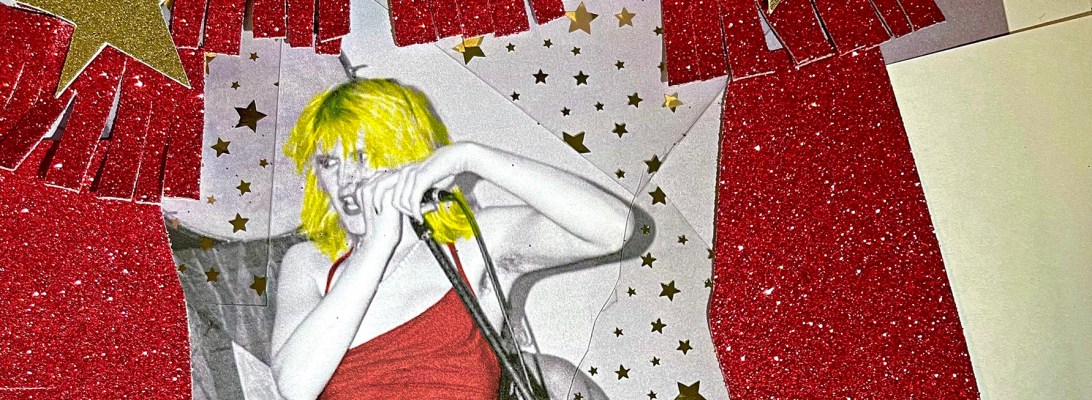
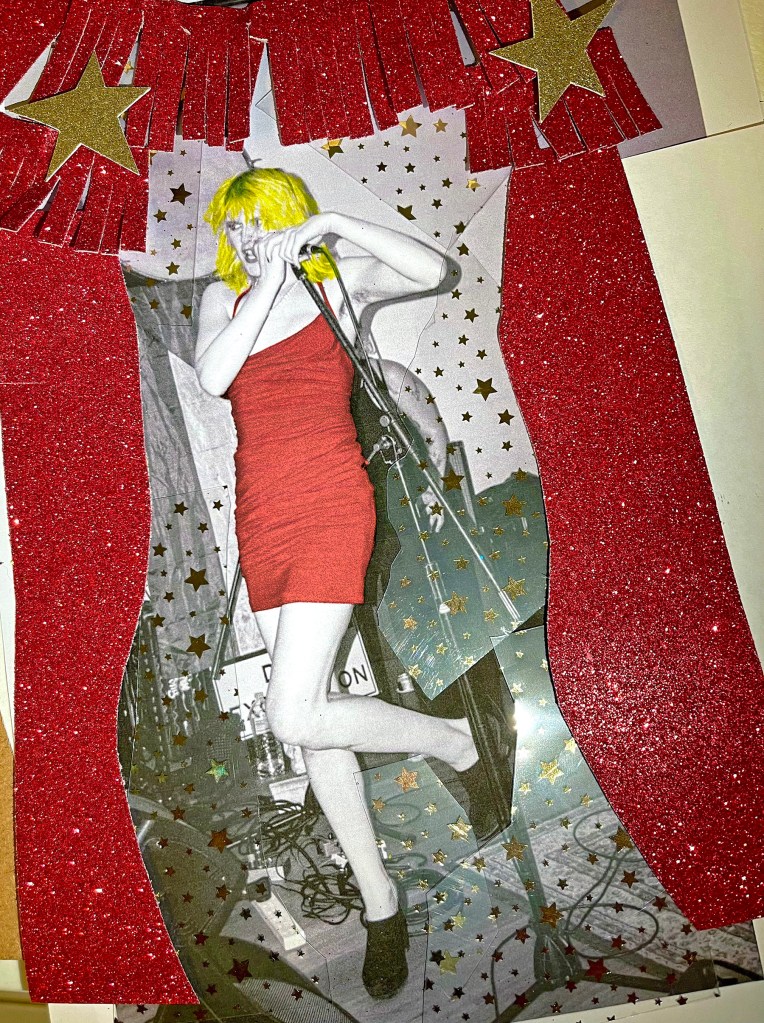
Wet Kiss: ‘At the end of the day, you’re living for yourself. You’re living for your art.’

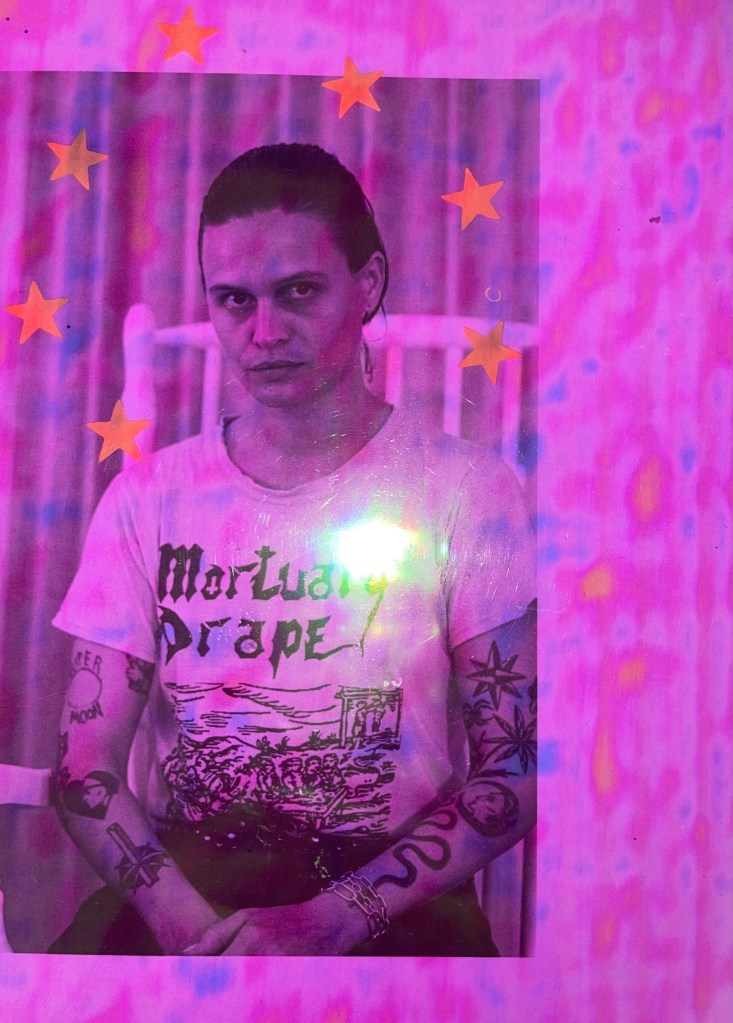
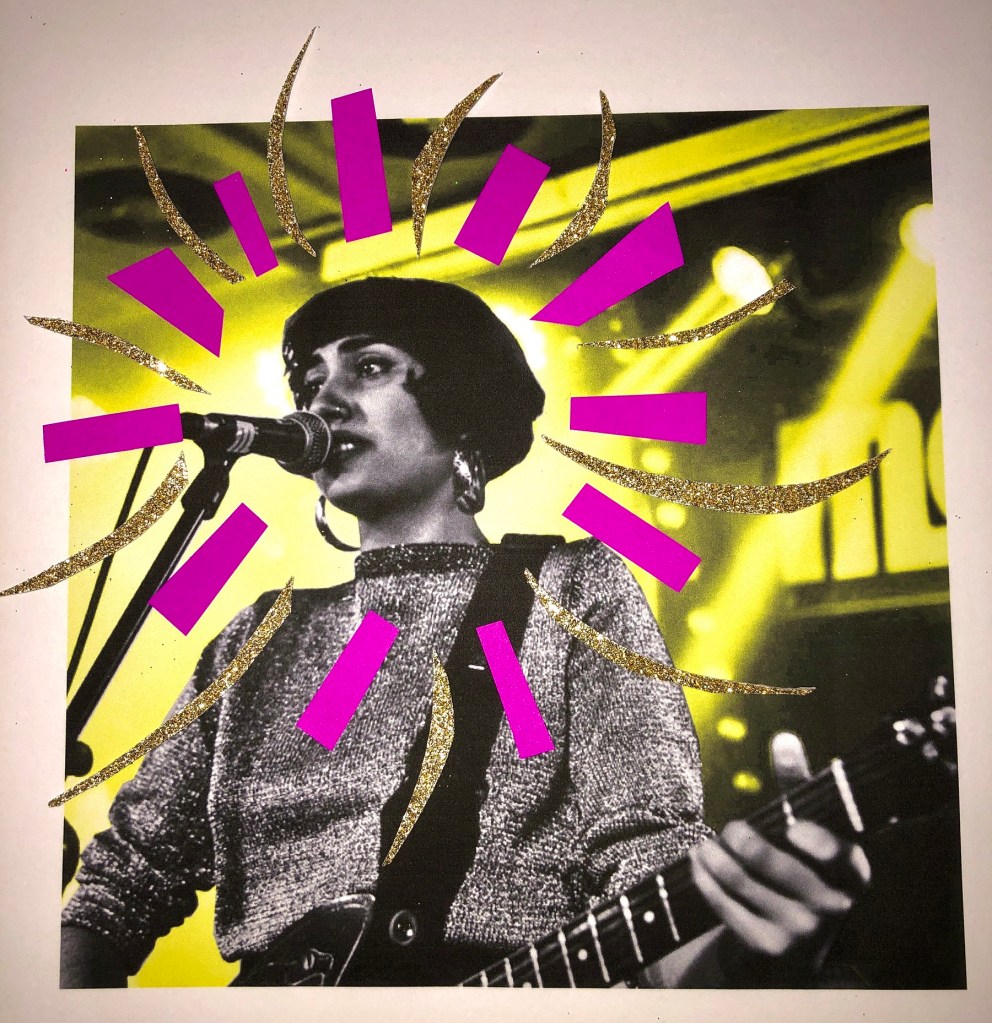
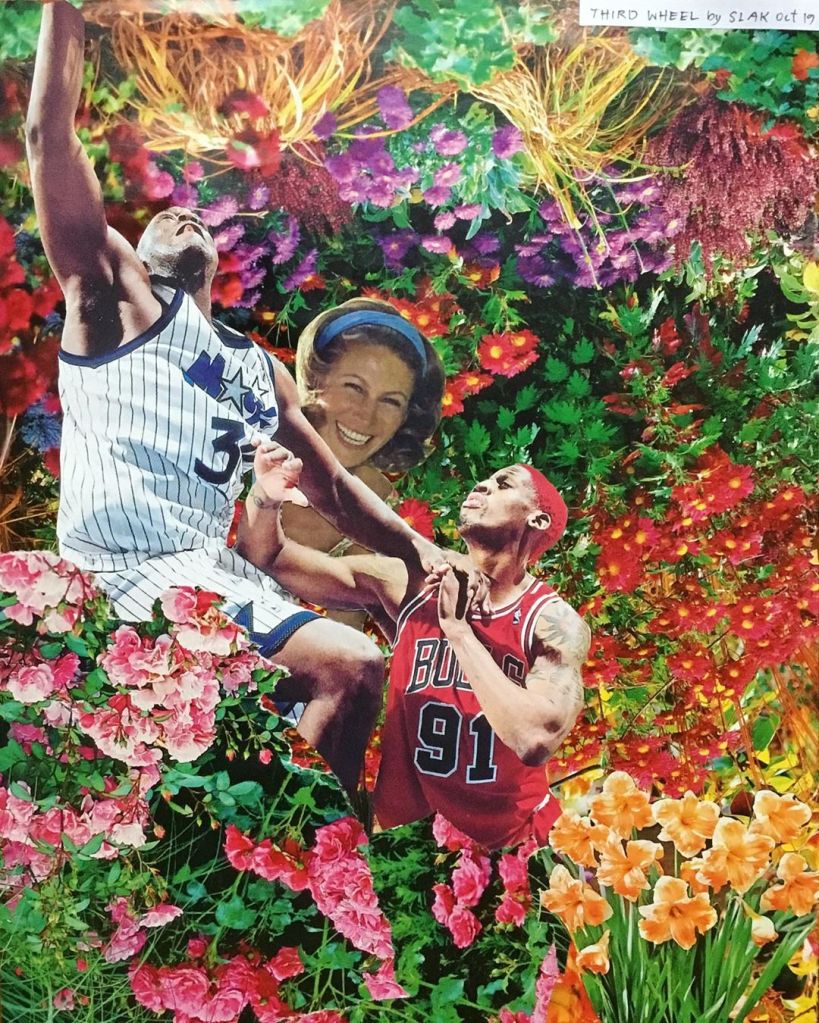
Original photo: Jhonny Russell. Handmade collage by B.

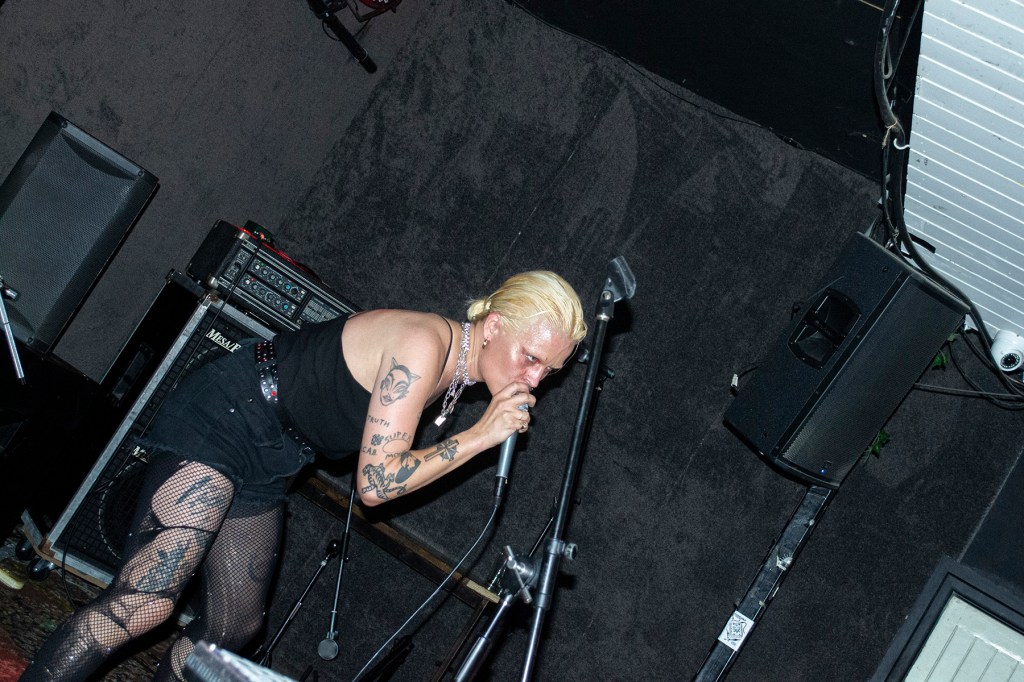
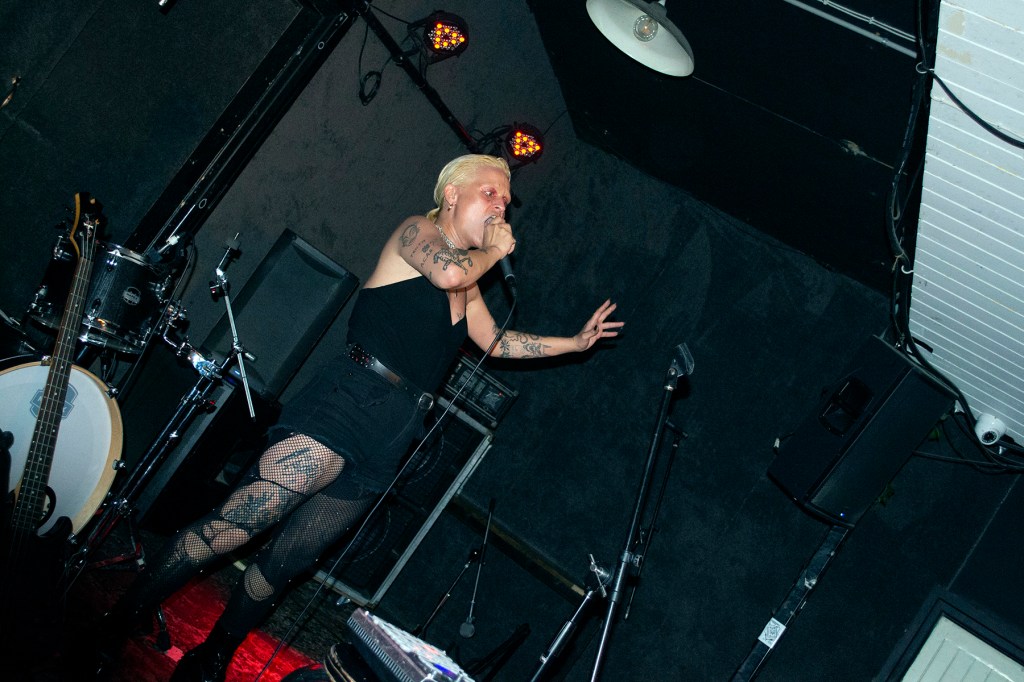
Gimmie recently caught Wet Kiss at Season Three, Fortitude Valley’s ‘weird little space for special things to happen,’ on an ordinary Tuesday night—except that a big music industry conference was in town, drawing its crowd to the usual venues. But this wasn’t part of that hustle; it was a DIY gig, tucked away from the conference crowds. No lanyards or VIP attitudes here. Just a small, dimly lit room up a flight of stairs, usually an instrument shop by day. The building, built in 1902, once housed a grocers and an oyster saloon. Now, it is packed with an all-ages crowd of people hungry for something real.

Wet Kiss is kinetic and visceral, wildly powerful, and funny. For Brenna O and her band, music isn’t just an art form; it’s a lifeline. They are sensitive souls making music for those who need it to survive, just like they do.

Brenna dives into depths others often shy away from, exposing hidden corners and bringing them into the light. She’s both a unifier and a disruptor, challenging norms in ways that make her performances crackle with excitement, spontaneity, and truth. She invites her audience to surrender to the moment, and the emotional catharsis that only sharing space and time with non-conforming misfits can evoke. The band feels bigger than the room they occupy tonight.

Gimmie chatted with Brenna a couple of weeks later about the band’s upcoming album, Thus Spoke the Broken Chanteuse. The album channels the eclectic spirit of David Bowie and Iggy Pop’s Berlin era, infused with the theatricality of Judy Garland and the storytelling of Lou Reed. The album showcases Brenna’s artistic and personal evolution, bringing a sophisticated writer’s eye to the fringes she moves in. She shares how moving out of her comfort zone and embracing the unknown in Berlin, helped her discover her true self and solidify her creative identity.

The album features anthems for the dolls like ‘Skirt,’ celebrating performance and vulnerability; ‘Gender,’ which literally touches on waiting at the gender clinic while abroad and the emotional experience, and the challenges and anxieties of navigating the more stringent healthcare requirements for hormone therapy; while ‘Small Clubs’ is about resetting oneself and living freely. ‘Chick From Nowhere’ explores stumbling out of bars at dawn, capturing the bittersweet highs and lows of fleeting connections. ‘The Gay Band’ addresses loss and memory, revealing the emotional toll of friends who have passed away, also delving into the courage required to come out to one’s parents. And track ‘Isn’t Music Wonderful’ celebrates the beauty of music and the deep connections it fosters, while also confronting the struggles of making a living in the industry.

Brenna tells us, ‘You’ve got to live like you’re in a movie.’ Each song captures that cinematic quality of life—vivid scenes filled with laughter and tears. With Thus Spoke the Broken Chanteuse, she invites us to step into her world, encouraging us to embrace the chaos and beauty of our own stories.

You’re up coming record is fire! Dinosaur City sent us through a sneak peek. It’s one of the best things we’ve heard all year.

BRENNA O: Thank you! We’ve worked hard and stayed true to ourselves. Things are good. We just played a show in Sydney at the Oxford Art Factory on Friday. I hope never to play there again. It was a nightmare. 

Why? 

BO: It was too crowded. I can’t even compare it to Brisbane or Melbourne, but it’s like piling people into a venue that doesn’t feel right. Intense security, a terrible green room, and only three drink cards each—we weren’t treated like stars at all [laughs]. It felt like a cattle factory.

Was the show good, though?

BO: The show was really good, and the perks were, it was incredible to have all these bands that I know from down here playing and hanging out—it was lots of fun. I’m really ragging on the venue, but… look, it wasn’t the worst experience. I’ve had worse. I’d rather play at a dingy house show that’s covered in black mould where everyone running the event is sweet to me. That’s the priority. I don’t care if it’s a big space, and it was, but it just didn’t feel great. Still, the show was fab. The next day, my partner, Dan [Ward], who does BODIES, put on a house show with Daily Toll and Spike Fuck, and it was really good.

Nice! We love Daily Toll. I’ll have to check out Spike Fuck. Anything else been happening? How’s life?

BO: My life, my life… I’m living with my partner in this room that’s, covered in absolute garbage moment, out at their brother’s house. We’re looking to move somewhere, but we don’t know how or when, and I need to get another avenue of money so I can figure out how to get myself out of this place. But it is cute and sweet and safe.

I was in Berlin for over two years, and I started coming back and forth when we were asked to do Rising. I was in a real flow in Berlin. I had a whole group of friends, and I was gigging. But after I left, things in Australia started changing, like the music scene, and there were new younger bands starting, and they were really digging us. So I just wanted to come back. It’s so nice to be around that.

You’re asking me how my life is. At the moment, I’m seeing everything through music. I really don’t know how to talk about my life without talking about that. It really is becoming very all-consuming, and because my partner and all my friends are also completely obsessed, we’re all bonding as a group over our ability to make music, share skills, and encourage each other to try and be superstars. I feel very surrounded by love at the moment. And you’re calling me and being very sweet, I really appreciate that you reached out to me.

It’s a pleasure. We’re fans of what you do. We’ve got your other album She’s So Cool

BO: With the first release, it probably felt like it came out of nowhere. It was a bit ambiguous who we were, and every song was made with a different intention. Whereas with the new record, it was all recorded and produced in the same space. All the lyrics, all the chords—everything was laid out on the floor, and we vaguely knew what we were doing. But the first one, we were just experimenting in this old warehouse I used to live in, which gives it this disjointed, fun house kind of vibe. The whole band are all members of the band, Bodies Of Divine Infinite and Eternal Spirit, which I kidnapped [laughs]. I was doing solo things and projects before this—noise and karaoke—and it was so terribly awkward.
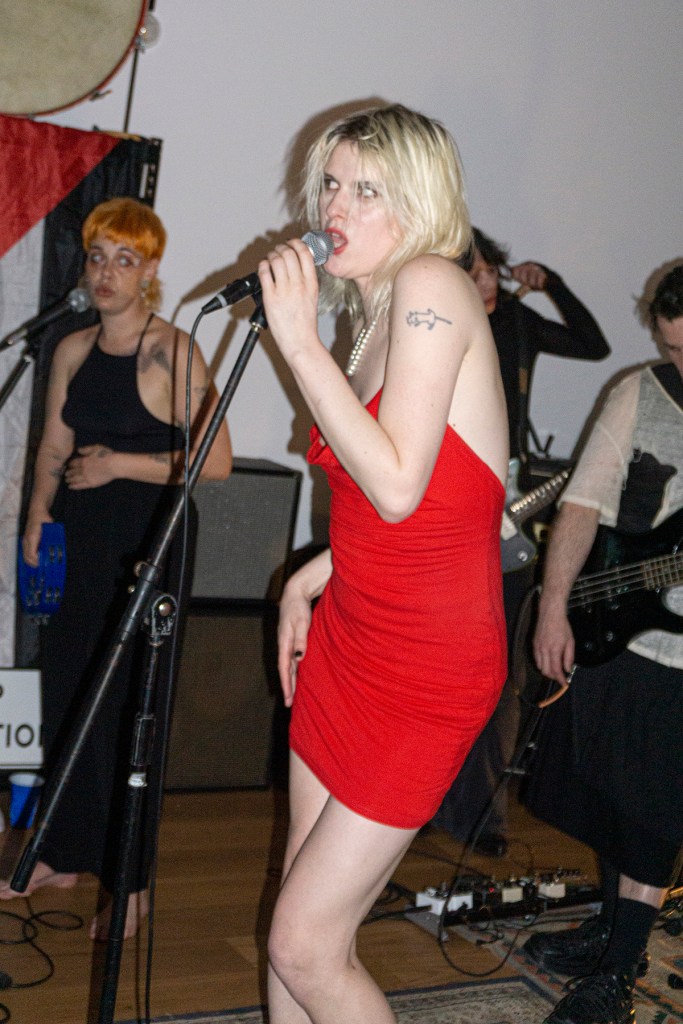
Photo: Jhonny Russell

What initially drew you to making music?

BO: I always wanted to. I remember when I was 17, it hit me in a classroom—really, really penetrated my psyche. I didn’t finish high school because I never got very good grades and had terrible attention. One day, this person came into our art class, and he made miniatures—miniature figurines used for stage props and plotting out different scenes. It wasn’t that they filmed these miniatures, but they were a way for directors and cinematographers to figure out how the cast would be sitting and how everything would look dramatically.

It was fascinating, and it gave me a little insight into the ins and outs of a different type of career or reality. I had such a bad time in high school. A teacher—my English teacher—once told me, ‘I think you should walk across the road and file an application at Woolworths and just finish school now, because you’re never going to make it.’

They were wrong! My English teacher told me I will never ever be a writer and first year out of high school, that’s what I started doing and I’ve done it my entire life. So they were both wrong. Never listen to people that don’t get you.

BO: Yeah. They were incredibly wrong and jaded. Look at you—you have a magazine that everybody loves 

It’s really nice that the people who we love and respect and enjoy their music, love and respect and enjoy what we do—that’s all you could ask for. Gimmie has become a community of people that simply love music and art, and that means everything to us.

BO: I saw Amy Taylor gave you a shout out the other day. 

That was so, so kind of her. A lot of people don’t realise how much simply sharing what we do, telling people about us, really helps a little independent publication like us. 

BO: She is such a stunning person. 

Yeah, she totally is. It’s cool that she’s totally herself, writes amazing songs, supports and helps others. One of the loveliest people in music. Amyl and the Sniffers deserve all their success and more, they’ve worked so hard. Their new record rules!

BO: We love them! I love them. I love Amy. She’s always been so supportive of us too. We opened for them at Berghain when I was living in Berlin. The whole band came over and it was very sweet. 

Why did you move to Berlin? 

BO: After lockdown, I’ve always had this habit of going overseas every year. I try to save money and go—I went to New York, then Iceland, and then New Zealand, which is not as crazy, but it was very nice. Then I kept going back to Berlin. And as much as I think the place is awful in a lot of different ways, I just needed to get out of here. I had this death drive. I was dying here and needed to see if I could push myself to struggle in all sorts of ways and do something really creatively fulfilling.

That’s how I wrote the rest of the album. I went there on my own and had to make a whole new set of friends, get a job, and experiment with a new life—dealing with a new language. Now I have friends and all these people over there that I know I can go back to for the rest of my life. But other than that, there was no job, no real reason for me to go there. I had two friends who were already there, which made it a little easier.

But why does anyone go to Berlin? I think it’s just renowned for taking in a lot of global stragglers—people who are seeking an escape and a way out of judgment. Because I never really could hold down a job, and no one there gives a damn what you do. No one asks about your job; it’s almost like a dirty thing to ask.

I worked in a bar there, and I also worked for a fashion seller called the Grotesque Archive. I played shows, and Dan came with me for a year. The band joined me for a bit, and otherwise, I just did things solo. My visa is still active until September next year, so I will go back to see that out and see what happens. I’m excited; I feel like everything’s happening here for me, though.

I get that feeling. That’s so great! We’re so happy for you. It always fascinates me when people go live in a totally different place to what they know. I’ve had opportunities to but never took them up. When I was 18, I was offered a job at MTV in New York—but I didn’t go. 

BO: Why?! 

I’ve always been really close to my mum and she was unwell for a long time with different stuff. I’ve never had a lot of friends and spent a lot of time just with my family growing up. So to me, the idea of moving to New York, seemed like such a scary idea at the time. I didn’t know anyone, I was barely out off high school.

BO: That’s fair enough. You’re still so young at 18. 

There are so many times in my life when I’ve turned down seemingly amazing opportunities. Sometimes you have these dreams, and when you’re close to getting them—or do get them—you find they’re not what you thought they’d be. You realise you don’t want that, and that’s okay.

BO: Mm-hmm. Particularly when you’re doing your creative gift, your gifted talent, and then you find yourself doing it for another institution or someone else. 

Exactly. When what you love becomes tied up with industry and the machine of products and profits, it can get hard. We care about people, not products—that’s what makes Gimmie different.

BO: Yeah, that situation could be so miserable and heartbreaking. I know a lot of people that work in fashion and you have to shut off a bit of your brain. Maybe that’s your instinct that things are not right or you’re not fulfilling your creative purpose because you are so drawn to the glamour of the institution or the company.

I love fashion! But like the music industry, it’s an industry too. People and products are disposable and what matters most is the bottomline—profit. Not creativity and innovation. Obviously, I’m in favour of artists making a living, and people should do that in whatever way works best for them. However, it saddens me to see big corporations making more money—often much more than the artists themselves—from the heart and hard work that the artists put into their craft. Without the artist they don’t have shit.

BO: Yeah, it’s funny being a musician at this point in my life, not because I’ve always been super DIY, but because I now have a manager. I’m so grateful for Jordanne; she’s not industry at all. She tries to be the anti-industry. However, you have to talk to these people. She took us to Austin and South By Southwest—not to play, but to meet people. Some of them were great, but some of them… maybe this is going to get me cancelled but—just a whole bunch of people with no talent [laughs].
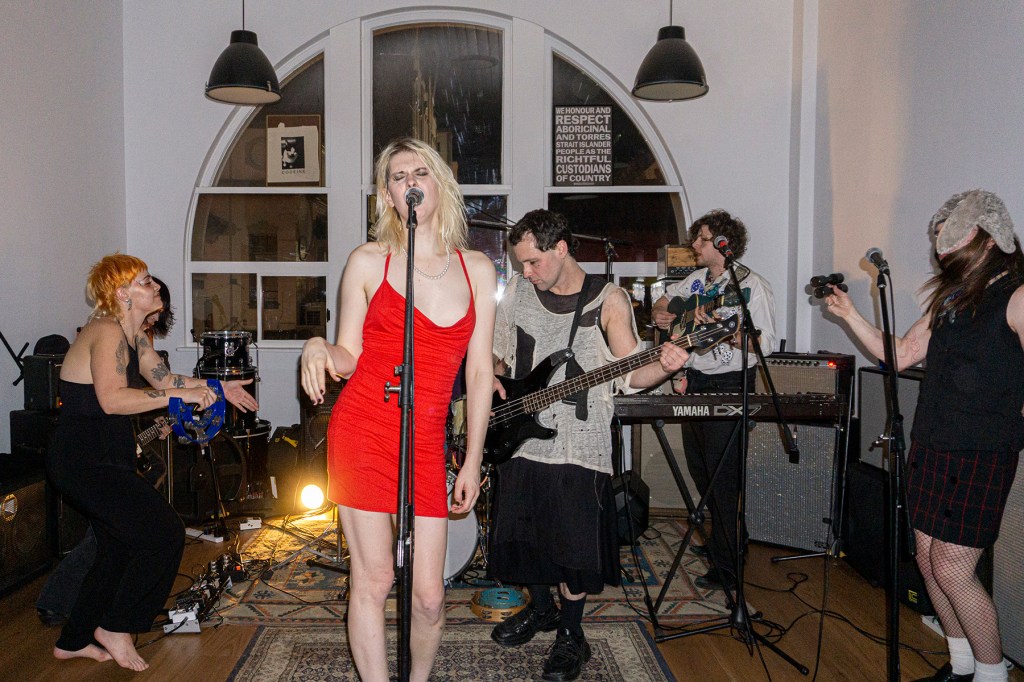
Photo: Jhonny Russell

[Laughter]. I get what you’re saying…

BO: Trying to make deals and use the people who are creating things to get the money. I don’t know, maybe it’s a bit cliché, but it’s interesting to see. I feel like there are ways to connect with the people and the right labels that will fulfil every goal and dream you have.

When you first started making music, you were making it on your laptop and more electronically, right? 

BO: Yeah, I learned when I was using GarageBand. I had old microphones from the drugstore and effects pedals that people would hand down to me. I knew this older synth musician called Matthew Brown, and he mentored me, helping me figure out the basics and tried to do shows from my studio in school. To be honest, when I was 17, I had a few bands where I’d sing and play guitar. One of them was called Total Loser Friends, and another one was called Gay, which Daphne [Camf] from No Zu, who’s passed away now. It was when we were like, maybe 18 or 19.

Those were my early band experiences, and it was this—you hear about this all the time—before you know how to play a single chord or how a song’s meant to be structured, the music just comes together so quickly. You’re so proud of everything you do, and you feel so reckless. It’s such a great feeling that you can’t get back. When you’re at a bigger level of scale, for me, you have to figure out how to manifest that thrill in a different way. You keep building it, making it larger, and get more ambitious because you don’t have that naivety anymore. Those bands were so fun to play in.

And I never had stage fright—I never got stage fright until I started doing solo laptop stuff and realised that I had no clue what I was doing. Things always went wrong. I would plug the pedals backwards, or I would use a mixer and it would blow out the sound. Or, no one came. I would have shows at the Post Office Hotel here in Coburg quite regularly to one or two people, and just push through.

It took me a while to figure out what I was writing about. It took me a while to realise, okay, you can’t go on stage unless you’re wearing heels, can’t go on stage unless you’re wearing makeup. You have to present yourself to the audience and also have a lyrical message that can be fully involved in the theatrics and storytelling.

It takes so much bravery, struggle, and learning to get to that point for me, which I guess progressed as I started transitioning. Before that, I was super awkward. I saw someone at the Oxford Art Factory who’s known me for a long time, and they said I used to be a bit more quiet. When you’re on stage, it’s like a kind of persona or extension of yourself anyway.

With the new album that’s going to come out, it feels like what you’re doing is finally fully formed. All the pieces are there, and it works. Its’ really levelled up.

BO: Thank you. Definitely. It paints a complete picture. It almost feels like a concept record or, as you said, fully realised—the lyrics, the instrumental changes, everything. I hope that they paint vivid images in your head.

The last record was, I’d have a poem here and a piece of writing there. When I was in front of the microphone recording the track, I was actually going for my phone and jumping through lyrics. It wasn’t as cohesive. It was more cut and paste—a Burroughs kind of thing, more immediate.

Whereas the new one was, I’m going to write this song, and it’s going to be like a little opus—a complete message. So I can see how it would feel more complete.

What do you see as the biggest concepts or themes running through the record? 

BO: Because I moved when I wrote a lot of it—either just before I moved, or some of them while imagining what it would be like to live overseas—and some were written overseas. It’s grappling with the desire to be a star, to be successful, to transcend what I saw for a few years: stagnation, a lack of growth. I was comparing that to my physical body, as well as my intellectual growth.

What it took to make friends and try to get attention in Berlin was for me to alter myself a little bit. I bleached my hair, took a lot more drugs than I’d ever taken, and pushed myself further. The album reflects the real intense highs and lows of that experience, and my poetic take on how I felt in those moments. For example, there’s a track called ‘Chick from Nowhere’. It’s about coming out of bars when it’s daylight, trying to go home with someone, or feeling the ups and downs. It’s like cocaine—going up, crashing down. There are references to how in Berlin you don’t ring houses by numbers but by names. The chorus is sort of like, ‘Did you go to work? Did you go to sleep? I’m outside. I’ve got your name. I’m inside your place.’ It’s about looking for a certain type of friend. It’s daylight, I feel disgusting, I need to come in for a shower [laughs]. These are lived, messy experiences.

I also tried to take elements of glam rock, music often sung by men about women, and flip it—trying to be the woman they’re singing about. The broken heel running down the street, trying to get home, trying to get some money.

Another track,’Skirt’, is about this experience where I tried to play a gig solo at my friend Dan’s apartment. He’s a musician in Berlin. He suggested I do a solo set, and it was a disaster. I couldn’t play the instrument, I got really drunk before the show, and I had my leg up on the amp while telling jokes. I held the audience the best I could, but afterward, someone said, ‘Everyone was trying to see up your skirt to see what was going on up there.’ I thought, bastards! [laughs].

But then it came to me—trying to make an anthem for the dolls about performing and being vulnerable. It’s about what people are really looking at when they see a trans performer. The album has deep emotional stuff, but I’m also trying to enact a raucous, fun side.

Is there any specific emotions you mostly wrote from for the album? 

BO: There’s a lot of longing in this album. The main theme I get from reflecting on it is that you can’t always get what you want. You may move somewhere, but you’re never going to escape yourself. You will always be followed by that person, by your past, by who you are.

In the song ‘Small Clubs,’ it’s about this experience of resetting myself. I’m now playing to not many people again, and I don’t know many of them. Maybe it hasn’t instantly improved my music career or my status in society, but who cares? I’m just going to do it anyway. I don’t care if people at home are telling me to come back and saying I made a bad decision. A lot of people told me I had made a horrible choice by leaving, which is so wrong.

When I left, I met great people. I wouldn’t have played with Berghain or had all these incredible experiences with Amy, or lived my life freely. At the end of the day, you’re living for yourself. You’re living for your art. So, of course, it’s good to travel. But to get to the main themes, I don’t know if there’s a lot of happiness in it. I wasn’t really feeling happy or sad; I was just trying to think super forward and become a vessel for experience. I’ve had years where I wasn’t doing that. I wasn’t thinking of my life like it was a movie.

My friend Jai, who’s the guitarist for EXEK, we became close friends in the past year. He’s always saying, ‘You’ve got to live like you’re in a movie.’ It sounds full of shit, but I just love that. That’s exactly the attitude I want to have: living for right now. I don’t think there’s any one emotion encapsulated in this album, you just have to dive into it. It’s a chaotic two years of life lived, and it seems like something out of a movie.
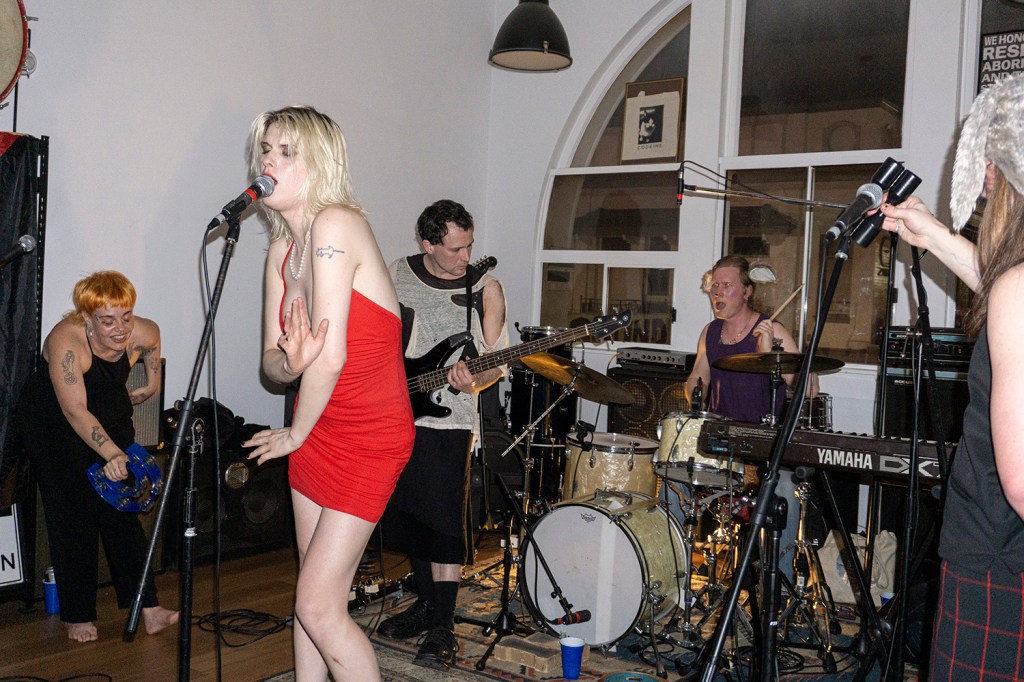
Photo: Jhonny Russell

Let’s talk about other songs on the album. First, opener ‘The Gay Band.’ It’s a powerful track, starting with piano and your voice. It’s from the heart, and I believe you. 

BO: Oh, that’s such a beautiful thing to hear! Because it’s the most important thing: belief—selling it. That’s why I love Madonna so much as a singer. Not because she has an extreme belt or anything; there are other singers I respect in so many different ways. But she’s the queen for me because she sells a message. Even if she’s singing about something you can’t remotely relate to, it doesn’t matter because her conviction makes you care.

What’s your favourite era of Madonna?

BO: I have a lot! I would probably say that the ‘Live to Tell,’ ‘Papa Don’t Preach’ era, around ’86, is my favourite. I love that whole decade—from ’85 to… oh God, I love her too much to even just pinpoint an era. But I like that. I like when she is basically herself—along with Michael Jackson, George Michael, and Prince—all those monolithic figures from that ‘80s. That’s all the stuff I grew up on. I just miss living through it, but I know it so well. That was a powerful era of Madonna, and that film she put out, is probably my favourite too. But then Ray of Light, of course. 

That’s my favourite! 

BO: It’s a comeback album of the century. It’s incredible. 

So we were talking about conviction in delivery…

BO: Conviction! Oh my God, thank you. Because you can’t hear it when you listen to your own music; you don’t hear as much. You don’t hear conviction. I’m not listening to it and thinking, ‘What a genius!’ It is hard; it is hard to listen.

Was it hard to give that performance when you recorded the vocals for it? 

BO: I did. When you’re doing a take, you’re like, ‘I have to make this work.’ You have the choice to be, ‘I could imagine if I delivered it really dry and distant,’ which can be one way an artist might do it. But to me, that’s not why I like music: to feel distant or sing like my voice is simply just an instrument padding something. I really felt it.

The themes of the songs, particularly that one, are about memories and people who have passed. I’ve had many friends pass away in the past eight years—more than I feel like I should have. And you lose something every time someone dies, but that’s not fair. I don’t want to lose anything, and I don’t want to lose people. I don’t want to lose myself. If someone dies, it’s a gift for you to keep living.

The other central themes of that song are also about confessing things to your parents and coming out.

One of the lines that really got me is when you sing about telling your parents, and they didn’t understand, and you cried. I wanted to cry when I heard that. I wanted to give you the biggest hug ever.

BO: Thank you. 

It moved me because it was real. 

BO: It’s really sweet of you to say. I’ve got tears in my eyes. It was about, I’m coming out and telling you, okay, it didn’t work out. And, there’s someone who I had a crush on and they’ve changed as a person and I have a friend who’s passed away, and—can I move on? 

All heavy things. I love that you combined all that into one song. 

BO: They all seemed related, in a sense. 

Letting go of things. 

BO: Yeah, totally. 

Letting go of things and becoming who you are—who you’re meant to be.

BO: Definitely. When you’re writing, you have all these subconscious things; everyone has intrusive thoughts that flow through their brain. So when I’m writing, I just write down all these thoughts, mapping them out as they convey a message. I never questioned that all those messages meant something, but when you put them together, it definitely forms a complete feeling about self-acceptance and letting go.

I knew it was really deep. 

BO: I didn’t even know it was that deep! [laughs]. Thank you. 

What can you tell me about song ‘Metal Silhouette’? 

BO: That song is punk rock and very fast. One of my favourites is Only Theatre of Pain by Christian Death. Al and I love that band. That was the one song for which I wrote the lyrics the morning of; I tried to picture different scenes and memories of intimate moments I had with my lovers or people I really had feelings for. I aimed to grab little moments and scenes, making a lot of poetic innuendos and metaphors. It had to paint quick images in your head about what you were hearing, as it was going to be a really fast song. Around that time, I was also listening to a lot of Placebo, so I was thinking about what could be the coolest thing to say in a poetic way.

Where does your love of words come from?

BO: I’m a real acolyte of Lou Reed. That’s why I feel I see lots of references, like streets and walking. A lot of his lyrics are just him walking through a rough part of New York, and all the poetry is already there for him. It’s already written; you just write about what you see.

In terms of writing, I’m also dating a poet, so we have very different approaches to how we write about things. We’re always trying to challenge each other. I guess I’m trying to write poetically, in a way, to upstage him and excite him with what I’m creating. I like the Beat poets, especially Ginsberg, and I really enjoy Patti Smith’s first album.

In a way, telling the most straightforward story may not be the right message for me. I prefer tongue-twisting wordplays that may require a second take. Rozz Williams from Christian Death, uses a lot of metaphors too.

When I’m writing, I often shuffle my sentences around in my notes. I know there’s a different phrase I can use or a totally disconnected word that can create something rhythmically exciting. That’s what I’m going for in many ways—an unexpected twist in the use of a noun or something.

However, I didn’t have any creative writing mentors who informed me. I only really started reading as an adult; as a kid, I was never encouraged to read.

Did you grow up in Melbourne? 

BO: Yeah, I was on the west side and then moved around to the east with my mum. My parents split up quite young when I was young.
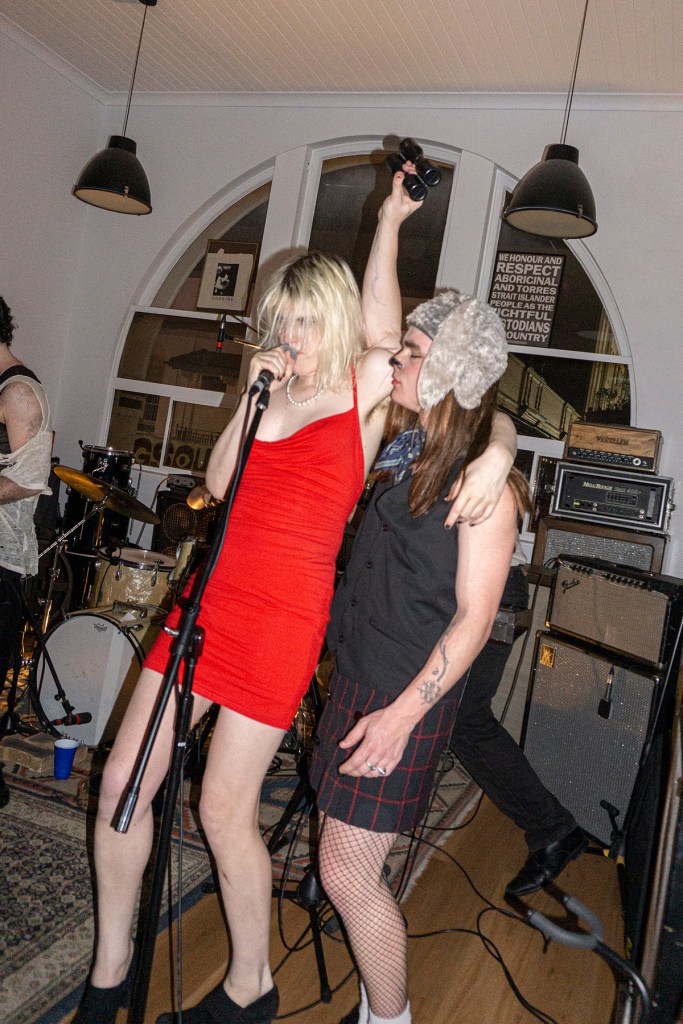
Photo: Jhonny Russell

Did your household encourage creativity? 

BO: No, no, not at all. They never did anything creative or musical. They’re not bland people at all. My mum is great; she’s queer. Basically, I was raised vegetarian, and I’m still vegan, and she’s vegan too. My dad is in the country with his new wife, and they’re conspiracy theorists—kind of like libertarians who live off their own land. So, they do have their quirks, and they like music a lot. My mum likes glam rock, KISS, and Bowie, and she probably inserted a lot of these references.

Where your love of these things come from?

BO: Yes, it’s almost embarrassing to say. Isn’t it cliché, being brainwashed as a child, and then it transfers into your adult life [laughs].

It could have been worse; at least they’re very cool references.What was the kind of music you found yourself that was your thing? 

BO: The Velvet Underground and the more gritty aspects of that punk glam thing. My mum was a product of the 90s; she liked Alanis Morissette and all that kind of stuff. My parents were 17 when they had me, so by the time I was growing up, they were very set in that world. But I found myself in the 2000s, listening to the Yeah Yeah Yeahs. The music I started discovering, like Ariel Pink and all that stuff, was all through blogs. Those are the things that your parents can’t introduce you to. As a kid, I liked the Spice Girls.

I’ve got a Spice Girls record. 

BO: Cool! I still do love them. I went to the CD store, and they had these multi-set collections. I didn’t know the bands; I was about 15 or 16. I picked up The Mamas & the Papas, The Cramps, and the B-52’s. I racked up all these CDs just because they were on bargain.

Those were the things that rotated throughout my teens, they were self-discovered. It was a crazy lesson to go from sunshine pop to L.A. punk and then to weirdo art student music. Those are huge influences that informed everything for me, and I saw them as very much the same things. I discovered them at the same time, and it made sense to me that sunshine pop in the 60s in L.A. would have informed The Cramps.

I like The Mamas & the Papas a lot because they convey such a breadth of feeling in one song, balancing happiness with the saddest chords. The melodies they sing, their voices, and the harmonising—even when they’re flat—are so beautiful.

I really love the melodies on your album. Gimmie have been thrashing it since we got it, and they get stuck in our heads. Like, you know how you’ll be humming something to yourself and then realise, ‘Oh wait, that’s Wet Kiss!’

BO: Oh my god! Yes!

You’re really masterful at writing poetic verses and then catchy choruses. Those hooks!

BO: A chorus should be catchy. That’s just how I think. It has to be absolutely catchy. Then you have all this space to experiment with the verses, but you don’t want them to be dull either. 

The chorus of ‘Skirt’ gets stuck in my head all the time. 

BO: I’m thrilled to hear this. 

There’s a real attitude to it.

BO: It’s, well, you’re looking up my skirt, but like, so what? Fuck you. 

I love that. It’s a tough sounding song. ‘Isn’t Music Wonderful’ got me in the feels too? What a title? 

BO: That title says it all. It’s just about how great and how beautiful music is, and how to live your life fully involved in its production, waiting for it to blossom and be loved by other people, hoping it will be. It’s about connection. When you’re writing, you’re making connections with others.

It’s also about struggling to keep making music. Like what it says in the verses: ‘Every success, another $2 address.’ Because as much as you keep playing great shows, you don’t get paid very well. The things that we all wear on stage are generally from the op shop. We keep trying to glam it up as much as possible. But it doesn’t really matter, because playing a show with the people that you love and care about—your closest friends—is a really great feeling.

Also, though, how good is it finding a $2 dress at the Op Shop?!

BO: Yeah! But maybe it’s more like a $24 dress these days, I should say [laughs].Finding a nice dress is like the best feeling in the world. 

The next song ‘Gender’ seems like a significant song?

BO: Yes. That song is about waiting at a gender clinic. I wrote it when I was at the doctor in Berlin, trying to get a script for hormones because, in Germany, they don’t have informed consent like we do here. Basically, when I wanted to get on hormones here, I just went to the doctor, and they didn’t throw them at me carelessly, but they were like, ‘OK,’ after maybe two or three meetings. They wanted to know that I’d researched and understood the risks and was ready to do it for myself. But in Germany, you have to have six or eight psychiatric appointments. I was really worried. 

Understandably. 

BO: So I was in the waiting room, and in a situation and stressed. But at the same time, I’m like, ‘How can I turn this into a rock song? How can I make this experience reflexive, but kind of dynamite?’ I was trying to write really literally. That night, Dan was still with me in Berlin, and I made the three chords, and then we were jamming and having some wine. It came together. That’s why some of the songs are so absurdly sexual. It’s about the male unwanted attention that comes from becoming more and more beautiful. 

In the lyrics you talk about adding another page to your diary. Do you journal a lot? 

BO: I have a diary. I have multiple books at this point. Yeah. When I write a diary, I always say that I like to leave it on the table because it’d be such a shame for someone to open it and read my dark secrets [laughs]. I like to write it like it’s a novel. It helps me cement that feeling, which is the creative process of writing and living fulfilling your life. That motivates me.

But lately, the entries have been so matter-of-fact. Maybe because I’ve been busy—I played this show; it was good. This person played with me, I like this band, and I didn’t like this person. That has been the last few weeks of my diary entries. I don’t know why my mind is trying to get out the facts at the moment. But generally, I write long-form.

I also write film reviews. My partner has a publication called No More Poetry. And No More Poetry have a magazine called No, No, No mag. And I contribute long-form essays basically every issue where I review a film, but it’s more a diary about my life. 

I’ll have to get a copy, I’d love to read that. So, in your song ‘Chick From Nowhere’ I noticed that the tentative title of the album was a lyric from that song. 

BO: Yeah. Thus Spoke the Broken Chanteuse.
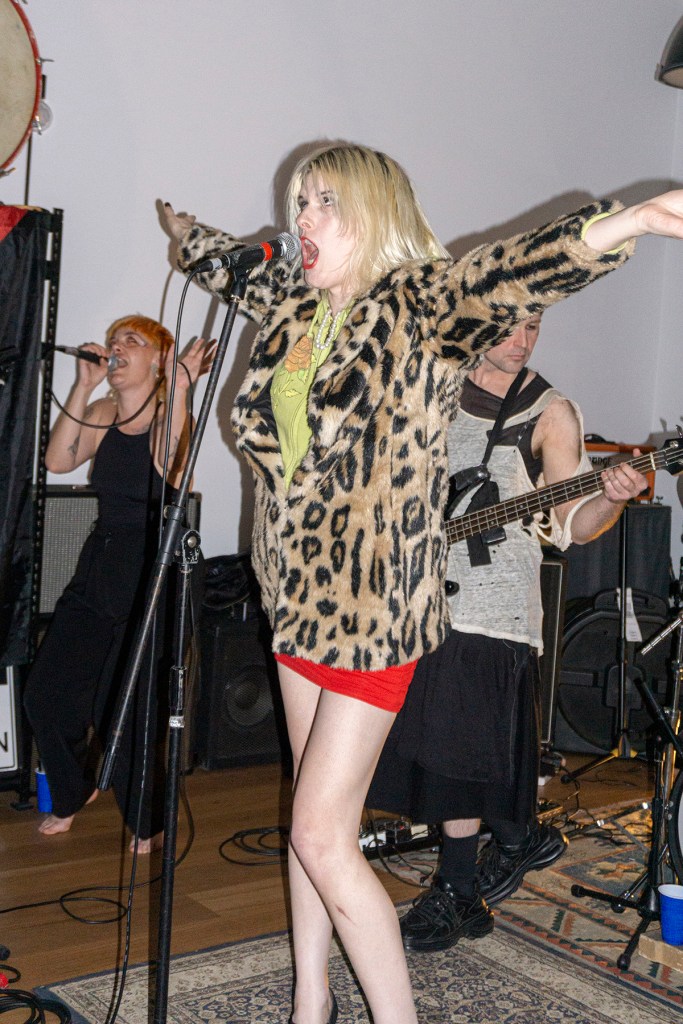
Photo: Jhonny Russell

Where did that line come from? 

BO: The ‘Broken Chanteuse’ line comes from this writer called Max, from a magazine called The Stew. He reviewed our first album and said that I had yellow teeth and called me a Broken Chanteuse. I thought he was such a little cunt for saying that. But I really love Max. Basically, I was like, wow, that’s what you think of me. But then I was like, no, this is the lore. He was building this lore and image of me based on what he thought about the music. So I was like, well, I’ll feed that back into the music: ‘So she’s got yellow teeth. She likes what she sees. That’s what it said in an underground magazine.’ I thought it sounded cool. 

There’s a Nietzsche book, Thus Spoke Zarathustra, that quotes that ‘God is dead.’ That’s the book Bowie was reading during his most schizophrenic period, when he was creating his Berlin albums.

I didn’t know that. I love trivia. What can you tell us about ‘Pink Shadow’? 

BO: That song was written before I went on this trip to Berlin, but it’s about the last time I was in Berlin. I was in Berlin for three months. It reflects on 2018, when I was having my ass kicked by being in such a difficult situation—struggling to get to know people and dealing with my own difficulties.

That was the first trip where I took my first estrogen tablet in Paris. I was such an egg, so undeveloped at that point in my life, while making music. I played one show in this girl-only art complex that was housed in a big pink shed. That’s why the opening line is ‘In a pink shadow in a lesbian’s bungalow.’

I was staying at this commune, KuLe, which has been around since the ’90s, where artists can live. I actually played there again when I moved back in 2022. The song is also about the experience of living with those people. I was there around the time they hosted the African Biennale, and it was really fun. I had a great time.

But it’s funny because, when the African Biennale was on, the way the European residents handled the presence of Black people was strange. There was this trepidation, like a fear of doing the wrong thing. I mean, this happens everywhere, in every country, but it felt particularly odd there. There was this weird defiance, and KuLe sits right across from a big German art institution, yet the African Biennale was just so much cooler.

It’s mentioned in the song, and other elements of the song reflect teething, growing, and figuring out how messed up Europeans can be. It’s about figuring out my life too, knowing I was going to go back, and reflecting on the memories.

That’s really interesting. ’Bunk Buggy’ is another song that always gets stuck in my head. 

BO: ‘Bunk Buggy’ is the only song not about travelling. It’s about my dad. Like I said, he lives out in the country. As I mentioned, me and my mom are vegan, but he works for abattoirs—he kills animals. I don’t think he exactly likes it, but he doesn’t have much choice. He’s a very funny guy. He likes talking about conspiracies. He really likes Trump and Alex Jones [laughs]. But then he’ll oddly know who Blaire White is, a trans YouTuber who I don’t like it all. And, Catboys and all these esoteric memes. He’s a gamer. He’s a very strange guy. But then he just says these funny things. He was messaging me: I’m going to work today. And I’m riding the bunk buggy. I replied, What is the bunk buggy? He said a tractor that plows all the fields for the wheat, so you can feed the pigs that are in the pen to sustain them before you slaughter them. At the time he was getting severely underpaid and wanted me to help him. I tried. But his workplace, has all these signs about, if you complain or join a union, you’re like a communist. Crazy shit. 

Wow!

BO: He has no choice out there. I guess the song is an exercise in making a different type of song. I had the funny word, wrote down all these lyrics, and then we were jamming. Before this record was even conceived, this has been a song we’ve had for a long time. I just inserted ‘bunk buggy’ as a chorus.

I was also inspired to write it after hearing this Cocteau Twins song called ‘The Spangle Maker’. It’s about a man who works in a spangle factory—those little metal spangles. It’s such a beautiful song, though I don’t think ‘Bunk Buggy’ is a beautiful song. It’s a raucous rock song.

I thought there was something about my dad’s profession and the despair of that which I could form into a song. When it comes together, I think it’s funny because, to me, ‘Bunk Buggy’ sounds like I’m trying to create a new dance. It’s not a known word, but it’s a funny phrase to say. I was trying to make it end the album with this refreshing, strange, off-kilter vibe that reflects the reality the whole record is composed of.

Is there anything that you find challenging about writing songs? 

BO: The writing itself—you get the ideas down with pen and paper or in iPhone notes, and you’re looking at them, and you’re like, this conveys a feeling, but it just comes across wrong. You’re like, I couldn’t, that’s not me. That’s not my voice.

So it comes back to what I was saying earlier: wordplay and getting the message across. I find that challenging. Recording is also a big challenge. I probably did the vocals in three takes. There’s a lot going through my head—a lot of pressure in those high-stakes moments, and that’s where a lot of swearing happens. There’s fighting, and a lot of vulnerability.

Our band has a rule: anything that happens in the studio doesn’t count. You don’t count that in the friendship. So if someone calls me a fucking cunt, or vice versa, we leave that in the room. Then we all hang out, and it’s fine. It’s part of the creative process. [laughs]. We need to be violent, focused, and emotional. Recording is a hard part of the writing process because when you record, you sing it, and you’re like, ‘I can’t say this!’ Then suddenly, you’re doing a little edit, adding an extra bit. Or, in the studio, people are like, ‘You should use this word,’ and sometimes I’d be like, ‘No,’ but other times I’d say, ‘You know what?Yes.

So the writing is still happening during that process. It’s only right when you’re singing it to yourself before it’s even becomes a song. I have songs ready to record right now that I hum the melody to, and I think they’re so catchy, but I’ve never actually recorded them outside my head.

For example,I wrote one recently that’s about how big shoes—heels that fit a bigger foot, like a transperson’s foot—are often ugly. I had the melody [sings] do, do, do, do, do, do, do, do, do. It sounds so corny when I say it, but I wrote it on guitar, and it sounded a little better. I sang the lyrics to my partner, and they were like, ‘That was so bad.’ That cut me. But now that I have a test audience, I’ll keep working on it over the next six months.

Another difficult part of writing is dealing with rejection—when you present something and people are like, ‘I don’t understand what you’re trying to say,’ or ‘I don’t like this topic. You could do better than this topic.’ But sometimes you’re like, ‘But I want to write a song that some weird person would react to, even if it was just one person.’
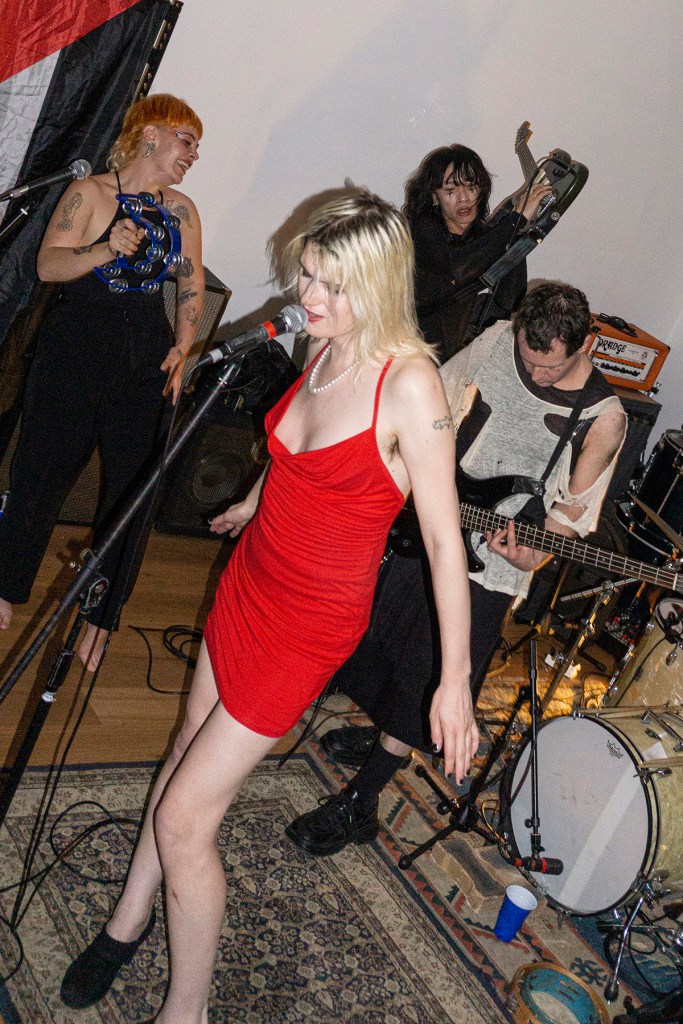
Photo: Jhonny Russell

I like that. What was one of the most sort of emotional moments for you when you were recording? 

One song I’m not happy with the the performance, and I went back into a studio of my friends to rerecord it, and I think I might attach it, send it to my mixer, is the song ‘Babe’. I had such a difficult time singing it, because that one song needed more, it’s like, my personality was not enough, and it needed me to sing really clearly on pitch. The chords, everything was pulling you into like this pitch, and it’s this rocky, slow, melodic, tight of jam. I had to do that a thousand times! When we got it back, I had to auto tune and pitch correct so many parts of my vocal delivery, because it sounded bad if it was a little flat or a little sharp or a little yell-y. 

That was so emotional because it was devastating to realise, this song isn’t working, but we had recorded it. What do we do? So I went back into another studio and recorded another version, trying to throw the original out the window. If it doesn’t work, I don’t know what to do with that song, because it just feels like it isn’t connecting.

In the studio, doing try after try, with people saying, ‘You can’t sing it,’ that was quite emotional because I want to be a good singer.

Did you ever think you’d be a singer? 

BO: Yes. 

When did you first know that was what you wanted to do?

BO: When I bought those CDs that I spoke of earlier, like the The Mamas & the Papas, and I would sing along to them. I would tell everyone, ‘I want to be a singer.’ And everyone knows that I can’t sing one key [laughs]. My whole family is always like, ‘You’re okay.’ I would belt out songs in the living room. I would learn lyrics; I’m very good at remembering long streams of lyrics. So I always knew I would be one.

I’ve tried and tried for years, and I always told people I was tone deaf. Then in Berlin, I got a singing teacher who was an opera singer. 

Awesome!

BO: She taught me a lot about breathing from my diaphragm, singing in key, and gave me a lot of tips for staying in key, like remembering the notes as numbers and mixing those numbers up. That way, you learn the position of the notes.

I developed a lot more just from those lessons and her encouragement. She had a great understanding that you can copy Patti Smith, you can do the New York Dolls, or you can sing like Bessie Smith and try to be more belt-y. But those people, when they get older, lose their voice because your voice is an instrument. It’s like a boxer, someone who’s constantly putting their body in the fray of damage.

So, it’s a choice. If you want to just be a punk singer and scream, scream, scream your whole life, your career might only last 20 years. But she was trying to encourage me to learn more technique to sustain longevity.

Once I got that skill, I became more critical of how I deliver. But I don’t get vocal fatigue after shows anymore. Still, I can’t always sing on pitch all the time.

It sounds pretty good from where I’m standing. 

BO: Oh, thank you. I can hit it better than ever. By the third album, it’s going to be even better and better and better. I have no doubt. But that ‘Babe’ song, it’s a challenge. It’s a cover by a very little known artist from the 70s. 

When I heard the original, it’s this folk song, and he has a kind of similar voice to me—he sings a little high and nasally. He’s an outsider, freak-folk person, and I love a lot of independent releases from the 60s and 70s. I loved it! I was like, oh my God, the chorus! I would love to sing this.

It’s hard to say why someone like Bette Midler or Helen Merrill or any jazz singer would choose a specific song to cover. You hear it, and you’re like, I feel like I could do something interesting with this. I did add one verse myself. It’s simple, heartfelt, sweet, and also a little cool. I was drawn to it. Our version doesn’t sound much like the original, except for the chords.

But my band doesn’t like playing it live, so we don’t do it. They don’t really like the song. No one really likes the song! [laughs]. So, grappling with that is still an ongoing issue.

Everyone in your band seems so strongly individualistic, which is really refreshing to see, especially live.

BO: Everyone’s very independent. We’re all encouraging each other to do our own thing, but we are just that, there’s no fake put on. We’re in a flow state at this point because we know what we’re doing and it’s just—FUN!

I feel like you’re really hitting your stride. I’m excited for you to put this album out into the world. I sense that bigger things are on the horizon.

BO: I feel like something is coming, and I can just feel it in the air myself, too. Usually, when I say things like that, I pinch my arm until it bruises because that’s my spiritual side trying to tell me not to be audacious or gloat, or I’ll ruin it. It’s a superstition I have. And, I don’t feel like pinching myself at the moment. I feel like flowing with an accepting love. I know something great is going to happen! I’m ready.

Follow: @br3nna_o and @dinosaurcityrecords.

V: Living Their Best Life!

Original photo: Jhonny Russell. Handmade collage by B.

Step into the intricate universe of Naarm/Melbourne-based musican, V, an artist whose life story is as interesting and multifaceted as their sound. 

V’s journey into music was sparked when a Slits’ concert shattered their perceptions, unveiling the boundless potential of women in music. The transformative power of music and its ability to break down barriers becomes evident as V tells us their story. They vividly describe the turning points, the chance encounters, and the intense passion that fuelled their creative evolution. V taught themselves to record through experimentation with bass and GarageBand, to craft their own unique sound. 

V’s musical trajectory was further shaped by collaborations and experiences abroad. Their involvement in various bands, from grindcore to dark wave and experimental projects, exposed them to diverse influences and refined their approach to music. Our conversation delves into their experiences living in Germany for a decade, the challenges they faced, and the lessons learned along the way. V spent time living in Berlin’s Tacheles artist squat.

The interview also explores V’s struggle for legitimacy in an industry that can often be shallow and unyielding. From their insights on the music scene, being dropped from their label, a story of kindness of a well-known fellow musician when V couldn’t afford to eat, and the unending pursuit of self-improvement, V’s authenticity shines through. 

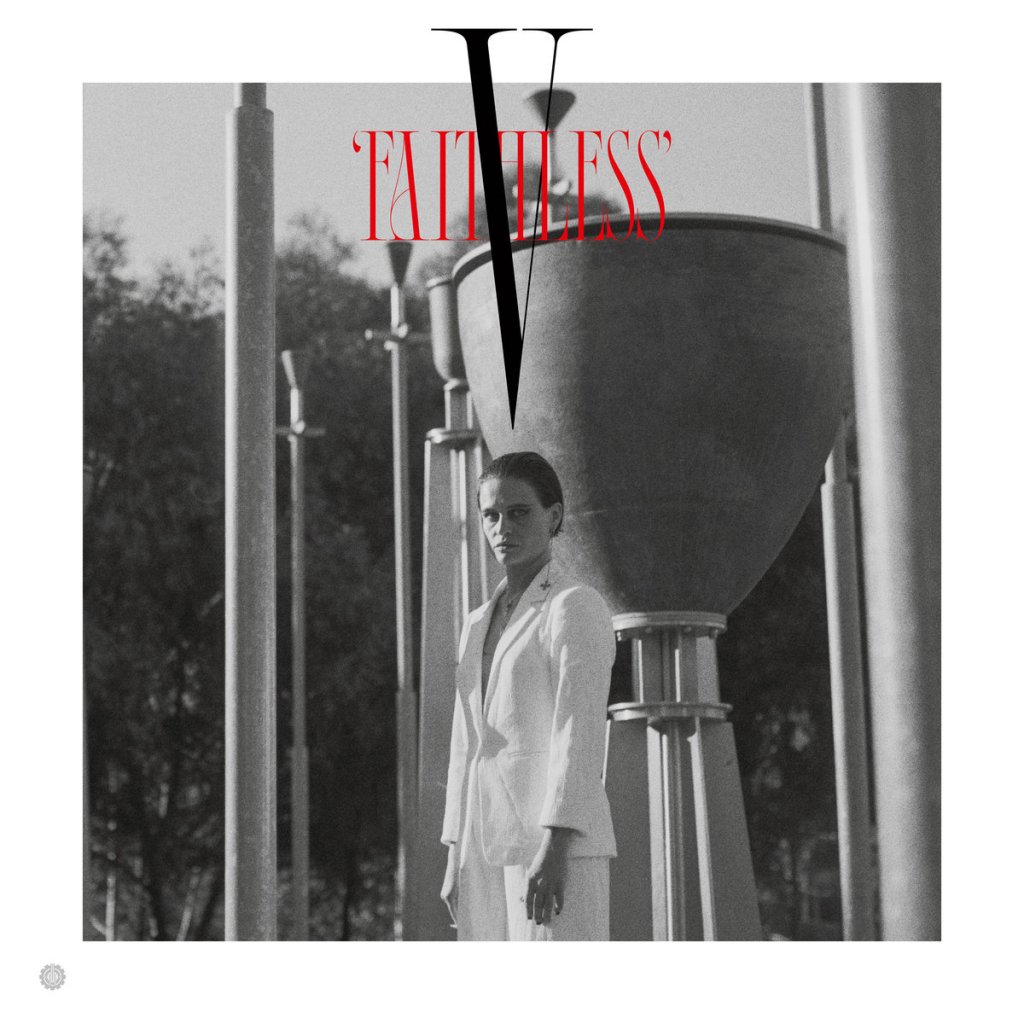
Their third album, Faithless, emerges as a focal point of the discussion. The creative process, the painstaking efforts to capture the right tones and emotions, making the album four times and deleting it, and the significance of collaboration with a choir all come to light. The album’s meaning and themes run deep, loss, yearning, psychic devastation and the failures of mental healthcare in contemporary Australia. 

V’s candidness about their emotional struggles, personal losses, and the complexities of finding a sense of belonging adds a raw and intimate layer to the chat. Their passion for their art resonates powerfully throughout. We also touch on latest album, Best Life, a visual album, and a collaborative work between eight directors in Australia and the EU. 

Ultimately, this conversation provides a window into the heart and mind of an artist who is unafraid to tackle the challenges of living, confronts personal demons, and channels those experiences into their art.

We chatted earlier this year in-person, while V was in Meanjin/Brisbane to headline the VALE VIVI: A punk eulogy to Vivienne Westwood tribute event at The Tivoli theatre. Their dear friend had passed away a few days earlier, and the chat was very emotional. Tears were shed.

I’m so happy to be talking with you finally. We love what you do, V. You’re incredibly underrated. How did you find music? Has it always been a big part of your life?

V: No, actually, it hasn’t been a part of my life forever. I was introduced to this intense love for music through my sister when I was maybe 16 or 17. Of course I liked music before then. Like, I love the Spice Girls and the Backstreet Boys, but I don’t think my music tastes really extended beyond that then. But I remember my turning point.

My life changed when she was 16. My sister bought me a ticket to The Slits at The Zoo and I’d never heard of them before. It was the best. That show was a turning point because, I just never considered the possibility of women in rock on stage. I remember Ari Up was like, “Girls get up on the stage.” And I got up on the stage. I got my first taste of being on the stage in a rock and roll sense at that show. It maybe took a year or two after that, I’d just play around quietly by myself with one of those organs that every single Brisbane sharehouse used to have. 

When I really started making music was when I got an Apple laptop, when I was 21. It came with Garage Band and I just started pumping music out. I started writing music like crazy. 

In my mind, I didn’t really know I was making music in my own way. I released ten albums. I burned them on CDs. I had a little separate CD burner, and I literally had ten V albums. 

I read about that. Someone that used to be in a band with, I think, David Hantelius? 

V: Yeah. 

And they mentioned that when they first met you, they sat down with you to hear your music and they thought, oh, I’m just going to hear a demo. And then it was ten albums! 

V: Keeping in mind that they were all demos, they were not developed with the structure or anything. I feel like I must have been in a year long manic phase when I first started making that music. Sometimes I get so into it that I’d go for two days. I wouldn’t go to sleep, and I’d just keep doing it. I haven’t done stuff like that in over ten years. I guess I’ve mellowed out in my age. But, yeah, that’s how it kind of started for me, slowly, and also privately. The writing part has always been very private. I never performed till a bit later. 

Why was that? Were you scared to put yourself out there? 

V: At the time, I was much more invested in being a visual artist. So that was the practise that I showed to the world. Drawing and painting, scenes and comics and stuff.

The turning point to where I kind of started to resemble what I do now, was back in the MySpace days. I was living in Germany at the time and this guy, Obi Blanche, a Finnish producer, contacted me on MySpace. He asked if I wanted to form some Kills-type band together with him. And I spent about a year in his flat,  sitting behind his shoulder, watching him on Ableton, putting these demos to life. That’s where I learned about, not technique, but when you have discipline. He had a lot of discipline for music, and I continue that discipline today. 

I’m very disciplined now about my approach to music, and I think it’s very informed by Obi. Later on. we had this band called VO – so V and Obi. That was the first official music I ever recorded. 

Shortly after that, I joined this grindcore band, Batalj. That’s where I really cut my teeth live. I wouldn’t be making the music I am today if it wasn’t for Batalj. It was with two Swedish guys. David was the one who we mentioned before who came over and listened to demo. It was David and Per and me in that band. Per was good at tour booking. He would book these intense tours. Two week, three week-long tours. 

The first tour I ever did was with Monsieur Marcaille, who’s amazing French classically trained cello player. He has two kick drums on either side and then he has the cello in the middle and it’s coming through to two amps. It’s very grotesque in a way because he plays just with the underwear and he’s snorting on the ground and spitting and it’s very loud and almost kind of metal-like. 

I never thought about how that might have influenced me because I also had a little fling with him on that tour. There was a huge age gap, but it was fine. I was 23. 

More recently you’ve play with band Dark Water?

V: I didn’t really write anything for Dark Water. I was not quite a session drummer. I also had an important role as a cheerleader in that band. 

More recently, I’ve been playing bass for Enola. But I’m doing one last show with them because I just think I can’t be in a band where I’m a session musician. I have to have a creative input. What’s the point of me having almost 20 years of experience and just be a session musician? I want to put my creativity into it. I’m not shitting on that band at all. I absolutely loved playing the music. I learnt so much. They taught me about dynamics. How important they are and how much you can get someone’s heart racing by applying the dynamics properly. You have quiet a part, then you have a loud part and then you go quiet again, get loud again, it gets people on edge. It made me a much better musician.

[V holds up their bass guitar and hugs it to their chest] 

This is my new bass, Violetta, I upgraded. I’ve been using, Sheila, which is my other bass, that I bought in the Valley when I was 18 with my tax return. Just on a a freaking whim. I went into this music store and they had this deal for a little Orange amp and a bass guitar. I bought it and that was he beginning. 

Did you want to play bass or did you get it because you wanted to play something and thought it was cheap enough for you to buy? 

V: It was just cheap. In school, I studied classical acoustic guitar, the one where you get the little footstool. But honestly, I didn’t do that in high school because I liked music. I did it because I didn’t like gym. I got the music lessons put on the same time as PE so I wouldn’t have to do PE. I learned technique from that. But I wasn’t passionate about it. I didn’t think about making music when I was a teenager. That came later. 

When you started doing your solo thing, V, you were living in Germany?

V: Yeah, the very first show I ever did was for someone’s art show which was held in a derelict abandoned building. I had this battery operated stereo with a CD that I burnt for the backing track. I had a tambourine, no microphone. I was singing along.

I’ve gone through huge transition to get to where I am today. It took a lot of different bands. I’ve gone to the next level with V because of that.

You were talking about dynamics before, I can especially feel that with your new album, Faithless. I’m usually a big lyrics person, they’re a big part of the equation for me, but then with your album, there’s not really that many lyrics. Maybe the last song. You convey so much with just sound. 

V: That’s really what I wanted to achieve with that album. It was by far the hardest work I’ve ever created. 

Didn’t you make the album four times and then deleted it each time?

V: I did, yeah. 

What was missing in the versions you deleted?

V: I got commissioned to do the album, so it had to have the Bells on it. Many of the songs I’d written would have sounded better on synthesiser and my normal thing. And I felt like I was doing a disservice to the Bells by… it’s almost like I just tried to sub them in. I wanted to justify using the bells. For people reading this, they’re the Federation Bells. I did it four times because it had to be good.

It was written during lockdown, a very isolating period. I was in the shed. I smoked more weed than I’ve ever smoked in my entire life. It was a nice period, because obviously, with the lockdown and getting money from the government, I was able to, for the first time in my life, almost just only focus on the music for two years. 

I felt so conflicted because I didn’t like how the Bells sounded. And it took me forever to arrive at a point where I could feel justified, to actually release it and feel like it was still my voice and feel like I wasn’t compromising. 

Initially did you have an idea of what you thought the Bells might sound like and was the reality different?

V: It was a harsh reality because the Bells are ugly sounding. They hurt. They hurt my ears. The higher ones, anyway. The album pretty much uses almost none of the upper Bells. It’s like, basically mostly the lower five Bells. You think of a bell in a clock tower, it’s like that. They’re upside down on sticks. It’s a very unique instrument. They’re more of an artwork. 

I’m not technically trained, I’m self taught, totally. There’s all this technical information about how the tones work and I just have to do it all by ear.

Dark Water also got commissioned, but on the Grand Organ.

I got dropped by DERO Arcade. I don’t mind talking about that. That was crushing. I can’t even begin to say how crushing it was, because I made ten music videos, I spent all this money, savings. But, yeah, it will come out, it’s going to be fine. That was very difficult. 


So that’s another album that you’ve made? 

V: Yeah, it’s all finished, it’s ready to go. I’m probably going to probably going to release it in three months, because I want to do a European tour at the end of this year. That’s why I’m doing scrappy jobs, so I can get a ticket and go overseas again. 

My amazing sister ives in Norway and haven’t seen her in five years, she’s got five cats I’ve never met. She has a van and has agreed to drive me on tour. I’m going to release ten singles, because why not? I can do whatever I want if it’s my own self-release. The first show of the tour will probably be in Berlin, as cliche as that is [laughs].

That makes sense though, you lived in Berlin for ten years.

V:It still feels cliche, it’s the cliche of the Australian that goes to Berlin. Whenever it comes up in conversation, I don’t say the “B” word, I just say Germany, because I’m embarrassed. It’s fun. I’ve been here [Australia] for seven years now, so it was 17 years ago that I moved there. It was just before turning 22, when I moved. 

Why’d you move there?

V:  The art scene. Initially I had moved to London because my mum is from there and I wanted to reconnect with her side of the family, but I hated it. I felt alienated, didn’t make any friends. I didn’t feel good there. 

On a whim, I moved to Berlin, I had this vague friend that had a studio in a massive artist squat, Tacheles, that I ended up living in. I was meant to be there for five days, but on the first day well, no, the first day was horrible, on the second day I was like, oh, I’m not going back to England, I’m going to stay here. I felt free in a way that I’d never felt. Maybe it was because of the language gap, like not understanding advertising and not understanding any conversations on the street. 

V live in Meanjin/Brisbane 2021: by Jhonny Russell

That’s really interesting. 

V: That’s where I immediately started making those ten albums. When I moved there, I bounced from art studio to art studio. I essentially spent ten years bouncing from place to place. It was very unstable, but it was nice. I wouldn’t want to do that again, though

Is there anywhere that you feel at home? 

V: That’s hard because my family is all split all over the world. I guess I do feel somewhat at home in Naarm because my brother is there. He’s married. He has my beautiful niece. She’s so cute. Izzy. She’s the only child in the family, and at this stage, I’m probably not going to have children. It’s nice to have this child, that feels nice and somewhat homelike. 

I also grew up in Singapore and South Korea, and so I’ve never really felt connected to Australia. It didn’t really feel like I was leaving home when I went over to London. I was born here in Brisbane, but left when I was six and then came back to Brisbane when I was about 15 or so. So the formative years was spent over in Singapore and South Korea; changed school, changed houses. 

Do you remember much from your time there? 

V: Oh, yes, very much so. My mind wanders back there sometimes because I went to school with all these expat kids who were from all over the world. That’s what I really liked about Germany, because it is quite multi-cultural, they call it multikulti. There’s ja lot of different nationalities living there. There’s a lot of different people. That’s something I feel really lacking here. It’s so homogeneous. I miss the heavy accents, and broken English and broken German and broken French and whatever language. When you meet someone, you try to find whatever common language you have, and then you speak broken whatever together or use, like, Google Translate to try and communicate. 

I’m searching for home. I don’t think it bothers me that much, though. Maybe I’m more like a wandering Ronin [laughs]. But, I would like to find something that feels like home one day. I mean, this kind of feels like home in a way. I’ve had housing instability for literally 17 years. That’s not the worst thing either, because it feeds into my need for stimulation. I’m always searching for new, fresh stimulation.

What’s the significance of album Faithless to you? It’s your third album. 

V: It represents legitimacy. There’s nothing more legitimate than the city of Melbourne commissioning you to make a record. It feels like a new phase for me. I want to reach the heights. I don’t want to have to work this shit insurance job that I hate. I hate working these crappy jobs. It sucks my life out. And it means I can’t put as much thought and effort into my music. 

Best Life is your other album you’ve made, right? 

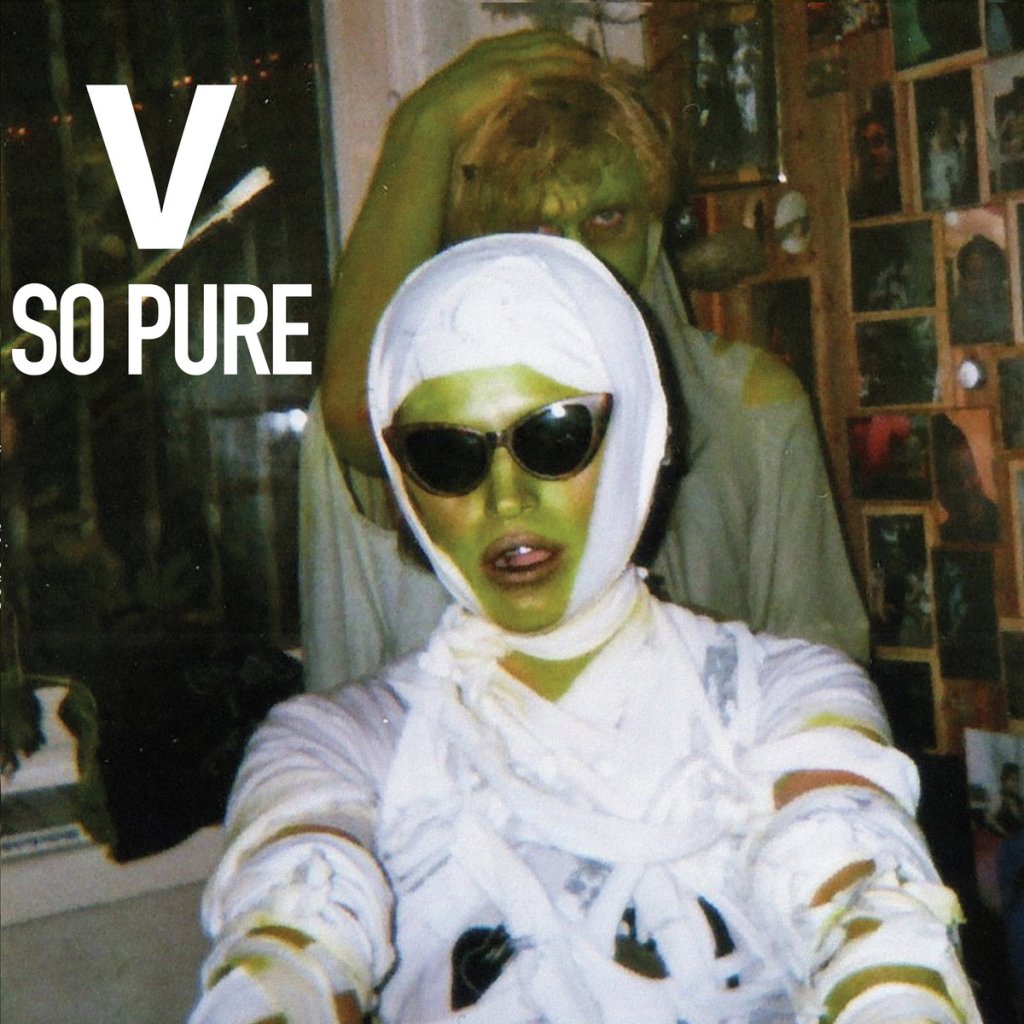
V: Yeah. It’s about best life. When we were in lockdown, it’s hard not to self-reflect. That’s what that album is all about—self-betterment, self-improvement. Also, isolation. 

I’m always wanting to be better, a better version of myself. There’s a whole bunch of stuff that I really don’t like about myself that I’m working on. I can be so passive aggressive, and other things, that I’m trying to work on and I think bit too much about. Self-betterment is what I use music for. With Best Life, with So Pure, I was really looking inwards and looking at myself and asking questions. Faithless, I’m more looking outwards. I didn’t want to write songs about love and of course, I inevitably end up seeing death, which I’m a little bit tired of it, to be honest. 

The last song ‘Faithless’ was one of those songs that came fully formed. It came out totally, there was no arrangement later. I didn’t have to revise the lyrics. I feel like that is a bit of an aberration from the rest of the album, which I feel is like more of an exercise in, I tried to go really deep with the oral sonics of it all. The album represents legitimacy for me, which is something I desperately crave.

‘Memories / Dreams’ definitely exists, because Cosey Fanni Tutti exists. This is heavily influenced by Cosey Fanni.

In what ways? 

V: I read Art Sex Music. It’s so good. And it will make you look at Genesis P-Orridge in a totally different light. I listened to her discography and also her collaborations that she did with Chris Carter as well. 

I also listen to a lot of group A., they’re from Tokyo but based in Berlin. I played with them before, they’re huge now. They’re amazing. Very influenced, because for me, they were at the forefront of this genre. The way they talk about their music is really cool as well. It’s very conceptual. It’s like, this album is all about wood and wood sounds, and then this one is about metal and metal sounds. It’s clever, it’s intellectual.

I get obsessed with things and I listen to the same thing over and over and over and over again.  definitely got obsessed with Cosey’s live recordings on SoundCloud. 

Have you heard Lydian Dunbar’s new album Blue Sleep? I’m obsessed. That’s one of the ones that I’ve also listened to obsessively on repeat. It’s one of my favourite albums of last year.

We love Lydian! There’s so many great artists in Australia, but the best stuff doesn’t always get known by a wider audience.

V: Yeah. Because of the industry, you see these super talented people get ground down all the time. It’s never the best stuff out there getting attention, but sometimes it is, look at Amyl and the Sniffers! I’m so stoked they blew up. They definitely work hard. 

Quick story about them, a few years ago, I had a bit of a mental meltdown about music and I made this social media post that I’m going to quit. I didn’t even have money to eat. This sucks. I hate it. And then Amy from Amyl and the Sniffers wrote me. I’d seen her at shows and stuff. She said, “I’ve just done really well with this Gucci campaign. Please let me send you groceries. I’d never really even talked to her before. After that, there’s no one who’s more of a fan of Amy than me. Not even because of just that, but because of her lyrics, her performances, and everything. She’s super lovely.

Totally! The industry can be such a terrible place. Music media in this country is all pretty bogus too. Artists have to pay to get featured (we never charge, we only cover artists we love). People reach out to Gimmie and ask us how much it costs to be featured ‘cause they’re used to paying other well-known bigger publications to get coverage. Their numbers are fake and engagement is poor. They’re not doing as well as they pretend that they are. 

V: What’s happening? Where are we going? What’s the endpoint of this complete homogenisation of culture? 

In Melbourne, you’ll see these bands that have hundreds and thousands of monthly listens on Spotify, but then you go see them and there’s only a few people there.

Fucking house of cards, it’s got to come down at one point. How much can we take? I like doing my own thing, staying in my own lane that I’ve made, supporting the things that I love, and that’s it. 

I’ve had the opportunity to play with Civic recently and they’re fucking doing so well. Those guys, they’re going to America, twice this year. They’re going to Europe. They got sponsored by Fender. They could choose anything they wanted. That’s a fucking dream. 

We saw them on Friday night. We love those guys. Lewis is a total legend, a really nice, talented dude. 

V: I wish I could have made that show. I really like them all as people, they’re exceptional. Normally I have no time for all-male bands, no time whatsoever. They’re just so fucking nice. I feel like they deserve it. I know them all individually from their other projects, and I just know they’ve worked so fucking hard to get that. They did twelve shows in four days at South by Southwest. Insane.

In regards to your creativity, what are the things that are important to you? 

V:Creativity is part of my entity. I’m always being creative. Integrity and authenticity. Authenticity is the most important thing to me, no compromise. I like the space to do things in my own time and not be forced to be in a schedule. What’s the point if it’s not real, then it becomes shallow entertainment. I’m more interested in creating this simulacrum of my soul. It should be my unique voice.

My creativity is my life force. That’s my purpose in life. Maybe that will change later, but I don’t really have much else in my life besides my music. I have my friends, and I have nice musical equipment, but I feel like it probably would be healthier for me to get some interests outside of the creative sphere, also because my ego is so linked to it. If something goes wrong with my creativity side, or if I perceive that it’s being rejected or something, then it’s like the end of the world. 

Yeah, I’ve felt like that too. I used to put on a lot of punk shows and I’d spend time and effort making cool flyers, like, mini artworks, hand them out at places, and then I’d see them just discarded on the floor, it’d be so sad. 

V:Yeah, I used to put on a lot of shows too. But I haven’t since COVID times. In Germany, I used to put on shows all the time to the point where people I’d never heard of would write me and ask me to put up shows. I’d listen to the music first and generally not reply to the ones that I didn’t like. I was living on and off in communes that had guest rooms so you could get crust bands up from the Czech Republic, with six members and shove them in the guest rooms. 

I remember once, a band called the Piss Crystals, me and a friend put on a show for them and I put them in this guest room, closed the door, went to bed; Later I went down to collect them, there was a big note on the door that said: Scabies. I don’t think anyone got it. Or maybe I just blanked that out my memory [laughs]. But a lot of stories like that in Germany, those were some really loose times back then. Very different from life here. 

Were there any specific emotions or things that you were processing while you were making Faithless

V: With ‘Faithless’, the song itself, I mean, that song is a eulogy for Bridget [Flack]. The songs all have their own meanings but that one is the one that really has a solid. meta meaning. When I got Hunny Machete involved and she brought in the Faithless Choir, it took on this entirely new meaning—the power of community and community care. 

When the choir got involved, it was like they were drowning out my cries of, are you faithless? You almost can’t hear me say that because the choir is so loud behind me. They make it uplifting. It’s a very depressing song without it. She wrote the arrangement, just reminds me the power of collaboration, makes me want to collaborate more.

That song, when I wrote it, it was about being faithless and being hopeless and being so completely faithless in the system for people like Bridget, people like me and that we can’t live and thrive in the system. Bridget was badly failed by the Australian mental healthcare system.

‘Cockroach’ is about the apartment I was living in. I wrote the first half in this sharehouse in Brunswick. And the second half, this is Lockdown rent got really cheap in CBD, so I got my own apartment for the first time ever; one year. It was infested with cockroaches. I like the big ones, that’s no problem. Give me a big one any day. The standard bush cockroaches. But it’s the German cockroaches, the tiny ones, they just make me want to vomit. They’re disgusting. I had to throw them away cassettes because they got in there, They got in all my picture frames. It was intense. 

What about the song ‘Toll Keeper? 

V: It’s kind of like you’re on the river on that boat thing and you’re going to the Afterworld. I feel like that’s the soundtrack to that, in a way that brings you into that. 

That was one of my favourites. I went through so many emotions listening to it. Each time I listened, I got something else from it. 

V: So awesome to hear. That makes me so happy. I was not sure how it be received because it’s so different. It’s still my same aesthetics and sensibilities but a different approach to meaning. Initially, when I wrote the album, probably the first one that I deleted, I was like, oh, make an album about land rights. Because written on the Bells, there’s a river there, and there’s so much history for the traditional custodians of the land in that area. I started to try and write it. I was like, this is too much to tackle. I also felt like it wasn’t my place to try and write, like I was just trying to be Midnight Oil or something. It wasn’t right. It’s a hard thing to write about, land rights. 

I felt quite insecure while writing, because, you know, if I wasn’t going to write directly, direct lyrics about my emotions or anything, I was like, Is it still illegitimate and is there still meaning in it? That’s part of why I wrote and deleted it four times. I felt so fucking insecure about it, and I just wanted to make sure that it rung the right notes, metaphorically speaking. 

I was reading about the drum machine that you used. You got it in France, right? 

V: I did, for €2. It was sitting in the grass, I half knew what it was when I walked past because it has all the classic buttons, like waltz, samba, all those drum patterns. I was very much trying not to hide my excitement when I was asking the woman selling it, in broken French, how much does it cost? It’s an amazing machine. I mean, it still works perfectly. And it’s over maybe 50 or 60 years old. It’s definitely the jewel in my collection, because I have collected a few really nice pieces throughout the years. I would never sell it, but it’s worth, maybe a grand and a half. And yeah, the history and the sound you would get from it. I was slyly asking her what it was? (I knew what it was). She told me it’s for accompanying the accordion. I was like, oh, okay, maybe I’ll take it. I actually want to get it retroactively fitted with Midi because it doesn’t have Midi, so that was kind of a nightmare, like fixing it or not fixing it. 

I’m not going to lie, it was a nightmare to actually technically make this album. Technically it was such a challenge because it wasn’t on the grid and I really should have thought about that. But I’m happy with how it came out. I could have saved myself 300 hours or something, because I did a lot of hand placing, midi notes and things like that. I’ll never do it again. It was a labour of love. 

Have you had a chance to play the album live yet? 

V: No. 

You were going to do it at Fed Square?

V: We got rained out. It was huge no no, because I’m bringing a lot of electric stuff like a laptop. I’m not bringing the drum machine because it would literally be impossible to get it to sync up with what I’m playing. Even a single drop of sideways rain is not allowed to come near my stuff. It’s going to be rescheduled. It’s impossible to take the show on the road. I’m just going to leave it as that one live performance, just have it as this rare one off thing and then the records. That’s going to be the legacy of it. I’m sure I would like to do, like, a ten year reunion with the choir,  because the choir is, full of such awesome people and we really bonded. 

So you’ll start focusing on Best Life now?

V: Yeah. I just got to get the plan together. I haven’t tried so hard to get another record label. Once I got dropped from DERO Arcade, I wrote all the labels, nobody really replied to me. I got one rejection, which was cool, even to just see that they’d seen my letter. That was so hard. 

Obviously, I’m doing well. I have this album out, but nothing’s good enough for me. Nothing’s ever going to be good enough. 

What does your best life look like? 

V: Right now? Don’t ask me, because I’ll start crying. I don’t know.


Would you be making music full time? 

V: No, I wouldn’t be doing music at all. 

What would you want to be doing? Would it be visual art? 

V: No. [Cries]. I’d probably like to have a family, I think, but I don’t think I’m going to do that. People often say that their songs are like their kids and that making an album is like giving birth. I definitely view my instruments as, I wouldn’t say my child, but, something that replaces that, in some ways. [Craddles their bass guitar]. This feels very comforting for me to be holding Violetta like this. I always give them names. 

Outside of capitalism, yes, I would be doing music, I would be doing art. But it’s just so crushing to be creative. 

Part of the reason I caught up in my head is I spend way too much time alone. I need to get out there and hang with the young people and go see those bands. Start looking at placing my focus on, am I happy with what I’ve done? Am I happy with what I’m doing? Stop striving for success and just try and keep focusing on making what I like and what I’m happy with. 

You’re an amazing, talented, fascinating person V. You should be proud of what you’ve done, it’s so unique, no-one could have done it but you. What is success anyway? I know music doesn’t pay your bills right now but your art really speaks to people, it moves them. We get it. We get you.

V: I am happy with it. I’m going through an emotional time also because another trans friend unfortunately chose to end their life four days ago, the day before this album came out and I was like, oh, god, like, yeah, fucking faithless right there. All that kind of stuff beats you down. When people are actually dying and not just being upset because their record won’t come out, it’s hard to reconcile, but it’ll get there. I’ve got my therapy session tomorrow morning, by the way, so don’t worry about me. I’ve just had a rough, rough few days. 

I’m so sorry that you’re having such a rough time right now, our condolences for your friend passing. In situations like this words never suffice. Are you ok?

V: Yeah. I’m sorry for my friend. It’s so sad. 

Totally. I was talking to Jackie from band, Optic Nerve, recently. I was talking to them and their new album they’ve just put out is called, Angel Numbers.  Thematically, it’s about signs among other things, but it’s also about violence against trans people. It’s such an important record that we feel deserves so much more attention. Jackie was telling me about how they got jumped, multiple times in a few weeks and ended up in the hospital twice. 

V: That’s awful. It doesn’t surprise me. 

The album is about these things and it’s about community. It’s one of the best hardcore punk records of the year, and it really is for community. It’s incredible. Jackie is an incredible person doing great things.

V: That sounds like an extremely important record and I can’t listen to it. Optic Nerve’s guitar sound is something special.

Anything else you’d like to tell us? 

V: We’ve covered A to Z, everything. I have a lot to think about, which I really appreciate. Your questions made me tear up, asking, where is home? And, what would your best life be? I’m always about self-improvement, so I’m going to think about those questions. They really struck chords in me.

Find V at: 

vlovescats.bandcamp.com/music

instagram.com/vlovescats

facebook.com/Vlovescats/

soundcloud.com/vlovescats

Berlin-based Musician and Artist Saba Lou Khan: “From the very beginning, from my birth on, I was surrounded by a lot of music”

Handmade collage by B.

Growing up in a music and art-filled household, creating is second nature to Saba Lou. If she’s not crafting garage-soul gems, she’s drawing, painting, collaging, sewing and just making the world in general a more interesting and bright place with her visual creations. Her latest work – Rat-Tribution Now – is a collaboration with her father, musician, producer, artist and label owner, King Khan. The project “deals with the nefarious origins of the goddess Kali, exposing the poverty stricken community of the Musahar people of Northern India and supernatural feminist empowerment. It is dedicated to the memory of the thousands of Missing and Murdered Indigenous Women and Girls of Canada.” We spoke to Saba Lou as they were working on the project, which recently debuted as part of the Pop Kultr Festival in Berlin.  

In our correspondence you mentioned that you’ve been busy; what have you been working on?

SABA LOU KHAN: Right now, I’m actually part of a large art project that is going to be shown at the Pop-Kultur festival, which was supposed to be an actual festival in late August in Berlin but, has now been reformatted to be a complete online experience. This means that our plan has changed a lot, when I say “our”, I mean my father [Arish Ahmad Khan a.k.a. King Khan] and myself. It was his idea, he wrote a story that is called The Tail of The Rat Eaters it has been changed to Rat-Tribution Now. I’m going to be illustrating it. It’s narrated by Joe Coleman, the painter. It’s a big load of work because it was supposed to be a big multi-media stop-motion animation playing in the background and paintings with the production. It was going to be a much larger production than anything we’ve ever done before. Now due to the global crisis, it’s very responsible and I’m happy we’ve changed it. That leaves me with a lot of work to do. I’m really happy to do it.

Where have you been finding creative inspiration lately?

SLK: For this specific project, it’s connected to the history of India and the lowest of the low caste, the “untouchables”, the so-called “Rat Eaters”—the Musahar people. The history of something to do with the culture that my family comes from has inspired me, just the plain facts and of course the imagery and photos of the Musahar people. I’ve been doing portraits, it’s not about specifically portraying real people; it’s a fictional story that my father wrote which is based upon several different stories, and to some extent dramatised. It’s still a personal cultural history situation, although we are not connected to this caste.

Otherwise I’m not working on any other creative things parallel to this, because it takes up a lot of time and brain space, and it’s important to me it’s done properly and with conviction.

You’ve told me that you’re an early riser; are there any rituals or things that you do in the morning to kick your day off right?

SLK: Yes, I do have very specific ways of organising my days, especially now in quarantine living with my parents. I was not planning on living here again, I sort of see myself as a guest. I was going to travel to Canada actually. My routine is that I get up really early, especially now in the summertime, between 4:00-4:30 in the morning. The first thing I do besides washing my face and brushing my teeth is to drink a lot of warm water, which is my favourite drink in general. I have endometriosis, a lot of things in my life go towards living without pain; it includes a very strict diet and very strict regulation in terms of exercise and all sorts of things concerning the body. Just drinking lots of water and taking care of bowel movement and these things, are a little bit more important in my case than someone who may not be painfully affected from skipping out on a routine like this. I do a lot of exercising and stretching. I practice Kung Fu.

There’s other things I do throughout my day that are not fixed to any time. I started playing the double bass, practising that every day. I’m still very, very beginner. I’m playing classically with a bow. At this point it’s about bow control and growing the muscle to even manoeuvre the creature.

There’s also things like, I eat at 1pm. I interval fast, I think some people call it intermittent fasting. Those kinds of things are poised throughout the day when I have something specific planned.

My sister and many of my friends have incredibly painful endometriosis, so I do understand how debilitating it can be and how important it is to find ways that work for you to manage it.

SLK: Absolutely. In my case I was so lucky to get diagnosed and get treatment so young. I didn’t have the classic endometriosis of twenty years of not being taken seriously and hospitalised-several-times experience. I don’t have a problem with sticking to these sorts of things, some would say I have insane self-discipline. Which I’m sure it has to do with not just my personality [laughs], but also growing up and encountering the very free and chaotic artist lifestyle and household I was raised in. Sometimes I have moments of realisation where I see that, wow, I am putting so much effort, subconsciously, into not having pain. It’s pretty intense sometimes to realise how much it defines your life.

What is it that interests you about making music?

SLK: From the very beginning, from my birth on, I was surrounded by a lot of music. It’s not the kind of thing that I had to discover on my own. Of course I discovered it from my family household but it was always just around; when I say always I mean in every way, not just playing in the background but also being the profession of my father, the profession of most family friends. My sister and I were always exposed to music all of the time. It is my father’s life and also my mother’s (my mother is also a seamstress and has always sewn my father’s stage costumes). My father taught me and my sister how to play instruments and sing and how to perceive music, just because it’s his trade. Of course our parents would want to pass on our family trade to us. In some other cases people grow against what their parents are doing, and they do something very different.

Music has changed a lot over our lifetime, my sister is seventeen and I’m nineteen. I enjoy classical music a lot, I’m not well-versed yet [laughs]. That’s something that was around when I was growing up, but I still learnt appreciation for melody and harmony in a non-classical sense from way before, so I can discover it with a deeply engrained education in terms of celebrating music in general and that’s really valuable.

Can you tell us a little bit about your evolution as a songwriter? I know you started really young and before writing songs you were writing poems, stories and doing creative writing.

SLK: I wouldn’t say it like that, I would say it’s the other way around. The songs that I wrote very, very early on were what I would say, outbursts of a very small child, and my father recorded it because it’s his trade. He had all the equipment around to just do it. Referring to the first album I wrote myself – everything before was co-written by my father, it was a hobby and activity of ours just to do together – I was fourteen when I first started writing those songs. It came out when I was seventeen. At the time I just had the urge – no pressure at all – to just write my own thing, to try out creating music in general on my own.

Creative writing has always been around and I’ve always written things but, it’s really become more dominant over the past few years. Although nothing is published, I’m working on a bunch of things that will eventually be published. I enjoy it very much. It’s obviously, a different way of telling stories.

What’s a song that you have written that you’re really proud of?

SLK: Those songs on the current album Novum Ovum. The last songs on the last two albums. The last song on Planet Enigma is completely different to all the other songs, I was starting to find a stranger niche. Now on the new album Novum Ovum I like the diversity of topics and the variation of vagueness in explaining these topics. “Humpback In Time” is very dear to me because it’s so far the only Star Trek song I’ve released; I have a bunch more waiting. I will eventually put out a whole Star Trek concept album! [laughs]. I love Star Trek so much.

I think Novum Ovum has a lot to do with maturing. The first album I wrote when I was thirteen or fourteen, of course it has a certain delicacy and youthfulness and innocence that you can’t create later on in life, it’s touching in that way. I don’t identify with it like that anymore and the current album is definitely more current in my state of development, of course I feel more connected to it. I am glad the first album happened though and that I have an artefact of that stage of my life.

You mentioned you’ve been working on visual art lately; I really love the daily collages you post.

SLK: I didn’t really make any collages before the first series I did, the Ballers and flowers. That came about because a friend of mine forgot a basketball magazine and left it at my house. I don’t really have anything to do with sports [laughs]. I was flipping through it and I thought the expressions of concentration and exasperation that athletes have and are captured in, are so easy to put into a different context and make it really funny also. I really enjoy making them because it’s such a different approach to creating composition as opposed to sketching and painting, stuff that I have experience in.

Is there anything that frustrates or challenges you about all the things you make?

SLK: I’ve always seen myself as an artist and I always enjoy making things but I don’t really see myself trying to make my career with art. I definitely want to go and study Botany and have a scientific career as the main focus of my future. Art is currently the main thing happening in my life but I don’t really want to shape the rest of my life around it. It could be said that it’s a challenge to define how much art takes up my life. Inspiration isn’t really a challenge because I don’t pressure myself in that way, because I’m not working as an artist, working for a living or support kids or a partner with a struggling art career. Creating the art isn’t really a challenge because I’m just free to have an idea and do it. The biggest thing is to weigh up how much time it takes up against other things and learning to be OK with that.

‘Third Wheel’ collage by Saba Lou.

Why do you want to study Botany?

SLK: I would describe myself as a person that wants to discover a million things. Botany is the number one thing, for reasons I will mention in a second… I want to say some other examples like Psychology, all sorts of History, Linguistics, and just classical music. Lots of things interest me but along my entire life, Botany is one that really stands out to me. To make a decision to dedicate your career and life to something you really have to be aware and confident, not just in a you enjoy it and it fulfils you way but; what does it do to benefit the entire Earth? How can you feel about your place in society with this career?

Another example of something I was interested in – because I like doing tiny little things with my fingers – is jewellery making. It has chemistry which I really love too. I noticed very quickly, before I did any study, was that I’m not comfortable with the idea of dedicating my life to learning a trade where advancing in your trade means advancing up a ladder of decadence and money, that is only available to a few people—that really bothered me.

After school, I worked in a bakery for ten months, which I had to stop early because of my endometriosis getting really bad at that time. I remember that I didn’t want to be a Baker for the rest of my life. It also has chemistry! It’s something I felt more comfortable spending my time learning.

Botany is something that has always followed me throughout my entire life. My German grandparents I saw here, much more frequently than my Indian grandmother in Canada, have a wonderful garden and live right next to a beautiful forest. I was exposed to nature with them although I was raised in the city. I manifested an appreciation of life and an attention to detail with them. I find it really beautiful to dedicate my life to the care and study of life. Botany connects a lot of things: my scientific urge, it’s art and beauty—it all comes together really nicely. I can feel myself spending my life in it in good conscience.

Please check out sabalouland.com and SLK on Instagram. Find Planet Enigma HERE and Novum Ovum HERE. Rat-Tribution Now on vinyl HERE.