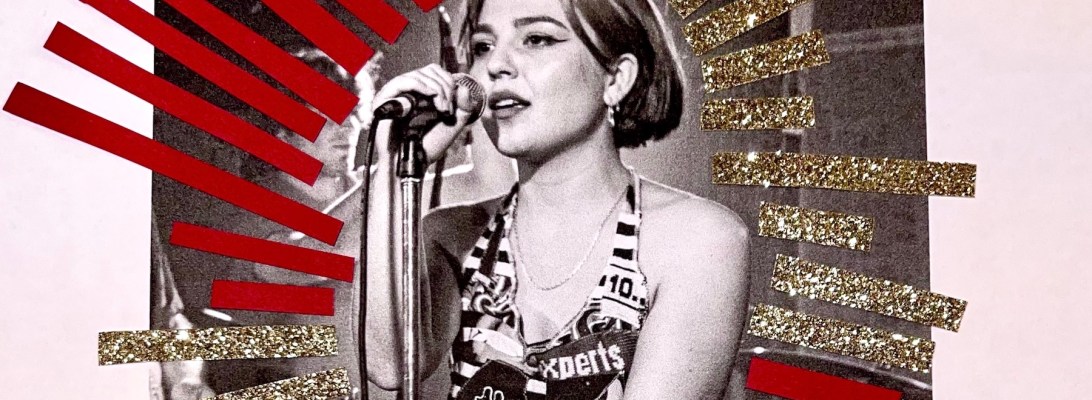
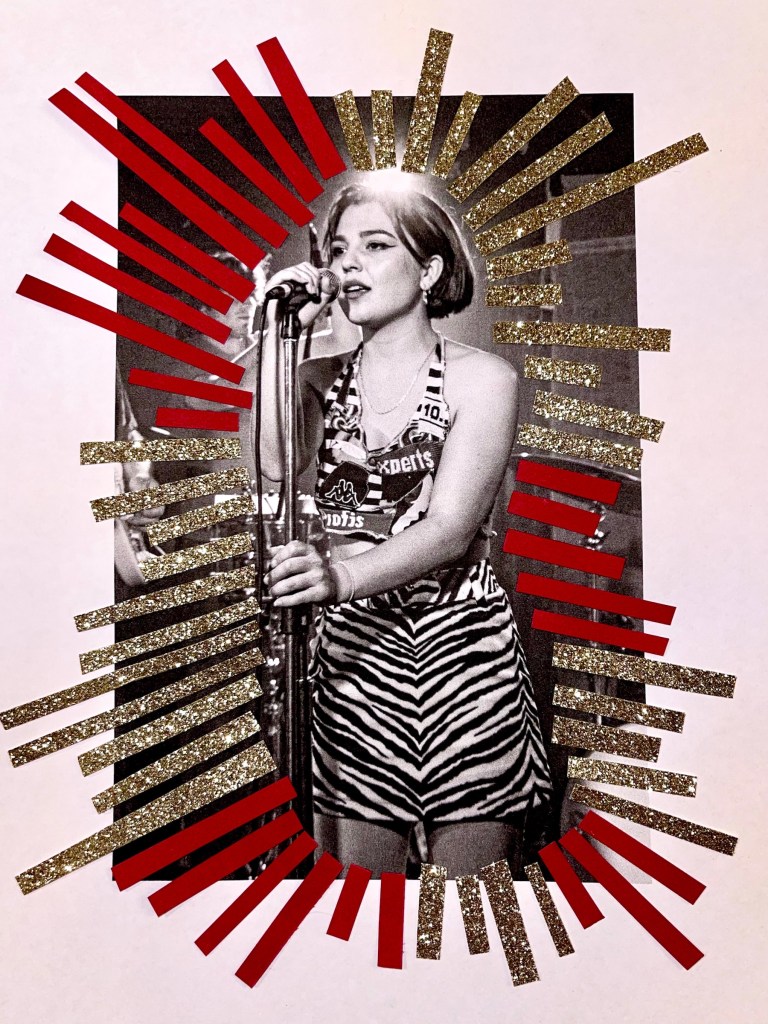
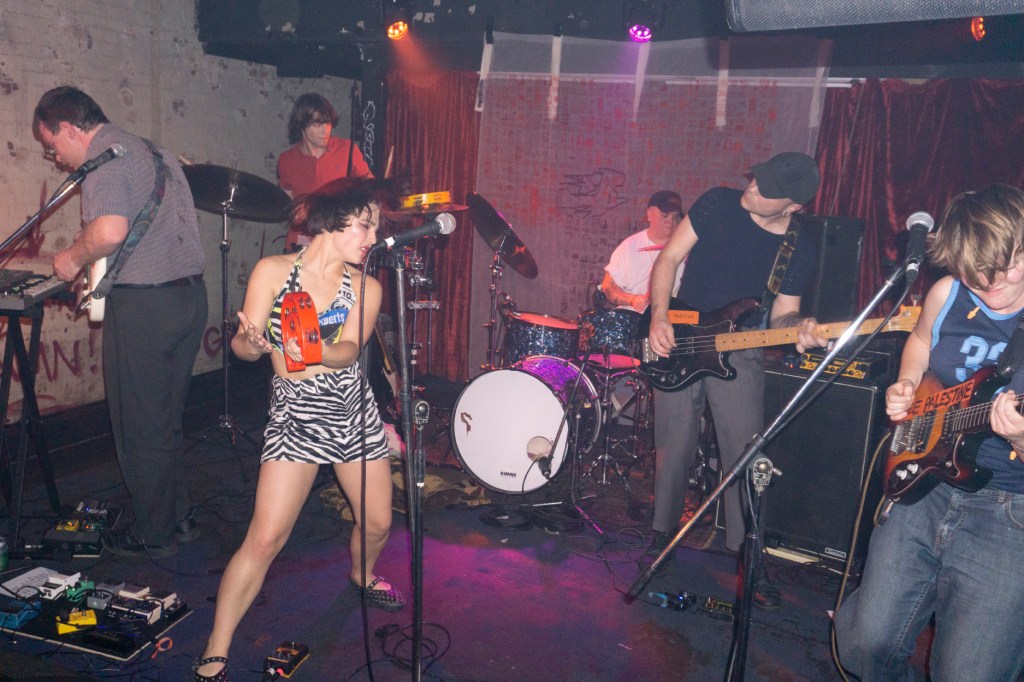
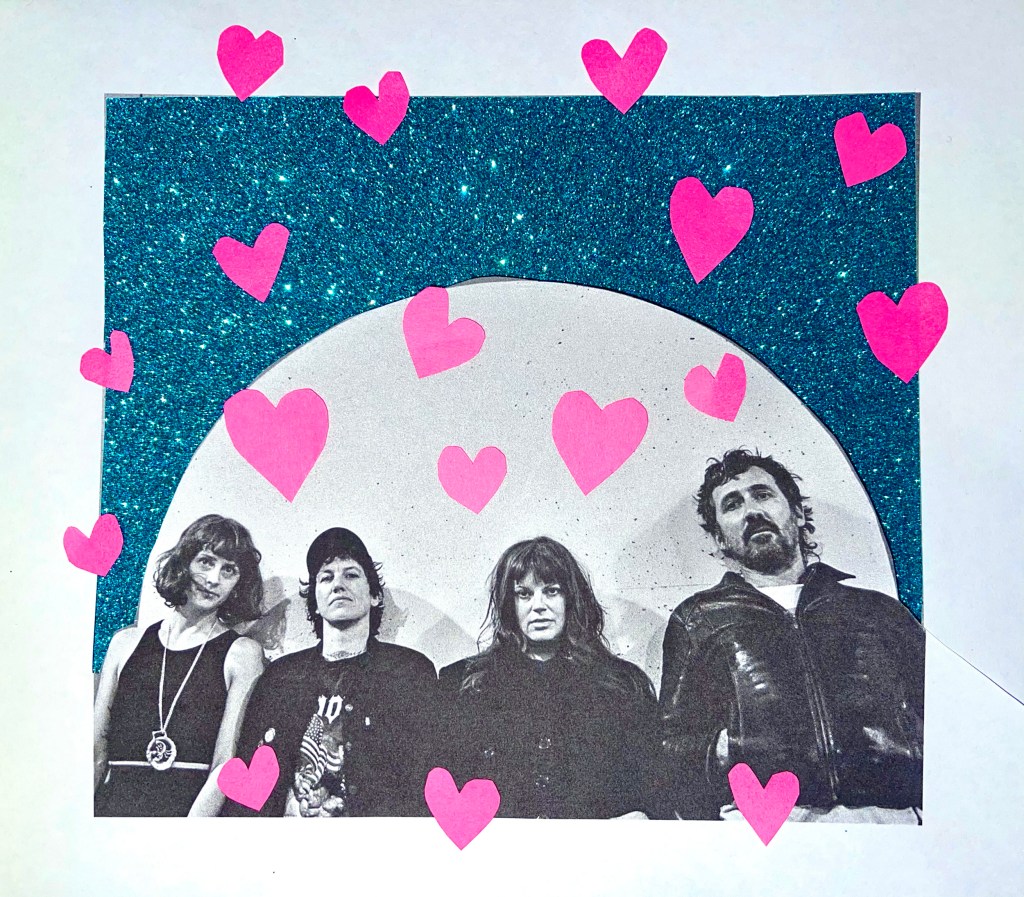
Catching her breath. 2024 has been a big year for Athina Uh Oh and Naarm-based dance-punks, Gut Health. Between tours, a release, making videos and winning awards—it’s been hectic. It’s early November when Gimmie catches up with the singer to talk about their debut banger of an album Stiletto. The record pulls from Athina’s diverse passions—punk history, the psychology of sadomasochism, kink and queer history, and a sharp critique of capitalism and contemporary so-called Australia and its politics. Gut Health are a band full of surprises that straddle a line between rage and fun. We also discuss the band’s recent European tour and the relaunch of Highly Contagious, a creative project she’s been collaborating on with partner and bassist Adam Markmann. The project now spans a record label, events, and sometimes underground music zine, all tied to outsider music. In this conversation, Athina opens up about anxiety, self-talk, compassion, and the ongoing journey of building confidence. We also dive into her background and gain a look into the band’s creative mind.
ATHINA UH OH: How’s your morning been?
GIMMIE: Good! We just got back from the coffee shop. It’s nice to see our local barista most mornings. Actually, it’s nice to see all the small business owners and people we encounter every day in our neighbourhood. We’ve gotten to know them over the time we’ve lived here.
AUO: That’s great! I love that feeling when you can go do that, and you can have that “hello” in the morning.
Totally. I get that from my mum—she always knew everyone in our neighbourhood. She’d talk to everyone and always took a genuine interest in them. Connecting with people and the community was always important to her.
AUO: Definitely. I feel grateful to have a great community around me, but sometimes in this city, it can feel like, okay, don’t look at each other as you walk past on the street. Then, when I go somewhere warmer, like a regional town, everyone’s like, ‘Hey, how you going?’ And I’m like, ‘Oh, this is nice. I feel like a human.’
Coming back from overseas this year on tour, that was one of the main things I noticed. Being back in the norm felt strange. Even though it’s a big city, things are quite spread out compared to a lot of European cities. As you’re walking down the street, you might not see someone for a while, and then when you do, you don’t make eye contact. I remember finding that quite confronting when I got back.
Yeah, I noticed when we go down to Naarm (Melbourne), every suburb feels so self-contained. Each one has everything it needs, and you can stay in your little bubble without needing to venture anywhere else.
AUO: Absolutely. One thing that’s great here—but also a bit limiting—is that you can forget to explore the other side of town. We have venues here, which is nice. Someone from Eora (Sydney) described it to me recently as being more event-based rather than venue-based. Here, you can go to a venue and think, ‘I feel like seeing a gig tonight or hanging out with certain people,’ and know you’ll probably bump into someone you relate to or stumble across a gig.
Luckily, we still have a few of those kinds of venues around, where the community comes together, where people actually look each other in the eye and wave.
Speaking of baristas, Al from Wet Kiss and Tongue Dissolver used to be my barista when he lived here! I love bands like those, and also Gut Health, that combine all these different elements to create something interesting and unique musically. Meanjin (Brisbane) and Yugambeh Country (Gold Coast) seem to foster a lot of different kinds of bands, like Guppy. The crowds here are pretty open to something different, which is awesome.
AUO: Totally. Every time we’ve played there, the crowds have been so welcoming. People aren’t crossing their arms and staring blankly—they’re getting involved and not afraid to jump around. It feels like they genuinely appreciate live music happening there, which is really nice.Yeah, and there’s such a good scene there. So much music from Meanjin that I love!
Wet Kiss and Tongue Dissolver are killing it. They traverse so many genres and play all these different events. Every time I’ve seen them live, it’s completely electric. We were lucky enough that Tongue Dissolver played at our EP launch last year. The whole crowd was bouncing up and down—so freaking good.
We feel the same way about Gut Health! It’s been so cool to watch you continue to evolve and grow and get even better.
AUO: I respond to the world around me and what that brings, especially in a contemporary context. Everyone in the band comes from different musical backgrounds; there wasn’t one set genre we all came from. When Adam and I started the band in the midst of lockdown, around the same time he was doing Highly Contagious, it was during the early stages of our relationship, like a honeymoon phase.
We realised there were all these intersections of our tastes. A lot of that came from the late 70s and early 80s Rough Trade period, as well as no wave. We can’t personally relate to the movements of that time—they were dealing with completely different circumstances—but the way genres and styles collided, like dub and punk in London or downtown and uptown New York, really resonated with us. That mesh of styles became a big part of how our band’s sound naturally developed. Adam, Dom, Myka, and I all drew inspiration from that era when we started demoing.
The band began in early to mid-2021, and it really helped me with inner confidence and personal struggles. Some of my close friends who’ve known me since I was a teenager say, ‘Athina, I’m so proud of you. You’ve grown so much.’ I used to struggle with speaking up for myself and was constantly apologising, even when it wasn’t necessary.
I was trying to be the “nice guy” to my detriment, believing kindness should always overrule everything. But I’ve learned you need other outlets too. You can’t always stay positive because that’s not realistic—the world is a messed-up place. Having a safe space to let go of rage and inner emotions has been incredibly cathartic.
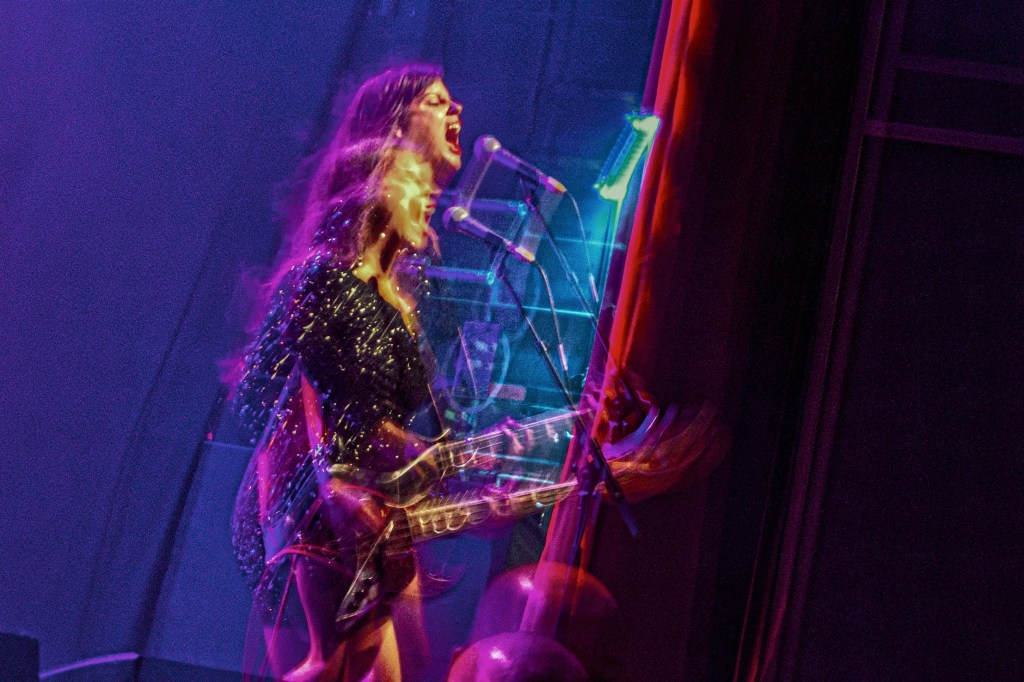
For me, it’s helped me feel more level-headed, even though I still get anxiety. Performing gives me a way to release emotions in a healthy way. On stage, I can express anger, be mad at the world, and embrace the energy from the crowd. It’s this incredible, cathartic experience where I lose a sense of myself.
Before I go on stage, I get nervous, but once I’m up there, nothing compares to that feeling. It’s helped me realise I don’t have to apologise for everything. Mistakes happen, and imposter syndrome can creep in, but self-talk has been key. I remind myself it’s okay to mess up, that I’m growing, and that most people won’t even remember the little things I worry about.
These processes have helped me a lot in recent years, giving me confidence and helping me let go of things in a healthier way.
Yeah, I agree. I think sometimes we worry so much that people will care about something we’re doing or how we look or whatever, but most of the time we’re just psyching ourselves out, and people don’t actually care because they’re wrapped up in themselves.
We are very similar people—sensitive, empathetic, and compassionate about the world. I can tell you think a lot! I saw on Insta something your mum said about how, even as a kid, you didn’t want to eat meat. And with her being Greek—a mum putting lamb on the table—that was different for her. You were like, ‘I just don’t want to eat the animals.’
AUO:Yeah, when I was younger, I found out that pigs are kind of similar to humans or something like that, and I thought they were really cute. So I never ate pork because of that.
You’re so right. I’ve always said that any sort of art I create or collaborate on is a compassion project. It’s half a passion project and half coming from compassion, using that as an intention behind everything. It reminds me of who I am as a human and why I want to create.
You grew up in St Kilda?
AUO: Yeah, my parents lived in St Kilda separately before they got together. Since they were both 18, during all the Espy days. We lived in the Balaclava area while I was growing up. There were still remnants of all that, but it wasn’t quite like ’80s St Kilda. I still love it around there—being there and seeing all the remnants of Art Deco. You can still spot the old rock dogs too. I have friends who staunchly stay in St Kilda because they’ve just never left. They’re like, ‘Nah, St Kilda’s it.’ So yeah, I have a soft spot for that area as well.
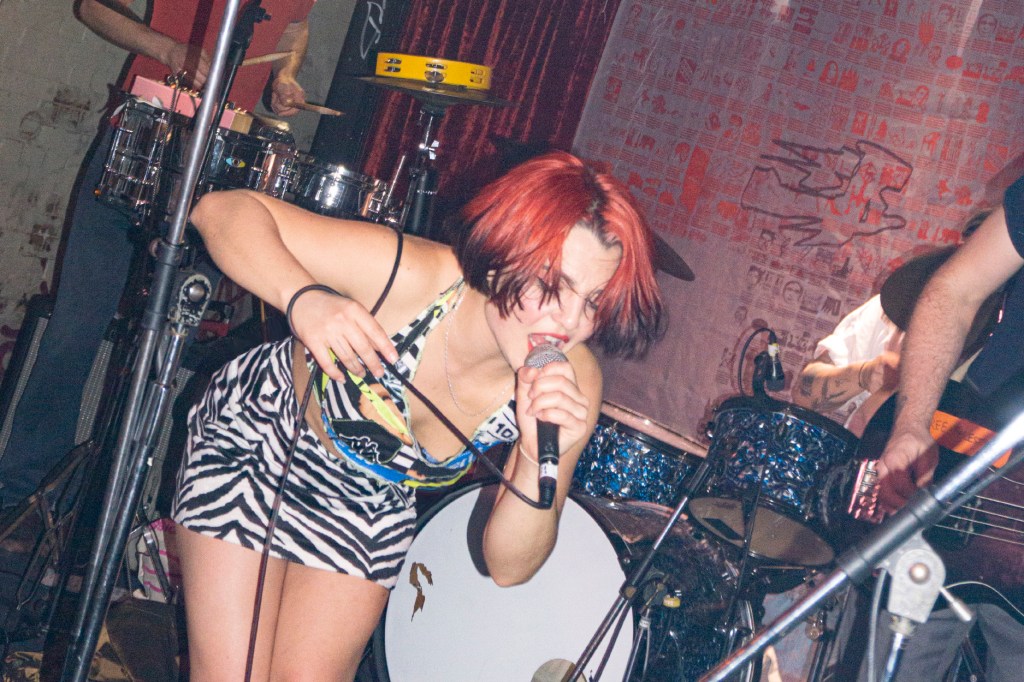
Last time we interviewed you, I asked why music was important to you, and you said it came back to your upbringing and how that really influenced it. In what ways?
AUO: I guess from both sides of my family. My grandpa was obsessed with jazz music, a big collector. He was an accountant but collected trumpets throughout his whole life. Apparently, he’d come home from work, spend hours playing the trumpet in the back of my dad’s house, and just lose himself in it. My grandma, I think, did conducting in church—not because they were religious, but because they liked the community feel of it. They gave Dad the option of whether he wanted to get christened. He ended up reading the Bible for education, decided he couldn’t accept it, but still enjoyed going to the choirs.
That love of music was always there. Dad collected soul, blues, rock and roll—all kinds of music. On Mum’s side, they listened to a lot of Greek music, like rumbetico. They were big lovers of art, creativity, and quite leftist in their views. So, I grew up listening to all kinds of stuff—soul, blues, rock and roll.
From a very young age—apparently Dad put on a record… I was three years old, and I grew a love for this group called The Stylistics. He would play it, and when I was in prep, I was like, ‘This is important education.’ I took the CD to my class and made everyone lie down and listen to the song during nap time. I was just lying there crying, like, ‘This is so beautiful.’
And who else? They’d put on a song by The Collins Kids. I don’t know if you’ve heard of them—it was early rockabilly. I remember jumping over the walls, just from one side of the living room to the other. I’ve always just loved music.
During high school, I grew more of a love for punk and rock and roll, kind of traversing all those genres. Music has always been part of my family. I grew up going to gigs, it became like a second home. In high school I got quite into dance music, sneaking out to events. That’s where the more dance-y elements of our music come from. As much as I want to let out rage, I also want people to dance around and let loose too.
I know Betty Davis’ debut album had a big impact on you; what drew you to her?
AUO: It’s kind of embarrassing [laughs]—it was on one of those, like, ‘Oh, I’ve just gone through my first heartbreak, and this is my fuck-you playlist.’ Betty had that song that went, like, ‘No, I don’t want to love you,’ and I just thought that was so badass when I discovered it. I was like, ‘What? A woman can just be this out there?’ I was in my Senior Year when I discovered it. I found it so healing and thought, how badass and unapologetic she was!
That really threw me in—her voice was incredible. Ever since then, I go back to her when I want to feel a bit badass or remind myself of that as I’m walking down the street.
I’m loving looking at that record collection behind you!
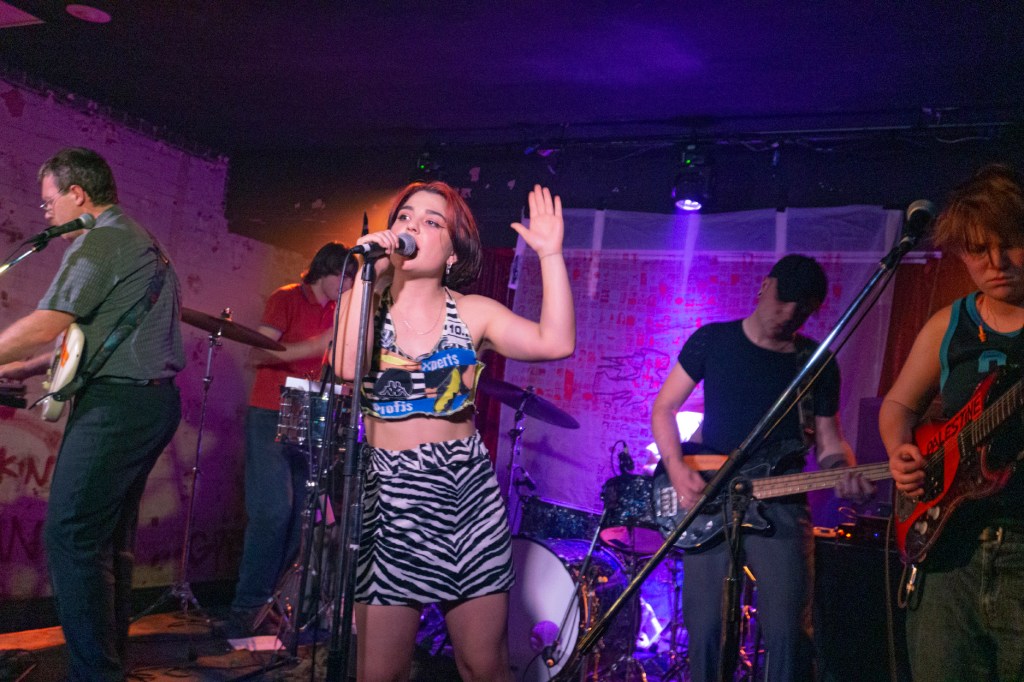
We love records. Jhonny & I have been both collecting since we were teens. Unfortunately now, we’re priced out of buying new records. Vinyl prices are the most expensive they’ve ever been—$80-100 for a record is something we can’t afford.
AUO: It’s wild. I was working at a record store this year, and it has changed a bit in terms of people buying records and just the cost of living in general.
I’ve never gone the full deep dive because, coming from more of a film and photography background, I’ve already got these other expensive hobbies I’m spending money on. I know my bank account would be completely wiped if I got too into records. But it’s so tempting, especially when I was working at the record store. There were so many at Rowdy’s that I was like, ‘Oh my god, I want this.’
Speaking of records, yours, Stiletto is one of our favourite albums of the 2024. We’ve been waiting for the full-length because we love you guys. Seeing you first play at The Retreat a couple of years back, was really special.
AUO: That’s so nice to hear. It means so much that you guys were there early on. That was still us finding our feet and building confidence, but for people coming in off the street to watch, it might have seemed fully formed back then.
Every single member felt integral to what was happening. You had this visible connection, like a friendship—you could tell you’re all friends who just share a love of music.
AUO: I feel extremely grateful for the band I play with. I talk about building confidence, but it’s really about having people you trust around you. It’s about feeling like you’re not afraid to throw ideas out or be at a certain level of understanding with chords or arrangements.
We communicate really well, and if there’s ever a minor conflict, it’s easy to talk through because everyone is kind and understanding. That carries through on stage too. There’s this connection running through everything.
The funny thing is, we weren’t all close friends before starting the band, but we’ve built this family through the project, which is special in itself. Thank you so much for supporting us early on!
This has been my first main musical project that I’ve really thrown myself into. I’d tried a couple of other projects before, but this one felt different. From the start, our goal was this idea that playing a gig is like doing a thousand rehearsals.
Coming out of lockdown, I wanted to prove to myself that we could play gigs relentlessly, learn as much as we could, forge friendships, and find support along the way.
I’m really grateful everyone in the band was keen to do that because, a couple of years later, I feel like we’ve learned so much. It’s led to some really fun opportunities.
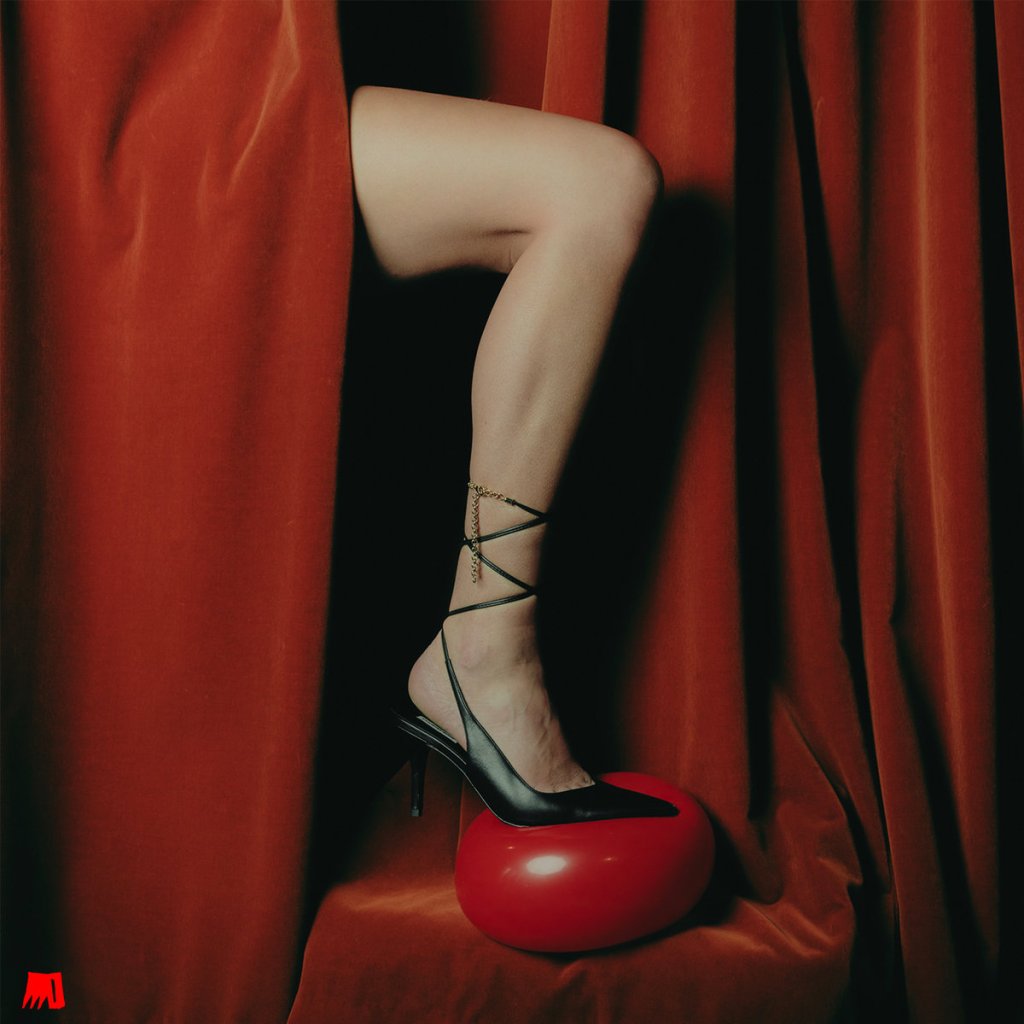
The Stiletto album cover is striking; what was the thought behind it?
AUO: To start off with, a lot of the visual elements and lyrics I draw on come from my passions, which include punk history, sadomasochism (the psychology of it)h, kink history, and queer history. A lot of contrasting ideas, like the performative and real states of being, soft and hard, dominant and submissive, are themes I explore. I tend to think very visually, and that comes through in my lyrics as well.
The front cover draws on a lot of those elements and themes. The contrast between the performative and real, and the image of the stiletto itself, represents those contrasts. The idea of feminine and masculine also plays into that.
What does stiletto mean to me? It ties into the soft and hard thing, where it can be this dominant image. The strength of high femme comes into it as well. When I dress up high femme, it’s about enjoying the performative elements.
The idea of stepping into something soft often comes up in my head, and it represents contemporary consumerism in a done-up, performative way. I don’t generally explain what my lyrics mean, but a lot of it touches on contemporary political issues.
Subverting, which is common in punk covers, the image of a stiletto plays into that idea. Even though the photo is high-definition, I was drawing on that concept a little.
It critiques capitalism. The song ‘Stiletto’ itself is a reflection or criticism of contemporary Australia and the funny elements of it, like this fake colony.
As a First Nations person, it makes a lot of sense. I get it. Was there anything in particular, though, that sparked the song? Like, it might not be specifically about it, but something that was there that sparked the idea?
AUO: It’s interesting because that was a stream of consciousness poem I had. A set of words I had written in notes on my iPhone in my early 20s. I had it sitting there, then in our rehearsal, quite naturally, everyone started jamming. I did that over it, and we built the dynamic of the song. It’s always been sort of like half improvisation, all that song. We’ve been really enjoying writing music like that recently.
All of us listen to this podcast. Do you listen to No Dogs in Space? It’s one of my favourites. We listened to four episodes of Can recently and found it so inspiring.
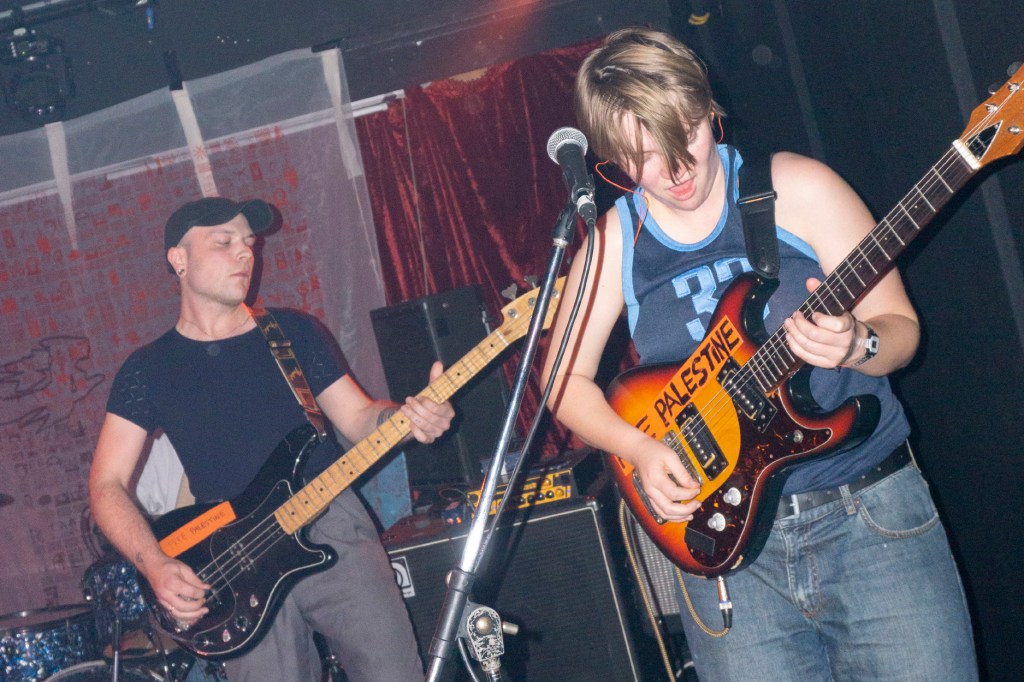
I love that podcast. I actually interviewed Damo Suzuki a few years back.
AUO: Wow. Well, the composition idea—where they’d jam for hours and then cut up the song to make it—was how Stiletto was made. I really want to keep experimenting with that process because that song, in particular, is where I feel the most cathartic. It was really feeling-driven when we were writing it.
I originally wrote those lyrics reflecting on contemporary so-called Australia, from a sympathetic level. All these funny things about it and how messed up it must be for First Nations peoples. We’re just here, drinking a frothy can, building concrete areas, mixed with the beauty of the sunset and all these plastic houses.
I love that there’s so much in your songs, so many layers to dig down into.
AUO: I really want people to make their own interpretation. The interpretation of what the song is can be so layered for me as well. I might have just written a stream of consciousness, based on images that, upon reflection, mean something to me.
Often, people I interview don’t know what it’s about until they’ve listened back to the song later on. Then they can see it and say, ‘Okay, this was happening. I can tie this to my day or my year,’ or to what they were feeling.
AUO: We all agree as a band that part of it is being able to feel this outlet of consensual rage, as an audience member. We want people to create meaning for themselves because that allows them to feel what they want to feel—at the gig, or listening back to the song. I don’t want to overexplain things and shift the meaning for myself in that process. Sometimes, the meaning may shift depending on how I feel when performing the song.
That’s the beauty of art. As humans, we bring our own lens and experience to whatever we’re listening to or viewing. That’s why some things resonate and others don’t.
AUO: Definitely.
Listening to your album certain words came to mind: rebellion, community, nonconformity. As well as, the critiquing of things like hidden forces, manipulations within society or personal relationships that force and shape our life without even our awareness sometimes.
AUO: Yeah.
I also got the sentiment of a search for something real beyond artifice.
AUO: Yeah, definitely. That is another big thing about creating art, for myself at least—feeling that state of flow, being with the people you’re performing to or being with your band and feeling in the moment. I feel like that is so real, and nothing can really beat that feeling. But also being like, hey, yeah, let’s be real with each other for a moment. Despite all this shit going on—walls, ideas, or things like that—let’s talk to each other. You know what I mean?
Yeah. Another thing that I got from your album was themes of exploring individual identity.
AUO: Living your truth in whatever way you want. If it is unconventional, it doesn’t even matter, despite society’s judgments.
I’ve always been an introvert-extrovert. I enjoy a sense of privacy but also want to be the most authentic version of myself to others. So, it’s a good platform to explore that as well. Even seeing the band members come into themselves more—being more confident, performing on stage—has been really beautiful to watch. You know, Adam used to not be able to look anyone in the eyes or at the camera when we first started, but now he’s so in his element when he’s performing. That’s really beautiful to watch.
I was literally having a conversation with Adam about this recently. It was like, you’ve got this over here and this over here. Don’t be afraid to be your authentic self. There are certain things that I will slowly reveal more of as I go.
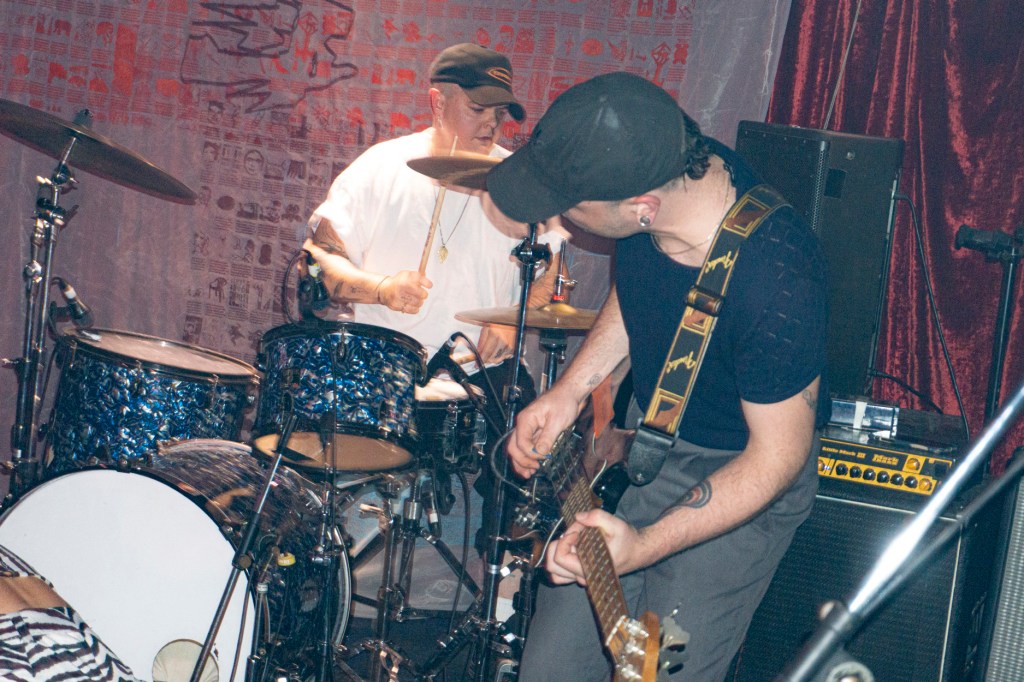
I know it must have been a different or a bit hard growing up because your dad is a well-known musician. I grew up with my dad being a celebrated race car driver in the 60s, and sometimes we’d walk down the street and people would be like, ‘Hey!’
AUO: Yeah, I’ve generally said in interviews I didn’t want to talk about it. At the start, with the relentless gigging, I really wanted to prove to myself that it was on my own merit. People are going to think whatever they think. They might not know that, in those first two years, I wasn’t telling anyone who my dad was. My bandmates didn’t know until my mum came to a gig because I just wanted to prove to myself that I could do it. My dad has been so supportive.
I saw on his Instagram, he often mentions how proud he is of you.
AUO: Both my mum and dad are so proud of me and so stoked for me. It’s nice to see family support chasing your dream. I’m so grateful for that. They’re so good to my friends as well. Dad totally understood where I was coming from at the start, not wanting to share that. He’s been through all of that head-fuck stuff, and people can think certain things, but whatever.
They’re so supportive, and it’s nice to have parents who are like, ‘Oh, you’re doing art that makes no money. I’m so proud’ [laughs]. It’s cool. They’ll find interviews I haven’t even read yet, like, ‘Oh my god.’ It’s really beautiful, and they’re both big music lovers.
The reason Dad got into music was obviously his grandparents, but he was enlisted to go to the Vietnam War. A couple of weeks before he was meant to go, he broke his leg after getting hit by a car. The only people who visited him in the hospital were new friends he’d made, and they bought him a harmonica. That’s how he got into music. He’s got so many stories like that. He’s confident but not a boaster, though he is about certain things [laughs].
He’s an introvert,-extrovert, like you?
AUO: Exactly. My parents are hype men, basically.
That’s so awesome! Is there anything that you find hard about making art?
AUO: For sure. Coming into yourself and the creative process, sometimes just allowing that to happen, remembering there are no set rules to it. I generally have a little perfectionist brain, so sometimes I find it hard to start something because I’m nervous the outcome won’t be good. A lot of this process has been about reprogramming in that way.
You gotta remember that you can always start something and then if it doesn’t go how you want, just stop and do something else.
AUO:Exactly. The best way I had that described to me, which literally changed how I think about things, was thinking of a scale between zero and 100. Zero being zero catastrophe, and 100 being something completely unchangeable, like you die or the world ends. Then you look at what you’re anxious about and ask, ‘What is it on that scale?’ Usually it’s before 50, and visualising how little of a catastrophe it is really helps.
I’ve just started doing a synth course and piano lessons. Jonnine [Nokes] from screensaver is the teacher for the synth course. It’s awesome. I’ve only done the first class, but everyone came in with such different backgrounds and experiences. I wanted to change the idea of ‘I should just have a go and get started on it.’ Same with the piano. A friend of a friend is teaching me, and every time I get something right, they’re so excited. It’s nice having that encouragement.
That feeling of encouragement is how it feels in the band too. Everyone’s excited, and that collaboration energy is great. Changing up the creative process has been nice. For Adam’s birthday, each band member put in cash to buy something related to the band; we do that for each person’s birthday. This year, we got Adam a writing trip with us out in a house. It was so nice. We stayed in a rainforest, smoked all day, put a Zoom recorder on, and for 10 hours a day, we jammed. We hardly even spoke to each other because we’re so used to each other now.
Out of all the things you’ve done in 2024; what’s something that’s meant the most to you?
AUO: There are a couple of highlight gigs. One was, Panama festival. We played at 12 AM and everyone was coming up, they were on and it had this real club feeling to it. It was just like so fun.It was my ideal gig. And same when we were played a couple of DIY venues in Leipzig and Berlin. Meeting community there was really special. Touring Europe was a dream goal, something I didn’t think I’d have the money or resources to take that off the bucket list.
It’s been really exciting doing Highly Contagious stuff with Adam again. It’s been really fun doing a couple of those events. We did one earlier this year and then shifted it into this album, label, and events space. Getting to brainstorm with Adam again and mesh all of these genres related to outsider music has been super fun. I feel like there’s such an innate drive for me to find new music and explore certain artists. Thinking about curation has been super fun too.
Starting the label properly with this LP has been exciting. We got label services help, but it’s our label, and we also want to release our own stuff independently—sending everything out ourselves, doing all the back end. We’ve been talking with a friend to release their LP in 2025.
Generally, getting to do this music stuff is a lot when you’re trying to pay rent in between everything, but I wouldn’t change getting to do this for four days a week or whatever. Focusing on it has been a really special change this year.
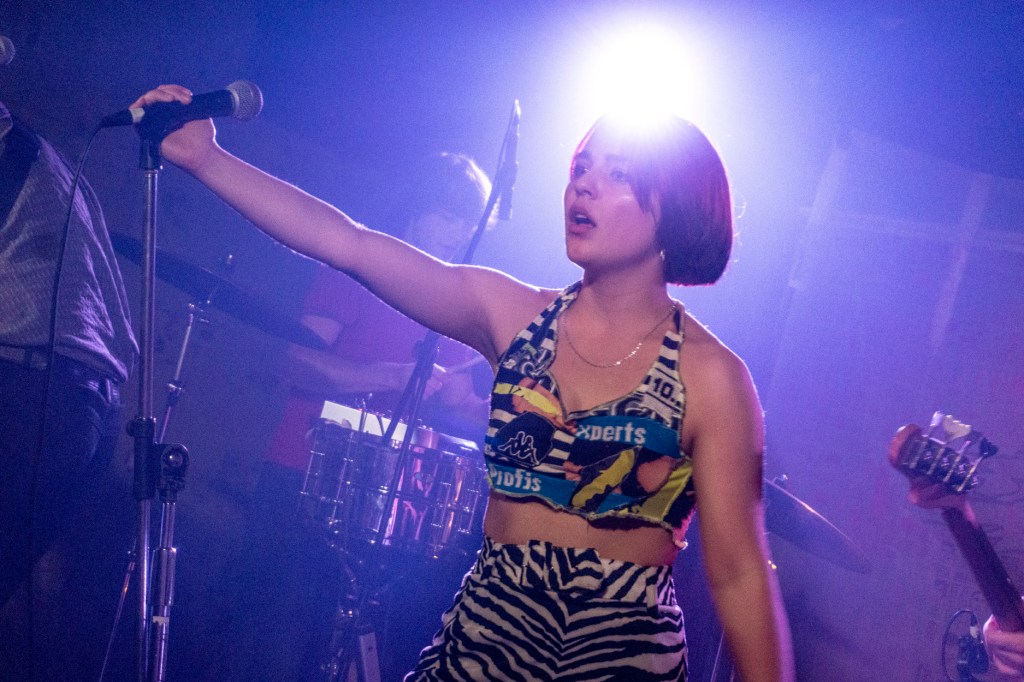
It all sounds so exciting. On a side note, I’ve been dying to hear about when you and Adam went to Egypt!
AUO: It’s the kind of place where you want to spend more time there to understand it, to be respectful because there are so many layers. It’s beautiful. So many different empires and countries have tried to have a piece of it and, unfortunately, left it in not the best state. In terms of history, it was incredible. It was so wild to be in Alexandria, standing above an old city, and we stood where the Library of Alexandria was.
My Greek family, some of them are from Alexandria. Mum’s cousin is from there, because there are a lot of Greeks and Copts there. We went into a catacomb where the ritual of smashing plates at weddings was invented. It was so wild to think about that. Alexandria in particular has the remnants of a mixture of all these different cultures. It was absolutely wild. The food and people we met along the way were amazing too.
Amazing! I’ll end by asking: What’s something you’re really looking forward to?
AUO: We’re supporting Primal Scream in January. It should be fun.
I love that you play with so many diverse acts.
AUO: Yeah, I don’t want to say it’s at our peril, but sometimes I think about it. It gets you thinking: ‘Do these people accept me?’ But then I realise that it’s special we can do that. We can be friends with people from all different scenes and be accepted to play gigs with them. That’s what music is about for me—it’s not about fitting into one particular scene. You learn a lot from different scenes. That’s really special for me.
Follow: @gut___health and check out guthealth.space. LISTEN/BUY here. WATCH our Gut Health live vid here.



 Gimmie Gimmie Gimmie Zine