Imagine having the opportunity to engage in profound conversations with the creators of punk and hardcore, spanning from its inception to the present day, diving into the most timeless and perplexing questions about life. These inquiries explore forging a path on your own terms, the art of creating something out of nothing, standing up for what you believe in, changing what you don’t like, the ethos of DIY, the power of community and purpose, and the highs and lows of life’s struggles and wins. Plus, the journey of transforming your life and the lives of those around you, while navigating this often tough world. There are moments of clarity, connection, insight, and profound beauty waiting to be discovered in the pages of Conversations with Punx, a book that formed in its own time over two decades.
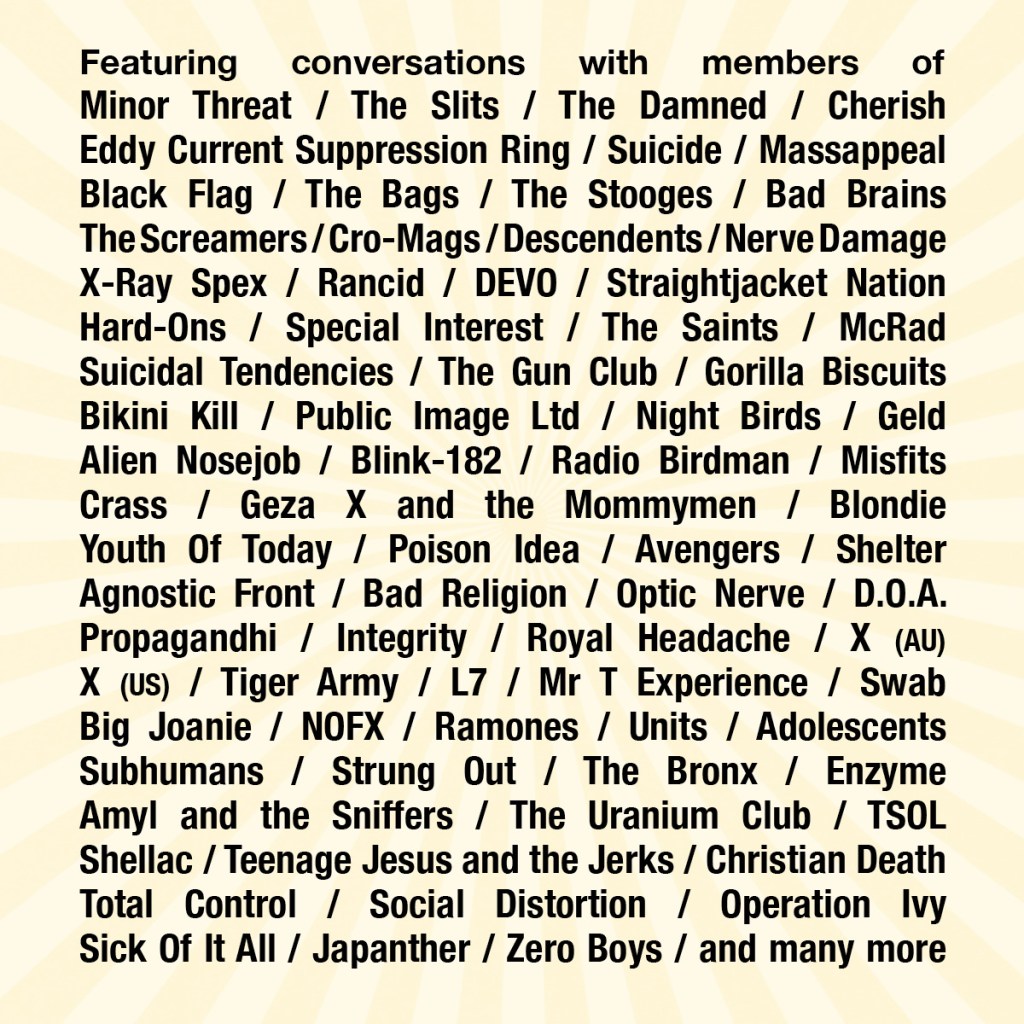
When I (Bianca, Gimmie’s co-creator) was 24 years old in 2004, I faced a confusing, difficult, and heartbreaking situation. Seeking answers and tools to process and cope with what was happening, I turned to interviewing, something I had been doing since I was 15 through making punk zines. I found answers through deeper conversations with individuals from bands that provided the soundtrack to my life: Black Flag, DEVO, Agnostic Front, Suicide, Bad Brains, Radio Birdman, Crass, Straitjacket Nation, X-Ray Spex, Gorilla Biscuits, Ramones, The Stooges, Zero Boys, The Bronx, Misfits, The Slits, The Bouncing Souls, Minor Threat, Suicidal Tendencies, At The Drive-In, Special Interest, Bad Religion, Sick Of It All, Adolescents, Operation Ivy, Eddy Current Suppression Ring, Poison Idea, Bikini Kill, Youth of Today, Hard-Ons, Avengers, Descendents, Big Joanie, Amyl and the Sniffers, and many more. From these 150+ conversations emerged surprising insights. Maybe the wisdom, resilience, and humanity at the heart of punk can spark something in your own life too and change how you see the world.
This isn’t just another book on punk and hardcore; it’s a book on life. It’s not a documentation of a certain place at a certain time, because punk is dynamic and ever-evolving. It’s not a thing of the past; it’s happening right now in cities and towns all over the world. What you know of punk is not its only story; what you know of life is not the only possibility. Punk is a big wide world with a lot to offer.
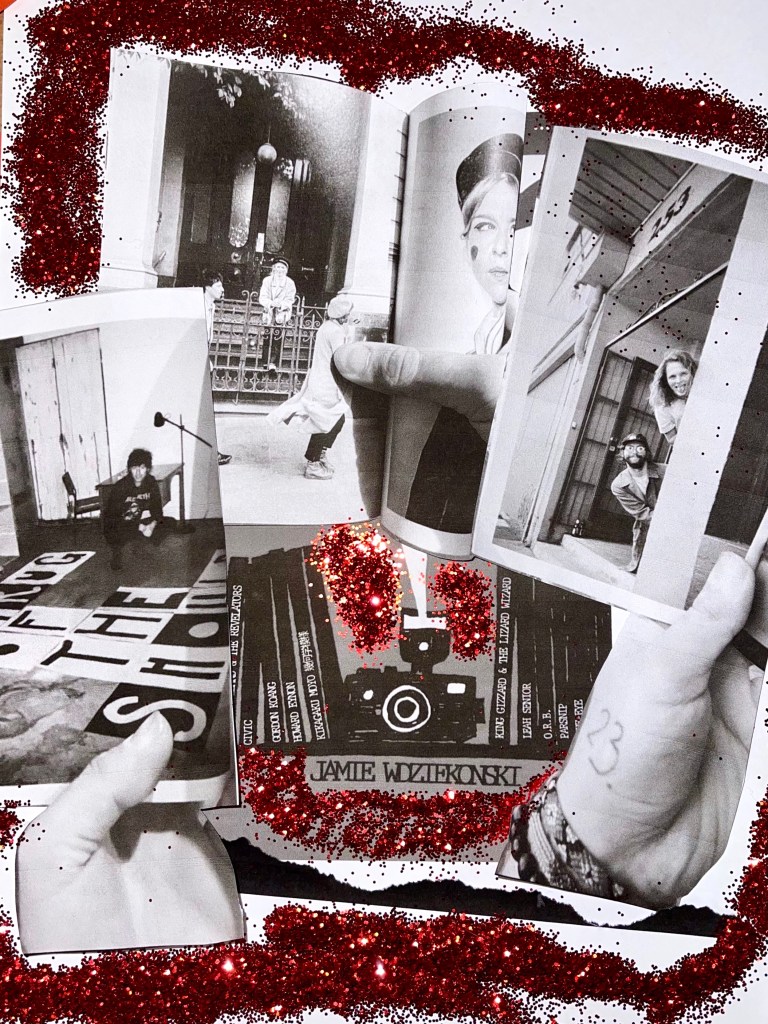
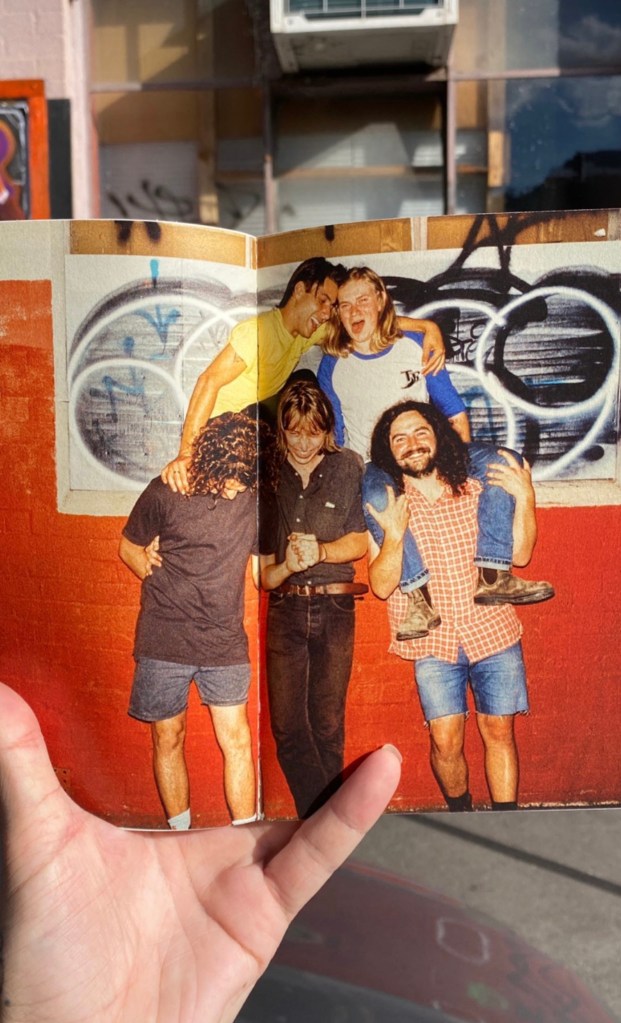
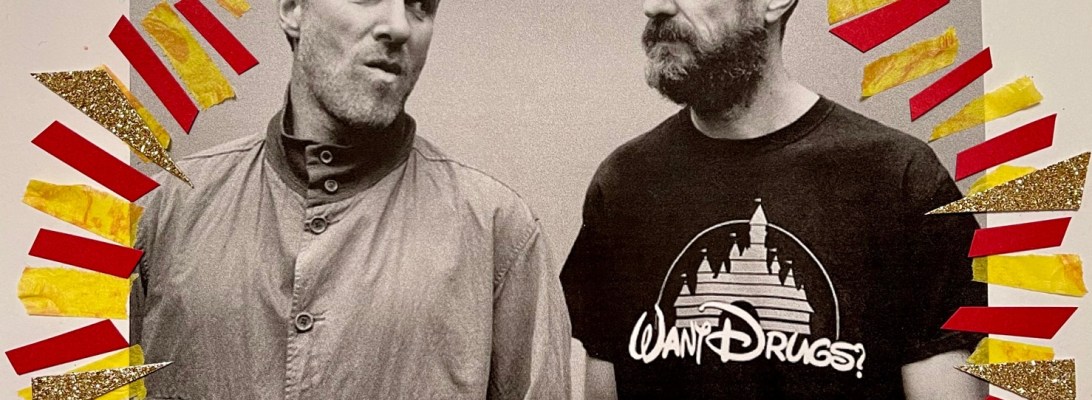
Original photos by Jamie Wdziekonski / Handmade mixed media collage by B.
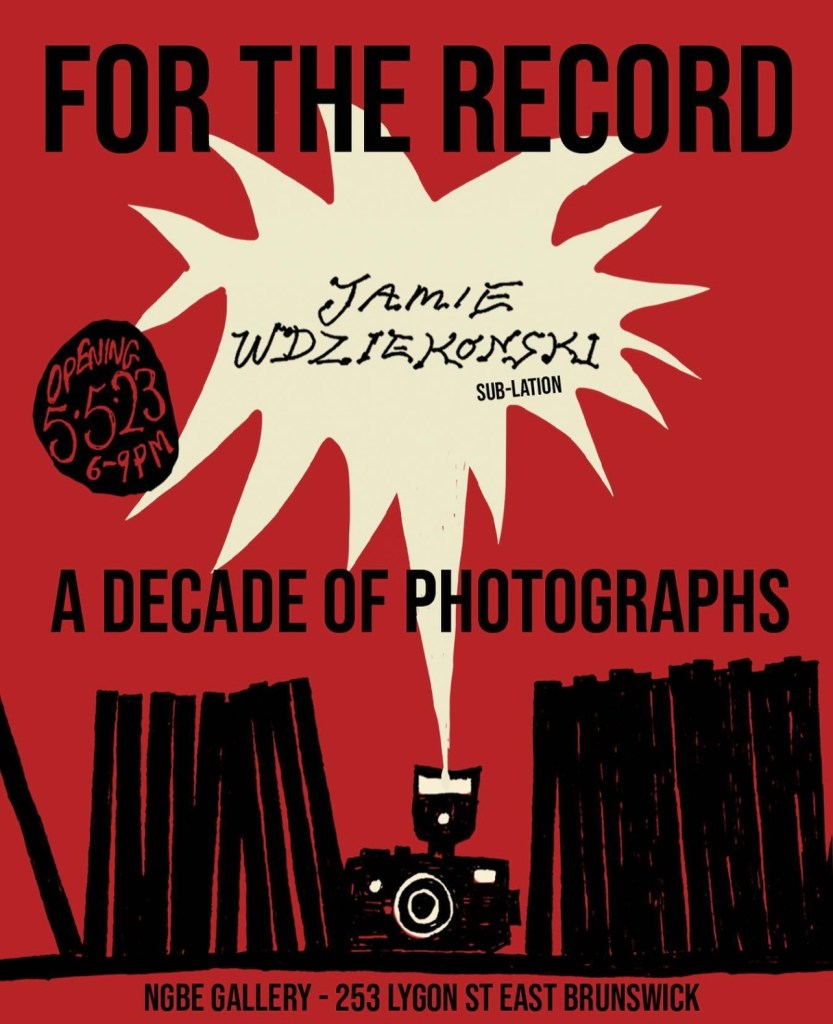
We’re excited to be celebrating one of our favourite creatives and humans – photographer and documentarian, Jamie Wdziekonski (Sub-lation) – as he looks towards his first solo exhibition opening this Friday night (May 5) at NGBE Gallery in Naarm/Melbourne.
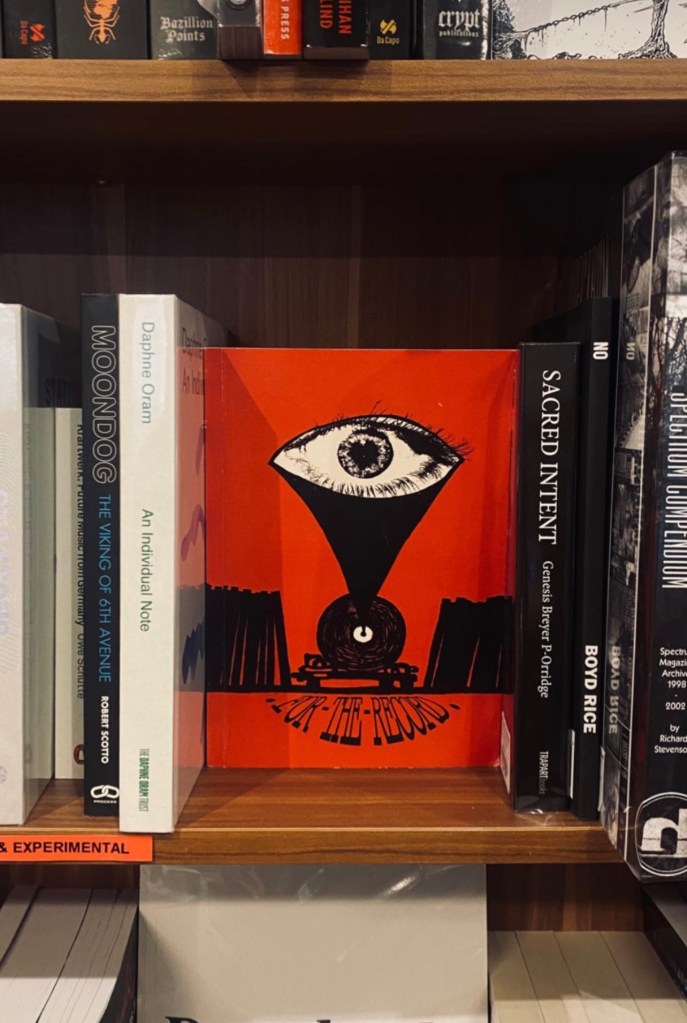
Jamie is also releasing a photo-book, For The Record: 2013 – 2023, which highlights Jamie’s photos that feature on albums from bands including, Amyl and the Sniffers, King Gizzard and the Lizard Wizard, Kikagaku Moyo, Parsnip, Tropical Fuck Storm, Traffik Island, Zelkova and many more. Pre-orders for the book quickly sold out online, so the only way you’ll be able to get one is heading along to the exhibition. Don’t miss out, you’ve been warned. We love you Jamie!
After doing what you do for over a decade, why is now the time to finally have your first solo photography exhibition along with accompanying book, For The Record: 2013-2023?
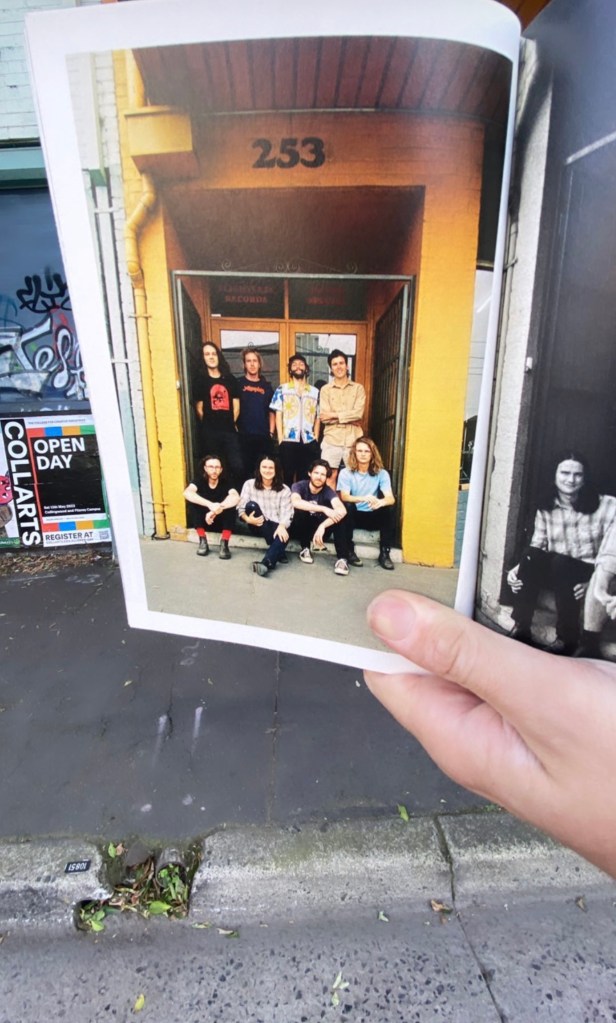
JAMIE WDZIEKONSKI: There was a rush to do it. I got told that the building (53 Lygon Street, East Brunswick) that I have a studio in was being sold; the whole block is going. We have a gallery downstairs that we can use for free (they don’t take commission) and I thought I may as well have a show.
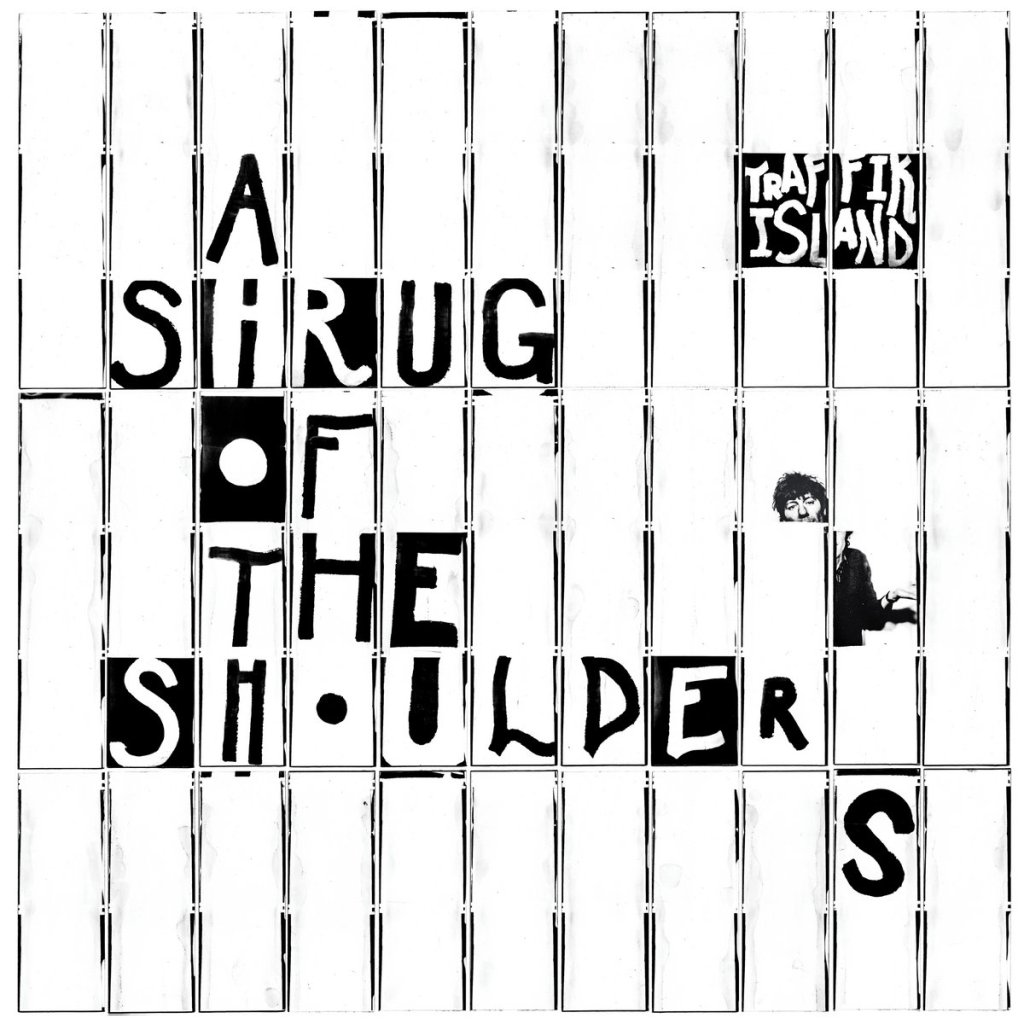
I’ve framed up these Traffik Island offcuts from tests we were doing for the Shrug Of The Shoulders album cover we did at a photo booth; they’ll be at the show. Things basically started with me framing them up. I was going to put those online to sell, but thought they’d look nice in a show.
I’ve always wanted to do a big Sub-lation ten years of photography book. I knew I couldn’t afford to make something that big, so I decided to make a condensed version. I was thinking back to the Traffik Island frames and because they were taken for a record cover, I got the idea to put images in a book that were used in album artwork.
I had thought that when I got back from the Kikagaku Moyo world tour in December, I would start planning it. It’s borderline killed me to get everything together so quickly [laughs], but I’m still here!
Yes, you’ve done it! Yay you!
JW: [Laughs].
Wasn’t Kikagaku Moyo the first album art your photos were featured on?
JW: The first one was The Murlocs’ Loopholes, which was a poster insert with the record, and there was also a lyric booklet with the CD version. There was an image in the gatefold and the front cover of the lyric booklet.
Nice! There’s 58 records featured in the exhibition and book?
JW: Yeah, that I know of [laughs]. I may have forgotten some! I was trying to keep it under 100 pages but then there were just so many releases so it’s now over 300 pages!
Wow! Do you remember how you felt the first time your photos were featured on a release?
JW: It felt really nice.
The Murlocs’ Loopholes came out in around 2014, right?
JW: Yeah, I think. Let me check the book index… [Picks up a proof of the book and flicks through it].
Is that the finished book? Exciting!
JW: Yeah. Each release has a title page and I’ve written what was happening back then and details of labels and when we took the photo.
Have you got notes you’ve written from over the years? Was it easy to get all the info together?
JW: I’m so bad! I call myself a documenter, but haven’t done that properly [laughs].
Same! It’s only recently I’ve started labelling all my interview files properly with date/time/notes etc.
JW: I pulled out my old iPhone and looked back at texts or Facebook messages. Finding a gig is easy, you can type in something like ‘Amyl and the Sniffers, America, 2021’ and you should find information. But, shoot dates for when it was just me and Amyl at Merri Creek; what was that?
The metadata on the files fucked me up because it shows the date something was edited, not taken.
The text bit of the book is what has killed me, the detail that went into the text was definitely an undertaking!
Congrats on all of the hard work! It looks amazing!
JW: Thank you! I’m happy with it. Ben Jones designed the book cover for me.
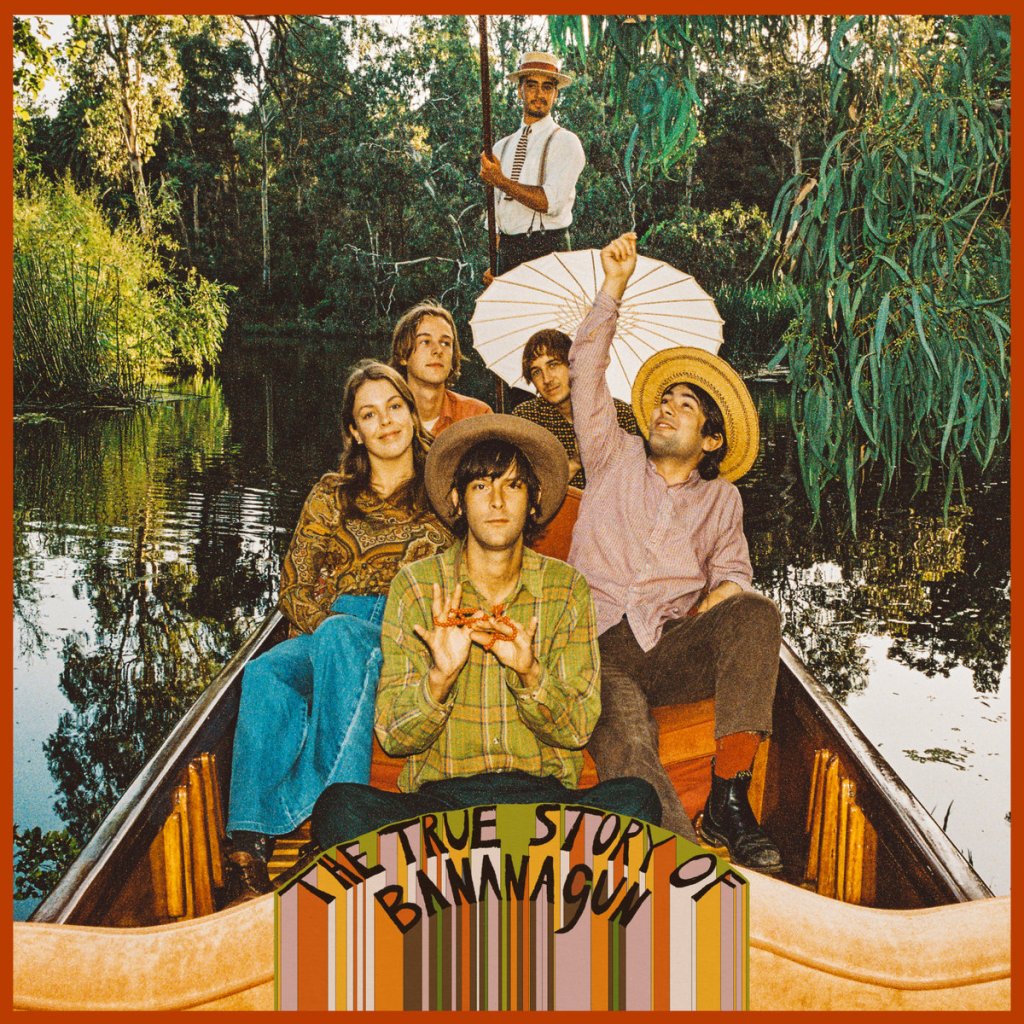
It’s very cool. Let’s talk about some of the images featured in For The Record. What can you tell us about the shoot for The True Story of Bananagun? That cover is so beautiful.
JW: Nick from Bananagun found the location, the Royal Botanic Gardens in Naarm/Melbourne.
We went out there one day with the intention of shooting without booking a boat and found out you have to book. The guy operating the boats said we could sit in the boat while it’s docked for a couple of photos that we used for press photos, but we had the intention we’d go back for a proper shoot.
We rang them up one day and said we wanted to book one of the gondolas and the guy there goes, “It’s not a gondola it’s a punta.” [Laughs]. You can hire them for an hour and they take you around the lake. The guy that was steering the gondola was picking all of the nice spots to show us. It was one of the easiest shoots because everything was so beautiful and you couldn’t really take a bad photo.
I especially love the photo on the back cover where it’s a bit of a longer distance shot of the band on the boat and there’s like reeds in the foreground.
JW: I took that photo when I first got there. We were going to meet at Fed Square but they all went ahead because I was late. They were already on the boat when I got there and I took that photo as I joined the group. All the colours came up so nice.
Totally! What are some other shoots that you have vivid memories of?
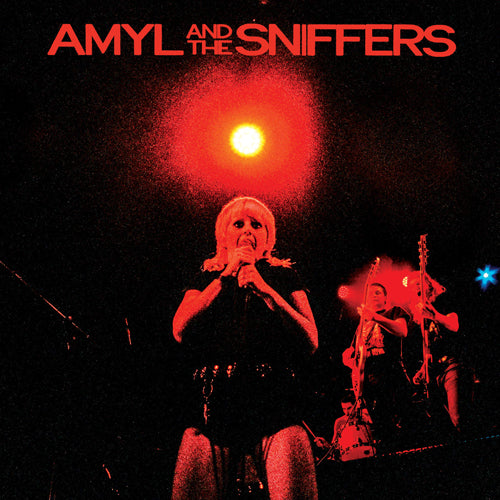
JW: The Amyl and the Sniffers’ Big Attraction & Giddy Up split EP has a photo of Amy in red. It was from my first night watching Amyl & the Sniffers. I had heard their name around and had checked out their ‘70s Street Munchies’ clip on YouTube and thought they looked really cool and that Amy looked really interesting.
They were opening for The Murlocs with Parsnip at Howler. I didn’t meet them until after they played. I didn’t know what to expect – at that point I had never seen a punk band. Amy came out on stage and she was darting back and forth across it, jumping off the foldback speakers. It was the most energetic thing that I had shot at that point. I had only been shooting psychedelic bands, even though everyone is moving they’re still kind of stationery in their spot, this was the first time I’d shot someone that wasn’t—Amy was upside down and everywhere!
I have fond memories of that night. I love Amy, Amy and I are close. I love the Sniffers too. I really connected with them, they were so genuine. It was the biggest show that they had played at that point. They were all wide-eyed and like, ‘You get chips backstage! That’s crazy!’
Amy is totally lovely! I spied the comment she left on your post about your exhibition and book. She said: “You change lives” – and that you’ve changed hers.
JW: That was so sweet. It’s a mutual feeling, they’re changed my life as much as she reckons I’ve changed hers. There’s a mutual uplifting to both of our creative outlets – I love their music and they love my photos and they gel well together.
I know that a lot of people’s introduction to many of the bands you shoot is via the compelling and genuine images you’ve captured.
JW: Amyl and the Sniffers are really fun to shoot!
Your images are really important in raising the visibility and profile of the artists you shoot.
JW: That was the idea and intention behind photographing music. I always wanted to just promote the music that I like and hope that other people will like it too. I never did it because I wanted my work to be in Rolling Stone or something [laughs].
I know that Traffik Island’s album A Shrug Of The Shoulders was a big one for you, as you did the entire layout as well as shooting the photos.
JW: From concept to doing the shoot to layout, even suggesting track listing, which was cool. I’m probably the most proud of that one and the Leah Senior cover for The Passing Scene. They were the albums whose art was my concept. For them to put that trust in me means so much, I really wanted to deliver something cool for them. I think both covers really suits the mood of the album.
Is there specific things you take into consideration when working on a cover project?
JW: Other than those two, most of the other times my photos were used for album covers were photos that I took not knowing they would be used as artwork for a cover; they were live or press shots that were used later.
Are you ever surprised at the photo/s that end up being used?
JW: Yeah. There’s some where I would have chosen different images, but that’s just down to personal taste.
In a way, this exhibition I’m having is curated by everyone – all of the bands that chose those images for their artwork.
That’s really cool to think of it in that way and it’s very much in the spirit of something really important to you—community. I remember you telling me about the studio space you work from in Lygon Street being a real creative community hub.
JW: I don’t love too much attention personally, I much prefer the attention to be on the bands.
Same! That’s how we are with Gimmie too—it’s all about the bands, not us.
JW: [Laughs] Yeah, you know what I mean! It’s weird people asking me for radio interviews and stuff; I feel out of place. It’s nice they care about what I’m doing though.
What you do is totally art, Jamie! You’re an artist in your own right… even though you’re uncomfortable with that…
JW: [Laughs] I feel like if I call myself an artist though I have to deliver.
I was working out that in the last decade your photos have been featured on around ten releases per year.
JW: Yeah.
In 2021, I think there were around 13 releases with your photos. That’s a lot! Very cool. On the opening night of your solo show there’s two bands/artists that you’ve shot photos for their releases that will be launched – Howard Eynon and Zelkova.
JW: I shot a single cover especially for Zelkova, which was cool. It went so well.
Yeah, you showed me the mock up that you’d made in preparation for the shoot and because it was outside I was crossing my fingers all day for you that it wouldn’t rain.
JW: It was a really fun day! There’s a lamp post beside the bridge and it lights it all up at night. They brought screwdrivers with them and unscrewed the little plate in the lamp and under it was the power supply, so we hooked up an extension lead and they played live, which was so cool. It was just me, the band, and the guitarist’s girlfriend that was helping out. I thought to myself, ‘Fuck, I wish more people were here to see this, it’s amazing!’ The sound was reverberating around the bridge. We shot it out in Riddells Creek a couple of weekends ago.
It was the quickest turnaround for me in terms of coming up with a concept, shooting it and designing the artwork for it to be in the book. We shot it on the weekend, I developed the film on Sunday, got it back Monday evening, and had to design the cover Monday evening to be able to put it into my book and submit to the printers in the morning. It was tough but we got there!
Howard is putting out a single, which is really cool. It’s his first official release since his 1974 album.
That’s amazing you were able to inspire him to do that!
JW: I called him and I was like, ‘Howard, I really want you in this show, so I think you’ll have to put out one of your songs in the next two months’ [laughs]. I told him, ‘It’s 2023 – 23 is your favourite number – it’s your year to do it!’ He told me he thought I was right and that he’d really love to.
So good! Howard is so lovely. Thank you for introducing us, it’s always inspiring chatting with him.
JW: Yeah, I’m really stoked that’s happening.
Is there any other albums we can find your work on that you’d like to share a little about?
JW: The Traffik Island one [A Shrug Of The Shoulders] was very involved. We were up at Howard’s place in Tumbi Umbi and it was the last time we’d be going there because Howard sold that property and moved down to Bruny Island. We were having a send off party, there was a stage outside and all the locals they go swimming with, their doctors, dentist and everyone came out for the house show.
Howard was throwing out a bunch of stuff like books, lamps and trinkets; there was a book, Photobooth: The Art of the Automatic Portrait. I ended up keeping it. I loved flicking through it.
Before we went up to Howard’s Zak [Olsen] had asked if I could take a photo for his new album cover. We couldn’t really come up with a concept though and we thought we might just take a photo out in nature. We thought to shoot Zak from a distance and that I’d shoot the trees. I don’t think we even got to try though.
I saw the photobooth book and thought of the idea of shooting the title of the album spelt out in the photobooth. Zak and I still shared a studio at that point so when we got back from Howard’s we knuckled down into planning it out. We went down to the photobooth to measure it out. I stuck up giant post-it notes against the wall of the booth and drew out lines with numbers and shot the test shot so I could see where the frame fits. Luckily the letters needed to be on an A2 size. I brought a bunch of A2 sheets and painted the letters in the studio for ages. We winged it, one night we went down to the booth and it took us three to four hours and put $200 – $300 in gold coins through the photobooth. A few people came up to us thinking we were tagging the photobooth. People were telling us that its heritage listed. Then I took the photobooth strips home and had to scan them into the computer before I could start making the cover. It was really fun! I was so stoked I could do it for Zak because I love his music. He’s probably one of my favourite song writers.
It was really nice too because I had known those songs as demos for so long. He sent me a few tracks years ago. Sharing a studio I’d asked him, ‘Whatever happened to those songs? Why aren’t they on a record?’ It prompted him to think about other demos he had and he decided to make an album.
It’s so cool that you can inspire those whose work inspires you!
JW: I’ve been lucky in picking bands before they take off. Even for me now, it’s quite difficult to shoot a bigger band. I can see why some people that are starting to take photos now would struggle. If you’re starting out now and try to go on tour with Amyl and the Sniffers, it’s difficult. If you pick bands that aren’t popular and that are looking for photographers then you have to put in the yards and fund yourself. Pick bands that you think are going to pop off and that you have a good feeling about and follow them and see what happens.
I’ve only ever really shot bands that I believe in. I don’t want to be a photographer that gets hired to shoot Pitchfork Festival or Coachella. I’d hate to have a list of bands to shoot that I don’t know or like, it would be terrible. I do get to see a lot of cool things and go to really nice places that I probably would have never been to on my own accord. Getting to do that with friends is really nice; it’s so nice getting to know each other and know personalities.
Aside from actually taking photos I think a big, important part of your job is your relationships with people.
JW: Yeah, you have to have a good relationship with a band in order to be in so many situations that others wouldn’t normally be privy too. A greenroom can be such a sacred space for a band, to have unfamiliar photographer in there with you you’re not going to get the best photographs because the band might not be comfortable around you, there could be a barrier. You have to get to know people and you let your guards down and get to know each other—that can really get some nice photos together.
You can tell that, especially from a lot of the Amyl and the Sniffers photos you’ve taken.
JW: I’m lucky that we came together early, and asked if we could go to Adelaide together, which was our first time travelling together. One thing I really remember about them is, how many questions they asked me in the van on the way to Adelaide. They were actually interested in trying to get to know me. Often you’re in a van with a band, and not to say people aren’t interested in you, but with Amyl and the Sniffers they really wanted to get to know me. I was like, ‘Are these guys Suss on me?’ [laughs] ‘Why are they asking me so many questions?’ I’m not that much of a talkative person at best!
I love when people want to really engage and they care about getting to know you and it’s not just about what you can do for them. With Gimmie we never want things to be all business, the humanness is very important.
JW: Yeah, when they’re interested in you and care about what you’re doing. They respond to what you say and don’t go, ‘Oh yeah, yeah, cool.’ They actually ask you questions!
Totally! I hate when people pretend to be your friend just so they can use you to do something for them.
JW: Absolutely. You can generally smell that from a mile away [laughs].
Yep. These days I can usually spot someone like that before they even open their mouth.
JW: [Laughs] I’d believe that.
Anything else you’d like to share with us?
JW: Thank you for writing the foreword for the book.
It’s my pleasure and it was also a privilege. We’ve been a big fan of your work before we even knew you and we became friends. Your images are incredible and important AND besides that you’re one of the loveliest, genuine people we know. When you find incredible people like yourself in life, it’s important to keep them close and look after them. We love you!
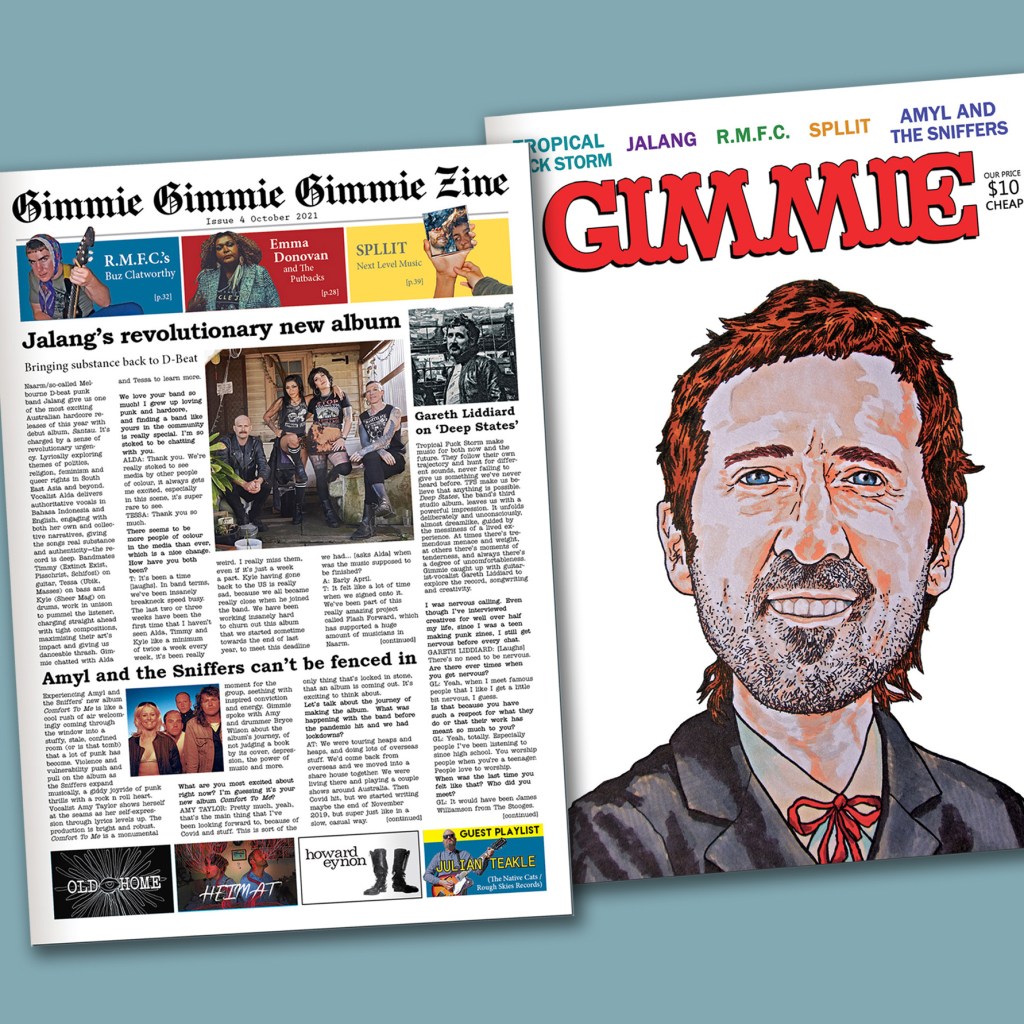
Gimmie Zine Issue #4 has just been released in the U.S.A. via Total Punk Records. This version has a limited edition Amyl And The Sniffers cover variant!
We are sold out of the Australian edition covers, but keep your eyes peeled on AUS record stores as limited copies will be popping up at places like Rocking Horse, Repressed, Lulu’s, Sonic Sherpa and Rudderless.
We chat in-depth with Tessa & Alda from D-beat band Jalang! They’ve released Australia’s best hardcore record this year. We explore the album themes: politics, religion, feminism and queer rights in South East Asia and beyond. A really important chat.
Gareth Liddiard from Tropical Fuck Storm speaks about new album ‘Deep States’, songwriting, creativity, fanboying and collecting weird shit.
R.M.F.C.’s Buz Clatworthy talks, a new album in the works, lockdown being a creativity dampener, finding inspiration in films and friends.
We yarn with Emma Donovan and The Putbacks. New record ‘Under These Streets’ draws on soul, R&B, funk and the protest music of Indigenous Australia—a dynamic portrait of Blak pain and joy in all its complexities.
Amyl and the Sniffers’ Amy Taylor and Bryce Wilson check-in to tell us about their new album’s journey, experiencing depression, keeping busy and the power of music.
French duo Heimat play off-kilter experimental-pop with folklore influence, cinematic-like soundscapes, and vocals in multiple languages. A chat on experimentation.
Old Home vocalist Dylan Sparks gives us a peek into their visceral performance poetry coupled with spontaneous musical composition.
We speak with Louisiana band Spllit just days after a hurricane hit their area. We adore their lo-fi weirdness. Next level music.
70’s acid-folk legend Howard Eynon has had a storied life: appearing in films including Mad Max, supporting Hunter S Thompson’s tour; performing in theatre. Recently, he’s been working on music with Zak Olsen. A brilliant chat.
Julian Teakle of The Native Cats and Rough Skies Records selects some of his favourite tracks for us.
It’s here! Our biggest Gimmie yet! Issue 4. Two covers to choose from!
We chat in-depth with Tessa & Alda from D-beat band Jalang! They’ve released Australia’s best hardcore record this year. We explore the album themes: politics, religion, feminism and queer rights in South East Asia and beyond. A really important chat.
Gareth Liddiard from Tropical Fuck Storm speaks about new album ‘Deep States’, songwriting, creativity, fanboying and collecting weird shit.
R.M.F.C.’s Buz Clatworthy talks, a new album in the works, lockdown being a creativity dampener, finding inspiration in films and friends.
We yarn with Emma Donovan and The Putbacks. New record ‘Under These Streets’ draws on soul, R&B, funk and the protest music of Indigenous Australia—a dynamic portrait of Blak pain and joy in all its complexities.
Amyl and the Sniffers’ Amy Taylor and Bryce Wilson check-in to tell us about their new album’s journey, experiencing depression, keeping busy and the power of music.
French duo Heimat play off-kilter experimental-pop with folklore influence, cinematic-like soundscapes, and vocals in multiple languages. A chat on experimentation.
Old Home vocalist Dylan Sparks gives us a peek into their visceral performance poetry coupled with spontaneous musical composition.
We speak with Louisiana band Spllit just days after a hurricane hit their area. We adore their lo-fi weirdness. Next level music.
70’s acid-folk legend Howard Eynon has had a storied life: appearing in films including Mad Max, supporting Hunter S Thompson’s tour; performing in theatre. Recently, he’s been working on music with Zak Olsen. A brilliant chat.
Julian Teakle of The Native Cats and Rough Skies Records selects some of his favourite tracks for us.
After we missed a month, due to being super busy with the upcoming print issue, Gimmie Radio is back and we’ve made an extra long playlist full of killer new tunes! This edition features Mod Con, Heimat, Spllit, Power Supply, If So Why?, Zig Zag, Mindy Meng Wang, Amyl and the Sniffers, Smoke Bellow, and a bunch more! We hope you find your new favourite band amongst it.
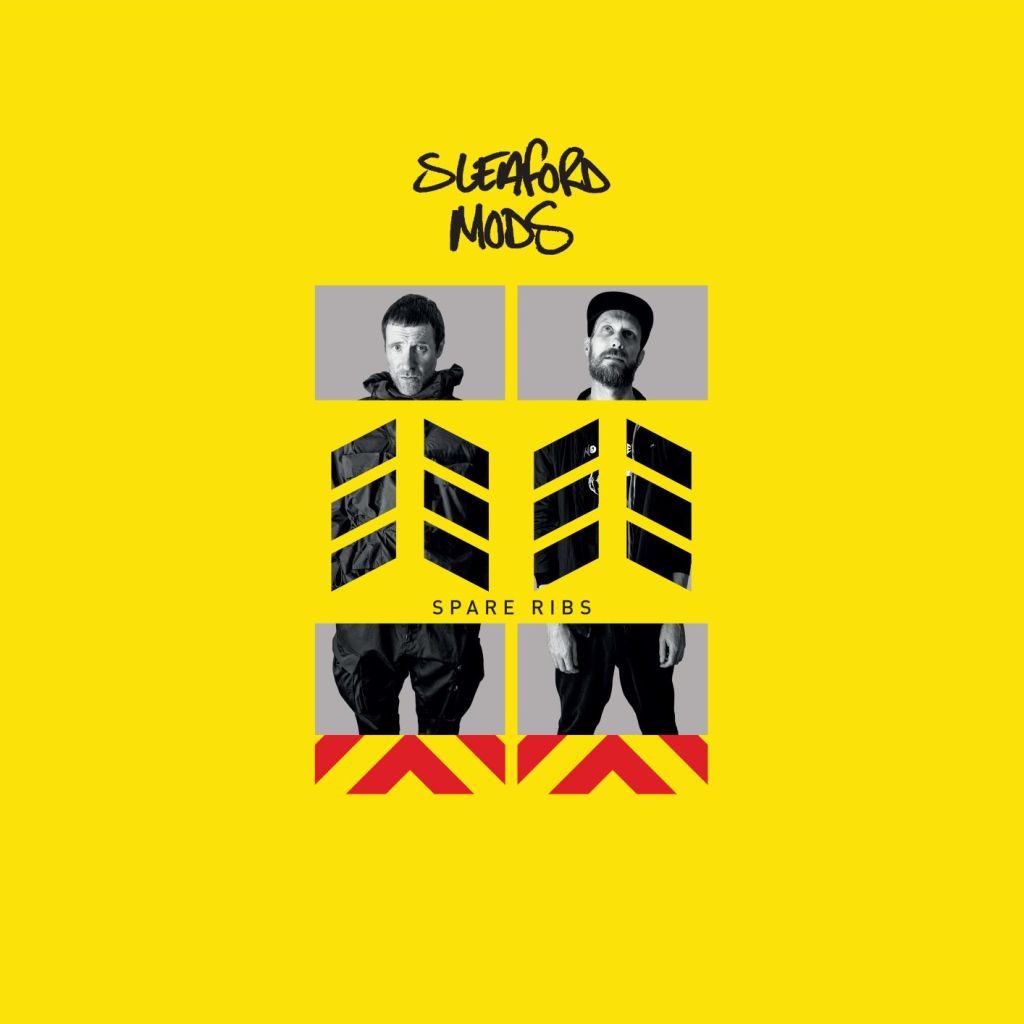
English duo Sleaford Mods discovered their signature “shouting over beats” style by accident; known for its punk spirit and radical heart of working-class, social commentary and observational themed lyrical content giving a snapshot of the challenges of daily life. Latest album Spare Ribs takes us beyond what we know and gives a deeper personal insight, Williamson getting introspective and reflecting on his early days, partly inspired by time spent in lockdown due to the global pandemic. Gimmie caught up with Jason to chat about the new record.
How did you first discover music?
JASON WILLIAMSON: As a child, through films really, and children’s television and the records my dad would play.
Why is music important to you?
JW: I just connected with it as a person more so than I have with anything else. I find it… not an easy thing to communicate and express myself in, but it’s more of a suitable thing; I just naturally connect to it.
I was listening to the song ‘Fishcakes’ from the new Sleaford record Spare Ribs and reading about it, you mentioned that when you were a younger you had spina bifida and that you went through spine surgery; during that time were you listening to a lot of music? How were you passing the downtime?
JW: No, I wasn’t, I don’t think. I was in hospital for about a month. There was a lot of sleeping. A lot of trying to figure out what I was going through and why. I was too young; I was only thirteen. A lot of it was I just didn’t connect with much really. I was just a young kid doing whatever I was doing.
Can you remember when you first wanted to start making your own music?
JW: When I was about twenty-one. I really got into indie stuff, Stone Roses and The Wonder Stuff I was listening to a lot of, and I joined a few bands in college. I tried singing and I realised that it was something that I could do.
When making things, what are the things that matter to you?
JW: That it satisfies my own needs and whatever those needs are. Generally, it’s got to be good, I’ve got to think that it’s good, I’ve got to feel that it’s good. That is obviously something that is tailored to my own tastes. It’s quite a personal thing. I have to feel that I’m satisfied with it, ya know what I mean?
Totally. When writing Spare Ribs what were you feeling? What were you working through that writing and getting this stuff out was helping with?
JW: I just kept going back to the idea and refining it with each of the songs and studying it, like I do with any album. Just to make sure what has been recorded and submitted is up to scratch. It’s just a fine tooth combing process. It’s quite tormenting and quite intimidating going into the studio, even if you think you have ideas, it can be quite frightening, it’s quite terrifying, ya know what I mean? [laughs] …’cause especially with Sleaford Mods, it could fall on it’s arse at any minute because it is so minimal, there’s not that many components to it. It’s really just that… going back to the personal process again.
I find a lot of Sleaford Mods songs to be observational and more about outward kinds of stuff but I feel lately you’ve been writing more personal songs.
JW: Yeah, that was down to the kind of history with the operation and my back, which I got a back injury over the summer doing too much exercise in the house, I couldn’t go to the gym during lockdown. I went to see a specialist and they brought all the operation up again and I only found out then that I was suffering from spina bifida; that’s what I was born with, a really rare form of it. Things got quite emotional and that turned into inspirationand content to put into songs. A couple of them especially ‘Mork n Mindy’ and ‘Fishcakes’, the last song on the album—they deal with my experiences and memories as a kid.
When I’m listening to those two songs in particular, you can really feel that emotion in your voice. There’s almost like a real sadness in there, it’s really emotive, it was making me teary. I could feel your pain, you guys captured that so well.
JW: That’s really nice to know actually, that it evokes those emotions, I think it certainly did for me… especially ‘Fishcakes’. I tried to give over that experience of what it was like growing up in the early ‘80s. But I didn’t want to make it a self-pity type song; I was quite concerned about that. I think I did eventually pull it off though. It’s really nice to know it evokes those emotions in people.
It gives another layer to Sleaford Mods; it gives us more understanding about you. Everyone goes through stuff in their lives and when you hear someone else being so honest, you can really connect with that.
JW: Thank you.
Were those two songs hard to record?
JW: No, not at all. I just got on with them. I knew what they needed. Once Andrew [Fearn] got the gist of what I was after, it was just a case of pressing record. We did ‘Fishcakes’ in a couple of takes. It was pretty sort of “bom bom bom”.
Was it called ‘Fishcakes’ because that’s what you used to eat a lot growing up?
JW: Yes, well, where I grew up, the housing estate where I grew up on, it always constantly smelt of fish cakes… or occasionally smelt of fish cakes! This really massive scent of it, it would drift down the street and that did remind me of being a child growing up in that period.
Another song on the record ‘All Day Ticket’ is another track I feel is personal with a lot going on there.
JW: ‘All Day Ticket’ talks about karma, about how somebody can find themselves in a great position but all of a sudden that position will just vanish and they will hurtle back towards the old way they used to live, which wasn’t great. It’s about them connecting to the reasons why they’re back in that crappy position, whether they admit that to themselves or they blame other people for it. So, this is what that songs about; its kind of about karma, about taking stock of your responsibilities and being honest with yourself.
Did you find yourself doing that when writing and having a lot of downtime because of the pandemic to reflect?
JW: Yeah, a little bit. Some of it, the pandemic, made me quite angry, in how the government handle it and are still handling it and how we are as a nation in England still ruled by an aristocracy, all of these things were exposed even more I thought during the pandemic. It made me really angry, that went into it. Also, a lot of recollection. A little bit of soul-searching perhaps… ‘cause you’re just stuck in the house all the time. It’s also laced with the usual trademark humour that we do that I still find quite interesting.
When reflecting and soul-searching, have you ever tried mediation?
JW: Oh yeah, I do a lot of meditating, especially at night. On tour I do it a lot as well. It’s definitely something that I have looked into.
What kind of meditation do you do?
JW: Phone apps, where it’s someone talking, you eventually fall asleep, stuff like that. I find it quite useful really.
Before you mentioned karma, that and things like meditation are from Buddhist philosophy; have you looked into that?
JW: It definitely can be… a bit of Yoga Nidra, Pilates, but I generally haven’t dived into any of that. As you get older you kind of pick some of that up anyway, don’t you, naturally if you’re in the position where you’re thinking about yourself as a human being and how you’re moving forwards and how you cope with life. You eventually connect to stuff like that.
Is there a philosophy that you like to live your life by?
JW: I don’t know really. Just to carry on and keep doing and being as alert as I can be and to make the right decisions in a controlled and calm manner. I think learning to incorporate patience into everyday things is the real, real goal. Being calm can attribute much more to a positive experience on a daily basis than not being calm, ya know what I mean… taking stock and stepping back and not panicking is something I am increasingly finding myself wanting to move towards.
It can be a hard thing to cultivate in the climate we find ourselves in with everything that is happening in the world. I walk out my front door and there’s something that can make me angry.
JW: Oh god yeah, don’t get me wrong! There’s a barrage of stuff out there that on daily basis I suffer with really badly, in the sense of frustration, in the sense of being aggressive, but when it comes down to it, when you’re on your own and you’re at the point when you’re going to boil over, that’s where I try and step back now. I find that’s becoming increasingly more possible to do.
When you first started Sleaford Mods, what initially inspired you to do it?
JW: I really like the punk aspect… I accidentally found this formula of shouting over beats and realised very quickly that it could be something bigger than that initial discovery. Also, that it could carry so many approaches because before I was only doing a traditional approach which was guitar and vocals, a traditional band setup, which I found quite restricting. When I stumbled over this formula, this really early form of it, that’s when I started to get other ideas.
I was so excited when I first found Sleaford Mods, it made total sense to me being someone that grew up on both punk and hip-hop, you combine two things that I love and doing so it made you unique. You have so much spirit and I believe what you’re saying.
JW: Thank you very much, that means a lot!
Is there anything that you haven’t talked about in regards to the new album that you’d like to?
JW: The two guest collaborators Amy Taylor from Amyl and the Sniffers and Billy Nomates who is an up-and-coming singer in England, those two for me really did transform the advancement we made in production on this album. We really took our time to make the production on this album better than the last one. The inclusion of those two have definitely completely changed it. We’re really happy about that.
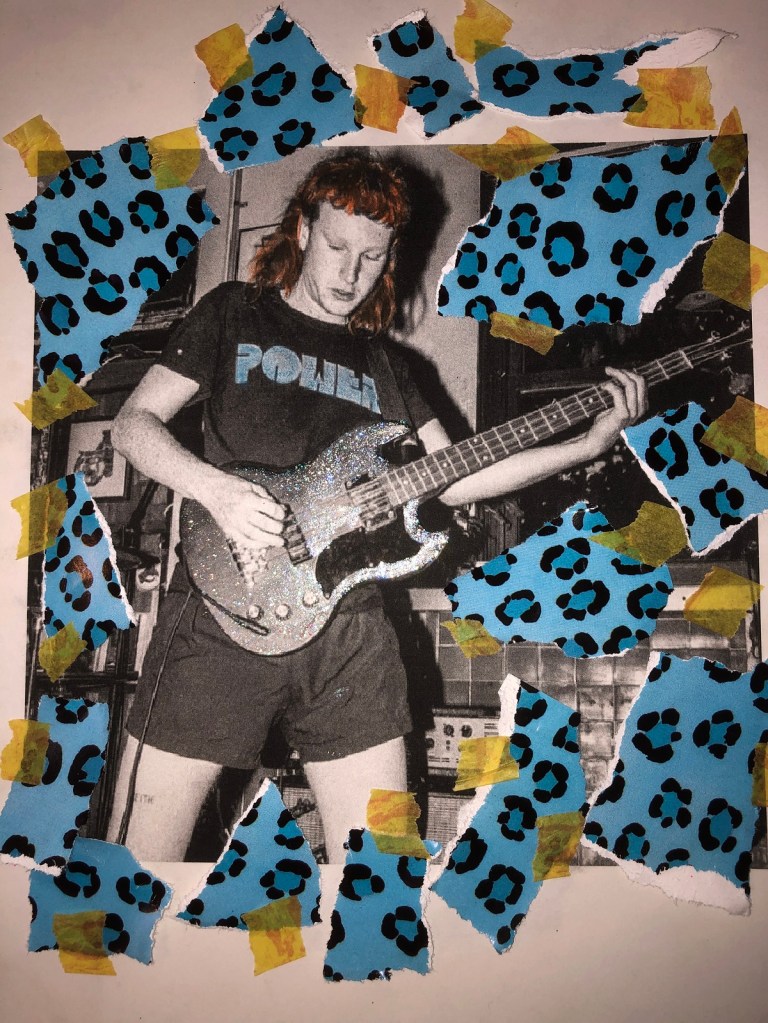
Original photo Jamie Wdziekonski. Handmade collage by B.
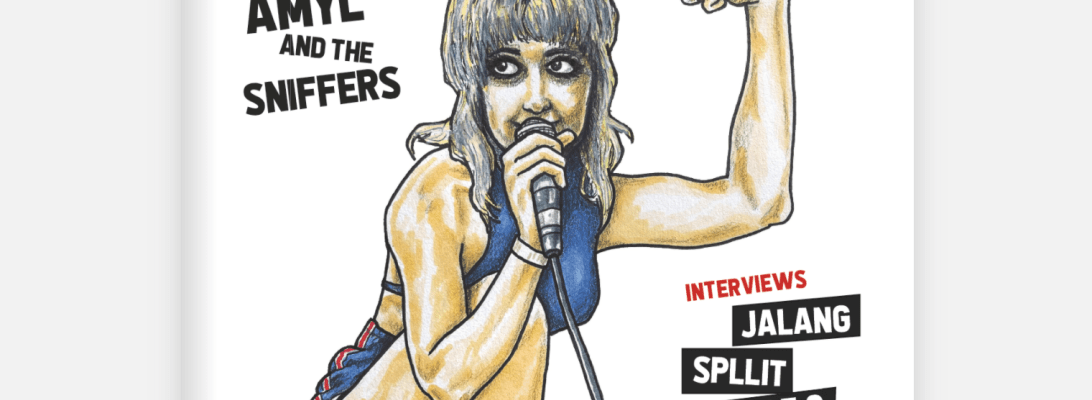
Melbourne pub punk band Amyl and the Sniffers need no introduction. We recently chatted to bassist Gus Romer to find out about the progress on new music, how he came to join the band and about their travels all over the world.
When we were teeing up this chat you mentioned that you’re a late sleeper; have you always been one? Is it because you’ve played so many shows – I think around 250 or so in the last year – that contributes to you keeping late hours?
GUS ROMER: In the past two years we’ve played a lot of shows. I’ve always been like that though, I’ve always cherished a good lie in [laughs].
How did you first discover music?
GR: From a young-ish age my mother always had an emphasis on my brother and I learning an instrument, doing something musical.
Why do you think she pushed you guys towards something creative?
GR: She’s an art teacher, so we’ve always done creative stuff from the start. It’s a good outlet to always have, something to do and something to work on.
You’re originally from Tasmania?
GR: Yep, yep.
What was it like growing up there?
GR: It was great! I love Tassie a lot. Super small. Super beautiful. Pretty cold [laughs].
What kind of stuff were you into as a kid?
GR: Mainly music, bits and bobs, that came in and out of my interest because I spent most of my childhood and teens just skateboarding, I was really into that!
What bands were you listening to?
GR: At the very start when you’re really young it’s just listening to the radio and whatever is around you. I got really into the Red Hot Chilli Peppers, Led Zeppelin and Rage Against The Machine. I fell off for a while and got really into hip-hop for a few years in my teens, that’s all I listened to, I wasn’t into too much else at the time. Later on I got back into punk rock.
What hip-hop were you listening to?
GR: I was really into Big L and MF Doom and Wu-Tang.
Did you start off playing bass? Was that the first instrument you learnt?
GR: What got me into playing bass was that in primary school we had a strings program where you could get out of class for an hour a week and this person would come around and teach a few kids how to play. I played the cello. When I finished primary school and went into high school, I obviously couldn’t do that anymore, so I got a bass for my birthday. I joined this band with my friends.
Was that the band Bu$ Money?
GR: No, that was way later. This is when I was younger. I got into playing bass initially from that transition from playing the cello.
Did you have a bunch of other bands before Bu$ Money?
GR: Bu$ Money was when I started listening to more local music and shit around in my scene in Hobart and what inspired me to get back into it and have a crack. Even though I didn’t play bass in Bu$ Money, I played drums.
How did you first get into your local scene?
GR: There’s not a great deal of places to go out and drink in Hobart. The Brisbane Hotel was where me and my friends always went ‘cause there wasn’t a bunch of dickheads there. There was alternative people, more like-minded people. I started going to drink with my friends, I started going to more shows from that and really started getting into it. I thought, this is pretty good! I’m gonna have a crack. I got one of my friends and a guy I worked with and pretty much forced them to start and be in a band with me! [laughs].
What local bands were you listening to and seeing live?
GR: Treehouse were a big one! I’m a big fan! The Dreggs, are a great, great Hobart band. There were a lot of bands that came and gone. Native Cats are a great, great Hobart band!
How did you end up being in Amyl and the Sniffers?
GR: I was already good friends with the band, I met them when Declan’s old band, Jurassic Nark, came to Hobart and Bu$ Money supported them. So that’s how I met him and then I went to Melbourne soon after and hung out with everybody else; I was good friends with them and a big fan of the band. When their old bass player parted ways with the band they called me one day and said, “Move to Melbourne and join the band”. I thought, sweet! I quit my job and moved to Melbourne.
Did you have to give much thought to it?
GR: I’d already been toying with the idea of moving to Melbourne for a while but it would have taken me even longer to do if they hadn’t asked me, it was a nice little push. It got me going and got me moving. I was already such good friends with them and a really big fan of the band so it wasn’t too much of a decision. It was super natural, cool, let’s do it!
In around March 2017, I think, is when you played your first show with them?
GR: I don’t even know ‘ey? [laughs].
Do you remember anything about that first show with them?
GR: Yeah. It was the band’s second tape launch. It was at the Curtin. I was so, so nervous! I couldn’t really play bass that good. At the time I hadn’t played bass in seven years! [laughs]. I got my friend to teach me all the songs. We had one practice. I remember being really nervous and didn’t think I played that well. I was like, oh god! I blew it! I blew! They said, “Nah! That’s great!” No one was looking at me anyway [laughs]. It was a good time. A couple of drinks loosened me up a bit and I just got up and it was fine.
Do you ever get nervous now playing shows?
GR: Not at all. Being filmed makes me really nervous though and feel uncomfortable [laughs], doing an in the studio kind of thing. We played on Jools Holland last year.
I saw that!
GR: I was off it before that, I was losing my mind, I was so nervous. It’s insane. I hadn’t experienced anything like that before.
You guys have got to do all kinds of interesting things. I saw photos from when you did a Gucci campaign and walked in their Fall 2019 show and there was a photo shoot at an Archaeological Park.
GR: It was at these ruins in Sicily. It’s pretty crazy. The first time doing that and going into that it was the first time I’d ever experienced anything like it, the level of the production, the money and effort that goes into that stuff is just mind blowing! The scale is insane. For one campaign there was over 100 staff there, everyone running around doing this, that and everything. It was crazy! It was an hour out of Palermo the capital of Sicily. There were all these old, old buildings, these ruins on the coast.
Is there something else cool that you’ve seen in your travels that sticks out to you?
GR: Too much! There’s always something crazy going on somewhere. Having the opportunity… we’ve played in Russia before, stuff like that sticks out, we were only there a day and a half. Getting to play places like Russia and Istanbul, is pretty mind blowing! I never thought I’d get the opportunity to do anything like that.
What was Istanbul like?
GR: It was so cool! Definitely the coolest place I’ve ever been, we were only there for a day though. We flew in and out. I got to walk around for two hours but it was so cool. Everything was so cool, the vibe, the architecture, it was super, super beautiful.
What was Russia like?
GR: Russia was pretty, pretty crazy. We went to Red Square. It was pretty insane, the drive from the airport to our hotel was an hour, hour and a half, and on the outskirts of the city it seems like there’s really intense poverty, in the city there is so much money! On the outskirts you see massive, massive apartment blocks that look so run down and dilapidated; in the city centre it’s so clean and there’s so much money everywhere, sports cars everywhere!
What was it like playing shows in places like that? Is it similar to here?
GR: The show in Moscow was for a festival, that was the very first show we played in Europe. We played a festival to a relatively small crowd, they were getting it though and a few people even knew all the lyrics! It’s always pretty wild because you go in not expecting much and then you have people singing your lyrics back to you. It’s mind blowing!
Have you got to see many beautiful nature spots in your travels?
GR: Driving through America is always really, really cool, the diversity of the landscape; you drive through the hills of Oregon and then drive through the desert. That stands out in terms of nature to me.
What’s one of the coolest things that you’ve seen in America?
GR: It’s all a blur to be honest [laughs]. There’s a lot, a lot of driving and a lot of drinking!
You’ve been working on a new Sniffers album?
GR: Yep, at the moment we’re trying to get some songs together to become an album at some point.
In December I think you guys mentioned you had around 12 songs?
GR: Yeah, November last year we had a fair long slog of trying to do it, trying to get something going—we got a lot of good stuff. Now we’ve just hired a little unit at a storage place near our house, which has been great. At the start of lock down we were bumming around doing nothing for the first six to eight weeks. We’ve set up in the storage unit and we’ve been hitting that up quite a bit, which has been really good. We’re trying to write new stuff and trying to do stuff that we’re all super happy with.
You all live together?
GR: Yep, yep. It’s cool. Because we’ve toured so solidly for the past two years, we’ve pretty much spent 24-hours a day with each other, we’ve been overseas together for months at a time so, it’s a pretty smooth transition for us. We all know how each other rolls.
Was it weird for you at the start of isolation not being able to tour?
GR: Kind of. It was a nice break though. We were meant to be in the States for a month, not too long after it all started. We’ve been so busy the past few years, this past six months has been the biggest break that we’ve had, the most time we’ve spent in Australia in such a long time. I’ve just been enjoying being home.
With the new stuff you’re writing have you been trying anything different to previous work?
GR: Yeah, there’s a couple of tracks that are heavier and faster, on the other spectrum there is some different stuff. We’re not trying to limit ourselves too much to a particular sound or style, just playing around and seeing what we like. Most of the time either Declan, Bryce or myself will bring a riff and we’ll jam it out. Most of the time we just try to finish it, get something and then talk about it afterwards, see what we like about it and if we keep it or don’t.
When you’re making your own music do you listen to other people’s music much?
GR: Always, I always have something going. Lately I’ve been listening to a lot of Dick Diver and Low Life, Vertigo—I’ve been pumping all them recently. There’s always good stuff!
Previously, just after the Sniffers debut album came out, you mentioned that you felt a really big sense of relief that the album was done and it was nice to not have to stress and worry about it; what kind of things do you stress and worry about when making an album?
GR: Well, with that, that was in the thick of us touring like crazy… when we recorded it we had come off of four months non-stop touring overseas; we flew to Sheffield in the UK and recorded the album there. We’d been away for too long, we’d work so hard non-stop touring—we just wanted to be home, we were so over it! It was definitely not the greatest time and was really stressful.
What were you tired of?
GR: We were pretty happy with what we had but we were happy to get the album out of the way. A lot of the songs, we’d already been playing for a couple of years, we just wanted to record it and get it out and never think about it or listen to it again.
Do you have a favourite Sniffers song to play?
GR: I’d probably say “Some Mutts (Can’t Be Muzzled)”. That’s my favourite. Usually we play it last. I like the build-up, it’s fun to play.
What was the last band you saw live before lockdown?
GR: Just before everything went to a halt we were in the middle of an Australian tour, we played Sydney and Newcastle, they were the two last times I went out. I got to see Gee Tee and R.M.F.C. supporting us in Sydney, that’s always, always a great time! Concrete Lawn are a Sydney band who we are really good friends with us played in Newcastle. They were the last live shows I got to see before everything stopped.
Do you have plans yet for the rest of the year or is it too hard to plan with all the uncertainty around?
GR: There’s always stuff. We’re hoping to do an Australia tour before the end of the year, it just depends. We’re hoping to get overseas again from the start to the middle of next year. It’s a guessing game though and no one is too sure how it will go.
What have you been doing in isolation to keep sane?
GR: Now that we have the practice space we’ve been utilising that a quite a bit, other than that we haven’t been doing much… bumming around watching dumb shit on the internet and movies. The boys bought an Xbox, so they’re playing a lot of FIFA [laughs].
Last question; what inspired you to get your mullet haircut?
GR: I was really, really into the Cosmic Psychos. I was watching a lot of old footage and the doco Blokes You Can Trust and decided I wanted to look like Ross Knight! [laughs]. It’s pretty funny! I love the Cosmic Psychos.











 Gimmie Gimmie Gimmie Zine