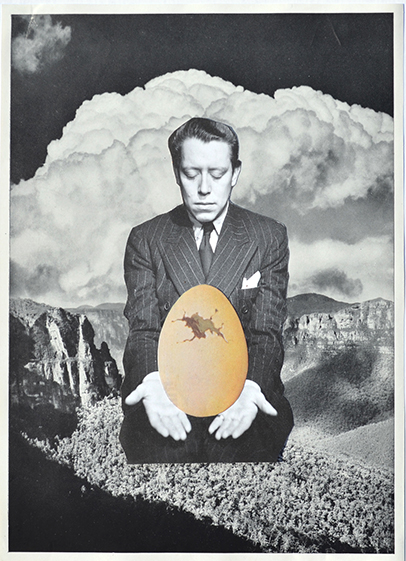
The Units’ Scott Ryser: “Synthesizer: the ability to create or re-create yourself and remix the world.”

We’re always been drawn to bands that are original, highly creative, innovative, provocative, funny and courageous—all the things that The Units are. They’re one of our favourite bands. Starting out life as a multimedia performance art group in San Francisco at the tail end of the ’70s they went on to be known as one of the pioneering synthpunk acts. They were the first punk band in SF performing just using synths and have shared the bill with acts like the Dead Kennedys, Screamers, Dead Boys, Soft Cell, Noh Mercy and Sparks (all bands that we think are pretty neat). We interviewed The Units’ Scott Ryser to give us a little insight into the band, his musical journey and what he’s been up to since activity in The Units’ camp went quiet. It’s also Scott’s birthday today too so, Happy Birthday Scott!!

What in your life do you think led you to music? I know you were in a band when you were a teen with your two younger brothers and some neighbourhood kids called, The Brothers and The Others.

SCOTT RYSER: Music is one of the few things in life that gives me hope that we are not a doomed species…and that we can do something together besides hunt like a pack of wolves.  My experience of the world, and especially childhood, reminds me of the novel “Lord of the Flies” …people congregating out of fear…always on the verge of slipping into some kind of chaotic mob mentality…people yearning to be part of the groupthink instead of nurturing individuality…and the will to power overcoming the will to help each other.

Music has the power to light up dark, lonely and dangerous places…and give a comforting order, feelings and personality to chaos. Playing music made me feel like I could finally communicate…not just with people…but with “life” in general.  When I played music, even as a kid in a small town, it was the only way I could escape the predictable, predetermined, assembly line fate of my future. 

Playing in a band helped me with my social awkwardness…and allowed me to be a part of civilization on my own terms. 

The “Brothers and the Others” was the first band I was in. I was 12, my brother Ken was 11, and my brother Tom was 9. There were two other neighbourhood kids in the band too. At first we were really more of a gang than a band. We all dressed in the same exact clothes and we went everywhere together. We thought it was especially fun to go to a movie theatre and take up almost a whole row of seats. None of us knew how to play, but somehow we figured out three chords and based all of our songs on those three chords. We played a few gigs at our local elementary school…those kind of school dances where a teacher with a ruler makes sure you’re at least 3 inches away from your dancing partner. 

It was great therapy…it made us all feel soooo cool.
Can you tell us about the first piece of performance art that you can remember witnessing? What did it mean to you?

SR: I remember seeing Spaulding Grey do a monologue in the mid ‘70’s just after he’d founded the Wooster Group in NYC. It was in a very small place with about 20 people in the room. What it meant to me, was that you/I could be scared/sensitive/fragile/vulnerable…and if you had the courage, you could still pull off a really great performance. In contrast to someone like Chris Burden (who I also admire) shooting himself, or crucifying himself…sometimes it takes more courage to confront something less obvious…like stage fright…and not trying to hide how vulnerable you are.

It helped me value and even get power from my vulnerability before I’d go on stage. If you’re talented and totally confident in your art, it becomes almost fun to walk onstage like a lamb and go out like a lion.

How did synthesizers manifest themselves in your life?

SR: In 1971, prior to the time Tim Ennis and I started The Units, we were working the graveyard shift at our little town’s lumber mill. The lumber mill was in a horribly desolate little redneck area of northern California…an all day’s ride away from any kind of city…and it seemed like we couldn’t make it through the night without some cowboy or lumberjack taunting us. We’d been out of high school for about a year…and we definitely, without a doubt…had no future. I guess it was that sense of hopelessness and despair that inspired us to sneak in the life-sized plastic baby dolls…and send them down the log assembly line to be sawed and chopped up in the wood chipper.

Our little statement on how we felt people in our culture were similar to identical conveyor belt products. We thought it was pretty funny at the time, but the boss and the rest of the crew didn’t see it our way. We were 19 years old, and we were lumber mill history. It was time to reinvent ourselves. We decided to drive to San Francisco with our lumber mill money, so I could buy this new synthesizer that I had been reading about.

Robert Moog had just introduced a portable synthesizer called the Minimoog, and according to the salesman at the music store, I turned out to be the first one in SF to buy one. I had been reading about the Minimoog, and the idea of being able to create new sounds with it, in new ways, intrigued me.

I was tired of the sound of the “guitar boy band” formula. I wanted to create a new look and a new sound, and the only way I thought I could do that was with a new/different instrument.

Synthesizers seemed like the perfect instrument. You could create new sounds completely from scratch. They were a very D.I.Y., Punk idea to me…because any amateur could play one and sound as good as a 4 handed pro, if they had good ideas. They could automate sounds and riffs that you didn’t have the dexterity to play in real time…speed up and slow down time…in real time! 

Up until the Minimoog came out, synthesizers were too big, heavy and expensive to afford or use. Only big institutions had them. But the Minimoog was portable and affordable. It really democratized electronic music. You no longer had to go to a university to get your hands on one. And you didn’t have to be “taught” how to use it “correctly”. You could pioneer whatever sounds you wanted.
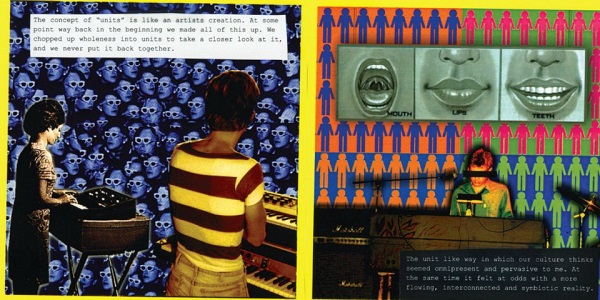
I couldn’t help but extend the idea. Just the name alone was full of possibilities. “Synthesizer”.  The ability to create or re-create yourself and remix the world. One that synthesizes. A wizard. Some definitions of synthesis I like are; “the combining of often diverse conceptions into a coherent whole”, and “the dialectic combination of thesis and antithesis into a higher stage of truth.”  That’s what being a synthesizer means to me. Remixing the life you are given, recreating it as you see fit, and creating a higher stage of truth.

Being able to find some kind of coherent whole, some kind of personal meaning in all this swirling chaos. No wonder we applied it to create synthpunk and to punk up disco and the music industry. It was the perfect instrument to reinvent the status quo.

So it seemed like perfect timing to me, that perhaps the most famous synthesizer player of the time, Walter Carlos (Switched on Bach, Clockwork Orange soundtrack), would take this idea to its extreme…by not only synthesizing his sound…but by synthesizing himself!  And changing his body from a man to a woman.

Carlos’s first public appearance after her gender transition was in an interview in the May 1979 issue of Playboy magazine, a decision she regrets because of the unwelcome publicity it brought to her personal life. It was the same month that we were bashing images of cops on the hood of a Cadillac as our synths played on autopilot.

The (musical instrument) synthesizer itself is defined as a “computerized electronic apparatus for the production and control of sound (as for producing music).” But I’m afraid that definition just doesn’t cut it. A better definition would be: a “computerized electronic apparatus capable of reinventing music”. NEW YORK CITY – 1979.

You’re a self-taught musician. What do you feel are the greatest things about being self-taught?

SR: The best thing about being self-taught, is that you can write songs in a key that you can sing in. It also helps you connect with, and express, your inner feelings. Puts you in touch with your intuition. When I have some strong feeling come over me, I’ll go to my piano or synth and just start playing. I don’t even have a melody in my head when I put my hands on the keys. The melody comes out of my hands…not my head. It’s weird to talk about your body in such an outsider kind of way…but I think there is a body-mind divide…and sometimes it feels really good show your body some faith and respect, and let your mind take a rest. 

What is your most beloved piece of musical equipment? What significance does it have to you?

SR: Definitely my Minimoog. It has taken me on a great adventure and given me a voice that I can use to express myself, in a more understandable way sometimes, than that of my own.

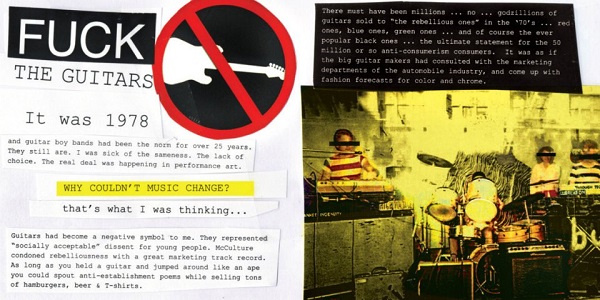
I understand that back in the beginning days of The Units you viewed guitars as a “negative symbol” that represented socially acceptable rebellion for young people. Was there a catalyst for this realisation? Do you still view them this way three decades on? Has things changed?

SR: I don’t have anything against guitars as a musical instrument. But it annoys me that in popular culture, many musicians and the music industry have taken the politics and good intentions Woody Guthrie had with his guitar, the one with “This Machine Kills Fascists” written on it, and turned the future of it into a commodity and a fashion statement.

The entertainment/advertising industry has homogenized the piss out of guitars until they might as well be the symbol for Coke, Budweiser or Marlboro. The USA media is great at taking confrontation and dissent against the status quo, and repackaging it, and selling it back to the masses as sex, entertainment and fashion. That’s what happened to the guitar heroes…for the most part, it’s all just posing now. I felt like in order to make a new statement of dissent, I would have to accompany it with an instrument that didn’t come pre-tagged as a symbol of sex and entertainment.

I liked watching (The Who’s) Pete Townshend smash his guitar during old footage of ‘My Generation’. But at the same time I thought, “Fuck your generation, Pete, if all it’s going to do is smash guitars on a stage instead of on a symbol of Margaret Thatcher’s head.” I wanted MY generation to take it a step further. Do you see what I’m getting at here? I have nothing against Margaret Thatcher personally, but you know what I mean? There are PLENTY of things to be angry about …why not point a few of them out! If you are so angry that you feel like you have to smash a guitar, why not do it on an image of George Bush! So that’s what we did!

We cut out stacks of life-sized plywood guitars and smashed them on images of George Bush and other corrupt politicians and symbols of authority…that we were projecting on a metal Cadillac car hood that we were using as a movie screen, not only because it sounded like a big gong, it was like smashing the auto industry and the music industry and at the same time saying “We’re tired of all the lies and bullshit you’re selling us.”  (Our synths would be playing at full blast, on autopilot, in the background while we were doing this.)

We weren’t just putting on some show…we were pissed! Our country is made up of an exclusive, white, corporate, good-ole-boys club of rich bastards…fucking the millions of the poor! Raping the earth and trying to strong arm third world countries out of their natural resources. What did you want us to do? Sing ‘Ob-La-Di, Ob-La-Da” like the Beatles?

Oh dear…I sound like such a grouchy old man here…

The guitars were a convenient symbol. That’s all. A lot of people still don’t get it. Including my own kids!

Things have changed over 30 years…but I still prefer guitars being played by people that preceded Woody Guthrie …ok…throw [Bob] Dylan and Neil Young and Johnny Cash and Willie Nelson into the mix too.

So much has changed in the last 34 years. Back in 1978, The Units were called the first “all synthesizer” band in San Francisco…and along with Suicide in NYC and The Screamers in LA, we were one of the first all synth bands in the USA. None of us got any airplay on commercial radio stations…and MTV and the internet hadn’t even been invented yet.  It would another 20 years before the word “synthpunk” would even be invented.  The word “Electronica” would not become a music category for another 20 years. Now, in 2013, there are 693 radio stations on iTunes radio alone, that ONLY play “Electronica”, (all synth music).  So as you can see…these days I have very little to rebel against…when it comes to guitars having a monopoly on popular culture.

Who are the artists that you find interesting? Do the artists that move you have any commonalities?

SR: I have a very eclectic taste in music. I like classical music, jazz, folk, blues, funk, reggae, rock, punk…pretty much the best of everything.  I can listen to Beethoven’s 5th followed by Buddy Guy & Junior Wells, followed by Diana Ross and the Supremes, followed by Jimi Hendrix, followed by Jay Retard & Terror Visions, followed by Philip Glass, followed by John Coltrane, followed by Kitchen and the Plastic Spoons. I have poor taste in synthesizer bands …I like them all.

I guess the common thread with bands I like is that they all have to have a lot of originality and a “wow” factor. The musical artists that most influenced my playing and songwriting were probably Louie Armstrong, Duke Ellington and Jimi Hendrix for my synth chops, Hank Williams and the Beach Boys for my singing,  John Cage, Meredith Monk, Terry Riley, Philip Glass & Steve Reich for experimentation, The Troggs, The Modern Lovers & Iggy Pop for fun.

As to the last part of your question, what I find interesting about these artists is their differences rather than their commonalities.

I’ve read that back in the 70s you didn’t just have problems with popular music but also with our culture in general. You’ve commented that “It seemed like I was swimming in an assembly line river of advertising and products.” I can really identify with that and personally feel the same way today, to me it seems like things have gotten worse in that regards not better. What are your thoughts and feelings on this?

SR: Yes, I think that in some ways it has become worse. The vibe I get from advertising and the world of entertainment is that they’re trying to convince us that you can solve all your problems by getting a shiny new surface image. Now we have all these TV shows we didn’t have back then.  Really popular shows like “What Not To Wear”, “Project Runway”, “American Idol”, etc., etc….Shows that focus on teaching people how to conform to the status quo. How to win the hearts of industry leaders. God forbid you are an “individual” and stray too far from the status quo. Along with a multitude of commercials for “whitening your teeth”, “growing your hair”, “breath fresheners”, “erection helpers” …on and on. It can make you feel like you’re being processed, packaged and being sent down an assembly line.      

Do you think there are any solutions? Where do we go from here? Are there things you do in your life to counterbalance this?

SR: I think this is the solution, blogs like this…people making creative statements, art and music.  It can take as little as a child crying out (as in The Emperor’s New Clothes), “But he isn’t wearing anything at all!”

Correct me if I’m wrong but, I think I read somewhere that you and your wife and band mate Rachel, decided to leave music in 1984? What inspired this change of path? Can you tell us a little about the time that followed please? Was music still a major part of your lives in anyway?

SR: By 1984 the system that we were trying to subvert was feasting on our band. We had signed to Epic, and they wanted to repackage our music as mediocre shiny bullshit. We were trying to record a new album in England and the A&R guy kept showing up and telling us to change our music to sound more like Michael Jackson, or Cyndi Lauper. We had two albums shelved because they weren’t “commercial enough”.  When we toured we were now the opening act for a lot of big bands …which was great, but we weren’t allowed to show our films anymore …which we considered half of our show.

Within this year our manager, who happened to be Rachel’s brother, died of a drug overdose. I got a call from the S.F. police department and a detective told me a former Units roadie was being investigated for a string of murders. Because we hadn’t renewed a deal with a Bill Graham influenced label, The Units had been banned from playing Bill Graham venues on the West Coast. As you can see, all of a sudden, “The Music Business” started to feel really dirty…and playing music was no longer fun or meaningful.

We moved to NYC and started a family and a successful design business…and in retrospect, it turned out to be a really good decision. Between the business and raising two kids we were really busy 24 hours a day, 7 days a week. Even though we always listened to a lot of music, it wasn’t until my kids went to college that I’ve had time to get back into playing and recording music.

You’ve been married for over 30 years, congratulations! What’s it been like to share your journey with Rachel? What does she bring to your life? How does she inspire you?

SR: My life with Rachel has been wonderful and exciting since the first time I laid eyes on her. I couldn’t be more fortunate.  You’re lucky if you find someone you love, but it’s even better to share your life with someone that’s a partner, a best friend, and someone that will take risks, back you up, and collaborate with you on everything you do. I can’t imagine how different my life might have turned out, without her.  She balances all my weaknesses and inspires me to take risks and be creative.

Could you tell us about the work that Rachel does with Horizons at Brooklyn Friends School?

SR: Rachel is the executive director of Horizons at Brooklyn Friends School.  It is an academic enrichment program, mostly serving low-income black kids living in the projects, in the Downtown Brooklyn area. It’s a free program that provides the academic support that these children need to stay on grade level (compared to their more affluent peers). The program also teaches the kids art and music…and how to swim. You know how most kids hate school. Well, it’s unbelievable how much these kids love it.

Your son, Sam, is in a punk band called Crazy Spirit. Have you been to one of his shows?

SR: Yes, I’ve been to a few of his shows…even filmed them. They’re very popular here in NYC, and have toured the USA and Europe. All the guys in the band are artists as well as musicians. They screenprint all their record covers and inserts, posters and t-shirts. They are very DIY and punk.  They’re great.

My 18 year old daughter Nina is also in a band and has a 7” EP out called “Nina Ryser – September” that was put out by a record label in Mexico. Unlike me, Nina can actually read and write music for other instruments.  Needless to say, I’m very proud of both of them and we have lots to talk about.

I know that your style of humour is a little darker/has a dark bent than most; what’s something that’s amused you lately?

SR: I just saw this picture of former president George Bush standing in front of some paintings he did of dogs…poodles and such.  I always got a good laugh out of what an idiot the guy was as he was destroying our country…but I found this especially funny.  Like Hitler’s paintings…what is it with these guys. It just makes no sense to me…it’s funny and frightening…all at the same time.

Have you ever had a really life changing moment that you could share with us?

SR: I’ve always had bad social phobia…fear of being in groups of people. One time I was in this new college class at SF State University…and all the students had to sit in a big circle…and one by one…tell the class your name and what you wanted from the class. I was so anxious, that when it came to my turn to speak, I had an out-of-body experience. My consciousness actually floated up to the ceiling and I could look down at myself and the classroom. “I” was up on the ceiling, invisible, calmly looking down at this body that used to be mine.  Obviously, it’s a weird feeling to look at humanity as if you are viewing it from the outside.  I wrote the song “i Night” that night, quit the class the next day…and started the Units. 

What does The Units mean to you now?

SR: Pretty much the same as it did in the beginning.  I never meant for The Units to be a performance group, or a band, or a film.  To me the important thing about it is just the idea of it.  The concept.

I’m happy that after all these years, there are some people around the world that still find The Units compelling.

From documentary “Seven Deadly Synths” by Merrill Aldighieri.

For you, what was the most memorable show that The Units played and why does it stick in your mind?

SR: It was a show we played at the Geary Theatre in 1980. There was always a certain amount of pushing & shoving, crowd diving, spitting and whatnot going on at punk shows back then…but sometimes it got out of hand…especially from out of town kids that didn’t know the limits. I saw Klaus from the Dead Kennedys hit a guy over the head with his bass once because the guy just wouldn’t stop fucking with him…and I saw one of the guys in the Toiling Midgets slam a guys face on the stage for the same reason. At this show at the Geary Theatre we were on a 4 foot high stage, which was unusual compared to other punk venues. The place was big and it was packed, and there were 3 guys in the crowd that kept fucking with Rachel…throwing stuff at her. I got so mad, that right in the middle of the song, I ran and jumped off the stage and on to them as if I were jumping on to a horse. My legs went around their three heads and we all crashed down onto the floor with me still on top of their necks…I’m sure they were stunned…and I started punching them. The horrible thing, that I thought about later, was how good it felt. I had never felt so good…and that is a horrible thing…to realize you have that kind of killer instinct in you. I got up and jumped back on the stage and we finished the song and the rest of the set. Afterwards I was quite worried that I might have really hurt them…and shaken that there was a part of me I had not known about.

Lastly, what’s something other than music that you’re passionate about or would like to raise awareness of?

SR: I’ve always been passionate about politics. I try not to get too discouraged about how long it takes for things to change. But I’ve seen things change in my life so I still hold out hope and continue to vote. I’m happy that we actually have a black president now, and for the advances in women’s and gay rights. I’m glad how the internet has had a democratizing effect throughout the world.

What bothers me most right now is the disparity and inequality of opportunity that happens to children that come from poor families vs. those that come from wealthy families. Because it just perpetuates the status quo…indefinitely.

I really see it through the work Rachel does with her Horizons program. It’s really in your face here in NYC and Brooklyn…kids of millionaires living a few blocks away from poor kids from the projects.

The wealthy kids have tutors, coaches, private lessons, summer programs and usually two parents that are both highly educated, into the arts, read to their kids, and expect their kids to be highly educated. The wealthy kids go to private schools with dedicated college counsellors that have personal connections with the admissions people at Ivy League schools. The kids from the projects have almost none of these opportunities.

I think it’s a crime that public school kids have so few opportunities to do art or music or to learn how to swim. It amazes me to see how empowered a kid becomes when they learn how to swim, or when they do a painting that their parent puts up on the wall, or play some music, or do a dance where everybody applauds for them. No wonder that kids who have none of these opportunities to feel self-confident and empowered end up feeling bored and disinterested at school.

Obviously, the more your parents care about your education, the better you will do.  But it’s almost impossibly hard for a single working parent with no money to offer much help, no matter how much they care.

The Horizons program is funded entirely by volunteer donations and private grants. I just wish the city, state and federal government would lend a hand in funding programs like this for low-income kids.

Please check out: The Units. Scott Ryser’s new solo work.

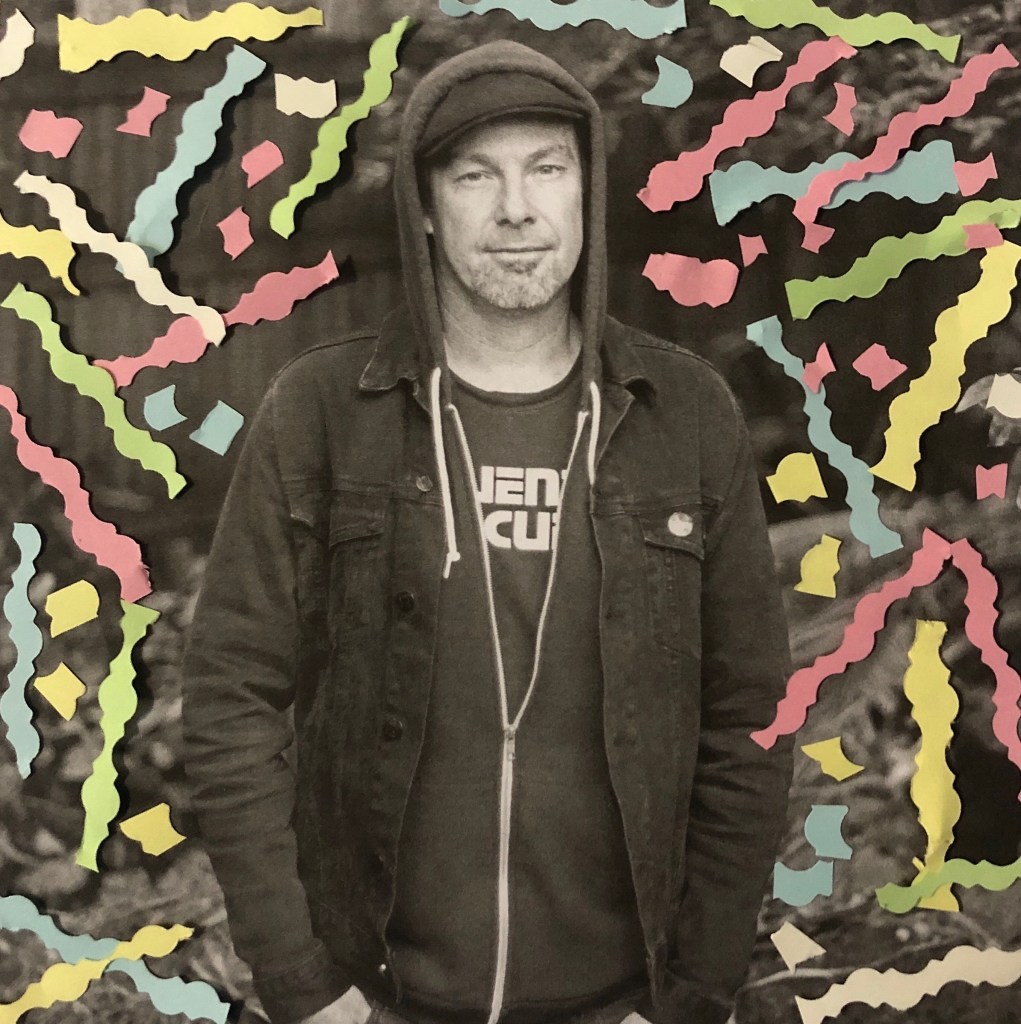
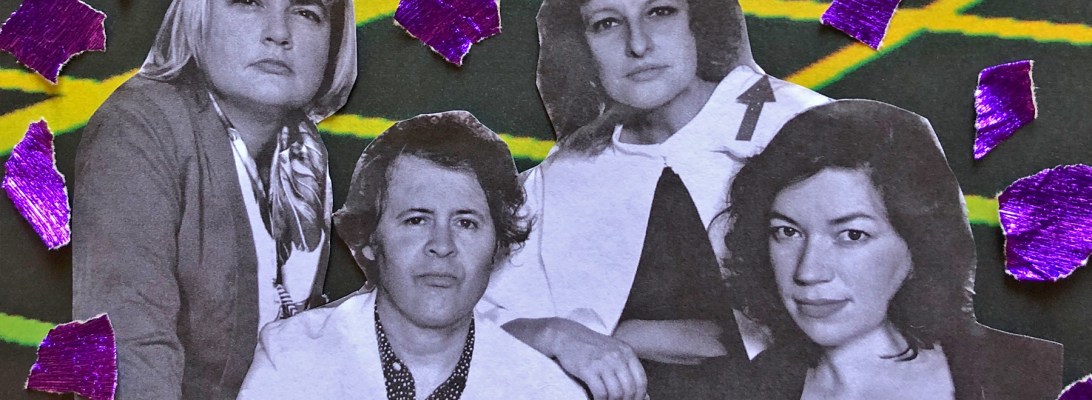
Eddy Current Suppression Ring’s Mikey Young: “Just make music and the world will take care of the rest… it’s nice to let people get to something in their own time”

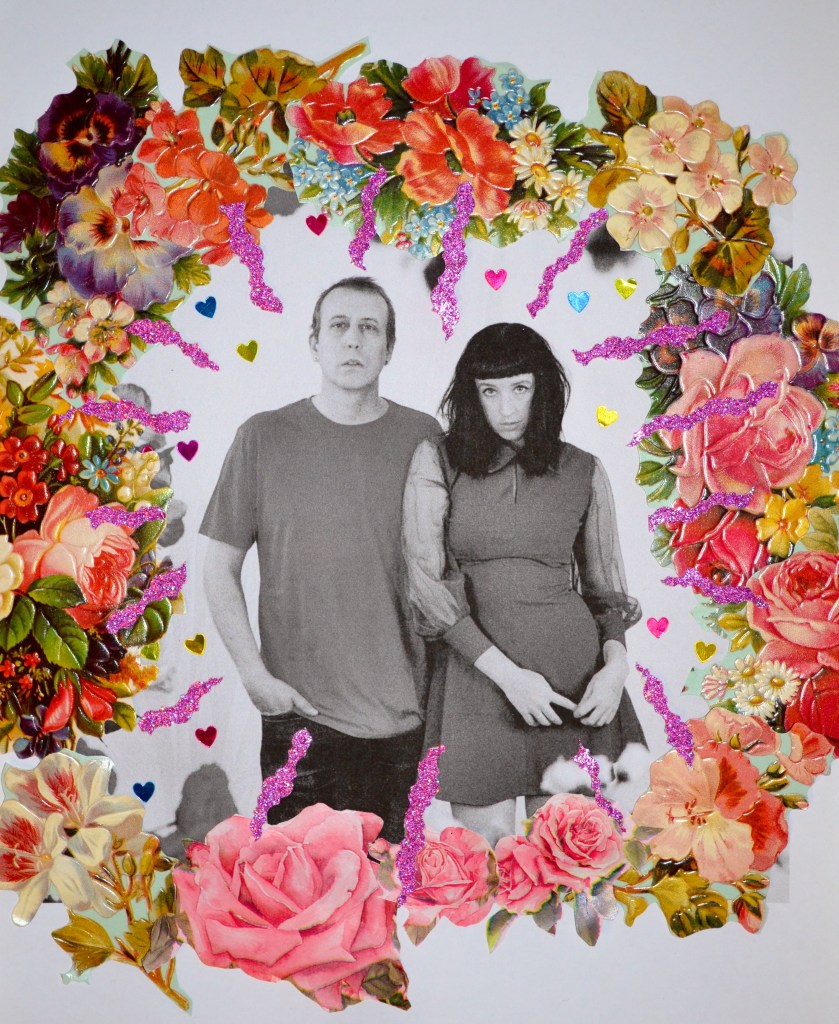
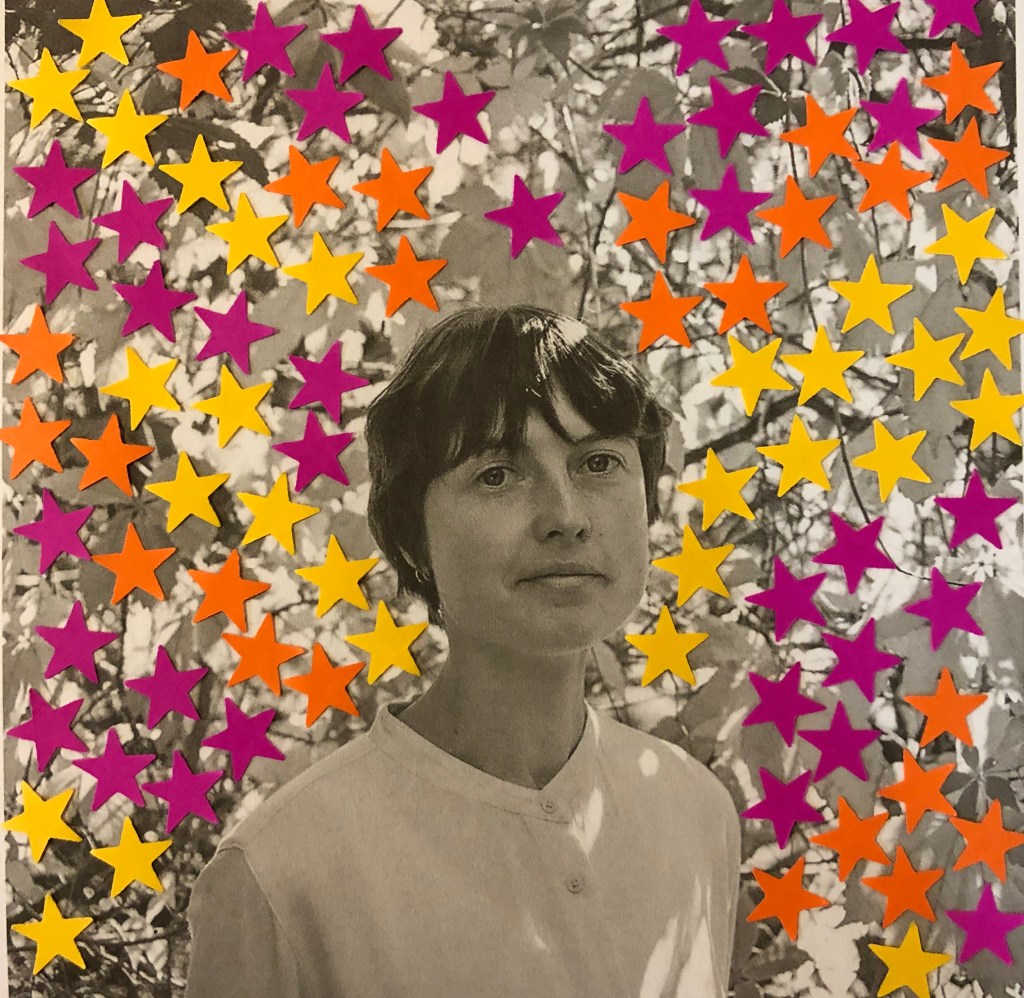
Handmade collage by B.

Eddy Current Suppression make stripped-down, barebones, raw, punk, rock n roll. In 2003 they started as friends hanging out making music, all these years later they’re still friends hanging out making music. At the end of last year the Melbourne band released album, All In Good Time, we caught up with guitarist Mikey Young aka Eddy Current to get a little insight into how he came to doing what he does and ECSR.

Why is music important to you?

MIKEY YOUNG: I don’t really know. I can’t remember ever not loving it. I just do and I have no choice. Certain chords and melodies and sounds make me feel so fricken happy and excited and and bummed out and full of regrets.

What inspired you to first pick up a guitar? The first song you learnt was Devo’s “Mongoloid” right?

MY: Yeah that and Peter Gunn Theme in Grade 4 guitar at primary school. Both easy to learn one stringers…once again really not sure why though. Seemed fun to learn I guess. Maybe my bro had started playing drums by then so it seemed logical. I stopped after primary school for a year and a bit then got psyched again in Year 8 and bought an electric.

When you started Eddy Current Suppression Ring I understand that you didn’t really have ambitions or expectations; what’s one of the biggest surprises you’ve experienced over ECSR’s existence?

MY: The whole thing has been a surprise, still is. Even that people cared about a new album and the upcoming shows so much. It may seem naive but we really don’t realise most of the time that people care so much. It’s really nice. Maybe the biggest surprise was the AMP award. I tried to give a speech but I was a mumbling fool. Rob Solid saved the day.

Personally what do you get out of playing live?

MY: I can be overly analytical when playing live, worrying about sound, pockets of the audience, all kinds of things, but when it’s right and I forgot everything and I stop thinking about where I am and what’s happening, that can be pretty glorious. The response from the audience can be pretty overwhelming and heart-warming too. Also, in all my bands, I get to play and travel with my best friends and family. Getting paid to do that is a pretty sweet deal.

After creating music for all these years, what still makes it exciting for you?

MY: Trying to make music I can’t do very well. New toys, new collaborations, probably that the most. Making music with new people is the best thing to kick me out of a slump

What does it mean to you to still be doing ECSR in 2020?

MY: Same as ever. I really longed for that simple approach to music again and I missed hanging out with those dudes. Being in a band is the best way to force me to hang out with my friends, or else I get lazy and reclusive and a year goes by and I haven’t seen people I care about. Jamming over the last year and having no expectation from the outside world was really nice. It’ll be a different kettle of fish playing live again but I feel like it’ll all be ok.

In December last year you released album, All In Good Time; what got you writing? How did it start?

MY: Golden Plains jams in 2016 started some ideas. Then they got shelved for a while and we got busy with other things. Family, work, other bands…Brendan, Brad and I started jamming for a while with a drum machine in a real quiet fashion while Danny was busy and we wrote a bunch of songs. Maybe half the songs from the LP are from that time. Hence the slightly mellower vibe. Over the last year, time opened up for Danny again and we got back into it for real.

What was the concept or significance of All In Good Time’s cover art?

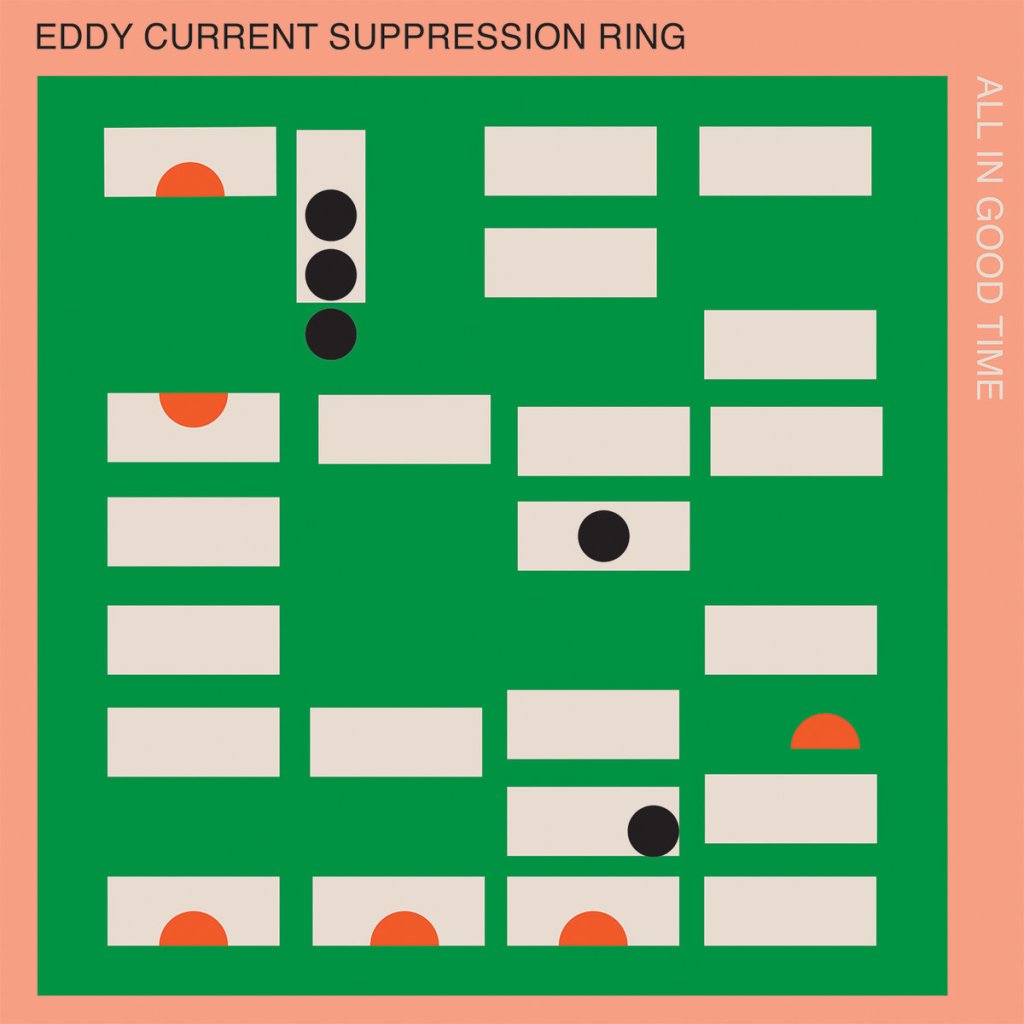
MY: No concept really. My partner Raven painted some shapes as an idea for it when we were struggling to nail something. It was great but a little too painty so we computerised it and made it all blocky and rigid and changed the colours and that’s what came out. It happened really quickly. I like it.

As far as publicity for your work goes; why do you prefer to take a low key approach?

MY: To try my best to not make external things matter. Just make music and the world will take care of the rest. I’m not chasing a career in any band I’m in so I have no need or desire to force what I/we do on the public. I think it’s nice to let people get to something in their own time.

Previously you’ve said that when things with the band get to a certain size you “just want to run away and start something else”; where does this feeling come from?

MY: I’m a wimp and a homebody that doesn’t really want to be a full time rocker. Chasing the joy of starting something new. Small shows are often more fun than big shows. Money talk and contracts make me feel weird sometimes. Not dealing with being in a band and attention as well as I could. All those things and a few more.

As well as being a musician, you’re also a producer; what do you enjoy most about collaborating with other people?

MY: Aaah I don’t know if I’m a producer. I wouldn’t call myself that. Most bands I’ve recorded and mixed, I’ve been pretty hands off and just try to be the engineer and let the band sound like the band. I don’t really inflict my personality and tastes too much on a band unless forced to. I’m not great at being assertive.

What are the things that matter most to you?

MY Heat, food, water, family, friends, partner, music, books, films, football, internet.

Please check out: Eddy Current Suppression Ring. ECSR Facebook. ECSR bandcamp.

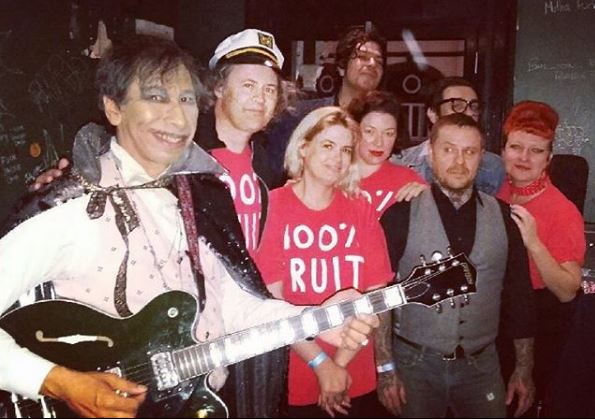
Hearts and Rockets: “Making things like art and music can contribute to your community as a whole in a good way”

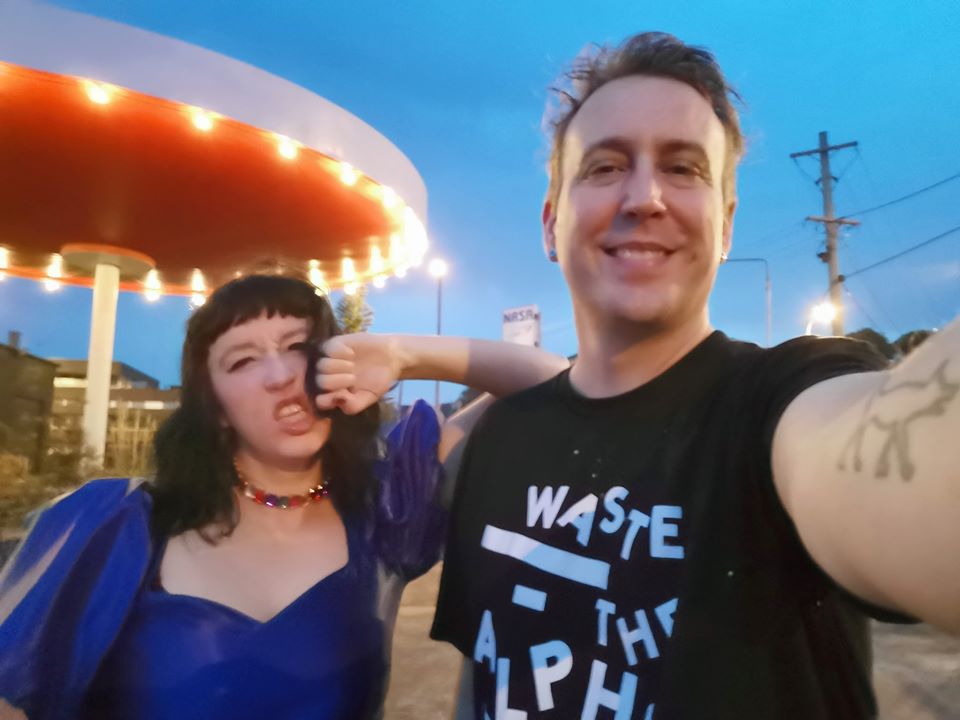
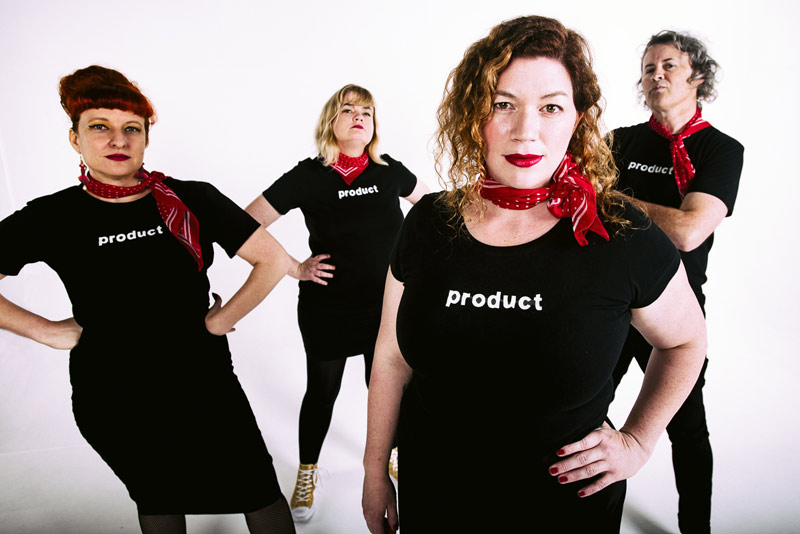
Feminist post-punk-synth-pop bratwavers Hearts and Rockets are one of the coolest bands we’ve found in the last few years! This D.I.Y. duo, Kalindy Williams and Kurt Eckhardt, create drum-machine driven grooves that explore the complexity of the human condition and emotional depths. We love their call and response vocals. We love the 808 drum samples. We love that they’re not afraid to voice their opinions and stand up for what they believe. We love that their shows are the most fun! We also love that they’re the nicest people ever!

How did you first come together to create, Hearts and Rockets?

KALINDY WILLIAMS: We had plans to make a band before we moved to Melbourne, and after living here for a year or two we wrote a few songs together and put one of them online called Sirens.

KURT ECKARDT: I had forgotten about that song! After that, we ended up recording 13 songs at home which would become our debut album Dead Beats, though at that point we still hadn’t played anything live.

KW: Initially we told everyone we only wanted to be a house party band, but once we had played our first party, we realised it was really fun so started playing venue shows. Our first gig was at the Old Bar in September 2016 with Jenny McK from Cable Ties at her first solo show, and it was headlined by Piss Factory.

Why is making things important to you?

KE: I have to keep busy, and for a large part of my life that energy was spent on things that weren’t important to me. Making good things keeps me happy, and also serves as a way to cope with anxiety, while still having something to show for it. I also feel like making things like art and music can contribute to your community as a whole in a good way, and if it doesn’t as long as it’s not a negative then it’s OK.

KW: I want to make things I can’t find in the world – if I want a dress I can’t find, I make it, or a photo that doesn’t exist, I take it. It’s the same for songs!

How did you first discover music?

KW: I had an older sister who I thought was ‘cool’, and she listened to ‘cool’ alternative music. Eventually she grew out of it, but I didn’t. As a teenager on the internet I discovered Riot Grrl and it really spoke to me. I felt a connection to it, even though it wasn’t happening anymore I really connected with the Riot Grrl ethics, and music, and making space for and being a woman in the music scene.

KE: Every Saturday my parents would blast records for a few hours downstairs, while my sister played tapes upstairs. I guess I started to love those sounds and still do. I thank my parents for The Eurythmics and Zeppelin, and my sister for The Cramps and Richie Valens, for better or worse. Then my long-lost step-brother, who I’d end up never meeting, started sending me mix tapes when I was about 9. They had stuff like Pixies and Slayer and Dead Kennedys and X-Ray Spex and Husker Du and The Minutemen… those tapes changed my life.

You’ll be releasing a split single soon with Zig Zag; what can you tell us about it?

KW: Zig Zag are a fairly new band, and from their very first show I fell in love with them. I think I even said on the night, “Kurt, we have to work with them on something”. When the opportunity arose for us to be creating a 7”with Psychic Hysteria and Roolette Records, we thought long and hard about who we would want to be on the  other side of a split record forever, and Zig Zag popped into our minds.

KE: Yeah we played that first show! It was a 40th anniversary show of the B-52’s debut album that we were organising, and they formed just so they could play! We knew from then on that we’d get along.

KW: Our song, which we just call Had Enough,  started as a whinge-song about how the human race can be really uncaring towards each other. We wrote it when we were at the supermarket and people were being jerks. That song never really went anywhere, so we took that idea and thought a bit more broadly and made Had Enough.

Also, I wanted to talk about your LP, Power; what inspired it?

KW: Using the power you have to uplift yourself and others around you. This can mean voicing your opinions or emotions, creating spaces for people who have less privilege than you do, calling out terrible behaviour when it happens, and hating on gossip.

What are your fondest memories from recording it?

KW: My fondest memories are two songs that we changed completely while we were recording. Firstly, Lies Lies Lies was originally a song I used to sing around the house at Kurt, coz I’m such a grub, called My Grubby Girlfriend. Panic Dream was going to be sung like a normal song, but I did one take singing like a cheerleader on a whim and we listened back and loved it. The juxtaposition between the cheerleader type yelling, and the anxiety inducing lyrics, made for a better song.

KE: We recorded the whole thing at home, partly because we’re broke but mostly because we can. It’s pretty great to be able to record when you want, in a comfortable space, in your own time. There have been takes we haven’t been able to use because you can hear our dog’s collar jingling, which is way cuter than it is annoying, so they’re my favourite memories. That, and when Kalindy would just nail a guitar part even though she’d only just started playing guitar. She shreds on this album!

Hearts & Rockets have a couple of songs about anxiety “Feelings” and “Panic Dream; is anxiety something that you’ve personally dealt with? I ask as it’s something I’ve lived with in my own life and I feel it’s important to have open honest conversations about important stuff like this. Anxiety can be so debilitating. How do you cope?

KE: We both suffer anxiety. I have weird triggers, and if we’re being honest, I often ‘cope’ by drinking beer, which is something that I need to keep in check. Coping is different one day to the next for me, and the only thing I’ve gotten better at or that might help others to discuss, is coming to the realisation that I am in control of my own life (even though it doesn’t always feel like it). If I am finding it too hard to be somewhere, I leave. If the thought of going somewhere is too much, I stay home. This is coming from someone with a lot of privilege and a good relationship and homelife, so I am hyper-aware of how lucky that makes me, but letting go of the imagined expectations of others has really helped me.

KW: When I was younger, one of the things that made anxiety and depression easier was knowing that other people out there are going through similar things. And I feel like making songs like Panic Dream and Feelings, maybe we can be that for other people. I have had frank conversations with people about anxiety and depression since those songs came out, and it’s good to talk about your feelings!

You’ve said that the song “Dance Off” is a call to arms for non-men to start taking up space at the front of gigs; what motivated you to write this song?

KW: Just going to gigs my whole life! Making a safe space for friends and fans to enjoy our music is really important to us. SO many times in my life going to gigs, if I even got to the front of a packed out venue i’m either squished or groped, and people shouldn’t have to go through shit experiences just to see their favourite band. There should and can be space for everyone.

KE: Yeah guys we can do better. Don’t be that guy. #tallboystotheback.

Can you give us a little insight into the song “Haunting”?

KE: That song is actually about the (not real) haunting of me by my Dad’s ghost. He died a few years ago, and it’s really more about feeling like he’s still with me, everywhere I turn. It sounds weird and creepy, but to be honest I find it really comforting. That said, it’s also a funny song, and we like spooky stuff, so I don’t think I’ve ever told that story before!

I really love the song “Hot Tea” which is about gossip. You’ve previously commented that “If people spent half the amount of time and energy that they spend gossiping creating something positive, the world (and Melbourne) would be a much better place to live” … know them feels. What helps you stay positive?

KW: I stay positive by going to shows, seeing friends, making art and seeing bands, and only playing in nice venues with nice people, walking our dog every day, and riding a bike everywhere is super fun.

KE: Staying away from drama. Everything is political, it doesn’t mean you need to involve yourself in the politics of everything. Live your life in a way that benefits your community, directly and indirectly, and support those around you. Pick your battles.

What’s one of the coolest positive things you’ve seen, heard or experienced lately?

KW: Recently we discovered a bunch of animals we never knew existed, and it’s brought us so much joy! That there can still be animals that I’ve never heard of in my life that can be so weird and cool and cute and ugly. Like the Chinese Water Deer – have you seen this thing? It has fangs?! Why? It’s so cute. So let’s look at it and be happy.

KE: Those animals and dogs. Just all dogs bring me joy. I also feel like working with more people in our community on this release has really made me happy and made me feel the love. Working with Carsten and Kahlia from Roolette Records, and all the members of Zig Zag who are all so great and inspirational, has humbled me a bit and made me realise how lucky we are to be a part of a bigger thing than our band.

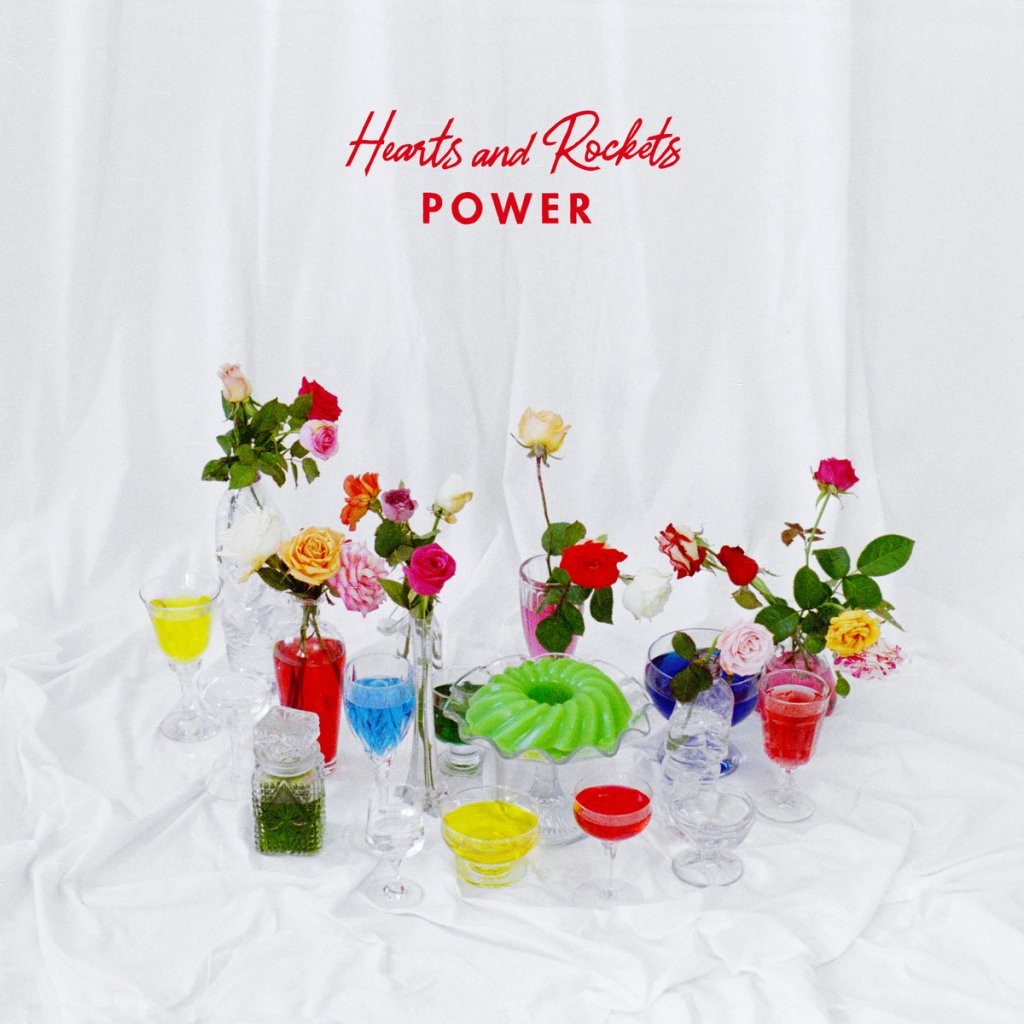
Hearts and Rockets have a strong visual component, your film clips and album art. I especially love Power’s still life photo cover. How did you arrive at this concept?

KW: I make weird art allllll the time. I’m a photographer and illustrator, and it all feeds into each other. I made a series of photos for this album that you can see on our bandcamp, one cover for each song. I wanted to portray something really soft and colourful to show that there can be power in being gentle.

KE: I watched Kalindy go from this vague idea, to such a strong concept. I have zero to do with the visual element of the band and am constantly in awe of it all. I agree with you that it is a huge part of the band. We have so many video clips! One more to come very soon. I feel like the visuals of the band inform decisions more than being informed by them.

Live you perform with a drum machine; is that out of necessity as a guitar/bass two-piece or do you simply prefer that sound?

KW: The reason we have a drum machine is coz it sounds cool, not because we don’t have a drummer.

KE: We just love using those sampled sounds! It suits the music we make, and was a conscious decision from the start. This new single is actually the first release to feature some live drums at the end, performed by Matt Chow who mixed and mastered the release. All our other drums are 808 and 909 samples, some through filters or re-recorded. We feel like getting through that barrier with people who only like or are used to a traditional rock set up with live drums is difficult, but not one that we worry ourselves with. Plus, it makes travelling easy.

You’re self-described as a feminist bratwave punk band; why is it important to be a feminist?

KW: Because the world still sucks for some! There is still inequality, and there shouldn’t be, that’s why you should be a feminist. That’s why everyone should be a feminist.

KE: And while we’ve always identified as feminists, we actually started making a point of it on our Facebook page and other places to deter dude-bro bands from asking us to play with them. We kept getting asked to play these all male punk line ups with bands that were clearly not centring the ideals that we think are important… Like, if us being feminists scares you off then GOOD we don’t wanna play with you. It worked a treat.

What’s something else that’s important to Hearts and Rockets?

KW: Being brats! Existing. Making stuff we’re proud of.

KE: And being active in our community and participating in a positive way. With the state of the world, it’s really all we have.

In the spirit of your album title; where do you find your power?

KW: In myself, I’m powerful! and the people I surround myself with.

KE: Yesss, this. and in seeing  people I love and admire do the things they love. That inspires me so much. Hearing that Zig Zag song for the first time.

Please check out: Hearts and Rockets. H&R bandcamp. H&R Facebook. H&R insta. Their record label, Psychic Hysteria. Kalindy’s photography and art.

Sunfruits: Get involved in a sustainable activity… it does wonders for your mental health & contributes to the fight against the climate crisis”

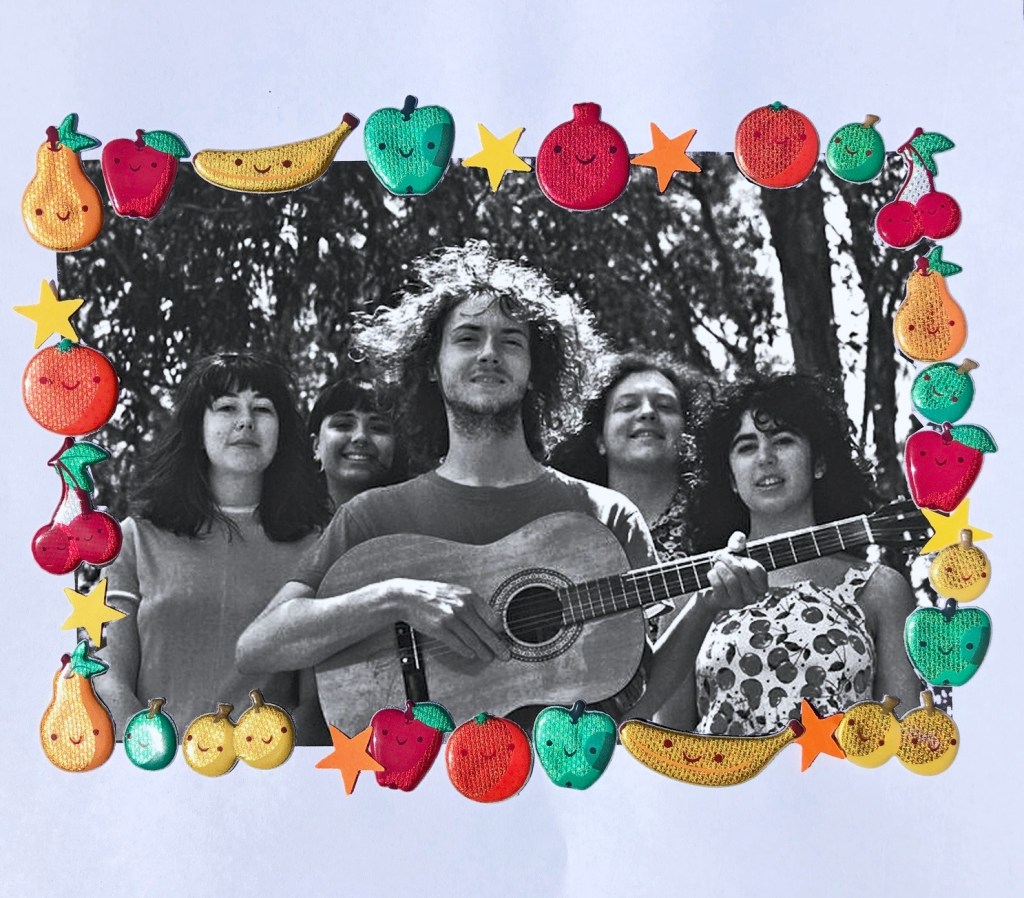
Original photo by Ivy Rose. Collage by B.

Melbourne band, Sunfruits, are making our world brighter with their sun-soaked ‘60s-pop-psych-rock! Their debut EP Certified Organic is out on Third Eye Stimuli Records (Australia) and also Six Tonnes De Chair (Europe). We interviewed guitarist-vocalist Winnie McQuinn about the EP, climate change, the importance of acknowledging First Nations people, of being thoughtful and staying positive.

Sunfruits have a very ‘60s psych-garage-pop sound; how did you get into this style of music?

WINNIE: We’d all been fans of this style of music prior to coming together in Sunfruits through our parents’ record collections and all the great current bands that are playing music from that sphere. It feels like the genre is moving forward into something new and exciting whilst still keeping the style and roots in the vintage world.

Previously you’ve commented that Sunfruits “are all for a vintage sound with a new message”; what’s your message?

W: We love vintage 60s/70s sounds and aesthetics but are conscious of the fact that that era was full of problems including sexism, racism and conservative values that we aren’t about at all. We want to try and revive the aspects of that culture that we love without the old fashioned values that suck.

What’s something interesting you can tell me about each band member?

W: Gene our drummer has become a bit of a diva whenever we’re touring which we think is directly related to him downloading the astrology app The Pattern… it’s a scary one, proceed with caution. Our bassist Elena is a cryptic crossword queen, our guitarist Evie is the road trip playlist guru aka DJ Hydralyte and I’m angry about the lack of milk alternatives in rural town cafes/petrol stations.

How do Sunfruits’ songs form? Tell us a bit about your process, I’ve heard it can be quite relaxed and free-form/free-flowing.

There’s no particular pattern in which all our songs form but we try to keep it a pretty open process. Winnie will usually come with a basic structure and form which is then jammed with the band. We’re a big fan of stretching songs out when we play them live to give it a bit of a more fun and improvised feel compared to the recordings.

What was the idea behind your new EP title, Certified Organic?

W: We got the idea originally from the Mort Garson “Plantasia” reissue which came with download cards containing seeds that you could plant. I wanted to keep it in a similar vein to the songs and what they’re about and also it’s on a lot of products so the name is easy to remember.

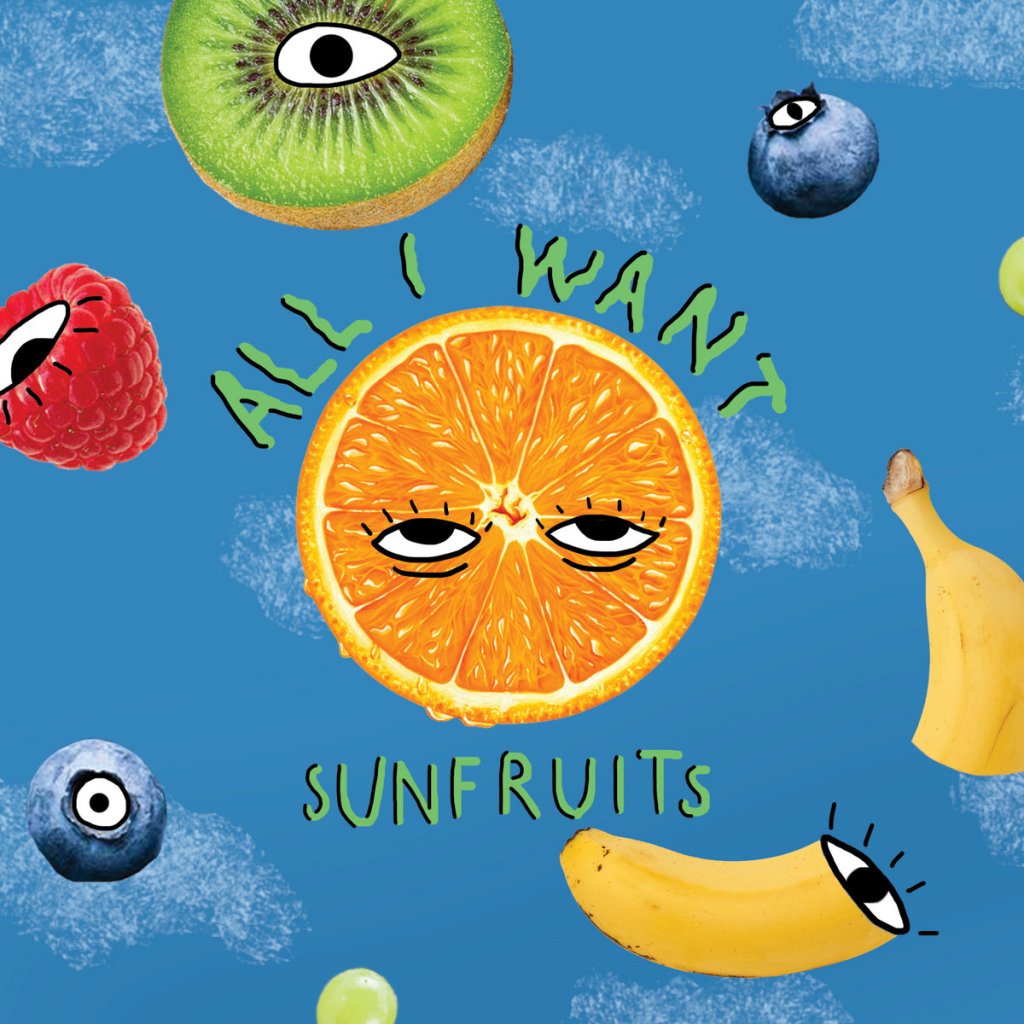
Your first single “All I Want” was about society’s addictions to material possessions and consequences of consumerism; what sparked you off thinking about these kinds of things?

W: I got the idea for the lyrics after a good chat with my Mum – thanks mum – about consuming less and wanting to be more minimalist minded. I think everyone needs to think about how much they consume and what we all really need in life.

“Above The Clouds” is the second single from the EP out on Third Eye Stimuli Records and features French dialogue; what was the inspiration for this? Why did you decided to kick the EP off with this track?

W: Originally we we’re going to have “Sunfruits” as the opener but decided against it after some sound advice from Josh at Third Eye, thanks Josh. We think it kicks off the EP with a bang and sets the tone for the rest. The French monologue was a spur of the moment thing that sounded good, big shout out to Acacia’s sister Minnie for the great selection of words and delivering it with style.

Environmental themes come up in Sunfruits’ music, for example “Forest” talks to climate change; why is this an important topic for you?

W: It’s the biggest issue of our time and holds so many other issues under its umbrella. It’s always in the back of my mind so when it comes to writing lyrics I feel as though I can’t really write about anything else. It also feels cathartic to talk and write music about it as a way of doing something to help raise awareness and to combat it.

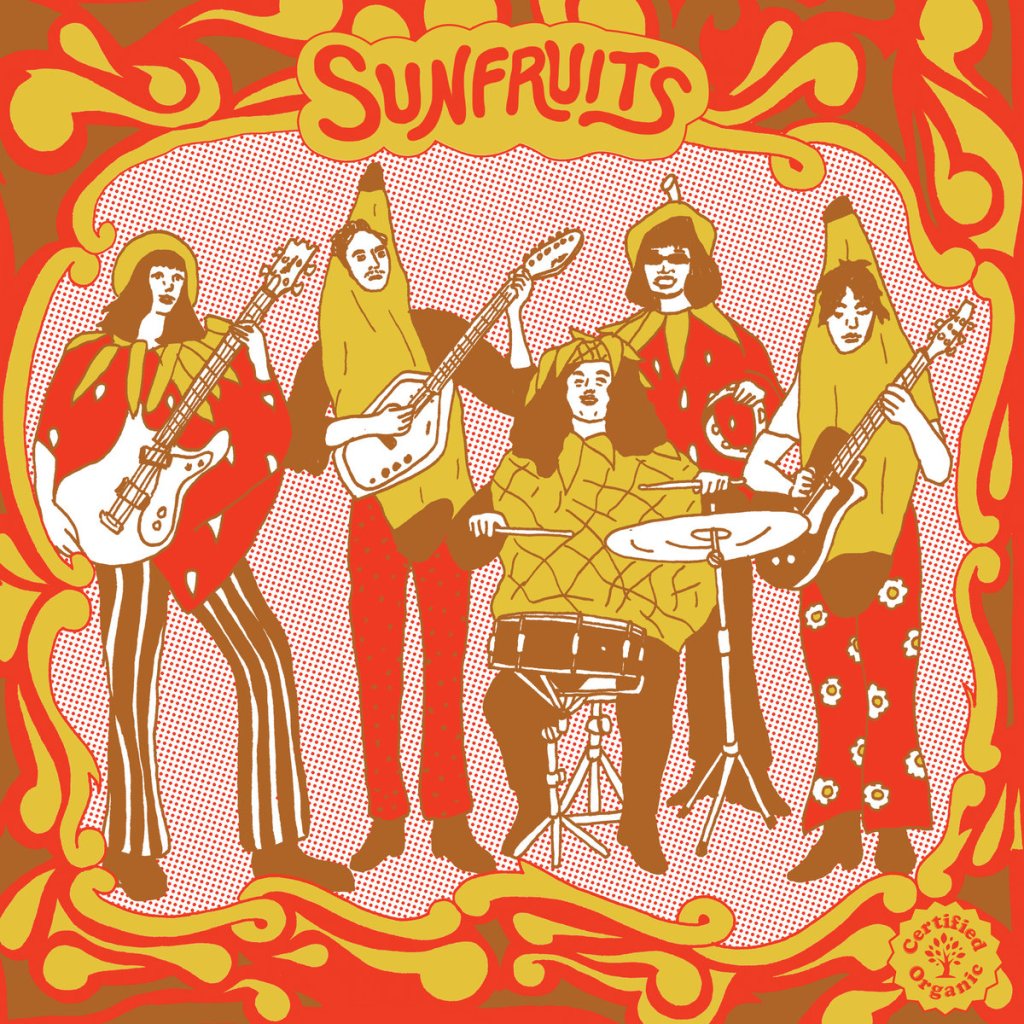
Tell us about the art for Certified Organic? Who did it?

W: The art was a collab between our very own Shelby, our label big dog Josh and good pal Luke. The main image is an illustration of a photo that our friend Ivy took at a music video shoot. They all did a great job and we’re super happy with it.

You acknowledged that your EP and all your music is made and recorded on Wurundjeri indigenous land of people from the Kulin nation and pay our respects to elders past present and emerging; why is this essential for you to do? As a First Nations woman myself, this means a lot.

W: We feel as though recognising and acknowledging the history of this country is so important. We want to try our best to support and fight for First Nations issues and rights. We are ultimately benefiting off of stolen land and the least people in the music world and bands can do is acknowledge that, realise our privileges and support First Nation issues and rights. It’s also super important to recognise that First Nations justice is climate justice as the two are inextricably linked.

Despite the serious issues the planet is facing that you sing about, I feel your music still inspires the listener to stay positive; what are some things you do to stay positive?

W: That’s exactly what we’re trying to do, inspire positivity and energy to act in the face of this existential crisis as that’s what we gotta do. Get involved in a sustainable activity no matter how big or small, it does wonders for your mental health and contributes to the fight against the climate crisis. A single action when multiplied by billions has a significant effect.

What bands have you been listening to lately?

W: We’ve been loving local heroes Eggy, Snowy band, Zoe Fox and The Rocket Clocks, Parsnip and also been diving into 70s disco pretty heavily as well.

What’s next for Sunfruits?

W: We’ve got some great shows coming up that we’re excited for, a new era has dawned in Sunfruits as well with Elena and Evie jumping on bass and guitar, we’re currently writing and recording an album which will hopefully be out early next year. Expect new music from that before the end of the year.

Please check out: Sunfruits’ bandcamp. Sunfruits’ Facebook. @sunfruitsband Insta. Third Eye Stimuli Records. Six Tonnes De Chair Records.

Kathleen Hanna: “I woke up. I was like, oh shit! I wasted 17 years of my life, I need to make up for that lost time. I just started making everything I could.”

Handmade collage art by B.

Our editor has interviewed Creatives and made fanzines for the past 25+ years since she was 15 years old. One of her favourite interviews she’s ever done is this one with Kathleen Hanna of Bikini Kill, Le Tigre and The Julie Ruin. Currently Kathleen is about to hit the road again with Bikini Kill for an extended U.S. reunion tour. Let’s hope the tour makes its way here to Australia.

Not too long ago she also stated a project called, Tees For Togo. T4T is a project where “100% of the profits go to Peace Sisters a group started by Tina Kampor who has been sending money back to Dapaong, Togo for 15 years so girls in her hometown can attend school.” Kathleen had her husband Ad-Rock and friends like Carrie Brownstein, Kim Gordon and more contribute art work which became designs for the tees. Gimmie contributor, artist Jhonny Russell contributed art for a shirt too; he’s responsible for the hand-cut collage header of this site.  

When did you first become aware of music?

KATHLEEN HANNA: I used to do dance class when I was a really little kid, when I was about five or six. They had specially made singles for our dance class [laughs]. I remember getting them and playing them. I remember being really into Tony DeFranco and The DeFranco Family, which was kind of like our teen sensation, kind of like our Justin Bieber of the 70s. Probably my biggest record was Carole King Tapestry that my mom had that I just listened to over and over and over again and the soundtrack from Chorus Line [laughs]. I loved music when I was little, I just never really had very much of it. I had the 7 inch of Dancing Machine by the Jackson 5. Probably one of my biggest musical moments was listening to that song over and over again and making up dances to it in the basement.

I used to do that to that same song too!

KH: [Laughs] No way! That’s crazy!

I have two nieces that are close in age to me and we were always making up dance routines in the backyard to the Jackson 5 and then later Janet Jackson and things like that when we were little.

KH: [Laughs] That’s so cute.

Recently you mentioned in a post on your blog that NYC and Brooklyn is having a total renaissance and some of the best art and performance is happening there at the moment.

KH: Yeah! I just saw this woman, Young Jean Lee’s show, Untitled Feminist the other night and it was absolutely incredible. I was lucky enough to see it develop about a year and a half ago. They had the show in a ‘work in progress’ mode and then they had a Q&A afterwards. It was one of the most interesting/devastating experiences I’ve ever had because the show had a lot of language in it that was talking about the history of feminism and what does feminism mean now. It also had dance performance, female nudity. Afterwards the performers sat in chairs and the audience members asked questions. I was really struck by how the show was called Untitled Feminist and how the audience kept asking questions or making comments like, why didn’t you represent this one certain kind of feminist? How come you didn’t mention this? Or saying, you need to instruct men about feminism more, that’s really your job. Everything was kind of critical comment about how she wasn’t doing enough. It was really interesting to me, I feel like it was because the word ‘feminist’ was in the title. I feel if that word wasn’t there the questions would have been completely different. I’ve heard some of these same critiques of my own work over the years so I felt really sensitive about it. I just saw the new version of the show and a year and a half later it had no language in it, it was all dance; there was some singing, a little bit in Italian. I’ve been really interested in the idea of how do you communicate ideas without language. I really want to ask her if that Q&A just turned her off language forever [laughs]. She’s a performer that has done a lot of stuff in New York that is really, really exciting.

It’s interesting that you mention doing things silently and communicating without language. Are you familiar with the magicians Penn & Teller?

KH: Yes.

Then you’d know Teller is usually silent for most of their act, well, I was reading the other day why he decided to do that and apparently it was because people would heckle him while he was doing his act vocally. He decided to try silence and found people stopped heckling and focused more on the act and what was happening. Letting the piece speak for itself.

KH: Wow that’s interesting. I don’t think that Young Jean Lee’s piece was a copout at all; it said so many things without language. I didn’t think she was afraid like everyone didn’t freak her out about language forever but, I did wonder how much of the Q&A influenced what she did. It also made me think about when I was 19 and in school doing photography. I was so nervous about objectifying women’s bodies that I was afraid to have my friends’ bodies in my photographs. I started doing work about objects. In a way, if you don’t grapple with difficult subjects, if women don’t take pictures of other women ever then we never find other ways of being. If we just say ‘Capitalism sucks! Fuck it!’ you can’t really escape it. We have to find other ways that meets people’s needs that is fair instead of just throwing your hands up in the air and being just like, I’m going to spend the rest of my life trying to drop out and be the opposite. When you’re the opposite of something you just totally reinforce it.

How does singing make you feel?

KH: In public or in private? [laughs]

I guess both, I didn’t really think about singing in private vs. singing in public.

KH: It’s different. When it’s work… right now I’m at the end of finishing our [The Julie Ruin] album and I can’t watch singing on TV, I’m having a weird relationship with it. It feels like work right now. I’m stressed out because I have a little bit of a sore throat and I’m like, am I going to be able to get these songs done? Will the sound how I want them to sound? In general I find singing just lets me explore different parts of myself, I know that sounds so fucking corny but, when I’m standing in front of a mic… when I’ve been singing lately up in my home studio, I might have a rough idea of what the song is about or rough lyrics but a lot of the time just weird stuff comes out and I don’t know what’s going to happen. To me letting something happen and not control it is a real new experience [laughs]. For me that’s what singing is about—letting go and not trying to control an experience. Then there is the technical side of going back in and getting what I want out of it.

How did you learn to sing?

KH: I took lessons when I was in high school because I joined a musical theatre troupe but I got kicked out because I got caught smoking. I probably took three lessons and didn’t really learn much. I just sang at school when I could was in a choir. I joined a church so I could be in a choir. I just always enjoyed it since I was a tiny kid. It just made me feel good.

Did you ever intend on being a musician?

KH: No! [laughs] not at all. Growing up I just thought musicians were men. I thought, oh I could be like Linda Ronstadt or Olivia Newton-John who were kind of my idols. I knew there were female singers but I never thought I could be a singer that people wanted to listen to. I didn’t have that kind of confidence.

Didn’t you once go to a Babes In Toyland concert and that experience opened things up for you and you realised you could do it too?

KH: Yeah definitely! I was with Tobi and Kathi from Bikini Kill too. We really bonded on the fact that we had just experienced such an amazing, life-changing thing. That show! Kat Bjellend played guitar better than Greg Sage from The Wipers! She was wearing a tiny dress with a huge bow in her hair and she looked so beautiful and so fucked up, she was doing the craziest shit with her voice. Lori Barbero it the drums harder than anyone I had ever seen and Michelle Leon was just sexy as hell and could totally play the bass and I was like, wow! You really can have it all! You can make this amazing music which was about how beautiful anger can be to me. I’d never heard anything like it and haven’t heard anything since like it. It was just at somebody’s house in the middle of the woods. Afterwards we went outside and there was this bonfire and I didn’t really know Tobi and Kathi very well but somehow we ended up standing together because everyone else at that show was talking about how much they hated it and how bad the band was. They were like ‘They’re too pretty.’ That was the big thing, they’re too pretty to be in a band. I didn’t even get it. They were totally stunning women but that wasn’t the main thing to us, it was definitely the music. It was also the fact that they were women and they looked how they wanted to look, they didn’t have to hide the fact that they were women to play this totally intense music; the combination of the femineity with the strength in the music in saying that femineity and strength weren’t the opposite of each other. It was really an intense experience. Me, Tobi and Kathi were like, that is the best thing we’ve ever seen! Everyone else thought it was the worst so it kind of became clear that we were going to be in a band together. No one else probably wanted to be in a band with us!

I recently did an interview with Kate Nash, she does an After School Rock n Roll for Girls program kind of like Rock n Roll School for Girls. She told me she had interviewed the girls in the program at the beginning of it and it broke her heart that a lot of them said they were reluctant to pursue music because they thought you had to be pretty and they felt they weren’t pretty enough.

KH: Wow! I mean it’s a whole different world now. We have American Idol and that new ‘the whole package’ idea where it’s like you have to be a model first and a singer second. I think there’s a whole other way to keep women from playing music, it’s to say that you have to look a certain way. The thing is, there is always some kind of thing. Getting back to the Babes In Toyland show, people were saying that they are too pretty and if Kat was someone that people considered by traditional standards to be unattractive people would have been saying they’re too ugly. It doesn’t matter what you do, if you’re not a straight white male you’re going to get more harshly criticised than other people so you might as well just do whatever the fuck you want. It really is true that they are always going to find fault but yes, it is totally depressing. It’s depressing to be an older lady who is doing music and is feeling like, is anybody going to want to listen to my music because I’m not a model that has a contract with an agency, who also happens to make music.

I saw a preview of The Punk Singer film about you that is coming out soon. There was a part where Kaia Wilson was talking about you and said that anybody that knew you or that was introduced to you, knew that you were going to be that person to really leave your mark; is leaving your mark something that you’ve ever given much conscious thought to?

KH: That’s a good question. I mean I want to lie really bad right now [laughs]. I want to say that I never think about things like that and that I always live in the present but, I just donated all of my archival stuff to the Riot Grrrl collection at NYU so I would be a complete liar if I said, no I didn’t want to leave my mark. For me, the kind of mark that I want to leave, I really desperately want to be a part of the feminist continuum. I really want to make sure that what my peers have done and will continue to do doesn’t get erased. It took me a long time, in the pre-internet world of the 80s, to find out about feminism and to find out about and to find out about feminist art. It was a difficult process and something that I did on my own. More than making my mark I want to make sure that I leave something behind that is a part of feminist history for better or for worse that people can build on. That part is really, really important to me.

I’ve read in an older interview once that you said that you didn’t really feel like a creative force until much later after high school. When did you first start to realise that you were?

KH: I think when I went to college. I was away from my parents and away from some negative influences in my life. I was able to start making stuff. I was excited about it and I kind of couldn’t stop. It was almost as if I felt like I had been dead. I started college when I was 17 and it really felt like I had been walking through my life numb up until I left for college. It was like I woke up. I was like, oh shit! I wasted 17 years of my life, I need to make up for that lost time. I just started making everything I could. Some of it was really terrible…really terrible! [laughs]

Please check out: Bikini Kill and Tees For Togo.

Massappeal, Wolf Shield & Tralala Blip’s Randy Reimann: “Our practices were just as intense as our performances, we didn’t know half measures.”

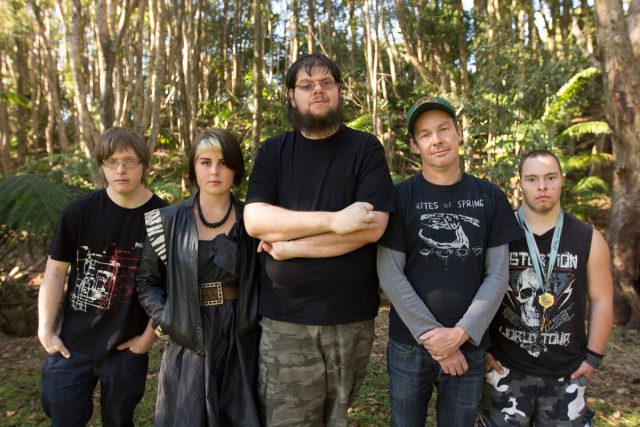
Randy Reimann was co-founder and frontman of one of Australia’s most important pioneering ‘80s hardcore thrash punk bands, Massappeal. Their 1986 debut, Nobody Likes A Thinker, is an all-time classic. The band was known for their intense live shows. Today you can find Randy still making music both as a solo electronic project, Wolf Shield – using cassette tapes of Massappeal rehearsals as the starting point for songs – and experimental post-electro pop band, Tralala Blip – started from Randy giving electronic music workshops for people with intellectual and physical disabilities. I spoke to Randy for a couple of hours, this is an extract for a much more in-depth interview where we talk about UFO experiences, spirituality, epiphanies, creativity, of being an outsider amongst the outsiders and more, that will appear in our ed’s forthcoming book.

Why is music important to you?

RANDY REIMANN: You think that I would know the answer to that by now. It’s just such a natural part of my life that I don’t think about it. It has come up a little bit, I have these little gatherings, of my male friends in particular, we have a topic and we chat about it. It’s a topic that has come up that has made me look at my obsession with making music. I think, is it something for my mental health? What would I be like if I didn’t make music? It’s rarely that I go a few days without creating something, playing with sounds. Sometimes I see it as an escapism, as my happy place. It’s something that helps me get completely out of my head, it’s totally non-mental, I just lose myself in the sounds, before I know it three hours has gone by and I was happy. I was in a zone that was comfortable. Sometimes I’ve used it to escape unpleasant things, there’d be a drama in my life and if I go in and do music I just forget about it, I forget about everything, I stop thinking. I think the stop thinking thing is important to me, it’s like meditation. It’s just going to play, I’m fully there in the moment. I just have to.

I’m such a fan too. I’ve said that a lot over the years. I love exploring new stuff and hearing what people are doing. I love going back over stuff that I’ve missed in the past too, I was so immersed in the hardcore scene for so many years and there were other things going on that I totally ignored because I was so into hardcore. There’s always big square packages coming to my house every week [laughs].

Tralala Blip.

Yeah, same at our place too! We’ve become friends with our mailman…

RR: Me too! [laughs]. Here where I live is a small community, I’ll often see him driving down the road, we wave, hi! We know each other by name. He knows when he delivers something to me that it’s either vinyl or boxes full of modular stuff.

It’s the best finding songs that are new for you.

RR: Oh yeah. I love that, it’s just endless. I think that’s one thing I found out through my friends, is that I am still so enthusiastic about music! I’m still excited by it. I love it so much. I feel lucky that I feel that way. I see a lot of people that are not excited by anything, they go through life and it doesn’t seem like there’s much pleasure at all, and if they find it, it’s like they had to work really hard to find it. I’ll just put on music and it makes me feel so happy, for that I feel so lucky!

How did you first discover punk music?

RR: In high school, I was really into DEVO, Kraftwerk and kooky things that I came across; this was in the Western suburbs [of Sydney] in the late ‘70s/early ‘80s. I had no friends that were into that kind of stuff at that point in time, I was just going to the local record shop and picking up things that looked interesting because of the cover. There wasn’t even many magazines back then, just this one punk magazine. I remember being at school and there was this kid and he had a backpack on and he had on it “Dead Kennedys”. I was like, what’s this? I can’t remember how I worked out it was a band, maybe I saw it at the record shop after that. I dropped out of high school in Year 11 but he went onto 12, we became friends at the end of school. There were three or four other guys that were into that stuff so I became friends with them and then discovered a lot of stuff through them. There was this one punk magazine that you could buy over the counter in this record shop in Fairfield where I grew up. A bit later I’d buy Maximum Rock N Roll and go into the city. Before I discovered all that though, it was definitely via seeing Dead Kennedys on that guy’s backpack.

Previously you’re mentioned that you view punk rock as more than just a genre of music; how so? What has it bought to your life?

RR: It’s more that back when I initially got into it, even before doing Massappeal and then leading into doing Massappeal, it’s so much just a part of my life; I didn’t have these compartmentalise things that I did. Hardcore just seeped into every part of… it was always there. I didn’t want to say that it informed me in deep ways, it sort of did… it was probably because soon after when I did Massappeal it became such a physical thing, I would get completely lost in it. I really felt like it was just absorbed into this “meat suit” that I had. I feel like it’s still there in some way, it’s still in me in some way… it’s not so much as any political thing that people may associate punk with, or anti this or rebellious… maybe it’s a bit of all those things.

When I was at work before I came here, I ran across this person – a new friendship, an older guy – he sort of knows I have this punk history and he’s like, “Do you consider yourself punk.” Aaah yeah… I relate to it. It was the next generation that punk spoke to me, I never really got into the Sex Pistols. I was a little bit too young for that, it was the generation of stuff that came after that; in England it was the post-punk stuff and in the U.S. it was hardcore. I bought the Sex Pistols record and some other stuff but it was just, no! It was like rock to me in a way and it bored me…

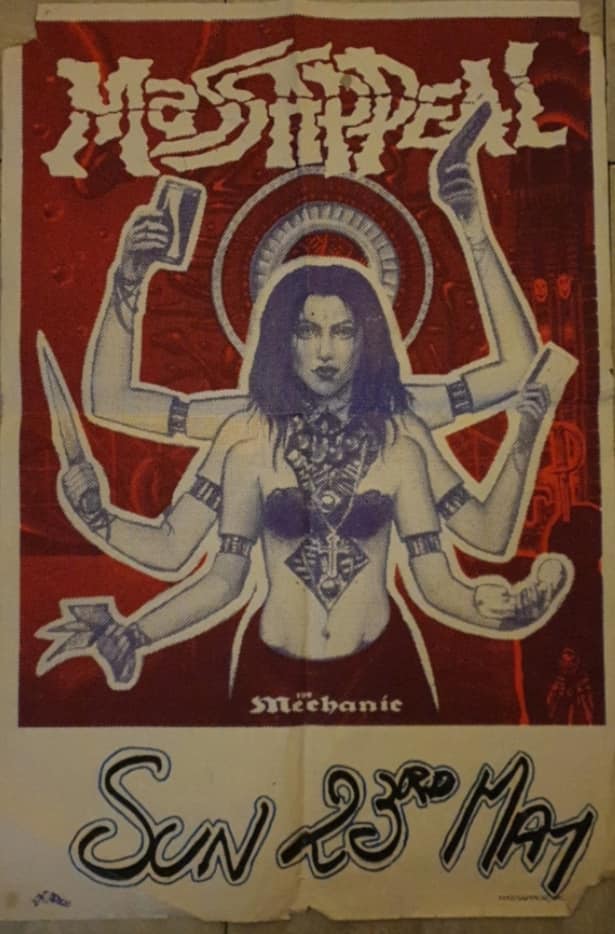
Massappeal gig poster.

I think the Wolf Shield project you’re doing now is really interesting. It’s cool how you’ve taken pieces of Massappeal demo and rehearsal tapes and used that to create something new; were did that idea come from?

RR: That came about because people on social media were asking me about Massappeal like, “Why don’t Massappeal get back together” or “Can I get this release?” and “Don’t you like Massappeal anymore?” I was thinking about it, because when someone asks me a question I wouldn’t just brush it off, I’d give them reasons and I thought that thing of writing got me thinking… I hadn’t done anything solo, I’ve always been working with other people and I wanted to do something just for me. After all these conversations I was having with people, it [Massappeal] still lives in me, it’s just how can I express it now? Believe me, I love that period of my life. If I just stop and think about us jamming, I can feel it in my body—so I love it. I can’t explain it but, I have no desire to go back there and do that. I doesn’t seem right. Just no. I just came up with the idea that I’m going to express what I feel now, I still had those tapes… our practices were just as intense as our performances, we didn’t know half measures. We’d turn everything up and just go crazy. I have some practices sessions that are just as memorable as some really good gigs. A favourite part of mine when we’d jam was when there would be feedback, a whole small room just full of feedback and I could feel it, that stayed with me. It gave me the idea to make drones out of Massappeal tapes, that’s how that creative process started. Going through my journals from then for lyrics too. I’m not using Massappeal tapes for the new stuff I’m making. It was good for me to do.

Please check out: Massappeal. Tralala Blip. Wolf Shield.

Paris Richens: “create happiness if you can or create joy or hope and be able to lift other people up…”

Original photo by Charlotte Tobin; handmade collage by B.

Recently we spoke with Parsnip and Hierophants’ Paris Rebel Richens, a Melbourne-based musician and visual artist. In the Gimmie office we collectively voted her our favourite song writer of 2019! In the past year Parsnip released poetic, playful punk album, When The Tree Bears Fruit; Hierophants released their “true wave” LP, Spitting Out Moonlight; and if that wasn’t enough, Paris also released a solo tape P.P Is… Peeping Piebald Past The Night! under the moniker P.P.Rebel—all on Anti Fade Records. We love her art too, she created some of our favourite local record covers including: The Living Eyes’ Modern Living, ORB’s Naturality and of course her bands’ art.

The following interview is an extract from a larger in-depth chat with Paris for a forthcoming book our editor’s been working on, which includes conversations on creativity and the deeper aspects of life with musicians like Gerry Casale from DEVO, Minor Threat and Fugazi’s Ian MacKaye, Bikini Kill’s Kathleen Hanna, Henry Rollins & many more.

You went bird watching yesterday, how was it?

PARIS RICHENS: It was fantastic. I’ve always appreciated birds. It was only about a year and a half ago that I started bird watching, I bought myself a pair of binoculars for my birthday. Yesterday was the third time I’ve been out with a group of people, I’m learning so much through other people, all the different species and different markings, so many look similar. I was the youngest person there, everyone else was about sixty years old [laughs]. It was really cool. I find “birdos” are just really lovely people, all really peaceful.

Do you like being out in nature?

PR: Yeah. I guess I feel like it’s essential for everyone’s wellbeing. Sometimes if you’re hard at work just sitting in front of computers when it comes to making music and stuff like that, you can just end up listening to loops of things over and over again, it can really clutter the mind and it feels like it’s essential just to be near a tree or something that might emanate some peace and remind you to slow down or clear the mind.

I get that, I swim in the ocean most days. Why is music important to you?

PR: It has a lot to do with my upbringing. My mum is a dress maker, she’s also quite talented at illustrating and art. My father has a massive appreciation for music. We were just raised to be creative. My older sister was a jeweller and is an artist now that works with beads and different mediums. There’s four of us, sisters, my next sister does art and helps with different collections at Melbourne University. My little sister is also a stylist. I grew up doing drawing a painting, music is probably the one that feels like the most direct expression, or maybe the expression that I’ve tried to achieve for my life.

Hierophants – Spitting out Moonlight.

How did you come to playing music?

PR: It started through Hierophants. At the time Jake [Roberts] and Zak [Olsen] just asked if I wanted to play keyboard. I had no experience really [laughs]. I still don’t know music theory or anything like that. I just learnt by being in the band. It was terrifying but it was also a great learning curb for me. I learnt through Hierophants how to write strange songs [laughs]. I felt like putting that towards other projects as well, it evolved from there.

I love when people are self-taught. I feel that way there’s no rules and there can be more of a freer mindset. Knowing theory etc. could have its pluses too I guess. I feel like being self-taught you’d have a different perspective.

PR: I have met people who can read music and are classically trained but then they’re not capable of writing their own music. They can play other people’s music basically but no their own. For me on the flipside, sometimes I wish I knew more than I do but at the same time I guess my song writing has a lot to do with what just feels good to me. Sometimes it might sound a bit strange to others but whatever I feel is right in that moment I’ll just go with it [laughs].

I find the Parsnip songs you write are very joyous and positive, but then you’re also very honest about difficulties in life.

PR: Yeah. It is kind of funny because some people just listen to our music and think we’re kids or something but, maybe some of the messages are coming across in the music… I’ve learnt through song writing how great it is to just create expression or emotion, so it seems like a nice thing to create happiness if you can or create joy or hope and be able to lift other people up at the same time. It’s special, it’s just a nice thing to share with other people.

Parsnip – When The Tree Bears Fruit.

Was there anything that was happening in your life that made you write to make music that does up lift people?

PR: Yeah, absolutely. A few years ago I got to a point where I just had to make some changes in my life when it was very challenging. Maybe some of that comes across in the Parsnip album. I was maybe a bit lost and just seeking, ultimately happiness. I guess I got to a point where I didn’t really feel like making music that might generate more pain. I think another thing is when I was going to a meditation centre, we’d sing all these songs about just bringing light and singing within the soul and singing about the heart—that was really uplifting. I thought that it was quite powerful, I’ve just taken that and put that into my creations, my song writing…

On your P.P. Rebel solo tape you have a song called “Die Before You Die”.

PR: I came across that idea through Eckhart Tolle, of shedding yourself, the ego or whatever, the things you identify with that make you up, as opposed to maybe just being present and knowing yourself as the soul, the inner essence of yourself rather than all the external associations—being who you, what’s in the heart.

Please check out: Parsnip. Hierophants. P.P. Rebel.

Yeti Ghetto: “I had this kind of mantra while I was working… I wanted to get out of my own way.”

Brisbane indie-rock band Yeti Ghetto create introspective songs transforming experiences of the mundane into something deeper while keeping their tongue firmly in cheek. Their debut album – Jinx – was conceived while living in a share house in North-West London. Songwriter and frontman Scott Luderman called by the Gimmie office with vegan donuts to sit down and chat about their record.

In your last band you were the guitarist, now you’re doing solo stuff; how did that transition come about?

YETI GHETTO: It’s been a huge change in my life. When I used to be in the band, it would be me and four dudes I went to high school with, anything we ever did was partly written by everybody, sometimes sung by everybody… we went on a break and I was really bored. My sister bought me a microphone and something for my little laptop that I could record stuff with – my sister knows nothing about recording, she bought it on a Goupon site! I was about to go stay with my girlfriend (she’s my wife now) in Germany. I thought I could do some demos for the band with it. When I got there, I plugged my acoustic guitar in and started to record a few ideas, I thought maybe I could sing over it. I’ve written lyrics before but I had never done a whole song by myself before. I’ve had ideas and taken them to other people and we’d end up collaborating. I pieced things together, I’d had some Moleskin notebooks for years where I’d just write stuff down, ideas, I went through those – they’re very chaotic and not liner at all – I’d put lines together and ten sing it into y little mic. It was so nerve racking.

What made it so nerve racking?

YG: I felt like it was a really genuine line straight from me, with the band it goes through all of the people and your identity is with all of those people, there’s a safety in numbers. This felt different though, direct from me, no fancy recording equipment, just something as close to me as I could make. It felt really liberating, really exciting and really personal. I was in Germany sending these songs back to my friends in Australia and in a way I saw it as a postcard. I could send pictures and stuff but I’d send songs like, hey, I recorded this today. It was a way of keeping touch.

Was the stuff you found yourself singing about, the stuff that was going on day to day?

YG: What I actually found was – I’ve thought about this a lot – when I went there I couldn’t speak any German, my girlfriend and her housemates could speak fluent German, her family is German and don’t speak English, I’d often be in these scenarios where I didn’t know what was going on, I couldn’t really chime in. A lot of people would be put off by that but for me, I talk heaps regularly, so I shut off and was like, I’m going to be alone with my own thoughts for a while… I felt it distilled my ideas better. I’d put the things that I was thinking about into my music because I couldn’t express them to people around me verbally.

From Germany you moved London, right?

YG: Yes, that’s where I met up with the rest of my band and we recorded there. I feel like everyone was just pulling in different directions. Or drummer didn’t come with us, he stayed in Australia, he’d always been a big part of the band. We had to find a new drummer in a city where we don’t know anyone, that’s hard. We had a few different drummers in that time, but I feel like we really lost that feeling of being a real cohesive unit.

Having that solid foundation?

YG: Yes. We also lived in the same house together, and life got in the way of things a little. I’d just continue to keep doing my own recordings. We did make another record as that band, but I feel like it was really disjointed because everyone was on their own trip. It’s still a cool picture of that time though, a wave of nostalgia. My transition really happened just out of keeping wanting to make new music. Singing my own stuff was a really big thing for me, ‘cause it’s like, that’s my voice, that’s me! Someone could say my guitar playing is whatever but when it’s your voice it’s like… it’s such a direct line to me. It felt super raw! It was exciting though.

I love when things are raw. I love when singers might not sound so confident to some, that vulnerability gives me goosebumps.

 YG: You can feel more of an emotion connection and there is a warmth and honesty there.

Yes. Your solo project is called Yeti Ghetto, which is an MF Doom reference.

YG: Yeah, I thought about what it name it for a long time. I was listening to Doom a lot. I find a lot of hip hop inspiring as I don’t’ make hip hop music. I find it more fluid than typical rock music, it changes and evolves really quickly. Mostly rock music is a similar thing reinvented whereas hip hop can go in new directions and you go, what even is this anymore, I need to understand it. He’s always someone I really liked.

From the name I wouldn’t get that you’re a singer-songwriter.

YG: That’s what I was going for. I also didn’t want something super serious. Lots of bands have such serious names.

Yeah, remember when there were lots of scream bands around and they’d have names that were sentences and it included words like ashes, wings, burning… or whatever?

YG: Yes [laughs]. I’m not really a serious person either. All the stuff I sing about is true and honest and maybe serious but I’m just not that serious stare-down-the-camera type! I’m pretty silly really. I wanted something that was silly and that’s ambiguous. I also feel like I’m not lock into a particular style of music with that name, I could do something else and still use it. Its flexible.

I’m stoked that you’re putting it out into the world finally, I’ve been listening to some of those songs for years.

YG: I’m glad you like it.

I think I even know all the words because I’ve listened to them, since Jhonny was playing them while doing art and they made it on to mixes in our car.

YG: That’s awesome! That’s so cool.

I love the song “Star Stuff”, that line: I’m made of star stuff, but I still got bills to pay.

YG: That was the first song I did. It’s funny ‘cause that song has a bit of an inside joke to it. I have a friend that is really bad with women, we were out one night and he saw this girl that he wanted to go speak to – he’s the kind of guy that has the approach of if I talk to enough women one will finally like me, and I think when people have that approach they’re often have an unnatural interaction, it’s cringe-y to watch – he said that he had watched this documentary about space, and it said we were all made of star stuff and I’m going to go ask her if she knows this. I was like, oh man! It was all a bit creepy. I wrote it in my notepad and then it ended up in the song. The other part of that is, in London I did feel like I was working a lot! I had all these great ideas and just wanted to make music but I had to work. Rent was getting so jacked up!
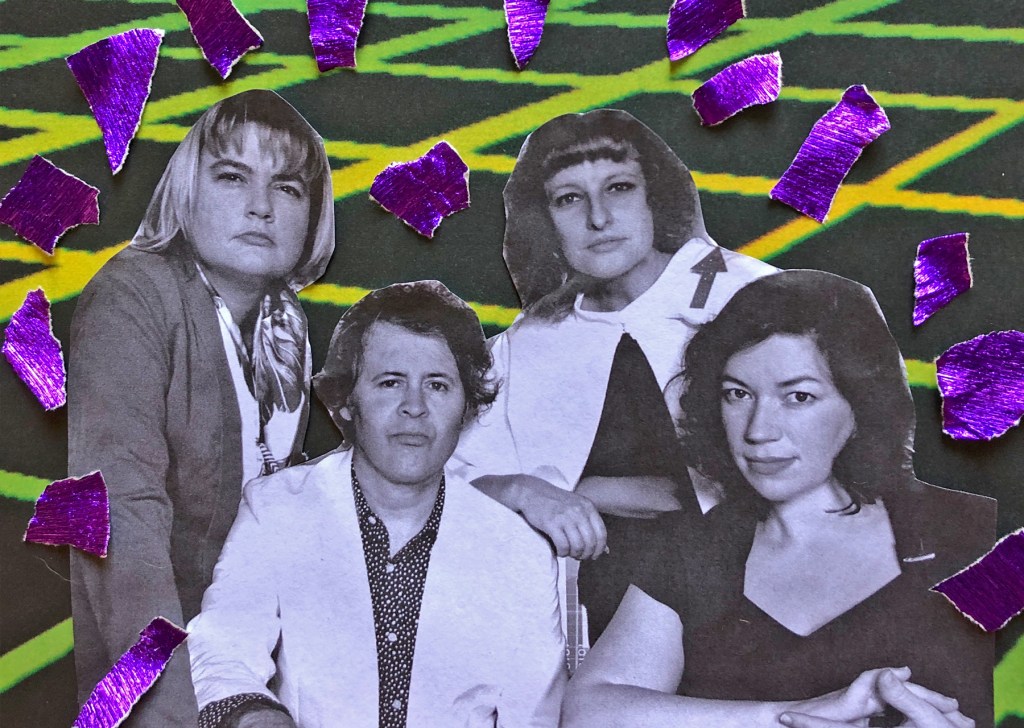
So living in London inspired the music? I feel like the music even has a British indie vibe to it.

YG: Yeah, that’s what I love first. My whole family except for me and my sister is from London. I grew up with Britpop. I loved Blur and Oasis because my parents loved it. Oasis was the first concert that I went to when I was nine. My parents were big music fans and said they’d take me. I got the ticket for Christmas and the show wasn’t until October and I thought it was so far away. My parents were really disappointed but I thought it was a great concert. They came out and played two songs and someone in the audience gave Liam [Gallagher] the finger and then he started punching them. Security dragged him off stage and the rest of the band walked off, and then Noel played a few songs acoustic to keep the show going. Liam walked back on and they did one more song and he was like, “Fuck you Brisbane!” Then houselights then came on. It probably went for half an hour. My parents were like, “We’re so sorry.” I was like, that’s awesome!

That was so Oasis!

YG: Yeah. Before that I remember the show was maybe not going to happen because he head-butted some photographer in Melbourne. That music as a kid was what I was into, my parents were into The Clash and Ian Dury.

Rad parents!

YG: Yeah. I grew up with heaps of music from their era. My grandparents loved stuff like The Beatles. I grew up listening to heaps of British music, and I do feel like it has an influence of my style.

You can tell, but I don’t feel like you’re overtly trying to do that… maybe it just naturally filters through.

YG: Even going to England felt comfortable for me, it’s a bit of a home away from home. I have heaps of family there. I think it’s had a huge influence. I was talking to a friend the other day, you know the American Songbook that has Johnny Cash and stuff like that… I think there’s probably a really good British Songbook but I just don’t know what would be in it, it doesn’t get acknowledged in that way…

I think it’d be all The Kinks, right?

YG: [Laughs], yeah.

The first song on your album “London Rats” has a really cool electro kind of part and then the rest of the song comes in and its’ that Brit-indie feel, you don’t expect it from that intro.

YG: Yeah, that was fun. It started out when one day I filmed my Tube journey from work. It was a bit sketchy, I finished worked, I held the camera in front of me, walked down the stairs, got on the train and filmed the whole journey until I got off.  I wanted to create a soundtrack for that journey, I sped up bits and started playing guitar over it. There’s Tube announcements in there. When you look at the subway, the Tube, you often see rats running and scurrying off. I felt it was a bigger metaphor for what everyone in the city was doing also. That song was a fun project, an interlude.
The interlude reminds me of hip hop records. You sometimes have a minute interlude of something that’s’ a bit weird and some people might call it filler but it’s a concept in itself, it doesn’t have to be three minutes to be a worthwhile concept.

YG: That’s what I thought. It’s an avenue that I explored, I thought about making something electronic and started messing with that stuff. I didn’t have much equipment, I didn’t have a drummer and I would borrow an amp of my mate… using what I had and trying to work out what I could do with it, I went down a rabbit hole.

It can be a big rabbit hole, amazing things can come from being resourceful.

YG: I would spend way too long sound chasing. There’d be so many sounds that were pre-set and you could alter them with effects and you’d think, maybe that next one will be even better! You end up tweaking things constantly.

You’re releasing “Real Feels”.

YG: That’s the last song I did. With all the songs… I had this kind of mantra while I was working on them—I wanted to get out of my own way. A lot of my music reached a point where it was really convoluted, I was trying to overly complicate everything. I thought with this one, just let whatever ideas come out come out, record it, roll with.

Instead of thinking about what people would think, thinking, what would I think?

YG: Yeah. I was just, that’s what this is, move on. I think part of that was because, I knew that in six months’ time I would be moving out of the house I was in to potentially come back here…

You wanted to get that done it that space?

YG: Yes, otherwise it would end up half finished. I thought I’d let it just come and not second guess it. A lot of the lyrics are like that too.

Is that why it’s “Real Feels”?

YG: Yeah, this it, what’s coming out.

There’s really something to just being honest and allowing yourself to feel that and to get things out. When people don’t censor themselves and let their truth out, cool stuff can be made. Not caring about what others might think helps too. You get to have your own voice.

YG: Being in a band and everyone being so different things could get hard, like, what are we? How do we want to present us? I spent years thinking about that stuff, it was nice to be like, I don’t fucking care anymore. It felt great. I surprised myself sometimes.

You were growing and evolving and discovering things about yourself in the process?

YG: Definitely! I felt so rewarded from it.

You now know yourself more?

YG: That’s’ exactly what it was. Even some of the lyrics, once I sung them and played them back; I didn’t know what I was singing about but hearing them back, now I know. They were holy fuck moments!

After the record was finished and I moved back here, life happened and I had to get a job and start again. Things were on hold a little. Now feels really good though with everything coming out, I can give it the time I want to. The process was really special with me and I wanted to share it. It was just sitting on a hard drive for so long, it’s kind of like it’s haunting me. I couldn’t listen to it because when I did I felt like such a shit person for not putting it out yet, I thought I was wasting time. Up until the day songs start coming out I feel anxious. Only recently I’ve been able to listen to t and reflect on it a bit more. It’s the most rewarding process I’ve had creatively. I’m so excited about it!

Tell me about the album and single art.

YG: I’d seen Jhonny’s art a popping up online through different people and I thought I was fantastic. I don’t know how he even has the thoughts to do that stuff—it’s so amazing. The moment I saw his art it resonated with me.

Art by Jhonny Russell.

Now that project is getting out there in the world, you have a band now?

YG: Yeah. The band has one of my best friends in it that I grew up with, Michael, he’s playing bass; Dan is playing drums. Working with this easy.

How has it been taking the songs from a solo thing into a band set-up?

YG: It’s crazy! I sent the record to them and I explained I wasn’t the best at the instruments I recorded and that if they thought of a cooler part I’d be happy to reinterpret them. Mickey created some cooler bass lines, Dan added a different flavour. It’s a bit more realised now in the way the music works, it has more space. Recording it myself and playing everything I was playing in the same spaces, I didn’t seen the different potential in some areas. It’s similar but different.

The album is called, Jinx?

YG: Yeah. Have you ever seen the documentary The Jinx?

No.

YG: It’s a really random title. I got obsessed with that six-part HBO series. It’s about a crazy New York banker that murders people, it’s a true story. This one gripped me right up until the final seconds of the last episode. It’s not a dedicated to this guy, it’s more I just think it’s a funny word. It ended up in my notebook and it just popped out at me when I was thinking of titles.

Anything to add?

YG: Only that as a process it was really rewarding, so fun to do.

As you did this record so long ago, do you have anything else in the works?

YG: Yes, I’m actually nearly finished the next one! I just have to do vocals. Space is a big thing, I’m in a new space… when we moved into this new place I asked, where’s the space? [laughs].

For more Yeti Ghetto find them here: Yeti Ghetto Facebook and insta @yetighetto

Brisbane’s The Stress Of Leisure: “Seeing music that moves you is an incredible experience… there’s something that happens inside your head, it really shifts your way of seeing or experiencing the world.”

The Stress Of Leisure are one of Brisbane’s hidden gems of post-punk, indie, new wave excellence. Their shows are one big party, fun and engaging – frontman Ian Powne’s stage banter always witty – as are the group’s lyrics. They’ve shared the stage with Kid Congo, Dave Graney, Regurgitator, Shonen Knife, Custard and more. TSOL’s Ian and Pascalle (Burton) dropped by the Gimmie office to chat about their love of music, where the band’s been and where it’s headed next, the importance of community and artistic longevity! TSOL may very well be your new favourite band as they are ours.

Why is music important to you?

IAN: Music is important to me because I value culture in general, I’m interested in the expression of community or society. I think music is the one form I can grasp of that expression, of a place, of a time. For me, that’s from a punter’s perspective of a love of music, I get into the time and place of it and how it interacts with the environment that I’m in. On a musician level I really love the immersive experience that it gives, the physicality of the performance, of listening to the drumming or the guitars or the keyboards or whatever the thrust of the music is, I imagine myself in it—I don’t get that feeling from a lot of other art forms that’s probably why music feels, I’m moving when I say this because, it feels… I’m interacting with it on a physical level. Apart from all of that community, I get a physical response.

PASCALLE: I think I have to agree with that in terms of, when the band is playing together, something is coming together from all of us and you feel it, here [motions to heart] and here [motions to head]. It is amazing. Seeing music that moves you is an incredible experience as well because it’s not only as a live… or in a time and space that you are in and you’re being moved by it, but there’s something that happens inside your head, it really shifts your way of seeing or experiencing the world. It’s a very broad approach to why I like music, I also do the poetry stuff and often in that poetry journey when I’m making a piece, sometimes that lends itself to making soundtracks and stuff like that as well. I often think it’s a very isolating experience for me, but when we play it, it’s really a bringing together of all of us, and the audience, and all the other layers of it.

IAN: There’s great value of music in society, depending on how people value themselves, it’s always an important element that’s there. I’m involved in radio as well as being in a band, I just love… for me, because of the radio perspective but also being part of a band community it just comes back to that word of community, it’s communal, that’s what I love about it. It’s not just us it’s a whole community of people experiencing the same thing, getting a thrill from the same thing. That’s why it’s important to me because I find likeminded people that have that same communal experience as I do, that’s why I keep going back to music because it means so much more than all the other art forms.

I know that when you first started doing Stress Of Leisure stuff, around 2003, you would do it by yourself in the afternoons after work…

IAN: Yeah, I did it by myself. I actually performed at poetry gigs, it wasn’t really conventional. All the gigs I did were part of a book launch, or poetry gigs, to a lot of writers essentially [laughs]. It was just me on an acoustic guitar. There was no congruence to what the project was, how it was recorded to how it was being delivered. It was just me going, this is The Stress Of Leisure, I want to be a band but I don’t know. I didn’t have a lot of confidence in the whole thing. I was just fumbling in the dark. What I know now is, I was probably aiming for that community.

PASCALLE: The collaboration.

IAN: Yes, the collaboration and being part of a gang. I had no gang it was just me.

PASCALLE: Your song writing was prolific before you even started doing gigs.

IAN: Lots of people in music produce music over a long period of time trying to discover who they are through music. They have this vision that they can never quite capture, that’s what keeps them going. They’re like, this next album is going to be great, and you do that album and it’s not quite right and they keep going…

PASCALLE: They’ve got more to do.

IAN: Yes. At that beginning stage, I’m at the beginning spot and not really having the full realisation. Starting from there I think songs had to start to live on a solo performance aspect rather than a band. A lot of them are me, me, me, Ian, Ian, Ian! That’s really what broke me in terms of wanting to get to the band level, I wanted to escape that reality [laughs]. Dave Graney maintains that if you play with an acoustic guitar you have to tell the truth, maybe that was the issue I had… if you play electric guitar you don’t have to tell the truth [laughs]. Maybe I just wanted to get from the acoustic guitar to the electric.

You mentioned that in the beginning you weren’t confident, seeing your shows now, you seem so confident, times have changed.

IAN: Yes, well that’s part of the great journey.

PASCALLE: I remember seeing you in those early days and you were terrified.

IAN: Yes. The first time I ever played in a band Pascalle was part of it, that was 2009, when we finally became a full band. That first gig was one of those Sunday afternoon Powerhouse gigs. Jo Bell who was Brispop set it up, it was in conjunction with this movie that got made, Crooked Business. One of the songs off the first album was called “Rooster” and “The Rooster” was on the Crooked Business soundtrack, Chris Nyst wrote this character that was called The Rooster. That show was our first gig and it was terrifying.

PASCALLE: There was a statement in the contract for the show that said something about delivering quality, rehearsed music, or something like that. It was really funny. I remember Ian saying something about that and thinking, oh, well we’ve gotta be pretty good then [laughs].

IAN: That really added to the terror I think. That was my first ever band performance and it was more of a relief when I finished it rather than enjoying it. The more you play, obviously the more confidence you get. The confidence thing has taken a while, also doing a radio show has helped, being jokey and thinking of stuff to say, banter.

PASCALLE: I love watching Ian perform. I have seen him from being a terrified performer to just owning what he does. It didn’t take forever but having the band to back you gives you a lot more confidence and you can have a lot more fun now.

IAN: The present makeup of the band – Jessica Moore on drums, Jane Elliot on bass, Pascalle Burton on keyboards and myself – that’s been since 2015, the longest version of The Stress Of Leisure; that in itself gives a lot of comfort. You know that we’ve played the songs and we know what we’re doing, the more you play with people the more confidence you have in stretching it out a bit and having fun. It’s not a worry to play the wrong notes, everybody is on the same page.

One of the things I love the most about when I see you play is that you look like you’re having so much fun!

IAN: Thank you, we do. There was something before that made me think of this anecdote, we play a couple of shows for Deaf QLD, we played to people that were deaf. They designed it so it had to be a place with floorboards so you could feel the vibration and interact with it, but also they had balloons for the vibration. They had a signer, we had a signer that does it for the Premier, she signed for us in those couple of gigs we did. We got asked back the second time because Karen Lantry was the CEO, she’s deaf herself and she said she liked us because we felt good! That was one of the best compliments we’ve ever had—we feel good!

PASCALLE: You don’t have to be able to hear our music to get some sense of what it’s about. As you get further into the relationship to the band you know each other better, what direction you want to go in. When we come up with new songs, if Ian’s not happy with it, he’ll put it to the side. Every song we play is fun for us, that’s an important part of it.

I read somewhere that you feel with this line-up of the band it feels more collaborative; you’re used to writing the songs yourself Ian, right?

IAN: It feels like the start of the band was 2012, in 2011 we released a song called “Sex Time” that was the first song where each element of the band is doing something to contribute to the whole. What I mean is, the guitar is doing this, the bass is doing this, the drums are doing this pattern and the keyboard is doing something… it’s not all the same note. It’s not all coming in and the drums are fitting in with it, I’s not C, G, C, F, G… everything is playing something different. If you took one of the elements out, it doesn’t work, you have to have all of those four elements; that was the genesis to where we are now. It’s like early DEVO where their sound sounds a lot bigger because all the elements fit together, once you take one of those elements out there’s something missing…

PASCALLE: There’s a gap.

IAN: Yes, from there, that was what started the spirit of collaboration. The Cassowary album had a few collaborative songs, from then on I wanted the band to be more collaborative. The last album, half the songs are written by the band and the other half by me. I think the best music is created when people work together and contribute different ideas, it’s not about one person, it’s about interaction. It makes for a more interesting dynamic.

I love working with other people, because often someone will have a totally different idea that you might not have ever thought of.

IAN: Yes. I think you tend to devalue your own stuff. Some of your own stuff might go, oh it’s like this, then someone else will go, “That’s great, we should do something with that.” You can come up with an accidental pop song or something accidental that you never would of thought because you had that collaborative model.

How important are lyrics to you? Often your songs seem really fun and humorous but when you look deeper there’s a lot more going on.

IAN: Getting back to the philosophy of lyrics, the intent behind it is the important thing I think. People enter music for a whole lot of reasons, whether they want to be famous, whether they want to make a lot of money, whether they want to have sex with a lot of people, or they just want to sound like their favourite band, there’s another element which comes into it which is a certain ideology, you have a certain ideology you’re pushing… I think that’s where I think I’m focused with a lyric. I have a little bit of history in that my first degree was in Marketing, I’m fascinated by advertising. My fascination is that I see it as a monster, I see it as what’s behind the whole ills of our society at the moment. You see this constant sort of hyper-consumerist cycle which we’re all part of and enjoy to a certain extent. I think that’s the kind of conflict that I find in the world, being made to feel that we’re not quite enough. That’s what advertising does—you could be a whole lot better than you are. That’s the driving ideology of our music and a lot of what capitalist society is pushing. The whole album Achievement was so tongue-in-cheek about that. Aim high, get high. No Idea is the new idea. “Girl On A Lilo” is an acronym for GOAL [laughs].

PASCALLE: The reason I was very happy to be a part of the band was the lyrics, I think they’re fantastic. One of the things I appreciate about Ian is that he will get all those ideologies but put them in a certain kind of a snapshot of a narrative, he’s a storyteller. He doesn’t just spell it out for people, we have to get the ideologies from the story. I think it’s always fun.

IAN: Yeah, it’s not straight forward it’s metaphoric. A whole lot of stuff is going on. That’s why I got away from that stuff of me on guitar, me, me, me, I, I, I! A little bit of earnest and feelings and stuff. No more feelings in terms of me, it’s feelings about the community. There’s a little bit of me but it’s going more towards an ideological approach, we’re writing from the perspective that we’re told we’re not good enough. That’s’ where “the stress of leisure” is! [laughs].

PASCALLE: When we rehearse – there’s not too many people that can probably improvise over music but Ian does – he generates words easily off the top of his head. A lot of times we’ll be working on a song, and I’m glad we record a lot of the rehearsals because there will be a line that comes out that will be really good.

IAN: Some lyrics are easy but a lot are hard. I put them off for a long time and just revel in the thought of what it is. I’ll be like, ‘This is a great song but it doesn’t have any words yet’ [laughs], one day it will have words. That’ll be the boring part because I’ll have to sit down and really work at it. I really love the thought of the song before it gets to the lyrics, the lyrics are usually the last part of the song. A lot of the time we have unfinished songs, often they won’t be finished and we’ll play them live and I’ll just be improvising words. I’m just saying stuff but not saying anything. I’m just finishing off words. You think I’m saying a sentence but I’m not. [Laughs].

PASCALLE: There was one song that we were playing on the Regurgitator tour that was unwritten at that point and Greg Jard who does the sound – he was really great in giving us life experience of being on the road – in a soundcheck we decided we wanted to do this unwritten song and Ian who going “blah, blah blah” whatever over the music and Greg was like, “I can’t hear what you’re saying, you’ve gotta pronounce your words.” Ian was like, “It hasn’t been written yet!” [laughs].

You mentioned before that you studied marketing, I know at the start of The Stress Of Leisure you didn’t do much promotion; was that intentional?

IAN: It was just confidence really, and not having a band and not being confident, as a solo thing it didn’t really fit. I had friends that helped me out, who were really great in encouraging me but it wasn’t an easy fit because they didn’t live close to me. I didn’t have any idea of how it would happen until I started getting gigs.

PASCALLE: I sometimes say to Ian, you have a Marketing degree surely you would know what would make us better known!

IAN: When it comes to the business side of things…

PASCALLE: He hates it!

IAN: Yeah, I really hate it but it’s so important as an independent musician that you have to be across it. I find that when I’m working with other people and helping them…

PASCALLE: He’s a champion!

IAN: I know what to do and can hook them up with the right people; the networking brain comes on. Whereas the networking brain for myself is, ‘we’re just chumps don’t worry about us!’ I’d probably talk us down or not even talk about us. I’m just happy to meet people on whatever terms that may be.

PASCALLE: I think Ian has an idea that he would like everything to happen organically. This has happened. Our experience so far has been organic. You meet people, like we met Ben Ely (Regurgitator) and you just become friends with each other. It’s a nice feeling because it feels authentic. Whereas the rest of the machine of promotion doesn’t seem like it’s authentic, you have to work it and schmooze and all of that. I don’t think anyone in our band wants to do that! [laughs].

IAN: When people start talking industry stuff with us… when people suggest, “oh, you should tour with that band” and we’re like, we don’t have anything in common with that band, that would be horrible! We’ve only toured with bands we like, Custard, Regurgitator, Dave Graney and we’ve played with The Gin Club. That keeps it positive! It’s kept it on a level. If you start getting into the industry side of things… there’s always been a mercenary aspect to it, but when it becomes too focused on what someone in the industry thinks, it’s horrible—nobody really knows! [Laughs].

PASCALLE: It’s a challenge because there’s that part of putting yourself forward and saying we have a good band and want to play… and if we don’t, it’s almost apologising for what we do—I don’t like that either. I like the idea of standing by what we do. There’s a fine line of selling out and kissing arse…

IAN: The facts are you have to sell what you do, there’s no way around it. You have to get out there, say you’re great and that you can play.

I was really stoked for you guys when you got to play with Kid Congo!

PASCALLE: Oh my god! That was the best! It was so fun!

IAN: That was a nice feeling because they had been told about us. Before we played with them in Brisbane they told us that they were told to check us out! That was the best thrill. Meeting Kid was amazing! He told us that someone in the band, The Scientists, told him to check us out. I was like, really?! Dave Graney and Clare Moore are big supporters of us too, I’m sure they probably mention us too. They played with the Pink Tiles girls, we know them too… there’s always lovely connections. In the real world you have people talking about you, that’s what good managers do, they set it up for the band to succeed; we don’t have anybody like that though. We don’t have the hype machine.

PASCALLE: It was such an amazing show! They were such lovely people, great people. I love that when it comes along, that people you admire are also really nice.

I know that feeling, Kid was really lovely to me too. We met him after his show and he remembered the interview he did with me. People do a lot of interviews so the fact that he remembered it was nice. That was such a heavy week, my father passed away, seeing Kid Congo play on the beach in my town really helped. I guess rock n roll really does have power.

PASCALLE: Yes!

It was a really special show for me, it reminded me that there still are good things in the world. At the time I was really struggling, but seeing Kid up there in his sequinned cape play music really helped and brought me back to life.

IAN: That’s one of the great things about playing in bands, you get to meet other people and you get to see their world. You can touch it, it’s as easy as that. People have worked hard to get where they are.

I love such a variety of music. I love moving between the different worlds and maybe seeing something I love in one world and taking it to a new world and giving it a new interpretation and life.

PASCALLE: With my keyboard lines, not that you would say they sound like it, but I will see a band and go, I love what they did with that sound and I’ll see what would happen if I brought it to a synthesizer. We have a new song called “Beat The Tension” it doesn’t sound like it but it’s completely inspired by Xylouris White, Jim White and George Xylouris new band. We saw them play Woodford [Folk Festival] and they were just so inspirational. There was a song they were playing and I remember thinking that I really want to bring that into the synthesizer. I often do that, the last line I came up with that Ian liked was…

IAN: Was that from a Crete Lute? [laughs].

PASCALLE: “Beat The Tension” was basically something that George was playing.

IAN: I’ll have to listen to that line again and think of Crete [laughs]. This is what’s good about collaboration.

PASCALLE: Jane Elliot is a classically trained musician. I often play really discordant lines and you just see her face go, argh, do you have too? [laughs]. She’ll come around to it eventually. She’s like, “You can’t play a B flat with that!”

I love when people make things that sound different and that breaks rules. I find often people are like, I love this band and I love this other band because they sound just like the other band I like; people are often limited in the things they like.

IAN: It’s like the sound de jour is everywhere and you want to escape the sound de jour ‘cause you now things are already turning.

Things always work in cycles and often if something’s been popular for a while, the next thing that’s popular is the opposite. How do you guys inspire each other?

IAN: I’m restless creativity, so scientifically I tell everyone we’re coming up with new songs, bring ideas. Once you get everyone together you can try your idea and your idea together and see if they work, or go with one idea. The first couple of ideas we come up with after having a bit of a break, are really electric! There’s something about it, they really work. There’s a science. Everyone gets energized by it, that’s what keeps us bubbling along. If you’re playing the same set all the time it can get a little tough. Coming up with new stuff is important, it’s like regrowth.
PASCALLE: There was a time when you’d make mixtapes for us. You’d be like, “I think the album is going to take these kinds of sounds in.” We’d listen to that and come up with ideas. That was really good.

IAN: We’ve all got different ideas. We work with titles. “Achievement” was the overall title and we worked towards that. If I can just coast on the top of all the other ideas [laughs] that’s a perfect scenario, I can come in and my guitar can just fit amongst everything that’s already laid out.

PASCALLE: That’s what I’m thinking too! [laughs]. I’m just like, ‘You just all do your thing, I’ll work myself into the space’. We’re all probably thinking the same thing! We live together, Ian is always playing constantly, he has guitars in several rooms. He’ll just pick one up and start riffing on something.

IAN: I’m mainly just playing scales and stuff

PASCALLE: That’s not true [laughs]. You play all the time and I find that inspiring. I think, ‘wow! He’s so dedicated’ [laughs].

IAN: I like to work out corny songs like “Under The Bridge” (Red Hot Chilli Peppers) or “Money For Nothing” (Dire Straits) [laughs]. I look up guitar tablature online. You get ideas form everywhere. You go into somebody’s song book and you cop a few of their moves and you see if some of those moves work in another context. It’s important to keep ideas coming, that’s what gives the band sense of purpose. That’s what can be troublesome for some people in the industry, they get in this cycle of, they’ve got this album and they’re still on the same album… you need the regrowth, you need to burn that and grow something new! You might get a lot of satisfaction out of the live moment, but you keep needing to move forward creatively. We’re in a position where we can, and we do.

I know that TSOL is working on new stuff; how far are you into that?

IAN: We’ve tried four songs out live, we’re happy with how they worked and how they felt. We’re kind of road testing things a bit more than we have. We’ve probably got another four on top of that…

PASCALLE: That made the cut, we have more songs on top of that.

IAN: We’re pretty harsh judges…

PASCALLE: He’s the harshest! [laughs].

IAN: Out of twenty ideas, maybe six work. If you’re going to be playing them a lot you want to make sure they tick all the boxes going forward. Will they fit the album? How fun will they be to play? If you play it live and someone goes, “I really like that new song of yours,” you remember that and go tick.
TSOL used to wear matching outfits but you’ve moved away from that and want no rules; what was the thought behind wearing matching outfits? Is it ‘case you’re a gang?

IAN: Yeah! [laughs].
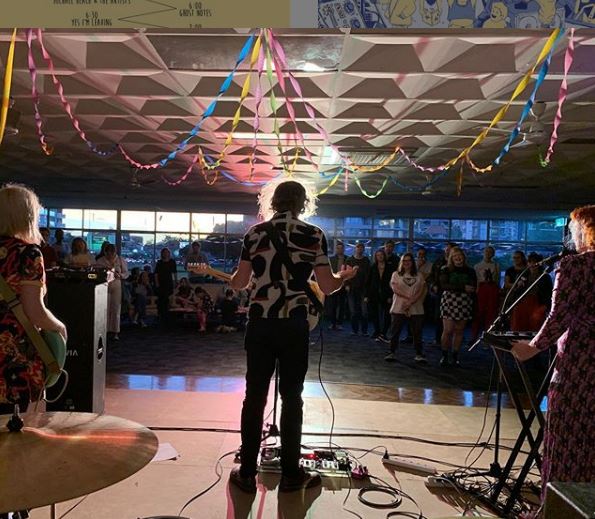
PASCALLE: I think when we didn’t have a unified uniform our clothes were really shooting off in different tangents, we wanted to be a gang. We had a winter and an autumn palette. We played at Girls Rock Camp and we were wearing our autumn look and after our set they threw it to the audience to ask questions… one of the questions was; would you ever think of wearing a uniform?

IAN: This ten-year-old girl smashed us [laughs]. It takes a 10-year-old girl to go, “Hang on, your idea is not defined enough” [laughs]. That’s the focus group we needed to have.

PASCALLE: Jane actually answered the question and said, “We’re actually wearing it right now.” Then from that point we thought, if we really want to get across the message that we’re a gang we probably have to start wearing the exact same thing, so that’s where that came from.

IAN: A lot of bands that stick in your psyche have a look. We choose a very simple look.

You guys had the shirt that said “Product”.

PASCALLE: We liked the idea of that one, we just used t-shirt transfers. We also wore shirts from Seth Bogart’s label Wacky Wacko.

“100% Fruit”?

PASCALLE: Yeah. We also wore a condom shirt, it’s just a shirt that has a whole heap of condoms on it. A lot of people didn’t realise they were condoms, they’d come up to us and go, “Oh, you look so great!” [laughs].

IAN: We played with Regurgitator throughout August last year and that gave us time to reflect…

PASCALLE: Are we ready to go beyond that uniform?

IAN: Yes. We’d been doing this for a while. Pascalle and I were having a chat whether we liked the uniforms or not and what the idea might be going forward. I don’t know where the tipping point was. We just wear what we want just as long as we’ve got a style that meshes.

PASCALLE: The point of agreement was, the idea of wearing lots of clashing patterns instead of block colours; it sets up a challenge for everyone to find something that’s bold.

IAN: We just didn’t want to be, wear whatever you want… come out in a Freddo t-shirt…

PASCALLE: And jeans…

IAN: Yeah, black jeans or something.

PASCALLE: We want to elevate it a little bit. Not too comfortable.

IAN: The band uniform was to distinguish us in the crowd. I’m noticing a lot more bands, a lot more younger bands, doing the uniform. I like it. Now we’re moving beyond though.

Do you have any themes you’ve been writing to for the new material you’re working on?

IAN: We had a title, but I can’t really giving it out and jinx us. There’s no overriding theme other than we’re continuing on from Eruption Bounce. Eruption Bounce was the first album where we were all together, recorded, toured it, I want the same thing to happen with this one. It’s like Part two of this line-up. This album and the last should sit beside each other as companion pieces. The songs are different obviously, the song structures with the last album were kind of tight whereas this one is a bit more elastic. The influences are a little bit more, Eruption Bounce was more American post-punk, this new one is a bit more English post-punk.

PASCALLE: A little more like The Fall.

IAN: Yeah, there’s more ranting in there. It’s more collaborative than ever, so it’s probably going a lot more weirder and some of it’s going more poppy.

PASCALLE: It’s fun, I like what we’re doing. Now is a really fun time in the making of it.

IAN: We sit down to write songs together…

PASCALLE: Then there’s fighting [laughs]…

IAN: Couples must fight, that’s how it works [laughs]. When I write with Pascalle it usually hardens my reserve as to where the song will go, it’s very helpful, even though it must be very frustrating for Pascalle a times.

PASCALLE: Again, it’s another way to work out of you knowing the songs more, what works, what’s easier.

IAN: Yes, Pascalle is a springboard into being productive, essentially. There won’t be anything out this year [2019] but hopefully next year.

PASCALLE: We have some unreleased songs we might put out in the meantime.

IAN: There’s about seven songs we might do a digital release for. We have to get them mixed.

What are you both listening to at the moment? What’s exciting to you?

IAN: Because I do a radio show I’m always listening to stuff [Brighten The Corners on 4ZZZ FM]. I’m not talking whole bands or anything, I’m hearing ideas; I’ll be listening to bands and hearing ideas that I like. There’s a whole lot of stuff.

PASCALLE: We’ve been to a lot of the same gigs; Nun is amazing. We saw a band supporting Angel Olsen in Seattle called, Hand Habits, that were great. I’m stuck on that Destroyer album, Ken, it’s a beautiful album. There’s a few song that if I’m feeling down I’ll go to straight away like a Bonnie Prince Billy song.

IAN: I’m really impressed with Tropical Fuck Storm. It’s a great capture of their band’s name what they do. The lyrical depth and breadth of what Gareth Liddiard does is probably…. I have a different style but I can see a similarity with how he approaches… I’m not as dystopian as that. There’s a lot of inspiration in the way that he attacks it. Nun for the energy, Jenny [Branagan]’s performance, and just the clever way that music interacts. I’m always inspired by seeing older musicians play! Seeing someone like Neneh Cherry play, they don’t get worse, they get better! People that keep playing, I get inspired by that… they describe it as heritage acts…

What?!

IAN: Yeah, they call someone like Ed Kuepper a heritage act.

PASCALLE: That’s what Australia is like, it dismisses older acts.

IAN: I’m inspired by the facet of how people just stick with it, work with it and get better. You see Kim Salmon, Dave Graney and Ed Kuepper, any of the older artists…

PASCALLE: Even though they’re not that old, bands like Regurgitator and Custard, still producing really great music.

IAN: I think that’s the big thing that Australia misses, it’s so catered to the youth market, which fits in with that hyper-consumerist model, churn out the new act… but there’s really a depth to our scene. Because there’s not a big demographic of support, due to the bean counters, there’s that lost scene. That’s what I see as a big opportunity for Australia to embrace more of their older musicians rather than just the young ones, which is what a lot of industry effort goes into. I get inspired by longevity essentially, in whatever form. Bands that stick together and keep playing is inspiring.

You can find THE STRESS OF LEISURE here. IG: @thestressofleisure. FB: The Stress of Leisure.