Original photo by Pierangela Hidalgo. Handmade mixed-media collage by B.
Brisbane’s post-punk, ethereal, goth rockers Pleasure Symbols levelled up and really came into their own with last year’s release Closer And Closer Apart, a moody dream-pop affair. We’re excited to see where they go next, the band have been writing new material. We interviewed bassist-vocalist Jasmine Dunn.
How did you first discover music?
JASMINE DUNN: Slowly, it was always more of a background noise in my earlier years with some significant moments of discovery thrown in. I remember watching my parents dancing to Van Morrison’s ‘Brown Eyed Girl’ in the living room and realising that people can have sentimental attachments to music. On the flip side to that, I grew up in the 90’s so there was a lot of really cringe worthy pop music on the radio and on TV. I learned to dig deep!
How did the creative process begin with your first full-length, Closer and Closer Apart?
JD: I reached out to Steven to see if he would be interested in helping me record what I originally anticipated to be a solo body of work, we had only met once prior to that conversation so the direction for everything was still very unknown. The idea of a solo record quickly moved into talks of a collaboration between Pleasure Symbols and his project Locust Revival, which then evolved again into having him come on board as a guitarist to work on a Pleasure Symbols album, so we began writing and getting to know each other from there.
Photo by Pierangela Hidalgo.
Sound-wise Closer and Closer Apart is quite different from your first self-titled EP, you’ve gone from a more synth-based dark-wave style to a more guitar-orientated dream-pop, shoegaze style; what influenced this evolution?
JD: Four years between writing and then bringing in Steven on guitar meant Closer and Closer Apart was never going to sound like anything previously released under the Pleasure Symbols name. The EP is very primitive overall and I was keen to push the sound further to better represent our influences and songwriting capabilities. We still have a lot more to learn and a lot further to reach, but we’re getting there!
‘Image Reflected’ is one of our favourite tracks on C&CA; can you tell us a little about writing it?
JD: On the weekends I’d drove over to Steven’s place and we’d start with nothing, maybe a very loose idea and have a song or two close to completion in just a couple of hours. It was kind of surreal how easily we were writing together and I kept wondering if these songs were going to turn out horribly because of how easily they were coming together! I’ve never had such ease in songwriting before and I think a lot of that comes down to the trust and respect we have for one another. For ‘Image Reflected’ Steven had programmed the drums the day before I had come over and a good portion of the song really wasn’t changed much from the first take we did.
Do lyrics come easy for you? Who’s one of your favourite songwriters?
JD: Unfortunately not, I hesitate because I want the lyrics to perfectly articulate a feeling or a mood that’s driving each song. Sometimes there’s too many thoughts or it’s a lost moment in time and trying to catch those fleeting moments can be difficult. When it happens though, it’s an incredibly satisfying feeling. I mostly read to inspire lyrics and to get myself into the right headspace and I was pouring through a lot of Roland Barthes in particular while writing for the record. I came across a very well loved, second-hand copy of Colin Wilson’s The Outsider and my best friend had lent me Lorrie Moore’s Self-Help. Both of these books also ended up proving to be great influencing texts for me at the time.
We love the Closer… album cover; what’s the story behind the cover image?
JD: The photograph was taken by a friend of mine Haydn Hall who would hide out inside this restaurant on the Lower East Side in New York. The photo resonated with me as writing had already begun for the record so I had some idea in which direction we were heading sonically. It’s simple and unassuming with a soft focus. It feels like the calm before the storm.
JD: Chris Campion is an old friend from when we both lived in Brisbane, plus he recorded and mixed the very first Pleasure Symbols demos so there is a bit of history there! He asked to do a remix a while back but it took a little while for me to bounce it across to him in New York.
Last year PS toured Europe; what was one of the coolest things you saw in your travels?
JD: We drove the whole leg so we were exposed to a lot, but we saw so much and loved our time spent there, it’s hard to narrow it down! We hope to be back as soon as we can.
Is there anything you’ve been listening to a lot lately? We love finding new things to listen to!
JD: There’s some new Locust Revival tracks that more people should hear, as well as the new SDH record I’m really enjoying too. Still spinning the latest Tempers record too, that’s an incredible album.
Have you been working on anything new lately?
JD: Yes! We’re currently writing for the new record.
Lastly, what do you love most about making music?
JD: It’s a love/hate relationship for the most part, but it’s a vessel to create and a compelling medium to capture a moment in time and that has to be worth something.
Original photo by @somebizarremonkey, courtesy of PR’s Insta. Handmade collage by B.
We spoke to New Zealand musician Peter Ruddell from Sulfate and Wax Chattels in iso from his home studio. He shared with us a little about his band noise-rockers Wax Chattels’ new record that’s finished, new work from solo project Sulfate that’s in progress, writing and recording a song in 48 hours and songwriting in general plus more.
The most recent track that you’ve released into the world is ‘Song For Ruth’…
PETER RUDDELL: Where is Ruth at? [*looks around the room for his cat*].
I thought Ruth was your cat!
PR: It’s my partner’s cat originally. She is the best little thing. She comes and sits next to you when you’re working in the studio and hangs out, she’s kind of like a dog and sits next to you or on your lap and is always super affectionate; I wanted to acknowledge it. I made that track thinking that I needed to block myself away from all the social media and news, because I was finding myself sucked into it. I’m sure you’re the same.
Yes.
PR: I thought of making a song all about her.
Nice! What effect has being in isolation had for you?
PR: For me, it hasn’t been that bad. I know a lot of other people have been struggling quite a lot financially and mentally. I’ve got a really great set-up here where I get to keep my day job, I get to work from home. I have a great little bubble here, its two apartments next to each other and we share a deck together; me and my partner in this house and then another couple of artists and musicians in the next one. A person over there has been decorating the rooftops, he’s been climbing over and painting faces on the satellite dishes with the receiver as a microphone, all these happy faces. It really lightens the mood. He’s been a source of much admiration, keeping everyone’s spirits up.
That’s awesome! I love hearing stories like that.
PR: He changed an air conditioning unit on a bar next door into a Marshall amplifier!
Cool. Over the last weekend you’ve locked yourself away for a 48-hour song writing thing?
PR: Yeah, it’s this thing called ‘Two Daze’. It’s a compilation of New Zealand artists who write and record a song in 48 hours. It’s going to come out for music month which is May. There was something like 20 artists who have written songs for the compilation. It was nice to have a really strict deadline. I feel like everyone needs that every now and then.
What did you find yourself writing about?
PR: The state of living in isolation, which I feel is going to be the theme of the compilation. It’s not a particularly positive take on it. Sonically it’s pretty different to the songs I’ve released both as Wax Chattels and Sulfate up until now. If you compare this track to the song I recorded two weeks ago ‘Song For Ruth’ it’s night and day. That was a real positive stay-calm-everybody kind of tune whereas this one is more guttural. It finishes with a ripping sax solo! [laughs].
Nice! Did you find the 48-hour thing challenging?
PR: Yeah, it was tough. You know when you’ve got a song and you think, this might sound good or that might sound good, but you have no time to pick which version is the best way to go. It’s just about, ok, that’s it! Let’s move onto the next thing. Then drums, ok, that’s a drum sound, awesome, I guess that’s the drum sound! It was kind of nice, ‘cause you know when you use computers, with so many variables. Have you played around with Ableton?
Yeah.
PR: It’s just a black hole, right? Limit yourself with time, which means limit yourself with everything else, it actually means you produce something which is a finished thing. Its punk shit man, it’s putting stuff together and your ability to do it; you yield something which is hopefully going to have an impact on others, which is the whole point of music, right?
Yeah. You’ve been making music for quite a while now, so it’s you relying on your skill, instinct and believing in yourself to do it.
PR: I guess. I’m really curious to see, there’s a bunch of pretty big artists on this list for the compilation and it’s going to be really amazing to see what they create.
Do you learn anything about yourself when you write?
PR: I guess you learn limitations, I learn limitations. I try to go into writing things phonetically with a very clear perspective. I don’t know if it’s the content that comes before the music itself in most cases; the learning about yourself would potentially be evaluating your thoughts and evaluating what you want to write a song about. That kind of yields what you think about the world.
I remember when we were writing lots for the next Wax Chattels record, there was a lot of… I don’t know if this is particularly what I want to say or feel comfortable portraying, especially to the wider community, it’s a tough one sometimes.
Where did you learn to write songs? The members of Wax Chattels all met at a jazz school, right?
PR: We did. You had to write original compositions there. I’ve been writing stuff since I was at school though, with bands all through high school. I feel like coming out of jazz school gave you a lot of options and ideas to create interesting variations on time signatures or variations on form. I feel like a lot of the stuff that I have been producing lately, has been pretty much very stripped down to its barest.
The Sulfate record that I made, it reminds me of… do you know Jim O’Rourke? He talks about how there’s no simple songs, only simple people. I was like, hell yeah! Let’s make some songs that are super simple and see if we can make them interesting in ways that are captivating. For all the craziness of jazz school, I kind of went off all of this technical prowess, I find it limits the effectiveness of what you want to say sometimes.
I wanted to ask you about the Sulfate release, specifically songs there’s a ‘Cyclone Pt. 1’ and ‘Cyclone Pt. 2’; what was the thought behind those? The first one seems kind of calm, like the calm before the storm or even being in the eye of the cyclone where it’s calm, then you have the next track which feels maybe like it’s the storm.
PR: It was written as one song really. I figured they should be spread out on the record so that you could have… I think the reason I did it was for radio play. It was going to be difficult to get radio to play this 7-minute epic, whereas if you can just cut to the heavy bit people will be like “Hell yeah!” It does feel like two distinct songs in a way, Part A and Part B, so I thought why not just separate it into two tracks.
Who are the songwriters that you admire?
PR: Jim O’Rourke is definitely one. Prior to the Sulfate release I was listen to a lot of Yo La Tengo and Dirty Three. Swans is a big touchstone; Michael Gira has this side project too called, Angels Of Light, which is again going back to simple songs. A lot of the simplicity in that material was very inspiring. I’m currently in a place where I’m trying to strip things back and make them as effective and as simple as possible to make them hit even harder. Artists I think can do that well are really onto a good thing.
What inspired that change?
PR: Possibly frustration, frustration at my technical abilities. I just found myself listening to music that was simpler with fewer changes.
Is there a specific way that you wanted to differentiate between Sulfate and Wax Chattels?
PR: If I sit down and start writing something, I feel it goes in one of two ways. It either goes in the noisy, fast, angular stuff that is Wax Chattels – in that case I’ll take it to the band and we’ll work on it, we’ll chop it up and take an idea from Tom and take an idea from Amanda – or it goes in another direction; I wanted to have a separate outlet where it’s more beautiful and I had a clear idea of where I wanted the song to go in its entirety and it suits the Sulfate idea of simplicity and often slowness temp-wise. I feel like I’ve been making a call early on in the writing process which camp it fits into.
What’s a song that always cheers you up?
PR: Oh shit, I don’t know. I don’t do any DJ-ing for this very reason. I go through this playlist on my phone and go, oh yeah, that’s sad, oh that’s sad too, and that’s so sad—it’s a difficult question for me to answer [laughs].
Sad songs can make you happy too.
PR: True. There’s some catharsis in it. I like to think there’s a lot of catharsis in the music that I make, none of it is particularly happy or inspiring I don’t think but, maybe there’s some catharsis in it.
What was the first concert that you went to that made a real impact on you?
PR: I remember it very clearly. I went to the Big Day Out when I was fourteen and I remember walking in and seeing the band Die! Die! Die! play, you know that band?
I do, I’ve interviewed them before.
PR Cool. This was after they just won Rock Quest when they were still in Dunedin, I remember walking in and seeing this band that wasn’t much older than me – they would have been about nineteen – I thought shit this band is incredible! It was a fuck yeah, I should be doing this moment.
They’re amazing live!
PR: Yeah, so good. I’ve seen them five or six times.
What are you going to start working on now?
PR: Well, with this isolation it’s all about songwriting, right? You can’t get together with bands, it’s limiting and challenging and how we react to that. We’ve just finished recording a Wax Chattels record, we’ve wrapped up the recording… who knows when it will be released.
That’s exciting!
PR: I think right now my focus is on the next Sulphate record. My goal for the foreseeable is to have an alternating year, this year should be a Wax Chattels year and next year will be a Sulphate year, I’ll just start working on some stuff there. When we do end this lockdown I’ll hit up my mate David and we’ll make the next Sulphate record.
What direction has the new Wax Chattels record taken?
PR: It’s heavier.
Heavier?! Is that possible?
PR: [Laughs]. We spent quite a bit of time in the studio finding sounds this time. The previous record we wanted to keep as live as possible, this record maintains that live element but we spent a lot more time thickening it up, making the keyboards thicker and the bass more intense. Sonically it’s much more a step up.
Any particular themes you were writing about?
PR: It’s not too dissimilar from the doom and gloom we’ve been talking about [laughs]. I feel the world has changed so dramatically in the last month though, it’s going to be interesting to see what comes out of it, how people interrupt it post this crazy change in the world. All of the songs were written last year, we tracked it towards the end of last year and just got mixes back. The world is a different place.
You said you were exploring a lot of sound in the studio; did you have a favourite sound that you really love?
PR: Personally, my keyboard sounds more and more like a guitar every time [laughs]. Check this out [*holds up an effects pedal*]. There’s a guy in Dunedin called Pepper’s Pedals who makes this thing called “The Satanist” which is black metal distortion in a Wax Chattels box. It’s the most straight in your ear trebly distortion, I love it! It’s all over the record.
What’s one of your favourite songs to play live?
PR: We have a new track on the new record it’s called ‘Mindfulness’. It’s all about how we shouldn’t just try to use the techniques the mindfulness to deal with the shit that we’ve got going on because that’s actually a way of not changing anything, it’s a way of just accepting the status quo rather than kicking up a fuss and actually seeing some real change. That song to play live is so challenging. Me and Tom have to lock in insanely tightly, there’s a whole bunch of aggressive vocals. It’s a thrill to play.
Any other favourites on the new album?
PR: There’s one we’ve been playing live for maybe a year now, it’s called ’Glue’. I can’t wait for the record to come out really. It’s taken a while. I’m going to be excited when it finally does come out.
Original photo by Dougal Gorman, courtesy of Liquid Face. Handmade collage by B.
Northern New South Wales band Liquid Face’s sets are hectic, chaotically energetic and in your face; if anger is an energy, guitarist-vocalist Cal’s performance may have enough to power the entire world! Their recordings are gut-wrenchingly emotional yet at times defensively apathetic. Aggressive and abrasive yet melodic with quirky synth lines and unnatural bleeps, bloops and effects taking the band beyond your traditional thrashy punk band into a futuristic slipstream where they’re riding their own wave; their wall of noise is impressive, you can’t help but feel compelled to climb, taking it in. We interviewed Cal to get an insight into Liquid Face.
CAL: Playing music is a good way to let the devil out [laughs].
I noticed when I was dialling your number that you have 666 in it!
CAL: [Laughs] Yeah, I guess it’s meant to be!
What have you been listening to lately?
CAL: A lot of Billy Childish stuff. I just came out of a late set Slayer phase after going to their show at the end of last year which was pretty inspiring haha.
In what way?
CAL: The fucking power of the riffs, the fucking huge energy haha! In a way It’s sort of what I try to channel in Liquid Face, just being as expressive as you can and letting as much out as you can in playing.
When we’ve seen you play, we totally felt that! What else have you been listening to?
CAL: Still a lot of Lumpy & The Dumpers. Still on The Coneheads as well, that really kicked off the Liquid Face stuff for me. Still all the classics too like Gary Numan and Devo. A bit of the Radiators.
Do you have any particular songs that you listen to when you want to cheer yourself up?
CAL: [Laughs] Cheer myself up, ‘ey? I’m not too good at that [laughs]. Usually I just channel it into a riff or something.
Is there a band that you listen to when you want to indulge your bad mood?
CAL: Warthog is a good one, it really brings that out [laughs]… more Lumpy! Stuff like Sonic Youth, the real early stuff where it’s not afraid to be a super ugly recording.
Photo by Nat Collins, courtesy of Liquid Face.
Who or what was one of your first musical influences?
CAL: Probably seeing Unknown Pleasures [by Joy Division] in my dad’s CD collection; my dad introduced me to that and Warsaw. That was my first introduction into something really cool with a lot happening.
What attracted you to making music yourself?
CAL: I guess, just wanting to play and having a way to express yourself creatively. It’s pretty tempting. And I’m pretty much a recluse and an isolationist! So it’s a good way to fill your time. [laughs]. I like figuring shit out myself. When I was a kid I used to plug out of the back of my guitar amp and plug that into the headphone jack of the computer and make some fuck up recordings. That progressed into getting a bit of a set-up and trying to actually write songs.
How did you come up with the idea for Liquid Face?
CAL: I was playing in the bands DRAGGS and Gee Tee for a bit, there was a lot of music happening in the house I was living in at the time, so it just kinda happened naturally. I was going through a bit of a fucked up phase in my life and I had a lot of shit to get out! [laughs]. Had my drum kit n’ amps in my room and that turned into Liquid Face.
Drums would be a good instrument to get lots of stuff out on!
CAL: Yeah, it’s my favourite instrument for that. There’s nothing like the feeling of beating on the tubs! My parents bought me a drum kit when I was a kid, they got rid of it soon after getting it [laughs], that really sparked my interest in making music though. I got a guitar a bit after that.
When you started Liquid Face I know you did demos yourself and you started doing it using voice memos on your phone…
CAL: Yeah, I did. Then it went into Garageband from that. I tried to do the first recording on tape and I put it in a tape recorder and it just spat the thing out everywhere, then I was kind of done with that format for a bit [laughs]. I’ve been living in the digital age now.
When you started it was just you by yourself, then you had a line-up with two drummers, when I saw you play you had one drummer and now you’re back to recording by yourself again, right?
CAL: Yeah, we’ve had a bit of roller coaster ride of members in Liquid Face. It’s been a pleasure with everyone but it changes quite a bit and now I’m living out in Mullumbimby where I haven’t found people play a similar kind of music, so I’m just going to do it all myself for now.
Nice! That’s kind of cool though because you can do absolutely anything you want.
CAL: Absolutely! We were meant to start jamming for new recordings with our drummer Lachie but then all of this [Coronavirus] shit happened and we can’t get through the borders, so it’s just me again.
You recently just dropped a new song ‘Animosity’; what was inspiring that?
CAL: A lot of bad feelings [laughs]. Sometimes I use making music as a way to not have to think about stuff, I guess. It’s a bit of a mix of everything really, disillusionment, I don’t know what the fuck is going on with anything in my life really. I just got fucking fired, all the good stuff. It’s pretty much record how I’m feeling or a life of crime! [laughs].
You also released the track ‘Teen Man’ recently too.
CAL: Similar stuff inspired that one but it’s almost like a self-review, aging but without the maturity and never feeling satisfied with anything that you do. I’d like to be a lot more mature and have my shit under control but, that’s not really the way things are going.
How did you record those songs?
CAL: I’m just recording them all at my house right now, just going into the old laptop. I put down a bass guide first then put drums over the top and then layer everything else over that. Vocals are done last.
One thing I’ve always loved about Liquid Face is your guitar tone, it just cuts through everything.
CAL: It’s a good representation of the feelings we’re trying to convey that it just kind of stabs ya! [laughs]. I’m really obsessed with gear, I’m a bit of a gear hoarder. The kind of gear that I was using, really bright guitars and amp, Jazzmasters, Music Man Amps, just trying to tap into that really fucking harsh sound—reminiscent of Sonic Youth and Roland S. Howard I guess.
Live I’ve seen you use a circuit bent baby doll thing! I’d never see anything like that before.
CAL: Yeah, it’s pretty cool, huh?! Baby’s Gone to Sleep For Now. So im just using little Korg things to make some fucked up noise.
I love the weird, interesting sound you layer over the top of the guitars.
CAL: It’s hard for me to keep things simple and really not clutter I all because it’s me just writing it and I’ve never been really very good at denying myself any little pleasures. Any little bleep bloops and shit I can put on their on do!
What’s one of the most fun pieces of equipment you use?
CAL: Still the Jazzmasters, I’m really enjoying them. The trem on them! Dipping into notes and shit like that and going fucking ham on it! Good Gats. But just converted my Mustang to a 12 string. That’s pretty fun. [laughs].
Photo by Nat Collins, courtesy of Liquid Face.
Last year you release your debut LP; can you tell us a little bit about it?
CAL: It was the amalgamation, we wrote the songs two years before we put them out. We hesitated on it hell hard. We weren’t sure about the recorded sound but just though, fuck it! It is what it is, a D.I.Y. thing. We recorded at our old drummer’s jam space, I mixed it myself. Sat on it for a bit and finally put it out.
How do you feel about the LP having it out in the world for about a year now?
CAL: I’m happy with it as a statement. It was a real learning curve because it was the first full length release I’ve mixed myself. It could have been done better but it’s the intent of the sound that matters most.
Did you teach yourself to mix?
CAL: I went to Griffith Uni and TAFE in Brisbane but just dropped out of both when I learnt all that I needed it know.
So many people I know that have done courses like that usually end up dropping out, hating making music or when they do make it they just compress the fuck out of it until all the soul and fire and feeling is gone.
CAL: Yeah. All the industry shit is so twisted! It feels really dirty.
Totally! It’s so gross how the music industry operates a lot of the time. The most interesting music to me is always usually outside of the industry on the fringes.
CAL: I totally agree.
We’re big fans of your song ‘Isolate’; can tell us about making it?
CAL: Again It was inspired by the gear. I was using bass strings on a fucked up guitar with a weird tuning for writing that song. It was just about that recluse life [laughs]. The sound and the beat is what got it started; the drum beat, just getting pumped up off of that!
You do Liquid Face’s art as well?
CAL: Yeah all apart from apart from the cover of S/T. Sarah our keyboardist did that.
Did you study art or do you just like to draw?
CAL: I was really into it before I got my hands on a guitar, I filled up my time with drawing. I stopped all of that when music came along. Now I’ve started it up again so I have some thing to put on covers.
Do you have any favourite artists?
CAL: not really, I like Raymond Pettibon. Monochrome shit. album art work, that probably inspires me more than anything.
You screen print all your own merch too? Is that self-taught?
CAL: Yeah I do. My parents actually taught me to do it, they’ve been doing a little side hustle for years. keepin shit D.I.Y [laughs].. It just feels right to be doing everything yourself, especially for the music we play.
Is there anything else creative that you haven’t tried yet but would love to?
CAL: Maybe doing a bit more creative writing with other people in the future would be cool, but I’m too much of a control freak right now to give it up [laughs].
What are you working on right now?
CAL: This morning I’ve been working on the next song we’re going to release. We’re sitting on a bit of a stockpile of demos right now! The plan is with all this isolation shit is to just keep locked indoors and keep recording. I’d love to put them all together into a physical release, the plan is just to keep sprinkling them out there for the time being, give people time to digest them and think about them.
Is it the same kinds of themes you’ve been writing about it the past that’s been shaping the new songs?
CAL: Yeah pretty much, indulgence, anger, impending doom, confusion, finding your place in the world. I’ve pretty much done all of the instrumentation for the next batch and now I’ve painted myself into a corner where I have to figure out lyrics for them now.
Why is music important to you?
CAL: Music gives you a feeling like nothing else. It makes me excited when nothing else does. It’s something that I can always get stoked about!
Please check out: LIQUID FACE. Liquid Face on Instagram. LF’s song ‘Animosity’ features in cassette compilation A Long Time Alone out on Blow Blood Records – get it here.
The long overdue next edition of GIMMIE RADIO, where your friendly Gimmie Zine team pick some tunes for your enjoyment.
Spotify’s embedding of playlists currently has some bugs.. So for now, we’ll just have to link to it without an embed. Here’s the tracklist and a link to it at the bottom.
Melbourne post-punk band Bench Press released an album to shout about last year, their sophomore LP, Not the Past, Can’t Be The Future was motivational, thoughtful and witty power-punk. As vocalist Jack Stavrakis was working on himself, the band was working on the album, the transition and transformation that came in ‘Baby Steps’ sounds good on the band, they’re still angry but that energy is more focused. Jack spoke to Gimmie about all this as well as dealing with anxiety, how Bench Press came into being, songwriting, doing better and working in “the industry”.
What have you been up to today?
JACK STAVRAKIS: I watched the final episode of Better Call Saul for the season, then I exercised.
Keeping fit in iso!
JS: Not so much keeping fit but getting fit for the first time in a long time ‘cause I got nothing else to do.
How did you end up being the vocalist for Bench Press?
JS: Originally Bench Press formed from two bands. Me and the original drummer used to be in band called Bowel Movement, which I sung for, and then the bassist and guitarist used to be in the band, Luna Deville—they were both crappy pop bands really. Pretty shit stuff. We played a couple of shows together. Bowel Movement broke up first then Luna Deville broke up pretty soon after. For their final show they were doing a B-52’s cover and they had a female singer and they wanted someone to do the male part because none of them could sing. We didn’t really know each other all that well, but they asked me to do it and it went really well. It was a lot of fun! After the show Morgan and Lewis awkwardly asked me, “so, we’re looking to start a new band, it will sound nothing like this. We like Shellac and Jesus Lizard”. I wasn’t sure if they were asking me to sing or not? I was really drunk and I left the conversation and went home. I asked my girlfriend; were they asking me to join the band? She’s like, “I don’t know just ask them! If they say ‘no’ and they’re not interested then you never have to see them again anyway!” I asked them and they were interested, we trialled one other drummer and I was like; what about Jordan from Bowel Movement? He came on-board and I guess that’s how all of that happened.
What do you get from singing?
JS: I can’t play an instrument and I love, love music! I started singing because I couldn’t play an instrument well enough and I really wanted to play in a band; no one I knew could play, I figured if I could rope some people in who could play, I could just figure out singing. At first it was a way for me to play music without having to practice anything, that’s how I used to see it. As time has gone on and I’ve taken it a lot more seriously, the big thing for me is that it’s a way to get my opinion and my views of things across, it’s also a bit of a cathartic release. I guess a lot of people that would yell like I do would say that. I’m a fairly anxious and awkward guy and being able to talk about that and hopefully help some people that feel the same way understand it better.
I’ve seen you play live and you would never tell that you’re awkward or anxious.
JS: No, not on stage, I suppose not. The pacing is me feeling anxious and an extension of that, and me just feeling really self-conscious. It’s the only thing I know to do! I guess it’s not so obvious when I’m on stage. People who know me say that when I’m on stage it’s a different version of me, it’s still me but an extroverted version of myself, more out there and a little more in your face.
Have you always been an anxious kind of person?
JS: I’ve always tried to figure that out and look back on how I used to be as a kid and figure out if I was. I’m not sure that I have always been. I think it’s important to say, I don’t think I’m the most anxious and awkward guy in the world, I think what I go through is fairly mild compare to lots of people I know that go through something far more serious. It still feels real to me though.
Photo courtesy of Bench Press bandcamp.
Totally! It doesn’t matter what degree others see it as, because to the person that’s experiencing it, it can be so debilitating and the worst thing in the world when you’re in it; at least that’s how I’ve felt suffering severe depression and anxiety at times in my life.
JS: Exactly! That’s why I want to normalise that more mild thing, because I think it’s something that does affect a lot of people. People can be a little afraid to talk about stuff. We all have friends that have friends who suffer from various sorts of mental illness and there’s no point comparing yourself to what others are going through, it’s all very valid and it’s important for people to understand those things and feel normal about them in order to feel better and to start improving. Bench Press has helped me come to grips with who I am and what I’m like and how I deal with situations, how I react to certain things.
The second album the title Not the Past, Can’t Be the Future was a reference to the fact that I don’t always think I was like this, I wasn’t always anxious about things. The title of the album and the album itself was trying to bookend certain feelings that I have about myself; I wasn’t always like this in the past and I want to move past this and not be like that in future, how I am now.
I wanted to ask you about the title, the way I interpret it is, it’s not the past or the future that matter or define us but it’s right now, the present, because that’s when we’re truly alive and it’s the only moment in which we can really work on ourselves and take action!
JS: Yep, yep! For sure! That’s a perfectly good application of the title as well. Everyone has their own ideas about it, anyone who talks to me about it has pretty much been in the same ball park. I’ve never seen the singer or the person who is trying to get the message across as necessarily the holder of the truth of it. Whoever looks at it and takes something from it, that’s how they interpret it and how it’s meant to be taken. Art is up for interpretation. It’s really cool that everyone has different ideas and gets different meanings from what I am saying—that’s the great thing about art and music in general.
Where does the song ‘Old. Self. Doubt.’ come from?
JS: The gang vocals are meant to be me saying, I’m so unsure about these things and saying, no, that’s actually not what’s happening… work is where I get most anxious and I second-guess myself all of the time. I really struggle with various aspects of my job and how I feel about myself. It’s sort of meant to be me telling myself that everything I’m thinking in those times is not the reason these things are happening. It’s a reference to a particular job that I had in the past where I used to just put everything on myself, like everything was my fault if things were going terribly, when it wasn’t necessarily the case. I took a bit of distance from there and my friends were looking at it going “no, that’s not the case, it isn’t your fault! These things can’t be controlled”. I guess it’s a play on how I felt in the moment at the time and a more realistic, objective way of looking at it, which came from my friends and the people around me and the distance.
What kind of work do you do?
JS: I work in the music industry. I’m a venue booker.
Ah, ok. I could see how that could be stressful. I’ve always loved music my whole life, since I was a kid I always thought I might work in the music industry so I could work around the thing I love the most all day, music. I wanted to be a part of it so bad, when I finally got there – I saw the workings of major labels, touring companies, mainstream press, PR companies etc. – I found out the reality of the music industry and I hated it!
JS: Yep, yep! It was exactly the same for me. The way I got into it, my dad was always involved in the music industry and he ran a publicity company and that company booked a venue. One of the bookers of the venue left my dad’s business and he didn’t want to re-hire someone to book the venue—I was twenty and begging him to let me do it! There was no way I should have gotten the job at the time, I was not remotely ready. I begged him every single day, eventually he said “yes, but it was my funeral!” Nine years on and I’m still doing it. I guess I did a good job, which is why I’m comfortable telling that story; originally, I thought everyone would judge me for it but, I feel better about my role now and that I deserve it. It definitely isn’t the idealised dream that you have as a kid. You think that you’ll book all the most amazing bands and you’ll see the most amazing stuff ever and that you’ll do this and that! It’s not quite like that. I still love it though, I do get to sit around and listen to music a lot, that is the best thing in the world to me. There are definitely negative aspects of the industry that are there and strong.
I have met some very good people in the industry though, that are doing great things. Having them and someone like you in the position that you are there is opportunity to change the negative things and how things have always been done.
JS: 100%! The longer that I’ve been in it, the more great people I have found. You choose who you have around you, you can choose who you like, respect and work with. I’ve stumbled into incredible, incredible musicians and people. You distance yourself from the aspects you don’t like, that’s the key.
I think the majority of people get into it because they truly do love music but then because of the industry and having to treat art as a product—the bottom line being money—can make people lose sight of why they loved it and got into it in the first place. Then it just becomes a job as opposed to a passion.
JS: 100%! It can be hard as a venue booker, at least when the venues are running. I book nine shows a week, it’s my full-time job. There’s no way you’re going to like all the bands on the shows, three bands per shows, that’s twenty-seven bands through the venue each week. I used to find that a lot harder to deal with but it’s also allowed me to find a lot more good music. I like applying that to Bench Press, Bench Press is my excuse to book every single band that I love. Every show we play has bands that are a reflection of what we like as a band, that’s the fun part! I love booking my favourite bands and helping people get a leg up.
It was so cool how you came up here and toured with Dr Sure’s Unusual Practice!
JS: It was so lucky and the best experience ever ‘cause that band is truly, truly mind-blowing and special!
Absolutely! Dougal from Dr Sure’s is one of my favourite Australian songwriters. Your album Not The Past, Can’t Be the Future to me is almost like a notes-to-self kind of record.
JS: 100%! It’s a reminder. The album is going to exist as a reminder of how I can be and how I should try to be.
The songs on the record ‘Baby Steps’, ‘Take It Slow’, ‘Better Mirror’, ‘Good Guy’ and ‘Enough’; there seems to be a bit of a theme there.
JS: Yes! That’s how I wanted it to be: what I am? What I could be? How I should be? I wanted to touch on all of those things. I hope I did it?
Totally! It’s really inspiring, especially the song ‘Baby Steps’: exhale, stand up!
JS: I’d just seen a psych for the first time and they were like “take a deep breath, all the stuff is so obvious and it doesn’t always work but these are the things you have to do”.
What about the song ‘Take It Slow’?
JS: ‘Take It Slow’ is about… you know when you’re in high school and they’re like you have to do this and you have to do it well and you gotta go to Uni and do this and that… they make you feel rushed. Even now I look around at some of my friends – we’re all in our late 20s now – people still feel that; I feel it stays with everyone. I don’t think necessarily moving so quickly and panicking into things is the right way to do it. It’s a reminder to be slow and that if I carefully do everything, then I or anyone can achieve what they want to. Sometimes I think the idea of taking things slow is a little bit privileged, I have the ability to take things slow and ease my way into things to make sure everything is right but not everybody has that opportunity.
I really love your lyrics, I feel like they’re really thoughtful.
JS: Thank you. I try really hard to write about something that I care about, everything has to be about something I care deeply about. I can’t bring myself to write a song that doesn’t mean anything to me or potentially someone else. I can’t write silly, I’m not going to sit around and write about chugging on beers and smashing bongs! I love drinking beer but I don’t think it’s something important that I have to sing about; I’d feel frivolous like I am wasting an opportunity.
Every song is a chance to get a point of view across and hopefully trying to impact someone. They all impact me and change me in a certain way and gets me thinking about different things more, but it’s all about trying to help someone else and to try and help them change in some positive way—that’s one of the most rewarding aspects of Bench Press. I occasionally will get someone come up to me and say “Thank you so much, your song helped me” and inside I’m like, what the fuck?! That’s so crazy I could help them. I think it’s the most important thing that a lyricist can do. I don’t want to waste my time writing frivolous songs.
When writing and making the record; what was one of the biggest changes that you saw within yourself?
JS: It was a real moment of transition for me from the beginning of the album. The previous album was angry, it was me feeling upset about various things. When we started writing for the new album, the first song we wrote was ‘Respite’ and that was turning point for me because I was actually starting to get help and I was actually starting to open up to my friends. People in my circle started opening up about all these things, it was a moment of transition of looking and seeing a problem and trying to find a solution; the first album was seeing problems and the second was trying to find solutions to problems.
It started with ‘Respite’ then one of the last songs would have been something like ‘Old. Self. Doubt.’ Which were the last lyrics I finished. I could see the problems and tell myself that that’s not the way things are and that things can be better—that I can change them!
It’s a really cool thing when you finally realise your own power, your strength and resilience and your ability to change things!
JS: Totally!
Was there anything that happened in your life that sparked the changes?
JS: [*Takes a big breath*] Yeah. My work life was improving, that was one thing, but to be honest the big thing was me and my partner was approaching ten years together and I was having problems. Problems which stemmed from my own problems; I saw myself as the problem and that I had to fix it because otherwise I was going to lose the most important person in the world to me. That was a really big catalyst, to start realising that I needed to work on myself and to not just be upset and angry all the time.
I totally understand. My husband and I, we’ve been together over 11 years – how cool is it when you find that forever person?! – and there’s been a lot of things that I’ve had to work on within myself too. Sometimes you don’t see how your behaviour is hurting the one you love most, facing those truths are hard.
JS: Congratulations! It’s incredible, and realising that if things are going to work it has to come from changes that I make or in your case, that you make. These things were all happening round the time of our album. ‘Home’ is about my life with my partner, Bianca.
Good name!
JS: [Laughs] Yes, exactly.
Where do you think your writing will go now? Have you started working on anything?
JS: Yeah, we’ve started working on new songs. We’ve got one finished that we’ve played a couple of times. We have a whole bunch of ideas on the go, it’s been a bit hard without prac[tice]. I’ve always liked the idea of writing something political, but I’m always really scared about writing political because so often it can be cliché and obvious. I wanna start moving down that road, I don’t know how well it’s going though. It’s more political but still to do with identity and self-help, exploring it in a bigger way is what I’d like to do.
Cool! Whenever I listen to your last album I feel like I have my own personal cheer squad!
JS: [Laughs] Excellent! That’s awesome!
What kind of things would we find in your music collection?
JS: Oh heaps of stuff! I’m a massive, massive nerd when it comes to music! I’m a hoarder and I’m a digger!
Same!
JS: I saw the interview you did with Matt from Shepparton Airplane and he talked about Fugazi a whole bunch—Fugazi are my all-time favourite band! Anything to do with that scene, Rites Of Spring, Happy Go Licky, Bad Brains and Teen Idles, all that stuff are at the heart of my collection. I really love this Japanese band called CHAI that toured here last year…
I love CHAI! [*sings*] You are so cute, nice face, c’mon yeah!
JS: [Laughs] Yes! They’re just the best. They are the happiest thing ever, so I play a lot of that! I listened to Melt Banana this morning, which is great while I exercised.
Have you seen how Henry Rollins does his exercise?
JS: No, how?
Well, you know how much he is fanatical about music? Well, he’ll play a 7” and while the side’s playing he’ll see how many push-ups or whatever exercise he’s doing he can do, then when that side is finished he gets up and flips the record then does another exercise. That’s the best interval training circuit idea I’ve ever heard of!
JS: That’s so great! [laughs]. A couple of years ago we found out that a friend of my dad’s has a record store, I think it’s in Newcastle, and Henry Rollins came in to buy records – right after our first album came out – apparently Henry was asking for recommendations. The guy pulled out our record and Henry asked, what it sounded like? He said “sort of like Fugazi” and Henry was like, “nope, not interested” [laughs]. I just love that. Apparently since then he has listened to the record.
I was a late bloomer with music, I was around seventeen when I started figuring it all out and stopped listening to crap. I was listening to The Saints and the Sex Pistols, really obvious things like that and my dad gave me Fugazi’s In On the Kill Taker. I remember watching a YouTube clip of ‘Last Chance For A Slow Dance’ and just seeing Ian and Guy play with so much passion, that was one catalyst for getting me into music.
The other one was, I’m a massive Pavement fan as well, I read an interview with Stephen Malkmus and he said: I think anyone can sing as long as they can fit a tune to a song and that they’ll make it work no matter how terrible their voice is essentially. I was like—I can do that! Ian and Guy made me want to be in a band. Steven Malkmus made me realise I can sing, badly! [laughs].
Have you ever had a real life changing moment?
JS: I don’t necessarily think of things like that, I think of things as tiny incremental changes over a long period of time.
‘Baby Steps’?
JS: [Laughs] Exactly! That’s just it and how I’ve always seen change in myself. When I was in high school people always said that they couldn’t live without music and I hated that and thought, you fucking idiot, of course you can live without music! Thinking that then, I feel hypocritical in saying it now but, music as a whole has been the thing that has impacted my life the most. It’s been where I’ve spent the last ten years of my life, working. I’ve been playing music since I was seventeen. These are the things that I base my life around and these are the things where I’ve met everyone that I know and love, it’s also influenced everything… stuff like Fugazi doing cheap shows and benefits, had me thinking about those things when I was younger. I guess music over time, in incremental ways has helped shape me rather than one big moment.
What’s something that you’re working towards changing now?
JS: I started this year with different goals to what I have now, I’ve been planning on going back to Uni and doing counselling or social work. It was going to be a big year for the pub I book, the first three months were incredible. Now that that is gone for the foreseeable future, I’m just trying to relax, I’m trying to feel calmer and lose the panic that I get when I’m in a situation I don’t’ want to be in. I’m trying to improve my overall health, physically and mentally. Figuring out what I want to be.
What are some things that help you relax?
JS: There’s the good and bad thing of pot [laughs], that helps me relax or sometimes it does the total opposite! Exercise. I’m trying to see isolation as having this time to completely relax and decompress and make sure that when I do get back to work that I will be in the best mental shape of my life. I’m trying not to do too much and not freak out about things. I’ve been playing a lot of video games. I’ve been trying to read. Just really, small, basic things. I just want to be the best that I can be.
That’s so great. Thanks so much to speaking to us.
JS: Thank you for including us and interviewing me.
It was wonderful to finally get to chat with you. As a fan of Bench Press I’ve read a couple of other interviews with you and the things you get asked always annoys me; you write such great songs and music I’ve always wanted to know more about that… not an answer to some novelty question you’re being asked so the writer gets to feel clever about how funny they can be!
JS: I think part of that is having a publicist hit someone up to do something on your band and the publication may not necessary know us or really give the album a listen beyond once if that and do it as a job and not a passion.
I’ve had bands tell me that they wanted to get press in different Australian music magazines and street press and they were told it would be $200 for a review and $400 for an interview in one particular publication! Having interviewed Creatives and written for all kinds of publications and making my own zines for the past 25 years, I found this absolutely crazy! It’s a terrible practice, very dishonest to your readers accepting money for a feature and not telling them it’s been paid for.
JS: Yep.
At least now I know why there is rarely anything good in those publications!
JS: Yes, it’s one of the most upsetting things to me. We got hit up by a publication and they said they would love to interview us. I thought that was cool and said we’d love to do that. Then they sent us their rates! Like c’mon! Why would anyone do that? Not everyone knows that happens and is privy to the fact that bands have paid for this stuff. Once you know you can’t unsee it, and when you read interviews in the publication you know someone paid for it—where’s the care? Where’s the love?!
Exactly! I can’t believe people pay for that shit. Just like that that bullshit pay to play or in some cases pay for the possible chance to play on shows scam! And application fees for bands for an “opportunity” to play showcases that are already getting money from sponsors and grants. It’s sad that it’s often younger, upcoming bands that do this because they think that’s what you do! This is where I see the industry exploiting bands. I may be old school and an interview purist but shouldn’t you interview a band because you like them? You’re a fan? Don’t you simply want to share ideas and get an insight into what they do? Put that out into the world to document culture now? Inspire others?
JS: Anyone asking you to pay money to interview you is taking advantage of you. I find it really ill. I’ve actually thought about writing a song about this!
Do it!
JS: Every time I try, it comes out too obvious, like how earlier I was telling you that happens when I try to write political stuff. I want to wait ‘til I have that perfect ammunition, that perfect phrase—it will be easy then and all the annoyance will fall out of me! [laughs].
And like I was saying before, paying to support bands is wrong too. They should be paying you to play! And paying you a reasonable amount too, especially if it’s a bigger band/show/tour. I understand people really wanting to support bands they love and get in front of bigger crowds, but at what price to everything else? It sets a bad standard.
JS: We got offered a fairly big support slot late last year, they’re one of my all-time favourite bands. The money that was offered meant that we would have lost money to do the show! In my mind they were one of the bands that helped bring punk to the fore, I couldn’t understand it, so we said ‘no’ to the show. That’s actually what our new song is about! [laughs]. We were asked to play and we would have lost money, I just can’t wrap my head around that. Maybe the band had no idea how much we were being offered? It made me ill. It’s taking advantage of people and it’s totally, totally unfair.
Original photo by Alex Kress. Handmade collage by B.
Punk rock is something that is always evolving, it’s exciting and foundation shaking, and its next evolution is here now, in the form of band Special Interest. Combining elements of no-wave, glam and industrial their forthcoming sophomore record The Passion Of… is electrifying! Vocalist Alli Logout is on fire, delivering an impassioned and at times vulnerable performance; when Alli sings and screams, vocally struts and huh huhs—you believe it! The sentiments and attitude hit straight to the heart. You can’t help but want to shimmy and shake to the angular yet danceable tracks, the band is sounding as focused and tight as ever. We spoke to Alli to find out more.
How are you feeling today?
ALLI: [Laughs] I’m feeling all sorts of things today. I’m currently in the woods. We were in the UK whenever the border closures were happening so we had to get out of there. We flew into New York and New York was closing, somebody was in my room in New Orleans so I decided to go to a land project in Tennessee and I’ve been stuck here with my tour bag; it’s the best place that I could be. I’m doing fine. I had to go to Walmart today and buy an extra pair of panties and socks [laughs].
Nice!
ALLI: My tour bag just has clothes in it, leather and latex and plastic. I’m literally in the woods now [laughs] and can’t go home, it’s funny.
How did you first come to performance?
ALLI: I had a little friend in high school, his name is Patrick, I loved him; he got me into punk. He was trying to start bands, he wanted to front bands and was really bad. One day I would watch them practice, whenever he went to the bathroom I would play. I did the thing and they were like, “Whoa!” I was like, ‘Yeah, I want to do this! I need to beat Patrick at something’ [laughs].
I saw a kid with a Bad Brains t-shirt at a Waffle House and said ‘I want to be in a band!’ He was like “I have boys that want to be in a band”. I was like, cool, then I bragged to Patrick that I had a band now and he was like, “Fine. I have a show for you in a week”. I started my first band and we played that show in Austin, Texas; it was really funny.
How did you discover your voice? When did you start singing?
ALLI: I grew up really religious. I grew up in a religion that only believes in using your voice to glorify the Lord. The ceremonies were very vocally influenced, church hymns. I liked signing in church, so I guess that’s where I started singing. I like a lot of gospel hymns. I like the way they’re composed and the vocal structures of them. That’s where I first started singing.
What helped you develop your confidence?
ALLI: I’m just kind of a bitch. Especially when I was younger, I just thought everybody was stupid all the time because I was around really stupid white punks all the time. They were stupid and I was like, I’m just better at everything! [laughs]. I know it’s awful but, I was just around really awful white teen punk boys for a very long time. I spent a good majority of my life really wanting to fit in and finally I just came to a point that, there’s nothing I can do ‘cause y’all are trash. That’s pretty much how all of my musical projects started [laughs].
What was it like for you growing up as a POC in Texas? I ask because for me growing up here in Australia, I also felt that no matter what I was involved in, or even just school, I was pretty much the only brown person, which was really hard; racism, not seeing yourself represented anywhere, being treated differently to the white kids, stuff like that.
ALLI: Yeah. Also being Aboriginal in Australia, that has such a wild history! Growing up in Texas was really hard, very, very racist, very blatant racism everywhere, constantly rebel flags everywhere, getting moved to places in a restaurant where people can’t see you. I had a white mother, she’s half-Indigenous, we found that out all recently ‘cause she was adopted. It was really, really rough. Things were still pretty segregated, all the places I grew up, because they were just small Texas towns. It was really rough, very deeply segregated. I went to a mixture of predominately black schools and predominately white schools. I’ve always been pretty bad at reading and spelling. I was thinking about the very first time that someone called me ignorant and it was a white teacher that called me ignorant, I was the only black kid in that class. I don’t remember what it was for but, I just remember crying and being like; what does that mean? School was always hard for me, especially because of racial segregation stuff. It’s funny because reading was so hard for me they put me in an English as a second language class, there was a lot of kids from Mexico.
Wow!
ALLI: Yeah. It’s so cuckoo, my whole education experience was miserable and teachers consistently called me stupid. It just made me so insecure with myself constantly, that’s still something that I very much carry, it’s still playing out today; it’s been on my mind a lot lately. White authority figures are always really, really miserable to me, and every black kid and every Hispanic kid in our school. It was really, really awful. I’ll leave it at—awful! [laughs].
In my experience I was always not black enough to hang out with the black kids and not white enough to hang out with the white kids – my mother is white and part Chinese, she was adopted too – so I’m kind of caught in the middle of everything.
ALLI: Yeah, that’s an evil mixed-kid nuances that we float in and it’s a really weird place to be ‘cause – I think that is an experience of anyone that’s mixed race – you don’t really fit in anywhere. That definitely was a big part of my life, of definitely feeling like I don’t fit in anywhere, specifically the white side, it was so violent and miserable what they did to kids. It was really awful.
Through doing creative things and through creativity, do you kind of in a way then get to make yourself, to be whoever you are or want to be? You create your own world.
ALLI: I guess so. I feel like the way that my creativity works is, I’ve been very influenced a lot of my life because of my awful life experiences and experiences in school. I’ve been very influenced by spite, wanting to prove people wrong, that has worked out in really good ways but also in really bad ways. Like, the only reason that I went to school was to prove people wrong, everybody I know came from shit and I always knew that I was going to be shit! That’s the same way that I got into punk, wanting to prove my friend wrong, that I could be better at it than him [laughs]. I create because I literally have to, because the world that I live in is not a world that I want to live in. I tried to create so that we can all figure out how to be together. And… to just have fun!
Special Interest have a new album coming out?
ALLI: Mhhmm. We just literally had a meeting on Houseparty and figured out the date we’re going to release it, so that’s exciting!
Yaaaayyyyyy!!
ALLI: Yeah! I’m really, really excited about it. I think it’s my personal best work in music thus far in my life. We put a lot of time and effort into this album. It’s been almost two years since our last album [Spiraling] came out. We all just have really ridiculous lives and everybody works a bunch, but whenever we come together to create, it’s unlike any musical collaboration that I have ever had in my life—that’s why I love the band so much. It’s so much fun and it’s so easy, that’s what’s great about us, it’s so easy for us to be together and make stuff, it comes out really well.
The first album was kind of predominately improv in the studio with a lot of my lyrics. ‘Young, Gifted…’ was improv’d, I wrote some other things that day of. I only did this once with the new album but, I spent a lot of time writing the lyrics and thinking about them and describing what was going on around me and how I’m feeling. It was very cathartic. I’m very happy that it’s going to come out soon too.
I can’t wait! I’m so excited. What kind of moods and emotions were you writing from?
ALLI: Oh my god! I have so many moods and emotions [laughs]. A lot of this album is very much based on the nuances, in the in-betweens, of feeling and knowing that we need to be better but also being consumed by queer party culture [laughs]. A lot of my lyrics are kind of satirical but not as much this album, they’re a lot more straight forward. I wanted this album to be urgent and to be towards something, to be something that can propel us forward in a way that makes us seen and heard. But, also fun and also knowing that we want everything to blow up in the process and know that our people are being taken care of. I wrote a lot from that place, from the fun times to the intense times, to questioning everything around me in my own reality that consistently plays tricks on me. Also, the relationships I’ve been in and the ways that I learning about myself and my own obsessive behaviour. Writing about co-dependency and how consuming it is; how much it hurts to be in those patterns consistently. I wanted the album to have that emotion to it but, also moving us forward. Moving forward with love is what the album is all about.
Was there a song on the new record that was hard for you to write?
ALLI: Oh my god! Two of them… a few of them… actually they all were! The very last song called ‘With Love’ it took me weeks to write. I went my friend’s house and there’s people coming in and out of there all day, they’re all the people that I love and that are consistently inspiring me. I worked in a room in my friend’s house while everybody was hanging out. I’d drink a lot of matcha and write what was coming to me, it ended up being really beautiful, but it’s very wordy, very much a poem. Whenever I hear that song, I look back and feel what I was feeling, that feeling of being around people that you love.
‘All Tomorrow’s Carry’ was… easy to write.
‘A Depravity Such As This’ was the only one I wrote in the studio with Maria [Elena Delgado; bassist]. Maria was like, “what’s this song about?” I’m like, a girl. And she’s like “uhh… they’re always about a girl!” [laughs]. She’s like, “we don’t have a song about the city” and I’m like; what if I write a song about the city that sounds like it’s about a girl? [laughs]. That was improv’d in the studio and it’s one of my favourite on the album.
‘Street Pulse Beat’ was the last one I wrote and I couldn’t figure out a vocal pattern for it, it was really hard, but we needed another song on the album. We were like, this one is slow and really glam but, I couldn’t think of anything. I went in and did a take and it was just awful! It was so embarrassing, what I was trying to do. I told the band from the second that we jammed it out that I feel like I need to sing on this track, use my voice and not scream. They were like “no, no, no, don’t sing, maybe try a slow wordy thing”. It was just bad. I went in there one day without everybody else and did a take like, ok, I’m going to try to sing this. I put some time and intention into the lyrics, it was really hard to write because I was in the middle of a breakup, that didn’t need to go as bad as it did; it was just me holding on to something that I shouldn’t. Also, being deeply incompatible with somebody but loving them regardless.
Sometimes the way that I have learned to love has been out of a really awful need of survival and it’s really bad whenever those things play out in a way that ends up hurting you and the other person. I finally figured out what I wanted to write and went in and sung it and they were like “we love it!” I said, I told y’all I need to sing it from the jump! That one was hard and it’s really hard to listen to for me. It’s really glam ad cheesy and fun. I hope that it translates to folks; who knows? That’s just all of my feelings [laughs].
What’s the album going to be called?
ALLI: The Passion Of…
Where’s that come from?
ALLI: I don’t know? We were just like “The Passion Of…” and it just kind of stuck [laughs]. We were having a hard time naming it for a moment but The Passion Of… just stuck. It’s really simple.
As well as making music you also make film?
ALLI: Mhhmm, I do.
Where did your interest in that spark from?
ALLI: I’ve always been really interested in film making. I remember from being very, very little realising the power of being visually moved by something and just knowing that it’s something that has been used from evil that could be used for good; that can really affirm who you are. Cinema changes lives! I’ve always been interested in making films, I’ve always had a lust for life whenever I’m on the upside of a manic episode. I’ve loved to record videos with my friends since I was younger. I realised how much it meant to me to be able to identify with the characters. I wanted to start making my own to show the beautiful world of folks I am around all the time—there’s so many different ways to live. Cinema is what got me around to being a punk and being gay.
You were saying that cinema changes lives; was there a particular thing you saw that changed yours?
ALLI: Yeah. The only thing I really remember from being a kid – I was five – where I watched something that hit me… I watched Schindler’s List.
Wow!
ALLI: Yes, wow! It really obviously set up my perspective of the world really quickly. I didn’t really understand the genocide that happened via slavery and via colonialisation; I didn’t have any context to how that was in my blood as well. I remember being wow! This is how the world works. They want to kill us all for no reason!
There are so many things that have inspired me. One of my favourite films is Amarcord by [Federico] Fellini. The way that he satirises his town of people is something I have always wanted to do about rednecks and the place where I grew up [laughs]. I really loved a lot of the Rocky films when I was younger. I think Nowhere in the Teen Apocalypse Trilogy introduced me to polyamory and also, I knew the concept of being bi, but everyone is very fluid sexually, or dating each other. I was like, oh my god! That’s what I want to be doing. I always struggle when I’m on the spot with this question, I need to write about it more, that’s one of my plans over this quarantine.
Do you do any other types of writing?
ALLI: Just film stuff. I was just inspired by someone that I love recently to start writing, she really encouraged me to start doing poetry. I’ve written a million poems but I have never thought of them as that, or thought of myself as a poet or anything. I did a reading and wrote all these poems specifically for this reading, I chose a thing out of my phone and wrote up what that meant to me. It’s been a really wild and healing process. It’s been a way of processing lots of life events, that’s what I’m using writing for now. It feels really good. I’ve been writing a lot of poetry recently. I started a Signal group of friends because I wanted to read other people’s and get feedback on mine. It’s a really fun group and once a week we submit a poem, that’s trying to keep us a bit creative during the crisis… one of many.
It’s cool how far you’ve come with words, at the beginning of this chat you told me you used to have trouble reading as a kid and now you’re writing all these different things!
ALLI: Yeah. It really does just take your friends to love and encourage you to start doing a thing. That person that helped encouraged me with poetry also encouraged me to start working on parts of myself that I’ve been too afraid to confront. Also, gave me that gift of being like “you should write, you’re good at this and… la, la, la” it’s something that I’ve realised is something that is important for me. I have come a long way, I need to start giving myself credit for that shit! I’m constantly in a self-deprecating spiral but, I’m really trying not to be that person anymore.
The world can be such a negative, hard, tough place; what things do you do to stay positive or hopeful?
ALLI: You have caught me in one of the most depressed periods of my life. I’m depressed because I’m working on things, on character flaws, that need to be confronted; shit that has needed to be processed and it’s really hard to do that work and bring up all the ways that you have been hurt and abused. To talk about how you have normalised really awful things. I’m in that weird point in my life where I feel I am on the cusp of where I’m about to breakthrough into something healing and feel more deep and ok in myself. I’m extremely depressed, everything just feels so intense. I’m constantly watching my friends get hurt and constantly not being able to pay for things, it’s hard but the things that do keep me positive are the people in my life ‘cause we just have fun! We’re really funny. That’s what keeps me going, being able to talk in here and listen to people and their experiences and what they’re thinking and freaking out about and what they think is funny and how they think about this situation to get through. How you live and take care of each other is by listening, that’s a big lesson that I am learning in my life right now. I need to listen a lot more and think of everybody as a teacher. Hanging out with friends is something that I’m doing to stay positive.
I just started picking up boxing and that’s been really nice. I haven’t been able to do it much in the crisis. I stay positive because I do have a lot of great people in my life who have really brilliant and talented minds. I feel so honoured to know so many people that I do know. Everybody in my life are brilliant and revolutionaries! It’s cool to be in such proximity to people that brilliant.
I feel that way about the people around me too. It’s been said that the people you hang out with are a reflection of yourself so that means you’re pretty brilliant and revolutionary too!
ALLI: [Laughs]. I’m not going to self-deprecat. I’m going to say, yeah, you’re right!
I’ve been through a lot myself in the last year and I’ve had to deal with my own flaws and mental illness and different things, normalising different behaviours and things like what you were talking about earlier, I can really identify with where you’re at. I can say that since I faced everything… the truth of things, which is not always pretty…
ALLI: It is never pretty!
It really sucks! But, when you really do it, it is a breakthrough and my whole life has been changed because of that… sorry I’m getting all teary.
ALLI: Yeah, I’m literally surprised that I haven’t cried this whole time [laughs]. I was crying actually before you called. It’s really painful to be truthful with yourself. It’s hard, I’ve told myself so many lies and normalised so many things because they have been things that have happened to me. It’s really not ok, I have been in such an awful… I feel like I’m about to come to the place where I can accept these things that have happened and try to figure out how to live a life I want to live and to be more honest and to apologise, to not be selfish. It’s really hard to do all of these things. It’s really hard work. I’m trying my best to try to attempt to do that right now.
If I have learned any lesson, it’s that we absolutely need every single one of us here, we actually do, because we’re not going to get through what is happening in his world if we don’t have each other because it’s so small and things are so fucked! We’re constantly in fear of our lives. There was just a really bad drive-by outside of my house a few weeks ago. I watched my neighbour get killed, it was intense. I had been in a spiral but then it sent me into a whole other spiral because I’m just like, this is crazy that I have normalised gun violence! I didn’t think I was affected until I had friends that were like “no, you’re affected” and I was like oh my god, I’m freaking out, I am! This has been my whole life, that was a lesson that I learned very early on, I learned to stay below the widows. That’s something I was taught as a little kid, it’s been normal my whole life. We need all of us! Even the people that I can’t stand, I need them too. We really do need all of us. We have to figure out a way to survive—that’s my main mission right now. A lot of my feelings have been going into the music lately. I’m a ball of emotions right now.
I’m always a ball of emotions! I’m a very sensitive person.
ALL: Yeah dude, me too! [laughs].
Please check out: SPECIAL INTEREST. Alli Logout on Instagram. SIQ FLICKS NOLA – Punk cinema and discussion series uplifting marginalized voices. studiolalalanola – A Black and Trans production studio in New Orleans LA that aims to create space for those who don’t have space. The Passion Of will be out on Thrilling Living and Night School.
Photo courtesy of The Faculty. Handmade collage by B.
We love The Faculty! Punchy and fun, and punk and fun, and explosive and fun, and cheeky and fun, and really rock n roll and FUN!; did we mentioned fun enough yet?! Next month the Melbourne punks are set to release new EP, Here’s To Fun. We spoke to Maq from The Faculty to get the low down!
You’re currently laid up recovering from back surgery; how are you doing? How have you been passing your recovery time?
MAQ: I’m doing really well thank you for asking! I collapsed on a walk to A1 bakery and ended up having an emergency discectomy on my spine, crazy shit but feeling all the better for it! Recuperating at my mum’s house on the coast and getting there slowly but surely. I had my staples taken out yesterday so I’m no longer a cyborg but I’m able to go for very middle age style strolls along the beach and take photos of the sunset. To pass the time I’ve been watching Tik Toks, reading about celebrity scandals (Heidi Fleiss & yachters) and giving the Stan account a good rinse haha.
What first got you interested in music?
MAQ: My parents had me and my brother when they were fairly young and they were avid RRR listeners. When mum was pregnant with me she went and saw Fugazi play in Geelong, nothing could stop her. On our yearly holiday to Cactus Beach in SA we’d listen to a selection of tapes over and over that were really eclectic and reflect both my parents all-over-the-shop taste to this day – Supergrass, Kraftwerk, Smashing Pumpkins, The The – all big favourites in the car. I think I gained musical sentience when I discovered The Ramones though. That was when everything changed.
Growing up in Torquay for the first part of my life, my brother and I were into skateboarding and we got into a lot of music through skate videos. There was one skate video Sorry that had John Lydon as the narrator and it was the first time I heard The Stooges and it set off a firecracker in my ass. From there on I met a bunch of skaters in Geelong who shared a lot of music with me. When I was about 13 my first boyfriend was Zak from Traffik Island and he had the coolest music taste I’d ever heard. He still does now I reckon. I knocked around with that crew with my best friend Hanna and every party was soundtracked by Johnny Thunders and The Sonics and shit. Basically thankyou to my young horny-for-skaters self ‘cause that got me into the good shit.
What was the first show you ever went to? What do you remember about it?
MAQ: I don’t know what came first – Robbie Williams at Vodaphone Arena or Area 7 at St Kilda Fest. I remember Robbie covering Kiss or Nirvana or something and all the old birds really getting hot for him – I remember just thinking he was a bit “bad” and I wanted to be like that myself. Like he’s naughty but he’s still a bit of a dork, I can relate to that. Area 7 was the first time I’d ever been in a moshpit. Watching people skank and stuff really tripped me out and set me on a little ska phase. We’ve all had a ska phase. Embrace your ska phase.
Photo : Jamie Wdziekonski
What was it that drew you to making music yourself?
MAQ: When I was a kid I had a drumkit and I’d practice along to punk and try and emulate it. My dad’s mate who was in a cover band was my drum teacher and he’d teach me like paradiddles and stuff and I’d be like “ok Elvis Costello when are we gonna learn the good shit? I wanna know how to play like I’m in the Ramones” – I was never any good. I kind of let it go for a long time and got into DJing and doing radio. It was only with The Faculty that I decided to finally fulfil a lifelong fantasy of being in a band. A real Riff Randall complex.
What inspired The Faculty to get together?
MAQ: All the other members of The Faculty are incredible musicians and have been in some absolutely unreal bands – Meter Men, Franco Cozzo, and Whitney Houston’s Crypt. I’d never been in a band I was just a wannabe but I think I was feeling bold one day and chucked a status on Facebook “Who wants to start a band”. James who plays guitar and I had known each other since we were about 13 and used to DJ underage at Streetparty events haha, Tommy I’d known vaguely from going to gigs, Lorrae and I worked together. They were the people who replied. A total motley crew. After our first practice I asked the gang if we could add a fella in who had really good hair and a cool cross earring and that was Al who then took it up to the next level on second guitar. The band works because it shouldn’t – we are all really different but somehow that makes us, us. There’s something for everyone in The Faculty.
What’s something you can tell me about each member of the band?
MAQ: Lorrae (bass) is a legit witch and powerhouse of a woman. She is the most inspiring, strong and badass woman I’ve ever met. She runs the label Our Golden Friend amongst a myriad of other things and she has next level psychic energy. James (guitar) is in like 1 billion bands and is an absolute workhorse both physically and spiritually. I think he is powering half of Melbourne on his rock n roll energy. Tommy (drums) loves WWE and being naughty but in the best way like teehee naughty, he also looks better than any of the fellas who take their top off when he takes his top off. Fellas love taking off their top don’t they? Al (guitar) is a superstar. He is training to be a hairdresser and is like one of those freakish people who can pick up any instrument and be like rreeeeoooowdiddleydooo. All snappy dressers too and just people with a lot of heart and soul and warmth and love to give. For a punk band were all quite sensitive and in tune to each other’s needs and vibe.
In June The Faculty are getting set to release new EP Here’s To Fun, in the spirit of the title; can you tell us about one of the most fun The Faculty-related times you have ever had?
MAQ: I think every time we hangout is pretty funny. We do chip reviews on our Instagram and we all love memes a lot. But the funniest Faculty moment was when we were recording, Tommy took off his clothes and James hosed him down in the backyard. I think we got it on some kind of camcorder. I think Al Montfort who recorded us was probably like…. Dr Evil voice: Riiiiiiiiiiight.
The first single from the EP is called ‘Chrissy Moltisanti’ is inspired by the character from The Sorpranos, right? What sparked the idea to write this track?
MAQ Sure is! Christopher is my love-hate character from the show. You wanna root for him but he is an orboros. The song is about having someone in your life who wants to be a “made man” like Chrissy, someone super aspirational to the point where it’s kind of endearing but they just keep getting in their own way and behaving like a derro. A lot of the EP is lyrically related to a breakup but I wrote that before that even happened so maybe it was a self-fulfilling prophecy. I think men should really consider ethical non monogamy before they go and fuck people’s shit up. There’s also vague themes of the Moreland Hotel because I like the decor and I wanted to put Metallica lyrics in a song and try and get away with it. I also wanted an opportunity to really yell at fellas who are total dickheads and stare them dead in the eye and pretend I’m just singing a fun little ditty about The Sopranos. It’s nice to have the protection of being in a band to be a bitch although I did tell a fella I hope his dick falls off recently ‘cause I heard he’d been a drongo so maybe I’m just a regular bitch haha
When did you start writing for the EP—how did it come about?
MAQ: It’s funny because the songs are quite old now – a couple of them have been in our set since day dot (P2P, The Locks) so the stuff I was writing then I have probably either dealt with those emotions or forgotten about whatever was pissing me off. We have a nice process I reckon. We all kind of collaborate together at practice, people will bring riffs and ideas musically. Often I’l have a bunch of fragmented ideas in notebooks and my phone and then the band will jam out the song and I’ll just fill in the blanks with the lyrical themes and jigsaw the themes or little bits of writing I have to fit the patina of the song were writing. The way I write songs is usually to have two themes going at once, one might be something personal and the other just some bullshit I fancied in an action movie. We are all pretty busy in our day to day so the EP was pretty much the only songs we had going so it was quite easy to put it together ‘cause it’s all we had haha.
Can you tell us a little bit about the recording of your new EP? I know it was recorded and mixed by Al Montfort and mastered by Mikey Young.
MAQ: We were so lucky to have Al record the EP for us. That man is worth the lore. He set up his gear at Tommy’s house in Coburg and we recorded it live in the room we always practice in. Al made us all feel really comfortable and had a few tips but was never overbearing or like that producer from 24 Hour Party People, he was a gentleman. We also introduced him to bubble tea and got him in on a chip review. It was pretty special for us that he agreed to doing it, I’ve been a fan of basically everything he’s ever done. I went to a Lower Plenty show on my own once when I was like 19 and he and his partner Amy chatted to me for ages and were such rippers and I think so many of your heroes you can meet and be like disappointed but those two were the most warm and beautiful people and that extended to Al’s process as an engineer. Mikey did a fantastic job as always and put up with our daggy old questions and made the EP sound even better than we thought possible. There’s a reason these blokes are the Kings.
Is song ‘Alexis Texas’ about the porn actress? How’d this song get started?
MAQ: HAHAHA. Kind of. Its only when someone holds a mirror up to you that you realise some of the stuff you spout off is so silly haha. I was really obsessed with this other porn star’s Instagram where she would post herself getting these like skin treatments where they’d cryogenically freeze her in a tank thing and I wanted to write a song about that but her name didn’t sound as good as Alexis Texas’. It’s a good litmus test that song, shows you who in your audience is a horny bugger. One of my good friends like blushes whenever we play that song which has become a running joke. #Teamtexass
What’s the song ‘Mr. Sardonicus’ about?
MAQ: Ooh, it’s about this really unreal movie Mr Sardonicus which was directed by this legend William Castle. Castle was like a kind of Kmart version of Hitchcock but made films that I think are just as compelling. It’s about a man who becomes a ghoul and I wanted to write about it and when I was trying to beef up the lyrics I just kept thinking ghoul…Misfits…Danzig!! So I then turned it into a song about how I wanted to see Danzig and Nick Cave have a death match. Like Celebrity Death Match. Remember that show? I remember watching that on Foxtel at nanna’s and loving the Gallagher brothers episode. And it’s also about how I didn’t want to clean my room. Slice of life, y’know? LOL!
What music/bands/songs have you been loving lately?
MAQ: Contrary to the music I play, I don’t listen to a lot of punk outside of the fabulous gigs my peers play. I am usually listening to country music or something I found on a YouTube vortex. I reckon I have the music taste of a Mojo Magazine reader, always waiting for a new Roxy Music bootleg or B sides ahha. But lately I’ve been gagging for Mink Deville, Levon Helm’s solo albums, this song On The Road Again by Rockets, Amanda Lear, Spotify playlists my friend Charlie makes me that jump from like Yes to Killing Joke and the Delta Goodrem Megamix on Youtube from her Mardi Gras performance. I think a lot of what I listen to is symbiotic, whoever I’m around and what they like fascinates me. My housemate loves that Delta Megamix and at first it shit me how much he wanted to chuck it on now I’m like mouthing the bits where she’s like “How am I guys” along with him. Locally my favourite band is Bitumen. They are the sexiest, coolest and most interesting band in the world. Pure sex magic. I’m gagged for that new band Shove I think they are formidable and I always listen to Constant Mongrel like over and over again and love seeing Future Suck live. Parsnip rock too – virtuosos, we’re so lucky to have them! Moth rip and anything and everything Union Jerk records. I keep up with the Lulus-wave stuff with fellas singing songs about men in companies and shit like every man and his dog but amongst the mix there’s some real standouts that are mostly hot chicks making hot shit.
Outside of music what are some things important to you?
MAQ: I love movies big time. I have a film night ‘Top Of The Heap’ which is on hiatus at the moment due to the current situation but the energy of that is being kept alive in a movie group chat I’m in Movie Magic with some nears and dears and most of my life is consumed by watching De Palma movies and screenshotting hot dudes in blue jeans in neo noirs. I’d like to think I have two lives. One as a big mouthed psycho fronting me band and wearing latex and mouthing off about horny shit and then my truer self which is a celibate straight edge nerd who is a meme farmer and obsessed with videos of people stepping on cakes in TNs and shit.
Why don’t The Faculty put out?
MAQ: You’ll have to watch the movie Ladies and Gentleman, The Fabulous Stains to find out.
Thao Nguyen is an Oakland-based musician that is about to drop the most honest, beautiful and self-healing record of her life. Temple finds Thao comfortable in her own skin and sees her finding the courage to finally publicly come out as her whole self, confronting the shame, grief, division and silence she has felt in her life, making for a collection of powerful songs. The album is in essence pop but goes beyond that with elements of hip-hop, funk, folk, with punk roots. Temple is a celebration of living life on your own terms!
THAO NGUYEN: I’ve been screen printing in our garage. I took a screen printing class because I had this idea to offer a tea towel as part of our merch bundle – this was pre-pandemic – I would screen print a tea towel for them. It’s reclaiming my name because kids used to call me “Towel” when I was younger and it was really traumatic. I’ve been screen printing all day.
Nice! It’s cool that people will get to have a handmade little piece of you in their kitchen.
TN: Thank you so much for saying that! I hope they turn out OK. I hope it’s just enough that I’m doing it myself. It’s harder than I thought it would be [laughs].
My husband and I do screen printing in our garage, hand-making things is so much more personal and special.
TN: Totally! It’s been so fun. Do you have trouble with the ink drying up sooner than you think it will and then it gets hard to have a clean print?
Yes! Parts of the screen can get clogged a little, we still haven’t worked out how to combat that, we just try to do the prints as quickly as possible.
TN: [Laughs] Yes! I gotta move faster. It’s getting hotter here, that thickens the ink up too.
I noticed that during the song writing period for your new LP Temple you spent a lot of time in the kitchen baking sourdough bread.
TN: [Laughs] I did. Song writing can be so painful and take you to such dark places, also there can be very little return on a lot of effort. It was so nice to do something tactile and to see your work result in something, besides a song that you don’t know whether it’s good.
With bread I think it’s a food that can be really comforting too.
TN: Oh yeah! It’s been remarkable. Luckily I had already stockpiled a lot of flour from the song writing time, rolling into the pandemic we do have enough flour to keep baking.
What does your new album Temple mean to you?
TN: Temple was the creation of a space in where I can exist as my whole self. It’s the culmination of a whole life that I’ve lived in a very divided way. It has a lot to do with claiming my own life and still belonging to my family, and trying to find out how to still belong to my family and culture while being publicly out. I got married in the process! It was a real culmination of life and a celebration of that.
Congratulations on getting married! I can definitely feel that celebratory vibe on the album. There also seems to be a real feeling of freedom on it.
TN: Yeah, there is. It was like a bloodletting! [laughs]. There are moments of heaviness but also lightness and shedding a lot of the past and ghosts.
On your last album A Man Alive you were talking about your father, and on this record the first song, the title track, is celebrating your mother.
TN: Yeah. They have had drastically different influences on my life. My mom has always been so steady and consistent but, she has her own complex life. I wanted the chance to honour that and make her refugee story to be beyond that, to give her a fuller humanity.
Was it scary to put all of these thoughts and feelings out there?
TN: Oh, terrifying! Absolutely! It took years to make this record, it took probably a year and a half just to get the gumption to write the songs that I knew I had to write. Now it feels almost surreal like it was someone else’s turmoil and toil. It took a lot! I said that I didn’t know if I would make another record because it was such a herculean task to me to confront all these things.
I think sometimes listeners don’t quite get how intense it is for some artists to tap into their pain to write a song. Writing things from an honest place you have to confront yourself and what’s happening in your life, it can be scary.
TN: Yeah. It’s the artists own decision to do that, it was mine. There wasn’t another option for me. It’s the type of work I am drawn to. You hope that people will spend some time with it but it connects how it connects and it finds who it needs to find.
Have you always been creative?
TN: I think so. Growing up I didn’t have a lot of resources. When I started playing guitar that’s when I felt I could tap into creativity, I was about twelve. Before then I watched lot of television [laughs].
I know that some of your favourite writers inspire your lyrics, this time around it was James Baldwin, Octavia Butler and Yiyun Li; what was it about each?
TN: James Baldwin, his language and his eloquence and succinct manner is so remarkable. He’s such an incredible, incisive writer, whenever I reference him it’s the present tense, he is such a presence for so many people. The way he wrote about injustice and abuse of power and systemic inequality, the way he wrote about race, about being queer—it was all inspiring. A real source of courage for me.
Octavia Butler, the way she imagines and created these dystopic realties; this near future dystopia that we have actually been living in now. That was before all of this was happening though, there was already so much to work with as far as the corruption in the world and destruction of the environment and society. She’s a luminary, a prophet.
Yiyun Li, the way she has an incredibly powerful, very potent style of writing that isn’t dramatic at all but it’s devastating to me. The way she writes about families and familial relationships. She writes about Chinese families. I found a lot of similarities and commonalities that resonated with me and my Vietnamese family.
I’ve always liked how in Octavia’s stories she always has fascinating, strong female characters.
TN: Yes. ‘Phenom’ the song that draws the most from Octavia, the narrator of that is the voice that I imagine as one of her strong characters that leads the army of the scorched Earth to come back and bring to bear.
Have there been any books that have had a profound impact onyou?
TN: So many, yeah. I love panoramic, cross-generational, sweeping narratives. The first one that I read like that was The Grapes Of Wrath or East Of Eden. More recently, Grace Paley, all of her short stories. I discovered her in college through my roommate; she influenced my song writing a great deal when I was starting to song write more seriously. Her economy with words is something that I have always admired. She’s a general influence.
For the last record, Marilynne Robinson’s Gilead, oh man there’s one passage in it where the son is getting on the bus and leaving… that influenced the creation of A Man Alive. There were a few sentences within that that just broke me. From there I could access the emotions that I needed to write the record.
Sonically when you started out writing this record, did you have a vision for it?
TN: Not so much. I knew that I would produce it, and produce it with my bandmate Adam [Thompson]. Whatever happened sonically it would be represented in a more truthful was, a more accurate way than any other, because we were doing it. I wanted to be creating more beats. I knew that there would be a strong rhythm and prominent groove and beats. I wanted a lusher soundscape.
I really love the song ‘Marrow’ on the LP; can you tell us a little about it?
TN: ‘Marrow’ I wrote leading up to marrying my partner. The songs aren’t necessarily chronological but they do follow things that lined up with what was happening in my life at the time. ‘Marrow’ is about saying: here I am, you know all these things about me and you accept me still [*gets teary*].
There’s a couple of songs on the album that make me cry every time, one is ‘Marrow’ and the other is ‘I’ve Got Something’. I like ‘Marauders’ too because it’s the most sincere, whole-hearted love song I’ve ever written.
Were those songs hard for you to write?
TN: They were! Especially ‘I’ve Got Something’ it deals with basically getting to a place where I had to be willing to no longer be a part of my family in order to have my own. There are a lot of scenarios that can end up in estrangement, fortunately that wasn’t mine. It’s really hard! How do you belong to where you come from? How do you belong to yourself? And, what are you willing to risk? How much can you deny of your own life?
Last question; what are some things that make you really, really happy?
TN: I love that question! I really love cooking. I love baking bread. I’ve been really into growing vegetables, I know that probably sounds really, really cliché at this point. The only solace I’ve been able to find is really getting into growing our own food. I spend most of my day trying to figure out how to keep the seedlings alive [laughs] and trying to figure out how to make compost. Just this morning the mint had this rust kind of fungus thing, I have to figure that out. It’s a whole other world of being in tune with the food we grow and eat. It’s so awesome! It’s something that I always wanted to do but I’ve always been so busy with tour. Even if I tried I wouldn’t be fully focused on it and I’d come back from tour and it would be dead.
SLIFT’s music takes you on an epic journey to the far reaches of the Universe and back! Their latest slice of heavy sci-fi psych-rock album Ummon is excitingly one part Homer’s Odyssey and one part sci-fi trip. We interviewed guitarist-vocalist, Jean F. to find out more.
SLIFT are from Toulouse, France; what’s it like there? Can you tell us about your neighbourhood?
JEAN: Toulouse is a beautiful city made of red brick, and there are a lot of musicians here. Many very good bands, one of my favorite is Edredon Sensible, they are two percussionist and two saxophonist, They play a groovy and heavy trance, with free jazz elements. I think they will release their first album this year. There’s also BRUIT, evocative post-rock, and Hubris, krautrock warriors. We have a bar (Le Ravelin) where psych and punk bands from all over the world come to play. It’s the last bar in the city to regularly book great bands that play loud and fast. Many venues have closed, the city’s politics sucks and prefers to set up hotels in the centre of town rather than clubs and venues. But I hope things will change in the near future.
What have you been doing today?
JEAN: Today, we are going to pack vinyl to send them as quickly as possible despite the health crisis. Post offices are idling right now and that makes things more difficult. And then, as we are out of town at the moment, we are going to walk in the hills. We play a lot of music as well.
Two of you are brothers (Rémi and Jean), you met Canek in high school; what kind of music and bands were you listening to growing up?
JEAN: When we were kids, our parents listened to the Beatles, and a lot of blues, like John Lee Hooker and BB King. We’ve always loved the blues. Personally, I like the idea that we are still playing the blues with SLIFT. A different blues, but a blues anyway. In high school we listened to a lot of punk stuff, Rancid, Minor Threat, then Fugazi, No Means No and Melvins. In the van on the way to the rehearsal room, Canek’s father introduce us to South American music, psych stuff and jam bands. And of course we are extremely fans of Jimi Hendrix.
When did you first start making music yourself? You played in punk bands?
JEAN: We started playing together in high school. Rémi was still in college, we played punk in Green Day mode at the very beginning. It’s all good memories! We quickly started to add instrumental phases in the compositions. Then we played in different bands before meeting again and forming SLIFT.
Who are your biggest music influences?
JEAN: The Electric Church of Sir Jimi Hendrix.
Photo by RABO.
What made you start SLIFT?
JEAN: We came from punk, and after discovering Hendrix, we started to lengthen our songs, to stretch the structures and especially to jam. It was 4 years ago, we wanted to start a band and play these new songs. We did not know at all the modern psych scene, when we had the chance to attend at the last minute a Moon Duo concert in a museum in Toulouse (we grabbed the last tickets by begging the porter to let us in). This concert was an important event, it was just after leaving the museum that we decided that we were going to record and tour. After that we have of course dug up the modern psych scene, there are so many great bands! People often associate us with this scene, and it’s very cool, but to be honest, today we don’t listen to bands like King Gizzard or Oh Sees anymore. We are more on the groups which, I think, influenced them. Like Amon Dull, Can, Hawkwind, all the 70’s German scene, 70’s Miles Davis, electronic and prog stuff. Among the current groups, we really like the Doom scene, and we particularly love a trio of English bands: Gnod, Hey Colossus and Part Chimp. We listen to a lot of film music. I would love so much that one day we have the opportunity to make one!
What does the band name SLIFT mean?
JEAN: SLIFT is the name of a character from a novel, La Zone du Dehors by Alain Damasio. Read it, you wouldn’t regret it. This author also wrote a masterpiece, La Horde du Contrevent. Probably my best reading experience.
How do you think SLIFT’s sound has changed over time?
JEAN: At first we just wanted to play a lot live, so we recorded quickly, and we composed quickly. Today and for the first time on Ummon, we took our time. The composition method has also changed. On our first two recordings, we all composed together in the rehearsal room. Now I mainly compose on my side, which allows me to go to the end of the ideas and to have a precise vision for the album. Then we test the songs in rehearsal and in concert, we jam the songs, and we talk a lot about where we want to go, what sound, what we are talking about. Personally, it is for me a more accomplished and coherent record, because I have the feeling that we have put a lot of personal and honest things in it, whether in the music or in the concept and the conception of the album. And in terms of sound, we often listen to new things, so it’s always enriching the way we play music I guess. Maybe in two years we will make an album with only percussion (… still with fuzz haha).
You are influenced by cinema and books, especially science fiction stuff; what are some of your favourite books and films?
JEAN: La Nuit des Temps – Barjavel, Rick and Morty, Hyperion cycle – Dan Simmons, Le Dechronologue – Stephane Beauverger, La Horde du Contrevent / La zone du Dehors – Alain Damasio Alien / Prométheus.
Your album Ummon is s real journey for the listener; what inspired the songs themes? It tells a story? It’s a concept album?
JEAN: It is mainly inspired by Homer’s Odyssey and science-fiction trip. The first part tells of the titans’ ascent from the centre to the earth’s surface. The construction of their Citadel on a drifting asteroid, then their departure towards the stars in search of their creators, a journey which will last forever. The second part talks about Hyperion (a Titan born in a Nebula during the endless drift through space) and his exile from the Citadel. After wandering for millions of years, he will return on Earth, alone, then dig the Son Dong’s cave with his bare hand. Hyperion rests at the far end of the cave, and its body will be the breeding ground for life which will soon climb out of the abyss and cover the Earth.
Where does your fascination from space come from?
JEAN: When you are a child, space is synonymous with adventure and wonder. Growing up, what I find cool is that it’s probably endless.
Can you tell us a little bit about recording it? It was recorded at Studio Condorcet by Olivier Cussac, right?
JEAN: You’re right, it was Olivier Cussac who recorded it, and we both mixed and mastered it, we wanted to have as much control as possible over the sound of the record. Olivier is a very talented musician, he play a lot of instruments, and he’s a very good arranger. He mainly composes film music. He has a fascination with vintage stuff, so his studio is a real museum. It is a dream to be in a place like this. He liked the album project a lot, so we took a full month to do it. The atmosphere was super chill, we had the best time!
What is your favourite thing about Ummon?
JEAN: It is a team effort. We feel fortunate to work with very talented people who passionately love doing what they do. Guthio (who designs the clips and makes the video live), Olivier, Philippe Caza (who designed the artwork), Clémence (who came to sing), the fearless Vicious Circle Records and Stolen Body Records. Hélène, who made so that everything goes well and that ensures that we never sleep on the floor after the shows. And the coolest thing is that these people become a friends.
What do you strive for when playing live?
JEAN: We try to never do the same concert twice. Some pieces are lengthened. We don’t want to recreate the record on stage, its two totally different listening experiences. The record, you can listen to it at home with headphones, it’s an intimate and personal experience. Concerts are an experience of the body, it’s about feeling the volume and the vibrations and seeing humans playing live music.

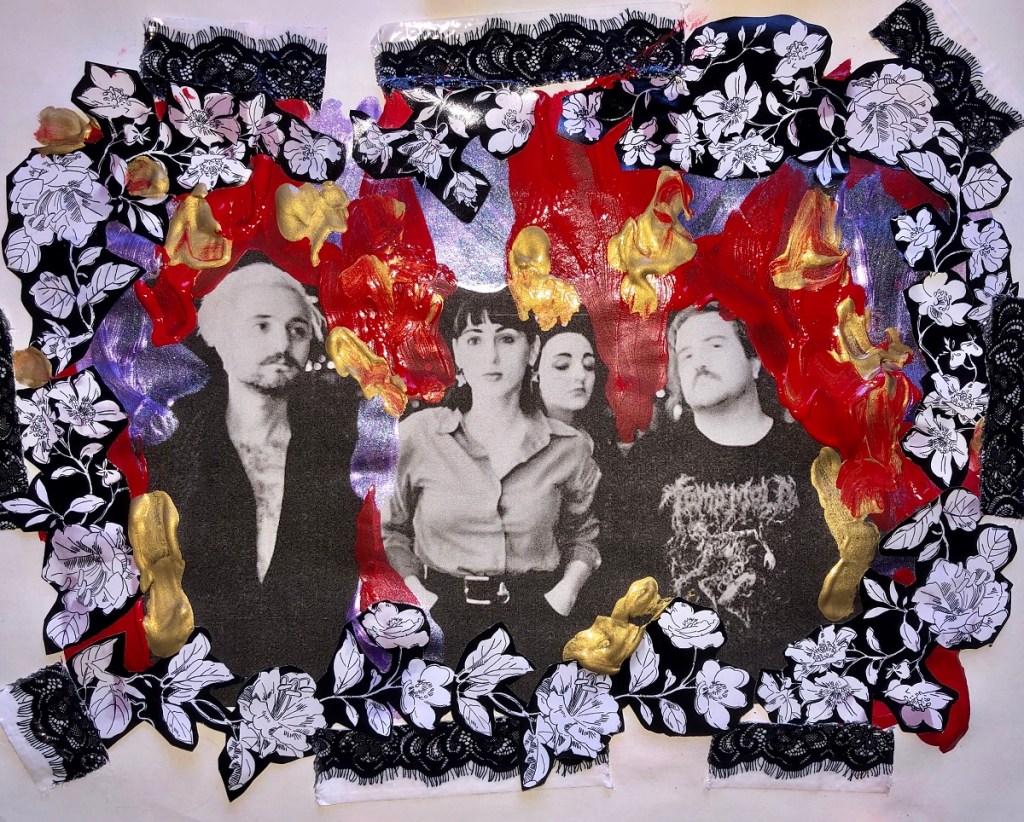
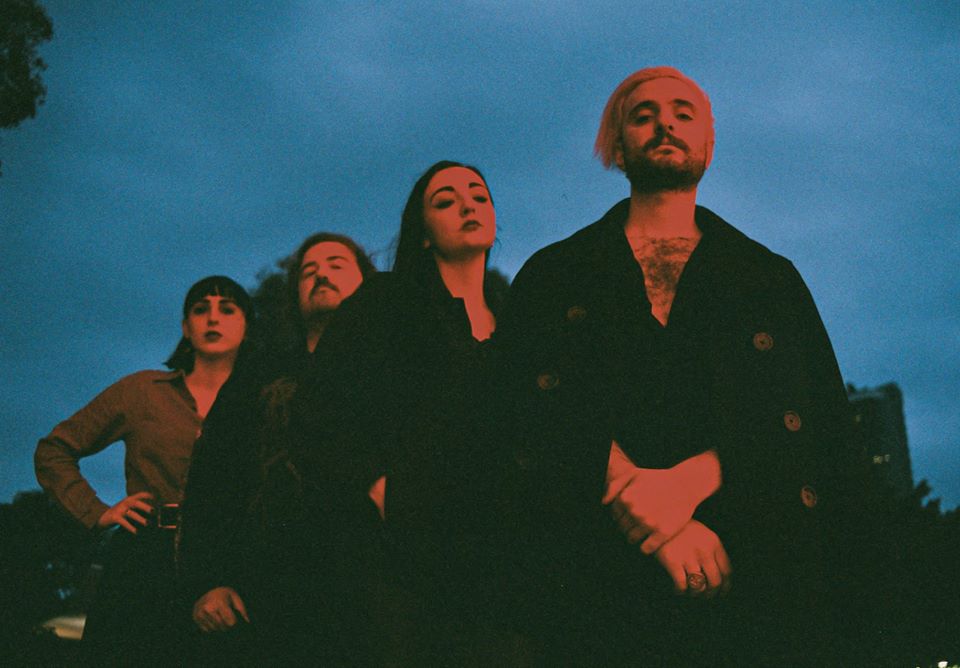
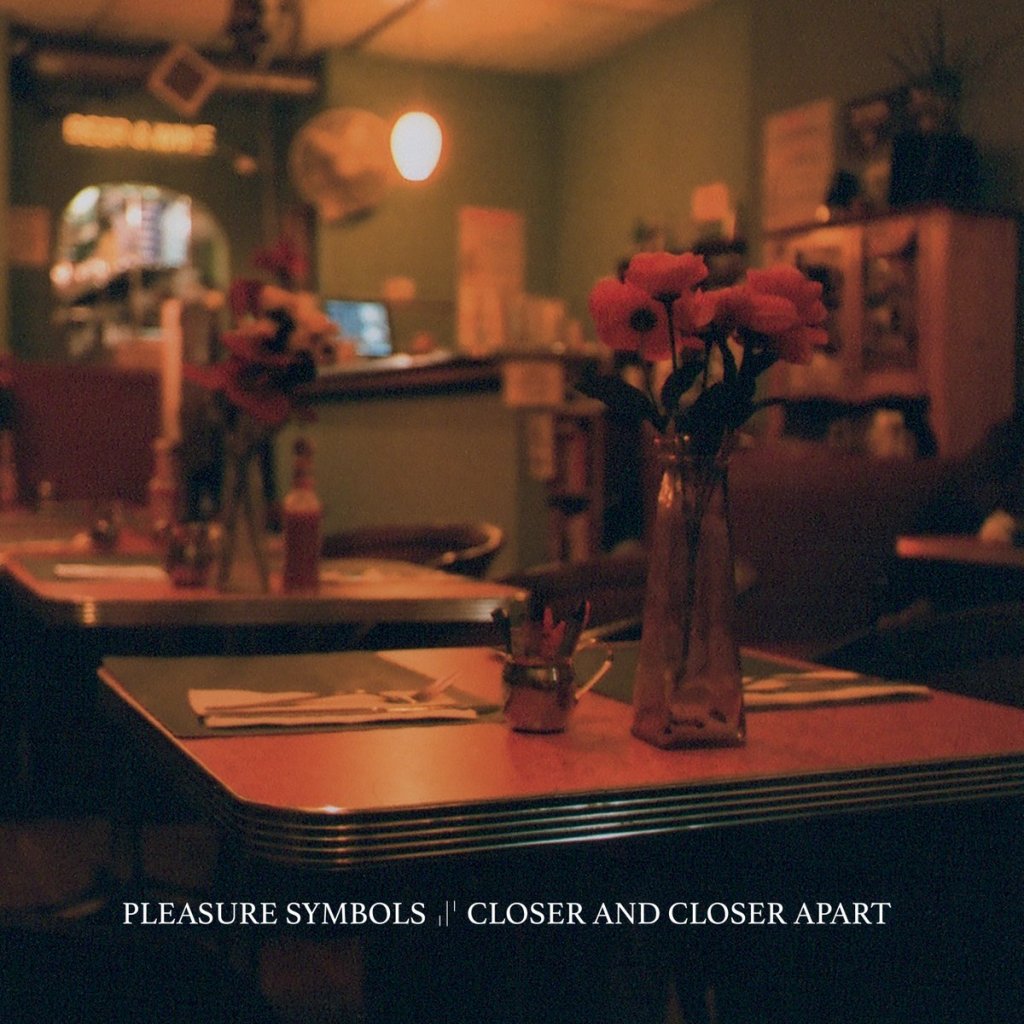

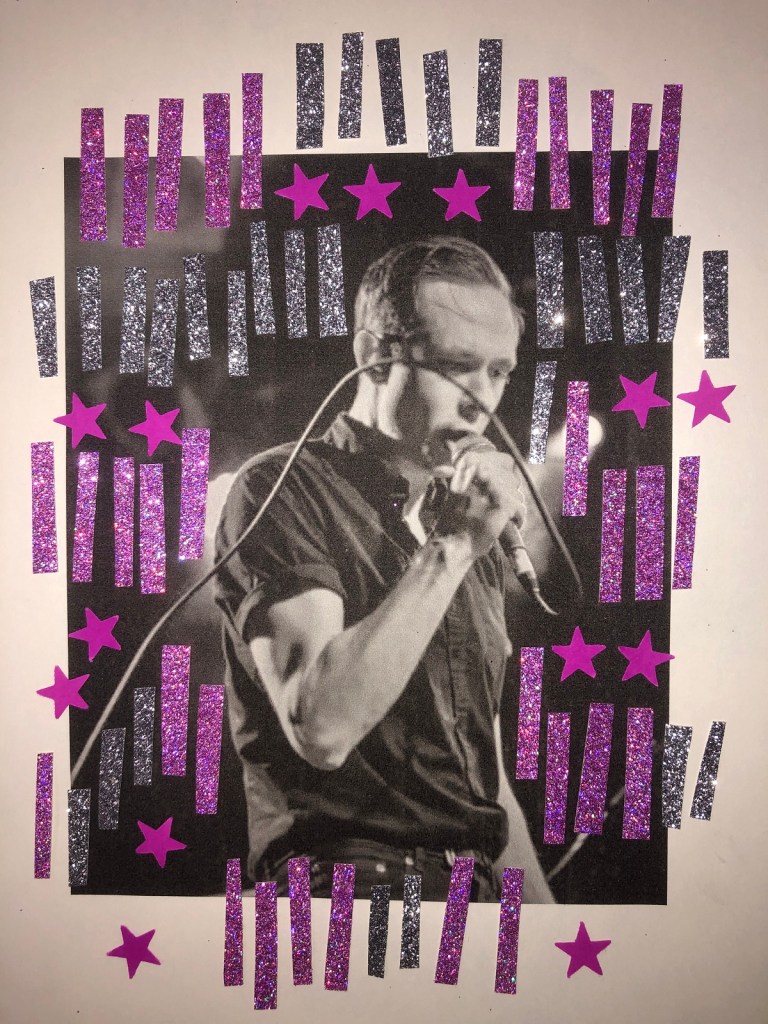
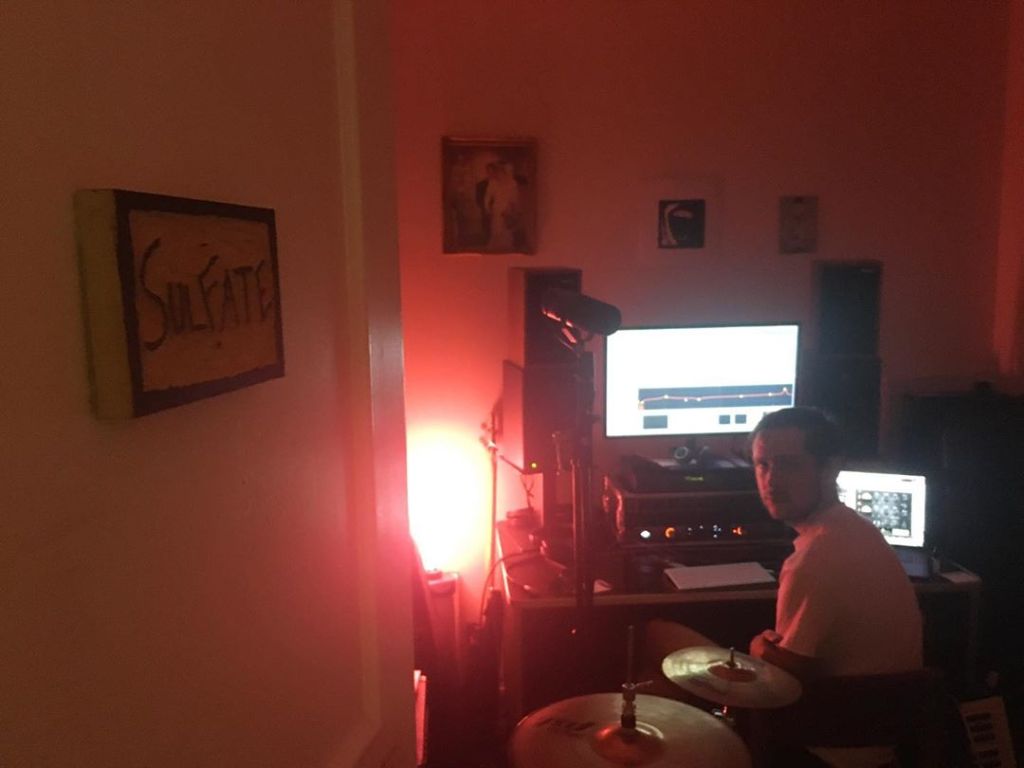
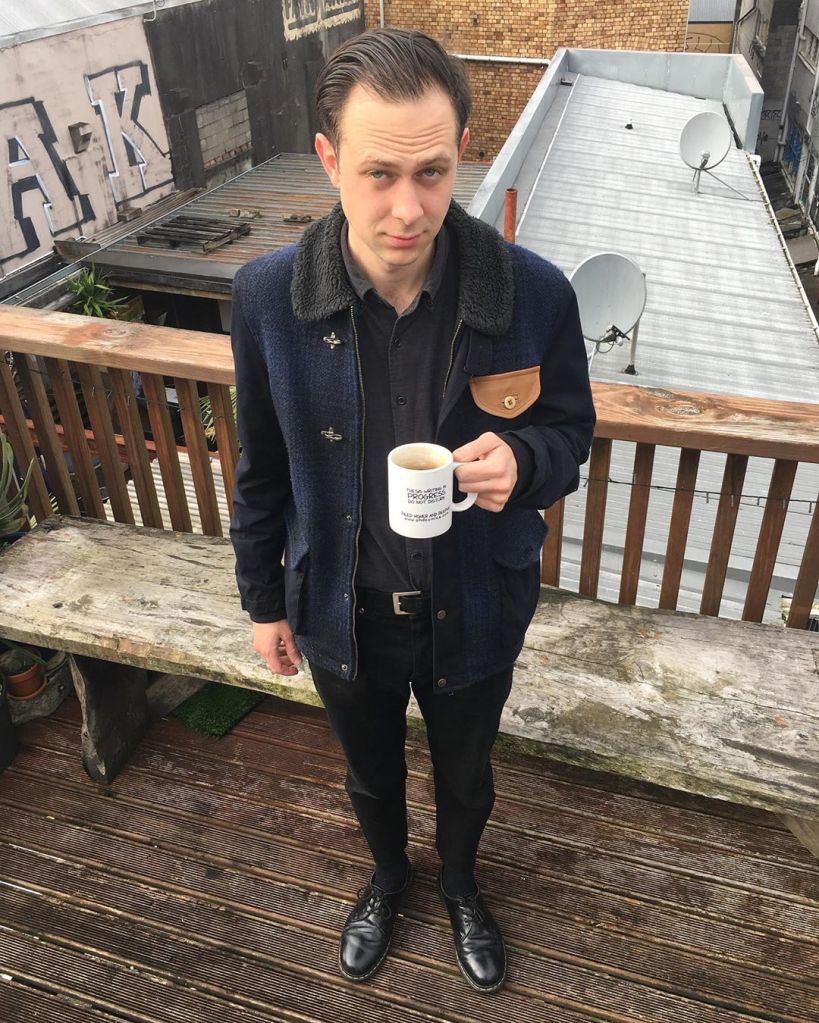

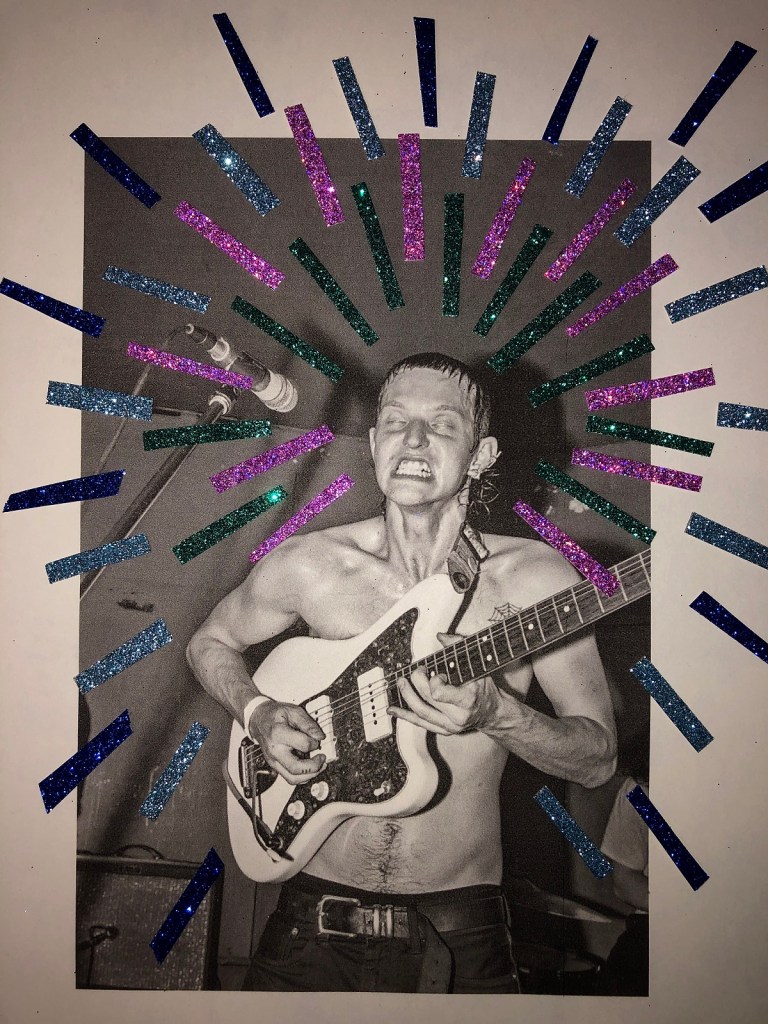
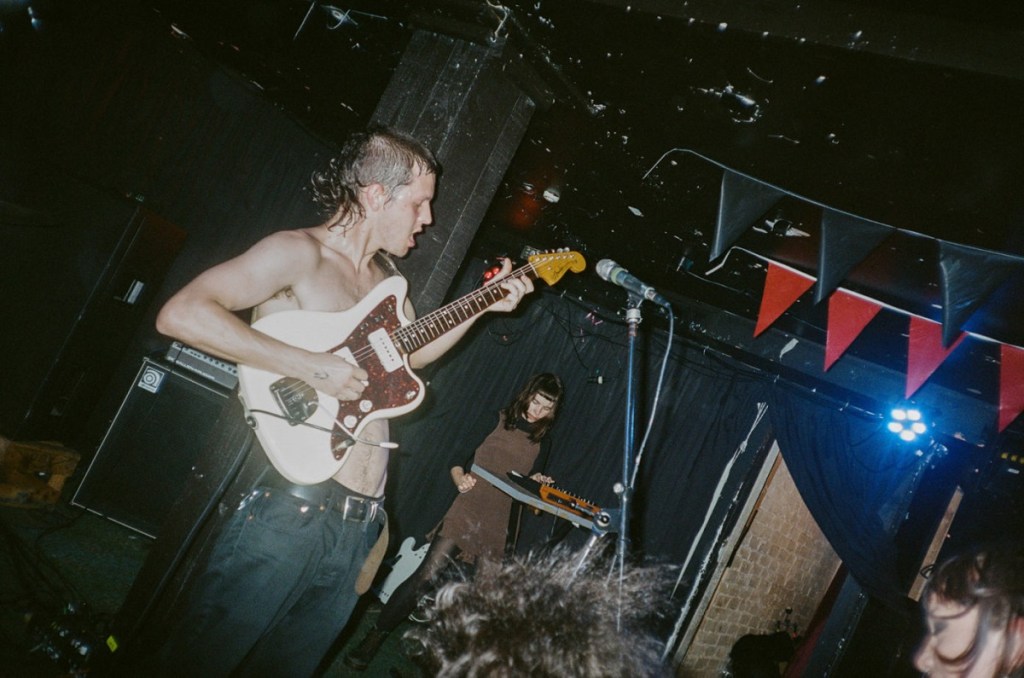
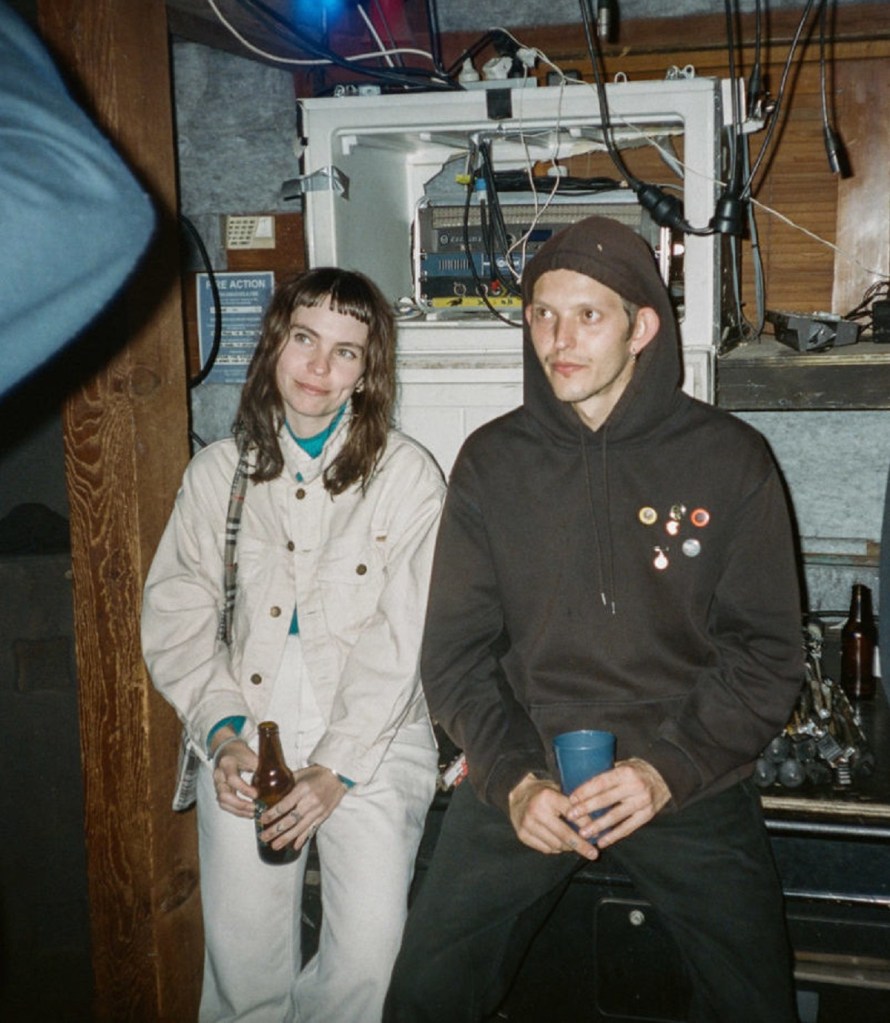
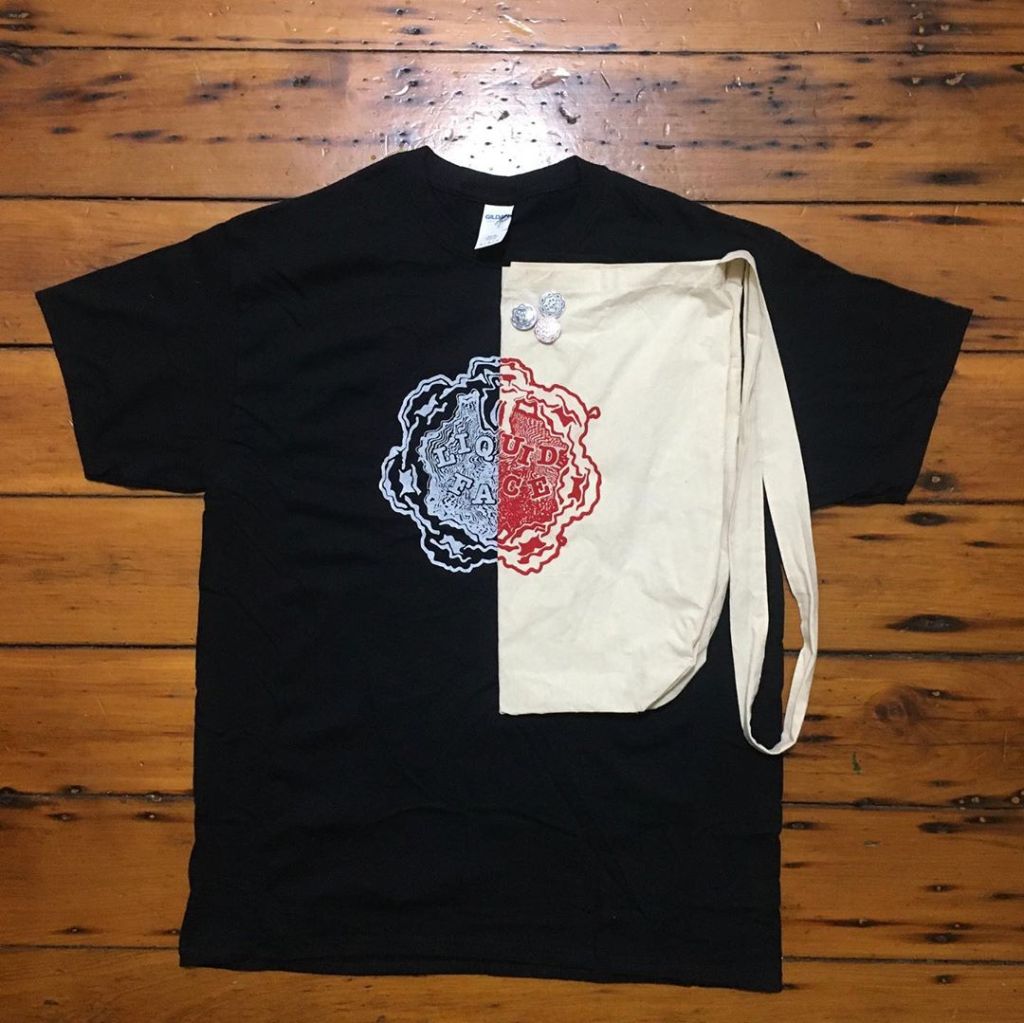


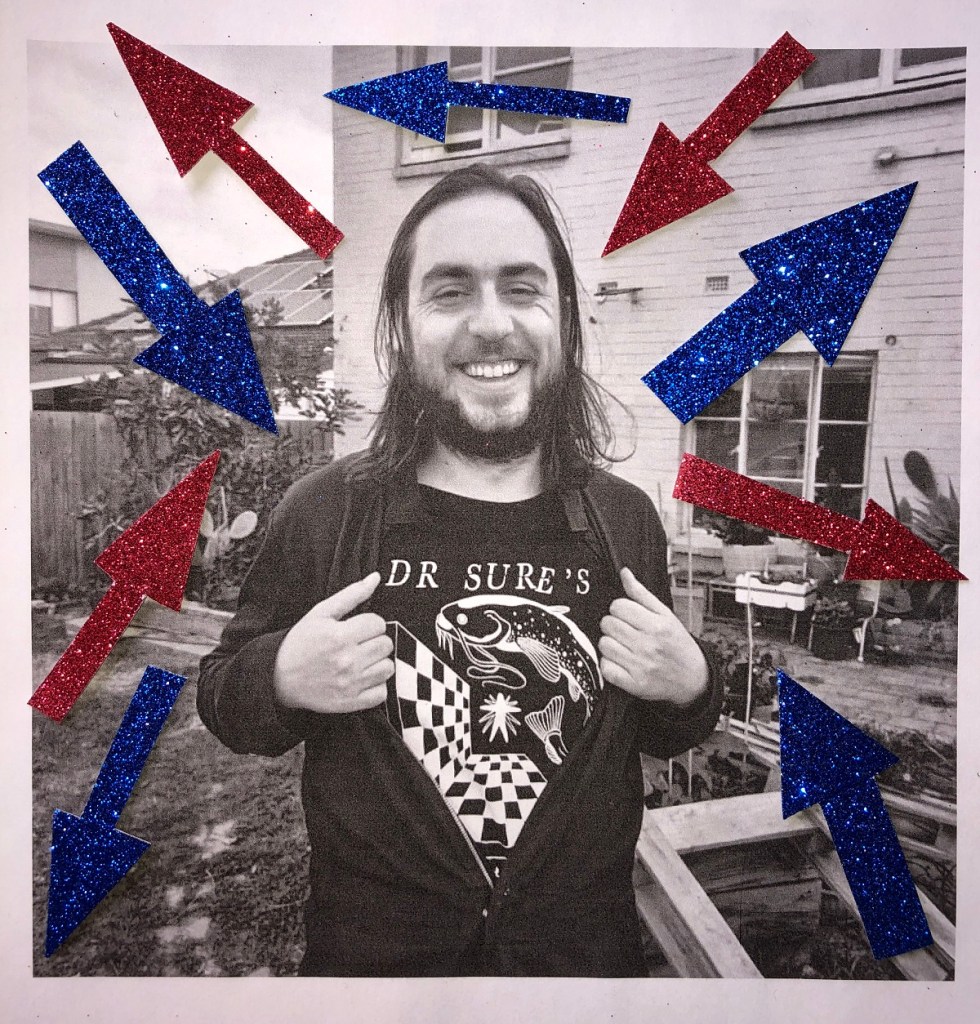
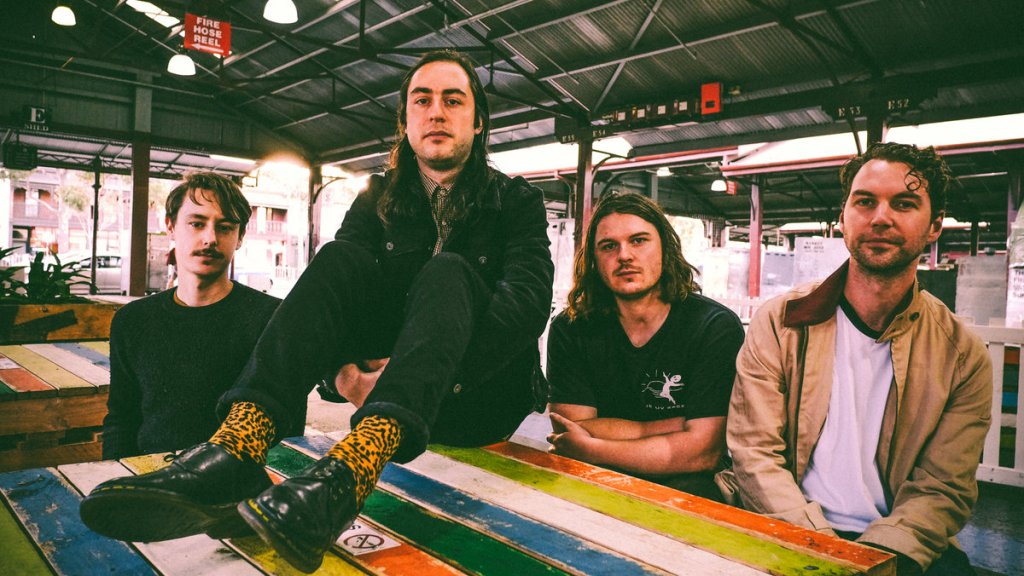
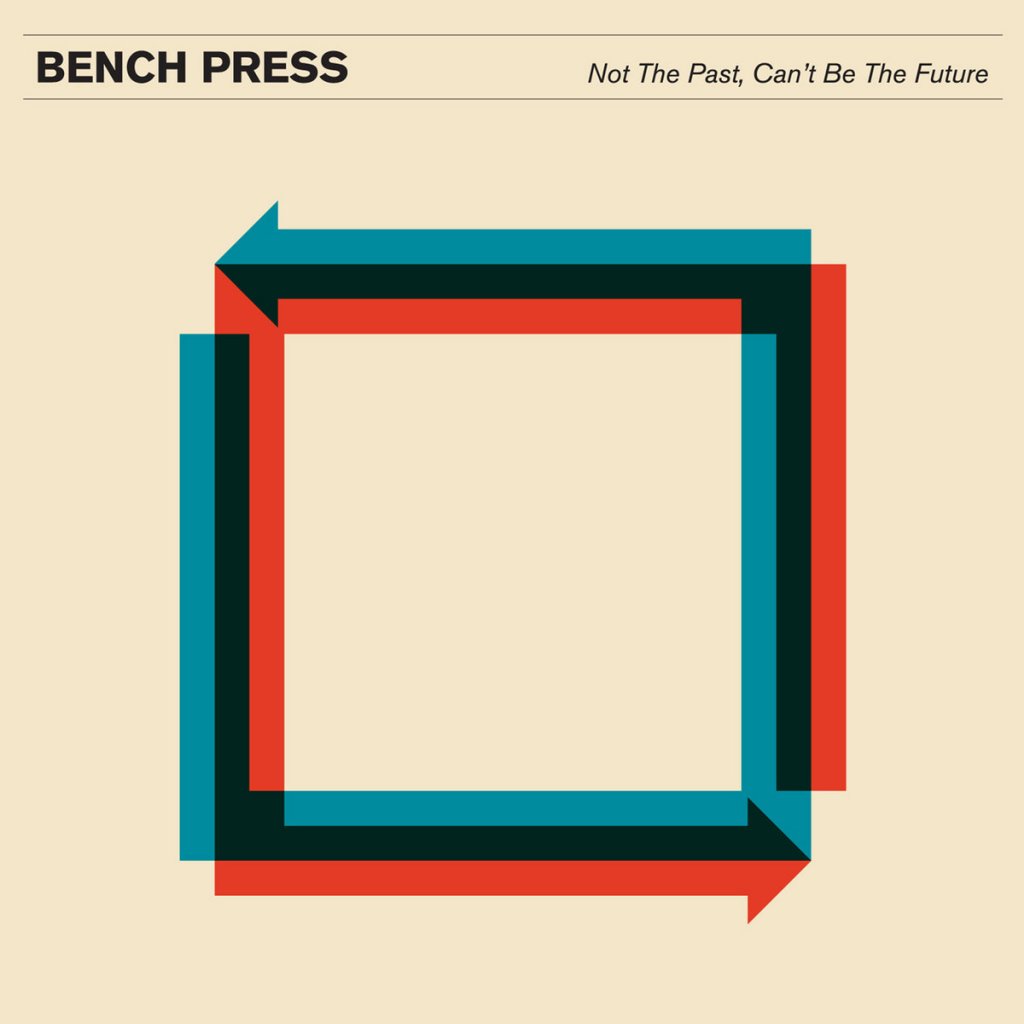

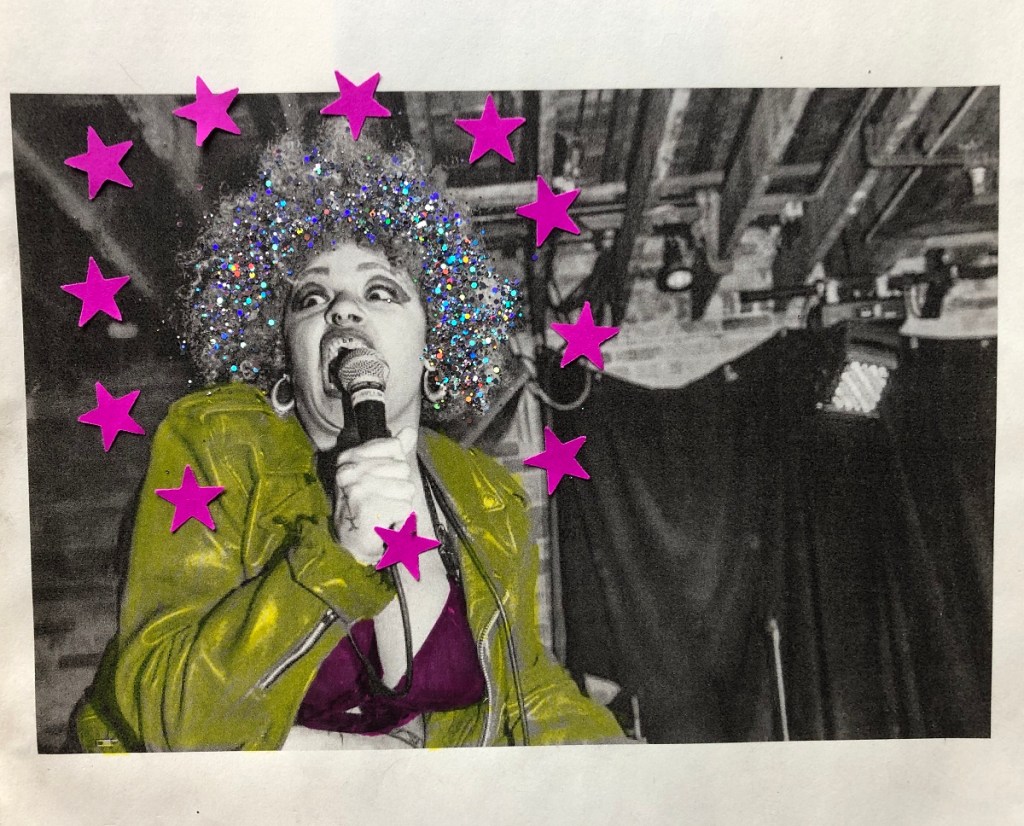
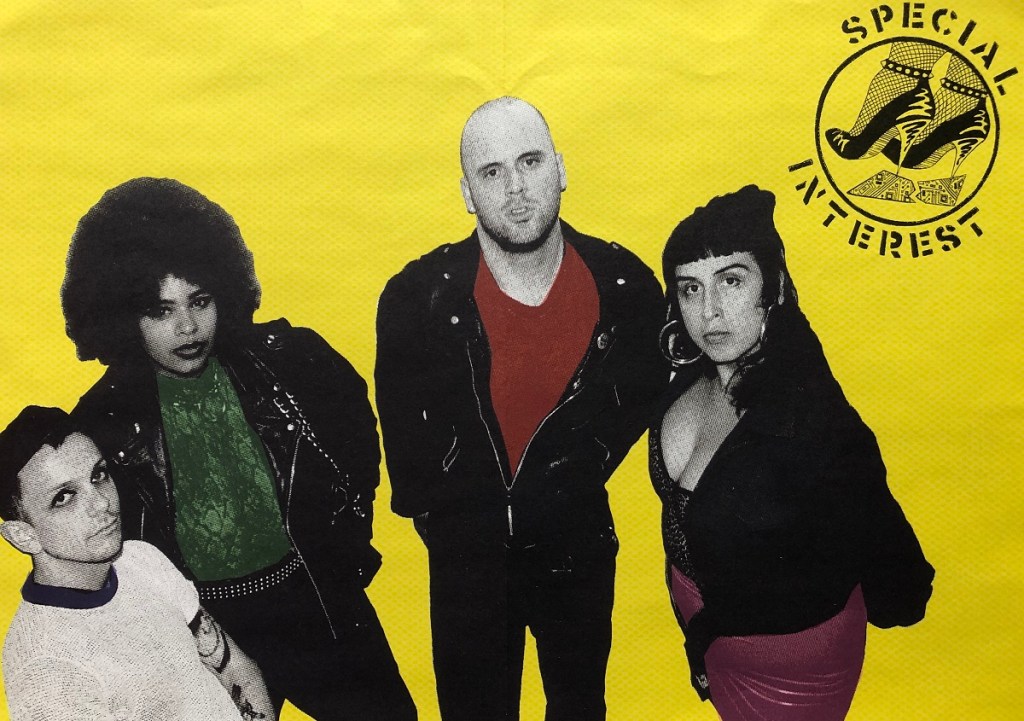
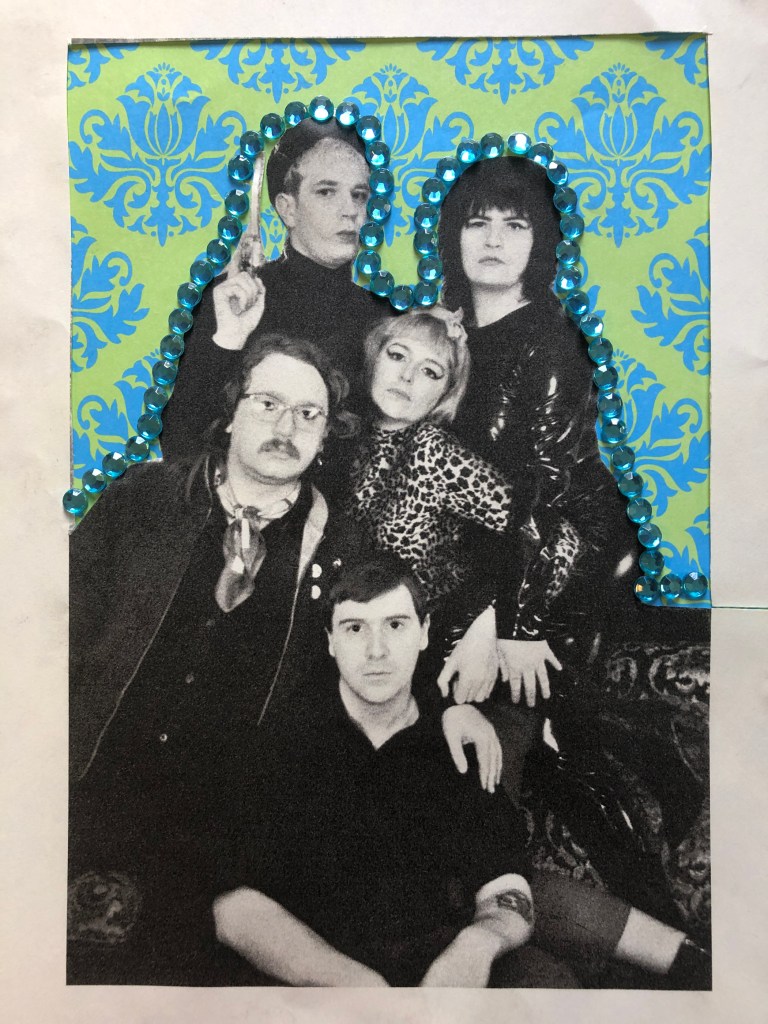
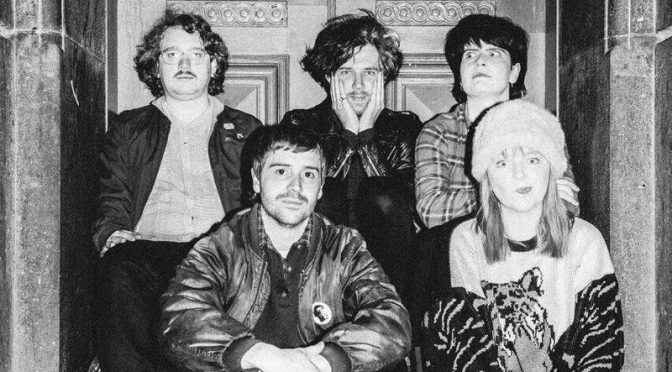
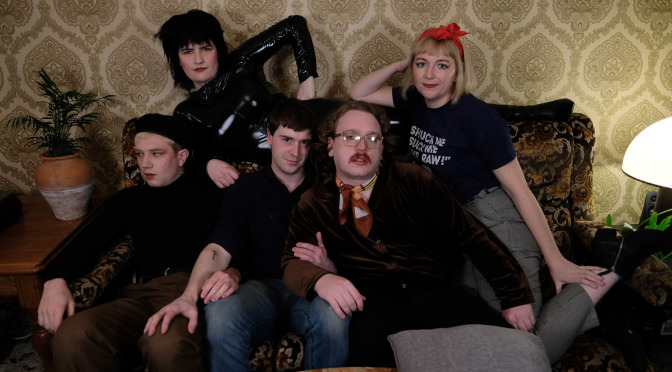


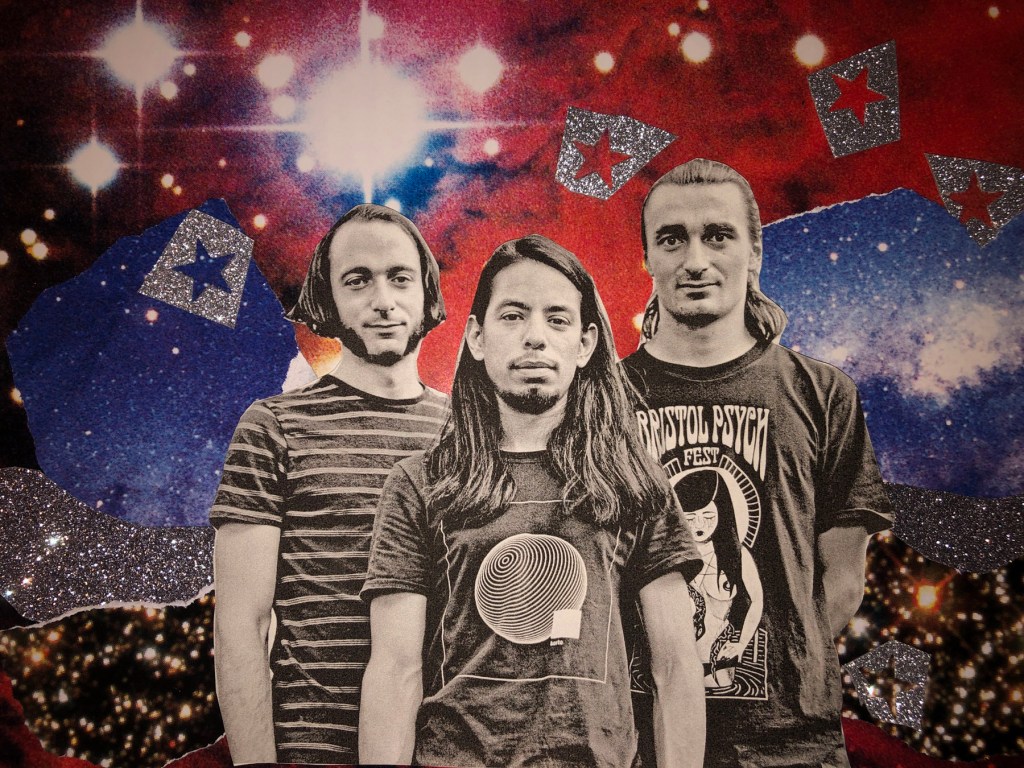


 Gimmie Gimmie Gimmie Zine