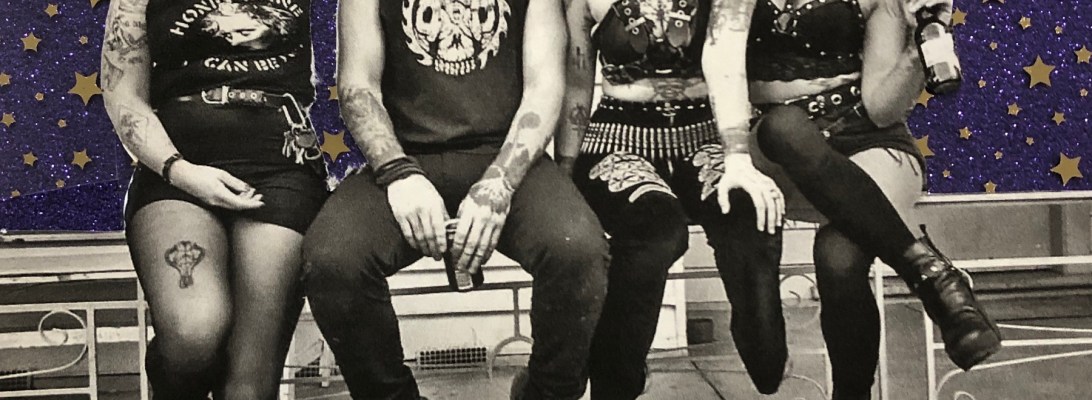
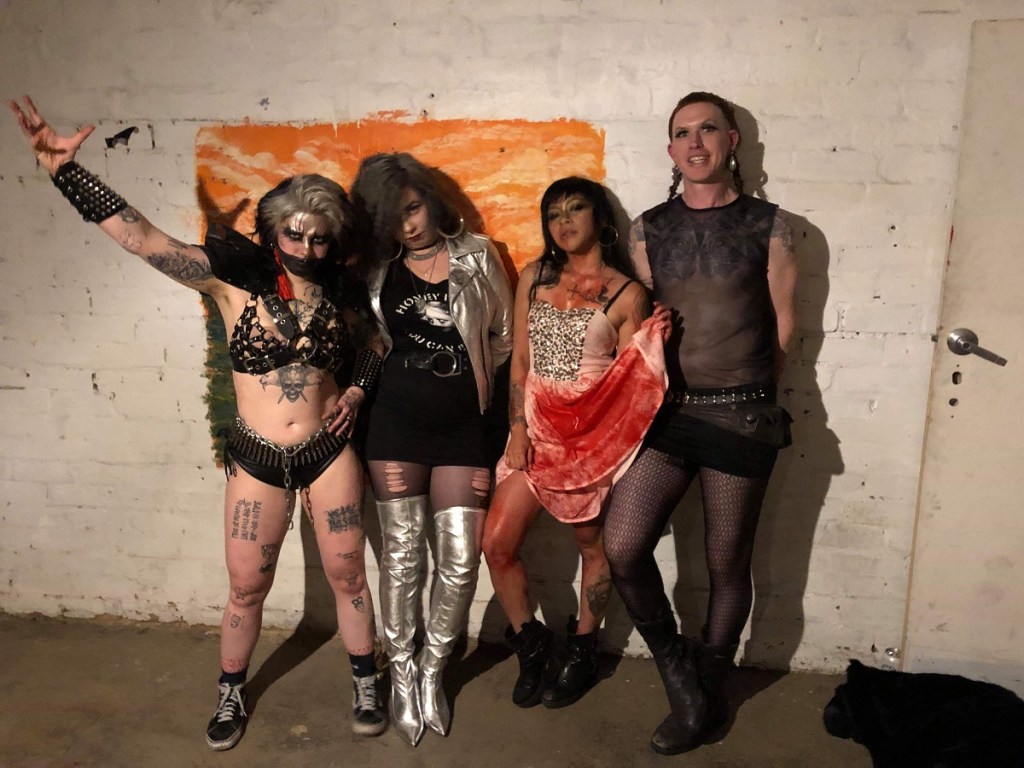
Naarm D-beat band Lái’s vocalist Alda: “It is very important for women living and growing in misogynistic cultures to take these shitty narratives back, to reclaim their own stories and destroy the toxic ones”

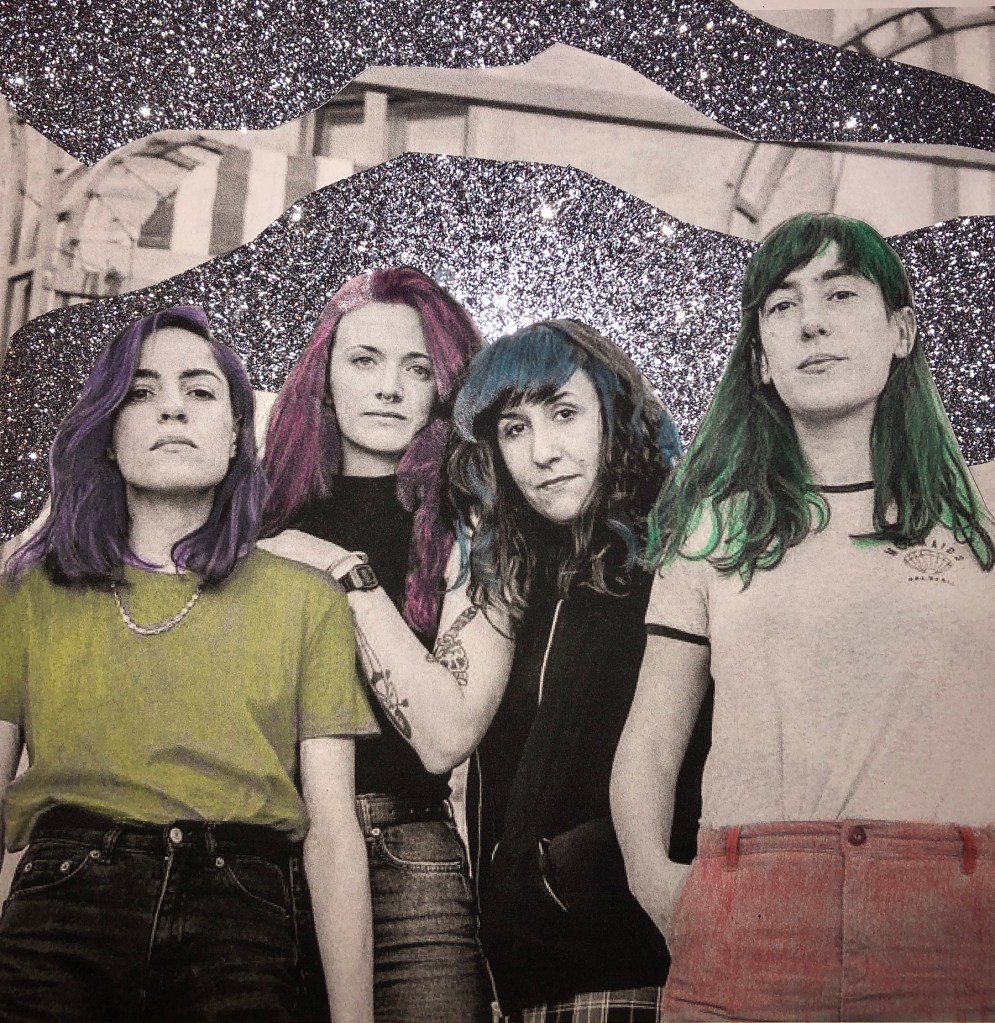
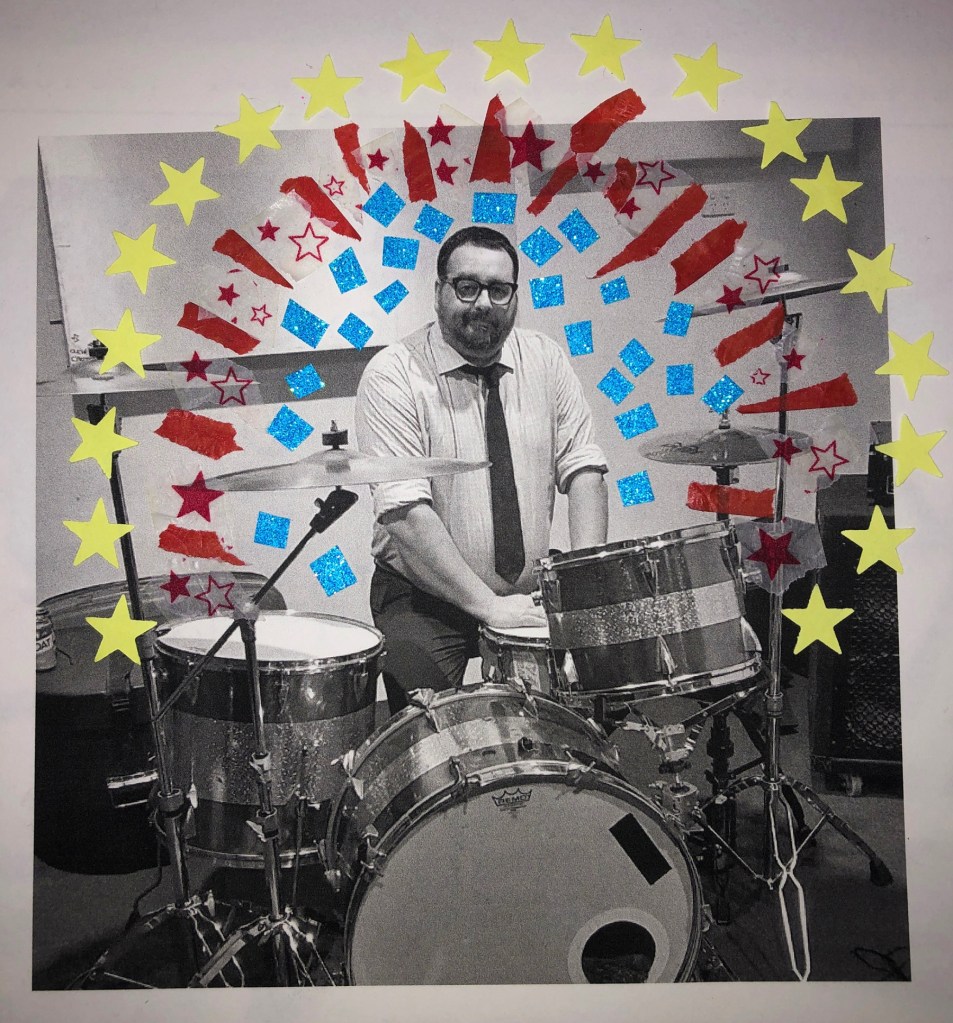
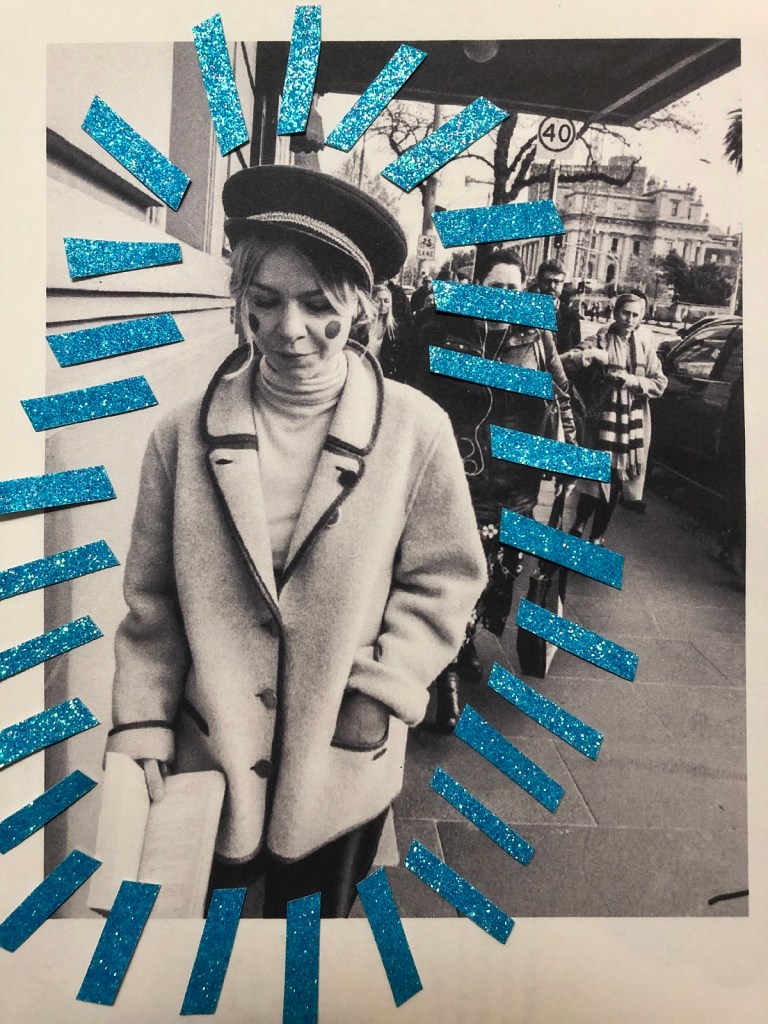
Handmade collage by B.

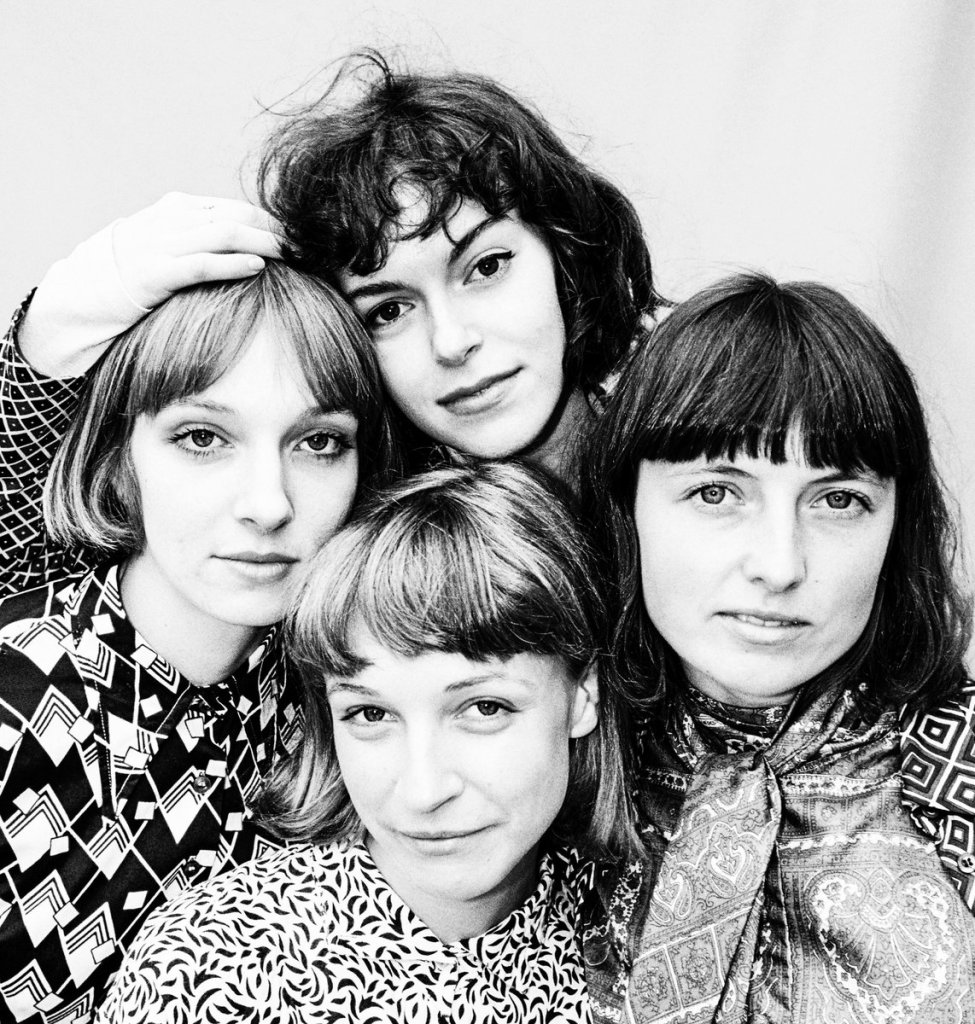
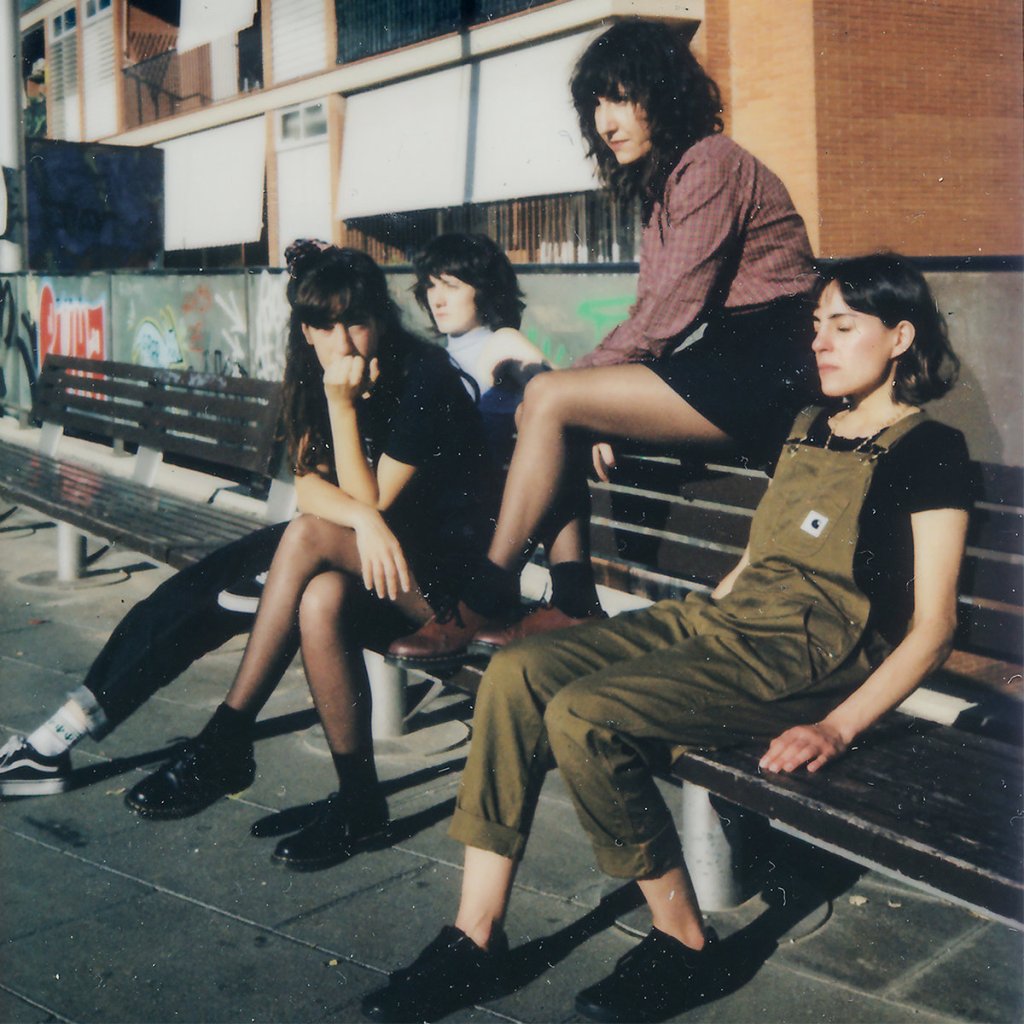
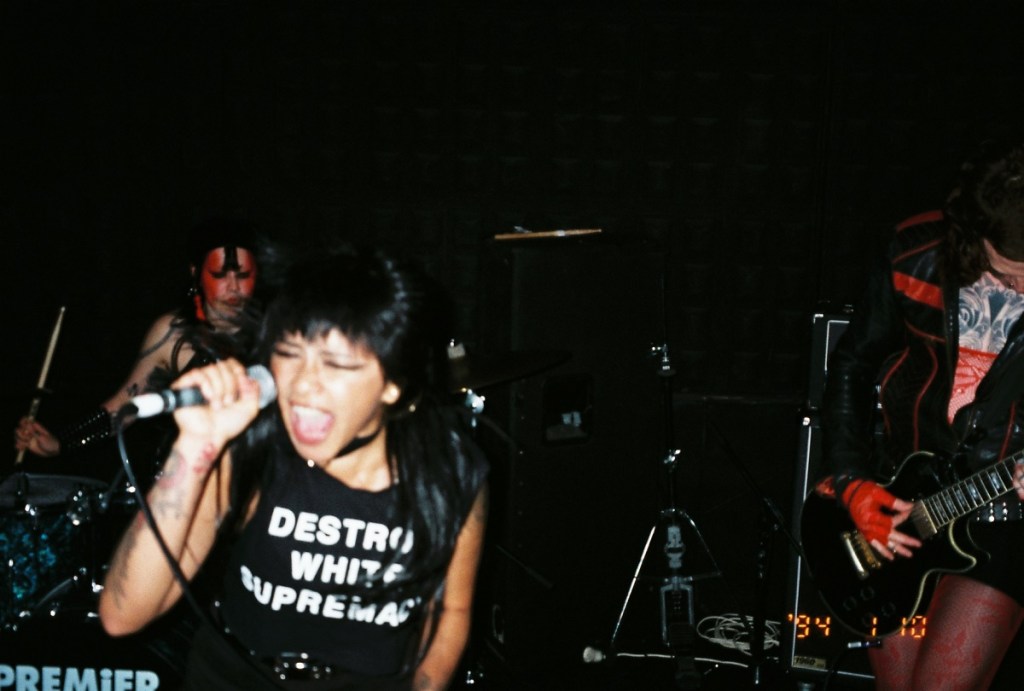
Naarm/Melbourne Swedish D-beat inspired band Lái (a Chinese Mandarin phrase meaning ‘to come/next’) play distorted, political hardcore punk with vocals ferociously and urgently delivered in both Bahasa Indonesian and English language. Their songs explore experiences with abortion, sex work, Southeast Asia and the diaspora, religion, queer rights and more, all given voice through vocalist Alda’s lyrics. Gimmie are looking forward to the release of Lái’s forthcoming LP Pontianak. We spoke to Alda about it and of her life growing up in Indonesia as well as her experience of immigrating here to Australia.

This interview will also appear in our editor’s soon to be released book, Conversations With Punx, along with in-depth chats with members from Crass, The Slits, Subhumans, X-Ray Spex, Black Flag and more from the worldwide punk community from its beginnings to today.

How did you first discover music?

ALDA: Before she went all extremely religious, my mom used to collect CDs like Queen, Backstreet Boys, Enya, Natalie Imbruglia, all time love songs, etc. That is the first time I discovered music, and English. Matter of fact those bands are how I start to learn English, from translating their lyrics as a 6-year-old having access to early internet in the net cafes, so I could sing-along at home and understand what it says.

You’re originally from Indonesia; can you please tell us a little bit about what it was like growing up there for you?

ALDA: Honesty it feels weird to be talking about myself right now, knowing that there’s so much more relevant matter…I can’t even fully put my mind to it, but I’ll give it a go.

I grew up in a Muslim household, and schooled in a Muslim-only school until I graduated Junior High school. After plenty of begging to my religious mom, she allowed me to have a public school experience at high school, with the condition that I have to wear a hijab, otherwise I’ll be kicked out of home. I hate being forced to look religious a lot. Even since I was at Muslim school, I always sneaked out with my trusted slutty closest friends to take it off, smoke and hook up somewhere. Turns out I strongly despise being forced to look religious in public school even more, because unlike my previous school, not everyone have to wear full hijab and I feel even more out of my element.

I went to Netherland for a scholarship for a year where I get to experience that double life again— but while free of my usual religious environment, so I get to think about what I wanted to do with my life without much peer coercion. When I’m back, I decided to take it off more and start being myself at school and in public. People suddenly called me a Satanist at school and made up surreal stories and rumours of my alleged “new behaviours” [laughs]. I pushed it more with talking about atheism and Indonesia’s communist background any time I got chances to, like in class presentations and stuff [laughs]. It was hilarious! I meant the things I said back then, but it was still funny to watch the impact.

Before that, I was one of the nerdy kids that got called to the front of school ceremony so I can give some short speech after winning some nerdy things like English debate competitions – I used to get into school competitions a lot because that was my excuse to get out of home. A lil’ bit of nerdy model student y’know [laughs]. But after I took off my hijab and stop giving a fuck about maintaining that “good image”, the teachers condemned me, most students tried to stay away from me like they can get infected with my godlessness, the school almost not letting me graduate because I didn’t graduate the religion class – it was mandatory to pass religion test for graduation – and I got kicked out of home. But it was probably one of the most important decisions I have made in my life so far, I’m so glad I stuck to that decision. I don’t wanna live this life any other way.

But yeah, I guess my feud with misogyny embedded in religions doesn’t really end there. As you might know, Indonesia is a religious country, so religion influences almost everything—starting from law making, social judgment, social punishment, etc etc.
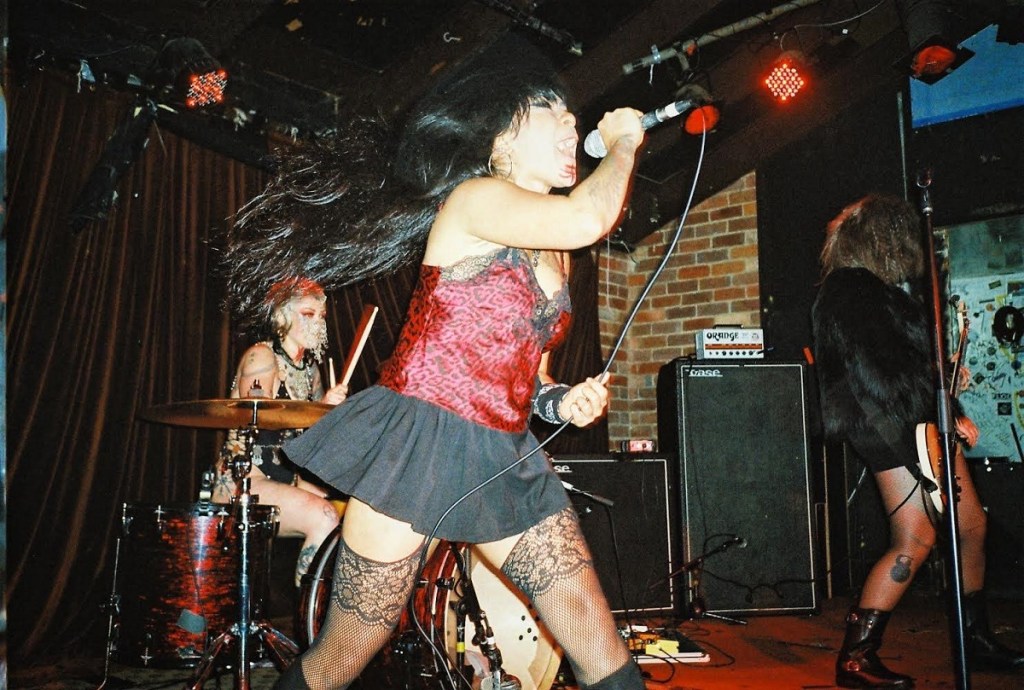
All photos courtesy of Tessa Lost In Fog.

What was it like for you when you first moved to Australia?

ALDA: Life here is way easier than what I’ve ever experienced before. Here you can do things like dumpster diving, squatting etc. with way less risk, and there’s more ways to find out how to survive/make money. On the other hand, the rules of immigration to Australia is one of the hardest to go through, I believe, globally other than America. Especially if you come from a “third world country” like me (in quote marks because that outdated term is now a myth based on bullshit), and not come here loaded with trust-fund.

In the beginning, it was a bit hard because I was on student visa, paying it with working on the weekend (and occasionally after school when weekend & graveyard shifts is not enough). I couldn’t miss out on too many school days otherwise I will get kicked out from school (and therefore the country). I couldn’t pay the school fee late, otherwise, the same consequence. International students have to pay very high fee, and they try to make it near impossible for us to work (because they just want to take our money, not for us to make money from being in Australia; we’re just ‘cashcows’ with no rights and support back from this place, who will get dished out once we’re no longer bring the ca$h in).

I was in the cheapest school that I can find and that is still me having to pay $3,100 every 4 months. On top of my daily necessities and visa requirements. Anyway immigration rule is very classist, probably to avoid poor people from poor countries to move here. So yeah, I didn’t get to have much social life… but at least I still get to run away from fucked up shit that I would have to live with back at my hometown, so that was fine. It’s impossible to notice that the immigration rule is basically — if you are a person of color coming from a poor country, you have to go through so much more loop to stay here. My POC friends coming from America or Europe or even a rich Asian country like Singapore got their Visa waaay faster than I do, even when they have about the same amount of money in their bank account with me.

My white friends coming from those places? LOL …basically it seems like they barely have to prove anything, they get their Visa in no time, whether they have savings or not. It felt pretty shit to watch that. Treatment for white people in rich countries are like some “exclusive rich kids club” in my eyes, and maybe in the eye of “people like me”; like we had to prove so hard that we are worthy to enter the gate of this privilege. Getting our English tested every two years as if we can get worse at it while still living here—and being told that our English is not good enough, and got laughed at when it is not perfect; as if that proves that our intelligence is lower, despite that we can talk in over 5 different languages. Pfft.

In short, when I first come here I realized I’m now living in an awkward spot of getting more privileged than my friends/family back home; but definitely damn underprivileged economically here. My life quality gets better just because it was bad before, because my country is still ravaged by richer countries such as Australia, for our gold, land, farming produce, cheap labour, cheap productions of their fast fashion brands etc.; and once people like me managed to come here in a hope for a better life, we gotta give our fortunes (if we have any) and/or slaved away for many years here and give our “excess wealth”. So that maybe, maybe we can eventually move here and be less poor. So that one day we can awkwardly laugh with our peers at some party when they cringe how the countries that we are coming from are so poor, the food that we eat are so dirty etc. etc. so they can laugh at the poverty that their people enforced on us. Shit!

You didn’t come here to hear me bitch about your racist & classist immigration system LOL but here we are.
How did you first come to performance?

ALDA: In Australia? Lái is my first one. I was very lucky that Tessa, Nissa & Timmy needed a new vocalist. Before Australia I only performed a small handful of times with a band I made with my closest friends, but at those times (about a decade ago) we were wasted together more than we try to actually perform LOL so yeah I wouldn’t count that as much performance experience.

You sing in a blend of both Bahasa Indonesian and English; why is this important to you?

ALDA: Of course it’s important for me. I’m an Indonesian. I only moved here 5 years ago, I mostly grew up there. My body is in this land but all the experience I had while growing up has formed me, and is forever relevant to me. I chose to use both languages because if I only use English – other than the looming discomfort of using the global colonial language – my vocabulary will also be more limited; I don’t know how to express things in the same layers of meaning like I would in Indonesian. Not to say that I’m excellent at it but it’s a language where I know a bit more about the culture, literacy, the guttural and poetic expression. In the end, I decided to use both. I mainly use English for messages that I’d like to say more globally, and Indonesian words for things I mainly wanna express for Indonesian/Malay speaking listeners.

The way you sing is quite brutal (which I love); are you ever afraid that the message will get lost? Or is part of the way it’s delivered help reinforce what you’re saying?

ALDA: I guess the actual reason for me is because that’s the only way I know [laughs]. Or at least that’s how I feel I can respond to the kind of songs that we have…it ends up being some sort of noise/scream therapy, a way that I can channel how I feel when talking about the subjects that I’ve written in the lyrics. I realized this means most likely people won’t be able to understand what I’m talking about, so therefore sometimes I talk a little bit about the song, so the message wouldn’t get entirely lost. And if anyone would like to know more about it, they can just read the full lyrics online in our bandcamp or somth.

How did you first find your voice? Is confidence something you have developed over time (or are still developing)?

ALDA: My first band called Negasi (2009) but I sing in a different way back then…the first time I sing like this is with Assusila (in 2011); a crust punk band from Bandung, a few years later when I felt more angry and would like the chance for “scream therapy” in a band. I can’t afford a therapist, so playing with Lái has been helpful for my mental health actually. In real life I’m one of those opinionated socially reclusive introvert, so going on stage has been a fuckin’ challenge from day one for me. I don’t naturally feel comfortable under a spotlight. I’ve spent some portions of my life trying to hide from the spotlight too, and was raised under a culture that holds high values on playing the subtlety game, so taking that spotlight feels naturally counter-intuitive. To be on stage in a country where I don’t even know many people… If you’ve been to any of our shows, especially in the first year, woof especially the first show (!!), you’ll notice how awkward I am [laughs]. I mean, I’m still pretty awkward on stage these days, but I guess I’m developing a lil’ more self-confidence..?
When do you feel most powerful?

ALDA: I feel the most powerful when I manage to put all my mind noises aside, and just do things that felt natural for me. When I get lucky, it felt cathartic, and when I’m really lucky, it also felt spiritual.

What inspired Lái to start?

ALDA: I wasn’t there from the beginning, but what I know is… Timmy had a dream where they’re in a band with Tessa, Nissa and Annelise (the first vocalist) and it was awesome; so they asked these talented babes to join them in a band, and they’re all keen, so they started. I was excited when I heard that too—I mean they’re an awesome team! I’d definitely come to their show. But Annelise is a very busy person already, hence it’s hard to find time for practice, so eventually she quit…and then Tessa messaged me if I’m interested, and I’m like hell yeah! I got to scream my lungs out and make fun projects with these amazing peeps! Stage fright aside, I was very keen.

Later in the year once all the Coronavirus uncertainty has settled down Lái will be releasing LP Pontianak (it’s also the name of the first track from the album), from what I understand the Pontianak is a female vampiric ghost in Indonesian and Malay mythology/folklore; what was the significance to you of her appearance in your creation?

ALDA: I feel a lot of connection with Pontianak. When I grew up, one of the main scary folklore figure is Pontianak. Older people told me, if a women did an abortion/child birth and died—she will turn into Pontianak. She will haunt the neighborhood, trying to kidnap babies, because she has lost her baby, and that will be “the only thing that she wanted”. Other adults told me, Pontianak is also those women hangin’ outside past sunset, sometimes they hang around frangipani trees – the tree is associated with death, because in Java it is mostly planted in cemeteries for its nice fragrance – and they will try to lure men into their embrace. The men fallen prey to Pontianak will be killed after they hookup. Some adults also added that these men will be skinned alive, but I think they might confuse it with the myth of Gerwani (one of the propaganda spread in the military regime time, when they wanted to justify the massacre of communists but that’s another story!). Other adults also told me, “Pontianak (also called Kuntilanak in Indonesia) can be turned into an attractive women, very suitable to be married. But you will have to stake a nail on top of her head, and keep it there. As long as the nail remains there, she will turn into a beautiful, obedient women, and she will be a good wife.”

As I turn older, and survived some horribly dodgy illegal abortion practices in Indonesia, met other women who are going to do their abortion in those shady, overpriced, hidden abortion clinic;

I realized fully how fucked those stories are! Why does Pontianak become a demon after she failed giving birth? And, why the hell do they think having a baby would be the only thing she cares about? Hangin’ outside at night time, is that just a way to give shit to women that are still going out having a night life, and a way to scare people off them? Also WTF?? Lobotomizing her so she can become “a good, obedient wife”?? Fuck that! Fuck those stories! Her story needs to be retold. Reclaimed, by all other women who don’t think that these hateful stories does her justice. I draw Pontianak here and there before the album artworks too, just because, of course.

In 2015, Yee I-Lann from Malaysia also made a video art called “Imagining Pontianak” where she interviewed a bunch of girls covered with long black hair (as Pontianak usually is depicted), and I lived in  Kuala Lumpur at the time so one of them is me. The topic of our talk was about sex, abortion, and generally about being a women, the types of women that “Pontianak would be”. I thought her project was important and inspiring, as these topics needed to be brought up more often. We all have versions of ourselves, and therefore our own versions of Pontianak. But what she shouldn’t be anymore, is a feared folklore figure with a story told by misogynist men and women. I loved the fact that she made a cool art project out of our folklore (and I think you should check it out if you can), as I think it is very important for women living and growing in misogynistic cultures to take these shitty narratives back, to reclaim their own stories and destroy the toxic ones (or at least acknowledging how the toxic narratives affects people).
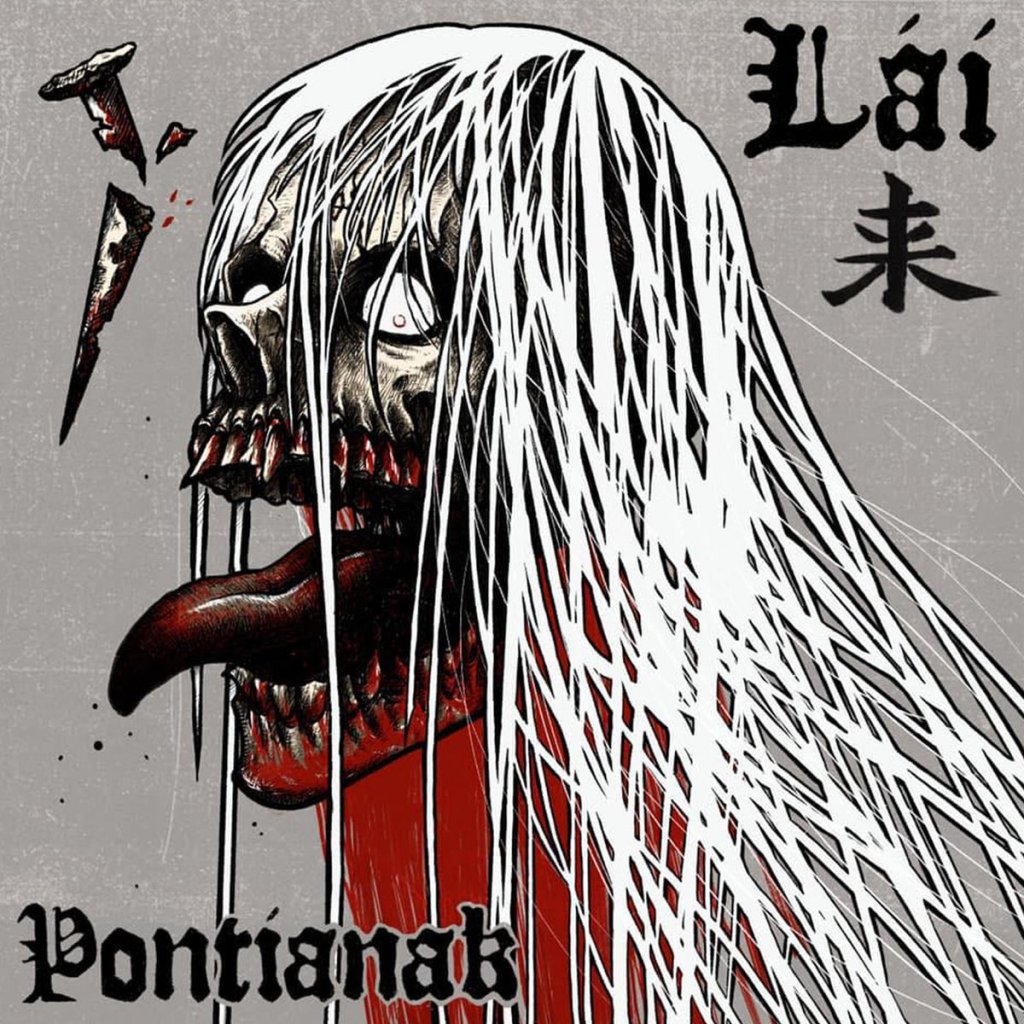
Art by Alda.

I really love the art work you did for the album too; how did you decide to draw her like that?

ALDA: Traditionally, Pontianak is depicted with long black hair… but I had a dream once where I got dragged down to a river, where the water was bottomless, and a particular Pontianak slowly swimming towards me, with all her white hair flowing gently around her face contrasting with the dark waters, and I get to watch in vivid details on how her entire looks were. Her dried up eyeballs, hollowed eye sockets, and enticing stare. Pontianak that I drew is based on her just because it feels more personal to me, although I did draw her in a way more comical version…hmm I don’t think my drawing style can do her justice to be honest, but I’m pretty happy with it.

Feminism and queer rights in South East Asia are themes that you explore in your lyrics; what has helped shape the importance of these themes to you?

ALDA: My main issue with everything surrounding my life in Indonesia since my forced-religious childhood until the demystifying moments of rape culture and sexism in the punk scene that I grew up in, can be concluded to mainly about the misogyny and rampant queerphobia. Although I’m trying to not make it define me in my current life, a bunch of traumas related to the subject have undoubtedly shaped me.

What’s your favourite moment on the record?

ALDA: Screaming (and punishing the ears of my lovely bandmates while they were having lunch LOL) without the music even playing loud at the recording, it felt funny.. There was also an attempt of recording group cackles with our mates that was hilarious and fun to do, even though we end up not using it [laughs].

Religion is another theme explored in your songs; are you a spiritual person at all?

ALDA: I’m somewhat spiritual, but definitely not religious… I think my resentment comes from being forced to practice religion that I don’t believe in, definitely put me off from being one.

Lastly, can you please share with us a really life changing moment you’ve had?

ALDA: I guess that moment in high school that I mentioned before was the main life changing thing. When I decided that being liked for what I’m not is not a good enough motivation to survive….you know, if I’m gonna try to stay alive, I might as well just do me, might actually try to make it worth the survival efforts. Even when it looks mundane, so what, right? Otherwise, what is really the point…? Self-discovery/exploration has been my constant reliable source of joy & sense of meaning. I think 2020 only makes this belief grow stronger for me [laughs].

Please check out: Lái bandcamp; on Facebook; on Instagram; demo available via Lost In Fog Distro; Pontianak will be out Spring 2020 on German label Ruin Nation Records.

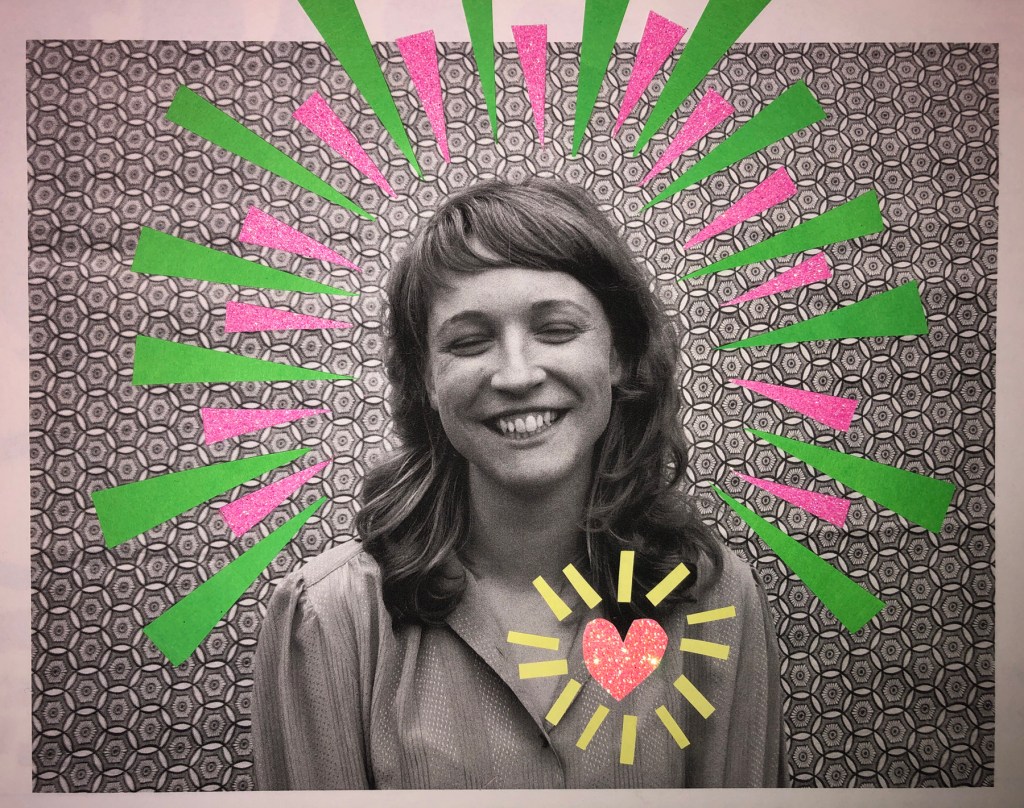
Parsnip and School Damage’s Carolyn Hawkins: “You just have to tell that voice that doubts yourself to shut up!”

Carolyn Hawkins is a musician and visual artist from Melbourne. We love the art she creates! It’s imaginative, fun, whimsical and sentimental. She lovingly crafts album covers, gig posters, zines, videos and more as well as playing in two punk bands we adore, Parsnip and School Damage. Gimmie chatted with Carolyn about all this and more.

CAROLYN HAWKINS: I’ve been stuck in the studio today working on stuff that’s due this week.

What have you been working on?

CH: A stop-motion video. I’m glad we booked the interview for today because I feel like I’m starting to go crazy, I feel like I’m locked in a dungeon trying to get this thing done [laughs]. It’s good to break it up.

You also did a stop-motion animation for the School Damage song “Meeting Halfway”; is this new clip you’re working on similar to that?

CH: Yeah. It’s pretty similar. I’m still using paper cut-outs to do all of the images. I’m using a slightly better program. When I made the “Meeting Halfway” video I was using a $20 program and my computer didn’t have enough memory. I had to save it every time that I captured a frame, it was twelve frames per second. It would kick me out and I’d lose all of my work. I have a much better program now, which I’m glad I was able to save up for and get. It makes stuff a dream. It’s still really time consuming but it’s easier now.

I can relate! With my laptop at the moment I have to have it plugged into the wall all the time because the battery won’t charge and it has a dodgy port and if I just knock it slightly it shuts down and whatever I’m working on I lose. At the moment I’m saving after like every sentence I type!

CH: Oh no! That’s totally what this was like. It’s living on the edge way too much [laughs].

[Laughter] Totally!

CH: The “Meeting Halfway” video was a lot of fun to make. I don’t really do animation stuff, I didn’t really know what I was doing. My friend Alex gave me heaps of help in figuring it all out, I also borrowed a camera and a tripod off him. I still don’t really know what I’m doing, I guess that’s probably why I’m working in a similar style for this new one. I’m still getting my head around that way of doing things. I started using a green screen which is pretty exciting!

Nice! My husband’s made a few film clips with animation and using a green screen, he just uses a green sheet for the backdrop.

CH: Cool! I have a green bit of paper. It’s really fun! What videos has he made?

He made Regurgitator’s “Sine Wave” clip. What first got you interested in art?

CH: I’ve always enjoyed drawing and making things from as far back as I can remember. One thing that really stands out – I really don’t think that I probably would be into making things in quite the same way if I didn’t watch it – is watching Art Attack! When I was a kid I used to love that show so much! My mum used to tape it off the T.V. and I’d watch it on the school holidays. Someone gave me all the VHS tapes of that recently too. It’s just the most random projects and using all kinds of materials, just stuff you have around the house. It kept me entertained for so long. I’ve always enjoyed making things and using the materials that I have generally. It’s satisfying to start with nothing and then by the end of the day you’ve made this new thing. That was always just fun stuff. I don’t know what made me decide to go to art school and pursue it beyond doing art at school or in my own time. I couldn’t imagine doing anything else basically, there’s nothing else that I want to do more. It’s just a very satisfying thing to do to work with your hands.

It really can be the best fun that you can possibly have.

CH: Yeah, exactly. There’s so many surprises! When I left school I studied print making and a lot of that is about these unexpected things that can happen. When something doesn’t go right and you get these happy accidents, I think that’s probably the most exciting thing that can happen when you’re making anything whether it’s a song or a drawing or a print, something you’re working on. For me that is the most exciting thing about making anything.

Me too! I love when you’re making a song and you might play a “wrong” note or something but then it works, there’s a beauty in imperfection and making things work, that’s what makes stuff more interesting to me.

CH: Yeah, totally! I agree. With punk music it’s all about imperfections. When you’re recording something and it’s not a perfect take, I would probably prefer to use those ones. There’s no point in trying to control something so much that it squeezes the life out of it. You have to allow and encourage all of those things. It’s all part of the process.

Totally! When I spoke to Jake [of Alien Nosejob] he told me that he was teaching you to play guitar in iso; how’s that going?

CH: Oh yeah! [laughs]. Good. I’m still going with it. I practice almost every day and it’s been really good because, I think over the last little while I have found it harder to write songs. I’ve just gone through this period where… I’m not really sure what it is but I haven’t been writing as many songs but I’m still dong musical things.

It’s been really awesome to learn an instrument. I haven’t played anything like the guitar before, the last time I learnt an instrument would have been when I was getting drum lessons when I was a teenager or learning piano. It makes you realise that when you are an adult, as you get older you know what you like and you stick to the things that you know and that you’re good at and you keep doing those; the things that you’re not good at you don’t have to do anymore.

As a kid your parents encourage you to learn these things, play this sport, go to swimming lesson, stuff like that… you might not enjoy them but you just do them because that’s what being kid is about—people want you to try new things. It’s refreshing to push myself to do this thing that might be uncomfortable and have the satisfaction of seeing yourself get better at something. It’s been really fun.

It’s nice to play songs that I think are cool. If I learnt guitar as a kid I’d probably just be playing something like “Smoke On The Water” [laughs]. Maybe “Nothing Else Matters” by Metallica or something like that! I’m so impatient with learning the guitar though, it’s like; when am I going to get better?! It reminds you that if you practice something you’re going to get better. If you put work into something you’ll get there. Fingers crossed I keep going with it.

I’ve read that in Parsnip you play the same drum kit you’ve had since you were a teenager.

CH: Yeah, I do. I’ve only ever had the one drum kit. I remember when I got it from this drum place that is still there in Richmond on Victoria Street. It’s served me really well and unless something bad happened to it or it broke in a way that it couldn’t be repaired… I never get new things, especially if I’m used to something. I’ll just keep using it until I can’t.

Same!

CH: Jake loves getting new things, I don’t really like getting new things [laughs]. I stay with my old stuff and I like repairing things until I can’t anymore and they just die. I’m really fond of my drum kit, it’s like my bike… I’m so comfy with them, they’re like old friends. I can’t let go of them!

Previously when talking about the gear you’ve used, you’ve mentioned that you feel like your sound more comes from how you play and not what gear you play; how would you say you play?

CH: That’s a good point, because a lot of the time I don’t even play my drum kit. It’s not like being a guitarist and having your own gear, often when you’re a drummer you just use what kit is there, which is fine, it means I don’t have to bring one.

For a long time I never really thought the way I played was particularly unique or anything, the way I play I always have the philosophy that less is more. Strip it back as much as you can to the core elements. I think it probably came from being in high school, I never played drums in a band because it was totally dominated by dudes, who honesty couldn’t play that well but were just really loud and they could do all these drum fills and stuff. I was too nervous to do that. It made me be really put off by these really over the top way of playing.

When I was a teenager I loved The Who and loved Led Zeppelin, I still really like those bands and that crazy drumming but, it’s not for me. I’d much rather play like Peggy from The Gories or Meg from The White Stripes, she basically made me want to be a drummer. I take from that school of thought, you don’t need to be over the top to have something that sounds cool and has personality, and is catchy and still has a good feel to it. People often come up to me and say they like how I drum and everyone always says that I play “really in the pocket” and I have never really understood what that means… apparently that’s what I do [laughs].

When Parsnip started you all had other bands; what was it like when you all started playing together?

CH: Honestly it just felt really natural. Me and Paris and Stella had spoken about it, we were at one of the Jerkfests and we were like, let’s make a band! The other two had been talking about it and they asked me if I wanted to be part of it. I messaged them the next day and I was like, I know we were all pretty drunk and getting excited about this but, I really, really want to do it!

When we finally did get together…. whenever you start a band I think it’s a bit awkward because you know each other as friends but you’re trying to suss out how everyone works when you jam, being in that band environment. Every band is so different. I feel like we figured it out really quickly, I feel like we just got our shit together!

We all had played in bands for so long… we probably all had the same experience playing in bands… I’d never played in an all girl before. We all had the same frustrations of being in this male dominated environment, it’s not like we talked about that though. The dynamic just worked instantly. It was fun. It’s just hanging out with your friends. It sounds corny but that’s how it really was. With our rehearsals still, almost 50% of it is just hanging out and chatting [laughs]. Which isn’t great if you’re paying for a rehearsal room. It’s good though, a lot of it is mucking around and catching up. It’s important to hang out outside of band things too, I think sometimes in bands friendships can suffer. We all hang out as buddies not just band stuff, which is really nice.

What inspired you and Jake to start School Damage?

CH: Me and Jake did a tape. Jake typically said something like – this was when we first started going out – “We’re gonna spend so much time together, we may as well start a band” [laughs]. Which was cool, I didn’t mind. I had never written a song before and he was really encouraging of that, which was good because it is pretty scary to do that. We recorded a tape at home. Jake was hanging out with Jeff at this record store, Title, that used to exist on Gertrude Street. Jeff joined on drums and then I’d known Dani since I was at RMIT – she was doing photography and I was doing print making. We were all just friends. Dani played guitar and I asked her if she could play bass and she turned out to be the best bass player I have ever heard, so incredible.

You mentioned that when you started writing songs, it was scary; what’s scary about it?

CH: I guess ‘cause I thought I couldn’t do it. It was nice being around Jake because I can kind of see how he writes songs, it demystified the whole process. I was still relativity new even to just having friends that played music. The whole idea of creating songs… I was playing with Chook Race and we just jammed, at the start we didn’t really write songs. I was always like; how does it happen?

I knew how to play piano and I had a keyboard so I just recorded stuff on my phone and Garage Band, not really knowing what I was doing; I still don’t know what I’m doing! It was a scary idea. You have to make yourself quite vulnerable. The thing that always freaks me out is; what am I going to write a song about? Everything sounds pathetic when I write, but you just have to get past that. If I was going to give in to that part of myself, which is: no one cares about that; no one wants to hear about your stupid romance troubles… I don’t even know. Why do you want to write a song about dumb online shopping? Who gives a shit?

I give a shit! I really love your song “Online Shopping”.

CH: That’s the one song that I am the most proud of! [laughs]. I really love that song, I don’t care that I wrote it… I really love it. It’s actually really relevant right now… anyway, whatever! You just have to tell that voice that doubts yourself to shut up! You know this. It’s not going to help you at all do anything. Maybe that’s why I haven’t written for ages? Because every time I go to write something I think it’s stupid.

Something that helps me when writing is that I think, well, maybe if I think this maybe someone else out there will. I just do it and have fun with it. Hopefully it connects with someone somewhere, and if it doesn’t I still had a really fun time making it.

CH: You’re 100 % right. It’s like maybe we’re just hardwired to doubt ourselves. You do have to get past it. You’re right, someone somewhere will resonate with it and if they don’t; what’s the worst that could happen?!

On the new Parsnip 7” Adding Up you wrote the song “Repeater”?

CH: Yes, I did. I wrote it really quickly because I was like, oh no, I have to try and write something for this! [laughs]. It was very quickly put together. This is what happens when you play in a band, you write some little demo with a little information in it and the rest of the members make it a hundred more times amazing! I wrote that and we ended up making it heaps like “I Can’t Explain” by The Who, obviously [laughs]. I didn’t realise until after that I’d totally ripped off a part in “Proud Mary” by Creedence [Clearwater Revival], but whatever! It ended up working though because the song is about patterns repeating themselves throughout your life, relationships and things. Maybe it doesn’t matter that those songs are repeating themselves in my song. At least I can justify it that way! [laughs].

Parsnip do a cover on the 7” too of “Treacle Toffee World”.

CH: I think it was Stella’s suggestion, I didn’t know the song beforehand. It’s off one of these ‘60s comps of garage music. The song is by a band called Fire. It’s such a good song. It’s so much fun to play. It’s fun to sing a song about sort of nothing. I really like the lyrics in it.

The film clip is really fun!

CH: That was obviously done in isolation. We were talking about what we wanted to do for a clip and then the pandemic happened. It’s done in iMovie and is pretty lo-fi. We all filmed ourselves at our own homes being idiots dancing to the song. Bec put it together in a day. It was nice to be silly with it. You’re not spending lots of money on it so there’s no pressure to make it perfect. It was nice to do something together even though we were apart from each other and isolating. Just talking to each other about band stuff and getting things done was nice.

I was so sad for you when the Parsnip Japan tour got cancelled.

CH: I know, it sucks. I’m sad about it as well. Everyone has had so many things get cancelled this year. Ordinarily, if I told myself at the start of this year that everything that was going to happen was going to happen, I’d be so devastated but I think as things got cancelled, the whole scale of this thing has put so many parts of my life into perspective. I had another trip that got cancelled to and I kind of didn’t mind ‘cause I was so freaked out about so many other things, I didn’t even want to go. I was fine to just stay here and be stuff. It would be really cool to go to Japan with Parsnip, it will happen. I’m staying optimistic.

In September/October last year Parsnip when to America, right?

CH: It was for three weeks.

You got to go hiking and swimming and explore some places; what was your favourite place you saw?

CH: Oh my gosh, we were so lucky! We got a bit of time to check out the local area and to do non-music related things which was so nice. The bush walk you were talking about was somewhere in Upstate New York. We went swimming in Richmond, North Carolina. The guys from Cement Shoes took us swimming in this wide river, I’ve never seen anything like it. We went to some really cool art projects in Detroit, they were outdoor art installations which were really cool. Despite Japan being cancelled I feel really lucky that we got to go to America when we did. Who knows when we’ll ever be able to go back there? It was the best tour ever! Tours can be such intense experiences. You can think it will be amazing and sometimes it’s not.

I wanted to ask you about one of your art pieces that I really love, it’s the Anti-Fade Records compilation New Centre Of The Universe Vol. 3. It’s really beautiful.

CH: Thank you! That front cover is really special to me. I was so stoked when Billy asked me to do it. It’s a gauche painting I did. I took a long time to finish. It’s from a photo I took four years ago on New Year’s Eve at a spot in Queen’s Park on the Barwon River. All the little people in the boats… one is Paris, the one with the two oars sticking out; one is Zak [Olsen] and some other Geelong friends. We used to go down to the Barwon river and swim, we’d go to K-Mart and get blow up dinghies for $20 and hang out there until it’s dark then go to someone’s house. When Billy asked me to do it I wanted to pick an image that summed up for me, Anti-Fade… when I think of Anti-Fade I think of Geelong and having fun with my friends. I know it’s branched out now and Anti-Fade is a lot bigger but I just wanted to pick something that was special to that scene. I think maybe Billy wanted something more about Melbourne than Geelong and I tried to just paint a pretty picture but it didn’t really work out. I don’t think I can just paint a pretty picture, it has to have some special meaning or concept otherwise it’s too boring to work on.

I had a feeling it was of Queen’s Park. I always remember the really beautiful trees they have there and that peaceful feeling you get, your cover reminded me of that and made me feel that.

CH: It’s a really beautiful spot. It sums up for me what I like about Geelong. It’s just a bunch of people getting drunk and having a swim in Queen’s Park [laughs].

Being a music and art lover; what’s some of your favourite album covers? What do you appreciate about it?

CH: I was talking to Billy [Gardner] about this recently, I love all The Fall 7” art, the illustrations and collages. I really love The Fall Totally Wired cover with the face on it with gritted teeth. Definitely EVOL by Sonic Youth, the cover looks exactly just the way the album sounds. I usually look through heaps of covers when I’m getting inspired to do my own work. I also get really inspired by artist David Hockney.

In February this year a book came out called Urban Australian and Post-Punk which you wrote a piece for.

CH: Yeah, I did. That was basically about a venue that used to exist here in Melbourne that was a house venue. It was run out of a terrace house and had really good shows, it had a limited capacity and the community that would attend those shows were really lovely. It was a really good set up, the sound was always good. The people running it were the most gorgeous angels ever! It held a special spot in my heart and I ended up writing this particular thing about it because I was doing a subject in Urban Planning at Melbourne uni… it was about how every week we’d watch a different movie and it would look at underground subcultures and how that subculture interacted with the urban environment. One week we watched Dogs In Space which is one of my all-time favourite movies and I ended up writing an essay for my final assessment comparing the house party experience and share house environment and how that could be compared to things that were or had happened in Melbourne.  My lecturer David Nicholas, who used to play drums in Cannanes and lots of interesting bands, asked if I wanted to contribute my essay to this book. It’s totally exciting! And nerve-racking! I’m in good company to say the very least. I felt weird having it out there because it’s weird to comment on culture. When you see something in a book bound up like that it’s giving my voice so kind of authority, I don’t know if I should have that. It’s just my perceptions of the whole thing.

Yeah, but you were there and you experienced it and your perceptive is just as valid as anyone else’s that was there.

CH: Yeah, I guess that’s true. I just feel it’s really important and these spaces deserve to be documented in some way otherwise they’re these ephemeral things, but that’s what makes them so beautiful, they come and go. I wanted to write it down, I got some good interviews with people. I’m glad that it’s out there. I hope when I read back over it when I’m older it will be a good thing to prompt my memory. It was really special to be able to do that.

Please check out: PARSNIP and SCHOOL DAMAGE. Parsnip on Facebook; on Instagram. School Damage on Facebook. Carolyn’s art. Carolyn on Instagram.

Oihana Herrera of Spain-based Dreamy Garage-Pop band Melenas on new album Dios Raros: “It talks about strange days… wondering things about the past or wishes about the future”

Original photo: Sharon Lopez. Handmade collage by B.

Pamplona band Melenas have released a beautiful sophomore album – Dios Raros – full of sweetness, melody, sparkle and shimmer. A perfect soundtrack for spending a carefree summertime with your best friends making memories that will last a life time. Jangly guitars, cascading vocals, a lushness and atmospherics make this an unforgettable album. Sung entirely in their native Spanish the LP transcends linguistic borders, the emotion and sentiment present in every note played. Gimmie recently spoke with guitarist-keyboardist-vocalist Oihana Herrera.

OIHANA HERRERA: I work as a graphic designer here at my place, so I’ve been working a little bit until we have the interview. My day is usually from here where you see me working at my computer. I have a set up with my guitar and keyboard so sometimes when I am bored or I want to rest a little bit I go and play. After I meet with the girls sometimes and we rehearse or I go out and drink something.

How did you first discover music?

OH: I remember because I have some videos to remember it, when I was two years or so or three, I already spent so much time singing and dancing on the sofa with all of the family around singing with them. I was super young when I felt this interest for the music. When I was three my parents decided that they were going to take me to violin lessons. I’ve been surrounded by a very musical family, kind of a classical music mood. Afterwards when I was a teenager I started looking into other styles. My father and mother used to listen to the Beatles and classical rock, after that by myself I started discovering other styles too.

Is Melenas your first band?

OH: Yeah, it is. After I started learning violin, I went to the Conservatory and I have a very classical background but, I really wanted to play in a band. I didn’t see how with the classical music I could have this experience that I am having now. One day a friend of mine leave me a guitar and I started messing around and learning by myself and I felt more free because I didn’t have various tricks or ways of learning it was free. I started composing and felt like I could start a band or something, then I met my bandmates in a place called, Nebula, which is the rock n roll bar in our city. We live in Pamplona it is a very small city. It was a very cool place and it has lots of shows there. We became friends because we used to go to the same shows. One day we decided with these songs I had started composing with a guitar for six months, we started rehearsing. Some of the girls had played in other bands. For me and Maria it was the first time we play in a band.

Can you remember what your first impressions of them was when you first met them?

OH: It is a small city so we spend time in the same bars, when we started talking to each other is when we first met. I remember us dancing in the first row to the bands that would come. I felt we had the same energy. From the bar Nebula you would see the same thirty to forty people in different bars; we nurture each other, we share a lot. I think that has created this burning thing that made us want to have our own band. We share the rehearsing space with another friend of ours, another friend has the recording studio where we play, so it’s kind of like a little community.

That sounds similar to the music community that I grew up in. What was the first concert that you went to?

OH: I can’t really remember but maybe it was some classical music show when I was young and I was surrounded by all of this atmosphere.

Can you remember a favourite rock n roll show you’ve been to?

OH: Nebula Bar has this basement where they have the shows, they were so cool. We saw a band called Holy Wave, they are from Texas, we become friends with them. There was no space to dance and the walls were sweating. There was this energy all together that was very cool. It was a very special show because of the energy, and the contact we had with the band afterward; the human experience, the knowledge and the sharing. I really like this a lot.

Melenas have a new album out Dios Raros; how long did it take to make?

OH: When we made our first LP, then we started playing a lot. When we were playing we were also composing but we didn’t have a lot of time to practice the new songs. It already start when we were touring the first album. Last summer we spent two months rehearsing a lot the songs and thinking a lot; how did we want them to sound like? Finishing all of this work that we started when touring. Mostly last summer was the time we spent really composing and finishing the songs, three months deeply doing that.

Is there a song on the album that’s really special to you?

OH: Yeah, I will say “El tiempo ha pasado”, it’s the fifth song. It has no drums. It talks about being in your bedroom remembering someone that you don’t have contact with anymore and you wonder what this person will be doing. In this space I am talking about a guy and what he will be doing, if he will be the same person or different, where will he live. With the music, the music for me is very heart-touching. Do you say that in English?

Yes. Even though I don’t speak much Spanish, I’m still happy that I can in a way understand your songs, I can still feel the sentiment behind it.

OH: I love that. That is very special to hear. Some other people tell us that too. I think that the music will represent what the lyrics talk about a lot of the time. The lyrics are usually the last thing we do and we try to relate it with the mood of the music; maybe that’s why you can feel it.

When you were making the album did you have any challenges?

OH: We have our level high always. We like to have some kind of quality. We have our limits, I know how I play but I want to do the best I can. It’s sounding better I think. Trying to find special sounds for each songs was the most challenging thing for us.

Why do you like writing songs?

OH: I love music so much, I am always listening to music. It’s another form of expression after that, playing it for me. I can start playing and spend so much time and I don’t even notice that, that time is going. It’s very relaxing for me. A lot of times doing a song is like, it cannot be from me somehow! I take this nervousness and whatever that is happening to me and filter it by the music I play.

I really love the seventh song “3 segundos” on the LP, which translates to “3 Seconds”. It talks about how things can change in just a few seconds; is there a moment in your life that something like that has happened that you could share with us?

OH: With the band I feel like that happens a lot. For example the last time I remember that happening is when we received an email to see if we wanted to go play New York Fashion Week! It didn’t happen yet but just the proposal is like, what?! It marks something very big in my life. There have been so many moments for me like this one that is just, WOW! It means something very big. The song talks about the power of some people to make some things change with their persons, someone who has that energy that makes you do things. They have some special energy, no?

Yes! Why did you decide on “Vals” for the last track on your record?

OH: We thought a lot about the order, we tried to keep our rhythm with the whole record. We thought that was a nice way to finish. Somehow I think this song makes you think a little bit about the rest of them and a little bit you let them go. I like that song because of that, it talks about spending time with a friend and just being together, not talking just being a companion and just sitting and the time go by. It’s a cool way to finish the album. It talks about strange days and days you were thinking about your own stuff in your bedroom and wondering things about the past or wishes about the future. This song is about being with a friend, time goes by and I’ll see you tomorrow. I like that.

Why did you call the album Dios Raros? Rare Days?

OH: Yeah, Rare Days or Strange Days, something like that; I don’t know the little differences in English. It talks about these days where you feel somehow disconnected to what is going on outside, you are in your bedroom in your world. This is what a lot of our songs talk about.

How has being in isolation because of the pandemic been for you?

OH: Our record has been released during isolation. We’ve been working a lot on the promotion not having to combine it with playing or rehearsing, which has been good and let us focus on that a lot. We are very happy because the record has worked very well. At the same time we have plans to play and we can’t play. That’s a little bit frustrating because you put a lot of energy into creating the album and all the work behind it, like the videos and promotion; you need that energy back from playing. Playing is what we love most! It’s good to have the feedback from the people, knowing it’s helping them and they’ve been happy because they could listen to it!

As well as music, as you mentioned, you also do art; what made you want to express yourself that way too?

OH: As a graphic designer?

Yes.

OH: My father is an architect and I felt that I really like that world but I felt that it was too technical. I didn’t like all the technical part, I thought it was too hard for me [laughs]. One of the partners of my father had a son that was a graphic designer, I didn’t even know what one was! After he explained to me one day when I was trying to choose what I wanted to do, I thought this is what I want to do. It was something creative but I like the functional thing also. Graphic design is communication and it has function—I like that combo. I didn’t see myself creating art with no function, different parts of the brain, rationale and artistic.

You also mentioned before that you have a setup in your room with keyboards and guitar; have you made any songs lately?

OH: Yeah. I’ve been composing a little bit, so there are new songs on the way. We will be rehearsing the new record and preparing the new songs. Sooner or later we will do something with these new songs.

When you’re writing songs do you write more on guitar or keyboard?

OH: When I started I felt free when I started playing guitar, because I didn’t have to read notes; I never composed with a piano or violin, it’s difficult. When I played guitar with no teacher or reading notes I felt free. After I play it on guitar myself for a little while I start playing it on piano too, with the keyboard. I did something that I couldn’t do before, it was to compose with it. I spent five or six years learning piano after violin. On this record we’ve got songs composed with guitar and some with two keyboards and no guitar. It’s a different feeling in different songs, I love that. I love growing and experimenting with new stuff. I just got a new little synthesiser two days ago and I’m trying new things with that, experimenting and putting them in new songs and see what happens.

Please check out MELENAS; Melenas on Instagram; Melenas on Facebook.

Tape/Off and Total Pace’s Branko Cosic: “Watching Fugazi’s Instrument documentary was the turning point. It seemed like a subconscious roadmap on how to start a band”

Handmade collage by B.

Branko Cosic is one of the hardest working people in Brisbane’s music community. He plays in alt-rock band Tape/Off, punk band Total Pace, indie-rock band Gold Stars, organises shows including Sonic Masala Fest and does a show on 4ZZZfm radio. We recently chatted to Branko about his love of music and all he has going on.

What first got you into music?

BC: Earliest memory I have of liking music is seeing the video clip for “Out Of Mind, Out Of Sight” by Models on TV. It blew my mind. I think I kept begging my parents to hear the song again, so Mum went down to Woody’s Music down in Woodridge and grabbed the 12” single of it. I’ve still got the record.

I also had older cousins that had cool tastes in music, so I remember digging through their collections and hearing things like The Cure, Devo, Public Enemy, Ice-T, N.W.A, Stone Roses before turning the age of 10.

You play the drums; how did you first start? What drew you to them?

BC: A family friend had a drum kit setup in his garage, and I was enamoured by all the parts that went together to make it up. After that, every time I would see performance clips on Rage, I’d be mesmerised by the drummers and their setups. I got my first drum kit at 15. The first song I attempted to play was Powderfinger’s ‘D.A.F’. It had a really tricky hi-hat pattern in the chorus, and before I acquired a kit, I had practiced air drumming to it (with my mum’s old makeup chair as the “snare drum”) and was adamant that was going to be the first thing I tried.

What was your first introduction to DIY?

BC: Watching Fugazi’s ‘Instrument’ documentary was the turning point. It seemed like a subconscious roadmap on how to start a band. It was the most honest document of being in a band and everything that went along with it (recording, releasing, touring, etc).

A few years later, I went with a friend to this place in Red Hill called ‘Lofly Hangar’. It was a DIY space that had parties once a month and was filled with people with the same interests as me that I never thought anyone else in Brisbane shared. It was like an epiphany when I found it. That place was my church. I learned so much during those short-lived years. I wouldn’t be where I am today without the existence of Lofly Hangar.

You’re in band Tape/Off and Total Pace; how are they musically different from each other?

BC: They’re slacker rock bands in their own way, which are both loud, but have different intensities. TP has it’s foot on the gas 95% percent of time, T/O dynamically weaves through the gear changes. T/O listens to a lot of Pavement, Slint, Sonic Youth, Fugazi… and TP listens to a lot of The Replacements, Cloud Nothings, METZ…

What sparked each to start?

BC: I started T/O in 2008 and was my first go at starting a band from scratch. I had been in bands before that, but they never got off the ground. I was initially going to play guitars, but had more fun playing drums. Simon, Matt and [Luke] Henery had started putting TP together when they asked me to join. We’ve all been buds for years, so it was exciting to start something new.

The last release Tape/Off had was song ‘Work Xmas Party’ towards the end of last year; have you been working on anything new? What can you can tell us about it?

BC: Yep, we’ve been working towards a new album. It’s about half-written at the moment. We seem to be travelling to more intricate and quieter passages in the new songs. We’re challenging ourselves to not be so loud and introduce more warmth into them. I would love to get it out in the next year or so.

‘Work Xmas Party’ was something that we just needed to get off our chest. It came together quite quickly in the practice room and it was super quick to record. So rather than sit on it, we thought we’d get it out before the end of the year to coincide people’s favourite/least favourite time of year when they have to congregate with their fellow worker outside company time to mostly shameful results.

Does Total Pace have anything new in the works?

BC: This is also true. We have a new EP coming soon that we’re currently putting artwork together for. We released the first single off it ‘Stay In’ just two weeks ago on the internet. Most of the songs got their live debut when we played with Mclusky* in January. We’ve also been playing a cover of ‘Shopping’ by Pet Shop Boys which has been awesome to play. A recorded version of that should surface sometime in the future.

As well as playing in bands you also do radio show Unnecessary Knowledge with Tape/Off band mate Cam [Smith]; what’s some of your favourite songs and bands you’ve been playing lately?

Turnpike is probably the most played artist on our show. The most brutal music from the most humblest humans on earth. Requin is also another favourite and also sits in the humble basket. Party Dozen, Good Boy, Bushing, Majestic Horses, Local Authority, Good Morning, PYNES, Cable Ties are bands we’ve been playing lots of lately.

I love playing anything from Bearhug, Batrider, Can, Slayer, A Tribe Called Quest, Screamfeeder, Aphex Twin, OVLOV, Flying Lotus whenever I get a chance.

How did you get involved in community radio? What inspired you to do it?

BC: My good friend Rachel Tinney was my conduit into Community Radio. I met her at The Hangar in 2009 and when she started volunteering at 4ZZZ, she was the first one to start playing Tape/Off. She had a graveyard shift show called ‘Theme Me Up, Scotty!’ from 12am-2am on Wednesday nights. I used to finish work around midnight so she invited me down to the station to check it out. I’d keep her company whilst she was doing the show and would marvel at the CD library.

Six months later, she was offered a daytime show and asked me if I’d like to be her official co-host, which I completely jumped at. It was Rachel that called it Unnecessary Knowledge because she thought I knew too much of it and it has stuck ever since.

She moved interstate in 2013 and I then asked Cam if he’d like to jump on board. The rest is history.

You also have interviewed bands yourself; who’s been a highlight and what made it so?

BC: Too many to count, but talking with Conrad Keely from …And You Will Know Us By The Trail Of Dead about their magnum opus ‘Source Tags And Codes’ was pretty special. That album is in my top 5 of all time.

The Kashmere Stage Band was another highlight. You should check out the documentary about them called ‘Thunder Soul’. Rachel and I interviewed them when they came out to promote the doco and could’ve talked for hours about all of their stories.

What’s something that you’re really, really excited about?

BC: I’m working to start a new musical venture that is equal parts terrifying and exciting at the same time. It’s going to combine my love for music, graphic design and film all into one. It’s the new record label that launched a few weeks ago, called ‘Zang! Records’ and I run it with Jack McDonnell, who is a fellow 4ZZZ-er. You can check it out at: Zang Records Facebook and Zang Records Instagram.

I also play in a band called Gold Stars with Ben from Tape/Off and Phil from aheadphonehome/Lofly Hangar which is for fans of Guided By Voices. Look out for our debut album that will drop sometime this year.

Please check out: TAPE/OFF and TOTAL PACE. T/O on Facebook. TP on Facebook. Listen to Unnecessary Knowledge.

Matt Blach from Geelong Psych-Rock Band Beans: “We all listened to a lot of ELO and Slade and ‘70s music”

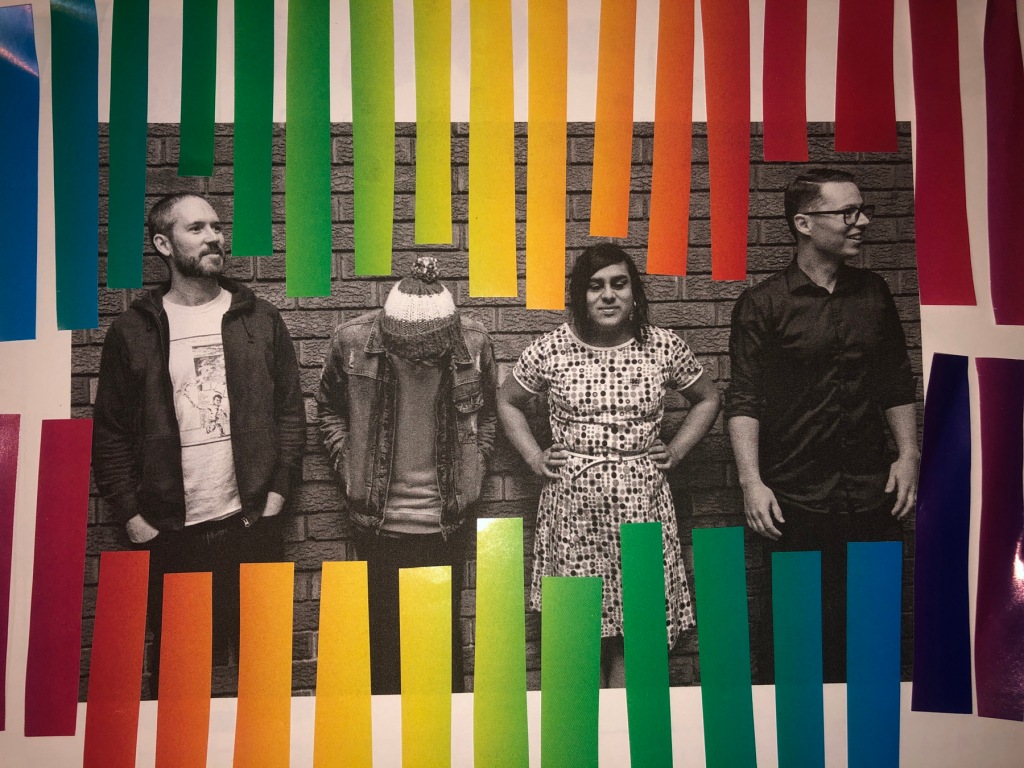
Original photo: Jamie Wdziekonski. Handmade collage by B.

Psych-rockers Beans are back sounding bigger and better than ever with sophomore album, All Together Now! We spoke with guitarist-vocalist Matt Blach (who also drums for The Murlocs) about the new record.

What first got you interested in music?

MATT BLACH: My dad played drums and he kind of taught me how to play drums. I’ve did it ever since I was a tiny kid.

When did you start playing guitar?

MB: That wasn’t until a bit later, I played drums first. I taught myself, I started playing when I was ten or eleven.

What were you listening to back then?

MB: A lot of the classics like Beatles and The Who and The Clash.

How did the new Beans’ record All Together Now get started?

MB: It’s our second album and we just wanted to make a bigger and better album from the first one.

Initially, did you have an idea of what you wanted it to sound like?

MB: Not particularly. We all listened to a lot of ELO [The Electric Light Orchestra] and Slade and ‘70s music and things naturally branched from there.

What have you been listening to at the moment?

MB: I’ve been listening to our label [Flightless Records] friends; Leah Senior. My friend Tim [Karmouche] just put out an instrumental album called Mouche [Live From The Bubble]. Another friend’s band called Smarts.

We love Smarts too! Lyrically was there any specific themes you were writing about with this record?

MB: Not particularly. It’s pretty scrambled really. We tried to match the lyrics with the aura of the song. Towards the last half of last year we tried to have at least one rehearsal a week as a group – three of us live in Geelong and two of us live in Melbourne – we took it in turns in terms of rehearsals and driving up and down each week. The host had to make dinner [laughs].

What did you make for dinner when it was your turn to host?

MB: Usually just pasta or tacos [laughs]. Communal food.

Song “Stride” on the record is about rediscovering your sense of self; were you going through that yourself when writing it?

MB: I guess so. It took me a while to write the lyrics to that song. I was going through that position in my life and that’s what made it come out.

The film clip for it is done in a Top Of The Pops style!

MB: Yeah, that’s what we were going for [laughs]. Over-exaggerated happiness.

What are some things that make you happy?

MB: Playing music [laughs].

What do you do outside of music?

MB: I do a bit of trade work. That helps me with the bills.

Do you ever find when you’re building something at work you’ll get song ideas?

MB: Yeah, definitely. I work by myself most of the time and I like being in my own head. I often don’t listen to music so I try and think of something or hum something.

Can you tell us a bit about the song “Street Troll”?

MB: “Street Troll” is a funny one [laughs]. I was on tour with Murlocs, we were in Belgium and we went out a bit later to get some takeaway beers and there was this big, drunk, scary Belgium dude that wouldn’t let us walk along the footpath. I called the song “Street Troll” and based it around that.

How about “Get It Right”?

MB: It’s a mixture of things. It’s basically about trying to do the right thing but sometimes it seems you’re not.

Is there a song on the album that was easy for you to write?

MB: I guess “Melt” came to me the easiest.

That one is about Climate Change, right?

MB: Yeah, and the government! [laughs].

Was there a song that was hard to write?

MB: I found it hard to put lyrics to “Montgomery”. It’s a busy song and there’s lots going on already so it was hard to find a neat little melody to put vocals in.

Do you demo first before you record?

MB: Yeah, I usually make a lot of demos at home and Facebook it to all the other guys and they get a bit of a vibe going before we get to practice.

Can you tell us about the recording?

MB: All Together Now was recorded in Geelong with Billy Gardner. We recorded it as four, everyone without Mitch the keyboard player. Jack did guitar overdubs, Mitch did the keys later and I did my vocals later.

Why did you call the album All Together Now?

MB: That was based on a private Facebook group I made with the boys to organise practices and jams. Three of us work and two of us do uni, it can be really difficult to get a practice together, especially with the hour and a half travel as well. I called it All Together Now because I was like, OK, everyone can you put down dates when you’re free. That’s how the album came together so we thought, why not call it that.

What is one of the biggest challenges of being in band for you?

MB: Self-doubt.

In what way?

MB: Personally. I guess that can be a good thing not to be overly confident and to doubt yourself and have that insecurity in a way [laughs].

The band were called Baked Beans, now it’s just Beans; does the name change mark new beginnings for you guys?

MB: Yeah, I guess we tried to approach it like that. A new album with a bit of a different name. The name wasn’t really a change for anything, we just didn’t really like the word “baked” and we just call it Beans anyway.

Once you finish an album do you go straight into writing new stuff?

MB: Yeah, exactly. Usually you follow up an album launch with a tour but we obviously can’t do that right now. Jack and I live together in North Melbourne, we have a little garage set up where we’ve been churning out demos. We pretty much write all the time!

Please check out BEANS; Beans on Facebook; Beans on Instagram; All Together Now out via Flightless Records.

A.C.T’s Noise Rockers Agency: “We started off as a dad’s band”

Handmade collage by B.

Agency’s new post-punk, post-hardcore, noise rock record is both vulnerable and staunch, there’s chaos yet a cohesive groove that drives the album along. Pretty guitars and melancholy melodies seep into the psyche, leaving it imprinted on your mind for days. We interviewed Sia and Tom from Agency to talk about their latest, Wild Possession. The album’s cover designer Adam J Bragg also gives us an insight into the art.

How’s your day been and what have you been up to?

SIA AHMAD (guitars-vocals-etc):Busy looking after my two young kids during the holidays at the moment while working from home, it’s been a juggling act I was never prepared for so learning on the job as they say.

LUKE ROBERT (bass-vocals): It’s school holidays here in the A.C.T, I’m fortunate to be able to work remotely, so I’m balancing work with building  couch forts – this morning the fort morphed into a submarine and we were attacked by a colossal squid.

We love Agency’s style of noise rock; what are some things that have helped shape your sound?

SA: Lucky for me, I got to see Hew and Luke play in their previous bands (A Drone Coda and Hoodlum Shouts respectively) a lot, even work with them when I was doing the hellosQuare label so I always respected them and loved their musicality.

I didn’t really ever play in a ‘rock’ band until Agency so the bond was really over ‘90s indie and math rock beforehand and then showed each other our other interests that lead us to fill the gaps in each other’s styles to end up where we have. I see us as a venn diagram of influence and aesthetics that make up our mess of sound.

LR: I’d say from the start we tried to not to smother the personality of each member’s playing. We had an inkling that our individual styles of playing would complement each other – it’s turned out to be the case. Songs develop fairly quickly as a result.

Agency have come back from a few years of inactivity; what was everyone doing in this period?

SA: We all seemed to be busy with our own personal stuff over the last few years – be it familial, work etc. In my case, I was juggling family time with the whole “quiver” journey for a long while. This also coincided with my last couple of years in the band Tangents, which was also full on with releases and touring.

LR:It was clear as soon as we heard her demos that Sia’s solo record was going to be special and a journey in personal growth. Both Hew and I wanted to respect that and give Sia room to explore her solo record and see where it took her. There was that and the Spinal Tap drummer situation.

The EP Wild Possession was recorded three years ago; why did it take so long to come out?

SA: Time kinda just flew by and with us maybe prioritising other things in our lives, we parked it on ice but always in the back of our minds until the time was right.

LR:It doesn’t feel like three years to be honest. The recordings sounded great to us and I don’t think we ever thought that we wouldn’t release them. Initially we thought we might record another session and then have a full length but time got away from us and it made sense to release the songs as a document of where the band was at, at that time.

What brought you all back together to release the record? Why is now the time to release it?

SA: We parted ways with our first drummer at the end of 2016 and then we worked with Hayden Fritzlaff from Moaning Lisa for 2017 – including recording Wild Possession – but then he moved on so we didn’t even have a drummer, let alone think about doing something else.

As Luke says, we didn’t stop thinking about the recordings so as we slowly got back moving on the shows front (with New Age Group’s Peter Krbavac on the drum stool), we started thinking that we should wrap it up with Jonathan Boulet and do something with them.

We’re all generally active with our politics and want for social justice so the real impetus to finalise a release ended up being that we could use these recordings as a fundraising exercise and talk about the causes we believe in.

LR:Like most, every band I’ve played in has been a collective, bigger than the sum of its parts type deal. An extension of that notion is using the platform no matter how big or small the scale to contribute to causes the collective believe in. I don’t take for granted being able to contribute in this way – a privilege awarded to musicians who, in our world anyway, aren’t looking to benefit or to pursue monetary rewards.

Do you have a different relationship to the songs now than when you wrote and recorded them years ago?

SA: I had to relearn so much when we played our first show in years in 2019, it’s pretty embarrassing to write a song and then forget about it so easily but I think it’s great that the songs still have the energy and power for us as when we were first played them out. It’s a shame that lyrically, so much of the things sung resonate a little too clearly with the current climate.

LR:Before recording we’d just finished a run of shows and were probably the tightest we ever have been. Listening to the songs now reminds me of a time when the band was clicking – that we could get the band to a level we were all stoked on feels like an accomplishment.

What’s the significance of the EP’s title Wild Possession?

LR: I liked the turn of phrase, the metaphor. Life is a number of wild possessions. It’s up to you to negotiate each possession however you see fit. There’s no right or wrong way but most people do so within a construct set of or sets of societal values. I like to find the humour, happy accidents, the absurdities in those constructs. By zeroing in on these things in each wild possession of life is a way of turning a potential cynical outlook on life into a positive one.

We love the EP cover by Canberra artist Adam J Bragg! I know Sia and Adam have collaborated on various projects for over a decade or more. Where was the EP cover photo taken? What emotion do you feel it conveys?

ADAM J BRAGG (artwork/design): The photo was taken sometime in 2012 on my parents old 35mm ricoh camera. My partner and I went out to visit a winery, Brindabella Hills, North West of Canberra. It’s directly west of Hall so the photo was taken around there.

It was taken out the car window. I have a bunch of photos of the landscape. I don’t think there was any thought put into it. I remember always loading up 400 iso film and taking photos on sunny days to get that blown out look.

When it came time to do the Wild Possession cover I really wanted to do something different, I haven’t painted in a while and nothing felt interesting. I was playing with some old paintings and it just wasn’t clicking.

A band called Regional Justice Center just put out a 7″ with a cover that was a homage to a No Comment cover and I thought it was a cool nod, especially for a smaller release.

I was listening to a ton of Lungfish at the time and knew that they are a big influence for Luke, so pitched him the idea of doing a homage to Walking Songs for Talking with an Aussie looking vibe. He texted back and said he actually kept having a dream that Agency was playing Friend to Friend in Endtime, a song from Walking Songs for Talking.

That was it, we couldn’t not do it after that point. Like, he independently had a dream about a song off an album, that I decided to rip… how does that even happen?

SA: Adam’s actually known Luke for longer than I’ve known both of them, Adam and I met when he cold called me to do some design work for hellosQuare and we hit it off to start the partnership. I 100% trust him when it comes to visual aesthetic and he nails it every time!

We placed that trust in Adam to listen and respond with the cover and while we certainly didn’t think of ‘rural punk’ when we thought of the music, I couldn’t stop thinking how much sense that phrase made to me when he showed us the cover.

I think people don’t want to acknowledge us here in Ngunnawal Country as both city or regional folk, we’re the outsiders in between and the hazy blur of the image suits that thinking too, musical outsiders.

The EP was recorded by Jonathan Boulet; tell us about working with him? What did you learn?

SA: We met Boulet when Party Dozen did an early show with Agency in 2015 or 2016 and we got along really well. I loved the music he had made and that he had both a good hi-fi aesthetic when it came to recording along with a compatible DIY ethic too. He understood what we were about, was a great listener and very giving during the process (I mean, REALLY GIVING since we were dragging our heels to finish things off!) so just working through recording without having to monitor anything and concentrate on playing was great. We did everything mostly live but he got us so tight during the recording session, more so than we’d even been I think.

What’s each of your favourite track on the record; what’s it about? What do you appreciate about it?

SA: Buffaloes could be the most ambitious thing we’ve done. Luke’s initial words, my response and then getting Hew to do the lead vocal threw ego straight into the bin and then the music came together in parts but really quickly too. We joke about Creative Adult just wanting to sound like Oasis but I think the second half of Buffaloes is us channelling our garage-y psych-pop secrets too. Personally, I had a sore throat for the recording session so I sung on the end section of Buffaloes and went super low comfortable (imagine in between Barry White and Ian Curtis). The others and Jono thought it was great but I’d say it probably took me the best part of the last three years to be comfortable without and use it to completely strip out those perceptions of the gendered voice within myself too – another journey among the others.

What was the thought behind getting Tom Lyngcoln from Harmony and The Nation Blue to deliver a monologue on track “Sensitive”?

SA:If I recall right, I had a grand idea of doing a pair of tracks that complement one another so Sensitive was supposed to be the twin of Senseless but in reality, I manipulated the music out of a Hew outtake from a longer jammed out version of Senseless and then sat on a longer version for a while. I wrote the monologue separately but it seemed to make sense over Sensitive. I wanted my voice out of the mix. Not sure why but it just seemed like he’d be able to convey the resignation well.

LR:Tom’s been a big supporter of us in our previous bands. We played a show w/ Pale Heads and on the drive back to Canberra we talked about having Tom on something. He’s a terrific guitar player so of course we asked him to do a vocal!

Sidenote: Hew and I saw TNB play Tuggeranong Skate Park in the rain in front of us and three others – I think it was for Protest Songs. The kind of magic moments that can only happen in the nation’s capital.

Have you been writing anything new? What kinds of themes are coming to the forefront lyrically?

SA: There were a whole heap of things from before the Wild Possession recording session that was so close to done but not quite finished so I think even revisiting those with current moods will be nice, when we get there. The one luxury of Agency for me is that Luke tends to roll things out that I can respond to in some kind of fashion too.

LR:I think I’m sitting on enough songs for another release. I was inspired by Sia and her solo record and the candid interviews surrounding the record’s release. I’ve written some more direct lyrics as a result.

Agency have toured Malaysia; can you tell us a bit about that? What were the best and worst parts?

SA: I always had a special connection with that part of the world and touring so it was nice to be able to do this with Agency and meet good people at each show. There’s a nostalgia for the energy and vibes at the shows, which don’t seem to be the same for us here a lot of the time.
A lot of memories from that whole trip:

We played Sonic Masala Fest and a Tyms Guitars in-store in Brissy the weekend before flying to Malaysia; Owen from Terra Pines drove us straight from Tyms (after a Bens Burgers lunch) to Gold Coast Airport.

Fitting in a one day recording session in Kuala Lumpur before our first show and eating like demons at the hawker stall around the corner.

Our tour van driver Adam and his bud Chap taking us all over the country including a late night round trip to Malacca and being stuck in an epic 2 hour traffic jam on the outskirts of KL! (Also probably the ultimate low of the whole trip).

Getting my Scottish free jazz sax friend Raymond McDonald to join us at the KL show for a noise blast improv during Stillness track On The Loop and seeing our Killeur Calculateur buds at the show.

Lovely hospitality from the Dunce crew in Singapore including the best dim sum you can imagine.

LR: So many incredible meals w/ kind accommodating people who went out of their way to show us and accept us in their community. Discovering Malay and SG bands. Watching Malaysia compete for a Commonwealth medal in badminton was a highlight. The restaurant was jammed packed and teeming w/ anticipation and excitement. Playing in a shopping mall and then walking through downtown SG to catch an outdoor set by OG Singapore hardcore legends was another.

What have you been listening to lately?

SA: I’ve bought a lot during iso – records by William Onyeabor, Party Dozen, HTRK, Stereolab reissues. Also really excited for the June of 44 album!

LR:Ancient Channels, The Meanies, The Dammed, Sonic Youth bootlegs, Screamfeeder.

Agency are from Weston Creek, ACT; what’s it like where you live?

SA: It’s the edge of suburbia before heading into National Park, quite lush in some respects but also just very suburban. It’s nice not to be so close to CBR inner-city hipster colonies though.

How did you first get into music?

SA: New Kids On The Block and Kylie on Video Hits baby! I found my own way much, much way later on into what you can unpick now.

LR:I found my Dad’s cassette draw with dubbed versions of Kiss Alive, Blue Oyster Cult, and ZZ Top. I was a silverchair/Nirvana kid.

Can you share with us some of your personal favourite albums, bands or songs of all-time?

SA: So hard…say without early Something For Kate, I would never have even thought about Fugazi and Slint so there’s a thought! Unwound, Alice Coltrane, Deftones, Low, The Slits…all faves for sure but so much harder to pinpoint something.

LR:All time CBR bands Henry’s Anger, Old Ace, Hard Luck, Falling Joys, Koolism, Looking Glass,  Voss, Babyshakers, Cough Cough.

What’s something that’s really important to Agency?

SA: We started off as a dad’s band and I think that oddly enough, that element of friends hanging out to just hang is probably more at the core of our existence as a band now than it was in the first place? Even if we’re not in the same room, we’re still texting or sliding Insta DMs with all kinds of nerdy discussion points that align with the heart of the band.

LR:Boring drummers with constant stories of ‘90s musical ephemera.

What’s next for you all? Anything you’re working on you’d like to tell us about?

SA: There’s some interesting things on the boil outside of Agency that are interesting but really, life is very slow for me at the moment. I’ve made a whole lot of new solo music between bushfire season and current iso-era so that’ll show up at some stage but also keen to see what Agency might turn out in the future too.

LR:We’re due a band and extended families catch up. It’d be nice to come out of the hibernation of bushfires/Covid/Canberra winter with a new batch of Agency songs.

Please check out: AGENCY; on bandcamp; on Instagram; on Facebook.

Link Meanie of Legendary Melbourne Punk Band The Meanies: “There’s many things that you can get out of being creative but for me, if I didn’t have that I’d probably go insane”

Original photo: Peter Wheeler. Handmade collage by B.

The Meanies are one of Australia’s all-time bands. Forming decades ago, their music is melody-driven, explosive power-pop with lyrical tongue planted firmly in cheek. Their live shows are the stuff of legend, wild and action-packed. 2020 sees them releasing a new studio album Desperate Measures, one of their greatest yet. Gimmie’s editor started going to Meanies all-ages shows as a teen in the ‘90s and was very, very stoked to catch up with guitarist-vocalist, Link, to find out more about the LP and his song-craft.

What do you love most about writing songs?

LINK MEANIE: It’s therapy [laughs], it really is! Honestly there’s many things that you can get out of being creative but for me, if I didn’t have that I’d probably go insane. The actual process of writing in some ways is the most enjoyable part for me, getting into the studio to varying degrees it can be fun but I find it a bit stressful.

Before you started writing songs was there any other ways that you expressed yourself creatively?

LM: Gang fights! [laughs]. No, I didn’t. I’ve always done it since as long as I can remember, from twelve years old I was always being creative with a guitar. It’s always played that therapeutic role in my life.

What got you interested in writing your own songs?

LM: I came from a kind of musical family I guess. My mum went to a pretty high level in piano and my brother played in a school band, he was a bass player and also a better guitarist than me, just being surrounded by that and a family of music lovers. It was inevitable.

I’ve read that you’re the kind of song writer that writes best when you have a deadline to work towards; was this the case for this record?

LM: No, that proves that statement to be an actual lie [laughs]. When I started writing this record there wasn’t any plan to record another album, I just did it because I was bored out of my skull over here in Spain… obviously though, I love being here with my wife and her kids… just not having that creative outlet though, to me it was medicine. I didn’t know if it was going to get recorded or not, it just evolved from there.

How much song writing did you do for it?

LM: The exact amount of songs that we recorded [laughs]. Actually, we recorded one extra which I think is coming out as a single. There wasn’t many throwaways, but I took that much time with it that I was pretty sure of those songs before we went into the studio. Sometimes if you do have a deadline and you write a whole bunch of songs and you get into the studio and for one reason or another a song just doesn’t work; even on paper if it looks good something just doesn’t click. Didn’t have that with this, which is fortunate but it helps spending a lot of time with the structure and demo-ing.

Do you write most of your songs on guitar?

LM: Yeah, or flugelhorn, one or the other. Mostly guitar. I use an online recording service called Soundtrap, I’m not getting money for that, it’s just a basic kind of setup and just demo on there and send them to the guys fairly complete. The songs end up getting a different feel just because of people’s different styles once you get in the studio, which is nice. On this one we have Wally singing the verse to one of the songs [“Cruel To Be Caned”] which has never happened before, which I’m pretty excited about, I can go up and grab a drink while he starts that one. I also co-wrote a song with Jaws which is something I’ve never done. There’s been a couple of firsts on this one.

One thing I have always loved about Meanies songs is the melody; where does your love of melody come from? Where does that knack for doing it come from?

LM: I really don’t know. Having a family that introduced me to good quality song writing, the obvious ones like The Beatles, The Who, my mum listening to Carol King or Burt Bacharach or whatever—growing up with a lot of very melodic stuff. It seeps into the consciousness and it’s just a part of me, man! [laughs].

When you first started The Meanies did you have a vision for it? Out of the gate you had a sound that was your own and even all the art you drew for your releases, it’s very fully formed.

LM: I’m glad you think so [laughs]. To me, I guess it has a certain continuity to it. I don’t know if it was very conscious. To start with, I think the imagery on the early posters was inspired by the Hard-Ons, pseudo-metal satanic imagery that they would do [laughs], then it developed a bit more into our own thing. Things didn’t always pan out the way I’d like it to, I didn’t always have the last say in things like artwork or choice of singles, I kind of like that though because I’m a lazy person—just tell me what to do! [laughs].

How did you first get into punk rock?

LM: Probably the Sex Pistols hearing them, or the Ramones, stuff like that is probably the earliest experiences… apart from Plastic Bertrand “Ca Plane Pour Moi” [laughs], that’s probably one of the earliest “punk rock” songs I ever heard. Also though, define punk; there’s so many different descriptions of what punk is, you could call something like The Romantics “What I Like About You” punk. All the things you hear growing up are part of the formative appreciation for the style.

Yeah. When punk started all the bands sounded different.

LM: Yeah, that’s the thing it wasn’t very homogeneous, there’s such a variety of sound. A bit later on people started narrowing the parameters of what punk was… that’s OK, but I just find it a little bit boring when it’s sort of cookie cutter.

Totally! With the new album Desperate Measures; what kind of emotion or place where you writing from?

LM: The same—a miserable bastard basically [laughs].

Photo: Peter Wheeler.

You seem pretty happy to me.

LM: This is all a façade! [laughs]. Inside I’m an emo. Most of the songs are pretty negative or analytical, a lot of them are about myself and then there’s more external songs like “Monsters” and “All the Bought Men” which are a bit more political.

When you write songs do you find it helps you learn stuff about yourself?

LM: Oh yeah, for sure. It’s always therapeutic to me because you are confronting parts of yourself that you might not otherwise do unless you were writing it down on paper, even if it is a little bit abstract—that’s probably a part of me not wanting to face it! [laughs].

When you write your lyrics do you do much revising?

LM: My lyrics? Not a great deal. Occasionally you’ll go back and find a line that’s a bit naff! You’re being lazy and you just wanted to move on and you go back and you’ve got a line like: I was walking down the street just the other day [laughs]. It’s like, c’mon! That’s what you wrote when you were fourteen. There’s a lot more consistency and quality with the lyrics now, a little less clumsy metaphor than I used to use when I was younger.

Is there a song you’ve written hat you’re really proud of?

LM: On this record?

Yeah.

LM: I’m really proud of the whole thing. It has a cohesion which isn’t always there in terms of how I view the record; maybe it always seems cohesive to people but, to me… I think because it was written when I’m older and also written in a similar time period. I think “Sousa” is one for me, it’s probably the least punk one on the record. I really love the melody, I think it’s a really sweet melody.

That’s one of my favourites on the album too and I also really love “Drowning Tower” as well.

LM: Ah, good! That’s the one I co-wrote with Jaws, he’ll be happy to hear that.

What’s that one about?

LM: That’s another sooky song about me [laughs]. You know man, like, I’m the tower! [laughs].

You make Meanies film clips too. You’ve made a couple so far for new songs “Cruel To Be Caned” and “Jekyll & Hide”.

LM: Yeah, really lo-fi clips that you probably couldn’t show on television because they’re too dodgy. We just figured we can get them done cheaper if I make them; how many times are they going to get played on television anyway? It’s mainly for YouTube and social media.

I still think they’re really fun! I love the clip with the dog!

LM: [Laughs] Aww thank you! Roveo! It’s so fucking daft! [laughs]. I’m really happy with them. It’d be nice if I had more technical know-hows and I could make them of a higher quality. I’m using a really old version of Movie Maker, it crashes every couple of frames. The clip I’m doing now, I’m up to about 500 frames and I’m halfway through, it takes a long time.

What are you making the clip for now?

LM: I’m doing one for the next single which is “Monsters”.

Nice! That’ll be a fun one.

LM: There’s a lot of scope for animation with a title of “Monsters”.

In the song, what kind of monsters are you speaking about?

LM: I’m speaking about the demonization of cultures, religions, anything you know… not that I really agree with religion, I think it’s had a lot of negative affect in the world; not so much religion but organised religion. By nature it becomes corrupted, when they become to big obviously you’re going to get someone at the top controlling things and they’re going to have their own vested interests, which corrupts any sort of message, positive message that a religion has. I’m not religious myself at all. I think it’s everyone’s right to believe what they want to believe, no matter how stupid [coughs]. We’re just seeing it more and more with the rise of the right-wing around the world and it’s really worrying. There’s this fucking insane clown running America, not to mention Australia! It’s scary and weirdly exciting because these sort of moments, no matter how fucked up they are, there’s great scope for change, possibly for the better. We’ll see.

What are the things that you believe in?

LM: Not a lot. I’m a bit of a cynic and a nihilist. I believe in friends actually. I believe in trying not to be an arsehole, which I manage to do sometimes. Just trying to treat people with respect, which I don’t do sometimes. Not judging, trying not to judge people with generalisations and not listening to people in power, they’ve all got their own interests—I don’t trust them at all!

Same! I’ve been like that since I was a kid. My parents always taught me not to trust authority figures and those in power.

LM: Yeah, same! [laughs].

Life can be so tough; what helps you get through?

LM: Love and music!

What’s life like for you in Spain?

LM: I love the vibe here, it’s a really nice culture, really relaxed attitude. Lots of just sitting in cafes drinking and soaking up the sun, I love it! I do miss Australia… well I miss my family and friends in Australia a lot. I should be coming back soon. Hopefully we can start doing gigs!

What do you get from playing live?

LM: Money! [laughs]. No, I don’t. Just enjoyment, it’s just fun! It’s a different kind of therapy than the actual creative side of it. I just loved catching up with old friends, it’s really great when you’re playing with a band you’ve known for 30 years, like Tumbleweed or Spiderbait, any of those sort of bands like that. It’s really some of my happiest times, just catching up with some of those people.

Please check out: THE MEANIES; on Facebook; on Instagram; Desperate Measures out now on Cheersquad Records and Tapes.

Leah Senior on new LP The Passing Scene: “I went through a really long period of not being able to write, this album is rediscovering play in creativity”

Original pic: Jamie Wdziekonski. Handmade collage B.

Melbourne-based musician Leah Senior writes philosophical, thoughtful, joyous songs. New LP The Passing Scene explores impermanence, acceptance, the natural world and the freedom of simply being. Gimmie spoke to Leah about her new record.

Right now you would have been finishing up a US tour with King Gizzard and the Lizard Wizard but due to the pandemic it was cancelled. You decided to go ahead and release your album; what inspired you to put it out now?

LEAH SENIOR: I don’t think the pandemic holds that much sway, from my perspective it was always going to come out now and it doesn’t matter if I’m touring or not, it’s a totally separate thing. Now is as good a time as any to put out music, if not more so.

The title of the album The Passing Scene is taken from the song of the same name on the album; as the title of the album what did you want it to represent?

LS: Looking back on all of the songs on the album there’s a real theme I suppose and it’s just acceptance of transit, that nothing ever stays the same. I just started reading a book by Pema Chödrön who is a Buddhist writer. I was reading this morning about the idea that everything falls apart and then comes back together and then falls apart. I think that “The Passing Scene” the song is about tuning into nature but at the same time accepting that nothing stays the same.

Impermanence?

LS: Yes, impermanence is the word I’m looking for.

I love the moving cover of your record, it’s pretty incredible!

LS: Yeah, it’s the same idea, that impermanence or that the passing scene is always changing. It was a way to visually express that idea.

Jamie Wdziekonski did the cover, right?

LS: Yeah, Jamie did it, yep.

Photo/album cover: Jamie Wdziekonski.

Was it his idea or yours?

LS: It was his idea to have it lenticular. I would never have thought of that.

Going into the album did you have a vision for it?

LS: No. This album has been recorded at home over the last few years. It’s taken a long time, I’m a slow song writer. It gradually was a piecing together of a record. I’d have a few songs that took it in one direction so I’d follow that and then I’d have songs that took it in another direction, so I’d cut songs; it was a real process of slowly piecing together the puzzle.

It’s a little bit of a departure from your previous work.

LS: Yeah. It comes out of trying to change my approach to creativity, I suppose. After my second album I went through a really long period of not being able to write, this album is rediscovering play in creativity. I was trying to relax a bit more, the songs come from play rather than anguish.

Often an artist’s work reflects or correlates with what’s going on in their life; were you writing from a happier place?

LS: Absolutely. It’s having stability.

You mentioned you recorded in your lounge room over a long period of time; how did this help shape the record? It feels more intimate.

LS: That’s good. Me and my partner Jesse Williams worked on it. He recorded the album. It affected the way it sounds so much. I have a really strong vision of how I like things to sound and for better or for worse having my partner record it means that I can really get it exactly how I want it. Having total control over how it sounds has affected it. It’s definitely intimate and relaxed and it’s meant that I haven’t been on anyone else’s time when I’ve been making it. I think the relaxed approach has translated to the sound.

I get that from the record, I also get that it’s hopeful and joyous.

LS: That’s good, I hope so.

Photo: Jamie Wdziekonski.

Can you share with us a fond memory from the recording process?

LS: I love doing full band stuff, again it’s just being relaxed and getting to play with all of your friends in the lounge room, it’s the best possible way of recording;  studios can be cold and scary and impersonable. It’s great to be able to just sit in my pyjamas and record [laughs].

I really love the last song on the record “Time Traveller”; what’s it about?

LS: That one I wrote about my niece Eleanor, she was a baby at the time. It’s about being frightened to look into the future. There’s a line in there: see the smoke hanging over the city… that was like a prediction for the summer [bush fires], I guess. It’s about being scared to look into the future and feeling that we never seem to learn from our mistakes.

What were you like growing up?

LS: I guess I was a lot of things. I grew up in the country. I was always really obsessed with music. My dad would sing me Beatles’ songs and my mum would sing me folky songs; she’s Swiss, and would sing me folk songs. From there I really just went on my own discovery expedition. I would work at a shop blowing up balloons on a Saturday morning and then go to the shop next door and look at the covers of CDs and buy the ones I liked trying to find new music.

Nice! I know that Howard Eynon performed in your living room not too long ago; did you learn anything from watching him play?

LS: Yeah, absolutely. That was a really powerful night! He can teach us all a lot. I felt a lot of the themes that I’ve been feeling on the record I made, he embodies that stuff; trying to relinquish ego and accepting impermanence. His presence is so joyous and free and youthful. He’s a perfect example of a way to live a life, I reckon.

Another song I really love on your album is “Jesus Turned into a Bird” it’s really pretty, especially the piano; how did that one come together?

LS: That song was written from being up really, really late one night and looking around me and seeing the sun come up and feeling so profoundly disconnected from nature. I wrote it the very next day. I constantly feel that way, I feel like we are so, so far away from nature the way that we live our lives.

Is there any songs on the album that hold a special significance for you?

LS: I feel like “Graves”… I really like playing that one still, even though we released it a little while ago. My partner Jesse and I wrote that one together. I’ll never not feel like I felt, what I was expressing, in that song. They’re all genuine expressions, they’re all real.

Jesse is from the Girlatones?

LS: Yep.

Is it nice having a partner that is also creative?

LS: Yeah, it’s great. I don’t think I couldn’t not have a creative partner. It’s especially nice working on my music with him. He can play anything on anyone of my songs and it sounds like how I would envision it. He has a total musical understanding of my emotions or something. I feel very lucky to have that.

The video for your song “Evergreen” was shot at a castle?

LS: Yeah. Kryal Castle.

Where did the idea for that come from?

LS: My friend Jess who shot the video we were talking and she was envisioning some kind of fun medieval thing. It was her idea. We were scouting out places and that place was perfect.

Do you have any other film clips coming up?

LS: Nah. I have a live clip… I’m not sure. Not at this point in time.

How has not being able to play live affected you?

LS: It’s been fine. It’s actually been pretty good. It’s freeing and fun for me. I’m not an extrovert, I don’t get my kicks from that sort of thing. I like trying to make things. For me, it’s been fine.

Have you been making anything lately?

LS: I’m always making things here and there. I haven’t been writing that many songs. One day I’ll do a tiny bit of poetry and the next day I’ll do a tiny bit of painting—I’m bad at settling and focusing on things.

What have you been writing about with your poetry?

LS: The last poem I wrote was about this idea that we are attracted to nature because nature can only be itself. It’s not my own idea, it was inspired by John O’Donohue. He was saying that a crow doesn’t wake up one day and go “oh, I wish I was a crow” it can only be itself, and there’s something really beautiful about that. We spend our time trying on new outfits and constantly trying to become, whereas birds don’t sing the song of becoming, they’re not song writers, they’re song singers.

Why is music important to you?

LS: That’s a huge question. It speaks the language of nonsense, the reality of the world is all nonsense—music is in tune with that. Music expresses so much more than we ever could express without it.

Vid: Button Pusher more here.

Please check out LEAH SENIOR; on bandcamp; on Facebook; on Instagram; Get The Passing Scene via Flightless Records.