Howardian & Japanther’s Ian Vanek: “The future is bright!”

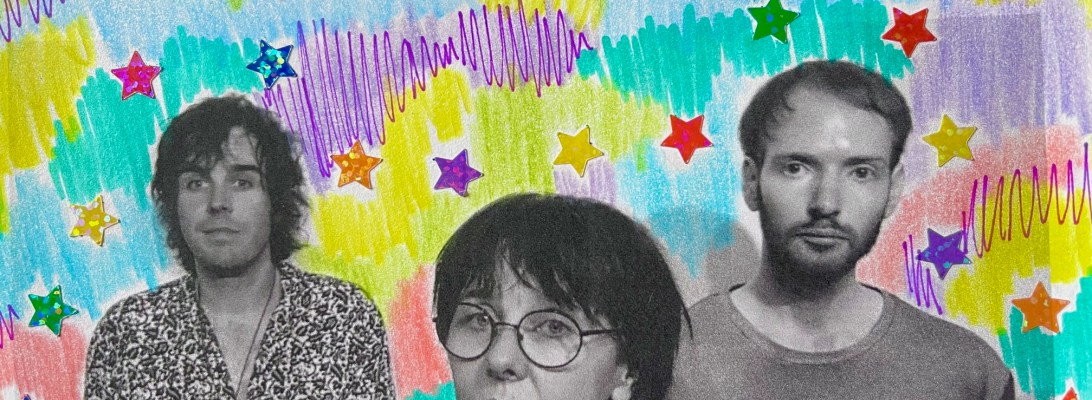
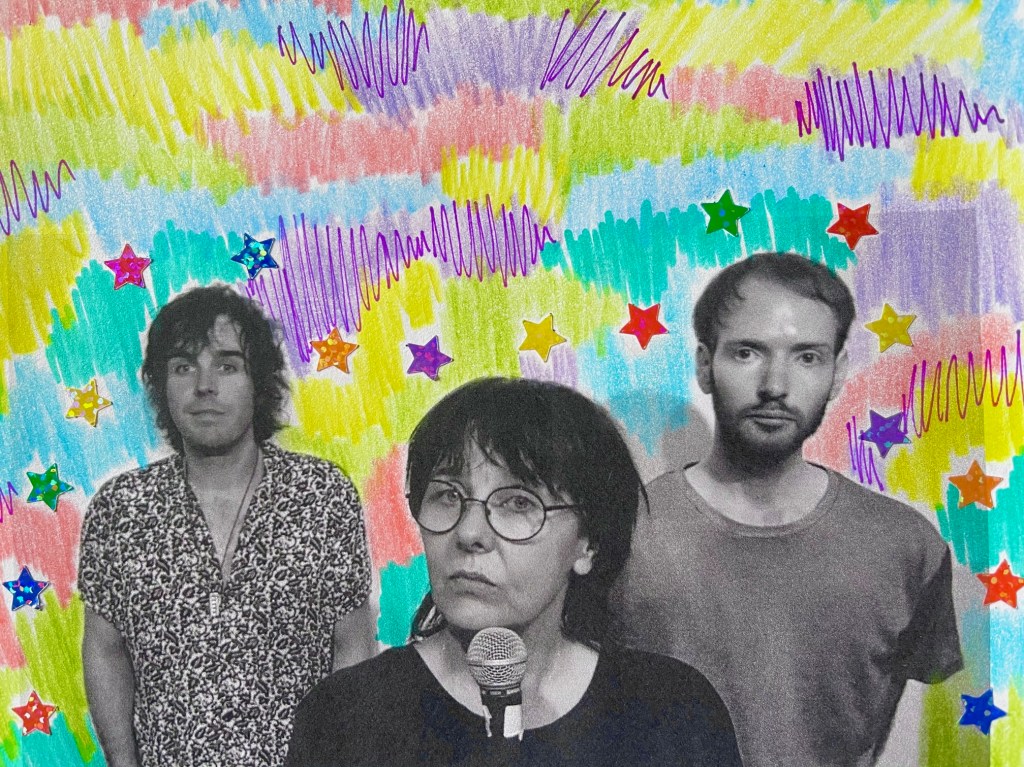
Handmade mixed-media by B.

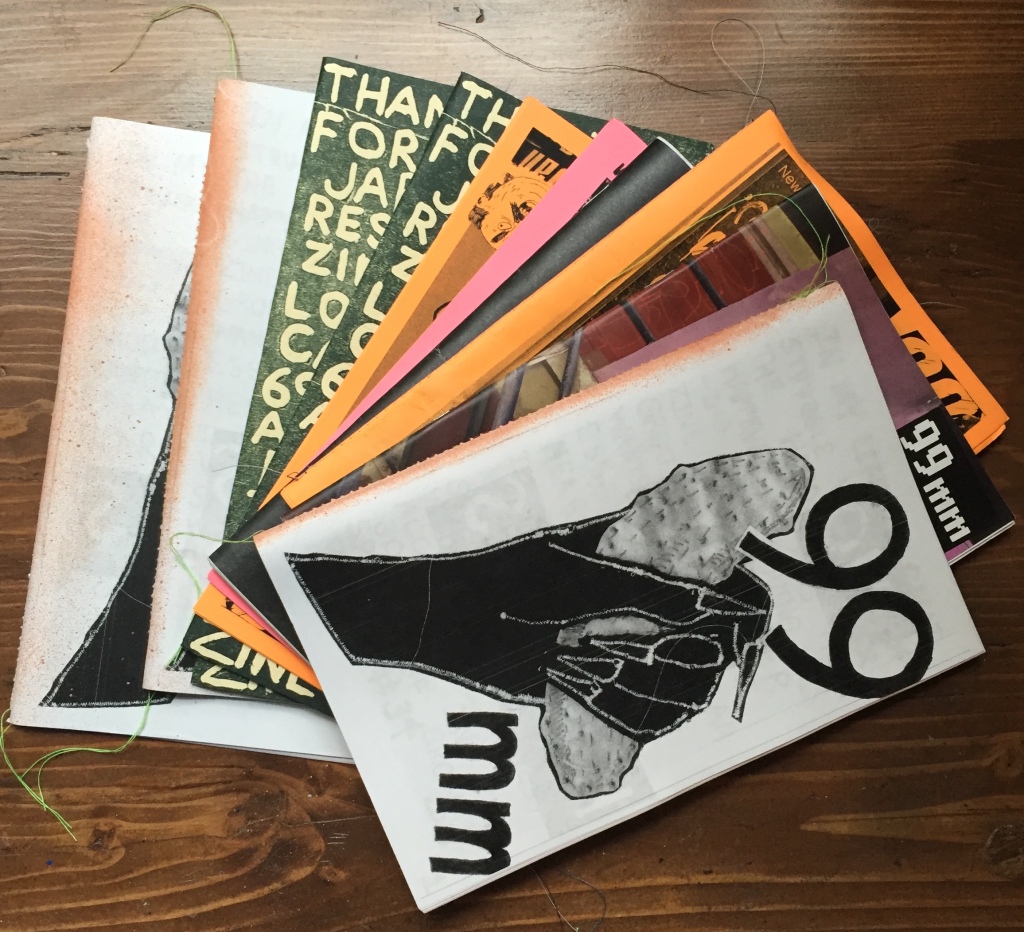
Ian Vanek is one of Gimmie’s favourite creatives – our editor has interviewed him several times over the last decade. Currently playing in Howardian and publishing his longstanding cut n paste graffiti collage zine, 99mm, Ian’s approach to creativity and positivity, along with his interesting art, has always been inspiring to us. Gimmie chatted to Ian about his forthcoming book Puppy Dog Ice Cream: The Story of Japanther, a tome celebrating his adventures as half of New York art punk performance duo, Japanther. They’ve played atop the Williamsburg Bridge in NYC, appeared alongside synchronized swimmers, with oversized puppets, in the back of a moving truck in Soho, at shows with giant dinosaurs, and BMX bike riders flying off the walls, in castles, museums, galleries, warehouses, painted live while riding a skateboard on a mini-ramp and so much more!

How have you been spending your time lately?

IAN VANEK: Working a lot, I do construction stuff, manual labour. Where I live there’s a big forest behind us, we just go on really long walks, you can see the mountains. We have dirt bikes and bicycles; exercise every single day. We’ve got a really good routine for dealing with all the sadness, chaos and change… just made a really hard and regimented routine, sticking to that has been really helpful. We cook a lot at home and have a really good diet. Trying to stay in that space. Doing well because of those things and some help from some good people.

I know travelling has been such a big part of your life.

IV: Yeah, it’s good to be forced to not get to go anywhere. The last time I went anywhere was January of last year, I went down to San Francisco and worked with these great people from Austria, we did a really cool show at a big museum there and a couple of places. I came back from that and actually got really, really sick… and, who knows? Because nobody really was talking about that disease outside of Asia at the time. I had a rough bout of sickness in January. After that it was, well, ok, just act like you have this disease and make sure your mum and dad are safe; take into effect that there’s greater forces at play and if you just relax, you can ride on top of a wave or you can really drown underneath a bunch of this shit. As we saw in this country, politically you and I come from a punk rock background so seeing this stuff has always been idealised, so when you see someone threatening your state and threaten all the things you grew up around, the very steady things getting shaken, I think that has a lot of people losing their mind while in these quarantine situations. We saw a really good summer here in the United States as far as civil rights and then a sad winter.

Watching it from over here in Australia it’s been crazy to see.

IV: It’s really sad, I wonder about that sometimes from an outside perspective.

In May Outlandish Press is releasing your book Puppy Dog Ice-Cream: The Story of Japanther.

IV: It’s exciting news! That’s something I’ve been doing. I’ve been working with an editor and a publisher. It’s 140 pages. It has a lot of nice photographs in it. I tried for it to be a very broad picture, so a lot of people contributed to it who worked really close with Japanther, they contributed either a paragraph or just a sentence or many paragraphs. There’s some writing by people I love. Just me trying to write down the story of a mystical weird time in my own life of being a young person that was overly driven on doing music and trying to make sure I remember that when I’m an old person, like I am now [laughs]. It’s a kind of a natural idea to do a memoir after a trip that was that crazy.

Totally! You guys did sooo much, all kinds of things. I don’t know if there is another band, at least that I know of, that’s done so much variety of things, playing in so many different situations. You really thought outside the box. I remember you saying early on that Japanther was really an art project more so than a band.

IV: [Laughs]. That was always the idea. That comes from a legacy of bands like Black Dice and Throbbing Gristle, Pussy Galore, Hairy Pussy is another one… there’s all these bands out there that definitely had the idea before us to put your music into the world much more as art and recontextualising that whole concept of – go to a show, get your drink tickets, play on time, do the thing – it’s just so deathly boring and if you’re someone that wants to see anything new, which I think great creators and artists are often looking for something new or unseen or to build something that only they envision, to play with the world and manipulate it a little bit potentially. So, we got to those places definitely on the backs of other people. With even the Ramones where a cartoon image of themselves or they’re brothers out of Queens even though they’re not, if you look at them, they have long hair and the same jackets, so why not? The Misfits are another idea of these ghoulish people from New Jersey, where really they’re just comic book nerds. I love that idea of manipulating. Somehow with Japanther we were really successful with that. I’m proud to be the one that gets to chronicle that. Often times bands let someone else tell their story and tell the shitty parts of their story first and if that’s all you listen to that’s all people fixate on. We’ve been really lucky that we have fans like you that really want to talk to us about this stuff over the course of a body of work rather than just one incident.

I feel really lucky to have spoken to you at different points and each time you’ve been going through a lot personal growth, I always seem to catch you at a time where something interesting is happening.

IV: I thought about that today. When I woke up, I thought of my friend and sent her a text saying: I hope you’re doing well. I love you. Then her husband texted me and said: Maya went into labour! Holy shit. That’s so cool. I feel good today… at least about that and the hope of the future and that those people, not even just the United States but Australia too, that we’ll be able to hand them something that’s just not a big pile of ash and some crumpled up iPhones [laughs]. Like, “Oh shit, that’s what I’m meant to grew my tomatoes in?” I’m just trying to look towards positive things as a responsibility of people like you and I who are in underground art making, publishing and creativity in general, not putting too big of a harness on that concept; putting that impetus on us as a community that we have to hand the world to the next people that are being born.

That’s something I’ve always really loved about Japanther—you’ve always been about community and uplifting people.

IV: We try to be, not always successfully, I’ll definitely admit to my own failures many and great but at the same time I try to be from a place of healing and making music because it’s more positive than doing something negative or aggressive in the world. Even if you want to talk about something negative or aggressive, you’re portraying it rather than committing that negative or aggressive act. Using music as escapism has certainly been at the theme of our making for a long, long time. Trying to provide and share healing with people it’s a really good thing.

How long did your book take to write?

IV: Geez, about five years. I probably started it in about 2014-2015, just plugging away. At first, I set the goal of writing around 5,000 words per year that we were in the band, that to me would equal a lot of words and a lot of pages, and henceforth would have a book [laughs]; that was really simple thinking. When I started collaborating with a publisher and an editor it became a very different project because the English language was put on top of my words [laughs]. Things were separated and weeded out. I really worked hard to keep the voice of the book 100% positive rather than focusing in on any shortcomings, while still acknowledging those shortcomings, as you mentioned before, the personal growth of writing something like this. I’m reminded of something a friend told me – I gave him a different piece of writing that I had in my zine – “It’s interesting. Thank you for sharing this writing but I think it will be most interesting for you to read this in five years from now because this is a big, big thing for you to talk about.” Which was about five years ago now, and it’s true, reading it was like, oh, wow! That will trigger ten more books you could potentially write. That’s a big reason I wanted to do it, cataloging these ideas.

I certainly talk about Australia in the book. That was a big deal for us to get to travel to places like Australia and travel to Russia with our band. I felt like I had beat the final level of the video game and then I needed to get another video game.

What’s the experience of looking back at your collection of thoughts and feelings about Japanther been like for you?

IV: Often at times, really mixed emotions, as I would expect anyone who is grappling with the truth of what happens in their own life. Writing a memoir, you have to grapple with a lot of things you don’t necessary want to go down that road and talk yourself through it or get yourself where you can be ok with it enough to write about it in a positive manner.

Was there anything that was really hard for you to write about?

IV: Oh, sure. I just read the intro to the book again, it’s written by Penny [Rimbaud] from Crass. Crass was a band that started in the mid-70’s and said that by 1984, eight years after they started, that they “were going to be over”. 84’s the year that a lot of science fiction writers’ saw – George Orwell – that it’ll start to be the future. Crass wanted to be done by 1984. Seeing him write the intro to the book and reading back on it he’s musing on coming from England and playing shows with us and where we traveled and toured with him, where we recorded with him, in a really beautiful and poetic way he talks essentially about being with us and being a part of what we’re doing, which we always tried to do with anyone that came in contact with us, is get the involved in the idea and go have fun with it and go smile, go swimming, go to the beach and try to find those moments where you find joy in the process.

Difficult things to write about? Yeah… it was heartbreaking to leave Japanther. All I ever wanted to do was be in a band that got to share a collective experience with people and get into a trance state, get people to dance and smile. Literally babies were born and all kinds of crazy shit happened, this music being a catalyst. It was heartbreaking to let go and to close a chapter of your life, and to write a memoir that says, yeah, well definitively I’m not going to do this thing no more. I’m very serious about not doing this anymore, here’s this published work, it’s what happened if you’re interested in knowing what happened, it’s all there. If you get to the last page, that’s all there will ever be; I like that concept. It’s difficult to do.

That gave me goosebumps! I’ve always wondered what happened to Japanther? You were there one day and then just not.

IV: It’s in the book if you want to read it. I talked to this woman, her name is Bibbe Hansen, she’s incredible artist that is associated with some incredible artists. Her dad was a Fluxus artist [Al Hansen] and her son is a giant rock star [Beck Hansen], but it’s most important to talk about Bibbe because everyone talks about her dad and son. Bibbe is so cool, I met her in Upstate New York. She’s someone that was around Andy Warhol and so many amazing artists. I was talking to her about my book and we were talking about what we were just talking about, closing a chapter of your life successfully, she had immense perspective having seen people that saw themselves as whatever they saw themselves as in New York City, plus seeing her father in that world and seeing her son skyrocket in the music industry. What she shared with me was that everything has an ending, it’s really up to you how you react to that, how you move past that and how you open the next chapter. There’s no magic key other than just going through it, through the process. She said it much better than all that though.

It helped me so much to do something like this. To write the last three or four chapters were really difficult. Dealing with an editor, Will, and dealing with Kyle the publisher at Outlandish Press, they really forced me to push through that stuff because they’re producing a product and you can’t just have a product that vaguely dithers into nothing. I’m excited to be pushed in that direction by an editor because that’s what something like that would take for me rather than just writing ten more albums, which I have; I’ve written ten more albums since then and I feel good about that.

I’m really excited to read it. I pre-ordered it as soon as I saw it was available. I’m glad that it’s written in first person and it’s a narrative non-fiction memoir. I’ve read the introduction by Penny. I found it interesting when Penny was talking about the river, how it flows and how it branches out to other things.

IV: I’ve talked about that too in other writings and also this book. When Penny was staying in our apartment, it’s on the East River, which is more of a canal not really a river but still, it’s a tidal flow and it produces a lot of energy. I live here in the Puget Sound in Olympia, it has an immense energy, it has a tidal flow. The Mississippi River in New Orleans has an immense flow and immense power coming from all of these other places and to me that creates sound, that creates the idea and want to make sound because you’re carrying and gathering all these other energies with great ease or what seems like great ease if you’re able to channel that. Penny writing about a river was another one of those serendipitous moments where it’s; how did you see that?

Did you choose Penny to write it because he’s a friend of yours and he’s had influence on what you’ve created?

IV: He played in Japanther on several records, he talks about that in the intro, he played with us and toured with us. On the night we met, like a lot of the people that we met, we were very clueless as to what was actually happening until someone was like, “You know you were just talking to…?” We’re like, “No. Who?” And people have to tell us. That was just someone who just wandered up to us and we’re like, “Whoa, this guy is a weirdo!” Then when he started playing, we’re like, “Oh, that’s the guy. Oh cool.” He was like, “Can I play with you guys tonight?” We were like, “Without a doubt.” We’re always seeking failure, trying to find a place where you could fail in a really good way and he was in the same place of, let’s just play and have fun and play music, and a lot of people don’t really understand you’re playing music and that’s back to what you were talking about before, an art project—play, experiment, play, experiment, success! Oh success, wow! Failure, failure, failure, failure, failure… I feel really happy about that. Getting to work with Penny from Crass was… like many people that talk in this book, a real gift. We worked with people down in New Orleans like Rusty Lazer and Sissy Nobby, Nicky da B, all these amazing Bounce artists, rappers. We’ve worked with tons of people across the art world that are doing really interesting things, sculptural work, performative work, animation work, had the same attitude of working with Penny: yeah, let’s try it out and see if we can fail and if we don’t fail and we get success, wouldn’t that just be incredible. This book feels like a success.

What does success feel like or look like to you? How do you define it for yourself?

IV: I love underground art. I love print making, zine making so success to me looks like making a print run and getting that print run to someone who wants to read, to fold back the spine and get their hands on it and get inspiration and go, “See, I knew if I bought this little pill, I would get to the next level of what I’m working on. I knew that if I read this book, I would take that risk.” That sounds like success to me. Anything beyond that is just the icing on the cake, so participating in that moment of icing is always fun too, but it’s not always good for you, right? [laughs]. You should just keep your head down and do the next project. Success to me is getting this thing into people’s hands but I’m also looking at the folders on my desktop that are for the next projects. I just published another zine and I plan to publish another one after that and after that and after that.
Then there’s another Howardian album too that’s coming out this year that you’ve done demos for, right?

IV: Yeah, in 2021 we’ll release a record on Starcleaner Records. We just finished our dealings with the people that are going to release it in New York. It’s called Too Big To Be Quiet. I’m really excited about that. It’s another thing that, I just can’t stop moving my hands, in the time [leading up to] we were supposed to be on the phone, thirty-five minutes, I did half a painting. I was like, “Oh, I just have to bang something out while I’m waiting for this stuff to happen.” I can’t stop using my hands which is what I’m trying to say. Making music is a super natural part of my day, I have musical instruments six inches to my left, microphones and drumkit. Collecting 25+ demo songs is really easy, now we’re working on mixing and mastering those. They’ll be mastered by this guy Tim Green, my brother’s mastering them, I love working closely with my brother, I’ve always worked closely with him.

Didn’t you start a record label with your brother when he was fifteen and you were nine?

IV: A different brother, but yeah. That label is still in Montana and still putting out records, it’s called Wantage USA. I have two brothers. My brother Matt is really an audio head and really good at something called 500 Series Gear, it’s digital analogue equipment that you can get big racks of and you can have some very fancy equipment in very small digital form. He’s really good at mixing and mastering. This amazing heavy metal studio called Louder in California, Tim Green, he’ll master it and that’s someone that I was lucky enough to work with as a teenager and we reconnected recently on the internet and I said, “I’d love to mix with you.” Something I read recently that kind of addresses what I’m talking about now; how do you use your government stimulus cheque to spend it on small business and find small businesses? To go, ‘Cool, I have a little bit of money, if I’m going to get something mastered here’s $250 rather than taking that money and going to Target or wherever.’  Just picturing how to use those government stimuluses for good.

I always try and support small businesses and my friends’ businesses, especially my friends that are artists and musicians. It’s important for me to support my community in the way I spend money.

IV: Yeah, it seems like a no-brainer for someone like you or I, it’s definitely something that we have to remind people that, if your friend has a show and it doesn’t even seem like your type of thing, go. There’s a tape for sale for $6; why not give them $10? I have to remind myself of that shit too. It’s a really good practice, I’ve been getting better at doing that, especially in this time of online shopping. If your friend puts up a sweatshirt and you click, click, click and buy it and then forget about it and it turns up and then you’re like, “I know someone who will love this” and you’ve gotten to support a cool person. It’s win-win! I love that idea.

I’ve been enjoying time to reflect and time in silence, having time to read books and doing amateur mechanics stuff in my garage on the dirt bikes, which is awesome. It’s always enjoyable and rewarding to see something you start have a finish to it. You screw it on and it’s ‘Oh, it works and now we’re zooming!’, it’s a really different thing than making a record or painting, which is an ongoing never-ending process or writing which is always in revision, revision, revision. Where the mechanics is very, you better oil it, make sure it works, get it going, do everything you have to do then have fun.

Is there anything else you’d like to share with me?

IV: Oh yeah, that the future is bright! Things will be great. My mom and dad got a vaccine. Soon we’ll all get to that place where we can get a shot in the arm and we can go to punk shows, sweating on each other again.

Please check out Ian’s book Puppy Dog Ice Cream: The Story of Japanther out May 2021 on Outlandish Press (you can read the introduction by Crass’ Penny Rimbaud here too). For Ian’s cut n paste graffiti collage zine 99mm and music go to ianvanek.com. On Instagram: @japanther.

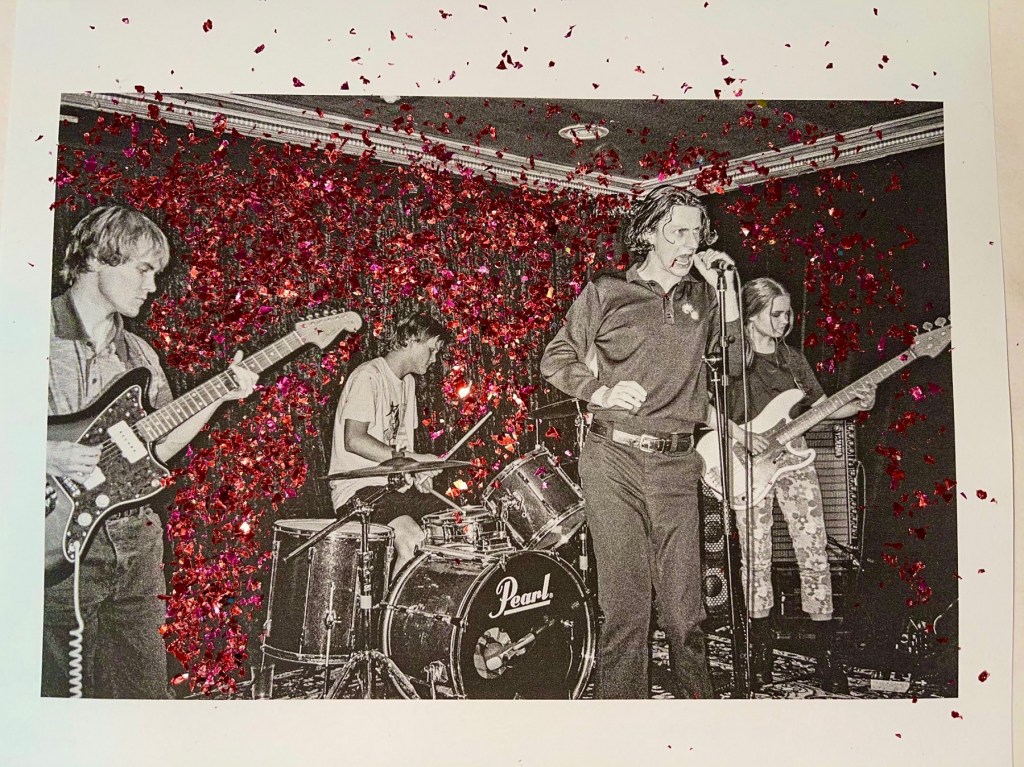
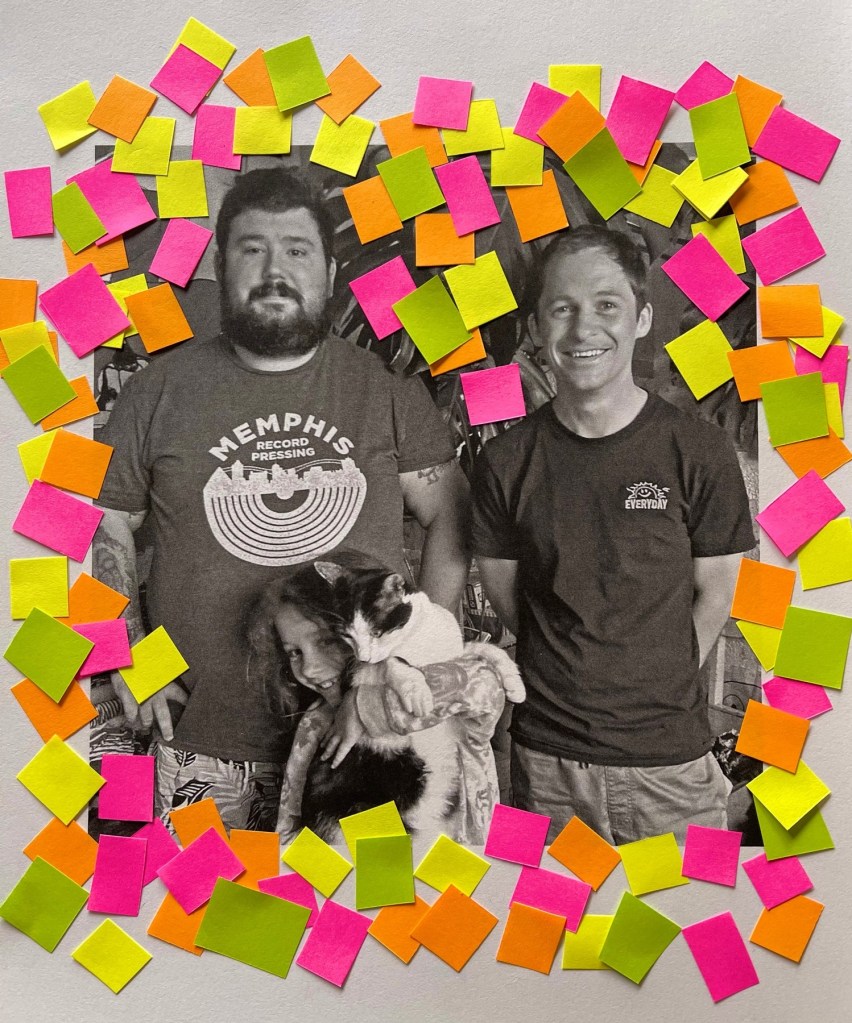
Melbourne punks OUZO!: “Go to Google images and type “Joey Ramone in a pool”. It’s not how I’m living but it’s how I think I am.”

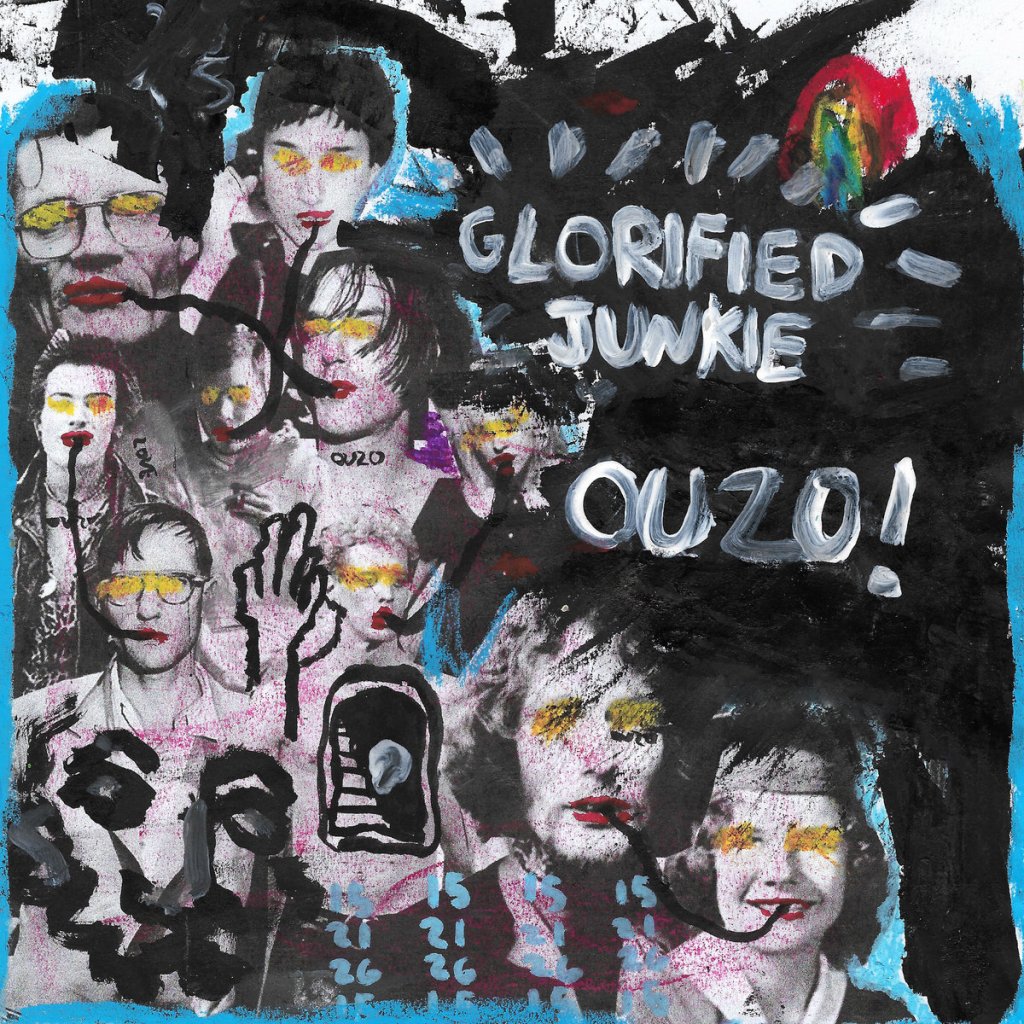
Original photo by Jamie Wdziekonski. Handmade mixed-media collage by B.

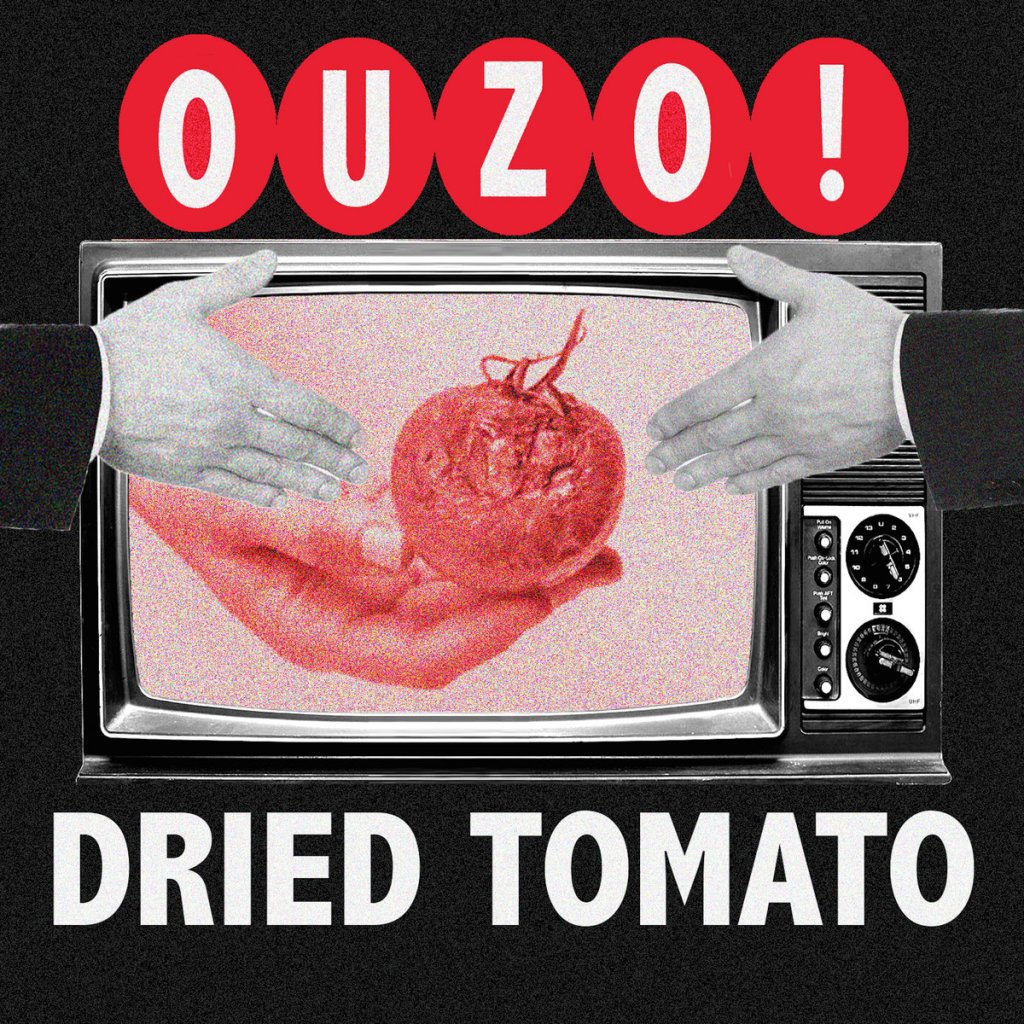
OUZO!’s guitarist Nathan Korver and vocalist Aidan Link-Freeman caught up with Gimmie to tell us about their debut EP Dried Tomato, their beginnings, influences and where they’re headed.

Tell us a little bit about yourself. What’s a day in your life like at the moment?

NATHAN KORVER: My day in the life is a bit boring at the moment. I was meant to start an IT course but I lasted a week, can’t do this online learning feels like I’m watching a YouTube tutorial. So, most days I’m looking for work or writing music. Think I’m starting to go a bit insane though, glad gigs are back to get me out of house.

AIDAN LINK-FREEMAN: Go to Google images and type “Joey Ramone in a pool”. It’s not how I’m living but it’s how I think I am.

How did you first get into music?

NK: I’ve always been obsessed with music from a really young age. My earliest memory of music is listening to [Nirvana’s] Nevermind on repeat in the car with my dad when we’d go stay at my grandparents’ holiday house that was about four or five hours away. My mum got me into Green Day at a pretty young age or whenever American Idiot came out? I was five when that came out, I think and that is what probably made me pick up the guitar. But I don’t think I started taking guitar seriously until I was about thirteen or fourteen, which was when I started to listen to bands like Metallica, Silverchair and Black Sabbath.

AL-F: One day I was trekking through the wilderness amongst the native trees of the Dandenong ranges when I reached an opening. Right there floating in front of me was an entity like no other. Half human, half pig. It turned to me and without speaking reached out and handed me a record, I looked down and it was GG Allin live. From then on, I became obsessed with music and its pure beauty.

When did you decide to start OUZO!? Who or what was influencing your sound in the beginning?

NK: OUZO! started out of our drummer Josh [Peeters] and I buying a drum kit together when we lived about a two-minute drive from each other. This would have been early 2019? Then I met Aidan through his partner who is a childhood friend of mine. Josh and I started recording demos and I’d send them to Aidan and he’d put whatever lyrics over the top of them. Aidan and I were super into 60’s garage rock when we first met so a lot of that probably influence the music I was writing and the lyrics he was writing, but around this time was when I started going to local shows in Melbourne so they influenced us a lot and still do.

AL-F: Yeah, was definitely hugely influenced by 60’s garage at the beginning which very naturally turned into a somewhat heavier sound which I’m glad it did because it made for a more unique sound.

Your Dried Tomato EP came out in December last year; where did the album title come from?

NK: When I’d save a demo, I’d always give them silly names and ‘The Martian’s Mistake’ was originally called ‘Dried Tomato’ when I first sent it to Aidan. Then somehow, he managed to add that in as a lyric in the song, it’s right before the bridge section of the song, I think? It doesn’t have any real connection to the rest of the song and Aidan didn’t want to call the song that so I always had that as the title for the EP since then.

Can you tell us a little about writing the EP? Is it a collaborate process?

NK: For the EP it was pretty collaborative, it was always Josh and I writing and structuring the songs then Aidan would put whatever lyrics over it. It’s kind of strange these were really the first songs I’d ever written and I don’t really remember writing the songs or coming up with riffs specifically but more memories of structuring the songs. They were already about a year old when we recorded them so some are probably coming up to two years now.

Are lyrics something that come easy for you or do you have to work for them?

AL-F: I would say they come fairly easy but like everything they come in waves and it just depends on whether or not I’ve caught the wave at the right time. Anytime I force lyrics or feel pressured to write a song they almost always reek of plasticity, like what I’ve written is just to please someone important in the crowd. While I hope people can understand and appreciate my lyrics I have to understand and appreciate them first.

Who are your favourite lyricists and what do you appreciate about their work?

AL-F: I’ve been obsessed with Lou Reed since I was like 16, his writing breaks my heart turns me on and gets me dancing. And yes, I do understand the irony in this considering our song ‘Glorified Junkie’.

What’s the strangest thing that inspired a song?

AL-F: Turning terrestrial television on. That shits wild, Grant Denyer hosts Family Feud and they let sports stars who have no personality open their mouths. Name one memorable thing that Matthew Richardson has ever said. Oh, and there’s somebody that dresses up as a cow and gives random people money. Although… I’m lactose intolerant and if a cow gave me money rather than a sore tummy, I guess I’d be pretty happy.

How long did the recording process take? Nathan recorded it; what are the benefits and/or challenges of recording yourself?

NK: Took a while actually, given Covid restrictions and what not it certainly took longer than expected. Recording was pretty much here and there, the drums were recorded around I think late January or February last year, then I don’t think we continued recording until May? By July it was all mixed and mastered. Freedom is a benefit of recording it ourselves, don’t have any pressure to be like, we’ve got an hour booked at a studio or something and have to get it done! Challenges I’d say is that I don’t really know what I’m doing, I did a short course in sound production at the end of 2019 so I learnt a bit there but have learnt more by myself and YouTube tutorials.

Aidan did the artwork for the cover; can you tell us about the inspiration/idea behind it?

NK: I guess I came up with the concept for the artwork pretty early on, maybe before we had even recorded anything or at least finished mixing it. Aidan got a lot of inspiration from a book too, what was that? Punk 45 isn’t it?

AL-F: Yeah, lots from this Punk 45 book. Basically, just wanted to use bold simple colours like all the great corporations do. OUZO! was never intended to be just a band. It’s also a pyramid scheme.

How did the lockdown period last year test your creativity?

NK: No gigs and no work make Nathan go something something? Go crazy?  Yeah, I think for me it helped? I guess we did a lot of writing, wrote about three times the amount of songs we had prior to lockdown. Our setlist was every song we had. But maybe towards the end of lockdown it started to get a bit stale because for both of us gigs are a main source for inspiration.

AL-F: It help because I wrote heaps of bullshit over that time but once it ended, I had more clarity, but yeah during lockdown I felt there was a lot of pressure to be creative.

Have you been working on new songs? What direction are you headed with them?

NK: We have been working on a lot of new songs, we aren’t deliberately heading in any sort of directions it’s more just we write a song and that’s the song regardless if it sounds like us or not. I don’t want to limit us to any certain ‘sound’ and just be free creatively, it gets boring writing the same thing and I don’t think I could even write a song like something off Dried Tomato anymore. So yeah, the direction is mixed, there’s heavier stuff, synth stuff, quiet stuff, but I’m really excited by them.

Please check out OUZO! on bandcamp; on Instagram; on Facebook.

Adele Pickvance of Brisbane’s Adele And The Chandeliers: “My bass guitar gives me superpowers…”

Photo courtesy of Adele; handmade mixed-media art by B.

Meanjin/Brisbane trio Adele & The Chandeliers play jubilant pop with post-punk energy, full of charm, playfulness and sparkle. Before forming the group, vocalist-bassist Adele Pickvance was a member of The Go-Betweens plus solo work with Robert Forster & Grant McLennan, and did multiple albums with The Dave Graney Show. Gimmie interviewed Adele about moving to Brisbane from the UK as a teen, beginnings as a musician, a love of Pete Shelley, the band’s debut LP First Date and of what the future holds.

You first moved to Brisbane from Bury in Lancashire as a teenager; what were your first impressions of Brisbane? What was the music scene like? Was it an exciting time for you?

ADELE PICKVANCE: I was 15. The smells of Brisbane’s flora and the bugs and creatures… and the heat and humidity really threw me. There were a lot of changes to get used to. My school uniform for one… suddenly I could, and everyone else could, see my white hairy legs. They seemed to glow in the sunlight. My parents promised me a pony in our back garden so I could ride to school, but it ended up being a bicycle to ride to Sandgate High and that was bloody hard work as we lived at the top of a hill.

 I think we all watched too much Skippy The Bush Kangaroo as prep for immigration.

In England, I was listening to music by Depeche Mode, Visage Fun Boy 3, etc and anything on Top Of The Pops and sometimes The Old Grey Whistle Test if I stayed up late enough. My world was BBC radio and TV. The only experience of Aussie music I had was Men At Work. At the time, I had heard of The Go Betweens, but I thought they were a punk band from Germany, not Australia, probably because they were spending a lot of time touring there.

When we landed in Brisbane, it was Radio 10 and commercial radio again. Cold Chisel, etc… I didn’t quite get it… so I was happy to continue to listen to my old mix cassette tapes.

I know that you come from a musical family, both your father and grandfather were musicians. Early on you played violin, who or what inspired you to switch to playing bass guitar?

AP: My dad used to play in the clubs in England as organist and generally with a 3-piece band. One morning I woke up and found a Vox bass guitar on my bed, he told me it fell off the back of a truck! Bass guitar has 4 strings, like the violin, but the other way round, so I jumped onto it quickly.  When we arrived in Brisbane, I had left behind my violin teacher, the youth orchestra and my grandad, who I adored, as we would play violin duets together. There was no music at Sandgate High so the violin stayed in the case and my bass guitar became my instrument.

Can you please share with us an album that has had a really big impact on you? How did it effect you?

AP: At the time, I was soaking bass lines and had a nice set up in the Granny flat underneath the house in Brisbane with the record player and bass amp. Kissing To Be Clever by Culture Club hit me. At the time I didn’t understand my attraction to the album, I just loved it and learnt the bass parts. I’d come home from school, switch on the record player and turn on my amp and play along to it on repeat. Now on reflection, it was the gathering of different types of styles like soul, reggae, pop and calypso. Each song had the magical taste of Soho, London, which was something I was being drawn to. And of course, Boy George and his gender bending was appealing to me.

You’ve had long stints as a member of The Go-Betweens plus solo work with Robert Forster & Grant McLennan, and four albums with The Dave Graney Show; why was it finally time for you to do your own thing with your band Adele & The Chandeliers?

AP: I moved to Sydney in 2010, after playing with recording and touring Robert’s The Evangelist album, and made a record with Glenn Thompson called Carrington Street of which the two of us toured, and I suddenly then realised I wasn’t getting offered the gigs as a bass player that I used to get so frequently and easily. I moved back to Brisbane in 2017 and still the phone didn’t ring, and so thought if I wanted to continue making music and performing music, I would have to form my own band and do it myself.

How does it feel to be the person up the front singing the songs now? Is it ever scary for you? What feeling do you get from playing live?

AP: I might be in denial, but I still feel like I’m not the centre of attention. And there’s something about being a wee older and wiser. It’s never been scary… more exciting and a wee bit nervous which helps me play better. My bass guitar gives me superpowers too! It is a different headspace and I’ve had to come to terms with being the one who is responsible for the maintenance of the band/ keeping it going/ planning, etc… That’s all new to me. I love playing live, I’ve gigged since I was 17. My comfort zone is plugging the jack in to the bass, switching the amp on, testing the microphone and being on stage. It’s not the glory of being on stage, it’s the making of music that’s the thrill for me. I think the audience picks up on the energy and excitement.

One of the first things your band released was recorded during one of the group’s first ever sessions in the studio, the Buzzcocks’ song ‘Love You More’; has this song got a special significance to you? What do you appreciate about Pete Shelley’s songwriting?

AP: I was in a cover band when I was 21 called Torn Sweaters, three girls, guitar, bass and drums, and we did a version of that song. It’s a song that’s always stuck with me, it’s such a great song to play and you have to be a bit brave to sing it, you almost shout it out. When Pete Shelley had passed away, I did a really big deep dive back into Buzzcocks.

The Chandeliers’ original drummer, Ash Shanahan loved to play fast and I believe we ended up recording the song quicker than the Buzzcocks version, which I was shocked about…  as that feels really quick.

The connection I have with Buzzcocks is of course Pete Shelley. I think of him as a queer guy in a 70’s/80’s DIY punk band singing love songs that aren’t about specific genders and I really like and admire that. I like to think my songs are similar… And of course, he’s from around Manchester.

At the end of last year Adele & The Chandeliers released your debut LP First Date; where did the album title come from?

AP: Our album name comes from a band discussion with Scott Mercer and Ash Shannahan when we first started. We felt like we were on a first date of sorts with all those similar questions of: do we want to hang out together? Do you want to commit to turning up to rehearsals? Do we have a connection? And of course, when considering touring: does anyone snore?

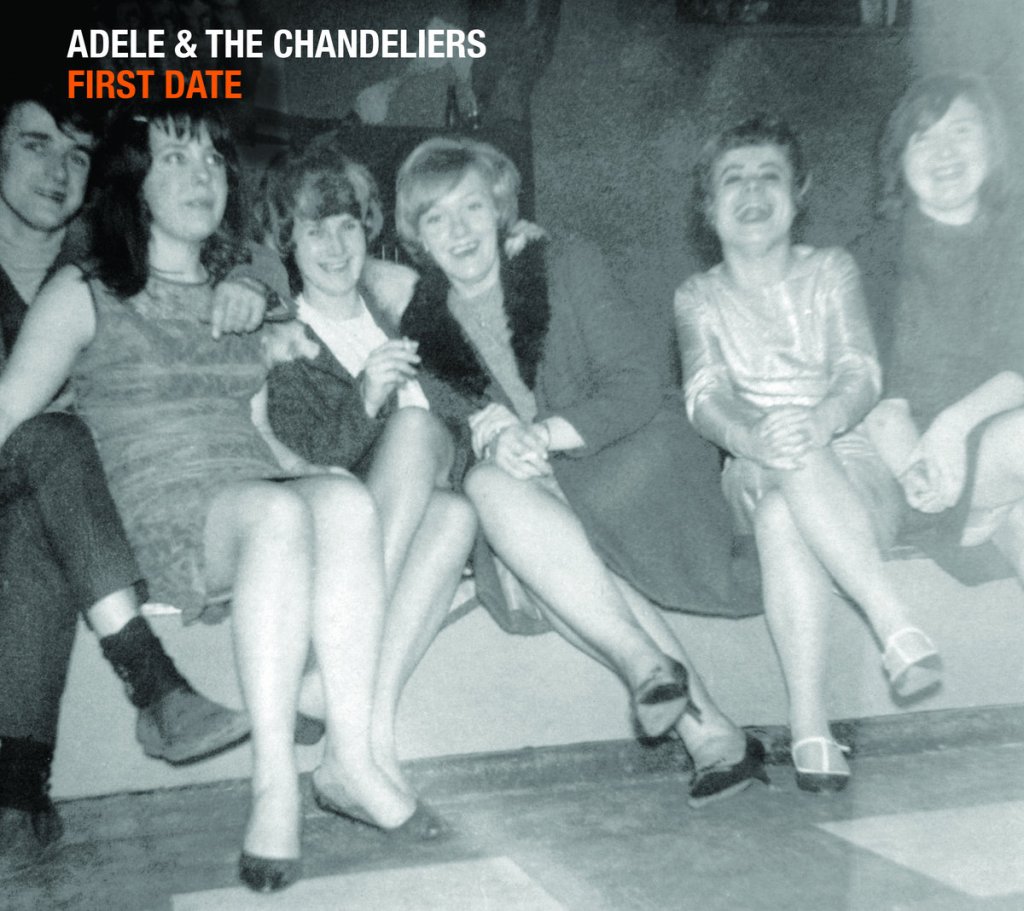
The album’s cover photo features your parents, Bill and Alma, at Manchester United Supporters Club, Deansgate, England 1965; was this their first date? Is this why you chose it as the cover image?

AP: The older I get the more I see the nostalgia and hip coolness caught in their black and white photos. They were bohemian types. The First Date cover photo was the first photo of them together. Dad had just finished his gig with his jazz band and mum brought her girlfriend with her as she knew she wanted to chat up the pianist as she had seen him and his band play before. I love this moment where everyone is having a good time sitting on the edge of the stage, you can see there’s a sparkle happening.

How did First Date get started? Tell us a little bit about writing the record. Were many of the songs in your notebooks for a while beforehand?

AP: Two of the songs are from an early solo EP recorded at home in Sydney called My White Rabbit. I released that around 2017. The other Chandeliers’ songs were formed from riffs or chords on the guitar that I record onto my phone, and I make sure I write in my notebook any line or idea I have…. then the two meet. I record roughly into my home studio then send off to the band for us to have a crack at the next rehearsal. We then record the songs at band rehearsal, then listen back and try again next week. When I write, I try to make the songs come quickly. II don’t like to spend a lot of time overworking the words and the music. I try to maintain the initial spontaneity and the guts and vibe of a song in the final result. There’s a chance to think about keyboards and extra guitar parts after the sessions in the studio, when we get the songs home.

How does a song most often come to you?

AP: I generally start with a predicament or a thought and I write notes in my book. I come up with catchy riffs and I play them on my bass and record into my phone and then try to get the two to meet. Generally, in my bedroom. That’s where the good songs come from.

There’s a universal theme of love that runs through each track on the LP; what inspired you to write about love in its many different forms?

AP: Writing about love isn’t intentional. I used to write a lot of miserable love songs with the acoustic guitar in my 20’s and 30’s. I wasn’t miserable, it’s just what I did. As I’ve aged, I’ve turned it around with the Chandeliers to be up and pop… bright, and I guess that’s where the Chandeliers come from – light and bright. Nothing miserable there, up and fun, but I’m still thinking about the curly things about love and the wayward adventures I get myself into. I like to play with it.

Cam Smith at Incremental Records record First Date; what was one of your favourite moments from recording?

AP: Cam creates a relaxed environment in his studio and nothing is too difficult, which encourages everyone. I like to work fast. My favourite moment was when we invited Karin Bäumler to sing her response to the song German On My Mind in her native tongue of Bavarian. Ive known Karin for many years, since 1995 and it was the first time we had sang together. We planted the microphone in the middle of the room so we could both sing into it, face to face. I had no idea what Karin was responding/saying… but it sounded great and we had a ball!

What’s next for you?

AP: I’m writing in my notebook, sitting on my bed, there’s new songs in the pipeline for Adele & The Chandeliers. We’ve been gigging a little, and we’re always looking for shows.  We don’t mind if it’s in a back garden.

We’ve had a change of drummer. My brother Jonny Pickvance has joined us and he’s bringing a new energy to our songs. I feel like we’re going to make some great new work because of the familiarity Jonny and I have, even though we come from different styles of music… Scott, myself and Jonny all have a playful sense of humour. I have a feeling the next record will be even more playful, with a little more splash of old rock’n’roll.

Please check out ADELE & THE CHANDELIERS on bandcamp and adelepickvance.com.

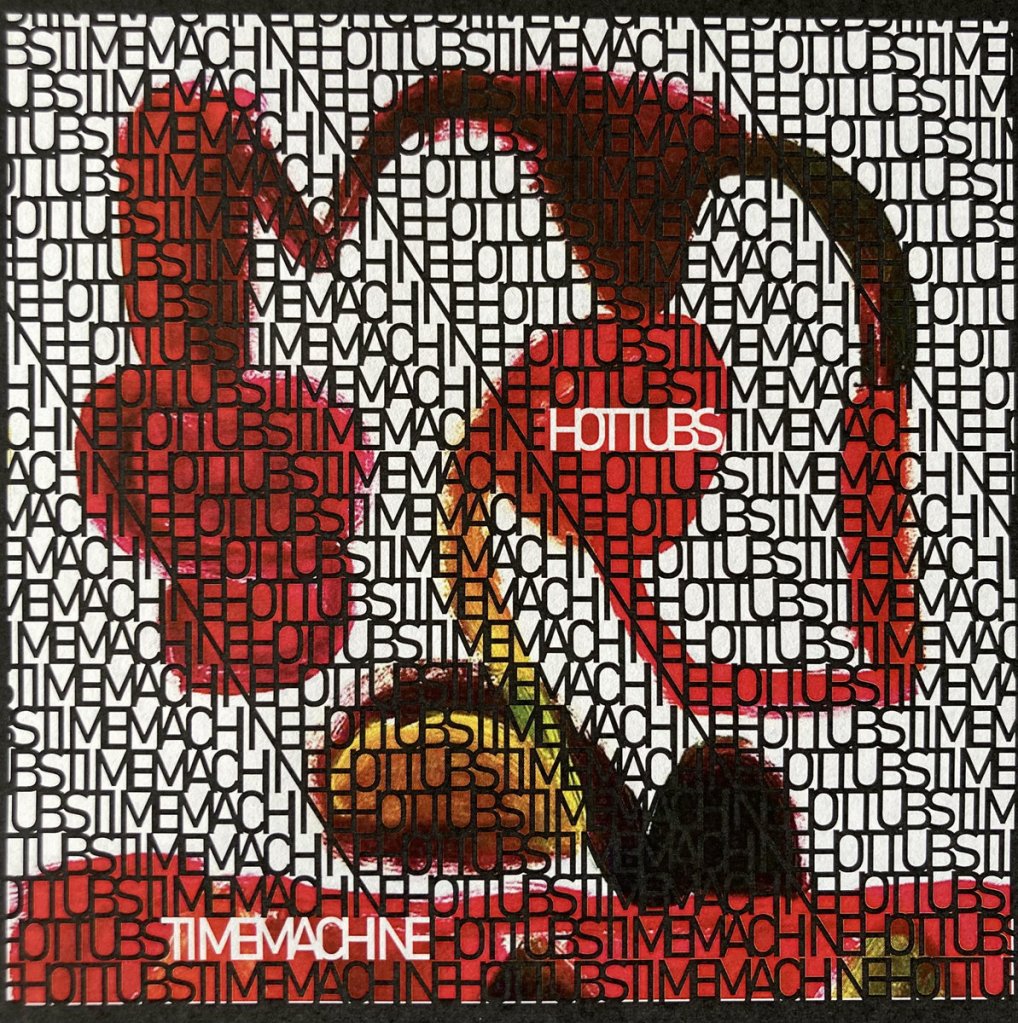
Naarm/Melbourne’s Hot Tubs Time Machine: “I laugh ‘til my face is sore.”

Photo: Arthur Twomey. Handmade collage by B.

Marcus Rechsteiner (The UV Race, Luxury) and Daniel Twomey (Deaf Wish, Lower Plenty) have gotten together and made an album under the name, Hot Tubs Time Machine. It’s a delightful bare-bones jaunt of minimal bass, 808 beats, layers of synth, bright guitar and percussion, soundtrack-ing Marcus’ engaging, humorous and very relatable stories taken from his daily, that give us an insight into his world. We interviewed Daniel to get a look into the making of Hot Tubs…

Hot Tubs… is yourself and Marcus from The UV Race; how did you both first meet? What were your initial impressions?

DANIEL: I first saw The UV Race at the Tote for Deaf Wish’s 7-inch launch in 2008. I thought Marcus was a loose unit. He won me over when he sang about M*A*S*H. We were always on the periphery of each other’s lives but I didn’t really get to know him very well.

What sparked the idea for you guys to start working together on this project?

DANIEL: A couple of years ago Marcus and his mate Brent were looking for a drummer and asked Mitch Marks to join them the same week that I suggested to Mitch that we might start something with me on guitar. So instead of getting a drummer, they got me tagging along. I suggested I play bass cos there was nothing else left. Mitch didn’t stick around but I did. It was a really fruitful and joyous six months of making music with Brent and Marcus in a group called Luxury with Steph Hughes joining us on drums. When the first lockdown happened last year Brent (who is from the States) was on a visa run to New Zealand so got stuck there. Not the worst place in the world to ride out the pandemic but Marcus and I were gutted. We miss him a lot.

So, late last year, Blonde Revolver asked us to play a show with them and Marcus suggested we do it as a duo. “But we can’t play any Luxury songs” he said. “We’ll write all new stuff”. So that was the brief. “Daniel, write a set of songs in two weeks and I’ll sing on them.” And that is an accurate description of the process. I write a bass line, put together the beats on an 808. Add layers of keyboard or guitar or percussion. Marcus waltzes in and tells a story over the top and I laugh ‘til my face is sore.

What inspired the name?

DANIEL: Marcus called me Tubs. He called me Tubs for about a year. One day I called him and he answers “Hot Tubs Time Machine.” Three weeks later we need a band name. Two months later it’s on an album cover. It’s a funny old world.

What was the first song you wrote for Hot Tubs? What’s the story behind it?

DANIEL: ‘Pants Off O’Clock’ came first. Marcus had been talking to a friend about that moment that the door shuts and you can leave the shackles of pants behind. They had been reflecting on the extended hours Pants Off O’Clock was experiencing due to lockdown. Pants Off O’Clock around the clock.

What kinds of other things inspire this collection of tunes? We love that each song tells a very relatable story, like ‘Southern Hemisphere Christmas’ and ‘No Thanks, Google Maps’.

How were the vocals recorded? They’re so honest and have such a purity and charm in delivery.

DANIEL: Marcus has spoken to me about how anxious he gets about recording vocals so I knew that I had to create the right environment for him. Recording everything as I went meant that the only thing missing fourteen days after I started working on the songs were the vocals so, I was so keen to get some in the can. I recorded the first lot of vocals on the sly. When I was setting everything up at rehearsal, I ran the microphone through the laptop without telling Marcus. A good chunk of the vocals are from that session. Marcus singing away with no idea the red light was on, sometimes it was the first time he had tried singing on a tune. On those takes you can even hear the rest of the music reverberating around the music room we were jamming in because I couldn’t really put headphones on him without him catching in. So then at the end of all the songs I broke the news to him. “Congratulations Marcus, the vocals are recorded!”

Of course, some needed re-recording so when Marcus arrived a couple of hours early for our annual steak night – long story – I casually suggested he have another crack at the vocals. I purposely set myself up facing away from Marcus – so that he didn’t have the pressure of someone watching him, but set him up behind me – so he could see me laughing at all of the words. Apparently, that is how Stanley Kubrick directed Peter Sellers in Dr. Strangelove. He got the camera rolling, made sure Sellers could see the effect he was having on him and proceeded to roll around on the floor laughing. So that’s what I did.

Where or how do you think your best song writing ideas come to you?

DANIEL: Marcus says they are usually from conversation. He’ll be talking to someone or himself and thinks “that would be a good idea for a song”.

What do you personally get from creating stuff?

DANIEL: The second lockdown last year was hard. Everyone you speak to experienced it so differently but myself, I really struggled and I know that for Marcus it was even harder. When he asked me if I thought it was possible to pull a set together, I knew how good it was going to be for his mental health. There was no way I was going to say no. I did it for my brain too. I love a project, one with a deadline is even better. Stretching out of my comfort zone and playing a synth for many of the parts was such a satisfying puzzle to enter into. Knowing I only had seven days left and five songs to go was thrilling. Four days left and three songs to go. Two days left and one song to go. The finish line. For me personally, creating this particular stuff was a very enjoyable, liberating process that resulted in a really great gift for a good friend. Watching Marcus sing on the songs and get a kick out performing them a week later was so rewarding. His enthusiasm is painted in bright colours on his sleeves.

Cover Art by Evelyn Nora Hanley

What was one of the most fun moments you had while making the Hot Tubs… album?

DANIEL: I had a silent partner helping me on all of the music. Over the two weeks that I was writing the material, my twin brother was in quarantine. First in a hospital in Bangkok, then in a little place in Vientiane, Laos. He had some recording equipment and instruments with him so he could work on music while he waited the days away so I started hitting him up regularly for ‘bits’ for songs. We spoke every day, multiple times these calls were some of the highlights of the whole process. His whole world was a hospital room for a patch and So the two of us just fell into these songs together. We locked into the twin zone. He served up some very funny shit that didn’t make the record – and some that did. I am still recovering from his bass solo for Hot Tubs Time Machine Theme. Left on the cutting room floor because the world just wasn’t ready.

What’s next for you guys? Will you be playing live shows?

DANIEL: Yes! Sunday the 28th of February we are playing our album launch. A roving, pop-up, public transport powered, guest spot extravaganza. Over the day we will play three busking sets at different locations. Each with a different guest joining us for our set:

  • Bourke St Mall 1pm with my daughter Hetty.
  • Edinburgh Gardens 3pm with Pam, the music teacher at the school I work at.
  • Under the High St Bridge, Merri Ck 4:30pm with Sleeper & Snake.
  • At 6:30pm they will all join us on stage at Avalon Bar.

Please check out: HOT TUBS TIME MACHINE on bandcamp. All profits from album sales go to Djirra in Abbotsford. “Djirra is a place where culture is shared and celebrated, and where practical support is available to all Aboriginal women and particularly to Aboriginal people who are currently experiencing family violence or have in the past.”

Melbourne Noise-Punks Super-X’s George Ottaway: “Mechanical and wild sounding…”

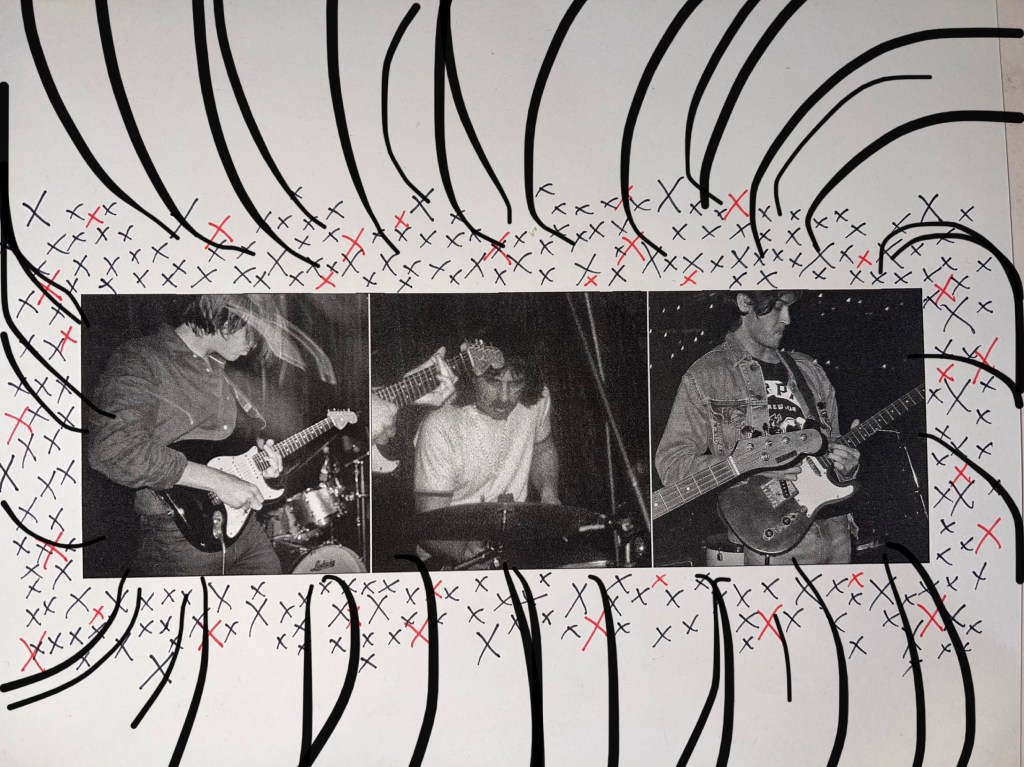
Photos: courtesy of Super-X; handmade mixed-media by B.

Super-X’s debut self-titled album is full of aliveness, possibilities and risk. The Naarm/Melbourne trio walk the tightrope of balance of control and dissonance that’s beautiful and ugly at the same time. Gimmie interviewed co-vocalist-guitarist, George Ottaway.

Hi George! How are you? What did you get up to today?

GEORGE OTTAWAY: Hey Bianca! I’m pretty good, it’s the weekend, so I’m taking it pretty easy so far. My girlfriend is from Madrid so tonight we are heading to what’s meant to be one of Melbourne’s best Tapas bars. Will report more on this later!

What’s an album in your music collection that’s important for you?

GO: For me, it’s got to be Aphex Twin’s Selected Ambient Works 85-92. It’s a really beautiful album and I find myself coming back to it again and again since first discovering it in my mid-teens. It evokes a lot of memories for me, including a really memorable solo trip I did to Iceland for All Tomorrows Parties Festival back in 2015, when I listened to it a lot. I also think it’s probably the most coherent and consistent Aphex Twin release, and maybe the only one where he isn’t intentionally trying to fuck with his audience!

How did you first get into music? Did you and your brother (Super-X’s co-vocalist-guitarist) Harrison get into music together?

GO: Growing up, music had a very important presence in our house. Our parents are both music fans and liked to fill every possible moment of silence with community radio or a CD from their collection. I remember hearing a lot of the Rolling Stones, Nirvana and Nick Cave. Our dad in particular made it his personal mission to impart his musical taste on us; by the time we hit primary school he was pumping The Stooges’ Raw Power on cassette in the car as he drove us to school! When we were teenagers, we both picked up guitar and formed garage bands with our friends. It was a pretty interesting, exciting time to be making music, websites like Myspace and programs like Garage Band were suddenly making it really easy and accessible for young kids like us to record songs and get them heard by a wider audience. This was also around the time we discovered the Melbourne underground scene! We got into bands like Kiosk, Bird Blobs, Sea Scouts, Circle Pit, Witch Hats, ECSR, Zond, the Nihilistic Orbs label and started going to a lot of shows.

When did you first know that you wanted to play music yourself?

GO: I think around the age of 13. I was pretty obsessed with music and just knew it was something I had to do. In primary school I had a pop-punk band that played to the other students in the school hall, which was pretty cute and my first taste at playing music.

What inspired you to start Super-X?

GO: I’d watched Harrison – he’s a bit older than me – play shows in different bands over the years and I was itching to get into it myself! We were both living together at home at the time and both of us playing guitar just made it easy. We were intrigued by each other’s styles – I’d say Harrison is more technically astute, while my own style is a bit more naive and abrasive. We both wanted to play in a band that was a bit grimier and more ferocious than what we had previously done, so we outlined a bunch of key influences that we both enjoyed and started jamming regularly. After a while Harrison wrote the guitar line for ‘Weapon-X’, which is where we found our sound. A little after that we recorded our first demo, with me playing drums – it’s still up on our Soundcloud!

Can you tell us a little bit about the writing process for your debut self-titled album? Do you write collaboratively?

GO: A lot of the time we just bring in a riff or even a drum idea to practice and see where it takes us. Super-X rehearsals are always really fun: we spend a lot of time just jamming and improvising together. Harrison, Kaelan [Emond ] and I have been playing together now for a while so we all know how to interact with each other, when to rise and when to tone everything down. After we have the instrumentation down then we usually work on our lyrics – often it just begins with a murmur and becomes more fully formed as the song grows.

The album was recorded over six months between August 2019 and February 2020 at Invention Studios in Footscray working with Ryan Fallis and Mathias Dowle. Ryan & Mathias are fantastic to work with – they are incredibly patient, contribute great ideas and have one of the most incredible guitar pedal collections I have ever seen, including a number of pedals from the former U.S.S.R that they let us use! They are also lovely dudes, highly recommended!

Was it intentional to take your time recording or was it a necessity because of other commitments?

GO: In 2019 we had actually hit a bit of a slump with the band. We were all beginning to lose a bit of interest and all had a lack of direction with what we wanted to do and had all considered breaking the band up. We had tried recording a year prior but were pretty disappointed with the results. With work and other musical commitments (Kaelen plays drums in Obscura Hail, and I play rhythm guitar in Future Suck) we were also struggling to find the time to devote to Super-X. It was at this stage we decided to take a gamble and head back into the studio with Ryan Fallis & Mathias Dowle at Invention Studios. We were pretty unprepared in a number of ways, a lot of songs were only 80% complete, but I think taking this risk definitely added a bit of vulnerability and excitement to the sessions. We weren’t really sure what was going to come out of it and we just dived in head first. The album was recorded as live as possible with very minimal overdubs. We’d been thinking about the structure of the album for a while: we wanted a strong narrative and a focus on ambient and sound pieces throughout. Figuring out the exact track listing and order of the album was really exciting – we experimented with it as the tracks started to take shape – and ultimately pretty satisfying.

What influenced your choice to go with a real bare-bones vocal?

GO: Harrison and I aren’t natural singers, and the focus of Super-X has always really been on instrumentation, with lyrics and vocals taking a bit of a backseat a lot of the time. I think a lot of our inspiration vocally came from a the early Iceage LP’s. We wanted a delayed sound on the vocals and to have them gritty and pretty low in the mix. I think lyrically we just wanted them to be direct and to the point as possible so they could pierce through all the distortion and effects.

The album came out right in the middle of lockdown because of the global pandemic; how did you feel about not being able to play shows for its release? Any plans to play shows soon?

GO: I was actually quite thrilled with the album coming out in 2020. It’s such an iconic year for all the wrong reasons, but with no shows on and everyone having a lot of solitude I think it enabled us to carve out our own space and get the interest of Spoilsports records and Polaks, who did a joint release for the album. I think a lot of people took the time to actually give it a spin who might not have given it the time of day in other circumstances. Friends and fans have always described our music and live shows as a bit dystopian so I think having it released in 2020 is sort of fitting funnily enough?

We’ve actually got two shows coming up! Thursday March 4th at the retreat with Crash Material and our official LP launch on Saturday March 27th at Old Bar. We will be revealing the full line-up a little further down the track for that one.

What’s the most fun you’ve ever had playing a show? Where was it? What made it a blast?

GO: I lived in a massive pretty run-down house with an enormous backyard in Caulfield from 2015-2020. A lot of the LP was written in that house and is based on that particular chapter of my life. We had a bunch of parties with my housemates and would get bands to play in the lounge room which would always go off. There’s something about seeing live bands outside of the normal constraints of a venue which gets people really fired up. We had over 100 people at one of the parties and set up smoke machines and strobes, we had a fire lit outside and a TV at the end of a dark corridor looping Clint Eastwood’s The Good, The Bad and The Ugly on high volume. Super-X played with Tony Dork (who just released a brilliant LP on Legless last year!) and it went off! Both bands played well and I’ve got some pretty memorable photos from the night. After bands we had a bunch of techno sets going well and truly into the early hours. Someone put the smoke machine on full blast and the dance floor turned into a thick, smoky nightmare scene for an hour or so with people panicking and spilling out into the backyard. My neighbours wouldn’t look me in the eyes for months after! I went to a music festival a year later and a guy I swear I had never seen before in my life came up to me and was preaching to me about how it was one of the best parties he had ever been to haha. It was loose.

Travel has been off the cards for most people for a while now because of the pandemic but if you could travel anywhere in the world, where would you go?

GO: I had plans to go to Brazil for a 6-8 weeks on my own but COVID of course fucked everything up. I’ve always loved hot weather, good food and to be as far away from anyone who’s first language is English as possible when travelling. In 2018 I travelled through the Balkans and wound up getting a bus from Athens to Gjirokaster in Albania. Its where the dictator Hoxce was born and has a pretty fascinating history. There’s loads of old Nazi war loot that the Albanian army kept after they defeated the axis in the castle, including old tanks and captured flags, weapons and a documentation on how they defeated the retreating axis armies, which is pretty interesting. Albania was definitely a highlight of recent years, beautiful country and off the beaten track.

You did the artwork and design for the album; did you study art? How did you decide on the imagery? What made you go with a stark black & white palette?

GO: Yeah, I did! I did a fine arts course at RMIT specialising in drawing, so I was glad to put it to use for creating the imagery for the album. I’ve always been a firm believer in that the imagery and aesthetics of bands are just as important as the music. It’s got to be strong, bold and to the point. I honestly think if the Germs and Black Flag didn’t have their great aesthetics (the four bars symbol and Germ’s circle one logo) they wouldn’t be anywhere near as popular as they are today. People want to feel cool when they wear your band t-shirt or buy your record so the aesthetics have got to hold up.

Locally HTRK have incredible design for every release they do, I’m a massive fan of them. Nigel Yang is one of my favourite guitarists.

With Super-X I wanted something equally as bold so I decided on an industrial looking electrical plug image. Super-X is pretty mechanical and wild sounding at times so I think it suits what we do. I think for a debut LP classic black and white can never go wrong. I also drew a lot of inspiration from Peter Saville’s design and techno/ambient LP’s from the ‘90s like Underworlds Dubnobasswithmyheadman and Autechre LP’s. A lot of musical groups the less you see of the artists themselves sometimes the better, it creates more mystique and intrigue.

I never want Super-X LP’s to be about my Harrison, Kaelan or myself, or the way we look or whatever or to have us pictured on the front or back cover. I want the experience of listening to a Super-X LP to be like putting on a film with narrative of beginning, middle and end. With a strong emphasis on visual bold aesthetics to suit. The less focus on us as individuals the better. I’m a firm believer in that.

Have you been working on anything new?

GO: We have! We’ve got a bunch of tracks we’ve started to develop and have been working on some ideas in terms of sound and aesthetics for the next piece. It’s going to sound a little bit different.

Who are some bands you love that we should know about?

GO: I think locally Romero – shit hot band that a bunch of our buds play in. I used to play drums in the guitarist Ferg’s post-punk band Eyesores years ago when I was cutting my teeth playing my first ever shows. These guys are working on an LP that I am very much looking forward to, it’s really fun rocking power-pop. I really dug the new TOL album, Justin Fuller has influenced me a lot, he’s an amazing guitarist and always creates a very intense atmosphere. It’s like gothic tinged hardcore? I’m really enjoying Snowy Band, beautiful gentle pop and the production is excellent.

What’s something that’s been interesting you lately that you want to share with others?

GO: I recently discovered Japanese cyberpunk metamorphoses films from the early ‘90s. 964 Pinnochio (check out the trailer on YouTube for an idea) is fucking wild, I guess you could describe them as industrialist-fetish films? and the soundtracks is an absolutely incredible mix of techno and ambient selections I’ve never heard. The director Shozin Fukui also directed Rubber’s Lover which is just as twisted as 964 Pinnochio. There’s also Tetsuo The Iron Man which is more well known by Shinya Tsukamoto. These films are very confronting! Don’t say I didn’t warn you!

Please check out SUPER-X on bandcamp; on Facebook; on Instagram; on Tumblr. Super-X’s self-titled debut album out via Spoilsport Records and Polaks Records.

Reckless photobook creator David Forcier: “There’s a whole world of possibility in front of us.”

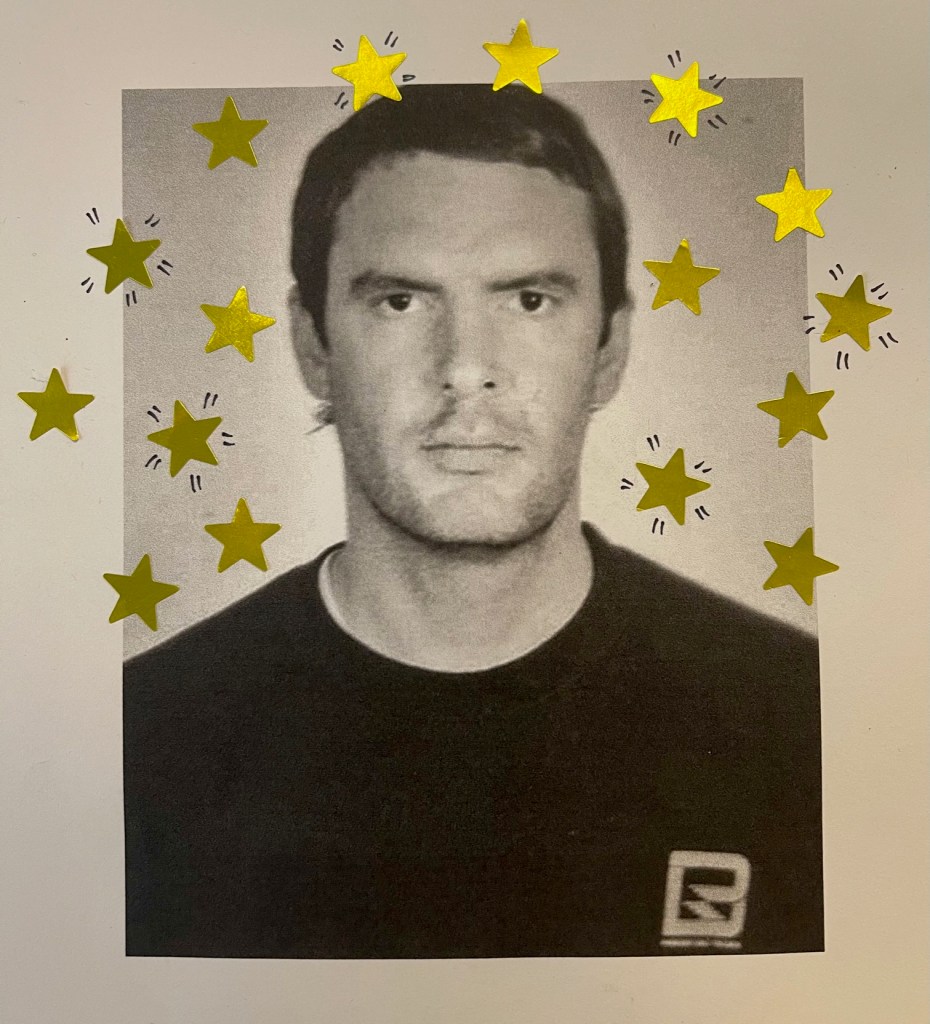
Image: David’s passport photo; handmade collage by B.

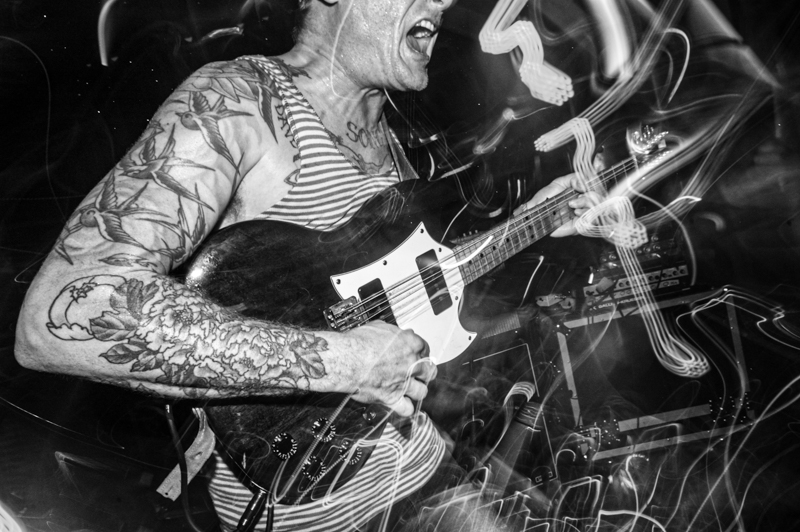
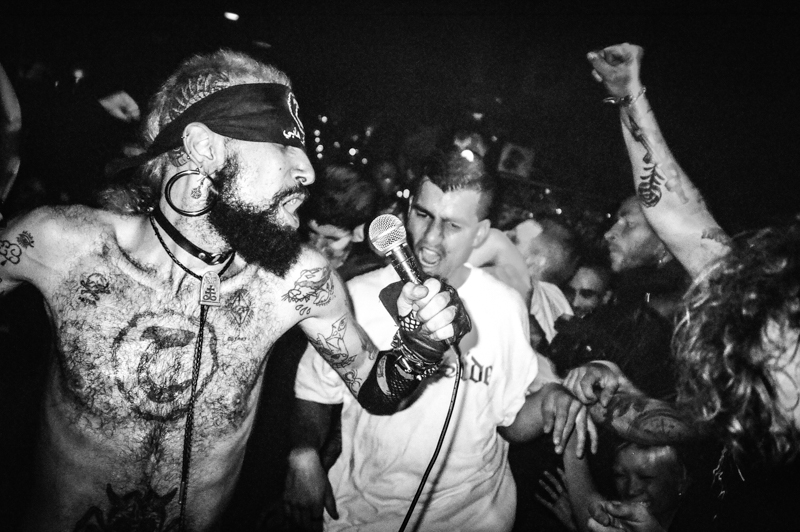
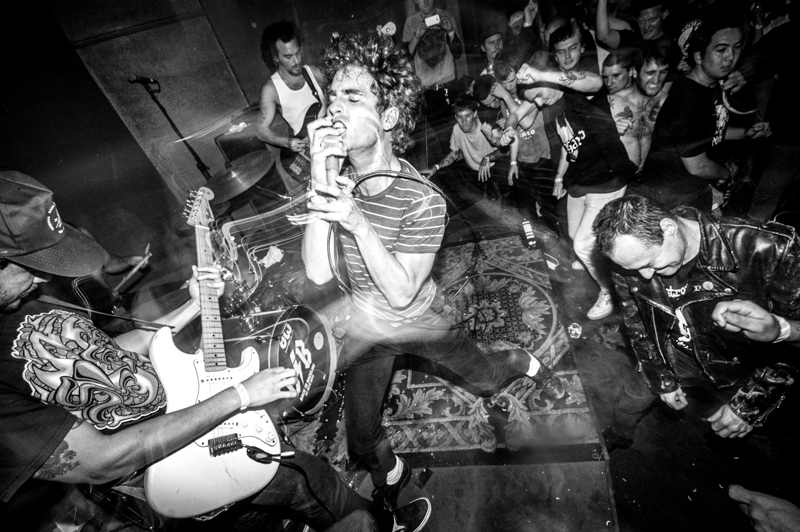
Underground photographer David Forcier has a knack for capturing compelling images. Forcier’s snapshots express the intensity and integrity of live music, documenting a vibrant, vital scene and evoke a myriad of feelings for the viewer. In the latest edition of his photobook project, Reckless, you’ll find an interesting and dynamic collection, mostly from the Australian underground punk scene between June 2016 and April 2019. Gimmie caught up with David recently to chat about the project, as well as the new record from his band, Civic, that’s in the works.

Firstly, how are you doing?

DAVID FORCIER: Yeah, I’m alright, some days are more difficult than others but things could most definitely be worse.

Currently, you’ve found yourself back in Quebec, Canada after spending the past five years living in Melbourne; how does it feel to be back in Canada? I know that having to leave Australia was very overwhelming for you: losing your partner, home, job, dog, support network, creative outlets, identity and sense of security. These are huge things. We really feel for you!

DF: Well to start off I’m living in the country about an hour-ish from Montreal and about a 20-minute drive to the nearest town. When you think of the stereotype of what living in Canada would be like that’s pretty much where I’m at with it all. It’s pretty wholesome mostly and because I’m unable to work and have been in varying stages of lockdown since October I don’t really see anyone and spend most of my days alone working on music or other creative endeavours to keep my mind busy. If I’m honest I’ve barely done anything “normal” since I’ve been back so it’s hard how to say I feel about anything, I haven’t most of my friends and everyone is still in the collective lockdown mess.

Can you tell us a little bit about where you live in Canada? What interesting things did you discover about your neighbourhood since moving back?

DF: So, the little township I’m in at the moment is called Mayo, Quebec. There’s about 600 people that live in the area and its farm land and not much else. So, to call it a neighbourhood would be a stretch but I think I’ve really learned to appreciate being in nature more than I ever thought I would. It’s the middle of winter at the moment so it’s a struggle to get outside much these days but honestly being able to just walk through a field or the forest without a soul around you can be pretty healing especially with the anxiety surrounding the unknown of what’s next in my life.

All photos by David Forcier.

Initially, what drew you to living in Australia?

DF: It’s not especially exciting but it was honestly the idea of not having to deal with winter anymore. I don’t do well in the cold and it’s so unavoidable here. I had sort of found myself at the end of what felt like a chapter in my life and had lived in Europe in my early twenties already so I thought I’d throw caution to the wind and just do something to figure myself out a bit more. I had never intended on staying for as long as I had but honestly just could never bring myself to leave and it really just felt like my home.

How did you become interested in photography? I understand that you started taking photos while living in Europe in your early 20s.

DF: Looking back at that point in time in my life it was a pretty lonely weird existence and I think I just needed something to be creative with to keep my mind busy. I ended up picking up a few cameras and just started taking photos of everything I could which eventually led to music since that was a pretty big part of my life already. It’s strange to think about but I remember being in my mid-teens seeing live music and seeing some of the photographers that were fairly prominent in the music community around me and think “I’d be good at that” but never really had the courage to do it. I think sometimes leaving the places you spend so much time in can really allow you to explore the things that you might be too anxious to do otherwise. When you move somewhere new you don’t know anyone and as someone who has pretty severe social anxiety being a bit anonymous can be a huge breath of fresh air and luckily, I’ve embraced that in the times I’ve had to step out of my comfort zone.

You’re getting set to release the second issue of your live music photobook, Reckless, which compiles live photographs taken in the Australian underground punk scene between June 2016 and April 2019; how did you initially come up with the idea to make a photobook?

DF: I most definitely used my camera as a crutch for my anxiety when I first moved to Melbourne which meant I ended up with a lot of photos. It’s a bit embarrassing to think but at times when you are going to events that are meant to be pretty social and you don’t know anyone having something to do can be the only that will make you actually go. After a couple years I needed some way to get them out in the world so I could keep moving forward and, in a sense, move on from the things that had happened. Leading up to the release of the second book I’ve found myself thinking about the passage of time a lot and how it’s important to not get stuck in the “what was” of everything. I suppose this is more evident than ever with everything that has changed in 2020 but I’d like to think I’m moving forward and compiling the last several years of photos was a pretty good way to bookend that part of my life and know that everything is in forward motion. 

For you, what are the elements that make up a great live photo?

DF: The beauty about photography and a lot of other ways people tend to express themselves, whether it be in music, painting, writing or whatever else is that it can be truly unique from person to person. I know what my strong points are and the way that I’ve developed the aesthetic around what I do but a great photo can literally be so different from person to person and I can find something to appreciate in most. From a technical standpoint you could have a photo that is really shit but could be the one that sticks out in hundreds. So, I think what makes a photo great really varies and at the end of the day when you are taking a snapshot of a moment in time when you get to look back on it there’s always something great you can find in it.

Your images are black and white; what inspired you to choose to work without colour?

DF: For years I’ve been thinking about how important it is to work with limitations within ever way you are expressing yourself. It’s so easy to get caught up in getting the perfect camera or piece of equipment but if you limit your options a bit it can really force you to be creative and work with what’s available to you. Black and white is just one of those things, it was just another thing that I didn’t have to think about and just made the whole process a bit more natural. That and I kinda got obsessed with the aesthetic of black and white after a while because it just always feels a bit more timeless which can be especially good when documenting music.

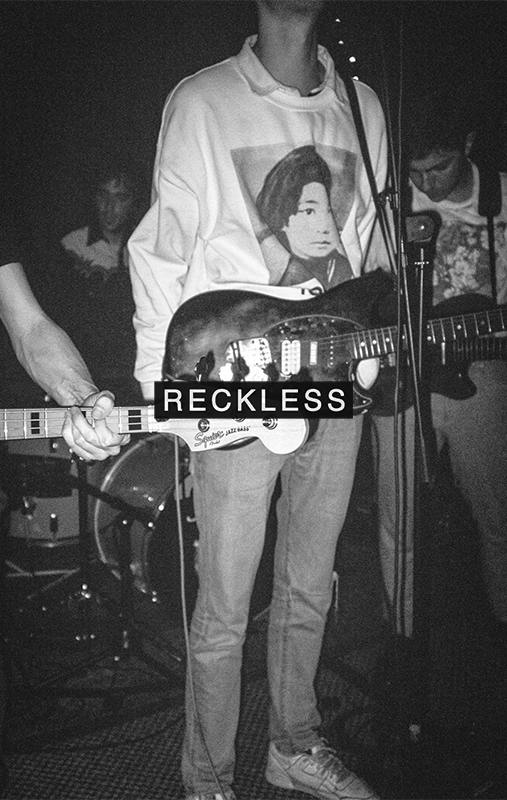
What made you choose the EXEK photo for the cover image? You used a 35mm camera for it, right? I know you didn’t you want to have someone’s face on the cover; what was the thought behind that?

DF: I think I just like the idea of things being a bit more ominous than it just being like “oh yeah that’s such and such” on the cover. There was a point where I was trying to catch really calm parts in bands sets and not have anyone’s face in the photos which ended up with a whole whack of otherwise unusable photos. Also, I kind by default kinda gave people I’m either close friends with or just really love their music a bit more attention in the book. EXEK are just always great and they are mates as well as being a pretty big constant in Melbourne punk to me so it just made sense.

What do you feel is one of the most compelling images in the book? Can you tell us the story behind it?

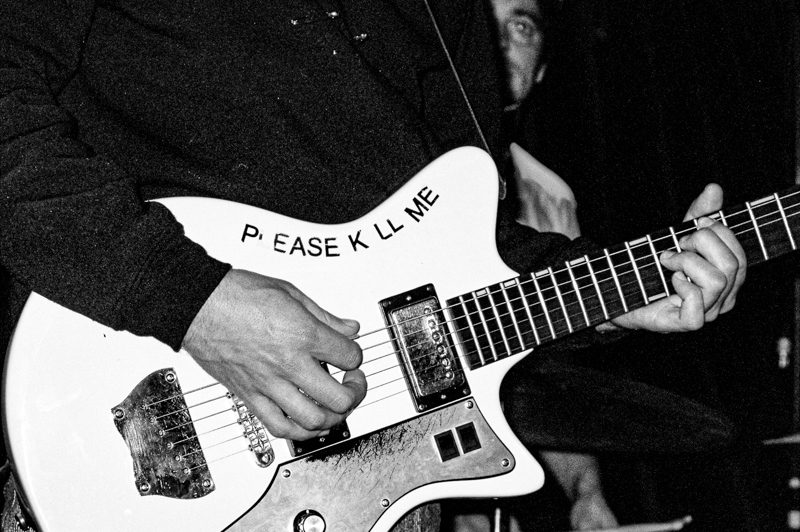
DF: There’s a photo of Jai Morris from EXEKs guitar that just stood out to me and was one of those attempts at getting a cover image sorted. It’s got “please kill me” written on it and just seen it so many times that it feels a bit iconic and I think at times it’s a pretty relatable thing to read.

Assembling material for the photobook, were you trying to emphasize anything about the Australian underground scene with the images you chose?

DF: I just wanted to get a good snapshot of that specific chunk in time within that specific punk scene. I spent so much time being in it and getting to know so many people that I could now call family. I touched on this a bit before but I think it’s really important to be able to look back to certain parts of your life or in time so you can know you are moving forward and becoming at peace with things that are no longer what that used to be like. Probably half the bands in the first book don’t even exist anymore and in a few years’ time it’s likely that all the bands in this issue won’t exist anymore but I like to not get caught up in thinking that’s a bad thing at all and that things just change and adapt. No one likes to be around the person who still thinks high school was the best point of their lives, there’s a whole world of possibility in front of us.

What do you enjoy about the editing process with your photos?

DF: The interesting thing is, not dissimilar to journaling, when you take photos of anything you tend to be able to remember the details of otherwise unremarkable times. I could tell you what I did before and after most of the photos in that book, who I was with, where they were taken and where just by looking at them. Maybe it all just ties into that idea of moving forward and maybe not rehashing all the same thought patterns. It also gave me something to work on after the fact and to be excited about. When you get film developed you never really know exactly what the result is going to be and getting a great photo is really rewarding.

Why is it important to you to document culture?

DF: I think now more than ever it’s evident that there is going to be a bit of a gap in most people’s lives with photos of what was in their periphery because those images are all on old iPhone 3s in some drawer, a hard drive that crashed or gone with the Facebook account you deleted. I guess culture is no different to that, I’d most definitely like to look back on the past not through the lens of the weird technology that we are still trying to work out how to make sense of and instead from the point of view of someone who actually cared enough to take the time to and had intent behind it.

How did you first get into punk?

DF: It’s pretty cliche but my older brother had this dubbed minor threat tape when I was like 11 or 12. Not to sound like Dave Grohl in a music doco but Minor Threat just really blew my mind and I had no idea that kind of music even existed which I imagine a lot of people can relate to.

Can you remember the first live show your ever went to? What details can you remember about it? What feeling did it give you?

DF: The first thing I went to was Canadian punk band S.N.F.U when I was 13. RIP Ken Chinn. It’s interesting to look back at that being the first thing I ever saw because if you are familiar with them then singer who just recently passed away was at once the wildest most offensive person and also seemingly the most misunderstood extremely talented person and will most definitely be talked about for decades to come, at least in Canada… Seeing Chinn perform was scary and weird and often made you feel uncomfortable as a kid that was 23 years ago so it’s hard to really remember the details but I guess just gave me the feeling of what the fuck did I just watch.

What’s something important that you’ve learnt from being a part of the underground music community?

DF: I think over time have really learnt the importance of community in general. I think as humans we generally strive to fit in somewhere and often what comes with that is helping out the people around you and when it happens it can be truly beautiful. I’ve had my share of difficult times with Visa denials and ultimately getting kicked out of the place that I call my home but there was always someone around to help me through it all. I think if anything this has been highlighted with the situation, I find myself in at the moment and really feel this longing for community most days.

How has lockdown, due to the global pandemic, tested your creativity?

DF: Well for the first part of the pandemic I was in Melbourne still and managed to finish recording the Civic LP that we have coming out so that portion was actually really productive. We’d all lost our jobs so we just had infinite time to get it all done which was great. As for now it sort of comes in waves, I’ve managed to pen down a lot of rough ideas for a few different projects but am finding it a bit frustrating to have to think of every single part of what I’m working on. I’m a drummer first so I’ve had to really work on every other instrument a bit which has been a challenge, I’ve also picked up playing saxophone which has been incredibly rewarding. I guess I just really miss collaborating with other people, I guess this is where that community thing I was talking about comes into play. I’ve got pretty good at being alone but it’s definitely not sustainable.

Have you found any positives from the tough last year (spilling into this year for some) that we’ve had?

DF: I think there’s plenty. I have so much time to look inward and sort out a lot of my mental health issues and am actually pretty thankful for the pause and time for self-reflection. I guess maybe I’ve been trying to stay positive as best I can so maybe I’m sounding a bit hokey but I feel like maybe people will just be better to each other now that we’ve realised how much we need each other.? To be honest though, I’m usually a massive pessimist and feel like we collectively haven’t learnt fucking anything at all. Time will tell, I guess.

What project/s will you be working on next?

DF: There was some recordings that have been passed back n forth with Civic so maybe that will materialise into a 7-inch or something. It’s definitely not the ideal way to do anything but will see how it goes. I’ve got a few other music projects I’m slowly piecing together as well but it’s all slow moving when it’s just you. As for photography stuff the drive to do anything really ebbs and flows but I have a huge back catalogue of stuff that no one’s has ever seen dating back to the mid-2000s so maybe I’ll figure out some way to give that some attention. Thanks for the interview!

Please check out: @davidforcier. You can get a copy of RECKLESS here at MOM Publishing.

Extra RECKLESS Info: 84 pages, 107 photographs, black and white, risograph printed, 133mm x 210mm. Mix of 35mm and digital photography.

Featured Artists are: THE STEVENS, SYSTEMA EN DECADENCIA, HARAM, THE UV RACE, TOTAL CONTROL, THE FRANTICS, ROT T.V, COLD MEAT, VANILLA POPPERS, SEX DRIVE, RAPID DYE, BLOODLETTER, BB AND THE BLIPS, LOW LIFE, THE NO, L.A SUFFOCATED, KNIFER, EXEK, UBIK, RIXE, POWER, PARSNIP, CONSTANT MONGREL, OILY BOYS, STRAIGHT JACKET NATION, RED RED KROVVY, ORION, VINTAGE CROP, THE STROPPIES, HANK WOOD AND THE HAMMERHEADS, TALC, THE SNAKES, ROBBER, GELD, PUCE MARY, TOL, NUN, NOTS, TERRY, EXECUTION, VERTIGO, SPOTTING, STATIONS OF THE CROSS, RABID DOGS, SPIKE FUCK. 

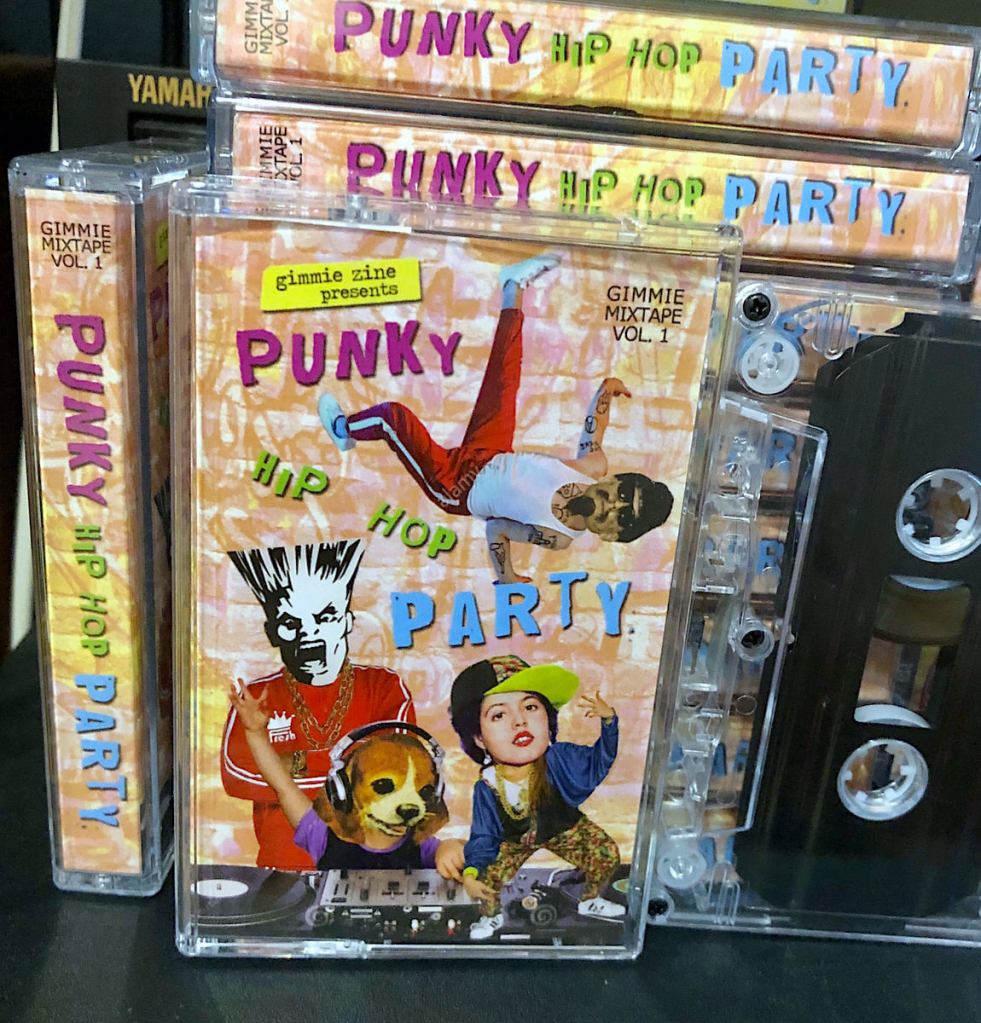
Reckless photobook comes with a cassette mixtape compilation. Tracks chosen by the artists involved.

Reckless Mixtape

Side One

01 David Eastman – Walking On Water /// Total Control

02 The Homosexuals – You’re Not Moving The Way You’re Supposed To /// Terry

03 Au Pairs – You /// Spotting

04 Leather Nun – No Rule /// Puce Mary

05 The Viletones – Screaming fist /// Rot T.V

06 Scrotum poles – Pick the Cat’s Eyes Out /// Constant Mongrel

07 Pagans- Boy Can I Dance Good /// The Frantics

08 The Comes – Public Circle /// Vanilla Poppers

09 Stations – Cultural Capital /// Stations

10 Japan – Quiet Life /// Bloodletter

Side Two

11 Screamers – Vertigo /// Vertigo

12 Electric Eels – Accident /// Cold Meat

13 Pink Fairies – Do It /// The Snakes

14 High Rise – Psychedelic Speed Freaks /// Geld

15 Jesus and the Gospelfuckers – Kill the Police /// Straightjacket Nation

16 Sheer Terror – Here to Stay /// Low Life

18 The Dogs – Slash Your Face /// Rabid Dogs

19 Dr Feelgood – I Can Tell /// Kniffer

20 Little Bob Story – Like Rock’n’Roll /// Rixe

21 Davy Graham and Shirley Collins – Love Is Pleasing /// The Stevens

Gimmie Radio FEB 2021

Gimmie Radio returns! We are keen for suggestions on how people would like to hear these playlists outside of just being a Spotify playlist. What alternatives are available?

But for now, here’s the latest playlist of stuff we’ve been listening to around Gimmie HQ.