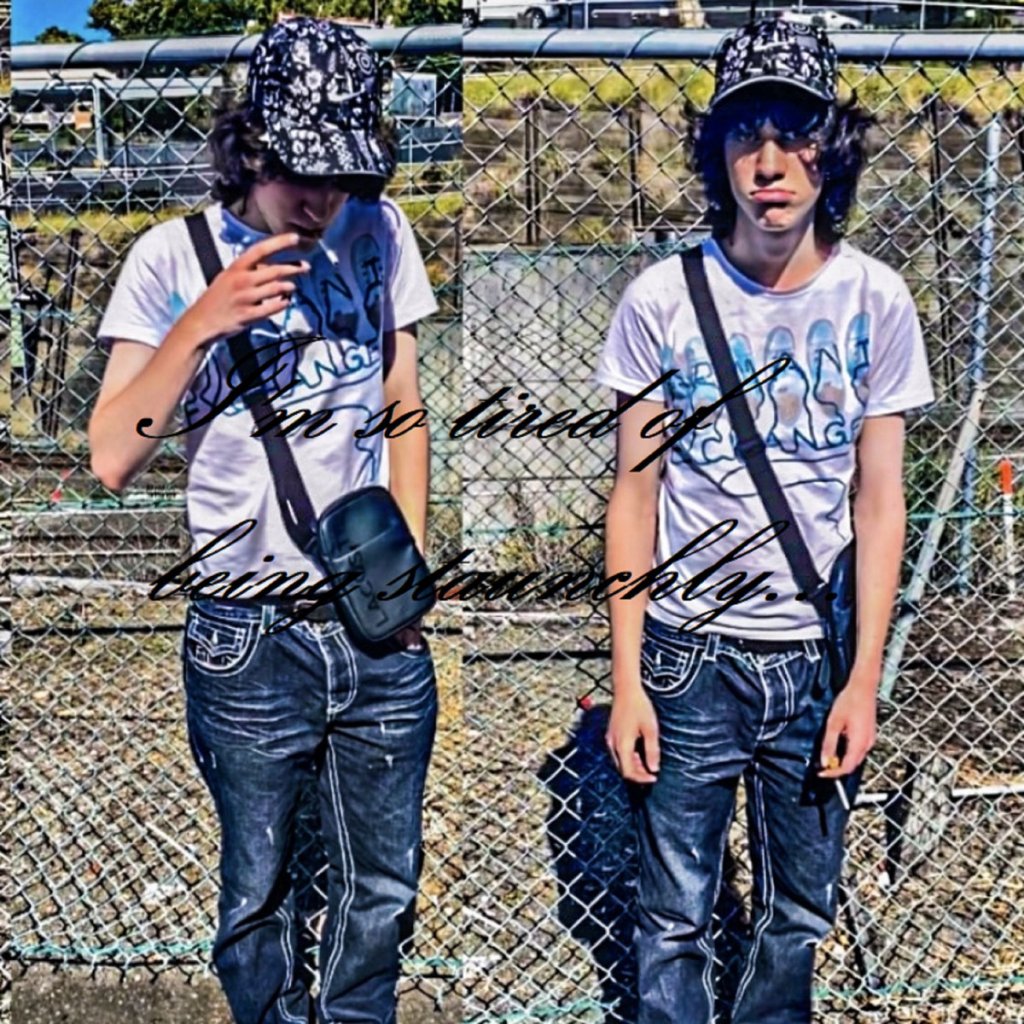
Rapid Dye: Keeping Sydney Ugly

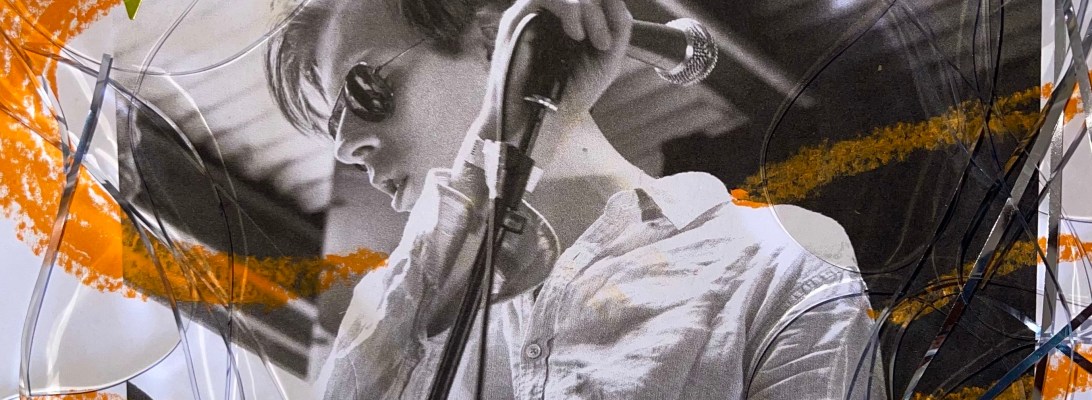
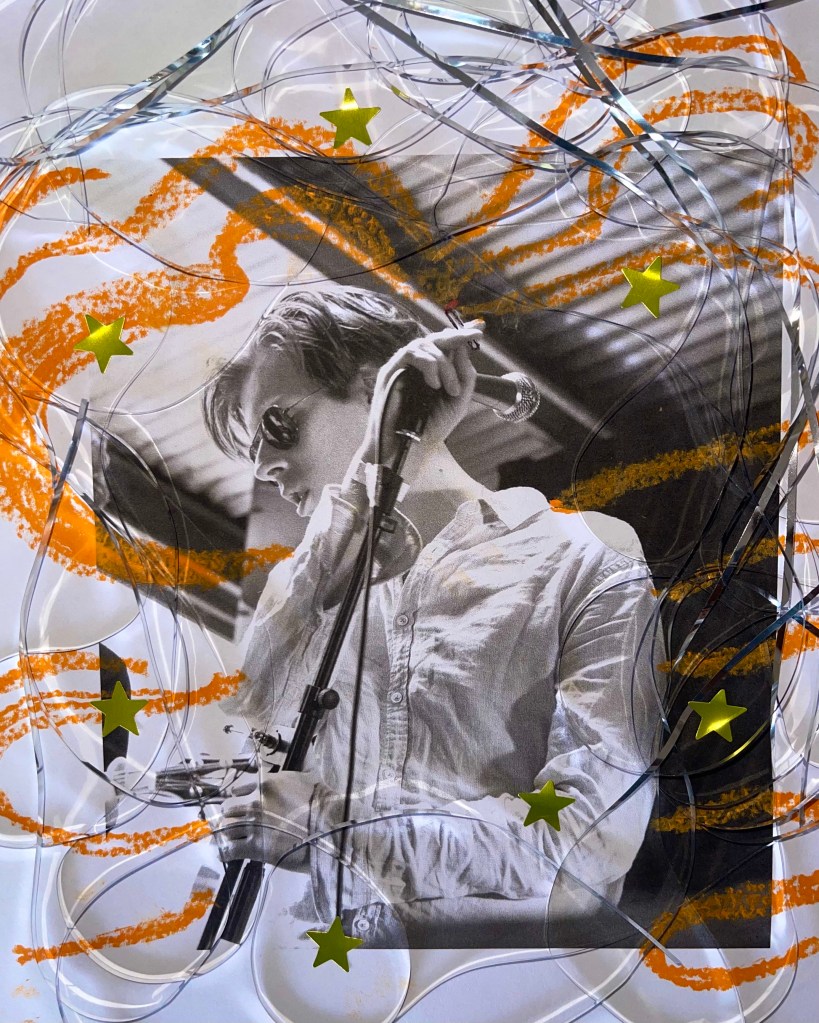
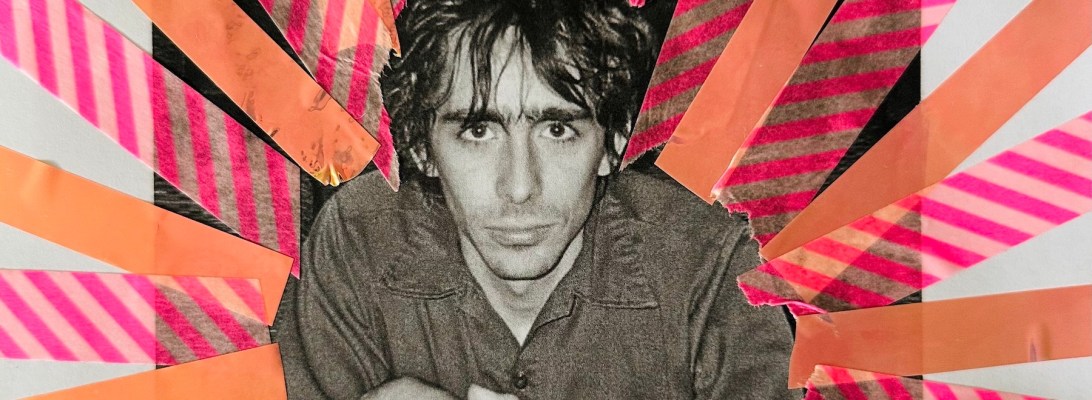
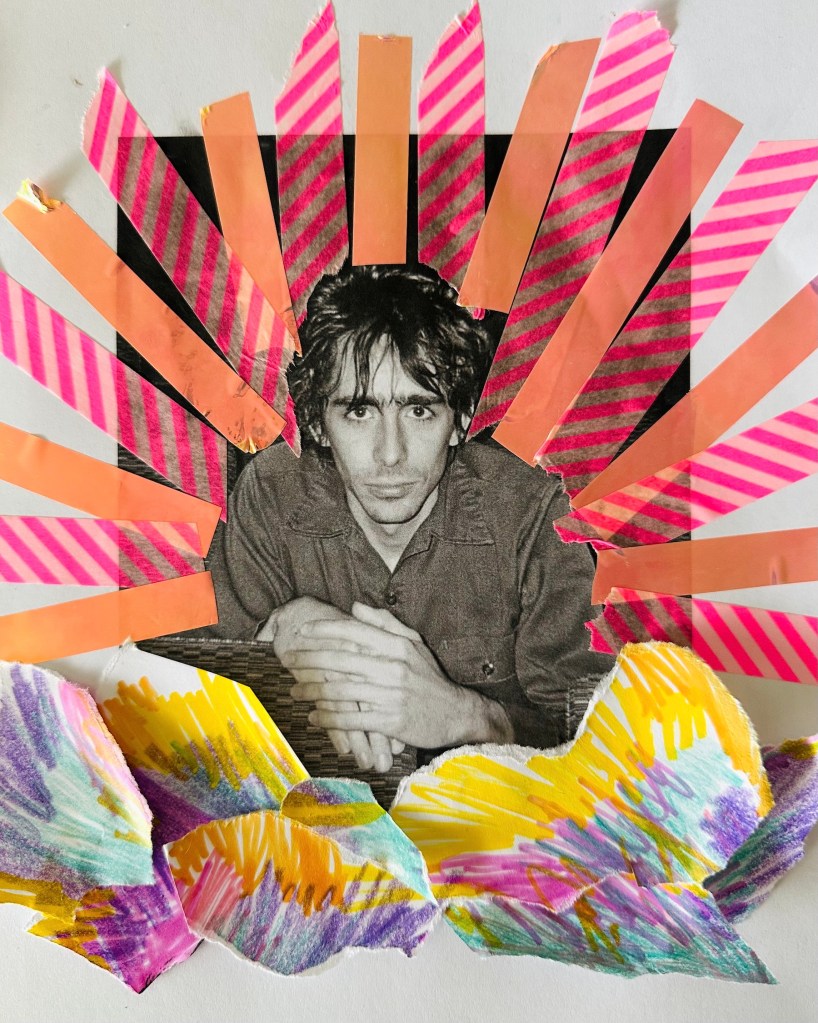
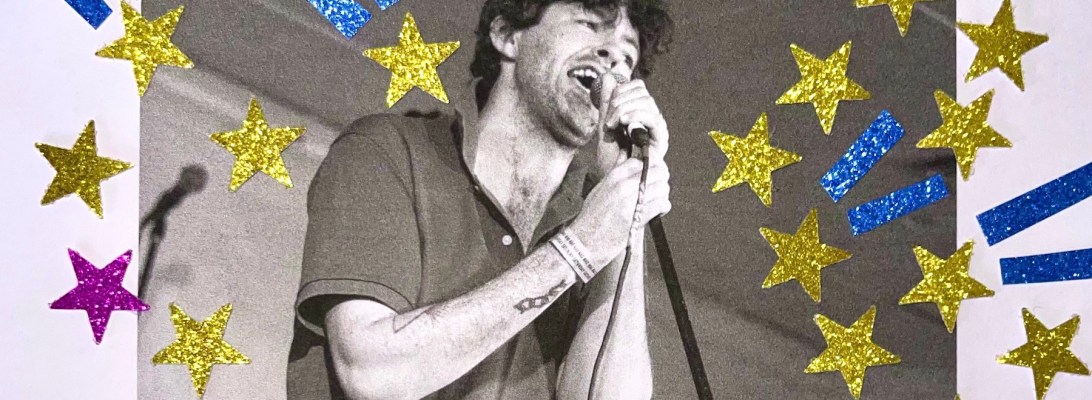
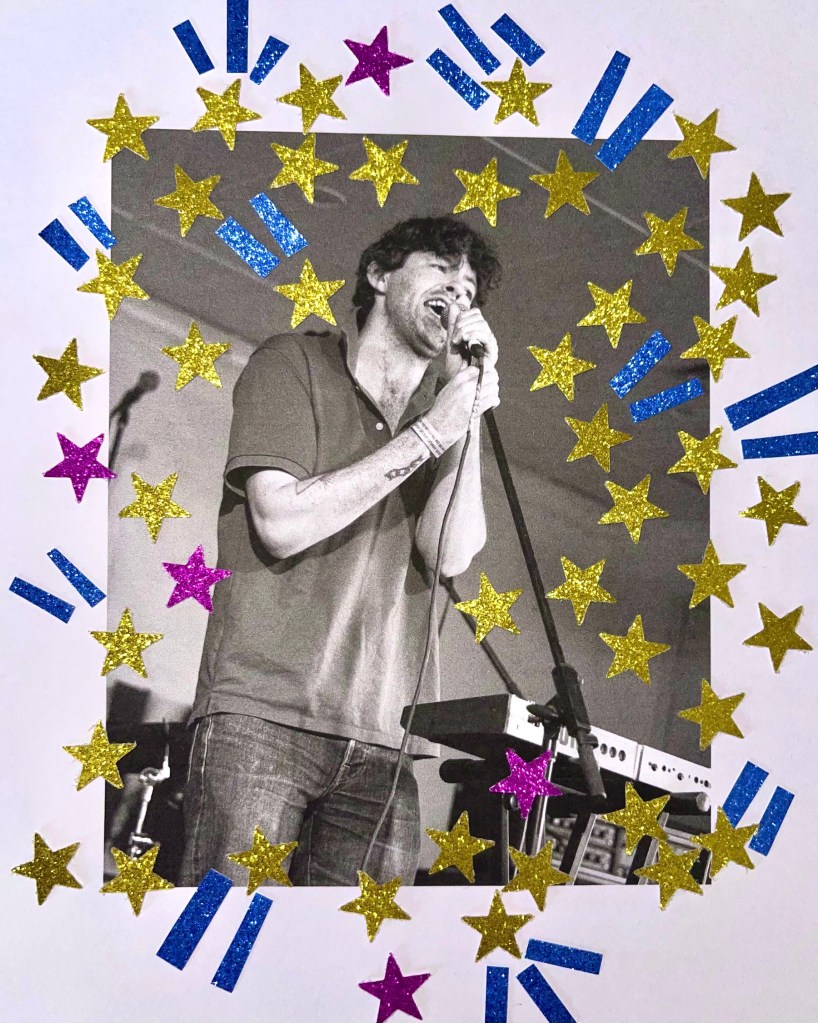
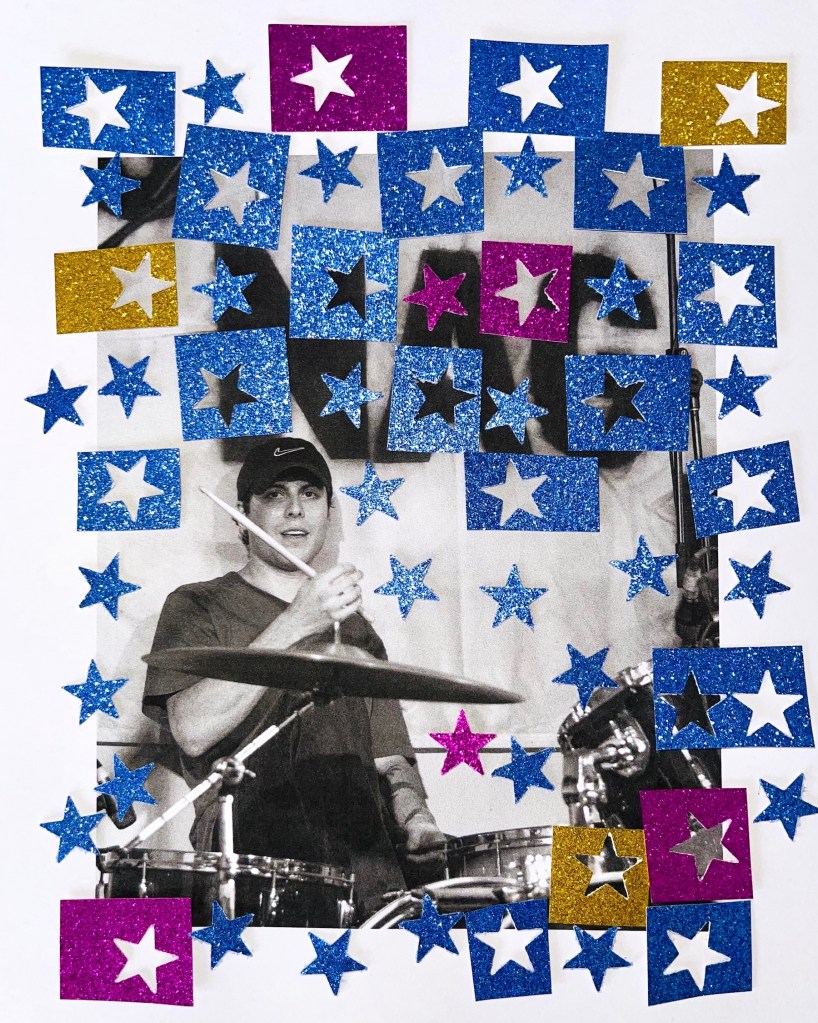
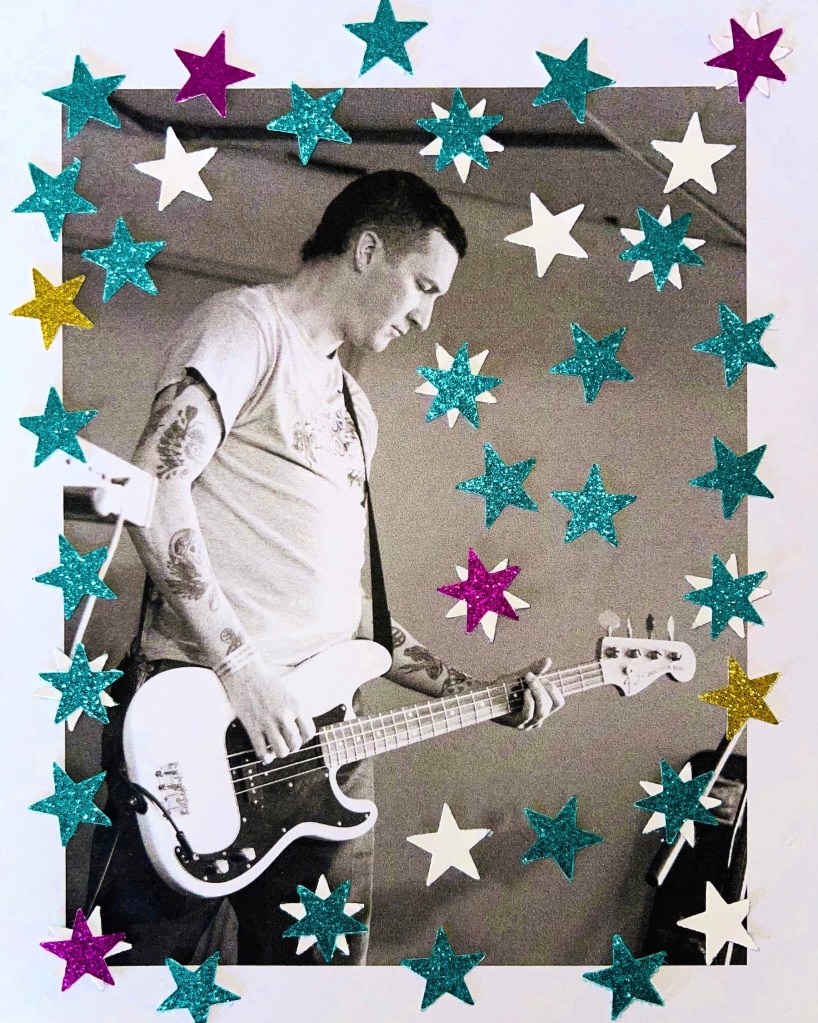
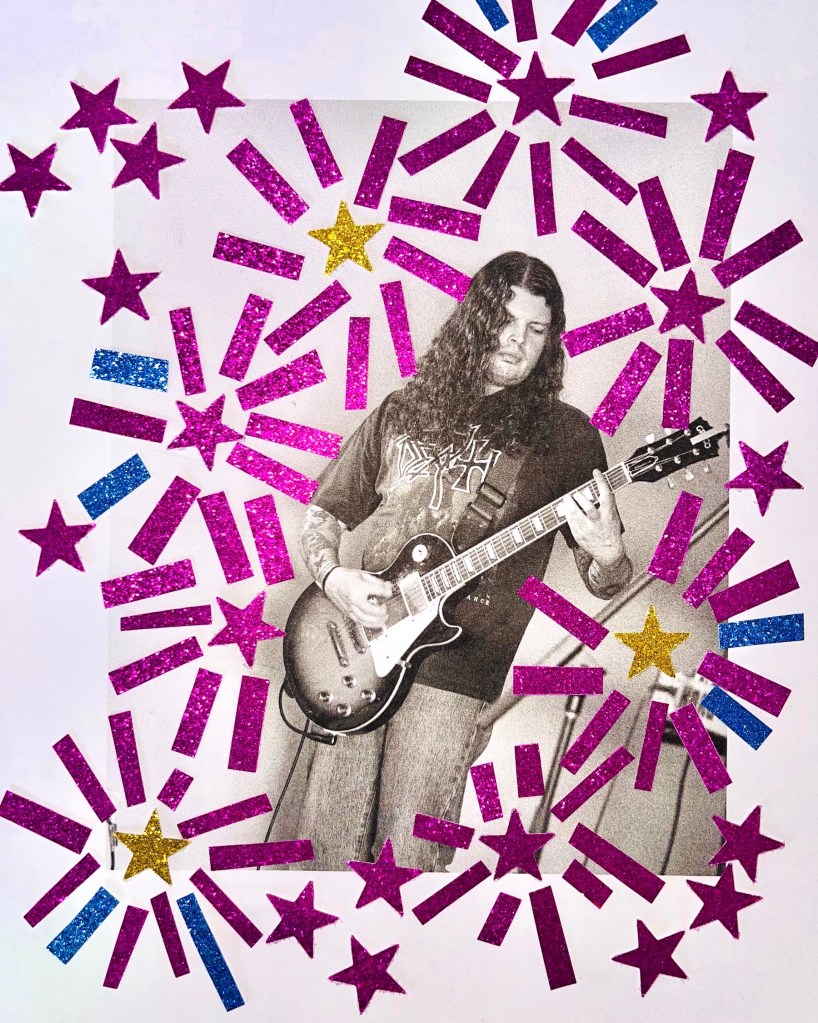
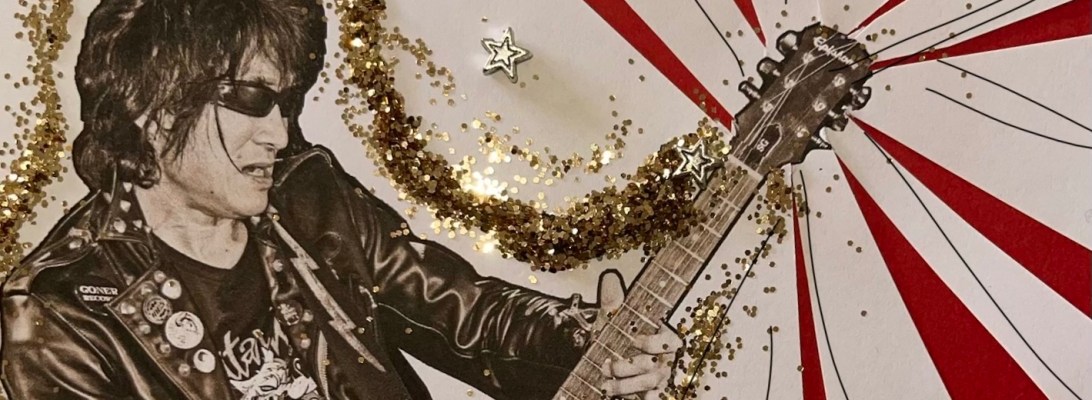
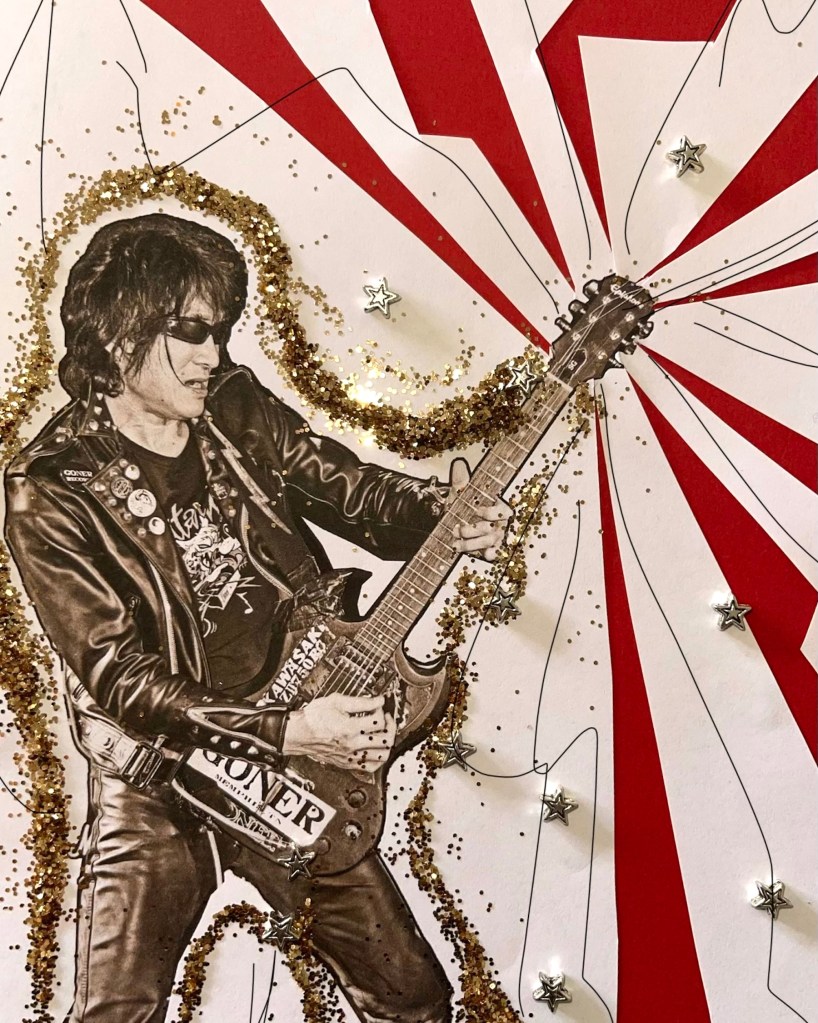
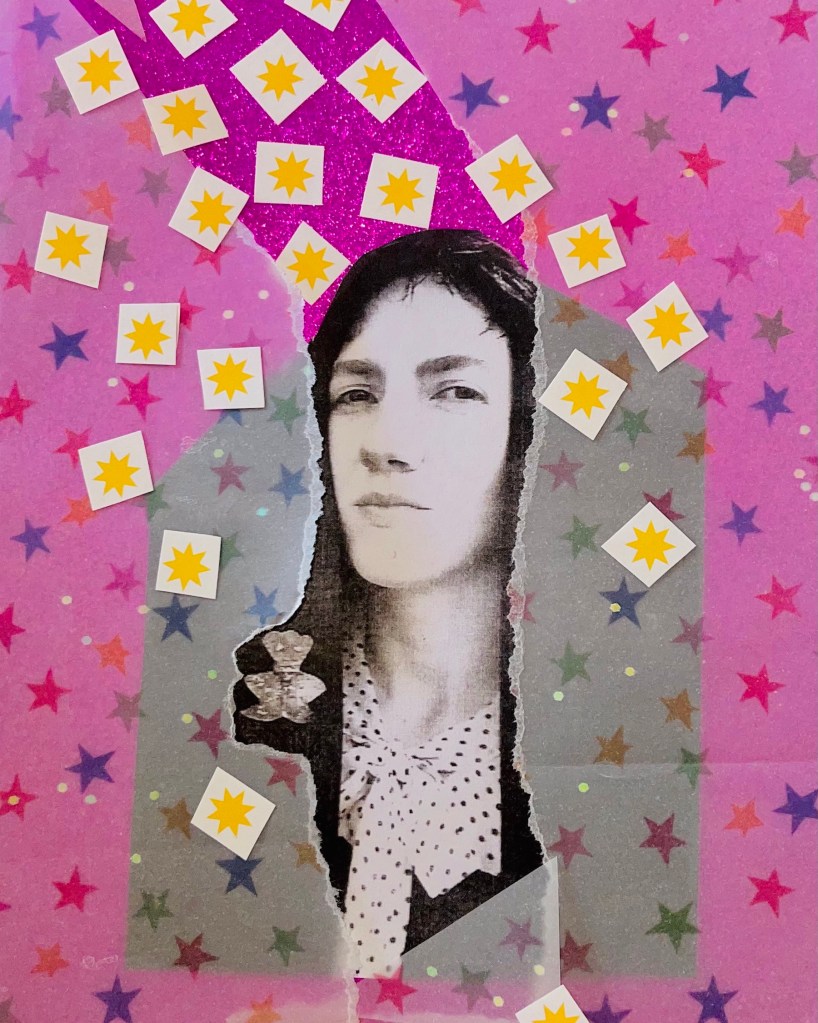
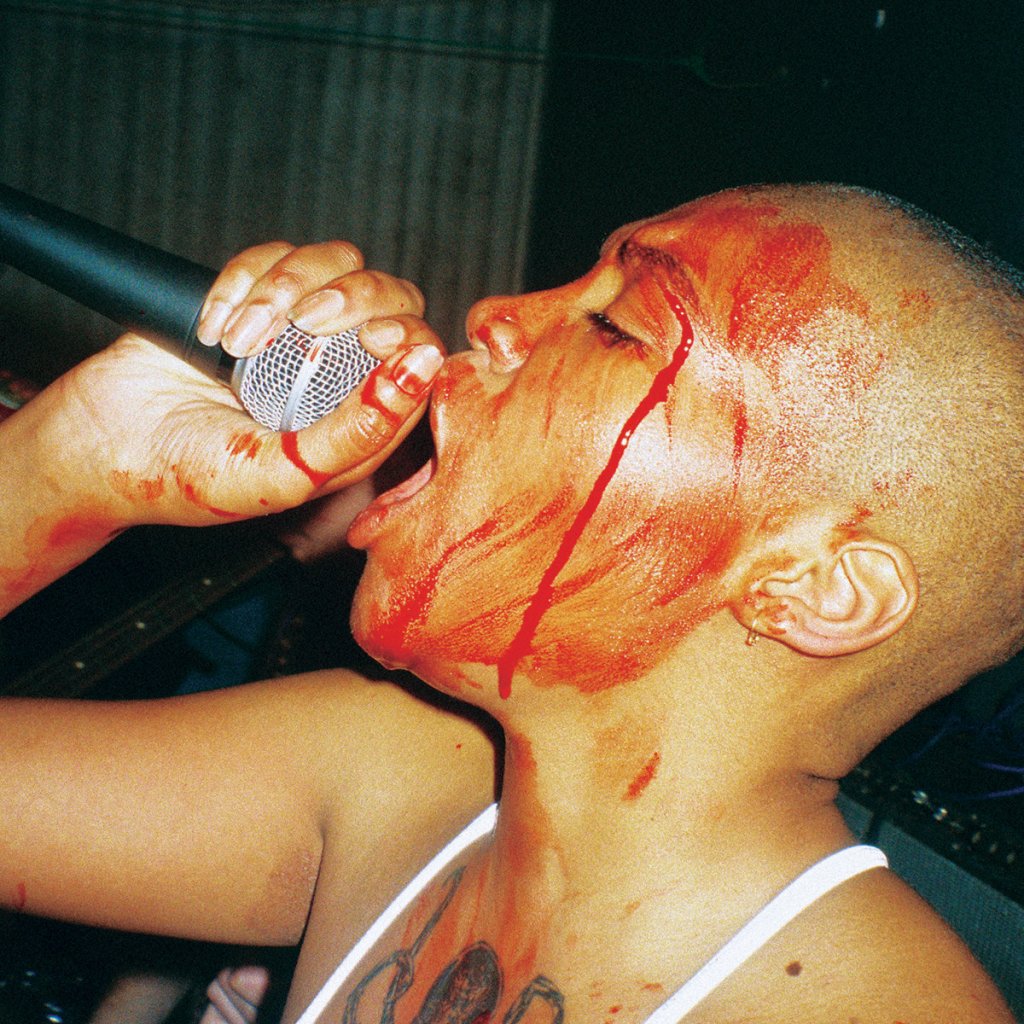
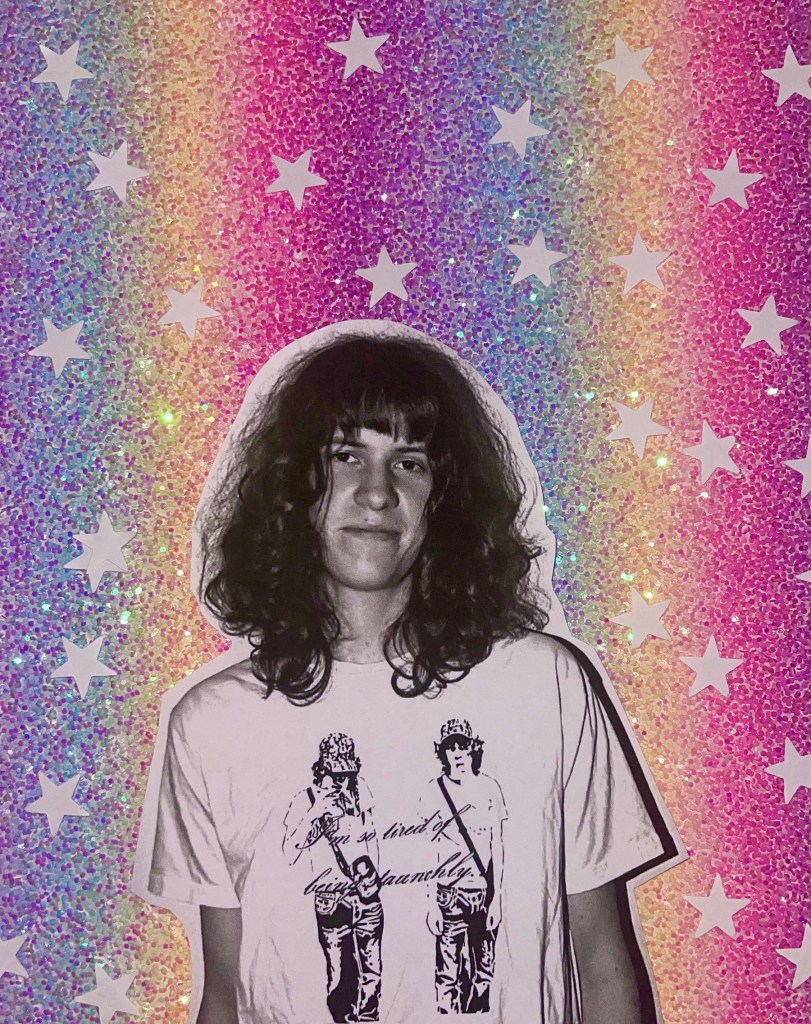
Original photo: Christian / collage by B

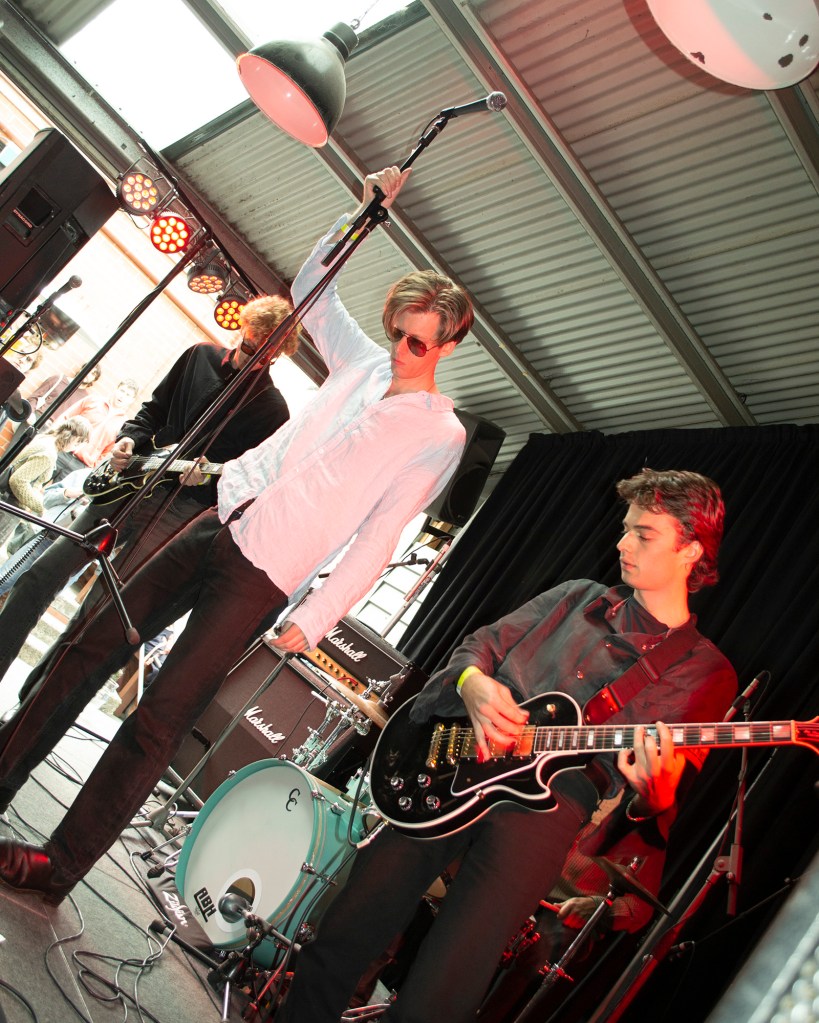
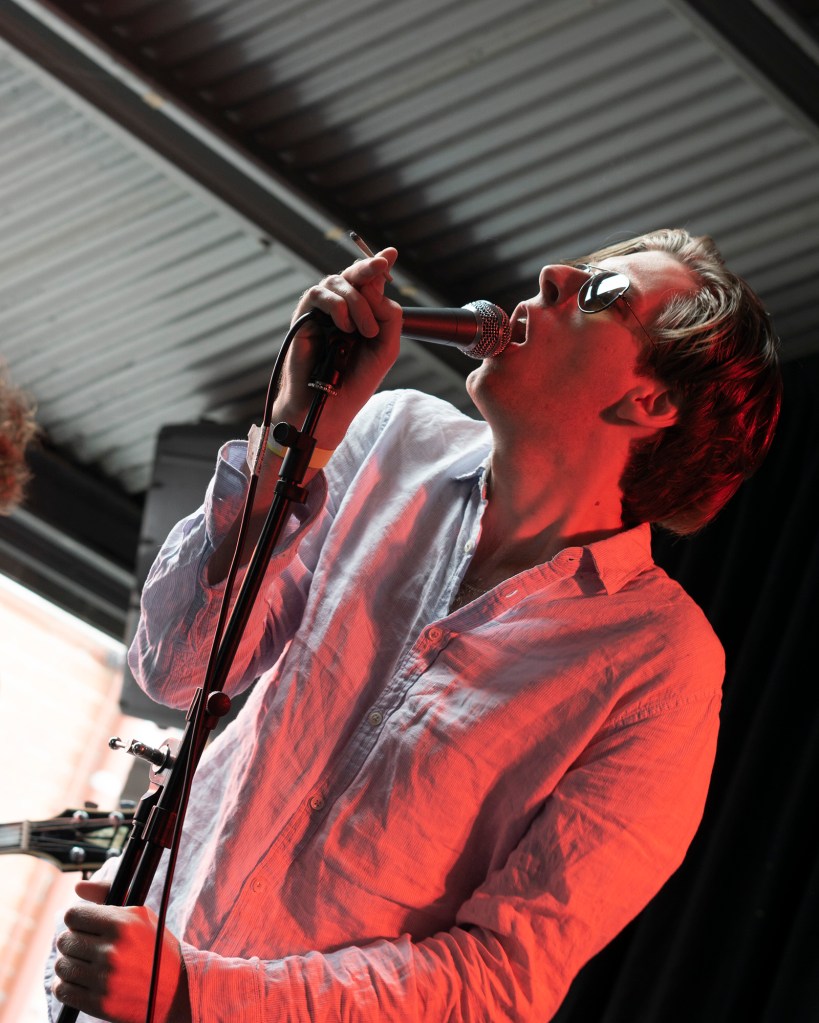
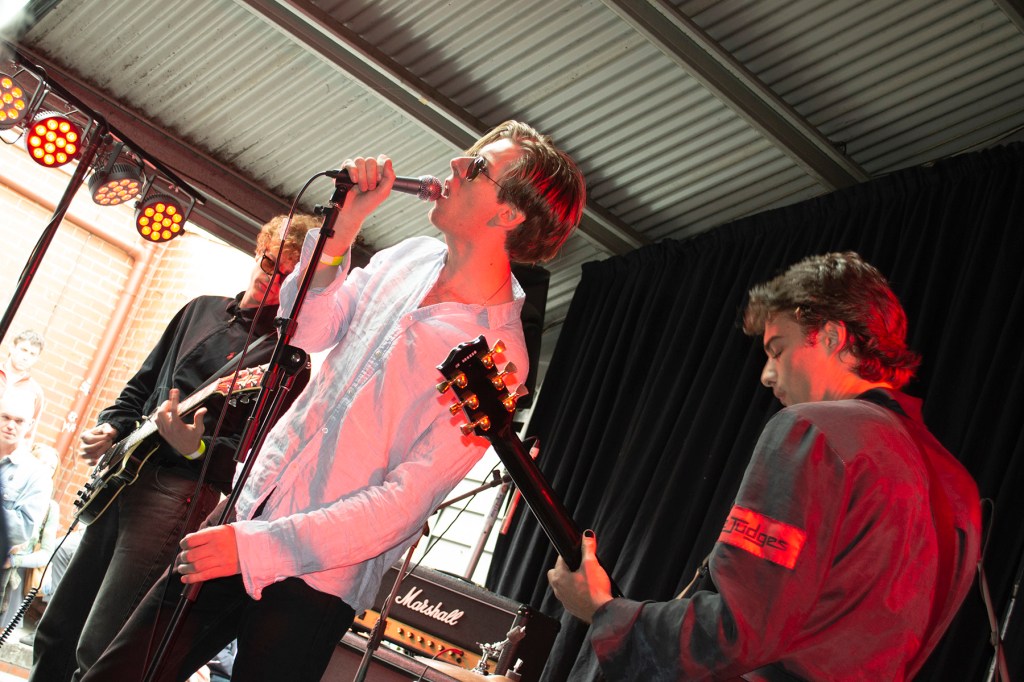
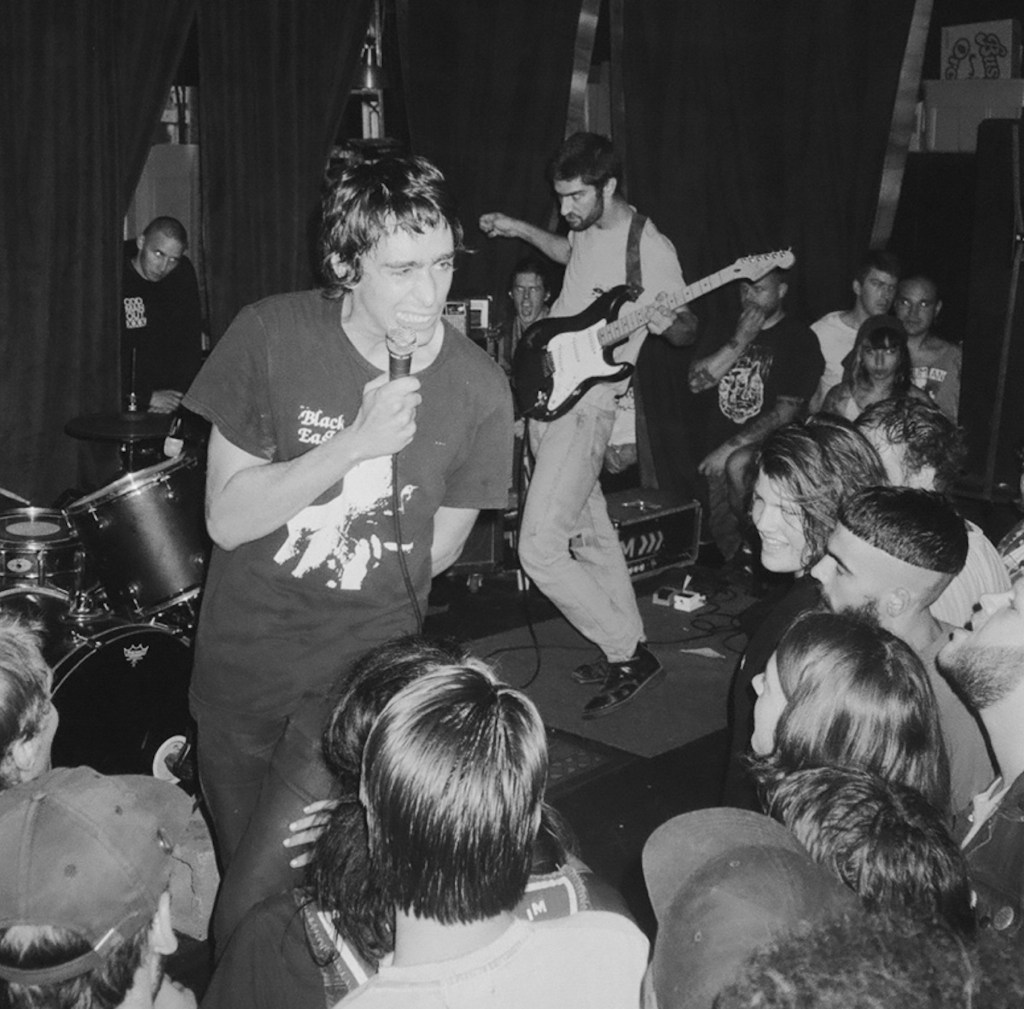
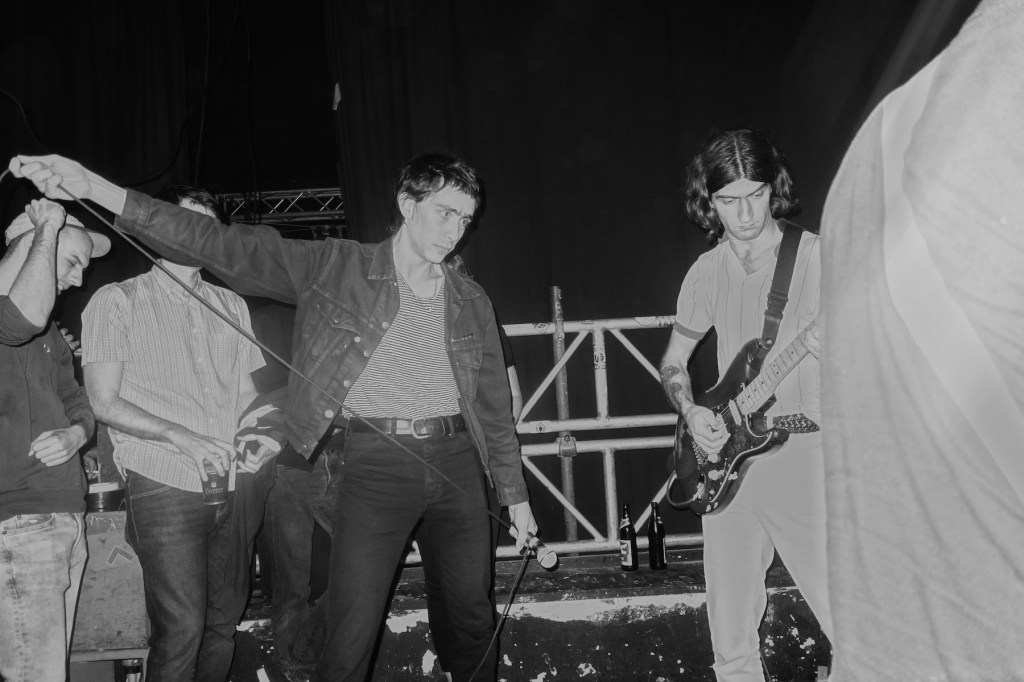
Sydney band, Rapid Dye, gifted the world THE Australian hardcore record of the year way back on Valentine’s Day. It’s a record built for the floor, for the crowd, for the pure energy of classic hardcore done right. It hits hard and lingers long. They’re one of the savagest hardcore bands around. IYKYK.

Gimmie caught up with Josh Ward, Rapid Dye’s vocalist, to talk about the record, his journey to making music and a record label, Sexy Romance. We also talk about the most hectic things that have ever happened to him that might just make your jaw drop.

What was the first kind of music that really hit you? 

JOSH WARD: Around 14 or 15, I started listening to Metallica for the first time. That was such an eye-opener, because when I was young I used to listen to Silverchair and System of a Down, and I started really, really liking that stuff. Then I got turned onto metal and became an absolute metalhead, listening to the top bands. I remember reading magazines saying: you have to listen to the Big Four — Metallica, Megadeth, Anthrax, Slayer. From there, it just snowballed. I was like, alright, this is what I want to chase — that heavy sound.

I’m glad you’re honest about what you first got into, because some people I talk to tend to namecheck bands they think will make ‘em sound cool, not who they were genuinely into. Like, they don’t wanna sound like a dag.

JW: [Laughs]. I grew up in Logan, Queensland, and the closest I could go anywhere was about a 20-minute walk. Buses only ran every two hours to the main town. So pretty much, I had to learn from whatever I found at the libraries in Beenleigh, just whatever CDs they had. The libraries had racks of CDs. I’d be like, ‘Oh, Metallica — that’s cool, I’ll put that aside. Oh, Rage Against the Machine — that looks kind of punk.’ I remember there was D.R.I., a real thrashy album and I used to think, ‘Oh, this is kind of cool.’But back then I wasn’t really that into it; I just had an awareness that a more funky kind of sound existed.

I got into D.R.I. early because my older brother picked up their Crossover record when it came out in ’87. He also got me into Dead Kennedys and Suicidal Tendencies. Was there a moment for you when you really realised punk and hardcore were your thing?

JW: Yeah, I was 15. I remember it so clearly because I really liked this girl — she told me she was playing in a band called Not Negotiable, kind of an emo band. She was in it with her boyfriend. I liked it because she went to the same school, and she said, “Oh, you should come to the show.”

So I went to the show at Eagleby Community Hall. There were a couple of other bands, one was this big hardcore band called Time Has Come. I started listening and thought, ‘Wow, this is incredible — I’ve never heard anything like this before.’

It was the first time I’d seen people moshing. I think this was around 2005, so everyone was wearing camo pants and big straight-edge shirts [laughs]. And I just thought, straight away, ‘I can’t believe this — this is incredible.’

Cool! I remember going to the army surplus store in the city and getting camo pants and cutting them into long shorts.

[Laughter]

JW: Yeah. As soon as that show finished, I’d forgotten I’d even gone because I liked her — I’d just enjoyed the show so much. I really wanted to support her and I talked to her, but more than anything I couldn’t believe there was this whole scene. No one from my school went but I knew some of the older kids from other schools, and gradually I started talking to them. 

Before Rapid Dye, were you involved in any other bands or projects? 

JW: I moved down to Sydney in 2012. Before that, I was trying to start hardcore bands, but nothing ever really eventuated — not even a first show. I used to practise, pretty much driven by this feeling that I really wanted to join a band, but I never had the opportunity to jump in because no one was ever sick.

Then I started this Quadrophenia-worship band called, Little Mind. I used to dress all mod for it. That was when I was pretending I didn’t really like hardcore — you know, that angsty 19–20-year-old phase where you’re like, ‘Oh, I’m over hardcore now, I’ll try to be a bit more hipster, a bit more in that scene.’ I did that for a little while and really enjoyed it, but deep down I still wanted to do a hardcore band. I just couldn’t get enough momentum to make it happen in Brisbane or on the Gold Coast. So I decided it was time to move.

I tried moving to Melbourne in 2012, but I only lasted about a month — I didn’t like it at all. I was going to a few shows, trying to meet new people, but it couldn’t click. I don’t know if it was them or me, but it didn’t work. Then, on a whim, I decided to try Sydney. I didn’t want to go back to the Gold Coast, and a lot of my family was in Sydney, so I thought, ‘Let’s just see how it goes.’

On the very first night, I met one of my best mates now, Drew Bennett from Oily Boys, at a pub. We were sitting at separate tables and started talking — I think because I was wearing a hardcore shirt. From there, I knew I wanted to stay in Sydney. Twelve months in, and I was still here.

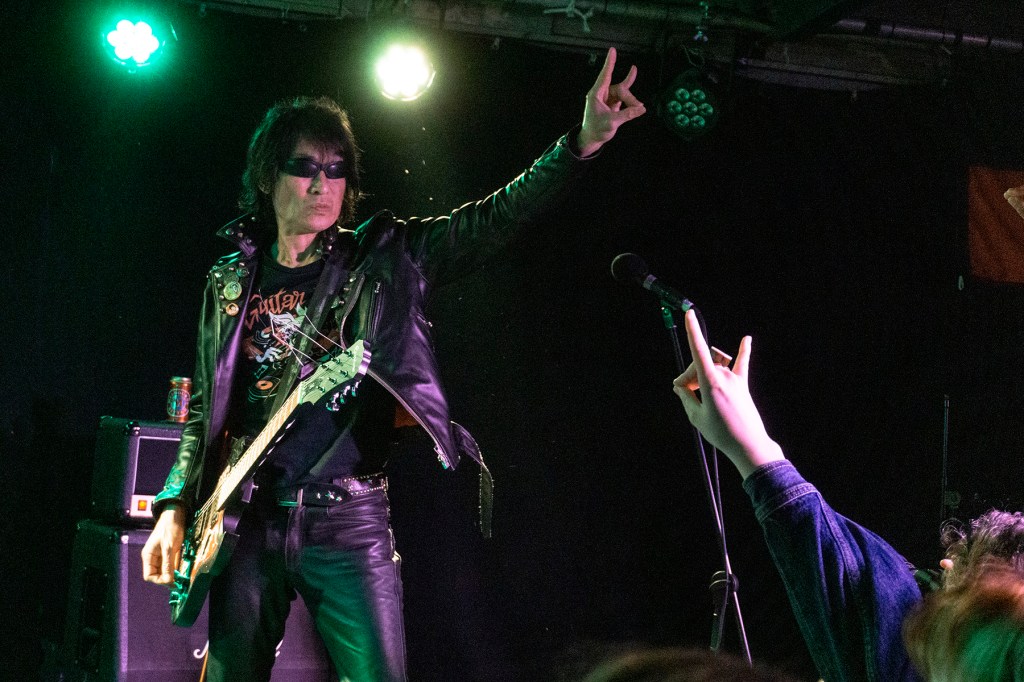
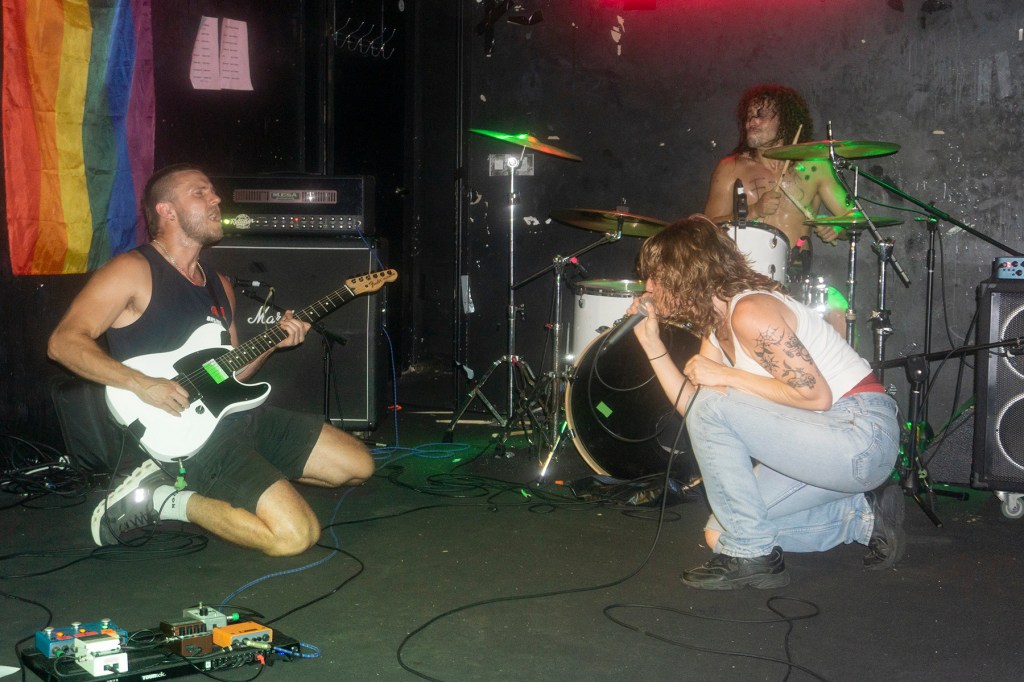
Photo: Jhonny Russell

Nice! How good is Oily Boys’ album, Cro Memory Grin?

JW: Incredible! Hardcore doesn’t have to be done in a certain way — it can be done differently but still stay within that realm of hardcore. I consider them a hardcore band, but I can talk to people and some would tell me, ‘Oh, they’re more punky or almost more experimental than anything.’ To me, they’re, at their core, pure hardcore.

Totally! I really love Drew’s latest band too, Chrome Cell Torture. Being on the Gold Coast we’ve gotten to see them play a bunch. Every single time has been awesome.

JW: I’m really happy for him that he made the move up there, because he’s now really focused on what he wants to do. He sends me messages all the time with lyrics he’s written, all the new songs, and he’s like, Recording the album!’ I’m really looking forward to seeing how it all goes for him.

Same! Did you always sort of want to be a front person? 

JW: I think I did want to be a frontman. Especially when I was living in Queensland. I didn’t feel like I was cool enough a lot of the time though. I picked up the bass so I could try and squeeze my way in somewhere. But that was small thinking — I thought I didn’t have the tools to do it.

That changed a lot when I moved to Sydney, because I think at that point my brain was switching to, ‘Let’s try and make something. I want to be a part of this scene as much as I can.’ That’s when I started the label Sexy Romance in 2013. I was like, ‘Well, I’ve got this job at an architecture firm — I really shouldn’t be here.’ But I managed to squeeze my resume through, and they were happy to pay me. I thought, ‘Alright, let’s use this extra cash to put out records.’

At that time, a lot of hardcore felt a bit stale. None of it really hit that edge — it was a bit lowbrow, but also didn’t feel genuine enough. So I decided, ‘Alright, I’m going to stick with this label, see how much I can do, hopefully connect with some people, and then start a band.’ I figured if anyone wanted to start a band here, I could put out the record. That’s how my brain was processing how I could get into a band.

That’s a lot of work to be in a band!

JW: Yeah, I was just thinking… anything that would help me be able to try. Deep down, this was my way to prove to myself that I’m really into this. That I really want to be somebody. Or… I feel like I’m giving back to the scene that gave me so much — that actually gave me an identity; who I really wanted to be.

I get that. When I first started getting into punk and hardcore, I was like, how can I be a part of this? No one would start a band with me — because I’m a girl. Back then things were really bro-y. So I started doing zines, which I’ve been doing now for almost 30 years.

JW: I spent some time this past week reading your interviews, and I haven’t gotten this much out of a zine in a long time. A lot of the zines I usually read feel like the people being interviewed are used as a stepping stone for the writer to move on to bigger things. That’s fine, but it often feels very surface-level. Reading Gimmie, though, I felt the opposite. The one with Coco was absolutely incredible. I also read the one with Julian from Negative Gears, and the way he talked about Canberra, going down to Melbourne, and being in Sydney really struck me. I’ve known Julian for a little while, but I’d never spoken with him about any of that. It was something I only found out through reading the zine — something no other zine I’ve read has given me.

That makes me so happy to hear that. I often get people telling me that they read a chat on Gimmie with a friend and they find out things they never knew about them. Having people open up to you is a really special thing and it’s something that I really cherish. I’m very lucky that people trust me with their stories. Gimmie will always be about stories, sharing interesting and cool ideas and experiences, and music and art with people. I never want to be a promotional platform. That’s not us. Other publications can do that.

JW: Reading yours is refreshing. I get to read, watch and hear so many different things. When you asked me to chat, I was absolutely stoked.

I have a wishlist of people that I want to interview, and you’ve been on the wish list for a while. Since we saw you play at Nag Nag Nag. I wanted to chat to about the new record because it’s such a great one and I wanted more people to know about it. It’s one of my fav hardcore punk albums to come out this year. You guys get a lot of love and respect from the underground. I saw Dx [from Straightjacket Nation/Distort zine] say that “Rapid Dye are the best hardcore band on the planet”! And Coco from Romansy said this record is a “future classic”. How’s it feel to get props like that?

JW: Sometimes I feel a bit like an impostor. Then I wonder if it’s warranted. I talk about this a lot with Ryan, our drummer. He’s always reminding me, because sometimes I do feel off. Back in 2022, I wasn’t feeling too keen on the band. 

I thought, well, we had a good run up to 2019, then Covid happened. I felt like maybe I wasn’t the same person anymore. A lot had changed — the world had changed — and I wondered if my music still fit in a post-Covid era. Ryan kept telling me, ‘Your stuff’s incredible, it still blows me away. We’re making it classy. I’ve already done the drums, you’ll do the vocals. The songs are written.’ So I thought, all right, yeah. I just needed that reassurance to really feel like, okay, this is something I still want to do.

Since then, he’s helped me so much. I was feeling pretty depressed — like everyone was during Covid, being stuck inside. I’d always been active, going to shows a lot. But he brought me straight back into it. That was a big turning point.

Yay, for Ryan! That’s awesome he’s been able to help you so much. Your album was recorded in 2021, I think?

JW: Yeah.

I know that over time it kind of changed and evolved; in what way? Did any of how you’ve been telling me you were feeling go into the songs?

JW: A lot of them were written in 2019, when we were playing almost every week or every second week. That’s when we had our tour with Glue, and we had quite a lot of momentum. We were really—let’s push this. Then it slowed down. 

Finally, in 2021, we were able to get back together again. I was able to hear what the band had put down, but I felt like I was struggling to come up with the lyrics, because maybe what I was talking about back then didn’t relate too much to how I’m feeling now.

I’d go through my old books, looking at all my old lyric sheets, and think, I was saying this, but I don’t feel that too much anymore, because I’ve had a bit of reflection on the life I had before the Covid lockdowns. But I’d still read them and go, that’s how I was feeling at that time. It’s not that I feel like an impostor, talking about problems I don’t have. I’d put them down and maybe reword them to feel more like a reflection of myself, something to really bounce off. So it was a little bit of rewriting, and after that there wasn’t much change.

The first song released from it was ’What Makes You Feel Safe?’ That’s kind of a loaded question you’re asking.

JW: Yes, it is. I’ve had lyrics for this song for quite a while. Around 2016, I lived in a house where there’s a lot of hectic people. And I didn’t really know who was my friend within that house. There was also police coming over all the time. We always had people in our lounge room, like, I’d be going to work at 5am and there’d be people up all night smoking drugs. And I’d never met them before. And then not having a feeling of safety in my home. 

That’s hard. 

JW: Yeah. But the thing is, I was also using drugs at the same time. So I wasn’t completely innocent in that, but I just had that feeling.

Before I used to go to sleep, I’d lock my door and rope it just in case someone tried to break through. I’d think, what’s going to make me feel safe? Like in the lyrics: Is it having a gun in my hand? What’s going to make me feel safe? Having my friends around? I thought I had my friends around, but when you’re in those situations — especially when it comes to housemates smoking meth — you don’t know how quickly they can turn on you. 

At that point my world felt like it was coming down because I had a really bad pokie-machine addiction. I didn’t have money, so I’d smash it in the pokies thinking, this might get me through. I’d win a thousand dollars and thought, I’m sweet, I’m sorted for two weeks. 

But I didn’t really feel super safe in the situation I was in. I used to think I’d feel so much better and more relaxed if my friends stayed next door or if I had a weapon to protect me from being hurt. It came more from being scared than anything else. I was being in my head. The song is how I wanted to express it.

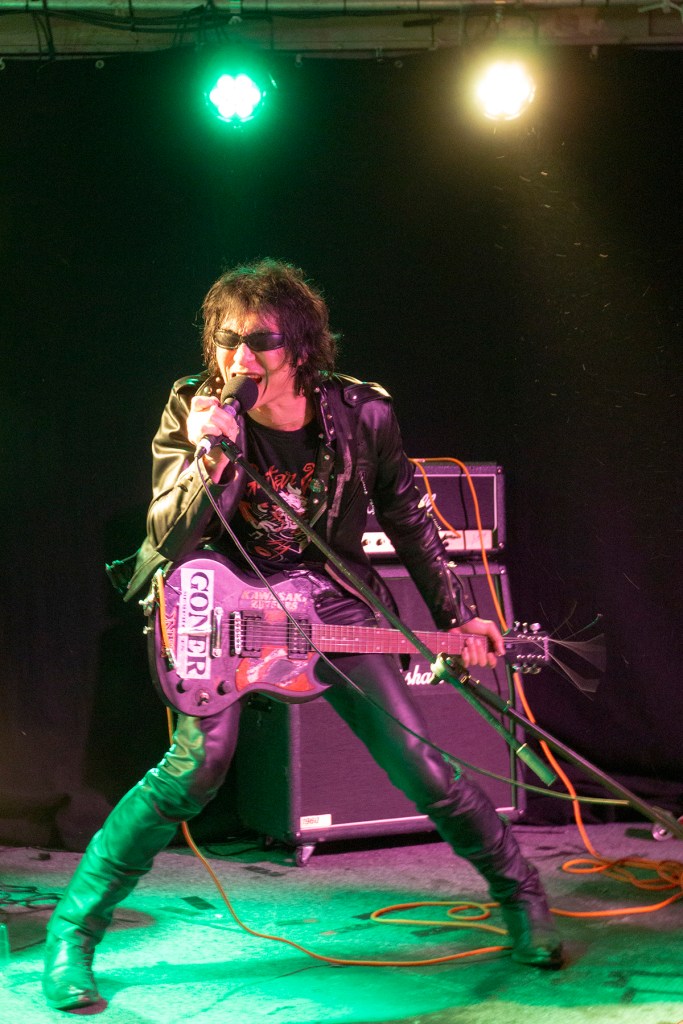
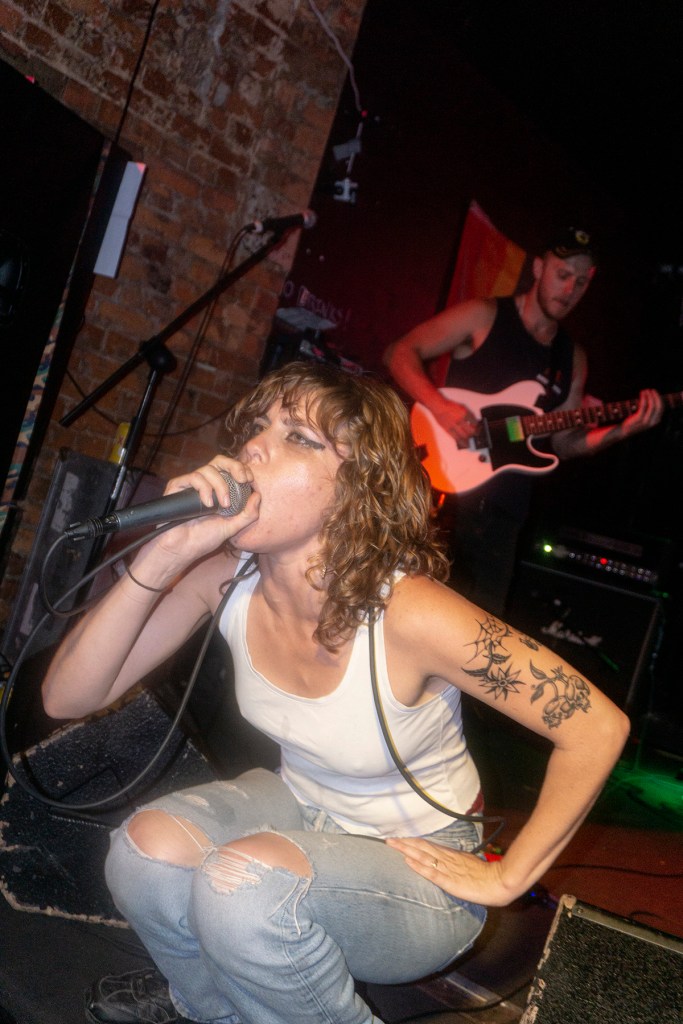
Photo: Jhonny Russell

I had a similar conversation with Amy from Amyl and the Sniffers. Their album, was called, Comfort to Me. And we talked about, what gives comfort? I think about that stuff a lot. Growing up, my parents were pretty paranoid about the world and people. So I think it’s made extra sensitive to things or maybe hyper-aware. 

JW: I know, I put myself in those type of situations. I did smoke meth for a bit, it wasn’t a full on addiction, but I did it, and smoked a lot of weed. I wanted to be around those type of people because a lot of them were painters, very artistic-types. But also, they can fly off the hand and be a completely different person.

I think that’s also true of hardcore — I’ve always wanted to chase, I guess, the more extreme sides of the human condition. I get really attracted to someone who’s been crushing trains, and I think, oh — this guy’s on the other side of the law, in a world that doesn’t exist within my work or even among friends. I almost felt like I was part of this dark side and I wanted to belong to it and have my own. Even then inside I felt very — a scared person, maybe trying to find comfort in thinking that if I find the most extreme thing, then anything else that happens to me won’t hurt as much.

When you did the interview with Tim from Teenage Hate, you mentioned that Sydney hardcore was naughty hardcore. 

JW: [Laughs] Yeah, that’s what I felt. That’s a side that really attracted me. I remember going to Melbourne shows — youth crew shows — and hanging out. A lot of people were straight edge. I’ve never been straight edge in my life, but I always wanted to hang out with people with that mindset, to learn something different. But I’d also end up hanging out at 1 a.m. in a subway, I’d be like, hmmm, this is a bit boring. Then I’d come down to Sydney and it’s 2 a.m., and me and my friend would be in the middle of the train tracks, and my heart would be racing. I felt way better — like, I’m doing something crazy. I’m doing something I want to do.

The first Rapid Dye release is called, Keep Sydney Ugly. Where did that phrase come from? Is it kind of meant like the ‘Keep Austin weird’ or ‘Keep Portland weird’ slogans? 

JW: Yeah. Sort of. I was actually thinking about this today. That was when the Sydney lockout laws happened. Tyson Koh, ran in the elections to be voted into the council as ‘Keep Sydney Open.’

We all thought he was a bit of a joke, because it seemed like he was only doing it to further himself, or the people he was interested in. I thought, well, Sydney’s still open — especially within my group of people — because we were still doing whatever we wanted at god knows what hours in the morning. So I thought, let’s have a little play on words: ‘Keep Sydney Ugly’ — keep Sydney half-vandalized, or just… something that makes the city feel alive, even though all the clubbing was closed. I felt like it opened up stuff for us instead of drinking in bars — we’d just be in our houses or on the streets.

I thought, keeping Sydney ugly — that’s how I want it. I want it to stay a little grimy, a bit ugly.

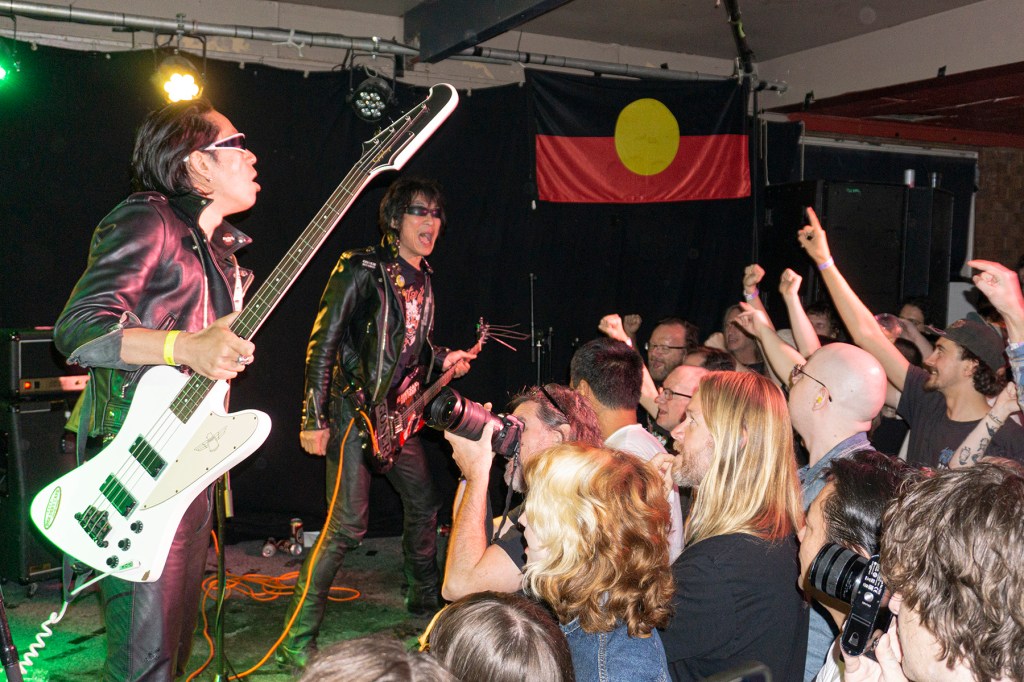
Photo: Jhonny Russell

That vibe is so different from where you grew up in the Gold Coast and Logan areas.

JW: Yeah, it’s a lot different. I grew up in Bahrs Scrub, just outside Beenleigh, on acreage. The guys I was friends with were from bushy parts — at least the ones I just felt connected to. I have one friend from that area I speak to sometimes, but otherwise, when I go back, I see people from school and they’ll be like, ‘Oh, you still into that rah-rah music?’ I just never really got along with a lot of people there.

That’s why, when I eventually moved, I felt like I was with people who understood me more. I didn’t have to hide that I was into music or art. Even with my own family, I don’t really fit in — they’re footy fanatics. They just want to watch football or talk about their new car. I’m not really a part of that. When I go home, I don’t feel too comfortable. Since moving in 2012, I’ve been home a few times, but the longest I’ve stayed is about three days. I just don’t feel comfortable in those areas.

Here, I feel at home. I’ve got all my friends, and Sydney feels like my home more than anything.

Was there anything that you’ve kind of found challenging about moving to Sydney? 

JW: I pretty much moved with a bunch of records and some clothes, and I was sleeping in my car for about a month. I wasn’t really working. I was still in contact with people I was trying to get away from, because when I was living back in Queensland, I was in this house in Beenleigh where pretty much everyone was using drugs all the time. I was, too, and I saw it as a way to escape.

When I moved to Sydney, a lot of those friends tried to get me to come back with them. They thought, ‘Oh, Josh is just doing a tour to get away for a bit.’ But I was really strict that I didn’t want to be around those types of people. They found out where I was staying about two weeks after I moved, and I didn’t have the willpower — I got trapped in a van with them as they started driving back to Brisbane. They said, ‘Oh, you can come back,’ and I was like, I need to grab something out of my car. So I convinced them to drive me back to my car and basically boosted all the way before they could catch me. I got out, parked my car in Enmore. I was like, I don’t want to deal with these people anymore. I really just went blank. That same day, I thought, this is my time — I’ve got to get away.

I went and applied for a job at Repressed Record in Newtown. Flat-out denied. [Laughs]. That’s fine. But about a week later, Nick from Repressed posted — maybe on Facebook — that they had a room available at their house. I thought straight away, I love Nick’s stuff. I love Royal Headache. I love RIP Society. This is what I want to be part of. I moved in straight away, which felt like a godsend — divine intervention. I thought, I’ve been given an opportunity with someone whose music I love and enjoy, and a chance to insert myself into this scene. I had to take the opportunity. From there, it pretty much worked out.

Did you learn stuff from Nick that you used used when you started your own label, Sexy Romance?

JW: Yeah. I’d talk to him about, how many should I get? Or, should I do this? He’d flat out tell me sometimes, ‘Don’t do that. Keep it a small record. Don’t overspend amounts and don’t go to other companies to promote your stuff. Just do it all yourself.’ Even just watching how he did Royal Headache, and Native Cats. He had a, do-it-yourself, if you build it, they will come thing. So, that’s what I did. But I wanted to make it a little bit sleazy. When Sexy Romance got made, I had no idea what I wanted to call the label. I knew I didn’t want to call it what every other hardcore label is called, like, Angry Hammer Smasher Records or something like that [laughs].

Drew found a book at this pub that we used to go and on the top of the book, it says: Sexy Romance. He’s like, ‘This is perfect. Call it something that’s kind of gross, and you can’t tell it’s a hardcore label, you can’t tell what type of label it is. It almost sounds like a pornographic movie thing.’  I was like, OK, let’s just do it. Let’s see how it goes. And the name really stuck. I’m glad I zagged instead of zigged.

It’s funny that your label is Sexy Romance and the Rapid Dye record is coming out on Valentine’s Day. Someone could think that you’re actually a secret romantic!

JW: I like to think that I am. I’ve never really been told that before, but yeah, I think it probably does sync up pretty well [laughs].

Maybe its subconscious and it just comes out and you don’t even know it?

JW: It’s true! [laughs].

The song after ‘What Makes You Feel Safe’ on the album is ‘Wheel of Fortune’. Is that song about fate? Or cycles? 

JW: The fortune is, I was in this cycle — maybe 2016, 2017. I was working this job with Drew from Oily Boys. We used to etch metal blocks for old printing presses. It was one of the last one or two places in Australia still doing that.

Pretty much half the job was me working on the computer. I’d give it to Drew, and then he’d finish at like twelve or one. Straight afterwards, I’d be left on my own. It wasn’t a good-paying job, and I think I used to feel kind of alone. Drew would already have gone home, and I’d be like, Okay… I’ll just go home by myself. But instead, I’d go to the pub.

That’s when I started getting really into playing the pokies. My parents do that a lot, and when I was younger it was always around it — them betting on things, talking about how much they’d won. Around that time my brother had just won fifty grand, and then I found out my parents had won about twenty. I thought, Oh, that’s the way I can get out of this slump I’m in.

At the time I was constantly overdrawing my bank account to pay for weed and drinks. I convinced myself I could fix it all if I just kept playing pokies. But it got to the point where I’d get paid and my whole paycheck would disappear — already gone, lost.

I got used to living right on the edge: not knowing if I’d be eating that week, or drinking bottles of Moët and spreading it around with my friends. Money was such a huge thing — it still is, for everyone. It pretty much runs our lives. And yet I was so happy to throw it away for the chance I might win. Deep down, I knew all I was doing was feeding the hotel owners, giving money to the people I least wanted to give it to.

Looking back, I think about what I could have done with all that money. I could have donated it to charity, or invested in making more records. But at that time, I was very depressed. I kept telling myself, If I just win big once, I’ll be fine. I can get out of this mess!

And sometimes I did win — a couple of grand. I’d pay off my debts, feel like I was fine, then throw it all back in again. It was such a dangerous cycle.

I have Drew to thank for breaking me out of it. And my mum too — she helped, up to a point. But really it was Drew who slapped me out of it, who got me thinking about what I actually wanted to do with my life. He helped me start working towards a life I didn’t want to escape from.

What did you work out that you wanted to do with your life? 

JW: I think, because I’ve worked so many jobs, that I didn’t really know what I wanted to do. All I really wanted was that, when I finished work, I could just listen to the hardcore, hang out with friends. It’s only in the last couple of years that I’ve realised what I really wanted to do—I’m on my way to becoming a mechanic.

I work for Sydney Buses now and am slowly getting into skills-based learning. It’s been a happy journey. It’s actually a job that I really enjoy. 

That’s awesome. I grew up around a lot of car stuff. My dad had car yards and he was a race car driver. My brother races cars too. So there was always cool cars around. My bro had one of those panel vans with the airbrushed sides; he had the Grim Reaper. 

JW: Oh sick, that’s awesome! Danny from Demolition, he’s got one of those.

Cool. You play bass for Demolition, right? 

JW: I do, yeah. 

Let’s talk about song ‘K.O.P.M.O.H’ on the record.

JW: It stands for ‘Kings of Punk, Masters of Hardcore.’ This is something Drew would say about Rapid Dye. I decided to write a song about it. One, because it sounds kind of cool—I’m like, okay, Kings of Punk, Masters of Hardcore, that’s a cool thing. But sometimes I just thought, oh, it’s just Drew taking the piss.

So, I don’t know if you’ve seen the lyrics. It’s pretty much me talking about it more like an ego boost. But then I have to think Is it an insult? Or is it kind of being an insult? Is he like teasing me, that type of thing? It was more just my own self-doubt going on. Am I happy in saying that I’m this type of person? It’s just funny. I just thought it had a cool ring to it.

It’s already on our Best Hardcore Record of the Year list!

JW: Aww thank you so much!

Who else has put out a better one?

JW: Thanks! I’m always hoping the Oily boys will get back together. I really wanted them to play the release show. I was messaging Drew. Drew was keen but pretty much talking to everyone else, they were like, ‘Give up! It’s not going to happen.’ [laughs].

The next song on the record is ‘Cream’. It’s one of the newer ones you’ve wrote? 

JW: Yes, it is. ‘Cream,’ is also a lot about money—but more than that, deep down, I think it’s maybe about my brothers. I have this weird relationship with them. They’ve lived pretty intense lives, like me—they’ve done wrong things, made mistakes—but they’ve managed to get their lives, or what they consider their lives together. They see me still living in Sydney, not settled like they are. They’re just doing stuff, and I’ve got both sides of it.

One of my brothers is a chronic gambler who goes nuts, but still somehow manages to pull it all together. I feel like they see me as a step below them, and even though I know they don’t think that consciously, sometimes it feels that way. My brother is always telling me, ‘Do a trade in this, don’t do a trade in that, do it this way,’ and I manage to figure it out. 

It’s me trying to reflect back to my brothers: I’ve done the same stuff as you; I just haven’t locked in as much as you have. The song is maybe more about jealousy—both theirs and mine—or just how I feel in comparison. Maybe I’m more jealous than anything, honestly. It’s like, they’ve done the same mistakes I’ve done, but I feel like they’re in a better situation than I am, or at least the one I’ve put myself in compared to what they did.

But you have put yourself in a better position than you were in previously. You’ve got your trade and you like your job, and you’re putting out your band’s record. All these are great things. I feel like you’re too harsh on yourself, dude.

JW: I do go really harsh on myself, and I don’t want to—but I do compare myself to people that I really care about. I do acknowledge that I really want my brothers to see me as equal, not as someone who’s still kind of trying to work out what he’s doing.

It was a really good time at my brother’s engagement party. He had one of his friends come up to me and say, ‘I’ve seen you play in a hardcore band—I saw you play in Brisbane.’ And my brother was like, ‘Oh, Josh’s band? You’ve seen Josh’s band?’ My brother just didn’t believe it—I’ve had my brothers maybe come to one show the entire time I’ve done music.

It felt like a bit of confirmation, you know? Like, okay, if my brother thought this was kind of cool, I’m glad—it’s somewhat like starting to get rid of that doubt instead of being very strict with myself. Yeah, I think a lot of this is inside my head, but I just tried to put it down into song. I tried to lay it out and make sense to other people.

Writing stuff down in a song and getting it out live; does it help you make sense of stuff too?

JW: Yeah, I do think that, especially when I start doing a lot of the songs, I start thinking about everything that I’ve written. I told my parents about it, and they were just like, ‘Oh, yeah.’ But then I sent them a photo of the record, and they were like, ‘Oh, is that on real vinyl? Is that a real record?’ It was amazing.

They know nothing really about music, but because it was something on physical media—they’ve seen photos of me playing, they’ve been to shows—having something on a record kind of feels like I’ve accomplished something. It’s something I want to do, and it actually made them quite happy.

So, it feels good—having put something solid down, something almost like a marker. I’ve proved to them that this is really something I care about. I remember when I was younger, my mum absolutely hated driving me to hardcore shows. She would just watch the people at the front and be like, ‘I don’t know about them. Are you going to be around rough people? Or are you trying to piss us off by being a bit of a punk?’ And it’s like, no, no—it’s just something that I’m really, really interested in. It’s good.

That’s nice your parents saw your record as kind of a legit thing you’ve done! My mum was always super supportive of me wanting to write about music. When I was in high school, I had international bands calling the house for interviews for my zine and my mum would answer the phone and talk to Mike from Suicidal or Henry Rollins before I got on the line. She once told an old boyfriend that was putting down some bands I love that ‘Music is forever and that it’ll be here long after he’s gone! [Laughter]. She was right!

Or one time, we were in Sydney driving around and saw a pole poster for Frenzal Rhomb taped up. My dad pulled over the car, and my mum jumped out with her Swiss Army knife and cut the poster down for me because she knew I loved them at the time.

She also once got me door-listed for a Napalm Death show because she and my dad were sitting next to them having breakfast in a café. She recognised them—because she knew them from me liking them—and got their autograph for me.

JW: [Laughs] That’s awesome! I remember when I was getting into hardcore, I had to sneak records home because my mum absolutely hated heavy stuff. I remember being grounded for two weeks because I had a picture of Iggy Pop on my MySpace page, and she was like, ‘I don’t want you looking at that drug addict.’ [laughs]

It’s really interesting—even though I had those restrictions, I think it just pushed me to want it more.

I get that. ‘On The Take’ is next up on the album. It brings to mind corruption.

JW: It’s a bit of a slang word for… well, it’s kind of hard to explain. It’s about degenerate gamblers when they gamble—especially when it comes to something like blackjack. If the dealer changes at a certain time and you lose ten in a row, it’s considered, in gambler terms, that the house is ‘on the take.’ It’s like the prime time when they’re going to be taking the money.

So, you either learn to back off or you double down, because usually, when the take comes off, that’s when they get five times or even fifty times your cash back. It’s a learning process. When I started doing that type of song, I was like, oh, this is going into a bit of a degenerate gambler brain, and I’m trying to put that down on paper.

In Australia, in general, per capita, we’re some of the biggest gamblers in the world. I’m really for stopping betting ads or limiting them, just to protect people more. Like my brother—he’s got kids, and I’ve heard stories of his five- and six-year-olds, telling him, ’Oh, you should bet on this,’ just because they watched the ads. They just see the advertising and think the purpose of watching a game is to earn money from it.

So, I think a big thing about this album is the gambling culture, especially within Australia. It’s something I’m not really a part of now, but I feel like a lot of people do have this problem. I wanted to get something out of it. I wanted to break this cycle. I want to start creating more. That’s pretty much why I made it.

I’m surprised at how many younger people I know that gamble, especially on the pokies.

JW: Yeah. There’s like an underground mafia, and a lot of it is money laundering. You see a lot of it where I was living in Earlwood, which was part of Bankstown-Canterbury council, I think that’s the deepest, or maybe the biggest, per capita for gamblers.

A lot of it—you’d see the people going to these pubs. Many of them are hectic: they’ve got big Gucci bags, huge roided-up guys, and they’re just putting thousands of dollars in there. But everyone knows why they’re there—it’s just laundering cash.

It’s almost just seen as a place to be, to be around these hectic types. That’s why I think the imagery goes well, especially in the Sydney central code. It felt like a very Sydney theme when it came to doing the album—that’s something I used to struggle with.

I feel like there might be people I know now who are struggling with it, and can relate to it, just because Sydney is a really expensive city. Everyone’s trying to jump over each other to get ahead and looking for easy money. I feel like that’s just the way some people think.

Photo: Jhonny Russell

Yeah, I guess people just feel desperate. Before I was born, my dad was a professional punter, that’s what he did for a job to support our family.

JW: Yeah.And it’s a big thing. My pop dude passed away in 2003. He used to work at Sydney Uni, but he would go punting quite a lot. My mum used to tell me stories about how he bought a brand-new car because he won one thing, and then paid off the rest of his house. They used to get renovations done, too. 

Back then, it used to be, half the money you’d earn from your job, and then the rest would come from watching the races in his little chair at the back in his little Punchbowl house. So it’s just been a bit of a culture I grew up around as well.

Yeah, man. I remember watching my mum buy Gold Lotto tickets every week. People don’t really see that as gambling, but it is. She’d be sure that this week would be her week, and finally she could do this or that with her life. But she never really won big, and it’s like she put her life on hold—the mentality of, one day when I have money, I’ll live my dreams, not realising she could still do a lot of the stuff she wanted without lots of money.

JW: Well, that’s it. I think it does feel like you’re just stagnant in one place. The mentality is: as soon as I win, I’m free to do whatever I want. Instead of gradually working toward where I want to be.

Since 2016, I’ve started the band, and now I’m releasing an album. I’ve made everything I wanted to do, instead of just waiting and wasting my money, trying to achieve something I wouldn’t have been able to if I hadn’t focused in the right space.

I’ve got friends from all different walks of life, and some people are really well off, but they’re not happy. They thought that when they finally reached wherever they wanted to get and got money, they’d be really happy. But often they get there, and it’s like they worry and stress more. Having money kind of amplifies all the problems they already had. Same goes for people I know in crazy-famous bands; a lot of them aren’t as happy or together as you think. You couldn’t pay me to be famous.

JW: It’s true. I haven’t had that situation yet [laughs], but I feel like it would be one of those things. I talked to my brother—he’s a FIFO worker, he works in the mines. Sometimes he explains it as the golden handcuffs: ‘Oh, I’m working so much, and yeah, I’ve got all this, but I’ve got no one to hang out with when I’ve got two weeks off, because everyone at home in Queensland is at work.’ He has to fly so far away from family. 

Sometimes, when he would come to Sydney, he’d stay at mine. He’d be like, ‘Oh, we’re gonna go to the pub now, we’re gonna go do this.’ There was one time I used to live near a place in Chippendale, and they had this hot chilli challenge. He loves eating chilli—he can eat the hottest things ever. He said, ‘I’m gonna do it because you can get your Polaroid taken and they put it on the wall forever.’

He was excited because places in Queensland don’t have these things. He’s like, ’If you go to this pub all the time, you can just see me up there.’ So he ended up doing the chilli pizza challenge and got his photo on the wall. He said, ‘Oh, this is the stuff I’ve been missing. I can’t do this if I’m just working all the time and trying to pay things off.’ It puts things in perspective for him because he can’t believe some of the life I live. 

When I was younger, I could go down to Melbourne for a week and not have to pay for accommodation because I could stay with friends. He’d be like, ‘Oh, you’ve got friends down there you can stay with?’ For him to go down, he’d have to plan time off work and stay in a hotel with people he didn’t know.

It’s interesting we often can think ‘the grass is greener’ for someone else. You both have freedoms but in different ways. He may have more cash but you have friends all over, do something you really love and have solid support networks.

JW: Yeah, that’s true. It’s good to have perspective.

The next track on your record is ‘Bite’ which sounds extra aggressive.

JW: Yeah, it is a bit [laughs]. I write that when I was really angsty. 

On the Gold Coast, I always felt like I never got a solid run of doing bands. And there were some people that I saw getting—not exactly acknowledgement, but I felt like, oh, they’re getting to do what I wanted to do. The song was meant to be on the 7-inch that we released in 2017 or 2018.

I used to get kind of jealous. I’m like, oh, I can do that too!  And I’ve got some lyrics in that are just like, I took him, and I stole your sound, as if I poached the people you wanted for your band and I took the sound that you wanted to do. Because, I can do it better.

That’s very braggadocios of you! Kind of like a hip-hop track in a way.

JW: That’s exactly it!

Does the next song on the album ‘Again’ also tie into the gambling theme?

JW: Yeah, pretty much. The cycle of it—the “I’m back up again” life cycle. That was my whole life through 2016. 

I heard you talk on Tim’s radio show, Teenage Hate, about the song ‘Penance’. He thought it might be about some kind of religious theme. But you were like, ‘No, it’s actually about the video game, Final Fantasy. 

JW: Yeah. Around 2018 or 2019, I was playing a lot of video games. I used to still play JRPGs—Final Fantasy in particular. In Final Fantasy X, there’s the big boss, named Penance. He comes with two arms and a huge chest, and you have to defeat the arms first before you can defeat the chest.

It’s kind of like… you can’t win right away. There’s a stipulation that you can’t win until your health is at 1 HP. Then you’re able to attack them. I thought it was fascinating—the way you’ve got to beat them is that you’ve got to get hit the perfect amount. If you don’t get hit enough, or if they hit you too hard, you just die. But if you hit that perfect amount, you’ve paid for your sins—you’ve just got a little bit of life left. Then you can go kill your God or whatever.

It was really funny, a hokey song, and I was like, ‘Oh, this makes it sound way more biblical than I really wanted it to be.’ A lot of people do ask me, ‘Is this something from a verse from the Bible?’ But it was more just a fun song to throw in there, in the breakdown, I love hearing people chant: ‘You’ve got to pay Penance.’ But all I’m doing is just yelling about the boss of Final Fantasy X. 

That’s funny! It’s cool you through a fun one into the mix when all the rest are heavier themes. Lightness can hardcore punk is rad.

JW: That’s what I thought too. It was fun to write. The song goes really well live. We’ve had it since the Tour Tape. I was doing songs that were a little bit sillier. 

On our 7-inch, there’s a few more silly songs. I’ve got really dumb ones, like ‘I Want to Be a Cowboy’ [laughs]. 

Thinking of it now, I guess that was during my rock-n-roll stage. The scene was really big in Melbourne, and everyone was really into AC/DC. I was like, I really want to have a rock-n-roll song, to be part of that whole crew.

What was the first Rapid Dye song you wrote? 

JW: ‘Dark River’.

That’s what I thought! It was on the first demo and then the 7-inch, and it seems to always be in your live set. I figured it must have been a special one.

JW: Yeah, a lot of people really like that one. Sometimes I feel like it’s so slow, but when we play it, we go, and it really get into it. There’s a funny clip on YouTube of Garry just missing the counting, and you can see Owen, shaking his head at Garry. And I’m just repeating the first two verses over and over until Garry’s like, ‘Oh shit, I’m meant to be playing here.’ [laughs].

That song is more of what we were talking about before: chasing the darker sides of hardcore and life in general. That spoke to me a lot more, like—I’m stuck, but I don’t want to get out of this dark, murky river. I’m pretending that I don’t like the descent when I really do. I like that work, going into chaos.

Do you find it hard to write lyrics? 

JW: I do sometimes. Usually, how I write them is how I want them to sound on the record; really impactful. What’s important when it comes to hardcore, in general, is having a really punchy vocal sound. Then the lyrics can fit within that—within the sounds that I’m making.

I’ll listen through a song, play it again, and then I’ll record on my phone—just me grunting or yelling gibberish—to try and fit how I want it to sound. Then I’ll make up the words that fit. That’s how I’ve gotten the songs to where I’m really happy with them, instead of trying to squeeze words into the song. You probably read the lyrics and some of it doesn’t sound too coherent. 

I was even talking to Coco, and he was looking through the songs and said, ‘I’m going to change a little bit here,’ so it sounds a more coherent.

Didn’t it take you a while to get the vocals to a place you were stoked on for the new record?

JW: Yeah. I had a whole book with lyrics. Recently, with my partner we moved and packed everything up, and I haven’t been able to find that book, which had everything written down.

I was on the phone with Coco, listening to the song, writing things down, trying to remember parts. I’d look through my phone and be like, ‘Okay, I wrote this for this, but that was the previous draft.’

I started from scratch again, but it was a good thing, because I found out that I could work off what I was actually saying in the recorded bits. In other releases, sometimes it doesn’t sound like the lyrics I’ve written down. I’ve obviously written them, but when I record, I leave what I feel fits in that area.

I had Drew saying, ‘That’s not what you’re saying. This is completely different.’ And I’d be like, ‘Yeah, I know—I wrote it before, then did the song, and completely forgot about it.’

One thing he loves to bring up, though, is on the 7-inch, I didn’t do a spell check, and it says a Destory instead of Destroy. Every five minutes, he sends me a text like: Destory. Destory. Is there another Destory in this album? [laughs].

Photo: Jhonny Russell

Aww. I’m sorry he ribs you so hard. I work as a book editor for a day job, and no matter how hard you try and how much you look at something, sometimes you can miss stuff. 

JW: Yeah, that’s  so true. But “destory” is also kind of cool [laughs]. It’s like, what is the story? 

Maybe you can write it off as artistic license! Rappers alter words or how they phrase things to fit stuff better.

JW: [Laughs]. Yeah. Its art!

I love how at the beginning of the song ‘Cream’ you left in the talking—‘Are you recording?’—at the start.

JW: That was accidentally left in [laughs]. There’s another bit in one of the songs, maybe ’On The Take’ where you hear Ryan go, ‘Fuck Felipe!’ and then he starts playing it again. I’m like, ‘That’s cool. Let’s just leave that in.’ The only problem with that now is, because I’ve listened to that version so many times, when we’re playing at jams, I wait for the cue to hear Ryan go, ‘Fuck Felipe’ and play a part again. And I get really tripped up on it and I don’t know when to jump in. It’s funny!

It is! You guys recently printed up some “Pick your Queen” shirts in homage to Poison Idea’s Pick Your King album.

JW: Yes. I love that Poison idea album! 

Me too!

JW: I was thinking; what would be the Australian version of that? And I thought of Sophie Monk [laughs] but I just didn’t know what to put on the shirt. But I wanted to explore more classics to pay more homage to Poison idea. And I’m like, okay, let’s go with Dolly Parton, because she is like absolutely loved by everybody. And then there’s Mother Teresa, which is a saint, but also because of the dichotomy of some people don’t like her, some people do. I thought, that’s such a good plan. And I ran it by everyone and they said, ‘Cool. Just run it!’ 

That’s rad. I did an interview with Jerry A from Poison Idea once, and the internet connection started dropping out—the video call kept freezing. I yelled for my husband, Jhonny, to come help me fix things because he’s really good with technical stuff. I was panicking.

It gets so frustrating when you’re trying to have a chat and it does that, and you lose the flow of the conversation. When we got it working again, he told me that he hoped everything was alright because he’d seen and heard all my freaking out! It wasn’t frozen on his end like it was on mine. I felt so embarrassed [laughter]. He’s the coolest, though, and was so nice to me.

JW: [Laughs]. I felt that before too. It was when I was just 17. I was so excited to see Madball—it was the day before my birthday, and it was an 18+ club, and the club wouldn’t let me in. I remember just standing there, really upset; all my friends had already gone in.

Then I saw Freddie Madball hanging out the front, and I was in such awe and was like, ‘Oh, I LOVE Madball!’ He was like, ‘Come see the show.’ I said, ‘I can’t—my birthday’s tomorrow.’ And he was like, ‘Fuck that shit, come here,’ and just dragged me in through security. He didn’t give a shit about security and pretty much threw me in the middle of the crowd, saying, ‘Stay here so you don’t get hurt.’ It was the coolest shit ever. I must have looked like such a weirdo panicking about trying to get into a show [laughs]. 

I snuck into so many shows underage. I’d see the all ages one in the afternoon and then sneak into the 18+ at night. Being so obsessed with music getting to see my fav bands twice in one day was so amazing!

JW: I saw Against play and that was one of the more pivotal hardcore bands I’ve seen and gone, ‘Oh my God, there is so many 18+ year olds with no shirts on beating the shit out of each other. What the hell have I just like got myself into?!’

I used to see Against play all the time. I met Greg Against before he started playing in bands, like back in the 90s. I went to high school with his brother and Greg was a couple of years above us. He’d also come into me and my brother’s skateboard shop after we left school. People used to tell me about how hard and tough he was but I always saw him as the NOFX and Bad Religion loving dude from the skatepark.

JW: [Laughs]. That’s so funny. I have the Against eagle tattooed on my back. I got it with Kevin Rudd’s money so I was about 17. And I remember I thought it was the hardest, like in school I was like, ‘I’ve got a tattoo and you guys don’t.’ I got one because I was so down for hardcore. I thought I was cool [laughs].

All that North Coast Hardcore stuff had a big impact on people, it’s still felt now. So many people went out and started bands because of that scene.

JW: Big time. Danny from Demolition is good friends with Greg now and he sent a photo and he’s like, ‘I need to go hang out with Josh because I just want to go see his tattoo.’ It made me smile, it made me kind of starstruck [laughs].

On the subject of tattoos, I saw that you have a tawny frogmouth tattoo. 

JW: Yes, I do. 

What’s its significance? 

JW: It’s one of my mum’s favourite birds, and she hates tattoos. It was like a weird love letter to my mum but also getting something she hates. Danny did a really good job on it. It’s one of my most favourite tattoos.

Photo: Jhonny Russell

That’s so lovely!

JW: It is. 

The one song we didn’t talk about that’s on the album is ‘After Formal Party’; is it based on a real event?

JW: Yes. So, 2007 was our after formal party. And it was just like a normal year 12 party, 17-year-olds were drinking and whatever. Then a situation happened where we got gate crashed by 20 to 25 people. Pretty much everyone got beat up and injured. Because it was in the middle of the bush, it took quite a while to get police out there. When police arrived, it was only two of them and one police car and they got set upon. One of the officers got his skull smashed in. And the other one, I had to hide behind a shed with his pistol drawn. He didn’t know what to do because he had a bunch of 16 to 18-year-olds trying to kill the police officer. It was a really, really hectic time. It made the news. I think the sergeant ended up having brain damage from the bottling. It was something that was quite traumatic. 

Me being 16 at the time, it was really silly when I think about it. I got suspended from school for it… We got interviewed by Channel 7 out the front of the place and were asked what happened. I was still drunk, and I said to my friend, who was driving out in his pink Excel, ‘I’m going to try and drop as many Iron Maiden songs in this interview as I can.’

It was like, ‘I didn’t know what was happening—I had Fear of the Dark.’ My friend would have his fingers up in the background, counting the song titles I dropped.

[Laughter]

We thought it was the funniest thing ever—until Mum saw it. Then it was over, because as soon as I went back to school, I had to go to the principal’s office. I’d brought the school into ill repute or whatever, and I got a three-day suspension for it.

It was a funny situation and also not funny. At the party, stuff got stolen—it was hectic. They ended up finding the guy who hit the police officer with a bottle; he was sent to jail.

Wow!

JW: It ended up being a big thing… having to see all your classmates that you’re meant to be celebrating with, a lot of them sustaining quite heavy injuries—bleeding out, everyone completely beat up. It was quite a situation.

Photo: Jhonny Russell

Is that the most hectic situations you’ve been in? 

JW: One of the most hectic is when I was 17, I had a car accident where I’ve accidentally hit a kid with my car. He was playing chicken with the cars at the lights… he missed one. He went straight into my car and actually went through the windshield. His body got flipped up onto the roof, and his skin was stuck to the glass. When I braked, he got flung off the car. I was doused in blood. I didn’t know if it was mine, there were cuts all over me. I saw the poor kid and he wasn’t moving. I didn’t know what to do because I was in so much shock. 

Then the ambulance came and looked after him. He broke both his femurs and had his skin ripped off his face. It was like showing his skull!  What made it even worse was when my mum arrived at the scene, she just screamed and said, ‘You’ve just killed someone. What the hell have you done?’ Everyone that saw the incident was like, ‘No, no, no. He’s an okay, he’s all right. But that caused the police to escort me to the hospital and I figured I’d take all the tests and to go to the station. I thought they’d think I did it on purpose. The way my mum screamed made them think my character was suss. But I was like, ‘No, this was an accident and its horrible.’

That is so full on! I’m so sorry that happened to you.

JW: Yeah, it was weird because I remember going back to the hospital and still being covered in blood and I was wearing a Lionheartxxx straight edge shirt. The coppers came up to me and were like, ‘I don’t even know why we have to test you? You’re wearing a straight edge shirt.’ He knew what it was.

I was so very happy that the kid was alive. I’ve attempted to get in contact, but I have not been able to find any leads to be able to contact him to see how he’s going. 

A lot of creatives I talk to, tell me they learn a lot about themselves trough the art they make. Is there something you’ve learnt about yourself making stuff?

JW: Believing in myself—that I do have the tools and that I feel skilled enough to excel at what I really want to do—doing a good hardcore band that I felt could stand up to a lot of the great hardcore bands I really enjoyed. I’m still learning in the process and trying to do better, to be where I want to be.

Doing hardcore, especially being in a band, gave me one of the most important things: finding my identity, which I feel a lot of people struggle with. I feel very lucky to have been given the opportunity and to have been able to work out who I actually am and who I want to be. It’s one of the best things I’ve learned from being creative and making music.

That’s so cool! I’m stoked for you. What’s one of the most important things to you? 

JW: Having a solid family unit—I’ve got my partner, and just having a safe home that I can be around—has put me in a position where I feel the safest and most like myself. I feel like I’ve achieved what I wanted to achieve in my life. There could be other things I do as I get older, but where I’m at now, I’m quite happy. It’s where my life has gone, and I’m really ready to see the future as well, and what I can do.

Hearing that makes me so happy dude. Let me tell ya, your record is one of the best hardcore albums I’ve heard from Australia in a long, long time. It could be one of the best ever. I’ve been away from the immediate community for a little because I got so over it, and for me your album has made me believe in hardcore again. I want a hardcore bands that are fun and less serious. 

JW: That’s what I felt was missing from hardcore at the time. Like you said, it got really serious—almost like a job. Very uniform. You had to dress a certain way to be considered a certain type of band.

I smile a lot on stage because it’s one of my most favourite things to do ever: play a show. I get a lot of people telling me, like, ‘For someone that seems like they have such a crazy, hectic band, you’re just smiling the whole time.’ And I’m like… because for me, it’s one of the most enjoyable things I can do. My smiling, gets people to relax a lot more as well—they feel like they can be themselves because I’m trying to embody that on stage myself. 

I definitely felt that when I’ve seen you play. And I definitely appreciated that. 

JW: Oh, thank you so much, it’s really nice to hear.

Also, let’s talk about the album cover. That disco ball! 

Photo: Oisin

JW: I love the disco ball too. As soon as we saw that photo, we were like, that has to be the cover. Especially Garry—but Ryan, Felipe, and Owen too. When we used to hang out together, all we’d listen to was disco. We wouldn’t even drink alcohol; we’d just listen to disco [laughs].

We love it. Garry’s already got a disco set planned out for the listening party we’ve got on Friday. Disco is such a happy vibe. It gets everyone in the mood to dance. It’s not too serious; it just really taps into our playful natures as friends.

We used to go down to Melbourne and they’d be playing, like, The Victims or something, and then you’d see Garry take over the aux and start playing straight-up disco. And people would be like, ‘What the hell is that? And we’re like, ‘We’re here to party! We want to have fun. This is our fun time—we can listen to punk at the show.’

Amazing! We love disco too. We’ve got a playlist of songs people might think are cheesy, but we love them. If we’re coming home late from a show, we’ll throw it on and sing along to stay awake while driving.

JW: [Laughs] that’s cool! I didn’t grow up in that era, but I remember thinking all the time, like, man, I would’ve had so much fun if that was around. Like, I probably wouldn’t have been into punk, but I reckon I fully would’ve been just as happy doing disco.

I hope you make a disco record one day! Totally here for it. Is there anything, right now, that’s super inspiring you? Or anything that you’re super getting into or just really enjoying? 

JW: I go through different addictions — I get into different things all the time. I’ve always been addicted to playing card games. That includes poker, but lately I’ve been playing Magic: The Gathering. I’ve also been playing One Piece and doing tournaments. I get really, really involved in that kind of stuff.

I’m at the point now where — I don’t know if you want to see it — but this is my desk [moves camera around the room]: I’ve got trading cards everywhere, making decks, building things. It’s kind of like my version of problem-solving and getting to talk with friends. I’ve met so many new people through it as well.

It’s a bit bad, because when we were doing the Rapid Dye LP, the band were like, ‘Oh, do you want to jam on a track?’ and I’m like, ‘No, I can’t, I’ve got a tournament, I’ve gotta go, dude.’ There’s a part of me that’s like, Josh, you need to focus on music instead.[Laughs].

I’m still finding the right balance between the two. But honestly, playing card games makes me happy — it’s more about being with people, interacting, and doing something social.

Nice! Anything else to share with us?

JW: Well — when we first started, I wasn’t even friends with Felipe or Owen. Horrible way to first meet Felipe, by the way. Ryan was telling me, ‘I’ve got my friend Felipe who wants to join Rapid Dye.’ I was like, ‘Okay, cool, let’s just hang out, see how it goes.’ So he came over, and I said, ‘Oh, do you want to have a pinger?’ So we had a pinger each, and we’re just listening to hardcore.

Then our friend Jack came over. He was standing at the door and goes, ‘Oh, my dealer gave me this — he gave me all this DMT.’ Now, I had never met Felipe in my entire life. I didn’t know if he was straight edge. I didn’t know what kind of person he was. I don’t know if he was trying to keep up with me, or maybe I was trying to keep up with him — I had no idea. We were just like, sure, why not?

Looking back, I’m like, did he think I was testing him? Like, ‘Let’s see if this guy’s legit or not?’ I didn’t even think about it at the time. Two hours later, we’re both lying on our backs, on the bed, after smoking DMT and having some weird out-of-body experience, going, ‘This is so weird.’ [laughs]. And that’s how we met. We became really good mates, and it’s just been absolutely incredible.

Photo: Jhonny Russell

The funniest story, though, with Felipe was when we were playing the Glue Tour in Melbourne. He was like, ‘Oh, I’ve got to go to a talk with Lauren.’ It was due, I think, a few days before the tour finished. He said, ‘I don’t really know what to do,’ and I was just being soft and said, ‘Well, you should probably listen to your girlfriend.’ He whacked me and goes, ‘No! I want to keep playing the shows — you’re meant to convince me to keep playing!’ I was like, ‘Oh, sorry, that wasn’t really good for your relationship.’

But the one who really started it all was Ryan. Ryan was the guy who actually hit me up to do a band. He said, ‘Josh, I want to do a band with you so, so bad. I just know whatever you’re going to end up doing, I want to be in it.’

He told me, ‘I made this band for you — for you to be able to do what you want and be who you want in it.’ And I think that’s one of the most appreciated things anyone’s ever done for me. It really set me up to want to succeed. He could just see something in me, and he pushed me so hard to be into it. That’s one of the biggest things that’s ever happened to me, and I’m really happy about it.

We’re all here to support each other. One of the best things Drew ever said to me when I used to feel down and go, ‘Oh, no one gets me.’ And he said, ‘The reason we’re all friends is because we all like the same fucking shit music, and we like the same art, and we like the same stuff. That’s why we’re all together — because we’re meant to be. We have this bond. I really hope everyone finds their people — and just gets to be happy.

Check out Rapid Dye’s self-titled LP out via Cool Death Records & 11PM Records HERE. Follow: @sexyromance.sydney

The Green Child: ‘There’s something special about the intention behind the music created in the spaces we’re in’

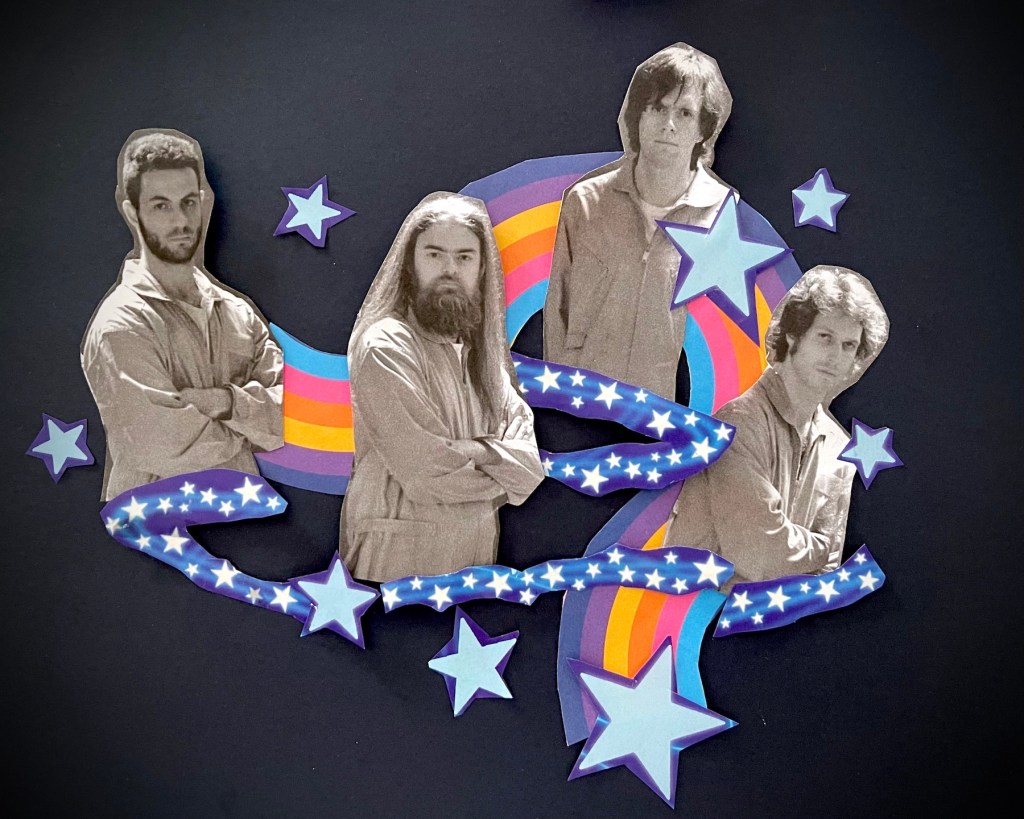
Handmade collage by B

With their third album Look Familiar, The Green Child has grown into a fully realised band. Originally the recording project of Raven Mahon (Grass Widow, Rocky) and Mikey Young (Eddy Current Suppression Ring, Total Control), the group now includes Shaun Gionis (Boomgates) on drums and Alex Macfarlane (Hobbies Galore, Faceless Burial) on guitar and synths. Writing and demoing the album together in Naarm/Melbourne, the quartet found new energy in playing as a unit, shaping a more dynamic, expansive sound while staying true to their refined psychedelic pop.

Look Familiar is an album alive with shifting textures and unexpected turns, its lustrous sound blending propulsive rhythms with hazy, cinematic layers to create a sense of movement through both time and memory. With shimmering synths, reverberant guitars, and Raven Mahon’s ethereal vocals threading through each track, The Green Child has crafted a work that feels both intimate and transcendent. Lyrically, it is rich with shifting realities and personal histories, with Raven incorporating vignettes of family memories alongside reflections on world events. The album’s artwork, painted by her mother in the early ’90s, further ties into this theme of past and present converging.

Gimmie recently spoke with Raven and Mikey about the stories behind Look Familiar.

We’re really excited about your album—it was one of our favourite albums of last year (2024). We love music that is unique, does its own thing, and incorporates lots of different elements, or when an artist takes influences and puts a new twist on them.

RAVEN: Yeah, I feel the same. You always have your influences—whether you’re conscious of them or not—they make their way into the songwriting. It’s always kind of there. But then, being able to add something… or maybe just the process of writing in the moment, responding to whatever you’re feeling at the time, that shapes the song. It might have some references or a particular style, but it just becomes its own thing anyway.

It’s cool to see bands that have something particular to say. And then that just becomes a vehicle for it—like a familiar genre or something. Because you can tell they’re in it, that they’ve put themselves into it. That’s always going to be unique.

A word thought that came to mind when listening to your album was ‘dreamlike” and there’s a warmth too. There’s such like a brightness to it. Listening to it is almost like getting a hug from a friend you haven’t seen in ages. Your album generates beautiful feelings for the listener. It has a familiarity to it. 

RAVEN: Thank you.

MIKEY: Yeah. I wonder if making music with more people, rather than just ourselves, makes it sound more inviting or warm. I feel like the first record doesn’t sound very warm at all—I could be wrong. It just sounds kind of cold to me. But having more people around probably lifts it up a little.

When you made the first Green Child album, you were both living in two different places, right? Do you think the distance might have made it feel that way?

MIKEY: Possibly. Although, weirdly, it hasn’t really changed how we write music. The first thing we ever did, we were in the same room, which ended up being a track on the first album. But I do find that, initially, it was a bit cold. I feel like the first record doesn’t sound very warm at all. I could be wrong— it just sounds cold to me. I found that I worked better if I was alone, trying to figure out ideas. I get kind of claustrophobic if people are around when I’m trying to figure out stuff, so that distance was helpful.

With the second one, when we lived together— weirdly, it was kind of the same. I’d be like, ‘You go in the other room. I’m just going to do this.’ And there wasn’t much interaction about ideas. It wasn’t really until this one, Raven wrote a lot more of the music as well. We left things really open for Shauny and Alex to be involved in. That kind of collaboration—that lack of distance has helped make it more uplifting, maybe.

RAVEN: I feel like the sentiment has always been there, even early on, without explicitly talking about constructing the songs together or what the parts would be like. There’s still something in the melodies or the instrumental ideas you would send—they’d be kind of open, maybe not structured yet, but just melodies and beats, the makings of a song. It’s funny that we work this way, but I feel like I do better by listening first and coming up with vocal melodies and then letting the lyrics follow. I like doing that on my own, but I’m sure they were still informed by the feeling of the songs and the ideas you were sending. There’s still some kind of subconscious communication about it in It’s like evolution.

MIKEY: Yeah.

RAVEN:I feel like there’s not really a conscious decision to make a particular kind of song or a particular kind of sound. It just ends up being what it is.

What we end up making together sounds softer, has a warmth to it, but the subject matter isn’t always warm. There’s a contradiction in there somewhere. 

I noticed that. For example, ‘Wow Factor’ is talking about double standards of the international justice system, but then also caring for and protecting those that are close to you. 

RAVEN: Yeah, it was specifically about Gaza and Palestine, and feeling horrified by it. And also thinking about what we’re able to do to prevent it—or to react to it, or to hold the government that is supposed to represent us, accountable for their participation in it—it’s really frustrating. It’s hard to be on the outside, just watching it happen.

Watching the systems at play—the way the veil falls away, revealing how governments handle international relations—has been striking. It’s been a stark reminder of how power is held and exercised, and how little power it can feel like the public has to do something about it.

That was part of it, as you mentioned, the other side—caring for the community in whatever ways we can, looking out for each other, and the exercise of self-protection. There’s a lot of feelings and reactions that end up coming out in the lyrics. They’re not always literal or narrative, but they contain those feelings—the impulse to react, to say something, to do something, to feel something and express it. Because, It’s been a pretty horrible thing to witness.

I’ve been writing to register to vote—I’m still an American citizen. I was writing to representatives in California and writing to Biden, this kind of regular correspondence, and feeling like the messages are increasingly desperate. You feel like you’re just saying that into the ether, that it’s not landing anywhere, but it feels like one possibility for a way you can kind of exercise your power as a constituent. In the end, you do feel pretty helpless when it feels like there’s a lot that’s out of your hands.

When the world feels overwhelming and life gets really hard, is there anything that helps you get through those moments?

MIKEY: It’s probably not the right attitude, but I personally probably just get smaller and concentrate on work, making music, and the people I know. Otherwise, some things seem too crushing, and I can’t read the news anymore. I’ve been in a bit of that state lately. 

RAVEN: It’s been a strange year and a half. I’ve just joined Instagram, which is something I was feeling pretty conflicted about—or more just uninterested in. And then, at a certain point, I felt like, for my work, maybe I should try it. I had a vague curiosity about what it would actually feel like to join, to have an account and to participate.

And so I did set up an account, and I posted a few work-related things. Then October 7 happened, and it wasn’t long after I’d set it up, I realised how incredibly useful it is for sharing things you wouldn’t see in other places.

Since that point, I’ve continued to feel really conflicted about using it, especially now that Mark Zuckerberg has taken away fact-checking—which things can only get worse.

Yeah, it’s pretty wild.

RAVEN: It is really wild—and really dangerous. But I still find that it’s really useful for learning about what other people are doing or just hearing from others around all the issues that I care about or want to stay informed about.

Even though there’s a danger in being confronted with so much in such a concentrated format, I also recognise how a community can exist there. You can feel not as alone in the frustrations, the sadness, or whatever it is that these world events and the state of the world make you feel. There’s something comforting about seeing the activity of people who are also reacting to it.

So, I don’t really want my answer to be that I go on Instagram when I feel down—but it does create some kind of balance, or ballast, to it. Music really helps too—just playing music. I was feeling down today, and we ran through some songs because we have a show coming up. And it was making me feel nice to play.

Listening to music changes your channel a bit. Playing, because it’s such a physical act, you have to focus on it. That physical engagement is part of what can be comforting.

Your album is called Look Familiar. That’s the name of one of the songs on the album, too. Why did you choose that for an album title? Does it tie to a theme?

RAVEN: There was no theme to the album that we set out to follow, but when we were coming up with song titles—because we’re not very good at that—we’d just be naming them at the last minute, and sometimes they’re not really connected to the songs at all. But I was looking at some subject lines from emails that my mom had sent me.

We’re really close. I communicate with her a lot. She lives by herself out in the desert in New Mexico. She’s maybe from a generation that uses technology in her own way, so often she’ll put the entire body of a message in the subject, and there just won’t be anything in the email itself. Some of her subjects were really funny or just funny imagery.

Even though “look familiar” is not necessarily an interesting couple of words together, that was on the list of things, so we went from there. Then we ended up using one of her paintings for the album art. Everything converged and made sense—not because we had intended to make that happen, but it just sort of did in the end.

One of the people in the painting is my dad. She went back to school and studied art when they divorced when I was young. This was a painting that she did post-divorce. It was kind of loaded. It’s a way, I think, for me to bring the past and other people—family members in other places—into something that I’m doing now because I live so far away from them.

‘RTNW’ PAINTING BY JANE MAHON, 1991 

That’s really beautiful. Another song, ‘The Lawn’ has a connection to one of your family members as well.

RAVEN: Yeah, that’s my paternal grandmother. 

She lived in a commune?

RAVEN: A desert community out on the east side of the San Gabriel Mountains in LA, in Southern California. In the ’50s, they started selling parcels of land, thinking—imagining—it was going to be like Palm Springs or something, but it never really came to fruition.

She lived in this small community that’s half-built and right on the edge of things. That land, 40 years before she moved there, was a socialist commune, and there are still remnants of it. There’s a kiln—this stone structure on the dirt road that her house was on—and a couple of other things dotted around.

The commune didn’t survive. The other parts of the community didn’t want the socialists taking hold there, so they did some pretty nasty things, like turning off their water—kind of sabotaging their water rights—so that their orchards wouldn’t flourish and that sort of thing.

I spent a lot of time there when I was a kid and would go down to visit her in my 20s. So, a lot of that environment is lodged pretty deep in my subconscious.

Obviously, you moved to Australia because you found love. You met at a gig you played together, right? 

RAVEN: Yeah!

MIKEY: It was the last Grass Widow show, and Total Control played the show in Oakland in 2013. We had a mutual friend who was playing in Total Control at the time, David West, who does Rat Columns. He was living in San Francisco at the time, and he kind of set that up in a weird way.

That’s so lovely. Mikey, you’ve talked about the record, and said it felt like a step forward for you and it felt real fresh and new. What kind of things did you guys try on the record that made it fresh for you? 

MIKEY: It maintained a freshness for me because I backed away and let other people in a little more. 

Did that feel hard for you? 

MIKEY: No, not at all. Any record I’m involved in, by the time I get to the end of it, I’m pretty conflicted about the damn thing anyway, and it’s hard for me to enjoy. It takes time for me to come out the other side feeling joyous about it.

Usually, it takes some nice words from people like yourself to realise it’s okay. I think leaving even more space helps. If you’ve got people like Alex to make music with—he’s so talented and thinks so hard about what he’s going to do in a given space—you want to allow him as much room as he needs. That definitely influenced how I went about making the tunes. Getting to the end and hearing what he and Shauny decided to do on the songs makes it much easier for me to enjoy. If it were just me and Raven, my lulls would be even worse.

When you’ve got other people bringing their own ideas, you can listen back and go, ‘Ah, that’s so sick.’ So no, I don’t think it was hard. There were probably moments where it was hard to step back because I’ve been a bit of a control freak in a lot of my bands, maybe out of necessity. But once I got over it, I think it’s better, and it’ll be better in the long run.

For a good while, we even thought about not calling it a Green Child record because it didn’t feel like a continuation of the other two records, but I’m glad we didn’t change the name in the end. It seems to fit.

RAVEN: Yeah, maybe they’re not as different as we think they are. But it’s just getting used to hearing other people, other people’s ideas too, like in the evolution of it.

I like the idea of a name also being able to contain different versions and different things, different records with different configurations. 

MIKEY: Yeah, like, even Total Control records, for instance. A lot of those records didn’t have the same lineup of people, or, the songwriters changed over time. I like a band being able to be a bit malleable.

There’s been a Total Control record in the works for a little while now, hasn’t there?

MIKEY: There’s a kind-of-finished Total Control record sitting in limbo. I’m not sure—it got put on hold. By the time we finished it, people had moved interstate, and we weren’t really an active band anymore. So the personal motivation to get it over the line has dropped off. Maybe it’ll just disappear. Who knows?

Was it fun making it?

MIKEY: Yeah, that’s the weird thing. I realised when I finished it that I cared more about that than releasing it. It was interesting. I realised that with a lot of music—it made me think about a lot of the music I make—and how it’s often not about releasing it or turning it into a product. Sometimes, it’s just about taking all these three-quarter-finished things on my computer and turning them into something I’m done with. And, it allows my mind to start other things. It was fun making it. It was fun to finish it, and maybe that’s all I needed from it. Not everything has to come out.

Totally. I do a lot of writing that never ends up coming out but doing it helped me with whatever was happening in my life or it documents how I was thinking or feeling. Also, though, with the interviews/conversations that I do for Gimmie, I find it’s about the connection with others.

MIKEY: Yeah, totally. Nearly all my friends seem to be the people I’m in bands with. Most of my social engagements throughout the week are with them. The joy of just coming up with something—even if that record never came out—was worth it, I think. Just doing it for so long made it worthwhile.

One of the highlights for me on the album is the song ‘Feet Are Rebels’. I love the guitar line of that song. It just soars and keeps climbing and climbing. 

MIKEY: That would be Alex. He did write to us afterward and was like, ‘That was the first thing I came up with, and I’m kind of embarrassed by it.’ He thought it was just a bit over the top—just ridiculous—for that song. I was like, ‘Man, that’s staying.’ But I guess that one almost didn’t make the album because it’s not one of Raven’s favs.

Really?

RAVEN: It went through a few evolutions. Like Mikey was saying, when you’re so involved in the mixing and recording, you kind of lose perspective. I was like, ‘What is this song? I don’t know.’ Then Alex came in and was like, ‘Sounds like The Cars,’ or at least he heard The Cars in it. So I’m glad he ran with that—I feel like that made sense to me.

But, I could never quite shake the feeling of questioning whether it was any good, you know? Like, was it worth being on the record or worth playing? I mean, I could be convinced, but it’s just one that I lost perspective on.

I understand that half the ideas were from you, Raven, and the other half from Mikey. What were some of your personal influences while making it? It was made over four years, right?

MIKEY: God, I don’t know how… Yeah, I guess some of the initial ideas are probably four years old—who knows? We probably only put a conscious effort into making a record over the last year or so. 

RAVEN: The ideas are probably drifting around for a while.

MIKEY: I have no idea about influences anymore. There are certain songs that feel like obvious rip-offs to me—like, there’s a very specific idea where I wanted to rip-off. I don’t know if you picked up on any of that.

There’s a demo version that doesn’t sound like this, but as soon as we started jamming ‘Easy Window’ it basically turned into Tusk by Fleetwood Mac straight away. I was like, ‘Let’s just roll with that—lean hard in that direction and be shameless about it.’ Because, you know, sometimes you do try to rip something off. But because we’re our idiot selves, it’s not gonna come out sounding like the intended object.

RAVEN: Someone called it though. Was it Rory? 

MIKEY: Yeah. A few people have called that one out.

RAVEN: It’s the drums. As far as direct influences, I feel like it’s all kind of swirling around—whatever comes out, and then having other people with their own ‘soup’ of inspiration ends up being something completely different anyway. Everyone’s got their own reference points.

I do feel like this record sounds particularly different because of everything Alex brings to it. He has these certain notes or combinations of notes that he uses, that give it this kind of medieval frog bent [laughs]. I love that he just goes for it too.It feels really free.

He doesn’t make it sound indulgent. It’s just like, this is what needs to happen in this particular place. When you open up a songwriting process to other people, they come back with ideas you wouldn’t have thought of. Everything Alex has done is not something I would have thought of, but that’s the nice thing about collaborating.

MIKEY: Yeah.What I was trying to say before is that the influences are more secondary. Like, you start a song without an influence, and then you realise there’s something in it—like The Cars or something. Then, I start to go down that path.

Like, the ballad—which I can’t remember the name of—did not start out sounding like a Serge Gainsbourg song. But as soon as it started, I was like, ‘Ah, I said to Shawny, just play drums like that Serge Gainsbourg track.’

It’s not like I wake up and think, ‘I’m going to write a song that sounds like Serge Gainsbourg,’ but it’s more like, ‘Oh, I accidentally started something that sounds like it could or should go in that direction.’

Although that’s not true. There’s one, ‘The Lawn.’You know, New Musik? ‘The Lawn’ was made totally trying to write a New Musik-type song.

Do each of you have a particular song on the album that you’re really happy with?

RAVEN: I really like that ‘The Lawn’ New Musik-type song. I feel like it’s challenging to play, but when we get it right, I really think I like that one a lot. But then the other one, called ‘Private Laugh,’ is sort of like that idea initially came to us a few years ago, it had just been drifting around and then came together right at the end of the process of getting all of the album songs together.

It came up pretty quickly, and I didn’t really think too much of it. It just felt like a good addition to the album, and maybe it sounded different from the other songs. But now that we’ve been playing it and practicing to play it live on a show, that’s becoming my favourite song to play. It feels like like the recorded version. Although, I don’t know, I don’t go back and listen to any of them. There are the songs that you’re writing, and then there are the songs that you’re recording and mixing, and then they’re out. This is the first time we’ve ever played any of these songs live, and I’m pretty nervous about it, actually. 

We’re excited to see it live! We’ll be at Jerkfest this year. 

MIKEY: Cool. 

Jerkfest is always a highlight of our year! We get to see so many cool bands and people that we love. We also feel so inspired by it and everyone. I chatted with Alex a few weeks back and he was telling me that you guys have been practicing. How’s it all going? 

MIKEY: It’s going good. Alex is good to have in it because he’s not a ‘half-baked, it should be right on the night’ kind of person. He’s more like, ‘We must practice this until there’s no chance of anything falling apart.’ We probably need a bit of that kind of whipping into gear. We’re getting there.

We’ve got two practices a week for the next three weeks, so I think we’re looking good. It’s been funny, I look forward to playing, but I also look forward to getting these over with so we can write new tunes again [laughs].

What’s something that’s made you a better songwriter over the years?

MIKEY: I would never call myself a songwriter because I can’t write lyrics. I can write riffs and stuff. Sometimes I can get my ideas from A to B a little better on a production level. Like, I used to have an idea, and then what I wanted to sound like at the end—I couldn’t get to because I didn’t have the skill to get to that point. Maybe that’s just gotten a little easier.

RAVEN: I feel like if I am any better at it now than I was like 10 years ago, it’s just because of watching you [Mikey] mix things and write things for other projects, and even just the way that you’ve approached these songs. There’s maybe something structural… I don’t know what it is exactly, but I do feel like I’ve learned a lot. Some of it is probably technical—understanding the program and what the possibilities are, which I still feel like I only understand a tiny smidgen of what’s possible.

But being able to navigate it a little bit easier helps fully form a song, or at least I have more elements than like, ‘I’ve got this idea in my head.’ Because I feel like, as soon as I have an idea, it’s just gone. So if I can’t get it down in some form, then that’s it.

MIKEY: My problem is I’ve ran out of good riffs.

RAVEN: The riffs run dry. 

MIKEY: It gets harder and harder. 

Because you do mix and master other people’s music so extensively, Mikey, and there’s a lot of technical side to how you work, and then obviously making music yourself would be more emotional and intuitive—do you have to switch that technical side off when you’re playing?

MIKEY: Yeah, that’s easy. The feeling of working on people’s music during the day most of the time does not feel creative at all. It’s a totally different mindset, and it doesn’t interfere with my feelings about making music or my desire to make music.

Usually, the first part of when I’m making music is not very technological at all. It’s scrapping together an idea as quickly as I can. I still think I’m a pretty scrappy musician. I don’t think much has changed over time. Usually, it’s just finding new instruments or programs to kind of feel inspired about.

For me, there’s usually a point where I’m finding something new—be it a new instrument that I can’t play very well or a new program. There’s a point where I get good enough to make something, but I’m still ridiculously naive at that thing. And there’s a window there where most of my favourite ideas come from because you can do these simple things. Now, there are certain riffs I wouldn’t write on a guitar that I would have when I was 15, because I’m like, ‘You can’t write that.’ But if you’ve got something new that you don’t quite know what you’re doing, you can go back to that mindset and be a teenager again. For me, it’s usually finding that window where something’s still raw and fun and stupid.

I love that! 

MIKEY: It’s a fun mindset to be in. On the other hand, I really respect people when they craft and can write a perfect pop song. Alex is a good example of someone that to my eyes, he really tries to do something properly all the time. 

I love both ways.

MIKEY: Yeah, that’s a good thing to be open. 

What’s something that you’ve been really invested in lately?

MIKEY: Because I’m working on modern music a lot, a lot of my spare time is looking up music for the compilations that I’ve done on the side. Often the thrill of the chase and finding things with that whole process is pretty inspiring to me.

There’s not really much in my life that’s outside of music. We watch a lot of films.

Anything you’ve found lately that you’ve really loved? 

MIKEY: There’s been a bunch of stuff, and that’s going to be on another comp that should be out next year. I find stuff I like all the time. When it’s late at night and you stumble across something that is just mind-altering, it’s like, ‘Oh my god, this is like my favourite song ever for now.’ I don’t find that as easily as I get older, so when it does happen and it’s that strong, it’s cool! It feels the same as it did when I was 10 years old.

Can you remember the first song you were obsessed with when you were young? 

MIKEY: From two, I was mega into Rod Stewart and KISS. In 1979, it was ‘I Was Made For Loving You’ and a few songs off the Dynasty album. There was also a Rod Stewart album that I had the poster for on the wall. At two or three years old, they’re the only two cassettes I had. I was probably just obsessed about every detail, as much as you can be when you’re three years old and just trying to understand what music is.

What about you Raven?

RAVEN: I was thinking about my dad’s record collection and INXS, and about the albums that first made it over into America and were big. It would be something that I would have heard in there, probably the Beatles’ White Album or something. But something that got me personally…

I feel like there’s a moment when you— not when you feel like you could make that music, but that you realise that it makes you feel something really strong. Whether you make music or you’re just listening to music and a fan of it, there’s a particular moment where it affects your whole world or transforms your whole perspective.

I don’t know what that first moment was of feeling like I could make music. It probably came way later, actually. Well, I was in band, I played saxophone when I was seven, and I feel like that was my first experience. But it wasn’t really like what I listened to and then what I played. It was like what we played in the school band versus, you know, the things that I listened to—my Mariah Carey tape that just made me feel really good.

Slowly those things start to come together and, you know, you realise you can play and it gives you a similar feeling to listening to things that you love.

MIKEY: I definitely didn’t hear KISS or Rod Stewart and think I can do this. The idea of being inspired directly to make music, I’m sure that can’t wait later on. I have no idea how.

RAVEN: I do remember being in a school band at around 11, playing some kind of John Williams soundtrack, like Jurassic Park or something, which I think we did play, and feeling genuinely moved by it, and feeling part of something. I feel like some people talk about their early days, like singing in church or playing an instrument in a church band, and how it was their first experience of playing something and feeling like part of a whole. Playing Jurassic Park in sixth grade was probably that moment for me [laughs].

That’s cool. It’s funny that you mentioned the Jurassic Park theme, when Jhonny would play solo shows he’d start of his set with that and I’d be standing out in the crowd and I’d watch everyone around me hear it and get so stoked on it. It’s a pretty magical piece of music.

RAVEN: That’s so great.

I love seeing music move people and being in a space where you can share that. During the pandemic, it was the first time I hadn’t been to gigs for a prolonged period since I started going to them as a teen. When I started going back to shows, I realised how much I missed it, and that there’s nothing that gives me the same feeling.

MIKEY: Totally. 

RAVEN: Yeah, I feel really lucky to have experienced what I have. Whatever happens in the future, just to have had the experience of playing and touring— that really particular thing. Whether you’re in the audience or playing music on stage, there’s nothing else like it, really. 

MIKEY: Especially small shows. It’s the visceral thrill of being face to face with someone, whether you’re playing or watching. It’s something I don’t think I’ve experienced in any other fashion.

I’m forever fascinated by the mysteries of creating and music and connecting and sharing. 

RAVEN: I think about how much work it takes. We’ve done a tiny bit of work with our music for film and a little for TV, and it’s given me some insight into how people make a film—how organised you have to be, how many layers there are, how many people need to be involved, and how long the whole process is. There’s this will, this intention to create something, and an idea of what that is, what someone wants to communicate, or what a group of people want to communicate.

And I feel like, on a smaller scale with music, all of that is channeled into this media.All this work has gone into it— the ideas, the intentions, the imagery, the lyricism… everything. As derivative as some music is, or fits into defined genres, there’s still a lot that goes into it, especially in bands we listen to. I’m not saying that pop music doesn’t have something behind it, but I also feel there’s something special about the intention behind the music created in the spaces we’re in. Small shows, small runs of records—it’s ambition is to be made, to create, and to express something. And that’s what you end up hearing, or seeing, or feeling when you listen to it.

Last question: In the past year (2024), what’s something that’s brought you a lot of joy?

MIKEY: Hmmm, joy?

RAVEN: It’s been a hard year, honestly. But I feel really fortunate to be able to make music. In my other life, my job is making furniture. I share a workshop with a handful of people, and we’ve got this collective thing that’s grown. It feels like I’m really fortunate to have both the band space and this work space. I mean, it’s work; people hire me and make furniture. But there’s a lot of creativity, ideas, and information and experience shared amongst the people I work around. I wouldn’t have called it “joy” but it is something that really makes me happy, and I’m really grateful for it. I’ve spent so much energy on that and into the music and I feel like both of those things feel affirming and are positive places to be channeling energy at the moment. So, I think that would be it for me—just feeling happy about those opportunities.

MIKEY: It always comes back to music, and making music with people. There’s lots of ups and downs with, so the word “joy” is probably, maybe it’s not as straightforward as that. But I was thinking learning a new instrument over the last year has brought me a lot of frustration, but a lot of joy.

That’s the instrument I can see there beside you?

MIKEY: Yeah, the double bass. It’s going to take me about 10 frickin’ years to get  anywhere with it [laughs]. Also, I’ve been jamming a lot. Since we moved back to the city from the coast, over the last year, Eddy Current started jamming every week again—just because. Once we started working on the album and the idea of playing live, Green Child started jamming every week too.

We also started jamming with Shaun, our drummer, who’s one of our best friends. We used to live with him down the coast, but once we moved away, there was a period where we didn’t see each other as much. But making these regular times for jamming was key. It’s not just like, ‘This is when we’re gonna practice,’ it’s also the time I get to hang out with my friends and family.

I’ve got another band, Kissland, with my buddy Max, and just having these moments—because if I don’t have bands, sometimes months can go by without seeing some of my best friends—but being in a band forces that opportunity to hang out and make stuff every week. It definitely has its frustrating times, but overall, it’s bringing a lot of joy.

Is there a new Eddy Current record in the works?

MIKEY: Not really. We decided to start jamming about a year ago, or maybe even a year and because we jam in here, we record every week, and we’ve written a heap of songs. But it’s almost just this insular thing that we do for ourselves, and we don’t really talk about putting out an album or anything. It’s just sitting on all these stupid recordings.

I think that’s what has made it so much fun: because we don’t really talk about the outside world so much. For now, we’re just happy being that. 

I love that you said that ‘we just jam because’!

MIKEY: it’s just a good time for everyone. People’s jobs have changed, or their kids have gotten old enough where they’ve got spare time. So, it’s just a good time for everyone.

I don’t have Total Control playing anymore. We’ve got this space that we can jam and leave stuff set up. It’s just a good feeling for all of us to do it every week.

What both of you and Raven are doing, you’re creating things and you’re connecting with people that you love. And that’s the base human things that you need to. For me, I know that’s what I need to have a happy life. Lots of shit could be happening in my life, but if I have the ability to have those two things on a pretty regular basis, I feel like I’m like the richest person in the whole world. 

RAVEN: Yeah!

MIKEY: Yeah, totally. 

RAVEN: Well put.

MIKEY: I do find music baking also really frustrating sometimes. Not just with other people, but by myself. I can have extreme lows when I feel like I’m just making crap. I don’t really think about how music makes me happy. It’s more like, it just doesn’t even seem like a choice. It’s what I do and have always done without even thinking about why I’m doing it. 

You’re compelled. It’s like breathing, basically, and if you don’t do it, you’ll die. 

MIKEY: Totally. It’s not like you wake up one morning and go, ‘Damn, I love breathing!’ [laughs]. That’s it—you just do it.

LISTEN/BUY Look Familiar via Hobbies Galore (AUS) and Upset The Rhythm (UK).

Shady Nasty: ‘Making music keeps you sane.’

Original photo: @kataomoi__ / handmade collage by B

Gimmie have been bumpin’ Shady Nasty’s debut album non-stop while cruisin’ through the Gold Coast suburbs ever since we got our hands on it! But TREK isn’t just a collection of bangers or only one of the coolest albums of 2025 so far—it’s a reflection on personal growth, hard work, and the pursuit of one’s dreams, deeply rooted in their beloved city, Sydney. 

For Kevin Stathis (vocals, guitar), the post-punk-meets-hip-hop album with electronic elements draws on band’s day-to-day life. ‘My dad has done solo excavation his whole life, like proper blood, sweat, and tears stuff,’ he shares. ‘About nine years ago, he was like, ‘Fuck it, I’m going to treat myself,’ and bought a Lexus,’ which to his dad wasn’t just a car (it appears on TREK’s cover)—it was a symbol of everything he’d achieved, coming to Australia as an immigrant with only $200 in his pocket.

For the band, TREK is the pursuit of their own dreams while sometimes feeling lost in the rush of life and disconnection, which we can all relate to. The tracks on TREK bubble with the energy of their suburban neighbourhoods and the everyday hustle of its people. In this in-depth conversation, Kevin, Haydn Green (bass), and Luca Watson (drums) open up to Gimmie about the making of TREK, working with The Presets’ Kim Moyes, their roots, and the balancing act of staying true to who they are while embracing change.

KEVIN: I’ve been working a lot. I’m a technician. I’m currently building speed cameras! 

Wow. That’s funny. 

KEVIN: Yeah. It’s very ironic considering my interests [laughs]. I only just started it so we’ll see how long it goes for. Hopefully I don’t get kicked out when people discover my true identity. 

[Laughter]

HAYDN: I’m a tennis coach. We were down there this morning, actually, taking photographs at the tennis courts. It’s an interesting job, I suppose— a little bit left field.

LUCA: I work for the University of Sydney in an air-conditioned office. I’m very email-based, from nine to five.

Why is music important to each of you? 

HAYDN: It’s one of those things, because we all played together in school. I suppose we had a little bit of a knack for it. If you’re told that at some point, you’re probably going to think, ‘Well, maybe I’m all right at this,’ and you follow it a little bit. 

LUCA: Like, ‘Yeah, I’m gifted.’ [laughs].

HAYDN: That’s right. It’s good for your brain too. 

LUCA: That’s not the fucking reason we do it though. 

HAYDN: For me, I would be playing music, even if I wasn’t doing the band. I think it could be a meditation of sorts. 

LUCA: Making music keeps you sane. We all do a lot of things that other people have to do in their lives, and it’s just this one thing where we can come together and do something that has no sort of pre-set expectation. We can do whatever we want.

KEVIN: It’s freedom to an extent.

Freedom—different forms of it—seems to be a big theme on your new album, TREK.

KEVIN: Yeah, it’s a good way to put it. 

LUCA: Most definitely. And, ironically, I am situated at—” [turns camera to show that he’s in a car park outside of Freedom Furniture].

[everyone laughs]

TREK is an interesting title for your debut album. How did you guys get to that? 

HAYDN: After absolutely spamming the group chat with options…

KEVIN: There was some bad ideas in there. 

HAYDN: It was just throwing words at the group chat. Does this word sound good?

KEVIN: One day, Luca was just like, ‘TREK,’ and we’re like, ‘Oh—’

LUCA: I was on the toilet at work. How good is that? Thinking about it, because we’d been talking about it so much. Trek is one of those words we use almost every day to describe things in our life. For example, you’re talking to your parents growing up, and they’re like, ‘Oh, you’ve got to go do X, Y, and Z.’ You might be like, ‘Uggh, trek.’ I told my parents about it, and the fact that they didn’t get it—that’s not a word from their generation. It’s very much ours, from our era in Sydney. 

HAYDN: You wouldn’t say, ‘That sounds extremely arduous.’

Did you all grow up in Sydney? 

HAYDN: Yep. We all went to the same school.

I think I read you were jazz musicians or is that a stretch?

LUCA:  The press release really gives us a little bit too much credit there. We all played jazz together. 

Did you have any other bands before this one? 

KEVIN: Nothing serious. This band, we’ve stuck together. I only do it cuz I like hanging out with these two.

When you first started the band, what kind of music were each of you listening to?

KEVIN: Sticky Fingers.. it’s been a long time since then. 

LUCA: It was such a wide range.

KEVIN: I remember you always were like, ‘Oh, you’ve got to listen to Ice Age. Ice Age is the best.’ I remember listening to it and being like, ‘This shit is trash.’ Now I’m like, ‘Yeah, it’s pretty good.’ I just didn’t understand. Because, me personally, I’ve played piano since I was a kid, so I guess I’m classically trained. It was just painful listening to this music where the guy couldn’t sing in tune, but now I get it.

LUCA: We had to convince Kevin. We had to get in the backend and change some of the plugins and the wires [laughs].

KEVIN: They had to rewire my brain.

I really love the album cover; whose car is that? 

KEVIN: My dad has done solo excavation his whole life, like proper blood, sweat, and tears stuff. About nine years ago, he was like, ‘Fuck it, I’m going to treat myself.’ And he bought that Lexus. He didn’t really drive it much, but it was kind of like a symbol of this guy who flew from Greece when he was 22 with like 200 bucks in his pocket—he literally came from nothing. And for him, having that kind of material possession was much more than just a material possession. It represents a lot of people in Sydney who are struggling, but they’re trying to achieve this dream. There’s a lot of mountains that one has to climb just generally. 

We’re all trying to chase this dream, too. It’s obviously a bit of a different dream from what my dad wanted to achieve, but it’s still, as the son of migrant parents, where I wouldn’t say I had a hard upbringing. They worked hard. They were able to provide. So, my dream is a bit different.

HAYDN: We were taking some press photos in my area the other day, and that photograph very much reminds me of it. Kevin’s in Campsie, I’m in Bexley, and that’s where we grew up. The image just looks like a photograph of suburbia around our parts—like the houses of that style. It’s very Aussie in a way. It has a temperature to that photo as well. It’s a real warm picture, and it reminds you of walking down the streets.

LUCA: The image represents the hard graft of everyday life. If a car is something you care about and it’s precious to you, it’s about putting in the work to keep it from falling to pieces. There’s a level of upkeep in that photo—like investing in the things you love.

The band’s name is borrowed from a drifting team, isn’t it?

KEVIN: Yeah, look, I regret the band name, but I was 18. 

LUCA: [Laughter].

Where did your love of modded cars come from? 

KEVIN: I was procrastinating during my HSC exams. I was bored and discovered drifting, and it’s been an obsession of mine ever since. It’s such a unique niche. To most people, it looks like the most boneheaded shit, but every car is so creative. They’re such an expression of their owner, and that’s what I like about it. They really stand out from the norm, and I gravitated toward that—because I don’t want to be like everyone else.

In the Shady Nasty song ‘Get Buff’ your mum’s voice can be heard talking about you getting a car.

KEVIN: I was going to buy a certain car, which I absolutely knew she would disapprove of, and I recorded her reaction. 

I feel like there’s a lot going on in both your music and the visual accompaniments to it. There’s a lot of meaning and thought behind it. Many of the songs seem to be a balance of the duality of life’s chaos and the search to find meaning in it. 

KEVIN: Nah, you’re giving us too much credit. 

HAYDN: It’s all bone-headed fun [laughs].

LUCA: We do put a lot of time and effort into it. It’s very considered—it’s not just like, ‘We wrote this mad song about our mad car, and our epic mates did a burnout. Hectic!

KEVIN: Nah, it is what we’re about [laughs].

LUCA: A lot of our work is about Sydney—what’s in our own backyard and how we process our day-to-day experiences, especially as people living in the 21st century with an iPhone. When you take all that in and try to make a music video, it comes from the small things we observe or overlook in daily life. We try to code them honestly through our own Harbour City experience, whether that’s using the words our friends use or simply acknowledging the environment around us—like right now, I’m sitting in a car park in front of Spotlight, Freedom, The Good Guys. The typefaces, the colours, the cars in front of me—this is what life actually looks like for a lot of people.

Music videos can sometimes feel detached from reality. Not to say ours don’t have VFX and layers, but they are born from a collective reality for people who live here. 

KEVIN: Inherently, we’ve always wanted to be as genuine and authentic as possible. I get the shits when I hear songs that clearly aren’t about real experiences the artist has done. So we put a lot of effort into that authenticity. Our lives aren’t that exciting most of the time, so we dig deep into certain moments to pull meaning from them. Maybe that’s why the lyrics and visuals turn out the way they do.

HAYDN: A lot of people write lyrics that lean into fantasy—big upping themselves. For us, though, it’s different. Take our track ‘Ibiza’ for example. It’s about living vicariously through other people’s lives, which is exciting in its own way. None of us have been to Ibiza, and that club scene isn’t our lifestyle, but it’s fascinating because so many regular people love that idea. 

LUCA: You see them at the gym, at Westfield—there’s this shared space.

KEVIN: That said, TREK as an album is much less about vicarious living. It’s all pretty grounded in our own lives.

I’ve been really obsessed with the song ‘Caredbrah’ since you dropped it in November last year. It felt like he song of the summer. The vibe and hook rules. Is the song a reflection on ambition and what it costs to make it?

KEVIN: Maybe, in a way, yeah. It’s inspired by the relationship between me and one of my closest mates. We live completely different lifestyles, yet whenever I see him, it’s just like, yo, let’s go. I find that really special, and I’m very fortunate to be mates with this guy—that’s kind of what Caredbrah’ is about.

The ambition part—yeah, I feel like I’m being extremely ambitious trying to play in a three-piece live band in 2025. And he is extremely supportive of it, despite knowing that heaps of people out there will never be able to make a living off doing that kind of stuff. But why not give it a red-hot crack?

I reckon you guys can do it! 

LUCA: That would be very cool if we could do that. If you could organise that for us, that would be great. 

[Laughter]

Do you have a favourite song from TREK

HAYDN: I like ‘A86’ the most. I like the idea of it. A lot of sampled music—particularly in hip hop—takes an older track, like a Motown song, and lifts a full bar from it.

KEVIN: Tell them how you did it!

HAYDN: I took four bars from our rehearsal and turned it into a sample. Then we took it to the studio and layered other elements over it. I started wondering—has anyone ever sampled themselves? It just seemed like an odd concept to me.

Kevin’s chant vocal on it—I really like it. It’s a great representation of what we can do. It’s traditional instruments, but with an electronic or hip-hop element that might surprise people. That combination is what makes it stand out.

That’s cool. I know that Randy the vocalist for 80s-90s Sydney hardcore punk band Massappeal took samples from the bands practices and used the ringing out parts of songs to make an electronic project called Wolf Shield.

HAYDN: Man, somebody’s onto it before me. I’m just stealing his ideas! [laughs].

What about you, Luca and Kevin? Which song do you really love on the record? 

KEVIN: My top two are probably ‘SCREWDRIVA’ and ‘I Don’t Want To Lose’ (‘I.D.W.T.L’)

‘SCREWDRIVA’ because I remember listening to the first mix Kim [Moyes] sent us in the car—it banged so hard. I played it over and over, like six times, on the way to work.

Then ‘I.D.W.T.L’—the demo was so different from what it sounds like now. It really became its own thing. I can’t say I enjoyed the process because it took forever—it was painful trying to work things out. But the end result is completely different from the original, and I think it’s beautiful what it became.

What was it originally? 

KEVIN: There were live drums and heavy guitars—it pumped a lot more. But the version of it now is probably the most laid-back song on the album. It was cool to see what it could become.

Lyrically, it’s again, about having ambition and knowing that it’s a a difficult road to traverse but just doing it anyway.

I feel like that one seems a little more introspective. 

KEVIN: Yeah, I think so. I don’t know what I was thinking when I wrote it. 

LUCA: Your mum and your dad yelling at you.

KEVIN: Yeah, they roast me a lot for not having a stable career, but what are they going to do about it? 

[Laughter]

What’s ‘SCREWDRIVA’ about? 

KEVIN: The long stretches of driving when we play interstate shows. You just want to get there. So, you drive well above the speed limit and you have lots of energy drinks. And it’s about the tunnel vision that you get as you’re just barreling down the highway. You stop caring about getting done by speed cameras or crashing into kangaroos. That’s what it’s inspired by.

I still can’t believe you you’re building speed cameras!

KEVIN: Yeah, me too. I’m on my second week of the job. 

I found a mention online that said you were a stunt driver?

KEVIN: I did some burnouts for a short film. I’ve done stunt driving a couple of times, but it’s not actual stunts, it’s just moving a car into the frame stuff. It’s good fun. 

Luca, what song’s your favourite on TREK?

LUCA: ‘SCREWDRIVA’ or I actually really liked the song ‘Hesitance’, even though I hated it for so long.

KEVIN: That song wasn’t even going to be on the album

Really? That’s actually one of my favourites on the album. With each listen it grew and grew on me even more.

LUCA: That’s how I feel about it. It  leaves me wanting more, every time we did it. We couldn’t get it over the line. And even when we’d finished it, I still had this feeling of unease about it. I’d almost say I like the fact that it doesn’t perfectly scratch that itch for me. I like that it feels like there’s something slightly off, like it never quite makes it over the line. I don’t know why, but I just like that feeling in that particular song. It’s a grower [laughs].

KEVIN: We reworked that song multiple times in the studio with Kim. We tried so many different things. Even like the first mix, after we finished all the studio sessions. Luca you still hated it. I

HAYDN: It sounded flat. It didn’t have any aggression; it didn’t have the bite it probably needed. It was only able to get enough bite by mixing it differently—especially by that point, because we’d spent so much time on it. Turns out, that’s actually all it needed—some compression and mixing. That’s all it fucking needed.

What was it like working with Kim? How did he help shape the album? 

LUCA: Kim is a beast. Kim is fucking awesome—and a very intense guy. Much like us, he has strong reactions to things, and he will fight you tooth and nail to realise what he thinks is best for the song. So he makes you fight for what you want, which was honestly a really cool experience for me.

I liked that he was quite full-on and that you basically had to wrangle him if you wanted to get what you wanted. He really questions your resolve and challenges you on why you think something’s good. I love Kim—he’s a total eccentric. He’s a wonderfully talented and smart guy who can be quite difficult at times, but I have a lot of respect for him.

Kevin and Haydn, how do you feel about him? 

KEVIN: Luca put it perfectly. Although, Kim basically did whatever I wanted him to do, he fought with Luca and Haydn a lot more. 

HAYDN: Yeah, look, there were some fights. But he also brought something valuable to the process—he probably highlighted a mistake we often make. There’s a commercial element that’s lacking. That’s not to say things are worse if they have it, but it’s probably something we hadn’t considered exploring as much as he pushed us to. As for the album as a whole, that was definitely an aspect worth looking at.

He would say things like, ‘Yeah, that’s great—if you just don’t want to make any fucking money and fade into obscurity.’ [Laughs] It’s like, ‘Yeah, yeah… but I like it that way.’ And he’s like, ‘Yeah? Why? Why do you like it that way?’ And then I think, ‘Well… okay, maybe I’m not that attached to it.’

[Laughter]

When you first started the band, did you have an strong idea of what you wanted to sound like?

KEVIN: I probably want it to sound like Sticky Fingers, but then like my tastes have changed, they change monthly. So you just go with it and it’s what it is now, at least for me.

HAYDN: Yeah, I think so. It all changes, even when you’re playing or writing. But I think you can surprise yourself with how far your tastes reach. You might write something and think, ‘Oh, I don’t even know if I’d listened to that before,’ but then it grows on you—and it might inform your later writing as well. It’s all part of the full package of what we set out to do, and it just works.

We kept saying to each other, ‘We’ve got to write a banger. We have to write a banger! We have to write something that’s loud and hits.’ But when you try to put things in a box like that, it often doesn’t get you the result you want anyway. So it’s a pretty organic process in the end.

What’s the most fun you had while making the album?

KEVIN: We’ve been trying to write an album for five or six years. So every rehearsal, if we didn’t come up with something I thought was good, I—well, I think the boys can attest to this—I would just go silent and get really down. Literally, every week. So every rehearsal was a rollercoaster.

My favourite moments were when, for example, we came up with the main riff for ‘SCREWDRIVA’ and thought, ‘Fucking finally!’ It was just pure relief. It wasn’t even joy—it was just the relief of finally getting something, you know?

HAYDN: Yeah, that was memorable. I can still picture that moment when we started to play it. And we all just went, ‘Five!’ I mean, that was the quickest and easiest thing. But is it though, if it costs you months of work to stumble on something?

KEVIN: Bro, like years of work, stumbling!

HAYDN: Well, yeah. And then you come across it and think, ‘That was so easy and quick.’ But that one session, though—it just happened to come together in half an hour. But, you know, it’s years of work leading up to that. And when something like that happens, it’s a huge relief.

Has there been any moments where you thought you just might quit and not do the band? 

HAYDN: Yeah. 

KEVIN: Yeah, I think about that every second day. 

[Laughter]

HAYDN: We had a big chat after we came back from Europe. It wasn’t a particularly good tour, all things said and done. It was fun in a lot of ways, but I think we all came back from that thinking, ‘This is impossible.’ We have to get this done; we have to do an album. I think it was a moment where we had to talk ourselves into it, because you realise you can’t stay at this level forever. It’s just not feasible.

KEVIN: The fact that we all have other interests—like, I love cars, Haydn loves tennis, and Luca loves RuneScape—all these things pull you away from music. In a way, having those breaks is really good. Because if I tried to write music every day, I’d be like, ‘Nah, fuck that,’ I’d be out of here, you know? So, I think, yeah, the fact that it took so long was necessary too.

Was there any big challenge making TREK

LUCA: We all know when it works. 

KEVIN: Yeah! 

LUCA: We all collectively have this intuitive, like, fuck yes moment when it clicks. But we don’t often know, like, what we’re searching for or, like, how to get it there. It’s just grinding it out. And the grind can be brutal—weeks upon weeks. We go to the studio twice a week for over a year, four or five hours each session.

We have tons of music that, maybe to other people, yeah, might have some decent bits in it. But for us, it’s just not hitting that particular nail on the head. And when it does, it’s like—fucking holy shit. Thank Christ.

HAYDN: There’s also the amount of times we’ve said, That’s a great song—for another band. We’ve written something, even fleshed it out, and it takes listening back to it, maybe playing it the week after, to realise—yeah, the parts are good, but it’s not really us. It doesn’t suit the character.

And again, I’d probably listen to something like this, but does it fit the mould? No, probably not.

KEVIN: Like Luca said, we all know when something is right. So it’s basically just about keeping at it until something clicks. I wouldn’t recommend trying to write music this way, though—it’s pretty heavy.

LUCA: We strongly discourage anyone from making music. 

[Laughter]

How have each of you evolved since you started the band?

KEVIN: I don’t play guitar anymore.

LUCA: For you Kev, if I could make a comment on your evolution, you’ve embraced the things that make you, you a lot more. So for instance, you had a lot of like shame and embarrassment attached to your obsessions. 

KEVIN: Yeah, that’s ‘cause my parents were probably roasting me every day. So I held onto that, and I felt shame for being obsessed with cars for a long time. But now, I’m pretty open about it—I really like it. But yeah, that’s definitely changed.

There’s so many references to cars throughout your songs. 

KEVIN: Yeah, sorry about that [laughs].

I saw a mention of you guys being into Avicii and David Guetta? I happy your honest about your influences.

LUCA: The creative world—particularly music—so much of it is stylised. Not to say our work isn’t, but at the end of the day, when we’re not on stage or whatever, we’re scrolling reels at home, you know? We’re going on RuneScape like everyone else, looking at all this stuff, doing shit that we like.

I’m not really sure what I’m trying to say…

HAYDN: Well, it’s not embarrassing to admit that, because, you know, everyone else is scrolling reels at home. There’s no sense that we’re above that.

LUCA:  That’s the point that I’m making. 

HAYDN: Yeah. This extra highfalutin thing—it’s like, no, it’s the same. We’re all digesting the same meal of TikTok.

KEVIN: We’re professional doom-scrollers.

What have you been listening to lately? 

HAYDN: The Fontaines D.C. album was one of my most-played last year—both the artist and the song. And that album is fantastic. It’s just got depth to it. There are parallels to our music in there, and I think that’s part of it. It’s a bit of inspiration.

LUCA: That came out when we were recording, in the middle of recording, actually, and it very much affected the drum sound, on ‘SCREWDRIVA’. 

HAYDN: And ‘Hesitance’ . 

LUCA: I haven’t listened to anything but Top 40 that I’ve really loved in a bit. In my car, I’m either listening to Nova or I’m listening to Smooth FM. 

[Laughter]

LUCA: Whatever they’re playing, I’m into it. I like the Troye Sivan song. [Sings] ‘I feel the rush.’

KEVIN: Holy crap! Bro, you’re out of the band!

[Laughter]

How did you come to play your respective instruments? And why don’t you play guitar anymore Kev?

KEVIN: I just don’t play it at home. I would rather do anything, but play guitar by myself. So I literally, and I know this might sound weird, but like I only crack it out when I’m in rehearsal. I probably should play it more at home. But yeah, I’m too busy. 

Do you think that not playing so much adds to your playing style? Does it lend itself to keeping a freshness for you?

KEVIN: That would be a great justification for my laziness. Maybe, maybe. 

HAYDN: For me, I didn’t play bass until we started the band. I wasn’t very good at it.

KEVIN: Haydn was a guitarist.

HAYDN: Now, I’m okay. I don’t know if I loved it at first, but now I do. I think it sort of became like a new toy, you know? I still don’t, really sit down at home much to play bass. But it’s something where I’m like, how do I make this thing sound… you know, like a guitar?

I played piano before I picked up bass, and that influenced me. I was better at guitar, but I never got piano lessons. With bass, it was the same—I never really had lessons. So I sort of treat them similarly. In my head, I’m like, well, the bass doesn’t have to just be low notes. It definitely should be sometimes, but I like playing chords on it, mucking around with harmonics, that sort of thing. And it ends up sounding like… well, you just don’t usually think of bass that way.

I certainly didn’t think of it as an instrument with that much depth until I started playing. And then that made me want to seek it out more.

KEVIN: Most of the time, Haydn is the one who comes up with the main riffs—he’s usually the main meat and potatoes guy in the band. Luca and I just sprinkle stuff on top.

That didn’t used to be like that. It used to be, you’d think of the guitar as a traditional riff instrument. So it was on me—until Haydn came out of his box and started playing high notes, chords, and harmonics. And I was like, Damn, he’s way better at that than I am. I’ll let him do that.

Is there anything else you’d like to tell me?

LUCA: I’m an artistic genius [laughs].

KEVIN: All the videos are spearheaded and done by Luca. We do get help from our good friend Harry [Walsh], who’s in Behind You—he co-directs a few of the videos. But the most recent video was just Luca being like, ‘Oh, Kevin, I need you to come here at this time.’ Then I’d rock up, and he’d be completely hungover.

We’d film some stuff. I don’t know if you’ve seen the SCREWDRIVA’ video?

Yeah, it’s awesome!

KEVIN:  All the crazy 3D stuff?… Luca bought five GoPros off Amazon, and Haydn built a rig in his backyard to put them on. We went to a bunch of different servos, and Luca would be like, ‘Okay, Kevin, go walk into the servo.’ I hated it so much. But the shots came out pretty cool.

Luca, you come from a creative household growing up, right? Your dad is a photographer?

LUCA: Yeah, my dad’s an artist, and so is my mum. I think being around them from a very young age exposed me to pretty out-there stuff. Some of my parents’ favourite artists were often people who made things that hadn’t really been made before. I remember growing up listening to The Fall with Mark E. Smith, or watching Harmony Korine’s films.

That’s what influenced me. My dad, for his PhD, swam the Parramatta River as a performance piece. There’s a screenshot of it hanging in our house, and that’s stuck with me for a long time. It’s a big part of my aesthetic.

Rad! Last question; what’s something really awesome that’s happened to you in the last week? 

KEVIN: I bought a new bicycle today because me and my girlfriend have gotten really into cycling, as lame as that might sound. 

That’s not lame. That’s rules!

KEVIN: I love toys, you know, so got the drift car, got the mountain bike. That makes me happy. 

If you had a skateboard too, you’d have it all.

KEVIN: I’m too old for that. I’ll shatter my femur multiple times!

[Laughter]

HAYDN: I got nothing. Nothing awesome has happened to me this last week. 

LUCA: It’s all doom and gloom. I reckon the most awesome thing that’s happened has been honestly showing up at work. No one I work with—God bless them, I love all these people so much—really knows what my life is like outside of work. I love the feeling of walking into work and no one gives a fuck about what I’ve been doing. It’s so funny. All your friends and family are like, ‘Oh, great video, great song,’ but I walk into work and everyone’s just like, ‘Have you seen the email? Have you done it?’

[Laughter]

HAYDN: It may be a cop-out sort of response, but I had a similar realisation when I was doing a lesson. I was like, You know, it’s very different. I’m a different guy when I’m a tennis coach. I realised that this week as well, especially because we haven’t been working very much. I’ve been doing it all, you know, six days a week, and then suddenly, I’m not during this break, and we’re focusing on music. I go, Man, I turn into Coach Haydn. My voice changes, everything’s different. And I think it takes time away from work to realise that sometimes.

KEVIN: Haydn’s a weapon on Minecraft, by the way. 

HAYDN: Yeah, I’m pretty good at Minecraft,.

KEVIN: If he’s not doom-scrolling or playing tennis, he’s building crazy shit on Minecraft.

HAYDN: That’s absolutely true. I’m pretty good at woodworking too.  

LUCA: I’m amazing at the online MMORPG RuneScape. Thank you for asking good questions.

KEVIN: Yeah. Thanks for the lovely chat!

Find SHADY NASTY online HERE. Follow @shady_nasty. Listen/Buy TREK on bandcamp.

Kankawa Nagarra: ‘Be a contributor to the world rather than be someone who takes from the world.’

Original photo: Jhonny Russell / handmade collage by B

Kankawa Nagarra has inspired generations through her music, writing, and activism. To sit down with her for a yarn is a profound experience—one filled with laughter, truth-telling, and the generous sharing of wisdom. A Walmatjarri Elder from the Wangkatjungka community in the Kimberley region of Western Australia, she is a beacon of positivity. Known affectionately as the “Queen of the Bandaral Ngadu Delta,” Kankawa has dedicated her life to bridging worlds—whether as a translator, community leader, tour guide, or tireless advocate for Indigenous rights, community health, and environmental preservation. Her music, a blend of gospel, blues, and country, carries the spirit of her people and her Country.

As she recounts in her memoir, The Bauhinia Tree, Kankawa’s journey has been far from conventional. She survived a threat to her life at birth due to her mixed heritage, lived a traditional nomadic life in the Kimberley sandhills until the age of eight, and endured the injustices of the Stolen Generations. Taken from her family and sent to a mission, she was introduced to hymns and gospel music through the mission choir, later enduring the harsh realities of cattle station servitude. Kankawa rebelled against tradition—at the time, touching a wooden instrument was considered Men’s Business—to play the guitar, and in her 40s, she discovered the transformative power of the blues.

Kankawa’s contributions extend beyond music: she played a pivotal role in developing the Walmatjarri dictionary to preserve her language and toured globally alongside actor Hugh Jackman in a Broadway show. Her storytelling and songs celebrate thousands of years of culture while addressing modern challenges, from community health to substance abuse awareness. In 2024, she was awarded the prestigious Australian Music Prize (AMP) for her debut album, Wirlmarni, a record that beautifully captures the sounds of her Country and daily community life.

Gimmie spent time yarning with Kankawa in the car driving through Meanjin peak-hour traffic to get her to her show with Darren Hanlon on time, also while driving her back to their apartment, and sitting around the dinner-table after the show. She was very generous and kind sharing her story, knowledge, and laughs with us.

Previously, you’ve mentioned lyrical spirituality in relation to how you write your songs.

KANKAWA NAGARRA: Yes, that’s right. That’s the name I gave it. We Indigenous peoples have this thing called the lyrical spirituality, because most of it—you look at the Dreamtime and the Dreamtime stories, you know—there’s a lot about lyrics and forming lyrics and singing. Singing life or death to yourself. Because the Dreamtime story tells—in my Country—how Dreamtime people made up lyrics, in their minds. Suddenly, they either sing themselves to death or sing themselves to life. That is what I thought I described. That’s what we are. We are song people. Because—like I say to a lot of people—we are spiritual people.

I run this project—well, I’m starting to—I want to present it in retreats, where a lot of people—Westerners—come and learn about the spirituality of us. We Indigenous people have two components. We have this one to listen to [motions to ears/mind], and then there’s another ear here [motions to stomach/heart]. My project is called Ears of the Heart. 

Most people only got this listening here [motions to ears again]. But they don’t convey the story down here [motions to stomach again].

To listen with our heart, not our head, if we are to truly know Country. To have open minds, open hearts and an open will wherever we are.

KN: Yes! A lot of people ask me about the last referendum, how that happened. Had they listened more here [touches stomach] and conveyed the story it could have been different…Because of those fears—these people will steal your backyards—people had fear. But had they listened to the story more closely, they’d learn that the land owns us, we don’t own the land—we are only custodians of the land. How can we steal something that there’s no ownership of. We look after it. That’s right, we’re custodians only. There’s no fear. We would’ve had a different outcome had they listened more, you know? 

Totally. Being mob too, I got asked about it a lot by non-Indigenous people. The simplest way I could break it down for them was that we need to keep the conversation going. To do that, we need to vote yes. If we don’t and vote no, that will stop the conversation and make things harder for relations between Indigenous and non-Indigenous people in this country. We need the conversation to keep going and we need to work together, not against each other.

KN: Yes, that’s right. The conversation has to keep going so that people in this country can learn.

At the moment I work for my daughter, she runs a tour guide business in Fitzroy  Crossing. They hop on that bus of 20 people and they’re from all over the world and from all this country.That is what I say to them. I bring cross-cultural awareness and this listening and hearing the story. They nearly always talk about the failed referendum. I say to them, Australia listened only with these components, these ears here in the head, but they didn’t convey the story down here in the heart.

When you’re writing music it comes from there? 

KN: That’s right. That’s someone here from the spirit, from here [motions to stomach]. I have to listen to the stories. I’m thinking of writing a few more since I joined, this little record label [Flippin Yeah/Mississippi Records] with Darren [Hanlon]. There will be lots more, I want to write more songs and create another album. 

You sing in in Walmatjarri, other traditional languages of your family, Kimberley Creole and English.

KW: It doesn’t matter anymore, which way I switch, English or my language. When I was younger, you grew up with your traditional songs and dances, like when people put out ceremony and all that.

What is one of your first musical memories?

KN: Western music came when I was working, because I heard Slim Dusty and all of those country greats. That’s when I began to be quite interested in the Western music, and was all about the instruments that they played then, you know, like the guitar. But then there’s the music, the old music, the corroboree, dances and all that, songs—that’s what you’ve grown up with, with all of the instruments they play and how people play it in the east part of us, the territory and all those other places. But my desert people we were only used to tapping the boomerang and the null nulla for instruments.

I know that you really liked Buddy Holly! 

KN: Buddy Holly, yes, oh dear me [laughs]. After I started listening to country and western, then rock and roll came on the scene in the ’50s and ’60s, and then I started doing a bit of rock and roll. I even mimicked some of the songs of Buddy Holly.

Photo: Jhonny Russell

But you didn’t really like Elvis, right? 

KN: [Laughs] No, not much, yeah. Only Cliff Richard and Buddy Holly, and then I discovered the blues afterwards. I thought, this is more like me. The blues, it’s very repetitive. Many songs are very soulful and heartfelt. More story, more of what Black people suffered over there [USA]. You related to it more.

I understand that when you first wanted to start playing guitar you weren’t allowed to because it is made out of wood and that was Men’s Business, and it was forbidden for a woman to go near something like that.  

KN: Yeah, that’s right, a cultural thing. Yes.

I’m glad you broke the rules and started playing guitar. 

KN: It’s just something I wanted to do so much. I love it very much. I’m going to make music, I don’t care who tells me anything [laughs].

Your first guitar was made from a tea box?

KN: Yeah. There was a friend of mine, he was my uncle. He was a blind man. We were working on this sheep station. We get together and he’d tell me that we’re gonna build this guitar. He told em to go and get us a tea box, nails, and copper wires. It’s quite funny [laughs]. And he made the tune himself with his mouth like ‘da da duh da da’ [laughs]. But later on when he really got a hold of a guitar, he didn’t learn to play. 

One of my songs is a very sad song for my uncle who removed from my family from the desert there. They were the last remaining people who roamed the desert in Western Australia. But the government took them, placed them in communities. Most of them have passed away, and there’s only one or two people left. I sing this song ‘Pain O Pain’ it’s such a sad story. That’s the one I had a struggle with it when I first wrote it. I was still doing tour of the desert at the time with another music group called Desert Feet. We went to this place where all those old people were taken from the desert and put there. And I started writing this whole idea of music. I had a hard time trying to, and thought, should I ever sing this song? I kept crying a little, being emotional. There’s another song that I was telling them, the band, I have written it, but I’m having a hard time trying to sing it now. It’s a story of the suicide of my grandson. 

I am so sorry for your loss, Kankawa. That’s no good. That would be hard for everyone.

KN: Very hard. The mother is still suffering. He was beautiful, he was a musician, he played bass for his brother’s reggae band. 

That’s so wonderful he played music too. What songs, that you play, bring you a joy? 

KN: I’ll do one tonight it’s not a very good story though, it’s about land being taken away by the mining company in Western Australia. The iron ore. It is ‘Train Train’. I try to get people to do a conga line, so at least they can sing with it and do some dancing and that gives joy. I’m glad the little children do it. It’s so great just to see so many generations of people there. Very nice.

Another dance and happy song, talks about the land where my place is, there’s plenty of food there, like turkey, goanna, emu, and vegetable food. 

What are you most looking forward to doing when you get home from tour? 

KN: I just go back to the community and while away the time. Time ends. No more time, no [laughs]. The sun rise and sun set, that’s it. Put your watch away. I’ve got 11 greats (the grandchildren), but some of them are going on holidays.

Do you have a favourite spot where you just like to go hangout and relax? 

KN: My place there’s a flat outside where we all congregate, sit down and tell stories. So that’s a nice place for us. And sometimes we go hunting sometimes. You can sit down whenever you are. 

Holiday season is the time for ceremony. There’s lots of beautiful ceremonies for boys.

Do have a favourite blues musician? 

KN: Yeah, there’s a few of them. There’s one that influenced my style, Big Bill Broonzy. Jessie Mae Hemphill, that’s a style I use in ‘Train Train.’ I’d love to play Mississippi John Hurt, my way, but I can’t, you know. I’ve got a fright playing the guitar; it’s difficult to think of picking stuff.

I don’t see myself as an entertainer but I see myself just sharing, about me and about our people.

We love how you do a Q & A session before your sets? It’s nice that you get to share in that way.

KN: One place we performed, Darren gets message from this person complaining about him singing his new song, saying it’s all to do with fascism, Trump-style and all that sort of thing. The person said he was feeling uncomfortable about it. So he gets this horrible message from him because of the redneck towns that we’ve been through, they weren’t too happy. He was singing something that really touched the nerve. It’s because of all that hype that’s going on in America with Trump and. It looks like this country is going that way too, do you think? 

Photo: Jhonny Russell

Unfortunately, yes.

KN: Like, what’s going to happen to our flag? What’s going to happen to the Indigenous flag? You’ve got, what’s his name…

Peter Dutton? 

KN: Yeah, Dutton. It’s terrible. Because he said straight up, he won’t be standing in front of the Aboriginal flag. 

I know, it is terrible. He is trying to further divide people despite his guise of uniting. With all of the terrible things going on in the world, is there anything that helps you stay positive and hopeful? 

KN: I do my best. I’m a Christian person because I believe in God. That’s the compassion that Jesus Christ himself taught. It exceeds beyond all the horrible things to me, because this is a way of now finding God through the Spirit. Because we are Spirit people. In the past, when I was removed, it was all to do with religion. Religion has been really pumped into us. But our people need to learn that we are Spirit people. We are comfortable. We can approach our God that way, through our Spirit. And that’s why I’m comfortable. It doesn’t matter who I speak to tonight, whether there are redneck people there or not. As long as I share myself and be happy.

Do you think people sharing their selves helps the world? 

KN: Of course, it does. That’s what I see in myself and how that giving feeling is of yourself. The world is a mixed-up place. You never know whom you touch or whom you influence in any way. Who am I to keep myself to myself and say, I’m not going to be out there, I’m for myself, not for them over there—it’s not me, I can’t do that. I’m here for the world. The world needs me. If I have to give to the world, let me do it, as much as I can in an honest way.

That’s how I feel too! Is there anyone like in your life that really touched you? 

KN: Yes, many have touched me. I feel a lot of people have been part of this journey with me. I’ve learned a lot. I am in a place where I’m still learning, even in my old age [laughs].

For instance, I carried a lot of prejudice because of my past, because of all the discriminatory laws and all this sort of thing that were happening. I carried that burden a lot. I thought, well, I’m not going to change. kartiya is kartiya with their white faces. I thought, well, I’m going to judge them that way. I’m not going to judge them by the spirit, whether they’re different in their spirit. So I did that a few times.

But then I met an Irish musician, who was white and red-faced, with red hair and a red moustache and all that. I was sitting opposite him at this little thing we were invited to—drinks, I don’t drink anyway. They were all Irish people in Perth, and he sat opposite me. I just judged him by the looks. Freckle face, white face, red hair, and red moustache. And I thought, this guy hates me. He hates the Black people [laughs]. I was very discriminatory.

He sat there, and my niece was there with me. He didn’t talk all night. He just played music with another nephew of mine. And I thought, my word, this guy is so prejudiced, against Black people.

Anyway, the very next day, I get a friend’s request on Facebook. I ask my niece, ‘Now, who is this guy? Who is Ciaran O’Sullivan? He’s sending me a friend’s request.’ And then my niece says to me, ‘That is the guy that was sitting opposite you!’ [laughs].

I added him to my friends list. And since then, we became really, really good friends. We bonded, and we shared music together. Now it’s a different thing, as even our spirits are bonded.

I thought, well, I’ll never judge people by the looks again. That’s a good lesson for everyone. I saw a lot of things that really, really touched my spirit with him.

There were times when he and I went out to a party after our music, after doing my show. He said he felt so isolated because he doesn’t like Irish jokes or people who say stuff like that. There were people in there, real kartiyas, Australians, and he felt out of place when they made these Irish jokes. The Irish were very discriminated against. He nearly cried.

Another time, someone was—one of the kartiya, an old lady—grilled me about my life. I was beginning to tell her about it, and he was just sitting there at the table next to me. And noticed how this woman, was like as if she didn’t have a feeling, was there asking me about my life. I told her that I felt suicidal a lot because of all the pain that I went through. He was sitting next to me, this Irish friend of mine, and I could see his face got red. Then he started crying. He just stormed out from the table and went into the bathroom and cried because, how dare someone do that sort of thing to me, his friend?

I had to console him. I said, ‘I know, look, come here, let me just hold you, because I’m used to these things. I mean, it’s not a problem to me now. I’m over it. I’d like you to feel that way too.’

Where you born in Brisbane?

Yes, I was.

KN: Lovely. I’d like to meet all the people here. At the shows, I wanted people to welcome me to the Country. Because being a different tribal person I like to be welcomed to other places. I want to help people to welcome us to another place, where you traditionally don’t belong there. Because I hope people will welcome our people from another place. They do smoking ceremony. My daughter does smoking ceremony, it’s lovely. She does cross-cultural awareness too.

I am a truth-teller. That’s all I can do for society. 

Is there a lot of musicians from your community?

KN: All of my nephews are, they do country or rock. Then there’s heavy metal, but mainly reggae. One of my grandson’s was a reggae singer. But he’s in prison at the moment, so when he comes out I want to help him connect to Darren and the stuff that I’m doing with Mississippi Records and Darren’s label [Flippin Yeah].

Why is music is important to you? 

KN: Music is healing. Music is important; it’s a spirit thing for us. Because it touches that part of you. Passing the healing to people is important. That’s how our people approach music.

The Dreamtime people were lyrical people; we are lyrical people. We sing life or sing death. If you’re going to be strong in your spirit, say, ‘Well, now I’m giving music for spiritual health.’ Be strong so that people can go on and live in this world. Be a contributor to the world rather than be someone who takes from the world.

That’s what it is, I think.

Yes! I love that. I love too, that throughout your Wirlmarni album, there’s lots of nature sounds.

KN: Yes, that’s right. It’s mainly all the wind and the birds, especially the wind when it’s blowing through the trees, you can feel the land. You can even feel the groaning of our Ancestors, when it blows through the trees. I live in that Country. We know all of the birds names 

Do you have a favourite bird? 

KN: Yeah, a butcherbird. Good sound. And then there’s another one called Jirntipirriny that’s a Willy Wagtail. When what happened to my grandson happened Jirntipirriny hung around my daughter lot. A couple of them visiting my daughter’s camp. We were thinking, what are all these birds doing? Jirntipirriny is close to my daughter, so there must have been something that they felt that they needed to be near, after he went.

That’s lovely. I had a Jirntipirriny that would visit me when I lived at my parents’ house every time I was depressed.

KN: That’s good. When I hear it in the morning in my community, I think, oh, thank God you’re back, and I talk lot it. I’ve written a lot of things about it, reflections about the butcherbird. 

We hear them in the morning in the park across the road from where we live. When I hear them I know it’s time to wake up, it’s when the sun starts coming up. If I wake up and I don’t hear them, I know it’s not time to get up yet.

KN: [Laughs]. Yeah, that’s right. You know, when you hear it, it’s time to get up. 

Do you do anything that’s like meditation? 

KN: I pray and, of course, read the Bible. I love Country. I just sit there and listen. That’s why I’m with this project, Ears of the Heart. I tell people to walk barefoot on the ground and feel the heartbeat of the earth. Listen.

This one exercise I did with all the kartiya, I tell them to go out there on Country and stay for at least more than an hour and listen to the sound of the crickets, the birds, and all that. Then I’m like, ‘Right, what you heard? What did you hear with those sounds?’

Doing that, you know, so more. They need to have this spirit connection with things that they hear or when they tread on the ground.

Yes, it’s important! Your album’s dedicated to your brother? 

KN: Yeah, it’s dedicated to my brother, his name is Frankie. He had a bit of a problem. He had this mental problem, schizophrenia. But he’d visit this recording crew. There were four of them doing it, and they all lived in my house in the community while we did it.

He’d visit them every day. He said, ‘Give them a good feeling.’ And one of the men, he noticed, you know, it’s a fashion now where they wear jeans with torn knees. He came and said to this man, ‘Nah, he shouldn’t be wearing that. I’ll go and get new clothes for you.’

He went to his house and gave him the new pants and new shirt. [Laughs.] Ever since, he’s been wearing it now. He’s a bit of a hippie type of guy; he lives out in Melbourne. My brother felt a pity for him that he shouldn’t be wearing a torn jeans. Even though it was a fashion choice. 

[Laughter]. How do you feel when you’re on stage? 

KN: I feel strong. I feel good. I feel that I’m giving. II feel I’m giving to people. You could tell the audience felt happy from that. When I looked down at the back there was a dad holding a baby and they were dancing away. And that made me feel really good that I can give that vibe. 

Photo: Jhonny Russell

You’re literally moving them!

KN: Yeah!

You were giving to them and they were giving to you.

KN: Yes—that’s it. That’s how I see it. It’s a cycle. It makes me feel happy. The last song was very, very sad of course. It makes me feel about the Old People. 

You were singing with your eyes closed.

KN: I wanted to cry. I’m so used to it now, though. I try to sing the song about the Old People who are gone. I want to write more. I’ve gotten inspired for more. More storytelling, so the kids can hold on to things. Stories are lessons for us to learn and take them on.That’s why it’s important to me to do Ears of the Heart. 

When I do this program, last time we did one in Canberra camp, my part is to tell the Dreamtime stories at night in this painting that I did; a couple of paintings that are metaphors. But they look like they really, really don’t care for that, but I talk about that and tell them, look, this is a story about systems change. Thinking how they need to think. We say to them, this is all about finding you, finding yourself. Where are you? What has happened to you? Indigenous people are spirit people, our spirituality is consistent with this land and everything about us. So when you see how they’ve lost it, I say to them, Guess what? You’re an Indigenous person too. Because remember you came from a Celtic origination in that day, that’s an Indigenous part of you. I say to them, go back and find this spirit, find your Indigeneity way back there. Where did you lose it? I go through all that sort of thing in this project about listening, and hearing, hearing themselves and find yourself. 

My kids used to ask for Dreamtime stories. Their father, he passed away in 1985. But they’re old men and women now. The two boys, two men, used to always bug their father and say, ‘Oh, tell us that Dreamtime story about the spear and that singing man.’

Like, seeing people, a doctor, where they fix people. But this man wasn’t fixing people. He had a good friend, a spear, but they were evil, both of them—they were cannibals. Every night, they’d travel from one tribe to another, all for the fact of eating those people.

That man would sing them to sleep. This is the way our camps were, with the fire in the middle. The singing man told this lot to go and sleep in a line, but they didn’t realise what he was doing. Then he’d run to the bushway, get the spear, and say, ‘Cousin, come out, they’re ready now.’ To eat.

And so, when I told that story to them, it was quite gruesome, actually. I’d say, ‘Well, you listen to the story tonight over this campfire. And overnight, write it in whatever form—poetry or any other form—and tell me the next day what you heard here in your spirit.’

The very next day, with the song of the cannibal spear, they said, ‘What is lulling me to sleep?’ That’s what they picked up from there. And being a climate change advocate, this is great, I thought, because what is lulling us to sleep when the earth is dying?

We need to be more aware.

KN: Yeah, more awake. Because the cleverman was putting them to sleep, so they can eat them, see. So our earth is, what are our people doing to us? Killing the environment.

Not paying attention to it at all sometimes?

KN: Yes, not paying attention, and it’s putting us to sleep. We’re being put to sleep by so-called cleverpeople—they sing us, these corporates and all that—what they’re doing to the earth.

It’s good when we start telling people that, educating people. And they’re listening, right? They start to take notes.

Yes! Is there any kind of song you’d like to write that you haven’t yet? 

KN: Yeah, there’s a lot of songs. There’s one song I try to write; it’s called ‘Dancing to the Firelight of My Dreams’. It’s dancing around the campfire, but it’s my story of getting old. How the fire is like a metaphor of my youth. The flames went and rose higher and higher, and over the years, the embers died out [laughs]. What I’m telling you about is my youth going.

Does your youth going bother you?

KN: No, no, no, nothing. A lot of people seem to worry about it, you know? [laughs] They want to live forever. How much longer I’m mobile, I don’t know. God knows, that’s all.

He’s given me this gift for all of you. Come on, share it. You make the most of it.

There’s a lot of people who, in my Country—Fitzroy Crossing is a Black town—but a lot of them, they don’t feel brave enough to be out there and tell their story, maybe through music or coming out there, be brave and all that about everything.

So it seems that there’s all these restrictions, these inhibitions, that keep people sort of in prison or shame to be out there. Lack of confidence.

What gives you your confidence?

KN: I’ve grown a lot, with being overseas and then travelling—with Hugh Jackman and all those sorts of things. I’d be performing to over 80,000 people every night because they love the man himself. The confidence just builds up—it’s no end.

When we played in New York, Hugh asked me to name anyone famous—he had all these people in his phone—I’d like to meet, and he’d try to get them to the show. I said, ‘Ray Liotta.’ I like his films, but not from his gangster ones, though. He sent him a message, but he didn’t come.

At one show, I saw a fella coming down the stairs and went, ‘Spartacus!’ It was Kirk Douglas.

[All laugh]

That’s fun! So you’d encourage your people to get out there and give it a go? To be brave and just try it.

KN: That’s right, try. True. My daughter—when she started her tour guide business—she’s got five people working for her, she says to them, ‘There’s three buses coming today, there’s 20 people on board in each one of them. Go on those buses and take someone else with you who needs confidence, so they can watch you, how you do it.’

That gave me confidence no end, talking to these different kartiyas from all over the world. She lives with this one girl that’s drinking, and she doesn’t feel confident enough with herself. She says to her, ‘Guess what? You’re building confidence with all of us now, when we talk to these people.’

So this job you got is something—it’s helping us build more and more. It’s helping the younger ones too, when they feel so inhibited. We gotta help each other.

LISTEN/BUY Kankawa’s music via Flippin’ Yeah Record in AUS or Mississippi Records worldwide.

Armour, 100% and Bloodletter’s Lena Molnar: ‘I’ve always been a somewhat confrontational person’

Handmade collage by B

Lena is a force of nature—an advocate, researcher, and community builder whose work spans music, activism, and disability justice. From creating zines to process grief to putting on shows that strived to reshape Meanjin/Brisbane’s punk scene by prioritising non-male artists, to her current efforts in preventing violence against women with disabilities, she is driven by a deep commitment to change.

She’s not afraid to talk about hard things like death, power, and systemic inequality. Lena challenges the status quo through grassroots organising, academic research, and award-winning advocacy, carving out space for those too often overlooked.

In this conversation, she reflects on loss, activism, and the ongoing evolution of both herself and her communities. Gimmie also dives into her musical journey, creative philosophy, progressive punk ethics, and the themes behind her projects—including her latest Naarm/Melbourne-based goth-rock post-punk band, Armour, as well as 100%, Bloodletter, and more.

 LENA: You’re a really good writer! 

GIMMIE: Thank you! I’ve been doing this for a long time—30 years, in fact. For a really long time, I didn’t believe I was even a writer. I doubted myself because I used to cop so much flack from people telling me I couldn’t write—mostly from guys in the scene. I was actually told that I should go back and pass high school English, along with so many other snarky comments that constantly put me down.

I used to get upset about it, but then one day, something changed for me. I realised: hey, I’m doing what I love, I’m having a lot of fun, I’m making these meaningful connections and doing work that means something to me. I feel like I have purpose.

LENA: There’s a couple of things I want to speak to there. I think you’ll just end up doing the thing that you want to do, regardless of what people tell you or say is the right way of doing something. If you feel good doing it, you’ll just keep on doing it or find a way to do it, because you feel bad when you’re not doing it.

You’ll feel like you’ll be doing it in some way—either professionally, in your own way, or by finding an outlet to do it, like a zine, writing a book, or whatever. Or you’ll just be having those conversations anyway. I’m speaking about you, but that’s the same for doing some sort of art, having a creative practice, or finding whatever your thing is.

If you’re a creative person or have some outlet, there’s always going to be people—especially when you’ve got some sort of marginalised experience—who tell you, ‘nah, the way that you’re doing it is not the way; it’s not my way.’

But if you do it from your heart, it doesn’t matter what the “right way” is. People are going to connect with it. If they connect with it, then it’s going to foster your own community and your own platform. That’s how you know it’s the right way, regardless of what the outlet ends up being.
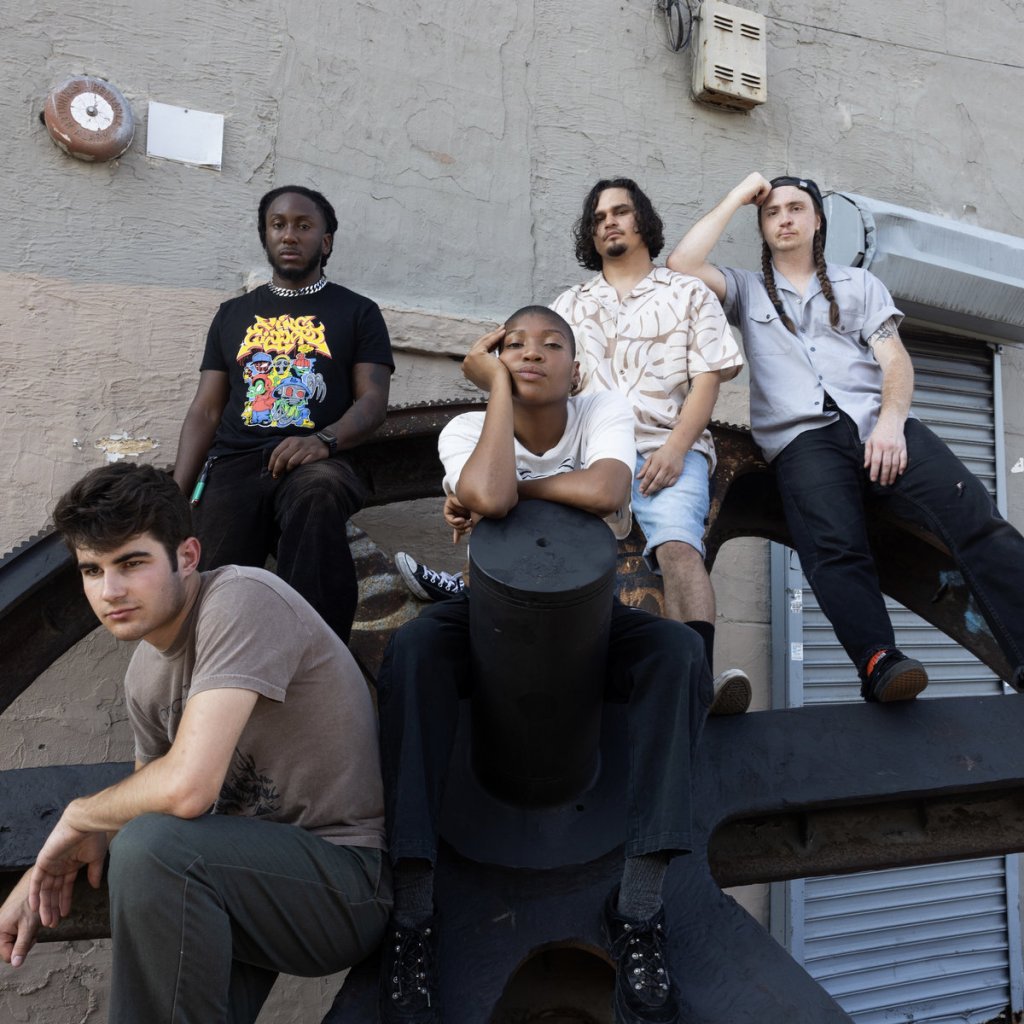
Whether it’s through a zine, a book, a magazine, a piece of journalism, or even just using the radio or whatever, you’re obviously really good at drawing out conversation and stories from people. You have your own storytelling practice, and that’s really important. Like, fuck the correct writing conventions. People engage with how you tell stories, Bianca. It’s so cool.

Thank you. I just really care about the people I interview. I would never speak to someone whose work I didn’t find interesting or whose work I didn’t enjoy. My time is really limited because I do so many different things, so I have to just focus on what I really love.

I’ve been wanting to chat with you for ages—even as far back as when we saw you at Nag Nag Nag. I especially love your band Bloodletter and your earlier band, Tangle. It’s been really cool to see your evolution as a creative and how one thing informs the next. It’s the coolest thing to watch people grow.

LENA: Thank you. It’s really special that you mentioned Tangle, not my first band, but one of the first bands that played a lot and I got to do a bunch of things with. It’s nice that you can see the connection between what I was doing then and what I’m doing now. One of the privileges of staying in the creative arts community, like punk or any underground scene is seeing the beautiful ways that people change and grow, but become more and more themselves. That’s just an honour to grow up together in the different ways that we do. 

In my experience of community, I’ve seen that sometimes people don’t want things to change—particularly in the punk and hardcore scenes. There’s that other side of things where, when people try to grow and evolve, others want to pull them back, saying, ‘Hey, no, but this is cool. Let’s just stay here.’

LENA: I’ve definitely felt that in many different ways, like with regards to style and genre. Especially in hardcore, there are very fixed ways of thinking. I have a respect for that in some regards, but also, I am not held down to any preconceptions that there’s a certain way to be—for me, at least.

It’s actually quite unhealthy for me to think that I have to be a certain way to be authentic or to be, like, quote-unquote, punk or whatever. That’s sort of the antithesis of how I relate to creative practice and the subculture that I’ve grown to love and be a part of. I wouldn’t want to hold anyone else back that way, but I understand why people sort of feel that way.

I feel it’s really important to hold things down in a particular way. But yeah, it’s a devil’s bargain of, yeah, these are the things that keep us safe and the logics of genre or punk, per se, or hardcore, while also it should be about letting people in and letting people be free to be their freaky selves as well.

I read an interview with you where you talked about growing up with punk and DIY. You mentioned that, in your youth, you noticed conflicts and approaches in hardcore and heavier music that were a little at odds with things in your life.

LENA: I have an interpretation of a punk ethic that is very progressive, very open, and about changing and supporting people to change while being accountable as well. There’s an openness to conflict in that sense, where conflict brings about disruption and change.

But there have been things that have happened in my life where people are very resistant to that kind of accountability—especially because of their own behaviour. These situations have been quite damaging within communities, and it’s severed ties due to the inability to communicate or because of what’s led up to some really poor choices. Yeah, violence and abuse within interpersonal relationships and smaller scenes in communities.

To me, that’s at odds with my personal ethics, which I drew from the people I had the privilege of hanging out with early on when I was coming into punk. That’s really informed my entire life. But I understand not everyone sees punk—or lives in the world—providing that kind of ethos.

And yet, not everyone has the same viewpoint as me, and that’s totally fine. I live in a community where folks don’t all have to agree. But, if you don’t agree with people, what do you do about that? 

It seems like it’s getting harder to have these conversations, even just in everyday life, because everyone is so this way or that way. I’ve always thought that opening up a dialogue with someone is how you can actually start to affect change.

LENA: Totally. If you can’t talk about it, then you probably can’t do anything about it. A lot of people are afraid of being wrong because they think that means they have to change, or that they have to do something that means their way of thinking hasn’t been right. It’s too difficult for them. And that’s not just a punk thing. Every community suffers with that. It’s very nuanced. There are some really beautiful people in our community who are quite open to having these kinds of conversations. I’ve been inspired by them throughout my life. I call a lot of those people my very good friends.

Was punk scene the first community that you came to? 

LENA: I grew up in a household where I had family around a lot of the time. There were a lot of folks who had migrated from the war, in a community with a lot of people who were struggling in different ways. I always lived around a lot of different kinds of people, and my community was always like family—extended family, neighbours.

There were a lot of interesting conversations about ageing and mental health that were normalised very early in my life because of my family’s mixed cultural background. We talked about trauma and death quite a lot, very early.

Those kinds of conversations meant that community was much more of a flexible idea to me: Who’s around you? What are you doing together? But also, what do you need from each other at that time?

I’ve got a really open idea about what community is, but I’ve never been the fixed-group, nuclear-family kind of girl. It’s always been more inclusive. I think that way of growing up has really imprinted on me, it’s a really special way to grow up.

You mentioned growing up where conversations about death were normalised. I know about a decade ago, you did a zine called Good Grief, and it explored grief and loss. I’m interested to talk about this; in the past few years I lost both of my parents. It’s been something that is on my mind a lot.

LENA: I’m sorry that you lost both your parents. 

I’m sorry you’ve lost your dad too. My parents no longer being here is something that still feels really strange for me. I’m not sure if it will ever not feel that way.

LENA: That was basically the reason why my friend Erica [Newby] and I put that zine together. We both lost a parent within a couple of months of each other, and we found that no one except for each other got it. My friends were really beautiful at the time; they tried, but mostly, it was like, ‘If there’s anything I can do,’ or ‘I have no words.’ It was very much like, ‘You tell me,’ like, you do the work. Then I started getting a lot of ‘You’re so strong.’ I’ve been getting that my whole life—‘Look at you go, you’re so strong,’ and ‘You fucking kill it.’ And I’m just crumbling inside.

Photo: Jhonny Russell

Same! I also get, ‘You’re always so positive!’ It’s like, yeah, but you don’t see me on my bad days when I’m in a ball, crying and feeling so low.

LENA: I feel like I recognise that about you in the few moments that we have seen each other.

I’ve experienced very deep sadness, depression and crippling anxiety in my life, and in those lowest, low times, I felt no one was there for me, I didn’t have any support despite knowing A LOT of people; obviously that’s changed having Jhonny in my life. But because of those experiences, though, I always try to be there for others and try to remain on the positive side of things. But it’s not always realistic.

LENA: Yeah. And it does damage trying to be like that a lot. I had a feeling that we were gonna talk about death and grief. It’s washed all over me—I’m a death girlie. [laughs]. I’ve always been a spooky little bitch!

[Laughter]

LENA: I guess I had lost people prior to my dad dying; I was 22. But no one so close to me like my dad was. My dad was my best friend. My friend Erica lost her mother to cancer, so it was two very different kinds of grief. My dad passed away very suddenly. I was on the phone to him one day, and two days later, he was dead. Heartbreaking.

Whereas Erica was anticipating the loss of her mother, and that’s also very tragic, as anyone who loses a parent or a loved one over a long illness knows. Both are bad. Especially at that age when you’re still coming to terms with yourself, and everyone around you is still quite young too. In Anglo-Queensland, where we were, people offered lots of prayers but weren’t really sure what to do. So we came up with the idea of doing the zine. We reached out to folks that we knew, and beyond, to submit whatever creative stuff they had about their experience of loss—about what it felt like. We wanted to share that with others so they could gain some insight into what grieving can be like, and to normalise those conversations a little bit at that stage in our lives.

I still have a copy of one of the masters of that zine I made, and I look at it every now and then. I’ve lost people since. We’ve already talked about change, and now we’re talking about death. The only constants in life are change and death. I’m continuously reminding myself of that. I talk about it with my staff. You just have to roll with that—change and death. Those are the constants in life. You can’t be afraid of it. The better you get at anticipating it, but not living in fear of it—living in spite of it and building your life around the choices you make despite these things being inevitabilities—you’ll make better choices.

But you’ve got to be able to support people in their fear of those things as well. Especially folks who aren’t brought up in a way or are unable to come to terms with talking about it. It is scary, and people run away from it. In the disability community, there’s a very close relationship between how people perceive disability and death. We’re living reminders of mortality, and that you don’t have all the strength you think you do. Something could happen to you, and the world isn’t built for that.

You recently won the National Disability Award for Excellence in Innovation.

LENA: My organisation did. I delivered a program through my organisation called Changing the Landscape, which provides resources on preventing violence against women with disabilities. The program targeted a national audience of practitioners in the disability service sector, as well as gender-based violence workers. These resources include videos, posters, and materials based on a 100-page document detailing the rates of violence and what can be done to stop it. They’re beautiful resources that I’m very proud of, especially considering I did a lot of that work just after a significant surgery. While I’m the program manager for that suite of resources, it took a lot of work on my part, but I’m just happy to have been part of such a dedicated team.

What motivated you to start working in that kind of space? 

LENA: Gendered-violence or disability?

Both.

LENA: I have experiences of both. I had trained as a sociologist and did my honours thesis in urban sociology about gentrification—specifically, how people perceive their role in changing public space in a highly gentrified area known as West End. I was really interested in some things that didn’t end up getting discussed in the findings or didn’t emerge from the data. And that’s because I didn’t draw out a particular feminist analysis on the project, which was limited by the nature of an honours project.

So, I then just got into the swing of being a research assistant. But all the while, I was doing activist work on the side.

Before that, I had been doing activist work around gender-based violence, fundraising and learning how to mediate through grassroots organisations. I had been involved in this kind of work for a while. 

After the publication of Good Grief, people started asking Erica and me if we were going to table the zine somewhere or if we were planning to do a distro. At the time, we had no intention of doing anything like that. We just wanted to create the zine and put it out there. But after people kept reaching out, asking us to do more, we realised there was a need in the zine space. We thought about what we would want to do, and we decided to start collecting and distributing zines written by women and queer people to sell at a market in West End.

We started doing that, and then I began incorporating records that were not just from cis men—bringing in women and non-binary people into the lineups. Eventually, Erica didn’t have the energy to keep going, so I continued on my own. Because of my priorities in the music scene, it ended up being a little more music-focused than zines, but I always maintained a bit of both.

This background relates to your question because, in doing all of this, I began booking shows here and there. The key was that there would never be an all-male band on the lineup. As a result, the shows I booked in Brisbane at the time had very creative lineups—something different from what was happening in the punk scene. At that time, it was mostly bands with the same members, and while they were really talented, the shows felt repetitive. Sometimes that’s cool, but when it’s the only type of show you can attend, it becomes limiting. I wanted to create something different.

Every other show I did would be a fundraiser for an organisation like Sisters Inside. I also started selling secondhand T-shirt runs to raise money for Sisters Inside. It became a part of what I was doing—some form of fundraising or activism, mediation, and being that girlie who always had something to say about what was going on and why certain things were such a problem. I became a little bit problematic but just stopped caring.

Going back to my time as a research assistant, after finishing my degree, I had no intention of working in the gender-based violence space. However, when a scholarship came up at RMIT University, it seemed to align perfectly with my skill set. They were looking for someone with experience in visual methods and a background in gender-based violence activism to research how young people engage with social media to prevent gender-based violence. I saw it as an opportunity to do something new, to align something I was already doing with my skillset, and to see what would happen. I had never really thought about doing a PhD, but it seemed like a good opportunity, especially since I was starting to feel burnt out being that girlie in Brisbane.

I had a lot of friends in Melbourne who knew what I was about and wouldn’t make me feel like I was alone. So it just felt like a good time to take the opportunity and run with it. 
When I got to the end of my PhD, I was looking for work outside of academia because I don’t see the point in doing research if you can’t share the knowledge and apply it somewhere. I still feel like that. One of the roles that was coming up was at this organisation that I work for now, which is called Women with Disabilities Victoria.

Photo: Jhonny Russell

To bring the conversation back to music, do you feel that each bands you’ve been a part of has represented different parts of your personal and musical development? 

LENA: I wouldn’t say different parts because I don’t like to separate the self. Maybe at one point, I would have, but I’ve gone through a bunch of stuff in the last couple of years, and I’ve done a lot of deep reflection on everything—the shit, all the little things I’ve done. Definitely, in my younger years, other people would have asked, ‘How do you make sense of all this? You do this, and you do that, and you do this—how is it all the same?’ But in my mind, when I look at all that stuff, I see it as the same girl. I see the common thread. It all makes sense to me, and I can see where it can go.

Creatively, I’ve done a lot of stuff that might not connect together on paper, but it all informs one another. It’s always been about asking, ‘What else can I do? How else can I express myself? That sounds fun, or I haven’t done that before’. That was the thinking at the time—‘I haven’t done that before. That sounds fun. That’s a nice group of people, or an interesting group of people to work with. I would really like to try that. Let’s give it a go.’ And when it stops feeling like that, you let go of it.

There have been a couple of times when I’ve been super passionate about something, and you can probably tell when you’re listening to it. It’s like, ‘Oh, all those steps, all those little pieces I’ve put together, they’ve come into play.’ But it also goes back to an old band I did. It’s like, ‘Oh, she’s still doing that. She’s still thinking about that thing, and it still matters.’ That’s how I know it’s always been about finding the best way to express myself. It doesn’t matter the genre or the medium.

I had some downtime a couple of months ago, and I was drawing a lot. To me, my drawings are the same—they’re about the same things that I write my lyrics about.

You mentioned threads; what are they?

LENA:That’s something that I’m less open about. I’d like to hear what you think. 

Thinking of your new band, Armour, even just in the name, there’s a really strong imagery to begin with. Armour feels like it’s both defensive and empowering. People go into battle wearing armour, so I was wondering if you’re exploring internal struggles or if it’s something larger and more outward?

LENA: Always, for sure. That’s always been a part of the ideas I’ve written about, throughout my practice as a creative person — as a poet, as a lyricist, as a writer. It’s stuff that I explore in my academic space as well.

I’m fascinated by struggle and change, and what people do to avoid it, or what people do when they are confronted. And that’s not necessarily a negative type of struggle or defence. It’s not something I’m always consciously aware of; it’s just something that I’m drawn to.

…I know that I’ve healed from some stuff I’ve gone through in my life because, working in the prevention of gender-based violence, for example, I see the long game. I can talk about violence all day, for example, because I know what the point is. And I see how to make change.

That’s why I’ve always been a somewhat confrontational person. But I know how to use those skills to get people, hopefully, going. I’ve got a good sense of humour to get people to think about things in a different way and bring them along for the ride, where it doesn’t have to be like this.

Part of why I really love your band 100% is because there is a lightness. I’ve read you say that the vibe of 100% is kind of like your aunt or Dolly Doctor. Any time I’m seen 100% live, it’s so joyful.

LENA: We have a cute little world that we created in that band. Like, it is what you imagine girlhood to be. And also, what maybe I do have nostalgia for. I did have moments of that typified girlhood with my friends when I was a teenager. But there’s the the dreaminess of that band— that was still, make-shift and put together through our own DIY lens, or in a futurist way of, like, what would the ideal be like? And what would we tell ourselves?

A lot of the lyrics were , okay, what would I want to hear if I was in this situation? And drawing from a few different situations that I did know about. Or if I was watching a movie, I’d think, what project would write the sweetest songs and charm each other through that? It was about supporting different aspects of songwriting between the three of us. None of us had ever done something like that before. It was really magical.

Yeah, well, it’s that— even though I really like the cover you put out that had the cake on it. That spoke to me in so many ways. One of my best friends made that cake too.

You mentioned a dreaminess, I feel Armour has a dreaminess, but a different kind of dreaminess. 

LENA: Armour is the step between 100% and Bloodletter with a touch of Tangle. But in terms of tone, it’s definitely, at times soft sweetness. But also, I’m sweet, but, if you fuck up me or my family, I will fucking kill you vibes! [laughs]. That’s what being community minded is about, right?

[Laughter]. One of the songs I really love on the EP is ‘Heat Dream’. It has this surreal vibe. 

LENA: What makes you say that? 

Well, for one thing, the imagery, the fantasy and the dreaming in its lyrics.

LENA: There is a literalness of, like, I don’t do well in the heat [laughs]. It’s verbatim describing my experience of not doing well on a hot night. Knowing that others feel the same as well and taking it to the extreme. Growing up in the tropics, like in Brisbane, but also, like, there’s definitely being— like, is this fantasy? Am I awake right now? What was going on? What the fuck was that dream?

Your song ‘Sides of a Coin’ has a bit of a different tone to the others. 

LENA: People are really engaging with that song. It’s really nice. I wrote the lyrics to that one really quickly. Those ones that just poured out. We weren’t sure whether or not we liked it as a band. So I tried to do something else with it. But I just kept going back to, this is how it has to be. 
Lyrically it mentions about breaking the chains and setting yourself free, and there’s a sense of freedom from constraint. Maybe a feeling of liberation? You mention seeing the coin from the other side; what’s the significance of that?

LENA: I’m going to speak abstractly, because people will have their own interpretations. When I wrote that, I was thinking about the nature of truth. 

I really like to write songs that engage with other songs, that sort of build a world. But that song, in itself, is a conversation. You see the coin from the other side—truth is subjective. There’s evidence, obviously. But if a rock fell between you and me, and someone who couldn’t see the rock asked us to describe it, how would we do so?

From your side, you might see the rock has some moss on it, some speckles, maybe a big crack from when it hit the ground. Thankfully, neither of us were hurt. From where I’m sitting, I can see that there’s light behind you, so you can notice details that I can’t. On my side, it’s the same rock, but all I see is grime. This rock is dirty. I mostly see the shadow of this rock right now.

We’re having a conversation about what we see, and to describe the rock, the arbitrator asks, ‘Are you sure you’re looking at the same rock?’

Yes, it’s the rock on this street, blah, blah, blah. So, what is the evidence? Are we going to fight about whose rock is the correct one? Do we get an opportunity to look at the other side of the rock? Or can we agree that on your side, it’s a nice green, sparkly rock with a crack, and on mine, it’s a funky, dark, grimy rock with webs?

It’s the same rock. And it’s a beautiful rock. And we’ve both survived.

Wouldn’t it be nice if everyone could be open to each other’s side of the rock? 

LENA: Yeah, well, you don’t always get to that part of the conversation [laughs]. Sometimes you’re just like, can I just move the rock? 

Do you see a narrative arc for the EP? 

LENA: We just thought they sounded good in that order. Most of the songs were written at the same time. From my side, as the lyricist, they probably represent different aspects of things I was processing and responding to. I also added other bits in terms of lyrical content and other elements. 

Was there a particular thing that comes to mind when you think about that period and what you were kind of writing to? 

LENA: Something I really like about Armour is that it feels authentic as a band. I think there’s a lot in my part of it, which is about bringing people together—for healing, but also for a fight.

I was interested in the EP closer, ‘Last Train,’ because a last train could be a powerful metaphor for endings, choices, or opportunities. I also got a sense of exploring how distance or endings can bring clarity—or even healing.

LENA: That’s a really apt interpretation, without getting into the direct inspiration for that song itself. Each song has its initial influence, but if a song is conceptually strong enough, it will have a meaning that resonates with anyone’s experiences. And that was definitely something I was going for with ‘Last Train’: how do we move past an ending? What choices can we make? It’s about ownership of choice as well.

There’s a line in it that talks about breaking apart and yet making amends. Sometimes, those things can be in contradiction with each other.

LENA: A long time ago, in my early 20s, I came across the notion of creation and destruction, either in a zine or on someone’s bum patch or something like that. I spoke to it at the beginning of our chat—how, as a particular kind of troublemaker, I see change as good. But confrontation, too, can be a way to make change. It’s not the only way, of course, but I’m not afraid of conflict because it means things are moving. It can mean things are moving, as long as you know what to do with it. I try not to be too stuck in place.
That doesn’t mean I’m not stubborn. Things can hurt when you’re forced to do things outside of your control, but learning to let go is a big part of life. When you know things are ending, there’s a beauty in being open to what happens next.

I’m a big fan of saying no, so that you can rest and open yourself up for what the next yes is. I really respect when other people do that, even if it means they’ve said no to me [laughs].

I say no to a lot of things now. As Gimmie grows and so does my book and editing work, I get asked to do a lot of events, projects and stuff. I used to always say yes to everything because I felt I had to. But I’m a lot better at saying no now. I listened to this interview with a writer [Shonda Rhimes] and it really stuck with me. She talked about saying no to things without saying sorry or giving a million excuses for why you can’t do something. I used to feel bad for saying no, or people would get upset with me for not doing what they wanted or not meeting their expectations. I felt I had to apologise or explain myself. I felt bad for saying no. The writer shared that she simply replies: ‘No, I’m unavailable for that.’ And the first time I did that myself, I felt so good. That should be good enough.

LENA: It’s really respectable to know exactly where your limits are and hold up your boundaries, especially at the stage of life I’m at now. It’s a valuable thing to model for others. It’s scary how many people-pleasers I see, or how much people-pleasing behaviour I observe, where folks take on so much because they think, ‘Yeah, that’d be fun. That’d be cool. I gotta do it. Nobody else is gonna do it, or nobody else is going to do it the way I think it should be done.’

There’s a huge risk, not only in overloading yourself but also in not allowing someone else the opportunity to do it. Even if they do it a way you wouldn’t necessarily agree with, or do it differently from how you would, there’s a control aspect for some people. It’s also just a fear — the fear that if people recognise you now, they might forget that you exist later.

But there’s a beauty in being comfortable enough to say, ‘My time will come again.’

I love that! I think coming from the punk and hardcore community, something I’ve struggled with is allowing yourself to have success and actually celebrating that. I’ve always thought the mentality was weird — that when something becomes more popular, people stop liking it, even though the people creating it are still doing what they did with the same heart.

LENA: It’s not just the punk thing, but also the punk and tall poppy syndrome thing that comes with being in Australia. Like, ‘Oh, if it’s popular, it must be shit.’ 

But I’m talking about when it’s the same — or it’s probably even better than when they started. 

LENA: Yeah, like ‘sellouts,’ all that shit. I understand sort of where that skepticism comes from. I goes back to what we were talking about with gatekeeping and of the purpose in small communities — why you would gatekeep, so that you keep your community safe. You want it to be special. You also don’t want yucky people or horrible people to come in and exploit what you worked so hard for or what was so important to you and gave your life meaning, to become like an open house necessarily. So, there’s a meaningfulness and care that goes into people saying, ‘No, no, no, no, no. It’s not for everyone. You go away.’

Lately, I’ve seen a lot of gross elements coming back into shows, stuff that was happening in the ‘90s and early ‘00s, there seems to be more violence and shit behaviour from crowds. Did you see what happened at Good Things festival on the weekend? In Brisbane there was lots of young girls reporting sexual assaults with older guys grabbing at them and not allowing them to exit the pit to safety. Also, people were crowd killing and going around punching people in the pit. Predictably, Good Things festival were deleting comments about it on their social media.

LENA: Something that I was thinking about when I was talking about, the ideal part of gatekeeping is that it keeps you safe, but the thing is, in my experience, a lot of the folks who end up doing that can also be the ‘yucky’ people — or they end up being the yucky people who have the loudest voices, saying, ‘This is what punk is.’ Like, ‘If you don’t like it, go back to the back of the room, don’t come into the mosh pit,’ and all this shit. And it does, regardless of how into being part of the mosh pit you are, or your perception of what’s a good time in a shabby mosh pit, and where the boundaries are, it does impact your engagement. Like, how ready am I to participate? Or when am I going to fuck off? Because, like, ‘Oh, that person’s there. This is no longer a fun time.’ Where, like, yeah, I can withstand a little bit of pushback. But like violence is different to what we recognise as like a mosh pit. For some people who come, there are some people who come to punk spaces or hardcore spaces because they’re attracted to being enabled to be violent. 

They then — and this goes back to some folks having adopted a totally different ethos than what I found in my punk upbringing — and that’s on them, and that’s on me. But, you know, part of it is not being able to have conversations about, like, ‘Is that a way to treat another human being who’s also trying to have a good time? Can you recognise when you’ve crossed the line?’ And then bringing in other factors, like sexual assault and ableist behaviour. I’ve been at shows where folks using mobility aids are completely dehumanised, completely objectified, or treated as though they’re not even there. Or their wheelchair is just a piece of furniture that people can dump their bags on. That hurts my feelings — as an audience member, as a performer, as a member of the disability community — to see that folks in the audience, my peers, my community members, are not being recognised as human beings who are afforded the same right to enjoyment. For whatever reason, they’re either not actually being seen in the space, or where they are, the things that enable their participation are being used as, like, dumping grounds, just regular furniture for other folks. And it’s going to impact their freedom. It’s not good enough. It’s not right. But, folks just don’t think about everyone.

Exactly. That’s my point. I don’t think it’s asking too much of people to be thoughtful and mindful of other people in the same space. I’m tired of being told by bros that I’m too sensitive and punk rock is about violence and I should get out of the way so they can have fun.

LENA: You’re not too sensitive. You see everything and, yeah, I do too. Stuff that other people just don’t see. It would just take the smallest change, hey?

Yes! What are some things that never fail to make you smile? I saw you had a little gathering yesterday of friends.

LENA: Every end of year, my friends do a barbecue before everyone goes away for the holidays. My friends are really good at getting together and eating food. My friends are big eaters. We’re really good at doing nice things together.

I’m very motivated to find a thing that folks will like to do, like a movie or a thing that’s happening out in the regional areas, getting folks in a car together. Or going on a trip.

I love my friends. I’ve got the most beautiful people in my life. I’ve had some really tough things happen in the last couple of years. And it previously has been really hard for me, and it’s still really hard for me to ask for help, but they’ve shown the fuck up for me. That speaks to stuff that I’ve done for them and for community as well.

I can smile so hard, I cry when I think about the beauty of my friends, that I have the privilege of keeping in my life.

I love bringing people together. That’s a big reason why I like like to do music with other people. It brings people together in a beautiful way to think about what we have in common.

I saw in your Insta bio, that you said you’re: living deliciously. What’s that mean to you?

LENA: I really try to hold on to the good moments and make space, ‘cause my work is really hard. It’s really stressful. I’ve had a lot going on. I really try to make sure that I have delicious moments in my life and indulgent times, or even just me time. I strategically place me-time in my life, but also I have so much time for my friends. They’re beautiful, beautiful, beautiful.

I try to hold that up, and I don’t think it’s just only trying to look on the sunny side of life. It’s making sure everything is in balance. ‘Cause I can easily tell when the scales have shifted to the side of no, no, no, no, no. It’s about going the other way.

Before we wrap up, I’d like to talk about Bloodletter a little more. 

LENA: Bloodletter was a band that I felt like, well, finally, I’m doing something that is the stuff that teenage me would be so proud of. I’m very proud of the recordings that we did. Fantastic group of people who liked music with some really heartbreaking songwriting. Some songs, every time we’d play them, I’d say, ‘Can we not play this song? It hurts my feelings.’

But I learned something every time I was a front person in a band. I learned how to work through that kind of thing—how much of myself to put into something—because I think it’s impossible for me not to put myself into it. But also, I learned how to work through it so it doesn’t feel like I’m bearing my soul every single time.

Jasmine [Dunn], who was in Bloodletter, played second guitar. She also plays in Armour. Moose is the main songwriter in Armour, and he had been sitting on five out of six of the songs on this current cassette for a few years. He’d demoed them and just been sitting on them. He’s a songwriting wunderkind, and we’ve been friends since maybe I was 20 or so. It’s a really lovely, long-standing friendship—he’s like a brother.

I was trying to figure out a solo project. I was teaching myself Ableton, which is still very hard. So, like, maybe in 20 years, there’ll be a solo project! [laughs]. But anyway, I sent him something I was tooling around with, and Moose said, ‘Lena, you need to be singing in a band. I’ve got some stuff I’ve been sitting on. Would you like to listen to it?’

I was like, ‘I’ve been waiting for you to tell me you had something. I’ve been waiting for a time where we were both available. Let’s do it.’ So he sent me five of the six songs that are on this tape in demo form, and I pretty much had two and a half of those songs written within a week. I broke away, and I was like, ‘I know exactly what to do. I’ve got stuff.’ It all just came out of me. I thought, ‘Perfect. This is gonna work out great.’

I knew exactly who to get as a second guitarist. When we got to that point, we filled out the band, and I thought, ‘Jasmine is someone I’ve always enjoyed working with in this kind of band.’ We had such a good time in Bloodletter together, and she lives in Melbourne now too. She’s so talented, as is everyone in Armour, so lovely to be in a room with.

That’s where that sound sort of comes in. Jasmine knows the tone, and she knows what I like. It’s very cheeky. Everyone in the band is very cheeky. They’ve got a good sense of humour, very chill, which makes it easy to be in that group.

With Bloodletter, you could lean into the horror, lean into the spooky stuff, while still talking about my lived experience. I really needed to do that band at that time. It was a good move away from having been in some ratty little punk and hardcore bands, which were great at the time, but Bloodletter was so different. Especially coming from Brisbane at that point in time, we were like, ‘Yeah, this is something else.’

Do you think that’s the band where you really started to find your voice?

LENA: I think so. I’ve always sung, but I definitely found my power in my voice at that time. I felt like I gained the most confidence through singing then. I was like, ‘No, I know this is what I have to do.’

And that connects to what we were talking about at the beginning. You go through all kinds of phases or times in your creative practice where people tell you the right way to do things, or what things need to sound like, or whatever. But if you trust yourself, you know.

This is the thing I always end up doing. This is the thing I’ve always done. I’ve got different ways of doing it. I’ve got my own way of doing it. But no one’s going to tell me how to use my voice.

Bloodletter in particular—and now in Armour as well—I don’t sound like anyone else. I trust the way that I sing. It’s not always in key, but it always sounds like me.

Follow: @armourmusicgroup + Armour bandcamp + 100% bandcamp + Bloodletter bandcamp.

Barely Human’s Max Easton: ‘Punk taught me to think more critically.’

Original photo: Lauren Eiko / handmade collage by B.

Max Easton is a writer from Gadigal Country/Sydney with a deep love for music and storytelling. He’s the mind behind BARELY HUMAN, a zine and podcast exploring underground music’s ties to counterculture and subculture. Now, ten years of that work has been collected in his self-published book, Barely Human: Dispatches From An Underground Music Anti-History (2014–2024), featuring print essays, podcast scripts, zines, polemics, and lost writing on Australian underground music and beyond. He’s also the author of two novels published by Giramondo—The Magpie Wing (2021), longlisted for the Miles Franklin Literary Award, and Paradise Estate (2023), longlisted for the Voss Literary Prize and Highly Commended for the Victorian Premier’s Literary Award.

With a new novel in the works for 2025–26, Gimmie caught up with Max to talk writing, DIY music, and the impact of bands like Low Life, Los Crudos, Wipers, Haram, and The Fugs. We also discussed the influence of zines like Negative Guest List and Distort, along with his own experiences playing in Romance, The Baby, Ex-Colleague, Double Date, and Next Enterprise.

GIMMIE: Honestly, I don’t really enjoy a lot of music writing that’s out there. Your work with Barley Human is one of the exceptions.

MAX EASTON: That’s so nice to hear.

Your work is thoughtful and explores the underground, but it also gets you thinking about your own life by the time you’re finished listening to a podcast or reading the zine or book.

ME: That’s cool. That’s a nice effect. 

How’s the year (2024) been for you?

ME: Good. I’m doing pretty good. I’ve been very lucky this year. It’s the first year since I was a teenager where I haven’t had to work a regular job. I got a grant to write a novel.

That’s great! This is for your third novel?

ME: Yeah, which is amazing because I’ve never had anything like that before. It’s been this really interesting, small-business-y type year where I’m trying to be very careful with my spending and accounts—just doing my best to make it last as long as I can. I’ve been able to write whenever I want, which has been great.

It’s also given me more time to focus on music. I’ve been working on archival projects and putting together a collection of music writing, something I’ve always wanted to do but never had the time for. I’ve even been starting bands and putting on shows again. Being free of full-time work for a year has been really, really good. I’m so lucky.

It’s like you really want to make the most of it!

ME: Exactly, because the money will run out in January or February. Then I’ll go back to work, which I’m honestly looking forward to as well. I’m going to be very grateful for this time.

Congratulations on being longlisted for the Miles Franklin Literary Award too. How’s that feel? 

ME: Super weird! Especially with the first novel I wrote, I didn’t really realise it at the time. I didn’t think anyone would actually finish reading it. Like, I never thought anyone would get to the end.

When I was drafting it, my process was very much like, oh, maybe I like this joke in the back; maybe I should put it in the front—that kind of thing. Because, in my mind, no one was going to get to the end anyway.

Why did you think no one will get to the end? 

ME: I just didn’t think there’d be any interest in it. I had never written fiction before and then suddenly locked into this book deal. It’s one of those weird things—I didn’t expect it to do much.

Even with the Miles Franklin longlisting, I didn’t know what that was. I’d never heard of the award before until my publisher was like, ‘Oh, we’ve got some really good news for you.’ So yeah, it’s been really weird to enter into the world of literature.

Especially because I was more familiar with being a blog writer or a zine writer—writing about bands I had connections with and that kind of thing. It felt strange to step out into the public and suddenly be seen as a fiction writer.

How’s the third book going? 

ME: Good. I’ve got a lot of words, but the quality is not really there yet. 

That can be fixed in editing. 

ME: It can. I’m really impatient. I want it to be done so I can start editing, but I need to be done first. You edit as well, right?

Yeah, I edit book manuscripts. I work in publishing as a freelance editor.

ME: That’s sick. So, you’ve dealt with a lot of frail writers.

That’s my specialty. I always tell writers that they have to push through and get words on the page, even if they’re not the greatest. Then you can finesse them. But if there’s nothing on the page, you have nothing to work with. Progress not perfection, that can come later. Being a writer too, I know how hard it can be to get ideas onto a page.

ME: Yeah, it’s a really interesting mental game—trying to write, think, and navigate all the different steps and phases. I’m trying to get better at not overthinking things, panicking, or stressing out, but you can only control so much in your brain.

I saw you mention that with this book, you wanted to have a more positive view on the ideas of independence and autonomy. 

ME: Yeah, because I think the second book was quite cynical. It was a satirical novel, kind of satirising everyone, including myself. It had this flat cynicism to it. The first one, on the other hand, had a kind of flat existentialism.

For the third book, I really wanted to do something different. I wanted to capture the joy of organising things and doing things with your friends—the joy of being in a band, the fun you have, and the creativity involved. Like, what happens when you decide to organise a show in a weird, unexpected space that hasn’t hosted a show before? I feel like the first two books were missing that fun side.

So with this third one, I’m aiming for more positivity and optimism, while still grounding it in reality. You know, not everything works out, and that’s okay. It’s about trying to strike that balance at the moment.

That sounds interesting. I can’t wait to read it. I’ve been thinking a lot about joy lately, especially because there’s a lot in the world not to be joyful about that we’re constantly encountering every single day without even leaving our own home. Stuff we see online, on TV, and in the media.

ME: Yeah, 100%. It’s like a very stressful dark time. There’s a lot of stressful dark information, which is very serious. And I think like we’ve got to engage with it and think about it in a serious way. But, like you said, you still have to appreciate the good things that are happening and try to rally around that instead of letting the bad stuff pull you down, which it’s just really easy to do. 

We were talking earlier about having shows in spaces that haven’t had shows before. I recently did an interview with Rhys who does Boiling Hot Politician. He mentioned how his album launch show at a pub got bumped last minute for a wedding and he ended up having it in a rotunda, guerrilla-style. The Sydney Harbour Bridge and Opera House were the backdrop. He told me how joyful it was, so much so he literally hugged every single person that came.

ME: Wow. That’s perfect. 

He knew of the spot because, during the Olympics, he had taken his big-screen TV there, plugged it into a power point, and watched the skateboarding with his friends.

ME: I love that. That’s real community to me. It’s about autonomy, which I’ve been thinking about heaps lately. There’s so much you have to do, so many people you have to ask permission from to get something going.

It’s often a missed opportunity. Like, we want to play a show this weekend, but we have to ask these 10 venues if they’ll let us. I miss the idea of truly doing it yourself.

A few outdoor shows with generator setups have been some of the best I’ve been to, even if they sounded awful. It’s fun. You’re doing it together, without asking anyone’s permission. It’s hard to find that kind of experience.

I felt that way watching the drain shows, especially after the lockdown in Naarm (Melbourne). Like the one Phil and the Tiles played—it looked wild and so cool.

ME: They’re awesome. 

It’s the best when people come together and think outside the box and achieve something cool.

ME: We played a show at a pub recently where no one really wanted to play this show at the venue, everyone I spoke to didn’t want to be there. We all talked about how anxious the place made us feel, how we don’t really get along with anyone who runs it, or it’s just a bit difficult.

Then it was like, well, why are we doing this? It’s because we don’t have as many choices as we’d like, but I’d love to just open a pub where we wouldn’t feel so bad.

I’ve always had a dream to open an all-ages space. Being a teen in the 90s, we had a lot of those spaces. It was so cool to have something fun to do, and to be able to go to a show where people didn’t need to (or couldn’t) drink.

Drinking is a massive part of the culture for a lot of people. I’ve done a lot of interviews with creatives lately, and I’ve noticed that people get to a certain age and get stuck in a bad cycle with that, and it really starts to affect their life. Often, there’s not a lot of support for that. It can really start to impact mental health too.

ME: It’s really hard to break those habits, especially if it becomes part of how you make music. Isn’t it the same?

It’s only been in the last few years with band practices where I’d always bring a six-pack, you know, because it makes things easier or whatever. It’s just the way it is. Then, over the last few years, I started asking, ‘Wait, why?’ Now I just bring a big soda water—it’s the same thing.

Once you’ve got the habit, it’s like you’re in your head thinking, ‘That’s how you do it.’ I’m still the same. When I start a show, I feel like I need two or three drinks before I play, but I don’t know why. It’s just what I’ve always done. It’s funny, these habits we develop over time, and then one day you stop and think, ‘Why do I do that?’

As I’m heading into my late 30s, part of that is becoming a bit more cynical and negative. This year, I’ve really wanted to make sure that if I get into a negative mode, I do something to counter it. Like, if I’m going to complain about a venue we have to play, then I have to put on a show at a venue everyone likes to make up for it. I really don’t want to become that kind of complaining, older person.

Like, old man yells at cloud! 

ME: Yeah, totally. It is easy to fall into. 

Do you think anything in particular is impacting you feeling more negative?

ME: I’m just finding it hard to find the conditions that helped me discover the idea of DIY and punk music. I didn’t really discover this kind of music or this world until my early 20s, because I grew up in Southwest Sydney. I was trying to be a rugby league player. That was all I cared about. I liked music, but the music I liked was just whatever was in Rolling Stone. I’d buy the magazine from the newsagent, and whatever they told me was good, I’d say, ‘Oh, yes, this is good.’ I just didn’t know.

Moving into the city and going to DIY spaces like Black Wire and warehouse spaces in Marrickville was when I realised I’d never really liked music before. I realised what I’d been looking for was there.

What were you looking for?

ME: A sense of community and a sense of connection. I did access that through message boards and fandom, but there was this huge distance. The bands in Rolling Stone would never be bands I’d play in. I never thought about playing music either.

The DIY spaces were different. Within a couple of months of going there, people asked if I played any instruments because they were starting a new band. I’d never thought of it before, but I said, ‘Yeah, sure, I play bass.’ I went and bought a bass and tried to learn it before the first practice.

It was really exciting. It changed the direction of my life.

I think about Sydney now, though, and the lack of all-ages DIY spaces. How would someone discover that now? It’s like going back to this idea of the band on stage, the punter off stage. The band is ‘king’, and you are watching them.

That’s sort of informed a little bit of negativity over the years, but like I said before, I really don’t want to get bogged down in that. I want to build something so people can discover this stuff on their own.

How did you feel when you first realised, I CAN play music or I CAN be a part of that?

ME: Just happy. It was that simple. It was happiness. When I moved to the city, I didn’t have many friends, and I didn’t really understand or believe in depression or anxiety at that time either. It was the late 2000s, early 2010s – it wasn’t really a conversation.

But playing music, having scheduled band practice every week, planning how to play a show, how to record – it really gave me a lot of meaning. Especially since I couldn’t play rugby league anymore. I missed that teamwork aspect, the purpose of going to something two days a week. Music gave me purpose again.

It also opened things up. Because I could play in a band, go to a show, organise a show, and then start talking about worldly political ideas I’d never been exposed to before. I was really just a centrist, working-class guy who voted Labor and thought that was it – that’s all he had to do.

Punk taught me to think more critically, to consider all the intersecting ideas in the world. It opened my world so much.

Same! What compels you to write underground music histories with your zine and podcast, Barley Human?

ME: Like you, I had written in the past. When I started writing for stress press, it was mostly to get free CDs and gig tickets. Then, discovering punk, I realised there was a purpose – telling people about the stuff you’re seeing rather than just mooching off the industry. It was about finding the connecting elements between all these small scenes in the cities.

Eventually, it turned into more international history stuff. Like I said, I discovered punk in my early 20s, and everyone else already knew the references to all these bands. I didn’t know who Crass were, for example, so I’d have to look them up, research them, and figure it out. I learned about anarcho-punk, then had to dig deeper into these worlds.

At the time, I was doing the work for myself. I thought if I could use that research as a primer for others interested in the scene, it could help people who don’t know all the main names. It would make the transition easier.

Even with some less positive bands, I think it’s important to understand why people are interested in figures like GG Allin – the positives and negatives. He’s a very present cultural figure. It was cool to wrap that into a story or explain why X-Ray Spex and Crass were so influential. Why were they cool? Why are these people interesting?

That’s cool you do primers. In my experience of punk culture, there’s often times people can be very pretentious and clique-y and condescending to people because they might not know whatever band. Not everyone can know everything. I’ve always hated that elitist attitude and the ‘I’m better than you’ vibe. It’s lame.

ME: As a community, it should be about saying, ‘Hey, have you checked this out?’ You should be able to explain things to people without judging the fact that they don’t know. It’s a real bummer too because everyone had to learn something at some point, right? A lot of it is a replaying of the treatment someone felt when they first started going to shows. It’s like, ‘Oh, everyone was snooty to me for not knowing all the bands, so now I’ve got to be snooty.’ But no, you’re supposed to help them in. You’ve done it, so give yourself credit for learning all this stuff, and use that to bring others through.

And that’s not even just for punk stuff, but everything in life. Life’s better for everyone when we help each other.

ME: 100%—you get it. 

Being a part of the Sydney scene is there anything that you might know of that’s unique or lesser known that outsiders might not easily discover or know about it? 

ME: It’s hard to say because I can’t really get a feel for what is well-known and what isn’t. I feel like a lot of bands do a pretty good job of making themselves known these days. But, I don’t really look at much social media to get a feel for which bands are really popular and which ones aren’t.

Is there a reason why you don’t really look at that much social media for that stuff? 

ME: I mean, I do look at it, but I don’t really get a feel for it, you know? My favourite band in Sydney right now is my friend’s band, Photogenic. They’re so good. I feel like a band like Photogenic deserves a little more recognition. They’re the best band in town. They taught themselves their instruments not that long ago—about six years ago. I feel like that’s a part of it too. I love their music, I love them as people, and I love the message it sends to others. It’s like… anyone can be the best band in town if you get together and try to make something happen.

I wanted to ask you about the band Low Life, because you did that episode, ‘I’m in Strife; I Like Low Life’, and I was reading on your blog, where you mentioned that Low Life are probably the band that for you, has most closely dealt with aspects of your upbringing and present. I was wondering, what kind of aspects were you talking about?

ME: A lot of it was that sort of Low Life mentality. Maybe they were the first band I got excited about in that 2012–2014 period. A lot of it was because they seemed really depressed, and the world around the music was quite violent. They dealt with stuff like childhood trauma, the resulting depression, what it’s like to be at the hands of violence, and also to feel anger and sadness. There was this mentality of coming together with people, not in a super positive way, but more about finding your way in the world, a world that doesn’t really want you there. It resonated with me, especially with the backdrop of crappy experiences. They really meant a lot to me when I first heard them and got excited about them.

Isn’t it interesting how a band can write about all those things you just mentioned that aren’t so positive but then listening to it felt like such a positive thing for you?

ME: Yeah, it wasn’t even an album track; it was a song called ‘No Ambition’ that they just put out on the internet. It was maybe one of the first songs of theirs I heard, and it really hit me. It was weird—it made me realise I was depressed. Like, this buzzword I’d seen everywhere was a real thing. Stuff like that is why I think I care so much about music. Sometimes, it just accesses a part of your brain that you didn’t even know needed accessing.

Do you feel like you were kind of going through depression at the time, partly because of the sporting injury, losing that whole community, and then moving to the city, not knowing many people—like, all those things?

ME: Yeah, that was all a big part of it. But it was also childhood stuff I’d never dealt with that I was dealing with at that time. Plus, I was really stressed with work and uni. So, it was like high levels of stress, anxiety, and depression hitting at the same time, without the language to understand what it was or how to deal with it.
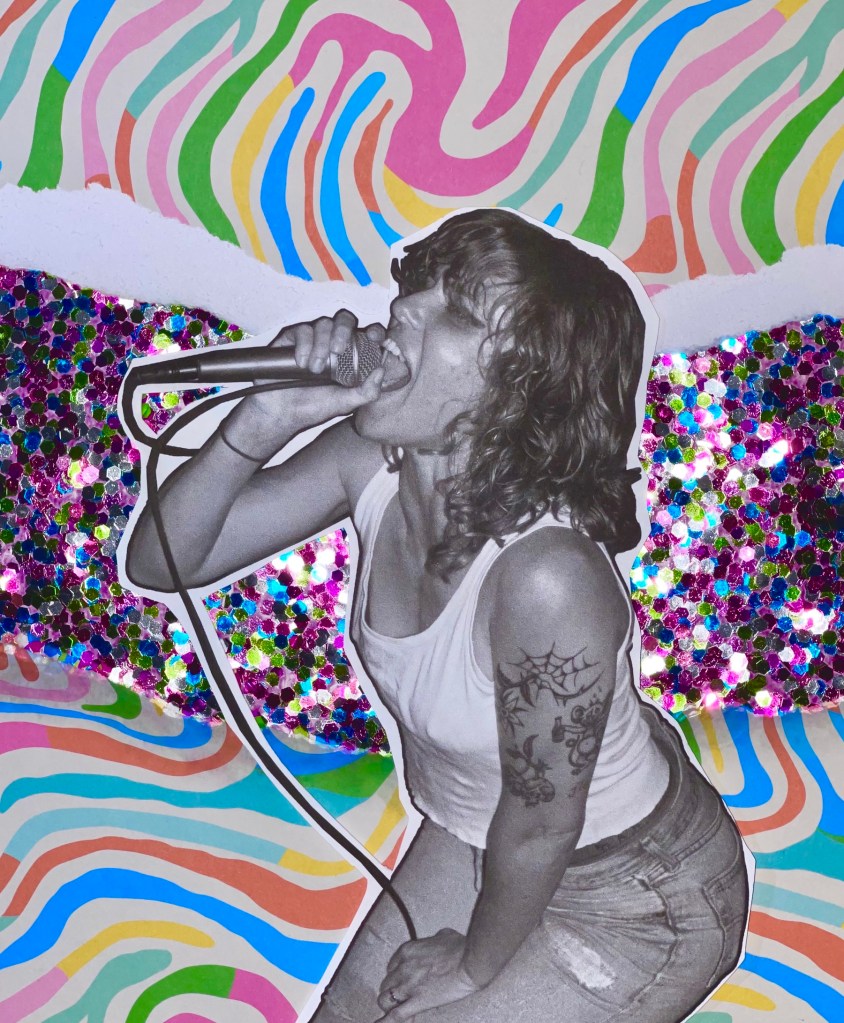
I’ve dealt with severe anxiety and depression throughout my life too. I remember the first time I had a panic attack—I thought I was dying. I had no idea they were even a thing. Even when I think back to being a child, I used to get a lot of stomach aches and things. Knowing what I know now, I understand it was probably from all the stress I was going through.

ME: Yeah, when you’re experiencing those things for the first time, especially as a kid, it’s hard to know what they are. I would get anxious, and people would just tell me I was worked up. The first time I had a panic attack, I thought my childhood asthma had come back, so I went to the doctor and got a puffer. With depression, I thought it was just a being lazy thing.

But you learn and now you know better, which is great. You mentioned on your blog about going through multiple versions of the Low Life episode, and you mentioned you were sort of having a bit of an identity crisis. How did that sort of shape the final direction of the narrative? What did you learn from that process? 

ME: A lot of it was because they came on really strong, which was exciting. They were this unknown band that brought a lot of people together, and people got really excited about them at first. Over time, though, it was like the realisation that, even though their lyrics were often satirical, they made people uncomfortable. The crowds were violent, and some of my friends didn’t feel comfortable going to the shows. But by that point, I’d already gotten a Low Life tattoo. I thought it was just like getting a Black Flag tattoo—this was the best band in Sydney during our lifetime, and they were playing right then.

I was reading when you wrote about that, and you were talking about how, you’d seen a bunch of Black Flag tattoos and had a lot of band tattoos yourself. But then you were like, why don’t you have any local band tattoos? 

ME: We’re always so backwards-looking—always looking back to 50 years ago, and now it’s even more so. Before the Barely Human stuff, all I cared about was what was happening in the moment. But the last 10 years or so, it’s been more about trying to look back while still focusing on the present. I feel like there are lots of lessons for us to learn, but we act like they’ve already been learned, like it’s over. It’s that “end of history” feeling. There’s so much we can learn from the past and apply now in a new context.

You’ve called Barely Human an anti-history.

ME: When I was trying to outline which bands to profile, I asked myself, what’s the unifying theme? Part of it was that, if I wanted to talk about the birth of punk as a genre, I didn’t want to talk about The Clash or The Sex Pistols. I’d rather introduce it via X-Ray Spex. When I wanted to talk about blues music, I didn’t want to focus on Robert Johnson alone—I wanted to talk about people like R.L. Burnside and lost versions of the genre, the kind of stuff people usually skim over.

Same with post-punk: I thought the stories of bands like the Television Personalities and The Raincoats would be the best way to tell that story—not the typical narrative people think of when they think of post-punk as a genre. The anti-history part was to take the mainstream history, read it, and then ask, who’s being left out?

For example, when we talk about hardcore, we mention Black Flag, Dead Kennedys, Minor Threat, or some variation of that story. But Los Crudos, who came in the ’90s toward the end of that movement, represent one of the best versions of what hardcore became—a community-driven movement, an identity discussion, and the expression of personal struggle or the struggles of your background.

I wanted to pull out those hidden aspects that lie beneath the mainstream story. I’m not sure if it’s truly anti-history, but for me, it felt like I wanted to retell the accepted version of events.

I’m not sure if you experienced this when you were writing for street press, but there was a point when I wanted to make music writing my living. It shifted from writing about bands I was genuinely interested in to writing about whatever band the editor sent an email about. They’d say something like, ‘We’ve got this touring band, we can pay $100 for an interview, and it’ll be published across all these different magazines.’ And I started saying yes to that kind of stuff.

It was so depressing. There was this one band, I can’t even remember their name, but they were a huge touring power-pop band in the early to mid-2000s, and I thought their music was terrible. The things they said in interviews were like, ‘I just love changing the world with my music,’ and that kind of stuff. I just couldn’t handle it anymore.

I got paid $100, which, at the time, felt like a big win, but for what? For all that suffering? I never want to go back to that, writing about things I don’t actually want to write about.

I’ve totally been there. Almost every publication I’ve written for, except my own and when I wrote for Rookie, has been like that. I really hate the way the industry works, especially with PR companies. 

For example, I have a friend who runs a podcast, and he’s been getting really depressed and worn out from it. He told me that certain publicists have said, ‘If you want to interview this band, the one you really want to interview, you’re going to have to interview these four other bands on our roster first.’ So, he’s spending all his time doing interviews with bands he’s not interested in, just to get the one he actually wants, or they blacklist him.
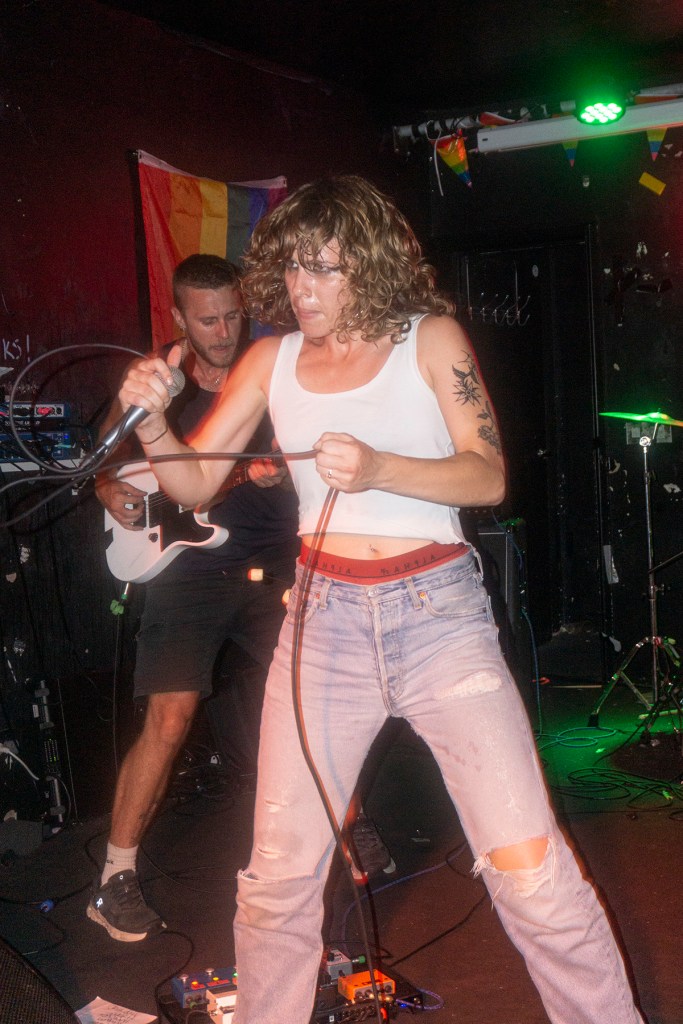
ME: Wow!

Yep. It makes me so angry. I had an interview set up with a band through a publicist not too long ago, but then something terrible happened. A family member, he’s a teenager, was with his friends, and a horrific accident happened and his friend tragically died. Understandably, we went to be with our family, and I had to cancel the interview. I told the publicist, ‘I’m really sorry, I can’t do this, I need to be with my family right now.’ I offered to reschedule when I could, but she seemed annoyed with me. They even asked, ‘Can’t you at least post about the show on your social media?’ It just felt so cold and transactional and heartless.

ME: Oh my god! 

Yeah, true story. At the time, I had another interview lined up with a different publicist, but that publicist’s response was the opposite. He immediately asked if we were okay, if there was anything he could do, and assured me that he totally understood. We ended up rescheduling the chat for another time. He was like, ‘Don’t sweat it,’ which is the right response—the human response.

ME: Yeah. That’s unbelievable. And just the idea of blacklisting your friend for not doing all the interviews.

That happens more than you’d think. Back in the day, I was blacklisted by a promoter because I didn’t turn up to review one of their shows, even though I explained I was with my mum who was very sick in the hospital! I have so many terrible stories like this about publicists and the industry here in Australia, and my writer friends have told me heaps they’ve experienced too. 

ME: I want to blacklist whoever that is. I have a very quiet, small boycott list. I will never book a show for anyone with a manager, anyone who’s a publicist, or anyone who demands a guarantee from a DIY show. There are all these things, and I’ve got a little list. I’m never doing any work for them because, when I put on a show, I don’t take a cut or anything. So, it’s like, if I’m going to work for free, I’m going to do it for like-minded people who are here to have a good time and try to bring people into this world together so we can keep building it and go somewhere with it. But the idea of what you went through with your family member—heavy stuff, like the death of a teenage boy—it’s not like a broken fingernail. It’s repulsive behaviour.
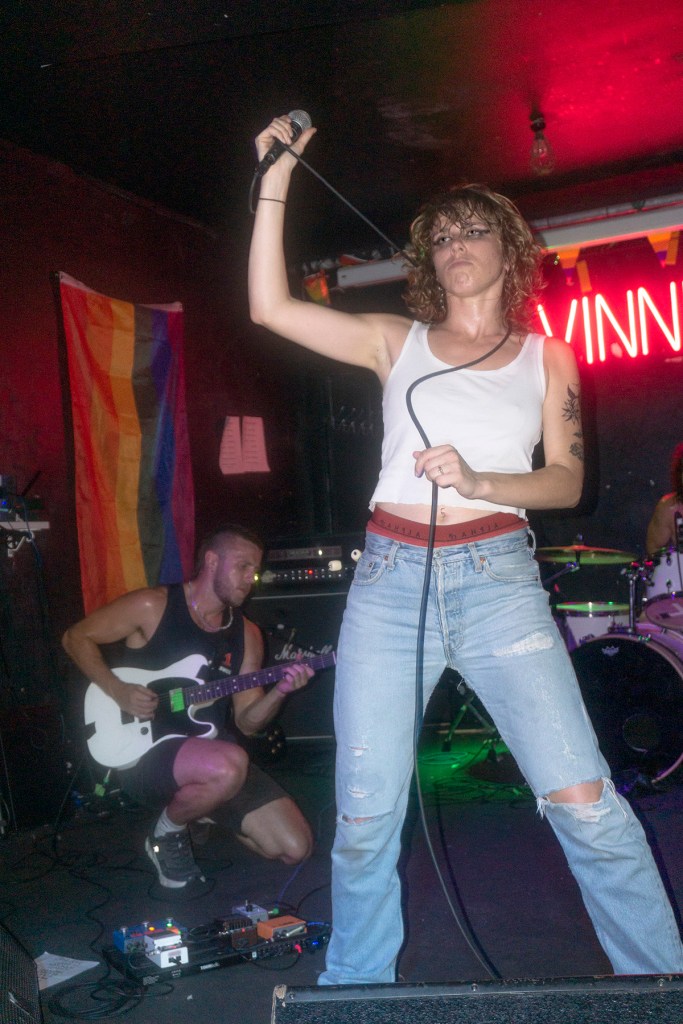
It is! This is why Gimmie exists outside of the industry and we only work with with good people.

ME: 100%! Same here.

What have been some of the aspects that you found most fascinating about underground music that you’ve discussed with Barely Human

ME: Once I started making it a bigger project, where I was connecting different bands together, a lot of it was the connections that bands from completely different sounds, completely different cities, and worlds all kind of had similar to each other. Or the things that they’d be inspired by and the way that a movement or a kind of style developed. There’s so much in common between, say, The Fugs and Crass, which is like a hippie band and a punk band. Those ideas and notions I found really interesting, and something I hadn’t thought about until I started looking into them. Same with a lot of the proto-punk bands and the post-punk bands: they had this similar kind of response to what was going on around them and this antagonism. Or, like, Electric Eels were influenced by a poet like E.E. Cummings. It’s finding all these different connections as you read about a band, which you don’t get when you just play their music.

I really like the idea of bands coming together through time. It’s really almost a conspiracy-theory-type way of looking at the world—all this stuff kept happening through this process, and we kind of connected back to another time. 

One of the coolest bits was I did a Stick Men with Ray Guns podcast episode, a documentary-style thing, and then the guitarist from Stick Men with Ray Guns emailed me in the middle of the night, a year later, saying I’d made all these mistakes. 

Oh no! 

ME: I emailed him back. He’s like, ‘Let’s talk to each other about it.’ And we had this two-hour-long conversation. I posted him some stuff, and he posted me some stuff, and I got a channel to the guitarist from one of my favourite bands in this late ’70s, early ’80s era.

Stuff like that is really, really cool. And you find out that, so much of what motivated those musicians motivates my friends now. Or talking to him about how they just wanted to annoy their audience, and wanted to be so loud that it made them hurt. They wanted to feel violence. It’s kind of like, the second band I played in, Dry Finish, we had to play at this pub that I didn’t want to play at. And I was like, ‘Let’s do a noise set instead of our punk set.’ It was like almost like what he was saying to me was something I said 10 years ago to our friends. I love those sorts of things. 
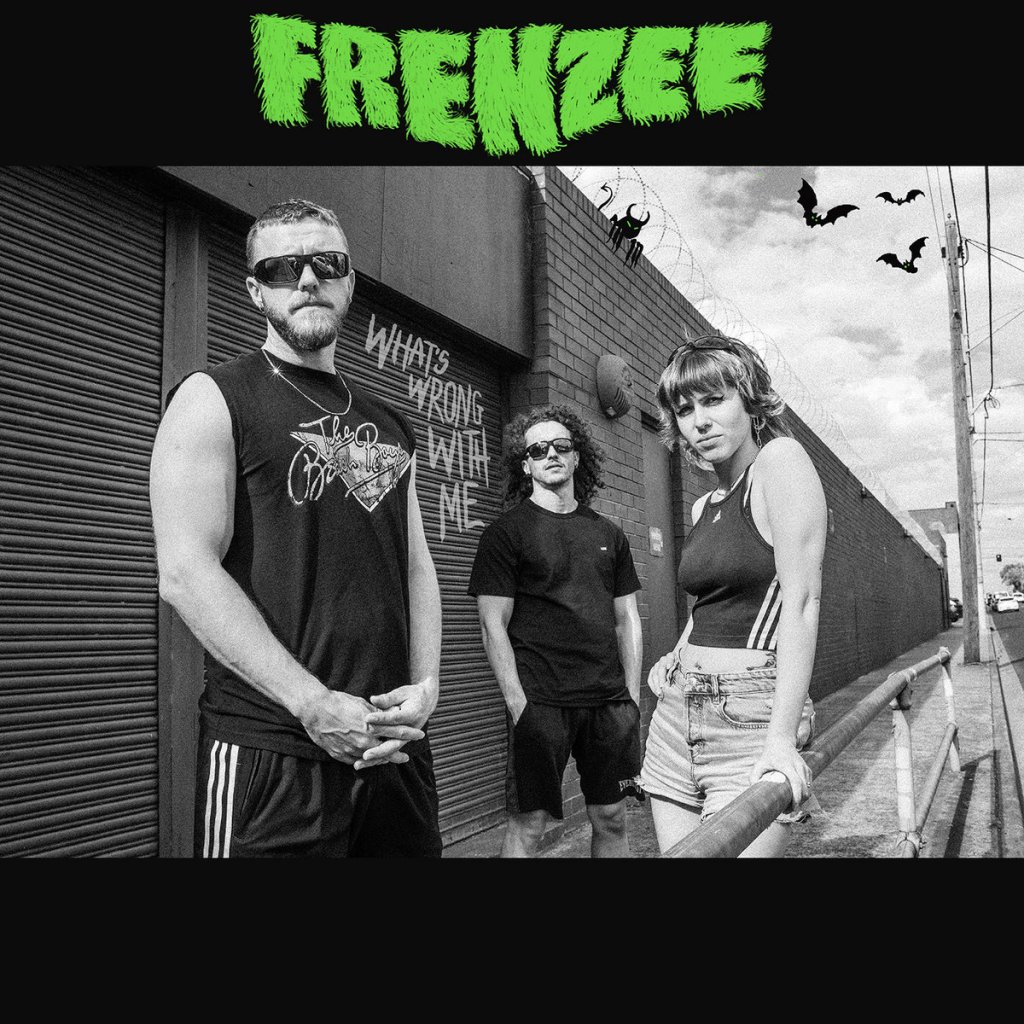
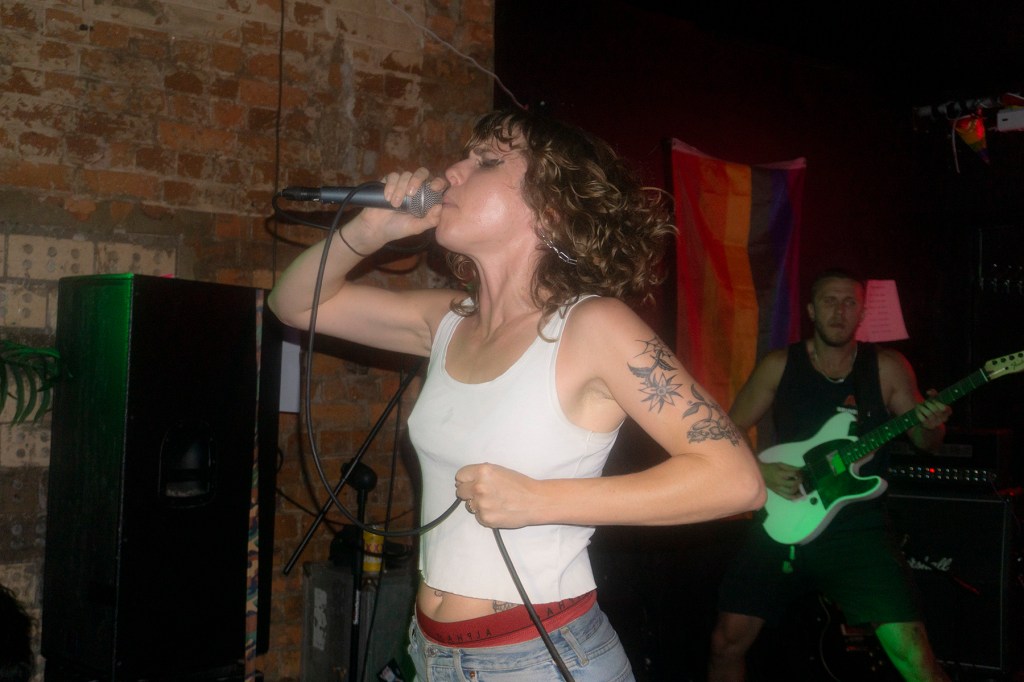
Barely Human started as a zine series; how did you first find zines? 

ME: Through the punk scene, Negative Guest List and Distort were the first zines I ever saw. It was at a time when I was discovering punk too. It was like, okay, cool, I can read what these people have to say, what’s new that’s coming out. They’d also have these historical type things. Whatever obsession they had at that time would just end up in the zine. It would be books as well.

So much of Dan Stewart’s writing with Distort was philosophy. I’d never thought about philosophy before. That was my first exposure to the big historical thinkers. Same as Negative Guest List. It was movies. Sometimes, they’d just talk about a movie that had been really influential on me. Both of those zines were super influential.

Why did you decide to shift into a podcast? 

ME: When the zine started, it was with the long essays that I couldn’t get published anywhere. So it was like self-publishing these thoughts. The podcast wasn’t something I’d ever thought of.

But then this guy emailed me out of the blue and asked if I’d be interested in any audio work. They were kind of doing seed funding for new creatives, and if the podcast went well, they’d give you a deal with Spotify or something like that. So it was like, yeah, sure, I’ll do it.  

The podcast did, by my standards, really well. I think about 2,000 people listened to every episode, which is crazy. But to them, it was like nothing. Still, I got it going, and it got me thinking in that way. So I’ve continued back via the zines and mixtapes in the years after that, even when it didn’t get picked up or whatever. And now I want to try and see if I can DIY it and do more episodes, on cassette. 

What led to the decision to evolve Barely Human into a 300 page book? 

ME: It got to the point where I was starting to think about doing a new podcast season, trying to figure out how to do it. I was going through all my old notes. Even just searching through Gmail—it’s like, I don’t know where I wrote about this band, I can’t find where it was. So I just started putting everything together, archiving all my stuff.

And then, as things go, a lot of this writing is quite old now. It’s 10 years old or stuck somewhere. You can only listen to it on a podcast, so it’s stuck somewhere on the web. I thought it would be nice to bring it all together, just to wrap up that 10-year period for myself.

Then I thought that would make sense, especially when every now and then someone emails me, like, ‘Oh, I’ve always been looking for your Butthole Surfers zine.’ It’s like, so out of print. The podcast I hear is like half of what you wrote. That’ll happen once a year, so it’s not a huge demand. But I thought it would be good to have everything in one place, in case someone wants to find some of this stuff.

So it was kind of just this idea of wrapping everything together, putting it down, and then I could move on and think about the next thing. It’s nice to have as a document.

Was there a band or artist that is featured in your book that you found had an interesting or unexpected story? 

ME: Stick Men with Ray Guns’ story. I didn’t realise how dark their story was. I just thought they were a fun Texan hard punk band. That was a surprise, and to the point where I had to wonder whether I should finish writing about them too. I just started hearing about the singer and cases of domestic violence in his past. It’s like, I don’t think I should be talking about this band. But then it was kind of, well, should I not talk about it? Should I finish telling the story? It seemed important for me to finish that story.

Some of the other bands, were bands that were very present in the world. I didn’t really know much about bands like Dead Moon and Wipers. I wanted to write about them, kind of like at the start, just wondering, ‘Why are they on punk t-shirts everywhere? Why have I seen them on t-shirts everywhere, but I’ve never listened to them? What makes them so interesting?’ And I thought I wouldn’t find anything interesting. But they’re so cool. They’re like, they were two of my favourite bands after I started thinking about them, you know, and finding out the way that they made music and the way that they were so defiantly independent for so long.

I really loved reading about band Haram in your book. You mentioned on your blog that it was a tough section to write; why?

ME: Because I really wanted to write about them, it was more from the podcast, the way that that started. It started with these bands trying to provoke the FBI and the CIA, like The Fugs and their run-ins with the FBI and the CIA, and their run-ins with Crass. So, I kind of wanted to do this full-circle type thing, because their arm was tracked by an FBI anti-terrorism task force purely because they sang in Arabic, which is also something they played with in their imagery, you know, like just using Arabic script to write ‘Not a terrorist’ on a t-shirt. Then to find out that this FBI task force never translated this stuff and just the pure anti-Arabism, pure Islamophobia. The hard thing for me, writing that, which was once I was already in and doing it, it’s like, this isn’t really my story to tell. I felt like I was really writing about things I didn’t understand. No matter how I put it together, it felt like I was sensationalising the fucking horrible experiences that Nader had growing up and then as a punk musician being trailed by the FBI. I did the best job of it I could, but it was really important to me to tell that story of a punk band of today in New York getting tailed by the government, by the racist government.

Whenever we, you know, are all like a little bit like, ‘Man, it’s just so hard playing punk music in Sydney’ and like, ‘Oh, no, I have to play a venue around the corner that I don’t really like’ there’s a bigger context, like, people are being watched and isolated and surveilled. 

I liked that you told the story using a lot of archival and interview stuff, so it was being told in Nader’s own words.

What have you been listening to lately? 

ME: II was listening to The Spatulas this morning, they’re a really interesting DIY type folk adjacent type thing. Celeste from Zipper was in town, I’ve been listening to them a lot lately.

We LOVE Zipper! What have you been reading?

ME: I just finished the Tristan Clark’s Orstralia book, the 90s one. I loved it. It was really, really interesting, especially the Sydney stuff. f

I’m three quarters of the way through Alexis Wright’s Praiseworthy, on a fiction front. It’s wild. It is so good. It’s the trippiest, it’s hilarious. It’s really funny. 

I love Alexis’ work. She just writes with total freedom. What are you doing music-wise? 

ME: The last two bands broke up. I was playing in The Baby with Ravi from OSBO, and the band Romance. We got our last releases out and kind of broke up. We’ve started new bands now—a band with Greg and Steph from Display Homes called Ex-colleague. We played the other night. My partner Lauren, who used to play years and years ago, has taught herself drums for this other new band we’re in with my friends. We’re called Double Date. We’re both couples. Then, starting after Witness K slowed down a bit, Andrew and Lyn started jamming, and I’ve been jamming with them as well. We’re playing our first show soon—we’re called Next Enterprise. It’s been really fun to play again!

Check out: barelyhuman.info.

Private Function’s Chaotic Tour Diary

Original photo by Jhonny Russell / handmade collage by B

Tour diaries are often full of glamorous highlights and polished moments, but not this one. This is the real deal: messy, chaotic, and sometimes hilarious. Naarm (Melbourne) band Private Function’s adventure took them from the Aotearoa (New Zealand) wilderness at Camp A Low Hum and beyond, before looping back around Australia. Along the way, they encountered highs, lows, and plenty of ‘what the hell just happened?’ moments.

Written by frontman Chris Penney for Gimmie, this diary offers a peek into the madness—good shows, wild experiences, and the kind of stories that only make sense after a few too many beers. If you’re looking for a laugh, keep reading. It’s a series of events he’ll never forget (and possibly regret some). You can also find our in-depth chat with Chris HERE.

Originally, this was going to appear in Gimmie’s next print edition, but with the cost of living making it harder to afford groceries, rent, and other essentials, we’ve put our print edition on hold for now.

Private Function Tour Diary:

So, a little backstory about this tour: it was actually meant to be a co-headlining tour with our New Jersey pals, Screaming Females. Unfortunately, a couple of weeks before the shows were announced, they announced that they were splitting up.

It was totally heartbreaking—I love those guys so much, and I was completely devastated by the news. I really hope they get back together one day; they were one of the best that ever was.

Vale, Screamales.

(I don’t wanna get too sidetracked here, but I’m not sure when or why we started saying “vale” all of a sudden. People just started doing it one day, and I guess I just went along with them? It’s kinda like that biscuit Biscoff. Biscoff didn’t exist when I was a kid, and now it’s everywhere—and Australia is pretending like it’s always been here. You can get Biscoff Kit-Kats now, and they’re marketed like, “FINALLY… YOU ASKED AND WE DELIVERED! TWO CHILDHOOD FAVOURITES TOGETHER AT LAST!”

It’s just like… man, have we gotten to the point where we’ve truly mined all the best flashbacks from the past, and now companies are attempting to create fake memories of our childhood to sell us imaginary nostalgia?

Fuck Biscoff, and fuck the Lotus company.

…That’s bands for ya, though. They love breaking up. They’re literally always doing it—it’s wild.

YUGAMBEH COUNTRY (GOLD COAST) 

First stop of the tour was the greatest country in Australia… QUEENSLAND. Always a pleasure heading up north—great beaches, great weather, and great people.

The first show was at Vinnies Dive on the Gold Coast, one of our fav venues in Australia and run by our old mate (and first PF manager) Glenn Stewart.

We got to the Gold Coast early in the day. Aidan and I had to drive out to the country to hire some gear for the night. It was ruthlessly hot that day, and when we knocked on this random person’s house, it was answered by an older, sweating man in nothing but tight budgie smugglers.

It would have made a beautiful Queensland postcard.

The man looked us up and down in silence for a few seconds, then just said, ‘Well, well, well… looks like we’ve got some rockers. I better go put a black t-shirt on.’

Paying for their best dance moves! Photo: Jhonny Russell.

He came back out with a black shirt—still not wearing pants.
God bless Queensland.

The lineup that night was Shock Value and Dad Fight—both awesome bands we’d wanted to see for ages.

We decided to try something different for this show. Instead of writing a setlist, we put all of our songs in a hat and had the audience take turns choosing the next song. The sound guy, Bailey, decided that a hat wasn’t funny enough, so he gave us a vacuum cleaner to pull the songs out of. So, throughout the show, I was lugging around this huge old vacuum cleaner.

Getting the crowd to pull the setlist out of a vacuum worked so well that we decided we’d do it at every show on this tour.

After we finished playing, Anthony was watching the merch table and decided to arm wrestle people. If you beat Anthony, you got a free PF shirt.
Nobody ended up beating him.

As all the alpha males slowly shuffled away from the merch table DEFEATED, a new challenger appeared… She was a tall goth chick who demanded that Anthony have a thumb war with her.

Powering up the setlist. Photo: Jhonny Russell.

The reason? She was born with three thumbs. Two of them were amputated shortly after birth, but you could see the little scars where they originally were. If thumb wars had a general, Anthony was staring at her.

The thumb war was truly epic. People gathered around, cheering. She had an odd dexterity and speed with her thumb that made pinning her down almost impossible. The battle raged for a few solid minutes.

But eventually, she was knocked down by the undeniable girth of Anthony’s thumb.

Vale this final thumb. May you rest in peace with your two fallen sisters.

MEANJIN (BRISBANE)

The next day, we woke up and went for a walk around Surfers Paradise.

We saw a sign for ‘THE WORLD’S BIGGEST TIMEZONE’ and decided we had to go.
It was pretty big!


(But, like, not THAT big.)

They had one of those big old ’90s shooting galleries—a full cowboy/western-themed set where you can shoot the hats off cowboys and knock over beer cans, etc. I always forget that Milla has an insanely good eye for shooting. She used to do it as a kid in Canada, and whenever we get the chance to mess around with a gun, she absolutely nails it.

We spent a couple of hours at Timezone and then bailed to drive to Brisbane.

The Brisbane show was awesome, as it always is. Brisbane has some of the best live music punters in Australia—always ready to get on it and get wild.

Last time we played in Meanjin, it was at a house party for our good mate Kirby’s 21st. It was an awesome party, and it’s where we first saw My Friend Chloe play live. We were so blown away by their set that night we asked them to open up for us at this show. They killed it.

We also had Prink on the bill. We’d always wanted to see them live and loved every second of it.

I really love The Zoo. It’s such an awesome old venue, and we hadn’t played there for a few years, so it was great to finally get back. All the staff and everyone involved are so goddamn lovely. We love yas.

We all got up surprisingly early the next morning. Aidan woke up and decided to cook a huge batch of scrambled eggs for breakfast. He had me laughing so much—he was loudly singing as he cooked, changing the lyrics to Waylon Jennings’ ‘I’m a Ramblin’ Man’ into ‘I’m a Scramblin’ Man.’

Scramblin’ Man.

The eggs were 10/10. The man knows how to scram.

GUMBAYNGGIRR COUNTRY (COFFS HARBOUR)

Whenever we tour Queensland/Northern NSW, we can usually fit in three shows—Gold Coast, Brisbane, and Byron Bay.

But (and I’m really trying not to be a cunt here) I kinda hate Byron Bay, and I don’t really wanna go there again.

The small crew of locals are awesome, but it’s mostly just dealing with annoying backpackers and general Australian fuckwits on holiday. Byron Bay is like walking around a giant corporate shopping centre, but for some reason, everyone’s patting themselves on the back for not having a McDonald’s.

Our friend Aidan (not to be confused with our scramblin’ man Aidan) had just started a new venue in Coffs Harbour and had been asking us to play there for a while. We’re always keen to play a new town, so we jumped on the opportunity.

The venue was amazing—a good-sized little room at the back of the Coffs Harbour Hotel. It’s called The Backroom, and we can’t recommend it enough if you’re a touring band. It’s so important to support up-and-coming venues in smaller towns, and we couldn’t have been happier to play there.

Coffs Harbour has a really solid scene going on, and I hope it keeps growing.

The lineup was Power Drill and Purple Disturbance.

I always love seeing Power Drill. Every time I’ve seen them live, they fucking kill it.

Purple Disturbance are an anomaly. They’re one of the best teenage bands I’ve ever seen, and I’d recommend everyone keep an eye on them. I saw Tom, the singer, getting kicked out of the pub after their set. I ran up and asked what was going on. He pointed to his bare feet and said he’d lost his shoes somewhere inside. He’s also 17, so I feel like that wasn’t helping him get back in, lol.

We slept at the pub that night.

We drank downstairs until it shut, then went upstairs and watched Carrie on the TV with Power Drill. I forgot how awesome Carrie is. Sissy Spacek rules so hard.

We woke up (always a bit disappointing) the next day and drove back to Brisbane to fly home.

NAARM (MELBOURNE)

Hometown show, baybeeeeee!

We played at The Nightcat. For anyone not familiar, it’s a 360-degree stage in Fitzroy.

We’d never played there before, and I hadn’t been in years. It’s semi-rare for a rock band to play there since it’s usually a soul, hip-hop, electronic, and “world music” venue.

Nighcat projection. Photo: Deaf Chris

Bit of a side note, but “world music” is such a weird genre. Do people still use that term?
PF is from the world.

OFFICIAL PF PRESS RELEASE: From this day moving forward, Private Function demands to be classified as “world music.”

I reckon The Nightcat show was one of my favourite shows we’ve ever played. The sound was amazing, and the lighting was some of the best I’ve ever seen. The lighting dude even had a laser projector shining the words “STILL ON TOP” onto the roof.

It was also the first time I’ve ever used a cordless mic, and I’m not sure I wanna go back. The freedom, bro. BRO, the freedom.

Photo: @deafchris

Anthony, Milla, and I were all wireless for the set, so it felt like we really took advantage of the 360-degree stage.

The lineup was Walking To The Grocery Store and Dr Sure’s Unusual Practice. Both bands were on fire that night, and the whole show had such a great vibe.

The Nightcat truly rules—what an awesome venue.

The next day, we had to fly to New Zealand at 5 AM, which meant we had to be at the airport by 3:30 AM. for the international flight. Half the band just stayed up after the show and went straight to the airport.

Photo: @deafchris

AOTEAROA (NEW ZEALAND)

We landed in NZ a few hours later. Most of us managed to get some sleep on the plane, and the excitement of being in a new country helped everyone push through the exhaustion.

Our other ride is this dragon – Wellington Airport

Aotearoa is unbelievably beautiful—every corner of it is just breathtakingly gorgeous. It’s fucked up, man. It’s really amazing.

The reason we were there was to play Camp A Low Hum. If you’ve never heard of it, here’s the deal:

Camp A Low Hum is a two-weekend-long camping festival just outside Wellington. Its brilliance comes down to the curation. It’s predominantly organised by Ian Jorgensen, who travels the world watching live music, then somehow puts together the greatest festival lineup you’ve ever seen.

One of the coolest things about this festival is that the lineup is never released. You don’t know who’s playing until you rock up to the gates with your ticket. They hand you a lineup, a timetable, and point you to a spot to pitch your tent.

I was lucky enough to play Camp A Low Hum back in 2014 with my other band, Mesa Cosa, and it’s incredible to see how much it’s grown and perfected itself. Every single act I saw this year was ridiculously good.

I don’t have enough space to shout out every band I loved, but my standout sets were Party Dozen, Cable Ties, Dartz, Georgia Knight, Splinter, Dole Bludger, and Tongue Dissolver. I probably saw 20 more bands, and every single set floored me.

An awesome addition this year: every stage was 360 degrees. No backstage areas, no separation between artists and punters. It was brilliant.

Honestly, I could write a full review of this festival and all the things I experienced—things I’ll remember until the day I die—but I’m starting to bore myself here. I’ve gotten way off track.

At one point in this diary, I was rambling about PF being considered “world music.” Now I’m wondering if I should’ve cut that (or this) in the final edit. (I didn’t).

AHURIRI (NAPIER):

During the week, we went on a small tour with this amazing band from Wellington called Dartz. They just released a new album called Dangerous Day To Be A Cold One and I think you should go put it on right now and read the rest of this tour diary listening to it. It’s outrageously catchy and super fun.

We played two shows with them around Aotearoa. The first one was in Napier at a place called Cabana, which turned out to be the oldest music venue in New Zealand.

Napier is a super unique city. There was a massive earthquake there in 1931 and it basically flattened the whole town. The local council decided to re-build everything in the style of the time, which luckily happened to be Art-Deco (my fav).

It’s currently the Art-Deco capital of the world. There were some amazingly unique Art-Deco buildings there—some that really stood out were the buildings that blended Art-Deco and traditional Māori art.

The Māori art style is more detailed and playful than you would expect to see on a traditional Art-Deco building, so the rare amalgamation of both the minimalist geometry and intricate curvature really complemented each other and brought the buildings closer, architecturally, to something resembling more of a subtle Art Nouveau style.

The next morning, I was driving the car and thinking about all the little cultural differences between Australia and New Zealand.

All of a sudden, I saw a bumper sticker that was one of those “two in the pink, one in the stink” hands, except it only had “two in the pink.”

I yelled out, ‘Woah, check it out! In New Zealand they only have two in the pink and NONE in the stink on their bumper stickers!’

… Jimmy pointed out that it was a peace sign bumper sticker.

TAIRĀWHITI (GISBORNE):

This next venue might be one of the coolest venues I’ve ever been to in my life.

SMASH PALACE!

‘ANTHONY SMASH!’

Smash Palace is your typical ‘bunch of crazy crap on the walls’ bar but taken to the extreme. The beer garden has a complete World War Two fighter plane hanging over it. It’s so big they used to have a restaurant inside it. It towers above you the whole night alongside a giant papier-mâché  T-Rex and a roof filled with thousands of hats from all over the world stuck to it.

The opening band was called Spiky. The singer Corey is in a wheelchair, and funnily enough, I recognised him from his old band Sit Down In Front, who I’d been following for a few years on Instagram. They did solid 77’ punk with a bunch of covers thrown in. I reckon the singer did one of the best Bon Scott impersonations I’ve ever heard. Ask any singer—Bon is fucking hard to replicate.

Dartz played next, and it was one of the best shows I’ve seen all year. Hopefully, if you pushed play on their album when I told you to, you should be at the track ‘Paradise’.

‘Paradise’ is a subtle anti-colonial anthem addressing not just colonialism but the financial inequality that runs rampant through New Zealand. It also has one of the best lyrics of 2024:

You built your house on stolen land, so we gotta reclaim the beach now, imma roll up and spread out on my 97’ Digimon beach towel.

In my long life of listening to music, I’ve heard the phrase ‘I love you’ seventeen million times. I’ve heard the phrase ‘’97 Digimon Beach Towel’approximately ONE time in my life.

That’s innovation, and innovation is true art.

Holy shit, did we have a great time at Smash Palace! The bartenders made these insane homemade shots that were some of the most unique shots I’ve ever had in my life. We sat and drank with the bar staff until the police literally stormed the venue and shut the place down.

I’ll remember that night for the rest of my life.

BACK 2 CAMP A LOW HUM:

We drove back to Camp A Low Hum the next day.

Camp A Low Hum took place over two weekends this year. Although there was no festival during the week, Ian (the camp organiser) had organised a series of seminars and talks for anyone who wanted to stay. The mid-week topics ranged from “touring New Zealand successfully” to “manipulating analogue televisions to create practical effects.”

One amazing thing Ian arranged mid-week was turning one of the stages into a recording studio where the artists could record new songs, then cut them straight to vinyl at camp. The rule was the songs had to be new, and the record had to be a split with another band playing the festival.

We decided to record three new songs and split the record with the Dunedin band Pretty Dumb. We became mates with Pretty Dumb at the festival and hung out with them every day. I never actually got to see them play live, though, and I’m so pissed off I didn’t.

Lauren nailed every single Chesdale-inspired cover.

Lauren from PF is getting some major props right now…

It was our job to hand-draw all 25 of our record sleeves. During the week, we became obsessed with this cheap New Zealand cheese called Chesdale, so Lauren decided to theme every record cover around Chesdale Cheese. She’s an amazing artist and totally, totally killed these album covers. Good onya, Lauren.

Just living our best cheese slice life!

Long story short, for any keen PF fans out there: there are twenty-five PF records with three never-before-heard songs floating around NZ. Try to get one, I dare you. Then give it to me, because I don’t have one.

We played our final NZ shows at the second Camp A Low Hum weekend and headed home.

I’d like to add that I checked the PF bank account, and between all six of us at Camp A Low Hum, we drank:

  • 26 cases of beer
  • 7 bottles of liquor
  • 5 goon sacks
  • 3 cases of Strong Zero

It was a bit much.

We’d like to thank Ian for having us at the festival, and all the amazing organisers for putting it together. Y’all killed it.

On the flight home to Australia, Lauren was cracking me up because we were delirious, talking about how we should save Furbys from wet markets and how Furbys would probably make the best bushmeat.

Driftwood and good vibes only!

TARNDANYA (ADELAIDE):

Welp, I fucked up.

They say that sometimes you’ve got charisma, and sometimes you’ve got charisn’tma (I’m pretty sure they say that).

And at this Adelaide show, I definitely had charisn’tma.

PF is a band that’s always trying to push the limits of live performance and see what we can get away with on stage. I’ve had a long conversation with myself this week about where “the line” is with our live shows and when it should not be crossed.

“The line” for me is when somebody feels unsafe or unwelcome at a show. And I know some people felt that way at our Adelaide show.

I was way too drunk and belligerent to be on stage that night. 

The show just went way too over the top.

I’m so sorry to the venue and the staff.

If there’s anyone I don’t want to make uncomfortable, it’s people just doing their job. Especially people in a bar.

The rest of the show was really great, though!

Witch Spit were genuinely amazing, and The 745s absolutely killed it.

Adelaide holds a really special place in our hearts, and we always love going there.

A homemade one-of-a-kind PF shirt!

DJILANG (GEELONG):

When we arrived in Geelong the next day, we got some bad news: one of our close family members had to be taken to the hospital for an emergency operation. Everything is good now, but it was pretty scary for a moment.

Because of that, we had to cancel the last three shows of the tour.

It was a total shame because we handpicked the lineups for those shows and were so keen to see every single band we were playing with.

So, Geelong would be our last show of the tour…

And it was GREAT.

The Barwon Club is always a great venue to play at, and everyone in Geelong is consistently a legend.

Persecution Blues opened the night, and had Pint Man with them. If you’re not familiar with Pint Man, he’s a member of the band who just stands there, staring at the audience and drinking pints. He drank 6 pints in a 40-minute set. That’s a good effort. Not only was it the best Persecution Blues set I’ve ever seen, but it was also one of the best shows of the year.

Pintman from Persecution Blues.

Next up was Dragnet.

I feel like such a dumbass because I’d heard of Dragnet but always assumed they were a glam band for some reason. I dunno why. They were insane. It was perfect jangular egg punk—pinpoint precision and perfect execution. Also, any band that incorporates a sampler into their set wins my heart forever.

We drove back home that night, coming down from a great tour…

BACK TO (A HARSH) REALITY:

A few days after the tour finished, the PF wheels really started falling off…
Just like every band in Australia right now, we’re consistently dealing with the punishing reality of being in a band.

Juggling mental illness, dealing with the stress of social media, becoming increasingly aware that financial freedom will probably never be attained through music, watching rock and roll slowly slip into obscurity, and yet continuing to dedicate our lives to it. My heroes are senior citizens. That was an odd realisation. (Love you forever, Ozzy.)

Photo: Jhonny Russell.

The pressures of being in a touring band grow with every tour—it’s a lot.
Funnily enough, I’m typing this tour diary as I sit in the waiting room, waiting to see a psychologist for the first time in my life.

I’ve become increasingly paranoid that World War III and climate change are running at a direct parallel to each other. The ocean is heating up at record speeds, and we’re becoming complacent with the normalisation of genocide and murder. I feel like growing up during peacetime has made me pathetic, and as we walk into the war-torn future, the children of “Gen Alpha” will throne upon me, staring down at my weakness like a demon disgusted. I need a gun.

These kinds of thoughts have been spinning in my head like a mouse on a wheel, and as I take a moment to stop and think about the future of Private Function, one thing enters my brain…
It’s just a band lol.

Who gives a fuck.

PF STILL ON TOP!!

Follow @privatefunction69 and LISTEN/BUY privatefunction.store.

Fat Dog and The Tits vocalist Sam Taylor: ‘I’m a little alien, and I need to run around and do weird stuff.’

Original photo by Jhonny Russell / handmade collage by B

Community, vulnerability, and creativity are at the heart of Sam Taylor’s evolution—from a self-described “ignorant punk” to the electric frontperson of Meanjin-based band Fat Dog and The Tits. In this in-depth conversation, Sam delves into the transformative power of balancing strength with softness.

With raw honesty and humour, she recounts the pivotal moments that shaped her journey—from life-changing encounters high at festivals to mistakes made to painting skateboards to emotional revelations mid-performance that left her in tears and more. As Fat Dog prepares to release their stellar Pepperwater Crocodile EP and embark on an exciting new chapter, Sam reflects on the value of meaningful relationships, the courage to let go of judgment, and her ability to turn life’s toughest moments into art. Their EP has already made our Best of 2025 list!

SAM TAYLOR: I came back from tour and moved house. I was living in the middle of West End, and it was too much—too inconvenient and hectic to come home to. There was nowhere for my friends to park if they came over, and the house was really small and dingy. But now I’ve moved to Holland Park West, and I have the whole underneath of a house to myself for all my art and music shit. Happy days!

Nice! How did you grow up?

ST: I grew up in Brisbane with Mum, Dad, and my sister. I got into art and music right towards the end of high school. I was always into music because of my cousin. My sister got a guitar off him, but she never played it. I copied everything my sister did, so I started playing guitar and ended up loving it.

In Grade 11 and 12, I got into art class—accidentally. I’d applied to get into it every year but never got in. I don’t know why—maybe it was just the way the schedule lined up.

I changed English teachers because I didn’t like the way one of them taught. I really wanted to read the book the other class was reading. My schedule got changed, and I got plonked into art class. You needed prerequisites to get in, like doing art in Grades 8, 9, and 10, but I hadn’t done any of that. I had no prior experience, no idea what I was doing.

Nice! What was the book the other class was reading that you wanted to read?

ST: Jasper Jones. It’s a beautiful book. It’s amazing. A modern classic. The book my original class was reading was about cricket!

Oh, really?

ST: Yeah. The teacher had a very… interesting teaching style. Someone from head office actually came down and sat in on one of the classes to see what I was talking about. They were like, ‘Yeah, okay.’, that’s valid. And then, everything kind of worked out amazingly [smiles].

Your teen bedroom was covered wall-to-wall with images ripped out of skateboarding, surfing, and music magazines. You had posters up—Nirvana, Descendents and stuff like that. It was definitely a vibe and reminded me of my room when I was a teen. What kind of bands really inspired you then?

ST: Back in the day, I was very into heavier sort of shit—I loved Parkway Drive and all of that stuff. Nirvana was the big one for me, for my dad, he liked heaps of punk shit. NOFX was massive for me. I definitely love punk a lot.

There was a bit of a hardcore phase when I had all the posters in my room. I’d go see Amity Affliction and all that. But I’ve kind of definitely grown out of that now. It helped me at that time, very much so.

With all the skate and surf shit—Dad surfed, and he had a bunch of mates, including my godparents, who were all into skate and punk stuff. But when I really started delving into music—like, when I found things like The Cramps and B-52s—that really opened up my brain. I was like, I found my shit!

With the hardcore stuff, that was me being influenced by friendship groups and the people I was hanging out with. But once I found my shit, I went over to my godmother Anna’s house and spent some time in her record collection. She had a record player, and I was just putting on different records. I’d originally found B-52s through Mum, but when I first listened to it, I thought—fucking sick! The Cramps and B-52s were the ones that really started my brain opening, like, oh god, I really want to do this!

The Runaways were huge for me as well, including the movie—that was super inspiring. I love Joan Jett, love Cherie Currie. Even Suzi Quatro was something I learned from. Love all of that. Bikini Kill too—definitely a huge influence.

A lot of the bands you mentioned, like The Cramps and B-52s, they’re real outsiders and weirdos. They build their own entire world, and it’s not just musical—it’s visual as well, and it’s performance.

ST: Yeah. The Vandals are a really good one for that in the punk scene. When I was finding everything, I’d watch their music videos—they’ve got the funniest, most amazing, movie-style music videos. So inspiring, so funny.

Photo by Jhonny Russell

Why is music and art important in your life?

ST: It’s a way I can function in this world. Whether it’s me listening to it—being able to get through whatever mood I’m in, enhance that mood, or help me feel a feeling—or doing art. Whether I’m creating through feeling or just zoning out and not having to think about things, it’s always been it for me.

Once I finally found that towards the end of high school, I was like, okay, this is what I can do. This is me. This is how I function. It’s genuinely in my blood, and it felt so good to finally find that and be like, Okay, cool.

Towards the end of high school, when you’re looking at university and what you want to do—I was like most people, wondering. But as soon as I found art and music, I thought, That’s me. Whenever I listened to music, I could see myself doing it. Whenever I saw people’s art, it didn’t make me want to create like that—it just gave me more go.

In 2014, as you were finishing high school, you thought for a brief moment that you might join the Navy, and you had an interview booked to go to. But knowing you through your art and music now, I could never imagine you doing that!

ST: I know, I know! Honestly, I was like, I don’t know what to do! I had this friend, and we were going to go to the Navy together. He went for his interview, and he was like, ‘Honestly, don’t—don’t fucking do it.’ And I was like, ‘OK.’ He went through with it for a while. Served his however long he had to serve until you can get out of it.

I’s bizarre how much I thought I had to do something. It took Mum and Dad a bit to understand that I’m not a conventional person. I’m not going to have a conventional 9-to-5 job. That’s just not happening. It did take a while for them to come around, but as soon as they were on board, a couple of years out of high school, they understood. They heard me play and saw my art, and they were like, ‘OK, this is you, and we can’t change that.’ They jumped right on board as soon as they understood that it wasn’t a phase.

Have you always enjoyed singing?

ST: Yeah, loved it. Mum had an office downstairs, and I would blast Christina Aguilera, Lauryn Hill or whatever the fuck, and literally sing to the top of my lungs, whatever I was feeling at the time—out of desperation or sadness.

You have such a unique voice. It makes you really stand out, especially with the music Fat Dog and the Tits play.

ST: Thank you. Honestly, if I could show like 15 or 17 year old me the music that we’re making now, I would absolutely shit my pants! In a good way [laughs]. Sounds weird, but you know what I mean? It’s so exciting. 

We’ve got a song, ‘Should,’ and that was the first song I ever wrote back in the day. I would be over the moon to know that I’m a part of something like what I am now.

‘Shoulda’ is our favourite song of the ones you sent through from the up coming release. I love them all, but that song hits me in the feels every time I hear it. There’s something so amazing about the melody you sing, and I noticed that the melody is similar to another song, ‘Bad Boy Blues,’ that you did when you were just doing Fat Dog acoustic stuff on your own.

ST: Yes, oh my god, yeah, it was! That’s the first song I ever wrote after my first breakup ever. When we were jamming and thinking of new songs, I showed them that, and they were like, ‘What the fuck? Yes, let’s do it!’ And then, we made it what it is now. I’m like, ‘Oh, that’s crazy!’

With songwriting, I can’t force it. We have a jam, and words come to me or whatever. Sometimes there are some songs where I’ve just been like, boom. I sit there, and I write it in one go, and that’s the song. Like, it just… sometimes I can’t choose when that happens, but I love when it does.

Yeah, my friend Gutty, who taught me a lot in music, we used to have a country band called Fat Dog in the Boners. He came up to me one day and was like, ‘You should sing something about a junkyard, like being Fat Dog. I don’t know, it just seems like a program.’ And I was like, ‘Cool.’

‘Queen of the Junkyard’ and ‘Queen of the Gas Station,’ which Lizzy Grant did when she—or Lana Del Rey, when she was Lizzy Grant—was my kind of ode to that. But yeah, it just, again, just pooped out of me.

Photo by Jhonny Russell

Are ‘Money,’ ‘Should,’ and ‘Junkie Witch’ all songs that you’ve written previously and then expanded on with the band?

ST: No, no. ‘Queen of the Junkyard’ I wrote for the band. It could have been either/or—it could have been for my solo project or for the band—but the way it was written, it’s definitely for the band. But ‘Shoulda’ was pre-written, and ‘Solitude’ was pre-written. I did that for my solo stuff as well. That’s probably the most recent one that I’d written, um, that I showed the band, and they were like, ‘Yeah, let’s do it.’

But ‘Junkie Witch’ was a jam because we had a friend who was… ‘Junkie Witch’ is for either if you’ve got a friend who’s obviously going down the wrong path and you’re trying to pull them out of it. Or yourself. It was both for my friend and for me too.

But that one was literally just Rob sitting there on the keys going, and then the band joined in, and then I started yelling shit. A few of our songs are written like that—purely just a jam.

As well as heavy stuff, there’s humour. That’s what it’s about, honestly we’re goofy. I’m really excited to get this music video for ‘Queen of the Junkyard’ out there.

What do you remember most from shooting it?

AT: Oh god! Everyone in the band was fucking late; not all of the extras, though. That was hectic. I remember being towards the end of filming, but I still had two more band members to bash in the clip… there was the part where, finally, the car got crushed because we had to wait right until the end to get it crushed. My most vivid memory is me on top of a tire, going like, ‘Ahhh!’ And the director was like, ‘Give it all you got, give it all you got.’ I literally almost fainted. You can kind of see it in the video—I felt myself go forward, and I was like, ‘No, no, no, keep going!’ There was only one shot; you can only crush a car once. It was such a fun day. I felt bad for the band because it was pissing down rain and they had to lie in puddles.They were like, The shit we do for you!’ [laughs]. I was like, ‘I know! I’m sorry.’ It would look really good on film. It looks amazing. Jess Sherlock and Leo Del’viaro, the Director of Photography—fucking killed it. 

Every scrapyard we’d called, they were just like, ‘Nah.’ As soon as I brought up the idea—’Nah, nah, nah.’ But her dad was delivering coffees one day to a scrapyard, and then he started talking to John, who said we could film there.

Photo by Jhonny Russell

It looks great! Where did the name Fat Dog come from? You’ve been using it for a long while, for your art and your music projects before Fat Dog and The Tits. 

ST: I got a t-shirt a friend gave me in high school, and it said: ‘Fat Dog Planet.’ And my brain just exploded. I was like, ‘What is that? Where do I find it? Who is it? Where? What?’ So I searched the ends of the fucking internet and everywhere I could to find it. But couldn’t. So I was like, ‘Fuck it.’ And, I won a competition with Converse to design a skateboard. I was like 17. I used Fat Dog for it. I changed my Instagram name, and everyone clued onto it straight away. Everyone started calling me Fat Dog, and I was like, ‘This is perfect.’

There is a band in the UK now called Fat Dog. They probably started in about 2021. Not mad, though, because there’s a lot of bands called Fat Dog. At first I was like, ‘Oh no, what do I do?’ And I was like, ‘Bitch, you stole the name from a t-shirt, you can’t say anything.’ Fat Dog from the UK is really good too. I love their music. We follow each other. All good, no harm, no foul.

Your first solo art exhibition was all your art on skateboards?

ST: Yeah, I mainly painted skateboards. That was from that Converse Cons pro thing I did. I got to design a skateboard, and I fucking loved it. I was stoked! The skateboarders, the crew helping, and the graphic design—it was the best. One of the skaters, I think it was Andrew Brophy, saw this little draft sheet I had with all these fucked up drawings for the skateboard. He grabbed it and was like, ‘What the fuck?’ I ran around showing it to everyone, thinking, ‘Is this me? Am I becoming me right now?’ Oh my god, it was really cool.

I noticed in a lot of dicks and vag in your art; where’s that come from?

ST: When I got into the art class without any prerequisites, the teacher fucking hated me for it. She’d tell me I’d gotten unfair treatment and made things hard for me. She’d come up behind me and say, ‘Your people look weird. Do you even know how to hold a paintbrush?’ She was a proper cow, to put it nicely. Really mean, and made me feel like shit. So, I started drawing all this messed-up shit, just because we could. At first, it was a fuck-you, but then I kind of liked it. The reactions I’d get—whether positive or negative—didn’t bother me. I wasn’t trying to offend anyone, but I did like pushing people’s boundaries and seeing how they reacted. Not physically, but mentally.

You’ve done art for Woodford. You always seem to have interesting things on the go.

ST: Yeah, I was working for Screen Queensland just before we went on tour, but now that contract’s ended. I’m not sure what’s next. But I love that kind of work—it suits me. It’s way better than doing the same thing over and over. I genuinely get depressed, my heart hurts, my stomach aches, and I get all anxious if I can’t create things.

It’s hard when you’re stuck within these little boundaries. It’s nice to poke out and see what happens and the reactions. People feel something, even if it’s just a little ‘oh.’ It doesn’t matter how they feel—it’s about stepping out of that cookie-cutter mould. Breaking free from that feels really good.

I know you like a lot of different music, besides the punk and hardcore we’ve talked about I’ve seen you rock a Beastie Boys shirt and also a Crowded House one. I know you like reggae too. It makes sense you’re in the band you are because Fat Dog and the Tits have a real eclectic mix musically. 

ST: ‘We’re specialised in genre-bending!’ People ask us what we are. I used to say doom-funk-cunt-punk. And Rob’s like, ‘It’s not that.’ He fucking hates it when I say that. So I stopped saying it [laughs].

I was like, ‘What are we? What would you call it then?’ And he’s like, ‘Contemporary Australian rock.’ And I was like, ‘Shut the fuck up! No, I’m not. What do you mean?’

Then we kind of recently came up with the idea of junk rock, which is like jazz musicians playing punk rock.

You’ve been recording over the last year?

ST: Yes. Milko, our bassist, he recorded, mixed, and mastered everything. It’s completely in-house. It sounds exactly like how we fucking sound. He is an absolute genius. He’s a very smart, amazing man. I think it sounds, honestly, fucking amazing.‘

We’ve heard four tracks from it, which totally do sound amazing! How may songs will the final release have? Will it be an album?

ST: We’re in debate about that now, because we’ve got a few old songs that we used to play, like ‘Nancy’ and ‘Desert Dog’, which we’ll still play.

There’s a few older, slower songs we had recorded when we originally did the album, and it didn’t go as well as we wanted it to. We weren’t ready to record, basically. We were trying to jump the gun. So we’re thinking of releasing a five-track EP called Pepperwater Crocodile. Can you tell how high we were when we came up with that? [laughs]. Although, I’m pushing for a double-sided vibe. One side as the five-track EP, and the other side with different vibes, like doing a split EP with ourselves as, Sammy Taylor and the Brake Failures, that’ll have all those slow songs. I don’t know, though, I’m not sure where we’re at with that. Seven people in a band can be hard.

Tell us about the song ‘Solitude’.

ST: When I wrote it, I was coming out of being really sad—I went off the rails a little bit. I had to move back with my parents, they live in Kawana on the Sunshine Coast.

I sat at the beach, I took my guitar to this little spot where I always sit. I wrote it as a reminder to myself. Like—When the sun doesn’t shine like it used to, when your mind doesn’t operate like it should. When the sky turns a different shade of blue, all I needed was solitude.

I’m very much a social butterfly. I can get so carried away in that. I’ve learned better now, it’s an ongoing process.

The song was a reminder that when it gets shit, it does get better. And you can spend time alone and get through it. Or, you don’t have to do it alone. But sometimes, for me, solitude really does fucking help. Coming back to being grounded. I’m a bit spiritual, so reconnecting with all of that. Just fucking breathing and being with the moon, the ocean, and the earth.

Photo by Jhonny Russell

Yes! You’re talking my language. I totally get that. Do you feel like you went off the rails in part because the subcultures and social aspects of skateboarding, the art scene, heavy music and punk communities are places where people often gravitate towards partying and you kind of can get caught up in that?

ST: Absolutely. And when something happens, or you’re stressed, or even just after a hard day at work, and you’re like, fuck, I can’ t wait to get home and smoke a bowl, or fucking drink beer…Or, you know, it’s like, can’t wait for the weekend! You don’t give a fuck about the whole week; you’re a zombie, just living to go out. 

That’s what the ‘Solitude’ song is exactly about—you just need to come right back to centre and notice all of these energies and things that you’ve collected over time.

What is yours? What are you feeling that is actually fucking yours? What do you want? Or do you just get persuaded so easily? Who you’re around and what you’re around can really affect your psyche and how you deal with things. It’s like, Well, fuck it, I’ll just go out with them!’ And you don’t actually deal with the thing. You think you’re dealing with it, but you’re not.

100%! Do you find that you get more of a buzz now from doing your art and music?

ST: Absolutely! Towards the start of the year, I was off it. I was not drinking, completely sober. We played a show, and the energy was fucking insane. I felt like I did the biggest line of cocaine, but it was natural energy that came from me. It felt so good; it felt so pure.

It was a show at The Bearded Lady. There was a lot of our regular crowd and friends—it was really sick. I could feel everything and see everything. Like, holy fuck!

It’s almost daunting, in a sense, because I’d be so used to at least having a couple of beers before a gig, like at very least, you know? So it’s nice. Honestly, it was really refreshing to see that I don’t need anything to do what I do.

I saw at the very first show you ever played, it was just you by yourself, playing acoustic guitar and singing. You got so nervous, your hands started shaking, and a friend had to get up with you and play guitar.

ST: Yeah, I was shaking so much! I’d rehearsed the song, but I actually could not fucking do it. I was so fucking scared. I’d never wanted to do anything more in my life, but I was so genuinely afraid. 

Especially with solo gigs, I still get nervous getting on stage. Even the first time with the band it was like that—oh my God! Even though I wanted to do it so bad, there’s the other side of it where it’s like, this is everything, you wanted to do this, but I don’t want to fuck it up. I was almost fucking paralysing.

Having seen you play, I would never have guessed you get like that.

ST: Before the floods happened in Lismore, I thought it was going to flood up on the Sunshine Coast. Everyone was feeling super anxious at the time. I remember posting, I had a Bob Marley song playing, and I was dancing. I’d been painting a commissioned skateboard while watching the water come up into the house, and I was just like, oh fucking fuck! Feeling super anxious. So I posted to, number one, make me feel a little bit less anxious and maybe be able to talk to people about it. But, number two, also do the vice versa and be like, hey, if anyone’s feeling anxious, I’m pretty sure we all are—everything’s a bit weird right now.

Then I had a few responses, people were like, oh my God, you get anxious?. Believe me, I’m in my brain, I’m one of the most fucking cripplingly anxious people ever. But, because I go outward instead of inward—I appear very boisterous and really loud and weird.

You seem like a vibrant creative, really individualistic person, also someone that’s really caring and compassionate for those around you.

ST: I love dogs so much. I have seven dogs tattooed on me!

I didn’t get through the whole spiel about when I got the Fat Dog Planet shirt, but when I got it, my brain exploded, and I saw my vision.

After my music and art career, when I’m ready to settle, there’ll be a three-level house thing. The bottom level will be an animal sanctuary, starting with dogs and birds. Easy stuff, probably near the beach, but in the bush. 

Second level will be an op shop to help fund it. If you’re First Nations, experienced DV, or facing homelessness, or feel disadvantaged in any way, you come in, get what you want, and you’re good to go. You can also hang out with the animals—pat them, chill with them, whatever.

And then the top level will be a skate park venue. That’s the dream, the goal, the vision. But later. I’m busy right now [laughs].

Photo by Jhonny Russell

It seems like everything you do is community-based and collective. 

ST: I always want to keep that as a huge part of it. Solitude is important, but community is just as important. Life gets very sad very quickly without it. It doesn’t have to be a huge community, and it doesn’t matter who’s in it. It’s about what you can do, what you can make, and how others can be involved.

It’s important to remember, we can always contribute something. 

ST: Yes, exactly. Because some people, you know, you’ll think that you have nothing, so you’ve got nothing to give. But it’s not only monetary things that have value. That’s fuck all in this grand scheme of things.

Sometimes it’s just even having a conversation with someone or listening to someone. People crave that companionship; they need someone to connect with.


ST: Yeah, absolutely. 

Photo by Jhonny Russell

Have there been any moments that have really helped change your life?

ST: Oh, yeah, a few. I’m having a wave of memories flash in my brain. I feel like there were a few moments at Woodford when I was in my really ignorant punk phase. I remember I went to the planting, first of all. My friend and her mum took me there kind of like a, ‘You need this,’ sort of vibe, like, ‘You’re a little ignorant motherfucker.’

I went, and I’m sitting there like an old punk. And that experience kind of cracked me like an egg a little bit—opened my brain a lot.

I came from a bit of a judgmental background, had that attitude ingrained in me. I was very standoffish and didn’t give people a chance. As soon as I did, I learned so fucking much, honestly. It cracked me like an egg.

I used to be a bully. Like, in high school, I was a little fucking asshole. I was a worse bully in primary school. When I got to high school, people started fighting back. But I don’t remember anyone turning around and saying, ‘Why the fuck are you doing this?’

And one day, I was just like, ‘Fuck, why am I doing this?’ It just broke me. I went from like, ‘Fuck you,’ to, ‘Oh my god, what am I doing? Why am I fucking doing this?’

I was bullying my best friend, Angie, at the time on the internet. She was like, ‘I’m about to call the fucking cops on you. Like, why? What are you doing?’ We ended up working through that and breaking it down. I learned a lot from that. After that, she gave me the Fat Dog Planet shirt I told you about.

And then that led you into doing what you do now and being called Fat Dog?

ST: Yeah, I’ll spare the details, but we got there eventually. It’s amazing the connections that you can have if you let them happen. 

School was hard for me, and I always felt like I had to be the tough girl because I got bullied a lot and I wanted people to leave me alone. I always felt I had to have a harder exterior. But as I got older, I found that there’s a real beauty in softness.

ST: Absolutely. There’s a time for toughness, and that can get you some places, but a lot of the time, that vulnerability—when you let that happen with people—is so magical. It’s so beautiful. Like, I love so much when even something as simple as walking past someone and smiling at them. That softness can be so valuable. There is strength in softness. It took me a very fucking long time to learn that, but I got there.

Photo by Jhonny Russell

What are you most looking forward to in 2025? 

ST: Releasing the EP! We’re going to do a proper Australian tour and then head overseas. I know we recently celebrated our second birthday this year, but that’s as a playing band. We’ve actually been together for like three years now. We’re all absolutely gagging for it. We’re ready to go.

What made you want to take your music  from doing the solo thing to having a band?

ST: I always wanted a band. Last minute, a festival called Forest Fuzz—one of the sickest festivals that our mates ran—came up. I was doing this mentorship program with Alison Mooney, and she said, ‘Always carry a little card in your pocket with your manifestation.’ And then, right before the festival, I was like, ‘I’m going to get a band out of this. I don’t know how, but it’s just going to happen. And I’m really grateful for it.’

I played my little solo set. I cried through three songs. I still had three songs left to play, and I started bawling my fucking eyes out. I had to recompose myself, then play.

After, I ran back to the campsite, just to smoke some weed, because I was like, ‘That was hectic.’ Matt and Glenzy, the drummer and one of the guitarists in the band now, were sitting there like, ‘Hey, do you want a band?’ They’re both from Bricklayers. And I was like, ‘Yep, fuck yep!’

I love doing the solo stuff, but I always wanted to run around with a fucking microphone in a band. Having a guitar is fucking annoying. I’m a little alien, and I need to run around and do weird stuff [laughs].

Photo by Jhonny Russell

What was it that made you cry mid-set? 

ST: I was dating someone at the time, and I sang a song. Subconsciously, I realised, ‘Fucking nah, I’m very unhappy.’ And, it kind of hit me. That’s what the song is about. ‘Thank you for showing me that I’m not alone,’ is the last lyric, and you kind of wail that, like Alice Phoebe Lou’s ‘Something Holy’—it’s a beautiful song. I was singing the last lyrics, and I was like, ‘Oh, yeah.’It was hectic, and I was ugly crying.

You know when you’re in a relationship where people want you but don’t want the responsibility of you? Not dealing with what’s in the handbag, never cleaning the handbag out, but just fucking shoving shit in there—that’s it. That’s all I’m here for.

I’m a super, super emotional person. Art is how I process that. How I’m feeling about the situation just comes out in song. I’m just so fucking grateful that there’s a band of six other Tits that are so keen to do this with me. I would not be doing this without them. To have a literal dream come true is amazing. I’ve been spiritually and mentally and physically feeling that it’s like, strap in, it’s about to get real. If you want to do something, you’ve got to fucking figure it out—make it happen!

Follow: @fatdogandthetits and @fatdogplanet + Fat Dog on Facebook. LISTEN/BUY here.

Conversations with Punx – romansy’s Alessandro Coco: ‘We are full of potentiality’

Original photo: courtesy of Coco / Handmade collage by B.

When you walk into Lulu’s, Naarm’s (Melbourne) beloved underground record shop, one of the friendly faces behind the counter is co-founder Alessandro Coco. Along with friends, he helped establish label Cool Death Records too, that’s gifted the world record collection essentials from bands like Low Life, Tyrannamen, Oily Boys, and Orion. A stalwart of Australia’s hardcore punk community, Coco has played in bands Leather Lickers and Erupt, among others. These days, he fronts Romansy, a band channeling the hectic, spirited energy of Zouo, The Clay, Necromantia, Septic Death, and GISM.

A few years back, I (Bianca) was chatting with Al Montfort (Straightjacket Nation, Sleeper & Snake, UV Race, Terry…) about my punk and hardcore book, Conversations with Punx: A Spiritual Dialogue. Al suggested I reach out to Coco for a conversation—so I did.

What followed was an hours-long discussion that covered self-enlightenment, spirituality, creativity, the DIY ethos, and Coco’s introduction to it all. We talked about the importance of really supporting one another both creatively and personally, navigating struggle and insecurity, and embracing who you are and your own worth. We yarn about the scene and its dynamics, as well as idolisation. Coco also spoke about messing up, owning it, and growing from those experiences.

The initial manuscript for my book was over a quarter of a million words. To bring it to a publishable length, I had to cut it in half, which meant not every full conversation made it in. A few days ago, Lulu’s announced they would be closing their High Street shop. Lulu’s has spent nine and a half years of hard work, creating a hub that felt like a second home for many of us in search of great underground music, connection, and community. Reflecting on Lulu’s reminded me of the chat with Coco—and the timeless insights we shared. Which Gimmie now shares with you.

Al informed me that you’re always talking about philosophical, deeper, spiritual kinds of stuff. So I thought I’d reach out for this chat for my book.

COCO: Yeah, I definitely am. I’m surprised that more people don’t talk about it, but I get it. Everyone has those thoughts and ideas, but they tend to keep it personal. Sometimes it’s something people think, or feel but don’t really focus on. They might not dedicate hours in the day, week, month, or year to hone in on it. It’s just there, part of who they are, which is cool as well. Star signs are back in a big way, which is kind of cute, but that’s where it usually stops with a lot of people [laughs].

It’s obviously something that you focus on? 

COCO: For sure. I do my own thing with it. I don’t attend regular church meetings or group gatherings. It’s something I focus on in my own time, putting energy into it. You can find powerful, positive, and profound results from doing that. It suits me.

Once you’re aware of that kind of power and presence, you can’t ignore it. It’s right in front of you, you just have to meet it halfway.

When did you first became aware of it? 

COCO: I couldn’t pinpoint it exactly. I grew up attending Catholic schools, and that was fine, but it always felt strange to me. You’re presenting something profound and serious—something meant for adults—to children who can’t fully grasp it. Kids aren’t taught philosophy in primary school, and rarely in high school, yet religion is essentially a philosophy. It’s no surprise they don’t understand it.

When you grow up with that, you either follow along and risk developing a warped perspective, misunderstanding it, and running in the wrong direction with it, or you reject it altogether. That rejection is understandable but often comes with throwing out the good with the bad. There are powerful, useful aspects to it, but they can get overshadowed by the parts that seem cruel, wicked, or nonsensical. This can lead people to turn their backs on it.

As for me, I don’t know exactly how I came back to it. I’ve always been fairly optimistic and positive when I can be. Maybe it started with playing music and spending time with friends. A lot of us got into heavy metal around the same time, and that genre is steeped in spiritual symbolism. You start noticing it, paying attention, and digging deeper into what those symbols mean.

Symbols are fascinating. They condense grand ideas into something small and simple, like a logo anyone could draw. Exploring those symbols led me to rediscover some ideas and reconnect with them. As an adult, with more maturity and life experience, you can approach those concepts differently. You start deciding what they mean for yourself. Once you’re on that path, it’s easy to keep going and noticing it everywhere.

Absolutely. What is spirituality to you?

COCO:  At its core, I would say it’s our way of experiencing our environment and identifying ourselves within it. What does that mean? Well, it’s philosophy. That might be an oversimplification, but I think it holds true.

For example, I might have a buddy who doesn’t consider himself spiritual. Yet, if he goes hiking or visits the beach, he tells me how connected and wonderful he feels. He mentions how the everyday things that seem so important drift away, leaving him with a new sense of connectedness and a different way of experiencing and being part of his environment.

To me, that is spirituality. He might not identify as a spiritual person, but that experience—feeling in tune with the world—is exactly what spirituality is about.

Totally. I get that from nature, I get that from listening to music, or creating something too.

COCO: It’s a weird kind of connectedness. It’s about relating to and experiencing life, but not in a social or political way, or in all the other ways we tend to focus on. It’s just you and the world—whatever that is. That’s often what it comes down to. It leads to other things, sure, but at its core, it’s just you in that moment.

Take music, for example. Black Sabbath is my favourite band. There are certain moments—like after a few beers, when the ‘Wheels of Confusion’ riff in the middle hits—that completely takes me away. That connection, that rush of vital energy and passion, what it does to your body and mind—it’s ecstatic. It’s an experience that feels almost otherworldly.

And that happens with all kinds of music. It’s that feeling, that sense of being taken out of yourself and into something bigger. Is that spiritual? I don’t know. Some people might not call it that. Maybe if you’re just bopping along to a pop tune, it doesn’t feel the same. But everyone has their own way of looking at these things.

For me, it’s huge. It’s a big part of how I see spirituality—not putting it all into neat little boxes, but recognising it in moments like these. It’s also about being present in mind and body, living fully in the moment. That idea comes up a lot in Eastern philosophy and spirituality: being present, not caught in thoughts, just experiencing and being.

You can get that from listening to music, from live performances, even from watching sports. Everything else drifts away, and it’s just you and the experience—the present moment. Nothing else exists in your head or your being at that time. It’s pure, and it’s wonderful.

Absolutely. Are there any other practices or rituals you have? 

COCO: I don’t meditate in the traditional sense—not the sitting down with eyes closed, yoga-style meditation. Instead, I try to get in touch with things in my own way. I’ll light incense, light candles, or pull out the tarot deck. Sometimes I pray, just to connect with what feels like it’s always there, everywhere, all the time. It’s about getting in tune with it.

Whether it’s positive thinking, willing something into existence, or something else entirely, it’s a complicated idea to explain. I don’t follow a strict practice, but I definitely have my own ways of engaging with the universe—and sometimes even the unseen universe.

Have you looked into any specific philosophies? 

COCO: I mostly find myself drawn to Western esoteric traditions, whether that’s Kabbalah, Christian mysticism, or other forms of Western magic. Many of these traditions also look to the East for inspiration. While I don’t spend as much time exploring Eastern ideas or philosophies, I do visit them occasionally. I think there’s truth in all of it, and something valuable in every tradition for everyone.

I can’t say any one path is greater or better than another—it depends on how you approach and understand it. For me, Kabbalah feels especially useful and powerful. I probably came to Kabbalah through reading [Aleister] Crowley. It resonates with the way my mind works and how I think about things. Similarly, Christian mysticism makes sense to me, likely because of my Catholic school upbringing. I’m already familiar with the imagery, symbols, language, and framework, so it feels accessible.

That familiarity allows me to focus on those traditions without the overwhelming task of learning something entirely new—like the canon of all Hindu gods, for example. That said, I do enjoy exploring other traditions when the opportunity arises. You can use whatever word you want for it, like, religion, philosophy, magic, spirituality, they all lead to the same place. Obviously, there’s different ways of practicing it or experiencing it, but hey’re all part of the same tree. 

Do you think your interest in these things stems from trying to understand life or yourself better?

COCO: Yeah—it’s about seeking truth. It’s about seeking experience, seeking understanding. Sometimes, it’s about finding another way—a useful way—of looking at the world, another lens that can open your mind.

I used to smoke a lot of pot. I don’t anymore, but at that time, I think anyone who first forms a relationship with that—or with psychedelics—definitely experiences a kind of opening of the mind. It starts you looking at things differently and even experiencing things outside the box. Once that door opens, things can just keep opening.

It’s not like psychedelics are the only gateway to that kind of exploration, but I think, for a lot of people, they are one of them.

Where did you grow up? 

COCO: When I was a kid, I lived in the western suburbs of Melbourne. During high school, I moved out to the country in Victoria and stayed there for 10 years. A few years ago, I moved back to Melbourne because everything I do and participate in is based here. There’s not much of that up in Ballarat, where I lived, so had to come back to Melbourne to be part of things the way I wanted to.

How did you first get into music?

COCO: When I was younger, I got into The Offspring, Nirvana—cool stuff like that. Some buddies in high school were into similar punky music, and I ended up getting a Punk-O-Rama compilation. Not long after, I got into the whole Australian metalcore scene, which quickly led me to Australian hardcore and melodic hardcore—the stuff that was happening about 15 or 20 years ago. From there, I dove into more classic punk and eventually got into the underground scene.

Both my parents are big fans of music, but they didn’t listen to punk or anything like that. Over time, though, I’ve come around to their tastes. My dad schooled me on a lot of classic and important blues, and my mum actually got into punk after I did. She loves it now, along with hip hop—she just vibes with that kind of stuff.

So, yeah, there was music in the house, but I didn’t really find my own music until punk came along. Something about it just made sense—the attitude, the volume, the aggression, the appearance. It’s the kind of thing that captures a young mind full of energy but unsure where to direct it. There’s also that rebellion, which is so easy to identify with, especially if you’ve never really had a way to express it before. You see it, and you think, Oh, yeah. That’s it.

What was your first introduction to DIY? 

COCO: When I was getting into metalcore—it called itself hardcore at the time—I started to realise that these bands were actually touring and playing at venues I could go to. For all the flaws in that scene, they did a lot of all-ages shows, which was great for younger people to access. That made it feel like something real and achievable.

It wasn’t happening in my own backyard, not where I was from, but it was close enough to get to. Tickets were like 15, 20, maybe 30 bucks, and you could actually go and experience it. At first, I thought of it as a concert, but then I realised it wasn’t this big, untouchable event—it was just a gig. And at those gigs, everyone had their band T-shirts, their merch, and it all felt alive. You’d see one gig, and then there’d be another, and you’d just go further down the rabbit hole.

I started to see that this scene was happening in the present—it existed right here and now. In Melbourne, we were lucky because there was so much going on. One thing led to another, and you’d discover these whole communities of people doing it themselves.

Missing Link Records in Melbourne was super important for me. They were really supportive of younger people like me. I’d go in, buy a CD, ask questions, and they’d help order stuff in or give recommendations. Even at the gigs, there’d be distro tables with records and CDs for sale. You’d chat with someone there, and they’d put you onto new bands or scenes.

I remember this one guy who ran a label. Looking back, it wasn’t the coolest label, but at the time, he was so enthusiastic. I laughed when he handed me something and said, ‘Dude, you’ll love this.’ I was grabbing Jaws’ new thing on Common Bond Records, and he’s like, ‘Oh man, if you like that, check out Government Warning.’

I bought the CD No Moderation, and that just flipped everything for me. I was like, man, this is unreal. And yeah, it’s just about having your eyes opened to the fact that it’s all around you—you just have to notice it, or be introduced to it, and then experience it and break into it yourself.

The local scene came from local shows. The DIY thing? You just kind of follow the rabbit hole, chat to different people, explore different things, and then you realise it’s all there.

And now you get to do that—recommend new stuff to people who come into Lulu’s! I read in Billiam from Disco Junk’s zine Magnetic Visions that he mentioned how, when he went into your store, Lulu’s, it was the first place where he actually felt like he kind of belonged. He said he didn’t feel like he was inconveniencing anyone, and he could actually have a chat with people. I could relate to that. Growing up, many people behind the counter at my local record stores were really pretentious and condescending but then there were a couple of cool dudes that would take the time to talk to me and suggest stuff, and that made all the difference. It’s like, not everyone can know everything.

COCO: Yeah. That’s my favourite part of Lulu’s: being able to chat with people, connect with them on a personal or musical level, share things we think are cool, and point people in a direction—like, ‘Oh, you like this? Maybe you’ll like this. Check this out! Have you heard of this?’ Then encourage them to do what they’re doing. 

Billy was young doing his own music, and I was like, whatever you do, buddy, bring in your tape, bring in whatever you make, to encourage and support that. I was lucky enough, when I was younger, to have people be really friendly and supportive of me. I always thought it was important to pay that back. I was shown kindness and support, and I thought, ‘Yeah, I absolutely want to do that for anyone else I get the opportunity to help down the line.’ Thankfully, I’ve been lucky enough to be in a position where I can do that. DIY is a hell of a thing.You get to learn a lot of lessons your own way. 

If you want to do a band—do it! Nothing’s gonna stop you, no one’s gonna stop you. Make your tape; the first tapes we did we dubbed by hand. I spray-painted the covers. You just have to give it a shot. Put your effort into it: use your brain, your heart, your passion— it can pay off for you. 

Early on, that was super valuable to learn; it’s influenced the way the following years of my life have gone. If I wanna do something, chances are I can do it. I’ll always encourage others to be themselves and do their thing. It’s easy not to do something. When you do, though, the satisfaction, the joy of people digging it too, appreciating it, and caring about it, is huge!

Encouraging people to be themselves is something that’s really important. More people need to know that it’s okay to be yourself—to ask: What do you like? What don’t you like? What would you enjoy without the influence of others?—and to know that they are enough already. A lot of people seem to think they need fixing but if you look around at the world, what we get bombarded with, messages we’re sent, and systems that are in place, it’s no wonder you feel how you do.

I know from talking to a lot of creatives over the years (and through my own experiences) that many of us tend to be really insecure. We compare themselves to others, which fuels feelings of self-doubt, not being good enough, low self-worth, fears of not having what someone else has, and can lead to anxiety. Over time, that can start to really get you down.

COCO: Totally. A lot of people would be lying if they said they didn’t compare themselves to others. And we do—we look to friends, family, community, media. We idolise certain people from the past or present, or whatever it is. That’s all well and good; it can also lead you on a good path. A lot of those influences can be good and healthy. I don’t think there’s anything wrong with that.

But at the end of the day, the lesson to be learned is to be yourself, be proud of that, and do your thing. Do it to the best of your ability—do things your way. It can work, and it can be really satisfying. It’s so nice to break free of expectations you don’t believe in or value. Then you can just go on and do your own thing.

Even with all the spiritual stuff—whatever it is—it doesn’t mean you have to be a goody two-shoes, or a badass, or anything else. Break down all the bullshit that doesn’t matter to you. Use your head, listen to your heart, and let them guide you. Find your own way in the world. Being yourself, doing your thing, and keeping it real—that’s the only way to go.

We’ve all experienced the opposite of that, you know? I think probably everyone who’s made it through their teens knows what it’s like to not be like everyone else—not be as good at something, not be as good-looking, not have the cool clothes, or whatever it is you’re valuing. Not be good at sports, or whatever—blah, blah, blah.

Even me—I’m not the best musician, I know. I’m not the best artist, or whatever. But I know what I like, and I know how to do what I like. Doing that has provided me with so much satisfaction. And it’s been great too, because certain things I’ve gone on to do have had a positive flow-on effect. If I hadn’t done them, maybe someone else wouldn’t have heard something or experienced something at all.

That snowball effect, that ripple effect—it’s insane how the things anyone does can touch another person for the better. That’s why you have to be yourself, because if you don’t do it, no one else will. The world would be a fucking dull, miserable place without people going out and being themselves, almost no matter what the cost.

It’s given us some of the best things we’ll ever know—some of the best art, ideas, thoughts, and all those things we care about. All the cool stuff.

What was your first band? 

COCO: An awful band in high school that I played bass in for a bit [laughs].

When I first started doing my own thing—writing music, doing it with my friends, and making it the way we wanted—it really felt like mine. That was, Kicked In, which we started in Ballarat with Tom, who does Cool Death with me and Lulu’s as well.

That band was around for a little while, but then our guitarist and singer decided they wanted to do other things and didn’t want to continue with it. We made a few cool tapes, though. When we got a new guitarist and singer, we decided to change the name, and that’s what became Gutter Gods.

Gutter Gods ended a few years ago—toward the end of summer 2015–16. We split up, which was a bummer at the time. But you know, it led us all into other things. The work we did with that band really opened up the world for us. It gave us confidence, and we got our kicks with it.

You make friends, you make connections, you build confidence. It made us all really comfortable with starting other bands and putting that same passion from Gutter Gods into new projects.

What do you get from playing music? 

COCO: One of my favourite things—it might sound cheesy—is just jamming. A good jam with your friends is like nothing else. Whether you’re making something up on the spot and it all just flows out of you, or someone’s written a song and you come together to play it for the first couple of times, it’s really like nothing else. I don’t know why or what it is, but it’s the joy of creation—seeing and feeling something while you’re hearing it being made real.

It starts coming out of the amps, the drums kick in, vocals hit the mic, and it all has this vital energy. You’re like, Wow, that started off as nothing. It’s basically making something out of nothing, and when that happens, it’s huge.

Playing shows, though, I have a weird relationship with. Sometimes I don’t love it; other times, it’s brilliant. It’s funny how often you think a set was awful or you played badly, and then people come up to you later saying it was excellent and they loved it. Other times, you think you’ve absolutely killed it, only to find out they couldn’t hear the guitar the whole time. It’s like, I thought we smashed it, but everyone thought it died because of the sound or the crowd, or whatever.

It’s really hard to put my finger on what I love about playing or making music. It’s like I have an impulse to do it—it just has to be done.

I was watching this documentary on the blues recently, and there was this line someone said that really resonated with me. I can’t recall it off the top of my head now, but I sent it to a friend, and they said, Yeah, that’s exactly how I feel too. It was something about the blues being not for anyone else—not for anything—it’s just you. It’s like yelling into the universe: Here I am. Here’s this feeling, this atmosphere, this whatever. It’s just a way of creating something that’s in some way a part of you. And then it becomes this sound, this artwork, this song—this thing that is its own entity.

Have you read The Plague by Camus’? There’s that guy in the apartment trying to write the perfect book. He’s obsessing over writing the perfect book. Throughout the whole story, he’s sort of like a Kramer—just crashing in, chatting, getting in the way, and showing this one line he’s been working on. He keeps trying to perfect that single line and never gets past it.

It’s funny to think about because it’s kind of sweet. When you’re making a song or whatever it is, it’s not like your last will and testament. You can’t sum up everything you are, think, feel, or believe in one song, one lyric, one riff, or one painting. So, when you’re creating, all these things are just little parts of you that get to have a life of their own.

With music especially, it’s often a collaborative thing. Every member of the band gets to put a piece of themselves into that song or sound, and it happens over and over again. It’s interesting when it comes to expressing yourself, though. That’s such a big part of it, but you can be expressing so many different parts of yourself.

Take punk, for example—super aggressive, super in-your-face. But that doesn’t mean you don’t have another outlet where you express something completely different. It’s all part of expression.

Even then, like, you know how when you listen to a great song, you feel that connection? Sometimes you find that with your own work, too, and it’s really satisfying—hearing or performing your own song. It’s a way of speaking, particularly with instruments, without using words. You create this thing—an atmosphere, an energy—that becomes intangible but still real for you and for anyone who comes into contact with it.

Sometimes, even when you look back at stuff you’ve created, the meaning of it can change from when you made it—or even when you play it live. It can keep evolving long after the initial spark of it coming into being.

COCO: I totally agree. Even bands might have a slow version of a song they play live, or some track you like live. Like, oh, what? They did an acoustic version of this concert in 1976, and you check it out—it’s like, whoa, that just carries a totally different feeling, or a more powerful version of the original feeling. The song you write, the words you write—particularly with words—you can look back at things later, and you’re right, that meaning, can evolve.

That’s the other part that is on a spiritual tip. Sometimes when we’re creating things, it feels like it’s not necessarily yours. You really are just channeling something else, and you’re there as a conduit for that. In doing so, you often put your own thing on it because it’s coming out of you, but it’s expressing some idea. Whether that idea is always going to be universal—whether it’s archetypal or whatever—it doesn’t really matter. Whether it’s coming from you or somewhere else, it’s as real as anything else is.

Yeah. When I interviewed Randy from Massappeal for the book, he was telling me that when they had practices, some of those were even better than his favourite live shows they played. He shared with me the moment during a practice where he had a massive spiritual epiphany!

COCO: 100%, I stand by it that, like, the best music I’ve ever played has been in the practice room. Some of those experiences we’ve had in the practice room—where the vibes are right, the atmosphere is there, and everything just happens—whether it’s, you know, a bit floppy or whether it’s tight or whatever. Yeah, easily the best music, the best sound I’ve ever made, has been in this practice room, and I don’t know what that is. I don’t know if it’s just, you know, being able to cultivate that vibe with yourself and the people you’re playing with, or if it’s just like, you know, a probability thing. It’s like, well, you probably practice more than you play live, so the odds are you’ll do the best version of a song, you know, one in a hundred times, and that happens to be in the practice room. I totally, totally vibe with what Randy said.

It’s a pretty special thing, too, that you only share with these people who are in that same frame. A good jam is better than good sex. At the height of it, it’s easily one of the best things I’ve ever experienced—having a good run through a song or a set, or making something up on the spot, just creating without words. That’s another reason why I’d encourage anyone who ever thinks about picking up an instrument, playing music, or starting a band—whatever it is—I’m always like, do it. You have no idea how good it can be until you do it. Anyone who ever mentions it, I encourage them right to the ends of the earth.

Same! At Gimmie we’re definitely cheerleaders for humans creating art!

COCO: I totally get that feeling—you can only describe it so much, but there’s a whole other layer to the experience that you can’t pass on. It’s like, you really have to be in it, feel it, and discover it for yourself. That’s what makes it so special, and it’s hard to convey unless someone’s really there.

It’s amazing how much music can shape people’s experiences, emotions, and connections. It’s its own language that transcends words, and I love helping others explore and articulate their musical thoughts. 

Do you play in a band?

I had bands when I was younger, I’ve made music just for myself my whole life. Jhonny and I have a little project we’re working on just because we love making stuff together, it’s fun. Jhonny has taught me so much about creativity, and helped me overcome self-doubt and to learn to trust myself, and to play and explore. He has some of the coolest and most beautiful ideas about creativity. I feel so lucky to spend every day with him. I wish more people knew just how brilliant he is.

COCO: That’s cool! Yeah, I totally get what you’re saying. Certain songs I write, when I pick up my guitar, a lot of the time, I’ve got songs from years ago. I don’t know if I’m ever going to use them or whatever, but they’re there, and I enjoyed writing them. Just being there with your guitar or your amp or whatever it is—or sitting on the drum kit and playing the fucking D-beat for as long as you can!

I remember having this taxi driver once. I told him I was a drummer, and he’s like, ‘Oh man, that’s really cool. There’s just something so human and so real about drumming.’ I reckon at the end of the world, there’s this guy sitting on a mountain playing 4/4. I’m like, ‘Dude, I totally believe that.’ It’s like the strangest, silliest, most poetic thing. Once he said it, I’m like, ‘That’s it, man.’ [laughs].

There’s just something about music. It’s profound because it doesn’t make sense to other animals. It barely makes sense to us. The reason we have our own connections with it, a lot of it, is in us and inherited—whether it’s culturally or biologically. It can easily get mystical, and it’s really hard to understand why it makes us feel the way it does, but you know it does. That’s why you pursue it, I guess. Sometimes you just have to fucking say, ‘See you later’ to that logic and rationale and whatever, and try to understand things or break things apart. That reductionist thing—it’s like, fuck, it’s real. Go for it. I’m going to be in that realness, because it makes me feel better than almost anything.

Absolutely!

COCO: I’ve had a few epiphany moments. Some have been without so much thought or words. It’s this experience, like I said, with encouraging people to play music or do whatever. It’s often said of any spiritual pursuit—more enlightenment in the East—I can’t give that to you. Like, even if I had enlightenment or I had the meaning of life or I had this understanding, if you ask me the question, the answer I give you isn’t then going to convey that knowledge or that same understanding to you. You have to just experience it for yourself.

With life-changing moments, that’s a really similar thing in that it might be impossible to convey. But some of how it happens is often this sense of a sort of ecstasy and interconnectedness and maybe synchronicity. I mean, the good life-changing moments, not the absolutely awful ones that shatter your world. But again, they’re actually quite fucking similar. They just feel a lot worse, I guess.

But it feels like everything has conspired to meet in this moment, and it just happens, and it takes you away from everything else. You feel it in your body, in your mind. The beautiful ones, they often follow a lot of similar patterns. Often things happen on a whim, maybe slightly unplanned. They’re always unexpected. There’s not necessarily ingredients or a mathematical formula that you can put in and the result is a big life-changing moment. These things happen, and one leads to another, and all of a sudden, you find yourself in this state of sort of awe. You feel fulfilled and completed in that moment, and perfect. It’s like you couldn’t be any better. You couldn’t be any more perfect. Things are exactly as they’re meant to be, and it’s that weird, sublime feeling that culminates.

I know exactly what you’re talking about, I’ve been getting that feeling every step of the way making this book, Conversations with Punx, that we’re chatting for. Most of its journey has been synchronistic, and one path leads to the next. It’s all been intuitive. Each conversation I’ve had for it, I’ve walked away with something that’s helped my own life be better.

COCO: That’s one of the rewards for following your own path and going on your journey and doing that thing that is you—being real to you and being nothing but yourself. You totally get that. It’s you and the universe interacting. It’s hard to explain. It’s like, right now, if I look out my window and I saw a fucking dove fly past carrying a rose in its beak, I’d be like, ‘Wow, that was…’ and I tried to explain it, and it’s like, well, what? It was just a bird, you know? But it was more to me. It’s really hard to convey those things to someone else. But when you experience it, it’s like, you realise this couldn’t have happened unless I took that step that I took and the one I decided to take before that. If you take that step, something else happens and meets you. That journey—is the dance of life that people talk about. It’s good to be an active participant in that. 

You have to put a trust in yourself and back yourself. I had to do that with this book. Especially in the beginning, I’d tell my friends what I was working on and a lot of them would be like, ‘Punk and spirituality? Religion! Fuck that.’ They totally did not get it. 

COCO: Yeah, there can be all these outside things when we do stuff that will try to discourage you or not get what you’re doing. You’re definitely not alone in that. But then you keep going, you do you, and you meet people who do get it. It helps give you this affirmation or indication that what you’re doing is what you are meant to be doing. That’s a wonderful feeling.

Yeah, absolutely. If I didn’t keep going, we wouldn’t have had this conversation, I wouldn’t have got to have such an epic chat with Dan Stewart (Straightjacket Nation/UV Race/Total Control) last week, and I wouldn’t have had a the beautiful chat I had with HR (Bad Brains) a few weeks ago. Or anyone else in the book. I still can’t believe I get to make this book! It’s wild.

COCO: I’m dying to read them! 

I can’t wait to share them with everyone. HR was really lovely. Talking to him can be a bit of a roller coaster. I’ve spoken to him a few times over the years. It went a lot better than my chat with Dr Know from Bad Brains, who was condescending and difficult and he kept calling me ‘baby girl.’

COCO: It’s a weird one when you realise that with some people, their creation and who they are, they’re different things. That’s what they say about meeting your heroes sometimes. Maybe people need to not expect the wrong things of people. They are just people. They might be dicks but they might have made something that I may find inspiring and powerful. But if I had a beer with them I might not get along with them but that’s okay too. 

Of course, I don’t always agree with what people do but I like their art. I don’t vibe with people being condescending, though. To me, being called ‘baby girl’ is demeaning, I’m not a fucking child. That brings up the conversation of separating artists from their art. Why sometimes we can do that and sometimes we can’t. 

COCO: Some people, unfortunately, are just a bit horrible to women or outsiders or whatever they might perceive that to be, and that’s a shame that, I guess, we live with. People are fucking complicated. 

I’m glad that HR was cool. Bad Brains, to me, they’re the greatest hardcore punk band of all time. I still, after all the years I’ve listened to stuff and gotten into the best, most obscure bands—whenever that conversation comes up, like the top five bands—it’s easily Bad Brains. They give me everything I want from this music. There’s something really otherworldly and powerful about what their music did.

They’ve had every type of punk and hardcore in their songs. Their performance was amazing. The way it can make you feel—they had you in the palm of their hands. They often said they were channeling stuff. For HR to be able to do those fucking backflips at the end of a song and land on this feet on he last beat—what the fuck, man? That’s crazy. The dude’s not a gymnast. He’s not an athlete. He’s not going to the Olympics. It was this other energy going on, tapping into it and being a part of it.

And that’s why they’re so enduring. We even talked about some of the controversies, like the song ‘Don’t Blow Bubbles’ being anti-gay. He said that at the time it was him following his religion; Rastafarians are known to be homophobic. He said that he feels very differently about it now and would never want to do or say something that harms someone. I think that’s a good example of someone growing and evolving. Often in the world, people don’t give others that room to learn and change and grow, they cancel them rather than have constructive conversations. Like, rather than hate on Bad Brains for it, I asked them about it.

COCO: Totally. We’ve all said and done bad things in the past, and unfortunately, a lot of us will say and do bad things in the future. But when you can come around, realise those things were mistakes, and understand on a deeper level why they were hurtful, it’s part of growing, being yourself, and experiencing the world around you.

Bad Brains were from America—a weird place. D.C., New York, and whatever were weird places at the time. A lot of stuff, like homophobia, was unfortunately really normalise. These strange societal norms can culminate in bad behaviour that maybe wouldn’t happen now, with the benefit of hindsight, growth, and progression. Through conversations and new perspectives, we kind of go, ‘Oh yeah, I don’t say that word anymore. I don’t treat people different from me that way anymore because I realise it’s fucked up.’

That’s really important, especially with all the cancel culture nowadays. Education and thoughtful conversations with people can change lives, open them up to new perspectives, and hopefully, ultimately help make things better for everyone.

COCO: It all comes down to whatever your thoughts and beliefs are. The things that dictate your actions have to come down to effectiveness. If you’re going to shun someone for a certain thing—a word, an action, or whatever—maybe that’s the best way to go about it. But I think, in a lot of cases, it’s not actually the most effective way of dealing with the issue or the person.

Sometimes you need to be more patient with them. I also understand that some people have run out of patience. For example, someone might say, ‘How many men do I have to explain misogyny to? I’m sick of it.’ And that’s fair. In those cases, you might hope there’s someone else who can have that patience and show the person another path. We all draw our own lines in our own places.

That said, there are certain scenarios where I might feel justified in fighting someone or being physical with them. Admittedly, those would be pretty extreme situations—hypotheticals, really. I don’t think it’s the first way to solve problems. But sometimes, it can feel like the quickest and easiest way to get through to someone. For example, if the only way you think they’ll understand is if you hit them, well, not everyone will agree with that approach. It’s a weird one, you know?

People have so many sides to their personalities. It’s not always about being the nicest or the most morally upright. If you look at archetypes throughout human history, war is one of them. Whether it’s a war of thoughts, words, or actions, battles happen everywhere, and we participate in them. Confrontation can take different forms, and that’s okay too. You don’t have to be a pacifist.

Pacifism can sometimes lead to situations where people don’t speak up. I’m not saying violence is the answer, but we’ve all been in situations where someone says something bigoted, and we bite our tongues or walk away. Later, we feel terrible for not saying anything. You end up thinking, ‘I wish I said something’ or, ‘Why didn’t I stand up for what I believe?’

If you’re in a position to do so, you might ask yourself: did I let them know I don’t agree? Did you say, ‘Hey, that’s not cool’? I get that some people might not feel safe speaking up because it could jeopardise their job, physical safety, or social wellbeing. But sometimes, that fire—that fiery nature—exists for a reason.

If you hear something and feel the need to stand up, then stand up. Use your words first. But if people react badly, it’s a different story. I’m lucky enough to be healthy, male, and confident in my body. I’m not afraid of someone trying to punch or fight me. But I know plenty of people who don’t feel that way, and I understand why they might avoid confrontation.

Still, I think it’s important for everyone to find a way to feel powerful and confident in themselves—so they can say and do what they need to without fear. Everyone deserves to be able to stand their ground when and where it matters.

What’s some things that you believe in? What do you value?

COCO: That’s a big question. Like we’ve touched on, I value being yourself. I value respecting other people and their right and ability to be themselves, without harming others. 

I personally believe in connection. To ourselves, our heads and hearts and spirit and imagination, to each other, to the world around us and inside us, seen and unseen. 

I feel that we are full of potentiality, but I recognise just how much we can be stifled at seemingly any turn. Life will be a struggle for everyone and everything at some point, and every living thing finds its own way of facing this struggle. It perhaps is fitting to include something which I wrote on the anniversary of the death of a musician near and dear to my heart. 

In recent times a lot of us are coming face to face with ourselves; with our bodily health, our mental health, our wellbeing and what that truly means. We are confronting our own framework for caring for ourselves and each other; our existence, our mortality and what that means. I am reminded that each and every one of us have something wonderful to offer and many truly rich things to experience. I am reminded, and would like to remind you, that by pursuing our ambitions we can also reach and impact others in a way which is meaningful, mighty, magical and immortal.

We have to look out for each other and take care of each other and support each other. 

The societies and cultures we find ourselves in say that they value people becoming and being their best selves but instead their collective actions show us, and what we perhaps sadly see more commonly, this ruling class sanctioned sort of life which values a certain order and commodity structure which really does not have everybody’s best interest at its heart. I imagine it’s been this way for a long time. I think this is where we find people gravitating towards an underground culture or a community which people can be a part of where in its best or ideal instances will dictate its own values and nurture people in its own way. Whether or not it’s perfect, at the very least it’s an alternative, and it’s often the lesser of many evils for a lot of us; a step in our own direction. 

I have respect for the natural world—all the critters and creatures out there in the land, sea, and air, and the plants. We just get in touch with who we are and what’s real in the world—that’s really important. Stay up all night, watch the sun go down, and then watch it rise again. There are all these things that help us find our own values through our experiences. We have to work these things out for ourselves.

Like any of us, it’s the things that lead to joy and fulfilment. I’m not talking about cheap joy or fake things. There’s a lot of weak, weak pleasures out there—stuff that’s just not worthwhile. Again, we will draw our own lines there. I’m talking about a healthy way of leading to satisfaction and joy, and bringing love.

A lot of the time, we circle back to when we were angry about something, or when we feel the need to fight, shout, or rebel over something. That often comes from a place of love too. If you hate something, it’s because you love something, whatever that is. It’s just about working out why that is and understanding it. And guiding yourself from there. Sometimes you might get angry over something, and it might be like, ‘Oh man, that’s because I love my comfort, and now something’s going to happen and inconvenience me.’ And now I’m really angry. It’s like, well, shit, man, that’s not really worthwhile, is it?

Anything else you’d like to share?

COCO: We all should be valued, but those weird lines about where you are, what you do, and whether that’s considered valuable or not in scenes really bum me out sometimes. Some people that are known and popular get treated better than others, especially in underground music. It bothers me that some people get a pass, and all this adoration—or whatever the fuck it is that people suck up to—while someone else, who’s a genuinely nice person doing cool stuff, doesn’t get noticed or respected the same way. They don’t get treated equally, and that really does bother me.

That bothers me too. It’s weird that even in underground music communities there’s a hierarchy and it’s about popularity. And I’ve never bought into liking something because everyone else does, often it’s not the most popular things that are the raddest. Doing Gimmie we know so many talented people that consistently put out great, great work but it largely goes under appreciated. If you were to look at mainstream music publications or even indie blogs etc. in this country as a guide of what is happening in Australian music, you’d think it was fucking lame. But we know there’s a whole underground making Australia one of THE best places in the world for music right now.

COCO: Totally! The world is a richer place because of people like you guys doing your thing and sharing stories with ideas where artists are equal, and through your words promoting meaningful, worthwhile things to the world. We’re all better off because of that. Gimmie adds so much value to our community and the world. I totally believe in that.

LISTEN/BUY Romansy here. FIND/EXPLORE Lulu’s here and Cool Death Records here.

Fun facts: Around the time of our chat, Coco was listening to MMA and philosophy podcasts, a lot of obscure black and death metal (including the latest StarGazer (SA) LP, Psychic Secretions), some country blues, and Pop Smoke and Stormzy. At the gym, he was rolling with the (then-new) EXEK and Low Life records and thought the new Romero LP was “smashing.” He’d recently picked up the Sick Things 7”, which he enthused was “a total ripper.”