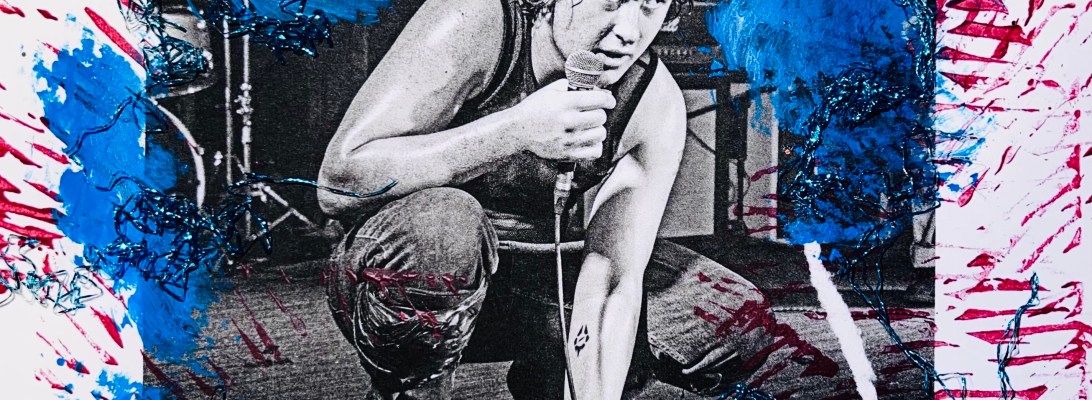
Ancient Artifax: unearthed punk-rock artifacts from the 1970s and 1980s – NYC, Washington, DC, and Midwest scenes

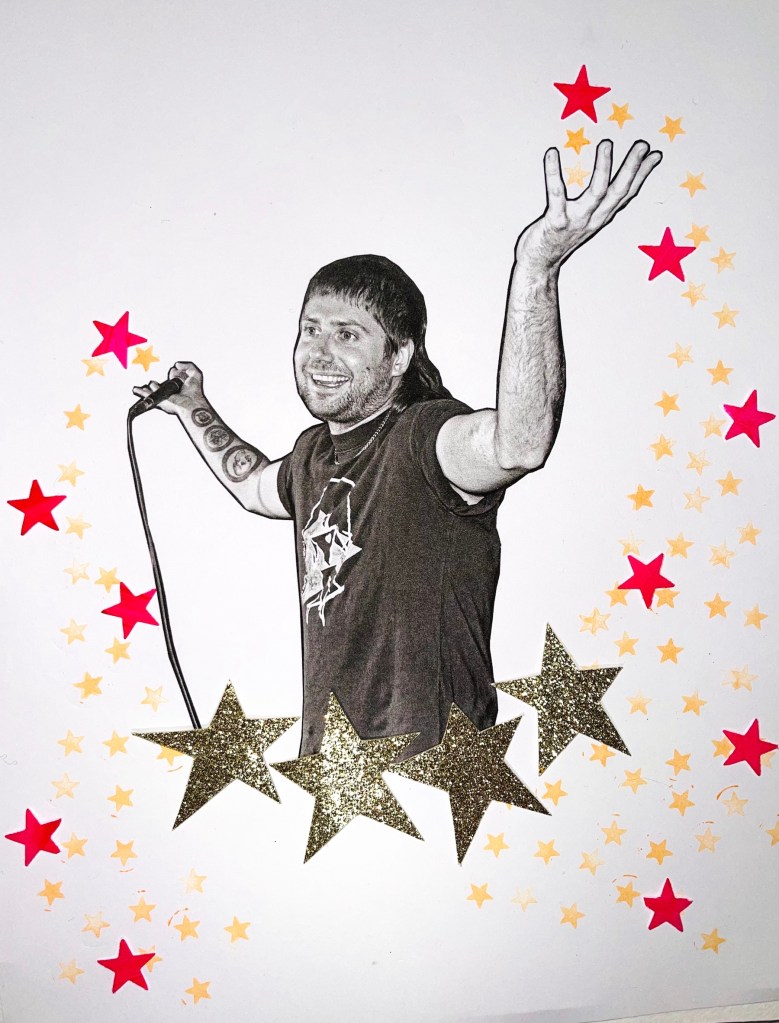
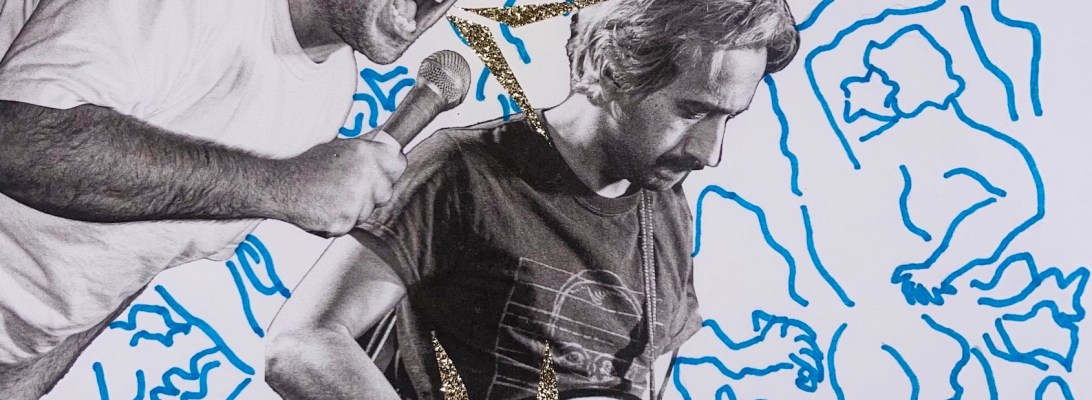
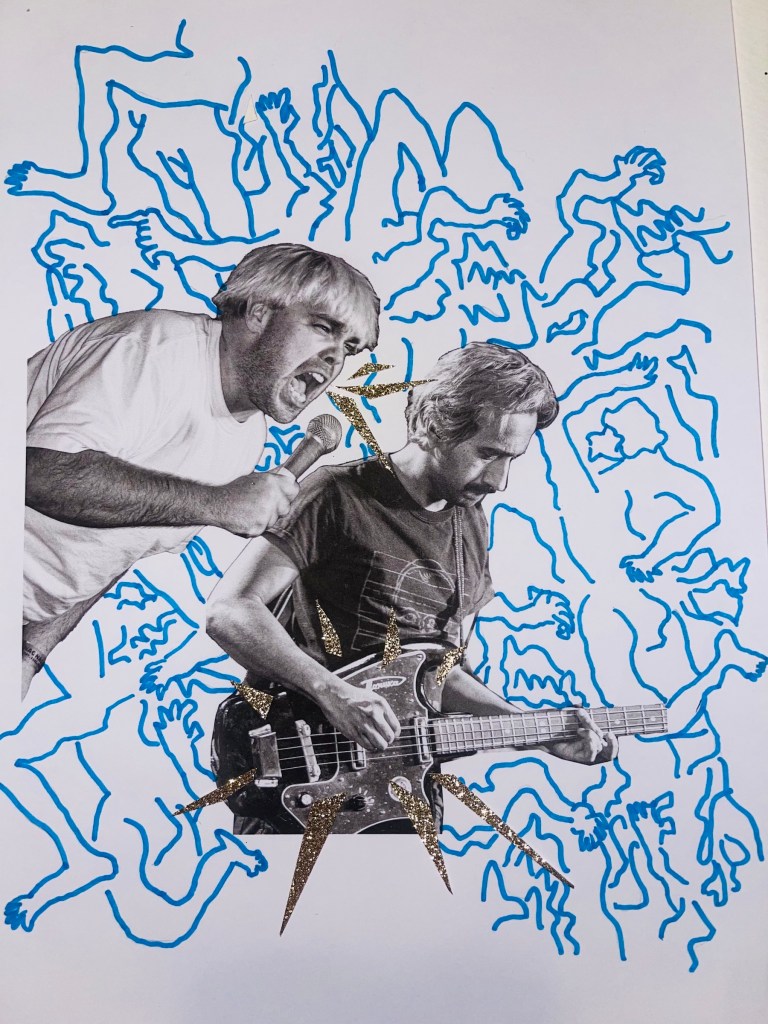
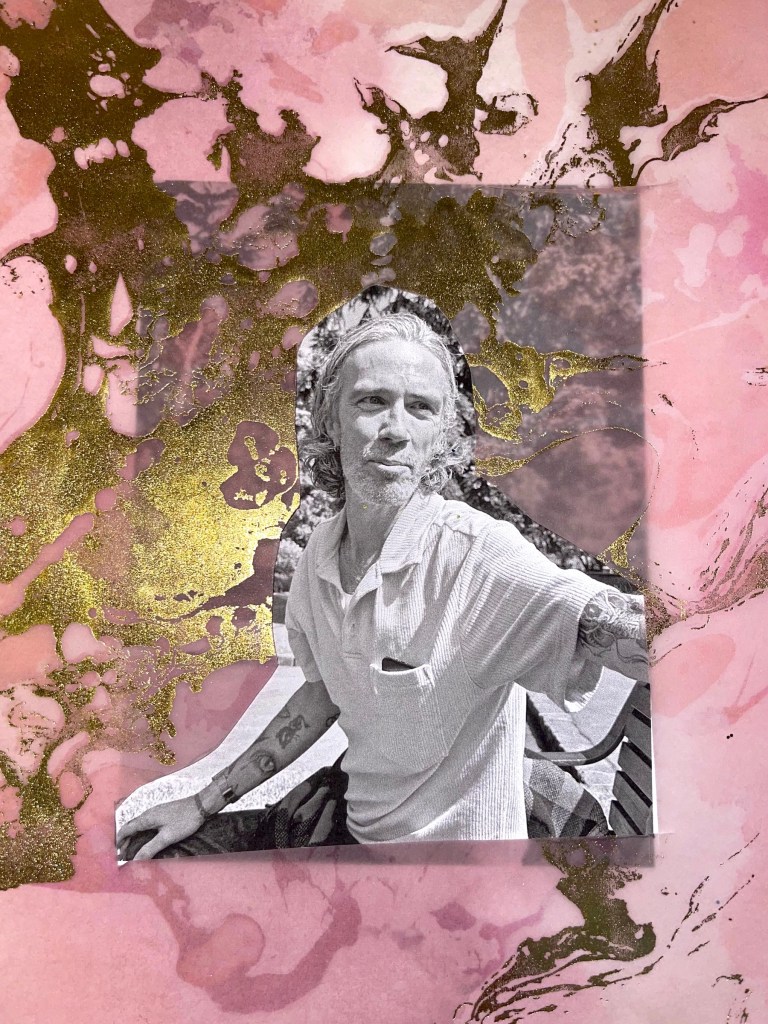
Handmade art by B.

Gimmie was really, really excited to talk with our good friend, Brian Gorsegner, about his new book, Ancient Artifax. It’s one of the essential punk-related releases of 2024. A hefty tome at 242 full-colour pages, it showcases rare and sometimes one-off 1970s and 1980s artifacts from his personal punk collection, lovingly curated over many, many years. 

Commentary throughout, provided by those who have connections to the items and speak of their provenance, gives an insider’s snapshot of the New York City, Washington DC, and Midwest punk scenes. We learn all kinds of nerdy stories and trivia: why Roger Miret really joined Agnostic Front; who taught John Brannon from Negative Approach about creativity; which hardcore drummer has the neatest handwriting; which punk has kept every Christmas card they’ve ever received; what songs Ian MacKaye was putting on a mixtape for a friend in 1979; which 45 Brian offered Tesco Vee from Touch & Go $4,000 for on the spot to be left to him in Vee’s will; why Creem magazine blows; the contents of a letter to the Screamers from a punk-icon-to-be living in NYC in 1978; why Brian LOVES the Necros, and much, much more!

If you’re a true music nerd, especially a punk music nerd—you’ll love this chat. AND you should 100% buy, Ancient Artifax. It’s truly a cave of punk rock wonders on the page. Brian’s love for what he does is palpable and infectious.

How did the book get started? And, how have you been?

BRIAN: I shot what was supposed to be a TV show. We shot the pilot and then three more episodes. When I did the second one, I decided I didn’t want to play music anymore. While I was working on the show, I got brought in to work on that [Punk] museum project in Vegas. While that was happening, I started working on the book. Then the band [Night Birds] broke up. And the TV show went away, I stepped away from the museum too, and I finished the book. The book came out and sold out [if you missed out it now has a 2nd run – but don’t snooze].

Last night, I was like, ‘Oh, fuck. That’s it. Oh, no! What’s next?’ I don’t have my next thing figured out, planned or even even thought about like, I just have never gave myself time to think about it. I would get up in the morning and go in some direction. But yesterday, I was really like, ‘Oh, shit. What do I? What do I want to do now?’ I don’t think I’ll ever make another book. That really feels like a one and done project. 

What was the TV show? Was it about collecting? 

BRIAN: Yeah. I drove from New Jersey to Detroit, like 18 hours, it’s not close. I went out to see John [Brannon] from Negative Approach. He found all of his old boxes, his fanzines, and his flyers, and a ton of cool stuff, in his mom’s attic after she passed away. He called me and he’s like, ‘You know how you’re always asking if I have stuff and I’m always saying no?’ And I’m like, ‘Yeah!’ He’s like, ‘I just found a bunch of boxes.’ And I’m like, ‘Yeah?!’ I was like, what the fuck?!

He started sending me pictures. He’s like, ‘You got to come out here.’ I knew it was going to be interesting. I was doing the TV show with the new revamped Creem magazine. I mentioned it to them and they gave me a crew and we flew out there. It was a big thing. We had a seven person camera crew and we shot the pilot. It went fucking really well. Then I ended up doing three more episodes that were all very good. I was feeling really good about it all. And then… Creem fucking sucks! They totally dropped the ball, they never knew what to do with it. It might get picked up at some point by somebody else, but they own the rights to all the footage. 

Oh-no! I’m so sorry that’s happened to you.

BRIAN: Yeah. It just ended up being a headache. So, the book was kind of a secondary thing, so I could still get my favourite stories across. I could still show images of my favourite things from those collections—that’s exactly what it is. It helped me be like, ‘Alright, I can still do this!’ But there’s still so much cool footage that I think people would really get a kick out of. 

I hope it sees the light of day! I would LOVE to see it. I love all those collecting and picking shows like King Of Collectables, Antiques Roadshow

BRIAN: Yeah. When I started watching American Pickers, it was like, I don’t necessarily care about old motorcycles, but when you watch those episodes you’re like, these guys make me care about it because I like old stuff and I like a story! 

Yes! Same.

BRIAN: So when I started doing this, it was very much the same kind of thing except the stories are like, ‘We were living in an abandoned building in Detroit and they were shooting shotguns at us. Then we lived out of the van. Then Nirvana came over and they stole my sweater. Like, what the fuck? stories! They were like a more dangerous edgy punk rock kind of American Pickers, with just crazier people. It was really funny too, everything about it was just like… man, this is great! This is really fun. Obviously a way more niche audience, though.

I feel like they could do those shows about anything, if you can prove that it’s important. What’s important and what’s not, I think is very subjective, but we were kind of getting the point across that—without this there would be no Nirvana, no Foo Fighters and no Beastie Boys. We made a pretty good case as to the cultural importance of early punk rock and hardcore. I think we would have had a wide audience.

Agreed. Look at the Agnostic Front documentary or the Kathleen Hanna documentary success and appeal. People love stories, and tend to pay more attention to things once they have a documentary about them. It’s like it legitimises things more in people’s eyes.

BRIAN: Yeah, it’s a more easily digestible thing. Somebody’s more likely to sit down and watch an interesting 30-minute thing that’s on TV, which is they already have it sitting in front of them, versus having to make the effort to buy a book and read a book. You have to be interested in the subject matter to buy a book. But anyone could be sitting around watching TV. 

Hopefully the show comes back around at some point. But right now, I was hoping that the book did well and would generate a little bit of interest. It only came out this weekend. 

AND it’s already sold out! Congratulations. It doesn’t surprise me. It’s such a quality, cool book. You did such a great job! I’m so proud of you.

BRIAN: It surprised me! Everybody kept saying, ‘A book is a really hard sell!’ I was like, ‘I don’t know. It’s not a book about me, though, it’s a book about stuff that people are already interested in.’ I put it together in a way that I thought people would dig it and it would be digestible. I think people were ready for it. 

Yes. People always say ‘Print is dead’ but I can tell you as a zine and book creator for three decades, that’s not true. You know what I’m talking about, though, you love paper stuff too. Are there any books on punk that have made an impression on you? 

BRIAN: Banned in D C: Photos and Anecdotes from the DC Punk Underground [by Cynthia Connolly and Leslie Clauge] was a really big one. That got me really into the early early stuff. 

Brian Ray Turcotte’s first book, Fucked Up + Photocopied: Instant Art of the Punk Rock Movement, that was a huge one! That was the first time I was seeing so many flyers. It even just got me thinking about flyers as being a thing that is designed for advertisement, then they get torn off of walls when you’re a teenager and they get thrown away. They get destroyed. Thinking about them as being like an artefact 40 or 50 years later—that shit fucking blows my mind. It got me really into collecting the paper stuff even more than records. Records have always been designed to keep and collect, you keep them in nice shape. Even back as far as 45s, they’re a tangible thing, but not paper so much. 

American Hardcore: A Tribal History [by Steven Blush] was a cool one. That was the first time I read about so many bands in one place, that didn’t have as much coverage.

Better Never Than Late: Midwest Hardcore Flyers and Ephemera 1981-1984 is a flyer book that the people that did my book, did. I’ve flipped through this thing a fucking million times, I love it! 

Also, Why Be Something That You’re Not: Detroit Hardcore 1979-1985 is a book about Detroit hardcore that my friend Tony [Rettman] did. So many cool stories that got me enthralled with the fucking Midwest hardcore scene. 

One that got taken off the shelves very quickly, Scream With Me: The Enduring Legacy of the Misfits,everything in there is fucking eye candy, all crazy, crazy collector shit. 

And then, the Radio Silence: A Selected Visual History of American Hardcore Music was another book that friends – Nathan Nedorostek and Anthony Pappalardo – did that has a lot of cool artifacts.  

The thing that I thought was unique about my book is that it’s my personal collection that I have purchased from people. I think the transition of the property from one generation to the next is cool and interesting, in the way of preserving some of that stuff. 

Otherwise, it’s interesting how many people sit on the stuff for their life. Like, ‘I’m never gonna get rid of it!’ And then it’s like, well, how much of that stuff ends up in dumpsters when people come clean out someone’s place when they die, because people don’t know what it is, so it doesn’t end up where it belongs. That shit happens a lot. People don’t have a game plan with their stuff. I guess once you’re dead, you don’t really give a fuck anyway, but… I don’t know, a lot of stuff that should have been preserved has been destroyed over the years. That’s an interesting point to convey. 

Now you got me thinking! We don’t have a plan for our stuff.

BRIAN: Yeah. You got a lot of records there behind you. So what happens tomorrow if you guys go out skydiving and you fucking splat on the ground? 

I totally see your point. 

BRIAN: it’s funny, I’m sort of the same, I don’t have any of my stuff in a will. But I make notes with certain things. Like, if I get something from someone, I put a note in there and I say: ‘This is from Brian [Baker] from Minor Threat.’ Or ‘This is from that or this,’ just so the provenance can continue to live, to move on, if something happens to me. My wife can give something to a friend or sell something. I want to be able to track it back to its original place it came from. Or be like, ‘Hey, this is valuable!’ I point things out every now and again, incase something happens to me, just so she knows. If something happens to both of us, there’s not really any great plan, so I guess the idea is to just not die ever! [laughs].

[Laughter]. 

BRIAN: I was talking to Tesco Vee from Touch and Go Records at one point. He had a record that I really wanted. I offered him $4,000 right then and there to leave me the record in his will. At the time it was a $10,000 record. I’m like, ‘I’ll give you $4,000 now while you’re alive, and then if you die in the next 30 years, I get the record.’ I was kind of kidding, but also dead serious [laughs]. He told me, I was fucking mental! [laughs].

What was the record?

BRIAN:  The Fix – Vengeance, the second record that they put out on Touch and Go. 

I’m guessing his collection must be pretty amazing!

BRIAN: I don’t know. I’ve never seen it. I’m hoping to maybe bother him to let me come take a look at it when we go do our Detroit pop-up book release thing, because it’s not super far from where he is. But I would like to see his archives!

Same!

BRIAN: The first two records, the first two singles, that he put out in 1980, they’re each like $10,000+ records. Because they just did 100 of one of them and 200 of the other, and they sat on them forever. Nobody wanted them. Eventually they sold out and then eventually they came big collector items.

I used to love the Touch and Go fanzine. 

BRIAN: Yeah. That’s my favourite early fanzine too. 

To give people context for Ancient Artifax, it started as an Instagram profile, the first post was 21st of December 2016 and you posted a Big Boys 7”.

BRIAN: Wow! So almost eight years ago, huh? Doesn’t feel that long [laughs]. Yeah, I was working a really boring job that I fucking hated. So I sat on the internet more than I should. I started a separate account to just post punk shit. My daughter was little. So, at that point, I wanted to have a traditional Instagram account with pictures of food and my daughter, and then have my punk account for all my bullshit. Before having a kid, my family didn’t really follow me on social media. But once I was posting baby pictures, all my fucking aunts came out of the woodwork. And I was like, ah, maybe I should keep these things separate. That’s funny, I haven’t even really thought about that, but that’s exactly how and why it happened. 

It was a way to share your collection with others?  Did selling things come after that? 

BRIAN: I’ve always sold stuff a little bit. I’ve been buying collections for a really long time. I bought my first collection, when I was probably 19 or 20. I spent every single dollar I had, but I knew that if I bought the collection, I could keep the things I wanted, and could sell some of the other things, and make a bunch of my money back. So then in the end, I get a pretty good deal on the stuff that I kept. I’ve always had stuff to sell, and I was never a big eBay seller. 

At that time, I was working at a screen printing shop with everybody else that collected records. If I bought a collection, I would literally just come in there with boxes of records and at lunchtime everybody would flip through the boxes and I would sell a bunch. So when I started the account, I definitely had stuff that I wanted to sell. Before that, I had started posting things here and there on my personal Facebook. It was just a nice way to kind of like generate trades; I like trading a lot.

I really love how in the introduction for your book, you talk about how you started to realise that it’s not even just about the item you find or what it is, it’s the stories that go behind it that became really interesting and exciting for you. Do you remember when you first felt that? 

BRIAN: Going back, the first collection I bought was from this guy Jim, he had done a really early New Jersey fanzine. I thought it was cool that I was getting records from him that bands had sent in for review. They were rare records. It wasn’t like a Ramones radio station copy or something that was on a major label. It really made me think about these tiny bands that only put out 400 copies of a record, and they were popping this in the mail to this guy. I always liked the provenance of stuff and knowing where things came from.

When COVID started, I was at a work, so I put a lot more focus on trying to find stuff and hitting people up. That definitely generated a lot of the really neat stuff I have from people’s personal collections. Because I think the other thing about COVID is that so many people were doomsday buying and doomsday selling. There were people who were like, ‘You know what? As a matter of fact, I just cleaned out my closet for the first time in 45 years, and I found stuff.’ That’s what happened with John, it was a perfect storm timing-wise. 

That makes sense. We go to a lot of the car boot sales locally, and we figured that during COVID people would cleanup around the house and want to get rid of stuff when things opened up again. 

BRIAN: What’s a car boot sale? 

It’s kind of like a swap meet. They have a market, usually in a carpark somewhere, and people sell stuff basically out of the boot of their car.

BRIAN: Oh, that’s so fucking Australian! 

Yeah. Just this weekend we ended up getting a bunch of 7”s. I find other stuff too, like I just got a Winnie the Pooh stuffed toy from 1950s for $2!

BRIAN: Oh, that’s fucking awesome. I wish I was more well-versed in stuff that wasn’t just punk. When I go buy collections, or if I’m in somebody’s basement, there’s always stuff that I’m like, fuck, I wish I knew more about, like, postmodern furniture, or even jazz and other music, or comic books, or toys. I’m getting better with some stuff. 

We also went to a big secondhand book fair recently too and got a lot of old Mad magazines from the 70s. 

BRIAN: That’s cool! 

Yeah. We love all that kind of stuff. Old stuff in general, pop culture stuff, and old underground comics.

In your book, the very first image is of you spreading out Necros flyers on the floor. What’s that band mean to you? 

BRIAN: I always loved the Necros! There’s like a weird something I always liked about them. When I got into playing in bands, it was so we could go play with our favourite bands, and we would make flyers and we would do fanzines and we were just really enthusiastic about the whole thing. That was always the impression I got from the Necros, they were always a very hands on band. They were record collectors, they did fanzines. They were just fucking hardcore kids through and through. 

The book really shows that they were doing a Ramones fanzine that’s like the most archaic fucking thing you’ll ever see. They went to see the Ramones when they were 17, and came home, and were so excited that they had to participate somehow. It’s like starting a band almost seemed secondary to them from being fans of hardcore. 

A lot of bands start because somebody takes guitar lessons when they’re a little kid or whatever but you know the hardcore movement, a lot of it were like—the Ramones came to town, you saw the Ramones, and then you went home and said, ‘We don’t know how to play an instrument, but we want to emulate what we see going on.’ I was always able to relate more to that because I’m not a musician. I just wanted to be a part of my generation’s hardcore scene. Necros were the pioneers of that stuff, everything they were doing and their fucking records are just terrific. 

When I was just getting into some baseline punk shit, my friend Evan introduced me to the Necros, he had a CD with like a million songs on it. It was so fucking raw and so wild. I thought it was the coolest thing I ever heard. That was really it. 

Doing the book and buying collections from some of them and getting to know them all a little bit, they’re still the coolest people, who are still super enthusiastic about the whole thing. Extremely supportive of the book and what I do. At this point, I call some of them friends, which is pretty awesome. 

Yeah! That’s exactly how I feel about all the people I interviewed for my book, Conversations With Punx. I grew up really inspired by these people and now I call a lot of them friends too. If you told teenage me that would happen, it would have blown my mind. I noticed that the next image in your book is of John Brannon’s handwritten lyrics for the song, ‘Can’t Tell No One.’ Was there a reason why you started the book with that piece? 

BRIAN: Somewhere in the middle of when I was putting the book together, but I wasn’t even thinking about putting the lyrics there, I wrote the last little bit about listening to ‘Can’t Tell No One’ for the first time. Or at least my recollection of hearing it when I was a kid and being like, jesus christ, this is the fucking meanest, but like such a meaningful, powerful song! I was like, oh, what better way to start the book than to put his hand-penned lyrics right next to the thing that I’m referencing? It was very organic in that way. 

I didn’t know how to put a book together. So when I started doing it, I knew I wanted to do it with three separate regions, and I would pull the things from each that were really cool. The first thing I did was chronologically laid everything out for each region, and then conducted my first rounds of interviews based on that and based solely on specific things that I wanted some feedback on. Once I did the first round, I realised that there was a real cohesive story in there. It’s cohesive while being very disjointed, intentionally disjointed in the book, because it’ll start a story and it’ll kind of skip to something. And it might not even ever go back to a story that it started. But there is a flow to it all. 

Once I realised I could put that all together, I went back and did some secondary and third interviews to help tie some of the stories together or to even help give some idea of the cultural landscape of what was going on in this city at this time. Or what was going on in politics, or what were the drugs of choice, whatever I thought needed to help paint the picture. 

I can see that. I think everyone is going to get something cool and different from your book. One of my favourite stories from it, is when John Brannon was talking about how his mum kicked him out of home, and he went to live with Larissa from L7. He said that he’s really, really lazy – which I would have never thought because he’s done so much – and he said that she would wake him up every day and be like, ‘What are you gonna do today? Are you gonna write lyrics?’ And she’d say something like, ‘To be a creative, you have to create.’ 

BRIAN: Yeah. I absolutely love that same thing for the same reason! It’s cool. I think the Midwest section shows a little bit of a softer side to a more fucking meat and potatoes, raw, angry kind of hardcore scene. They were kids, they were teenagers, and 20-year-olds doing what kids do and learning how to do shit. The stuff about Larissa is super sweet. I like that part a lot, too. It made me think a lot. I don’t know what came first, whether it was the interview or the image of the notebooks, (probably the image of the notebooks} but then having that as a segue. That was fun. 

I would see those little segues where I’m like, oh, fuck yeah! When I would put something together, I’d be like, god damn it! That gets me excited! I don’t expect anybody to like this book as much as I like it, because it’s so cultivated to my very specific tastes. 

I conducted hours and hours of interviews, but there’s not a lot of text in the book overall. I pulled the bits that I thought should be in there. Which I guess is the closest thing that makes me to an actual author with the book, the fact that I kind of carved the way that the whole thing was going to go. 

Another part in the book I really loved was I think it was when Parris Mayhew was talking about writing the set lists for the Cro -Mags because he had the neatest writing. When you look at the setlist included in the book, you really notice that. Also, I loved the boot print and Adidas shoe print on it! That’s telling another story visually and there’s so many layers if you really look at each object featured and start to dig down, it speaks to the culture and the time. I really nerded out on that.

BRIAN: Yeah, yeah, same! Because I already have a Cro-Mags set list in there that’s more interesting because I think it is their first set list ever. So really, the only reason the other set list made it in there is because of the boot and the Adidas print. You can picture people running across the stage and stage diving. What is more, 80s, more ’85, ’86, ’87, then an Adidas print and a fucking boot print?

Totally!

BRIAN: That’s New York City shoe wear, through and through. I thought that was the coolest thing. When I got that set list, I was like, ‘Oh, man, that’s fucking rad.’ And, that’s one that I was like, I’ve been in a bind where I’m like, ‘Maybe I should sell something? Maybe I sell that Cro-Mags set list?’ And I’m like, ‘I can’t do it. I can’t do it because of that fucking Adidas print!’ [laughs]. 

The stuff in the book is my personal collection and not stuff I’m going to sell. That finalised that stuff. If it made to the book, I’m like, ‘No, no, no, this is my stuff! This is my collection.’ When that set list went in there, I had to make a firm decision—this is definitely staying. 

[Laughter]. Being a massive fanzine nerd, collecting zines, and having made zines most of my life, I was really, really stoked to see the inclusion of the Ramones magazine masters in your book.

BRIAN: Yeah. There’s like 10 copies of those. That’s another thing, like when I dig through somebody’s collection, I’ll find stuff that I didn’t know existed. I don’t think anybody knew that existed and nobody’s ever really seen it. This will be the first time that people put eyes on it. And it is just the most… it is a fan-zine! It’s exactly what it fucking is! I LOVE the Ramones. Here you go. It’s this goofy, immature, fucking perfect thing. 

I know you love the Ramones as much as I do. We’re both big Ramones fans, they’re my favourite band in the world. So seeing the zine, it kind of takes you to a place in a time and you can imagine what it would have been like, to be that age in 1980 1979, go see the Ramones and come home and be like, I need to do something creative. You just have to do something. And that’s the fucking thing he made. It’s so funny and so weird. That’s one of my favourite things in the whole book. It’s the kind of thing that somebody might look at and be like, ‘Yeah, whatever.’ But that’s the kind of shit that I’m like—no, this is fucking counter culture! Like, here it fucking is, this is incredible. 

Exactly. And someone was so moved by the Ramones that they just had to make something themselves. I immediately identified with it when I saw those pages—I got it! Because as a teen, I’d go see local bands, and I wanted to be a part of what was happening so much and I found zines and that made me realise I could write about the bands and music I loved. I could be a part of it! You can use what you have on hand to make it. You can make something. There’s no rules. My first zine featured a hand-drawn illustration of a punk on the cover flipping the bird and drinking a beer! [laughter]. It may seem silly and immature but at the time that’s how I was feeling.

BRIAN: How old were you when you did that? 

14-15!

BRIAN: And there’s the fucking thing! That’s kind of it. The thing to remember is, hardcore especially, maybe not so much the first run of punk in ’76 and ’77, but hardcore was a youth movement. A lot of it was a counter action to what the 25 year olds were doing. It was people telling them, ‘Ah, punk’s dead, move on, find something else to do.’ And everybody’s strung out on drugs. And these were kids were like, ‘We’re going to do it our way! The songs are going to be faster. We’re going to do it with other kids. We are going to put on shows and put out records and put out fanzines.’ I love so many current and new bands, but it’s a totally different thing. 

The first era of hardcore, it’s exactly that. I can relate to it because when I was 15, it was the same thing. The songs were sloppy and stupid and the fanzines were goofy looking. And, you know, we didn’t know what the fuck we were doing. It was an artistic output because something in life sucked and we were looking for something to feel a part of. It’s interesting that things didn’t change from 1980 to 1997. 

When I was 17, years later, when I was doing the same thing, it was just that instinct to do it the same way. And I didn’t know what Touch and Go magazine was when I made my first fanzine. You’re just learning and figuring it out on your own. 

Seeing original mock-ups of flyers, and also seeing the hand-screen printed items in the book, like Tesco Vee’s shirt and his wife’s shirt was so cool!

BRIAN: Yeah, that’s the same kind of thing. Again, we had no frame of reference. Somebody in my middle school or high school had just taken silk screening classes. So we were like, ‘Oh, we can put any image we want on here.’ Then they were like, ‘Oh, you could put it on a t-shirt or a poster.’ I was like, ‘We’re going to do our band.’ Of course we’re going to do our band. So we printed our own band shirts. And then we once we knew how to do it, we went home and we did it on our own. 

Hearing that’s exactly how Youth Brigade did it in 1980, and that’s how Cause for Alarm did it in 1983, it’s like, man, that’s so fucking cool. There was like never a point… I’m sure there are some cases and people would slap me on the wrist for getting this incorrectly, but it’s less likely that a lot of major label stuff ever had to do that. Like being DIY on that kind of a level, booking your own shows, booking your own tours, making your own shirts, making your own records, making your own flyers, doing all your own shit. That’s fucking punk ethos, that’s hardcore. I’ll always think that’s the coolest shit in the world because you’ve got to work hard for what you want. No major label is going to cut you a big check and you’re not going to get any tour support. You just got to fucking go out there and do it yourself—make it happen. You have to really want it to to do that. When I was a kid and I did all that same shit, I really did. It was the only thing I cared about. 

There’s so much that I’ve picked up from getting out there and doing things myself, from making zines, to booking shows, running a distro, printing shirts, making a book. Before I did them, I had no idea how to do it but, like we’re talking about, I figured it out. I never waited around for someone to do it for me or to allow me to do something or expected anyone to do it for me—I just did it.

Another story from the book I really love is, you were talking to Todd from Necros and he just casually said that the chain from his boot he pulled out of a box was like, ‘Oh, I wore this when I first stage dived and it happened to be Fear on Saturday Night Live.’

BRIAN: Yeah! That was the other thing, once I had the regions, I coincidentally purchased multiple archives from the same cities, I realised, man, there’s cultural significance to a lot of these stories. 

That was another thing with the book, you could show a Beastie Boys flyer that nobody’s ever seen, like an impossibly rare, wildly archaic Beastie Boys flyer! Or talk about Fear on Saturday Night Live in a different way then it had been before. That stuff is really, really interesting, because some of those bands and some of those people did go on to have quite a legacy, even some of them being household names. 

To be able to put something in there and show my mom the book and be like, ‘Okay, well, you know what Saturday Night Live is, right? You know who the Beastie Boys are, right?’ It was a nice way where I was like, some normal ass people might be able to kind of digest some of this stuff.

That’s right! Punk has had an influence and impact on the world beyond our little underground communities whether people like to admit it or not. I’ve actually sold more copies of my book to more “normal” people than I have punks.

BRIAN: Yeah, I guess the other thing with your book, like mine, is more of a niche thing. But normal people think punks are weirdos. So if they see that book, they’re like, ‘Oh, I want to know what these people are talking about, I want to know what’s going on.’ And then, the weirdos, they get their fill of like plenty of fucking weirdo stories. And you know, it delivers in that, in a very thoughtful, cool way that I bet changes a lot of people’s perceptions. 

Even explaining punk to my parents, when I was a kid, I was like, ‘This isn’t the evil thing that they make it out to be. It’s a really positive thing.’ You don’t even know the trouble that it’s keeping me out of. Just because my hair looks funny, or I come home smelling like smoke, or whatever they didn’t like about it… I learned so much in those years, about so much shit, that I’m still fucking doing it. I’m 40. The stuff that I was doing that was so impactful, my particular trip during that whole thing was just very fucking productive. We were always being very productive.

Same! I’ve been going and going since I begun without a break—always doing something. I get you. I really love the handwritten mixtape tracklist that Ian MacKaye made for Nathan Strejcek (Teen Idles). Seeing the songs he picked and he thought were the best at the time (1979) to share with his friend was so cool.

BRIAN: What a crazy time capsule, man. You’re like, ‘I wonder what they were listening to?’ Here’s exactly what they were listening to! I literally took that list and I went on YouTube, and put every one of those songs on a YouTube playlist. So when the book comes out, it’s like, here it is, check it out. Here’s Ian’s playlist. You can hear the influence that it had on those bands that it had on his bands.

Yes! I really adore the letter written by Kid Congo Powers to the Screamers in the book.

BRIAN: Yeah. That was pretty special. That thing is fucking insane. So Howie Pyro passed away last year, he was a New York guy, his collection ended up in Los Angeles, and I got a phone call. The book was done, totally done. I got a call to go out and look at his stuff. I bought a bunch of flyers and I came home and I was going through them. I looked at the back of a Blondie flyer, and there was that fucking letter. I read it and I was like, holy shit! The page before it in the book, I had the Johnny Blitz benefit button, the CBGB brochure, and Cynthia Ross from the ‘B’ Girls talking about things changing in the city and how he had gotten stabbed; it all fit. I don’t know how Howie ended up with the letter. Kid wasn’t in The Cramps yet, but he was writing to the Screamers telling them what’s going on New York. He talked about like The Cramps being his favourite band in town and then he joins the fucking Cramps. It’s like, holy shit! He’s tells them there’s gonna be a show this weekend with Blondie, The Cramps, Ramones and The Dead Boys. Jesus christ! Imagine all of that at one show in one venue—that’s so mind blowing that was all coming out of the same place. 

Yeah. And then Kid talking about being kicked out of the place they were living and how they’ve got a new place, it really paints a picture for us.

BRIAN: Absolutely. I thought that that was so crazy the fact that something like that existed, it just ended up in a pile of paper in a box. And then it ended up across the country 3000 miles away, and then to go out there to find it and not even realise that it was on the back of the flyer when I got it and I came home, literally, it was the week that we were sending in the final files, and to flip it over and read that and be like, what is this?! What the fuck are the odds? I had to put that in the book. Such a fucking trip. That might that might be my single favourite moment of doing the book. It felt really… I don’t know, I don’t believe in anything, really. I’m not a God guy. I’m not a karma guy or anything. But that felt right! It was just like, holy shit, I was fucking meant to find that to put it here. It felt really cool. 

I love those moments! Synchronicity. Something else I really thought was cool in the book, was a quote from Roger Miret saying that, ‘My girlfriend made me join Agnostic Front.’

BRIAN: I hope he’s not mad at me for putting that in!

[Laughs]. I’m sure he’s not. Roger is a sweetheart. It’s true! If it wasn’t for her we may not of had Agnostic Front as we know it, right?!

BRIAN: I know. Yeah, so crazy! He was a bass player, played in The Psychos doing what he was doing. And, for whatever reason, she pushed him in that direction. 

I’m sure there’s a lot of unknown stories like that in punk and hardcore, moments where women helped shape things more than people know. Like, the one we talked about with Larissa from L7 pushing John Brannon to create every day.

Another moment in your book I thought was neat is Alex [Kinon] from Cause For Alarm and Agnostic Front telling you about how he saves all his Christmas cards! And in the book you have envelopes from people’s correspondence. It made me feel not so crazy because I keep all the stuff that’s been sent to me over the years, I’ve got mailers with handwriting from Keith Morris, Tim Kerr, Jesse Michaels, Toby Morse, all kinds of people. I kept them all. To some they’re just pieces of paper and card but to me they’re important. I’m a big fan of handwritten things AND paper! Handwriting is so personal.

BRIAN: That’s it, right?! People hold on to stuff. Even back then people knew what was going on in punk rock and hardcore and that it was going to have an impact. They knew that it was special, it was really cool, unique, and different. Initially, when I started doing the book, I wanted to get more people talking about why they held on to stuff. Obviously, some of it is a coincidence. Like, ‘I forgot I had it,’ or  ’It was in this attic.’ But a lot of people intentionally kept it safe for all these years, which makes me feel really good that, I was the person who they were. 

What’s something that you’ve come across in your collecting that absolutely floored you?

BRIAN: I’ve got four Teen Idles buttons, and they made 100 of them. I remember when I did my first band before we ever made a piece of music, a shirt, anything, going to make buttons, because there was a place that made them. And, when I got those Teen Idles buttons, it was like, fuck! It really like took me back. I was like, ‘I can’t believe that this exists.’ 

The Dead Boys contract that’s in there for the record release show of Young, Loud and Snotty, showing how much they made and their very funny rider, with the flyer that says ‘free chips’ on it! 

Then there’s the absolutely bananas set lists for the first Rites of Spring show and for the second Minor Threat show.Those are both really cool. 

Is there is there anything that didn’t make it into the book?

BRIAN: There was a couple things that as we were putting it together, it just didn’t have a place. Because it was going to only be the three regions, I had to go back and I pulled out some really cool Poison Idea stuff, like the bracelet that Jerry’s wearing on the cover of Kings of Punk. There was a ton of stuff that didn’t make it.

Do you have any holy grail item you’re still chasing for your collection? 

BRIAN: I would love one of the Globe posters for the last Minor Threat show –  especially like a ‘Minor Treat’ poster; they only made a very small handful that were spelling errors that they put the word ‘treat’ instead of ‘threat’. I love those old Globe posters. 

Putting the book together, collecting for so long, and all these conversations you’ve had for it; is there anything surprising or new you’ve learned about punk or the people that create it? 

BRIAN: I guess when it gets to that really early stuff, not that I didn’t necessarily know it, but it really puts it in perspective just how much those bands and those people, like… there wasn’t punk before it. So the bands that had such a large influence on them, whether it was Aerosmith or Black Sabbath or Kiss, that’s what they all grew up on, and how much of an impact a lot of that stuff had. Even going into the early-80s, because again, it’s like, if you’re 16 in the 80s, you’re not necessarily buying a Dead Boys record when you’re 15, you know, maybe like you’re buying an Alice Cooper record. So it’s not that it only influenced early punk, it influenced early hardcore too.

The other thing I did think was surprising, is it seems like every-fucking-body that got into punk, even as early as ’79, everybody knew the Sex Pistols, which is interesting of how much of a household name they were. My impression is that they got coverage on the news, they were popping up. It seemed like everybody was like, ‘I read about the Sex Pistols.’ They were in the newspaper, and on the TV. But it’s funny because we think of punk as being underground. But some of the stuff was way above ground. It wasn’t a secret. It doesn’t seem like the Sex Pistols were a secret to anybody in 1979. You didn’t have to dig too far to find it. A lot of people cite the Sex Pistols as such a huge influence because it was out there. It was available for people to discover. That’s pretty interesting.  Who would have fucking thought that their antics and their bullshit would have such a lasting impression on so many people. 

Yeah! And the Ramones desperately wanted to be popular, they wanted to write a hit. I always think it’s funny how people want to gatekeep punk and keep it underground and are so precious about it like it can only be their and their friends’ secret little thing. 

BRIAN: Who would have thought that it would have got so much attention and something so small and trivial made such giant waves in our world. 

I still hear people hating on underground bands for crossing over into the mainstream. It’s like, yeah, go on, hate on someone for actually being able to make a living out of doing what they love. That kind of mentality to me is so silly.

BRIAN: True. Yeah, that’s another thing people say, ‘Well, punks not about making money.’ I’ll never have an argument with somebody about what punk is and what punk isn’t because I don’t give a shit. There’s not enough time in the day. But if you want to call the Ramones the pioneers, it was a fucking goal for them to make a million dollars. They wanted to get fucking paid. 

I do believe it was more part of the hardcore way of thinking. When you’re 16 and you’re doing it just because life sucks and you’re looking for somewhere to go and you don’t know where else to turn, making money on something was never in anybody’s vision of sight, that it could have ever been a possibility. So I believe the Ramones were like, ‘No’ and thought, ‘You get signed to a major, you do this, and then you hit the road, you put in the work, and you fucking make money like a rock band.’

But then hardcore was very, you’re doing it for the passion, you’re doing it because you love it and no you’re not chasing a shiny object because there’s no shiny object to chase. Playing in front of your 18 friends in the basement, that’s your biggest payoff.

That’s another thing: what’s not to love about people doing something for the most pure possible reasons and not because they think they’re gonna get something out of it?

GET a copy of Brian’s ANCIENT ARTIFAX book here. Follow @ancientartifax.

GET to the book release partyAncient Artifax pop-up shop this weekend if you’re in NJ (wish we could be there)! We ❤ you Brian!

Orstralia: A Comprehensive Guide To Australian Punk History

Handmade collage by B.

Titled after a track on The Saints’ classic second album Eternally Yours, Naarm/ Melbourne author and musician, Tristan Clark’s books: Orstralia: A Punk History 1974–1989 and Orstralia: A Punk History 1990–1999 narrate the evolution of Australian punk from its underground inception in the ’70s and the emergence of hardcore in the ’80s to its commercial ascent in the ’90s. Clark’s comprehensive volumes delve beyond the music, exploring cultural and sociological contexts. Enriched with interviews from an extensive list of artists including The Saints, Radio Birdman, Boys Next Door/Birthday Party, Babeez/News, Victims, Leftovers, Fun Things, Zero, Psycho Surgeons, X, Depression, Hard-Ons, pioneering all-female artists Gash and the Mothers, Cosmic Psychos, Grong Grong, The Living End, Bodyjar, Frenzal Rhomb, and many more. The story is covered city-by-city, as well as significant regional centres, providing an unprecedented account of Australian punk history.

Gimmie spoke to Tristan about his 8-year-in-the-making project, how he used his discontent from a customer service job to start the project, his punk rock origins, and of the tragedy and triumphs he documented of the people that create Australian punk.

You’ve been involved in the Australian punk community for about 30 years. Your books, Orstralia: A Punk History 1974 – 1989 and Orstralia: A Punk History 1990-1999 are about to be released; how are you feeling?

TRISTAN CLARK: I’d like to say relief; it’s been such a lengthy process. It’s still hard to fathom that it will be out there. There are still all manner of things to do around it: I have to post a lot of stuff. I guess the perception is, ‘All done, it’s out,’ but there’s still a lot to do. It was probably approaching eight years from when I first started the book till its release. Admittedly, I finished writing it quite a while ago, but I was just waiting for it to get published. It was a glacial pace, almost probably worse than releasing punk records.

How did you first discover punk? 

TC: I saw a skate film called Gleaming The Cube (1989). There’s a scene where he [Christian Slater as Brian Kelly, a 16-year-old skateboarder] puts on headphones and it’s D.R.I. playing. You know what D.R.I. are, such an intense experience. I had no frame of reference for it at the time. It was kind of terrifying, yet simultaneously alluring. Back then, obviously, you didn’t have the means of identifying and procuring that kind of music. So it passed me by. 

A few years later, a friend acquired a tape, someone had passed on to him on the bus at school and then in turn he passed it on to me. Immediately, I could connect it back to that music that I’d heard previously. On that tape I recall first hearing Poison Idea ‘Feel The Darkness’. Needless to say that led me down a, an unforeseen dark path, pardon the pun. 

Have you always sort of lived in Naam/Melbourne? 

TC: I was born in Tasmania, but we moved here when I was six. My recollections are all pretty much Melbourne.

What were you like growing up? 

TC: I was a pretty introverted, quiet kid. As to how I developed an interest in punk music, that’s a pretty uninteresting one. My upbringing was largely suburban middle-class normalcy, so there’s nothing notable to speak of. It was all good family, sports, and a good school. A lot of underage drinking, which later lent itself to punk. But I was kind of wary of the traditional life patterns that I was seeing around me. There was some sort of internal urge to break from that. I didn’t have a clear vision of why, but I was always aware that I was a bit different, internally, from most of the people I knew. I was also lucky in that, I didn’t struggle socially at school. That difference over the years has probably seen me perceived as a little snobbish at times. Really it was an awkwardness and introversion, which I came to realise later that’s quite pervasive amongst punks. 

How did you find your local scene? 

TC: I was pretty fortunate in that a kid at school, he was either playing in a band or he was really attuned to what was going on and he would put up fliers around the school. There was a noted all-ages venue that was close to where we lived that was part of the circuit touring bands or even international bands would play. I saw Fugazi, NOFX, and Propagandhi there. There was a big all-ages scene at that time really thriving, it went deep into the suburbs. There’d be 100s of kids attending shows in suburban halls. It was also very unregulated back then, which made it even more enjoyable. This was from ’92 onwards.

There’s some younger bands at the moment that are making a real conscious effort to put on all-ages shows. In Melbourne, given that we have a huge scene here, there’s always been a conscious desire to put on shows away from licensed venues, there’s a consistent history of shows in unconventional spaces, like under bridges and in disused buildings. There was one put on a couple of years ago in a tall office block right on Southbank overlooking the city. We’re sitting in this plush boardroom with our feet up on the desks. It was quite incredible till the cops came shut it down.

I’ve seen video online of some cool shows in Naarm, like the shows Christina Pap from Swab puts on in drains.

There’s been some really incredible ones of those, more often not involving the police as well. They’re just great, that kind of thing, especially as a young person would be so enthralling.

How has punk influenced your life? I know you’ve played in a lot of different bands: Bloody Hammer, Infinite Void, Deconsume, and more. I have some of your records.

TC: These kinds of aspects are just not things that I ponder. It’s interesting. You spend three decades of your life immersed in something without really giving much consideration to what the reason for your motivations are—at least, I don’t.

My background was more in the political scene, really quite explicitly, explicitly political, and that was very much entwined with activism. Therefore, a lot of stuff, even, I have to admit like a lot of zines and writing about punk just seemed of secondary importance to me, like frivolous navel gazing. I was more into dense political reading. As you get older, you get a bit less dogmatic and allow space to investigate these things.  

When I was young, following high school, I was studying graphic design. I was promptly kicked out and banned from that. At that stage, I developed this budding political awareness through punk. I saw my future in an advertising agency, which was something that I couldn’t really reconcile with my very undeveloped anti-capitalism views back then. So then I went off to study politics, but that was very quickly subsumed by bands and touring and I dropped out.

Punk has come to permeate every facet of my life. At times I feel like I’m a relic in that still rigidly set in those ideals. I’m not inflexible, but maybe I am [laughs]. I’m still very much interested in politics. I still love the music and frequent shows regularly. My social circle is still primarily punks and my socialising does tend to be shows. There’s not even the thought of going away or pursuing something else.  It’s been such a constant and all-encompassing to my life. Especially the last eight years spending every spare moment writing about it. 

In the ‘About the Author’ section of your book it says you’re an educator; are you a teacher?

TC: A classroom aid. I work at a non-mainstream high school, a small community high school that’s traditionally attracted a lot of students who would be considered freaks and weirdos. Of course, there’s been numerous punks amongst them. There are kids that have played in bands. It’s interesting that we have a large proportion of students who are neurodivergent. There’s a number of punks amongst them, and it became quite evident to me from this and through my research and interviewing, just how sizeable that segment of people who have been attracted to punk are neurodivergent. But that probably hasn’t really been recognised or acknowledged. 

I noticed that reading your books. I remember quotes from Link Meanie talking about mental illness. I had no idea he struggled with that. I learned  a lot of new stuff from your book. I think his talking about that will make a lot of people feel seen and maybe not so alone. I think your books are going to start lots of conversations, which is really great. 

TC: It was interesting how intimate that interview was. I’ve never met the guy, but we totally revered him as teenagers. It was surprising that a lot of people I’d never met face-to-face, once you get into conversation, how much they were willing to reveal. Really personal, even traumatic stuff at times. 

Tragedy is a big theme throughout the book. At times it’s so brutal. Like, when Ed Wreckage from The Leftovers was talking about his band and said a couple of people in the band committed suicide and others died of cancer. Ultimately, Ed passed away  before the book came out.

TC: That is definitely one of the overarching themes, sadly. But, you know, as someone like yourself, who’s been around for that long, you’ve seen all that firsthand. I was having a conversation with one of the first punks I ever knew this morning, and we were talking about how many people we know who are dead. 

I gave the book to my dad  to read before I signed off on the final edits. I was like, ‘Oh, what’d you think?’ His first response was, ‘A lot of dead people.’  That was quite jarring. The other day, I catalogued how many people I interviewed that are now past, I made a post about it to acknowledge those people. It’s a dozen. 12 out of  200, is kind of staggering. I don’t think it’s necessarily exclusive to punk, but they’re not lifestyles that are given to temperance or longevity. 

I understand that you got started with your books because you said you were unhappy working a job in customer service and you were kind of looking for some purpose or some meaning. 

TC: I was disgruntled with where that side of my life was going. In terms of my creativity or my social life, I couldn’t fault it, but my professional life didn’t really exist. I was working this crushing customer service job. And then I just happened to reread, Inner City Sound by Clinton Walker. It’s a cool book, but it’s very limited in what it documents. Seeing other books from places that were being published, it became evident that there was nothing that could be considered comprehensive that had come out of Australia. There’s a lot of other projects and books from here, but a lot of them tended to consign themselves to a specific place or time or a limited number of bands. I felt there was a glaring gap that someone needed to fill. I saw myself as that idiot that was going to undertake that project [laughs]. 

People pointed out to me along the way, ‘Oh yeah, you know, so -and -so tried’ or  ‘Many people have begun but never saw it through to fruition.’

Insane Hombres by Bazzil.

Congratulations on finishing it! It’s a big achievement. Before you started doing interviews for this book, had you done interviews before? 

TC: No. When I started, I really had no formula. It was really spontaneous. It very quickly fell into more of a conversational form, which lent itself to drawing out a lot more of those deeper and intimate responses from people. That was the positive side of it. The negative is, you have to go back and transcribe bloody two hours of tape that you’ve just done, waffling on to each other.

Who was the first interview? 

TC: A friend of mine. He played in Thought Criminals in the late-70s. They’re one of the more noted bands of that time. Their record’s quite revered. So then I felt that I could use that as leverage with other people, like, ‘Oh, well I’ve interviewed this band, I’d like to interview you.’ Amazingly people were so forthcoming and placed trust in me. I was a random guy with this big claim that I was going to write this great book! People didn’t really question that, they were willing to offer me their time. I’m forever thankful for that. 

What were the things that you were most interested in finding out about from the people you spoke with? 

TC: Initially, it was more to do with the band details and minutia but it quickly became evident that wasn’t the interesting aspect. It was more people’s stories. Obviously, you want the humorous anecdotes that will get people to pick it up but I found people’s personal lives were more compelling than often the music itself. People had these really rich lives either adjacent to punk or after punk. I began to really try and capture that aspect.

I remember one interview I did with one of the guys from Last Words, it had gone on for an hour and a half. We got to the end of it and he happened to mention in passing that he was now a pastor. I’m like, ‘Oh, sorry, we’re gonna have to go back and unpack how you get from playing in a punk band in the Western suburbs of Sydney in the late-70s, living in a migrant hostel, to now being a man of the cloth. There’s a lot in-between here that I need to know about. 

Any other really memorable stories or even ones that didn’t make it into the book you could share? 

TC: You had really polished performers like Jay from Frenzel Rhomb or Russ from Cosmic Psychos, who have  honed their interview skills over many years. They have a wealth of anecdotes to humour you with. But often it was the really unassuming ones that you went into with very little detail about their band or their lives and you’d come out of it and just be like, oh wow! That was so rich and fulfilling, or maybe traumatic as well. 

I made a conscious effort… bands like The Saints and Birdman, obviously everyone’s heard Ed [Kuepper]’s story, ad nauseam, same with Deniz Tek and Rob Younger, but I made an explicit point of tracking down other members of the bands that could offer a different perspective. I spoke to drummer Ivor Hay. I said to him, ‘Oh, has anyone ever interviewed you?’ He’s like, ‘Outside of the documentary? No. No one’s ever talked to him about the band.’ It’s quite different to that standardised narrative that you get from Ed.

I think that the thing that makes The Saints’ story extraordinary is, when you look at the Ramones and The Damned, you’re talking these great cultural centres of London and New York. Then you talk of the Saints you’re talking about Oxley, that was the most conservative and stifling environment. Their message more spoke to suburban alienation and monotony, and that oppressiveness that was ever-present to people in Brisbane, transgressive or, buck the norm at that time. 

Suicide Squad by Kay Glass

Was there anyone that you wanted to find for the book that you couldn’t? 

TC: A few people. Especially women it seemed were reluctant to share their stories. I could only speculate whether there’s trauma or an unwillingness to revisit that aspect of their lives. I’m not sure.

I was hoping there would be more women featured in your book, but I do understand the reluctance of women to participate. I wanted to include a lot more women in my own book because there have always been women involved in punk, and I know that there is a feeling that we often get written out of the story. As a woman in punk myself, it’s very, very important, but many I asked didn’t want to speak for it or ignored my request. I wanted to ask you about it because some people may see your book and complain there aren’t enough women, but what they don’t see is how many people you may have asked. It wasn’t through lack of trying on your behalf.

TC: That’s how I feel. Given the extensiveness of my research, I couldn’t uncover too much—it still is uniformly white and male. But then the proportion of women that I did get is reflective of the numbers of performers. Ideally, I would have liked more. I’m scared of that critique. But I did try. My book would probably be close to like 10% women. 

I really appreciated all their contributions and the perspective they gave.

TC: For the most part, they were positive. There’s probably periods through the 80s where that real masculinist sort of thing was dominant, especially during the hardcore era.

It’s still that way to a degree. The hardcore scene, more so than the punk scene.

TC: That’s probably not something that I’m too exposed to. But within that more politicised scene that I tend to still be involved with, it’s changed so much and it’s fantastic. There’s always going to be problems, issues, but there’s been a definite attempt to rectify things and people are quite vocal about confronting issues and certain attitudes. 

Your books are named after The Saints’ song ‘Orstralia’. When in the process did you realise that was going to be the title? 

I originally had the title of Gobbin’ on Life. If you look through the content it seems quite suited, but then I had, especially some older men, questioning it. Even people that weren’t involved in the project were like, ‘Oh, that’s a dumb name.’ 

It can be scary putting stuff like this out into the world. People love to critique and judge.  

TC: I am anticipating some backlash. I had an article in the City Hub the other day and they titled it: The Rise and Fall of Punk. I never made mention of a fall at all.  He was an old school journo, he wrote shorthand. When I read the feature I felt sick. That’s not what I said. No, no. And then I stopped reading it. I thought that hopefully no one will see it, and then some people started sharing it on the internet. I guess I’m just going to have to live with it. 

Are there any punk books that have made an impact on you? 

TC: A lot of books are strictly oral histories. They’re still fascinating and have great anecdotes, but they then tend to lack context. I really wanted to sort of be able to place punk within its political and social and economic context within Australia. 

I’ve read a few books, John Savage’s England’s Dreaming, that’s the classic. But beyond that, not a lot of them. I probably read, Please Kill Me years ago. I was always more into political writing. 

I really liked that your book went beyond the major cities scenes and bands.

TC: That was a very conscious effort to do so. It is hard to excavate that history from outside the city centres. It took quite a bit of effort, but if I was trying to tout something as a comprehensive history, I had to do that. It was fascinating to hear about bands that never amounted to much in a conventional sense. A lot of them only ever played a small number of faltering shows, but they had some great stories that accompanied them. 

I tracked down The Rejects who were the first punk band in Rockhampton in the late-70s. They were staggered that someone knew about them, let alone wanted to ask them some questions. They played one show ever at their high school graduation. 

I noticed at the beginning of your book, in the preface, you said that some of the views expressed in the book don’t necessarily align with your own values. Reading through the book I was alarmed to come across the views of a particular  band from Western Australia.

TC: Yeah. 

Was it hard to sit there and hear these things during an interview? 

TC: I didn’t actually give him any allowance to express any sort of repugnant views. I really stuck to the music, but he’s still, as far as I’m aware, a neo-Nazi. 

People probably, they’ll find that contentious that I included people like that. You know, there are a couple of neo-Nazis that I interviewed or former neo-Nazis, and people will find that problematic. But I’m like, well, I don’t want to hide all these distasteful aspects of punk, I think I have to include it. Perhaps that requires me to speak to people that I never would otherwise – I find their views horrifying – to give the full picture. But yeah, that was a pretty interesting one. We did the interview and nothing distasteful was said and it was polite enough, but then he said, ‘Oh, the guitarist in my current band is now living in Melbourne. You should like meet up with him.’ And I was just really evasive, ‘Yeah, yeah, sure.’ Then he keeps calling me. I do’t want him to think somehow that we’re friends or maybe that I have some sort of sympathy to his views. I’m really polite. I’m not going to be like, ‘Fuck off.’ Eventually I stopped answering and that was the end of the correspondence, thankfully. 

There’s people in the book that I included that I’m aware of things that they’ve perpetrated that makes me feel really uncomfortable, and especially uncomfortable meeting them in-person or speaking to them. I had to put that part aside, just say, ‘Look, this is your purpose, to try and glean information from them, to give a fuller sort of history.’ There’s a difficulty in that when I know what you’ve done in your past. Like, with the singer from Bastard Squad. I’m kind of scared that what I’ve written, not that I wrote anything that isn’t true in there, you know, most of that, aside from killing his girlfriend; he didn’t want to talk about that. But there’s a lot of sort of unsavoury elements in his life.

One thing about making the book… it’s interesting how people can oscillate between extremities, like especially people that, you know, found themselves as neo-Nazis and then could have sort of this ‘Road to Damascus’ moment and atone for that by then turning into ardent pacifist anarchists. And that they’re able to somehow make that switch. It’s like the same energy, but the opposite way. Like I said, my thinking is still fairly rigid and very much sort of in line with what it was 20 odd years ago. 

Kamikaze Kids by Bruce Tindale.

Is there anything you learnt about yourself throughout the whole process?

TC: Probably more so the aspect about the neurodivergence, but that also coincided with my job as well that I started working. I was like, oh, you know, these certain things resonate with my own behaviours as well.  But, beyond that, no, I’m not sure. Maybe I guess a patience and resilience that I wasn’t aware that I had. I felt at times that I was doing what was almost effectively informal counselling for some of people. 

I’ve gone into a role at work where you take on this wellbeing role. So whether you know that ability to sort of sit and listen to people and really empathise with them. Maybe that in part really honed by interviewing so many damn people and listening to the often troubling stories and thoughts. 

Anything else you want people to know about your book? 

TC: I guess, weirdly, it feels like maybe some sort of semblance of reflection on it, and this might sound contrived, but it almost feels like an offering to the people and scene that’s given me so much. 

I’ve speculated so many times about, what my trajectory might have been if I stayed that suburban stoner kid. I can’t imagine it to have been a tenth of the experiences I’ve got to enjoy because of punk. 

Punk, it’s permeated, fashion, art, more mainstream music, that’s undeniable. It’s imprint on Australian culture is surprisingly much larger than what you would think for something that has mostly being fairly marginal, aside from brief periods of sort of prominence. It’s something that’s probably not been duly acknowledged.

Buy the books at PM Press (worldwide) or from Orstralia (Australia).

Artist and Split System bassist, Deon Slaviero: ‘Looking for new ways to approach creating… keeps the process fresh and interesting.’

Original photo: Jhonny Russell / handmade collage by B.

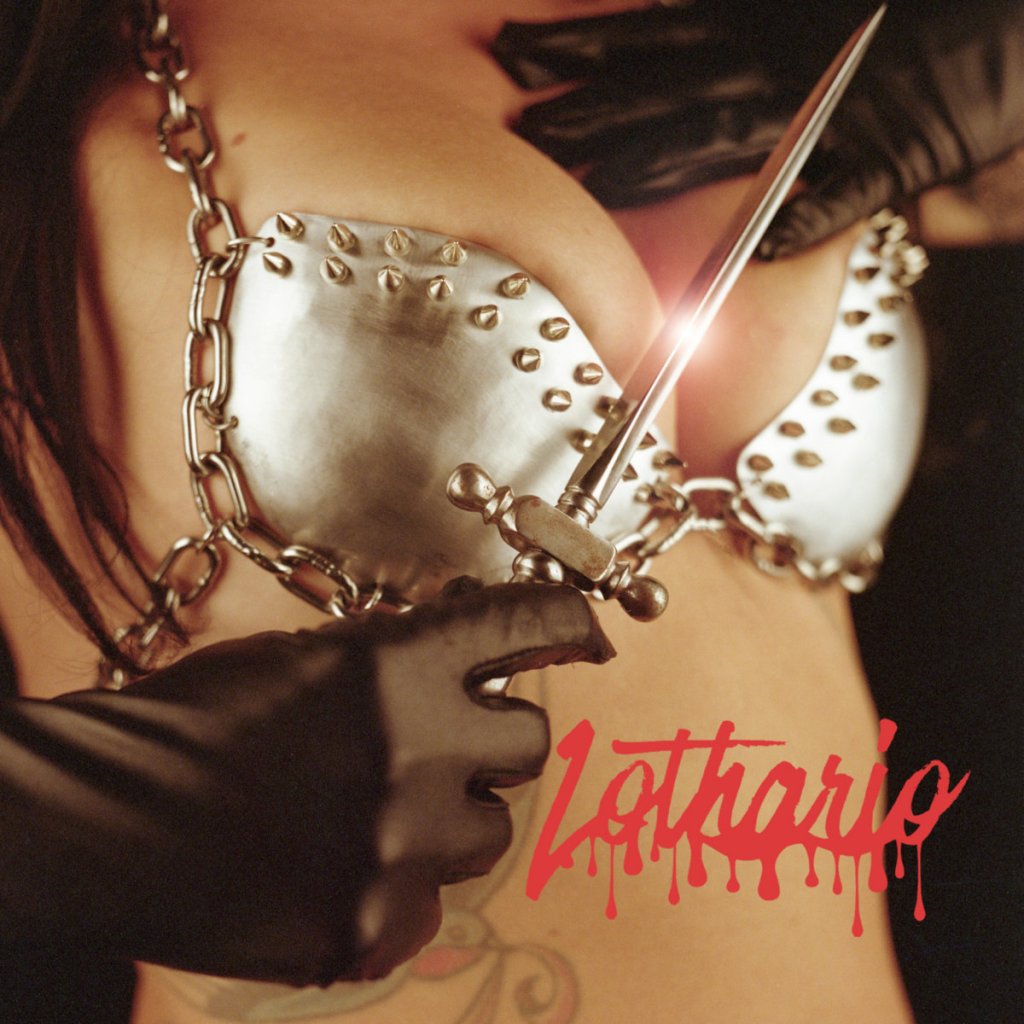
Split System bassist, Deon Slaviero’s creative journey began in childhood, inspired by his brother’s guitar sessions. He started playing music himself in high school, forming bands and collaborating with friends. His love for art grew alongside his passion for music, influenced by the dark, bold imagery of heavy metal album covers and the chaotic style of street artists. Additionally, the warped, monstrous characters from cartoons fuelled his creative vision. These diverse influences continue to shape Deon’s distinctive artistic style. He creates artwork for releases, shirts & posters, for bands including EXEK, Screensaver, Autobahns, C.O.F.F.I.N, Stiff Richards, Grade 2, Unknowns, Cong, Ghoulies, Lothario, Private Function, Civic, and more—basically, everyone! 

Gimmie caught up with Deon to explore his art, creative process, influences, challenges, and future plans—it’s exciting, and we can’t wait for it to manifest.

Also, we got him to choose songs he’s been listening to on repeat for our CRAFTY CUTS selections. He chose a track from a local band who he recently saw live that were fire! A track that’s his go-to when creating. There’s also his go-to track for creating, a gem from a 1978/79 Brisbane/Meanjin punk band, and a favourite from a local band whose entire discography he loves. Additionally, he selected a track from a band blending Lou Reed, Iggy Pop, and T-Rex, a standout German punk band, and favourites from Sydney/Gadigal and Melbourne/Naarm bands.

Why is it important to you to make art?

DEON SLAVIERO: Making art is somewhat meditative for me, once I get into a flow with an idea I’m completely absorbed by it – it’s a nice space to be in. It’s also a really good activity to shut off from a hectic schedule and hang out with the creative part of my brain for a bit. 

How did you first become interested in music and art? What kinds of things did you find yourself drawn to?

DS: As a kid I remember my brother playing guitar at home and bashing around with his mates in our shed. I always thought it looked like heaps of fun and wanted to be involved. I started noodling on the guitars he had lying about and just fluffed around till something eventually sounded okay. In high school (around Year 8) I started hanging with some crew who were into similar music to me and jamming with them. I’ve stuck to that approach which has given me the opportunity to collaborate with some really inspiring musicians and make some great friends over the years.

My interest in art kind of coincided with my interest in music, in my early teens I was introduced to a bunch of bands on the heavier side (Diamond Head, Mortal Sin, Venom, Dead Kennedys, Slayer, Metallica, Misfits, Motorhead, Iron Maiden) which all had bold and iconic album covers usually including some kind of mortal decay paired with bold illustrated logos. Discovering these bands and the associated imagery really resonated with me and sparked my interest in horror/darker leaning imagery.

Did you have a favourite artist growing up? What do you appreciate about them?

DS: As a kid I was always drawn to animation, in particular Aaahh!!! Real Monsters which featured all these bent monster characters usually with multiple limbs and warped faces – Gromble and Ickis are my favourites. ARM is great for inspiration when illustrating. 

As I got into my teens I was drawn to street art. One artist that stood out to me was Neck Face, I love all his line work, bold colours and how chaotic his ghoul characters look. I also draw heaps of inspo from his work.

When and how did you first begin making art?

DS: I remember loving drawing as a kid. Mum always encouraged creativity in the household, I remember her teaching me how to draw Disney characters and always having art supplies around to tinker with. Towards the back end of high school I found a deeper interest in art and started to develop more of a style. 

As for what I’m making now, that kind of came out of just making art for myself and mates musical projects and it’s snowballed from there.

You studied at RMIT; was formal study helpful to your art practice in anyway?

DS: After studying at RMIT I actually stopped practicing art for a while, I think the structure of study stifled my creativity/drive and I shifted my creative energy to making music. Now that I’m back to practicing art on a daily basis I definitely draw a lot from what I learned about spacial awareness and composition and weaving in and out of those ‘guidelines’ to try and create something visually interesting. 

Can you tell us a little about your art workspace?

DS: Currently I’m set up in my spare room at home which doubles as my music studio. Amongst guitars, amps and keyboards are a few old scanner/printers and a bookshelf filled with my collection of reference books. The dream is to set up a shared creative space with a music studio and have the room to do some more large scale works and printing.

We admire your unique art style, particularly your striking posters, flyers, and album artwork. Your distinctive aesthetic is easily recognisable. Could you share some of the key inspirations behind it?

DS: Thank you so much! I’m stoked you’re liking it.

I’m really interested in creating movement/flow through the interplay of layering shapes and creating a storyline through that. I generally find shape inspiration through everyday objects around me, observing my surroundings whilst going for a walk or ride. I think the inner city marriage of organic and man made structures creates a unique landscape through the interplay of dissonant and complementary shapes. 

I am also an avid collector of old printed material, specifically fan zines, travel guides, coupons, instructional material and classified sections. Distorted and aged print just looks so gritty and has heaps of depth, I love it. Old booklets and brochures can sometimes have some real quirky taglines which can also spark up an idea for me.

Has your style changed over time?

DS: I’m constantly trying to evolve my style and explore new ideas. Looking for new ways to approach creating and coming up with a concept keeps the process fresh and interesting.

I used to be caught up in making more concise and cleaner works, letting go of that has allowed me to be more free within what I’m making and just trust the process rather than being too calculated from outset. Sometimes the little mistakes can make a piece stand out and lead to more ideas.

What mediums and techniques do you enjoy working with most? Are there any downsides to the mediums you choose? 

DS: Collage, cut ups and mixed media are the techniques I enjoy working with most, I love my scanners and photocopiers. Collaging, scanning and digital processing can be laborious but I do think the end result is worth the yakka.

Are there particular motifs that you’ll never get tired of using in your work? Do they have a special significance to you?

DS: I always try to base my work around a central character that ties into the subject of the work. Depending on the imagery I use, whether it be photographs or illustrations, these elements can really set the tone for the work, create a narrative and dictate how I choose to lay out the composition.

I really enjoy artwork that looks striking on first glance and at closer inspection more elements pop out and send your eyes on a journey around the page – that’s what I’m ultimately trying to achieve through my work. 

What do you find most challenging about making art?

DS: Self-doubt in my output is definitely something I struggle with. I‘m super critical of my work which can be stifling at times, especially longer lasting work like record covers and merch. Posters are good in the sense that they only exist for a small period of time. I like how they are somewhat disposable so it takes the pressure off allowing me to be more experimental.

Can you tell us about the best and worst bits of doing commissions making art for someone else?

DS: I really enjoy collaborating with the clients I work with, workshopping visual ideas and concepts really helps the process and gets the best results. Bringing someone’s idea/vision to life and seeing their reaction is so rewarding.

The worst part would be trying to balance my commission work with other parts of my life, there are a lot of moving parts at the moment so it can be tricky to balance at times. I wouldn’t change anything though, it keeps me on my toes and I love what I do.

What’s one of the pieces that you’ve had the most fun making? What did you enjoy about the process?

DS: Probably the ‘Whip Around Melb’ poster for Split System – I had heaps of fun creating the Speed Demon character and the piece has a good balance of hand drawn, scanned collage and digital elements. The band ended up using this imagery for some T-Shirts and as a backdrop for our Golden Plains set which was animated, it was so cool to see the little devil dude bouncing around on the big screen.

What’s some of the best advice you’ve ever gotten in relation to making art, and who gave it to you?

DS: Advice from my high school art teacher which has stuck is: Try to create something new everyday, you never know what might come out’. I think it’s a great habit to be in and has helped me develop some ideas I’m really proud of.  

What’s next on your ‘to-make’ list?

DS: Ahhh, there are so many things to do!!

Planning to screen print a few of my own t-shirt designs which I have been meaning to do for a while. I’ve just got a few screens made so I’ll be printing some tees soon!  

I’ve been working on putting a zine together which will be purely illustrations and little comics mostly drawn whilst sitting in the van during my two month stint touring Europe with Split System and Bad Dreems last year. I’m keen to showcase some of my art that is 100% hand drawn and not digitally manipulated. 

Split System is taking some time off gigs over the next couple months to work on some new music which I’m really excited about. It’s always great creating some noise with my Splitties brothers and I’m really looking forward to what we cook up next. 

What do you like to get up to when not making art?

DS: When I’m not making art I’m usually playing bass with Split System and Bad Dreems. Other than that hanging out with my partner doing some wholesome outdoor exploring.

I also really enjoy music research and finding some gems from the past. Recently I’ve been deep diving into the NTS radio archive finding some focus shows. Here are a couple playlists I’ve been enjoying: ‘POST PUNK BRITAIN: IN FOCUS – THROBBING GRISTLE’ and ‘OUTSIDER OLDIES – HOZAC ARCHIVAL SPECIAL’. 

Anything else you’d like to share with Gimmie readers? 

DS: DM for commissions! 

Plus, Deon’s CRAFTY CUTS selections:

Future Suck: ‘Hell For Leather’

Buddies from Melbourne. This track hits so hard and Rhys’ guitar solo in this rips. Their set at the Legless/Rack Off – Total Tote Takeover gig recently was on fire.

The Cleaners From Venus: ‘Living On Nerve Ends’

The Cleaners are a newish discovery for me. Martin Newell’s output of jangly lo-fi pop tunes with clever one liners is in great abundance. Cleaners are always my go to when I’m doing some artwork.

Exek – ‘The Lifeboats’

I love all of Exek’s output, so it’s hard to pick one song. The Lifeboats is one I’ve had on rotation a lot lately, hits some NEU! and Brian Eno (another green world era) areas which I really dig. 

Fun Things – ‘Savage’

Brisbane band from 78/79, this one is an Aussie punk rock nugget. 

Buzzcocks – ‘Breakdown’

From their Spiral Scratch release with Howard Devoto on vox. I love how raw and bratty these songs sound.  

Listen HERE.
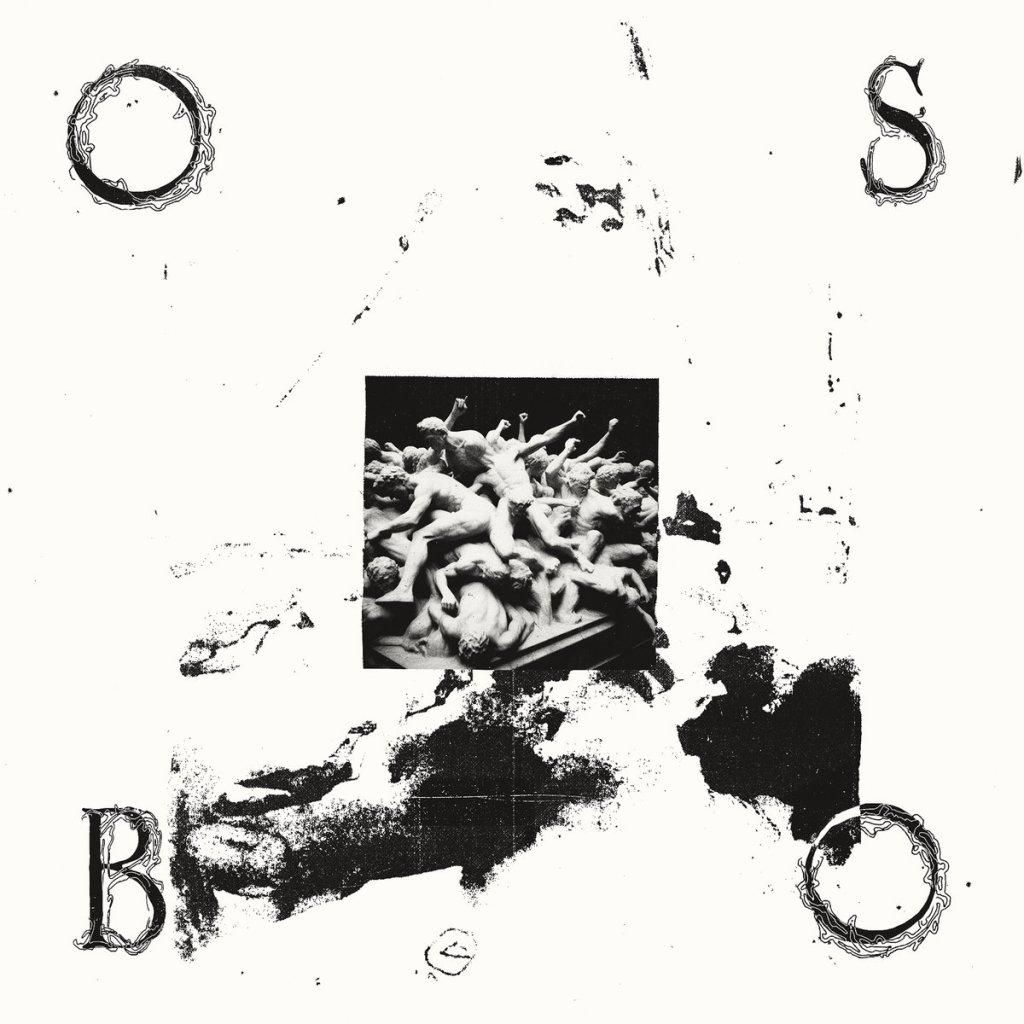
Lafff Box – ‘Talking’

Nothin’ like some fast German punk. Lafff Box rule and their whole S/T is great – quirky, catchy and hardcore, all the good stuff.

Peace de Resistance – ‘Heard Your Voice’ 

This track is my favourite from PDR’s Bits and Pieces LP. The record is like a mix of all the bits I love about Lou Reed – Rock N Roll Animal, Iggy Pop – The Idiot and T̤.̤R̤ex ̤- ̤̤Electric W̤a̤r̤r̤i̤o̤r̤̤. PDR has a knack for making songs that sound so familiar and nostalgic but fresh at the same time. I’m also a big fan of their other projects, Institute and Glue.  

The Velvet Underground – ‘White Light/White Heat’

Post Warhol VU. This track is so gritty and groovy, I really love the constant piano and claps throughout the track. Feels like they were trying to get back to basics on this release and keep things gritty/stripped back compared to the debut which was a lot warmer sounding.

Listen HERE.
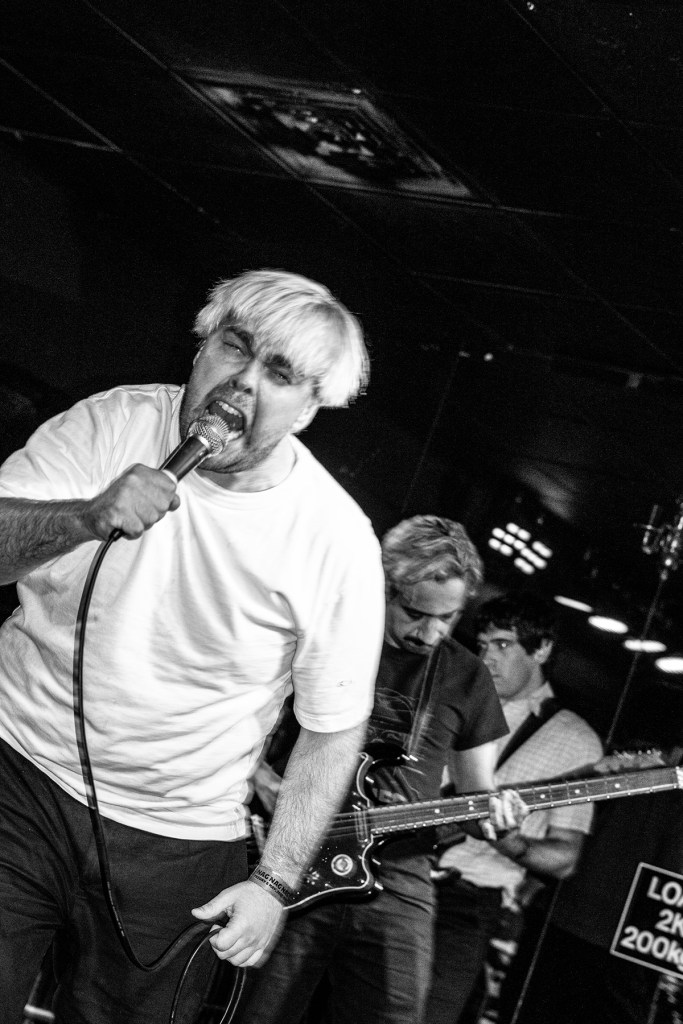
The Judges – ‘The House Always Wins’

Relatively new Melbourne band with some shredders on the tools, this track streams along nicely from start to finish. 

Gee Tee – ‘Pigs In The Pit’

I was a little late to party with Sydney punx Gee Tee but after catching them at Binic Festival last year I was a convert. I love that their songs aren’t too serious but seriously rock. The Pigs In The Pit chorus line is a real earworm too.

Check out Deon’s work @deonslaviero + find and listen to his band Split System out via Legless Records.

CONVERSATIONS WITH PUNX – Bob Vylan: ‘Recognising the power that you hold as an individual, and what we can do with that power as a collective.’

Handmade collage by B.

UK grime-punks Bob Vylan stand tall, casting a bold and unyielding light upon the world with their new album, Humble As The Sun. They’re one of punk’s most vital voices right now— with their rallying cry for empowerment, championing a sense of revolutionary self-love, and their ever-present foundation of nurturing and growing community. They inspire us to dream big, persevere through hardship, and channel our anger for positive change. The sentiment that we have to heal, be strong in ourselves first and then we can be strong together permeates the album. It also dissects toxic masculinity, discusses colonisation, police brutality, racism, wealth inequality, and exploitation in the music industry—as always, they say what needs to be said.

Gimmie caught up with Bobby Vylan, the band’s vocalist, guitarist, and producer, for a fascinating insight into the album and their creative process. The conversation delves deep into topics like spirituality and life-changing moments. Additionally, we learn about Bobby’s early beat-making experiences on Playstation’s Music 2000, his love for Shakespeare, their commitment to the DIY ethos, and his experience walking in this year’s London’s Fashion Week.

BOBBY VYLAN: Music is a creative outlet. I really don’t know what I would do without it, to be honest. It’s been a constant throughout my life as a way to express myself. A way for me to communicate how I feel about certain things. It’s important to me because it keeps me sane, to a certain degree; it keeps me here.

You’ve been making music for a long time, even before Bob Vylan, you were making music through Music 2000 on PlayStation. 

BV: Yeah. Exactly. I’ve been making music for a long time, in various different forms, various different degrees of seriousness, by which I took it. I was introduced to software, games, and stuff that allowed me to make music, get into creating beats and backing tracks, and then I got into writing lyrics. I started recording and getting into mixing, exploring the more technical aspects of creating music. It’s been an ongoing journey; it’s still ongoing in terms of learning the guitar, being able to play that more proficiently; and even my mixing ability, to be able to mix tracks and get them to a point where they’re ready for the public to hear.

I know that you completely love to explore things and lose yourself in them. What have you been losing yourself in lately? 

BV: To be honest, I’ve been losing myself in life a lot lately because there’s been so much going on. Things have presented themselves; they’ve come up, and I’ve thrown myself into it, which is good, but also tricky because I have to find time for myself. With this album coming out there’s so much to do on the business side of things. We have tours, festivals, TV appearances, and all kinds of things that have come up as the band gets bigger. On top of that, there’s been normal personal life change as well, which is quite beautiful, especially as it happens as the seasons change. 

Because I’ve been throwing myself into life, I haven’t been making a ton of music; I’ve been experiencing life. It’s important because it gives me something to write about later on. You can fall into a dangerous trap of not living life as an artist. You need to live life in order to have something to write about; I write about personal experience so much.

Yeah, it’s helpful for artists to realise that it’s all part of the process. 

BV: Exactly. 

Your new album, Humble as the Sun, still feels political like your previous work, but to me, it also feels like a spiritual album in a way.

BV: For sure. It’s political purely because my existence as a Black man is somewhat politicised in the country that I reside in and in so many countries that we travel to. Naturally, it’s because of that. Again, I’m writing about personal experience, so it’s bound to have a political aspect to it.

With this album, we definitely wanted it to feel more uplifting and empowering. A spirituality aspect is needed for that: to believe in yourself, to feel as though you hold some sense of power; recognising the power that you hold as an individual, and what we can do with that power as a collective. It’s definitely a lot more spiritual than the other albums, for sure.

This is because of the space that I was in when creating the album, both physically in terms of the studio space that I was afforded to use and mentally. I had worked so long and hard to get to a position where I could make music, and this could be my life. So it would have felt disingenuous to to only talk about hardship and not talk about overcoming that hardship. There is a lot of hardship that I overcame in order to be able to do what I’m doing and I want to address that. 

I get that, especially as a Blak Indigenous woman myself. When we make art, people often expect us to create from our trauma. Sometimes, obviously, that’s important for us to do for ourselves and our community. But I think it’s revolutionary and healing in another way to write about our joy as well.

BV: Absolutely! I completely agree. 

I understand that Humble As The Sun got started and inspired by meditation. What drew you to it? 

BV: The studio space—it was in the back of a residence. You had the main house that some people lived in, completely unconnected to the studio space, and then there’s a garden in the back. I’d find myself in that garden, meditating, watching nature, and enjoying the sun, seeing how the seasons would change in that space. The cat prowling around, looking for a mouse to eat, or the bird that would come and take some of my lunch and fly off back to its nest—it was quite eye-opening for me because I was very much lost in the city, in all of the hustle and bustle of it. Also, the hustle and bustle of being a touring musician, going to festivals every weekend and doing tours for two, three, four weeks at a time. That studio space really offered me a place to slow down.

Sometimes, I would go there and not even necessarily work on music or anything. I would just go there and sit and listen to music on the speakers that they had there, or I would watch videos on YouTube or a TV show. Other times, I would sit in the garden and peacefully take in everything that was happening around me in a very meditative state—no phone, no computer, just sitting and being and watching and trying to clear my mind as much as possible, not think about work, not think about personal life, not think about the traveling that I’ve got to go and do, the business side of things. I’d just try to clear my mind and be present in the moment. That heavily influenced the message in the album for sure.

I love how at the end of song ‘Hunger Games’ you talk about being present. The lyrics really resonated: Here, now / You are stronger than you think you are / You are love / You are not alone / You are going through hell, but keep going / Be proud, be open / Be loud, be hopeful / Be healthy, be happy / Be kind to yourself / Be decisive / Here, now / Do not live every day as if it is your last / Live every day as if it is your first / Full of wonder and excitement / As you wonder along, excited / Marvelling at the possibilities of all that stands before you / Here, now. That feels like the essence of being present; what does being in the present mean to you? 

BV: It’s a tricky thing because I find myself wandering with my thoughts, and I found that to be very helpful. I am not Eckhart Tolle, where it’s like, I’m here constantly, I’m present constantly, always in the now. That type of attitude would serve me if I wanted to be like a Yogi or some sort of guru, but it doesn’t serve me for the life that I live.

It’s finding a balance of being here in the now but also allowing my thoughts to wander because they allow me to play out different scenarios and see which is the better decision to make and which choice I should be making. If I do this, I’m not constantly present in the moment, but I find myself realising when I’m wandering into toxic thoughts, and I can be like, just take a minute, take a beat and be present right now and try not to worry about what may or may not come. Accept what is, and that doesn’t necessarily mean don’t look to change anything.

It’s not accepting it in a very passive way, but it’s accepting it in a way of doing what is within your power to do, in terms of the change that you can have in your own life and other people’s lives in the world in general.

Yeah, that’s a really important point. I did an interview with Dick Lucas from the Subhumans for my book and he was saying that, ‘If everything is taken away from you and you’re beaten black and blue, even if you’re at the point of death, you can still think for yourself. That is the bottom line, you have to keep your thoughts intact no matter what happens, from thoughts come everything else, words, expressions, ideas, creation—life itself.’ 

BV: Yeah, yeah, absolutely. It’s something I try to remember as well as much as possible. It can be hard though. Life’s really difficult. 

It is. I’m so glad your new album is uplifting, in a way, countering and balancing all the crappy stuff out in the world.

BV: Yeah. You know, the record is made for myself. I need this music. I didn’t make it because I’m like, ‘Oh, the world needs this music.’ No. I need this music! I need this album. I’ve been enjoying the album for ages. I’ve been listening to it over and over again. Actually, now that it’s out, I’ve probably listened to it far less because I listened to it on repeat every day for months and months. I picked it apart and asked myself, ‘Do I want to say this? No, I want to say that.’ Then when I got to a point where I’m like, ‘Oh, this is done, it’s perfect,’ so it’s finished. And I listened to it and I enjoyed it; I was no longer critiquing it. Like, is it mixed right? Now it’s out there. I’m listening to it far less because I’m like, everybody else has it now so it’s not mine anymore.

I really love the song ‘Dream Big’! It’s very inspiring and puts a smile on my face every listen. By the time the song’s finished, you feel like you can go out and do anything. Where do you think your self-belief comes from? 

BV: It comes from a lot of different things in and around my environment. Some of it is definitely down to where I was growing up. But some of it, is nature. It’s just something that I have. My father tells me stories of when I was a child and I was very headstrong. I wasn’t necessarily rebellious without a cause. I just knew what I wanted to do and I knew what I didn’t want to do. That all plays into my self-belief.

I grew up in council housing. It wasn’t a terrible area by a long mile; there were areas in this country that are far worse. We didn’t have tons of money, but we didn’t go without. I definitely knew that if there are things that I wanted, I had to figure out a way to get them myself. My mum always did an amazing job at making sure that me and my siblings knew that.

Though we didn’t have everything that we wanted or needed necessarily, we always were exposed to other ways of living, certain things that other people in our environment weren’t necessarily exposed to. My mum really wanted to make sure that we didn’t fall into the trap of just accepting our place in society is here. I thank her a lot for that. That definitely helped in terms of my self-belief.

It’s funny, because when I would express certain things to her, she would be like, ‘I don’t think you can do that. I don’t know about that.’ But that’s her fear for her son, if he’s gonna commit himself to a life of artistry, he’s gonna be poor forever. That’s not fun because she was working so hard to get by and keep us afloat. She probably thought, ‘I don’t want that for him’.

My self-belief comes from a feeling that I don’t want what is given to me. I know what I want. I know what I want to do in this world. Jim Carey said: you can fail at what you don’t want, so you might as well take a chance on doing what you love. If you can fail doing the thing that you don’t want to do, that you have no interest in doing, but you’re doing it because you’re fearful of doing the thing that you do want to do or people have pushed you into this direction, I would rather fail at the thing that I want to do. I’ll give it a go because otherwise, god forbid, I’m one of these people that are like, I could have done this.

Yeah. I think as human beings, the things that are most important, obviously after having the basics to live, is love and connection. That’s the foundation of everything. 

BV: Yeah, absolutely. And, it can be hard to focus on that. Sometimes when you’re focusing on so many other things in the world, like trying to survive, trying to keep a roof over your head and everything else, it can be hard to maintain connections with friends or family. It’s important to try and make that time for people. 

It’s something that I’m getting slowly better at.Taking a little time away, focusing on myself and my loved ones around me. The things that you value the most as a creative is the time that i have to create. I also value the time that I have to experience things like what we were talking about earlier, living. I value having conversations with friends, family and people in my community. Learning things. I value being able to have the time to think and feel. I value being able to put into words, all of the things that I’ve been experiencing. 

Do you remember the first time you realised that your words had power? 

BV: I don’t think it was a conscious realisation, but it definitely would have been when I was a child and I said something and I saw how it got me in trouble. Like, I saw what I said upset somebody. The realisation of, I know how to get under this person’s skin. I’ve got siblings, so that offers a perfect training ground, right? [laughs]. To figure that out, how powerful your words can be, that clicked probably when me and my siblings were arguing about something.

So you’ve always kind of been a bit cheeky?

BV: [Laughs] That’s usually the word that people would use to describe me. I always acted in good faith. I was very, very rarely acting out of malice and trying to actually hurt somebody who didn’t deserve it or upset somebody who hadn’t upset me, you know. I wasn’t a bully or anything like that.

Again, I knew what I wanted to do in this world. When people would present obstacles, whether that was a teacher in the school or a friend telling me that you can’t do this thing or do that thing, I would be sure to let people know that ‘No, I’m capable! You might not be able to do it because you don’t have that belief, but I could do it.’

I’ve always been this way too. I had an English teacher that told me I would never, ever, ever be a writer. Yet that’s been my career for the last 30 years since I was a 15 years old!

BV: Yeah, exactly. That’s it. People tell you those sorts of things for various reasons. Sometimes so they can upset you. That’s all their aim is, to upset you and discourage you. Other times, it’s to protect you, or they think they’re protecting you from a life of hardship or pain or upset. Then other times it’s just because they don’t believe in themselves, or it didn’t work out for them; they feel it won’t work out for you too. 

I always had this opinion of, I’m watching people on TV doing the thing that I want to do. So it worked out for them. That is somebody flesh and bone and blood doing it. If they can do it, then I can do it. Why would I concentrate on the people it didn’t work out for? I’m not watching them on TV. There’s absolutely no reason why I could’t.

That’s what you’re talking about on the album closer, ‘I’m Still Here’? 

BV: For sure. That song is the biggest testament to resilience on that album. It’s talking about how I grew up, where I grew up, what I was doing, and all of those things that I’ve gone through, and of my friend that is currently locked up. All of these things I’ve seen that I narrowly escaped, and those that I didn’t escape.

Of course, there is an element of being calculated, streetwise, and smart, avoiding certain things. But it’s also by luck, by chance, by the grace of God. Even when I was going through all of those things, I always had that in my mind of like, what I’m doing right now, how I’m living right now is not necessarily my forever. It doesn’t have to be my forever. This is not as good as it gets for me.

For a lot of people that I grew up with, they had it in their mind that, this is as good as it gets. This is as good as it gets for us. If we could be career criminals and not get caught or only do a handful of years in prison, life will be good. That wasn’t my thinking. That wasn’t my lot in life—I always thought there’s more for me. I don’t know where it is or what form it takes, but there’s more out there and I need to find it.

Have a moment with Bob Vylan where you felt like things really have changed and that they won’t be the same in your life anymore? 

BV: Absolutely. There’s certain things that they happen and it’s like, this is a turning point. For example, when We Live Here, the first album and single from that album started taking off, it was during lockdown. I didn’t realise at the time, I suppose, to what degree it would change things, but I knew something was changing. We’d put music out before and no one had really listened to it. And then I saw the audience find us. I was watching the YouTube views go up in real time. I was like, wow, we’d never gotten 10,000 people watch a video before. Then it’s like 15,000, then 20,000, then 30,000, and on. I saw at the top of a Reddit thread: listen to this! Then seeing it getting shared on like Facebook, and people with blue ticks following me and saying, Hey man, I heard this song it’s so cool!’ They were from other bands that I’m a fan of or they were actors or whatever. I thought, ‘This is cool.’ It was that moment where I could feel something’s changing, you know, but then there’s other moments that are not so, I suppose, they’re not so.

Sometimes those moments are not so joyous, though. You might go on tour, and you’re away for home long time, long periods of time and you come back and things have changed at home, maybe with friends or with family. I’ve got a daughter and I come home and she’s grown. I’m away for three to four weeks, in that time, she’s learned something new. She’s doing something new. She’s got this new thing that she’s saying. And I’m having to play catch up to her. Like, ‘Oh, what’s that? Where did you hear that? Where did you learn that?’ Even just seeing her, it’s like, ‘Did you grow?’ You realise things won’t be the same as they were when I was sat here and I was watching her do this stuff in real time. So some of those moments of change are joyous, and others are harder to come to terms with. You have got to be accepting of both.

Totally. I saw you walked in a show at London Fashion Week at the start of the year. That must have been pretty surreal, especially growing up in the world where you’ve come from.

BV: Yeah! It was for a brand I was familiar with, Saul Nash, I’d seen their clothes in the store and I really like them. Saul’s clothes are great, he’s got a great eye and he’s very innovative in terms of how he approaches sportswear. To get asked to do that was great, it was a lot of fun and an experience that I hadn’t had before. So, again, getting those opportunities is really cool. I met a friend there, we’ve worked in the future together. The person that was overseeing all of the hair on the Saul Nash show, then worked on my hair in the ‘Reign’ video. I love meeting people and forming connections and friendships. It’s really beautiful when you get those opportunities.

But it’s important not to get lost in those sorts of things, though, because they’re fun, but it’s not real life. I feel lucky, I feel very fortunate, that I’ve got people, the majority of my friends and my family are not in the industry at all in any sense, they work 9 to 5s. I get enjoy the opportunities when I’m in it, then I come out of it, and I get to just be how I am at home.

You mentioned the ‘Reign’ video, which I love. What was the inspiration for the visual elements in it? 

BV: There was a lot of things that me and Taz [Tron Delix ], the director, went back and forth about, we had a couple of meetings and talked about what we wanted to get across with it. 

For me, the African Moors that conquered Spain (and they were present in Malta – I’m part Maltese), so I wanted to present this visual representation of regalness and royalty that wasn’t stiff and stuffy like the English monarchy, but is more like the African monarchies. The Moors are extremely extreme. The most popular representation of a Moor in popular culture is Othello. Othello is a Moor—I love Othello. It’s probably my favourite Shakespeare play, though it is the saddest one. I took my dad to watch it not too long ago. Othello in that play is presented as someone extremely strong. He’s a leader, but then he has the potential to be corrupted, to be swindled. He’s a human after all. And so for that video, we wanted to create this idea of royalty but have it rooted in today. We also wanted it to feel relevant to what Bob Vylan is doing. 

You also have Jamaican heritage too? Does the culture influence your creative choices? 

BV: For sure. It influences the music a lot. ‘Ring the Alarm’ for example, on the album, is very, very much inspired by Jamaican culture and reggae and dancehall music. Even some of the drums are played on the album. They’re jungle drum breaks, the way that they’re played coming from this mix of Jamaican people bringing reggae music over to the UK and then mixing it with electronic music that was happening here in the UK; those fast drum breaks with reggae samples thrown in there. It definitely influences a lot of the music in terms of the sonics and the production.

Visually, I suppose, maybe I’m even less conscious of how that culture is pulled on. Except for ‘Wicked & Bad’ for example, where we shot the video in Jamaica. I really wanted to do that. The way that I wear things, the things that I decide to wear, my personal style that’s obviously influenced.

I grew up around a fairly big mixed Jamaican and white community. We pulled a lot of things from our parents, and then mixed them with things that were happening now in the UK and in England. Meshed the two things together to find our own or create our own identity.

How did it feel for you to go back to Jamaica, back to where your family are from? 

BV: It was great. It’s a beautiful place. It’s troubled, though, because of a lot of corruption that happens over there. It’s a shame that such a beautiful island has got such a violent past because of its colonial history—the British occupation of the land. There is a lot of sadness in seeing that because you realise what that place could be. It’s unfortunate that at the moment, at least, it’s not able to be that, but hopefully at some point, it’s able to be; it’s able to live up to its full potential. That it’s able to remove its connection to the British and become its own country.

We speak about independence and it is independent to a certain degree, but there’s still a heavy, heavy hand from the British in that country. I would like to see that removed completely and to see the country be everything that it can be. We see culturally what it exports; that is absolutely incredible. One of the biggest musical stars ever has come from this tiny island—Bob Marley is arguably one of the biggest musicians ever in history. Reggae music and the popularisation of weed, and Rasta culture, and the Rasta religion, it’s all from this tiny island. So what it’s done artistically and culturally for the world is absolutely incredible. But what it receives in return pales in comparison.

Yeah. There’s even that connection to punk rock with Bob’s ‘Punky Reggae Party’ and how Don Letts would play the reggae at The Roxy (the UK’s first live punk rock venue), and then you’d get bands like The Clash who were heavily influenced by reggae. 

BV: It’s influenced the world over.  Look at the origins of rap music. It all comes from DJing and MC culture, like the toasting culture of Jamaica. As I said earlier, you get jungle music, it comes from reggae culture. It’s been extremely influential culturally and artistically from really the beginning of time. 

Absolutely. One of the reasons I love Bob Vylan so much is that you mesh together so many different things to created this whole new thing. You’ve built on what’s come before and you’ve taken it in a new direction.

BV: That’s important to us, to not, not tread old ground. To constantly look for ways by which we can push things, and push them in new directions. We don’t want anything to sound like the punk of the 80s, that’s not what we’re trying to do. We want something new, something fresh. 

Last question, what’s something that’s made you really, really happy lately? 

BV: The sun and the sea. A couple of days ago, it was really nice weather here, and I sat by the sea, listened to the waves, and just relaxed after a busy week of playing shows and promo for the new album.

I got home and went and sat by the sea. I saw that people were enjoying themselves in the sun, and kids are running about and splashing in the water. There was something where I was like, yeah, it just feels complete in terms of, I’ve had such a busy week promoting this album, and I’ve gone through a roller coaster of emotions because I’d been sick just before we put the album out.

The day before the album came out, I’d been violently ill, I was throwing up. Then Friday we played shows and I was still ill, then I slowly got better. We’d put this album out and we’d been running around the country trying to play shows and do signings. Sitting at the beach, I kind of just took a moment and acknowledged everything that I’d done that week, and looked to start the new week fresh and at peace.

Follow @bobbyvylan & check out their music: https://bobvylan.bandcamp.com 

CRAFTY CUTS with Alicia Saye (HACKER + Cult Ritual Audio)

Original photo: courtesy of Alicia / handmade collage by B.

Alicia Saye, bassist for hardcore punk band, Hacker, previously, Infinite Void, Deep Heat, The Diamond Sea is also a sound engineer, Cult Ritual Audio, and outstanding human. Enjoying collaborating with bands on their passion projects Alicia helps them get to where they want to be, working with great people like Cable Ties, Shove, Phantasm, Hex Debt, Blonde Revolver, and more. Plus, Alicia is a production coordinator for PBS 106.7FM!

Gimmie enlisted Alicia to curate tracks for our Crafty Cuts selections. Among them, a standout that marked a significant chapter, during a period of musical exploration, and that provided solace. There’s also a track from a band that brought unique queer visibility to the punk scene, fostering celebration and a safe space; they even stayed with Alicia while touring Australia. Additionally, a track with a horny lead line. An encounter with something fresh and compelling that felt like a reclaiming of something significant in music. A track that was delivered to listeners in pillowcases with speakers sewn in to induce nightmares. Something from a pop star who’s childhood nickname was ‘Nippy’. Not to forget a local band brimming with endless creativity. And much more, including two tracks from one particular band because, quite simply, they’re that good!

Green House – ‘Perennial-Bloom’

This whole album is great. It came out in 2020 to give everyone a specific time reference for its relationship to me. It was definitely a time where I chose to investigate a few other avenues for music. This album was therapeutic for the time.

Special Interest – ‘Young, Gifted, Black in Leather’

I’m notoriously shit at describing music, so this format works well for me. I’m not entirely sure how this came across my path or from whom, but after years of hearing reincarnations of every genre possible, this itself was something I obsessed over that felt fresh and powerful. The music felt like it was taking something back.

Whitney Houston – ‘I Wanna Dance With Somebody’


Anyone else miss Whitney? What a travesty.

Limp Wrist – ‘Just Like You’

Never really come across a band that has queer visibility in the punk scene the way that Limp Wrist did. I miss it. I miss the celebration of them and the safety of the space. They came out a few times, and one of those times we had them stay at our house when I was still in Sydney. One particular time, I was walking to the kitchen through the lounge, and they were all applying lotion to each other’s backs… like a little train. It was gorgeous, like a Tom of Finland model session. I had to bring it to their attention, the hilarity of the situation. There was another time where… we (me, some friends, and Paul from LW) may or may not have broken into a local swimming pool, only to be busted by the cops; we took a run for it. Those were the years of skinny jeans, and I guess you’ll just have to visualise us hiding out in the bushes, trying to put tight jeans on wet legs while the cops drive up and down the back streets.

Enzyme – ‘Masquerade’

THIS SONG. Everyone of them has endless amounts of creativity in them. Perfect blend. 

Integrity – ‘Hollow’

Because……of the dive bomb leading into the horny lead line at the end.

Ancestors – ‘V’ (from album III)

This one is added because its whole deal is nightmares/haunting. They had merch that were pillowcases with speakers and a track sewn into them to help induce nightmares. The artwork on them is amazing, upturned couches, baths filled with black liquid. I was sent some test presses of the album by a friend, and my girlfriend at the time told me it was ‘upsetting.’ I think that’s possibly the best description given for this.

Good Throb – ‘The Queen Sucks Nazi Cock’ & ‘Bag’

Two songs here! Both lyrically unhinged and a perfect example of what some would describe as musical naivety, which for me is musical genius.

Tozcos – ‘Nunca Pasar á n’

Riffs! Another banger release out of Quality Control Records in UK.

Vampire – ‘Built For Decline’

Something new, local and killer. This is not my band, just love them!

Visit: https://cultritualaudio.bandcamp.com and listen to Hacker (we LOVE them!) https://hackerhc.bandcamp.com

Scattered Order & M Squared’s Mitch Jones: If there’s emotion and heart in it—it’ll shine through!

Original photo: Deathhawk Photography. Handmade mixed-media collage by B.

Scattered Order emerged from Sydney’s vibrant post-punk scene in 1979, founded by musician Michael Tee and sound engineer Mitch Jones. Their inception, born from a Boxing Day brainstorming session, epitomised a DIY ethos, as they pooled instruments and gear in a small Surry Hills house, igniting a musical spark that would define their legacy. Initially part of The Barons collective, Scattered Order soon charted their own path, founding the M Squared label to explore experimental soundscapes.

With a rotating lineup and an appetite for sonic exploration, they blurred genre boundaries, leaving an interesting and unique mark on the underground music landscape. Their music, characterised by a blend of found sounds, unconventional songwriting, and experimentation, challenged conventions and inspired subsequent generations of musicians.

Their live performances, often supporting international acts like New Order and The Residents, showcased their eclectic sound and infectious energy, further cementing their status as one of the pioneers of the Australian post-punk scene. Despite facing challenges and changes over the years, and a resurgence of interest in their music in the late 1990s and early 2000s, Scattered Order remain committed to their artistic vision.

The reunion of founding members Mitch Jones and Michael Tee sparked a new chapter for the band, leading to the formation of Scattered Order Mk1. Their live performances, ripe with forward-thinking experimentation, have garnered renewed appreciation from audiences.

As Scattered Order continues to embrace new technologies and collaborations, their dedication to pushing musical boundaries remains steadfast. With a renewed sense of affirmation and optimism for the future, the band continues to create a soundscape that embodies the essence of artistic freedom.

This is why Gimmie love them! We were excited to chat to Mitch Jones recently about new double album All Things Must Persist, their process, creativity, M Squared, and more. A conversation filled with insights, and all the fascinating secrets behind the music.

MITCH JONES: Music is an emotional release for me. I’ve always liked listening to it, and I found out that I really like creating it. I like manipulating sounds, placing different things with each other—I enjoy the thrill. I was never really a trained musician. I started this journey as a sound engineer, and I’ve taken that into creating my own music. I use whatever’s to hand. Over the years, technology’s changed and I pick and choose what I want to use. 

It’s good fun and it’s always exciting to make something new and then move on. You learn a little bit along the way – what you don’t like and what you do like – and you just keep doing. 

After school, I went to art school, but I never really carried that on. I found music and that suited me better than art. 

Did you find anything helpful about going to art school? 

MJ: I met my wife, Drusilla!

Ah, so it was totally worth it!

MJ: Totally! I met some friends there that I’m still friends with. A friend at art school actually started a band and that’s how I started as a sound engineer with their band, so that all helped. It was an exciting time to live. You’re at that age where everything’s exciting and new. I can’t imagine going and doing economics for a degree or something like that. 

Same. I couldn’t do anything like that either. How did you first discover music? 

MJ: As a child, I constantly listened to the radio, through a little transistor my parents would be listening to commercial radio. And then I discovered, my parents had a stereo. Then I discovered you could go to the local record shop and actually buy records. I started buying things that I liked, I started collecting records and songs I liked. On TV you had (I’m showing my age here [laughs]) like GTK on the ABC. As I got a bit older, in Sydney a lot of radio stations had put on free concerts in parks. So I started to go there and I enjoy live music. 

What were the bands that you found yourself gravitating towards? 

MJ: I always sort of gravitated towards something weird, slightly left field, not the most popular band at the time. I found that more interesting. Maybe I always went for the more underdog status bands. When I was growing up, it was all Skyhooks or Sherbet. Where I’d rather be listening to Band of Light or La De Da’s. I avoided the top 40.

All photos courtesy of Scattered Order: Deathhawk Photography.

Who were the bands you’d go see live?

MJ: I was lucky because when I was in art school because punk bands started appearing. I saw amazing bands like X, Wasted Daze and Johnny Dole and The Scabs—all this in your face in small rooms, it was loud and exciting. I thought, ‘Oh, this is fantastic!’ It was immediate and exhilarating. I got carried away with it all. 

Did you grow up in Sydney? 

MJ: Yeah, I grew up in Sydney and went to Sydney College of the Arts, which had just started, they were in Balmain. I was doing a graphics course and hanging around the inner city so I got to see a lot of small bands in small pubs.

What drew you to going to art school? 

MJ: At school, that was the only decent thing I was any good at, really. I actually went to university for a year and tried to do a science degree. I was useless. They kicked me out after a year. Then I found Sydney College of the Arts. I thought I’d enrol there and that worked out really well. 

You mentioned before, that you got into sound engineering through one of your friends’ bands; who were they?

MJ: The band ended up being The Numbers, which ended up quite a big power pop new wave band. I started learning there, on the job. In those days, it was all carrying PAs around and being a roadie, but I learned sound engineering; about microphones and mixing desks. Through half of 1978 and all of 1979. That was a great education. I ended up being a sound engineer for various bands for the next 15 years. 

It was good, but I decided that I could do this too. I wanted to make my own music and find like-minded people to collaborate with. 

I understand that sound engineering influenced how you made your own music; how?

MJ: I approach things by finding the sound, it doesn’t matter how it’s generated. Then I manipulate it through electronics or equalisation or effects to make that sound suitable for what I want to use it for. Then I cut things up and looped them. I rely more on my sound engineering skills rather than my musical skills. I could play rudimentary keyboards and bass. I was listening to how it would sound at the end. You’re always layering sounds and getting a good mix. Even something delicate or something powerful. That was the way we did things, rather than having a group of musicians and practicing a song. It all starts with a sound and I build on that. 

What is one of your favourite parts of that process? 

MJ: Finding something completely out of the box, something that would go with the original sound. You have an original sound, you really like it and you think the next step is to find something that either jars against it or fits really well. That next step is what I find the most enjoyable because it could take the piece in a completely different direction. From there you have a fairly good idea where the end point could be and work towards it. It’s a surprise! When you put that second thing in and it goes somewhere you never expected it would. 

You try and remain open while creating?

MJ: Yeah, always. I don’t have a pre-plan or a pre-idea in my head. With the band now, there’s three of us involved, and we all have input and none of us are sure where it will end up. We put things together, take a lot of things out, and try different ways of approaching it and the song ends up sounding like it does. Not by accident but by following the feel of it.

It’s almost like an audio collage?

MJ: That’s a good way to describe it. You’re putting things together, you put something down, you think that suits, or maybe that suits if I take something from the original out. It’s not just keep on adding, you have to subtract at the same time. You know, it might be other things that have come in, three or four steps beforehand. You might have to subtract that. You let it organically turn out the way it does. 

How do you know when a song’s finished? 

MJ: The way I know is I keep playing it, then I’ll go away for a few days and just not listen to it, then come back and listen to it with new ears. If it’s working, you think, right, that’s it. You need to give it time—keep coming back and thinking, is it still good? If it is, it’ll be released. Or if it isn’t, something might need to be done to it or some might be completely scrapped. We’ve got a bit of a scrap behind us in the history of this band [laughs]. 

I read somewhere that pulling apart your mum’s Telefunken radio with a soldering iron influenced your approach to music? 

MJ: She had this lovely valve radio. It had a little speaker in it, it had this button on it with pickup, which meant you could plug in an instrument. You could use it as an amplifier. Being a stupid teenager, I had this big speaker, but I couldn’t connect the big speaker to the amplifier. So I thought it needs a wire from the radio to the speaker. Instead of just running the wire out of the bag, I thought, I’ll put a socket on the side of it, but I didn’t have a drill. So stupidly, I got a soldering iron and just burned through the plastic to make a hole completely wrecked the look of the thing. Mum never forgave me. But the speaker worked, which I thought was great.

In the beginnings of Scattered Order you were, in your words, ‘railroaded’ into being the vocalist of the band. How did you feel about doing it then and how do you feel about still doing it?

MJ: Doing it then, I wasn’t that comfortable with it. But the thing is, right at the beginning the lyrics were a little bit secondary, but then they became more important. Then, I was conveying the lyrics, no real emotion. I was speaking them off.  That was fine and that worked. Then, when we got back with the three of us about 15 years ago now, we were just doing instrumentals. I just refused to do vocals. The other two were saying, ‘You should do vocals.’ And finally, I relented, but I really started to enjoy that. There’s less words in our songs now. So I’m not just reading off, like it sounded like I used to, read off a shopping list or something. Now I can put more emotion into them. I’m writing the lyrics now. It’s good. I wish I’d taken that approach much earlier, but you can’t change the past. 

Do you think that in the beginning you didn’t want to do vocals because you were self-conscious? 

MJ: Oh yeah! I’m still self-conscious about crying. At the beginning the other people in the band were all fairly competent musicians and were all doing other things. To justify my position, I thought, well, I’ll have to do the vocals. Come up to me these days and say, ‘Oh, I really liked it!’ But I could never remember the words and would have lyric sheets everywhere. We wanted vocals. There was no other vote. We didn’t want to go out and find a rock singer. I was chosen and I was it. 

You mentioned that later on lyrics became more important to you, and that because you were writing them…

MJ: In the beginning, Dru, my partner, was writing a lot of lyrics, and I was writing some lyrics. But even the one song I wrote, I just wanted to just say it, and that was it. I was more concentrated on the actual band sound. Now, I think the vocals are more integral to the band sound. Especially on the new album, they’re more integral to the song. There’s less musical things happening to hide the vocals, where in the earlier stuff, the vocals were buried under a wall of noise. 

I really love the vocals on the new album, especially in the song ‘Need to Increase Speed’. I love how at the end off the song you say ‘I. See. God.’ – it really caught my attention. I was listening in headphones and that really stood out.

MJ: That’s interring that you say that. The whole album was made in headphones, so listening in headphones is great! ‘I See God’ is a name of a track from Pretty Boffins from the 90s. The track was all about travel, travelling long distances, and crossing galaxies. It was a bit like 2001 A Space Odyssey.

It has a real cinematic quality to it. 

MJ: Yeah, and especially with that lovely brass line near the end, which really lifted it. It could have been a song that could have kept on going into affinity. 

Are you a spiritual person at all? 

MJ: Not really. I was brought up Presbyterian. I do believe there is a God or a higher being. I’ve got the call of God. I’m not very spiritual. I just believe that people should treat people like they want to be treated. People should get along. Life’s too short to argue and get angry. Walk outside and look at nature. 

Yeah, that’s one of my favourite things to do. No matter how much of a bad day I’m having, I can walk out my front door, look at the trees across the road in the park, and I feel better. It’s like it gives me a moment for a breath, a pause, a reset.

MJ: Yeah. My partner, Drusilla, and I, we live up in the Blue Mountains in Sydney. 

Oh, beautiful!

MJ: We’ve got all this bushland. We can look out our back door and over this valley and it’s peaceful. It’s fantastic—all the bird life and the change of the seasons, it’s beautiful. The mountain air is really crisp. I go out there and I think, ‘I’m glad to be alive.’

I noticed there’s song titles and references from previous songs on older albums in the lyrics of the new album. In the song ‘The Silent Dark’ you say: The ‘prat culture’ of youth is now faded. 

MJ: Well, that’s how I feel some days. Prat Culture was our first album. We’ were obnoxious young people, and ‘prat culture’ suited us then. But we’ve mellowed a bit. It’s good, it’s not a bad thing. It’s life—you just move on. Priorities change. You just go with it. 

For readers that might not be familiar with what prat culture is; what does it mean?

MJ: We took it from Linton Kwesi Johnson’s album, Bass Culture. We really liked that album. So we thought, ‘Right, what are we?’ We were at Prats: a bit obnoxious, a bit against the grain. I don’t think we’re obnoxious anymore [laughs].

I really love all your album titles, they’re always so interesting. I really love A Suitcase Full of Snow Globes

MJ: Dru might have come up with that. I keep a sheet of paper and write down interesting phrases from TV or talking or reading. When we need a song or album title we have something. A Suitcase Full of Snow Globes was a double album, over 20 tracks, and they’re all little sparkly gems to us.

What’s the story behind the new album’s title, All Things Must Persist?

MJ: That’s even sillier [laughs]. 

But it sounds so profound!

MJ: Well, it does, doesn’t it? I think Shane came said, ‘George Harrison had All Things Must Pass. How about All Things Must Persist?’ We all agreed, we all thought it was a bit of a laugh. But, you know, I’m just thinking about it now, and well, all things shouldn’t really persist; bad things shouldn’t persist. All good things should persist. It sort of suits the band, because we’re not going to go anywhere, we’re just going to keep creating music—this is what we do. We’re persisting. 

Have there ever been times in your life when you didn’t make music? 

MJ: There was a time when my partner and I, in the early 2000s, we went to live in the UK. Before we left, the band was virtually just down to the two of us and the bass player. We wanted to get out of Sydney. John Howard was in power and we thought, bugger that. So we went to live overseas. We thought we’d do some music overseas, but circumstances conspired against that. We were too busy working to survive, to do any. There was a few years like that and we finally came back to Australia. By that stage, there was a lot of interest from overseas labels, mainly European labels, to start re-releasing earlier material and we started putting that together. Doing that, I got back in touch with Michael Tee and Shane Fahey and we decided to try making some new music together. That was around 2008.

How did it feel for you during that period when you weren’t able to make music?

MJ: I was listening to a bit of music. I thought at the time that I could do it. I put music behind me, I’ll do something else. And I was just working crappy jobs, but I thought I was living in a new place, new surroundings, which was fantastic and all that. But I came to realise that I really needed music in my life. So, we came back and we did that. Drusilla started doing all her own solo stuff and I was doing my solo stuff. We started to get into using computers for recording and using Ableton. I found out, you don’t need need all this equipment to realise what you want to do. Technology definitely helped us to get back into it. 

I love when people are open to embracing technology or whatever is available to create. 

MJ: I always see it as like an opportunity to try something new. I’m still trying to get my head around my mobile phone [laughs]. We save time and the cost.

You’ve mentioned your partner a few times and it seems that she inspires you; what’s one of the best things you’ve learned from her about creativity? 

MJ: So much. To be patient. Little and tiny sounds are good sounds. Everything doesn’t have to be loud and brash. Try new things. Don’t just settle on tried and tested ways. I’m in this little room in the house and she’ll be in another room and we’ll both be writing music on computers. We put music out together as a band called Lint. She’s a great influence on me, the love of my life, to be honest. 

Awww that’s so lovely! I feel that way about my husband too. Who lucky are we? Do you feel like there’s any prevalent emotions or moods on the new record? 

MJ: I thought it was a bit too sad, but there is a glimmer of hope throughout the whole album. It acknowledges where we’ve been as a band, it acknowledges it’s been a long journey, but it’s not the end, and it’s not this, there’s a future to explore.

The song ‘We Should Go’ lyrically seems like a sadder song.

MJ: It’s more things aren’t going well here at the moment, we should get the hell out of here. It was a bit of a warning shot, you know, we should move on. Don’t stay in this place. 

What about ‘It Was A Saturday’?

MJ: That is sad. It’s all about bastard men instigating violence on women. And in a lot of cases, the only way this could be ended is, if the woman kills the man. The last line: At least she has won. Well, she hasn’t really won, she’s negated the violence but put herself in a different, terrible situation. You can’t turn on the nightly news without hearing about a woman being murdered by a partner, which is a national disgrace. It’s distressing. 

Absolutely! I noticed with the song ‘I See the Old Man’ – it has the ‘I Am Sandy Nelson’ reference. 

MJ: That’s an in joke from years ago. We did a song called ‘Free Sandy Nelson’. Sandy Nelson was a drummer, ‘Let There Be Drums’ was a big hit he had. When we did the song, it was the beginning of the internet, and we thought it’d be a great idea to make the contact for the band: Sandy Nelson. We made a mythical character called Sandy Nelson, gave him a PO Box and he hung around the band for 30 years [laughs]. That’s why he keeps appearing in songs.

Is there any other conceptual continuity that runs through the albums? 

MJ: We keep trying to make albums that sound different to the previous album. We all try and stretch what our contributions are, to try and push it into newer areas. It’s just a general evolution really. 

How did you feel like you stretched yourself on this album? 

MJ: I felt really good. At first I was worried, but the more I got into it, the better I felt. I felt comfortable having the vocals quiet up front. I didn’t feel embarrassed about my singing, I didn’t feel embarrassed about the lyrics. I ended up feeling actually quite pleased with myself, to be honest. 

I’m really excited to see it all live when you come up here to Queensland. 

MJ: We’re only playing two tracks from the new album live. ‘It Was A Saturday’ and ‘Need To Increase Speed’.

I can’t wait!

MJ: The other tracks are so quiet, we decided it doesn’t really fit into a loud set. We’re playing a number of tracks off the previous album Where Is The Windy Gun? And one off  of Everything Happened in the Beginning. A couple earlier ones too. We try and keep a loud set, because we like playing live loud!

Was there certain sound on the new album that you had fun exploring or creating? 

MJ: Quite a lot of the tracks started with minimal drones – like ‘I See The Old Man’ or ‘Dust Bisquits‘ – and pianos or meanderings from Michael, which is different to what we’ve normally done. We’ve normally started with a drum track and work from there.

What do you get from working with Michael and Shane? 

MJ: The joy of hearing what they’ve come up with, really. We all live in different parts of New South Wales. So for the last few albums we have worked remotely. So somebody would send an idea out, then you receive all these things back. All the time it’s a surprise to me what they come up with. It’s like, I’d never think of doing that. It’s amazing. They’ve have a natural ability to quickly come up with something that enhances things. It’s a real privilege to be in a band with them. 

Are you ever inspired by everyday sounds that you around you? 

MJ: Yeah. I’ve got a little digital recorder and I record things around the house or outside. I have a selection of those I could go back to, cut them up, and use them. I record bits of the TV; dialogue of old movies. I can’t just sit there with my guitar and play out a tune. I need something to start me off and it’s normally a household sound.

Do you have a favourite old movie? 

MJ: Get Carter is really good. It was on TV a few days ago. I watch the silly afternoon movies. And there was Hell Is The City with Stanley Baker, is a nice black and white thing from the early 60s, set in Manchester. I like British movies. I like noir movies. I drop off mid-70s, my interest wanes in movies. So, I really like anything from 1940 to 1975, if it’s noir. British movies too; I like kitchen sink dramas.

Do you watch much comedy? I noticed that there’s like a real sense of humour in your music.

MJ: I used to, but there’s not much good comedy around. At the moment I’m watching stupid bloody, you know, those real death things, like Buried in the Backyard

Forensic shows?

MJ: Yeah. But comedy, no. Some British comedic game shows are pretty good. I don’t subscribe to any streaming television stuff. Just free to air TV, if it’s not on there, I don’t watch it.

Is there a particular album by another artist that had a real impact on you? 

MJ: There’s heaps over the years. As a kid, Are You Experienced by Jimi Hendrix. Then, Pawn Hearts by Van der Graaf Generator, that’s the early 70s one. But then we got to the Duck Stab EP by The Residents. The first of the first three Cabaret Voltaire albums—a big influence on us at the beginning. That you can make music with minimal equipment and a small studio. You didn’t have to sound commercial, that was fantastic. Later on I got into a lot of Sound Creation Rebel and things like that. But lately, a lot of Australian bands, I really like No Man’s Land from Ballarat, a two-piece sort of bass drone-y sort of outfit. I really like the Paul Kidney experience. What else? Fables from Sydney. There’s so much good music about.

Totally. I think there’s always good music around you just have to find it. 

MJ: That’s the thing you have to find it, you can go down these rabbit holes looking, I go through Bandcamp and see different things. I try and support smaller artists, that I know that are doing interesting things. 

You’ve been doing that for a long time, all the way back to doing label M Squared!

MJ: Yes. There’s lots of smaller artists around the world doing interesting things. They’re all doing it for the love of it, they’re not going to make any money out of it. So you want to support people like that. 

Absolutely. That’s why we do what we do as well. 

MJ: The music industry has always been strange. It’s always been lots of middlemen, lots of people hustling about trying to make a buck. A lot of good artists get burned. 

Yeah. Growing up, I wanted to work in the music industry because I love music. I tried it for a little but when I started to see what goes on behind the scenes and just the way artists are treated and other behind the scenes workers, it was horrible. It put me off working in the music industry. We just do our own thing regardless of the industry; it’s more exciting on the fringes anyway.

MJ: That’s the only way to do it. It happens in all levels of it, like in venues, you can tell which ones are all management-driven. Makes you think, ‘Oh, what’s the point?’ These days, they’re all scrambling over such small amounts of money, there’s no big money around.

When you’ve been recording bands over the years, is there anyone that you’ve worked with that had really interesting approaches to what they were doing? 

MJ: The most interesting was when I was doing the two M Squared albums for The Makers of the Dead Travel Fast, which was Shane’s band. They were amazing. We had minimal recording equipment, they had huge ideas; together we managed to get these ideas recorded and sounding really good. They’d ended up on records that sounded fantastic. These days, I don’t know how we did that, to be honest. They’d be recording outside, using whatever comes to hand, but then juxtaposing them to a delicate piano piece or shouted vocals. The way they combined different sounds for each piece.

A lot of other stuff I recorded, there were some good things happening, but a lot of the things I ended up doing at M Squared was more around the standard guitar-based drums; a band situation. Which I found interesting at the time, but it didn’t stretch your imagination. 

Is there anything that you could tell me about M Squared that people might not know? 

MJ: We didn’t make any money. We left the studio owing six months back rent. For a while there, it fractured friendships between myself, Michael, and Patrick. They had left Scattered Order by the end of M Squared. Things are getting grim financially. We were all getting a bit tired of each other’s company and tired of the situation. 

I guess everything runs its course naturally, and it’s time to move on. 

MJ: Yeah, it’s time to move on. If we kept going we wouldn’t have lasted and it would have diluted what was happening. I look back on it, some of the releases on M Squared, I personally wouldn’t have put out. I’m sure if you asked Michael, or Patrick, rest in peace, they’d probably have a different list of things they probably wouldn’t put out. But you can’t change the past. It was great while it lasted. It had its high point. I met all these wonderful people. I’m still recording with two of them. It served a purpose in the Sydney underground at the time. 

What do you sort of consider to be the high point? 

MJ: The high point was when all three bands were playing: Systematics, Makers Of The Dead Travel Fast, Scattered Order. We all toured; we actually got to Brisbane. That would have been February 1982. That was the high point. Everybody was recording. Everybody had records out. By the end of 1982, things started to go down.

What was it like for you when you reconnect again? 

MJ: I was good. I’d seen Patrick over the intervening years, but I hadn’t seen Michael for over 20 years! Because of this re-release business for all the Scattered Order and M Squared material, we arranged to meet up again. I was a bit wary beforehand, going, ‘Oh, what’s going to happen?’But it worked out really well. And we’ve been firm friends ever since. We’re all a bit older and a bit more mature now. We know each other’s strengths and weaknesses. Probably back then, I was too demanding of everybody. Michael was probably thought I was too much of a control freak.

Do you think that was because you wanted to get stuff done and were just excited about things? 

MJ: Yeah, yeah, yeah. But I wanted to do that. I wanted to keep paying the bills as well. That helps. Michael and Pat wanted to do things, but were sort of, bugger the bills, it’ll all be all okay. 

I’ve read that both you and Michael came up with the name Scattered Order, you each came up with a word?

MJ: Yeah, yeah. I came up with ‘order’ and he came up with ‘scattered’.

That makes sense, you were talking about how you were a bit more controlling back then and he was a bit more loose with things. 

MJ: It does, it makes total sense.It has suited the band throughout our history because there’s always been a bit of a scattered approach but there’s some sort of order there holding it all together. It’s getting that balance right. Sometimes there’s been heaps of scattered and not much order too [laughs].

I’m the sort of person that I needs something to hold on to. I need it to be a little bit grounded, there has to be something constant throughout the song, a beat or whatever, something to hold it all together. 

An anchor? 

MJ: Yeah. Shane and Michael, they’re a lot more proficient on what they’re doing, and can take things further and wander around with no anchor point, eschpeially live. I can’t do that. I go, ‘What the hell is going on here? How can I contribute to this?’

You’re sort of self taught, right? How does that benefit you? 

MJ: I can construct things in either simple little patterns that I could do, or if the song was constructed I could add to it. On the early stuff, Prat Culture, I was playing guitar, but I was just adding one long note every so often. I knew I could do that. I knew that I could do that live too. I knew I could do that in the recording. I knew it added to the song itself, so that was an advantage to me. Since then, I’ve learnt a bit more, but not much more. I’ve still got a guitar with all the notes actually written on the fretboard. 

There’s nothing wrong with that.

MJ: I still play two or three note phrases. The whole idea is—whatever you do, however little or large, it’s meant to add to the whole sound of the track. 

Is there anything that you find really challenging about creating music? 

MJ: The most challenging thing is not repeating yourself.  Sometimes I wish my prowess on guitar, was a little bit better than it is. But I finally come to realise it’s got to a certain point and won’t get any better. So, that’s challenging, to work with what you had and try to get the best out of it. And at the same time, don’t just repeat the last song you wrote or the last album you helped create. 

That’s good advice. I know a lot of musicians can be real snobby about gear, which I think is lame. You can have the best equipment in the world, but if you don’t do anything interesting with it, I don’t really care. But each to there own.

MJ: You can write fantastic songs with hardly any equipment. If there’s emotion and heart in it—it’ll shine through!

Cover art by Stella Severain 

Check out SO’s website: scatteredorder.com

Follow them: @scatteredorder and SO Facebook

Find their music on: SO Bandcamp

Conversations with Punx book

Imagine having the opportunity to engage in profound conversations with the creators of punk and hardcore, spanning from its inception to the present day, diving into the most timeless and perplexing questions about life. These inquiries explore forging a path on your own terms, the art of creating something out of nothing, standing up for what you believe in, changing what you don’t like, the ethos of DIY, the power of community and purpose, and the highs and lows of life’s struggles and wins. Plus, the journey of transforming your life and the lives of those around you, while navigating this often tough world. There are moments of clarity, connection, insight, and profound beauty waiting to be discovered in the pages of Conversations with Punx, a book that formed in its own time over two decades.

When I (Bianca, Gimmie’s co-creator) was 24 years old in 2004, I faced a confusing, difficult, and heartbreaking situation. Seeking answers and tools to process and cope with what was happening, I turned to interviewing, something I had been doing since I was 15 through making punk zines. I found answers through deeper conversations with individuals from bands that provided the soundtrack to my life: Black Flag, DEVO, Agnostic Front, Suicide, Bad Brains, Radio Birdman, Crass, Straitjacket Nation, X-Ray Spex, Gorilla Biscuits, Ramones, The Stooges, Zero Boys, The Bronx, Misfits, The Slits, The Bouncing Souls, Minor Threat, Suicidal Tendencies, At The Drive-In, Special Interest, Bad Religion, Sick Of It All, Adolescents, Operation Ivy, Eddy Current Suppression Ring, Poison Idea, Bikini Kill, Youth of Today, Hard-Ons, Avengers, Descendents, Big Joanie, Amyl and the Sniffers, and many more. From these 150+ conversations emerged surprising insights. Maybe the wisdom, resilience, and humanity at the heart of punk can spark something in your own life too and change how you see the world.

This isn’t just another book on punk and hardcore; it’s a book on life. It’s not a documentation of a certain place at a certain time, because punk is dynamic and ever-evolving. It’s not a thing of the past; it’s happening right now in cities and towns all over the world. What you know of punk is not its only story; what you know of life is not the only possibility. Punk is a big wide world with a lot to offer.

The book is limited edition. 450 pages.

Cover art by: Mike Giant

GET the book at: https://conversationswithpunx.bigcartel.com

Al Smith from Geld: ‘It’s quite confronting to feel so much emotion surging through you.’

Original photo: Jhonny Russell / handmade collage by B

On album Currency // Castration Naarm/Melbourne hardcore band, Geld, have found a perfect balance of ferocity and ecstasy. Capturing the raw intensity of anxiety and the transformative power of release, they’ve dialled it up, coalescing all they’ve done before into making a brilliant record, their best yet. The album never drags, and it’s not the heavy moments that hit hardest, it’s the points of difference that have helped Geld carve out their own identity and enables them to stand apart from the heavy pack.

Geld’s guttural vocalist, Al Smith, sat down with Gimmie for an hours-long chat. He discussed the band, their album, hardcore, and the isolation the band has felt. Al also tells of wild shows, having a boner for community, and of a tour where he could have died. Additionally, we discuss Turnstile, soapboxes, and mental health. He also speaks about a Naarm/Melbourne band deserving of wider recognition, and his involvement in other bands with new releases in the works: The Neuros and The Vacant Lot.

In a couple of years, I’ll have been chatting with punk and hardcore bands for 30 years. I’ve been doing it since I was teen.

AL SMITH: Wow. There’s so much stuff in the scene aside from being in bands, those auxiliary roles of photographers and writers that are important. It seems like there’s no one actually doing any writing much at the moment. What you’re doing is pure music journalism.

Thank you. I just write about something I love and share that with people. 

AS: When I was young, I came from the suburbs and didn’t know anyone in music. The way that I would consume music and find out about stuff was through community radio. I had my Maximum Rocknroll subscription and I’d go down to Missing Link and get all the fucking zines and pore through it all. That’s not really a thing that happens anymore.

We started Gimme online during the pandemic and started doing the print issue too. In the first year I interviewed over 150 bands. We mail the print zine out ourselves, and it was really cool to see where it goes, a lot of regional places, which is awesome! We’d get nice messages from people that got it, saying that it really helped them feel connected to music and the scene, especially during lockdowns.

AS: That’s incredible. When we got interviewed to do our bio. Everyone at Relapse was like, ‘Look, if there’s going to be one thing, aside from the record itself, that you actually think about and want to get right, it’s the bio.’ Because every single publication is just going to rinse and repeat that.

I was vanity searching, seeing what people have been saying about the record. If someone does 200 words aside from them just posting the bio, that’s a lot of effort, it seems. It’s wild that that’s the landscape of music journalism.

On a grassroots level, it seems like people are just kicking these bios down the road. I was reading Gimmie, and it’s obvious you guys really care about music. It’s a dying art form to do actual hard music writing. What you’re doing is cool. We were really happy that you asked us to have a chat. 

I’ve been wanting to talk to you for ages! I only knew you through your live shows and music, and you seemed pretty scary, so I was reluctant to ask. Talking to you now, obviously you’re not scary.

AS: [Laughs]. It’s all pretend!

Just before we started chatting, I was really nervous, despite doing this for so long I still get nervous before talking to anyone. To be honest, I feel kind of awkward anyway in social situations. 

AS: I’m the same. With a one-on-one, I’m like aces. But if you get a group of four people, I’m shocking. But also, I could imagine it being a little confronting because you don’t know what this person’s gonna be like as conversationalist. Maybe you’ll be like, so how was making the record? And they’re like, ‘Oh, yeah, it’s fine.’ That’s it [laughs].

There’s lots of things I want to talk to you about, because I LOVE Geld, and other bands you’ve been part of as well. Why is music important to you? 

AS: I was a bit of a loner when I was younger, and getting into music in early high school was a thing that I actually cared about. The only reason I wanted to start playing in bands is, I wanted to contribute to the cause. All these people that I love from afar are doing all these fantastic things. And it feels disingenuous to get so much out of something without throwing your hat in the ring. Like you with writing, or again, photographers, or people that love to book shows and stuff. It’s contributing to something. A huge part of it was, on a personal level, my own sense of agency.

Playing in Geld has been something where it’s like, we’ve all been in heaps of bands and we’re all a little bit older and we just wanted to do a band that was the synthesis of everything we like about being in a band. That includes friendship, the social dynamic to how its collected in an artistic standpoint. It’s weird to think about it because I’ve been playing music for, shit, maybe almost going on 20 years now! It’s now just, like, fucking wallpaper—one big thing. 

When the pandemic happened and we didn’t have shows, that routine that we’re all so used to wasn’t there. For a while, it was refreshing because it can be exhausting going to shows and doing the whole thing.

When that period of lockdown was over and we could somewhat safely start going to shows again, I had this real come-to-Jesus moment where I was like, holy shit! I totally took for granted how much this enriches me as a person and how it’s like, magic. My mental health started to get so much better. I started going to shows and started playing shows again.

There’s that old adage: someone’s like, ‘Oh, I’ve got to go play this show,’ or ‘I’m going to The Tote again,’ or something like that. When it all came back, there was this refreshed air of positivity. I think a lot of people had the same experience as me. It was like, oh, this is actually a really important community that does offer lots to people.

It’s sort of always been the only thing that’s really made sense to me. It’s like an extra limb. It’s just sort of there.

I totally get you because I feel the same. We wouldn’t have stuck with this so long if it wasn’t important to us. Music gives us so much. You find friends through music. It’s gives you community. It helps you discover and express yourself. I found my husband through music. All the things that I do, it’s pretty much because of music. It can give a sense of purpose. 

When I first got into the punk and hardcore in my teens, I became really obsessed with it. For a while, it became so much part of my identity. As I experienced more and grew as a person, I learned that there’s a much bigger world out there.

AS: Yeah. I’m always a little tentative to drink the Kool Aid too hard. Because the last thing you want to be is a really fucking boring person that is just like, ‘My personality is hardcore,’ that sounds kind of gross.

Totally! 

AS: You can draw a direct line from punk and hardcore—by extension, music in general—to basically everything in my life. Like you, I met my partner through music. My entire friendship circle is sort of geared around this thing, and, again, something like the pandemic made you take a step back and realise, oh, okay, it is a pretty seismic change to take away something that you’re constantly doing; you just take it for granted.

At one point in my life, I enlisted into this thing because I cared about it from a personal level. It started to permeate into other parts of my life, like my social circle. I’m super lucky that I was around a scene that was a real diverse scene. A lot of people aren’t as lucky as us to be in a community that has different folks from different genders and backgrounds. I’m so lucky that I had heaps of women in my life—strong women—that were able to help shape a lot of my core values, that have sort of unconsciously come into me. I’m pretty happy with where I stand with my values right now.

Honestly, if you do the Sliding Doors-thing, and I went off and did something else, maybe I wasn’t going to have those values, and maybe I wouldn’t have this kind of mindset that I hold pretty dear. Along with having mates to get pissed with and being able to see sick bands, there’s also a certain moral compass that gets defined within people in a small community that is so diverse.

What are the things you value? 

AS: I’ve got a real massive boner for community. Ultimately, at the end of the day, those are the things that are important: having a connection to people and being able to create and do things in this very holistic context. We all take it for granted from time to time, but it’s something that’s so enriching for so many reasons. I guess I’m the biggest lefto soy boy cuck there is! [laughs].

To be honest with you, it’s somewhat uncomfortable to talk about your values because I don’t want to be like, ‘Of course, I’m like a far-left leaning person that is very heavily centred around community.’

I know what you mean. I asked about your values because you mentioned you’re happy with them and I was curious to know more. I got many of my values sparked from being part of our community, even just through listening to punk bands, reading liner notes, and interviews with bands, I learned so much. For example, it made me take an interest in politics and influenced my dietary and lifestyle choices.

AS: Those kind of things can spawn from a superficial standpoint, like, ‘That cool person is doing that thing.’ But then after a while, you can look back at it and think about it, and it’s like, ‘Oh, no, this is actually something that’s pretty cool.’

I’m endlessly grateful that I fell arse-backwards into a community that was able to help me shape my ideas in a pro-human context. Because if I was to be ingrained in a corporate community or something like that, I don’t know if I would still have these same values. That’s kind of scary.

People scare me most days. 

AS: Oh, that’s because everyone’s awful by and large. 

[Laughter]

Don’t even get me started. That’s part of why I do stuff like interviewing people one-on-one or doing behind-the-scenes stuff. I don’t want to be out the front or the face of anything. I’m not interested in attention. I just want to put good work out into the world to counter all the negative I see and experience.

AS: Yeah, I know what you mean. Having a one-on-one conversation, there’s a lot more meat on that bone.We’ve done a bunch of interviews with us as a band, and you kind of fall back into canned answers. Questions are the same, and so you’re just saying the same thing, and it feels like you’re just reeling off a script a little bit. Not that it’s not true, but there’s only so much you can talk about when someone’s like, ‘So you’re a psychedelic hardcore band…’ That was coined one day, and we feel really uncomfortable about it.

I get that; I find labels pretty flaky in general. Geld have a new album called Currency // Castration. One of the first things I noticed, is the title is two meanings for geld. 

AS: Correct. We wanted that title because it’s quite good from a visual standpoint; it looks pretty stark. Playing in Germany, basically the healthiest scene in Europe (it might have changed since we were last there, but it was so when we played seven or eight shows there), without fail, there would be some lovely but also equal parts punishing German person come up to me and be like, ‘Did you know that Geld means money in German?’ We were like, yes, we have access to the internet. That’s actually why we named it that. I would be like, ‘Do you know it actually means castration in English?’ And they would be like, ‘Oh, I don’t know.’ That’s been a running gag in Geld for a minute now.

To be a bit more serious about it, this record was also the most collaborative record that we have done thus far in terms of how many members are actually contributing songs. We also did think it was a pretty concise synthesis of what we thought the band was like, a good representation. For an all-encompassing record, it suits to have an all-encompassing name. 

I don’t know if we’ll make another record that we feel is so encapsulating of what we want Geld to be, or what we think Geld is supposed to be at this particular time.

Photo: Jhonny Russell

Album opener ‘Currency’ and closer ‘Castration’ are instrumentals. ‘Across A Broad Plain’ in the middle is too. 

AS: A lot of the time when we’re writing these records, what we’ll usually do is write anywhere between 15 and 20 songs. There will be no preconceived notions of what the record is supposed to be or what it’s going to sound like, or there’s no kind of conceptual identity to it. We’ll just keep writing and writing and writing and writing and writing and then after, if we feel like we’ve got enough of a base to work with, we’ll start trying to put things together and see, okay, do we have a record in this? That’s when the songs go onto the canvas and we just look at it and we’re like, okay, does it need anything more

Most of the time, we are like, okay, it probably needs some kind of interlude. It needs some sort of intro, it needs other things. So I guess for a lack of a better word, the ‘Currency’ and ‘Castration’ situation are an aesthetic thing, placeholder titles for interludes that we think are important to make the record feel complete and concise.

I noticed that song ‘Hanging From A Rope’ has the lyric: Across a broad plain in the new age. That song appears before ‘Across A Broad Plain’; are they connected in any way?

AS: Not necessarily. I just thought that it was a good line. ‘Hanging From A Rope’ is definitely the most effort I’ve ever put into lyrics of any song at all—I tried a little harder. Not that I don’t try with lyrics otherwise. If you’re singing about what you know… [pauses]. I’ve always felt really uncomfortable… [pauses again] what’s the best way to put this? I don’t want to dump on anyone. But I feel comfortable standing up on a stage and screaming about something that I can then look back at and be like, ‘Yeah, this is something I believe in and this is something that I can speak truth to power to.’ 

As a cis white middle-class man [laughs], there is a lot of shit going on in the world that is really fucked up, but I am also someone that is directly benefiting from it because of who I am and my background. So, it feels disingenuous to talk about like… what are the things that actually are going on with me. Most of it is inward and it’s my own mental health. My anxiety and things that are going on inward feel much more comfortable to me. Getting up on a stage and screaming about it, rather than talking about current events. I also feel uncomfortable with people time stamping songs.

‘Hanging From A Rope’ was from a lyrical standpoint is all pretty introspective, like most of the record. That’s always been a running theme in Geld. It’s not like we are nihilistic or apathetic to the things going on around us. But, if everything has been focused inwards, all of the anger comes from our limitations and the things that we struggle with personally, rather than us projecting out what is wrong with the world. Because as a bunch of dudes, I don’t feel comfortable with that. I feel much more comfortable talking about everything that’s wrong with me rather than everything that’s wrong with the world. I understand how some people would see that as difficult.

Everyone has problems. Everyone’s problems matter to them, and sometimes someone is going through something that doesn’t seem big to you but it’s massive to them.

AS: For sure. You never want to get into a fucking dick measuring contest with someone else’s problems because there’s no baseline, there’s no manual for grief and pain. If someone feels something, they feel it, period. That’s it. 

It’s cathartic for me in my own mental health, writing about that stuff. 

By you being open and sharing those kinds of things, it can help others that resonate with it. How many times have you listened to lyrics and thought, ‘Oh my god, this person gets me!’?

AS: Totally. Also from another angle, Geld has never set out to be a band that sounded different. We’ve all done genre bands before. We’ve all been in D-Beat bands and did a whole bunch of different kinds of music. Those bands are great, some of my favourite bands in the world are like hard, dyed in wool genre bands. But we wanted to do something where there is literally nothing that is not on the table. The only prerequisite is—to do something good. We all have this trust in each other to be objective about what is good, and what is bad, and have a really good bullshit filter. You can do whatever you want in the band.

In the beginning at least, that ended up isolating us a little bit because we were too much of a hardcore band for the punks and too much of a punk band for the hardcore bands. We felt pretty alienated. Maybe unconsciously, that permeated into the way that I’d write lyrics, because I would feel that. If the band is focused inwards, it makes sense for the lyrical content to toe the line with that.

There’s themes of alienation, isolation and anxiety on the record. A lot of songs are about your own mortality and time ticking away. 

AS: Yeah. Bemoaning the concept of time being created. It’s a day of me just being stressed as fuck and thinking, ‘Who the fuck started this?’ Someone did it. I want to find that motherfucker and I want to beat them up because they’re the worst. Someone just went, ‘Aaannd, go!’ and that’s how our lives work now. 

Yeah. Then you’ve got calendars and everything else that measures our existence, and keeps us on a schedule. 

AS: [Laughs] Another thing, from an aesthetic point of view, when I deal with anxiety in an episodic standpoint, re: panic attacks, obviously they’re bad experiences, but the other side of the coin is that that’s one of the times in my life where I feel the most powerful. Because just in terms of pure energy that is being put out, it’s quite confronting to feel so much emotion surging through you. In the most uncomfortable way, it’s also cathartic. 

I’ve always related the idea of all the hardcore bands and punk bands I like, when you can see sound, the aesthetic correlation; punk and hardcore sounds anxious. Everything is a tight spring that’s about to break. I’ve always loved it so much, it’s like techno. It’s about attack and release. That’s why people can mosh to it and people can dance at club nights. I see a like direct correlation between anxiety, pent up and then releasing.  

Photo: Jhonny Russell

Yeah. I know that feeling.

AS: Isn’t that the best feeling in the world? Where you are seeing a band that is killing it and then all of a sudden, out of nowhere, you realise that your whole body is tensed. It’s just like, ‘Oh, I haven’t breathed in a while.’ [Laughs].

Totally! That was me at your show on the Gold Coast when you played Vinnie’s Dive.

AS: That was such a weird show [laughs].

It was the wildest show I’ve ever seen there. One of my all-time favourite live moments ever, is when you were talking to the crowd and told them, ‘Do better!’ Just after that, I saw a table thrown right into the middle of the pit. After your set, I saw at least five people bleeding. 

AS: Sorry. Now we play on a lot of different lineups, a lot of them being HxC lineups, and they don’t really know what to do with fast music because we’re not a two-step band.

For the longest time, again, being a generally uncomfortable person, I wouldn’t say anything to the crowd. Because it’s staunch and it’s stoic and it has this nihilistic standpoint… I’m like, I’m not even going to speak to you. I’m just going to yell and yada, yada, yada.

And then after a while, Cormy [Geld’s guitarist] said to me, ‘Hey, you should actually say stuff and engage because it’s a good thing—you should do it.’ I was like, ‘That’s so stupid, I hate that!’ Eventually, it started to happen, and I started to actually engage and verbalise.

I always thought that the things some people said on stage was sort of time-wasting, placeholder things like, ‘Oh, yeah, thanks for coming out,’ stuff like that. When you see those hardcore bands, the singer going off on some fucking diatribe, I’m just like, ‘That’s so uncomfortable. I feel so weird about that.’

But it’s true, though, people actually engage with the words that you’re saying. People aren’t necessarily present of their own place at a venue and someone’s like, ‘Can you actually do something?’ They’re like, ‘Oh, okay, what? Sure!’ Again, it’s all pretend.

I was standing at the front at your show, and when that table got thrown, I was like, ‘Nah, I’m out.’ I’m going to go stand at the back now because I didn’t want to get hurt.

AS: I seem to remember me standing on that table and immediately regretting it because it was not stable. 

So we were talking about you telling the audience to do better…

AS: Oh, yeah. Geld, we’re really big pro wrestling fans. It’s not a character, but… it would be disingenuous, especially for hardcore front people, to be like, ‘Oh, yeah, that is totally how I am all of the time.’ Like, no, it’s not. Even if it is honest with yourself, it’s like this cartoony amplified version.

For me, it’s quite liberating to admit that it’s just a fucking… I’m just being antagonistic because… I don’t care if people move. It’s not going to keep me up at night [laughs]. But it’s fun playing to it. I get a giddy little thrill of just poking the bear and seeing if it’ll incite some kind of reaction. And it did at that show—win!

After seeing that show, we thought the Jerkfest set you were going to play, would be similar so we sat up on a table to avoid the craziness. But it didn’t end up being as wild.

AS: I’ve gotten to this unhealthy way of gauging the quality of shows by how much chaos happens. That is a bad road to go down. Especially because there’s a lot of variables that go into people going crazy and you would just be like, ‘Oh, not many people moved, so I guess we suck!’ Being a hardcore band that doesn’t make people move, you think it’s a bad show. But that’s not necessarily it at all. 

Do you have a show that you’ve played that was really memorable?

AS: Yeah, when we played in Boston in 2018, it was off the back of us doing Perfect Texture, the first record. People had moved at our shows before and we had some pretty crazy stuff happen, but it was the first insane show and probably because someone happened to film it. It’s on YouTube. I remember watching that back and it was like, oh, yeah, all of these wasted years seems like… it was really validating. 

it was during the summer in Boston and it was just like it would have been at, conservatively, north of 35, pushing 40 degrees on stage. Soon after that show, I ended up getting pneumonia. We still had four or five dates on the tour. I’m about to say something that’s going to be a real big flex, but if I hadn’t known it was pneumonia, 100% would have cancelled shows. But I just thought I had the flu or a bug. 

Every single night was hell. I was in the van shivering, freezing and sweating and just before we’re about to play, someone from the band would knock on the van window and I’d be, all right, let’s go do it! Peel myself out of the van and go and do it. I immediately get back into the van after, and be freezing. It was terrible. 

The last show was in New York and I had a couple of days with my partner. Luckily, I got travel health insurance and I went to the doctor. I was honest and told him what was actually going on. He was like, ‘You fucking idiot! You very easily could have died! Pneumonia is straight up, like water in the lungs. You had water in your lungs and you were screaming!’ [Laughs]. In a toxic masc[ulinity], part of my brain, I like, ‘Oh cool.’ But then I felt so embarrassed, like, all humans are supposed to not kill themselves. I felt like I did really badly at that. It was embarrassing. 

That’s so full on! Is there anything you do to look after your voice? Have you taught yourself ways to scream where it doesn’t harm you? 

AS:  Yeah, I think the latter. I try not to be an idiot about it because I have lost my voice on tour at times. Speaking of embarrassing moments, that is terrible. 

Do you feel like you let people down when that happens? 

AS: 100%. We played a show in Leipzig, and I had lost my voice. There was 250+ people at the show, and I was standing up in front of people being, ‘Sorry!’ It’s like, oh, god, no. I try and not overdo it. There’s ways to fake it without actually yelling. I’ve found a spot, because I haven’t lost my voice in a really long time.

You mentioned that playing the show in Boston, you felt really validated; did you feel validated signing to Relapse?

AS: Super. It’s so very validating! The nerdy suburban kid in me just feeling like I was listening to all of those Relapse bands when I was a teenager. All of us feel really over the moon with it.  

Because of the pandemic, by virtue of time, we ended up, this is the longest we’ve ever worked on a record. We  were working on the record for two years. It’s super validating, and it feels super rewarding to know that, the scope that Relapse has in terms of distribution and, how much effort goes into what they do; they’ve all been so fantastic. It feels good that something you’ve worked on for so long is getting the platform that is rewarding after that whole process. 

You guys have been doing it for sometime! In the next couple of weeks, it’s the anniversary of your first demo.

AS: Obviously you know more than I do [laughs]. It’s been a while. 

Your first demo came out in 2016.

AS: Oh, my god. Fuck. Yeah. So we’ll be skirting around 10 years soon. 

The discography that we’ve had, we are hyper-aware that it’s atypical for hardcore bands to exist for this long, and getting to a third record is not the most common thing for hardcore bands. We’ve spoken about it a bunch of times; we definitely do attribute that to the initial mission statement of Geld being a band that we all want to be in and that we all are concerned about each other. We’re concerned about how we all feel about it. We’re concerned about being able to be as artistically and socially free as possible.

It’s meant that whenever we finish a record, we don’t have time off. We’ll finish the record, and then it’s rehearsal the next week, and we’ll just start writing the next record. The initial mission statement of ‘nothing is off the table’ means that it’s always enriching to write stuff. It’s not like, ‘Well, I guess we’ll just cut out this riff again.’ It’s, ‘No, let’s mess around and see what happens.’ That’s exciting.

We rehearse at Cormy’s house and have a bungalow that has been really poorly soundproofed. Cormy just had his third kid. There is another side, quite a familial side to it, because we usually roll up to practice, we spend time with Cormy’s wife and the kids. We hang out for a while, play with them. And then eventually we’ll just go and rehearse. We’ll rehearse for like a tight 2 hours and then bail. So we’re not at a rehearsal room on a Tuesday night being either hungover or just mentally bereft from the week ahead, being in a rehearsal room for like 6 hours. That’s so draining and unsustainable. We’ve put a lot of work into the personal sustainability of the band. That attributes to being a band for almost 10 years.

In that 10 years, we haven’t had a break. There’s been forced breaks of someone might go on holiday or something like that, but usually it’s, Thursday, every week we go to practise and do the thing. No one’s really over it. We’re just going to keep the thing rolling. 

Photo: Jhonny Russell

You have something to look forward to every week? 

AS: Yeah. I get to hang out with everyone. I get to see Cormy’s family. Cormy and I are the only people that drink at practise. That’s one of my socialising nights. I’m sort of belabouring the point right now, but we’ve designed the band around us being happy and being enriched, so we want to actually do it. We want to make it the best thing it possibly can be. We are in love with this routine and this process that we’re in. 

Nice! One of the songs on the album is called ‘Success’; what does that looks like to you?

AS:  To be able to do this, you could argue that signing to Relapse is one of those things that would suggest that we have grander ideas of what we want to accomplish. But I think it’s more so that we just want to be a success making records that we’re proud of; that’s the most important thing. And going on tour and all of the other stuff that we got going on, that’s all just icing on the cake.

Success is feeling like we have done our best. When we eventually stop Geld, we’ll be able to look back on it and be like, ‘Yeah.’ We’ve been really lucky to get opportunities like Relapse. Being able to look back on that stuff and be like, these are opportunities that we seized rather than chased.

Someone made a gag the other day, ‘If we wanted to be successful, why the fuck would we start a hardcore band?’ [laughs]. A successful hardcore band is the biggest oxymoron of all time. There’s the gag of being ‘hardcore famous,’ where it’s, ‘Oh, you sold a thousand records.’ We’d start a fucking hyper-pop band if we wanted to actually be successful.

You’ve got bands like Turnstile, who I love. They’re a hardcore band. 

AS: Yeah. Turnstile is incredible! But they’re also incredible because they obviously did whatever the fuck they wanted  to. They’re a really good example of a band that emotionally puts work into connecting with people. It makes old-head hardcore dudes really mad. 

I love that. I love how Turnstile pushed hardcore to make something new. Glow On was one of my favourite albums the year it came out. To me it’s got all the cool bits I love from hardcore, but without all the gross bits of hardcore like toxic masculinity.

AS: Of course. Hardcore is inherently gross. [Laughs].

It seems disingenuous for someone to dump on Turnstile when it seems so (I’m starting to reuse words here but whatever) disingenuous, that hardcore as a style of music is this synthesis of emotion, and Turnstile have been so fantastic at that—they’ve opted for a different emotion. That emotion is still super synthesised and really full on. 

Cormy went to see Turnstile when they played here, and he was like, ‘Oh, my god!’ and was in awe of the reaction that they incite. It’s still aggressive. You still see motherfuckers headwalking and aggressive stage diving, but there is an air of positivity to it. You’d be the biggest idiot in the world if you didn’t see that, and be like, ‘Yeah, okay, that’s pretty cool!’

The guy who mastered your record, Arthur Rizk, played guitar on a Turnstile record. 

AS: See, this is some fucking Nardwuar bullshit, you know that! [laughs]. Did Arthur actually play on a Turnstile record? 

Yeah, he played additional guitar on the Time and Space record. 

AS: Really? I don’t believe you. 

The info is out there, have a look. It’s there.

AS: I believe you. 

I love the positivity that Turnstile have. Even though hardcore is an aggressive kind of music, I’ve gotten positive things from it. It’s been a positive force in my life. 

AS: Exactly. That’s like, again, going back to that’s the way that I felt connected to people. And obviously Geld isn’t a positive band, but I would like to think that there is some level of positivity in the amount of emotion that anyone puts into anything. 

The artwork for your album has a pretty positive and happy feel to it. Like, the colour choice. 

AS: `I think we were talking about earlier, about us not wanting to subvert hardcore, but just do whatever our take on it is. If that happens to be something that is currently going on or what is a standard thing, we’d be like, ‘Okay, that’s fine,’ but at the same time, we never want to be that. One of my big pet peeves is people doing a style of music and trying to intellectualise it because it’s just, you know, ‘I’m playing hardcore, but I’m actually a smart person too.’ So I’m gonna do this in an interesting way, and it just ends up being super contrived and, like, really unnecessary.

The only time I think that we have wanted to subvert stuff is through, the artwork on records. 

Album cover painting by Thomas Rowley

Yeah, I’ve noticed that with all the Geld artwork. I really enjoy what you’re doing with it.

AS: The main thing is that for Perfect Texture (and for all three records, actually), Thom the drummer for Geld, he painted the new record cover and he painted the Perfect Texture artwork. In fact, the Perfect Texture artwork is right there [motions to the wall].

You have it! That’s awesome you have the original.

AS: It’s not the original. You know Tom Lyngcoln? 

Yeah, I know Tom. 

AS: That bastard owns it [laughs]. Thom painted that, and then shortly after Tom Lyngcoln bought it, and we were like, ‘Oh, shit!’ We really wanted to use that for the record cover! So we had to go to Tom’s house in St. Kilda, and take a photo of it.

I love the music Tom makes.

AS: Yeah. We’ve just got so many good bands right now. Swab is one of my favourite bands in Melbourne. They deserve to be gigantic!

We love them too! Christina [Pap] is in my punk book I’ve been working on for a couple of decades that will be out soon. It’s been important for me to include voices that don’t normally get a chance to be heard in punk rock and the history of punk projects. Women, people of colour, queer and non-binary people. Lots of people could learn a lot from the punk community

AS: 100%. There is a weird kind of utopian level of idealism that permeates through punk and that doesn’t always shake out. Obviously, no community is perfect and has issues within it, especially when it comes to diversity and especially when it comes to hardcore. But there have been some pretty incredible stories from ultra-diverse people. It’s not all just white dudes having a yell, shirtless.

[Talk continues about the punk book]

AS: I’m pretty overwhelmed by this conversation. The attitude that you bring to all this is so infectious. There is definitely a purity to the way that you’re speaking about your book and the things that you want to talk about within punk and hardcore. It’s pretty inspiring, to be honest. 

That’s the plan!  

AS: Do you actually have any downtime ever? 

Not really. But everything I do is fun. So usually it doesn’t feel like I’m working. My day job is working as a book editor with fellow Indigenous writers to tell our stories in our own ways. I just like making art and talking to people too. I like sharing things that I find exciting, like we do with Gimmie.

AS: Are you like me? Where unfortunately for my friends and my partner, I’m a bit of a Punisher when it comes to things I’m excited about? I have that feeling when I might be overseas or somewhere, and see something that moves me in a way, and I wish that I could transport a specific person that I’m thinking about to be there right next to me. So you can hold them and have them experience the thing that you’re experiencing. 

Totally! That gave me goosebumps. 

AS: Then it can transcend into something that’s a little bit more like punishing, where it’s like, ‘Have you heard this band?! You’re showing a band to someone and you’re listening to a song and you’re like, ‘This bit, ready?’ And then, ‘Isn’t this the greatest thing ever?’

Yeah, and then you rewind it, so they can hear it again!

AS: Oh, my god, yes! It’s like I have all of this stuff inside me right now, and it’s too much for me to bear on my own and I just want to give some of it to you [laughs].

All that stuff that you and Jhonny are doing, it’s obviously coming from a place of an emotional connection. That you guys are creating with the things that you consume and love and are wanting to actually permeate that emotion out into the world. That’s really cool!

Awww, thank you! That means a lot that you can see that. Well, I’m so excited about your new record. And it’s so cool that you’ve found a home on Relapse Records. I love when cool stuff happens for other people, especially when they work hard like you guys have. Like you were saying, the record is an amalgamation of all the things that you believe in that you have been working towards.

AS: Yeah. Bands always want to try and create the perfect package that will give someone all of the information that they possibly need to understand what you’re trying to do. I reckon we have done this on this record. But having said that, by the time the next record comes along, that could be completely different. We always threaten each other that the next record is going to be the ‘make it’ record, where I’m going to start singing-singing [laughs]. 

Yes! I’d buy that. 

AS: It’s kind of like, okay, we’ve done the record that we wanted. Now, let’s just be really silly about it. I don’t think we’ll ever do it, but you never know. 

It’s a really good feeling when you record, and it comes out exactly how you want it to be. Seldom does it ever happen. There’s a lot of accepting that maybe you didn’t get the best takes on something or maybe you didn’t spend enough time on mixing—you have to be happy with whatever it is. This album is the closest we’ve been to whatever the hell was in our heads.

Photo: Jhonny Russell

That’s cool! Is there anything at the moment that you’ve been super into or excited about? 

AS: I have started boxing and I am training for a fight now. The biggest thing that’s not music in my life right now, aside from my partner and all my loved ones, is, I am all the way into boxing.

My grandfather boxed, in an amateur sense. When I was young, he sat me down in front of the Lennox Lewis/Mike Tyson fight ,and I have followed boxing and MMA ever since. I’ve actually been training with one of my mates, Kristy Harris, she was a bronze medalist at the Commonwealth Games.

She’s great! She plays in a band called Eyeroll too.

AS: Yeah. That’s who’s been training me. I got to know her because she bought some Geld stuff and we got talking. She’s close buds with Emily from Straitjacket [Nation], who also boxes.

Boxing, like learning the steps, is like learning a guitar riff. It’s body mechanics. Learning those body mechanics was my way of being like, ‘Okay, I’m into this, so I don’t have to worry about the fitness thing because I want to do it. Totally. 

When you started playing music, you started playing guitar?

AS: I’ve been a guitar player mostly. I write a lot of the Geld songs. Well, everyone everyone writes a lot of the Geld songs now. The demo was mostly me. As the records have kept going its changed; I only have three songs on the new record.

What was your first band?

AS: Going back to high school, I was in a metal band called Trench Warfare. I played in a garage punk band called, Bad Aches. Then I played in a band called Gentlemen with Tom.

Recently, I’ve been playing bass in The Vacant Lot; it’s been great—obviously I’m a real massive nerd about Australian first wave punk. I can’t wait to record with them because it’ll be like the smallest part of me being involved in history of Australian punk. Obviously, Australia as a fucking massive colony fucking sucks. And having any kind of nation pride or civic pride is pretty fucking hard to do at times. But the one thing that I was speaking to Pip, my partner the other day, the one thing I actually am quite patriotic about is the particular brand of punk that Australia has created. It actually sounds like Australian, and it does sound like there is something unique to it. And that’s something that I’ve thought about quite a lot. There’s not much to be proud about about our country.

You did the band Rabid Dogs too?

AS: Yeah, I did that with Kate and Kirk. Yeah, I did rabid dogs with Kate [Curtis] and Kirk [Scotcher]. That was awesome. I was living with Lee [Parker] at the time, and we were listening to The Damned a lot, and we wanted to do a band like that. I don’t think it ended up sounding like The Damned. Then Kate moved to New York, and shortly after that, Kirk and I started The Neuros. 

That’s my favourite band you’ve done. The 7 inch is amazing! 

AS: We basically have an LP together now. 

I can’t wait! That news makes me super excited! Anything else you wanted to talk about? 

AS: Sometimes the most liberating thing is to say to someone, ‘Hey, I actually really care about this,’ and being excited about that, and excited about what you are, and what something actually means to you. There’s no shame in being excited about something. I’m excited about lots of things all day long. Who doesn’t want to wake up and be excited about something? Again, like when I was talking about getting out of the pandemic and people being excited to go to shows again, that people had previously taken for granted. Not realising what a fucking gift it is to be able to pay $15 and have an evening’s worth of entertainment that is literally world-class. It’s bananas!

I didn’t say it outright earlier, but a big thing for me about lyrical content and presence of being a singer in Geld, is understanding, like not wanting to make everything inward focusing when it comes to content. Because I am essentially, as an existential form, checking my privilege or trying to check my privilege. Because it’s difficult to complain from such a comfy seat that I have. I deal with my own problems, but at the same time, from a societal systemic angle, I got it pretty good. I’m privileged enough to not have to deal with experiences like that. And that’s terrible. 

Again, I never want Geld to come off like I am…[pauses and thinks] I don’t have a plight. There’s no plight in me. I’m lucky, and I don’t want to take that for granted when I’m expressing myself because there are people that I know, that deal with things from a societal standpoint that are much more serious. I never want to minimise that by being too loud about issues that I don’t really feel like I have the right to stand up on a soapbox and talk about. Does that make any sense?

It does. 

AS: People that know me or people that know Geld understand our politics, and I don’t want to use our platform for that. I have thought about doing a call to Country (Acknowledgement of Country) at the start of our sets and decided I don’t want to do it, because when I see a lot of white people doing it, speaking as a white person, I don’t want to claim any cachet from anyone else, from First Nations pain. Does that make sense? 

Photo: Jhonny Russell

Yeah, and I respect that. 

AS: Doing an Acknowledgement of Country in the community that we exist within, it’s not exactly an outrageous thing to do. But it’s just being conscious of the space I’m taking up and thinking about, why am I actually doing it to a whole bunch of people that already want a treaty? What is the subtext of me doing it?Am I doing it because I feel like I should? Or, am I doing it because I think that people will think higher of me for doing it? I know where my politics lie and it feels disingenuous, to me, personally.

I find it interesting that people talk about caring about mob and our struggles, and acknowledge they’re on our Country, but then how many of those people actually engage with us and actively support what we do or make. How many Indigenous people does the average person in hardcore know?

Yeah. For me, hardly any. I have a couple of friends that are mob, but what does that really mean? Nothing. Obviously I’m an ally, and I’m someone that cares about this stuff from a personal standpoint. But I never want my band to be a soapbox, or I never want my presence as a singer to be a soapbox for issues that ultimately have to do with me in terms of my responsibility, but also have absolutely nothing to do with me. Sometimes I can feel like it’s people taking up space. 

Speaking honestly about myself, if I’m making an Acknowledgement of Country, I don’t feel like I am doing enough in my personal life to warrant that, because a lot of the time when someone does that, what are you doing aside from that?

That’s what I always think—what are you doing outside of mouthing some words. I appreciate words but I appreciate action in the day to day more.

AS: People can always do more than what they’re doing. If other white folks want to do, do it. I don’t think it’s problematic or anything. I think it’s cool, but for me personally, I just feel a little uncomfortable about it. I apologise if this is too intense of conversation for a Sunday [laughs].

No, not at all.  I love these kinds of conversations, they’re important to have and I don’t see enough of them happening in the punk and hardcore.

AS: Totally. I really enjoyed chatting with you, seriously, though, it’s been actually really cool conversation. 

Follow @geldhc and check out geld.com.au 

Lydia Lunch: ‘You owe it to yourself to find pleasure.’

Handmade collage by B.

Lydia Lunch has always done what she wants. She has an idea, follows it, finds friends that are the right fit to help execute it, or is happy to do it herself if the situation demands it. Then she moves on to the next place ‘of pure existence’. She doesn’t limit herself with medium or form or labels. Lydia believes that pleasure and joy are the ultimate rebellion in our often difficult world.

Gimmie spoke to Lydia ahead of her Australian tour with Joseph Keckler. We talk about performance, getting paid to rage, energy, her podcast, the documentary she made on depression, of being your own lover, and who’s the daddy!

Do you ever write from a happy place? 

LYDIA LUNCH: Why should I? Isn’t that for pop singers to do? 

I didn’t say you should but I was wondering if you’d ever tried?

LL: No. I have written a few fiction pieces. I’m happy to be bringing spoken word to Australia this time because the stories all have a different language. I write in many different languages, as I have many different languages in my music. I’m very happy when I can express, when I can perform, the different types of language I write in. 

I’ve written about 3 or 4 fiction stories, and what’s interesting is that one of them, which was published in one of my books, people thought was the only true one in the book. I’m like, what are you looking at here, people? And, by the way, Joseph Keckler and I are bringing to Australia a book that we put together of some of my and some of his pieces, and we’re self-publishing just for Australia.

There are a few more humorous pieces only because they’re so ridiculously horrible—all about relationships, sexual adventures, and a little bit about female revenge. Let’s be serious here. It needs to happen [laughs].

How do you feel when you perform? 

LL: Fantastic. The thing is, I’ve brought many people to the spoken word stage for the first time, and a lot of them are horrified and never want to go back up again, especially exhibitionist male musicians, never doing that again [laughs]. It’s the most powerful place for me to be. It’s far more powerful than having three guys or a couple of women behind me. It’s what I’m meant to do. So I really feel like an evangelical. Welcome to my church. First commandment, rebellion from false virtue. It’s Sunday here—welcome to my church! 

Also, no rules?

LL: First rule is there’s no rules. Exactly. See, we are very much alike. 

Yes. I get you. When you perform, are you intentional with the kind of energy that you bring or the mood that you create? 

LL: What’s interesting in working with Joseph Keckler is he’s so smooth, charismatic, and romantic, in a way, operatic. Of course, I tried to be a little more subtle in the beginning of what I’m bringing because I’m harsh, I’m hardcore, I’m brutarian. The material I’m bringing, I hope, has a bit more humour and has a bit more nuance. But I am what I am. Am I much different on the stage than off? Well, I have an incredible focus on the stage, and I do tend to get a bit fiery, just like any evangelist. There’s not much difference except I laugh a lot more when I’m off stage; I like when people laugh. Don’t be afraid of laughing.

Lydia and Joseph

How important is spontaneity in your performances? 

LL: Since I started writing for spoken word, it could seem as if I’m just delivering a conversation. They’re all very scripted, but of course there’s room for spontaneity and improvisation. You never know what’s going to come out of my filthy fucking mouth. 

I know that in June you’ll be turning 65; does that mean anything to you? 

LL: Can you believe it? Look at me! [laughs]. I always forget how old I am. I have to look it up; like, wait a minute, get the calculator out! I used to be the baby. I was 16 in New York when I burst upon the scene. 

There’s a very big difference between my generation and the one that was before us, just in terms of how we look, how we behave, how we act, how we are. I’m not stopping. When I was 21, I’m like, ‘I will live to be the oldest living woman of rage.’ I’m getting there. Somebody’s got to represent. What are you, about 35? 

No, I’m 44. 

LL: You see how good we look? [laughs]. Look at us!

That’s because we’ve both lived a life doing the things that we love. There’s a lot to be said for that, and following your path and being of service to people through what you do.

LL: That’s what journalism is, it’s a service to inspire people to find out about something they may or may not know. It’s one of the reasons I have my podcast, The Lydian Spin. There’s 235 episodes to expose people to other people they might not know. Also people bring me people I don’t know either, which is great to be able to present them. Right now journalism is important. 

As a teenager, there were great rock magazines that were very alternative, that helped me to investigate what eventually became very important to me. Like the Stooges, the New York dolls, etcetera. 

As time goes by, is there anything that you value more now? 

LL: How slow my pulse is. Look, if you come out of evasive trauma, you have to learn to…

I just finished a documentary on artists, depression, anxiety, and rage. I don’t have depression or anxiety. My rage I’m paid for; I take it to the stage. A lot of artists have those things so it was important for me to make this documentary. I feel like a magnet for so many people that have it.

Making this documentary, I realised why I don’t have it. I realised that at 9 years old, when I saw a very unjust thing happening to my cousins that happened to me, I’m like, ‘Oh, this not only doesn’t happen here, this happens there; this is global, and this is a historical injustice, especially against children or women.’ That’s when I really got the impetus to do what I do.

And so then there comes a point where you’re like, it’s not enough to just survive; to not appreciate is to abuse yourself of the incredible beauty and joy, wonder and pleasure that one can have. That’s something that is very hard for people that have had trauma to understand. It’s a very important point to make: you owe it to yourself to find pleasure. It’s the first thing that’s stolen from us, especially as women—don’t do that, don’t act like that, don’t enjoy sex. Fuck you! Especially in this time when the world is on fire, when the climate is out of control, when politicians are so full of freaking shit, where there’s conflict in 174 out of 196 countries. We need to to preserve our right to a pleasurable existence. 

You’ve talked about how people need to look for fulfilment within themselves and not outside themselves. You seem to have a lot of self-love… 

LL: I have a lot of self-love. I’m my biggest motherfucking fan! I wish that more people could become their biggest fan because to fill the void within, only the self will suffice. If you’re looking for any outside stimulus to cure those empty pockets we have, it’s not going to happen. What don’t you like about yourself? Excuse me? Who told you not to like that? You’re all you fucking have in the end, so you better fucking like it. And if you don’t like it—change it. 

You can sound any way you want. You can look any way you want. Who’s better than you to be you? You have got to be you. That’s so important for women, especially as so many teenagers are committing suicide because of being pressured by internet bullshit. We need to, especially as women and others, be taught how to love ourselves, and how to fulfil ourselves. 

A big problem with a lot of women is they’re looking for this perfect other to come and complete them. Well, you know what? There might be a lot of them. So why don’t you be complete first? And then you could just dibble, dabble. I’ve had quite a few soul mates, some for 7 years. I’ve had many relationships that lasted 2 or 5 years; ending them gracefully, because it wasn’t as if I was trying to fulfil anything in myself. I wanted just the best for both. Nobody can fulfil you. That takes some deep work. Ladies, get to work! Take it from me, you got to learn to love yourself. 

I talk about it in the last chapter of my book, Paradoxia. Sometimes you have to learn to become your own lover. Talk to yourself. Masturbate. Come on, ladies. Put your makeup on or whatever. Take your panties off. Whatever you want. We deserve it. We owe it to ourselves. Sisters are doing it for themselves. Come on, get with the programme. 

I really admire that, the way that you create. You come up with a concept or idea. Sometimes you find people to collaborate with, sometimes you don’t. You document it, and then you go on. I find a lot of people get stuck.

LL: Not everybody has so many ideas. People might have only 1 or 2 ideas. Some people, it’s like they’re a one trick pony. But then if they do that really well, that’s what they do. I’m a functioning outside schizophrenic. This hotel houses many monsters. They all want to be heard. The concept does come first. And then who makes the most sense to do it with. 

Is there any particular thread that you found in all of your collaborators? 

LL: They said, ‘Yes!’ It’s interesting because I’ve worked with some powerful women: Exene Cervenka, Wanda Coleman, Karen Finley, various other women. Sylvia Black, who I’m working with, and put a lot of women on the stage, especially doing spoken word workshops. 

A lot of the men I’ve worked with are really sensitive, romantic, shy men. And they don’t fear me, because why should they? I’m there to protect them, because I’m the daddy! [laughs].

Follow @lydia.lunch.official and explore everything Lydia HERE.
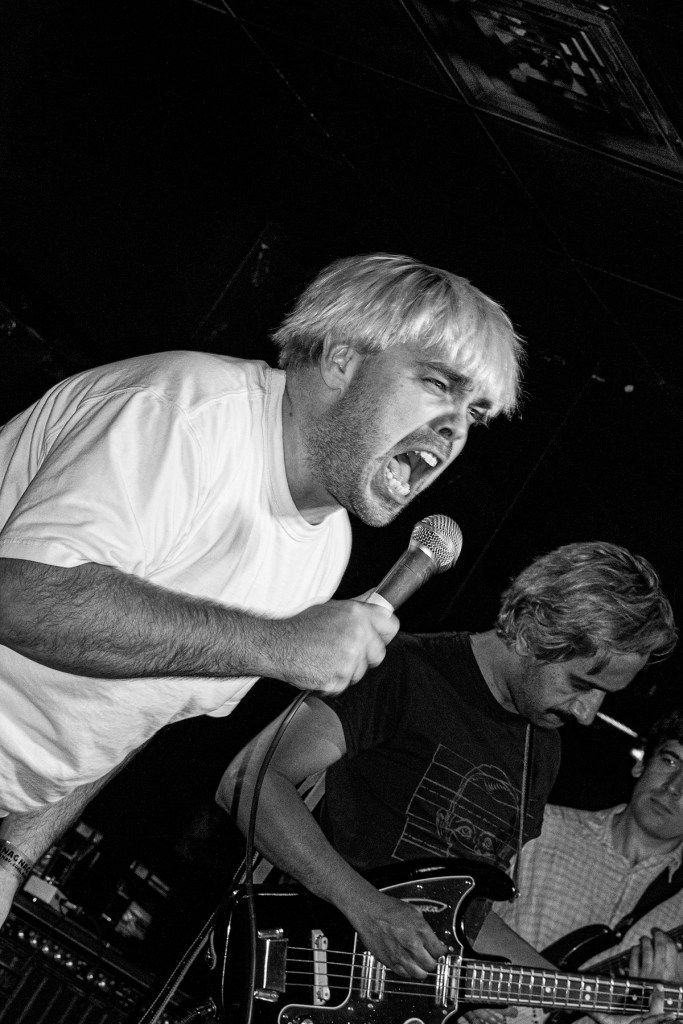
TOUR DATES (click on date for tickets):

Thursday 7th & Friday 8th March 2024 – OHM @ Brisbane Powerhouse 

Saturday 9th March 2024 – Byron Theatre, Byron Bay

Thursday 14th March 2024 – Adelaide Town Hall @ Adelaide Fringe Festival

Friday 15th March 2024 – Melbourne Recital Centre

Saturday 16th March – Melbourne Recital Centre

Sunday 17th March 2024 – Theatre Royal Castlemaine

Tuesday 19th March 2024 – Two screenings of film “The War is Never Over” with Q&A – Thornbury Picture House6:10pm & 8:15pm 

Wednesday 20th March 2024 – Lydia Lunch & Black Cab perform the songs of SUICIDE – The Tote, Melbourne

Thursday 21st March 2024 – Phoenix Central Park, Sydney

Friday 22nd March 2024 – The Great Club, Sydney

Saturday 23rd March 2024 – MONA, Nolan Gallery, Hobart