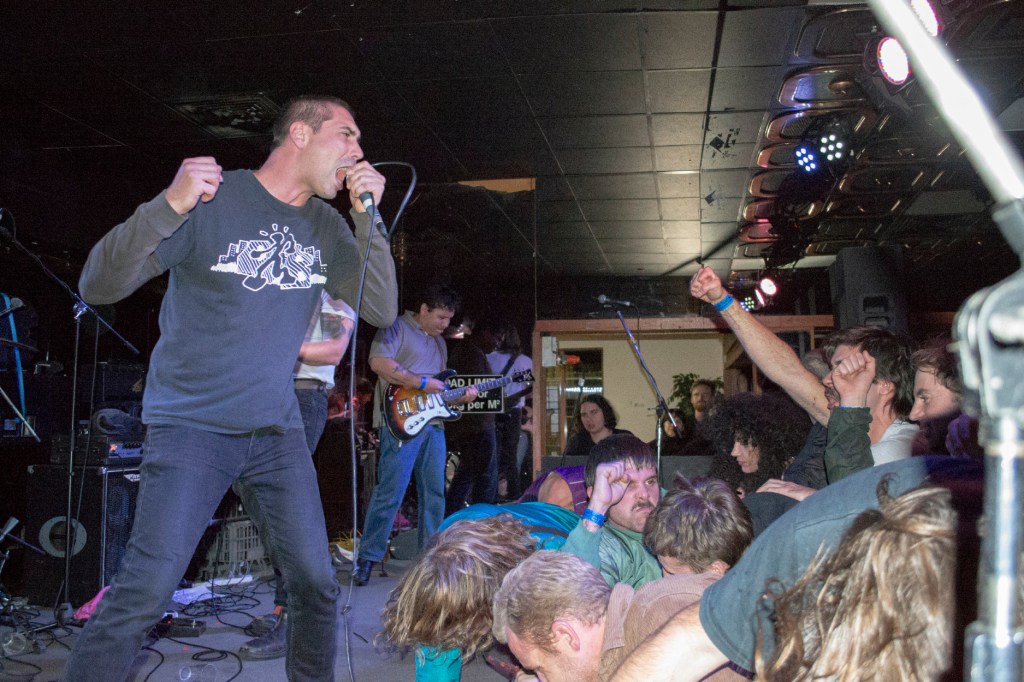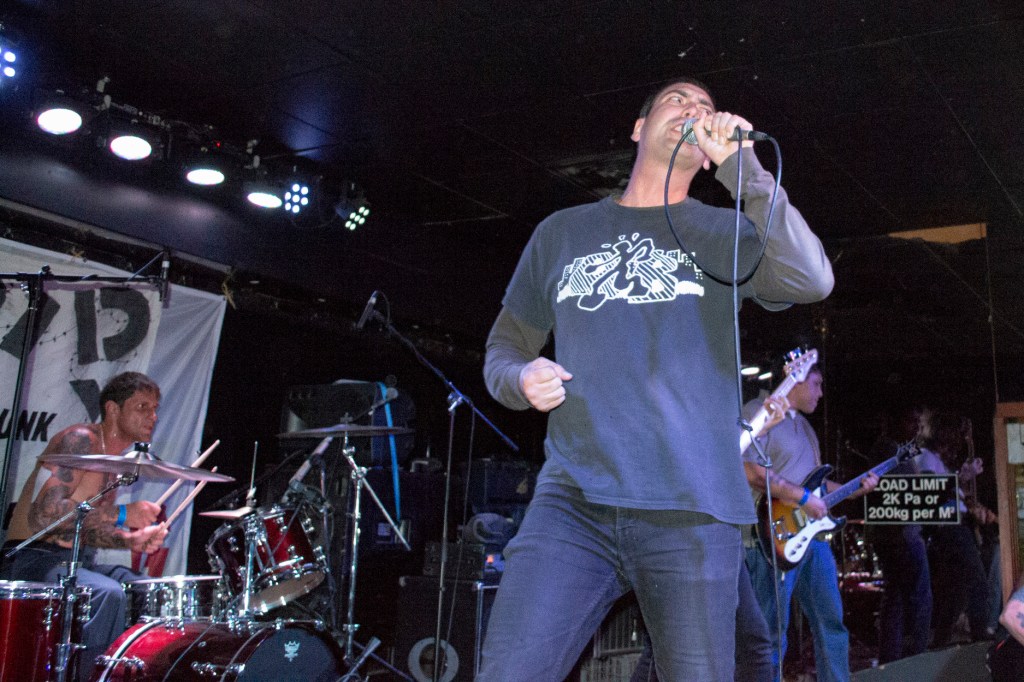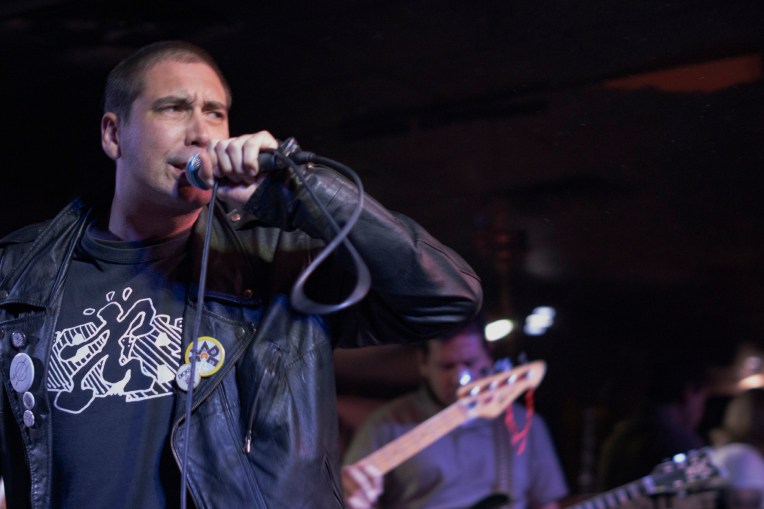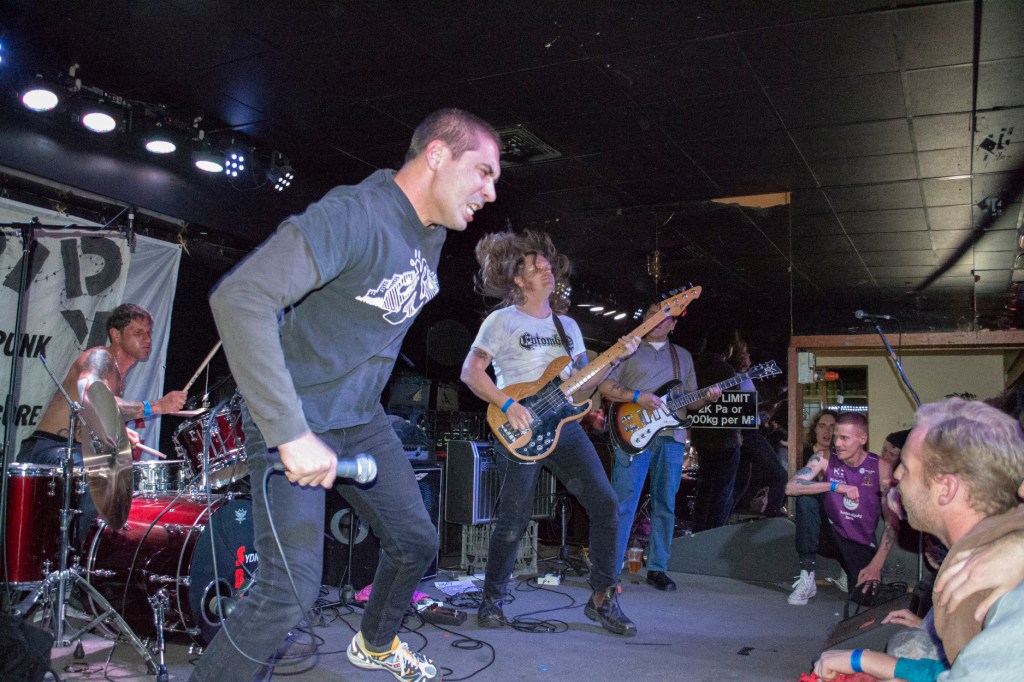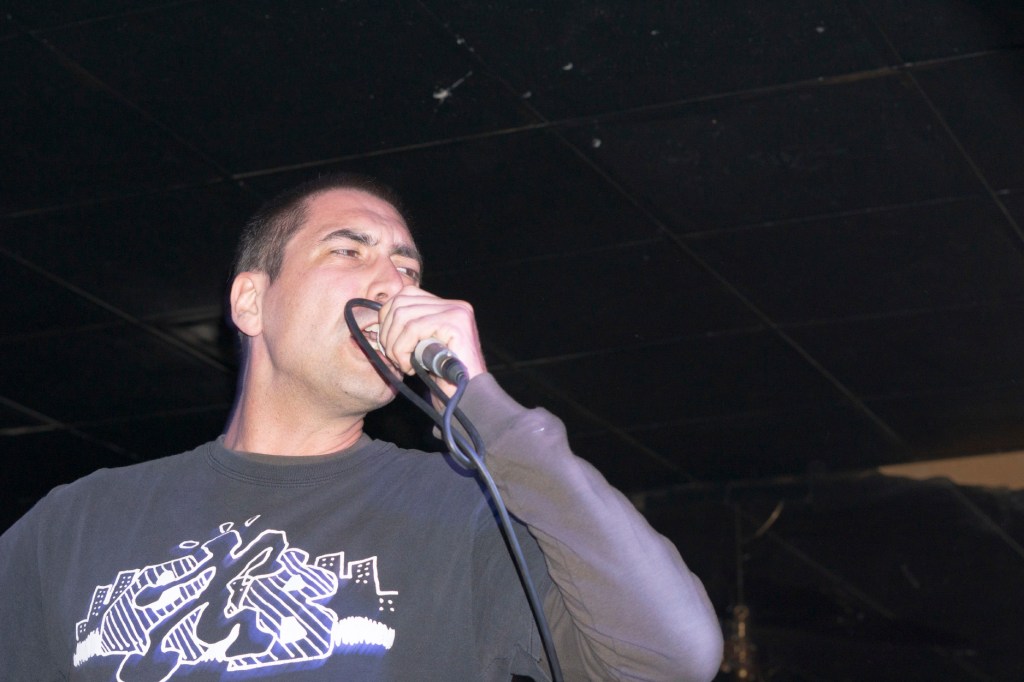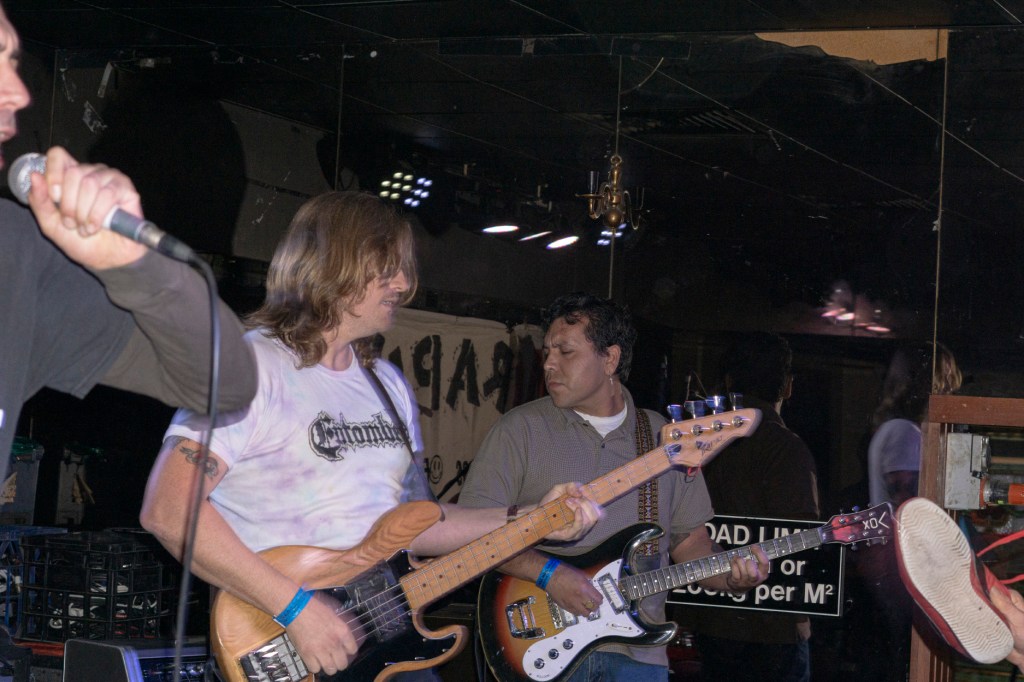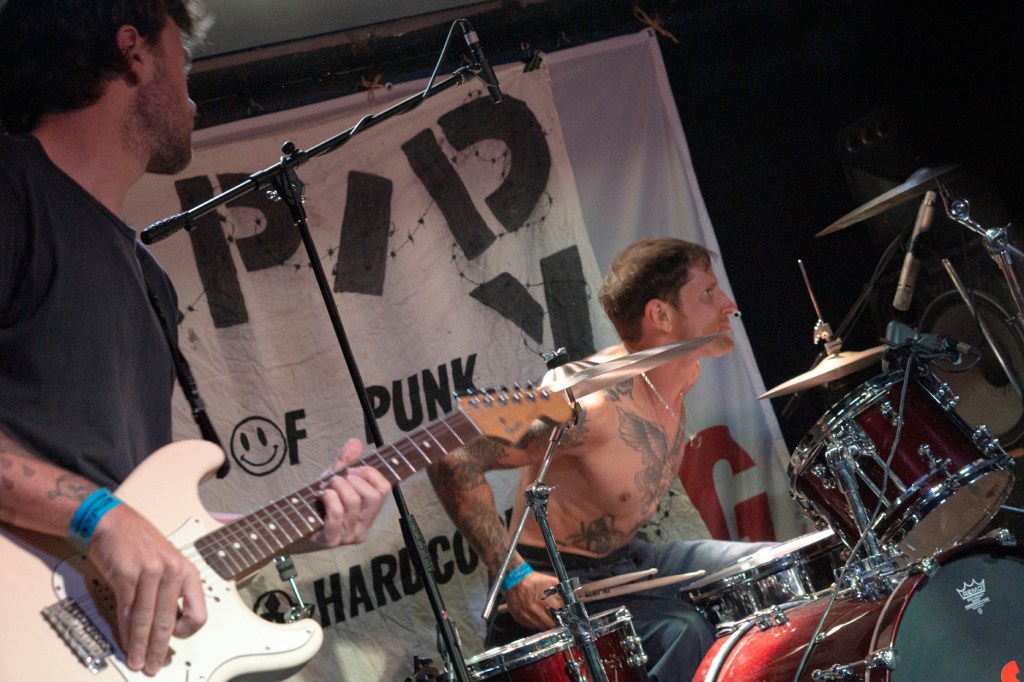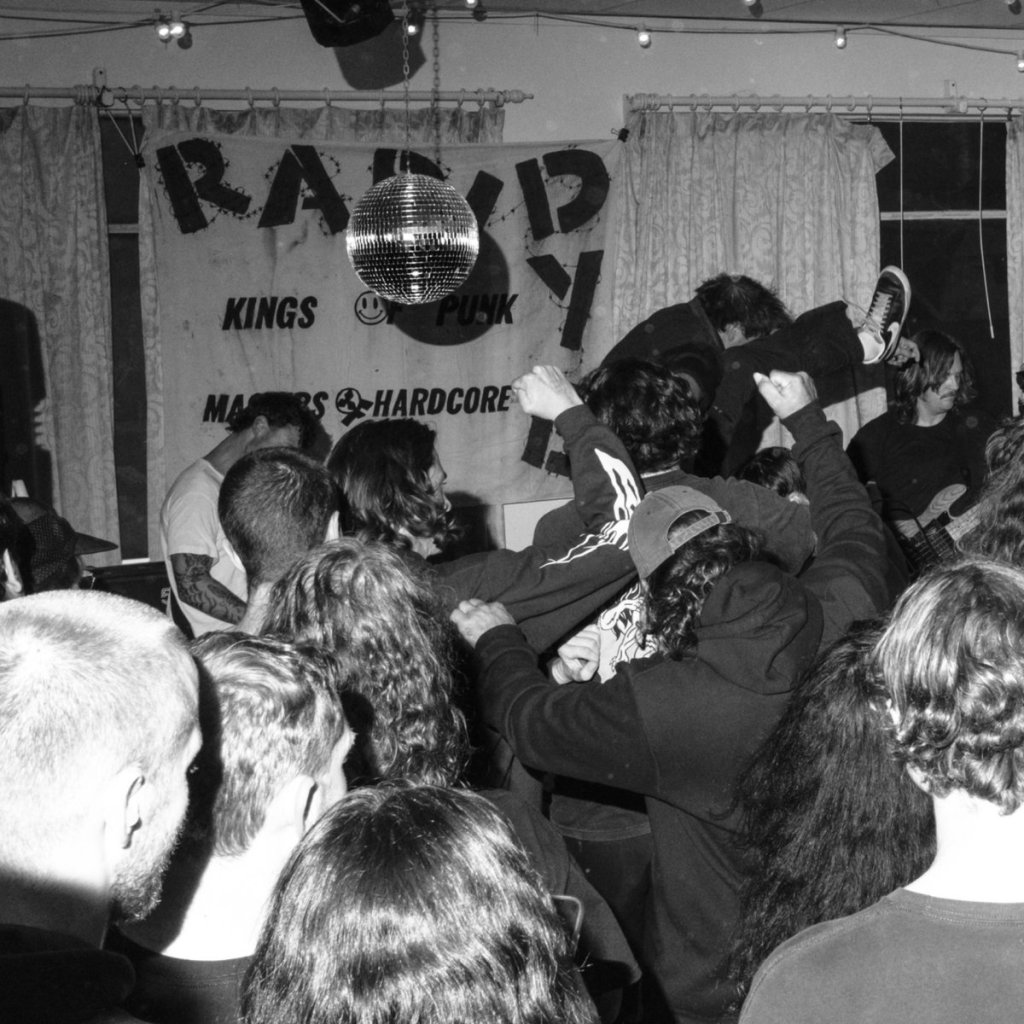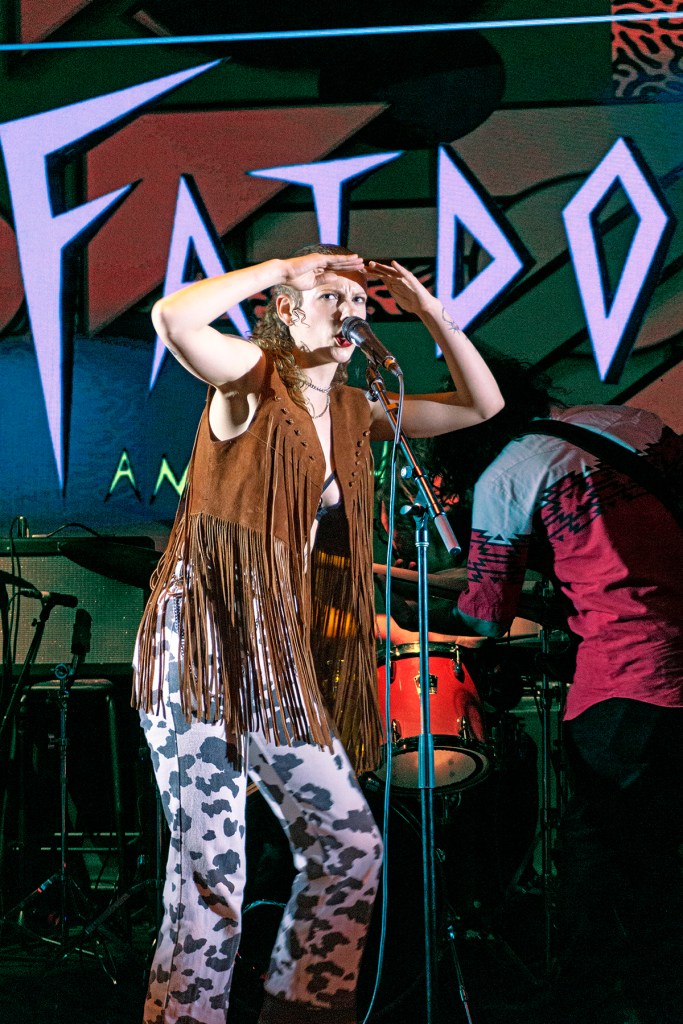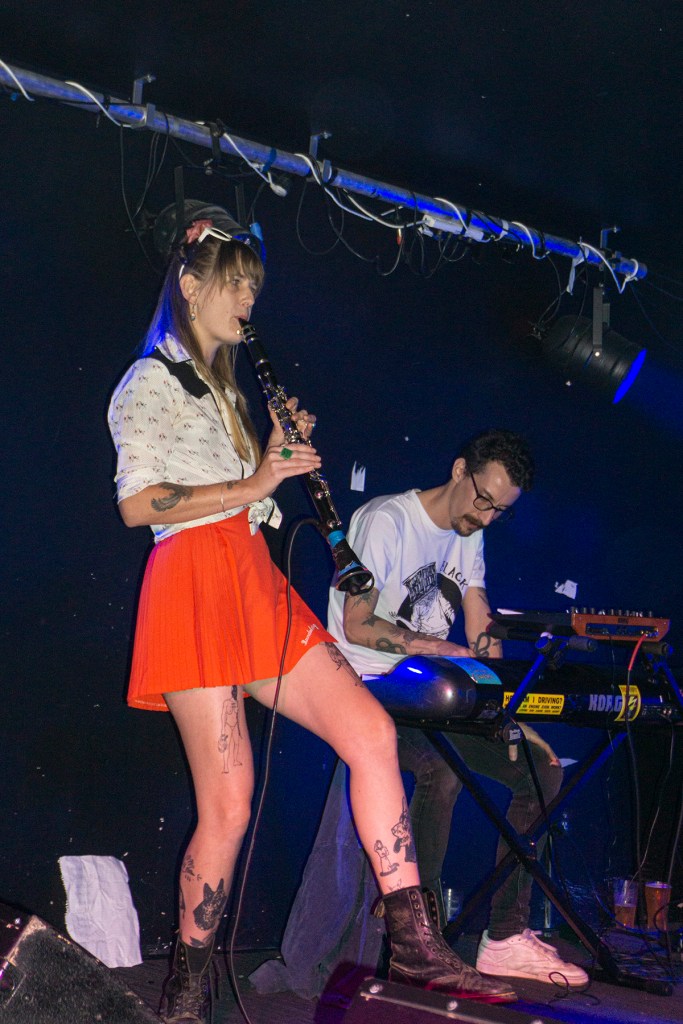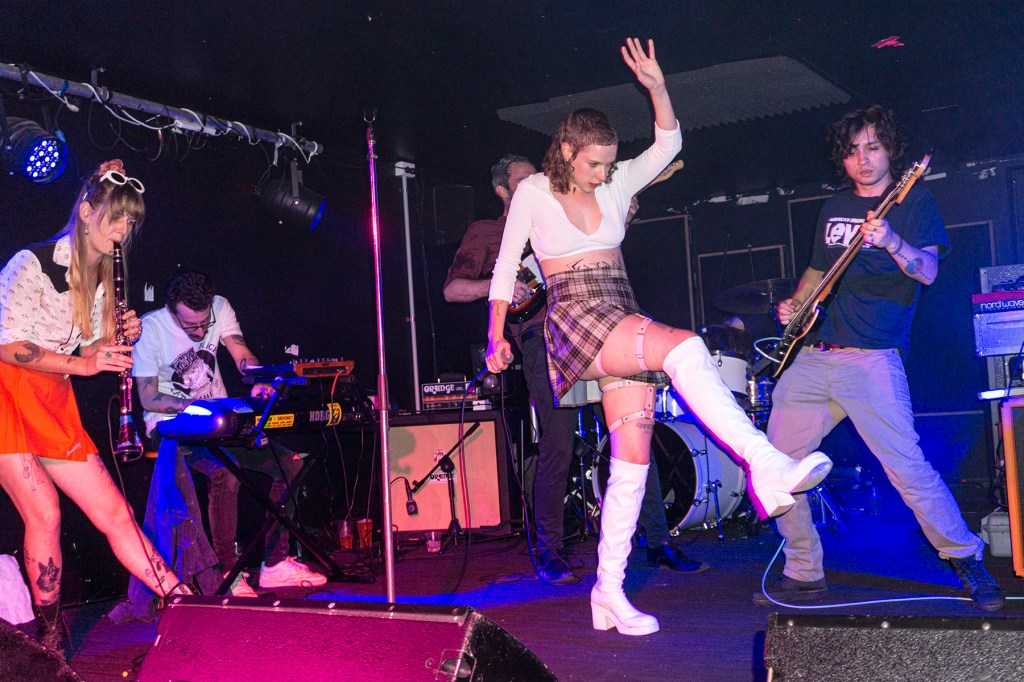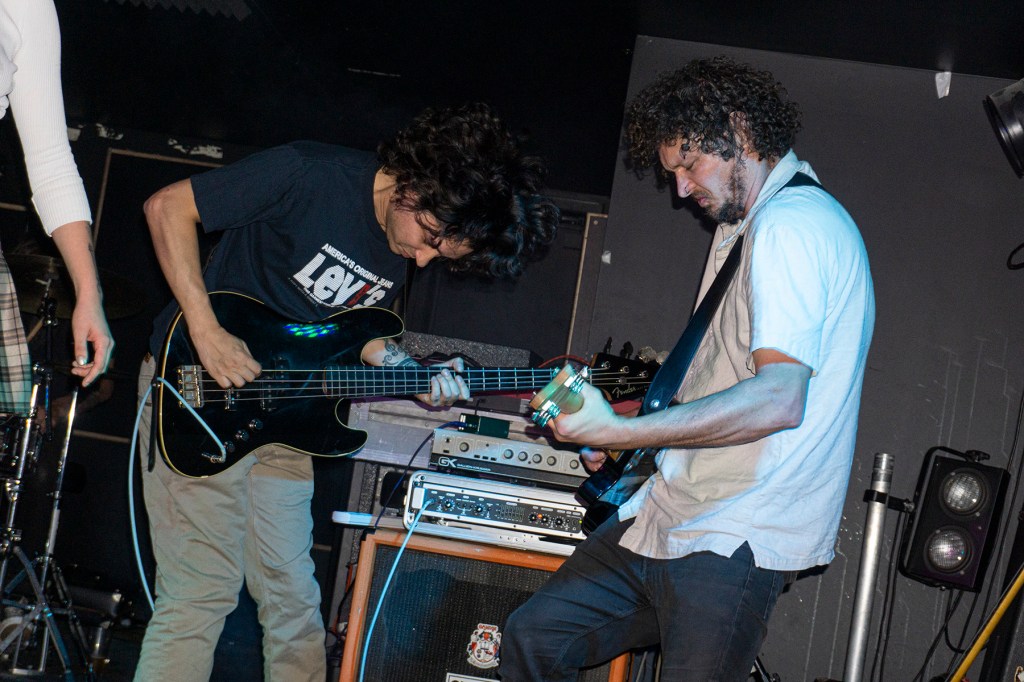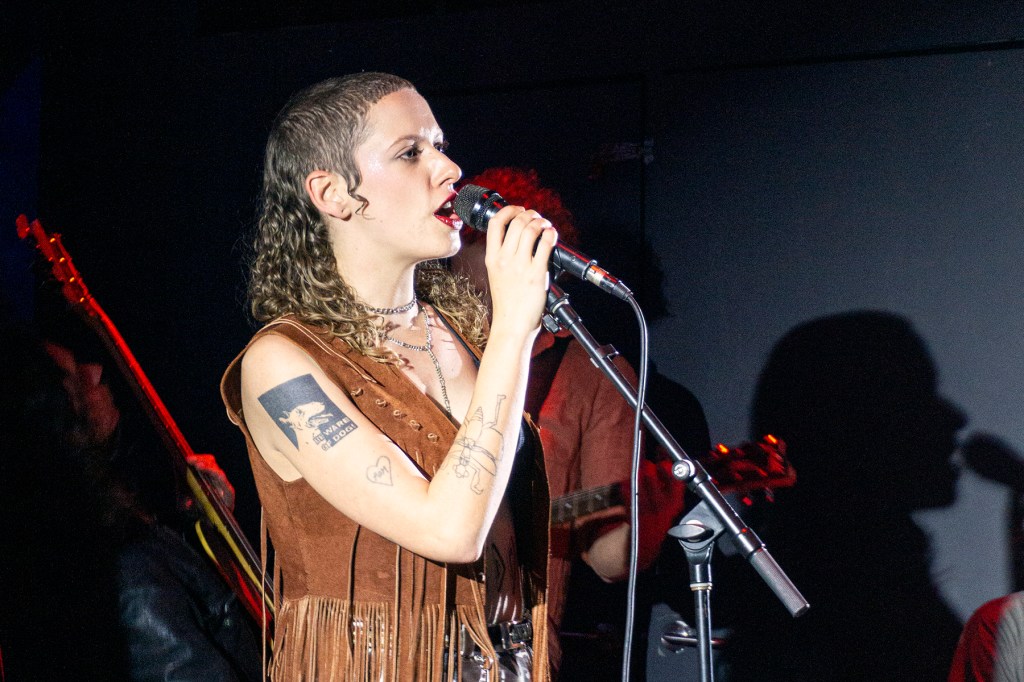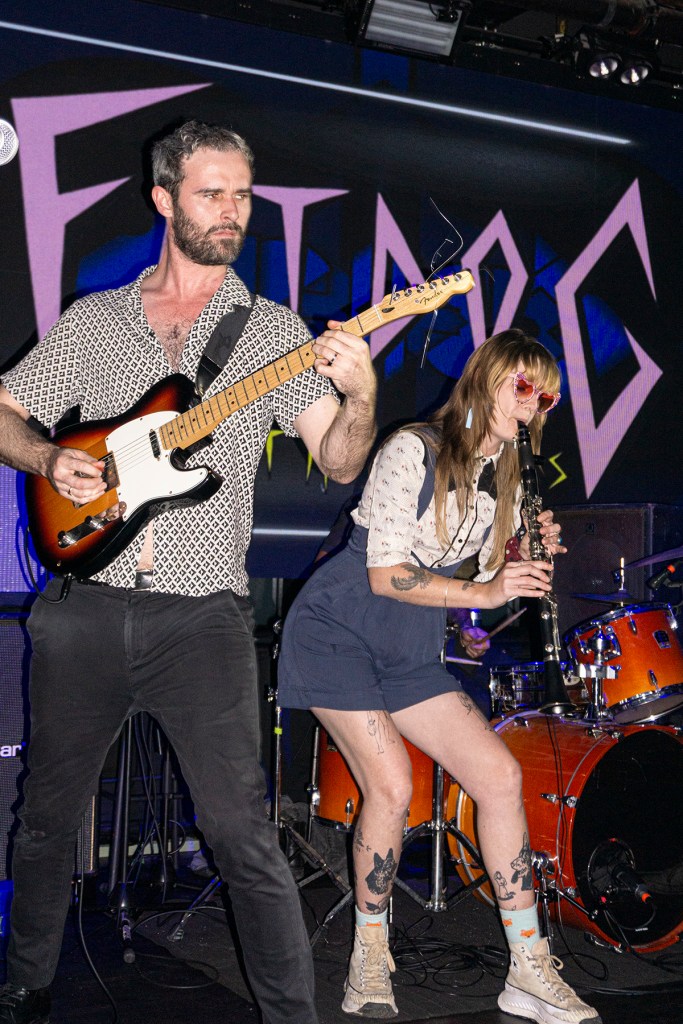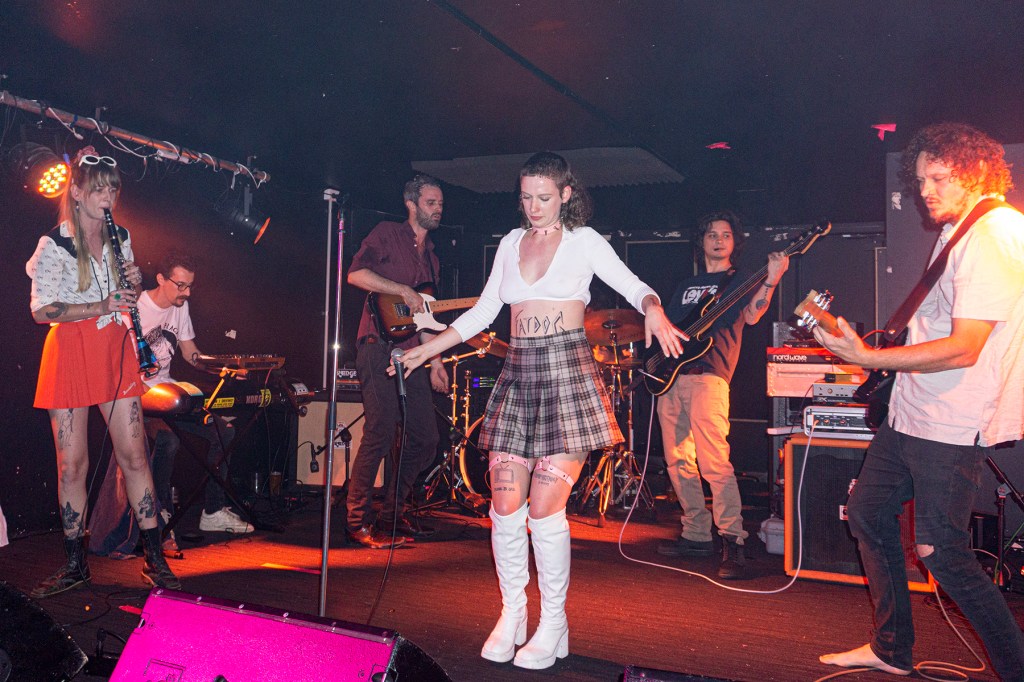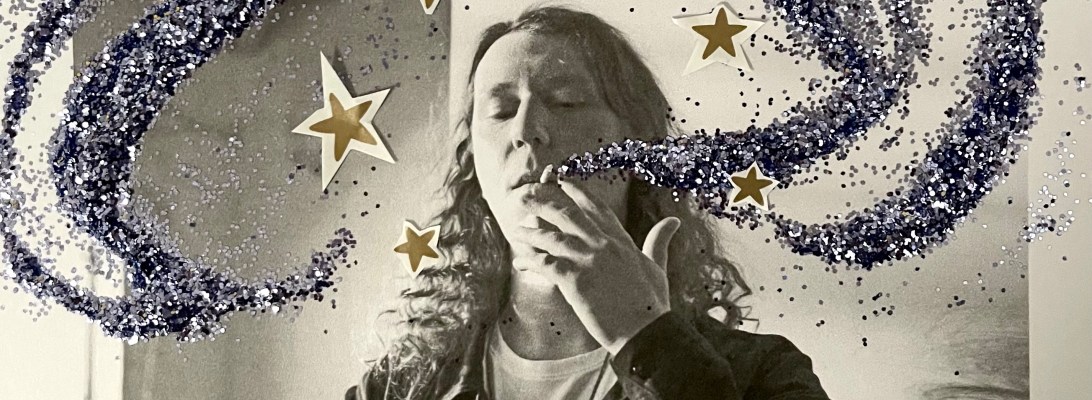
Gentle Ben and His Shimmering Hands: ‘It’s been a strange year.’

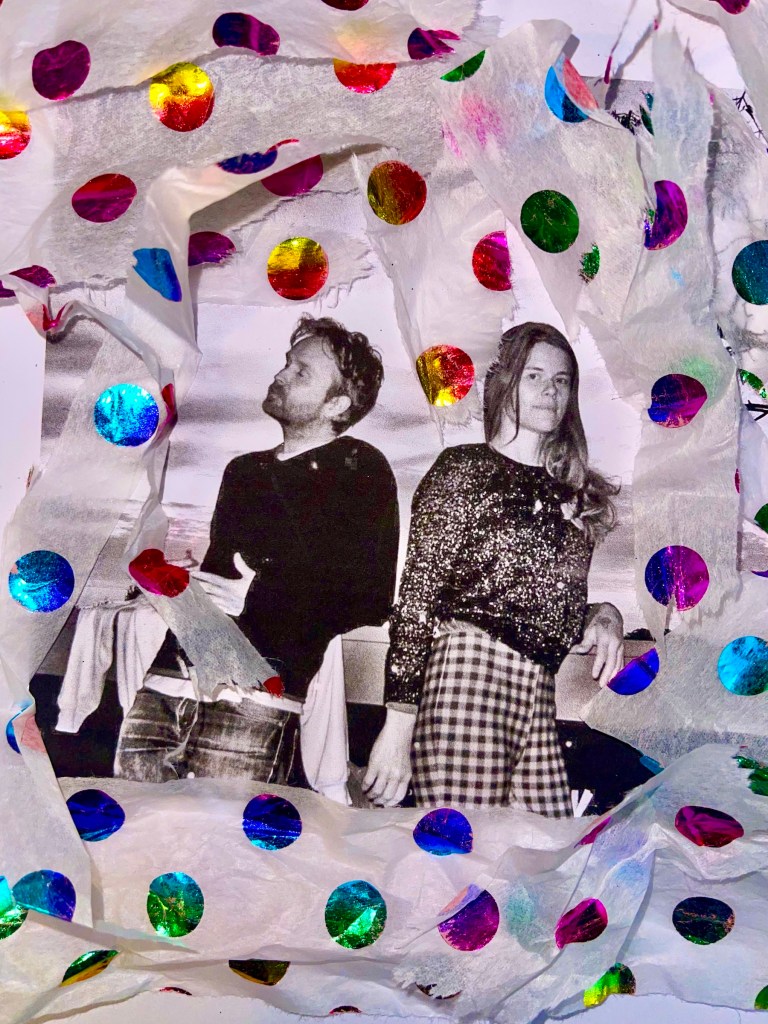
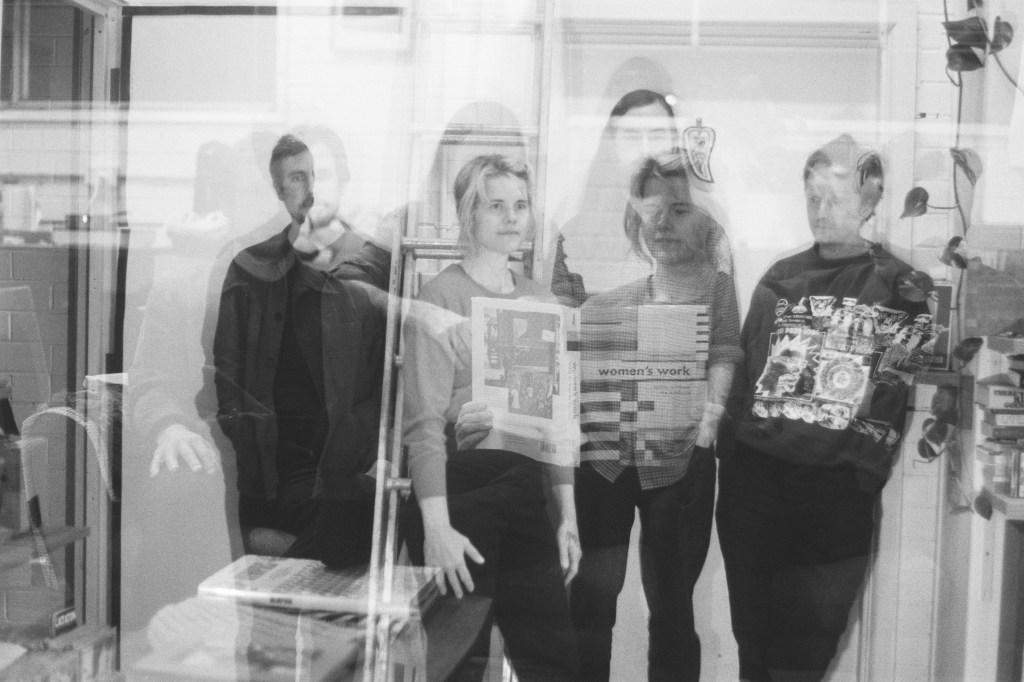
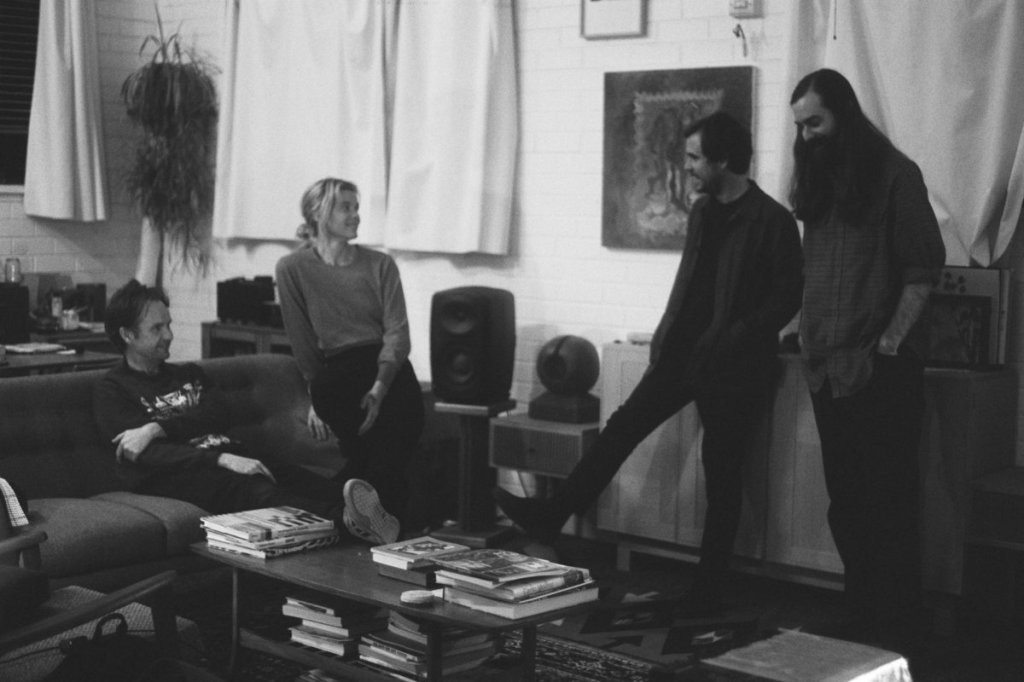
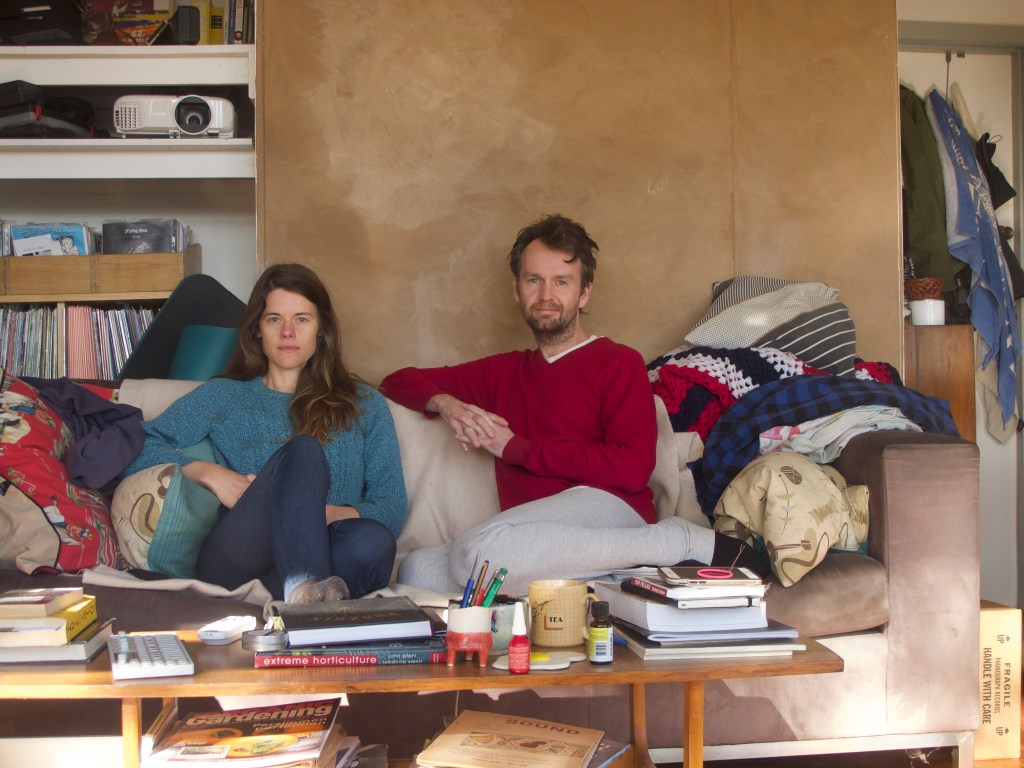
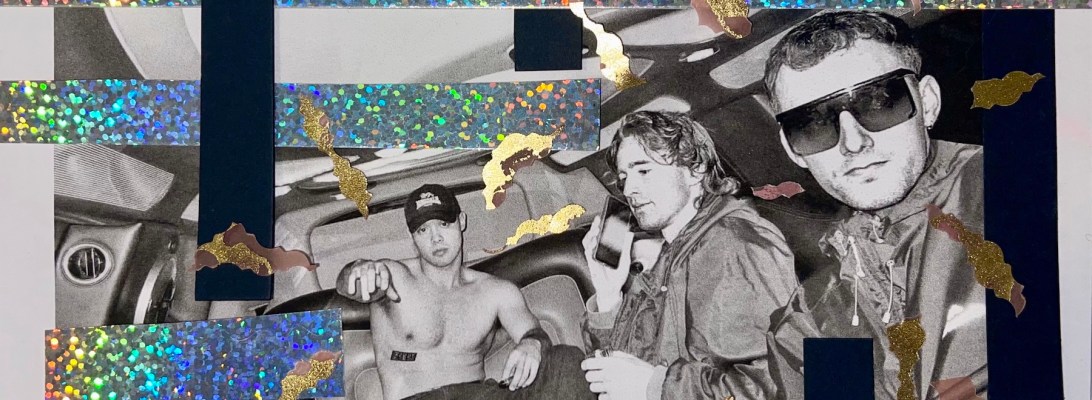
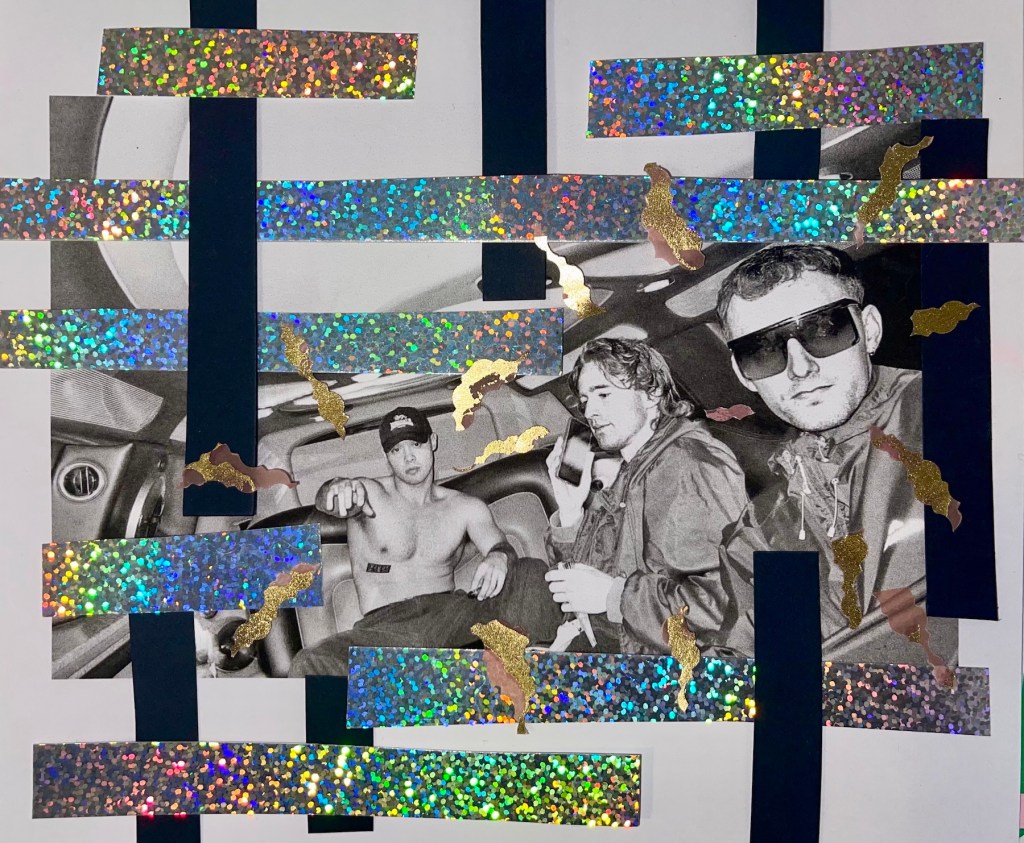
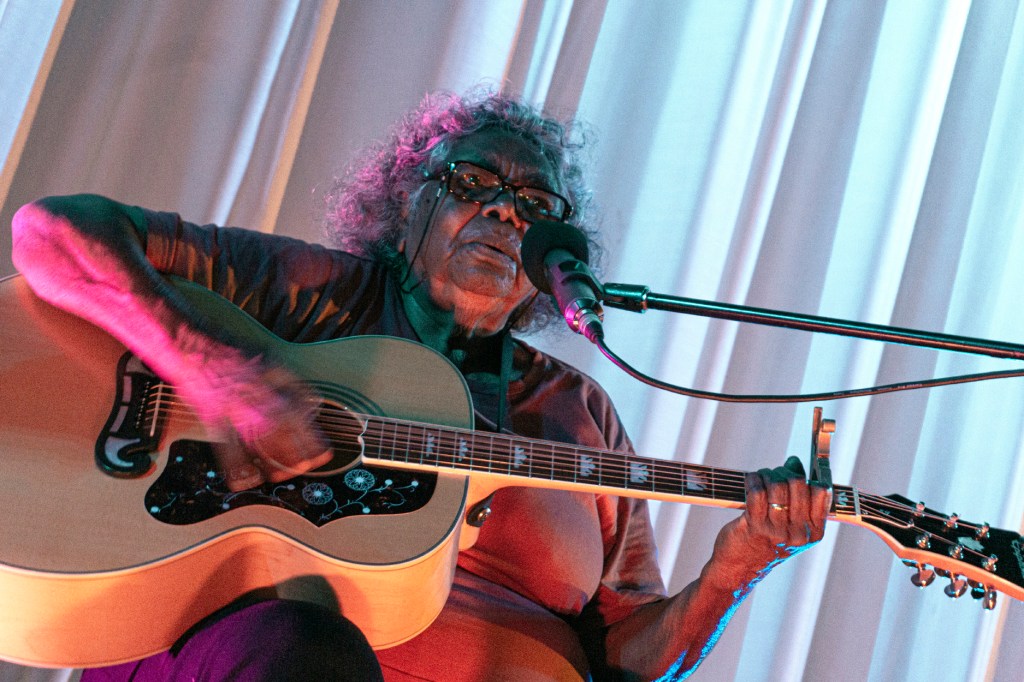
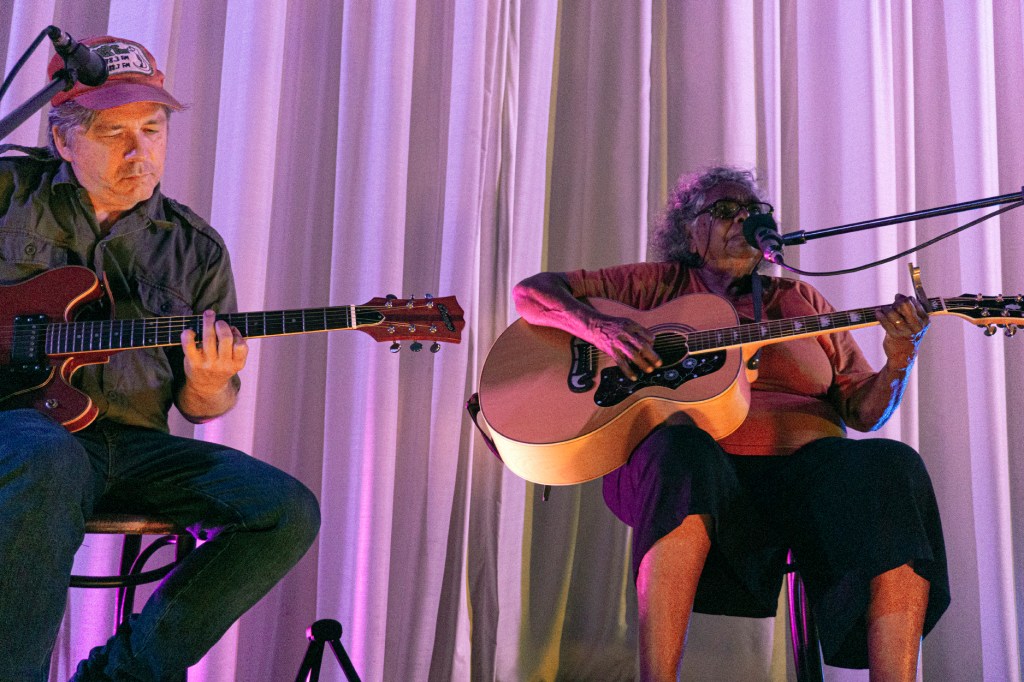
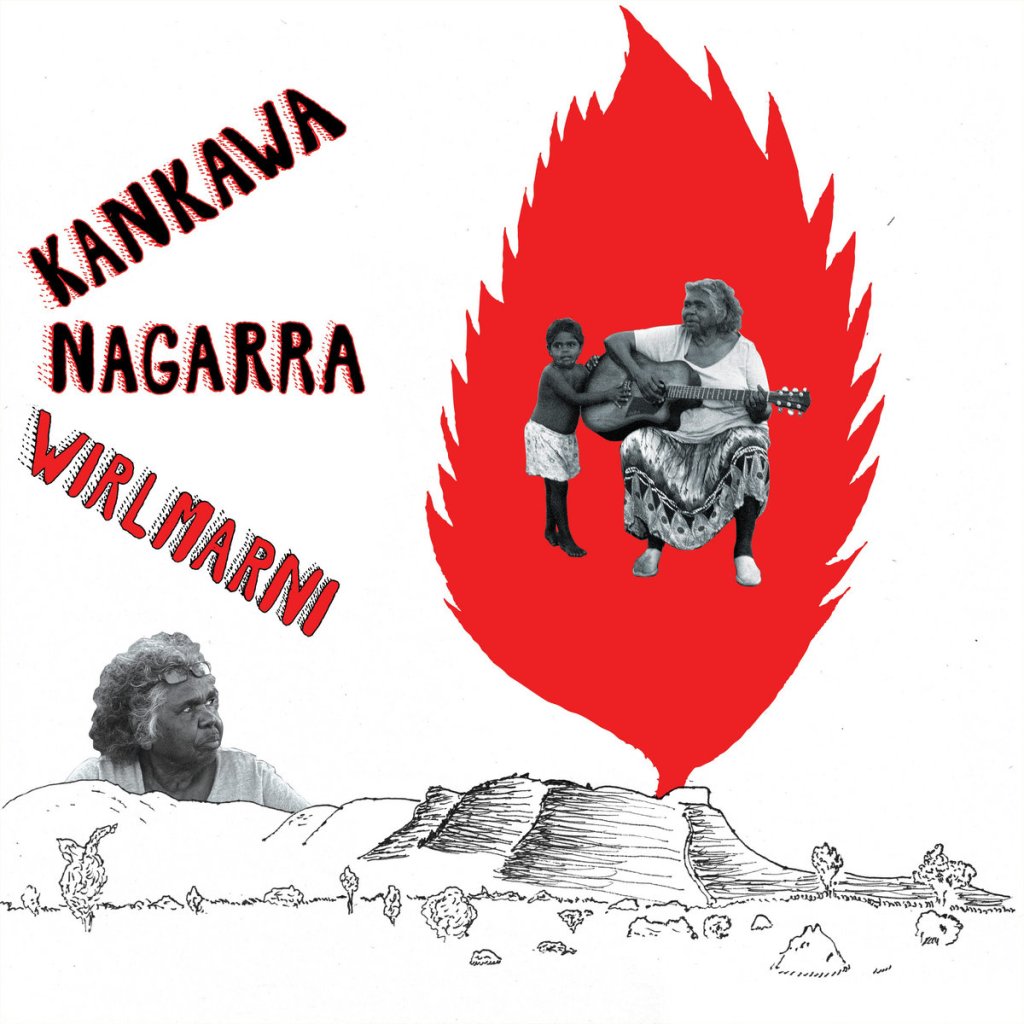
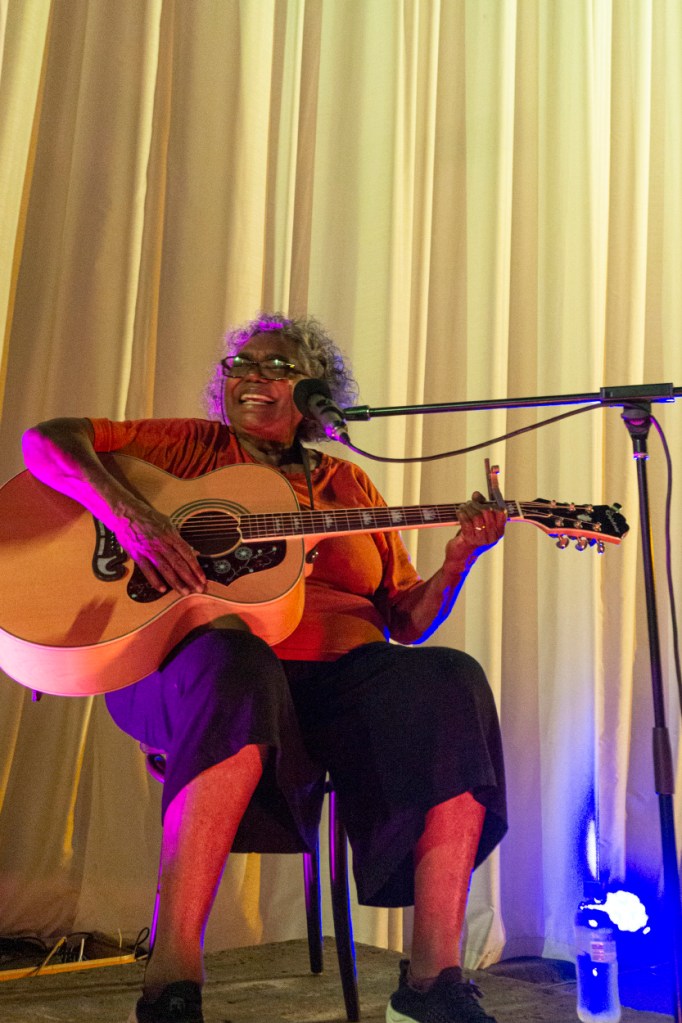
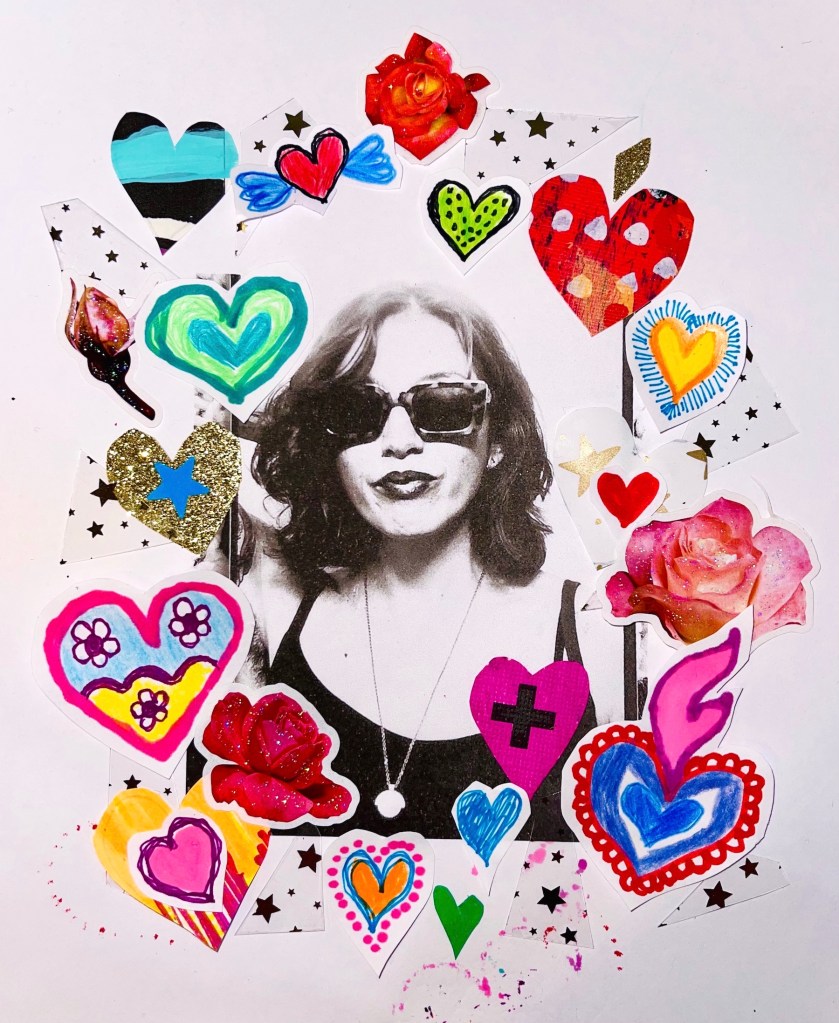
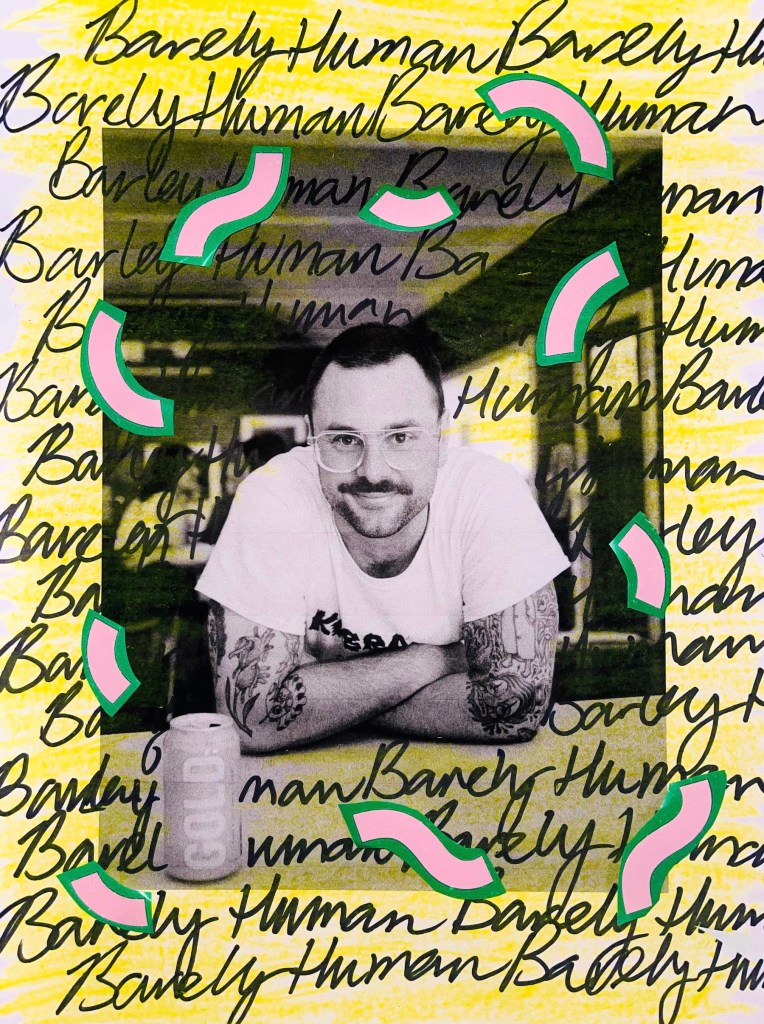
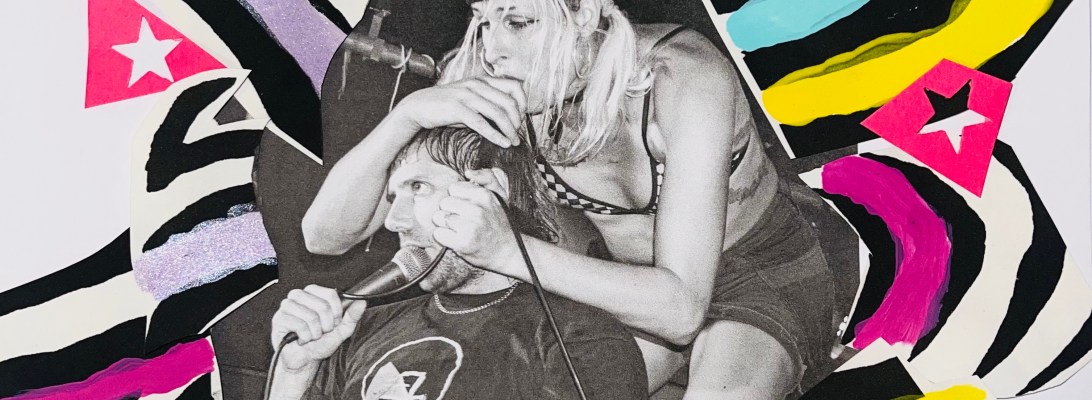
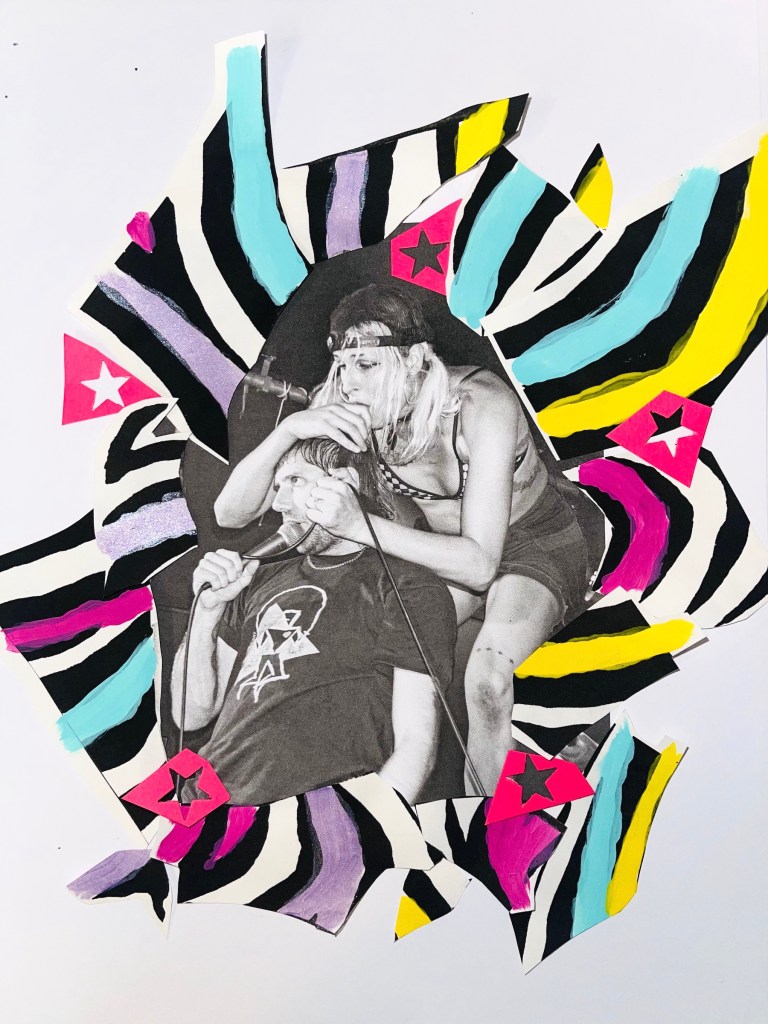
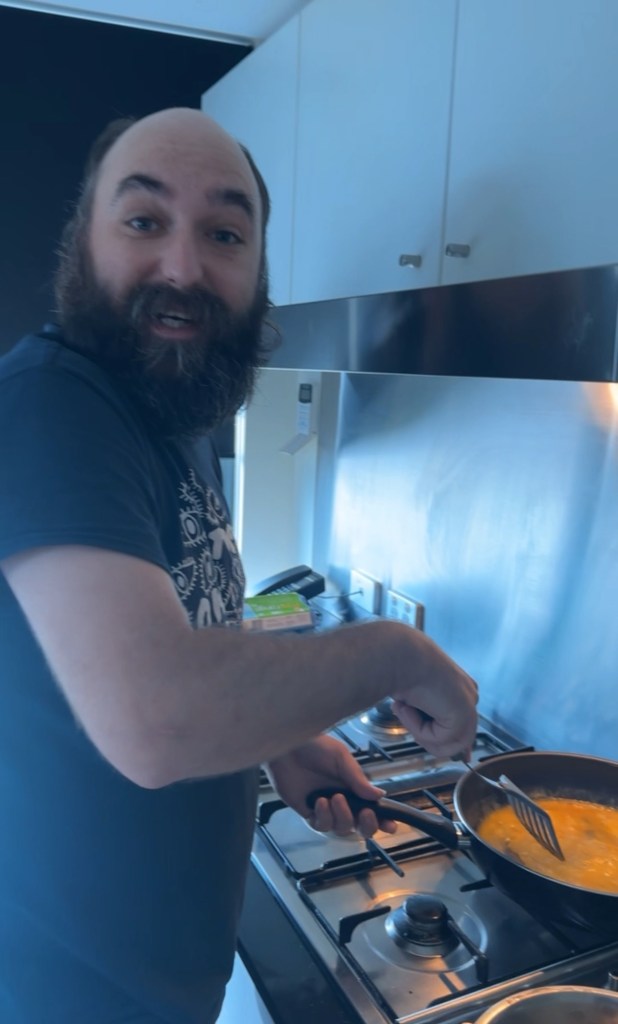
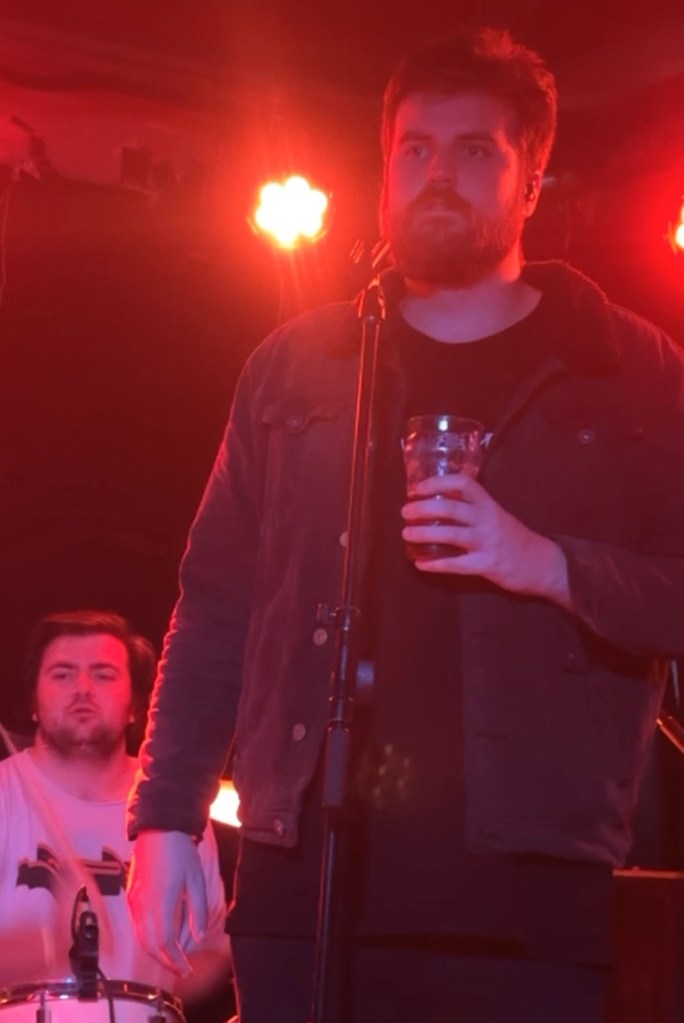
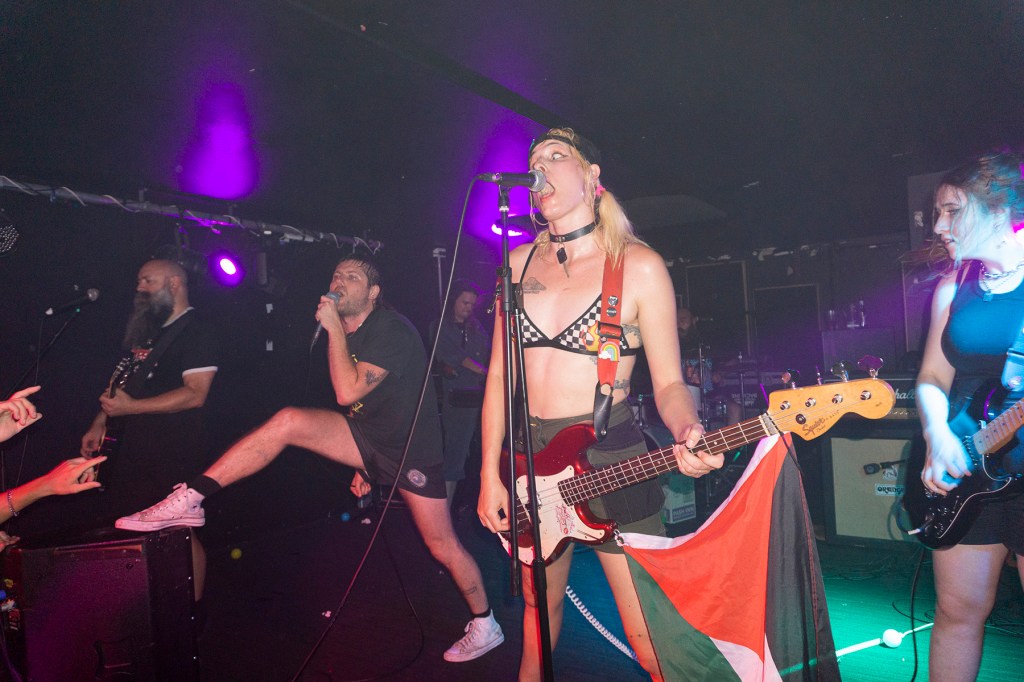
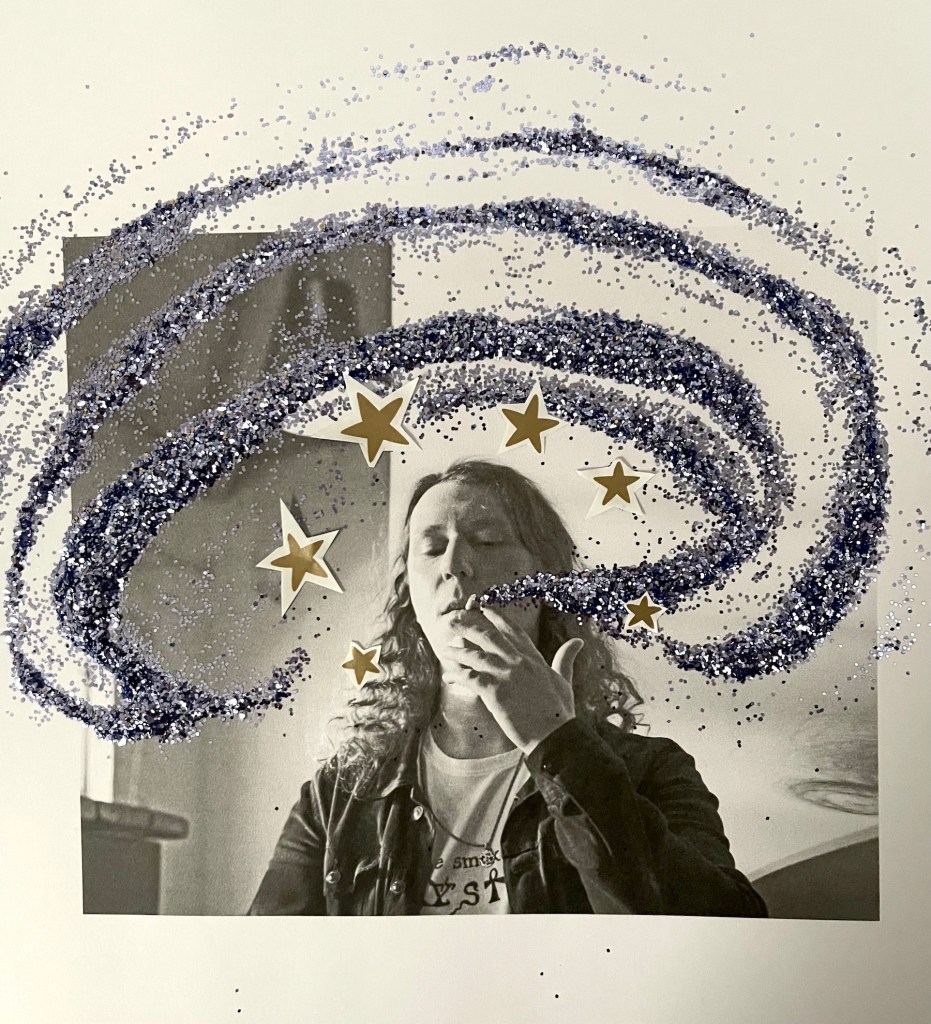
Original photo & handmade collage by B.

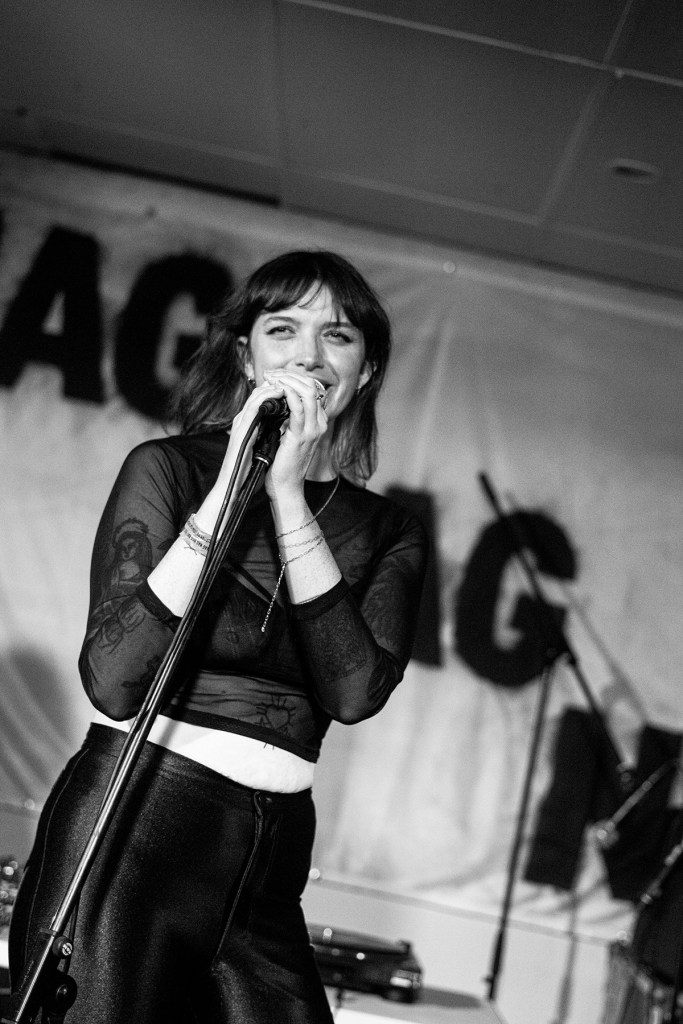
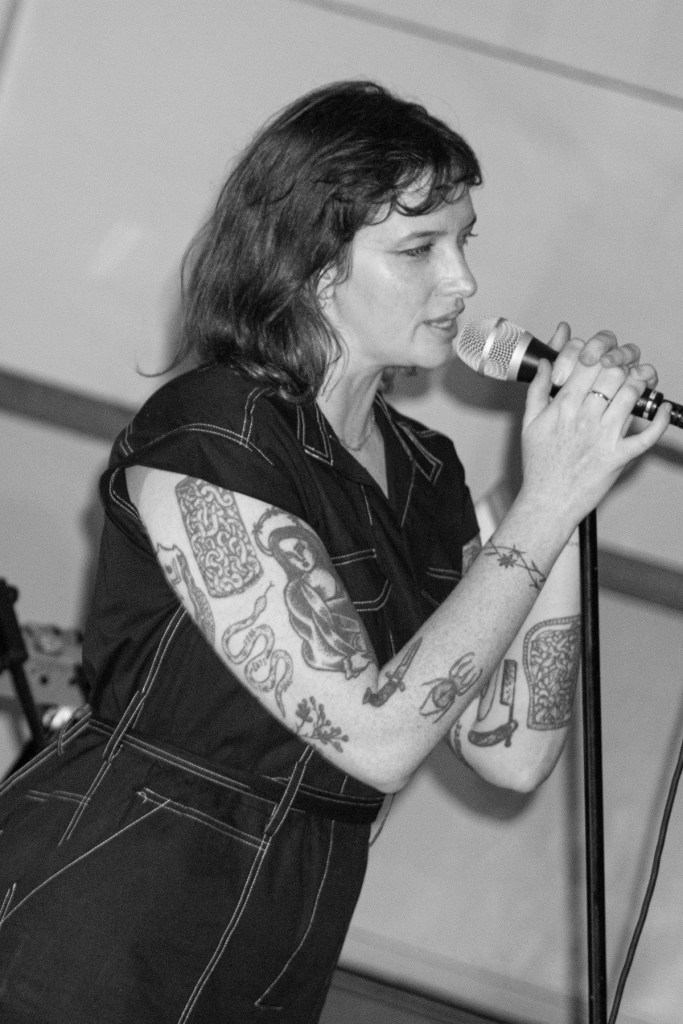
Ben Corbett, the frontman of Meanjin/Brisbane band Gentle Ben and His Shimmering Hands, knows a thing or two about following your passion, loss, mental health, and persevering. In our candid chat, he offers an intimate glimpse into the highs and lows of a career spanning over 30 years.

He shares with Gimmie the journey behind Shimmering Hands’ long-awaited album BRUT, their first release in a decade. A triumphant return, the album blends sass, wit, and satire as it weaves through themes of fractured hearts, minds, and bodies within a capitalist nightmare, offers critical commentary on colonialism, rock ‘n’ roll eulogies, and shines a spotlight on male violence, control, and toxic dynamics in relationships, particularly towards women. Yet, BRUT hasn’t received the attention it deserves. It was one of our top album of 2024 to come out of Meanjin. Tragically, a week after its release, Corbett and his friends experienced the heartbreaking loss of close friend, bandmate in Six Ft Hick, and local punk icon Fred Noonan, which we discuss.

The frontman also reflects on the importance of supporting younger musicians, the raw physicality of his performances, and what kept him away from making music for so long. With authenticity and vulnerability, Ben offers a heartfelt look at both Gentle Ben and His Shimmering Hands—and at himself.

I’m excited to be talking with you again! I’m sure you don’t remember but I first interviewed you for my first punk zine back in the 90s before a Six Ft Hick show at Crash n Burn.

BEN CORBETT: I bet I said some really intelligent shit back then. 

[Laughter]

I have no memory of that whatsoever. I’m sorry. And it’s probably for the best because I would have had some real hot takes in the 90s! It’s nice we finally get to connect again.

Totally. How have you been?

BC: Ooh, jeez, fine. The world is pretty horrible at the moment. It’s been a strange year. There’s been a couple of deaths of people close to me, which has made me value life a bit more. Which is good, I suppose.

And then there’s obviously the horror of what’s happening in Palestine that’s weighing on me every single day.

Apart from that, life is good. I’m blessed. I’m very fortunate. I’ve got a beautiful family, and a house to live in— all that good stuff. I get to sometimes go and make music, which is great, because there were a few years where that didn’t really happen very much. And now it’s finally happening again. I feel really privileged to be in a position to not only be able to make music, but when we release that music, people actually want to buy the records, listen to the records, and come to the shows.

Getting to do interviews like this. It’s all a bit of a balm for my soul. After however many years—30, whatever years of playing music—I can still rustle up some interest. It’s really lovely. Thank you.

Well, it’s lovey that you’re still making great art. Thank YOU for that. I’ve been following all the stuff that you’ve done for that long, and I gotta say that your latest record is one of the best things you’ve done yet. 

BC: I think so. That’s lovely to hear. This is a record that’s the sound of a bunch of people learning to get out of their own way. We’ve, in the past, really struggled to get things down. It was always dealing with each other’s egos, dealing with our own egos, and just not really being able to listen to each other’s ideas.

What has changed, in recent years, is that we’re all on the same page creatively. And a lot of that has to do with just setting aside—not differences, but just setting aside our preconceived notions of what we want to achieve—and actually weighing up ideas on their own merit. Which has been a really cool change to the creative process.

Even though it’s my name—or my stage name—at the front of the band, it’s really a group effort in everything we do.

I know Dan Baebler (bassist), has been part of your life for a really long time. You guys went to high school together?

BC: Yeah, we’ve been really close friends since we were like 14. We used to go skateboarding together and hang out all the time. He’s been a constant. We tried to form bands when we were about 17. That didn’t really happen. And then Six Ft Hick coalesced into some sort of being when we were 18. We’ve obviously done Six Ft Hick for a long time. But then Dan jumped in on this new project, and it’s kept on rolling with him, which has been great.

Because he’s an incredible creative spark. He has this wonderful sort of cynicism that drives a lot of what he does, which is really important to have. What we create is as much about what we’re not into as it is about what we are into. A lot of that influence, those negative influences, like, all we don’t want to sound like, or we don’t want to roll out that cliché. So it’s really cool to have someone like that to bounce ideas off. He’s creative in all kinds of ways. He’s a musician. He’s an incredible videographer. He made the main film clip for the album song,Spices’.

He travels around Australia, filming in Indigenous communities and doing all this great work. I hadn’t really seen a lot of his work or how he does his work. Then we turned up to film this clip at this crazy reservoir that looks like a part of an ancient ziggurat, with these giant concrete steps. He pulls out a drone and starts flying it. I was like, ‘How did you learn to fly and film with a drone?’ He’s like, ‘Well, this is what I do for a job.’ I’m like, ‘This is insane!’

It’s cool to see your friends do all these interesting things because I have a very limited skill set. I have a very particular set of skills, and they’re not very useful. I’m kind of like a really crappy Liam Neeson [laughs].

Of course, Tony is not just a great guitar player, but an incredible graphic designer. He has an Instagram page and a website called Guitar Nerd. He really is just a wealth of knowledge about guitars. He’s so enthusiastic about guitars, about music, and about the history of things. That energy is just incredible to be around.

Jhindu is a monster behind the drums, but then just the loveliest, most incredibly calm and level person to be around. He brings his own beautiful energy to the band.

Nothing would work the way it does without what everyone brings, which is a nice thing to recognise and acknowledge. Part of recognising and acknowledging is learning how best to work with all of those elements.

That’s part of what you’re hearing. Those elements of our personalities are given, not free rein, but the right amount of freedom. Because we’re pretty good at dumping each other down when it’s necessary. That includes me being stomped down because that’s necessary sometimes as well.

Well, that’s definitely working, the album is really fucking cool! You grew up on a chicken farm in Woombye about an hour and a half from Brisbane? 

BC: It wasn’t a working farm for very long after I was born, so I have really vague memories of there being chickens. We kept the farm in the family, and it’s still there. I go up there pretty regularly to hang out with Mum and do a bit of work.

Lately, we’ve been collecting tons and tons of scrap metal from around the farm. When my dad was alive, he wouldn’t let you throw anything away, literally. There were sheds and sheds full of scrap metal, rough pieces of stuff, old plows, and machinery. I’ve been doing a lot of that with my brother Geoff as well.

At the time, I didn’t really appreciate how good I had it. I wanted excitement and thought I’d be better off as a city kid. I thought that was where it was at. Now, I don’t think city kids have it any better than country kids—except maybe they have slightly lower death and injury rates!

I still go up there pretty regularly, and it’s beautiful. The highway is encroaching on it fairly rapidly, unfortunately, but one side of the farm is still great.

Around the time you grew up there, I think the town had only a few hundred people?

BC: Woombye was a pretty small town, and we weren’t actually in the town—we were about 5 km south of it, a little bit isolated in that sense. It wasn’t like we were out in the sticks or on a cattle property in Longreach. It only took us about 10 minutes to drive to school, so it wasn’t a big deal.

But for me, as a young person, I wanted to be elsewhere because the highway ran past. I couldn’t wait to get out and move to Brisbane. That was my big goal: to move to Brisbane and make music or do whatever it was I wanted to do. That was freedom. When I became old enough, my brother Geoff, who’s seven years older than me, was living in Brisbane. I would catch the train down, go see bands, and sneak into pubs. No one would check IDs in those days, and I looked older. I had this stupid goatee that was awful, but it got me into pubs and stuff. I’d go watch bands, and that was quite formative.

As soon as I could, I moved down to Brisbane with Jeff and started trying to make music with Dan. We had a few abortive attempts at starting bands, and then Six Ft Hick kind of happened.

I understand that your mum used to make you do eisteddfods and things. Was that was your first introduction performing?

BC: Yeah, she got me onto the stage. She was a speech and drama teacher. A schoolteacher originally, and then after she got married, apparently, you couldn’t be a married schoolteacher in Australia in the 60s. Pretty insane, right?

So, she started doing private elocution lessons, which is pretty funny. I can speak cultivated Australian English when I want to, and my mum, well, everyone says she speaks like the Queen [laughs].

She got me doing eisteddfod things—poetry readings, mime, all that kind of stuff. I did it when I was quite young, but then I lost interest as I got into high school.

Did you enjoy performing? 

BC: I did enjoy parts of it, but the nerves would get to me. I really liked being praised and being told that I’d done a good job. If I won a medal or something, I was really stoked. But if I didn’t, I’d be devastated, you know?

I guess I’m still really easily discouraged now. Well, I can’t be that easily discouraged because I’m still doing bloody stupid bands—and I’m nearly 50! I’m thin-skinned but also bloody-minded.

How did you first discover music? 

BC: Through my brother’s influence, I started getting into music during my teenage years. He was at that age where he was really exploring different sounds. He’d play me records by The Cure or Dead Kennedys. There was a limited amount of alternative music available on the Sunshine Coast back then unless you had a way to access it, so I’d just listen to whatever he brought home.

When he moved to uni and went to art school, he started bringing home more records that influenced him, including country music. That’s where my love for outlaw country—Johnny Cash, Hank Williams, and the like—began. It was an uneasy appreciation at first but grew into a genuine love, alongside punk rock like Black Flag.

In high school, I got into skateboarding, which introduced me to a mix of punk rock and metal through friends. Some of it was great; some of it, not so much. I made a few questionable choices in music, but some stuck with me over the years.

I started hanging out with musicians, like Dan and a few other friends, trying to form bands that never quite got off the ground. I always felt like I should have learned an instrument, but I was lazy, so I just sang. That eventually morphed into what I do now.

Did you look up to Geoff?

BC: Absolutely. He was totally my hero. I really wanted to be in a band too. I got up on stage with him for a couple of things he did in one of his bands. Then, we did the play. He was very kind to me, because he was really encouraging of everything I did. He probably didn’t have to include me in any of that stuff, but he did. And I think that’s what set me on this path. So, we did Six Ft Hick for a few years, and then I wanted to try something different. That’s when I formed Sensitive Side, and that kind of had its own life, which was really cool.

What did the earlier attempts at bands with Dan sound like? 

BC: Terrible. Like, really, really fucking bad. It was some sort of—I don’t even know what to call it—some kind of ’90s math rock bullshit. Just terrible. Really naïve, but not in a good way. I live in fear that someone’s going to unearth a tape of it one day. Early Hick is bad enough, but there’s some truly awful shit from back then. Sorry.

So, your brother was already living in Brisbane, and then you moved down there. When you first arrived, you were studying for a while—what were you studying?

BC: I studied Humanities because I had no idea what I wanted to do. I just thought, ‘Oh, I guess I’ll do that.’ I really didn’t know what I was in for and was quite a poor student. I ended up getting a job at the uni as a research assistant, but I dropped out at the same time. So I was working at the same uni where I was failing.

After that, I started working in hospitality, as a lot of people do in their first job after leaving home. I washed dishes for a long time, made coffee, and waited tables for years. That kept me going through the early years of Six Ft Hick when we were touring a lot. It was really handy because I could take time off whenever I needed.

We would go on tour down to Melbourne, Sydney, or wherever, usually by road, every few weeks for a while. It was ridiculous. We’d drive straight for 20 or 22 hours, play three shows, and drive home again. We did that for years because we thought that’s what we were supposed to do. It made us very tight as a band and road-hardened.

Six Ft Hick was always about the live show. We never really captured what we did on record, and that’s fine. It was always more about the moments we shared with an audience.

Didn’t Six Ft Hick start from a play that you wrote as a teen?

BC: The play was called Country Style Livers, and it was a play on words referencing the magazine Country Style Living, which was a fancy homes and gardens thing. But it was born out of this idea that I wanted to write a play about the clichés of country music, country music tropes. 

The main character is a wheelchair-bound ex-truck driver addicted to heroin. His younger sister is a sex worker who’s being pimped out, in this town that’s devastated because the main character had a truck crash that wiped out a school bus with all the town’s children on it. It’s this ridiculous, over-the-top idea of the country music tragedy.

It was meant to be funny, but it also had some intense elements. It was a silly idea that I wrote when I was 18 or 19. But a lot of the ideas in it were really quite strong.

We had a house band in that play, and that house band was what became Six Ft Hick. Craig was on drums, Karim (who we’ve lost contact with) was on guitar, and Dan played bass in those days. Geoff and I kind of sang these songs, we were almost like narrators in between the scenes of the play.

We put it on at Metro Arts in the city and had a cool little run.

That’s pretty ambitious  to write an entire play at that age.

BC: I didn’t know any better at that stage. You know, I had that sort of confidence of youth, the kind where you think, I’ll just do this. I’ll just go ahead and do this, and we’ll put it on. And somehow, it just happened.

That was probably a lesson I should have learned and carried forward—to be a bit more ambitious with the rest of my life.

Did like your love for the written word and words in general come from your mum? 

BC: Yeah, I was a really big reader as a child. Now I have a daughter who’s an even bigger reader, which just makes my heart sing. She can carry on a conversation with any adult, and it’s wonderful to see. We always had books around when I was growing up. More than music, really—we weren’t much of a musical family in my early years—but books were everywhere.

There was definitely a reverence for the written word, and probably the spoken word as well, because of my mum’s influence. I still feel there’s so much power in how language can be used. I try to tap into that with lyrics—not just the lyrics themselves, but how they’re delivered. I don’t really think of myself as much of a singer. A better word might be performer, because I’m always trying to project something when I’m singing, whether on stage or recording.

There’s something unique about singing—it lets you play not only with the meaning of the words but also with melody, with texture. You can shape phrases in ways that go beyond language. I find that process fascinating. Sometimes writing a song feels like solving a puzzle; other times it’s an outpouring of something difficult to express. But if you can find the right combination of tone, words, and texture, it all comes together.

It’s like a galaxy of options opens up to you. It’s thrilling, really—though, ironically, sometimes I’m completely lost for words trying to describe it. The delicious irony of that, right? [laughs].

I’ve noticed that certain themes seem to come up a lot in your work: death, true crime, politics—and a touch of self-loathing in the mix as well. It’s an interesting combination.

BC: Yeah, look, guilty as charged. These are all things that I just have a fascination for, or some experience of. And, you know, I’d rather—with something like, the self-loathing—that I’d be able to work that out in a song. It’s better to do it that way than just to live it constantly, if you can.

I really love the song ‘Gold Leaf’ off of BRUT.

BC: It’s basically a bit of a nod to, I guess, when I wrote that play. I had the confidence of youth back then, and I’ve lost a lot of that aspect of myself as I’ve gotten older. I’m not really sure why. I’m a pretty harsh critic of myself. As I mentioned earlier, I’m quite thin-skinned, so it’s really easy for me to fall into the mindset that nothing I do is good enough. That kept me away from making music for quite a while. In fact, I had years where I couldn’t write a song.

Was there a catalyst?

BC: I don’t know, life just kind of got… I don’t even know. I really don’t. It possibly coincided with me drinking a lot— to the point where it became quite ridiculous. I was drunk every day for two years, and that’s not an exaggeration; it was literally like that. I’ve quit drinking now— I’ve been sober for a few years. And, look, I miss it. I really do miss drinking. There are so many things about it that I loved, obviously. But I also think it was wreaking havoc on my mental health. And as I quit drinking and started to regain some sort of clarity, that’s probably what began to help me write music again. Maybe I just had more room in my mind for concepts, rather than just anxiety and misery.

Thank you for sharing that. I stopped drinking and doing all that kind of stuff years ago too, because I reached the point where there’s so much I want to do, and if I’m hungover or whatever, I can’t do all these things I really want to accomplish.

BC: Yeah, yeah, definitely. Also, I’ve got a kid, and I realised that I was a much better parent when I was sober. It’s not like I was some sort of monster when I was drinking, but I think almost that was part of the problem. I was a very good drunk, you know? I was very functional. I was also used to being in bands all the time. I could get up, hungover, and still do things, but I wasn’t very present. I wasn’t as present as I should have been.

So, I’m definitely a much better parent, probably a better husband, you know, as a non-drinker. And I’ve never said, ‘I’ll never drink again.’ Basically, I’m just feeling it out. I kind of expected that I might take a year off or a couple of years, and then, if I feel like I’ve got a handle on it, I’d get back to it.

But honestly, the idea, at the moment, at this point in my life, doesn’t really appeal to me. It’s not that it doesn’t appeal to me, it’s that it kind of scares me a bit. So, I’m like, ‘Yeah, I don’t think I’m gonna take that up again.’ You know, I’m not an angel; I’ll do other things occasionally, but yeah, drinking—it’s proven its worth to me, and I have to be very careful about it. I know that.

It’s great that you felt inspired and your creativity came back and you were able to write this new album!

BC: The album has been a long process. Everyone in the band works full-time jobs and has children and other commitments that are arguably much more important than just playing music. Writing the songs, getting in to record, and even the time between recording and releasing the album—it all took about a year. We just didn’t have the time or money to put everything together.

It was difficult to make the money because it was hard to get everyone together to play shows, especially since some band members were traveling for work a lot. These were the things we had to navigate. Iit’s been a really long process to get to the release of BRUT.

Finally, we were able to tour the album—go to France, and go back to Melbourne. And, it had been five years since Sydney. It was amazing to finally have the time, and the money in the bank to do it. We played enough shows to afford to buy flights and do these things.

We did really well to get over to France, too. We were supposed to go last year, but we just couldn’t afford it, so we postponed. We said, ‘Alright, we’ve got to make this happen. We’re going to commit.’ And we did.

I really owe a lot of people over there some good shows, especially our French record label and some of the people who have been loyal fans of both Six Ft Hick and the general band over the years. They’ve done wonderful things for us. We really owed it to them to go over and do what we do.

I’m so happy for you guys that you could do it. I noticed that when BRUT came out, about a week later, Fred passed away. I can just imagine how difficult and devastating that must have been. How did you kind of balance everything? I mean, this was the first album the project had put out in 10 years, and then something so devastating as losing a loved one happened. I can imagine you must have been feeling so much, such opposite feelings happening all at once. It must have been so hectic for you.

BC: This year has been one of those times, and I’ve spent a lot of it just kind of functioning in this weird state of, ‘Yeah, look, grieving’s fine, but I’ve got work to do.’ I think that happens to a lot of people when you reach a certain age, and people start dying. If you’re lucky, that age is older, but you’re also at that age where you have a lot of responsibilities. So you kind of just have to keep on going if you can, and that’s kind of what everyone did. It was a really shit time.

Mainly, I think one of the worst things about it was Fred told us that he’d been given a terminal diagnosis. He said, ‘Look, what I want to do is play shows,’ and we were like, ‘Yep, that’s great, let’s get together.’ We had a band practice just a few days after he’d told us, and we played through the Six Ft Hick set. Fred was great—he was obviously in a bit of pain and a bit tired, but he just played like it was muscle memory. He played beautifully, and we thought, ‘Wow, this is cool. We can just get together and do this.’ So we said, ‘Okay, cool, we’ll book some shows.’

Then he said, ‘Okay, I’m just going to go down to Tasmania for a week, just have some time to get my head together, and then we’ll get back and book some shows.’ He went down to Tasmania, but then got COVID—probably on the flight back. From then, until he passed away, he was just in and out of the hospital. We never got to play together again, and that was a really hard thing. I know it was awful for Fred because he felt like he’d been cheated out of the things he wanted to do with his last days on Earth. We all felt that way—that we’d been cheated out of this time with him that we wanted to spend.

It was a really strange time. We all went and visited him in hospital the day before he passed away. It was pretty fucking awful and intense. I think I’m still processing it. It was devastating for everyone in Six Ft Hick because, you know, we were in that band for over 30 years. We did a lot of stuff, a lot of touring, a lot of time together in vans and planes, sleeping on floors, doing all that stuff. It never seemed like he would go. It didn’t make sense to any of us.

Dan said that Fred just seemed like he was set in stone. Always the same person, no matter who he was speaking to. You always got the same Fred—completely devoid of pretence or anything. And, yeah, I still feel like I’m going to run into him at the shops. We used to run into each other at our local shops because he lived not far from me.

It’s strange. But we all decided—everyone in Six Ft Hick—well, that’s it. We’re never going to play those songs again. There’s no Six Ft Hick without Fred. There’s no tribute shows, nothing like that. It’s just over.

That’s a lot to process. I’m sorry. I remember when I’d see Fred at shows, especially when I was a teen and he was always lovely to me. Always had time for me. In fact, you guys were always lovely to me whenever I’d see you at a show or at the cafe. I always remembered that kindness because being younger, a lot of the older punks weren’t so nice to me. But you guys were. That meant a lot to me.

BC: There’s a real, really weird sort of conservatism that runs through a lot of the older musicians, particularly the men, obviously. They can be really, really dismissive of young people, particularly young women, unless they’ve got some ulterior motive. It’s really gross. I find that kind of attitude lame, for want of a better word. It’s so boring. It’s boorish. You don’t have to love what every musician in the world does, but I think about myself at age 18, 19, and throughout my 20s, and what I would give for just a bit of encouragement from people who were older than me, who’d been doing it for a while. Just a simple ‘Oh, cool,’ would have meant the world.There’s nothing to be gained by ragging on youth. 

One of the things I’ve really enjoyed, having worked in hospitality for most of my working life, is that you often work with a lot of younger people. The energy they bring is amazing. The other thing I think is really important—maybe it’s the internet, I don’t know—but I know so many young people now who are so fucking switched on. They have a lot more knowledge, and so much more ability to navigate complex ideas and situations.

I think about myself and how absolutely clueless I was in so many areas, and then I see people who are just light years ahead. It’s taken me years to reach this point where I think, ‘Yeah, okay, I’ve got some progressive thoughts and ideas, maybe.’ But I still know there’s work to do on myself. I feel like so many young people start at a better point than I was able to. And I think that’s wonderful.

So that gives me some hope—that someone might fix the world that, you know, our forebears have fucked up so completely.

Yeah. Doing Gimmie we’re constantly around and inspired by younger creatives. Do you find, now that you’re getting older (I think you said you’re almost 50), with all the physicality you’ve put into your shows over the years, are you starting to feel the effects of being so physical in your performances?

BC: Not weirdly, but probably because I haven’t really played Six Ft Hick shows in many years. Some of the injuries I got from that band were fairly substantial, with a few hospital visits and ongoing issues that messed me up a bit. But I really like being a physical person and performer. So far, I don’t really feel like I’m falling apart—yeah, I have aches and pains, but that’s just normal. I had those in my twenties. 

When I used to wash dishes for a living, I was a mess. My back felt like I’d been hit with a cricket bat all night. So, one of the things I’m pretty lucky about is that I still get around fine. The only real issue is that my hearing is shot, and my eyesight’s starting to go. But I can still run around like an idiot, and that’s pretty cool [laughs]. I’ll probably face some awful mid- to late-life process when that starts to desert me, but so far, I’m doing all right.

I had a herniated disc in my neck ten years ago, and that was pretty scary. I was about a week away from getting spinal surgery to fix it because one of my arms was going completely numb. Then it started to feel better, so I went back to the doctor, and they said, ‘If it’s starting to feel better, let’s hold off on the surgery.’ Thankfully, I’m fine now—I can still do all this stupid shit. I just have to be careful about how I sit. If I sit with my neck in a weird position, my fingers start to tingle. So, I need to sort out my posture.

I’ve really realised that your body is very much a ‘use it or lose it’ thing. If I stop doing things, that’s when I notice all the aches and pains. But if I keep on moving, then things seem to sort themselves out. 

I’m just really happy for people to fucking hear the music, that people still care. If they like it, great. And probably the greatest compliment you can pay me or anyone else in the band is when people say, ‘I listened to your record.’ Not ‘I listened to it,’ but ‘I listened to your record. I listened to it over and over. I listened to it more than once.’ That is a huge, huge thing to me because I know the records I’ve done that with and how much I revered those pieces of art. That’s cool, that’s what it’s about. And people actually bothering to fucking leave their homes and come to shows! That’s fucking cool. That is really cool. That means the world.

I remember when I first went and saw a Six Ft Hick and got into you guys, all my friends hated you guys so hard. They really did! But I didn’t care, I loved that your were really original. I had nothing see anything like you guys before and after seeing shows for 30 years I still don’t think I’ve seen anything else like you guys.

BC: That’s cool. That makes me happy! Like your friends, I hated us then too [laughs]. I think we got better, but it took a while. We got a lot better. 

What changed? When did you feel you found your feet? 

BC: We had these opposing forces in the band—trying to do something that had cool time signatures, changes, and all that, while we also had Fred, who was very straight down the line, punk rock. We played this show in Byron Bay and in between songs, some pissed guy yelled, ‘Play some straight beats, you faggots.’ Somehow, the comedy of that moment struck home, and I think we just realised that we didn’t have to be technical. Technicality wasn’t what was going to push the band into new heights; it was the intensity of how we played. That’s when we started to change the way we wrote songs. It got both dumber and smarter, and that’s when we really started to find our feet. We just played so many shows, and every time we played, it was like we tried to outdo ourselves. That became how we rolled.

Follow: @gentlebenandhisshimmeringhands and check out gentlebenandhisshimmeringhands.com. LISTEN/BUY here

Introducing Cammy Cautious and the Wrestlers: ‘Freshen things up with a bit of absurdity’

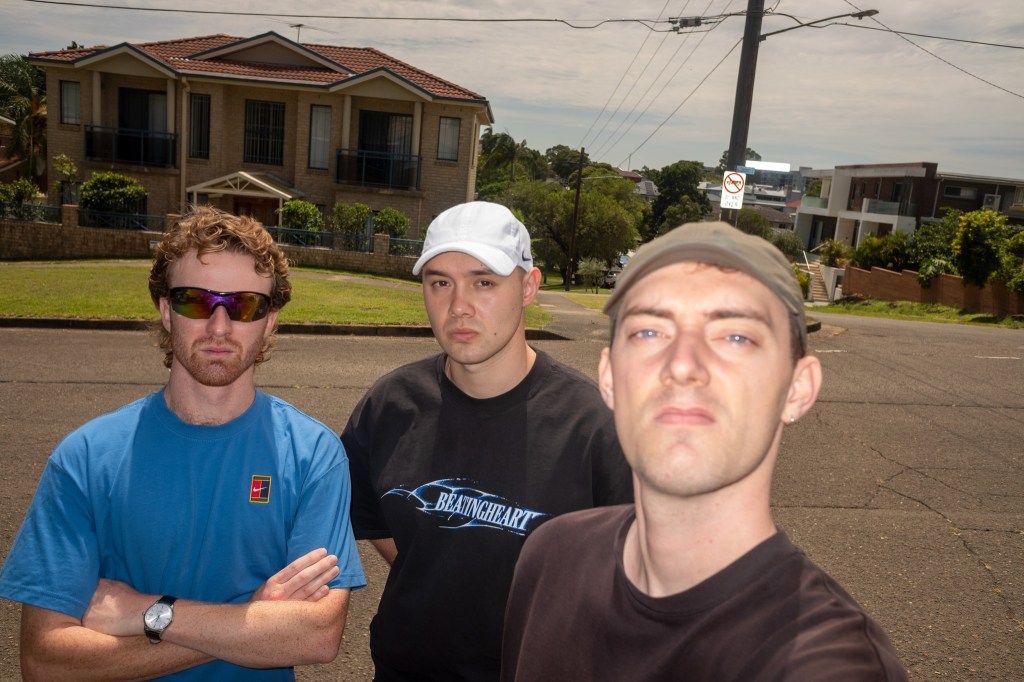
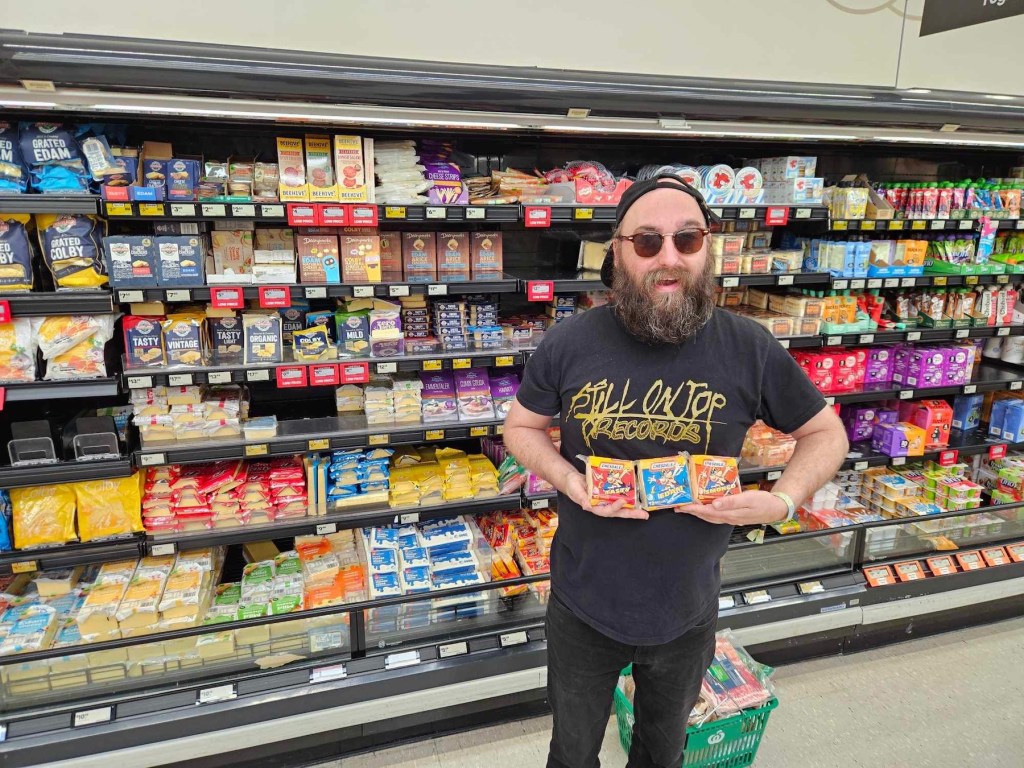
Original photo: Brendan Frost. Handmade collage by B.

Contagiously energetic garage punks Cammy Cautious and the Wrestlers, originally from the Blue Mountains and now based on Gadigal Country in Sydney, consist of Sarah Rheinberger (guitar/vocals), Will Cooke (drums), and Callum Dyer (bass). Starting out recording in their lounge room on GarageBand, the band released their first EP in 2020. Since then, they’ve put out a series of self-released tracks, a cassette through Warttmann Inc., and, in 2024, their much loved CCATW EP, on 7-inch, recorded with Straight Arrows’ Owen Penglis. Ready to rumble for your attention and pin you down with their catchy hooks.

When did you first know that you wanted to play music? 

WILL: Growing up, we had an AC/DC live VHS, and when they played ‘Hells Bells,’ a huge wrecking ball swung down and smashed the stage. I remember thinking, ‘Damn, that’s awesome.’

CALLUM: Mum and Dad were working musos, so there was no choice.

SARAH: Same sorta thing, the house was empty without music, so when mum wasn’t home I had to fill the gap and teach myself a thing or two.

What was the first song you remember loving? 

CALLUM: ‘Robots’ by Flight of the Concords.


SARAH: ‘Pizza Angel’ by Larry the Cucumber (VeggieTales) .

WILL: ‘Joker and the Thief’ by Wolfmother. 

Photo: Brendan Frost.

Who are your musical heroes? Why do you think they’re ace? 

SARAH: II love Amy Taylor because she is doing everything I wanna do and saying ‘fuck you’ to everything that I say ‘fuck you’ to.


CALLUM: I love Peter Walker. I love his music and his ethos behind it. If you know you know. 

WILL: I love Shogun. Royal Headache was the first Aussie album I loved as a teenager. 

What initially brought Cammy Cautious and the Wrestlers together? You started the band in Grade 12, right? And, it was just you two, Sarah & Will? How’d you meet?


WILL: Sarah and I met through mutual friends. We are all from the Blue Mountains, which is a small space. Not many people were into music, etc., so we started hanging out and making music together! Then I met Callum at a party when we were young because he spotted me wearing a King Gizz shirt, haha!

SARAH: Callum had been stalking what we were doing as well, tehe! 

Your band name has something to do with your brothers, right Sarah?


SARAH: Yes. Will and I were recording our first EP during lockdown, so my family of seven were all home, and in our recordings, you can hear the bangs and clangs of my three brothers getting mashed-wrestling.

What are the best and worst aspects of the Gadigal Country/Sydney scene you’re a part of? 
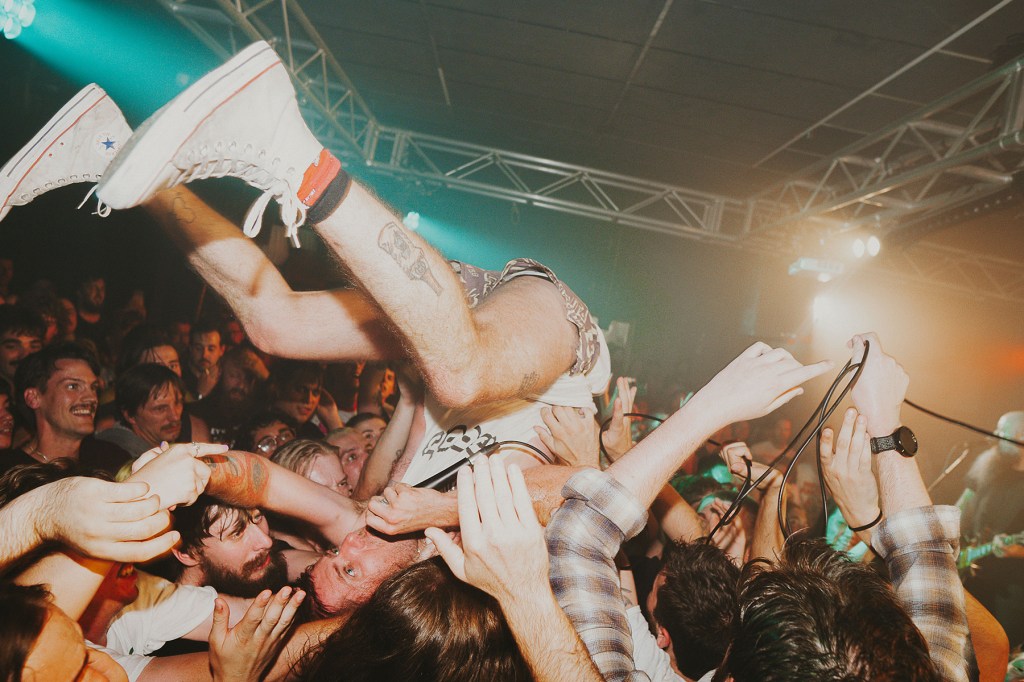
SARAH: We have been playing a few years now so the venue circuit is getting a bit repetitive.

WILL: The best are the people. We have made so many sick friends from playing shows, so super grateful!

In August you released the CCATW 7”; what did you love most about the process of making it?

SARAH: It was super fun to punch it all out in a day, and by the end, we had a tangible copy of all this rock that had been living in my head.

WILL: It was a super hot day, and Callum and I did all of our bass and drums in 40 minutes. Then we sat and drank tequila while we watched Sarah work the rest of the day, which was fun, haha!

You recorded your first EP back in your lounge room on GarageBand in 2020 and now your latest release was recorded with Owen Penglis; what was the experience like for you having someone else record you?


WILL: It was super fun. Owen is a legend, and he got us sounding good. We are all big fans of him and his work, so it was super cool to work with him! It was a scorcher of a day, so we were hot and sweaty, which I think rubs off on the recordings.

Photo: Brendan Frost.

Do you have a favourite song you’ve wrote? What’s it about? 

SARAH: I’m really loving some of the new stuff that I’ve written for our next album. It’s always fun witnessing songs develop from what I’ve written at home to what they become when the boys add their flavour. In terms of released tracks, though, I’d say I’m rather fond of ‘Want It,’ as it’s always a hoot to play. It’s mostly lyrical nonsense, apart from one reference to my Pop’s adoration of coal trains: ‘my lady’s cooler than a coal train.’

What kinds of stuff have you enjoyed writing about lately? 

SARAH: I’ve been writing a bunch of tracks for our new album recently and have been enjoying the range of substance lyrically between these songs—dipping from love and pain to lunch innuendos and utter nonsense. I like that sometimes, when I write, I have something I want to express, and I enjoy doing that somewhat poetically. Other times, I just put words together that sound cool, which is poetry in itself anyway, I suppose.

What’s your preferred way to write? Is there anything you find hard about songwriting? 

SARAH: I don’t think too much about writing; it just happens when it does and can happen anywhere. Sometimes in small fragments over a while, and other times all in a matter of minutes. I do sometimes challenge myself to write about random things, as I find it’s easy to fall into patterns topically, so I try to freshen things up with a bit of absurdity. ‘Feet Up’ is a song I get asked about frequently, as people are curious about the lyrics. I’m just talking about feet and stroking on meat. Take that as you will.

You’ve been a band for four years, since around 2020; What has been your proudest moment during that time?


SARAH: I remember the day that I made the choice to keep going at this whole Cammy thing. Will and I were in year 12 when the two of us started it up, and I remember when he would call me about gigs, I was so, so anxious about being perceived on stage that I was always hesitant to accept the gig offers. But I remember one day being like… care less, queen. Just send it, hey. Reflecting on what we’ve done since then makes me proud of younger me, who managed to mash those fears.

WILL: Just that we have continued to have fun and move forward, it doesn’t feel boring. i’m still excited to play and write 

What’s been the most influential live show you’ve seen?

WILL: When I first moved to Sydney, I remember watching Satanic Togas the night before my 20th birthday. It was as COVID was wrapping up and shows were back. I turned 18 and 19 during COVID, so I never got to watch live music until I moved, and I just remember thinking, ‘This is the best thing ever.’

CALLUM: Bill Callahan or Melbourne Drone Orchestra—Bill was just breaking hearts with a 3/4 nylon, and the MDO was a sensory experience that haunts my dreams to this day.

Can you share with us what you’ve been getting into lately?


WILL: I’ve been reading Into the Wild, which is interesting. Watching the first season of Underbelly, which is hilarious. And loving, the Protex album Strange Obsessions.

CALLUM: I’ve been getting into some light category theory and reading lots on additive synthesis. Spending lots of time on acoustic spectra at the moment too.

What’s next? 

WILL: A few more shows, then lots of writing and maybe some relaxing. We’ve had a cool year, but it’s been super busy, so we might kick our feet up for a bit and finish our album.

Follow @cammycatiousandthewrestlers and LISTEN to them HERE.

Gut Health’s Athina Uh Oh: ‘Don’t be afraid to be your authentic self.’

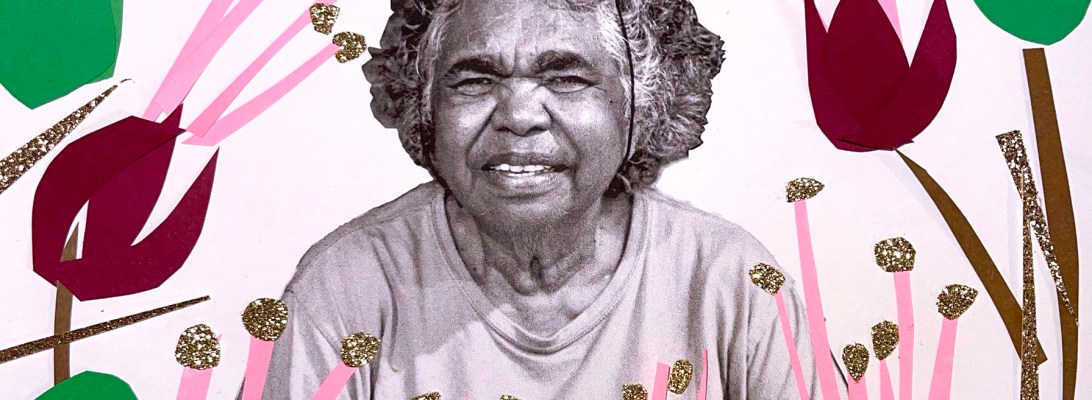
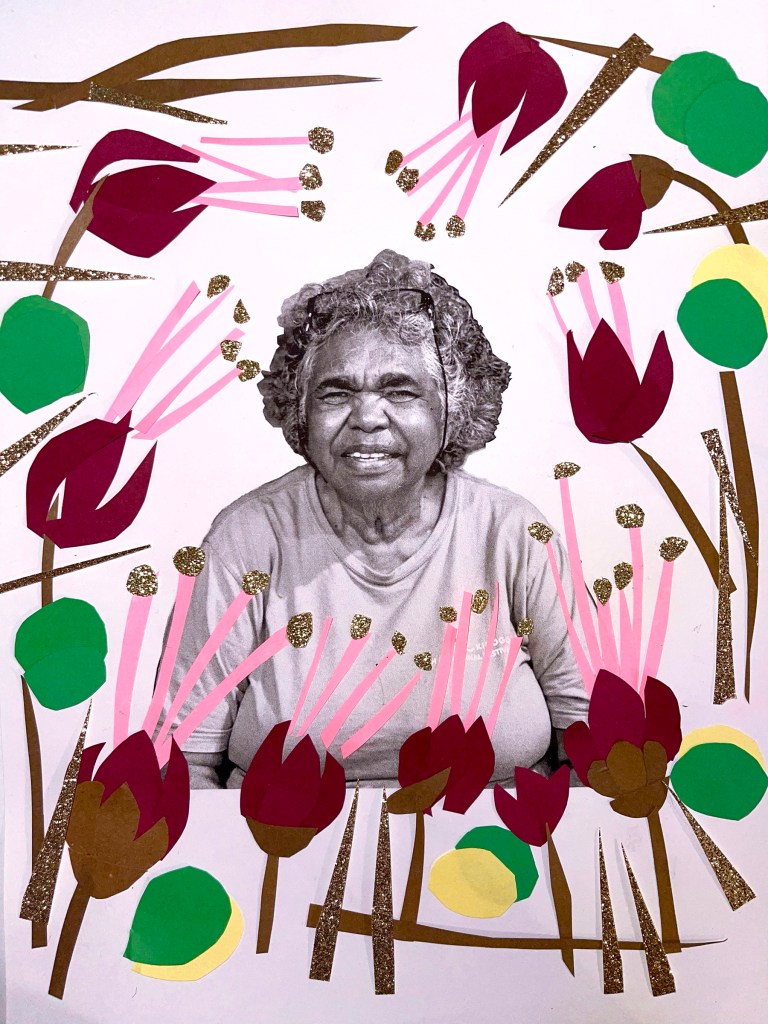
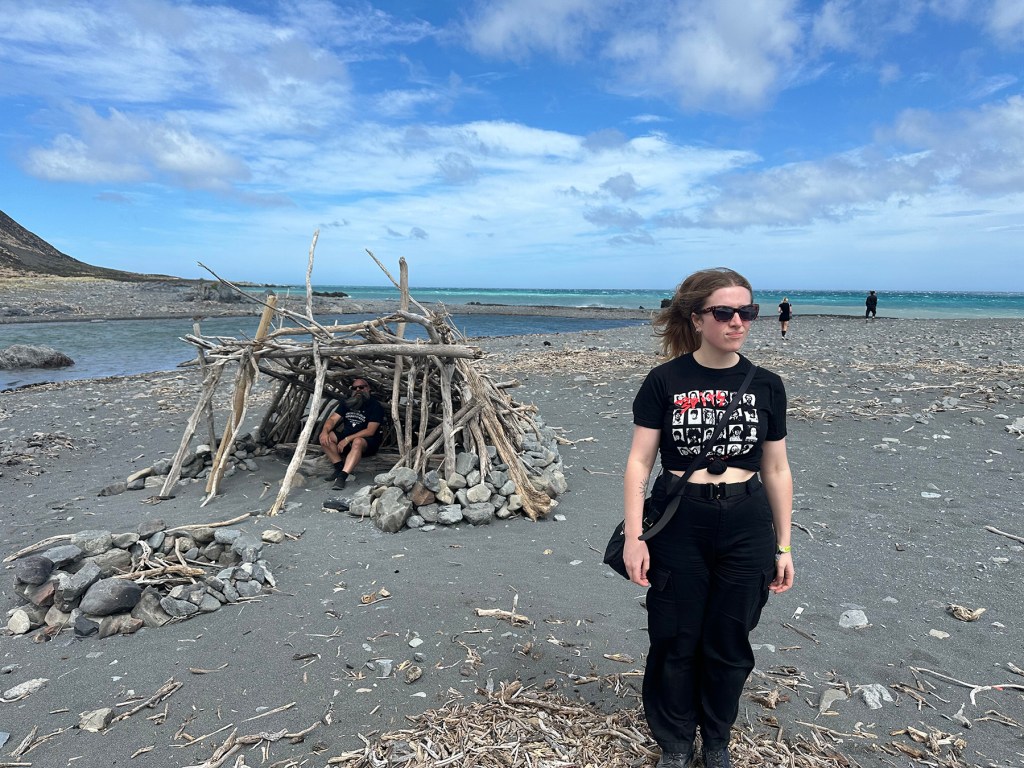
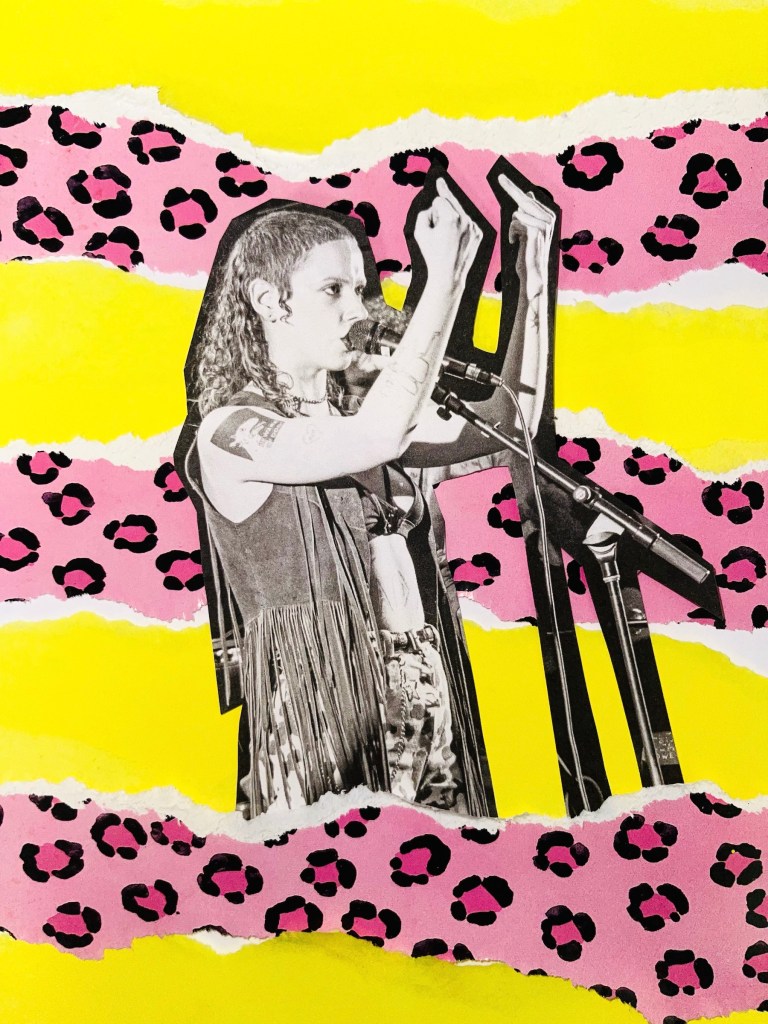
Original photo: Jhonny Russell. Handmade collage by B.

Catching her breath. 2024 has been a big year for Athina Uh Oh and Naarm-based dance-punks, Gut Health. Between tours, a release, making videos and winning awards—it’s been hectic. It’s early November when Gimmie catches up with the singer to talk about their debut banger of an album Stiletto. The record pulls from Athina’s diverse passions—punk history, the psychology of sadomasochism,  kink and queer history, and a sharp critique of capitalism and contemporary so-called Australia and its politics. Gut Health are a band full of surprises that straddle a line between rage and fun. We also discuss the band’s recent European tour and the relaunch of Highly Contagious, a creative project she’s been collaborating on with partner and bassist Adam Markmann. The project now spans a record label, events, and sometimes underground music zine, all tied to outsider music. In this conversation, Athina opens up about anxiety, self-talk, compassion, and the ongoing journey of building confidence. We also dive into her background and gain a look into the band’s creative mind.

ATHINA UH OH: How’s your morning been? 

GIMMIE: Good! We just got back from the coffee shop. It’s nice to see our local barista most mornings. Actually, it’s nice to see all the small business owners and people we encounter every day in our neighbourhood. We’ve gotten to know them over the time we’ve lived here.

AUO: That’s great! I love that feeling when you can go do that, and you can have that “hello” in the morning.

Totally. I get that from my mum—she always knew everyone in our neighbourhood. She’d talk to everyone and always took a genuine interest in them. Connecting with people and the community was always important to her.

AUO: Definitely. I feel grateful to have a great community around me, but sometimes in this city, it can feel like, okay, don’t look at each other as you walk past on the street. Then, when I go somewhere warmer, like a regional town, everyone’s like, ‘Hey, how you going?’ And I’m like, ‘Oh, this is nice. I feel like a human.’

Coming back from overseas this year on tour, that was one of the main things I noticed. Being back in the norm felt strange. Even though it’s a big city, things are quite spread out compared to a lot of European cities. As you’re walking down the street, you might not see someone for a while, and then when you do, you don’t make eye contact. I remember finding that quite confronting when I got back.

Yeah, I noticed when we go down to Naarm (Melbourne), every suburb feels so self-contained. Each one has everything it needs, and you can stay in your little bubble without needing to venture anywhere else.

AUO: Absolutely. One thing that’s great here—but also a bit limiting—is that you can forget to explore the other side of town. We have venues here, which is nice. Someone from Eora (Sydney) described it to me recently as being more event-based rather than venue-based. Here, you can go to a venue and think, ‘I feel like seeing a gig tonight or hanging out with certain people,’ and know you’ll probably bump into someone you relate to or stumble across a gig.

Luckily, we still have a few of those kinds of venues around, where the community comes together, where people actually look each other in the eye and wave.

Photo: Jhonny Russell

Speaking of baristas, Al from Wet Kiss and Tongue Dissolver used to be my barista when he lived here! I love bands like those, and also Gut Health, that combine all these different elements to create something interesting and unique musically. Meanjin (Brisbane) and Yugambeh Country (Gold Coast) seem to foster a lot of different kinds of bands, like Guppy. The crowds here are pretty open to something different, which is awesome.

AUO: Totally. Every time we’ve played there, the crowds have been so welcoming. People aren’t crossing their arms and staring blankly—they’re getting involved and not afraid to jump around. It feels like they genuinely appreciate live music happening there, which is really nice.Yeah, and there’s such a good scene there. So much music from Meanjin that I love!

Wet Kiss and Tongue Dissolver are killing it. They traverse so many genres and play all these different events. Every time I’ve seen them live, it’s completely electric. We were lucky enough that Tongue Dissolver played at our EP launch last year. The whole crowd was bouncing up and down—so freaking good.

We feel the same way about Gut Health! It’s been so cool to watch you continue to evolve and grow and get even better.

AUO: I respond to the world around me and what that brings, especially in a contemporary context. Everyone in the band comes from different musical backgrounds; there wasn’t one set genre we all came from. When Adam and I started the band in the midst of lockdown, around the same time he was doing Highly Contagious, it was during the early stages of our relationship, like a honeymoon phase.

We realised there were all these intersections of our tastes. A lot of that came from the late 70s and early 80s Rough Trade period, as well as no wave. We can’t personally relate to the movements of that time—they were dealing with completely different circumstances—but the way genres and styles collided, like dub and punk in London or downtown and uptown New York, really resonated with us. That mesh of styles became a big part of how our band’s sound naturally developed. Adam, Dom, Myka, and I all drew inspiration from that era when we started demoing.

The band began in early to mid-2021, and it really helped me with inner confidence and personal struggles. Some of my close friends who’ve known me since I was a teenager say, ‘Athina, I’m so proud of you. You’ve grown so much.’ I used to struggle with speaking up for myself and was constantly apologising, even when it wasn’t necessary.

I was trying to be the “nice guy” to my detriment, believing kindness should always overrule everything. But I’ve learned you need other outlets too. You can’t always stay positive because that’s not realistic—the world is a messed-up place. Having a safe space to let go of rage and inner emotions has been incredibly cathartic.

For me, it’s helped me feel more level-headed, even though I still get anxiety. Performing gives me a way to release emotions in a healthy way. On stage, I can express anger, be mad at the world, and embrace the energy from the crowd. It’s this incredible, cathartic experience where I lose a sense of myself.

Before I go on stage, I get nervous, but once I’m up there, nothing compares to that feeling. It’s helped me realise I don’t have to apologise for everything. Mistakes happen, and imposter syndrome can creep in, but self-talk has been key. I remind myself it’s okay to mess up, that I’m growing, and that most people won’t even remember the little things I worry about.

These processes have helped me a lot in recent years, giving me confidence and helping me let go of things in a healthier way.

Yeah, I agree. I think sometimes we worry so much that people will care about something we’re doing or how we look or whatever, but most of the time we’re just psyching ourselves out, and people don’t actually care because they’re wrapped up in themselves. 

We are very similar people—sensitive, empathetic, and compassionate about the world. I can tell you think a lot! I saw on Insta something your mum said about how, even as a kid, you didn’t want to eat meat. And with her being Greek—a mum putting lamb on the table—that was different for her. You were like, ‘I just don’t want to eat the animals.’

AUO:Yeah, when I was younger, I found out that pigs are kind of similar to humans or something like that, and I thought they were really cute. So I never ate pork because of that. 

You’re so right. I’ve always said that any sort of art I create or collaborate on is a compassion project. It’s half a passion project and half coming from compassion, using that as an intention behind everything. It reminds me of who I am as a human and why I want to create.

You grew up in St Kilda?

AUO: Yeah, my parents lived in St Kilda separately before they got together. Since they were both 18, during all the Espy days. We lived in the Balaclava area while I was growing up. There were still remnants of all that, but it wasn’t quite like ’80s St Kilda. I still love it around there—being there and seeing all the remnants of Art Deco. You can still spot the old rock dogs too. I have friends who staunchly stay in St Kilda because they’ve just never left. They’re like, ‘Nah, St Kilda’s it.’ So yeah, I have a soft spot for that area as well.

Photo: Jhonny Russell

Last time we interviewed you, I asked why music was important to you, and you said it came back to your upbringing and how that really influenced it. In what ways?

AUO: I guess from both sides of my family. My grandpa was obsessed with jazz music, a big collector. He was an accountant but collected trumpets throughout his whole life. Apparently, he’d come home from work, spend hours playing the trumpet in the back of my dad’s house, and just lose himself in it. My grandma, I think, did conducting in church—not because they were religious, but because they liked the community feel of it. They gave Dad the option of whether he wanted to get christened. He ended up reading the Bible for education, decided he couldn’t accept it, but still enjoyed going to the choirs.

That love of music was always there. Dad collected soul, blues, rock and roll—all kinds of music. On Mum’s side, they listened to a lot of Greek music, like rumbetico. They were big lovers of art, creativity, and quite leftist in their views. So, I grew up listening to all kinds of stuff—soul, blues, rock and roll.

From a very young age—apparently Dad put on a record… I was three years old, and I grew a love for this group called The Stylistics. He would play it, and when I was in prep, I was like, ‘This is important education.’ I took the CD to my class and made everyone lie down and listen to the song during nap time. I was just lying there crying, like, ‘This is so beautiful.’

And who else? They’d put on a song by The Collins Kids. I don’t know if you’ve heard of them—it was early rockabilly. I remember jumping over the walls, just from one side of the living room to the other. I’ve always just loved music.

During high school, I grew more of a love for punk and rock and roll, kind of traversing all those genres. Music has always been part of my family. I grew up going to gigs, it became like a second home. In high school I got quite into dance music, sneaking out to events. That’s where the more dance-y elements of our music come from. As much as I want to let out rage, I also want people to dance around and let loose too.

I know Betty Davis’ debut album had a big impact on you; what drew you to her?

AUO: It’s kind of embarrassing [laughs]—it was on one of those, like, ‘Oh, I’ve just gone through my first heartbreak, and this is my fuck-you playlist.’ Betty had that song that went, like, ‘No, I don’t want to love you,’ and I just thought that was so badass when I discovered it. I was like, ‘What? A woman can just be this out there?’ I was in my Senior Year when I discovered it. I found it so healing and thought, how badass and unapologetic she was!

That really threw me in—her voice was incredible. Ever since then, I go back to her when I want to feel a bit badass or remind myself of that as I’m walking down the street.

I’m loving looking at that record collection behind you!

Photo: Jhonny Russell

We love records. Jhonny & I have been both collecting since we were teens. Unfortunately now, we’re priced out of buying new records. Vinyl prices are the most expensive they’ve ever been—$80-100 for a record is something we can’t afford.

AUO: It’s wild. I was working at a record store this year, and it has changed a bit in terms of people buying records and just the cost of living in general.

I’ve never gone the full deep dive because, coming from more of a film and photography background, I’ve already got these other expensive hobbies I’m spending money on. I know my bank account would be completely wiped if I got too into records. But it’s so tempting, especially when I was working at the record store. There were so many at Rowdy’s that I was like, ‘Oh my god, I want this.’

Speaking of records, yours, Stiletto is one of our favourite albums of the 2024. We’ve been waiting for the full-length because we love you guys. Seeing you first play at The Retreat a couple of years back, was really special.

AUO: That’s so nice to hear. It means so much that you guys were there early on. That was still us finding our feet and building confidence, but for people coming in off the street to watch, it might have seemed fully formed back then.

Every single member felt integral to what was happening. You had this visible connection, like a friendship—you could tell you’re all friends who just share a love of music.

AUO: I feel extremely grateful for the band I play with. I talk about building confidence, but it’s really about having people you trust around you. It’s about feeling like you’re not afraid to throw ideas out or be at a certain level of understanding with chords or arrangements.

We communicate really well, and if there’s ever a minor conflict, it’s easy to talk through because everyone is kind and understanding. That carries through on stage too. There’s this connection running through everything.

The funny thing is, we weren’t all close friends before starting the band, but we’ve built this family through the project, which is special in itself. Thank you so much for supporting us early on!

This has been my first main musical project that I’ve really thrown myself into. I’d tried a couple of other projects before, but this one felt different. From the start, our goal was this idea that playing a gig is like doing a thousand rehearsals.

Coming out of lockdown, I wanted to prove to myself that we could play gigs relentlessly, learn as much as we could, forge friendships, and find support along the way.

I’m really grateful everyone in the band was keen to do that because, a couple of years later, I feel like we’ve learned so much. It’s led to some really fun opportunities.

The Stiletto album cover is striking; what was the thought behind it?

AUO: To start off with, a lot of the visual elements and lyrics I draw on come from my passions, which include punk history, sadomasochism (the psychology of it)h, kink history, and queer history. A lot of contrasting ideas, like the performative and real states of being, soft and hard, dominant and submissive, are themes I explore. I tend to think very visually, and that comes through in my lyrics as well.

The front cover draws on a lot of those elements and themes. The contrast between the performative and real, and the image of the stiletto itself, represents those contrasts. The idea of feminine and masculine also plays into that.

What does stiletto mean to me? It ties into the soft and hard thing, where it can be this dominant image. The strength of high femme comes into it as well. When I dress up high femme, it’s about enjoying the performative elements.

The idea of stepping into something soft often comes up in my head, and it represents contemporary consumerism in a done-up, performative way. I don’t generally explain what my lyrics mean, but a lot of it touches on contemporary political issues.

Subverting, which is common in punk covers, the image of a stiletto plays into that idea. Even though the photo is high-definition, I was drawing on that concept a little.

It critiques capitalism. The song ‘Stiletto’ itself is a reflection or criticism of contemporary Australia and the funny elements of it, like this fake colony.

As a First Nations person, it makes a lot of sense. I get it. Was there anything in particular, though, that sparked the song? Like, it might not be specifically about it, but something that was there that sparked the idea?

AUO: It’s interesting because that was a stream of consciousness poem I had. A set of words I had written in notes on my iPhone in my early 20s. I had it sitting there, then in our rehearsal, quite naturally, everyone started jamming. I did that over it, and we built the dynamic of the song. It’s always been sort of like half improvisation, all that song. We’ve been really enjoying writing music like that recently.

All of us listen to this podcast. Do you listen to No Dogs in Space? It’s one of my favourites. We listened to four episodes of Can recently and found it so inspiring. 

Photo: Jhonny Russell

I love that podcast. I actually interviewed Damo Suzuki a few years back.

AUO: Wow. Well, the composition idea—where they’d jam for hours and then cut up the song to make it—was how Stiletto was made. I really want to keep experimenting with that process because that song, in particular, is where I feel the most cathartic. It was really feeling-driven when we were writing it.

I originally wrote those lyrics reflecting on contemporary so-called Australia, from a sympathetic level. All these funny things about it and how messed up it must be for First Nations peoples. We’re just here, drinking a frothy can, building concrete areas, mixed with the beauty of the sunset and all these plastic houses.

I love that there’s so much in your songs, so many layers to dig down into.

AUO: I really want people to make their own interpretation. The interpretation of what the song is can be so layered for me as well. I might have just written a stream of consciousness, based on images that, upon reflection, mean something to me. 

Often, people I interview don’t know what it’s about until they’ve listened back to the song later on. Then they can see it and say, ‘Okay, this was happening. I can tie this to my day or my year,’ or to what they were feeling.

AUO: We all agree as a band that part of it is being able to feel this outlet of consensual rage, as an audience member. We want people to create meaning for themselves because that allows them to feel what they want to feel—at the gig, or listening back to the song. I don’t want to overexplain things and shift the meaning for myself in that process. Sometimes, the meaning may shift depending on how I feel when performing the song.

That’s the beauty of art. As humans, we bring our own lens and experience to whatever we’re listening to or viewing. That’s why some things resonate and others don’t.

AUO: Definitely. 

Listening to your album certain words came to mind: rebellion, community, nonconformity. As well as, the critiquing of things like hidden forces, manipulations within society or personal relationships that force and shape our life without even our awareness sometimes. 

AUO: Yeah. 

I also got the sentiment of a search for something real beyond artifice.

AUO:  Yeah, definitely. That is another big thing about creating art, for myself at least—feeling that state of flow, being with the people you’re performing to or being with your band and feeling in the moment. I feel like that is so real, and nothing can really beat that feeling. But also being like, hey, yeah, let’s be real with each other for a moment. Despite all this shit going on—walls, ideas, or things like that—let’s talk to each other. You know what I mean?

Yeah. Another thing that I got from your album was themes of exploring individual identity. 

AUO: Living your truth in whatever way you want. If it is unconventional, it doesn’t even matter, despite society’s judgments.

I’ve always been an introvert-extrovert. I enjoy a sense of privacy but also want to be the most authentic version of myself to others. So, it’s a good platform to explore that as well. Even seeing the band members come into themselves more—being more confident, performing on stage—has been really beautiful to watch. You know, Adam used to not be able to look anyone in the eyes or at the camera when we first started, but now he’s so in his element when he’s performing. That’s really beautiful to watch.

I was literally having a conversation with Adam about this recently. It was like, you’ve got this over here and this over here. Don’t be afraid to be your authentic self. There are certain things that I will slowly reveal more of as I go.

Photo: Jhonny Russell

I know it must have been a different or a bit hard growing up because your dad is a well-known musician. I grew up with my dad being a celebrated race car driver in the 60s, and sometimes we’d walk down the street and people would be like, ‘Hey!’

AUO: Yeah, I’ve generally said in interviews I didn’t want to talk about it. At the start, with the relentless gigging, I really wanted to prove to myself that it was on my own merit. People are going to think whatever they think. They might not know that, in those first two years, I wasn’t telling anyone who my dad was. My bandmates didn’t know until my mum came to a gig because I just wanted to prove to myself that I could do it. My dad has been so supportive. 

I saw on his Instagram, he often mentions how proud he is of you.

AUO: Both my mum and dad are so proud of me and so stoked for me. It’s nice to see family support chasing your dream. I’m so grateful for that. They’re so good to my friends as well. Dad totally understood where I was coming from at the start, not wanting to share that. He’s been through all of that head-fuck stuff, and people can think certain things, but whatever.

They’re so supportive, and it’s nice to have parents who are like, ‘Oh, you’re doing art that makes no money. I’m so proud’ [laughs]. It’s cool. They’ll find interviews I haven’t even read yet, like, ‘Oh my god.’ It’s really beautiful, and they’re both big music lovers.

The reason Dad got into music was obviously his grandparents, but he was enlisted to go to the Vietnam War. A couple of weeks before he was meant to go, he broke his leg after getting hit by a car. The only people who visited him in the hospital were new friends he’d made, and they bought him a harmonica. That’s how he got into music. He’s got so many stories like that. He’s confident but not a boaster, though he is about certain things [laughs]. 

He’s an introvert,-extrovert, like you?

AUO: Exactly. My parents are hype men, basically. 

That’s so awesome! Is there anything that you find hard about making art? 

AUO: For sure. Coming into yourself and the creative process, sometimes just allowing that to happen, remembering there are no set rules to it. I generally have a little perfectionist brain, so sometimes I find it hard to start something because I’m nervous the outcome won’t be good. A lot of this process has been about reprogramming in that way.

You gotta remember that you can always start something and then if it doesn’t go how you want, just stop and do something else. 

AUO:Exactly. The best way I had that described to me, which literally changed how I think about things, was thinking of a scale between zero and 100. Zero being zero catastrophe, and 100 being something completely unchangeable, like you die or the world ends. Then you look at what you’re anxious about and ask, ‘What is it on that scale?’ Usually it’s before 50, and visualising how little of a catastrophe it is really helps.

I’ve just started doing a synth course and piano lessons. Jonnine [Nokes] from screensaver is the teacher for the synth course. It’s awesome. I’ve only done the first class, but everyone came in with such different backgrounds and experiences. I wanted to change the idea of ‘I should just have a go and get started on it.’ Same with the piano. A friend of a friend is teaching me, and every time I get something right, they’re so excited. It’s nice having that encouragement.

That feeling of encouragement is how it feels in the band too. Everyone’s excited, and that collaboration energy is great. Changing up the creative process has been nice. For Adam’s birthday, each band member put in cash to buy something related to the band; we do that for each person’s birthday. This year, we got Adam a writing trip with us out in a house. It was so nice. We stayed in a rainforest, smoked all day, put a Zoom recorder on, and for 10 hours a day, we jammed. We hardly even spoke to each other because we’re so used to each other now.

Out of all the things you’ve done in 2024; what’s something that’s meant the most to you? 

AUO: There are a couple of highlight gigs. One was, Panama festival. We played at 12 AM and everyone was coming up, they were on and it had this real club feeling to it. It was just like so fun.It was my ideal gig. And same when we were played a couple of DIY venues in Leipzig and Berlin. Meeting community there was really special. Touring Europe was a dream goal, something I didn’t think I’d have the money or resources to take that off the bucket list.

It’s been really exciting doing Highly Contagious stuff with Adam again. It’s been really fun doing a couple of those events. We did one earlier this year and then shifted it into this album, label, and events space. Getting to brainstorm with Adam again and mesh all of these genres related to outsider music has been super fun. I feel like there’s such an innate drive for me to find new music and explore certain artists. Thinking about curation has been super fun too.

Starting the label properly with this LP has been exciting. We got label services help, but it’s our label, and we also want to release our own stuff independently—sending everything out ourselves, doing all the back end. We’ve been talking with a friend to release their LP in 2025. 

Generally, getting to do this music stuff is a lot when you’re trying to pay rent in between everything, but I wouldn’t change getting to do this for four days a week or whatever. Focusing on it has been a really special change this year.

Photo: Jhonny Russell

It all sounds so exciting. On a side note, I’ve been dying to hear about when you and Adam went to Egypt! 

AUO: It’s the kind of place where you want to spend more time there to understand it, to be respectful because there are so many layers. It’s beautiful. So many different empires and countries have tried to have a piece of it and, unfortunately, left it in not the best state. In terms of history, it was incredible. It was so wild to be in Alexandria, standing above an old city, and we stood where the Library of Alexandria was. 

My Greek family, some of them are from Alexandria. Mum’s cousin is from there, because there are a lot of Greeks and Copts there. We went into a catacomb where the ritual of smashing plates at weddings was invented. It was so wild to think about that. Alexandria in particular has the remnants of a mixture of all these different cultures. It was absolutely wild. The food and people we met along the way were amazing too.

Amazing! I’ll end by asking: What’s something you’re really looking forward to?

AUO: We’re supporting Primal Scream in January. It should be fun.

I love that you play with so many diverse acts.

AUO: Yeah, I don’t want to say it’s at our peril, but sometimes I think about it. It gets you thinking: ‘Do these people accept me?’ But then I realise that it’s special we can do that. We can be friends with people from all different scenes and be accepted to play gigs with them. That’s what music is about for me—it’s not about fitting into one particular scene. You learn a lot from different scenes. That’s really special for me.

Follow: @gut___health and check out guthealth.space. LISTEN/BUY here. WATCH our Gut Health live vid here.

Boiling Hot Politician: ‘Laughing at yourself is important’

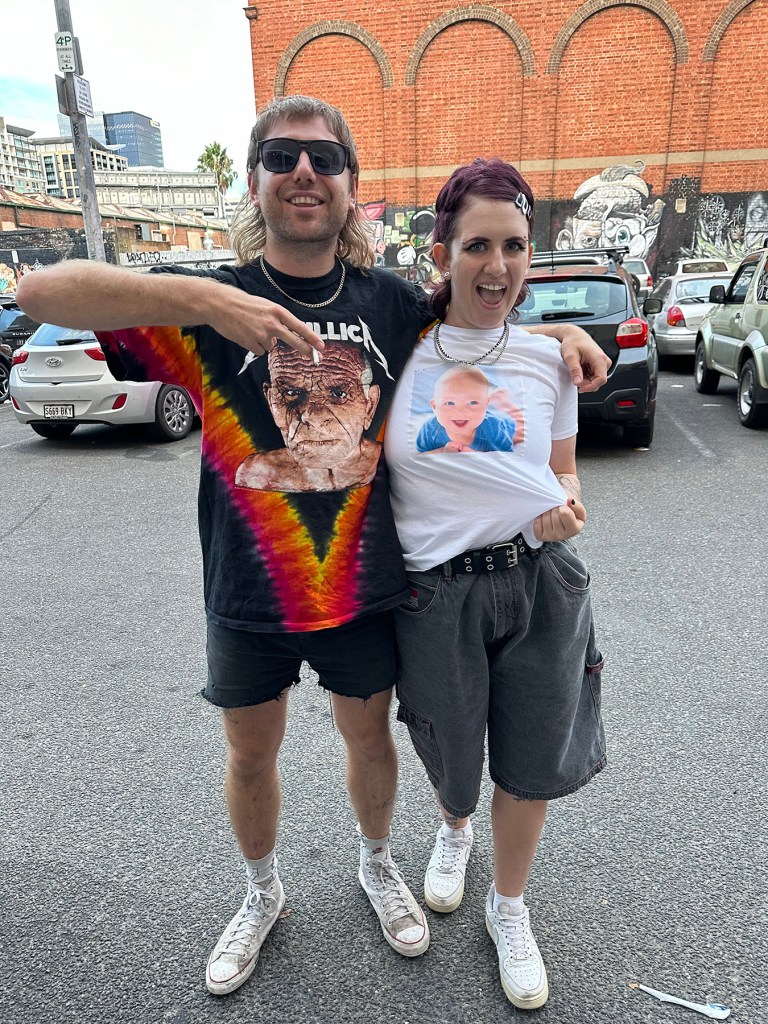
Original photo by Jhonny Russell / handmade collage by B

Rhys Grogan is a Sydney skateboarder and self-described “outsider freak musician” creating feel-good bangers under the moniker Boiling Hot Politician. His music pulls no punches, celebrating the good, the bad, and the ugly of life with grooves, emotion, and plenty of silliness. In September, he dropped his sophomore album, Underwater Clowns—a record brimming with ideas and bursting with sheer visceral excitement—recorded at home in 2022-2024 under the watchful eyes of his cats.
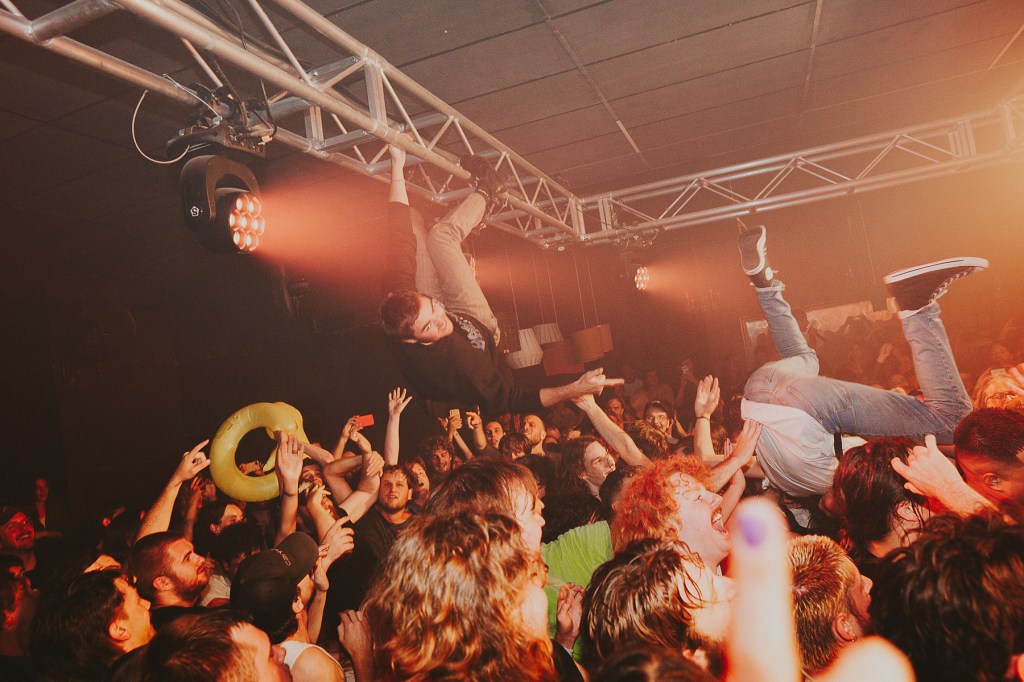
Gimmie caught up with Rhys to chat about creating music as a late bloomer, growing up on the edge of civilisation, the skateboarding community, pushing yourself out of your comfort zone, songcraft, reality show MAFS, shaping his record Underwater Clowns, losing friends, the importance of having something to look forward to, and launching his album with a guerrilla gig at the “gazebo on greatness,” the Sydney Harbour Bridge and Opera House as the backdrop. Life might feel like a circus, but Rhys grinds through in his unorthodox style—with a grin.
To be honest, I’ve had a really rough week, mentally. I know many of us struggle with mental health in varying ways, and we all go through bad days, weeks, or sometimes even longer. But I almost cancelled (and I hate doing that) because I was feeling so low, but I chose to push through. I’ve often found that when I do that, good things tend to follow. So here we are.

RHYS GROGAN: Yeah, yeah, I find that too! Like, sometimes you’re really tired, but you force yourself to leave the house, and then that energy and effort comes back.

That’s it! I feel that way sometimes when I’m heading to a gig. I might’ve had a really shit day, and the last thing I want is to go out, be around people, and deal with overstimulation. But when I do make the effort, those nights often turn out to be the best.

RG: Yeah. It’s click selling in brain. I swear, it’s good! [laughs]. Even when you’re zonked. 

Life lately has been good but also kind of annoying—work was annoying me because there was too much data in the spreadsheets. It fries your brain a lot. Last week, we went camping for a week by the Murray River. So now I’m back in—I like my job again. It’s good.

What kind of work do you do?

RG: I make maps of trees for the New South Wales government. We try to make computer models that predict where threatened species and threatened plant communities are going to occur. And then we go out and test if they’re working by going to find those plants. I work with good people, and there’s a good balance of office and field.

How did you get into that kind of work?

RG: I did an Environmental Science degree at university, and I was pretty good at maths and statistics. So mapping trees was kind of perfect—it’s just using giant data sets, mashing them all together, and putting them into a model to see what comes out. I find it very stimulating, and it’s great to be able to get out of the office into the field. It’s nothing like making music, but it’s good.

Have you always lived in Sydney?

RG: I grew up an hour and a half southwest of Sydney, near Warragamba Dam, right on the edge of civilisation. My mum and dad still live out there. I was a skateboarder but grew up on a farm, so I was always stuck and isolated with my two brothers. I didn’t appreciate it at the time because we were in the bush. On weekends, Mum and Dad would be out, and we’d be stranded on the property the whole time. I grew up in the country and moved to the city when I was 19.

How’d you get into skateboarding?

RG: A friend got me into it. I started when I was 10, and I’ve been doing it ever since. I’m 39 now, and yeah, my body’s destroyed, but I still go to the skate park a few times a week. All my friends are degenerate skaters—it’s a good community.

Totally! A lot of my friends skate. My family had skateboard shops in the 80s and the 90s so I grew up around skateboarding culture. I wasn’t very good at it [laughs].

RG: I’m not either! [laughs]

That’s not true! You’re rad at it.

RG: I’m okay [smiles].

How do you feel skateboarding helped shape your identity growing up?

RG: It was really good, especially since it was pre-internet. You couldn’t just find music anywhere—you could only hear what was on Recovery or Triple J. But skate videos had all this cool music in them, and there were so many great videos. That aspect massively changed everything because you’d hear all these bands in skate videos, like Sonic Youth or even weird hip-hop groups like Hieroglyphics.

I love Hieroglyphics! Working in a skate shop everyone would come visit and watch the new skate vids, all the 411 video mags; they had the best soundtracks: ATCQ, Mobb Deep, Dr Octagon…
RG: Yeah, it was incredible! You could go on Napster and download all these albums, and people at school would be like, ‘Where the hell did you find this? What is this?’ It was just skate video soundtracks. They were amazing. That really helped shape my identity in a way because, you discover music and musicians, and it clicks something in your brain that changes you forever.
Did you move to Sydney just because you wanted to get out of the country?

RG: Yeah, I got a girlfriend when I was 19, and she lived in the city. I was working a job out in the country, welding handrails. During the week, I’d stay home with Mum and Dad, but I’d spend all weekend in the city with my friends. Then I just moved—I chucked the towel in on my country friendships and made the leap. It was huge for me.

What were things like for you like when you arrived in Sydney?

RG: It was good because I already had a bunch of friends, but day to day, you’d start noticing things happening during the week that were invisible to you before. I used to put so much pressure on the weekend—skating all day, then going to the Judgment Bar or hitting Oxford Street every Friday and Saturday night. The Sunday night drive home was always so depressing, knowing you had five days of horrendous manual labor ahead.

Moving to the city really took the pressure off. I wasn’t an 18-year-old binge drinker crashing at friends’ houses two nights a week anymore. I kind of chilled out because I didn’t feel the need to cram everything into the weekend. It’s hard to articulate, but I guess I spread out my interests more.

The music scene on Oxford Street back then was pretty strong, too.

Photo by Jhonny Russell

Yeah. I spent a lot of time in Sydney in the ‘90s and early ’00s because my sister lived there. She had an apartment on Oxford Street and the Gay and Lesbian Mardi Gras parade would go right past her balcony every year. There was a bunch of live clubs we’d go to and see all kinds of bands.

RG: Yeah. There was Spectrum back then Q Bar and later was the Oxford Art Factory, which is still there, which is mad. There was this place called Blue Room, it was like the top end of Oxford Street. They used to get any touring band to DJ there, it was a really funny scene. The Brian Jonestown Massacre DJ’d this one weekend, and all these old indie bands.

I just remember being 18 and going to so much live music. You’d get way more FOMO back then because there was no social media. If you weren’t out, you’d have no idea who was out or what was happening. Now, you can just see it all on people’s stories, which is kind of sad.

I remember when I was younger I thought that if I missed a show it would be the end of the world.

RG: Yeah, it still is sometimes.

We haven’t been able to afford to go to as many shows this year. But we go to as much as we can. We really love artists that do their own thing, something different, that pushes stuff further.

RG: Yeah! There’s so much out there—I’m drawn to the weirdos!

Same!

RG: But you know, I’m a “normie” [laughs]. I’m in a government office right now, but just cosplaying being a big freak.

Ha! I get it. I worked for the government at the State Library for ages. From looking at me, people would have no idea that I like all the stuff that I do. Sometimes it almost feels like you have two different lives — the going-into-the-office one, and then all the other stuff you do outside of it. But like you were talking about before, it’s a balance. I’ve found that anytime I’ve had to create stuff for money, I didn’t really enjoy it as much as when I’m making something just to make. 

RG: Definitely. Oh man, it would be a nightmare if I had to monetise the music I make—if I was dependent on it. I wouldn’t make much money.

But yeah, the way I make music is, I’m lucky—I’m obsessed with skateboarding, and I’m obsessed with making music. I’m probably obsessed because there’s no money involved. I just freaking love creating it. Sometimes I love performing it, and other times it’s a total nightmare. But that’s all part of the fun—not knowing what to expect.

Recently, I used to be kind of weird about people at work knowing I made music. Then one guy found out, and I thought, ‘Actually, who gives a shit?’ Now I’m an open book. Everyone knows, and it’s kind of funny how it works. I reckon everyone should be an open book.

Even these two guys from work came to one of my gigs a while ago with Our Carlson. They loved it. It was really freeing—I made this weird music with a loop pedal. These two scientists I work with, they have young kids and don’t get out to the city much, but we had the night of our lives. We actually stayed up. It was excellent.

How did you first get into making music? You were in band, This Is Authority. Did you do stuff before that?

RG: I did stuff before that, but not really. I would always find instruments in the street. I made this horrible Olivia Newton-John cover and put it on Facebook—that was the first thing I made: ‘Please Don’t Keep Me Waiting.’

Why’d you choose that one?

RG: Because Crispin Glover sang it in this weird short film series, and I was obsessed with him. I was 25 or something, and I just loved him because he’s a freak. He did this thing where he covered that Olivia Newton-John song, and I decided I would do the same with the instruments I found.

Throughout my 20s, I made silly songs on the computer, but then, in my late 20s, my friend Luke and I started this band called This is Authority. It was really like, ‘This is…’ and then we couldn’t think of anything. We had so many words after, This is, and, This is Authority was what we came up with. It was good.

At the time, I knew nothing about hardware or songwriting or anything—I didn’t even know what a mixer was. I’d be like, ‘What’s that thing you plug your bass and all these pedals into?’ He had all these drum machines and cool synths, and I would drink XXXX Gold and come up with vocal melodies over it. Then we played a few shows, and it was mad.

It was really later in life—we played our first This is Authority show in 2016, so I would’ve been 31. Very late—late bloomer.

Photo by Jhonny Russell

Nice! There’s nothing wrong with that. Better late than never. I always think you can make music whatever age, wherever you’re at.

RG: Yeah.It was good because if I’d started earlier, it would’ve probably all been really cringe, like early 2000s indie style, like The Killers or something [laughs]. But yeah, it was really fun. We played for two years, maybe longer.

We’d recorded this EP, and spending summer at his house every week—probably for six weeks. We’d just record, and we had four songs ready to go. Then he called me one day and said, ‘Oh man, I accidentally deleted all the songs.’ I was like, ‘What?’ He said, ‘Yeah, I didn’t know formatting the hard drive meant deleting everything.’ We both just cracked up laughing.

I was like, ‘Holy shit, dude.’ But I was also like, ‘Oh, let’s just take a break, and we’ll get back into it in a couple of months or something.’ But we never did. We might again at some point.

Before that you were just making music yourself on your computer?

RG: Yeah, with my Yamaha keyboard and multi-effects pedal—it looks like one of the ones The Edge from U2 uses. It was fun!

Was there anyone or anything in particular that made you think, ‘Wow, I can make music myself’? Because, you know, a lot of people usually think, ‘Oh, I’ve got to have a band,’ but you were just doing it on your own.

RG: Yeah, actually, there was a defining moment. Dark Mofo, maybe 2013. It was at the main Odeon Theatre. Total Control played, along with some other bands, but at 2 AM, there was this guy on stage. He looked stressed and had all this gear, he was singing and doing techno stuff. Kind of a rave, with people in different corners of the theatre. It felt like a scene from a movie—only a few people paid attention, while the rest danced and talked. I thought, ‘What is this? It was incredible.

It was Lace Curtain, one of the guys [Mikey Young] from Total Control doing a solo thing. He looked really stressed and nervous, but it was amazing. I thought, ‘Oh, shit.’ I hate public speaking and performing, but seeing him so nervous and still doing it made me think, “No one cares, and it’s incredible.’

That was probably the main thing that made me think, ‘I could do that.’ I wanted to make music with electronic gear—not just use a laptop and press play, but do something creative on stage. Even if you’re freaking out, it adds to the show, rather than seeing a confident person engaging the audience. I guess I identify with the nervous wreck.

I saw him again later in Sydney—still nervous, still great.

You don’t really seem very nervous performing, like at The Mo’s show you played up here on the Gold Coast at the the beginning of the year with Antenna and Strange Motel.

RG: That was a crazy night. Benaiah [from Strange Motel] organised it; I’d never met him before. When we met, we chatted for ages. He was really interested in my gear and said he wanted to do solo stuff. I knew he was in that band Sex Drive—they’re a really cool band. They came and played festivals in Melbourne and stuff.

I thought, Cool, I’m this outsider skateboard guy, and I’ve met this cool guy. It was exciting. We even talked about playing a show in Sydney in a months time.

But then he died that night. It was horrible—such a bummer. I couldn’t believe it. The next day, I had this very weird feeling. You make a new friend, it’s exciting, and then you find out they died. It was bizarre and awful.

We couldn’t believe it when we were told. We’d just seen him a few hours before. He gave us a huge hug and was so stoked we came to his show. He used to live near us and would come over. He enjoyed talking to us, probably because we were outside his usual crowd. I know he was dealing with a lot at the time, so we’d just talk about music and art, trying to encourage him towards the positive stuff. Like you said, he really wanted to focus more on his own music. He was looking forward to so much, and then, suddenly, he was gone. It was heartbreaking.

RG: So sad. Yeah, that was crazy. He is the G.O.A.T.. I’m very happy I got to meet him. Very sad that he died that night, it freaks me out still.

Yeah, he really made an impact on everyone he met. I sometimes imagine what kind of music he’d be making if he were still here. To go back to what we were talking about, your sets are so much fun, and you can really see that energy transfer to everyone in the room. It’s a great vibe.

RG: Good—that’s what I want. I’m like shitting my pants until I just press the first button and then it’s all fine, normally. But a lot of times, I stress out so much for a gig that I’ll make myself sick. About 40% of the time I play, I get the flu because I’m stressed leading up to it. But it’s always fine. Even if I’m sick and my voice is squeaking.

How did you get from ‘I hate public speaking’ to ‘I’m in front of everyone playing these songs I wrote’?

RG: It was like a personal challenge, in a way, because I remember when Luke and I started, This Is Authority. He suggested, ‘Let’s make a song’ and my first instinct was, ‘Absolutely not! There’s no way, I’m not going to die.’ And I was going through this thing of getting out of my comfort zone and forcing myself against that instinct — that intrinsic freaking out, that repellent feeling of not wanting to do it — and knowing it was going to be okay.

I saw on your Instagram, you wrote about how you had a feature in a skateboard vid and you said in your post, ‘Thanks to my friends for bullying me into doing these tricks.’

RG: Yeah. Yeah! Well, that’s ‘cause all the other skaters in that video are a lot younger than me. I’m like the older guy tagging along with them, and they would literally trick me into doing these tricks. They’d claim like, ‘Oh, you should do a trick down this rail.’ And I’d be like, ‘Oh, no, no, no, that’s ridiculous.’ And they’d be like, ‘Let’s just go look at the spot.’ I’d go, ‘Alright, we’ll go look at it, but I’m not going to skate it!’ And we get there and they go, ‘Well, we’re here now, so…’ Then I’d be pressured into doing it and it just works out. 

I guess, it’s the same for music. Like if you agree to play a show, then you hang up the phone and you’re like, ‘Shit, what have I done? This is a nightmare!’ Then the day comes and you’ve got no choice. Nine out of 10 times it works out. I kind of enjoy the pressure put on by doing it to yourself just against your own will. It’s not therapy, but it’s always just coming out the other side better.

Seriously, every time I play a show, a couple of hours before, I’m in my head screaming, ‘WHY HAVE YOU DONE THIS TO YOURSELF?’ I’m looking in the mirror going, ‘You idiot! What have you done?’ But then, you start playing and it’s fine.Or sometimes it’s not, but that’s still fine.

Photo by Jhonny Russell

Speaking of playing, you launched your album recently by playing in the Observatory Hill Rotunda, after the venue you had booked fell through.

RG: I won’t name them because I don’t want to throw them under the bus.

Of course. You got bumped for a wedding?

RG: Yeah. I got bumped from the pub because someone was like, ‘I’m so sorry, man. My boss is overseas and someone has offered us four grand to hire the pub, they said they’d spend four grand on booze for the wedding. I can’t say no, I’m really sorry.’ It was a couple of weeks before it was supposed to happen.

When skateboarding was in the Olympics, I’d already taken my TV to the rotunda, plugged it in because there’s a powerpoint there, and we watched the skateboarding on the screen. And between heats, we sang karaoke and had a really fun time, no security came. Nothing happened to us. The Harbour Bridge was right there. It was incredible.

So I just thought, alright, screw it. I’ll borrow Trent’s speakers from Passport, get this PA, and set up a big projector screen. I’m going to play a gig at the rotunda with the Harbour Bridge in the background!

Last time I released an album, I had no gigs, and it just came out—no launch, nothing. It felt weird, this time I felt like I had to do something. So I did that.

It was good because there was no venue asking, ‘How many tickets will you sell? How much money will you make?’ Once you take the money out of it, you can do whatever you like. I thought I might get arrested, but it wouldn’t be a big deal. It’d even be funny if I got shut down by the police since I wasn’t charging tickets. Worst case, I’d get a fine, and people would think it was funny.

But it went off without a hitch. Three bands played 90 minutes straight of really loud music. A guy from the Observatory stuck his head over the wall, nodding along—he was into it. It was freaking amazing!

It looked amazing! The photos photos I saw from Dougal Gorman capture it beautifully, and it looked like such an incredible time. I got warm, happy feelings from just seeing the photos.

RG: Yeah, that’s that thing. On the day at first, I was like, ‘What have I done? I’m going to get arrested and it’s going to suck.’ I thought the wind’s going to blow over the projector screen, but it all worked out. It was so sick. Everyone said like the vibes were amazing. The atmosphere was incredible.

What is one of the things that you remember most from the day? 

RG: I hugged everyone who was there!

Awww, I love that!

RG: It was my friends’ band, Hamnet’s first gig ever and like, it’s pretty amazing to say that their first gig ever was in front of the Harbour Bridge near the Sydney Opera House at an illegal show with a projector screen. It pissed down with rain about an hour beforehand and then it just stopped. It was all meant to be.

The universe was on your side. 

RG: It seriously was. It was unreal.

It worked out way better than just playing a regular pub gig.

RG: Oh yeah! Everyone was saying that, and they could bring their own booze. Afterwards, we cleaned up all the rubbish, of course. It felt like a miracle. I’m still trying to work out if that was the most epic venue ever. I’ve been trying to think of other places that could top it, but I can’t. It was the most epic, beautiful outlook place. Maybe next time I could go the opposite way and play in the sewer, like the most disgusting place [laughs].

The DIY drain shows we see happening occasionally in Naarm/Melbourne always look like a whole lot of fun.

RG: Yeah, I’d say there needs to be a bit more of that in Sydney.

So you were launching your latest album, Underwater Clowns. It’s really got such a unique energy to it—we LOVE it! It’s one of our favourite albums to come out this year.

RG: Thank you. As I started recording music super late, that might be why it sounds like that. It’s a mashup of everything I’ve liked since I was a teenager. I swear it’s a bit of insane, repetitive techno, a bit of Britpop maybe. It’s just a mix of all the stuff I like, and it somehow comes together to make this weird noise.

You can definitely hear that Brit pop-style in some of the choruses.

RG: Yeah. In the ‘MAFS’ song. It’s meant to be like an old pop song. It doesn’t really sound like pop, though.

I started trying solo stuff around the time This Is Authority ended. My brother, who I used to live with, got his girlfriend pregnant and said, ‘I’ve got to move out because I’m having a baby. Do you want to borrow all my music gear indefinitely?’ I was like, alright.

So I ended up with a drum machine, two synthesisers, and a mixer. I didn’t buy anything—just plugged it all in, barely looked at the instructions, and mucked around with it. The only thing I bought was the looper pedal, which I used to tie it all together.

Maybe it’s that ‘mucking around’ approach that comes through in the final product. It sounds like someone drinking XXXX Gold, fiddling around, and trying to make songs they like. It’s a ‘mucking around’ aesthetic.

Photo by Jhonny Russell

There seems be so many textures on there. And all these different emotions. I noticed there’s a character Mr. Hogan  that turns up in three songs; was there a concept happening there?

RG: That’s a really funny name because I always call my friend, Mr. Hogan, like when we were young, we had no money and we’d go skating. We used to always go to Hungry Jack’s cause I had this app and you could win free stuff. And we used to call Hungry Jack’s, Hogan’s. It’s just this dumb thing with my friends. I’d call my friend and would say ‘How are you, Mr. Hogan?’

I swear that there’s that documentary about the guy who founded McDonald’s and he says, ‘The reason McDonald’s is so successful is because the name McDonald is so Americana.’ And I swear that Hogan is the Australian version of that. There’s something funny about it.

Sometimes you get songs stuck in your head that are just made up and it doesn’t exist yet, so you have to make it, you muck around with gear and try to make something until it sounds like what’s in your head. That’s where heaps of the song come from. I’m sorry I don’t have a better explanation for what that, but that’s actually just what it is. Mr. Hogan is a silly name that keeps coming back into my head.

There’s ’Feed Me Mr. Hogan, ‘Mr. Hogan Workplace Assault’, and ‘Mr. Hogan Loses The Plot’.

RG: Yeah. ‘Mr. Hogan Workplace Assault’ is fantasising about paying someone to come into your work and beat you up so you can get out of work. It’s a mythical character, and they both end up in jail in the song. 

Does that ‘I wish someone would come beat me up so I don’t have to go to work’ thing come from a real place? 

RG: Oh, yeah! It’s about being too scared to take a sickie ’cause you think you’ll get caught—so you do something really elaborate instead. It’s so dumb. But, that song was made because…I’ve got this club, and we call it Feed Bag. I’ve got these friends who make techno music, and I don’t understand most of it. It’stooavant-garde noise music. These guys—Luke, who was in This Is Authority, and my other friends Tristan, Jerome, Tom, and my cousin Nick—are in the club, and you’ll go home, make a song by yourself every week, and then we all get together and everyone plays their song, then you get feedback on it. You kind of get roasted, but you get good feedback too. We do this every couple of weeks. 

‘Mr. Hogan Workplace Assault’ was one of those songs. I came home, had 40 minutes to make a song, and made the skeleton of it. The first iteration was just me saying, ‘Mr. Hogan, won’t you beat me up at work,’ over and over again. I recorded all the loops in 40 minutes, then changed a couple later when I put it on the album.

It’s good having this club that forces me to make songs. Like you said before, sometimes you’re tired or feeling down, but with the club there’s this pressure—you don’t want to show up without a song. It’s allowed, of course, but the point is to find something. Sometimes you just make something without feeling that itchy inspiration, and it does turn into something. It’s freakish.

A song I dig on the album is ‘Consumed by Brucey’.

RG: I just saw a picture of Brucey—Bruce Lehrmann—in the news. He’s horrible. The song is about how sometimes you think back to a time in your life, and you tie it to something significant that was happening at the time. Like, I’ll think, ‘When was that gig?’ and I’ll go, ‘Oh, yeah, it was right before Bruce Lehrmann got sentenced.’

Now, historically, I’ve got this stupid, annoying connection to Bruce Lehrmann because I was seeing his face everywhere—on TV, on my phone. I ended up using that to reference when and where I was, and I hate it. I constantly have to think about him. So I just wrote a dumb story about it.

The song is about someone who keeps dying and respawning as some kind of seafood. They get eaten by Bruce Lehrmann, and Bruce vomits them up on a reporter. Then they die again and respawn as a mollusk, only to get thrown in a kitchen bin. There’s a TV in the corner, and all you hear is Bruce’s whiny voice on it.

It’s silly, but it came from that frustration. Like, whenever I think about my friend dying, I tie it to the 2019 bushfires. Or I’ll think about something else, and it’s linked to another significant event I don’t want to remember. Sorry—I’m just unpacking all this now for the first time.

After the first album, I ran out of meaningful lyrics so now it’s all just this stream of consciousness rambling.

In the chorus of that song, you’ve got the lyrics: ‘Every time you wake up, there’s an awful new surprise, and everything you try to grow eventually dies.’ It always gets stuck in my head. 

I related it to how you wake up every day, and there’s something awful and new on the TV or happening in the world. And then there’s the fact that, well, eventually everything you love—and everything that does grow—will die, because that’s the cycle of life. 

For me, it had a deeper meaning. I mean, yeah, it has absurd imagery and other stuff around it, but that line really struck me.

RG: It does tie into that because it’s about reincarnation. I try not to collect heaps of stuff because the thought of someone having to throw it out or give it to Vinnie’s one day when I die, really creeps me out. That’s exactly what it’s about.

Even at work, there’s a screen in the elevator that has news and ads on it. When I’m looking at it, I’m already thinking about what’s going to be on it next. I’m like, ‘Oh, tomorrow it’ll be some other crap.’ And in the long term, it’s all going to be gone and forgotten.

I’m glad you like that line, and I’m glad people interpret it in their own way. It frees me up because sometimes I’ll listen back to it and think, ‘That is what it means,’ even though I don’t know where it came from.

Things can totally have different meanings. They don’t have to just have one. People always bring their own experiences to whatever they’re looking at. Like, how many times has something terrible happened to you, and you’ve listened to a song and thought, ‘Oh my God, they get me,’ or, ‘I get this.’

RG: Yeah, definitely. It’s so good!

‘MAFS’, the song you mentioned before, is a really cool song too. The sample at the beginning is from the movie Lost Weekend, right?

RG: Yeah, right when I was finishing the album, I was drinking too much, not in a good way. The sample doesn’t really have much to do with the song, but it has something to do with me. The line says, ‘I’m not a drinker, I’m a drunk.’

I wanted to put that in there—it reminded me to slow down, stick to mid-strength, and get therapy. I’ve always liked albums where there’s a weird clip from a movie or something between songs. I enjoy that kind of thing.

Same. I can see what you mean, with the movie being about the difference between casually drinking, being consumed by it, and it becoming an addiction. The emphasis on self-awareness.

RG: YeahIt was funny because I didn’t have a song specifically about going overboard on the sauce. So I just put it at the start of ‘MAFS’ because it fit there, right before the end of the album. Now, every time I hear it, I’m like, ‘Oh, note to self—seriously.’

The cultures we grew up in—skateboarding and music—definitely have a big drinking and drug culture. It’s really ingrained, and that can eventually cause a lot of suffering, whether people like to admit it or not.

Often, you’re attracted to those subcultures because you struggle with life or you’re very sensitive. When we’re out with our mates doing these things, it feels like it helps—and maybe it does, for a while. But from my own personal experience, and from what I’ve seen over the years, those things can get really toxic. You end up in a lonely place, and I don’t think society really talks about this stuff enough.

RG: Definitely. It sneaks up on you. As someone with severe social anxiety, you drink more to try to feel less anxious, and it never works. You’re just constantly putting a lid on it, constantly struggling with that.

I haven’t hit total rock bottom, but it’s something I always have to be mindful of. It takes time—it really does. Sometimes, you just have to realise that you’re the only person who can make changes for yourself. 

Yeah. People can tell you and remind you forever, but sometimes, it’s just about having that moment when it clicks.Like, I don’t not drink, but I haven’t had a drink in a really, really long time. I can go out, have fun, and not do all those things. And I actually remember stuff. I’ve been seeing live music since I was a teenager and I don’t really remember much because I was having way too much of a good time.

RG: Yeah, I’ve got way too many of those ones too. It’s not good. I wish I could remember that stuff.

I know in June you played a show in Naarm and it raised funds for suicide prevention and the Black Dog Institute; what made that particular gig significant for you?

RG: That was really significant. I’ve had a bunch of friends die, a couple by their own hand. Actually, it was crazy, that night, I found out after I played that a friend had taken his own life, so that was shocking. 

Oh, man, I’m so sorry.

RG: Horrifically ironic. Gigs like that are really important. It’s so annoying, I’ve lost two friends to suicide this year. Sometimes it does feel like pissing on a bushfire. Sometimes I think, if my friend Harvey and my friend Jack had just committed to getting proper help… [voice trails off; reflects] …I’m sure they tried. 

Photo by Jhonny Russell

It can definitely be hard to reach out and get helps sometimes when you’re in a bad place…

RG: Yeah. I’ll never stop playing gigs like that one because you have to do whatever you can to raise awareness and support these places that help people. Every time it happens, you mentally go through a list of people in your life that you think might be susceptible to these things. You just have to do what you can to make this stuff stop happening or curb it as much as possible.

Of course, I’m going to play that gig. It’s important to me just because… my friends’ deaths, at this point, has almost become numb and boring. It’s like, oh, right, another… We have a routine now. It’s scary when it’s gotten to a stage where a death in the community has become part of the routine checklist. It’s messed up. 

There’s only one song I’ve made in my life that expresses sadness over a friend dying. That was on the first album, about a friend, Keggz, who died of a heroin overdose. 

The last song on the album?

RG: Yeah. I remember it like it was yesterday—when Sydney was full of smoke in 2019 because of the bushfires. We were at Taylor Square, our skate spot, and it was so smoky. Everyone was crying and feeling sad. It was awful. But, you know, it’s those times that can make you realise how lucky you are to have such a big community of friends. That’s the silver lining. Sorry…

No need to be sorry, I get it. That’s one of the things I’ve always loved about the skate community. Having a shop, people would come in and just hang out, watching the skate vids with us. Often, a lot of the young dudes would start talking to me, sharing whatever their troubles were. Being a little older, I’d be able to give them advice, or at least point them in the right direction. It’s something I’ve always really loved about the skate community—there’s this real camaraderie.

RG: Yeah, it’s incredible. The only downside of being a skateboarder growing up in the 90s or 2000s is that 97% of my friends are male. But it’s changed now in skateboarding, which is freaking great!

Especially with the Olympics, and the visibility it brings. When people see stuff on TV, it really reaches a whole other audience. I remember growing up, waiting in my family’s lounge room sitting on the floor right next to the TV screen to watch Nirvana Unplugged, before the internet was a thing. Those events felt special. It was such a big deal for me!

RG: Yeah! Watching Recovery on Saturday mornings, not knowing what band would come on next. And Rage—holy crap! Life changing.

Totally. Where did the album title Underwater Clowns come from?

RG: You know when you’re a kid, and you go to a Chinese restaurant, running around like an idiot while your parents are getting drunk? As a kid, you’re pressing your face against the fish tank glass when you’re bored and freaking out because the fish look ridiculous. That’s where it comes from. 

And the other part is, I kind of love clowns too—not in a spooky, nu-metal way. Clowns are cool, and they get a bad rap. When Halloween comes around and people talk about evil clowns, I can’t stand it. I think clowns are amazing. Maybe I identify with them. It’s one of those recurring things. All my friends are like clowns, but yeah, it has that childhood significance—being freaked out by exotic fish and just that memory. It’s special.

I love how you take all these different aspects of your life and put it together in this way that’s really unique, and it forms these interesting narratives.

RG: It seems to work out. It really takes effort.

What’s the story of the last song on the new record, ‘The Factory Farmed Panel Show Disorder’? I ask because that was the name of your last album.

SG: It’s about panel shows like The Gruen Transfer, The Project, and all the others like Good News Week. And then there’s QI—I can’t stand it. There’s something in me that just doesn’t like when people are paid to be clever, and we look to them as our intellectuals, like people we should admire. It bothers me when you catch someone repeating something they’ve heard on Good News Week or The Gruen Transfer or even Q&A—it’s like they’re identifying with that rather than having their own thoughts about it. It’s not bothering to think critically because someone else is offering the opinion for you.

Whenever I turn on the TV and a panel show is on, it just annoys the hell out of me. There’s this disdain I feel for these public intellectual figures, like Ben Shapiro. I remember seeing people on a bus watching weird right-wing streamers, or YouTube videos, the ones that just spew nonsense. They consume it and adopt their exact views. There’s one called Tim Bull, and he’s terrible. I call it ‘Factory Farmed Panel Show Disorder’ because it’s like a disorder—regurgitating stuff that you hear without thinking. It’s pretty cliché. There’s this smugness about these shows, this cleverness they try to give off.

Looking at news sites, I always find the stories are either about something horrible happening in the world, something clickbait to make you angry, or something that just reinforces terrible ideas and behaviour for people.

RG: Definitely. People watching TV on planes and buses creeps me out. YouTube videos. It’s a nightmare to me.

What can you tell me about the song ‘Wombat Online’?

RG: People like that one. That started ’cause it was one of those songs I had to make in a rush before going to my music club, but it came together more later.

Did you get good feedback at your club? 

RG: Yeah! It used to have a completely different chorus, but I swear, it started as a line in my head: There was Joseph Kony at the door, he’s bought a rancid leg of lamb, and I am on the menu. I am last year’s Christmas. But I didn’t know what it meant. I just thought it was dumb. It’s kind of about goofing off in the metaverse. 

I saw that story about these Japanese teenagers who refuse to leave their rooms or participate in society. And it’s like that line: your mother slaps you in the face, you tell her that you’re fine. It’s  also about Joseph Kony, a wombat and a guy driving around in the metaverse, goofing around. You need a bit of silliness, a bit of emotion, a bit of groove, and you can make cool songs.

My songs are all so metronomic, and I don’t know if there are many cool changes. I had this other song I liked the chorus of but hated the verses and synths. So I just took the chorus and slapped it into this song, and it worked perfectly. That’s why I love making music—you can muck around and occasionally create something you really like, and there are always a few freaks who’ll like it too. It helps me work stuff out too.

Photo by Jhonny Russell

There’s that great lyric too: what’s the point of getting up if you spend the day online.

RG: That’s me every day. It speaks more to the teenager who won’t leave his room. I feel like that a lot. I don’t work from home much, but when I was drinking more, I was just being a slob. My alarm would go off at 8, but I’d get out of bed at 8:57, turn on my work computer—my “terminal” because it sounds dystopian—and just sit in the living room, not talking to anyone all day. If my mum were there, she would’ve slapped me. I don’t live with her anymore, but you get to a point where you forget the day, the month, everything. It all blurs, and the only way to track time is by horrible news or events like bushfires or floods that remind you where you were. It’s so weird.

I thought the song ‘Job Wife Self Life’ almost sounds like a mantra. Like you’re trying to tell yourself that you love these things, trying to convince yourself.

RG: Yeah, I wrote it on the train during my divorce. That was my mantra before COVID, when I was going to the office every day. I’d repeat it to myself: I love my job. I love my wife. I love myself. It helped. Years later, I turned it into that song, and people really like it. I still need to work on the live version, though—it kind of goes nowhere. I put it in the middle of the album because it feels like an odd song that separates the two halves of the album.

You worked on this album over two to three years; were there any other big things that happened in your life that helped shape this album or the songs?

RG: Friends dying, getting a divorce—those are big things. They’re all in there somewhere. I started watching Married at First Sight with my girlfriend. People shit on it, and they shit on the people who go on it. But some of these people just want to find love. Sure, they might be a bit narcissistic, wanting social media followers, but everyone’s a bit of a narcissist.

Sometimes, they get absolutely destroyed by the show—paired with awful people, ridiculed, and laughed at. It’s horrible. I watched a lot of Married at First Sight, and it inspired at least one song. It might spill into others. The culture of laughing at reality TV stars is very dark.

It’s kind of weird that people get pleasure and entertainment from other people suffering.

RG: Yeah. I feel sorry for most of the people on there. It’s horrific. I’m sure most of the people on that show come out in a very dark place with mental damage. It’s not good.

I noticed that on the album, even though songs might be darker, it has moments of happiness and fun, with all the shimmery synths and parts and all these really cool little quirky noises you put in there.

RG: You want to make it feel hopeful. There’s a lot of terrible stuff, but there’s also a lot of real silliness, and I like finding that in things. Laughing at yourself is important—it’s about just enjoying it.

I’m a big fan of music that makes you feel hopeful, that makes you giggle, that makes you feel something. I listen to a lot of Underworld,I think it’s uplifting. I’m not great at playing synths, but I love chords that make you feel. In ‘Factory Farmed Panel Show’ it gets me really pumped up! I don’t know, there’s probably a musical theory way of explaining it.

Song ‘Feed Me Mr. Hogan’ has a real rave-y vibe, and it took me back to when I used to go to raves, doors, and warehouse parties with my friends.

RG: Funnily enough, it was for the feedback club. I was listening to two songs on repeat at the time: ‘Past Majesty’ by Demdike Stare and ‘Me, White Noise’ by Blur. It’s actually those two mashed together. It doesn’t sound as good as either of them, but it’s got that really silly vocal with long delays going in and out.

‘Past Majesty’ has this thrash-y, techno, repetitive vibe. I don’t go to the gym, but you could definitely run to it or something. That’s the feeling I wanted. 

I swear, everything I love is sloppily slotted in there a bit. There are traces of it—DNA of it. 

You don’t have to classify yourself as much these days. Younger kids have way less pressure to pigeonhole themselves into little groups. It’s mad.

Making music is just DIY mucking around, like a kid would do. It sounds a bit like a kid made it, which is good. I love that—it’s got those moments of wonder where you’re listening and thinking, What the fuck is he doing here? But you love it. You’re try to work things out, but you can’t, and that’s okay. You just go with that.

It’s like seeing someone having the time of their life—it’s infectious. Like when you see Crispin Glover on David Letterman, goofing around, being an absolute maniac. You can tell he’s having the time of his life, and it makes you want to be a bit of a maniac too, to let go and enjoy yourself. Some of my songs, at least, might make people feel like that. Throw crap at the wall and go ape!

I didn’t make music for ages because I was like, Oh, I’m a skateboarder guy. I’d see bands and think, They’re musicians. That’s them. I’m me.

I was always such a mega, mega, mega fan of music. I thought everybody—when they were walking home—would purposely take six hours just so they could listen to a song

150 times in a row. I thought that was normal. But then I realised it wasn’t [laughs]. Not everyone was constantly coming up with silly song ideas in their head all the time.

When I started making music with Luke, he was like, ‘This is mad!’ And I was like, ‘Oh, right.’ I thought, oh, you just get some cheap gear and goof around. It’s heaven. I love doing it!

I’ve got two albums on the internet now, and about 70 songs sitting on my computer, that suck [laughs]. But you know what? You have to do it.

Another thing I love about what you do is the artwork that accompanies your music!

RG: I love doing that.

You do that yourself?

RG: Yeah. When I was a kid, I always mucked around in MS Paint, and I loved it. It’s just me drawing in MS Paint now—they kind of look the same, with the black at the top. I could have gotten someone else to do it, but… I’m a real control freak.

And I’m also really passive-aggressive. I hate confrontation. If another artist did it and they made something I didn’t quite like, I’d hate to say no. That would be a nightmare.

That’s why I’m really bad at collaborating with people. I can’t do it. I want things to be my way, but I’m also too much of a people pleaser to disagree. If they said, Oh, we should take this out, I’d be like, It’s fine. It’s fine. Then I’d go home and cry [laughs].

I actually made a song with Ben from C.O.F.F.I.N the other day and we had a freaking ball! Maybe I’ll make another one with him, it was heaps funny!

Where did the name Boiling Hot Politician come from?

RG: When I was a kid— not so much now, but like you’d see on TV— there’d be an election coming up, and there’d be politicians in Dubbo, somewhere really hot in summer, and they’d be wearing a suit. Now, they wear the Akubra and the RM Williams, with the sleeves rolled up. So it’s more normal, but they used to always wear a suit and tie, even on a 35-degree day. They’d be kissing babies, shaking farmers’ hands, and it just seemed so stupid. We live in one of the hottest climates on Earth, and formality just feels dumb.

I really love the name Tropical Fuck Storm because heaps of people don’t like it. It’s abrasive and kind of horrible. Boiling Hot Politician is about sweaty politicians. I saw my friend Mike the other day in Melbourne, and he said, ‘Oh yeah, my friends were asking. They saw your name on a poster, and they didn’t know I knew you. They were like, ‘Who the fuck is boiling a politician? What the hell is that?’ It sounds dumb, and it should be silly.’ I like how silly it is.

When we saw your name on the Nag Nag Nag fest line-up last time when went, it really piqued our interest and sounded like something we’d be into.

RG: I was so nervous because my friend Jackson, who’s in Split System, was speaking to me about it. I was like, ‘I’m still a big outsider-freak musician, and that’s the cool festival. I don’t normally get nervous for gigs, but this is the cool one! I’m freaking out.’ That was such an honour to play.

Steph and Greg are the best. I can’t believe people like that exist— because otherwise, nothing would happen. That was such a fun day.

Nag Nag always is. We love Greg and Steph!

RG: Oh my God, I’m trying to think back— when was it? It was when freaking Prince Charles was getting coronated. I was sitting there, pretty drunk, downstairs, just shaking my head, watching that ceremony, thinking, what the hell? This weird thing was happening, while upstairs, cool stuff was going on.

You have a tattoo that says, ‘Politicians make me sick’?

RG: Yeah. I got it ages ago because I wanted it when I was like 18, and then, years later—15 years later—I still wanted to get it. I don’t have many tattoos; I’ve got, like, three. I got it off my mate Greg, and I love it. My girlfriend wasn’t happy when I got it, but yeah, it’s just silly.

I’m called Boiling Hot Politician, so everyone expects me to have all these intellectual political arguments— not music. But it’s more like I’m a politician because I’m just avoiding conflict, not really saying anything meaningful, and just trying to gain positive attention.

Oh, I’m pretty sure you say a lot of meaningful things, maybe even more than you realise.

RG: Thank you. 

You mentioned before that making songs helps you; how?

RG: It helps me massively and helps me work emotional things out. It sounds cliché— like you’ll just blurt something out while you’re trying to get lyrics going. Then the next day, you’ll think about it and go, hang on… oh, right, that’s what that means. It’s spooky, it’s subconscious.

I’m trying to think of an example. Oh, yeah, the lyrics— what’s the point of getting up when you spend the day online? That just kind of came out without thinking. It’s weird stuff like that; you put it together later.

I wanted to ask about your black cat— I’ve seen them in many photos with you.

RG: There’s two of them! Herman and Crumpet!

Aww cute! How did they come to your life? 

RG: I’m pretty bad at communicating and expressing my emotions— like every middle-aged man [laughs]. I adopted the cats separately, and they often wrestle and fight each other. They’re like my little brothers, and having unconditional love is kind of a cheat code for giving yourself meaning. I care about them so much, and I know they care about me.

It’s very funny living alone with two black cats. While I’m writing music, they’re always annoying me. Lyrics are the hardest part, so I’ll just be playing a loop really loud in the living room, holding a cat above my head, trying to sing to him. He’s just staring at me like, let it come out of you, and it puts me in such a silly mood. They’re actually getting involved in the writing process— against their will. It makes the whole scene feel absurd, and I think that absurdity gives the music the aesthetic it needs. Sometimes it really does sound like a maniac trying to talk to an animal.

I talk to them constantly and nut out ideas with them. It’s actually really good. One time, I was in this insanely big, important work meeting— presenting this map to a branch leader, something I’d never done before. My cat just started pissing on my drum machine. There were all these really important people on the call, and I had to say, Excuse me, my cat is pissing on my drum machine.’ They were like, What?’ I pulled my headphones off, grabbed him, and put him out on the balcony.

When I came back, they were all laughing. It really broke the tension, and I felt way less nervous after that. They didn’t care. It was funny. Maybe my cat was trying to sabotage me or destroy valuable equipment— my little brother being chaotic— but it was kind of special because the drum machine didn’t break. It smelled a bit for a while, but the presentation went way better. Everyone was really impressed with the science behind my work.

Living without them is hard to imagine. I got them when I was about 30, so, nine years ago. They’re such a huge part of my life now, and imagining the time before them feels weird. It’s like trying to remember before you existed— a pre-cat and post-cat existence.

I’ve only recorded music since getting the cats. So, probably, without them, I wouldn’t have done it.

Photo: courtesy of Rhys

Do you have any trepidation about turning 40?

RG: Not anymore. I used to— maybe because of skateboarding— since your body turns to mush and you already feel super old when you’re 27. After that, everything’s funny.

I’ll keep making music forever. I don’t have any self-consciousness about being a 40-year-old band music guy. I feel good about it. As long as you can still be silly and not take yourself too seriously while making music, you’re fine. That would be the death of me— if I started to take it really seriously.

It’s only going to get sillier, I think.

Amazing. We’re totally here for it!

RG: Do you have any trepidation about getting older and stuff?

I’m about to turn 45, and I didn’t even think I’d get here, so I’m pretty thankful for everything and every day. I’m constantly inspired by amazing friends and creative people around me, I pretty much make stuff every day, and I laugh a lot. I still feel wonder and excitement like I did when I was a kid, so I don’t really think that much about getting older. Working on my book, Conversations With Punx, I spent a lot of time thinking about life, purpose, what I value, and processing the death of my parents; I got a lot of solid spiritual advice from my punk rock heroes.

RG: That’s so good! You’ve asked so many people about life— it’s freaking incredible. I’ve decided not to have kids, and I’m like, so what will I do? And I’m like, well, I could do anything. And so, you really do anything.

You put on gigs at the rotunda, you attempt to skate around Port Phillip Bay and don’t make it. You always have something silly to do, and you can get so much out of life— it’s incredible.

Are you going to get to go try and skate around Port Phillip Bay again?

RG: Last time we made it to Sorrento, we got cheap flights to Avalon— like 50 bucks return. Then we just walked out of the airport and tried to skate anti-clockwise around it. We skated 70 kilometres on the freeway in the pouring rain. Then I took my shoes off, and they were filled with blood. I don’t know what happened.

Wow. What did you get from doing that?

RG: Just something exciting to do— that’s what makes life worth living. Even though we crashed and burned, I think that’s what’s important: always having something you’re looking forward to, something you love doing, and something you’re interested in. It’s freaking heaven.

Follow @boilinghotpolitician and LISTEN HERE.

Introducing Meow Meow and the Smackouts: ‘Community, Friendship, Anti-Racism, Anti-Fascism’

Original photo: courtesy of Meow Meow / handmade collage by B

If you love lo-fi, quirkiness with fast tempos, and a scrappy, spontaneous vibe and 70s stripped-down punk sound, you’ll love Sydney band Meow Meow and the Smackouts! They dropped their first release, a basement demo ROUND TOWN’ in March this year, followed by singles and a live bootleg recording just this month. Claws-out, impurrfect fun!

What’s one of your favourite albums of all-time?

LEE: In The Studio by The Special AKA and Rhoda Dakar—I love the fusion of funk and soul (with a bit of ska/reggae sprinkled in), and Rhoda Dakar’s vocals are so hypnotising, especially in the opening track ‘Bright Lights’.

PATTY: Smile Sessions Beach Boys The fusion of accessible writing with avant-garde techniques.

CHARLIE: London Calling by The Clash—the songs go hard.

CAM: The Lethal Weapons compilation, because it reminds me of my Dad. 

SEB: Crazy For You by Best Coast—I used to listen to it on school holidays in high school. It made me feel like the holidays lasted forever. It’s a very lovesick album, but also fun and beach-y.

How did Meow Meow and the Smackouts get together? 

LEE: Initially, Patty and I started a band with Rohan (from Maggot Cave) called Teeth Eater, but it fizzled out due to conflicting schedules. We played a gig at Studio 178 in Petersham, where Cam, Seb, and Charlie were discussing making music together. I invited myself into the conversation and brought Patty along, too.

Can you tell us something about each band member?

PATTY: I make my own pedals, I enjoy making fuzz pedals most.

Cam- The CEO of Sony Music screamed profanities at me when I didn’t protect Guy Sebastian from someone invading his private box when I worked at Qudos Bank arena. He called me ‘fucking useless’ and then he was cancelled and fired for inappropriate behaviour.

CHARLIE: I don’t know what any of the notes are on the fretboard. 

SEB: I love Brazilian music.

LEE: Buster Bloodvessel from Bad Manners waved at me, and I almost imploded right in front of him.

How did you come up with the name Meow Meow and the Smackouts?

LEE: I came up with it when I was thinking of names for my old band, Teeth Eater. It’s a double entendre—Meow Meow as in the street name for the drug mephedrone, and the Smackouts being the users. It also means Meow Meow, the name of a cat or character, and the Smackouts being their posse.

What’s the band’s biggest inspiration?

MEOW MEOW AND THE SMACKOUTS: Big inspirations for us are definitely 60s garage rock, Australian 70s punk, and The Stranglers.

LEE: I’m inspired by Kathleen Hanna performance-wise.

The band are from Gadigal Country/Sydney; who are the local bands people should check out? Anything else we should check out if we visit your town? 

MMATS: The punk scene in Sydney is booming, which means we’re surrounded by so many awesome musicians and bands like Gee Tee, Satanic Togas, Grand Final, R.M.F.C., Maggot Cave, Daughter Bat, and the Lip Stings (RIP—we’ll miss your shows), and heaps more.

]If you’re looking for something interesting, cool, weird, or exciting, definitely check out Terrificus. They’re weird in the best way possible.

Enmore Hotel is always a fun show. Lazy Thinking is a great, cute local venue run by the legendary, Jim. And Moshpit is a cozy, homey bar.

Meow Meow… released a basement demo ‘ROUND TOWN’ in March; what do you remember from recording it?

MMATS: Recording is always very in the moment for us. ‘Round Town’ was the first song we wrote and recorded together. It’s more of a demo than anything, but stay tuned for our EP soon.

Where do you often tend to get your best song ideas? Is the writing process collaborative? Lyrically what kinds of things have you been writing about lately?

LEE: A lot of the material comes from Patty and Cam, who create a riff or chord progression and build off of that. I have lyrics in the vault we use at times, or I’ll just come up with them when we’re writing. Lyrically, I write about a lot of things, but the meanings aren’t always obvious. We like a bit of whimsy and fun.

In April you released song ‘Cap Gun Run!!!’; where’d the inspiration for that song come from?

LEE: ‘Cap Gun Run!!!’ was originally a Teeth Eater track I wrote in 2022. It’s about robbing a servo with a cap gun, pumped up on mephedrone and whatever else they can find.

We love the fun artwork that accompanies your releases; who does it? 

MMATS: Lee! 

What’s the best and worst show you’ve ever played?

MMATS: Our best show was probably at Enmore Hotel with Tee Vee Repairman. Our worst was our first gig at Addi Road, since we weren’t as confident and had only been together for a month.

What would be your dream line-up to play on?

MMATS: We would love to open for DEVO, ’cause like, it’s DEVO—c’mon!

Are you working on anything else?

MMATS: Yes! We have an EP coming out very soon… just finalising the mixing.

Besides music, what are some things that are important to you?

MMATS: Community, friendship, anti-racism, anti-fascism, and cats (MEOW!).

Follow @meowmeowandthesmackouts and LISTEN here.

Alex Macfarlane: ‘You can’t really ever regret working within your means and not grasping at every opportunity for the big time. You can always be happy that you’ve done things yourself.’

Original photo: Füj / Handmade collage by B.

Alex Macfarlane is a passionate music enthusiast with a deep appreciation for creativity and individuality. He values authenticity and the unpolished nature of music, often prioritising natural expression over technical perfection. Alex is deeply connected to the music community, he plays in Faceless Burial, The Green Child, Francis Plange, and played in The Stevens, The Twerps, Tyrannmen, Pious Faults and more. His commitment to fostering creativity is evident in his role in starting a label, Hobbies Galore, to support artists he loves, like Mikey Young, The Stroppies, Blank Realm, and J McFarlane’s Reality Guest, as well as his own solo releases. Above all, Alex embraces the unexpected, finding beauty in unconventional music and performance.

Gimmie caught up with Alex for an in-depth conversation that spanned a couple of hours. In this epic chat, we dive into his musical life—from playing with his dad in a prog band as a teenager, to his one-man grind band in high school to now. We also touch on his lifelong friendships with local musicians who inspire him, his new album Meanderings, the Faceless album they’re working on, international bands he’s helping bring out, and his experience running the label. Plus, we discuss his writing process, the music and bands he’s been getting into recently, burnout, books that have had a big impact, and so much more!

ALEX MACFARLANE: Having been involved in various other labels—being on them—and being like, ‘Why does it all have to fit into the calendar? And why does this need to go here? Or why do we need to do that? Why do we need to have video clips and photos and that kind of stuff?’ It’s like, can’t we just do what we like?

Exactly. I think it’s weird that everyone often conforms to certain ways of releasing an album that’s set by particular systems that I don’t really care for. I was really happy that you released your latest album, your solo release Meanderings on a Monday. Because the standard is to release things on Fridays.

AM: Well, I don’t work Mondays. I usually get most orders on the first day, so I thought, anyone who ordered on that day would be in the post that afternoon.

I love when a label is prompt with mailing out orders. I’ve experienced many labels (unfortunately many indie ones) that take ages and have little care for getting your order out to you in a reasonable time once they have your money, which sucks. I find too, that when everything comes out on the Friday, there’s so much new stuff that sometimes things get lost and I don’t always see everything, and miss out on seeing/hearing some cool stuff. 

AM: I feel like I’m pretty tapped out on Fridays as well. By the time I get to the end of the week, I don’t feel very like absorbent for new things. 

Cover illustration by Travis MacDonald

I get that. What do you do for a job? 

AM: I work for a bunch of barristers in the city, where I was the mailman for seven years, delivering parcels to the courts and stuff like that. Eventually, they found out that I recorded music. So now they’ve got me, basically, going around fixing people’s fax machines, and they’ve got me recording a podcast for them. I do the sound for live webinars too. Anything that has an electronic element, I’m now doing. But it led to me getting calls from random barristers at all hours, being like, ‘I can’t get my Zoom to work,’ and that kind of stuff. But then, suddenly, it leaked into day-to-day life.

Do you like that work or did you prefer being in the mail room? 

AM: I got to walk around, and no one really knew what you were doing, which was good [laughs].

I noticed that you put out your first Hobbies Galore release on October the 4th, 2016. Today is October 1st, so in the next week it’s coming up to your labels eight year anniversary!

AM: There you go. I wouldn’t have known that. That was a while ago. I’m trying to remember where I was at that point. I was living in Footscray, and memories are a little hazy from that time. It definitely happened, there’s obviously a definitive date. 

What have you been up to lately? 

AM: Pretty busy. It’s always busy with music stuff. The last couple of weeks were really busy because I’ve been playing in the band, The Green Child. We’ve been trying to figure out how to turn it from a recording project into a live project. That’s been a lot of programming sounds and relearning songs that I maybe didn’t think I was ever gonna play live.

Then a similar thing coincided with Pious Faults, who I was playing with the other night. I recorded a bunch of keyboards for their new album. Then they were like, ‘Do you want to play this show with us?’ So I said sure, but that, again, was a bunch of stuff I wasn’t considering actually playing live. So I was relearning all of that.

I also had to relearn the Frances Plange set. All his songs are 20 minutes long with no repeating parts. On top of all that, the metal band, Faceless Burial, I’m playing in is recording this coming weekend. It’s this 18-minute song with a million notes in it.

And we’re also booking this festival in November, where we’re bringing out two international acts—friends of ours from Copenhagen and New York. We’re organising nine visas, internal flights, accommodation, venues, and all that kind of stuff.

Then I’ve got the sort of four-ish releases on the label at the moment, and they’re all getting posted out all the time, so there’s that to finish. That all happened in the last month.

Before that, I was doing a lot of solo shows, which I’ve now cut off so I can have some time to think about these other things. Prior to that, it was just a string of international tours with the metal band. We had two Euro tours, the second one just Scandinavia. Then we got back for a week, went to Southeast Asia, came back from that, did a national tour, and then went straight into all the solo shows, which led me up to this time.

Phew! You do more in a few months than a lot of people do all year. I admire that work ethic. Do you like being that busy? 

AM: I think so. I mean, yeah, I have always been playing in a lot of bands at once. As long as all of the bands are completely different, it’s fine. I’d have a harder time if I was playing the same instrument in every band, or if the projects sounded similar. I’d feel like it’s less necessary to be doing them all at once. The individual ones, keep me on track a bit, so that I don’t try and put some horrendous metal riff in a folk song or something like that [laughs]. I’ve got compartmentalised sections in which I can more effectively channel things.

I know there was one point where you were doing six bands at once. Have you ever got burnt out from doing so much? 

AM: Yeah, I’m pretty, pretty constantly burnt out. I don’t really sleep very much. There’s a genetic insomnia thing that’s hard to beat. I feel like I don’t really relax very often, or if I do, it’s reading or listening to records. There’s always some sort of activity; I’m always up and doing things. I’ve found ways to be able to do a lot of projects at home, I find it relaxing to be at home working on projects. I definitely find being out of the house to be the taxing aspect of it. Even though I really like seeing people, seeing other bands, and collaborating with people, I would sort of—if I was working on a solo release—I wouldn’t really find that to be a tiring experience. That would be what I do in the downtime from shows.

Like I mentioned earlier, you just released Meanderings, and I was looking back at your catalog, and noticed that you’ve released over 100 solo songs. Why do you like writing songs? 

AM: I really like it, but it’s always just been a compulsion. I’ve been playing in bands since I was like five. From early high school, I was regularly gigging in pub bands.

The writing was my reprieve from that. At that point, I was drumming in everything—I wasn’t playing any other instruments. I was teaching myself how to play guitar and record stuff as the break from that. I was doing pretty shitty at school, so I guess it was an escape from that as well.

It’s kind of been a way of diary keeping. The songs became less and less autobiographical because I realised that if I wrote stuff about what was entirely happening to me personally, I’d never want to hear or sing those songs again. So they became more a way of cataloging everything I was seeing, reading, watching, or listening to.

It would be very rare that I would ever listen to anything again that I’ve written or recorded. But if I look back at the song titles, I can occasionally remember what I was reading or thinking about, or trying to combine at the time.

I got into home recording pretty early. It’s just a fun and funny thing to do.

Having a foundation playing drums, does that influence the way that you think about songwriting at all? 

AM: It definitely makes me wish that I could afford to rent a house where I could play drums—like something that’s larger and doesn’t have neighbours all around it. I miss playing drums, it definitely gives me more natural timing. 

I was playing bongos in my dad’s band when I was a child. That was a decent foundation—well, purely only in skills that stem directly from playing bongos, not really a decent foundation in the accumulation of wealth or anything like that, something someone else might find to be important. But, the bongos is a good place to start. It definitely, definitely set me up.

Your album’s called Meanderings, and meandering is kind of wandering and not really having a direction, just taking it slow; was that the approach you took to writing this collection of songs?

AM: Yeah, I would say so. Generally, I don’t realise that I’ve got a release until I’ve got too much for a release, and so I’ll cut it down from a bunch of songs. It always seems like a random amalgamation of all kinds of different things that I was working on all at once. I see them all together and I think, ‘Oh, that could make a release.’ And then I seal that off as one point and then move on from there.

It’s certainly the approach to any solo thing that I’ve ever done. It has been relatively aimless. The binding factor becomes clear only once all of the elements are on the table.

I really loved the Lucky Dip release in 2021, where you made 15 tapes taking portions from over a hundred unreleased songs, making a unique tape for each person. Even the art was one of a kind for each.

AM: That was during lockdown, so I had some spare time. I had a lot of spare music, folders and folders of things that weren’t necessarily good enough on their own, but I didn’t want to throw them in the bin.

I had a bunch of cassettes from a defective pressing of the first Hot Topic release, who became J McFarlane’s Reality Guest. The first bunch of tapes had someone else’s music pressed on them, so I had spare 20-minute tapes. I made a playlist that lasted the amount of time that all of those tapes would take to run through. 

I played that playlist for a whole day, and into the night, and put tapes in as it was coming up to a random point that people would get on the release. All of the covers were folded photographs taken from either around the house or the last trip I’d taken before lockdown.

I don’t really like wasting stuff. I figured I may as well do something with the tapes, and didn’t want to waste the tracks, so it seemed like a good way to free both of them from my house and mind.

Do you have any idea how many songs you’ve written? There seems to be hundreds and hundreds, like, too many to count.

AM: I’m not sure. Some of the bands that I was playing in had really short songs. So we’d have a lot on an album. Prior to any of that, I did maybe 15 albums in high school under the name Major Macfarlane, which were burnt CDRs with hand-drawn covers. They were extremely disposable. Songs would be, my friend Gus playing slap bass and me destroying a mandolin over the top of it or something. And then I’d be like, that’s a release! [laughs]. Let’s put that out. 

Luckily, that was more before most people had internet and things really got digitised. That stuff doesn’t really exist on the internet, which I’m happy about. Because most of it would be pretty embarrassing, but it does exist. Some people have sent me photos, that  they’ve still got it, and it always kind of seems like a threat.

That’s so cool you were doing that so early. I remember when I was in school I’d make zines, and people didn’t seem to understand that you could actually make your own things, you didn’t have to wait to finish school or didn’t have to be a professional or make it perfect.

AM: That’s it. When I was starting to record music and had a CD burner, I felt like it was a really good way to show other people that you can make stuff as well. You could have them feature in your project, or record someone and seal off where they’re at, and then put it out. Even if it’s in really meagre quantities, you still have that record.

A lot of that maybe you wish wasn’t documented, but at the same time, it’s better than wondering, ‘I wonder what that was like.’ Yeah. It was—oh, it was horrible [laughs].

I look back on all my old zines and totally cringe, but you’ve got to start somewhere. I didn’t know what I was doing. I just wanted to share all this cool stuff, bands and music, that was happening around me.

AM: Totally. Yeah. Yeah. Yeah. That’s a similar motivation that was getting me to do things as well—being able to not be precious about things. When you have the pressure of a real label or a larger publisher or something, I can imagine it would be that pressure of thinking whatever you put out has to be a really concise, a boiling down of where you’re at, at the time— I feel that stunts your ability to move forward. If there’s a lot of pressure on something, and then maybe it gets let down with the way it’s received. If you do it in smaller quantities and a lot quicker, you don’t have as much time to think, ‘I should have changed that.’ Then you’re already thinking about how you can amend those errors on your next release, rather than thinking about how you should have done it on the one that’s already out.

There’s a lot to be said for like that spontaneity. I really like a lot of music when people record stuff and they’re recording the song as they’re making it. Sometimes if you record something over and over and over, it can lose the magic that first take had. 

AM: The majority of bands that I’ve been in, I’ve done at least some of the recording. Many bands that I’ve played in, that would be very demo quality to someone else, but if that does the trick, then there’s no point in trying to do like a slick version of it.

One band that I was playing in, The Stevens, we had really low standards for what was releasable. There was a larger international label that we looked up to a lot when we were getting into music. They called up because they were interested in putting out the record, and they were like, ‘We really love the demos. When’s the album going to be ready?’ And we’re like, ‘That’s the album. Sorry. It’s not gonna get any better than that.’ 

So, you might miss some opportunities, but I feel like it’s a fairly true way of doing things. I feel like you can’t really ever regret working within your means and not grasping at every opportunity for the big time. You can always be happy that you’ve done things yourself.

Totally! I don’t think you could pay me to be a part of the big time or industry. The music industry has never been kind to me.

AM: Those two words need to be separated as quickly as possible. 

Yep! [Laughter]. I’ve seen many bands I love get caught up in bad deals and situations chasing the wrong things, and I think what they ended up creating suffered for that. 

AM: Yeah, without a doubt. I feel like if it gets a hold of you at the wrong time, when you’re young for example, it creates a bunch of, in my opinion, incorrect reasons for making things. I guess there’s no incorrect reason, but there are less pure intentions.

I remember I was talking to Shogun from Royal Headache/Antenna, a little while ago, and he was talking about when their band blew up, and he told me that at the time, he was hating every second of it. 

AM: Yeah, that is often the case. 

I’ve been around a while now, I’ve seen it happen over and over again, and sometimes it destroys the want to make music, and that’s really sad. 

AM: I guess, it becomes more of a job and usually people don’t like their job. 

Do you feel like there’s a conceptual continuity with your solo music? 

AM: Maybe. It’s all pretty disparate. All the different things that I’ve been doing comes from the same pool of like influences, which is always expanding and changing. But it always has the same foundations. Like we were talking bout, the solo stuff, it’s really unplanned. I don’t really know the purpose of the song, even sometimes after it’s already been released. There’s that kind of continuity. I can always tell what I’ve been into on the day of making a song. It’s usually all made at home by me in a state that I can’t really remember that well. Then I have a song at the end. 

Most things usually start on the couch. I’ll sit on the couch with a guitar, and then I’ll go into the music room. It’s not really a studio, just a small room. I’ll come out of that, and it’ll sound really different from what I was anticipating. The continuity is unexpected experimentation and unclear aims. But that doesn’t really make for much audible continuity, aside from the fact that I try to have fun with language and try to put some note groupings together that don’t sound quite right to me at the time. The general rule is if I think it sounds like a song I’ve heard, then I won’t release it. I try to combine a lot of elements that maybe shouldn’t be combined, just so I can trick myself into thinking it’s worth releasing in some small portion.

What kind of things were you into while you were writing this collection of songs? 

AM: Looking over at my box of recently played records—I’m trying to think of any things that directly influenced it. I was liking this guy called Daniel Schell a lot, who played in a band called Cos and some other bands. I was listening to traditional folk stuff, but that’s been kind of a constant because my dad was into a lot of that. I was also listening to Véronique Chalot, and I started getting classical guitar lessons at one point, but quit them really quickly.

I was listening to a lot of Brazilian guitar music, so I was playing a lot more—very poorly—on a nylon string guitar. But then I was also listening to a lot of electronic music and metal, too. All of that swells in. 

As for direct influences, I’m not entirely sure on this group of songs. The second-to-last song was a progression from—I ripped up a lot of chords from a Donald Fagen solo song. Sometimes, when I get really stuck on a track, I’ll try to learn a song by someone who’s completely out of my realm of abilities. They’ll go back and forth between chords so much, whether it’s Donald Fagan or Egberto Gismonti or, Grant Green—someone who’s so unattainably talented. I’ll learn a few seconds of one of their songs and, within the first half-minute, there’ll be enough chord changes to sustain me for two songs.

I end up doing a similar thing with lyrics. I’ll have a bunch of things around me; I’m always taking a lot of notes. So I’ll have notes and then a reference book of poetry or the local paper, the Banyule Banner, or something like that. Whenever I have a gap in my notes, I’ll flip to one of those pages and get something out of it. It all blends together.

That was a long and confusing answer, but that’s the long, confusing process when I’m making tracks.

Photo by Ella Cattach

No, that’s not confusing. I followed.

AM: Okay, that’s good. I got confused by the answer [laughs]. The pulling together of really disparate things—musically, it can start with one or two notes, and then I play around with those until they’re harmonised. There was one track on this album called ‘Golden Braid’. I was enjoying a movie by an Australian filmmaker, Paul Cox. He made some nice, and some less nice, movies in the 80s and 90s.

There was a section in one of his movies without music that I took and stripped out the video. I soundtracked along with the audio. The scene involves a guy who works on old clocks, and he’s moving through his house, flicking the clocks and walking up and down the stairs. I added sounds to react to his footsteps and to the notes made by the clocks.

I often use methods like this when I don’t feel inspired to make music. I’ll watch a movie or read a book with the intention of borrowing from it. Even if I don’t have any specific ideas, I might take note of a particular scene—from, say, 33 to 38 minutes in a film—and come back to it later. Then I pick it apart or bookmark a page in a book, and those elements might end up combined into a song.

It’s not always about having original ideas but about reprocessing what you take in. What you ingest, media-wise, is important if you want to create. It’s similar to a diet—if you have a bad one, you won’t make anything good out of yourself. If you don’t read, watch, and listen to good things, you won’t be able to turn that into anything worthwhile either.

I remember talking to the band Adult from Detroit once, and they told me that when they made a particular album, they like set up an area in their basement and painted everything black so it was this big black space with nothing else there to stimulate them. They wanted to see what they could make with no distractions, which I found interesting.

AM: That sounds terrifying!

I’m always fascinated by the different things people will do to experiment with music, sound, and art. I enjoy when things are pushed further into some other place to what I’ve seen/heard/experienced before. I loved to be awed by things.

Something I’ve always loved about your work is the songs is the titles. They’re all very prog rock kinds of titles. 

AM: It’s what I was raised on. I spent a lot of time as a kid reading and listening to music. My dad was really enthusiastic about getting me into the music he liked—maybe “forceful” isn’t the right word, but he was definitely very passionate. So, I’d spend hours reading King Crimson liner notes, Jethro Tull inserts, and Genesis albums. It was all very fantastical.

My folks were hippies in a good way. They’d say things like, ‘If you don’t want to go to school, you can stay home and read this Ursula Le Guin book instead,’ and I’d think, ‘Great, I’ll just do that.’ They were ahead of their time when it came to the idea of a “mental health day.” I heard them use that phrase long before it became more mainstream. It was useful, and I think you can certainly get a child more enthusiastic about learning if they’re not forced into the rigid structure of the education system. People tend to forget that.

Words have always been really important to me. I’ve always found them funny, especially when they’re misused or when people take poetic license to invent words. Whether it’s Donovan, Flann O’Brien, or Monty Python, there’s a playful way to use language that keeps it entertaining for me.

I noticed that you tagged your new release on Bandcamp as “silly”. 

AM: Oh, yeah. That was a suggested tag. I probably would have said something a lot more mean about it if if it didn’t suggest that. I was glad they gave me something as silly as the word silly. 

Are there any books you’ve read over the years that had a big impact on you? 

AM: A lot. It’s a relatively typical answer, but [Italo] Calvino was important when I first read him, as was Flann O’Brien, who I mentioned before. I’ve read a lot of sci-fi, like Stanislaw Lem, and authors who wrote short stories. There’s also Leonora Carrington, who created these fantastical micro-worlds.

For me, there wasn’t much distinction between a song and a book. I didn’t get into movies until much later because, when I was younger, I couldn’t grasp how many people it took to make a movie. I’d get to the credits and think, ‘It takes so many people to make that—that’s ridiculous.’ If I saw an actor in another movie, it was confusing. I’d think, ‘Wait, he’s not that person?’

In contrast, if someone wrote and recorded their own music, it felt like there were so few steps between the creator and the listener. The same goes for a book—the separation between the writer and the reader seemed much smaller. There were fewer hands the work needed to pass through, at least as far as I understood those industries.

I feel like I have a very high threshold for whimsy. Growing up, I listened to a lot of folk rock. Whether it was Fairport Convention, Shirley Collins, Pentangle, or similar bands, there was always a mix. You’d have a few serious ballads that everyone gravitates towards, but then there’d be a really ridiculous track—something with everyone dancing around the maypole and full of whimsy.

Now, it seems like most modern folk, or even the dreaded term “neo-folk,” leans heavily into the mournful, dark elements. I suppose that’s more palatable, but it feels like whimsy has really gone out the window.

Photo by Sarah Pilbeam

Maybe that’s what sells better? I’m a big fan of whimsy too.

AM: I feel like consistency has become increasingly important. For people trying to sell records, everything needs to maintain the same vibe from start to finish. There’s a sense that listeners don’t want to disrupt the flow of their experience. This trend has only worsened with playlist culture, where people choose a single vibe and then listen to an endless list that matches it, without really exploring the artist’s broader work.

I’m not a fan of complacent listening. I don’t like algorithms, playlists, or anything that curates music based solely on a single mood. But people are free to enjoy what they like—I suppose I shouldn’t be harsh about it.

Is there a reason why you don’t listen back to your own stuff much? 

AM: There’s a lot of great music out there. I tend to spend any spare money I have on records. I really enjoy talking about them, visiting record stores, and chatting with whoever’s working there. I love learning about what they’re listening to and getting their recommendations. 

When I find a record I like, I research everyone who worked on it—the people in the studio, the musicians—and I try to connect all the dots. I’ve spent so much time doing that, so it’s rare that I listen to my own stuff. When I’m making music, I listen to it a lot because I’m focused on working out the sounds. But after the gruelling process of production, I don’t always want to hear it again. I remember what it sounds like, and when I’m playing shows, I’m performing those songs. Some are okay, some are bad, and I try to focus on making more that are just okay, avoiding any of the bad ones.

What records have you got lately or be recommended? 

AM: I’ve got a pile of records over there. Some of my favourites include a reissue by Enno Velthuys, which I really like. There’s also one of Alvin Curran’s reissues, the new Oren Ambarchi record, and a beautiful album called Small Boats by Steve Atkinson. I also picked up a record by Pari Zangeneh, a blind Persian singer who’s amazing. And there’s the reissue of Dorothy Carter’s Waillee Waillee, which is gorgeous, slow folk music.

I try not to get too deep into the reissue culture, but when something I haven’t heard before pops up and I can grab a copy at a reasonable price, I do. I really appreciate the people working to make these albums available again. Of course, there are mixed views about the environmental impact of vinyl production, but compared to other manufacturing processes, I guess it’s relatively more acceptable. Records have always been important to me, along with books. I know they’re made of paper and plastic, but I forgive myself for that.

Yeah, I’m the same. Our house is filled with records and books, more than anything else. I read this interesting article not too long ago about the environmental impacts of vinyl versus streaming. It said that vinyl is actually less harmful in some respects, and is considered more sustainable when compared to streaming in terms of long-term usage—one record can be played countless times, spreading out the initial environmental cost over time. Whereas streaming carries a high carbon footprint primarily due to the energy required to power data centres and network infrastructure and the components used to make your phone or computer to stream stuff. It was interesting to hear a different take, usually people automatically think vinyl is worse and don’t take into consideration what it actually takes to stream things.

AM: Yeah, I think you also become complacent with waste because you rely on devices like your phone. You need it to work all the time, so when it stops, you throw it out and get a new one. Meanwhile, with my turntable, I’ve repaired it several times. Most people wouldn’t bother repairing their phones; they just get a new one instead.

Additionally, for the new Green Child record we’re working on, we found a pressing plant that uses recycled cooking oil, making the process more environmentally friendly. The records are injection moulded, which avoids traditional pressing methods. We’re doing it as a split with Upset The Rhythm from the UK. I’m always trying to find better ways of doing things. 

That’s great! That’s like with Gimmie, we print on environmentally certified and recycled papers, which are from sustainable sources, and use vegetables based inks, and the printer recycles all waste products. But we definitely live in a society that’s all about convenience. 

AM: Yeah, it’s less important to have all the knowledge in your head because you can just look it up on your phone. That’s good and bad—mainly bad, maybe. I’m undecided about the merits of technology and its impact on creativity, as well as the general retention of knowledge. There are certainly some benefits, but I’d have to think harder about them because my apprehension tends to outweigh my appreciation.

We haven’t done a print issue in a little while, though. We know people can’t really afford stuff right now with the out of control cost of living. I see on Bandcamp, even other musicians I follow, that used to buy other artists records all the time have stopped doing that so much.

AM: Yeah, everyone’s feeling that. The cost of making things in general has risen, along with the cost of postage. It’s really tough—if I want to send a ten-dollar tape to America, it costs about 26 dollars. So, I charge slightly less, but anything I’m sending overseas, I’m losing money on. I like the idea of someone having it far away. There’s something really exciting about that. I guess I had a good deal with postage in the early days, so I feel like I’m still making up for that, and I can pass on the savings, a bit

Yeah. I put out a book this year and in I wrestled internally with having to charge people so much for postage, especially overseas. 

AM: People who appreciate physical media will always find ways to access it. Books, in particular, are often still quite affordable, especially when you consider the value they provide. For example, a single book can offer so much in terms of knowledge or entertainment. When I discovered online book stores, I realised I could get almost any book delivered to my house for about $8. That’s remarkable when you think about it—you’re getting someone’s life’s work brought straight to your doorstep for such a reasonable price.

Of course, newer books can be more expensive. When I’m in a bookstore, though, I don’t mind paying a bit more. It feels like it balances out, considering how inexpensive secondhand books or online deals can be. The same applies to records. You can often find a great album for around $10 at the right places. That’s essentially an encapsulation of someone’s creative vision, available for less than the price of a pint.

And what does a pint really give you? At best, a moment of enjoyment; at worst, a ruined next day—and it might even keep you from reading that book you just bought.

Yeah. I try and buy stuff from the actual artists at shows. 

AM: Yeah, absolutely. Bandcamp is still one of the better options online, but there aren’t many alternatives. I’m always brainstorming creative ways to avoid relying on platforms like that. Sometimes I think, Maybe I could find a different approach.

But anything that delivers directly to someone’s house feels a bit intrusive. There’s a need for some level of anonymity—you wouldn’t want me showing up at your house in the dead of night with a tape. That would be horrifying!

Maybe something like a community drop-off could work. For example, if I had 10 deliveries in Thornbury, I could say, Hey folks, they’re all in the neighbourhood library at the end of the street. Go for it! But then again, you can’t always trust people. They’d probably all get stolen anyway.

Unfortunately, that can be true.

AM: I’ve been thinking about ways to navigate these challenges. There’s definitely a shift happening with physical media. It’s becoming less of a middle ground—dominated either by massive producers or by extremely niche creators. For someone relatively obscure, like myself, using the same facilities as mass producers can be frustrating. If you’re pressing a record at the same place handling huge albums, your project is likely to get pushed to the back of the line.

That’s why I’m considering how to make my process less dependent on those channels. It might mean going back to hand-painting and stamping all the tapes, doing the covers myself, and dubbing the tapes manually. It’s more work, but it seems like the only way to keep costs down. In my mind, a cassette should never cost more than $10. The last batch I made was $11, just because that was close to the production cost. To balance things out, I tried to offset the Bandcamp cut and offer slightly discounted postage. As a posted package, that price seemed fair.

Still, I think I’ll need to get more creative to keep things affordable. People who buy tapes from completely independent artists deserve something extra. Whether it’s throwing in free items or adding a personal touch, it’s important to show appreciation. After all, buying a tape from an unknown artist isn’t a typical thing most people do. It’s not often someone wonders, I wonder what this person has been working on at home all year? Maybe I’ll buy their tape. It’s rare, and when it happens, it means a lot.

Totally. The’s why I hand-gift wrapped each book and included a handwritten note. I notice that all your tapes sell out. 

AM: That’s because I don’t make very many, which is good because I also don’t like going to the post office much [laughs]. So I condense it into three or four trips where I’ll take everything down.

I’m lucky to have friends here and overseas who run record stores and are willing to take the risk of stocking my tapes. That helps a lot. I feel like word of mouth plays a big role in these things. I find out about so much if a record store posts about something. If I like what they like and they post something I don’t know, I’ll check it out right away.

Whenever I take anything I’ve put out to a shop, even a simple picture of it can be a great way for people to find out about it. For like-minded people who enjoy discovering niche things, record stores are still a good place to explore. You can chat with whoever’s working, look at posters, or browse the recent releases rack. It’s like stepping into a different world—a world you wouldn’t encounter unless you visited that specific place.

I see this more often in Melbourne, especially when friends from overseas visit. Part of their trip usually involves visiting lots of record stores. I’ll introduce them to the shop owners, and soon they’re talking about what they’re buying, exchanging recommendations they wouldn’t have found anywhere else.

That kind of localised, face-to-face interaction is becoming rarer, but it still exists, and I appreciate that.

Same! You mentioned earlier that your dad was very insistent on you listening to his kind of music. What was the first kind of music that you listened to that was not his stuff? Did you ever rebel? 

AM: Yeah, a lot. I don’t think he fully gets any of the stuff I make. His music is very from the heart, whereas mine feels more from the head. He reminds me of that all the time. He’ll say things like, What is this? What could this song possibly mean? And I’m like, I don’t really want people to know what it means.

The other day, I recorded some demos for him. His songs are very direct, like, I know exactly what that song is about—that song is about being furious about the referendum result forever. And I agree with him, which was nice. But I like keeping things a little more obscured so that I feel safer, I suppose. He’s a pretty heart-on-the-sleeve kind of guy.

That said, a lot of what he’s into has influenced me, whether I like it or not. He’s always been into folk and prog, which is still a big part of what I listen to. But everything just got more extreme from there. My two older sisters introduced me to metal and industrial music, which definitely broadened my tastes.

My mum, on the other hand, got me into a ton of amazing stuff, especially early electronic music. So, growing up, I didn’t stray too far outside of that realm. Getting into really extreme metal was a bit outside my family’s wheelhouse, though. That happened thanks to one of my sister’s friends, who taped me some truly out-there albums when I was way too young for them. That was mind-blowing.

As for the more heady ends of electronic music, that came from a friend’s dad. He gave me a bunch of stuff that absolutely blew my mind—Kraftwerk, Laibach, and Autechre, for example—when I was still in early high school. That music was confusing in a good way. Even though it was retro by then, it felt completely fresh to me.

I think my family stopped exploring new music at a certain point. They were lucky enough to grow up in times when incredible stuff was happening. My mum, for instance, is American, and she lived in California in the seventies. She saw bands like The Who, Led Zeppelin, and Crosby, Stills, Nash & Young playing in her town. If you’ve experienced that, maybe it’s not going to be super impressive when your kid comes along and says, Hey Mum, here’s Primus.

I love Primus. I met Les Claypool when I was 16 and showed him where the local record shop in Brisbane was. Watching him flip through records and picking out things he was interested in was so interesting to me.

AM: That’s incredible. I suppose it was just the more extreme stuff that was slightly outside the family’s usual listening habits. But at the same time, my sisters were really into a certain level of extreme music—maybe not as much the rest of the family, though. Between all of us, we covered a pretty broad range of styles.

It’s like that in my family too. I have four older siblings and my mom and dad, and we all love music. Being the youngest, I absorbed everything.

AM: Yeah, my sisters are both more than ten years older than me, so there was this big gap where it felt like I got an early introduction to everything everyone liked. By that time, they already had their own personalities and tastes—it wasn’t like a bunch of kids growing up together. It was more like a kid surrounded by adults. We didn’t live together much, but we still hung out a lot.

Photo by Mochammad Rezy Diandra Putra

You had a one-man death metal band in high school, right?

AM: Yeah, yeah, yeah. I made a lot of different kinds of music in high school, and kind of still do. There’s always been a lot of wanting to do everything at once. So, there was a really bad one-man grind band, and then a more electronic grind band. Then, really silly solo stuff that was super slapstick, skit songs, where I would get any friend who was at my house to play a part. We’d record all of that.

I was lucky and unlucky in some ways that the place I spent most of my time, from late primary school to whenever I moved out, was with my dad. It was a one-bedroom apartment, and he wasn’t working at the time. So, I was working several jobs while trying to do school and play in these bands. My room was the living room of the house. There was band gear around all the time, and my sister’s friends would jam there, my bands would jam there, and there were a bunch of other musicians from the area who’d come around and play.

That meant there were constantly parties happening, which wasn’t always great. But it definitely solidified a lot of friendships, and you were allowed to experiment a lot with music—and other stuff. I was lucky in a way, though. The apartment was on top of a clock shop and between two banks, so the walls were really thick on either side. As long as we were done by 10 o’clock, we could make as much noise as we wanted. So, if I got home from school, and thought, I’m going to make a solo grind EP tonight, I could just do that. I could drum and shout really loudly without really disturbing anyone, though I’m sure I was disturbing a lot of people walking past on the street.

I’ve been told in recent years—when I mention the circumstances—that people would walk past and hear crazy music coming out of that house. We’d have parties where people would pull up in cars, get out of the car, and climb onto the roof. They’d crawl up onto the awning of the shop and climb through the front window just to see what band was playing. It was a bit of a mess, but we always had a “whoever wants to join” vibe. It was tough to find the entrance since it was off a little alleyway, but we met a lot of strange friends that way.

A lot of them were really good musicians in the area, and I still play music with some of them now. It solidified a lot of friendships, especially with the older crowd. I was still in the safety of the family home, but it was when everyone else was in their teenage prowling phase; they’d hear rock music and just think, Let’s go into that house.

Did you did you teach yourself to record? 

AM: Yeah, I can’t really remember how that started. I just had a microphone and a cassette deck and slowly built off that. The school I was at had a digital 8-track, so I borrowed that. I didn’t have a computer until quite a lot later when I bought one for myself. Then I started using that along with a tape recorder and things like that. It all built from there.

Also, any of my sister’s or my dad’s friends who had equipment they didn’t need would dump it at the house, knowing it would get used. I’d end up with guitar amps, pieces of a drum kit, recording gear, or a keyboard. There was a constant rotation of people and music gear coming through. It meant I was talking with a lot of different people all the time and using a lot of different gear. People brought in different influences, which made it interesting.

But, as I’ve said about a few things, it wasn’t very good for schooling. I had a lot of friends, though. It was a cool house.

You mentioned having a band with your dad and your solo stuff; what was your first band with your peers? 

AM: That was, oddly enough, probably still the core group of people I’m friends with now and have made a lot of music with. I’ve known my friend Gus since he was born, basically, since our parents were friends. He did The Stroppies, and we were in Tyrannamen, Twerps, and Stevens together. Before that, we were in a few other bands, including one called Teen Archer, which wasn’t very good, and another called Showcard. I was in Showcard from when I was about 13.

That was probably the first proper band I was in. For 13-year-olds, we weren’t the worst band in the world. We played a lot of cool supports, like Spiderbait, Frenzal Rhomb, Bodyjar, and The Datsuns, all while still in high school.

What did Showcard sound like?

AM: This could be the first time I’ve publicly talked about this band. It was very rock. The shows were fast and crazy. We loved The Datsuns, that New Zealand band. All of us moved from one school to another together at one point, and at assembly, they had heard that there was a new band at the school. So they asked us to play. We did a Radio Birdman song and a Stooges song.

We started off as a Metallica cover band. Our first show was at my sister’s birthday, and we played stuff from Metallica’s first three albums. After us, her friends played songs from And Justice for All and The Black Album. They were really good players. The guy in that band gave us our first proper drum kit and taught me how to play drums.

It was a bad stadium glam band, I guess. As a live band, it was okay, but there’s a recording that exists. I think my dad still has about 50 unsold copies of it, gathering dust under his bed next to his own album, which is doing the same thing. But, they’re probably both fun. I don’t think it’s on the internet, so that’s good [laughs].

You mentioned in our correspondence that Hobbies Galore have a couple of releases coming out. Tell us about them.

AM: Most of them are out or announced now. We had the J. McFarlane’s Reality Guest CD, which was sort of my idea—I thought, ‘CDs are going to come back.’ I think I’ve been proven wrong, as they’re not quite there yet. But in my mind, they’re back. I still really love CDs. They’re an important format for me. That’s how I got into most stuff, on CD. The CD is still in the car, and in the house too. 

Then, there’s my new Matt Harkin tape, and The Green Child LP, which is getting out there. I’ve never really done a proper release where there were singles, a lead-up, and video clips. But, Upset The Rhythm in the UK is driving this one. They’re really good, and they’re doing a lot of the hard work, which is nice. I’m along for the ride a little bit, which is cool. I’ll be handling the physical distro in Australia once the copies arrive. In the meantime, he’s planned everything out really well. I’m like, ‘Oh, that’s how you do it.’ That’s how you run a label.

After that, I’ll probably take a break for a while, because I’ll be doing a lot of shows with Faceless Burial at the start of next year. I’m also working on some new stuff with Francis, and that always takes a bit of mental energy because the songs are complicated. I’ll also start doing Green Child shows next year, which takes a lot of learning as well. So I feel like I won’t have much time to focus on making more releases.

I’ve never really put out anything by someone I haven’t met. I get a lot of emails from people, and a lot of it is really good. But if they’re not a friend of mine, I’m like, ‘Oh… you should start your own label.’ That’s usually my first piece of advice. Then I lie and say it’s fun [laughs]. There’s no huge queue of releases waiting to come out, but if anyone I’ve known for a long time wanted to release something tomorrow, I’d be like, ‘Sure.’ It doesn’t need to fit into any kind of schedule.

That’s kind of how poor I am at planning and running a real label. All of my releases for this year are coming out in the same month. But that’s fine—there are no rules. I feel like it saves people on shipping. A lot of people now can order two things at once and avoid paying shipping on two separate orders. I had a bunch of people who ordered the Matt Harkin tape, and I emailed them saying, ‘Hey, I’m releasing something next week. I know you usually buy everything from me, so I’ve just put it in with your order. Don’t order it when it comes out.’ That’s probably the kind of behaviour that will make sure you never break even on releases, but people appreciate it.

There’s a group of regulars who seem to buy everything before even listening to it. I can pretty much guarantee there’s a group of people who will get whatever I release, some of whom live overseas. It’s expensive to ship things overseas, so if you release everything at once, you can bundle them together and save on shipping costs. It’s hard to buy physical media from Australia. So it’s nice that people want to do it at all. 

You mentioned that Faceless Burial is going to record some new stuff. Is there anything you do to prepare for that? 

AM: Lots of practice. I practice before work, most days, leading up to a tour or a recording. At the moment, I’m practicing pretty much every night of the week with Faceless or Green Child, or I was doing practice for the Francis and Pious Faults stuff as well, just in my own time. When I was doing solo shows, I practiced a lot for those because I get really nervous.

For Faceless, it’s really on the edge of all of our abilities. None of us are technical players with any real theory knowledge. We don’t demo a lot of stuff—we still operate kind of like a pop or rock band in that sense, but it’s very much not like one. Pop bands will demo everything and send you exactly what to play. But with the metal band, we write in a room together, which seems counterintuitive because we’re just relying on our memory to remember all of these crazy time signature changes from the week before. The only thing we have to refer to is someone’s phone notes or a quick recording, and we’re always chasing our tails, trying to piece it together.

The first song on this album is 17 minutes long, with very few repeating parts. And if a part does repeat, there are a number of intricate changes that make it impossible to remember. Everything about the progressions is reversed when it happens again, that kind of stuff. It’s really fast the whole time, which is another thing. Max, the drummer, is like the best fast drummer in town, to the point where he really hates playing slow. So if we’re writing a long song, it can’t be a slow one—it has to be fast. He might perish at the end of this recording; it’s really pushing him.

It’s pushing all of us, which is good because I like to be challenged. But I also get really nervous about recording or playing, so it means I have to practice a lot at home.

Photo by Charlie Foster

Why do you get nervous? 

AM: Letting other people down is the main thing, especially if I’m working on someone else’s project. I’m not very good at remembering other people’s songs, and I’m not very good at improvising on other people’s stuff. I can do it on my own songs, but I just don’t feel confident doing it on someone else’s music. So, I have to try my hardest to commit everything to memory.

But there are a lot of conflicting things. For one, I’ve only recently figured out what the notes are on the guitar neck and the keyboard. Before that, it was all based on shapes and remembering those, but the shapes were getting really mixed up because I was storing different band stuff at the same time. So, I tried to get some basic theory knowledge. It’s quite hard when you’ve never worked with it before, but I’m realising that’s probably how people remember multiple things at once, because there’s a connection.

For example, if I’m playing an A in one band’s song, it feels like a completely different note in someone else’s project. In my head, it’s within a totally different context, and the shape it links to in the song is completely different. I guess I don’t have those safe tricks or routes worked out yet. But it’s something I’m working on. In the meantime, it just means I have to practice the individual songs a lot to remember them because I haven’t figured out a better way of remembering all of the stuff yet.

Do you have to be in a different headspace for each of the things that you do? 

AM: To some extent, with Faceless, there’s a huge performative aspect to it. You’re moving around constantly, that kind of thing. But I feel like it’s just really about what the music makes you do. It sounds cheesy, but it’s true. In a band like that, you’re sort of permitted to let the music take over, to let it do anything to you.

Whereas, if I’m playing in something like a sit-down folk duo with Francis, even if the music is telling me to jump around, I usually feel out of respect for the project that I should probably stay in my seat. I wouldn’t do a big circle motion or anything like that because it would detract from the person’s vision.

I did get kicked out of one band for behaving incorrectly, but it was pretty subtle. I think I just held my sticks in the wrong way or something, and they said, ‘You’re out.’ But yeah, you have to be in a fairly different headspace for each project. Still, I take a pretty similar approach to all of them.

What’s something that you’ve seen lately that’s felt really refreshing to you?

AM: People like Francis, and Mikey and Raven from Green Child are people I’m regularly impressed by. They’re always sending me stuff that I think is incredible. I was a huge fan of their work even before collaborating with them.

I feel like there’s a degree of effort that goes into metal bands’ shows, setting a bar that isn’t always matched in terms of effort in other genres I see more often. Local metal bands like Vile Apparition, who are my favourite local band of any genre, impress me every time. Every show is impeccable. They’re great writers, great players, and just good people.

There’s a base level of effort in metal shows that I really respect. I find it impressive that there’s no commercial desire, just an unusual compulsion within that world to keep pushing for no reason. Being technically impressive isn’t everything, but I do find that drive inspiring.

Sometimes, though, I can get a little disillusioned with seeing shows all the time. That said, I’m regularly impressed by certain metal bands, or really anything with that live-show energy. You can get totally taken away by it. Bands like local punk and hardcore groups—Syntax and others—always put on a show where you can tell they’re fully there for the duration.

Kissland, a new band I like, has Max from Faceless in it. But I don’t want to just name friends’ bands. I’m trying to think of what else I’ve seen recently that isn’t metal or hardcore. I finally saw Kraftwerk, and that was incredible. They’re a band you know will always put on a good show.

Otherwise, I’m blanking on other recent shows. I should make some notes to refer to, because there are a lot of great things I’ve seen recently that I’m forgetting. I feel like when you’re seeing so much all the time, it’s harder to remember what has really stood out, at least for me. A lot of the people I see are my friends, and the more I know about the individual, the more impressed I am with what they do.

Photo by Füj

I think that all the time. I’ll see people I know and, you know, we’ll just be chatting and then they’ll get up and do their thing. And it will just be like, who are you? This is amazing. I’m always impressed, and always inspired by all the people that I know. We’re lucky to know so many creative people.

AM: Yeah. If you’ve been doing something for a long time, you tend to gravitate towards the people you admire in many ways. It’s strange for me, even with someone like Max from Faceless. I looked up to him when I was growing up, seeing him play in hardcore and grind bands at underage shows. Then, years later, I end up working with him. Or Mikey—before we started playing together, I was really into all of his stuff. It’s funny to think, ‘Oh yeah, you’re that same guy whose t-shirts and releases I used to buy.’ Now, we’re making t-shirts and releases together, which is surreal. But I do feel lucky to be regularly impressed by a lot of my friends’ output and to be able to support that.

In terms of like creativity, what are the things that are important to you? 

AM: As cliché as it may sound, I’m always impressed by people who do a lot themselves in the DIY scene. There’s a split in my head, though, where I really appreciate people who have no technical training or regard for it. People who might just say, ‘I know these three people, let’s make a band together,’ even if one of them has never played guitar—that I love. Sometimes, it’s as exciting for me as seeing one of the best technical death metal bands in the world. For me, there’s no real separation between these things. If someone is following their natural instincts—what they enjoy making and hearing—that’s what matters. You can tell when people are genuinely following their desire to create. It sounds cheesy, but when people are truly passionate, it comes through in the music.

I also enjoy massive pop bands, though, and it all comes down to the sound for me. Whether the audio is technically good or bad doesn’t matter as much. I can strip away everything else and just say, ‘That song is great.’ In the end, it’s about the sound, and beyond that, the intention behind it.

Do you get a lot of enjoyment listening to music or do you find that you do kind of pull it apart? 

AM: It’s really equal, like, I feel I can just tell what’s happening a lot of the time. I don’t really sit there and analyse it; I never think, What is happening in this track, and how can I make something like it? It’s more about hearing everything at once. For me, a lot of it is about connecting the dots—understanding where something fits in the greater landscape of music. Like, how that band came from where they did, when they did, and who else they were involved with.

I definitely don’t technically analyse songs while I’m listening to them, but I can absorb those elements without fully deconstructing everything. I do listen to each instrument individually and how what it’s playing relates to every other instrument. Then, I think about how those parts fit into the album as a whole, how the album fits into that artist’s catalog, how that catalog connects to other artists on the label, how the label connects to other labels at the time, and so on. You can connect all the dots about where things were coming from and who was making them. But then, you still get those complete anomalies—and those are the most intriguing.

Absolutely. That’s when we found Guppy and ended up putting out their record. We started a label just to release it because we loved them so much. My husband Jhonny and I saw them play, and we both had that moment where we looked at each other and said, Are you seeing this? Are you hearing this? Then we ended up becoming friends with them.

AM: It’s hard to find, especially if you’re not actively seeking it out, but occasionally something pops up, and you’re like, That’s pretty wild.

I felt the same way when we finally got to see Pious Faults.

AM: Yeah. They’ve had a really unusual trajectory, where most people know them for that release, which had more of a cooked hardcore vibe. But over time, they’ve evolved into a completely different band. They’re about to release a really strange album, and they had me do a bunch of stuff on it.

We’ve heard it’s been in the works for a while. Is it the stuff you played at the Brisbane Institute of Art show the other night?

AM: Yeah, we pretty much played the most of the album. 

The sound in the room was incredible. 

AM: It was fun, and I got to catch up with a bunch of old Brisbane friends, Blank Realm, and Leighton, who put on the show, and some other folks. I always have a great time in Brisbane. I was seeing someone from there for a while, so I spent a lot of time up there. 

I’ve always felt like there’s a unique microcosm in Brisbane, where what’s internationally recognised as refreshing in Australia is the entire lack of ambition. And I mean that in a really positive way. Ambition within yourself is great, but ambition in terms of fitting into the world or proving something to others can sometimes be detrimental. Brisbane seems like an even more distilled version of that, with so many bands doing their own thing. They’re really happy to just play for their talented, interesting friends without any need to push for broader recognition, continually putting out impressive and bizarre stuff.

I know a bunch of people who went to this big festival in Japan earlier this year, which featured a lot of huge noise artists. Masonna played, and I think his set lasted just a couple of seconds—like, the main act people went there to see was just this burst of light and noise, and then that was it. People were talking about it. I was like, you’re never going to forget that.

Wow.

AM: Yeah. But it’s kind of rude as well, but it made for a great story. That might not have been a story otherwise.

Follow: @hobbies.galore + facebook.com/hobbiesgaloremelbourne/. Check out: hobbiesgalore.bandcamp.com

The Stress of Leisure Turn Up the Heat on Hyper-Politics with Their New Album!

Original photos: Jhonny Russell. Handmade collage by B.

Following the success of their 2020 album Faux Wave, Meanjin/Brisbane’s own The Stress of Leisure return with their eighth studio album, It Goes Away With The Heat. This album sees the quartet dive back into their signature mix of post-punk, faux-wave, and a touch of weirdo.

It Goes Away With The Heat was recorded at Phaedra Studios in Melbourne by John Lee (known for his work with Mod Con, The Murlocs, The Stroppies, Laura Jean, Lost Animal, and Beaches). The band embraced a rawer, more live feel, channeling the energy of early Modern Lovers recordings with minimal takes and a spontaneous edge. The album’s themes resonate with today’s era of hyper-politics, and the world feeling like it’s moving both too rapidly and too slowly at once. The album is full of tension, with brooding heat and simmering between quiet and thunderous outbursts, much like a sub-tropics summer storm. The album also speaks of the impacts we can have on one another.

A few weeks ago, TSOL’s Ian Powne and Pascalle Burton dropped by Gimmie HQ to chat about their latest album—a reminder that in rock ‘n’ roll, having fun and being a songwriting wiz aren’t mutually exclusive. They’re sly subversives, crafting playful tracks packed with sharp social commentary that are guaranteed to light up the dance floor. It Goes Away With The Heat is one of the best albums to come out of Brisbane this year.

PASCALLE: We just launched the album It Goes Away With The Heat,which was really exciting. We recorded it July last year so it’s a relief to have it out now. 

IAN: The new songs are fun to play and I’m feeling optimistic about it. 

You said that the songs are really fun to play because you wrote them so they’re easier? 

IAN: Yeah, because a lot of the guitar lines I’ve been doing more recently—probably the last five or six years—are guitar lines where you’re playing, and you have to think about the physicality of playing the guitar. Not all, but a lot of them, are guitar riffs or lead lines mixed in with rhythm. Whereas this is more straight-up rhythm, and so I’m more of a rhythm guitarist than a lead guitarist. Lou Reed said that as well. They’re fun to play in the sense that I can just sit in and enjoy the performance more. Usually I don’t know anything that’s going on, in terms of a vibe of a crowd or anything. I’m not nervous, I’m just consumed with the physicality of concentration. Generally I’m getting it 90% right. With these songs I can look around a bit more, which is fun. 

When did each of you start playing the instrument you do?

IAN: The 1990s. I was intrigued by music. I had a curious mind when I’d hear songs, and I really loved music. I didn’t have a broad experience of cultures or genres; I just heard the music that I could access. I was always looking for something, that sense of defining ourselves through music—how we identify and what our identity is through it. I was on that road of exploration. My mum played the piano, and she was always urging me to play a musical instrument. I don’t think she had the patience to teach me the piano, but I think she must have planted a seed of musicality. So, it was a combination of curiosity, music, and a desire to identify and have fun. I always had a creative mind, so I was interested in where that curiosity would lead me, in terms of both a musical instrument and the influence of music—especially my mother’s.

What about you Pas?

PASCALLE: I started playing keys in The Stress of Leisure. I had always been singing, and that was a constant thing, whether it was just as a hobby or in a project. I remember Ian asked me to sing backing vocals on the album, and I had always really loved The Stress of Leisure’s music. This would have been album two, Hour to Hour. As I watched the process a little bit more and was listening more deeply to the music, I said to Ian, ‘You should have synths in your band.’

[Laughter]

He said, ‘Well, who’s going to do it?’ I said, ‘I’ll give it a shot.’ And that was the first time I really started playing. So, I started learning while I was in the band. I feel like I always had a feel for music but just not music theory. That can be an advantage because you don’t know the rules you just know the feel.

But you’ve done a lot of performance art and poetry before, so you were kind of used to performing? 

PASCALLE: Yes, used to the idea of a creative space, and very interested in creativity, poetry, sound. I really loved playing with sound, with poetry as well. As I kept playing in The Stress of Leisure I increased that in my poetry as well. 

I’ve always wanted to ask both of you what kind of music were you listening to growing up? We’ve talked about music a lot but never that.

IAN: I grew up in Western Queensland, and I remember the influence of Countdown in the ’70s. I was always really into watching it, even as a four-year-old. Through that show came artists like Sherbet, ABBA, Bob Seger—I’m not even sure how they came through Countdown—but there were all these artists of the ’70s: Dolly Parton, of course, Kenny Rogers, and Slim Dusty, who was everywhere. There was a strong country music influence; Slim Dusty and Johnny Cash would play on the rodeo speakers. At community events, you’d hear a lot of Slim Dusty, Johnny Cash, and others of that ilk. So, you’ve got that kind of music embedded in you.

It was exciting watching shows like Countdown and seeing glam artists, people in glam suits like ABBA, which contrasted with what you were surrounded by. Then there were the country rockers, like John Denver, Kenny Rogers, and Dolly Parton. So, there was this multitude of different influences. When you looked at AC/DC, for example, they might seem cartoonish now, but as a kid, they felt dangerous and masculine—songs like ‘Jailbreak’ and ‘Dirty Deeds Done Dirt Cheap’ really stood out.

I remember listening to a lot of compilations, like the Bullseye! record. It started with John English’s ‘Hot Town,’ which was, in a way, like a country ballad mixed with glam disco. It was weird but unforgettable. And then there was the Bat Out of Hell album by Meat Loaf, which was a big discovery for me as an eight-year-old. All that ’70s music just seeped in. It was a long way from London or New York and the kind of universe we inhabit now, but that was my ceiling back then.

Photo: Jhonny Russell.

How then does that childhood music go to where you ended up? 

IAN: It’s a respect for the fun of music, because a lot of people get really serious about what music is. But when you think of it as a kid, you’re looking at the fun angle—like ABBA. A lot of those songs are just outright fun, like ‘Money, Money, Money.’ I used to walk around singing that song. Maybe I was a young capitalist! [laughs]. But I guess the idea is that there’s fun to be had in music, and it’s a shared experience when everybody likes a song.

What I find really interesting is that even people who are deeply involved in underground or indie scenes will unite when a popular song comes on. That’s what I think is the fun element—it’s recognising that music can be, at its core, a lot of fun.

Totally!

PASCALLE: My mom was really into music, and she was a singer who put a lot of value on singing quality. So, the artists we listened to were people like Kenny and Dolly, Linda Ronstadt, Air Supply, and Anne Murray. I remember thinking that if you’re a good singer, that’s really important.

The radio station we would play in our house was 4KQ. We weren’t really wealthy, but we had a few tapes—maybe the Grease soundtrack and Annie the musical. With cassettes, it was that whole thing of playing them over and over again: stop, turn it over, and play again. I knew these songs by rote or by nature because we listened to them so much.

I remember our neighbour, Nava, introducing us to The White Album by The Beatles, and it just blew my mind. I thought, ‘Wow, this is amazing!’ Throughout my life, it’s been a gift when someone says, ‘Have you heard this?’ or ‘Have you heard that?’ I remember hearing the techniques and just going, ‘Oh my god, they’re amazing!’

It’s that whole experience of people in your life randomly giving you the gift of opening your mind. That’s pretty exciting. 

Yeah. I grew up listening to a lot of that too. I had four older siblings, and my parents, who all listened to music. When The Highwaymen came out, my parents went to see them. My mum took photos of Elvis on the TV when he performed. A sister started a Bay City Rollers fan club. I’d watch Annie, The Wizard of Oz, and The Rocky Horror Picture Show after school everyday.

PASCALLE: And theret’s something about repetition that is important maybe to a childhood journey. 

IAN: It’s interesting because our family used to come down to the Gold Coast for holidays around the summer, and I always remember a record shop in Pacific Fair that I was really excited about going to because I had a record in mind: Racey’s Smash and Grab. There was also KISS’ Dynasty. I remember really wanting those records. They’re some of my earliest memories of my passion for music—buying, actually being a consumer of music.

PASCALLE: I was more of a mainstream consumer, loving Gloria Estefan, Mariah Carey, and Salt-N-Pepa. There was no real exploration beyond what I was being fed. Then, there was Mojo magazine and things like that; you would go there, and that was kind of setting you up to be a music lover. The first thing I bought myself might have been Michael Jackson’s Thriller. 

IAN: I bought that as well. 

PASCALLE: Knowing that completely off by heart, and Whitney Houston.

IAN: My buying habits in 1982-83, when I was in upper primary school, included Michael Jackson’s Thriller, Prince’s 1999, and Hot Chocolate’s Greatest Hits. It really blows my mind to think about my taste because those are the things I really wanted to buy.

We own them all!

PASCALLE: There’s that story about you, Ian, and Billy Ocean’s ‘When the going gets tough’ song.

From Romancing The Stone.

IAN: You’d listen to the Top 40 late at night on your pillow. I remember the song ‘When the Going Gets Tough’ was like number 38. I turned to my mate Steve and said, ‘Mark my words, this is going straight to number one.’ [Laughs]. And next week, it got to number one! He turned to me and said, ‘You were right, Powney. It went straight to number one.’ It’s the only time I’ve ever predicted a hit. Yeah, and it was from Romancing the Stone.

I love how we all listen to all kinds of music.

PASCALLE: I’ve never had that thing of anything is out of bounds from listening to I might not love it but I’m open to and have a initial you know fundamental respect that people make music whether you know whether it’s my cup of tea or not .

That’s why I hate reviewing stuff. It’s just one person’s opinion, and often—at least with the reviews I read—the writer is uninformed, has limited reference points, tries to get too fancy or intellectual, or attempts to be gonzo, or doesn’t really try, like parroting the press release. I always think that anyone who makes something deserves credit. It’s hard to put a lot of yourself into something, put it out there, and be vulnerable. The attitude that someone else’s preference shouldn’t exist is rubbish. I’ve seen a lot of reviewing that is more about someone trying to have power themselves than actually anything of value.

PASCALLE: I have a pretty strong attitude when I read someone rubbishing a piece of art. I go, ‘Why’d you do that? What’s the point in doing that?’ There’s more value in someone telling me, ‘I love this for this reason,’ than in saying, ‘This is bad. I agree with you that “good” or “bad” shouldn’t exist; it should just be art.

IAN: I guess the theme is open-mindedness. You can go into creating stuff and be very closed, holding on to your ideas really tightly. I kind of did that initially with songwriting and, as it’s gone on, I’ve found that the fun side of making music is giving up all those preconceptions of what you bring and being open to other people’s perspectives within the group you’re working with. That’s fun, even though there’s still an imprint of yourself in the lyrics and guitar lines and stuff. It’s kind of coming to terms with one’s own ego. 

PASCALLE: And what happens when you let go to see what happens when people take on different ideas? 

IAN: Pharrell Williams talks about trusting a producer. I think he had a chat with Rick Rubin or something, and they talked about trust. He goes, ‘When you’ve got your partner, you trust that. When your partner says that you snore, you snore.’ So, if you’re working with a producer and they say that your voice would sound better in this context, there’s a level of trust: do you trust what they say to do it like that? That’s what I mean when I say being open-minded is about listening to other people and saying, ‘Yeah, I will try that.’ Just be open to it; that sense of openness is quite scary, I think. There are some artists who are really courageous in going there, but there are also artists for whom that would never work. But, yeah, I just think that the older you get—especially for me (though that could be a generalisation)—it’s just about being open to, ‘Hey, you’d sound good doing this; why don’t you try it?’

PASCALLE: Often, when you try something, it can lead to something else, and that something else wouldn’t have happened had you not tried the idea in the first place. So that whole ‘let’s explore what happens when we do collaborate.’ 

When we saw you out at a show, you talked about how you’ve been jamming and writing these songs, and mentioned that this album is more of a collaborative process…

PASCALLE: That was the last album.

IAN: Yeah, definitely the case with Faux Wave. It’s still collaborative with this one, but I was talking more about how there are more guitar shapes, and they’re easier to play. I brought in more of those sorts of guitar lines instead of what I was doing previously, where I was playing off everybody. This one’s a bit more about the idea than expanding.

PASCALLE: Faux Wave was purely collaborative and Ian would say bring in a line, bring in a line, we see where it goes and we jammed our way to those songs on that album. We didn’t do that this album. This album almost, if you go back to the Stress of Leisure discography, it kind of has ties to Ian’s songwriting in those earlier albums because this one seemed to me that Ian brought more ideas. 

IAN: I was fighting against that because I like the collaborative model of what happens when you do this. 

PASCALLE: We still collaborated in bringing the songs to life, but this album, in particular, is more Ian’s songwriting-driven. 

Photo: Bea Maglai.

I’ve noticed that there are different themes and imagery that carry over through your albums Obviously, politics is a big thing.

IAN: Yeah, I’m heavily invested in noticing what’s going on. 

Your songs seems to be more observation than super personal. But there is personal too, you mentioned a song your wrote that was inspired by you walking in New Farm Park. 

IAN: ‘Unhappy Wedding Photographer’. People smile or laugh when they hear that title because they can relate. They’re painting the picture already for themselves with that title. It came out of, I was living in the UK and came back to Australia. I was already aware of the politics of Australia and where it was, but with how it is, and that Liberal Government had been in power for, six years by that stage. You could see there was a change to the country; it got a bit meaner.

It was really interesting because it came from that era of [Paul] Keating around ’96, where there was sort of, progressive hope. Then when I came back, I was coming from a really cosmopolitan place full of so many different people, such as London, and coming back to Australia and just looking at it. You get this knee-jerk reaction because you’ve just been in a big city in the world, and you’re coming back, and you’ve still got those thoughts. But just looking at the entitlement and the small-mindedness of what this country can be, I’m saying it could be so much bigger.

I was thinking, and it was kind of judgmental. I don’t like to be judgmental, but I couldn’t help but feel it. It was definitely a feel of the country. So when I’m writing that song, I’m going right back to that point, and it feels like it’s at the start of what the Stress Of Leisure is. It feels like that’s where I started. A daily walk through New Farm Park, seeing people do whatever they’re doing, and just total ease with what the country was like.

You’ve had the children overboard thing, and all that stuff was in full swing, so all those politics were really rife and vicious. So just with that, I’m looking at a different life, feeling like an outsider, and I guess that’s where it comes from.

PASCALLE: For me, ‘Unhappy Wedding Photographer’ is very cinematic. I feel like it’s the narrative of the subject of the song, it unfolds and I feel like that’s a real style of your songs. 

IAN: It’s intentionally grotesque. But it’s cloaked in the humour of it. 

Photo: Jhonny Russell.

I like that your songs are about heavy or important issues but there is a humour, which makes them more palatable and relatable so people will kind listen more.

IAN: Mm-hmm. Yeah. The country’s changing again from what it was then but I definitely feel like it’s an inception song For The Stress Of Leisure. 

PASCALLE: And then, It Goes Away With The Heat has many songs on it that are responding to the world right now.

For example, the title track. It was inspired by something Donald Trump said?

IAN: Yeah [laughs].

PASCALLE: He was saying that COVID goes away with the heat.

IAN: It was such a good title because it’s got a local reference: we’re living in the subtropics, it’s hot, and then it’s got the global references, such as global warming. You look at all the temperature graphs, and they seem to be going up from all the different readings. You’ve got a good way of putting it, Pascalle.

PASCALLE: I feel like It Goes Away With The Heat, capturing a local experience as well as that global experience—the tensions of the world at the moment, which are just almost unbearable; the climate is unbearable.

IAN: I had a friend remark to me—he’s not at all political or interested in politics—and we were just driving somewhere. He said, ‘Yeah, it feels like everything in the world, like something that’s happening on the other side of the world, matters to us now, and everybody gets really upset about it at one time.’ I went, ‘Wow, that’s really interesting; that’s actually true.’

There are a lot of things happening in the world that we feel way more connected with than we may have three decades ago, and maybe that’s the insularity I was talking about. We’re at a weird moment in the world where there’s been this globalisation, but I think there’s a knee-jerk reaction against globalisation in terms of the way economies are going—tariffs and being closed-off economies—while at the same time being influenced by everything that’s happening. So it’s kind of this paradox we’re in at the moment.

PASCALLE: I also feel that you’ve got the media and politicians really wanting us to have blinkers on certain things. But we can’t have blinkers on certain issues because they’re visible to us. We can see what’s happening in Palestine and Lebanon; we can see what’s happening in the climate crisis all over the world because it’s being covered.

IAN: We can see what’s happening in the Northern Territory. 

PASCALLE: The other reference is the heat, which is police. 

IAN: Queensland has the Fitzgerald inquiry and the whole white-shoes gang of the Gold Coast, and everything has always been what I’ve grown up with in Queensland. The whole Joe Bjelke-Petersen government, the influence of which still permeates Brisbane to this day, I believe, and a lot of people who were involved within that government—observers, participants, critics—are still alive and active. It’s still a real history, and it feels like it still has a way to play out in terms of where we are in the world. So it’s forever interesting.

Before, you were talking about how, when you came back from the UK, you were observing everyone going about their business and doing what they do, while all these other terrible things were happening, and people kind of just accepted it. That’s something you still see now with everything happening on a global scale. But then it’s also hard because sometimes you feel helpless in the face of such massive events, like the genocide and wars that are happening.

PASCALLE: I wonder if things like, you know, people taking photos of their food and having this social media presence is a coping mechanism for the trauma of the world today. It certainly could be a response to that, a coping mechanism. 

IAN: It’s the stress of leisure. 

It’s so interesting that we live in an age where we can see what’s really going on in places by everyday people posting about the situations. I find it very hard to trust mainstream media.

PASCALLE: Yeah, I feel the same way. I feel that it is really hard to ignore the fact that the media is biased in its representation. 

Yes, you have to just look at the language they use.

PASCALLE: We’re critical thinkers. You have to look through the language and see, if you’re positioning this person as not human or dehumanising someone in the way you’re reporting, then it’s very important for us to hold them to account.

IAN: I’ve got a heavy blanket of cynicism but I’m also a wide-eyed optimist. I think that communities can work together really well, and I’ve seen what happens in disaster situations, like the floods that occur in Brisbane. People come together, and those who don’t normally talk with each other want to connect; they want to help. There’s inherent good in a lot of people. We’re just continually distracted by stuff which we don’t need [laughs].

PASCALLE: And we’re controlled by the systems in place as well.

IAN: There are countless tensions and distractions that often keep us from living.

Musically a lot of songs on the album do have tension and tell a story, you’ve captured that feeling in sound.

IAN: I always felt we’re always adjacent to some sort of discomfort or hostility, and that’s been an ongoing thing. There’s something happening, and it’s kind of very uncomfortable. I think that’s part of life: dealing with discomfort and how much we attenuate that.

PASCALLE: Maybe musically, too, the bands, as a style, tend to fit into each other, not over each other. We don’t tend to layer over each other; we fit in the spaces in between each other. So, there is a tension in that as well, in between the instruments.

Photo: Jhonny Russell

The second track on the album is ‘Expectation Confrontation.’

IAN: That actually came from, I guess, being around a lot of anxiety, and it’s really a song about— it stems from hyper-vigilance and reacting to potential future situations. It’s also like references to bullying and everything in that song, but I feel I come across more people who sort of struggle with the day-to-day.

PASCALLE: The stress of what is potential. 

IAN: Being around people who were blanketing and putting a filter on stuff, which, you know, this is a potential thing, and negotiating the world through that. At once, it’s humorous, but also it’s real for a lot of people in the world [laughs]. Especially when you go online now, and it’s full of outrage and tension, and people are brought to your attention who you normally wouldn’t have any contact with. All of a sudden, we’re exposed to the person in the dark corner of the web, whereas we’d usually have to go to a bar and sit near them to hear their theories, but now they’re telling us off on the online thread. Sometimes, you put something out there and you go, ‘Well, I’m expecting some form of pushback with this.’ This constant experience of hyper-anxiety, when you actually do say something, especially in the media space, comes back against you.

PASCALLE: I was seeing that Moo Deng, the hippo, and the absolute joy Moo Deng is bringing everybody. Then I saw a post from another zoo, kind of competing, saying, ‘Our hippo is better,’ and I was like, that is typical internet—to go from something nice to challenging them.

IAN: A hippo confrontation.

[Laughter].

The internet is and technology is another theme often in your work.

IAN: If you drive around this city, any city, and you look at the passengers in cars, nine times out of ten, they’re on their phones. It’s just uncanny. It’s just what people are doing now; it’s like everybody is living these online lives. Next time you’re out and about and you happen to be a passenger, look at the other passengers.

PASCALLE: But we write about the internet, not only from the users perspective, but also from the tech bros. Looking at those who are controlling that space. 

IAN: References to Bezos, Musk, and Branson—though he isn’t really a tech broker; he’s rich. There’s this thing that’s increasingly being referred to as techno-feudalism, especially in something like Amazon, which is basically just charging rent for doing nothing. It’s like the old form of feudalism. It can be described a lot better than I can by other intellectuals, but that word is kind of part of my thinking in that song. But also, it’s the fact that it’s coupled with the simple joy of enjoying a coffee. For me, I love a coffee, and it’s that meditation of 15 minutes before the tech world ruins it. You’re kind of like you’re online, and then your high is slowly disintegrating into some online fight that you’re looking at, and it keeps you engaged for another 10 minutes or something.

It’s an unusual chord-y song for us. Another fun song to play cuz it’s got all this space in it. Pardon the pun. 

[Laughter].

But there are stops and elongated spaces within it, and it works in that sense. It’s an odd song structurally. John Lee, who runs Phaedra Studios and has probably recorded a lot of bands that are on Gimme, is a really good listener. If he’s not vibing on something—like if he doesn’t feel it—because we knew him after working with him once, we came in quite prepared. If we did a song and we got all the way through and John didn’t make any notes on that song, it was a clear signal to us. That’s great. We got we got another one through! It was the only song where he said, ‘Let’s try stuff.’

PASCALLE: He picked out that we wrote it really close to going down to record it. He picked that it wasn’t fully formed yet.

IAN: He basically stretched it out. It was this enclosed, dense song, which he then basically helped us craft the space in it. So all those elements were there.It’s fun to play now because of that.

It was recorded over five days?

IAN: Yeah. We recorded 11 songs in five days and so 10 songs made the album. Most of the vocal takes are all on the last day, so it was kind of pretty heavy going. 

Your vocal is different on this record. You’ve still got all the character but it sounds like you’re almost at peace with it. Maybe you’re more confident?

IAN: It’s the first album I’ve listened to where I can hear my vocal and go, ‘Oh yeah, got that right.’ Maybe it’s all about doing it in one day, and that one day I was in the right headspace. We inhabited these songs for a long time, and they were the songs we built over the pandemic. We were kind of arriving at them over a long period of time, so spending a lot of time with them helps. But yeah, I see where you’re coming from because I look at it, and it doesn’t feel pushed or out of place or like it’s trying to vibe on something that isn’t already there in the attack of the vocal.

PASCALLE: Because there wasn’t time to waste as well, you were a powerhouse that day. 

IAN: It was just bang, bang, bang, bang.

PASCALLE: That might also suggest that you felt really comfortable with the lyrics as well?

IAN: Yeah. 

Comfortable in what way? 

IAN: Like, ‘Unhappy Wedding Photographer’. I have inhabited that song for a long time. The other songs just felt right, syncopation-wise, because a lot of my vocalising is, like everything, I guess, syncopation. It’s hitting the mark at the right time, and I think it just happened that that mark wasn’t—it’s kind of felt in line in every song. It wasn’t complex.

PASCALLE: My experience is that when Ian and I write lyrics together, it has to feel right in his mouth. If I’m writing something and in the past that’s been difficult to write for his mouth. 

IAN: Pascalle really developed the melody line for ‘It Goes Away With the Heat’. She wrote out a whole lot of phrases, and that kick-started it, working out the syncopation of the melody in that song. Pas is an experimental poet; she can deliver lines and uses a lot of cut-up techniques, where she combines different phrases and rearranges them. I think ‘Expectation Confrontation’ was largely Pascalle’s work and I’ve added little things like ‘Maybe take the long way home.’

PASCALLE: When we’re rehearsing, Ian improvises like…

IAN: Like, I’m speaking tongues. 

PASCALLE: He’s speaking gibberish, and then we record the demos. I listen to how he’s phrasing, and I feel like that’s something I’ve done better this time. When we do that, I’ll go, ‘We’re keeping that line!’—like, I’ll hear something and think, ‘That’s in!’ So I make sure it stays. I think it’s pretty fun to listen to the gibberish and try to work out what might fit in there.

IAN: We’re heading for an Elton John/Bernie Taupin writing relationship.

[Laughter]

Just kidding!!

PASCALLE: Yeah, no, no. 

Photo: Jhonny Russell.

Where did the title for song ‘Man Who Make A Racist Comment’?

IAN: I’ve had for a long time and that would predate even probably around Achievement time that would have come out.

PASCALLE: It sounds like a Betoota Advocate headline. 

IAN: You read it as a headline. It could be a Courier Mail headline, really [laughs]. But that’s where the starting point for that song is, and the words kind of flowed out when we were playing it. A lot of the building blocks for that song just came out spontaneously. We worked on it a little bit at home, but yeah.

We face the situation where, if you go outside the inner city and actually venture into some regional areas of Queensland, you might find yourself in a situation where someone will come and say something…

PASCALLE: However, having said that, the inner city does racism in a very different way. So, the song is not about any particular context; it’s about the micro-aggressions, the different oppressions that are found in day-to-day life.

IAN: But what I’m trying to say is that it could be the outer suburbs. The inner city is very cosy, and it can be very comfortable with the sentiment that it’s great and all that sort of stuff. I’m generalising—it’s a big generalised thing. What I’m saying is, you go out into a situation where you’re confronted with racism, and a lot of people are in shock. In that situation, you do nothing, or whatever.

PASCALLE: Or if you do say something, then that person has that white fragility response of objecting… 

I find that a lot of racist people often don’t even realise they’re being racist. 

PASCALLE: Yeah, that’s right. 

IAN: Once again, the song is observational. I’m trying to take judgement out of it, even though it’s a big judgement in the sense of what it is. People can take extreme exception to it straight away, as soon as you say the title. I realise the tension in that, but the tension is within the song—these micro-situations you encounter, but then there’s the macro. So the first verse is the micro, and the second verse is the macro. You know, corporation charity balls—throwing them under the bus, why not?

[Laughter]

It’s being adjacent to hostility that we face. It’s something that is continually in the culture, unfortunately, and there’s a lot of world-weariness to it as well, because it’s something that’s been there—it’s just existed for eternity.

PASCALLE: It’s such an easy take to to cry about being called on your behaviour you know. I like the song because it does point that out, it points out that sometimes people resort to calling themselves a victim when they been out of line. 

IAN: It feels like a long bow, but I think of the title as something like the Jam’s titles, such as ‘Down in the Tube Station at Midnight’ or ‘A Bomb on Wardour Street.’ In the same vein, it’s a really strong, descriptive phrase that you can repeat, and it becomes something. So there’s that as well, in terms of the songwriting. They’re not a group of words you would expect to be drawn into singing as a refrain.

PASCALLE: Because it’s quite a catchy song, I think. People have come up to me and said, ‘Oh, I can’t get that song out of my head.’ And it’s kind of like… that’s a funny phrase to be the thing that’s going around and around.

IAN: I love that thing of starting a song with the chorus. I know a lot of Chic songs, and Nile Rodgers would always start songs with that. Starting with the chorus sets up what the song is, and I’ve always loved when you try to flip the script—starting with what is the hook, or if there ever is a hook, and then going from there. 

There are all these references, I think, when you’ve been writing songs. That’s the element of fun we’re talking about before—there are so many fun elements when you’re a curious music listener. You listen to something and think, ‘Oh, that’s fun. I like the way they did that.” At the end of the day, they’re all playful. I know we’re talking about a serious subject here, but the songwriting, in the sense of where you place particular things, is playful.

You made a video for the song!

PASCALLE: We filmed in our community space with Ben Snaith (Orlando Furious) and Asia Beck. Phil Usher and Beáta Maglai were a big part of tit too. Bea played the guitar, and Phil also helped with camera work and creative input. It was pretty low-fi. We got the silver backdrop and taped that up, and the masks we had in mind already. I found them online, and you had to buy a bunch of them to see if they were going to work—and they did the trick. Ian had the wig on, and it reminded me of those 70s variety shows, where very inappropriate things were said.

IAN: It was like Tim Heidecker. 

[Laughter]

PASCALLE: Throughout, we weren’t trying to point the finger at ‘this is what racism looks like.’ We wanted to keep it wide open and try to say that racism can look like anything. We were looking for this extra thread to kind of go through it, and Ian thought of the pillow, which really symbolises that fragility.We’ll be right back. 

IAN: Poor guy. Hugging his silver pillow. The red writing is meant to be distraction, that’s the heart of racism as well. We don’t want to go too much into it otherwise you  sound too much like art wankers.

[Laughter]

I didn’t get to ask you about the imagery of ‘Unhappy Wedding Photographer’ before; where did it come from?

IAN: I love the rose beds in New Farm Park. People are getting photographed over there, so you immediately get the sense, and I’d observe people in the park. There’d be all these guys just standing around together, and they had all their sunglasses on their heads. I went, well, there you go. That’s where the title comes in—it’s just observation. You see these scenes playing out, and they happen too many times to count. So, you’re in these elaborate suits, and they’ve got sunglasses on their heads. That’s just the detail… nothing’s quite right when you look at the scene.

PASCALLE: It makes it like a movie because then he introduces the unhappy wedding photographer after setting that up. So it’s kind of almost like stage directions—enter this character, enter these characters.

It leads back to the idea of the wedding, what the wedding represents as well. You know, it’s supposed to be the most perfect day of your life; you spend a shit ton on it, and the photographer is accountable for capturing everything of the best day of their life.

IAN: It’s a lot of pressure on the photographer, and it’s not a stretch for them to be unhappy, yeah, because of all the demands made on the day and the tension and stress around it.

PASCALLE: Whenever there’s a big family event, like a big family event, it has its own drama. So, Ian talks about it being in the eyes—it’s in the eyes of the photographer, it’s in the eyes of the subjects of the photos. You know, there’s a lot of drama going on.

IAN: You get a lot from people trusting their intuition about micro-expressions in people’s eyes and faces, and the camera can capture that. The camera can capture that micro-expression when you’re looking pretty upset with somebody. That’s what I think the fun is—focusing in on the eyes.

Photo: Bea Maglai.

What can you tell us about song ‘Dead Man Golfing’?

IAN: It’s another Trump reference. It still goes on, he’s still golfing. It was a phrase from a newspaper article that Paul Curtis texted to me. I thought, ‘what a title!’ We went to rehearsal and it just came out and that was it, like, wow, the system works. It was a real collaborative effort where everybody’s got a different line and they had these ideas and they just kind of meshed together, bang, done. At the end of Trump’s presidency, and there’s that shot of him walking back from the chopper or on the golf course where he’s really quite forlorn. That’s where it comes from. There’s the whole thing about golf and the prestige of golf.

The song ‘Hot Lawyer = Hot Song’ carries through a theme you’ve explored on other albums, that of a lawyer.

IAN: We’ve got something for lawyers, and hot lawyers [laughs]. It’s fun to play with these concepts because it’s all about the idea of contracts. Whenever you’re entering into a contract, it’s immediate and unnatural. You used to have your word, but now you can’t rely on that anymore—you have to write it down and sign it. This need for written agreements is what stems the legal profession. The legal profession is making so much money.

PASCALLE:  And, in absurd ways, like the defamation cases where it just actually makes that person look really bad. 

IAN: It’s related to the continuum of the music industry. Whenever lawyers are involved, things aren’t great. I think of Ian MacKaye and Dischord Records—he doesn’t do contracts with people; it’s just an open agreement. I reflect on that in terms of the music industry.

PASCALLE: What would it be like if we operated that way? 

IAN: Yeah, and like getting a lawyer to look over an agreement that you’re making with somebody and I guess whatever you have digital aggregation like with Spotify or iTunes, we are signing agreements ostensibly but it’s just the relationship of you and your music within the legal… 

PASCALLE: Talk to my people.

IAN: Yeah. In order to be really big, you need a hot lawyer because if you’re going to be in that business model, that’s where you get the big songs. I guarantee all the big songs of the world, there’s all legal representation behind it. That’s the way I’m looking at it. It’s my next Big Sound keynote.

[Laughter] 

You gotta get a hot lawyer, everybody! [laughs].

On this album you’ve done an R.E.M. cover.

IAN: It just made sense. We’ve played that live multiple times before, but we thought, because Jane has this really moving bass line, it would be good to capture it since it feels a bit different. It’s taken it from a minor to a major kind of key, and the attack of the song, along with the bass, moves around. It was interesting, and I think if you’re ever going to do a cover version, you should deconstruct the original and do your own thing. This is a great example of deconstructing the original, and we enjoyed the result. It has these Television-esque guitar lines mixed with a funk guitar line.

PASCALLE: I guess it’s disco kind of. 

IAN: The skeleton of the hook in the R.E.M. song is great—just throwing that little line in the chorus. Those little things in the open space felt very New York disco, kind of— not no wave, but it has that underground vibe to it, which attracts us.

PASCALLE: Ian and I love covers. 

IAN: The lyric is about a sociopath, and the times are right for sociopaths. This is the time!

[Laughter]

That lyric is a really simple, direct lyric, and it’s not about love. So that’s what I like, because we don’t really do love songs, and this is kind of like not a love song either. 

PASCALLE: But also known for being played in contexts where people play a lot of love songs. 

What about your song ‘Silent Partner Jam’? I took that to be a love song.

[Laughter]

IAN: A silent partner could be a business relationship too. 

PASCALLE: Well, there is love in every one of the songs.

IAN: I think of ‘Silent Partner Jam’ as being about the guy who has a silent partner and runs a law firm in the suburbs. They eat at restaurants by themselves, disconnected from society, and there’s a lot going on as they try to connect with the world.

My interpretation was so much more lovelier and romantic than that.

IAN: Stay with that.

PASCALLE: But also like it’s a slinky little song and I think that’s enough if it brings the slink, then that’s a love song  [laughs].

IAN: That song, I feel, has a lot of the humidity of Brisbane in it. I feel the darkness and the humidity in that song in the subtropical locale. I feel very embedded in it. Meanwhile, ‘Unhappy Wedding Photographer’ is in New Farm Park, while ‘Silent Partner Jam’ could be in The Gap—somewhere lush, green, and sticky.

I love that, as we were talking about before, the heat can be so many things throughout your work.

IAN: I love bands from Athens, Georgia. There’s R.E.M., Pylon, the B-52’s, and Of Montreal too. Neutral Milk Hotel also has an association with Athens, along with the Elephant 6 gang. There’s so much creativity within that scene, and it’s kind of weird, freaky, and full of misfits. They’re people expressing themselves artistically, and they don’t fit in with the mainstream. They’re not doing the same thing as everyone else—they’re just doing their thing.

There’s an idiosyncratic quality to it, but it’s also embedded in the Georgian heat. You think of that place, and I mean, R.E.M. had the kudzu on all their album covers—the Murmur album covers, with that plant or shrubbery, that vegetation. That feeling of the southern heat. I relate to that. Like New Orleans has the humidity and stickiness, and the musicality, and Brisbane has those elements too. It feels like we all share this experience in different ways around the world. What is that? How does that humidity and heat and location embed itself in our music? 

PASCALLE: I’m going to go in a completely different direction in response to your statement about the different meanings of heat. The other day, I was boiling the kettle, and our kettle is one of those see-through ones. I was just standing there watching it, observing the water move from still and room temperature to a rolling boil, and then the steam coming out. I had this little epiphany—wow, that’s like an emotional range of what we go through from moment to moment. We move from stable to heightened, to elevated, or even ecstatic. We go through all of those different levels of heat.

Follow: @thestressofleisure. Check out thestressofleisure.com and listen to their music HERE. Watch our TSOL live videos HERE.

ALF: ‘It’s critical to avoid the trappings of scene bubbles, which, though brilliant, can impose limitations on artistic expression.’

Original photo courtesy of @melmac.punks / handmade collage by B

Gimmie recently asked Jakob, vocalist of the punk band ALF, a few questions, and he responded with these thoughtful musings. He shares the journey of the Boorloo/Perth-based band, which has become central to his life as a singer. Having come to singing later in life, Jakob is passionate about music’s power to connect people and inspire change. ALF put out their “UK 77 with post-punk spice” debut release The Demo on cassette in 2023, which quickly sold out. We LOVE them!

JAKOB: When I think about what has value to me in this world, music is right at the summit. I remember, as an 11-year-old, heading into Target and holding Demon Days, Gorillaz’s sophomore album, so excited at the prospect of purchasing my first album. I was fascinated by the strange cartoon characters who represented this ambitious multimedia project, captivated by the urban cool wasteland fantasy. It was a brief escape into a world of instrumental wonderment, the kind that left a boy wide-eyed in awe.

As someone with a partly English background through my mum, I’ve always had a soft spot for British musicians. The voices of creatives like Damon Albarn, from Gorillaz and Blur, have influenced me deeply, both in subject matter and singing approach. The connection it grants me to place provides a certain comfort—a soundtrack, if you will, to a part of my identity.

In general, my music taste both resembles and diverges from that of a punk. I really love bands like Crass, Mental, Joy Division, and the Ramones, but on the other hand, artists like Alex G, Dinosaur Jr., Aldous Harding, and Oasis have resonated with me and touched my musical core.

I think it’s essential for any creatively minded person to keep their influences broad. It’s critical to avoid the trappings of scene bubbles, which, though brilliant, can impose limitations on artistic expression. While it’s good to draw inspiration from sounds aesthetically similar to your project, you shouldn’t restrict yourself from exploring ideas outside your usual musical sphere.

When ALF jammed for the first time in 2022, I was nervous about whether I’d be capable of singing. I was completely green when I became a singer at 28—my only previous experience coming from primary school choir (pretty cool, right?). One day over Messenger, I proposed to Chris that we start a band reminiscent of Eddy Current Suppression Ring, The Mummies, and Television Personalities; something that encapsulated the lo-fi DIY energy present in the amazing local Perth punk scene. I had seen the likes of Chris pour their heart and soul out on those hot, sweaty stages, and I had always envied being in the same position, where I could channel my energy into a powerful, public force.

To finally enter a jam space felt surreal; I couldn’t believe I was treading a path I had once only imagined.

Everyone who has been in ALF I consider to be family – they are the cogs who have kept the train chugging along. I am no greater than the whole, and without the whole I would simply be a person with an idea.

Kane has been a constant from day one. He is the calm guardian who harmonises all pieces of the jigsaw, the big bass who tells you gently I’m there. When we first started, having a total sweetpea like Kane made my entrance into punk a seamless process.

Alec, who is no longer in ALF, was instrumental in launching us into the audial world. Alec suggested the name, as well as tracked and mixed the 8 track demo. He additionally organised Goodbye Boozy to release The Demo on vinyl, a copy of which sits in my front room. To this day it is a peculiar idea an essential stranger could be spinning our little piece of Perth in the comfort of their own home.

After Alec left, Matt came in to fill the void. He is someone I consider to be of great integrity. His style I would describe as physical and rock based, matched with the same gusto he approaches guitar playing with in bands such as Pleasants. Matt infuses a space with his enthusiasm for the craft, a man who is genuine and enjoyable to be around. After some time, unfortunately, Matt became too busy, and we again were in the pursuit of a new drummer.

Fortunately for us, the most lovely of individuals came to grace us with their presence. Ash is someone who I have a lot of time for, and I would have said this before she even joined ALF! Her artful quality imbues her character and drumming style; she is straight up with her joy for the music of punk. Ash is a good one.

For ALF we would be nowhere, however, without the tone of Chris’s guitar. Chris is the life hum, the strings which hold the essence of the band up. His ‘Japan Crust’ hair is as big as his importance to ALF. I would be naive to assume we would be anywhere without Chris. He is a wonderful friend who I and everyone involved appreciates, much in the way a fern appreciates shade – considerably.

Music environments in general lack representation from people with visible physical disabilities – it is symptomatic of the passive onlooker stereotype placed onto many disabled folk. As a person who sees themselves as a person who happens to have a disability, I believe it’s important to live life as close as you can to an able-bodied person. Having a disability doesn’t make you any less of a person; in fact, it grants you perspective and an increased level of empathy.

To live with disability can be lonely at times. I am a 30-year-old man who has never truly experienced romance; it is an experience which equally produces envy and fear and reminds me how important love and kindness are. I used to express love to my darling cat Brann by singing sweet lullabies. He would purr loudly, nestled under my wing, lounged on my wheelchair desktop. Kindness is what binds the relationships we have. Our pets embody the trust that is built from acts of kindness, which we express most to those we love.

Living with disability certainly stokes the fire which burns inside my heart. Singing is the vessel that carries my burdens, my observations, my creativity, the essence of my personhood – to be in a band allows me to walk. It is important to remember everyone can sing to some extent. Music is how so many of us share bonds and develop connections with others. Punk is no different; it is a conduit where people passionately and fervently demonstrate solidarity in the pure youthful abash of the music. These qualities are what drew me to the genre and led to me finally performing in a space where passion and effort were all that was needed to be accepted.

I had butterflies before ALF performed our first show, something uncommon for me, as I generally feel little fear in the public performance space. The first show was a very special one at The North Perth Bowls Club – a mixed bill raising money for The Purple House, a charity that assists Aboriginal people in remote communities in accessing dialysis treatment. The event went over capacity and raised more than $1,000. I still feel very proud for organising this fundraiser/gig along with Chris; it demonstrated how independent music scenes can contribute in such a positive way to society.

Having a springboard to launch from is critical for any band. When you live in Perth, you are pulled in by the tenacity and launched forward by the can-do attitude. I love our scene and wish the best for everyone who makes it what it is.

On the future of ALF, our future is hopeful. For the past year, we have slowly been building our sound in the band’s third reincarnation. Our set list now features no songs from The Demo; it represents our evolution from garage punk to post-punk. I have a better understanding of my voice, which I believe has provided me with the confidence to experiment and, additionally, to use more variability in my vocal approach. We are wandering the desert, but we are feasting on the cactus fruit under the twinkling lights spread across the navy blue. Our ship is travelling to Jupiter: we will land on new ground, cast with dust hued purple covering our faces. 2025 will be characterised by ALF laying down new music, something which I am so desperate to see happen.

While ALF is caught in the daydream of aspiration, there are many bands which I cherish seeing perform. I am a massive fan of this band, a call-back to riot grrrl, Streets of Separation—a band I have relished seeing develop and improve. Maybe I am biased because I’ve been jamming with the guitarist, but check ’em out. Gaoled is another one you need to keep an eye on. They call themselves bestial hardcore, but it’s essentially gnarly powerviolence. I also should give a shoutout to Alec’s band Ghoulies; hard-working and well-deserving of all plaudits. Hysteria with their two singers, Sooks with their snap and snarl, and Nervous with their oomph have all been very supportive of our band. Lastly, I should mention Termite and Amerol, Chris and Ash’s other projects, respectively.

I have drivelled on here; hope you enjoyed my 2 cents.

Follow @melmac.punks & LISTEN to ALF HERE.

Wet Kiss: ‘At the end of the day, you’re living for yourself. You’re living for your art.’

Original photo: Jhonny Russell. Handmade collage by B.

Gimmie recently caught Wet Kiss at Season Three, Fortitude Valley’s ‘weird little space for special things to happen,’ on an ordinary Tuesday night—except that a big music industry conference was in town, drawing its crowd to the usual venues. But this wasn’t part of that hustle; it was a DIY gig, tucked away from the conference crowds. No lanyards or VIP attitudes here. Just a small, dimly lit room up a flight of stairs, usually an instrument shop by day. The building, built in 1902, once housed a grocers and an oyster saloon. Now, it is packed with an all-ages crowd of people hungry for something real.

Wet Kiss is kinetic and visceral, wildly powerful, and funny. For Brenna O and her band, music isn’t just an art form; it’s a lifeline. They are sensitive souls making music for those who need it to survive, just like they do.

Brenna dives into depths others often shy away from, exposing hidden corners and bringing them into the light. She’s both a unifier and a disruptor, challenging norms in ways that make her performances crackle with excitement, spontaneity, and truth. She invites her audience to surrender to the moment, and the emotional catharsis that only sharing space and time with non-conforming misfits can evoke. The band feels bigger than the room they occupy tonight.

Gimmie chatted with Brenna a couple of weeks later about the band’s upcoming album, Thus Spoke the Broken Chanteuse. The album channels the eclectic spirit of David Bowie and Iggy Pop’s Berlin era, infused with the theatricality of Judy Garland and the storytelling of Lou Reed. The album showcases Brenna’s artistic and personal evolution, bringing a sophisticated writer’s eye to the fringes she moves in. She shares how moving out of her comfort zone and embracing the unknown in Berlin, helped her discover her true self and solidify her creative identity.

The album features anthems for the dolls like ‘Skirt,’ celebrating performance and vulnerability; ‘Gender,’ which literally touches on waiting at the gender clinic while abroad and the emotional experience, and the challenges and anxieties of navigating the more stringent healthcare requirements for hormone therapy; while ‘Small Clubs’ is about resetting oneself and living freely. ‘Chick From Nowhere’ explores stumbling out of bars at dawn, capturing the bittersweet highs and lows of fleeting connections. ‘The Gay Band’ addresses loss and memory, revealing the emotional toll of friends who have passed away, also delving into the courage required to come out to one’s parents. And track ‘Isn’t Music Wonderful’ celebrates the beauty of music and the deep connections it fosters, while also confronting the struggles of making a living in the industry.

Brenna tells us, ‘You’ve got to live like you’re in a movie.’ Each song captures that cinematic quality of life—vivid scenes filled with laughter and tears. With Thus Spoke the Broken Chanteuse, she invites us to step into her world, encouraging us to embrace the chaos and beauty of our own stories.

You’re up coming record is fire! Dinosaur City sent us through a sneak peek. It’s one of the best things we’ve heard all year.

BRENNA O: Thank you! We’ve worked hard and stayed true to ourselves. Things are good. We just played a show in Sydney at the Oxford Art Factory on Friday. I hope never to play there again. It was a nightmare. 

Why? 

BO: It was too crowded. I can’t even compare it to Brisbane or Melbourne, but it’s like piling people into a venue that doesn’t feel right. Intense security, a terrible green room, and only three drink cards each—we weren’t treated like stars at all [laughs]. It felt like a cattle factory.

Was the show good, though?

BO: The show was really good, and the perks were, it was incredible to have all these bands that I know from down here playing and hanging out—it was lots of fun. I’m really ragging on the venue, but… look, it wasn’t the worst experience. I’ve had worse. I’d rather play at a dingy house show that’s covered in black mould where everyone running the event is sweet to me. That’s the priority. I don’t care if it’s a big space, and it was, but it just didn’t feel great. Still, the show was fab. The next day, my partner, Dan [Ward], who does BODIES, put on a house show with Daily Toll and Spike Fuck, and it was really good.

Nice! We love Daily Toll. I’ll have to check out Spike Fuck. Anything else been happening? How’s life?

BO: My life, my life… I’m living with my partner in this room that’s, covered in absolute garbage moment, out at their brother’s house. We’re looking to move somewhere, but we don’t know how or when, and I need to get another avenue of money so I can figure out how to get myself out of this place. But it is cute and sweet and safe.

I was in Berlin for over two years, and I started coming back and forth when we were asked to do Rising. I was in a real flow in Berlin. I had a whole group of friends, and I was gigging. But after I left, things in Australia started changing, like the music scene, and there were new younger bands starting, and they were really digging us. So I just wanted to come back. It’s so nice to be around that.

You’re asking me how my life is. At the moment, I’m seeing everything through music. I really don’t know how to talk about my life without talking about that. It really is becoming very all-consuming, and because my partner and all my friends are also completely obsessed, we’re all bonding as a group over our ability to make music, share skills, and encourage each other to try and be superstars. I feel very surrounded by love at the moment. And you’re calling me and being very sweet, I really appreciate that you reached out to me.

It’s a pleasure. We’re fans of what you do. We’ve got your other album She’s So Cool

BO: With the first release, it probably felt like it came out of nowhere. It was a bit ambiguous who we were, and every song was made with a different intention. Whereas with the new record, it was all recorded and produced in the same space. All the lyrics, all the chords—everything was laid out on the floor, and we vaguely knew what we were doing. But the first one, we were just experimenting in this old warehouse I used to live in, which gives it this disjointed, fun house kind of vibe. The whole band are all members of the band, Bodies Of Divine Infinite and Eternal Spirit, which I kidnapped [laughs]. I was doing solo things and projects before this—noise and karaoke—and it was so terribly awkward.

Photo: Jhonny Russell

What initially drew you to making music?

BO: I always wanted to. I remember when I was 17, it hit me in a classroom—really, really penetrated my psyche. I didn’t finish high school because I never got very good grades and had terrible attention. One day, this person came into our art class, and he made miniatures—miniature figurines used for stage props and plotting out different scenes. It wasn’t that they filmed these miniatures, but they were a way for directors and cinematographers to figure out how the cast would be sitting and how everything would look dramatically.

It was fascinating, and it gave me a little insight into the ins and outs of a different type of career or reality. I had such a bad time in high school. A teacher—my English teacher—once told me, ‘I think you should walk across the road and file an application at Woolworths and just finish school now, because you’re never going to make it.’

They were wrong! My English teacher told me I will never ever be a writer and first year out of high school, that’s what I started doing and I’ve done it my entire life. So they were both wrong. Never listen to people that don’t get you.

BO: Yeah. They were incredibly wrong and jaded. Look at you—you have a magazine that everybody loves 

It’s really nice that the people who we love and respect and enjoy their music, love and respect and enjoy what we do—that’s all you could ask for. Gimmie has become a community of people that simply love music and art, and that means everything to us.

BO: I saw Amy Taylor gave you a shout out the other day. 

That was so, so kind of her. A lot of people don’t realise how much simply sharing what we do, telling people about us, really helps a little independent publication like us. 

BO: She is such a stunning person. 

Yeah, she totally is. It’s cool that she’s totally herself, writes amazing songs, supports and helps others. One of the loveliest people in music. Amyl and the Sniffers deserve all their success and more, they’ve worked so hard. Their new record rules!

BO: We love them! I love them. I love Amy. She’s always been so supportive of us too. We opened for them at Berghain when I was living in Berlin. The whole band came over and it was very sweet. 

Why did you move to Berlin? 

BO: After lockdown, I’ve always had this habit of going overseas every year. I try to save money and go—I went to New York, then Iceland, and then New Zealand, which is not as crazy, but it was very nice. Then I kept going back to Berlin. And as much as I think the place is awful in a lot of different ways, I just needed to get out of here. I had this death drive. I was dying here and needed to see if I could push myself to struggle in all sorts of ways and do something really creatively fulfilling.

That’s how I wrote the rest of the album. I went there on my own and had to make a whole new set of friends, get a job, and experiment with a new life—dealing with a new language. Now I have friends and all these people over there that I know I can go back to for the rest of my life. But other than that, there was no job, no real reason for me to go there. I had two friends who were already there, which made it a little easier.

But why does anyone go to Berlin? I think it’s just renowned for taking in a lot of global stragglers—people who are seeking an escape and a way out of judgment. Because I never really could hold down a job, and no one there gives a damn what you do. No one asks about your job; it’s almost like a dirty thing to ask.

I worked in a bar there, and I also worked for a fashion seller called the Grotesque Archive. I played shows, and Dan came with me for a year. The band joined me for a bit, and otherwise, I just did things solo. My visa is still active until September next year, so I will go back to see that out and see what happens. I’m excited; I feel like everything’s happening here for me, though.

I get that feeling. That’s so great! We’re so happy for you. It always fascinates me when people go live in a totally different place to what they know. I’ve had opportunities to but never took them up. When I was 18, I was offered a job at MTV in New York—but I didn’t go. 

BO: Why?! 

I’ve always been really close to my mum and she was unwell for a long time with different stuff. I’ve never had a lot of friends and spent a lot of time just with my family growing up. So to me, the idea of moving to New York, seemed like such a scary idea at the time. I didn’t know anyone, I was barely out off high school.

BO: That’s fair enough. You’re still so young at 18. 

There are so many times in my life when I’ve turned down seemingly amazing opportunities. Sometimes you have these dreams, and when you’re close to getting them—or do get them—you find they’re not what you thought they’d be. You realise you don’t want that, and that’s okay.

BO: Mm-hmm. Particularly when you’re doing your creative gift, your gifted talent, and then you find yourself doing it for another institution or someone else. 

Exactly. When what you love becomes tied up with industry and the machine of products and profits, it can get hard. We care about people, not products—that’s what makes Gimmie different.

BO: Yeah, that situation could be so miserable and heartbreaking. I know a lot of people that work in fashion and you have to shut off a bit of your brain. Maybe that’s your instinct that things are not right or you’re not fulfilling your creative purpose because you are so drawn to the glamour of the institution or the company.

I love fashion! But like the music industry, it’s an industry too. People and products are disposable and what matters most is the bottomline—profit. Not creativity and innovation. Obviously, I’m in favour of artists making a living, and people should do that in whatever way works best for them. However, it saddens me to see big corporations making more money—often much more than the artists themselves—from the heart and hard work that the artists put into their craft. Without the artist they don’t have shit.

BO: Yeah, it’s funny being a musician at this point in my life, not because I’ve always been super DIY, but because I now have a manager. I’m so grateful for Jordanne; she’s not industry at all. She tries to be the anti-industry. However, you have to talk to these people. She took us to Austin and South By Southwest—not to play, but to meet people. Some of them were great, but some of them… maybe this is going to get me cancelled but—just a whole bunch of people with no talent [laughs].

Photo: Jhonny Russell

[Laughter]. I get what you’re saying…

BO: Trying to make deals and use the people who are creating things to get the money. I don’t know, maybe it’s a bit cliché, but it’s interesting to see. I feel like there are ways to connect with the people and the right labels that will fulfil every goal and dream you have.

When you first started making music, you were making it on your laptop and more electronically, right? 

BO: Yeah, I learned when I was using GarageBand. I had old microphones from the drugstore and effects pedals that people would hand down to me. I knew this older synth musician called Matthew Brown, and he mentored me, helping me figure out the basics and tried to do shows from my studio in school. To be honest, when I was 17, I had a few bands where I’d sing and play guitar. One of them was called Total Loser Friends, and another one was called Gay, which Daphne [Camf] from No Zu, who’s passed away now. It was when we were like, maybe 18 or 19.

Those were my early band experiences, and it was this—you hear about this all the time—before you know how to play a single chord or how a song’s meant to be structured, the music just comes together so quickly. You’re so proud of everything you do, and you feel so reckless. It’s such a great feeling that you can’t get back. When you’re at a bigger level of scale, for me, you have to figure out how to manifest that thrill in a different way. You keep building it, making it larger, and get more ambitious because you don’t have that naivety anymore. Those bands were so fun to play in.

And I never had stage fright—I never got stage fright until I started doing solo laptop stuff and realised that I had no clue what I was doing. Things always went wrong. I would plug the pedals backwards, or I would use a mixer and it would blow out the sound. Or, no one came. I would have shows at the Post Office Hotel here in Coburg quite regularly to one or two people, and just push through.

It took me a while to figure out what I was writing about. It took me a while to realise, okay, you can’t go on stage unless you’re wearing heels, can’t go on stage unless you’re wearing makeup. You have to present yourself to the audience and also have a lyrical message that can be fully involved in the theatrics and storytelling.

It takes so much bravery, struggle, and learning to get to that point for me, which I guess progressed as I started transitioning. Before that, I was super awkward. I saw someone at the Oxford Art Factory who’s known me for a long time, and they said I used to be a bit more quiet. When you’re on stage, it’s like a kind of persona or extension of yourself anyway.

With the new album that’s going to come out, it feels like what you’re doing is finally fully formed. All the pieces are there, and it works. Its’ really levelled up.

BO: Thank you. Definitely. It paints a complete picture. It almost feels like a concept record or, as you said, fully realised—the lyrics, the instrumental changes, everything. I hope that they paint vivid images in your head.

The last record was, I’d have a poem here and a piece of writing there. When I was in front of the microphone recording the track, I was actually going for my phone and jumping through lyrics. It wasn’t as cohesive. It was more cut and paste—a Burroughs kind of thing, more immediate.

Whereas the new one was, I’m going to write this song, and it’s going to be like a little opus—a complete message. So I can see how it would feel more complete.

What do you see as the biggest concepts or themes running through the record? 

BO: Because I moved when I wrote a lot of it—either just before I moved, or some of them while imagining what it would be like to live overseas—and some were written overseas. It’s grappling with the desire to be a star, to be successful, to transcend what I saw for a few years: stagnation, a lack of growth. I was comparing that to my physical body, as well as my intellectual growth.

What it took to make friends and try to get attention in Berlin was for me to alter myself a little bit. I bleached my hair, took a lot more drugs than I’d ever taken, and pushed myself further. The album reflects the real intense highs and lows of that experience, and my poetic take on how I felt in those moments. For example, there’s a track called ‘Chick from Nowhere’. It’s about coming out of bars when it’s daylight, trying to go home with someone, or feeling the ups and downs. It’s like cocaine—going up, crashing down. There are references to how in Berlin you don’t ring houses by numbers but by names. The chorus is sort of like, ‘Did you go to work? Did you go to sleep? I’m outside. I’ve got your name. I’m inside your place.’ It’s about looking for a certain type of friend. It’s daylight, I feel disgusting, I need to come in for a shower [laughs]. These are lived, messy experiences.

I also tried to take elements of glam rock, music often sung by men about women, and flip it—trying to be the woman they’re singing about. The broken heel running down the street, trying to get home, trying to get some money.

Another track,’Skirt’, is about this experience where I tried to play a gig solo at my friend Dan’s apartment. He’s a musician in Berlin. He suggested I do a solo set, and it was a disaster. I couldn’t play the instrument, I got really drunk before the show, and I had my leg up on the amp while telling jokes. I held the audience the best I could, but afterward, someone said, ‘Everyone was trying to see up your skirt to see what was going on up there.’ I thought, bastards! [laughs].

But then it came to me—trying to make an anthem for the dolls about performing and being vulnerable. It’s about what people are really looking at when they see a trans performer. The album has deep emotional stuff, but I’m also trying to enact a raucous, fun side.

Is there any specific emotions you mostly wrote from for the album? 

BO: There’s a lot of longing in this album. The main theme I get from reflecting on it is that you can’t always get what you want. You may move somewhere, but you’re never going to escape yourself. You will always be followed by that person, by your past, by who you are.

In the song ‘Small Clubs,’ it’s about this experience of resetting myself. I’m now playing to not many people again, and I don’t know many of them. Maybe it hasn’t instantly improved my music career or my status in society, but who cares? I’m just going to do it anyway. I don’t care if people at home are telling me to come back and saying I made a bad decision. A lot of people told me I had made a horrible choice by leaving, which is so wrong.

When I left, I met great people. I wouldn’t have played with Berghain or had all these incredible experiences with Amy, or lived my life freely. At the end of the day, you’re living for yourself. You’re living for your art. So, of course, it’s good to travel. But to get to the main themes, I don’t know if there’s a lot of happiness in it. I wasn’t really feeling happy or sad; I was just trying to think super forward and become a vessel for experience. I’ve had years where I wasn’t doing that. I wasn’t thinking of my life like it was a movie.

My friend Jai, who’s the guitarist for EXEK, we became close friends in the past year. He’s always saying, ‘You’ve got to live like you’re in a movie.’ It sounds full of shit, but I just love that. That’s exactly the attitude I want to have: living for right now. I don’t think there’s any one emotion encapsulated in this album, you just have to dive into it. It’s a chaotic two years of life lived, and it seems like something out of a movie.

Photo: Jhonny Russell

Let’s talk about other songs on the album. First, opener ‘The Gay Band.’ It’s a powerful track, starting with piano and your voice. It’s from the heart, and I believe you. 

BO: Oh, that’s such a beautiful thing to hear! Because it’s the most important thing: belief—selling it. That’s why I love Madonna so much as a singer. Not because she has an extreme belt or anything; there are other singers I respect in so many different ways. But she’s the queen for me because she sells a message. Even if she’s singing about something you can’t remotely relate to, it doesn’t matter because her conviction makes you care.

What’s your favourite era of Madonna?

BO: I have a lot! I would probably say that the ‘Live to Tell,’ ‘Papa Don’t Preach’ era, around ’86, is my favourite. I love that whole decade—from ’85 to… oh God, I love her too much to even just pinpoint an era. But I like that. I like when she is basically herself—along with Michael Jackson, George Michael, and Prince—all those monolithic figures from that ‘80s. That’s all the stuff I grew up on. I just miss living through it, but I know it so well. That was a powerful era of Madonna, and that film she put out, is probably my favourite too. But then Ray of Light, of course. 

That’s my favourite! 

BO: It’s a comeback album of the century. It’s incredible. 

So we were talking about conviction in delivery…

BO: Conviction! Oh my God, thank you. Because you can’t hear it when you listen to your own music; you don’t hear as much. You don’t hear conviction. I’m not listening to it and thinking, ‘What a genius!’ It is hard; it is hard to listen.

Was it hard to give that performance when you recorded the vocals for it? 

BO: I did. When you’re doing a take, you’re like, ‘I have to make this work.’ You have the choice to be, ‘I could imagine if I delivered it really dry and distant,’ which can be one way an artist might do it. But to me, that’s not why I like music: to feel distant or sing like my voice is simply just an instrument padding something. I really felt it.

The themes of the songs, particularly that one, are about memories and people who have passed. I’ve had many friends pass away in the past eight years—more than I feel like I should have. And you lose something every time someone dies, but that’s not fair. I don’t want to lose anything, and I don’t want to lose people. I don’t want to lose myself. If someone dies, it’s a gift for you to keep living.

The other central themes of that song are also about confessing things to your parents and coming out.

One of the lines that really got me is when you sing about telling your parents, and they didn’t understand, and you cried. I wanted to cry when I heard that. I wanted to give you the biggest hug ever.

BO: Thank you. 

It moved me because it was real. 

BO: It’s really sweet of you to say. I’ve got tears in my eyes. It was about, I’m coming out and telling you, okay, it didn’t work out. And, there’s someone who I had a crush on and they’ve changed as a person and I have a friend who’s passed away, and—can I move on? 

All heavy things. I love that you combined all that into one song. 

BO: They all seemed related, in a sense. 

Letting go of things. 

BO: Yeah, totally. 

Letting go of things and becoming who you are—who you’re meant to be.

BO: Definitely. When you’re writing, you have all these subconscious things; everyone has intrusive thoughts that flow through their brain. So when I’m writing, I just write down all these thoughts, mapping them out as they convey a message. I never questioned that all those messages meant something, but when you put them together, it definitely forms a complete feeling about self-acceptance and letting go.

I knew it was really deep. 

BO: I didn’t even know it was that deep! [laughs]. Thank you. 

What can you tell me about song ‘Metal Silhouette’? 

BO: That song is punk rock and very fast. One of my favourites is Only Theatre of Pain by Christian Death. Al and I love that band. That was the one song for which I wrote the lyrics the morning of; I tried to picture different scenes and memories of intimate moments I had with my lovers or people I really had feelings for. I aimed to grab little moments and scenes, making a lot of poetic innuendos and metaphors. It had to paint quick images in your head about what you were hearing, as it was going to be a really fast song. Around that time, I was also listening to a lot of Placebo, so I was thinking about what could be the coolest thing to say in a poetic way.

Where does your love of words come from?

BO: I’m a real acolyte of Lou Reed. That’s why I feel I see lots of references, like streets and walking. A lot of his lyrics are just him walking through a rough part of New York, and all the poetry is already there for him. It’s already written; you just write about what you see.

In terms of writing, I’m also dating a poet, so we have very different approaches to how we write about things. We’re always trying to challenge each other. I guess I’m trying to write poetically, in a way, to upstage him and excite him with what I’m creating. I like the Beat poets, especially Ginsberg, and I really enjoy Patti Smith’s first album.

In a way, telling the most straightforward story may not be the right message for me. I prefer tongue-twisting wordplays that may require a second take. Rozz Williams from Christian Death, uses a lot of metaphors too.

When I’m writing, I often shuffle my sentences around in my notes. I know there’s a different phrase I can use or a totally disconnected word that can create something rhythmically exciting. That’s what I’m going for in many ways—an unexpected twist in the use of a noun or something.

However, I didn’t have any creative writing mentors who informed me. I only really started reading as an adult; as a kid, I was never encouraged to read.

Did you grow up in Melbourne? 

BO: Yeah, I was on the west side and then moved around to the east with my mum. My parents split up quite young when I was young.

Photo: Jhonny Russell

Did your household encourage creativity? 

BO: No, no, not at all. They never did anything creative or musical. They’re not bland people at all. My mum is great; she’s queer. Basically, I was raised vegetarian, and I’m still vegan, and she’s vegan too. My dad is in the country with his new wife, and they’re conspiracy theorists—kind of like libertarians who live off their own land. So, they do have their quirks, and they like music a lot. My mum likes glam rock, KISS, and Bowie, and she probably inserted a lot of these references.

Where your love of these things come from?

BO: Yes, it’s almost embarrassing to say. Isn’t it cliché, being brainwashed as a child, and then it transfers into your adult life [laughs].

It could have been worse; at least they’re very cool references.What was the kind of music you found yourself that was your thing? 

BO: The Velvet Underground and the more gritty aspects of that punk glam thing. My mum was a product of the 90s; she liked Alanis Morissette and all that kind of stuff. My parents were 17 when they had me, so by the time I was growing up, they were very set in that world. But I found myself in the 2000s, listening to the Yeah Yeah Yeahs. The music I started discovering, like Ariel Pink and all that stuff, was all through blogs. Those are the things that your parents can’t introduce you to. As a kid, I liked the Spice Girls.

I’ve got a Spice Girls record. 

BO: Cool! I still do love them. I went to the CD store, and they had these multi-set collections. I didn’t know the bands; I was about 15 or 16. I picked up The Mamas & the Papas, The Cramps, and the B-52’s. I racked up all these CDs just because they were on bargain.

Those were the things that rotated throughout my teens, they were self-discovered. It was a crazy lesson to go from sunshine pop to L.A. punk and then to weirdo art student music. Those are huge influences that informed everything for me, and I saw them as very much the same things. I discovered them at the same time, and it made sense to me that sunshine pop in the 60s in L.A. would have informed The Cramps.

I like The Mamas & the Papas a lot because they convey such a breadth of feeling in one song, balancing happiness with the saddest chords. The melodies they sing, their voices, and the harmonising—even when they’re flat—are so beautiful.

I really love the melodies on your album. Gimmie have been thrashing it since we got it, and they get stuck in our heads. Like, you know how you’ll be humming something to yourself and then realise, ‘Oh wait, that’s Wet Kiss!’

BO: Oh my god! Yes!

You’re really masterful at writing poetic verses and then catchy choruses. Those hooks!

BO: A chorus should be catchy. That’s just how I think. It has to be absolutely catchy. Then you have all this space to experiment with the verses, but you don’t want them to be dull either. 

The chorus of ‘Skirt’ gets stuck in my head all the time. 

BO: I’m thrilled to hear this. 

There’s a real attitude to it.

BO: It’s, well, you’re looking up my skirt, but like, so what? Fuck you. 

I love that. It’s a tough sounding song. ‘Isn’t Music Wonderful’ got me in the feels too? What a title? 

BO: That title says it all. It’s just about how great and how beautiful music is, and how to live your life fully involved in its production, waiting for it to blossom and be loved by other people, hoping it will be. It’s about connection. When you’re writing, you’re making connections with others.

It’s also about struggling to keep making music. Like what it says in the verses: ‘Every success, another $2 address.’ Because as much as you keep playing great shows, you don’t get paid very well. The things that we all wear on stage are generally from the op shop. We keep trying to glam it up as much as possible. But it doesn’t really matter, because playing a show with the people that you love and care about—your closest friends—is a really great feeling.

Also, though, how good is it finding a $2 dress at the Op Shop?!

BO: Yeah! But maybe it’s more like a $24 dress these days, I should say [laughs].Finding a nice dress is like the best feeling in the world. 

The next song ‘Gender’ seems like a significant song?

BO: Yes. That song is about waiting at a gender clinic. I wrote it when I was at the doctor in Berlin, trying to get a script for hormones because, in Germany, they don’t have informed consent like we do here. Basically, when I wanted to get on hormones here, I just went to the doctor, and they didn’t throw them at me carelessly, but they were like, ‘OK,’ after maybe two or three meetings. They wanted to know that I’d researched and understood the risks and was ready to do it for myself. But in Germany, you have to have six or eight psychiatric appointments. I was really worried. 

Understandably. 

BO: So I was in the waiting room, and in a situation and stressed. But at the same time, I’m like, ‘How can I turn this into a rock song? How can I make this experience reflexive, but kind of dynamite?’ I was trying to write really literally. That night, Dan was still with me in Berlin, and I made the three chords, and then we were jamming and having some wine. It came together. That’s why some of the songs are so absurdly sexual. It’s about the male unwanted attention that comes from becoming more and more beautiful. 

In the lyrics you talk about adding another page to your diary. Do you journal a lot? 

BO: I have a diary. I have multiple books at this point. Yeah. When I write a diary, I always say that I like to leave it on the table because it’d be such a shame for someone to open it and read my dark secrets [laughs]. I like to write it like it’s a novel. It helps me cement that feeling, which is the creative process of writing and living fulfilling your life. That motivates me.

But lately, the entries have been so matter-of-fact. Maybe because I’ve been busy—I played this show; it was good. This person played with me, I like this band, and I didn’t like this person. That has been the last few weeks of my diary entries. I don’t know why my mind is trying to get out the facts at the moment. But generally, I write long-form.

I also write film reviews. My partner has a publication called No More Poetry. And No More Poetry have a magazine called No, No, No mag. And I contribute long-form essays basically every issue where I review a film, but it’s more a diary about my life. 

I’ll have to get a copy, I’d love to read that. So, in your song ‘Chick From Nowhere’ I noticed that the tentative title of the album was a lyric from that song. 

BO: Yeah. Thus Spoke the Broken Chanteuse.

Photo: Jhonny Russell

Where did that line come from? 

BO: The ‘Broken Chanteuse’ line comes from this writer called Max, from a magazine called The Stew. He reviewed our first album and said that I had yellow teeth and called me a Broken Chanteuse. I thought he was such a little cunt for saying that. But I really love Max. Basically, I was like, wow, that’s what you think of me. But then I was like, no, this is the lore. He was building this lore and image of me based on what he thought about the music. So I was like, well, I’ll feed that back into the music: ‘So she’s got yellow teeth. She likes what she sees. That’s what it said in an underground magazine.’ I thought it sounded cool. 

There’s a Nietzsche book, Thus Spoke Zarathustra, that quotes that ‘God is dead.’ That’s the book Bowie was reading during his most schizophrenic period, when he was creating his Berlin albums.

I didn’t know that. I love trivia. What can you tell us about ‘Pink Shadow’? 

BO: That song was written before I went on this trip to Berlin, but it’s about the last time I was in Berlin. I was in Berlin for three months. It reflects on 2018, when I was having my ass kicked by being in such a difficult situation—struggling to get to know people and dealing with my own difficulties.

That was the first trip where I took my first estrogen tablet in Paris. I was such an egg, so undeveloped at that point in my life, while making music. I played one show in this girl-only art complex that was housed in a big pink shed. That’s why the opening line is ‘In a pink shadow in a lesbian’s bungalow.’

I was staying at this commune, KuLe, which has been around since the ’90s, where artists can live. I actually played there again when I moved back in 2022. The song is also about the experience of living with those people. I was there around the time they hosted the African Biennale, and it was really fun. I had a great time.

But it’s funny because, when the African Biennale was on, the way the European residents handled the presence of Black people was strange. There was this trepidation, like a fear of doing the wrong thing. I mean, this happens everywhere, in every country, but it felt particularly odd there. There was this weird defiance, and KuLe sits right across from a big German art institution, yet the African Biennale was just so much cooler.

It’s mentioned in the song, and other elements of the song reflect teething, growing, and figuring out how messed up Europeans can be. It’s about figuring out my life too, knowing I was going to go back, and reflecting on the memories.

That’s really interesting. ’Bunk Buggy’ is another song that always gets stuck in my head. 

BO: ‘Bunk Buggy’ is the only song not about travelling. It’s about my dad. Like I said, he lives out in the country. As I mentioned, me and my mom are vegan, but he works for abattoirs—he kills animals. I don’t think he exactly likes it, but he doesn’t have much choice. He’s a very funny guy. He likes talking about conspiracies. He really likes Trump and Alex Jones [laughs]. But then he’ll oddly know who Blaire White is, a trans YouTuber who I don’t like it all. And, Catboys and all these esoteric memes. He’s a gamer. He’s a very strange guy. But then he just says these funny things. He was messaging me: I’m going to work today. And I’m riding the bunk buggy. I replied, What is the bunk buggy? He said a tractor that plows all the fields for the wheat, so you can feed the pigs that are in the pen to sustain them before you slaughter them. At the time he was getting severely underpaid and wanted me to help him. I tried. But his workplace, has all these signs about, if you complain or join a union, you’re like a communist. Crazy shit. 

Wow!

BO: He has no choice out there. I guess the song is an exercise in making a different type of song. I had the funny word, wrote down all these lyrics, and then we were jamming. Before this record was even conceived, this has been a song we’ve had for a long time. I just inserted ‘bunk buggy’ as a chorus.

I was also inspired to write it after hearing this Cocteau Twins song called ‘The Spangle Maker’. It’s about a man who works in a spangle factory—those little metal spangles. It’s such a beautiful song, though I don’t think ‘Bunk Buggy’ is a beautiful song. It’s a raucous rock song.

I thought there was something about my dad’s profession and the despair of that which I could form into a song. When it comes together, I think it’s funny because, to me, ‘Bunk Buggy’ sounds like I’m trying to create a new dance. It’s not a known word, but it’s a funny phrase to say. I was trying to make it end the album with this refreshing, strange, off-kilter vibe that reflects the reality the whole record is composed of.

Is there anything that you find challenging about writing songs? 

BO: The writing itself—you get the ideas down with pen and paper or in iPhone notes, and you’re looking at them, and you’re like, this conveys a feeling, but it just comes across wrong. You’re like, I couldn’t, that’s not me. That’s not my voice.

So it comes back to what I was saying earlier: wordplay and getting the message across. I find that challenging. Recording is also a big challenge. I probably did the vocals in three takes. There’s a lot going through my head—a lot of pressure in those high-stakes moments, and that’s where a lot of swearing happens. There’s fighting, and a lot of vulnerability.

Our band has a rule: anything that happens in the studio doesn’t count. You don’t count that in the friendship. So if someone calls me a fucking cunt, or vice versa, we leave that in the room. Then we all hang out, and it’s fine. It’s part of the creative process. [laughs]. We need to be violent, focused, and emotional. Recording is a hard part of the writing process because when you record, you sing it, and you’re like, ‘I can’t say this!’ Then suddenly, you’re doing a little edit, adding an extra bit. Or, in the studio, people are like, ‘You should use this word,’ and sometimes I’d be like, ‘No,’ but other times I’d say, ‘You know what?Yes.

So the writing is still happening during that process. It’s only right when you’re singing it to yourself before it’s even becomes a song. I have songs ready to record right now that I hum the melody to, and I think they’re so catchy, but I’ve never actually recorded them outside my head.

For example,I wrote one recently that’s about how big shoes—heels that fit a bigger foot, like a transperson’s foot—are often ugly. I had the melody [sings] do, do, do, do, do, do, do, do, do. It sounds so corny when I say it, but I wrote it on guitar, and it sounded a little better. I sang the lyrics to my partner, and they were like, ‘That was so bad.’ That cut me. But now that I have a test audience, I’ll keep working on it over the next six months.

Another difficult part of writing is dealing with rejection—when you present something and people are like, ‘I don’t understand what you’re trying to say,’ or ‘I don’t like this topic. You could do better than this topic.’ But sometimes you’re like, ‘But I want to write a song that some weird person would react to, even if it was just one person.’

Photo: Jhonny Russell

I like that. What was one of the most sort of emotional moments for you when you were recording? 

One song I’m not happy with the the performance, and I went back into a studio of my friends to rerecord it, and I think I might attach it, send it to my mixer, is the song ‘Babe’. I had such a difficult time singing it, because that one song needed more, it’s like, my personality was not enough, and it needed me to sing really clearly on pitch. The chords, everything was pulling you into like this pitch, and it’s this rocky, slow, melodic, tight of jam. I had to do that a thousand times! When we got it back, I had to auto tune and pitch correct so many parts of my vocal delivery, because it sounded bad if it was a little flat or a little sharp or a little yell-y. 

That was so emotional because it was devastating to realise, this song isn’t working, but we had recorded it. What do we do? So I went back into another studio and recorded another version, trying to throw the original out the window. If it doesn’t work, I don’t know what to do with that song, because it just feels like it isn’t connecting.

In the studio, doing try after try, with people saying, ‘You can’t sing it,’ that was quite emotional because I want to be a good singer.

Did you ever think you’d be a singer? 

BO: Yes. 

When did you first know that was what you wanted to do?

BO: When I bought those CDs that I spoke of earlier, like the The Mamas & the Papas, and I would sing along to them. I would tell everyone, ‘I want to be a singer.’ And everyone knows that I can’t sing one key [laughs]. My whole family is always like, ‘You’re okay.’ I would belt out songs in the living room. I would learn lyrics; I’m very good at remembering long streams of lyrics. So I always knew I would be one.

I’ve tried and tried for years, and I always told people I was tone deaf. Then in Berlin, I got a singing teacher who was an opera singer. 

Awesome!

BO: She taught me a lot about breathing from my diaphragm, singing in key, and gave me a lot of tips for staying in key, like remembering the notes as numbers and mixing those numbers up. That way, you learn the position of the notes.

I developed a lot more just from those lessons and her encouragement. She had a great understanding that you can copy Patti Smith, you can do the New York Dolls, or you can sing like Bessie Smith and try to be more belt-y. But those people, when they get older, lose their voice because your voice is an instrument. It’s like a boxer, someone who’s constantly putting their body in the fray of damage.

So, it’s a choice. If you want to just be a punk singer and scream, scream, scream your whole life, your career might only last 20 years. But she was trying to encourage me to learn more technique to sustain longevity.

Once I got that skill, I became more critical of how I deliver. But I don’t get vocal fatigue after shows anymore. Still, I can’t always sing on pitch all the time.

It sounds pretty good from where I’m standing. 

BO: Oh, thank you. I can hit it better than ever. By the third album, it’s going to be even better and better and better. I have no doubt. But that ‘Babe’ song, it’s a challenge. It’s a cover by a very little known artist from the 70s. 

When I heard the original, it’s this folk song, and he has a kind of similar voice to me—he sings a little high and nasally. He’s an outsider, freak-folk person, and I love a lot of independent releases from the 60s and 70s. I loved it! I was like, oh my God, the chorus! I would love to sing this.

It’s hard to say why someone like Bette Midler or Helen Merrill or any jazz singer would choose a specific song to cover. You hear it, and you’re like, I feel like I could do something interesting with this. I did add one verse myself. It’s simple, heartfelt, sweet, and also a little cool. I was drawn to it. Our version doesn’t sound much like the original, except for the chords.

But my band doesn’t like playing it live, so we don’t do it. They don’t really like the song. No one really likes the song! [laughs]. So, grappling with that is still an ongoing issue.

Everyone in your band seems so strongly individualistic, which is really refreshing to see, especially live.

BO: Everyone’s very independent. We’re all encouraging each other to do our own thing, but we are just that, there’s no fake put on. We’re in a flow state at this point because we know what we’re doing and it’s just—FUN!

I feel like you’re really hitting your stride. I’m excited for you to put this album out into the world. I sense that bigger things are on the horizon.

BO: I feel like something is coming, and I can just feel it in the air myself, too. Usually, when I say things like that, I pinch my arm until it bruises because that’s my spiritual side trying to tell me not to be audacious or gloat, or I’ll ruin it. It’s a superstition I have. And, I don’t feel like pinching myself at the moment. I feel like flowing with an accepting love. I know something great is going to happen! I’m ready.

Follow: @br3nna_o and @dinosaurcityrecords.