Issue 3 of Gimmie Zine features In-depth interviews with:
The Murlocs’ Ambrose Kenny-Smith opens up about inspirations in his life that coloured stories told on latest album Bittersweet Demons. He chats life, death, love, family, early days, skateboarding and creativity.
Shannon Shaw of Oakland band Shannon and the Clams has a really special chat giving an insight into the making of new record The Year of the Spider, written during some of the most stressful moments of her life; caring for her father battling illness, and dealing with a Peeping Tom haunting her apartment complex. Shannon shares a life changing experience, joyful news and talks about visits to her psychic, her art, songwriting, and finding confidence.
Ghanaian-born Canberra-based creative powerhouse Genesis Owusu tells us about inspirations and debut album Smiling with No Teeth, which explores racism, depression and mental health, while championing individualism and free expression.
Hardcore punk band Mundo Primitivo’s Melissa López chats about what’s happening in her home country Colombia (mass protests, increasing social inequities and decades of institutionalised corruption), the punk community, her deep love of nature, spending time working in the Amazon rainforest and her art.
Nice Biscuit co-vocalists and multi-instrumentalists Billie Star and Grace Cuell discuss EP Create Simulate, new music, making stage costumes, working through anxiety and self-doubt, and grounding yourself through being creative.
Briana Hernandez and Raidy Hodges from Chicago band Spread Joy talk beginnings, their debut record (one of our favs of this year), new music and writing short, snappy songs that say “fuck you”.
In a rare English-language interview, 60s French yé-yé revivalists Fleur’s singer, Floor Elman gushes over The Beatles, vintage fashion, and the importance of family. She gets deep about spirituality, creativity and motherhood too.
Billy from Research Reactor Corp. yarns about some of his favourite songs.
48 pages. A4 size. Limited Edition.
Available here. (U.S.A. pressing coming via totalpunkrecords.com)
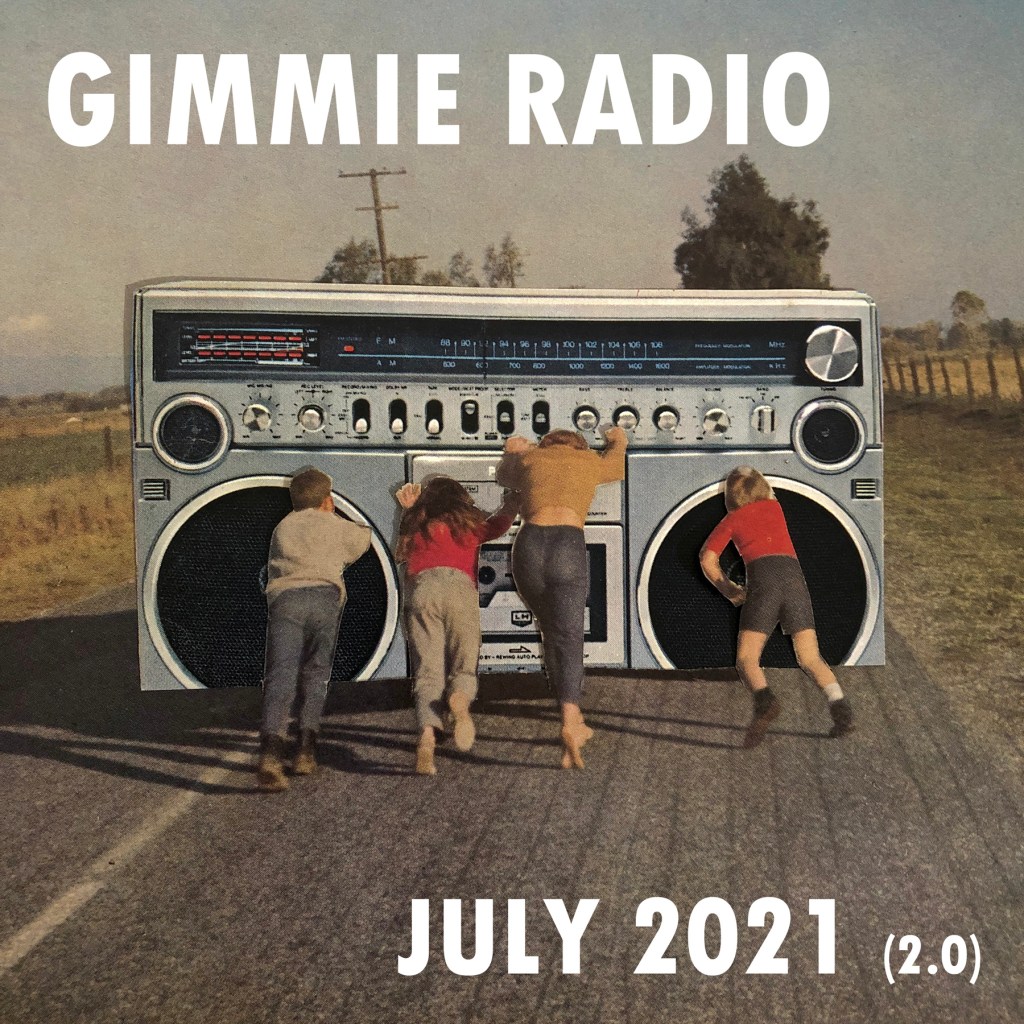
Alright, so last month we posted June’s playlist, and in the stupor of being so ultra focused on completing the print issue planned for July, we mistakenly listed it as the “July 2021” playlist.. but never fear, here is the real July playlist! This month features music from Smoke Bellow, Dr. Sure’s Unusual Practice, Tropical Fuck Storm, Genesis Owusu, Eieieio, Blonde Revolver, Nice Biscuit, and a bunch more! We hope you enjoy.
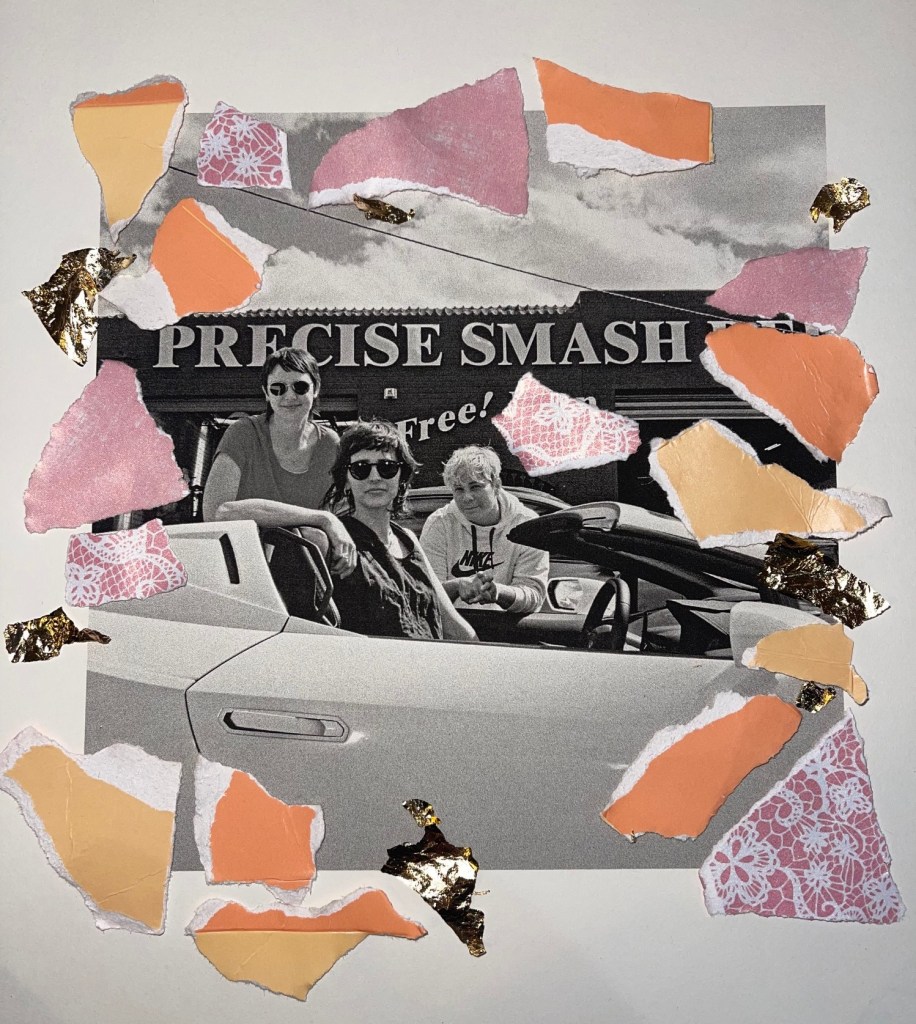
Original Photo by: Jamie Wdziekonski. Handmade collage by B.
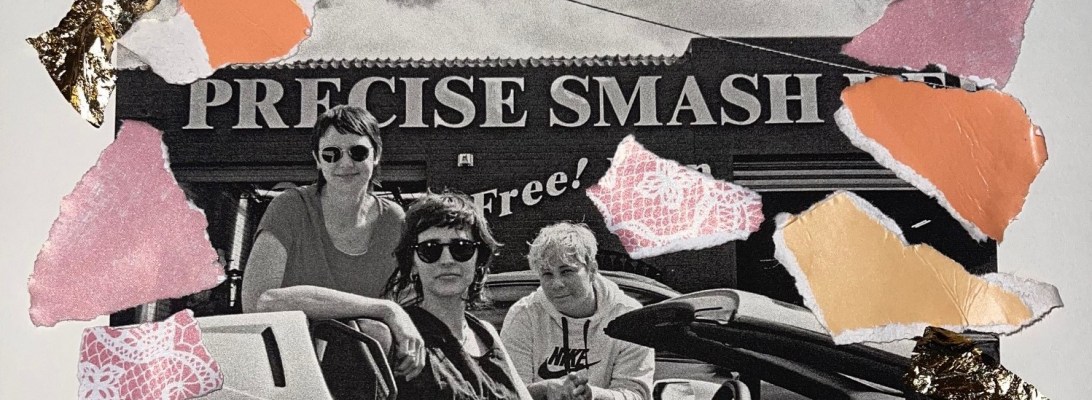
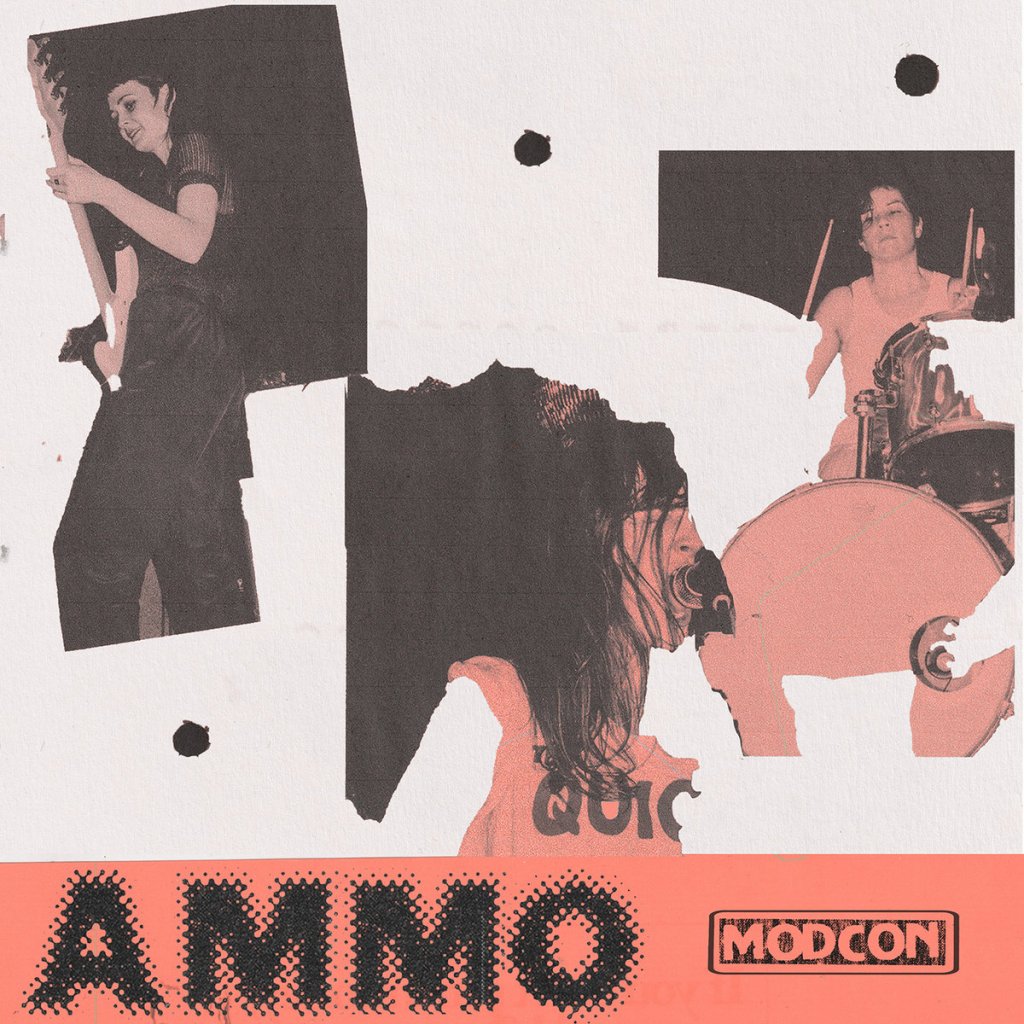
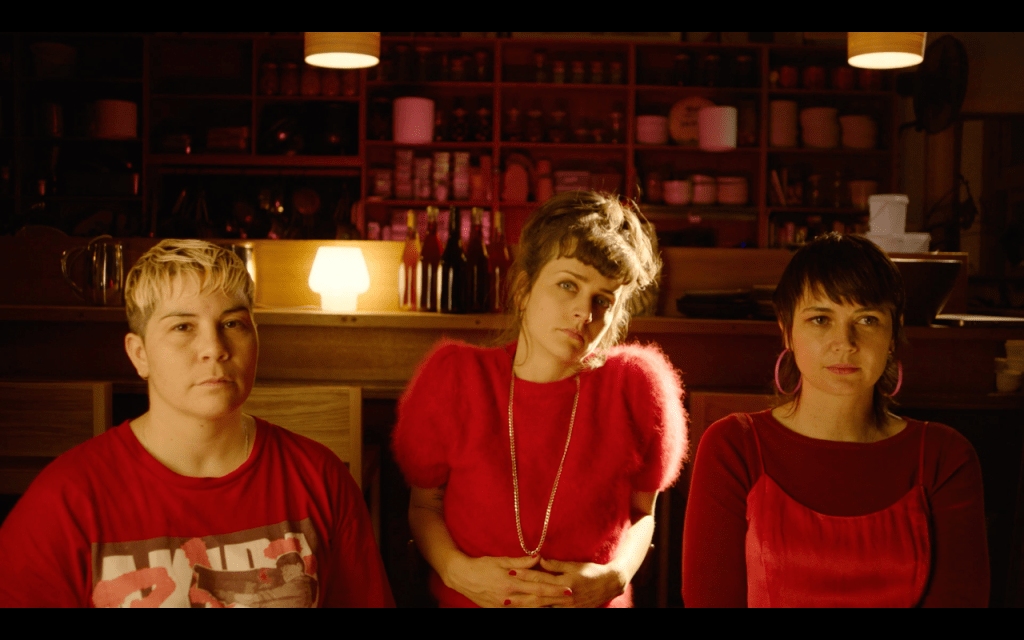
Gimmie have loved Naarm/Melbourne trio MOD CON since we first heard their debut release in 2017, the MOD CON/Fair Maiden split 7”. In July we featured guitarist-vocalist Erica Dunn on the cover of our first print edition, and now we’re incredibly excited to premiere the film clip for song ‘Ammo’, the first single off upcoming sophomore album, Modern Condition. We chatted with Erica about the song and clip, and of finally playing live shows again, plus we get a sneak peek into the new record, due out October 1 on Poison City Records.
ERICA DUNN: I’m walking my dog, Poncho. We’re just strolling around in soggy-arsed creek-land.
Nice! How have things been since we last spoke a couple of months ago?
ED: Things have been busy. Sometimes I’m like, it’s a rat race in my mind! [laughs]. There always seems to be a lot to juggle. I feel like it’s a strange new era where, because we’ve been locked down, you have to clear your mental expectations if your mental health is going to be ok; you have to get really present. When the lockdown is lifted it’s fucking crazy the adrenaline kicks in, you feel like everything is on, and you have to make the most of it! There’s also a new gratitude for when you are able to work and do stuff. It’s just, let’s fucking go! [laughs].
You’ve finally got to play some live shows again.
ED: We [Tropical Fuck Storm] were pinching ourselves thinking that the gigs with King Gizzard & the Lizard Wizard happened! We played every capital city without a hitch. It was incredible, it felt like normal life. We’re playing a MOD CON show on Sunday and the capacity is forty people, you just have to roll with it. We’re supporting Exek on Saturday night too, they just released one of the best records I’ve heard in ages! There’s only 100 people able to attend, it’s like a parallel universe.
We love that Exek album too!
ED: Shows have been varying degrees of normal. It’s always great to play though. Playing a show to forty people a year ago, might not have seemed worth it, but now I’m like, fuck it! The venue can sell beer and we can party—do it while we can! We have to take it as it comes. It’s hard to know where boundaries are when booking things because it can change so quickly, it’s all go, then stop, then go again. We’re about to release an album into a very different world than when we have previously.
[Erica talks to Poncho: “come on, up you get, in the car!”]
He’s old!
What kind of dog is Poncho?
ED: A mystery boy! [laughs]. He’s probably a Ridgeback mixed with a Staffy. He’s getting on to be thirteen now. He needs help getting into the car, but still loves to cavort around every day. We did our loop of the Darebin Parklands, which is so beautiful.
That’s a lovely way to decompress after rushing around doing things all day.
ED: For sure. There are times when I’m so busy or it’s freezing or raining and I’m like, fuck this! But then I always feel better afterwards.
Yeah, I get that too. Especially if it’s wet or cold, you kind of feel like you really accomplished something. I find that when you push yourself to do something and you do it, then that filters out into other parts of your life and you can start to achieve more and more.
ED: Yeah, that’s a great way to look at it. I’m going off to boxing class later, that’s the real decompression! [laughs].
We’re premiering the clip for your new album Modern Condition’s first single ‘Ammo’; can you remember writing the song?
ED: I was talking to the girls yesterday about it when we were having a practice. It was actually the last song written for the album, which is funny because it’s the first song out. It was the wild card song. It was the last one to get lyrics, I wrote them on the second last day of recording with John [Lee]. I just moved house and it was in the same week I spoke to you last; we just finished recording the record.
The song is not exactly how I have gone about things in the past. We had the riff, structure, tension and trajectory of the song sorted, and in the jams, I was yelling mystery words. In that coming together, we all recognised there was a vibe, an angle, to the song and the stuff I was spontaneously yelling. I had recordings of those jams and captured a couple of the bits of imagery that I was on about. The genesis is, that it was a bit of a mad, haphazard one [laughs].
One of the things we especially love on ‘Ammo’ is the drums!
ED: Raquel [Solier]! Fuck yeah! We were really running on a mad schedule and a couple of things interrupted the recording, [bass player] Sara [Retallick] got real sick and couldn’t make it, and there was a snap lockdown just before we were to start recording, which was meant to be our final pre-production-type thing.
There was a couple of days that Raquel and I did that was a guitar and drums day trying to nut out mystery question marks about a few songs. She came up with this crazy fucking rhythm for this song. It’s so sick! The subtext right there, is that it sounds kind of military-esque, it’s very explosive. She’s a wizard! She’s complicated and it’s fantastic [laughs]. We have a lot of back and forth, she often writes rhythms based on the lengths of my lyrics or parts of phrases. She’s much more adept at musical knowledge and language than I am. I get too fucking muddled and am like; where’s the one?! [laughs].
[Laughter]. I’m excited to hear the full album. How amazing is that remix that Ela Stiles did for ‘Ammo’?
ED: It was something that we did on the last record too, we approached Jacky Winter to do a remix for us. I don’t know if other artists get this certain hang up, but if you record something it’s strange, it’s like, is that it? It’s very finite in a way and then it’s out in the world. I’m interested in melodies and melody writing and playing around with ways of doing things, it makes sense to chuck out a remix and have a different perspective; another layer on all the ideas that are in there. You can see people’s reactions to it as well, for some people it’s another way into the band. Remixes freak some people out and others think it’s bangin’! It’s another way to explore the world of the song.
We’re definitely on the it’s-bangin’ side of things!
ED: Same!
It’s always cool to hear a song in a new context.
ED: And, it’s fun! Ela is another musician, composer, producer that has such mad chops! I have a lot of respect for her. It’s so cool to see how your song comes back at you and you can see things that someone else picked up, and what they have as the backbone, how they put a whole new spin on it. When I first heard it, I was driving in the car and I was like, far out! It raises your heartrate for sure! It’s anxiety inducing in a good way, especially how she pulled out the melodies.
Let’s talk about the ‘Ammo’ film clip. It was Oscar O’Shea that filmed it?
ED: Yeah, Oscar is someone that is so positive and excitable. He’s a can-do problem solver, up for anything. The clip, artwork and all the things that come beside releasing a song and album, are the stepping stones in which to explore and springboard some of the ideas at play in it. The clip is a play on sitting in a society that is always throwing shit at each other and navigating that, hoping it doesn’t stick, hoping that it doesn’t fly up in your face. It was a couple of packets of Golden Circle pancakes and crumpets, and a few friends on the side chucking them in our faces. It was a challenge trying to eyeball the camera, get the lyrics out and seem unphased [laughs]. It’s an analogy, sometimes I feel like that in life. It was a fun way to build on what I’m ranting about in the track.
It looks cool visually. Did you cop any crumpets to the head?
ED: We got a couple! [laughs]. I definitely got a couple in the face; I could definitely do a blooper reel! Raquel is Kung fu trained and did a couple of badarse, sick moves at the end. She grabs one out of the air without even paying much attention to it, it’s super cool!
I noticed in the clip she was reading The Tao Of Pooh [by Benjamin Hoff].
ED: Yeah, how good! I wanted her to bring along a prop. She was reading it at the time. She’d come over for a cup of tea and she brought up that she had been re-reading that and finding pearls of wisdom in it. I was like, fucking bring that to the clip, it’ll be perfect! That was legit on her bedside table at the time we made the clip. It sat perfectly in this world of trying to be present while everything is exploding overhead. Then we were playing around with the flour and the milk, it was evoking smoke and explosions, which was cool fun to experiment with.
There was a bit of a collab on the clip too. Carolyn Hawkins from Parsnip and School Damage did a bunch of the stop motion.
When we first saw the clip, we totally thought it was reminiscent of her style, that’s so cool it actually is her work!
ED: Yeah, it’s got her all over it. She’s another person that we thought of working with because she’s got the mad prowess, great vision and she understood what we wanted straight away. I sent her an old clip of the Sesame Street [sings] “one, two, three, four, five, six, seven, eight, nine, ten…” old school thing. I was thinking about “ammo” and thinking about it in all these different contexts, weaponry, and objects in our lives gaining agency. She nailed the undertones of aggressiveness and the sinister aspect that simple objects can have, especially en masse. It’s not overdone or in your face. That’s how I feel at least when I watch it. Part of me is like, woo hoo! Look at those little forks fly! Oh my god they’re getting power! They’re growing and stockpiling and conspiring with each other! [laughs]. There’s an edge to it. Props to my housemates too, that are still wondering when they’re getting their bottle opener back, and our forks!
I love that you’re all such nerds and there’s so much thought that goes into everything you do.
ED: Yeah, it’s true! I feel like there’s two ways of looking at things. In the past, album releases like this have a big emotional weight for me, they can be fucking stressful. You can think, argh! I’ve already put all of my spirit into making the record and now there’s all these other strange hats you have to wear as a musician.
The other thing is, you can see it as extra opportunities of getting to collaborate with people that you want to work with and make it really fun! This experience has been completely fun. I am completely enamoured with what Caz has done, and all of the mad ideas with Oscar; same with Ela. It’s all fun new ways to see the song. A new dimension.
I love that there’s a light-heartedness to it too. The things you’re singing about can be serious, but then the clip give them a levity.
ED: It’s definitely crossed my mind that the song is not prescriptive, I’m not saying there’s a better way or that I have an answer, these are things that are going around in my mind and this is an avenue in which I can explore them. Having a light-hearted aspect is part of my personality, there’s a tongue-in-cheek-ness. Often, I realise retrospectively that I’m asking questions in my lyrics. It’s definitely an exploration.
It’s also a double-sided coin, the band is really serious and aggressive, we play live shows and there’s not much mucking around, the things that the three of us bring to a live show can be pretty staunch! However, the flip is that we’re in love with each other and when we’re playing, we’re having a really good time, it’s just the best for our mental health and for our relationships, it’s what the band is built on, and we’re always laughing. That gets represented in the music and all we put out, in some way.
I’ve always loved the quote from Gareth [Liddiard] where he said: MOD CON is like a cross between The Bangles and Black Flag. I thought that’s pretty on the money, because you have that aggression but then also pop sensibilities.
ED: [Laughs] Yeah! I think he was chuffed about that quote being pulled out about our last record. Maybe it’s just the two bands Gaz knows?! [laughs] Only kidding! I do think there is a crossing of a couple of worlds.
With the new album being called Modern Condition is the title a reflection of the album’s themes?
ED: Yeah. We had a long car trip together recently, we played a show three hours outside of Melbourne, and we were sussing out what the album should be called. We wanted it to be another MOD CON-ism, keeping Mod in the title. I think this is going to be two of three, there’s probably going to a trilogy. This section “Modern Condition” is a bow that can be tied between all of the songs, it’s really exploring human sensibilities. People talk about the human condition, but this is what humans are up to in these kinds of circumstances. If I was going to pull out some overarching themes of this album—it’s mostly a plea for honesty and a real searching for truth in these sorts of times.
“Ammo” is the first cab off the rank to represent that. It’s having a little investigation and inspection of the human condition in modern times. I feel like the backdrop of big scale and small-scale weaponry is the first investigation, without wanting to sound mega highbrow or whatever the fuck! [laughs]. I’m still trying to work it out for myself. It’s investigating myself too; what are my default positions? What am I defensive about? Doing that I’m also trying to investigate how to be open and how not to always be on the default and being defensive and collecting ammo, shit to chuck at another person.
I feel that finding your truth and actually living it can be a very hard thing. I’ve been going through that the last few years of my life, but I can definitely say since I found it and have been living it, nothing but great things have happened.
ED: You’re absolutely right, it’s a life journey! It can be totally confronting. But, once you have realisations about some things in your life, you can’t go back.
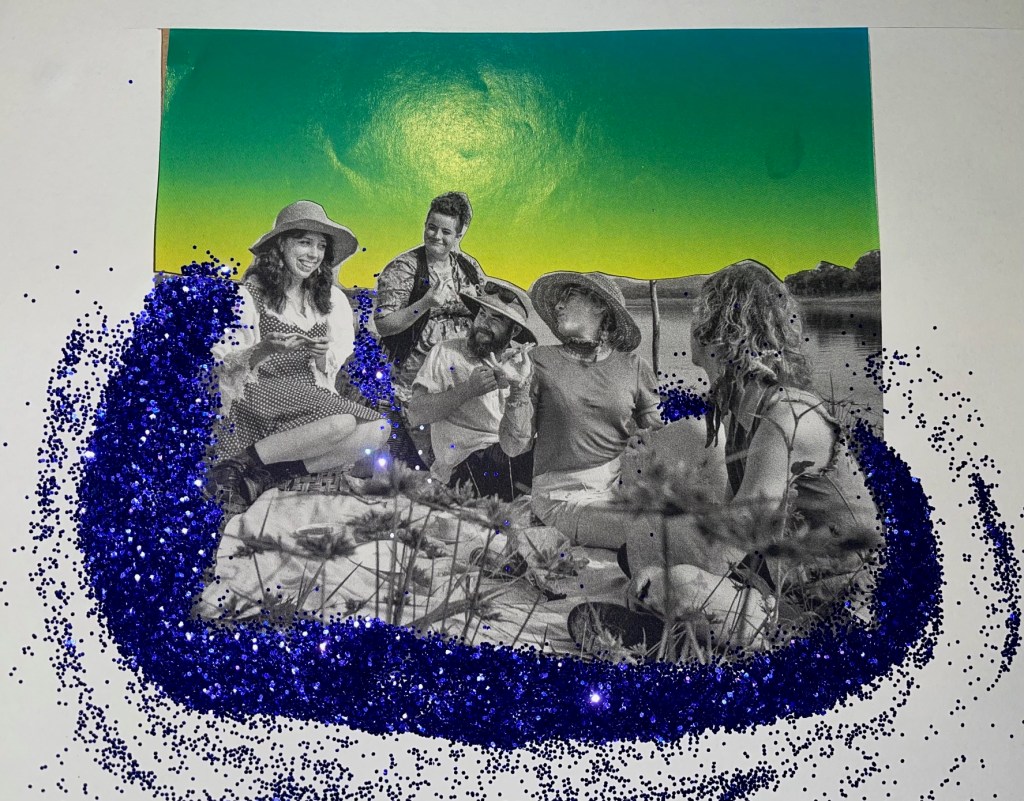
Original photo: Marnie Vaughn. Handmade mixed-media collage by B.
Meanjin/Brisbane indie-folk alt-country five-piece Full Power Happy Hour’s songs have beauty and depth. Their self-titled debut album is sublime. Gimmie interviewed guitarist-vocalist Alex Campbell.
Last time we spoke was almost ten years ago! You were doing punk/riot grrrl band Gunk, and Slubs zine. Your latest band Full Power Happy Hour’s alt-country/indie-folk is quite the departure from Gunk’s sound; can you tell us a little bit about your evolution as a musician and towards this different sound? I know that folk and country were your first musical loves when you were growing up.
ALEX CAMPBELL: So long ago! I suppose I ended up in a punk band then, really just because two of the coolest people, Canna and Laura asked me to be in a band and I probably would have said yes whatever genre it was. But it came at the right time, I was learning to be a feminist and was pretty angry at the world so punk/riot grrrl was a good vehicle for that.
When my sister bought me my first guitar when I was fourteen, I started off playing folk songs, they were the first songs I learned on guitar, and I was in various choirs as a youngster, we sung Jazz, folk and country. I have always loved a lot of different types of music, so I like writing in different genres. I’ve been wanting to start a folk band for years, and it’s finally happened yay! It’s nice playing gentle reflective music now.
60s folk songstresses like Joni Mitchell, Joan Baez, Peggy Seegar are inspirations; what is it that you appreciate about them?
AC: They are all great song-writers who often got overshadowed by dudes, same old story. I think also, it was because they wrote protest songs, I mean folk and punk have a lot in common in that way, I guess they were just sort of subtle about it sometimes, because maybe they had to be in order to get a platform in the first place in the 60’s as women. I suppose I was just really into their music at a formative time in my life and so they were big influences.
Full Power Happy Hour have recently put out a debut self-titled full-length, with the songs having been written around eight years ago, many first as poems and then played solo before you had the band together; how did it feel at first playing solo after being in Gunk?
AC: I used to busk at the markets on the weekends when I was teenager so I’d had some experience performing by myself, but then playing gigs solo as Alekka, it was always pretty scary, and it took me a long time to feel ok with being vulnerable and alone up on stage, singing about personal things… it’s much better having the rest of FPHH with me up there now!
What was it like making the transition back to a band and hearing your songs really fleshed out with FPHH?
AC: It was the best feeling. I’d been trying to get a band together to perform and record these songs for years, so it was kind of a relief. I’m bloody ecstatic that I’ve found a group of deadset legends who just got what I was going for, and are passionate about the music as much as me.
How do you go about capturing various moods and emotions in your songwriting?
AC: Hmm, I write the songs as poems usually, so lyrics first, and that comes about from like writing in a diary, getting my feelings out, and then I just play around on guitar and see what chords and melody I can put to the lyrics and it just goes from there…
Lyrically on the record, mental health is a theme that comes through; are these written from personal experience? Why do you think it’s important that we have conversations about mental health whether that’s in a song or via everyday conversation?
AC: I’ve only really just got to a point in my life where I’m ok with talking about my mental health with people other than my close friends and family. I used to just write cryptic lyrics about it haha, because like many artists I use songwriting as a coping strategy for making sense of feelings and experiences, dealing with trauma. Art has always been great for that, and that’s also why people consume art, because when you can relate to a song, it can make you feel better because the song seems to be about what you’re going through so then you don’t feel so alone. It’s essential that we have conversations about mental health for that reason, to make sure people know they aren’t alone in their struggle, and to get rid of the shame surrounding it.
As a teacher I see my job being a lot about making sure the kids I teach grow into compassionate critical thinkers that will always ask questions about society and the world in order to make it a better place. Learning about other people’s experiences helps people to see different perspectives and realities. I feel like we’d be a much more compassionate society if we all listened to each other a little bit better and understood a bit more about mental illness, and the societal and political issues surrounding it. So many people waste their lives, and struggle to have healthy relationships with themselves and other people, because they don’t know how or are too scared to take care of their mental health. We need to talk about it so we can grow as a society in a regenerative and restorative way. That’s my two cents.
The album was recorded over a few weekends with Nell Forster at The Moon Room in Meanjin/ Brisbane. I understand that she gave you a lot of coaching during that time; what’s some helpful things you learnt from her guidance?
AC: I suppose we learned a lot about the recording process from Nell, and just got some really good music writing advice. She just gave us guidance about how songs would sound better with or without certain vocal or instrumental parts, or like when we wanted to go for a certain sound or mood in a song, she had a pair of fresh ears to listen to our songs and give us suggestions, she was so generous with her advice and support.
Can you tell us about the day making the video for ‘Old Mind of Mine’? Where was it shot? What is your fondest memory?
AC: The clip was filmed on Turrbal, Jaggera, Jinibura and Kabi Kabi country mostly at Loop Growers and lake Samsonvale. Finn made some curried egg sangas, I made some fairy bread, we got dressed up and got to hang out in the countryside being silly. Marnie and Nathan were so patient with us, and did an amazing job capturing this wholesome feeling that we have as a band, because we are all just a bunch of good friends, and so the fact that it looks like a holiday home video of friends is super authentic because that’s what it was.
‘Old Mind Of Mine’ expresses the importance of getting away from the city and having nature in your life; have you always had a strong connection to nature? What’s your relationship to it? Did it grow even greater during lockdown?
AC: Being in natural spaces calms me down but I haven’t always felt this way. My Dad grew up in the bush so we were a very outdoorsy family and were going camping all the time but I had a bit of insect and snake phobia so was always kind of reluctant on these trips. But as an adult that’s really changed, and I’m lucky to live near an area of bushland with a creek that’s really well looked after by the community. Being near any body of water really just re-sets me, when it rains, the creek is majestic. I try to walk down there every day, and during the lockdown I definitely valued it even more.
What kinds of things are influencing the most recent songs you’ve been writing?
AC: On the next record, there’s a big theme of friendship and family, I think I’ve now written a song about every one of my friends (they don’t know which ones though!), but I have a few new songs dealing with past traumas and the relief of getting clarity and growing and making peace with all of that. There may also be a couple about climate justice and shitty politicians…
What’s something you’ve been interested in lately that’s had you really engaged that you’d like to share with us?
AC: I’ve been obsessed lately with Sydney band “Sunscreen”, The Weather Station’s latest album, Little Simz latest album, and Electric Fields has gotten me through my final prac at Uni. Also, two podcasts I’ve loved over the last few months are Oh My Dog, a locally made dog appreciation podcast, and a podcast called Nothing Much Happens, which has helped me improve my sleep so much this year.
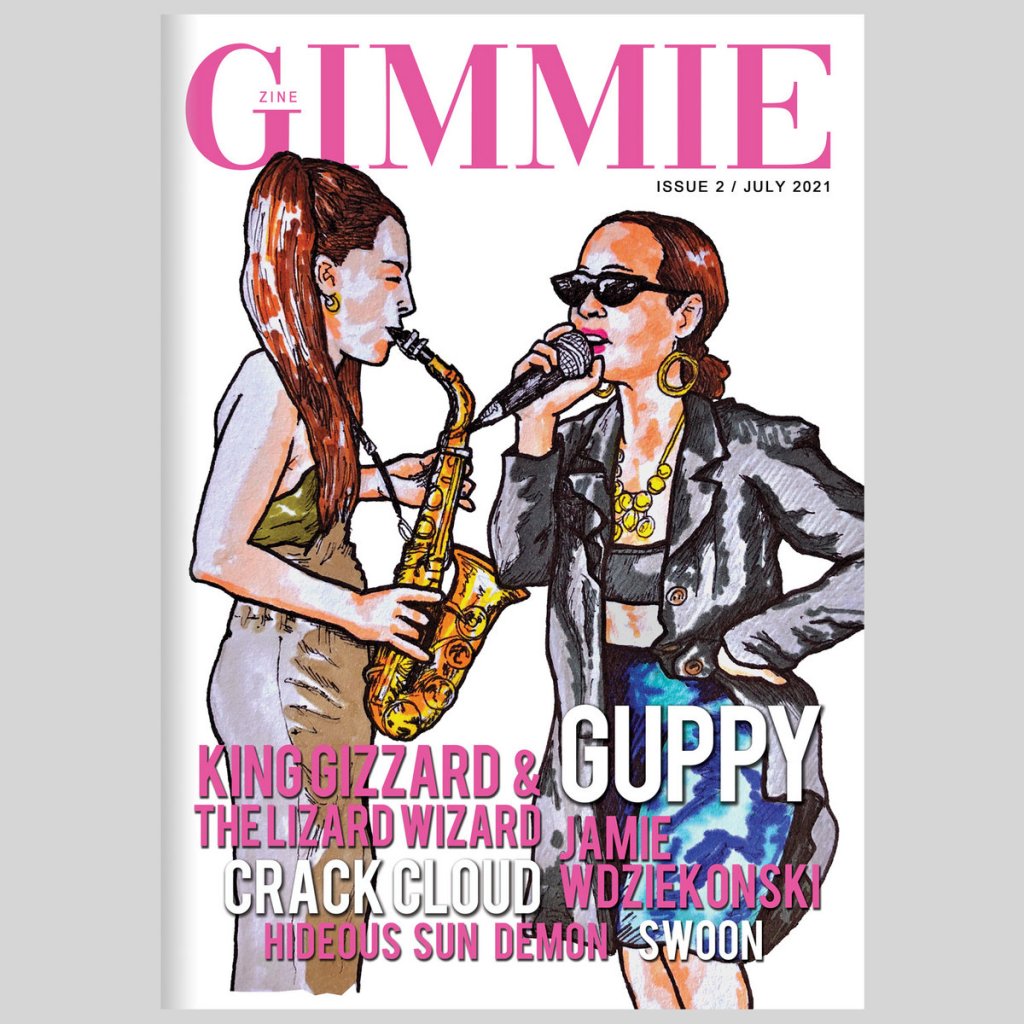
We’re excited to share Gimmie print issue two with you! In-depth interviews with:
Zach Choy from Crack Cloud tells us about the new record in the works! We deep dive into the importance of storytelling through music & art, collaboration, and creating longevity for a creative collective doing things your own way, continuing to look out for each other, and not letting the industry burn you out. Inspiring stuff.
Joey Walker from King Gizzard & the Lizard Wizard gives us a look into their new LP Butterfly 3000, songwriting, of initially being profoundly inspired by Indigenous musicians as a child, talk of new Bullant + more!
Brisbane band, Guppy (f/ members of Clever, Cured Pink & Come Die in QLD) have been blowing away the Brisbane music community with their live shows, we believe they’re the most exciting and original new band in Australia (big call, we know!). They’re currently putting finishing touches on their debut album recorded by Dubsy from Blank Realm. We chat with them about their DIY creative world & bringing light and fun to weird times.
We get insight into the heart and mind of one of Australia’s most vital underground documentarians photographer Jamie Wdziekonski aka Sublation! We talk craft, his journey, knowing better & doing better, having purpose in your work, new projects in the works incl. a book of photojournalistic documentation of Indigenous social justice rallies in Naarm over the last 6 years!
Hideous Sun Demon’s Jake Suriano put together a tour diary for us! + told us about early days in Perth, democratic songwriting, realities of touring, studying to be a teacher’s aide, the joys of working as a furniture removalist, community, & new Dr Sure’s + Kosmetika.
First Nations musician Swoon frankly shares his beautiful, isolating, confusing, eye-opening, hard, journey in discovering and exploring his identity, and in healing family intergenerational-trauma; channeling it into EP Rainbirds. A powerful read.
Plus, a super cool contribution from Parsnip & School Damage’s Carolyn Hawkins, & other fun stuff!
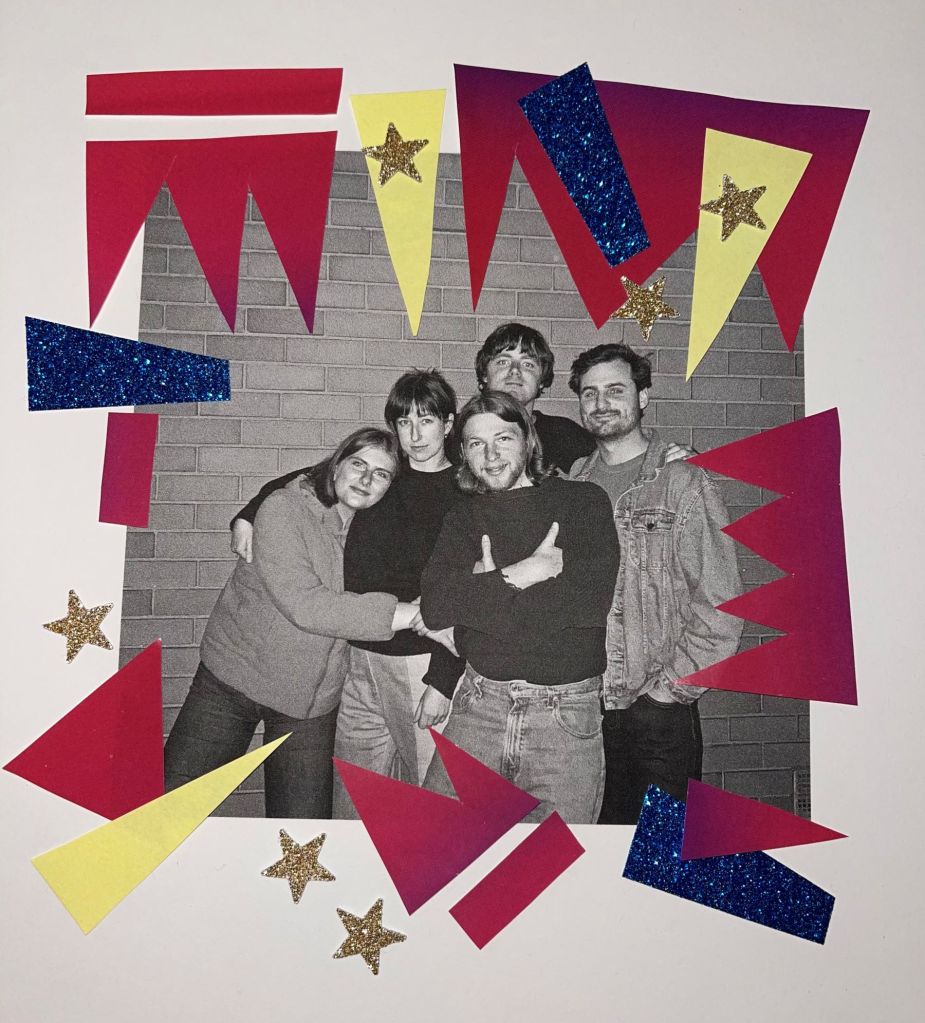
Original photo: Sam Harding. Handmade collage by B.
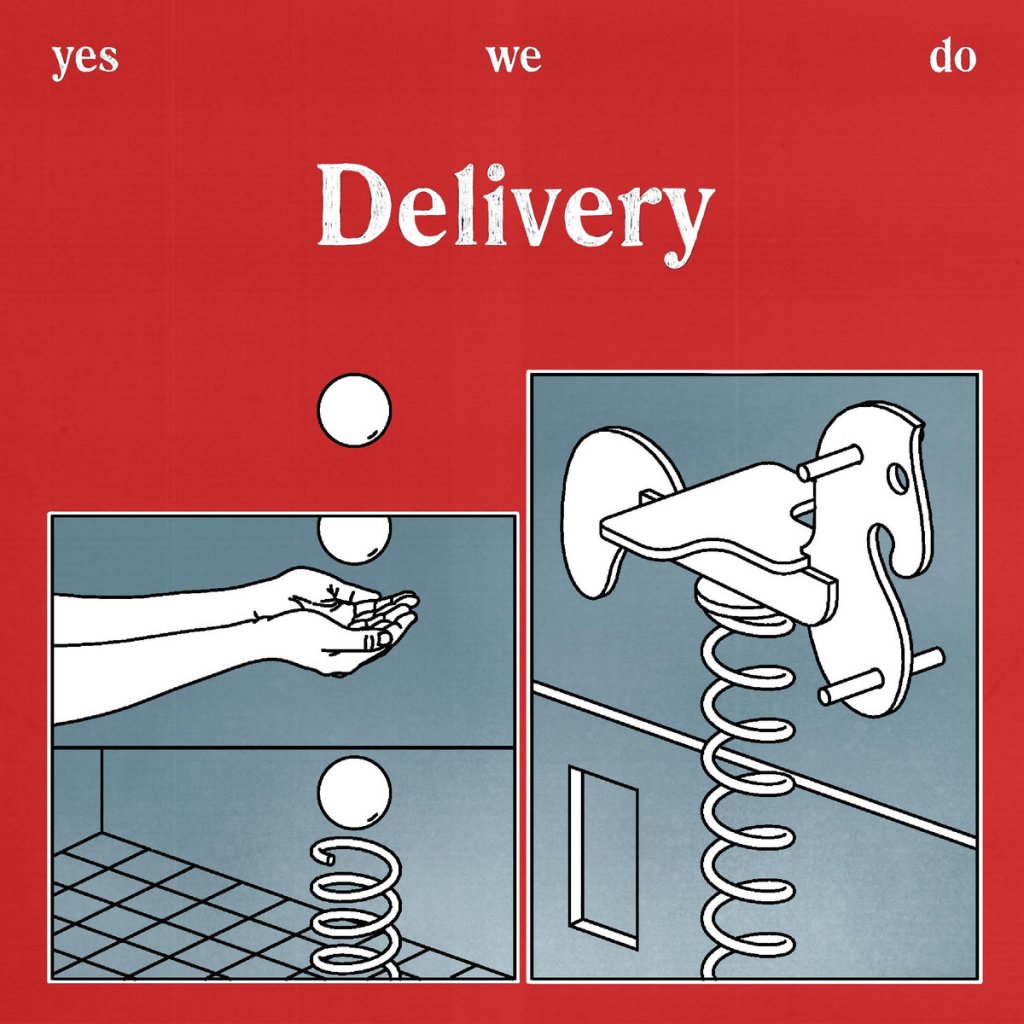
Delivery is an effortlessly cool garage-rock, post-punk combo with programmed beats from Naarm/Melbourne. Today Gimmie are premiering their debut EP Yes We Do in full. Delivery’s Bec Allan and James Lynch were kind enough to fill us in on the energetic release and give us a glimpse into the band.
What do you love about making music?
BEC ALLAN: Really just hanging out with likeminded people and friends, doing a creative thing that we’re all passionate about, nothing funner than that!
JAMES LYNCH: Yeah, just a good excuse to hang out with friends really! Also, quite cool how quick the process can be between making something up and having it out in the world.
How did you both first meet? And, when did you realise you wanted to make music with each other?
BA: We first met at this music festival Boogie in 2017 and have been going out for about four years now… haha. We never really planned to make music together per sé but I guess since we were both doing it separately and share similar musical interests it was bound to happen at one point or another. Also being locked in a room together for a few months helped push that along pretty quickly.
JL: I think we’ve also been big fans of each other’s bands for as long as we’ve known each other, so it was pretty easy to trust we’d be able to make something sorta cool together, even if it was just to pass the time.
Delivery formed in lockdown. You’re both in various other bands – Gutter Girls, Blonde Revolver, The Vacant Smiles & Kosmetika; what did you want to do differently with this new band? I know you started out just making songs up for fun.
BA: We were actually trying to figure out how and why we even started doing this project the other day, but neither of us can really remember haha. I think this band is cool because we both play pretty different music in other bands and it’s kind of a cross over between both our styles. Someone said when we first started that it’s probably the most punk band James has played in and the least punk I have. I think for me, it’s also been really cool to write lyrics for the first time and have a way bigger songwriting input than in other bands.
JL: I guess it was also a nice opportunity to play with someone else who had a pretty different musical background/set of experiences so there wasn’t really an obvious intention to begin with, we just wanted to see what might happen – I don’t think we had any specific goals other than to have some fun with it. It’s definitely forced us both to think about what our usual musical tendencies are, but to also come up with something that suits the group dynamic, which is a good challenge, and I think so far we’ve been able to meet somewhere in the middle nicely.
I love the synthesisers and programmed beats in Delivery’s music; where did your love of these stem from?
JL: To be honest, I don’t think either of us have a proper love for synth heavy or drum machine music haha, this band is my first time ever using drum machines and I know almost nothing about synthesizers. I suppose it was more a necessity to be able to make something interesting from within a bedroom, when you don’t have too many tools are your disposal and can’t really go too loud. That said, I think it’s maybe shifted my brain a bit to be a bit more curious about how bands that I like do use synths and drum machines in cool ways, there’s so many good bands doing this kind of stuff and using those instruments to mess with whatever feels like a ‘normal’ rock band setting. It’s nice to throw yourself in the deep end a bit sometimes too.
Personally, who are your biggest creative inspirations?
BA: Well, I’ve always been really into the 70’s New York punk scene but have definitely been expanding my music taste way more in last few years and that’s probably where more influences for this band came from – recently a lot of garage rock and post punk bands like Parquet Courts / The Clean / ESG / Raincoats and others have been on pretty high rotation so I use them as inspo for sure. Also, just the Melbourne music scene in general is super inspiring and being part of it always keeps me motivated, listening to new stuff coming out constantly and seeing so many sick bands all the time is so cool, so I guess to be able to work on my own things is exciting to be part of it.
J: When we started Delivery, a big reference point was The Intelligence – they’re such a good band and I think a lot of the music coming out of Melb shares a lot of qualities with their stuff but no one really talks about them! Just generally though, I think the biggest inspiration I get is from local bands and friends though, it’s so exciting being in Melbourne and being able to see an amazing band one night and then using that to prompt something in your own music, feels a bit less like you’re ripping off a band if you know them haha.
What puts you in the mood to create?
BA: Literally having any spare time haha… playing in so many bands plus work and uni keeps me busy for sure so getting a sec to relax and just fiddle around on the bass is a bit of a luxury that I try make the most out of when it comes around! And when I can come up with something cool or interesting (to me at least) I pretty much charge with it cause it’s always pretty exciting having something new to bring to the band and work on.
JL: I don’t know if I really need a mood to create either. I think I almost like the idea of having lots of songs more than I like the creative process, so actually making up songs is just a means to an end. I think I’m fairly lucky that I can just force myself to make up ideas if I really want to, so if I do get an idea, I like I’ll run with it regardless of my mood because it’s kinda nice to have another song at the end of the day.
We first heard you on the Blow Blood Records ALTA comp with song ‘Poor-to-middling Moneymaking’; how do you feel your sound has grown since that first song?
JL: A couple of the songs on Yes We Do were written at the exact same time as ‘Poor to Middling’, so that’s a bit of a hard question to answer. I guess both the 7” and that song catches us while we’re trying out different ideas of what Delivery could sound like and maybe testing out a few of our tricks all at once – although maybe the final version of the 7” songs were given a little more focus. We play that song live at the moment though and I’m really excited to do a full band version of that song, maybe once we do that it’ll be easier to compare and see how Delivery has developed. The full band help it rock a little harder I reckon.
Bec, you’ve previously said that writing lyrics is always pretty intimidating; what intimidates you about it and what helps you push through that?
BA: I guess the most intimidating thing is that people will hear what you’re saying and think about it then think it’s lame or bad haha but over time I’ve come to realise people don’t really read into lyrics that much or if you don’t want to give too much away you don’t really have too. Definitely working with our guitarist and my housemate Lisa has made me feel way more comfortable rolling with ideas or even lines of songs. We are both kind of each other’s hype person when it comes to that so it makes it a really fun positive experience and makes me feel way more confident as we go!
What’s something you love about your debut EP Yes We Do?
BA: I love the artwork by Mac Int., massive legend and she hit the nail on the head with it. Feels a bit weird saying what I like about my songs but I will say I love Delivery and everyone in it!
J: I like the drum sound. I also like that Bec and Lisa’s deadpan singing makes us sound a bit more badass than we maybe are.
Was there anything that surprised you about writing or recording this release?
BA: How quickly writing and recording 7” can be done if you want it to be haha – think we decided in April we actually wanted to do this so it all came together pretty quickly.
JL: When we started Delivery, I thought we’d be writing these wild punk songs and then when they were finished it sorta turned out that my most punk still is kinda not super punk whoops. Sam from Spoilsport actually said a nice thing along those lines, that even though we sorta do post-punk there’s still a fair bit of garage and pop smarts about it that maybe helps us stand out a bit from the real punks. If you can’t join them, beat them.
Can you give us a little insight into each song on the EP? ‘Floored’, ‘The Explainer’, ‘Rubber’ & ‘Brickwork’.
BA: ‘Floored’ literally about a stain on my carpet (Lisa and I are pretty precious about our carpet so we were devastated to find it) but also maybe it’s about some other things in life that are stuck and hard to get rid of or move on from. I dunno haha maybe just trying to place some meaning that isn’t there or maybe it is??? You can make what you want of that.
JL: ‘Explainer’ is a song about how you don’t need to hear the end of every story. I’m a sucker for wanting to know what happens next in every irrelevant anecdote, and this is a reminder that you don’t have to tell me if you don’t want to.
BA: I wrote ‘Rubber’ after a kinda shitty experience buying some things from a music store near me and I guess it’s a little diss track to some people that work at some music stores that don’t always take non-male identifying people seriously, not all stores are like this but it still gets you every now and then.
JL: ‘Brickwork’ is about how anyone who does anything good or shitty is ultimately either as celebrated or held as accountable as the people who back them up. Good to double check the people you hold up deserve your support, I guess.
Sound-wise, why was it important for you to keep some of the spirit of the sound of your early home recordings rather than really polish things up too much?
JL: Playing with the band is so good that it was very tempting to just ditch all the home recordings and make an album like we sound live. But there was lots of charm to our original production style that I thought would’ve been a shame not to share, so I guess it seemed nice to do the 7” as a little stepping stone.
After starting as a two-piece Delivery have now expanded into a five-piece; how have the songs evolved with the additions to the band and finally getting to play them live?
JL: It’s been fun making the songs sound a bit bigger, and it’s nice having a few more perspectives in the band to throw in the mix. The 7” definitely wouldn’t have come out as it did if we didn’t have the full band helping to steer the ship. All five of us are real good friends too, so it’s just a blast to play rock songs with more of your buds.
Your release is coming out on Spoilsport; what’s one release you’re loving from a fellow Spoilsport band we should check out?
BA: EGGGYYY!! My favs and besties! Bravo is just excellent but also so many friends and great music on the label… Quality Used Cars, Carpet Burn, Hooper Crescent etc. just go on the bandcamp and pick anything and there will be no disappointment.
JL: Spoilsport are the best in the biz and I love every album they’ve put out. A particularly cool one for me is Quality Used Cars album, Francis is one of my longest friends and the two of us helped each other get into making music when we were about 14, so there’s something special in coming full circle and putting out music in different bands but on the same label 13 years later.
July’s playlist is here! This installment features new tunes from Carpet Burn, Mod Con, Tor, Shannon and the Clams, Predator, Delivery, King Gizzard and the Lizard Wizard and a bunch more. Enjoy.
Original Photo: Liam Brownlie. Handmade collage by B.
Naarm/Melbourne-based musician Winter McQuinn gifts us a shimmering psychedelic pop album, A Rabble of Bees. Themes of environmentalism, friendship, connection and change thread throughout the highly enjoyable jaunt. Gimmie got in touch to find out more about the record and learn more about project, Green Your Noise, co-created with Acacia Coates (Pinch Points) as an initiative for musicians and creative industry workers to get a better idea of how to make events and tours more sustainable.
Hi Winter! How are you? What did you get up to today?
WINTER MCQUINN: I’m doing okay! Drove back from Wadawurrung Country / so-called Fairhaven today on the Great Ocean Road, it’s so dreamy down there. Currently in the midst of either cancelling the rest of the album tour or continuing it! Geez.
What inspired your new album’s title A Rabble Of Bees?
WM: The album had a couple of name options. A Rabble of Bees was actually an idea given to me by the album covers visual artist Zac Terry when we we’re talking about what a group of Bees were called. A Rabble! I think the album was always going to be called something related to Bees; due to the environmental theme running throughout the songs as well as the idea that these songs all used to be B-sides and really rough demos before they got cleaned up.
This collection of songs was written during lockdown; how did writing help you during this time?
WM: Writing was something that I could do to escape from the world around me and make something that was purely creative and not driven by any other forces. I think that I’m always influenced by the world around me though and this poured into my songwriting around this album’s conception. The privilege to be able to spend a lot of time writing and demoing heaps of ideas is something I’m very grateful for and think it’s important to use that privilege to write about things that matter and are meaningful to you.
What sparked the writing of ‘George Harrison’s Crystal Ball’?
WM: I was inspired after a conversation with my mum about our Prime Minister (gross) and her hope for his kids to grow up to be contemporary artists and to reject the church because that would really hurt him the most. It’s really just a foretelling of what future he’s condemning his own kids (and everyone’s kids) to. The name is centred around looking into the future and the guitar line after the first verse kinda gave me George Harrison vibes.
What’s your favourite lyric you’ve written for this record? Where did it come from?
WM: Hmm probably the line between me and Acacia “you make avocados green, yes you do, bananas yellow and still you” I had the most fun with that haha. I think I really wanted to keep it fun and light with the lyrics on Friendship Pheromone and this was the perfect encapsulation of that feeling in a few words.
What was the best part about recording this record yourself in home studios in Brunswick and Northcote?
WM: I guess the freedom both financially and creatively is the best part about home studios in general. Most of the album was done in the Northcote spot which is where I wrote it all. To have written and recorded my first solo album in my childhood home feels pretty special so I think that might be the best part.
Can you tell us a little bit about the recording process? It was produced by Sunfruits’ drummer Gene Argiro and recorded with two SM57 microphones, right?
WM: The recording process was a pretty messy one in all honesty, there was never any intention with this group of songs to make them into an album but I’m so glad they are now! I usually send most demos that I’m working on to Gene to see what he thinks and suss if they’re worthy or not to make the Sunfruits bag of magic. These songs we’re all tracks that maybe didn’t quite fit the Sunfruits vibe but still we’re worthy of something.
I think I actually just decided I wanted to clean up the songs a bit more and asked Gene if he’d wanna mix them. He is such a talented producer, mixing engineer and songwriter and makes everyone he works with a better songwriter so It was a blessing to have him mix these songs. All the recording was done with two SM57s that I have (Drums included!) and I think sometimes that’s all you need.
Some of the songs are centred around friendships; did you find your friendships changed in any way during or even after time spent in isolation due to the lockdown?
WM: Yeah, I think that friendships in my life changed profoundly during lockdown. When you’re involved in a music community, I think you are “friends” with so many people as you share a common interest and share common meeting places e.g., venues, record stores, festivals, studios etc and that helps you connect with a vast range of people. Lockdown changed and stopped these connections from happening as regularly so I felt quite isolated and had a longing for that feeling again.
We really love the song ‘Friendship Pheromone’; what was the writing process for this track?Acacia Coates does vocals on ‘Friendship Pheromone’ and ‘Tangerine La’; what do you love most about her voice?
WM: Thanks so much! “Friendship” was written during a particularly hard part of lockdown where I was really missing a lot of the people in my life. It’s just a reminder to love your friends and spend time with them and listen to them. Acacia is my favourite collaborator and we really have a great synergy when it comes to songwriting and general life! She has such a good ear for melodies and writing catchy but interesting lines and lyrics. I love her voice and just asked if she wanted to sing on both of those tracks.
Nature is a recurring theme on the LP; what compels you to write about the environment?
WM: I think nature and the environment is on my mind most days, it’s all around us and is us, we are it, it is us but I think we’ve lost touch with that. I think it informs anything I do and it has such an effect on my moods and life in general so it was kind of inevitable that it intertwined with all the songs on the album.
Acacia and yourself started Green Your Noise after questioning what else you could do, as musicians and individuals, to combat climate change, for those who might not know about it; can you give us an overview? What’s something important you’ve learnt from this initiative?
WM: Yep! So, we co-founded Green Your Noise together as a way to help musicians and creative industry workers get a better idea of how to make their own events and tours more sustainable. In short, Green Your Noise is an online carbon calculator specifically tailored to musicians and creative industry workers who want to figure out the emissions created from their events, how to mitigate them and how to make their events more sustainable in the future.
I think the one of the most important things we’ve learnt by doing this project is how eager everyone in the creative sector is to be able to work out their impact and how to mitigate it. It was also really interesting to really get into the nuts and bolts of carbon calculating and accounting and just how broken our systems are in terms of power, waste management and transport.
What’s something that’s been interesting to you lately that you’d like to share with us?
WM: I’ve recently been researching the history of environmental activism within music and songwriting and just seeing how widespread and how far back the two go together is really interesting and quite inspiring. To see it in the mainstream as well with Billie Eilish etc is really great, a personal favourite from these research sessions has been a song “I Pity The Country” by Willie Dunn, really powerful folk music from the 60s/70s that’s still so poignant today.
Are there any other projects you’ve been working on?
WM: Yeah a few! I’ve been working on a concept album quietly in the background which is examining environmental activism within music which will be paired with a visual accompaniment. I’ve also been preparing with Sunfruits to record our debut album at a house down on Great Ocean Road which I’m super excited about!
What was the last thing that made you really, really happy?
WM: I think getting to play the solo album live with a group of musicians and people I really admire made me really happy. To be able to travel and play songs you’ve written is a huge privilege and I’m very grateful to be able to do that.
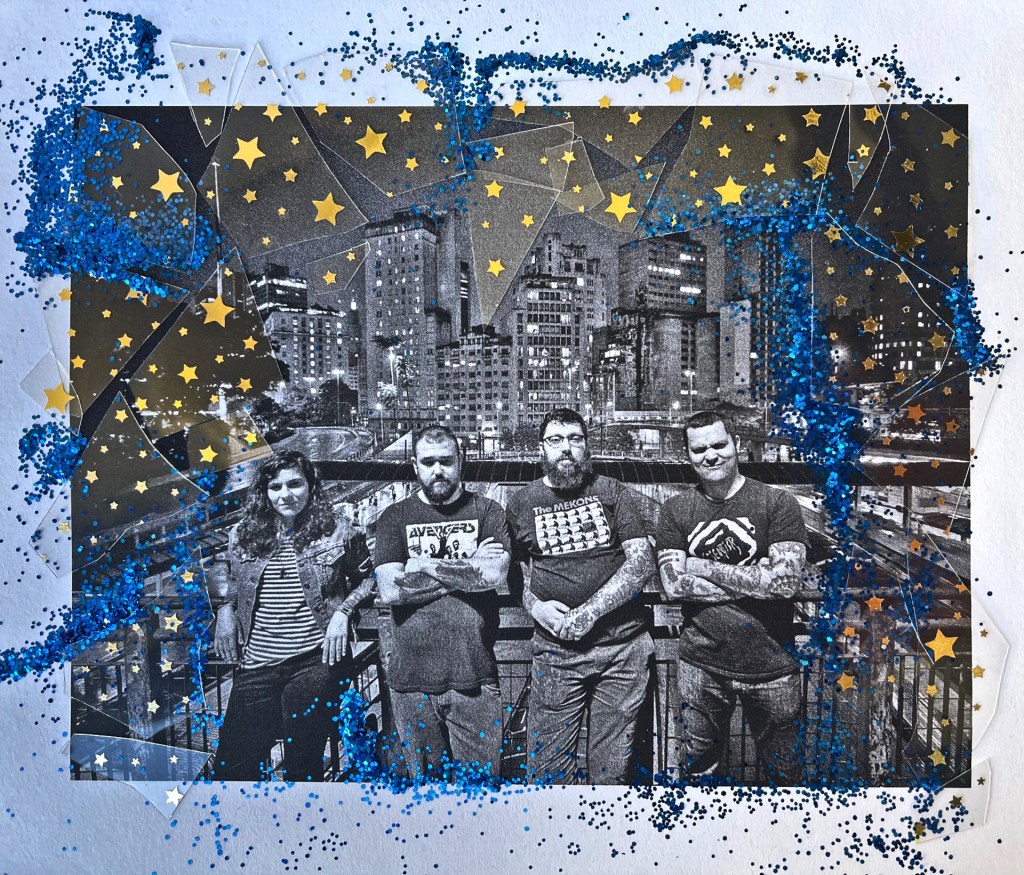
Original photo by Mateus Mondini. Mixed media art by B.
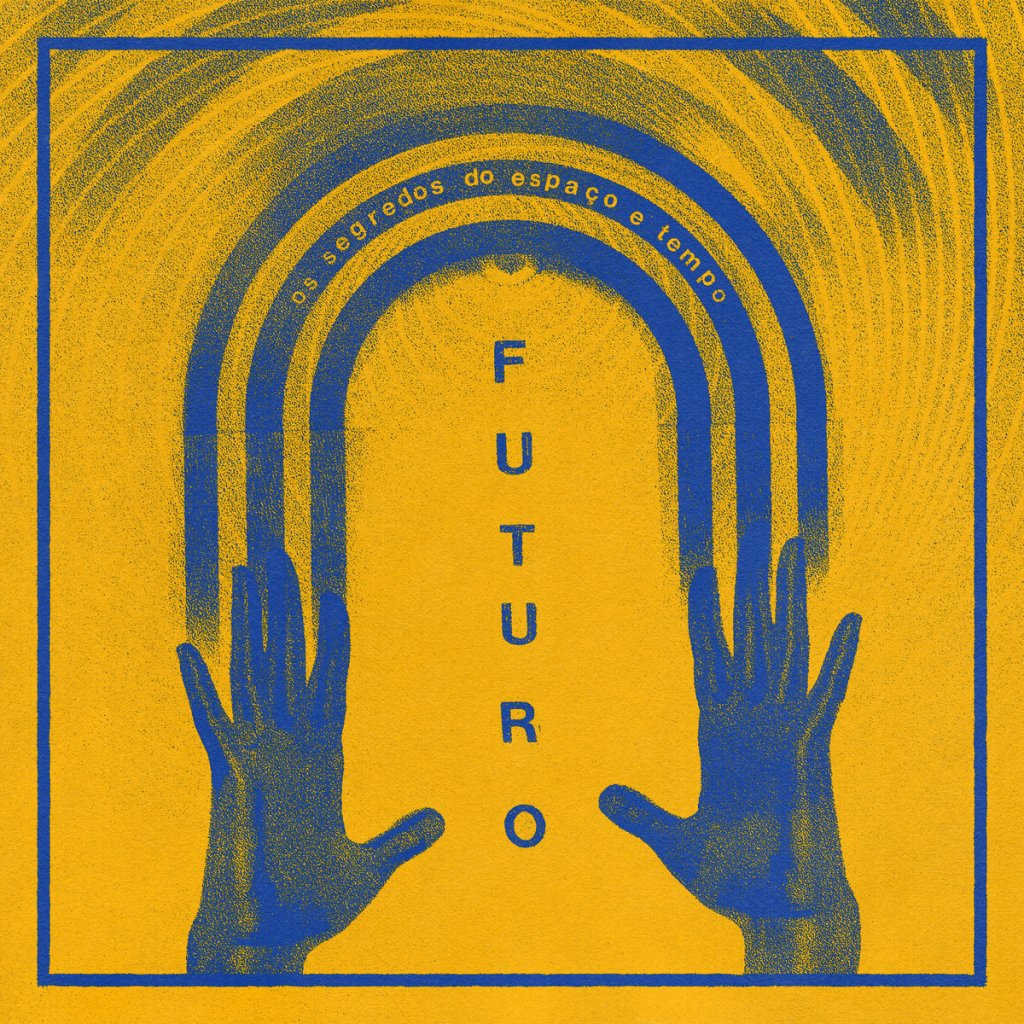
Futuro are a punk band from Brazil, who got the inspiration for their name from the thought that “conservatives are obsessed with the past, while revolutionaries and progressives are obsessed with the future.” At the end of last year, they released their dynamic and frenetic album Os Segredos Do Espaço e Tempo (The Secrets of Space and Time). Gimmie dropped a line to vocalist Camila Leão and guitarist-vocalist Pedro Carvalho to find out more about them, their music and life in São Paulo. Futuro are also big fans of our country’s music, expressing, “Australia has some of the best bands in the world right now.” Agreed!
Futuro are from São Paulo, Brazil; what’s it like where you live?
MILA: It’s a gigantic, grey, neurotic megalopolis. The metro area has about 20 million people. It can drive you crazy. But it’s also an interesting hub where lots of things happen. I think the city is a very big component of what the band is about. Our music and lyrics translate a feeling of anxiety that has everything to do with São Paulo. The band is actually all spread out now. Pedro and Flávio live in São Paulo, Xopô lives in Belo Horizonte and I live in Baltimore.
Can you please tell us a little bit about yourself?
PEDRO: I don’t know what to say about myself, but I’ll try. My whole life revolves around music, both at work and in my free time. I’m not very good at anything else, really. I’m lazy. But also, very determined and rarely give up on things. I’m not very good at anything else, really. I read a lot and think a lot about politics, philosophy, psychology and things like that. Not that I do much about it, but I feel like I need to understand the world and people around me.
MILA: I like to put my mind in creative projects that allow myself to experiment. I’m a graphic designer and illustrator and I really like to make things with my own hands. I like to learn about different cultures and its philosophies, and I love to be around nature and animals. I’m fascinated with natural sounds, textures and colors.
How did you first find music?
PEDRO: My mom was a massive music fan and had a record collection which was always around. She taught me how to play records when I was about four or five years old. I used to wake up at 4 or 5 in the morning and spend hours by myself listening to records and looking at them. We’re basically sponges at this age, so I think music just became part of my DNA.
It’s funny that I still like most of the same records from my mom’s collection I liked as a child, stuff by the Beatles, The Stones, (Brazilian band) Os Mutantes and things like that. My mother had all sorts of records, but for some reason it was 60’s rock that spoke to me.
MILA: I remember traveling to visit my grandparents in the country and my dad had tons of Brazilian rock tapes in his car. When I was six I knew how to sing most of the songs from bands and artists like Legião Urbana, Raul Seixas and Titãs. I think that’s how I started to enjoy rock music, it was fun and energetic.
When I was older, I think MTV helped me to discover other bands and refined my rock and metal music taste a little bit more. But it was only when I was eleven or twelve that I started to buy my own hardcore punk CD’s. I used to go to a store on my way home after school – this is a specific kind of store that is very common in Brazil, they sell used books and used CD’s/ LP’s – to check out whatever had edgy artwork and were in the punk section haha.
Photo by Mateu Mondini
Who or what inspired you to start making music yourself?
PEDRO: I saw Kiss on TV when I was about four or five. They came to Brazil and it was all over the news. I decided there and then that I was going to play music. The image of them and the sound of distorted guitars coming out of instruments that looked like weapons was so powerful… I informed my two best friends that we were going to have a band when we grew up.
As I said I rarely give up on things, so when we were about eleven, I bugged them until they got instruments and we did start a band. By then I had read about early punk and the whole “this is a chord, this is another chord, now go out and start a band” thing and felt encouraged to play even though I still didn’t know how. So, we began doing covers of simple 50’s songs by Buddy Holly, Bo Diddley (some of his songs had one chord) and people like that and eventually began writing our own songs and playing slightly more complicated stuff. That was my first band. But my friends got too much into being musicians while I got more into punk rock, so we drifted apart. They went on playing “good” music while I started playing in punk bands.
MILA: I was a very shy kid and I never really saw myself in bands. I grew up seeing women in bands/groups on TV and even though I wasn’t very passionate about the kind of music that some of them were playing, I always thought they looked cool and powerful and that always caused me some fascination.
When I started to go to hardcore punk shows and I realized that people like me were making music and creating meaningful things, I felt like I wanted to contribute too. My main inspiration to make music was to see the local punk youth putting their hearts into their music, to build some sort of community. It wasn’t just about music, they were raising their voices and sharing their views. When you’re a teenager there’s so much to say and I felt like singing in a band would be the perfect place for me to share my thoughts.
After singing in bands for a while, I felt the desire to evade more creativity. I wanted to be able to play instruments and to start my own music.
What album or band has had a big impact on you?
PEDRO: Early on the Beatles and The Ramones were the bands that really influenced me in all sorts of ways. In a way I feel they’re the two bands that impacted me the most and formed the basis for everything I ever did musically.
The Beatles showed me that you can be adventurous and change from project to project while retaining an identity of your own and that there’s no limits to what can be done. The Ramones showed that anyone can do it as long as they have the focus and the concept in their minds. And also, that music can and should be really exciting all the time. Both bands had really good songs and I always thought the song was the main vehicle for ideas and should be memorable and well thought out. Also, great guitar tones. This is non-negotiable for me.
Later on, there were many other bands and albums that did the same in different ways, but these two were the ones that started it all for me, probably.
MILA: It’s hard to pick only one band or album because I am always changing my main references from time to time, but I think Depeche Mode was the most solid one throughout my life. Musically, it embraces excitement and sadness at the same time. The lyrics take you to a different reality and the voice melodies have a life of its own. I like how some electronic elements can sound odd alone but, in the song, it adds personality. Of course, another solid reference is The Ramones. I appreciate their technical simplicity, creativity, and energy.
What inspired Futuro to start? You’ve been around since 2010, right?
PEDRO: Me and the bass player, Bá, were in a band called B.U.S.H. that had existed since 2003. We never really like the name of the band and by 2009 or so the whole concept of the band had changed a little. We were writing songs that were more serious and had a different general vibe, even though the style wasn’t radically different. So, we decided to change the name of the band to Futuro.
So basically, Futuro was B.U.S.H. under a different name. We recorded the first album MMX and right after it came out the original singer left and Mila joined. When she joined, she began participating in the writing process and bringing her own vision to it, so we started to get rid of the older songs and became an entirely new band. Basically Futuro didn’t start out of nowhere as much as it slowly morphed into what it is now.
What draws you to playing punk music?
PEDRO: Well, I think punk is the best modus-operandi for producing music and art in general. Like, a radical vision of amateurism, being a dilettante on purpose and with a purpose while using this method to criticise the very idea of “professionalism”.
Also, it’s the coolest, most exciting music there is. Of course, punk is incredibly diverse. It’s a huge umbrella for a lot of different forms of music. But from garage punk and post-punk to the most extreme forms of hardcore, I think it is and will always be the coolest music universe to be in. Also, it’s permeable to other musical forms as long as you rid them of the boring aspects. I mean, I could do acoustic folk music or free jazz and it would be done in a punk way, it’s just part of who I am.
MILA: Yeah, I share the same vision as Pedro. I think inside punk you have the autonomy to manifest your creativity and be free to do whatever you want. You don’t have to stick with a formula, you can incorporate different styles and ideas to it and still make it sound punk and original.
Punk music is plural, and it also embraces other aspects such as visual arts, politics, ethics and so on. It’s a whole universe, involving cultural angles and communities and I enjoy all of it.
Photo by Alejandro Reyes-Morales.
This year has been a challenging time for bands. How have you been dealing with it?
PEDRO: Well, a big part of it for us was finishing our record. We took our time. We began recording in 2018, finished it in 2019 and mixed it in 2020. The mixing process and the great reception it had when we put it out basically inject the band with what we needed to keep going despite not being able to play live or even see each other in person (right now we have one member in a different state and another in a different continent). I really miss practicing and traveling to gigs with them, but I think this whole thing only made us appreciate more what we had before. I can’t wait to start playing around again.
You recently released album Os Segredos Do Espaço e Tempo (which translates to The Secrets of Space and Time); where did the title come from?
PEDRO: It’s a line in the song The Third Eye, which we covered. It says: No wings for my flight/ I drift through the night/ Understanding the secrets of space and time. Our bass player Bá used it on the artwork just as a test to see what it looked like and at first there was some resistance. I thought it could be misinterpreted as something pretentious, but then I changed my mind because who gives a shit, right? It’s cool and kind of funny/trippy at the same time. And it goes well with the music and artwork.
MILA: Once Bá put it in the artwork and showed us I loved it right away. I think this one piece of lyrics from The Dovers can be interpreted with a vast range of perspectives. Whoever is reading/listening can relate to it in a different way and even though the rest of the The Dovers lyrics doesn’t speak for the rest of the album, I still can relate this part to my style of writing. And there’s also the fact that we were in the middle of the pandemic, which felt like an event disconnected from our reality and time, so it made perfect sense.
What influences your music the most?
PEDRO: Everything from 60’s garage and psych to early 80’s hardcore, 70’s punk and post-punk. I think we have a very wide range of influences but at the same time it all fits together somehow.
Apart from the more obvious punk references – bands like The Damned, The Saints, X, The Avengers and so on – I steal a lot from Brazilian 60’s rock and tropicalia music – especially the outrageous fuzz guitar tones, as well as other 60’s stuff in the way I play guitar. I like how they used open chords, droning strings and things like that. All mixed with heavy downpicking power chords as well.
I think it’s cool how 60’s psych and early Brazilian hardcore both have these fuzzy guitars that sound like a cloud of wasps attacking you – probably by accident, because they didn’t know how to record it right and/or had limited gear options – so we try to build a bridge between these two universes.
It was interesting that this record has been called hardcore, punk rock, post-punk, psych-punk, noise rock and so on. I think it means we absorb all these influences and turn them into our own thing, which is important. We always felt strong about not following any specific trends or subgenres. I always loved how the early punk and hardcore bands were all influenced by other styles and therefore sounded different from each other while having a similar energy. And this energy is what turns it all into “punk” or “hardcore” as far as I’m concerned.
MILA: As far as vocals, I like to mix the melodies of post-punk with the intensity of hardcore. Something like Siouxsie and the Banshees meets Bad Brains LOL.
Late 70’s and 80’s bands like 45 Grave, The Bags, Sadonation, Destroy all Monsters, and Legal Weapon are a huge influence to me. I love how these women sound so powerful, it’s like they turned a little distortion switch on their voices!
Where did you write and record your album? Can you tell us about your song-writing process?
PEDRO: We basically wrote the whole thing in the practice room. Most of the songs begin as jams when we’re setting up the amps before we start practicing our set. There are songs that came out about 90% ready on the spot. Xopô starts playing a beat, I create a riff, Bá improvises a bass line and Mila starts humming a vocal line and bingo, we have a song. Then we just polish it, Mila (usually) works on the lyrics, we decide how many times we play each part, add an intro, a solo or whatever and there it is.
Other songs are based on ideas we create at home or concepts we have in our minds. But we rarely write entire songs on our own, they usually appear almost from scratch during our practices.
In this particular record, some of the songs were finished remotely, because Mila had already moved to the United States, so we’d record the instrumental parts and send it to her. She would work on the vocals and we finished the whole thing when she came back to record them.
Photo by Alejandro Reyes-Morales.
On the album you do a cover of The Dovers’ ‘The Third Eye’; why did you choose this song?
PEDRO: We always record a cover on our albums. I think it’s fun to take a song and make it ours, reinterpret it our way. And I always thought The Third Eye would be an amazing song to record. It’s so trippy, but also pretty hard, kind of punky, with that fast rave up solo part in the middle. I love what Hüsker Dü did to the Byrds’ Eight Miles High, what Agent Orange did to Somebody to Love by The Jefferson Airplane and so on. These 60’s songs are always cool to redo in a punk vein. We also like to explore the freaky, kind of mystical aspect it has and combine it with the down to earth, realistic element of punk.
What do you hope people take away from your music?
PEDRO: If they’re able to capture and feel one tenth of the emotion we try to express through it, I think we’ve succeeded. Also, I like it when people really pay attention and listen to the music for what it is, regardless of trends and labels that come and go. If it speaks to them, I’m happy.
MILA: Exactly what Pedro said. Same way in the lyrics aspect.
What do you like to do when not playing music?
PEDRO: I like to go out to eat and have real conversations with people. I think people are becoming less and less capable of having actual conversations as opposed to just talking, so I value real communication. Especially while eating together.
MILA: I like to work on art-related projects. Lately I’ve been drawing and painting a lot, but I also love to hike with my dog and to grow vegetables.
Is there anything else you’d like to tell us about and share with us?
PEDRO: Australia has some of the best bands in the world right now. I’d love to go play there when/if the pandemic is over. It’s an amazing country.
MILA: Thanks for the talk, Bianca! I am also an Australian punk fan and I hope to visit this gorgeous country someday!!







 Gimmie Gimmie Gimmie Zine