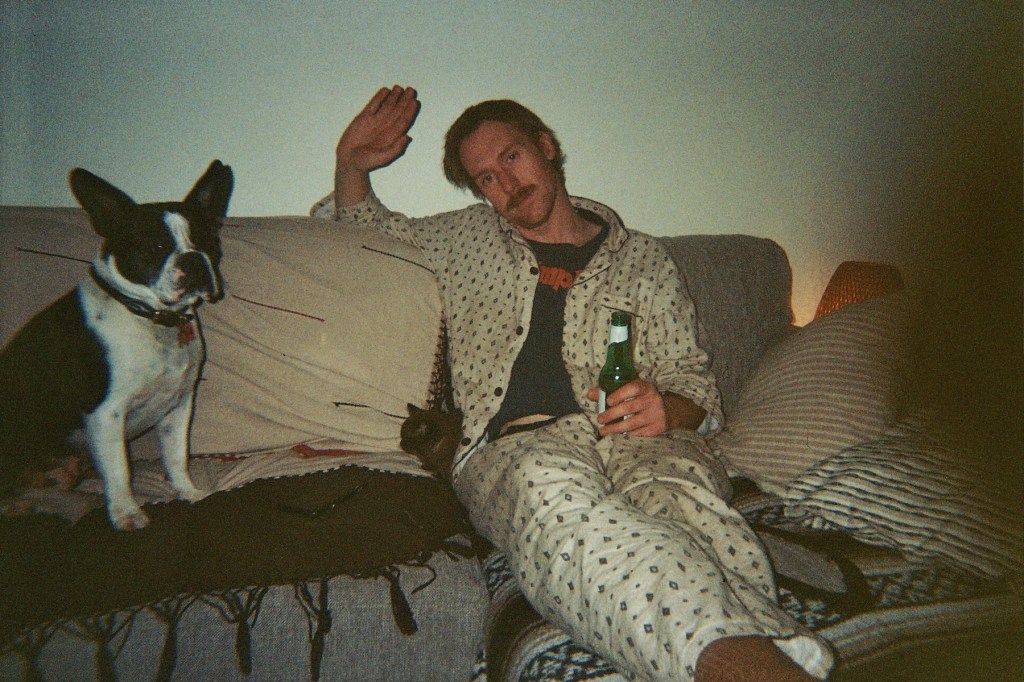
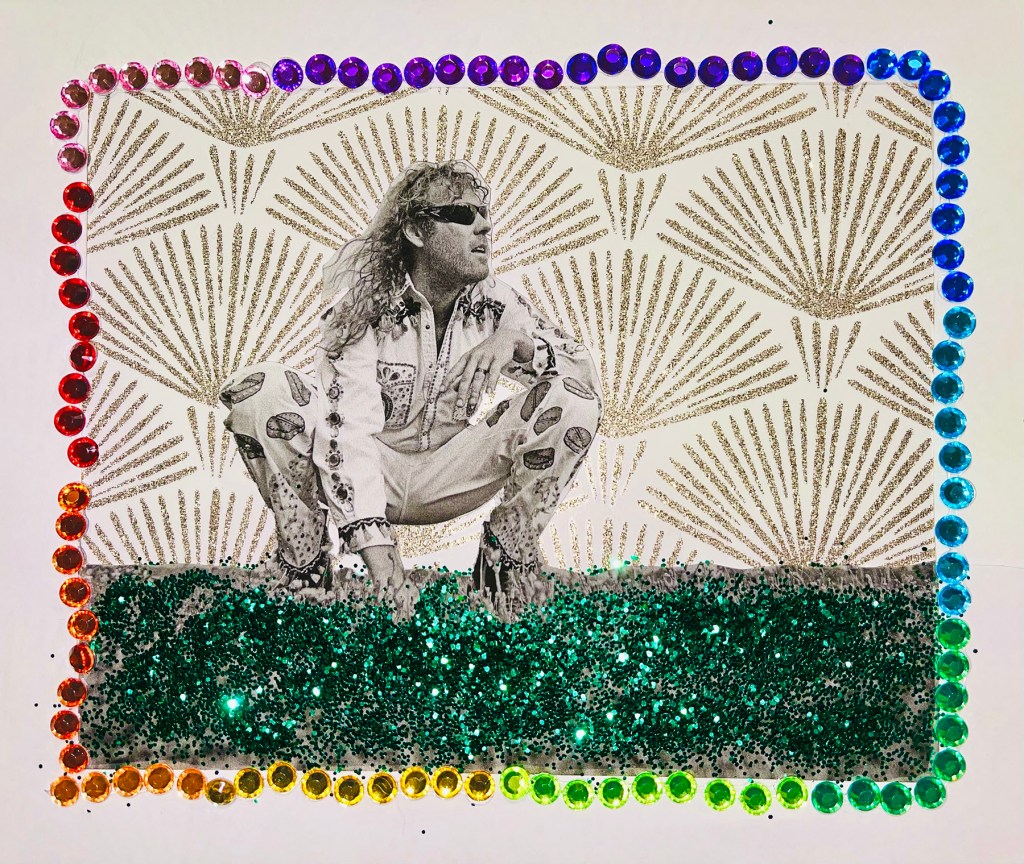
Naarm Punks SHOVE: “Record and release things sooner… don’t just sit on material or ideas for years then get depressed that no-one has heard your stuff”

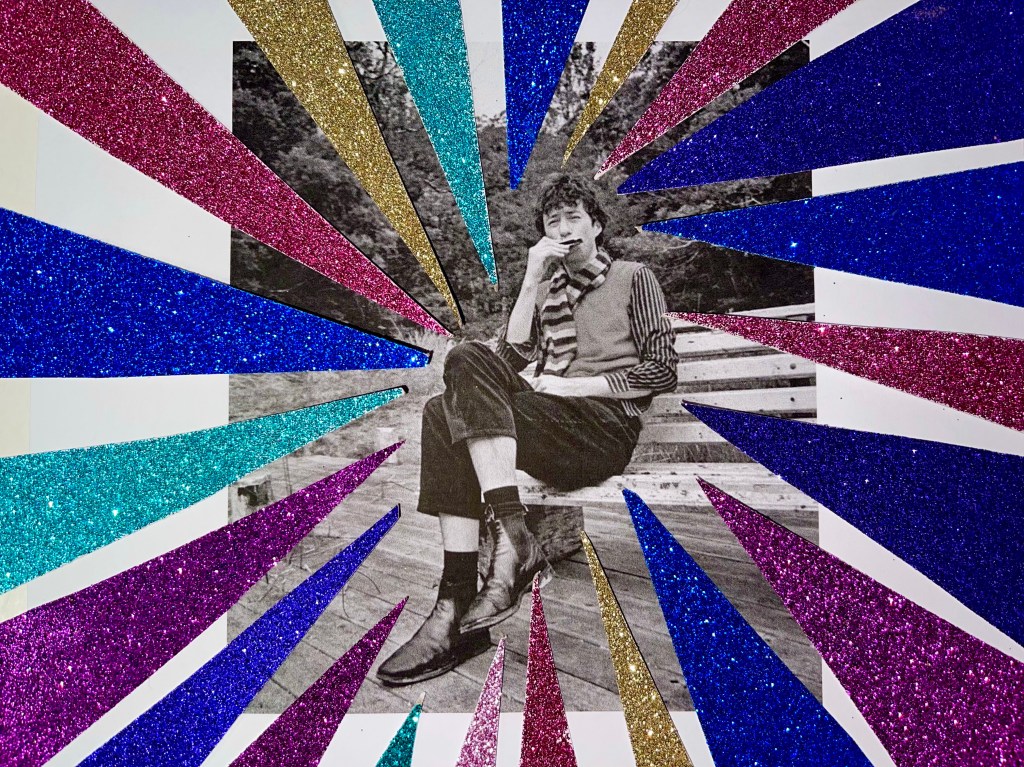
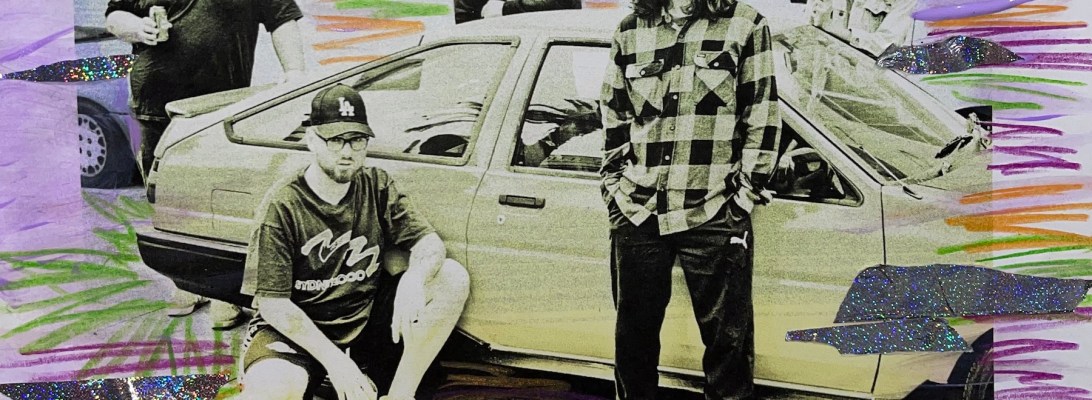
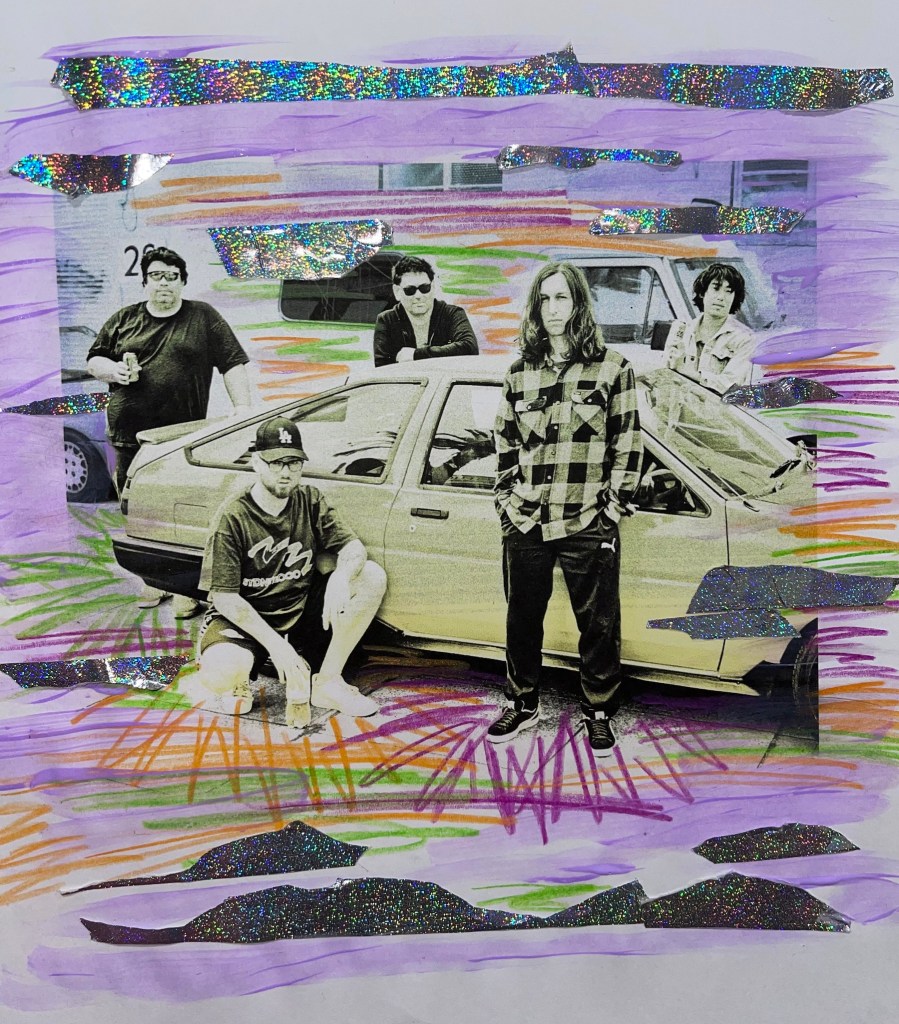
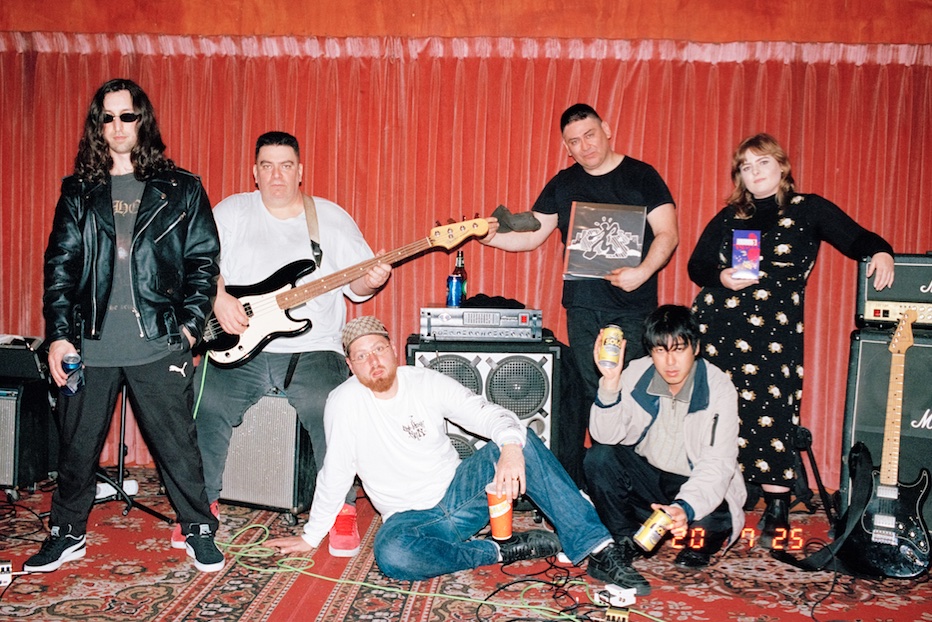
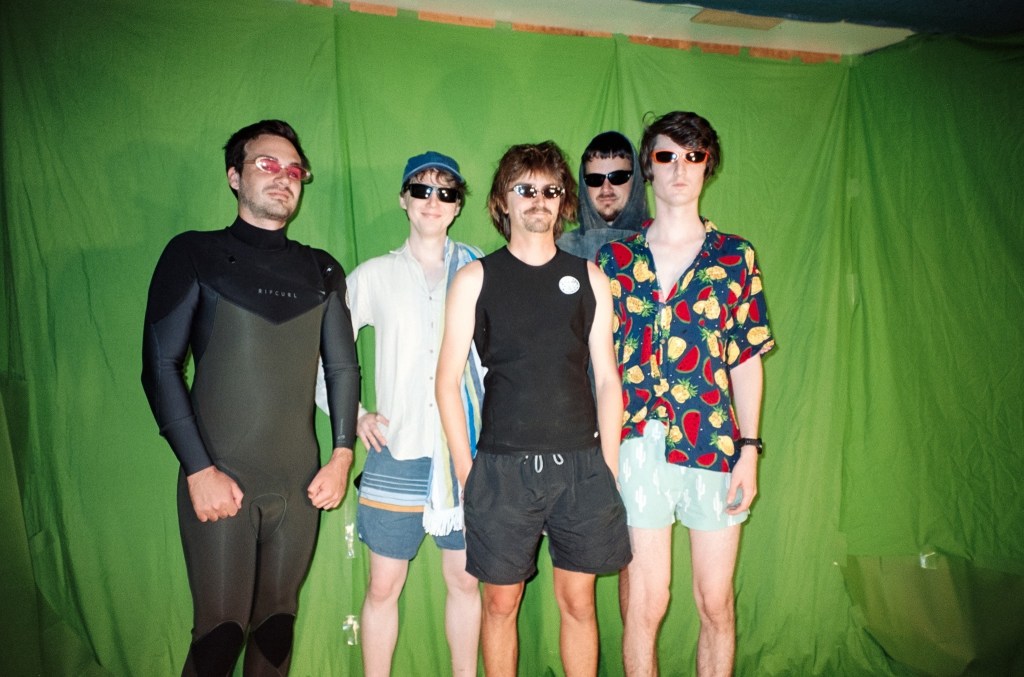
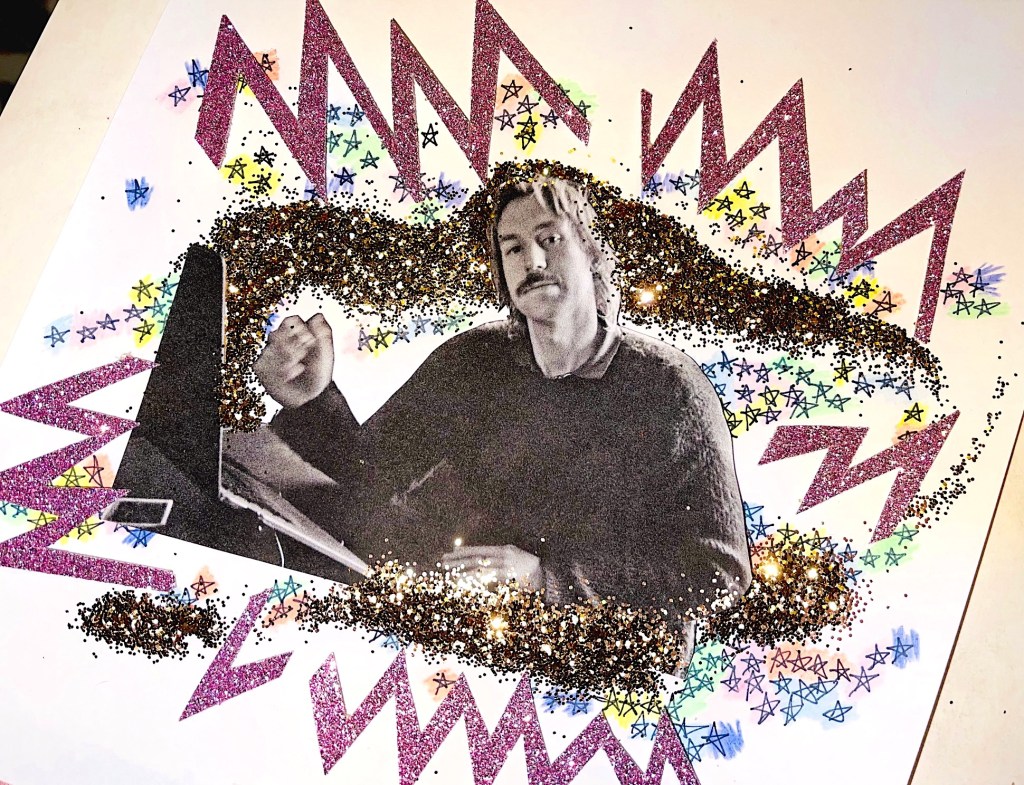
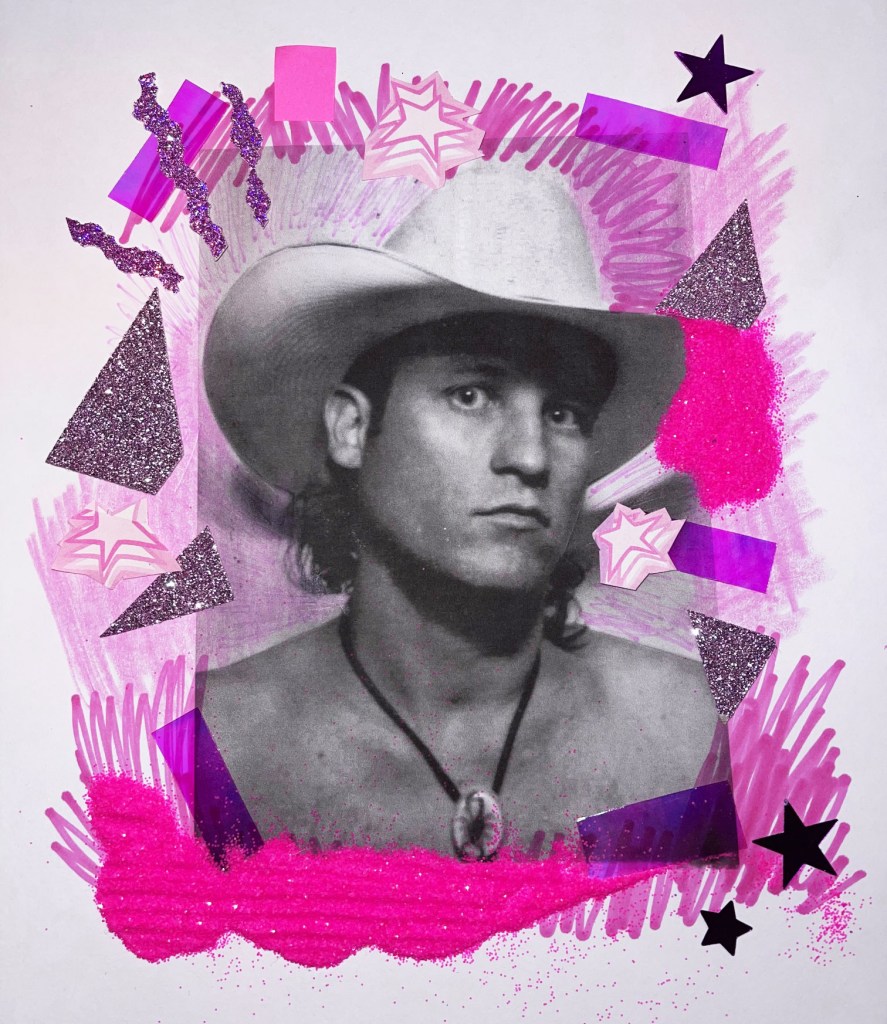
Photo by Dylan Jardine. Handmade collage by B.

With raw expression and attitude Naarm/Melbourne punk band SHOVE are about to drop their debut EP 7” on the world. Maq of The Faculty gave us a heads up on them last year singing their praises: “I’m gagged for that new band Shove I think they are formidable.” Indeed, they are; they’re here to obliterate us. SHOVE’s Ham, James and Bella tell us about the release.

How did you first get into punk?

HAM: I grew up in a small-ish town in regional NSW (the country music capital!), and was a snotty teenager who was pretty pissed off. Having some sort of outsider complex coupled with access to the internet meant I ended up listening to bands like Rudimentary Peni and The Locust. All the dudes I used to hang out with back then were more into metal, which I thought was too slow “where’s the speeeeed man!” (Although now in my older age I have more appreciation for it).

JAMES: I wasn’t really into punk when I was younger.  Then about a decade ago I saw this band called Battle Club. Their shows were so dirty, and intense, I just wanted to be around that all the time. And now finally I have fulfilled my destiny, as Hamish (the bass player from Battle Club) plays drums in SHOVE!

What’s one of your all-time favourite albums and what do you appreciate about it?

HAM: Ooof, hard question – there are too many to count. Although it’s not an album, I’d have to go with The Shitlickers self-titled EP. I mean, it’s 8 songs so it nearly counts as an album. The whole thing is so sonically extreme and ridiculous it’s hard not to chuckle when listening to it. The riffs are absolutely shredded and the drums are simple but absolutely brutal and full of frothy spit and energy. Rumour has it that to get a sound that fried, they resorted to stabbing their amp speaker cones with needles. On top of this churning mess, the lyrical content is full of far-left despair and the sentiment of capitalism being shiiit, which is something I think most people can get behind in 2021.

How did you discover your local music community?

HAM: When I moved to Naarm I ended up living in sharehouses with people who played in the local music scene. It kind of snow-balled from there, where the majority of my friends and everyone I hang out with either plays in bands or I regularly hang out with them at gigs. I was always pretty into music zines when I could find them too so it was a pretty natural progression from reading them to wanting to get more involved.

Bella, I know this is your first band, and that you’ve “spent too much time on the other end of the industry to know how corrupt and generally useless it is”; can you share with us a little bit about your experience with the industry?

BELLA: As far as cliches go, the one about big egos in the music industry isn’t an unfounded one. Local community stuff is great but once you move into a national stage things become more about how much money you can make off some group of young white cis males from Byron who are probably writing some catchy form of indie pop that’ll take them to the top of a meaningless annual countdown, help them sell out a few shows and the next year never be heard of again. Not to mention the high levels of patriarchal sexism, misogyny and multitude of other -isms that are prevalent the whole way throughout.

SHOVE’s been around since 2019, but members of SHOVE are from bands Shit Sex, Eat-Man and Burger Chef, collectively you’ve been involved in music for a while now; what’s something that you’ve learned doing what you do that you wish someone would have told you earlier on that would have made things a little easier for you?

HAM: Most of the learnings I would tell my younger self are still things that I’m still not good at today, and still trying to improve. Things like ‘Get better at relaxing and talking to people you don’t know so well’. Or ‘Record and release things sooner and then move on, don’t just sit on material or ideas for years then get depressed that no-one has seen/heard your stuff’.

What brought SHOVE together?

BELLA: Well, the boys were already jamming and I was working in an ice cream shop when I realised that punk rock was my true calling

You’re first show was Best Fest 3 back in 2019; what are your recollections from the show?

HAM: I was at this show as a punter. I remember seeing Shove playing and thinking “How the fuck is this Bella’s first gig!? She’s so good!”

You’re releasing your debut self-titled EP 7 inch, which you recorded with Alicia Saye. What was the recording process like for you? (I know your earlier single releases were recorded separately in your own homes). What did you love most about the process?

JAMES: I’ve had the good fortune of having Alicia as our sound engineer at a bunch of shows in a few bands over the years. You always know you’re in good hands when she’s behind the desk. So, we were stoked when Alicia said she’d record us, we knew the technical side of things was covered. What I loved the most about the process was probably getting to hang out with that legend for a couple days, she tells ripper stories. Definitely spent more time eating chips and talking shit than we did making music, which keeps everything feeling chill when you do go to record.

HAM: Yeah, Alicia is a complete gun. We recorded It over a weekend. It was really nice having someone pulling the levers who knows what ball-park you’re aiming for and who can also set you back on track when you’re off your game and losing your shit a bit.

What’s your approach to songwriting?

JAMES: We’ve gotta keep it simple. One of us usually has a sound that’s been stuck in their head for a week, the other instruments join in, and Bella tells us if it’s a number-one hit. Bella will do her self-proclaimed muppet singing along with it, but then she takes the phone recording home and does the lyric writing in bed with an ice cream.

HAM: What James said. It has always been pretty collaborative. Generally, someone will have a riff and we build from there. Everything is up for discussion and no idea too stupid to try, but also nothing is too precious for the bin if it doesn’t work. Thankfully we all tend to be on the same or at least very similar pages when songwriting so it’s fun.

The song ‘Power’ from your EP also features on the Blow Blood Record compilation A Long Time Alone 3 (you had a track ‘Non-essential Citizen’ on the ALTA 1 comp too); what sparked it’s writing?

HAM: Someone brought in a riff which sounded really good when paired with a d-beat underneath it. When Bella added some vocals, we got really excited because it brought it all together and added the necessary punch.  

We really love the song ‘Control’; how did it come together?

JAMES: I started this one off. I again forgot that I was playing a bass guitar and just starting frantically trem picking. It doesn’t help that I learned guitar from playing Guitar Hero… But the others were supportive as always, and ran with it. I think a defining feature a good band, of bands that’ve worked well for me, is that when you’re in a room and you play something that sounds a bit rough, a bit stupid, everyone just stands back and goes “hmm, maybe that could work” instead of dismissing it.

What made you decide to close the EP with song ‘Maggot’? How much thought goes into your track sequencing?

HAM: A reasonable amount of thought goes into the track sequencing but the final decision mainly comes down to gut feeling. Adrian suggested several different track sequences based off a few different paths the EP would take the listener on. The ultimate decision always seems to come down to if it does ‘the thing’ for your reptile brain.  

What do you get up to when not making music?

HAM: Mainly trying to make weird little animations, and I’ve recently been trying to learn how to make my own fucked up ‘walking simulator’ video game.

What’s making you happy right now?

JAMES: Without a doubt, it’s that we have the amazing support of our new label Rack Off! We seriously feel like the luckiest band in the world. At this level, I don’t expect to get more than a logo and few records on shelves, but Grace and Iso have done so much for us. It’d be a bloody shambles if we attempted to do a tenth of what they have done for the band. And well, we were already stoked to be playing shows and hanging out with our fave bands Blonde Revolver and Future Suck, so being label mates is a dream. Can’t wait to get out soon and play more shows together, and get this EP into some more ear holes.

HAM: Not too much at the moment haha. Lately I’ve been really enjoying having hot baths while listening to some dub or reggae and smoking a big joint. It’s the simple things. But also, what James said! RACK OFF RULE!

SHOVE’s self-titled EP 7” is out tomorrow (Oct 15) on Rack Off Records, a label that focuses on female-identifying and gender diverse releases.

Please check out: shovemc.bandcamp.com

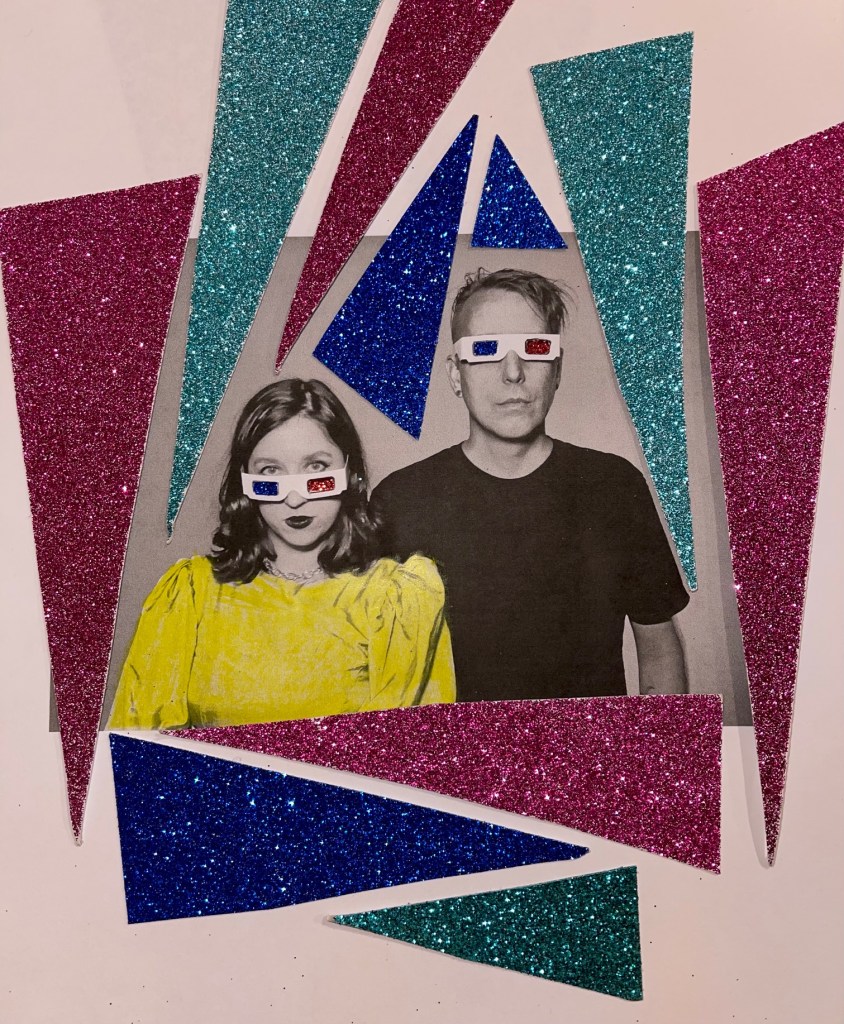
Jalang vocalist Alda on ‘Santau 65’: A story that my mom told me when my activity was mainly focused within the anarchist AND communist community I was involved in back in West Java”

Original photo: Nicole Reed. Handmade mixed-media collage by B.

Naarm/so-called-Melbourne D-beat punk band Jalang are an important band to us here at Gimmie. We believe they’ve released one of the most exciting Australian hardcore releases of this year with album, Santau. It’s charged by a sense of revolutionary urgency. Lyrically exploring themes of politics, religion, feminism and queer rights in South East Asia and beyond. Vocalist Alda delivers authoritative vocals in Bahasa Indonesia and English, engaging with both her own and collective narratives, giving the songs real substance and authenticity—the record is deep. Bandmates Timmy (Extinct Exist, Pisschrist, Schifosi) on guitar, Tessa (Ubik, Masses) on bass and Kyle (Sheer Mag) on drums, work in unison to pummel the listener, charging straight ahead with tight compositions, maximising their art’s impact and given us danceable thrash.

Today we’re premiering Jalang’s full video for song ‘Santau 65’. Alda also gives us a insight into the song’s story, exploring genocide in Indonesia. An eye-opening read.

‘Santau 65’ was inspired by the 1965 Massacres perpetrated by the Suharto regime in Indonesia, where millions across Indonesia were persecuted and murdered for being communists, sympathisers or anyone suspected of; why was it important for you to write this song?

ALDA: It was a story that my mom told me in my early 20s, it was at the time when my activity was mainly focused within the anarchist & communist community that I was involved in back in Bandung, West Java. A big part of the communist/lefty bookstore that we always held our gathering was to counter the propaganda spread by Suharto’s regime, which is still heavily present in Indonesia’s society. At that time, “The Act of Killing”; a documentary on the subject was just released. It was a big deal for us, we were absolutely thrilled that it is finally out — a documentary made in over 8 years, following the perspective of one of the perpetrators of the 1965 Massacre where he bragged comfortably about all the killings etc he’s done, because he truly believed the film was about him being a hero. The fact that the director is Joshua Oppenheimer, who also works in Hollywood projects probably gave him that weird confidence. It’s a good documentary work on this subject, psychologically very interesting to see how these perpetrators justify the murders they have done in their own head. Outside of that, this is also a massively important documentary because it exposed the horrific crime perpetrated by Suharto regime even further. I was visiting my mom later after the release, and she tried to pick a movie from my laptop for us to watch together that night. She asked me what The Act of Killing was, and I said it’s a cool documentary exposing The Communist Purge by Suharto’s regime. When she realized that the film was not on the military regime’s side, she suddenly showed this horrified look that I’ve never seen before. She said I shouldn’t be touching this subject at all because I absolutely don’t know what I was talking about, the communist is evil etc (this is the belief of most Indonesian still). I asked why she thinks so, I’m trying to understand her perspective. She started shaking and crying, telling me that The Communist killed her friends and neighbours. I asked carefully, what do you mean, how… She said one day when she was 6 years old, on a late afternoon in the village that she grew up in East Java… she saw a bunch of women dancing joyfully, like they were celebrating something. Keen to join the festive mood, her and her brother dancing along. Come night-time, the whole neighbourhood was filled with noise and muffled sounds. Her parents didn’t allow her to leave her room, telling them to stay quiet and go to sleep. The next morning, she walked with her friends to a river near their house. and saw a big pile of dead bodies clogging the river. The river water was red with blood. They got close and saw a lot of their neighbours and friends on the pile. She told me this in such a tearful terror that I dare not interrupt her story at all. Her friend accidentally falls and poke his eye on one of the corpse’s stiff fingers. He’s permanently blinded ever since. She told me, The Communist kill my people, The Communist blinded my best friend, The Communist are evil. I asked, did they do the killing, mom? She said, no, it was the military, but if The Communist is not in the village, the military would have never done that!! The neighbours wouldn’t point fingers at each other in the panic that happened! She said she felt horribly guilty as if she was also responsible for it — because she danced with those women the day before. She was convinced that they must be part of Gerwani (left wing feminists); celebrating the killing of the military generals (these killings by military generals was the main justification for this purge, despite later discovered that it was also done by Suharto’s cronies). Obviously, that logic is very strange. My mom, despite being heavily religious person, is usually a very logical person. This was very out of character for her. But I thought it was obviously her PTSD. I decided not to debate her and just hugged her instead, as obviously this is a very sensitive subject. This is just one amongst millions of repressed witness story, and it shows how strong the brainwashing done by Suharto’s military regime in the 32 years of their ruling. The impact of this propaganda and the massacre is still heavily influencing Indonesian people’s psyche till this day. I believe it’s important to keep on exposing these stories to combat the unjustified right-wing propaganda, despite this moment happened 56 years ago.

Was it hard to write the lyrics given the heavy nature of, and personal connection, to the song’s themes?

ALDA: I am not a naturally gifted musician/lyricist, ha-ha. So, I had my challenges, and it took me quite a while. But I was lucky to have such patient and supportive bandmates and close friends, so eventually I managed to find a way to express this story via the song. Other than the intention to add to the witness stories battling Suharto’s military regime’s propaganda. I’m trying to express the pain that this moment has inflicted on my generation and the generations before us. The intergenerational trauma that this power play of military dictatorship comes to rise, and the realization that this event is backed by rich countries such as America because it fits their Cold War & economical interest… at the cost of over 3 million victims, and the rest of permanently traumatized Indonesian people. The realization that our country is not the only one that they have done such horrific works on.

Musically, how did the song come together? What does ‘Santau’ mean?

ALDA: Santau means deadly poison/curse. ‘Santau 65’ was about the poison of the 1965 Massacre, that has seeped into our soil and our psyche. I pictured in my mind, just like how the blood red river runs in my mother’s memory… soaked into our land and our people and poisoned us ever since.

We’re premiering the clip for ‘Santau 65’ today. Footage for it was shot by your friend Jovian Fraaije in Java; can you give us a little insight into the making of the clip and working with Jovian? Did you develop the video’s concept together?

ALDA: We told Jovi the story and context, and he comes up with the first idea — then we developed it together from then on. The live footage was from our shows in the small break of lockdowns; one at The Curtin with incredible help from Flash Forward team, and the other one is from our first show of our tour at Pony Club Gym, a queer gym in Preston close to our heart. The tour got cancelled because of Melbourne’s lockdown, but we were lucky that we managed to get any live footage at all. It was difficult for Jovi to arrange the shooting of the video — given that Indonesia was at the height of the pandemic, and Jakarta was on and off closed by lockdown. The location that we originally planned was a river near a forest, but the whole area was then closed because of the lockdown. This location managed to replace it, as there were not many choices. and even then, apparently it was guarded by local paramilitary that mugged them as well. We are glad that Jovi’s team was not harmed and with the help that we got from Flash Forward to make this video — we were able to cover the money that those paramilitaries asked from Jovi’s team so that they got “permission” to be able to do the shooting. This kind of situation is common in Indonesia btw, so there was not much surprise about it… especially considering the general poverty in this pandemic time.

The colour red appears throughout this release’s art, used on the album cover and in the film clip; was it a conscious choice? What does it signify to you?

ALDA: It was my visualization of how much blood of over 3 million Indonesian people shed in September 1965. This was personally why the cover artwork was important for me, as that is the image haunting my mind about this tragedy. Well, as much as my limited painting skill allows me to express, that is. It’s an ocean of blood, filled with poison and pain… The memories are dark, in a way that throws people into heart wrenching downward spiral in their traumatic recollection. Which was the often, transformed into hate. Strong and violent hate, which is unfortunately aimed towards the victim’s families and relatives… As a lot of them are still discriminated by the Anti-Communist masses, even till today.

How did you feel watching the clip back for the first time?

ALDA: If only both Jakarta and Melbourne weren’t in a lockdown in the middle of a pandemic, I think we can do better. But considering the situation that we are in; I think this video express enough of things that we would like to share. The footage by the end of the video is actual footage from 1965 Massacre. Hopefully that can help to visualize the situation that our people were in. The night raids by the military, banging on people’s doors… rounding them up to be killed. Houses were raided and burned down, chaos ensued, fear permeates the air intensely. The dancer is meant to represent the women dancing in my mother’s memory. Which made me think how unfair Gerwani has been portrayed and treated. But I guess that’s another story…

Can you please tell us about another song on your new record that you’d like to share with us?

ALDA: ‘Cops N Klan’ was mainly triggered by police violence all over the world, which saturated our news intensely in 2020. In general, the album’s lyrics are inspired by various crazy things and phenomenon’s that happens since 2020. Obviously, police brutality has been going on since the very beginning of their formation. We live in such a strange time. Camera phone allows citizen journalism to report their surroundings towards their viewers. We saw this brutal violence done by the police towards the people everywhere via our phones. From the consistent police brutality and Indigenous deaths in custody in so-called Australia to the biggest national riot that Indonesia have ever seen since ’98 (the overthrowing of Suharto’s dictatorship) — we see tanks rolled out on unarmed protesters. Police beating up people brutally, regardless of how vulnerable they are and how harmless the things they were doing. Shots fired at peaceful protesters. The intense racism of the police and their obvious alliance with white supremacist in countries run by white colonizers. The sample that we used in “Lawan dan Hancurkan” and the intro of ‘Cops N Klan’ are audio archives done by our brave friend Rama Putra Tantra — who relentlessly collect sonic archives of the protests that he attended in 2020, while dodging the bullets fired by the cops, avoiding the fire from burning cars, and running away from the weaponized paramilitary. The sound of the people rejecting the rising Oligarchy in Indonesia, and the passing of Omnibus Law; and their chants saying “Polisi Anjing” (literal translation; police are dogs — our equivalent of saying “Fuck the Police”). We were very lucky to be able to use this audio sample, and hopefully it can help the listeners to visualize the moments and the atmosphere of the situation.

For more Jalang check out our 7-page in-depth feature interview with Alda and Tessa exploring their new album Santau in our latest print issue: GET IT HERE.

We also interviewed them in their previous incarnation as Lái – Alda: “It is very important for women living and growing in misogynistic cultures to take these shitty narratives back, to reclaim their own stories and destroy toxic ones” READ more HERE.

Please check out: jalang.bandcamp.com.au and @jalang_dbeat

Alien Nosejob’s Jake Robertson on new record, Paint It Clear: “Hopefully it will mean something to somebody.”

Original pic by Carolyn Hawkins. Handmade mixed-media collage by B.

One of our favourite creators, Jake Robertson (you might know him from Ausmuteants, Hierophants, School Damage, Swab, Drug Sweat, SMARTS and more) is back with a new album for his solo alter-ego project Alien Nosejob. Paint It Clear is ANJ’s fourth full-length. 11 brilliant tracks mixing post-punk with 80’s new wave and even a little disco. Recorded by Mikey Young, the record has ANJ sounding more dynamic and brighter than ever. Gimmie loves Jake’s quirky, humorous and wry observational lyrics and skilful songcraft. We’re excited to share with you, the first track released from the ANJ camp in thirteen months ‘Leather Gunn’ along with our chat with Jake, a sneak peek insight into the forthcoming album.

JAKE ROBERTSON: I’ve been working a lot, it’s taken a toll, I’m basically always tired. I still have a job, which half of my friends don’t since Covid, so I’m pretty lucky in that respect. It’s hard to come home and be motivated to do anything.

When we spoke the other day, you mentioned that you’ve been having a little bit of a break creatively, and that you’ve spent most of your spare time just chilling watching TV and reading.

JR: Yeah. I’ve been reading a bunch, and watching heaps of TV. Kerry my housemate, when he moved in, he brought a giant TV with him; we’ve been going to town on it. It’s the first time that I’ve had a television in ten years—I’m lovin’ it! [laughs]. It’s so good. I’m still writing heaps; I’m constantly writing in-between watching The Righteous Gemstones or whatever.

I feel like maybe a year ago, when I was working a little bit less, I’d finish work, come home and do music for a bit, then go see some mates. Since lockdown has happened, I can’t really see friends, and sometimes can’t be bothered doing music. It’s weird, like I’ve kind of got extra time, but I don’t [laughs].

I feel like you’ve been pretty prolific and released a lot over the last few years though.

JR: Yeah, I have. But everything I’ve released, even the album you’re interviewing me about, most of that was written a while ago. I probably would have recorded it around the time the last Gimmie interview happened.

Yeah, it was around November 2020.

JR: Yeah, that was when I recorded it, but some of the songs were written around 2015, at least the embryonic versions. I’ve just touched them up a little bit.

Having a bunch of songs you’ve written over a long period of time, how did you decide which ones to use for this record Paint It Clear?

JR: The majority of the stuff that I do under the Alien Nosejob name was written with other bands in mind. One or two of them were potentially going to be an Ausmuteants song back in the day. One of them was going to be a Leather Towel song. I have a little log of all my half-finished demos that is written up and pasted on my wall. Every now and then I’ll listen back to something and go, yeah, I could do something with this.

It’s interesting that you said a few of the songs were written with other projects in mind, I had wonder that, because I got that feeling from listening to the album. Jhonny and I were talking about how it doesn’t have one particular sound like other Nosejob releases. I commented that tracks sounded like a Ausmuteants track or even Hierophants or even reminded me of the Nosejob Italo-disco album. The album feels a little like an amalgamation of all the stuff you’ve done.

JR: Yeah, kind of. When I was putting it together, I was trying to be conscious of not making it sound like it’s being too influenced by something else, even though there’s definitely a couple of songs where I’m like, ‘Oh, I was listening to a lot of The Cure’ [laughs]. I haven’t listened to it since I got the test pressing in February. It’s like The Cure with a crappy singer, not Robbie Smith [laughs]. Those two songs are ‘Clear As Paint’ and ‘Duplicating Satan’, which is the Italo-disco-sounding one you were talking about; I remember trying to make it sound like ‘The Walk’ by The Cure, one of their singles from 1983-ish. Hopefully it doesn’t actually sound like it, but I was definitely going for it.

I can totally hear the in there. What can you tell us about the album’s title Paint It Clear?

JR: [Laughs] I literally just jumbled the words of the song ‘Clear As Paint’ around. That song and the title, it was an amateur attempt of a contranym, like painting something clear. If you painted something clear it could be see-through, like glass.

Nice. You mentioned you’ve been watching a lot of TV and films. I love movies, I have since I was a kid. I’d go to the video shop with my mum and we’d get out twenty VHS is $20 for the week. What have you been watching?

JR: We had a very similar upbringing, Bianca. We’d get seven weeklies for $7; you’d pick them up on a Thursday, spend the week watching them and then pick up another seven when you brought those back the following week. I did that from when I was about eight until I was eighteen. It would be a weird week if I didn’t get out at least three videos.

Rad! Whenever I look at those 1001 movies you have to see before you die or 100 best movies of the 80’s and 90’s lists, I’ve seen most of them except for a small handful of titles.

JR: In that 1001 movie list there’s probably another 800 I’d need to see! [laughs]. I’d watch and lot but also rewatch a lot.

Pic by Carolyn Hawkins.

What are some of your favourite movies?

JR: One of my favourite movies lately, because I’ve just rewatched it is, Blue Murder, the mini-series. I created a Letterboxd account the other day, so I was actually thinking about this. I really like the movie The Vanishing, it’s a Dutch one. It’s good if you’re a fan of eerie-ish horror movies. It’s so good. Not the remake with Kiefer Sutherland, but the original. I watched Blood Simple with my housemate, it was awesome, I’ve never seen it before. Movies! Woo! [laughs]. I love Mean Girls and stuff like that as well.

We were talking about comic books before too; I was a really big fan of Ghost World growing up and still am now.

I love ­Ghost World too, and the Mean Girls movie is a classic!

JR: You have to mix up the arty ones with the blockbusters.

For sure. I can’t watch too much of anything at once, mixing things up is essential. For example, if I’ve watched a run of horror movies or true crime, I have to watch something nice and fun and not dark and brutal.

JR: Yeah, it’s time for a Pixar movie! [laughs]. Pixar know how to rip your heart out more than anything else. I feel like the only time that I shed a tear is when I’m watching a Pixar movie [laughs]. The last time I got on a plane, which seems like a long time ago now, I thought it would be a good time to watch the Pixar movie Up. I feel very sorry for the person that was sitting next to me because I was crying, slobbering all over them [laughs].

Awww [laughter]. So, the first single for your album will be ‘Leather Gunn’…

JR: Yeah, it is. When Billy [Anti Fade], Sam [Feel It Records] and I were thinking of what the first single off the album should be, we were like, we’ll each say our top three. That wasn’t in mine, but they both had it in theirs, they have the outsider perspective. To me, all of the songs, I just shit them out and I’m done with it [laughs], I don’t think about them anymore. They both had that song first, so I was like, ok, let’s do that one first.

What was happening when you wrote it?

JR: John Douglas who plays in Leather Towel with me, he was moving back to Australia from New Zealand and we were talking about doing a new Leather Towel album. I was trying to come up with something that sounded different to the first album; that was the only song that I wrote for it. We played two or three gigs, then Covid happened and he went back to New Zealand. We didn’t even get to try that song as a band. It seemed at the point where it probably wouldn’t happened, so I made it a Nosejob song. I kept the ‘Leather’ in there as a nod to that, and the ‘Gunn’ was because the original demo of it, the guitar was single note surfy, like a Peter Gunn da na da na da na na na. Lyrically, it’s about people not doing what they’re told no matter how minuscule and pointless or petty the thing they’re not doing is.

What are the songs the you really love on the album?

JR: I really like ‘Duplicating Satan’.

Was that one of the songs on you top three list?

JR: My list was ‘Duplicating Satan’ and ‘King’s Gambit’ (which will be the second one released, I wrote it in 2015 but never put lyrics to it) that was probably my best written song on the album, it took me ages to write it. The other song is the last one ‘Bite My Tongue’. I get why that wouldn’t be a not-released-before-the-album-comes-out one. That’s another one that took me ages to write. It took me ages to learn how to play it too. ‘Bite My Tongue’ and a few songs that I have, are about… you know when you have a thought or a way of feeling about a certain situation but you can’t find the words to get it out. It’s almost like a block and you just can’t say your mind. It’s a feeling I have sometimes, I can’t even tell myself what it is. Basically, it’s about a mental block and not being able to get your words out properly.

I get that, it makes sense.

JR: Kind of, I think I was trying to make sense of it in the song. Hopefully it will mean something to somebody.

I really love the song ‘Jetlagging’ on the album.

JR: That one was originally written with Ausmuteants in mind, I wrote the lyrics on an Ausmuteants tour, travelling 400kms a day and just eating the same meal over and over again. It’s a very my-first-tour, Tours’R’Us or Tours For Dummies lyrics! [laughs]. I really love that song too.

Also, I love ‘The Butcher’ which is before ‘Jetlagging’ in the album sequencing.

JR: A couple of years ago, I was getting obsessed with Terry Hall and Fun Boy Three. I was trying to write something a little bit from that camp, and The Zombies’ song called ‘The Butcher’ as well; it was definitely an influence on it, but I didn’t mean to call it the same song [laughs]… I’m kind of noticing that now.

I got Mikey [Young] to record the drums; he recorded the drums, bass and guitar for the album. Except for ‘Duplicating Satan’ which I recorded at home, and ‘The Butcher’. I couldn’t work out what I had played in the demo, I had to drag the demo out and stretch it over the drums that I played. I don’t think anyone else will notice this, but if you listen closely the drums and the rest of the music keeps on going out of time because of that. I tried to relearn how to play it, but after a while I was like, I can’t be bothered! [laughs].

Is it weird sometimes listening back to your songs and being able to remember what was happening in your life or what you were doing at the time of writing or recording it? Kind of like having a sonic diary.

JR: Yeah, it is. I might think something is not about something, but it will be. I’ll generally listen to an album that I’ve done when I get it on record, and that’s it. I actually listened to an Ausmuteants album, Amusements, the other day, it was the first time since we recorded it. It was a nice feeling; I definitely like it more than I thought I would. It was good to have an eight-year distance of not hearing it, it was recorded in 2012 or 2013. I won’t rush to listen to it again [laughs], but I didn’t hate it as much as I thought I did.

Album art by Nicky Minus.

Who did the album art for Paint It Clear?

JR: How good is it?!

Really, really good! That’s why I was asking, it’s very cool.

JR: It was done by Nicky Minus. They grew up in Hornsby in New South Wales, but they’re living in Melbourne now, and does a lot of work for the Worker’s Art Collective doing a lot of work for Union. I got onto them by following Sam Wallman who is a comic book artist/cartoonist.

Is that the same Sam who has done artwork for you before?

JR: Yeah, he did the first Ausmuteants 7 inch in 2010. I’ve been following his stuff before then, he’s besties with Nicky, I saw their stuff through that and was blown away by it. I just bought some of their art for my wall, and because I look at it every day, I was like, it could suit this album. They were into it, they wanted to make something from scratch. I’m glad they did and am super happy with the way it turned out.

What else have you been up to of late?

JR: I’ve been doing some home-recording with Vio [Violetta DelConte Race] from Primo! I’ve loved her songwriting for ages, she has a good idea of space, if it doesn’t need to be played, she won’t; the way I play is the opposite of that [laughs]. It’s kind of inspired by Michael Rother, and sounds basically like School Damage and Primo! If I could sound half as good as Primo! I’d be happy. It’s called Modal Melodies. The only rule of the project is that we’re not allowed to play live, it’s just a recording thing.

Cool! I can’t wait to hear that. I love Primo! too. They’re all such incredible songwriters.

JR: There’s a new Swab album around the corner too coming out on the label Hardcore Victim in around January or February. And, I’m playing drums on the new Ill Globo album!

Alien Nosejob’s Paint It Clear is out November 12. Pre-order now: Anti Fade (AUS) and Feel It Records (USA).

Anti Fade are also offering a bundle deal, including Paint It Clear on vinyl, the last record Once Again The Present Becomes The Past on cassette and a t-shirt and a ANJ shirt! Get it HERE.

Read another Gimmie interview with Jake: Alien Nosejob: “I wanted to make it sound like a mixtape that you’d give to your friends”

Please check out: aliennosejob.bandcamp.com

gimmie zine issue 4

It’s here! Our biggest Gimmie yet! Issue 4. Two covers to choose from!

We chat in-depth with Tessa & Alda from D-beat band Jalang! They’ve released Australia’s best hardcore record this year. We explore the album themes: politics, religion, feminism and queer rights in South East Asia and beyond. A really important chat.

Gareth Liddiard from Tropical Fuck Storm speaks about new album ‘Deep States’, songwriting, creativity, fanboying and collecting weird shit.

R.M.F.C.’s Buz Clatworthy talks, a new album in the works, lockdown being a creativity dampener, finding inspiration in films and friends.

We yarn with Emma Donovan and The Putbacks. New record ‘Under These Streets’ draws on soul, R&B, funk and the protest music of Indigenous Australia—a dynamic portrait of Blak pain and joy in all its complexities.

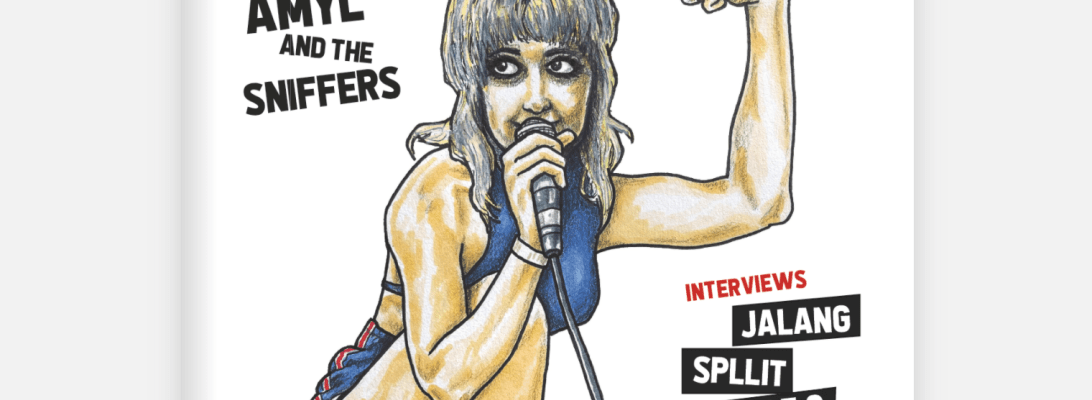
Amyl and the Sniffers’ Amy Taylor and Bryce Wilson check-in to tell us about their new album’s journey, experiencing depression, keeping busy and the power of music.

French duo Heimat play off-kilter experimental-pop with folklore influence, cinematic-like soundscapes, and vocals in multiple languages. A chat on experimentation.

Old Home vocalist Dylan Sparks gives us a peek into their visceral performance poetry coupled with spontaneous musical composition.

We speak with Louisiana band Spllit just days after a hurricane hit their area. We adore their lo-fi weirdness. Next level music.

70’s acid-folk legend Howard Eynon has had a storied life: appearing in films including Mad Max, supporting Hunter S Thompson’s tour; performing in theatre. Recently, he’s been working on music with Zak Olsen. A brilliant chat.

Julian Teakle of The Native Cats and Rough Skies Records selects some of his favourite tracks for us.

52 pages. A4 size. Limited Edition. 

Get it: gimmiezine.bandcamp.com

U.S.A. pressing coming via totalpunkrecords.com

DR SURE’S UNUSUAL PRACTICE’s dougal shaw: “Being human is a lot to fucking handle”

Original Photo: Cielo Croci. Handmade mixed-media by B.

Dr Sure’s Unusual Practice are Gimmie favs (they were one of the first bands we chatted with when we started Gimmie). We’re thrilled to announce the new wave art-punks’ forthcoming full-length album Remember The Future?, which will be out on Marthouse and Erste Theke Tonträger, as well as premiering the entertaining video for song ‘Infinite Growth’. We love their blend of clever social commentary and politics with catchy well-written compositions and fun visuals. Gimmie spoke with guitarist-vocalist Dougal Shaw to find out more.

How have you been feeling? I know a lot has happened this past week in Naarm/so-called Melbourne with lockdowns still in place, protests and an earthquake!

DOUGAL SHAW: I’m actually surprisingly pretty good at the moment. The pendulum has swung back around to the positive end [laughs]. It’s been swinging back and forth pretty consistently. Today I’m feeling good. Yesterday I had one of those days where I was just, what’s the point? Why? [laughs]. Trying to find some motivation to keep pushing forward. In general, in the last month, I’ve been feeling pretty positive.

Good to hear. On the “why?” days like yesterday, do you just allow yourself that space and know that what you’re feeling will pass?

DS: Yeah. The last couple of years if it’s taught me anything, it’s taught me to listen to your body and mind if you’re having those down times. Maybe in the past I would have tried to push through those times and keep working on projects. I’ve realised now that, if I do try to work through those times it’s pretty shit work; you go back to it and it’s got this weight to it, you’re putting all this stuff onto it. I’ve learnt to give myself days off, which I’ve never really been good at giving myself days off—what’s the next project?

Same! Jhonny and I are like that too. This next print issue of Gimmie has taken longer to get together because we both deal with (as many people do) bouts of depression, anxiety, stress, heath problems and things of that nature. Even though it’s something you absolutely love doing and it’s fun, some days you still find it hard.

DS: Exactly. I feel like it can work both ways. In the past I have used my creative practice as a way of processing a lot of what’s going on in my world and the world around me. Potentially in those down times would be when I was more inclined to get in the studio and write music. Now maybe being removed from all of the good times, and being able to have that separation where you’re out in the world doing things and having a good time, obviously you’re not going to be doing creative things and writing in those moments, so when you have that quiet moment to yourself and you’re feeling introspective, those might be the times that I’ll go and create. Now being removed from the outside world and being stuck in my own little world, it’s made me a bit more conscious of those kinds of things. A bit more conscious of your emotional state and more intuitive when it comes to what I need for myself in each moment. Sometimes it will be that I’m not doing anything today, I’m just going for a really long walk and I’m going to try and clear these cobwebs out. The one positive, I guess, is that I have a lot more tools now to manage those things, in the past I may have found those bouts of anxiety and depression to be really overwhelming and not know how to deal with them; going out and partying used to mask those things. Without those vices to lean on, you’re faced with yourself and your like, ‘Fuck this is a lot!’ Being human is a lot to fucking handle [laughs].

Photo by Alivia Lester

There’s been a period where you haven’t been writing too many songs, especially not as many political songs, but writing more fun songs when you do write.

DS: Yeah. For a long time, I thought of my music as a vessel for change, to use my voice and privilege to start conversations. At the same time, I’ve always just written silly songs as well. I pretty much didn’t write anything for a year. I was working on other projects. I didn’t feel like I had anything to say.

I feel like you did say a lot before that, you had this run where you put out a lot, and everything was such a high quality.

DS: Thank you. Maybe that was part of it, feeling a bit empty. Being isolated from the community and from actually being able to engage with the world, I found it really hard to think about what I had to say, or I found what I had to say wasn’t worth documenting. Deciding to put this album out this year… it was floating around for a while, we finished it a couple of months ago and we didn’t feel like there was any rush, because we aren’t able to play shows for it.

By this album do you mean, Remember the Future Vol. 1 & 2 together?

DS: Yeah, that’s this one. It was a really drawn-out thing because of Covid that really felt like it was hanging over my head for ages. That was this big black cloud in my head as well. We recorded half of it at the start of last year and we were booked in to do another session in April, two weeks after we first went into lockdown. The whole idea with the record was that it was going to be the first full band recording, so I was kind of stuck on that for ages. Rather than moving on, finishing and getting it out, it was like, no, we gotta do this with the band. We finally finished it in May this year. It’s finally come together! It feels like a really weird one, because of the Covid stuff we decided to put out the first half last year. Our European label Erste Theke Tonträger, hit me up to do a record, he really liked Remember the Future Vol. 1, he wanted to do a full-length with that and then another of our EPs on the other side. I was like, well, this is half of a full record. That was the push to finish this record.

You recently had a song ‘Live Laugh Love’ on the Blow Blood Records compilation, A Long Time Alone.

DS: That was the first song I’ve written after this huge gap of not writing. The compilation was the kick I needed. I’d seen that Christina had been advertising for contributions for ages, and I thought, ‘I have to do a song for this.’ The deadline had come and I hadn’t done it, which was a Friday, so the next day, Saturday, I plugged everything in for the first time in ages and made this really dumb song.

Did it feel weird plugging everything in again after so long?

DS: Kind of. The song is funny in itself, I’m glad it has a home on the ALTA compilation, because otherwise it would have been another one on a dusty hard drive. It feels like a song after not having written a song in ages, it’s a silly song.

It has a fun title!

DS: [Laughs] I know! The concept came before the song. It’s about forgetting about how to live, laugh, love. I saw one of those inspirational infographic things that someone had posted. I’m glad it’s getting a home. I wrote that song, then in the week following it, I wrote one or two songs in a day, ten songs in a week. A week later I sent Christina a different song, and was like, ‘I actually made some decent songs now. Do you want to put one of these on?’ She was like, “It’s too late, I’ve already sent it off.”

A couple of days ago you released the song ‘Ghost Ship’ too.

DS: Yeah, that was another compilation [on Critter Records]. I wrote that one at the very start of the lockdown. It was inspired by… they were coming out with all these bail out packages, but they were going to big corporations and multi-million dollar companies [laughs]. It was a funny concept.

It’s crazy how all of these big companies received bail outs and then ended up making a profit and doing better than ever!

DS: Exactly! They didn’t actually lose any revenue; they gained all this government funding that was designed to help struggling people. That’s capitalism!

We’re premiering Dr Sure’s new clip for the song ‘Infinite Growth’. It’s a fun clip. What sparked the idea?

DS: A lot of the time when I’m doing visual stuff, I want it to be fun and playful, because a lot of the time I find the lyrical content to be pretty heavy. I liked to offset it with something a little more accessible. Potentially if you were to follow the narrative of the song then the clip would be pretty heavy—talking about mining, the destruction of the ecosystems. By taking a representation of these things, of people in suits, business men, which is a reoccurring motif in a lot of our visual stuff, and thinking about the result of their actions. For this one, they’re still pedalling their narrative of infinite growth, while the climate has heated up so much that their faces as literally dripping from their body.

Love the special effects!

DS: Yeah, really top of the line. We got the hair and makeup team… professional prosthetics! Nah. I looked up how to make prosthetics and the easiest solution that I came across was to just mix Vaseline and flour, then use coco to create different tones of it. It was pretty gross stuff to put all over your face, but it was worth it.

Pic by Cielo Croci

You wrote the song around the time that our government were talking about destroying sacred Indigenous sites.

DS: Yes, exactly. It was Djab wurrung Country. They decided to build a new highway that was going to take off two-minutes of drive time for people commuting into the city. To do so, they had to destroy these hundred-year-old sacred birthing trees. That was the spark, but at the same time, it felt like a real time of solidarity for people coming together to stand against those things. That’s where the duality in that song is trying to reframe this capitalist terminology talking about infinite growth and kind of reclaim it for the people and the ecology.

Nice. What else have you been up to?

DS: I’ve been collaborating with my partner Liv on some things, which is really nice. She’s an artist and really good photographer. We’ve worked on stuff before, a lot of the time our practices have been off in different directions. Having a lot of time together and being isolated from anyone else, we’ve been working on stuff. I spent this week making a zine to go out with the record. It’s a collaboration with Liv, she took all the photographs. It’s a zine of lyrics, photos, my art and poetry, all mashed up. She took a series of photos based around the concepts of the record and I mashed them up with my brain spew! [laughs]. We’ve been thinking about creative ways to put out this record.

Liv and I have been making some songs too. She’s been learning the guitar for the last couple of years. We’ve been putting down some of her ideas. With Liv’s limited knowledge of playing, it’s been good for me to teach her that a song can be really simple; it’s made me reassess my approach to songs. When you make a song that’s only two chords, you can leave all of this space for layering and making it interesting in other ways. It doesn’t have to have all of these chord changes for it to be engaging.

When Jhonny and I make music, I like to go for how does this feel, and keep trying things until eventually something fits and feels good to me and us. That’s when you come up with something that is unique to you, because you come with all of your experience or lack of, and that all comes out in those moments.

DS: Exactly. I feel like I’ve always approached music in a really similar way. I’ve purposely avoided learning too much. Sometimes I question if that has been the right approach? Most of the time, I stick by that approach, it’s more about feeling and how you react to it. To me, it’s always been about how you react to whatever it is you’re recording. Picking up the next instrument is a reaction to the last instrument. It’s about what feels interesting.

Pre-order Remember The Future? HERE.

RABBIT’s Bobby K: “I’m always a lovesick fool for a pop song…”

Original photo by Scott Bradshaw. Handmade mixed-media by B.

Forming just over a year ago, nipaluna/Hobart-based band RABBIT are releasing their debut 7 inch on Rough Skies Records (home of bands we love: Slag Queens, All The Weather, 208L Containers and The Native Cats) today. The quartet give us three high energy, power-pop gems. Overdriven guitars, catchy riffs, solid driving rhythms, and melodic vocals singing songs of love and heartbreak. Songwriter and guitarist, Bobby K, tells us about the band’s formation, recording the EP, and their inspirations.

RABBIT is inspired by forgotten power-pop groups and new wave punks; who are some of these inspirations and what is it that you appreciate about them?

BOBBY K: There’s a demo by Peter Case’s band The Nerves that I come back to a lot. I stumbled on a lot of these old power-pop songs because they were made popular by other artists. The first Cyndi Lauper record has a couple; Robert Hazard wrote Girls Just Wanna Have Fun, The Brains wrote Money Changes Everything. The Nerves wrote Hanging on the Telephone which I only knew as a Blondie song until I started sniffing around its roots like a truffle pig. There’s so many truffles underfoot hey, The Flamin’ Groovies, The Records, Vibrators, The Soft Boys, The Only Ones, Television Personalities, Buzzcocks, The Motels… plus all the Oz punk stuff like Celibate Rifles and Birdman and Saints. What ties the truffles together for me is sharp, simple songwriting – I’m always a lovesick fool for a pop song but rough it up a bit with overdriven guitars and demo-quality recording and you get me all buttery. Recently I got hooked on the Buffalo Springfield song Burned – prime example of perfect guitar pop, and coincidentally almost the same title as a RABBIT tune from the 7”.

You wrote and recorded the demos for the three songs on the Gone 7” yourself on a Tascam 4-track tape before forming the band. Who or what first got you into music?

BK: My Aunt Lou played me a tape of a Welsh choir when I was about 6 and I guess it got in there pretty deep, pretty powerful music. Neil Young taught me guitar, Bill Ward taught me drumming. I studied classical music at uni too, but it wasn’t much chop and crushed me into a tonal box from which I’m still trying to escape. Nahhh, I like tonality, it’s comforting. Anyway I’ve been in heaps of gross punk bands since I was 13, and one that was pretty good, and now I’m in RABBIT.

On your Instagram there was a vid of you playing guitar with the caption: upstrokes are for arseholes. Where does your love of the downstroke come from?

BK: It’s a worthy commitment! I got it from Dave Gibson (Funeral Moon/Spacebong/Ratcatcher). Dunno where he got it from but probably The Misfits or The Ramones or The Slayer [sic]. Have a look and a listen next time you watch a guitar band, upstrokes are so floppy and limp. There’s nothing worse than listening to limp floppy upstrokes, nothing, except like if you’re running back to your car because you’re two minutes overparked but as you get back the inspector is taking a photo and the ticket is there on your windscreen and you were too late, and you try to protest but the inspector just simpers at you, and then later you’re at the pub and there’s a band playing and IT’S HIM, THE INSPECTOR, and he’s playing third wave ska! That’s worse! But it’s the same thing! Also, the tone and attack of downstrokes rips.

photo by Scott Bradshaw

How did the band come to be? How did you meet each band member: Maggie Edwards (vocals), Sean Wyers (drums) and Claire Johnston (bass)?

BK: I was living in a sharehouse with Magz around the time I was recording the demo. My singing voice sounds like Leo Kottke’s farts on a muggy day, so I asked Magz to sing on it. Even her retching is sonorous. I think I met Clairey at the Brisbane Hotel one night and she put her name in my phone as ‘CLAIREY MEGABABE’. She’d heard the demo and was super keen, so we tried to get a band together with her on drums. I went overseas for work and it fizzed, and then she kicked it back into life last year, she put the word out and pulled it together with Sean on the kit. I’d met him a year before when I showed up at a rehearsal space for a weekly blast beat practice and his metal band had muscled in on my slot. They went to the pub for an hour while I sweated it out over his snare, and eventually I moved into his spare room. That’s how Hobart works. Clairey is still MEGABABE.

Each of the songs on Gone speak to various aspects of love and/or relationships. Can you tell us about the writing of ‘Gone Gone Gone’? What sparked it?

BK: The songs on the demo came out of a singularly painful and traumatic breakup, sort of diversionary processing tactic or something, dunno what was going on upstairs but I chucked it all into writing loud pop songs. Somebody in France was very kind to me when I was low, dusted me off as I was passing through so I stayed with them for a few weeks and eventually got a flight to Dublin and drank a million pints with my Da and then BANG, wrote a song about it. It’s in G major and it’s got a bunch of suspended 4ths which try to convey the feeling of vomiting in the rain in the front yard of a BnB while your Da takes photos of you from the rental car. Berlioz for the 21st century or whatever. Actually, the lyric in the chorus came out of a dream I had many years ago and I never knew what it meant but now I sort of do.

You made a film clip for ‘Gone Gone Gone’ directed by Joseph Shrimpton; what do you remember most from filming it?

BK: Shouting SHRIMPTON a bunch. I’d just met Jo that day and was pretty excited. They’re really nice! It was an easy film shoot – mostly I just lay on a mattress and read a book about chess while Clairey had a bath. Magz and Sean had an argument about a lamp. SHRIMPTON!

The songs were recorded with Zac Blain (A. Swayze and the Ghosts) in a sharehouse on Muwinina Country. How did the collaboration come about?

BK: We just asked the guy because he’s a ripper. We more or less all knew one another, so it was an easy thing to organise. Sean and I were living in the old sharehouse on Warwick Street (where the video was filmed), the neighbour screeched at us like a bat, Zac was an absolute pleasure and he gets where RABBIT comes from. He’s got cool spectacles.

Can you share with us some details of the recording of ‘Burnt’?

BK: More room mic and less close mic in the drum mix, Bonham style for Seans. Two almost identical guitar tracks panned L/R – one through a Fender Bassman and one through an Orange Rockerverb II, same set up for every song on the 7”. Clairey’s bass guitar signal attended the Zac Blain School of Wonderful Works and graduated with a Certificate III, and Maggie just sings everything perfectly, every time. That’s what she does.

How did the song ‘Love Bites’ change from the original demo version to the final recording version we hear? We especially love the dual vocals!

BK: Well, Love Bites wasn’t on the demo that went up on bandcamp, it was a later song that I demo’d after we’d started rehearsing. I recorded it really rough for the band to hear and Maggie filled in a missing verse. It still changed quite a bit from my demo to the band recording… the dual vocals are more contrapuntal on the 7”, I think on the demo it was more of a straight harmony. Clairey reworked the bass part and made it more harmonically colourful. Sean and I are very different drummers, so the drums were bound to feel different. I’m an absolute slop-fest octopus while Sean is much more precise with his fills. The brief I gave to Sean for Love Bites was “play it like Mitch Mitchell, y’know, like just put shit everywhere”, but Sean hits ’em harder and more solid than Mitchell, so there ya have it!

Photo by Scott Bradshaw

Rabbit are nipaluna/Hobart-based; what’s the best and worst bits about living where you are?

BK: Worst bit is how the gaming industry dominates pubs all around the state and there’s relatively few venues to support live music and there’s not much we can do about it.

The best bit is how everyone drives 10ks under the limit and the sky always looks like an ice-cream cake.

What’s one of the most memorable local shows you’ve attended or played and what made it so?

BK: We recently played at Junction Arts Festival in Launceston and after our gig we went and watched a friend’s band Broken Girl’s Club, and I was standing on the grass in the dark with Sean and he taps me on the shoulder and shouts over the music ‘OI, BOBBY LOOK AT THIS’ and I look down and he’s holding a handful of wriggling worms.

Ohhhh, also there was one at Altar where the sewage backed up and flooded out onto the dance floor and The Bonus didn’t get to play because it was a public health emergency.

What do you love about making music?

BK: It’s the only thing in the world that I ever want to do, and I GET TO DO IT.

What else should we know about you?
BK: I used to go for the dim sim but now I go straight for the corn jack.

RABBIT ‘Gone‘ 7 inch is available to order through Rough Skies Records.

Quicksand’s Walter Schreifels: “What we’ve been dealing with, even for the best of us, has been tough.”

Original photo by Annette Rodriguez. Handmade mixed-media by B.

There’s a heaviness, groove and beauty that simultaneously exists on NYC band Quicksand’s records. Distant Populations is the fourth studio album from the legendary post-hardcore outfit, who are sounding as passionate, and better, than ever. It’s narrative weaves through the complexities of simply existing and coping in the weird times we’re all sharing, and have been for the past couple of years. The album title comes from lyrics of song ‘Inversion’ which were inspired by a misheard lyric of anarcho-punk band, Nausea. Gimmie chatted with the always thoughtful guitarist-vocalist, Walter Schreifels, who has gifted the world so many shining moments through songs in iconic bands Gorilla Biscuits, Youth of Today, CIV, Rival Schools, and more.

WALTER SCHREIFELS: I’m very happy to have the album out. It’s exciting! I’m psyched. I’m hoping that maybe next year we’ll get to travel again; we had so much fun in Australia.

That would be so great. I had so much fun at your last shows here. Congratulations on the new album, it’s tremendous.

WS: Thank you so much. I’m glad you like it; I really appreciate that. It feels really cool that we did all of this stuff to make this record and people are appreciating it, especially you, thank you.

What have you been up to today?

WS: I woke up and I went for a run. I came home, we had a house guest, she’s been helping us with some interior decorating, so we had some discussions about that. Then I had to go pick up an amp over in Brooklyn. I got a parking ticket, but I got my amp! Outside of that, I answered some emails, and went for a nice walk with my wife, we bought groceries. Pretty basic.

A part from the parking ticket, it seems like a pretty perfect day, doing a little of all the things you enjoy.

WS: That is exactly right.

What kinds of things were you discussing with the interior decorator? What kind of vibe does your home have?

WS: We moved apartments in May, so we’re just figuring this one out. Let me just adjust this [moves computer] you can see this big wall with no artwork on it, we’re figuring out what kind of art we want there. We were thinking a big piece, so we were talking about some kind of giant photograph or maybe a painting. We kept our old apartment and we’re subletting it, there’s a painting there that is just big enough, but the frame is a little warped. We’re going to take the canvas off the frame and just hang it flat, that’s our solution. It’s an abstract painting that a friend of mine did, it’s kind of a splatter painting, but it’s got some vibe to it and the colours are nice, so we’re going to try it out. I guess interior decorating is like that, you put something there and see if it sticks, if it does, cool; if not, it’s a work in progress.

Yeah, I think a home is always like that. It’s always in progress and it always evolves and changes, as you do. Our home’s walls are filled with art our friends have made, we’ve made or we have pieces from our favourite artists, and a lot of framed concert posters. I love having walls filled with things that make me happy, and when you walk past certain pieces, you’ll think of that person that made that for you or maybe when you got it or it might evoke a time in your life.

WS: I think that’s the best. Especially if you have some friend’s artwork and it radiates that, it’s really, really nice.

I know that for you as an artist, growth is always really important to you, and that for this album Distant Populations,it’s something you really wanted to focus on. How do you feel you’ve grown?

WS: From the experience of doing Interiors and touring – you and I first met when we were in Australia with Thursday – all of those experiences, going from not having recorded a record to making this record-comeback-thing, to touring the world and really doing it. Then we became a three-piece. I really grew as a player. The three of us carrying on also brought us a lot closer, and created a lot of movement—we really got each other’s back. We’ve always been good friends, but never more so than now.

That’s really nice.

WS: Making this album we went at it with a fair bit more confidence, because we had gone through all of that together. We built and process, so that if we were really stuck on something, which inevitably happens, we were confident that we would get through it without worrying about it too much. Which is a good place to be in a relationship, problems arise and challenges are there. A lot of the growth happened there, in the guts of it.

Stylistically we took more chances, for what that’s worth, we were less concerned with: are we living up to something? Are we being faithful to a legacy? We had a bit more of a free hand there, and I think we took advantage of it.

We obviously wanted to come out with something new that was faithful to our old records, but also reflective of who we are in the now. And, now we’re freer from that, which is nice. I’m grateful for all of it, to be honest. It’s cool.

When you started making Distant Populations what story did you want to tell?

WS: We wanted to be a little more succinct and punchier. With Interiors it was more expansive, moodier and soundscape-y. That was great for us and we were really successful with that, but having done that, we wanted things to be a little tighter; that was part of our goal. We were psyched if a song was under two minutes. If it was creeping over three, we were really wondering; why?

When I listen to the record, I don’t want to review my own album, but as much as I can be objective about it, I think it holds you in. I’ve heard the songs plenty of times. I’ll be like, how does that song sound? I’ll listen to it and the next song will start and I’ll be like, oh shit, I wanna hear this song now. It’s gets to the point without rushing. It was always fun, we didn’t have to labour it, in that regard.

Album art by Tetsunori Tawaraya.

For me that’s when some of the best art happens, when it’s not tortured and laboured over too much. There’s magic in spontaneity and immediacy. I think you can work on something for too long, to the point where the heart and the spirit that made it shine, is gone.

WS: For sure! We figured out our process and if we hit those stumbling blocks where it’s not fun, we would just shake it off and do something else; we let it simmer. You can’t force it. We were pretty good about that. In the end we were listening back and making our comments, and we were all cooperative about it. It was really nice. We were laughing—there’s fun in it.

The album art work by Japanese artist Tetsunori Tawaraya is especially fun! I noticed that between the artwork as well as some of the songs like ‘Katakana’ (which is a Japanese syllabary) and ‘Rodan’ (a winged-monster from 1950s Japanese monster movies), that there’s a bit of a Japanese connection.

WS: There’s a love of Japan shared throughout the band. Initially when we were talking about the artwork, Sergio [Vega] sent this Japanese artist from the early 70’s through and it was this monster motif; we couldn’t really contact the artist. I knew Tetsunori Tawaraya’s artwork and said, this is an artist that is kind of in the same vibe, but he’s an illustrator and working now, he’s alive and my friend is friends with him. We wanted it to be fun.

Interiors’ art work, I love it, I think it’s so cool, but it’s got this spaciousness and trippiness to it. Tetsunori’s work has this monster funness about it and it’s a good image to project this music on to for the music to live in. We wanted to create a Star Wars-esque saga for our music to live in, where there’s this protagonist, this dude with a staff, and then there’s monsters and stuff like that. And, the lyrical themes of the songs could exist in a fantastical world. So, you can escape the sort of bullshit; typically, the way things play out in our contemporary discussions of how the world is going; how we’re feeling; how we’re coping…to have it exist in that world instead. To keep it fun like that.

As far as the Japanese thing, ‘Rodan’ was just a working title. I tried to find out, what am I writing about in regards to Rodan? To me it ended up being about being humble, being small, and how you contest with outside forces that are beyond your control, like a force of nature, like Rodan this giant thing that could kill you, or you could be swept up in its wind. Being small. Being humble. Not trying to attack that.

With ‘Katakana’ I think it is so interesting how the Japanese have these different character alphabets for their language. Japanese culture is so interesting, that for western music, especially from my generation, it’s now spread quite a bit across Asia, where there’s this cross-culturalisation where people in Japan appreciate western music, and it’s becoming more so that western people appreciate music from Asia. For me, Japan is the place that I am most familiar with. That’s pretty much where it came from, it wasn’t like, ‘let’s just do Japan!’ I was kind of just in our vibe, we always love going there, it’s awesome.

I’ve always wanted to go to Japan. I love so much about Japanese culture; I have since I was a kid. My old punk zine was reviewed by Maximum Rock N Roll once and the reviewer said, “You’d think this girl was Japanese” because I used to have a lot of Japanese-inspired art in the zine.

WS: Yeah, that artwork is cool. Japanese somehow just do everything right. Aesthetically they’re so on point.

Before you mentioned that sometimes there’s things outside of yourself that you don’t have control over, I was thinking about that a lot with the global pandemic, lockdowns and life changing. Watching the news most days, I was realising that a lot of it is designed to make you fearful and keep you coming back, keep you looking at it, there’s a whole cycle that can keep you feeling down. It was getting me down, as it was a lot of people, and I decided to take a step back and look at what it was in my life that I can control. I’ve found that helpful. What are some things that have helped you in these weird times?

WS: That’s what a lot of the record is about—how I’m coping. This is before Covid, because honestly the lyrics were written before all of this stuff. It’s beautiful that you and I can talk over Zoom, and it’s so cool to see you, but our communication is over soon… we’re losing some of our humanity. Our humanity is evolving at a very fast pace, and that’s scary. People are looking for simple answers, but there’s not really simple answers to all of that. I feel that through music, art, your family, friends, nature, you can find that humility. Through exercise, moving your body, yoga, breathing, meditating, you can find that grounding and you can cope with all that shit that’s coming at you. The fear, it’s really terrible that the cyclical nature of it is that people are addicted to it, and not through their own fault, it doesn’t make anybody bad; people are making money off of addicting you, it’s like cigarettes.

It’s important for me personally, to notice that I am like that too. What does it do for my soul? What do I then carry out into the world? What fears am I projecting because I’m eating it up? I’m like most people [laughs]. I’m pretty much exactly like, most people. I’m dealing with this stuff; how can I get a handle on it? A lot of the stuff in the lyrics is touching on that, sometimes specifically and sometimes in a really broad way.

I told you that I went for a run this morning. When I go for a run, I’m up early in the morning. I live right near Chinatown. I see all the woman fan dancing in the morning and everyone doing Tai Chi. I go run by the river, I see all the other runners running around and all of the boats are going by on the East River – the East River has been there forever. Connecting to those things in the morning puts me in a positive state of mind. It’s easier for me to weather, not just the news, but the stuff that happens, and to be stronger for it, because it just will continue to come; we have to evolve with it and make it through. What we’ve been dealing with, even for the best of us, has been tough.

Like we’ve been talking about, all of the things that we can do to build a strong foundation within ourselves, really does help to cope and in dealing with things.

WS: For sure. You have to take care of yourself to be effective. You have to rest. You have to be good to yourself. You see it, people are just aggravated at each other, aggravated in their own world and it’s coming out… it just seems like anything comes across the plate, people are looking to dissect it in some way that someone else is bad or someone else is ruining it or someone else is against you or someone has to be defeated. Everything seems to be sliced up in those ways and that makes people aggressive. Everyone’s eating that up, whether they want to or not. Some people are probably very disengaged or maybe more elevated in their consciousness and are able to process it more easily. I think it’s something that everybody is dealing with. I am. I’m part of it.

You mentioned meditation; is that something you do?

WS: I don’t meditate, but my wife does. I feel like I should be meditating. I do yoga, which I feel is a breathing meditation. Running is a meditation for me. Meditation is where you’re taking your mind and directing it and working on that muscle. I haven’t gotten into it, but I feel like it’s sitting there for me, like jazz [laughs], I have to dig in a little deeper than I have been.

Was there anything on the record that was challenging?

WS: It’s always challenging in the sense that you want to do your best work. It’s a collective, so you always have to work within that collective. You have to be kind and humble to other people, and you have to get your ideas across. You have to dig deep from yourself, but you also have to know when not to try that hard. These are all challenges. Once you’re going to make a new Quicksand record the first thing is—this thing better be fucking good! It’s not going to be a cakewalk.

As I was saying before, I feel really good about my bandmates and how we handle those challenges, so I have a lot less anxiousness. When a struggle does come, it becomes more of an adventure of, how do we get through it?

Is there anything else you’d like to share with us?

WS: I sure hope with all the [Covid] variants crossing the world, I hope we figure this out and get a chance to come back to Australia, because we’d love to see you, and get out there and play again, I’m looking forward to that.

That’s the dream. I hope it happens sooner rather than later. Did you miss playing live?

WS: The first year, not that much, to be honest. I didn’t miss going to the airport. I really appreciated just being in one place, because I’ve been doing this since I was a teenager, so every single year of my life has been travel every year, all the time. It was ok to take a break. I’m not going crazy or anything, but I do feel when I go to these different countries and I see people that I’ve met and have friendships with, and cities that I love to see, I do feel that they are part of my home and who I am too. My friendships with these people and my relationships with these cities are a part of me, so I am missing going to Australia, going to Japan, I’m missing my friends in Europe and across the United States. Overall, it’s been ok and, in many ways, awesome to take a rest. I’m ready to hit it again!

Is there anything you do that gives you the same feeling you get when you play live?

WS: Going for a run can be like that, especially trail running, because every time that you put your foot down, you get a different height or texture, you might have to duck under a branch, so your brain is having to fire quickly. At the same time, you get into a trance. When I’m playing, you’re very present. All these different little things are happening and your brain is just doing them and telling your where to go, in the same way your foot knows where to step during a run. Of course, when I stop running, there’s not a bunch of people clapping for me [laughs]. And, I’m not going to talk to that many people after the run about what a cool run it was! I miss the exchange of seeing people, not so much the applause (although I do like applause)—that communication.

For all things Quicksand please check out: quicksandnyc.com. Distant Populations is out now on Epitaph Records.

Power Supply: In The Time of The Sabre-toothed tiger

Photo: Matt Weston. Handmade collage by B.

Power Supply have come together to bring us an inspired record for grim times. The Naarm/Melbourne group features Leon Stackpole (The Sailors), Richard Stanley (Drug Sweat), Per Bystrom (Voice Imitator) and Mikey Young (The Green Child). In the Time of the Sabre-toothed Tiger packs a one two punch with its bright melodies and first-class songwriting. An invigorated, yet chilled and charming style of garage rock, that will have you smiling; the sincere and entertaining lyrics a highlight.

Gimmie are excited to premiere first single ‘Infinity’! We chat with vocalist-guitarist Leon about the track and forthcoming album, out October 22, a co-release between Anti Fade and Goner Records.

We’ve been listening to the new Power Supply album In the Time of the Sabre-toothed Tiger on high rotation all week. It’s such an incredible record. It has a really bright feel to it and it’s made us really happy. In grim times, like the world has been experiencing of late, it’s nice to have something like your record to lift the mood.

LEON STACKPOLE: That’s really nice to hear. It makes me feel happy too.

When I recently spoke to Billy from Anti Fade Records (who is putting the record out) he told me that you’re one of the funniest guys he knows. How important is humour in your life?

LS: It’s through everything really for me. I really like music that has a sense of humour. I also like music that is serious too, but I think that some of my favourite stuff has that extra little bit, that humour, in it. I gravitate towards those sorts of things.

One of the things that I really love about Power Supply is your lyrics. There is a comedy in there, but then there is also introspection and a lot of thought behind it.

LS: I think you could say that… [pauses]. Sorry, I’m just walking past my wife in the garden.

Lovely!

LS: There is humour. The lyrics that are on there are probably no particular theme, yeah?

I feel like it’s a real collection of thoughts, from everywhere, just from living life.

LS: Yeah, there is. I made up all of the album pretty much. Probably the ones that get on there are the ones that are the least ridiculous [laughs]. Some of the songs I’d take to rehearsal to play to the guys and they’d just go, “Oh my god, what is that?” [laughs]. They may consider it to play live once in a while, but other than that they just go, “All right, it’s a bit too absurd.”

[Laughter]. I understand that when you got back into the shed to write the record that “jams became songs, jokes became lyrics”; what is one of your favourite jokes that became a lyric?

LS: I think the ‘Time of the Sabre-toothed Tiger’ one makes me laugh. It comes from the concept of when people talk about anthropology and evolution, these sorts of concepts, and how all of our behaviours go back to early humans, back in the time of the sabre-toothed tiger. When my wife and I are talking about things, we’d be like, ‘what would they have done back in the time of the sabre-toothed tiger?’ That crept into the lyrics to the point where I suppose you hop into a time machine and go find out. To me, that’s funny! I don’t know if it is to anyone else though [laughs].

[Laughter] It is. I totally get that. There are a lot of moments lyric-wise on the record that had me smiling in amusement and laughing.

LS: I think ‘Infinity’ is funny as well. That song is completely absurd. I haven’t actually talked about these songs to anyone, you’re the first person I’ve spoken to. It’s funny you’re asking me these questions because I was just out in the bush taking the child for a ride, feeding the guinea pigs and things, it was getting closer to the time for us to chat and I thought, aww sheezus those songs, I have to talk about those songs! [laughs]. I called up Per and said, Per, what do you think are the themes of the songs on this album? He said, “It’s kind of like all these songs that you made up before lockdown that kind of predicted lockdown. Fuck, we’re soothsayers or something like that!” [laughs]. I don’t know if I honestly believe that, but it’s interesting to hear his perspective on it.

I love how the opening lyrics for ‘Infinity’ literally say that Mikey sent you an MP3 and the title was ‘Infinity’.

LS: [Laughs] That’s exactly how it happened.

Did you ask Mikey about why he called it ‘Infinity’?

LS: I never did ask him about it. My son became a but obsessed by that song. With the last verse about lying on your deathbed, he’s like, “What’s a deathbed, dad?”

Wow. That’s a big question.

LS: [Laughs] Yeah. Then he became obsessed with the concept of infinity as well. I pinched all of his little phrases that he says for the other song… what’s it called?

Photo: Raven Mahon

‘Infinity and 90′?

LS: Yeah. ‘Infinity and 90’.

I was going to ask you if there is a connection between the songs ‘Infinity’ and ‘Infinity and 90’?

LS: Yeah, there’s a connection… I’ve never really thought of this before. So, since hearing ‘Infinity’, my son was obsessed with the concept and we were driving along in the car and he’s like, “Daddy, I think I know the biggest number ever! Infinity and 90!” [laughs]. I wrote it down and when it came time to write the song, I thought they made good lyrics, so I threw Archie’s lyrics on there.

That was one of the songs that had me amused by the lyrics. I also love the line: Does the mountains make the mist or does the mist make the mountains?

LS: I love that one too. We were driving to Melbourne passed Mount Macedon, it was covered in cloud. My son was contemplating that and said that, that’s how that lyric came.

The next line too, about there being a bee in the car; that was real too?

LS: We were in the car and there was a panic. In absolute terror and fear he’s like, “There’s a bee! There’s a bee in the car!” But actually, it was a piece of dust [laughs]. I don’t know how he confused dust with a bee, by the way.

It’s funny because as a listener who has no idea of the backstory of the song, you could listen to the lyrics and it could sound like an abstract metaphor and you could read really into it like, oh this is such a deep concept! In reality though, it comes from the everyday ordinary life stuff you experience.

LS: Yeah, for sure. I love that.

The way you deliver the vocal for ‘Infinity and 90’ is almost whisper-like; what inspired that?

LS: I’d been listening to a lot of La Düsseldorf that day and somehow or another that voice ended up on that song.

I think the vocal delivery really suits it. I also love how every song on the record sounds different. I don’t want to sound too wanky, but the cohesiveness of the album feels like a journey.

LS: Yeah, yeah. There’s nothing wrong with a good journey here and there.

Are there any lyricists that you really love?

LS: Yeah. It’s funny, this morning the local radio station was asking people about that, to text in and say their favourite lyricists. People were writing in fairly regular things. I thought, what would I do? I’ve been listening to Kate Wolf lately, a lot. I ended up texting in and saying, Kate Wolf. Some of her lyrics, songs like ‘Green Eyes’, I love that song. It’s beautiful, just so perfect and genuine.

When did you first start singing?

LS: I used to sing in bed when I was a kid, until I’d finally fall asleep. I didn’t really sing that much until we started a band with some friends of mine called, The Sailors. It was a good band because we’d all jump in and have a go. With Power Supply, I’m trying to get everyone to do backing vocals. I think Mikey is finally coming around to the concept [laughs]. I like to hear backing vocals, I love them.

Same! I’m a big fan of backing vocals. The band No Doubt have some really cool backing vocals that Gwen Stefani does. They’re actually really interesting and have some cool harmonies.

LS: Yeah, right. I haven’t really listened to their records except for the hits and a bit of her first solo record [Love. Angel. Music. Baby]. I kind of like that record.

That record rules!

LS: I like the big hit off of that one. The one where she’s basically struggling to come up with new songs.

‘What You Waiting For?’?

LS: Yes! That’s a classic that song. I do like that record. When the harmonies are done really well it’s just wonderful.

Totally! Do you ever get self-conscious doing vocals?

LS: Not so much anymore. I remember the first gig that us guys played, I didn’t really have any lyrics [laughs]. I was driving to the gig trying to make them up; that was probably a bit nerve-racking.

How did the gig end up going?

LS: Well, it’s amazing what you can get away with! [laughs]. The gig was fine.

Art by Mark Rodda

How did a Mark Rodda painting end up becoming the album’s cover?

LS: That was Per’s research. How it went about it, I’m not sure. We did look at a few different things and a few different artists’ styles. Per looked at all that stuff and we discussed a few. In the end he said, “This is the one.” And, we all agreed.

When you look at the album cover, what do you get from it?

LS: I haven’t seen it for a little while, but it makes me feel warm inside.

[Laughter]. Awww.

LS: It probably looks a little desolate. I’m living in Central Victoria right now, so everything is a little like that sort of a landscape, which I feel pretty comfortable with. How about you?

I get more of a lush feeling from it. The tree gives me ancient forest vibes. I think it ties in with Time of the Sabre-toothed Tiger theme too.

LS: I do recall us making that connection. I do guess that’s why Per suggested it.

What’s one of your favourite things about the new album?

LS: I love the sound; I think it sounds amazing. We recorded it at The Tote in the front bar. We did a residency in September two years ago; we played each Sunday afternoon. We left our gear there on the last night and came in on the Monday and recorded it there, cos we were pretty well-practiced. You’ve got the traffic out the front, I thought it was all going to come through the windows, but it’s fairly well insulated and you couldn’t really hear anything else. In fact, the beer fridge was making more noise than anything else and we had to turn the beer fridge off.

What did recording at The Tote add to the songs or experience?

LS: It made it feel more comfortable because we’d just played there. It’s been hard for us to get together to play. I’ve been in Castlemaine, Mikey is down on the Peninsula, the other guys are in Melbourne. We have to make an effort. We played five gigs in a row over five weeks and recorded, we were hoping that we would feel comfortable, relaxed and well-practised. We do have fun together. We recorded in one day. We’ve added some overdubs and things in since; a few years for some overdubs! [laughs].

How does it feel to finally have the album coming out in October?

LS: A relief really. Just last year I was saying, oh, let’s just put this out on Bandcamp and be done with it. It kind of felt like that for me [laughs].

I’m glad you didn’t just release it digitally. It’s such a beautiful album and deserves a physical release. The album is too special for it to only be digital!

LS: It’s been such a long time since we recorded it all.

Have you listened back to it recently?

LS: Nah, but I probably should. We have been talking about playing some gigs, but I don’t think it’s going to happen for a while.

When we jam and it’s Mikey, Richard and Per just playing away, it’s the best thing for me, I just sit back and listen to those guys.

We’re excited to be premiering ‘Infinity’ the first single from the new album!

LS: That’s so great!

There’s a lot of stuff around water and the environment that seeps into the music.

I know that you work in environment protection roles, so obviously you have a passion for doing that.

LS: For sure. It’s probably the sub-theme in the whole sabre-tooth-tiger-thing—environmental change.

I totally got that. It’s interesting how a lot of the world seems so divided right now and people get so hyper-focused on particular things and who is right and wrong, but they also forget that there’s crazy stuff going on with the planet, climate change, depletion of land and resources. If we don’t have a planet then we’re not going to have anything! It’s pretty much the number one base thing we should be concerned about.

LS: Yeah. It’s pretty fundamental [laughs]… that’s just trying to add some humour to it, because it is fundamental.

Photo: Matt Weston

**Note: This interview is an extract. The entire chat where we talk more about the album, Sun Ra, turning every day occurrences into song, and more, will appear in the October print issue of Gimmie**

Here’s the first sneak peek at ‘Infinity’ from Power Supply’s forthcoming album, In the Time of the Sabre-toothed Tiger:

Available for pre-order HERE at Anti Fade and HERE (in the US) at Goner Records.