
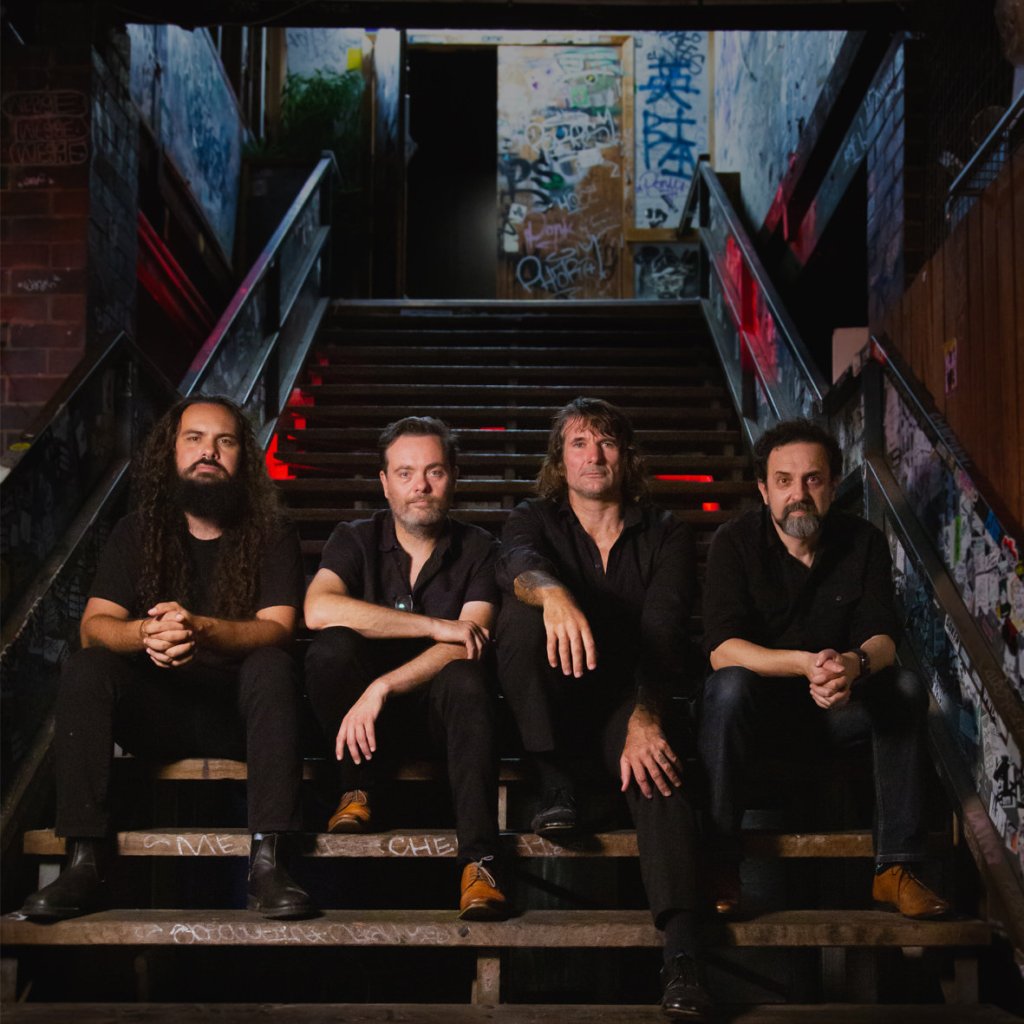
Ben Corbett, the frontman of Meanjin/Brisbane band Gentle Ben and His Shimmering Hands, knows a thing or two about following your passion, loss, mental health, and persevering. In our candid chat, he offers an intimate glimpse into the highs and lows of a career spanning over 30 years.
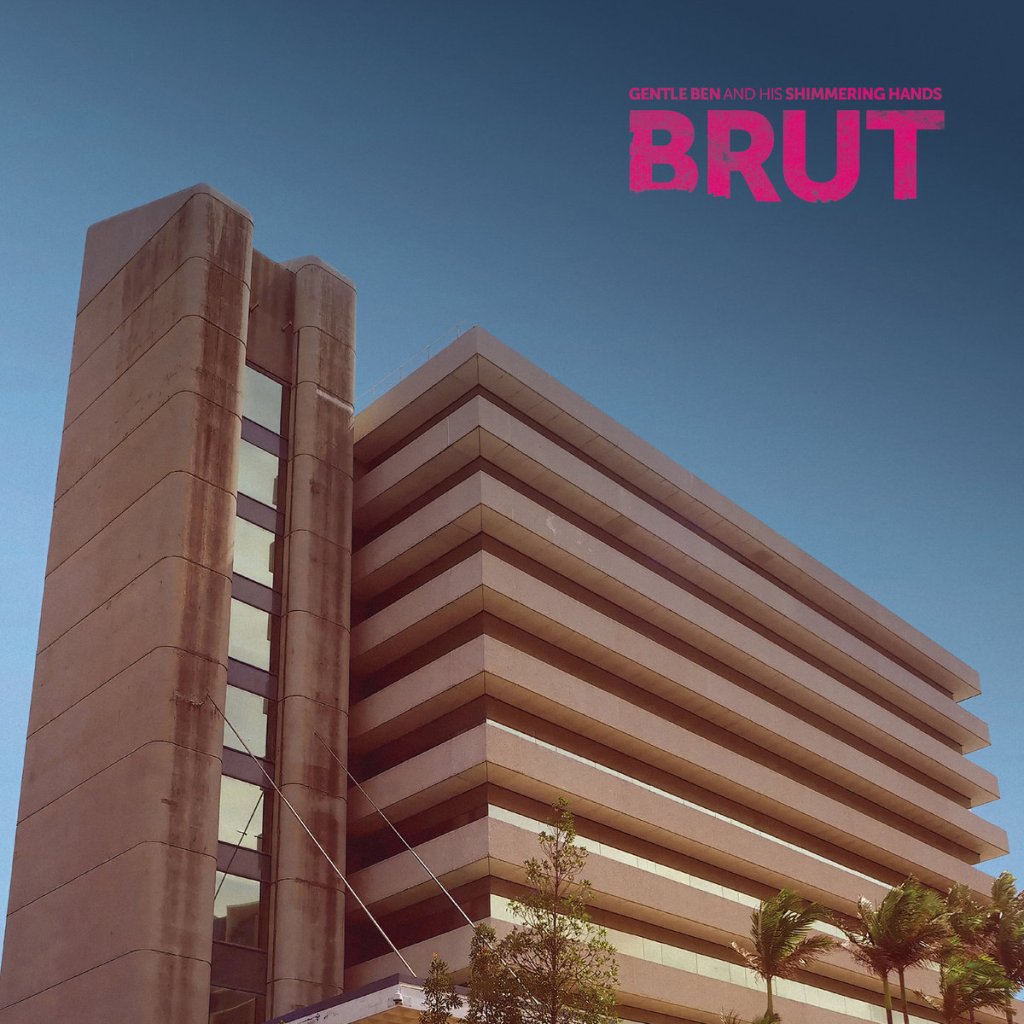
He shares with Gimmie the journey behind Shimmering Hands’ long-awaited album BRUT, their first release in a decade. A triumphant return, the album blends sass, wit, and satire as it weaves through themes of fractured hearts, minds, and bodies within a capitalist nightmare, offers critical commentary on colonialism, rock ‘n’ roll eulogies, and shines a spotlight on male violence, control, and toxic dynamics in relationships, particularly towards women. Yet, BRUT hasn’t received the attention it deserves. It was one of our top album of 2024 to come out of Meanjin. Tragically, a week after its release, Corbett and his friends experienced the heartbreaking loss of close friend, bandmate in Six Ft Hick, and local punk icon Fred Noonan, which we discuss.
The frontman also reflects on the importance of supporting younger musicians, the raw physicality of his performances, and what kept him away from making music for so long. With authenticity and vulnerability, Ben offers a heartfelt look at both Gentle Ben and His Shimmering Hands—and at himself.
I’m excited to be talking with you again! I’m sure you don’t remember but I first interviewed you for my first punk zine back in the 90s before a Six Ft Hick show at Crash n Burn.
BEN CORBETT: I bet I said some really intelligent shit back then.
[Laughter]
I have no memory of that whatsoever. I’m sorry. And it’s probably for the best because I would have had some real hot takes in the 90s! It’s nice we finally get to connect again.
Totally. How have you been?
BC: Ooh, jeez, fine. The world is pretty horrible at the moment. It’s been a strange year. There’s been a couple of deaths of people close to me, which has made me value life a bit more. Which is good, I suppose.
And then there’s obviously the horror of what’s happening in Palestine that’s weighing on me every single day.
Apart from that, life is good. I’m blessed. I’m very fortunate. I’ve got a beautiful family, and a house to live in— all that good stuff. I get to sometimes go and make music, which is great, because there were a few years where that didn’t really happen very much. And now it’s finally happening again. I feel really privileged to be in a position to not only be able to make music, but when we release that music, people actually want to buy the records, listen to the records, and come to the shows.
Getting to do interviews like this. It’s all a bit of a balm for my soul. After however many years—30, whatever years of playing music—I can still rustle up some interest. It’s really lovely. Thank you.
Well, it’s lovey that you’re still making great art. Thank YOU for that. I’ve been following all the stuff that you’ve done for that long, and I gotta say that your latest record is one of the best things you’ve done yet.
BC: I think so. That’s lovely to hear. This is a record that’s the sound of a bunch of people learning to get out of their own way. We’ve, in the past, really struggled to get things down. It was always dealing with each other’s egos, dealing with our own egos, and just not really being able to listen to each other’s ideas.
What has changed, in recent years, is that we’re all on the same page creatively. And a lot of that has to do with just setting aside—not differences, but just setting aside our preconceived notions of what we want to achieve—and actually weighing up ideas on their own merit. Which has been a really cool change to the creative process.
Even though it’s my name—or my stage name—at the front of the band, it’s really a group effort in everything we do.
I know Dan Baebler (bassist), has been part of your life for a really long time. You guys went to high school together?
BC: Yeah, we’ve been really close friends since we were like 14. We used to go skateboarding together and hang out all the time. He’s been a constant. We tried to form bands when we were about 17. That didn’t really happen. And then Six Ft Hick coalesced into some sort of being when we were 18. We’ve obviously done Six Ft Hick for a long time. But then Dan jumped in on this new project, and it’s kept on rolling with him, which has been great.
Because he’s an incredible creative spark. He has this wonderful sort of cynicism that drives a lot of what he does, which is really important to have. What we create is as much about what we’re not into as it is about what we are into. A lot of that influence, those negative influences, like, all we don’t want to sound like, or we don’t want to roll out that cliché. So it’s really cool to have someone like that to bounce ideas off. He’s creative in all kinds of ways. He’s a musician. He’s an incredible videographer. He made the main film clip for the album song, ‘Spices’.
He travels around Australia, filming in Indigenous communities and doing all this great work. I hadn’t really seen a lot of his work or how he does his work. Then we turned up to film this clip at this crazy reservoir that looks like a part of an ancient ziggurat, with these giant concrete steps. He pulls out a drone and starts flying it. I was like, ‘How did you learn to fly and film with a drone?’ He’s like, ‘Well, this is what I do for a job.’ I’m like, ‘This is insane!’
It’s cool to see your friends do all these interesting things because I have a very limited skill set. I have a very particular set of skills, and they’re not very useful. I’m kind of like a really crappy Liam Neeson [laughs].
Of course, Tony is not just a great guitar player, but an incredible graphic designer. He has an Instagram page and a website called Guitar Nerd. He really is just a wealth of knowledge about guitars. He’s so enthusiastic about guitars, about music, and about the history of things. That energy is just incredible to be around.
Jhindu is a monster behind the drums, but then just the loveliest, most incredibly calm and level person to be around. He brings his own beautiful energy to the band.
Nothing would work the way it does without what everyone brings, which is a nice thing to recognise and acknowledge. Part of recognising and acknowledging is learning how best to work with all of those elements.
That’s part of what you’re hearing. Those elements of our personalities are given, not free rein, but the right amount of freedom. Because we’re pretty good at dumping each other down when it’s necessary. That includes me being stomped down because that’s necessary sometimes as well.
Well, that’s definitely working, the album is really fucking cool! You grew up on a chicken farm in Woombye about an hour and a half from Brisbane?
BC: It wasn’t a working farm for very long after I was born, so I have really vague memories of there being chickens. We kept the farm in the family, and it’s still there. I go up there pretty regularly to hang out with Mum and do a bit of work.
Lately, we’ve been collecting tons and tons of scrap metal from around the farm. When my dad was alive, he wouldn’t let you throw anything away, literally. There were sheds and sheds full of scrap metal, rough pieces of stuff, old plows, and machinery. I’ve been doing a lot of that with my brother Geoff as well.
At the time, I didn’t really appreciate how good I had it. I wanted excitement and thought I’d be better off as a city kid. I thought that was where it was at. Now, I don’t think city kids have it any better than country kids—except maybe they have slightly lower death and injury rates!
I still go up there pretty regularly, and it’s beautiful. The highway is encroaching on it fairly rapidly, unfortunately, but one side of the farm is still great.
Around the time you grew up there, I think the town had only a few hundred people?
BC: Woombye was a pretty small town, and we weren’t actually in the town—we were about 5 km south of it, a little bit isolated in that sense. It wasn’t like we were out in the sticks or on a cattle property in Longreach. It only took us about 10 minutes to drive to school, so it wasn’t a big deal.
But for me, as a young person, I wanted to be elsewhere because the highway ran past. I couldn’t wait to get out and move to Brisbane. That was my big goal: to move to Brisbane and make music or do whatever it was I wanted to do. That was freedom. When I became old enough, my brother Geoff, who’s seven years older than me, was living in Brisbane. I would catch the train down, go see bands, and sneak into pubs. No one would check IDs in those days, and I looked older. I had this stupid goatee that was awful, but it got me into pubs and stuff. I’d go watch bands, and that was quite formative.
As soon as I could, I moved down to Brisbane with Jeff and started trying to make music with Dan. We had a few abortive attempts at starting bands, and then Six Ft Hick kind of happened.
I understand that your mum used to make you do eisteddfods and things. Was that was your first introduction performing?
BC: Yeah, she got me onto the stage. She was a speech and drama teacher. A schoolteacher originally, and then after she got married, apparently, you couldn’t be a married schoolteacher in Australia in the 60s. Pretty insane, right?
So, she started doing private elocution lessons, which is pretty funny. I can speak cultivated Australian English when I want to, and my mum, well, everyone says she speaks like the Queen [laughs].
She got me doing eisteddfod things—poetry readings, mime, all that kind of stuff. I did it when I was quite young, but then I lost interest as I got into high school.
Did you enjoy performing?
BC: I did enjoy parts of it, but the nerves would get to me. I really liked being praised and being told that I’d done a good job. If I won a medal or something, I was really stoked. But if I didn’t, I’d be devastated, you know?
I guess I’m still really easily discouraged now. Well, I can’t be that easily discouraged because I’m still doing bloody stupid bands—and I’m nearly 50! I’m thin-skinned but also bloody-minded.
How did you first discover music?
BC: Through my brother’s influence, I started getting into music during my teenage years. He was at that age where he was really exploring different sounds. He’d play me records by The Cure or Dead Kennedys. There was a limited amount of alternative music available on the Sunshine Coast back then unless you had a way to access it, so I’d just listen to whatever he brought home.
When he moved to uni and went to art school, he started bringing home more records that influenced him, including country music. That’s where my love for outlaw country—Johnny Cash, Hank Williams, and the like—began. It was an uneasy appreciation at first but grew into a genuine love, alongside punk rock like Black Flag.
In high school, I got into skateboarding, which introduced me to a mix of punk rock and metal through friends. Some of it was great; some of it, not so much. I made a few questionable choices in music, but some stuck with me over the years.
I started hanging out with musicians, like Dan and a few other friends, trying to form bands that never quite got off the ground. I always felt like I should have learned an instrument, but I was lazy, so I just sang. That eventually morphed into what I do now.
Did you look up to Geoff?
BC: Absolutely. He was totally my hero. I really wanted to be in a band too. I got up on stage with him for a couple of things he did in one of his bands. Then, we did the play. He was very kind to me, because he was really encouraging of everything I did. He probably didn’t have to include me in any of that stuff, but he did. And I think that’s what set me on this path. So, we did Six Ft Hick for a few years, and then I wanted to try something different. That’s when I formed Sensitive Side, and that kind of had its own life, which was really cool.
What did the earlier attempts at bands with Dan sound like?
BC: Terrible. Like, really, really fucking bad. It was some sort of—I don’t even know what to call it—some kind of ’90s math rock bullshit. Just terrible. Really naïve, but not in a good way. I live in fear that someone’s going to unearth a tape of it one day. Early Hick is bad enough, but there’s some truly awful shit from back then. Sorry.
So, your brother was already living in Brisbane, and then you moved down there. When you first arrived, you were studying for a while—what were you studying?
BC: I studied Humanities because I had no idea what I wanted to do. I just thought, ‘Oh, I guess I’ll do that.’ I really didn’t know what I was in for and was quite a poor student. I ended up getting a job at the uni as a research assistant, but I dropped out at the same time. So I was working at the same uni where I was failing.
After that, I started working in hospitality, as a lot of people do in their first job after leaving home. I washed dishes for a long time, made coffee, and waited tables for years. That kept me going through the early years of Six Ft Hick when we were touring a lot. It was really handy because I could take time off whenever I needed.
We would go on tour down to Melbourne, Sydney, or wherever, usually by road, every few weeks for a while. It was ridiculous. We’d drive straight for 20 or 22 hours, play three shows, and drive home again. We did that for years because we thought that’s what we were supposed to do. It made us very tight as a band and road-hardened.
Six Ft Hick was always about the live show. We never really captured what we did on record, and that’s fine. It was always more about the moments we shared with an audience.
Didn’t Six Ft Hick start from a play that you wrote as a teen?
BC: The play was called Country Style Livers, and it was a play on words referencing the magazine Country Style Living, which was a fancy homes and gardens thing. But it was born out of this idea that I wanted to write a play about the clichés of country music, country music tropes.
The main character is a wheelchair-bound ex-truck driver addicted to heroin. His younger sister is a sex worker who’s being pimped out, in this town that’s devastated because the main character had a truck crash that wiped out a school bus with all the town’s children on it. It’s this ridiculous, over-the-top idea of the country music tragedy.
It was meant to be funny, but it also had some intense elements. It was a silly idea that I wrote when I was 18 or 19. But a lot of the ideas in it were really quite strong.
We had a house band in that play, and that house band was what became Six Ft Hick. Craig was on drums, Karim (who we’ve lost contact with) was on guitar, and Dan played bass in those days. Geoff and I kind of sang these songs, we were almost like narrators in between the scenes of the play.
We put it on at Metro Arts in the city and had a cool little run.
That’s pretty ambitious to write an entire play at that age.
BC: I didn’t know any better at that stage. You know, I had that sort of confidence of youth, the kind where you think, I’ll just do this. I’ll just go ahead and do this, and we’ll put it on. And somehow, it just happened.
That was probably a lesson I should have learned and carried forward—to be a bit more ambitious with the rest of my life.
Did like your love for the written word and words in general come from your mum?
BC: Yeah, I was a really big reader as a child. Now I have a daughter who’s an even bigger reader, which just makes my heart sing. She can carry on a conversation with any adult, and it’s wonderful to see. We always had books around when I was growing up. More than music, really—we weren’t much of a musical family in my early years—but books were everywhere.
There was definitely a reverence for the written word, and probably the spoken word as well, because of my mum’s influence. I still feel there’s so much power in how language can be used. I try to tap into that with lyrics—not just the lyrics themselves, but how they’re delivered. I don’t really think of myself as much of a singer. A better word might be performer, because I’m always trying to project something when I’m singing, whether on stage or recording.
There’s something unique about singing—it lets you play not only with the meaning of the words but also with melody, with texture. You can shape phrases in ways that go beyond language. I find that process fascinating. Sometimes writing a song feels like solving a puzzle; other times it’s an outpouring of something difficult to express. But if you can find the right combination of tone, words, and texture, it all comes together.
It’s like a galaxy of options opens up to you. It’s thrilling, really—though, ironically, sometimes I’m completely lost for words trying to describe it. The delicious irony of that, right? [laughs].
I’ve noticed that certain themes seem to come up a lot in your work: death, true crime, politics—and a touch of self-loathing in the mix as well. It’s an interesting combination.
BC: Yeah, look, guilty as charged. These are all things that I just have a fascination for, or some experience of. And, you know, I’d rather—with something like, the self-loathing—that I’d be able to work that out in a song. It’s better to do it that way than just to live it constantly, if you can.
I really love the song ‘Gold Leaf’ off of BRUT.
BC: It’s basically a bit of a nod to, I guess, when I wrote that play. I had the confidence of youth back then, and I’ve lost a lot of that aspect of myself as I’ve gotten older. I’m not really sure why. I’m a pretty harsh critic of myself. As I mentioned earlier, I’m quite thin-skinned, so it’s really easy for me to fall into the mindset that nothing I do is good enough. That kept me away from making music for quite a while. In fact, I had years where I couldn’t write a song.
Was there a catalyst?
BC: I don’t know, life just kind of got… I don’t even know. I really don’t. It possibly coincided with me drinking a lot— to the point where it became quite ridiculous. I was drunk every day for two years, and that’s not an exaggeration; it was literally like that. I’ve quit drinking now— I’ve been sober for a few years. And, look, I miss it. I really do miss drinking. There are so many things about it that I loved, obviously. But I also think it was wreaking havoc on my mental health. And as I quit drinking and started to regain some sort of clarity, that’s probably what began to help me write music again. Maybe I just had more room in my mind for concepts, rather than just anxiety and misery.
Thank you for sharing that. I stopped drinking and doing all that kind of stuff years ago too, because I reached the point where there’s so much I want to do, and if I’m hungover or whatever, I can’t do all these things I really want to accomplish.
BC: Yeah, yeah, definitely. Also, I’ve got a kid, and I realised that I was a much better parent when I was sober. It’s not like I was some sort of monster when I was drinking, but I think almost that was part of the problem. I was a very good drunk, you know? I was very functional. I was also used to being in bands all the time. I could get up, hungover, and still do things, but I wasn’t very present. I wasn’t as present as I should have been.
So, I’m definitely a much better parent, probably a better husband, you know, as a non-drinker. And I’ve never said, ‘I’ll never drink again.’ Basically, I’m just feeling it out. I kind of expected that I might take a year off or a couple of years, and then, if I feel like I’ve got a handle on it, I’d get back to it.
But honestly, the idea, at the moment, at this point in my life, doesn’t really appeal to me. It’s not that it doesn’t appeal to me, it’s that it kind of scares me a bit. So, I’m like, ‘Yeah, I don’t think I’m gonna take that up again.’ You know, I’m not an angel; I’ll do other things occasionally, but yeah, drinking—it’s proven its worth to me, and I have to be very careful about it. I know that.
It’s great that you felt inspired and your creativity came back and you were able to write this new album!
BC: The album has been a long process. Everyone in the band works full-time jobs and has children and other commitments that are arguably much more important than just playing music. Writing the songs, getting in to record, and even the time between recording and releasing the album—it all took about a year. We just didn’t have the time or money to put everything together.
It was difficult to make the money because it was hard to get everyone together to play shows, especially since some band members were traveling for work a lot. These were the things we had to navigate. Iit’s been a really long process to get to the release of BRUT.
Finally, we were able to tour the album—go to France, and go back to Melbourne. And, it had been five years since Sydney. It was amazing to finally have the time, and the money in the bank to do it. We played enough shows to afford to buy flights and do these things.
We did really well to get over to France, too. We were supposed to go last year, but we just couldn’t afford it, so we postponed. We said, ‘Alright, we’ve got to make this happen. We’re going to commit.’ And we did.
I really owe a lot of people over there some good shows, especially our French record label and some of the people who have been loyal fans of both Six Ft Hick and the general band over the years. They’ve done wonderful things for us. We really owed it to them to go over and do what we do.
I’m so happy for you guys that you could do it. I noticed that when BRUT came out, about a week later, Fred passed away. I can just imagine how difficult and devastating that must have been. How did you kind of balance everything? I mean, this was the first album the project had put out in 10 years, and then something so devastating as losing a loved one happened. I can imagine you must have been feeling so much, such opposite feelings happening all at once. It must have been so hectic for you.
BC: This year has been one of those times, and I’ve spent a lot of it just kind of functioning in this weird state of, ‘Yeah, look, grieving’s fine, but I’ve got work to do.’ I think that happens to a lot of people when you reach a certain age, and people start dying. If you’re lucky, that age is older, but you’re also at that age where you have a lot of responsibilities. So you kind of just have to keep on going if you can, and that’s kind of what everyone did. It was a really shit time.
Mainly, I think one of the worst things about it was Fred told us that he’d been given a terminal diagnosis. He said, ‘Look, what I want to do is play shows,’ and we were like, ‘Yep, that’s great, let’s get together.’ We had a band practice just a few days after he’d told us, and we played through the Six Ft Hick set. Fred was great—he was obviously in a bit of pain and a bit tired, but he just played like it was muscle memory. He played beautifully, and we thought, ‘Wow, this is cool. We can just get together and do this.’ So we said, ‘Okay, cool, we’ll book some shows.’
Then he said, ‘Okay, I’m just going to go down to Tasmania for a week, just have some time to get my head together, and then we’ll get back and book some shows.’ He went down to Tasmania, but then got COVID—probably on the flight back. From then, until he passed away, he was just in and out of the hospital. We never got to play together again, and that was a really hard thing. I know it was awful for Fred because he felt like he’d been cheated out of the things he wanted to do with his last days on Earth. We all felt that way—that we’d been cheated out of this time with him that we wanted to spend.
It was a really strange time. We all went and visited him in hospital the day before he passed away. It was pretty fucking awful and intense. I think I’m still processing it. It was devastating for everyone in Six Ft Hick because, you know, we were in that band for over 30 years. We did a lot of stuff, a lot of touring, a lot of time together in vans and planes, sleeping on floors, doing all that stuff. It never seemed like he would go. It didn’t make sense to any of us.
Dan said that Fred just seemed like he was set in stone. Always the same person, no matter who he was speaking to. You always got the same Fred—completely devoid of pretence or anything. And, yeah, I still feel like I’m going to run into him at the shops. We used to run into each other at our local shops because he lived not far from me.
It’s strange. But we all decided—everyone in Six Ft Hick—well, that’s it. We’re never going to play those songs again. There’s no Six Ft Hick without Fred. There’s no tribute shows, nothing like that. It’s just over.
That’s a lot to process. I’m sorry. I remember when I’d see Fred at shows, especially when I was a teen and he was always lovely to me. Always had time for me. In fact, you guys were always lovely to me whenever I’d see you at a show or at the cafe. I always remembered that kindness because being younger, a lot of the older punks weren’t so nice to me. But you guys were. That meant a lot to me.
BC: There’s a real, really weird sort of conservatism that runs through a lot of the older musicians, particularly the men, obviously. They can be really, really dismissive of young people, particularly young women, unless they’ve got some ulterior motive. It’s really gross. I find that kind of attitude lame, for want of a better word. It’s so boring. It’s boorish. You don’t have to love what every musician in the world does, but I think about myself at age 18, 19, and throughout my 20s, and what I would give for just a bit of encouragement from people who were older than me, who’d been doing it for a while. Just a simple ‘Oh, cool,’ would have meant the world.There’s nothing to be gained by ragging on youth.
One of the things I’ve really enjoyed, having worked in hospitality for most of my working life, is that you often work with a lot of younger people. The energy they bring is amazing. The other thing I think is really important—maybe it’s the internet, I don’t know—but I know so many young people now who are so fucking switched on. They have a lot more knowledge, and so much more ability to navigate complex ideas and situations.
I think about myself and how absolutely clueless I was in so many areas, and then I see people who are just light years ahead. It’s taken me years to reach this point where I think, ‘Yeah, okay, I’ve got some progressive thoughts and ideas, maybe.’ But I still know there’s work to do on myself. I feel like so many young people start at a better point than I was able to. And I think that’s wonderful.
So that gives me some hope—that someone might fix the world that, you know, our forebears have fucked up so completely.
Yeah. Doing Gimmie we’re constantly around and inspired by younger creatives. Do you find, now that you’re getting older (I think you said you’re almost 50), with all the physicality you’ve put into your shows over the years, are you starting to feel the effects of being so physical in your performances?
BC: Not weirdly, but probably because I haven’t really played Six Ft Hick shows in many years. Some of the injuries I got from that band were fairly substantial, with a few hospital visits and ongoing issues that messed me up a bit. But I really like being a physical person and performer. So far, I don’t really feel like I’m falling apart—yeah, I have aches and pains, but that’s just normal. I had those in my twenties.
When I used to wash dishes for a living, I was a mess. My back felt like I’d been hit with a cricket bat all night. So, one of the things I’m pretty lucky about is that I still get around fine. The only real issue is that my hearing is shot, and my eyesight’s starting to go. But I can still run around like an idiot, and that’s pretty cool [laughs]. I’ll probably face some awful mid- to late-life process when that starts to desert me, but so far, I’m doing all right.
I had a herniated disc in my neck ten years ago, and that was pretty scary. I was about a week away from getting spinal surgery to fix it because one of my arms was going completely numb. Then it started to feel better, so I went back to the doctor, and they said, ‘If it’s starting to feel better, let’s hold off on the surgery.’ Thankfully, I’m fine now—I can still do all this stupid shit. I just have to be careful about how I sit. If I sit with my neck in a weird position, my fingers start to tingle. So, I need to sort out my posture.
I’ve really realised that your body is very much a ‘use it or lose it’ thing. If I stop doing things, that’s when I notice all the aches and pains. But if I keep on moving, then things seem to sort themselves out.
I’m just really happy for people to fucking hear the music, that people still care. If they like it, great. And probably the greatest compliment you can pay me or anyone else in the band is when people say, ‘I listened to your record.’ Not ‘I listened to it,’ but ‘I listened to your record. I listened to it over and over. I listened to it more than once.’ That is a huge, huge thing to me because I know the records I’ve done that with and how much I revered those pieces of art. That’s cool, that’s what it’s about. And people actually bothering to fucking leave their homes and come to shows! That’s fucking cool. That is really cool. That means the world.
I remember when I first went and saw a Six Ft Hick and got into you guys, all my friends hated you guys so hard. They really did! But I didn’t care, I loved that your were really original. I had nothing see anything like you guys before and after seeing shows for 30 years I still don’t think I’ve seen anything else like you guys.
BC: That’s cool. That makes me happy! Like your friends, I hated us then too [laughs]. I think we got better, but it took a while. We got a lot better.
What changed? When did you feel you found your feet?
BC: We had these opposing forces in the band—trying to do something that had cool time signatures, changes, and all that, while we also had Fred, who was very straight down the line, punk rock. We played this show in Byron Bay and in between songs, some pissed guy yelled, ‘Play some straight beats, you faggots.’ Somehow, the comedy of that moment struck home, and I think we just realised that we didn’t have to be technical. Technicality wasn’t what was going to push the band into new heights; it was the intensity of how we played. That’s when we started to change the way we wrote songs. It got both dumber and smarter, and that’s when we really started to find our feet. We just played so many shows, and every time we played, it was like we tried to outdo ourselves. That became how we rolled.
Follow: @gentlebenandhisshimmeringhands and check out gentlebenandhisshimmeringhands.com. LISTEN/BUY here.
 Gimmie Gimmie Gimmie Zine